

翻訳
過去
過去分詞
三人称単数
動名詞
意味
例文
例文の翻訳
同義語
対義語
コロケーション
ニーモニック





Swipe left or right, or use the buttons. Tap image to zoom.
例文の翻訳
単語
Lesson 427Lesson 427 - マスクトグル
|
絵文字
|
単語 | Images | 翻訳 | 過去 | 過去分詞 | 三人称単数 | 動名詞 | 意味 | 例文 | 例文の翻訳 | 表現例 | 表現例の意味 | 表現例の翻訳 | 同義語 | 対義語 | コロケーション | ニーモニック |
|---|---|---|---|---|---|---|---|---|---|---|---|---|---|---|---|---|---|
|
#1
🤕
|
/ˈɪndʒər/
verb
(インジュア)
••••••
|
- •••••• |
怪我をさせる
kega o saseru
••••••
|
injured
インジャード
••••••
|
injured
インジャード
••••••
|
injures
インジャーズ
••••••
|
injuring
インジュアリング
••••••
|
to cause physical harm or damage to someone or something
••••••
|
He injured his leg while playing football.
彼はサッカーをしている時に足を怪我した。
••••••
|
彼はサッカーをしている時に足を怪我した。
Kare wa sakkā o shite iru toki ni ashi o kega shita.
••••••
|
injure someone's pride
誰かのプライドを傷つける
••••••
|
to hurt someone's feelings or sense of self-respect
••••••
|
誰かのプライドを傷つける
Dareka no puraido o kizutsukeru
••••••
|
hurt, wound, damage, harm, bruise
••••••
|
heal, repair, cure
••••••
|
injure someone, injure badly, seriously injured, injure oneself
••••••
|
怪我 + Injure — 怪我をさせると injure になる!
••••••
|
|
#1
🧩
|
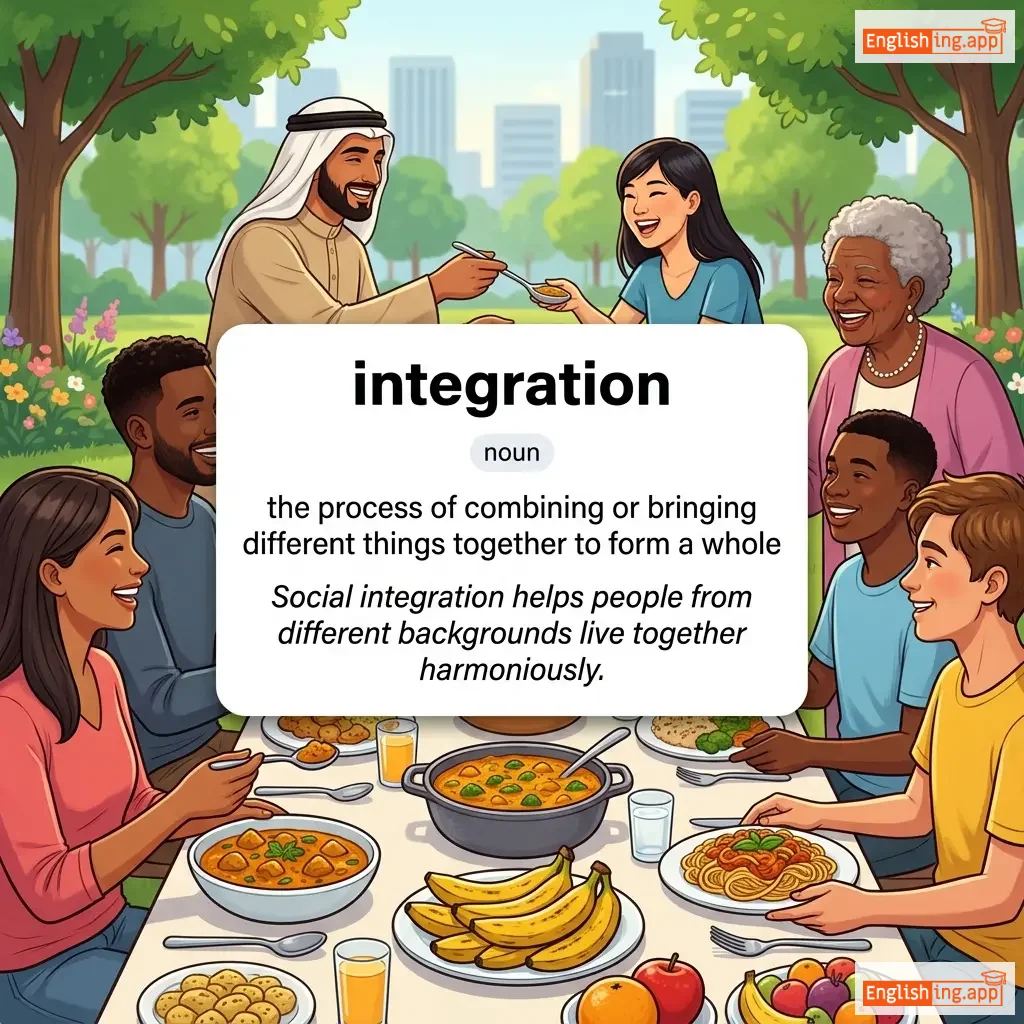
/ˌɪntɪˈɡreɪʃən/
noun
(インテグレーション)
••••••
|
|
統合
tōgō
••••••
|
- •••••• | - •••••• | - •••••• | - •••••• |
the process of combining or bringing different things together to form a whole
••••••
|
Social integration helps people from different backgrounds live together harmoniously. |
社会的統合は、異なる背景を持つ人々が調和して一緒に住むのを助けます。
Shakaiteki tōgō wa, kotonaru haikei o motsu hitobito ga chōwa shite issho ni sumu no o tasukemasu.
••••••
|
- •••••• | - •••••• | - •••••• |
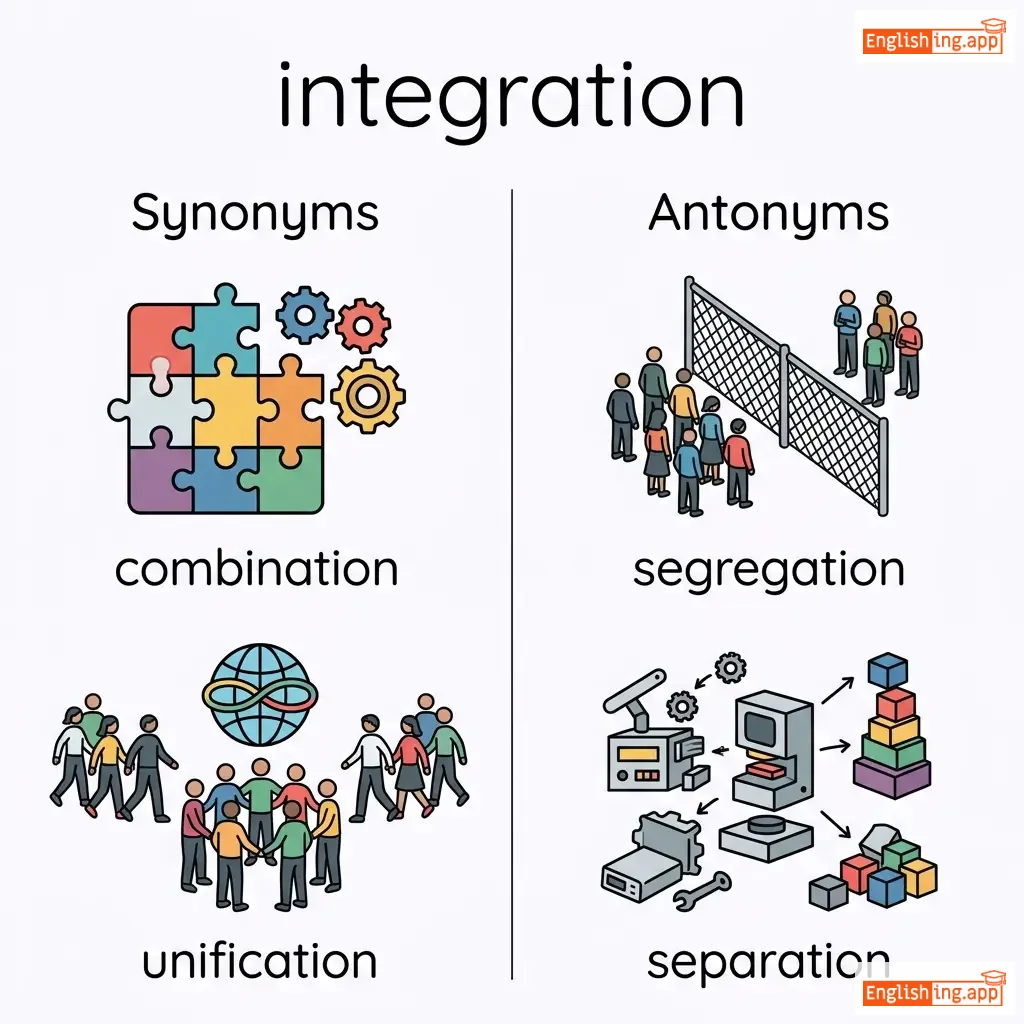
combination, unification, merging, inclusion, assimilation
••••••
|
segregation, separation
••••••
|
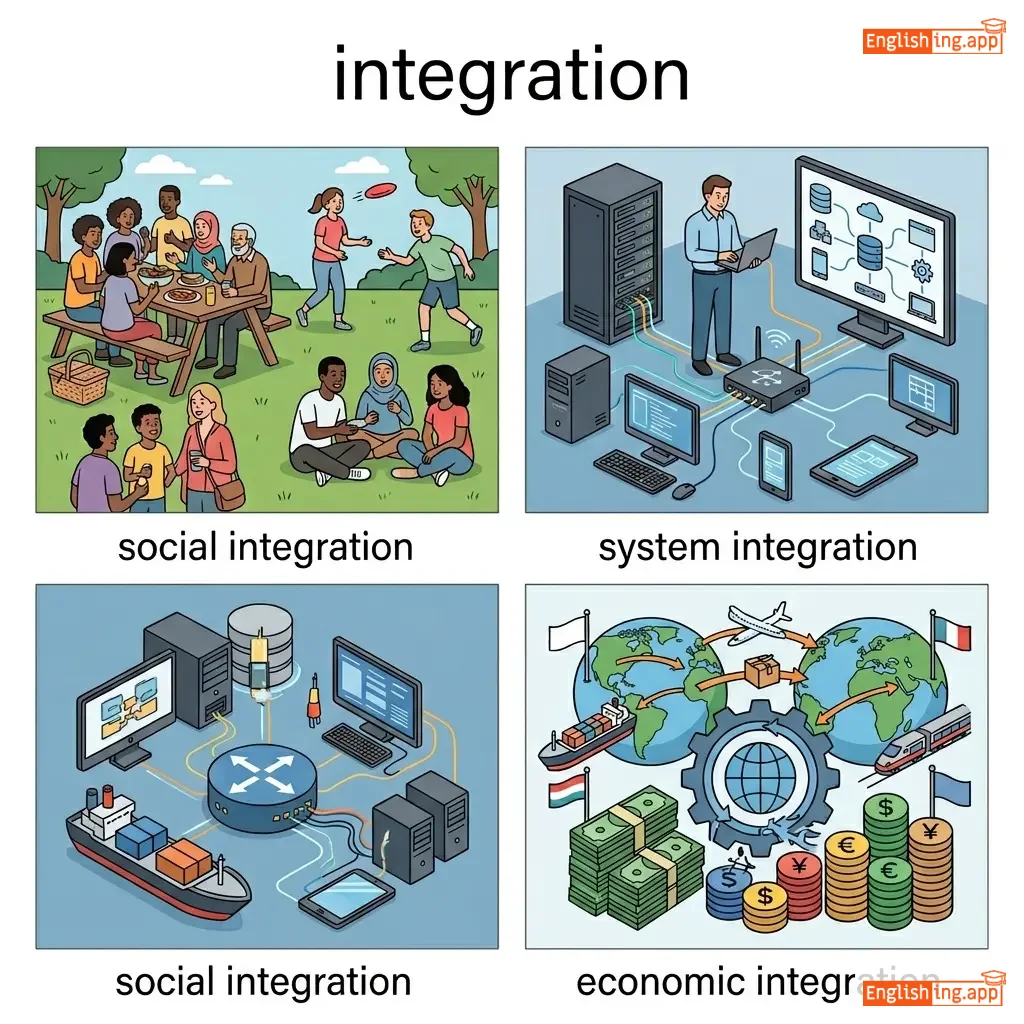
social integration, system integration, economic integration, cultural integration
••••••
|
統合とは「すべてを一つにまとめる」 – すべてを一つの部分にすること!
••••••
|
|
#1
🔗
|
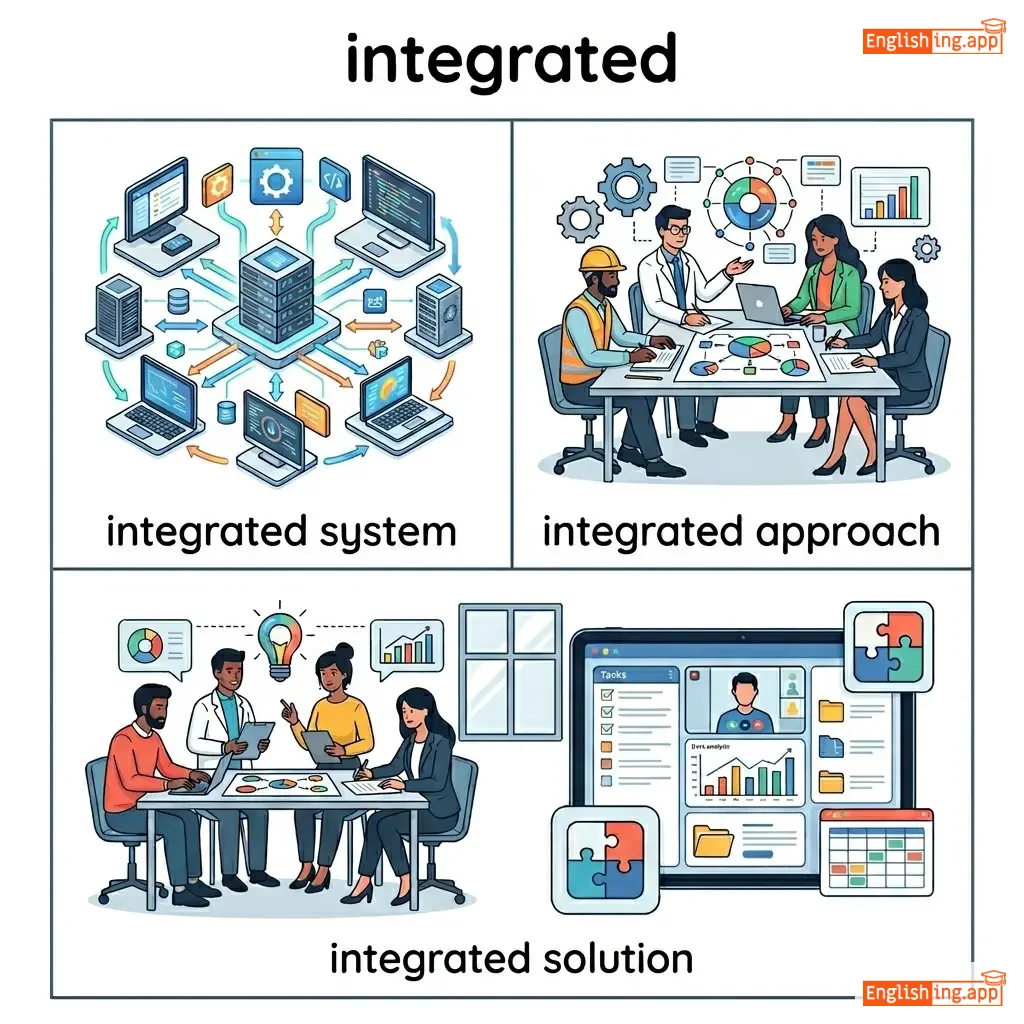
/ˈɪntɪɡreɪtɪd/
adjective
(インテグレイテッド)
••••••
|
|
統合された
tōgō sareta
••••••
|
- •••••• | - •••••• | - •••••• | - •••••• |
combined or united to form a whole; including all parts or people equally
••••••
|
The company offers an integrated system for managing all business operations. |
その会社は、すべてのビジネス操作を管理するための統合システムを提供しています。
Sono kaisha wa, subete no bijinesu sōsa o kanri suru tame no tōgō shisutemu o teikyō shiteimasu.
••••••
|
- •••••• | - •••••• | - •••••• |
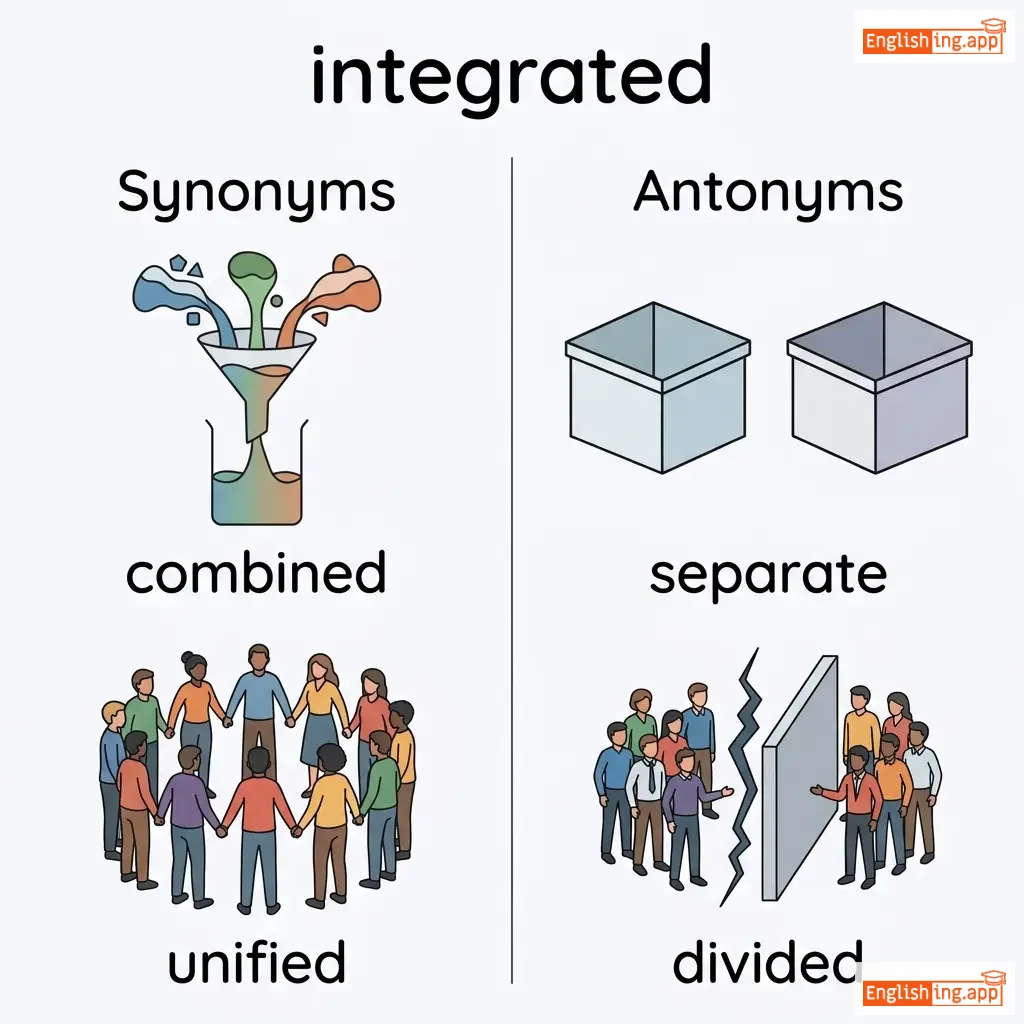
combined, unified, merged, cohesive, connected
••••••
|
separate, divided, isolated
••••••
|
integrated system, integrated approach, integrated solution, fully integrated
••••••
|
統合されたは、すべてを一緒にしてひとつのシステムを作り上げることを意味します。
••••••
|
|
#1
🛡️
|
/ɪnˈʃʊr/
verb
••••••
|
|
- •••••• |
insured
••••••
|
insured
••••••
|
insures
••••••
|
insuring
••••••
|
to arrange for compensation in case of loss or damage, typically by taking out insurance
••••••
|
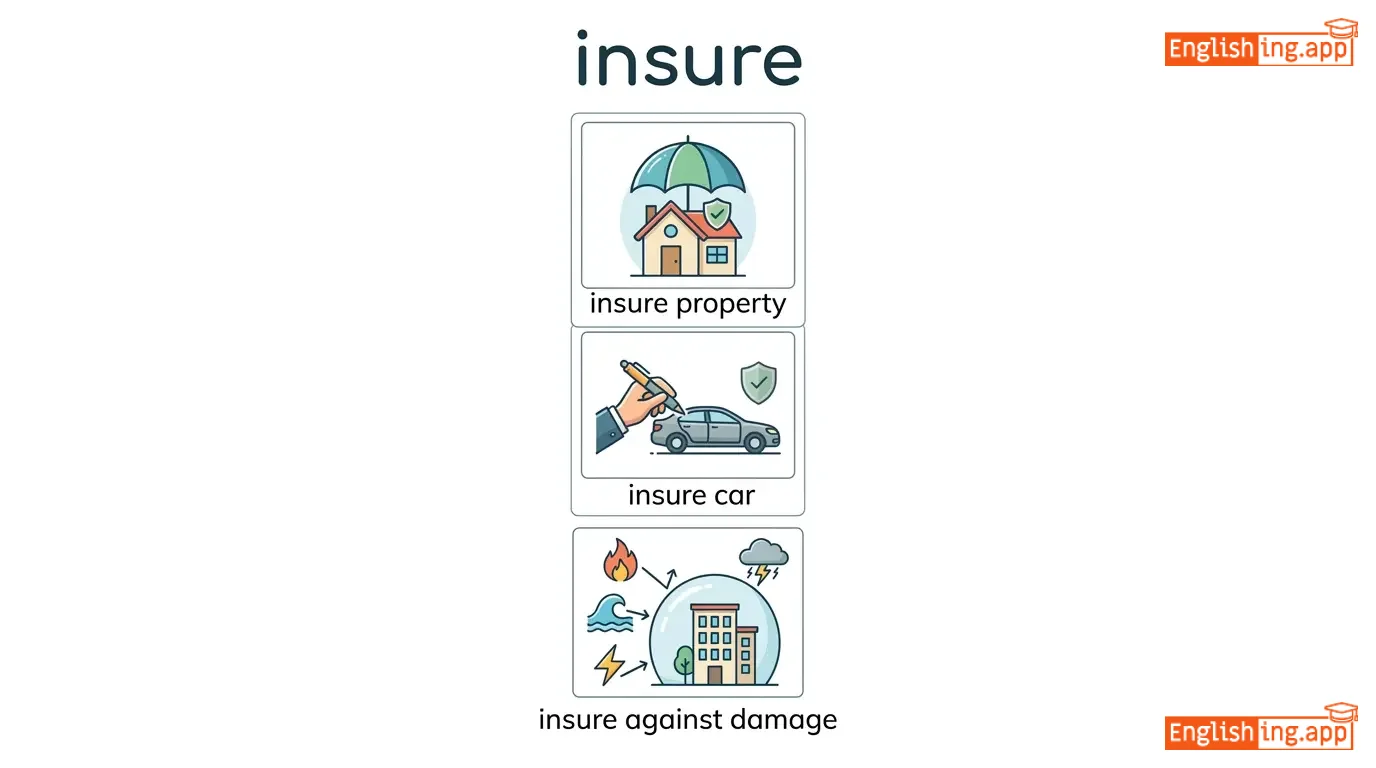
You should insure your car against theft or accidents. |
- •••••• |
insure against loss |
to protect oneself financially from possible loss
••••••
|
- •••••• |
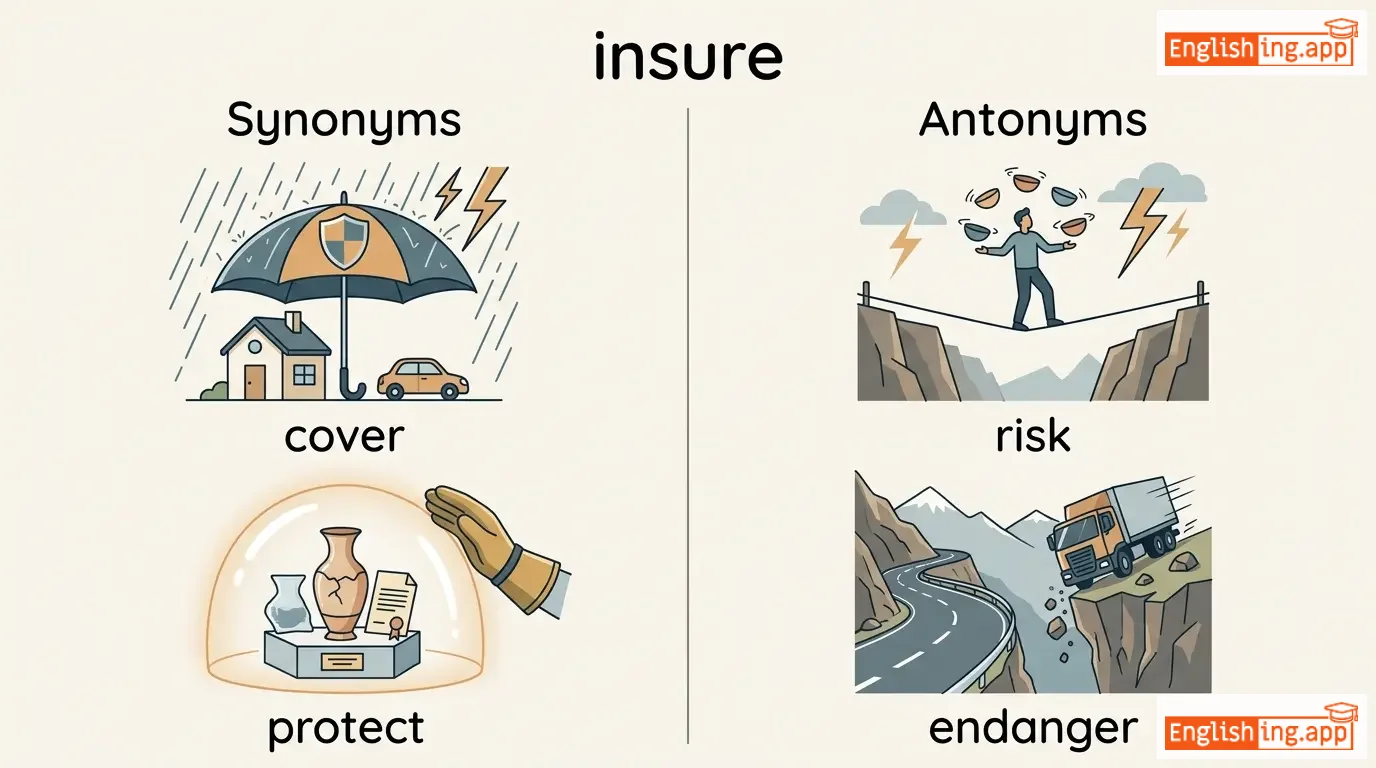
cover, protect, guarantee, secure, safeguard
••••••
|
risk, endanger, expose
••••••
|
insure property, insure car, insure against damage, fully insured
••••••
|
No •••••• |
|
#1
🎓
|
/ɪnˈstrʌkʃənəl/
adjective
(インストラクショナル)
••••••
|
- •••••• |
教育的な
kyouikutekina
••••••
|
- •••••• | - •••••• | - •••••• | - •••••• |
providing knowledge or information; intended to teach
••••••
|
The website offers many instructional videos for beginners. |
このウェブサイトは初心者向けに多くの教育的なビデオを提供しています。
Kono webusaito wa shoshinsha muke ni ooku no kyouikutekina bideo wo teikyoushiteimasu.
••••••
|
- •••••• | - •••••• | - •••••• |
educational, informative, didactic, teaching, training
••••••
|
noneducational, misleading, confusing
••••••
|
instructional material, instructional design, instructional video, instructional guide
••••••
|
Instructionalは教育的な意味、例えば教育的なビデオで何かを教える!
••••••
|
|
#1
📘
|
/ɪnˈstrʌkt/
verb
(インストラクト)
••••••
|
|
指示する、教える
shiji suru, oshieru
••••••
|
instructed
インストラクトされた
••••••
|
instructed
インストラクトされた
••••••
|
instructs
インストラクトする
••••••
|
instructing
インストラクトしている
••••••
|
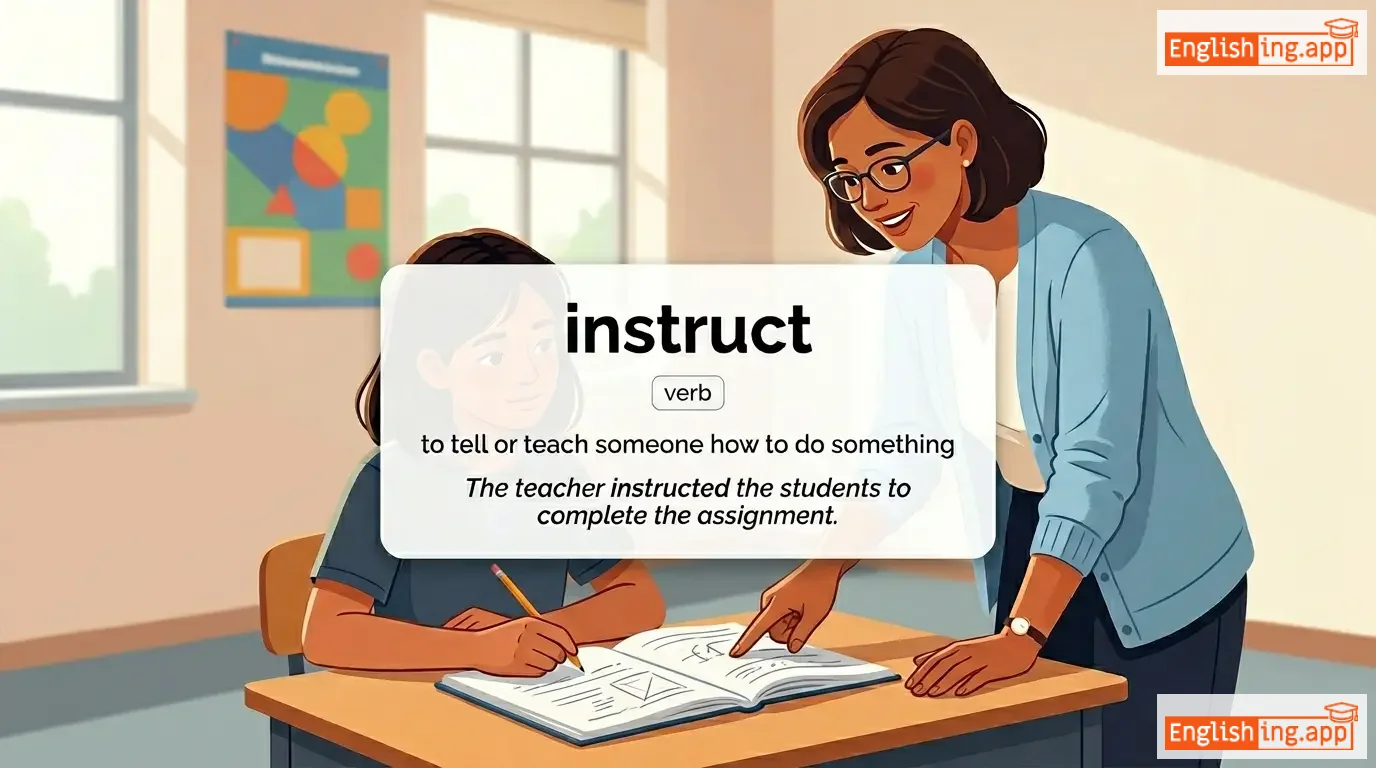
to tell or teach someone how to do something
••••••
|
The teacher instructed the students to complete the assignment.
教師は生徒に課題を完了するよう指示しました。
••••••
|
教師は生徒に課題を完了するよう指示しました。
Kyōshi wa seito ni kadai o kanryō suru yō shiji shimashita.
••••••
|
instruct someone to do something
誰かに何かをするように指示する
••••••
|
to tell someone officially to perform an action
••••••
|
誰かに何かをするように指示する
dareka ni nanika o suru yō ni shiji suru
••••••
|
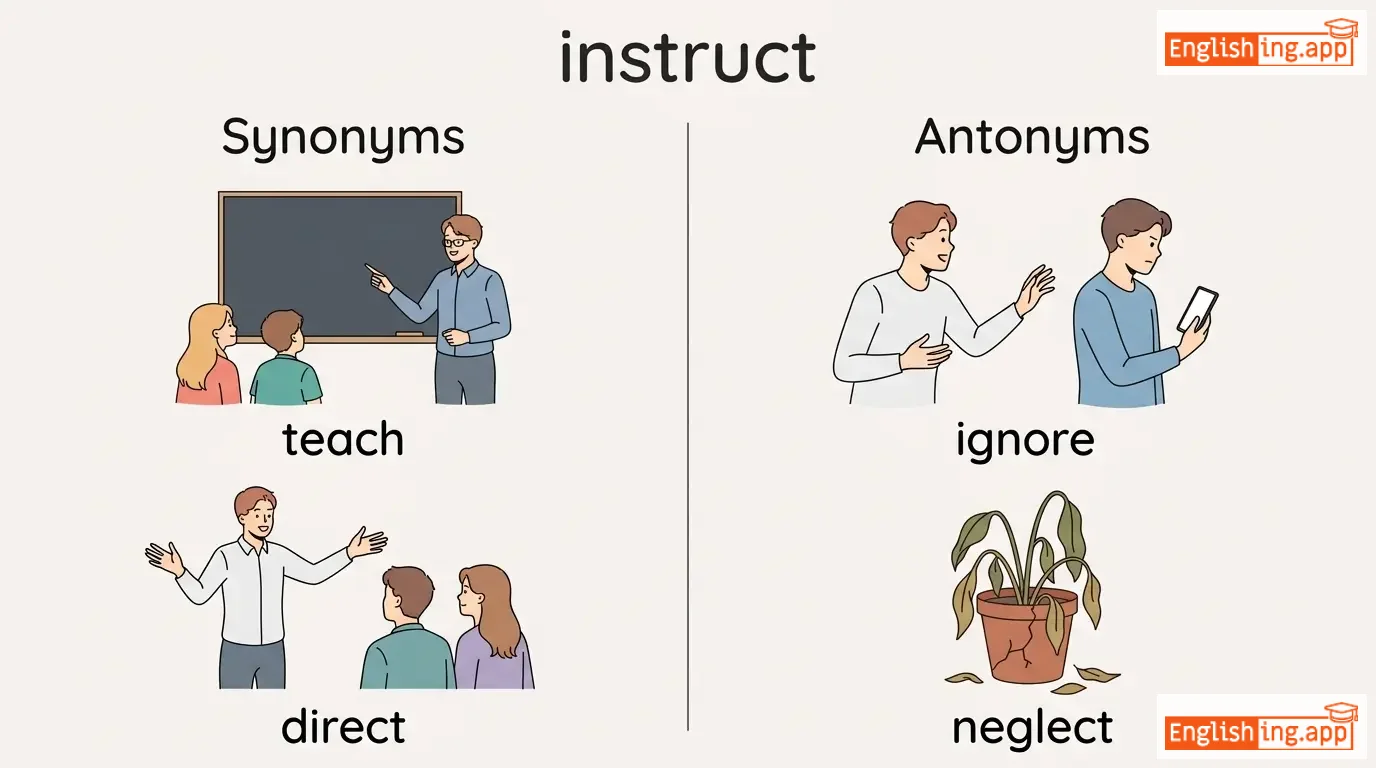
teach, direct, order, command, guide
••••••
|
ignore, neglect, mislead
••••••
|
instruct students, instruct employees, properly instructed, legally instructed
••••••
|
教師は生徒にインストラクトし、課題を達成させる。
••••••
|
|
#1
⚡
|
/ˈɪnstəntli/
adverb
(インスタントリー)
••••••
|
- •••••• |
すぐに
suguni
••••••
|
- •••••• | - •••••• | - •••••• | - •••••• |
immediately, without any delay
••••••
|
He replied instantly to the message.
彼はすぐにメッセージに返事をした。
••••••
|
彼はすぐにメッセージに返事をした。
Kare wa sugu ni messeeji ni henji o shita.
••••••
|
instantly recognizable
すぐに認識できる
••••••
|
easy to identify immediately
••••••
|
簡単に認識できる
kantan ni ninshiki dekiru
••••••
|
immediately, promptly, right away, straightaway, at once
••••••
|
later, eventually, slowly
••••••
|
respond instantly, disappear instantly, instantly available, instantly clear
••••••
|
インスタントコーヒーのように、すぐに!
••••••
|
|
#1
⚙️
|
/ˌɪnstəˈleɪʃən/
noun
(インストール)
••••••
|
|
インストール
insutooru
••••••
|
- •••••• | - •••••• | - •••••• | - •••••• |
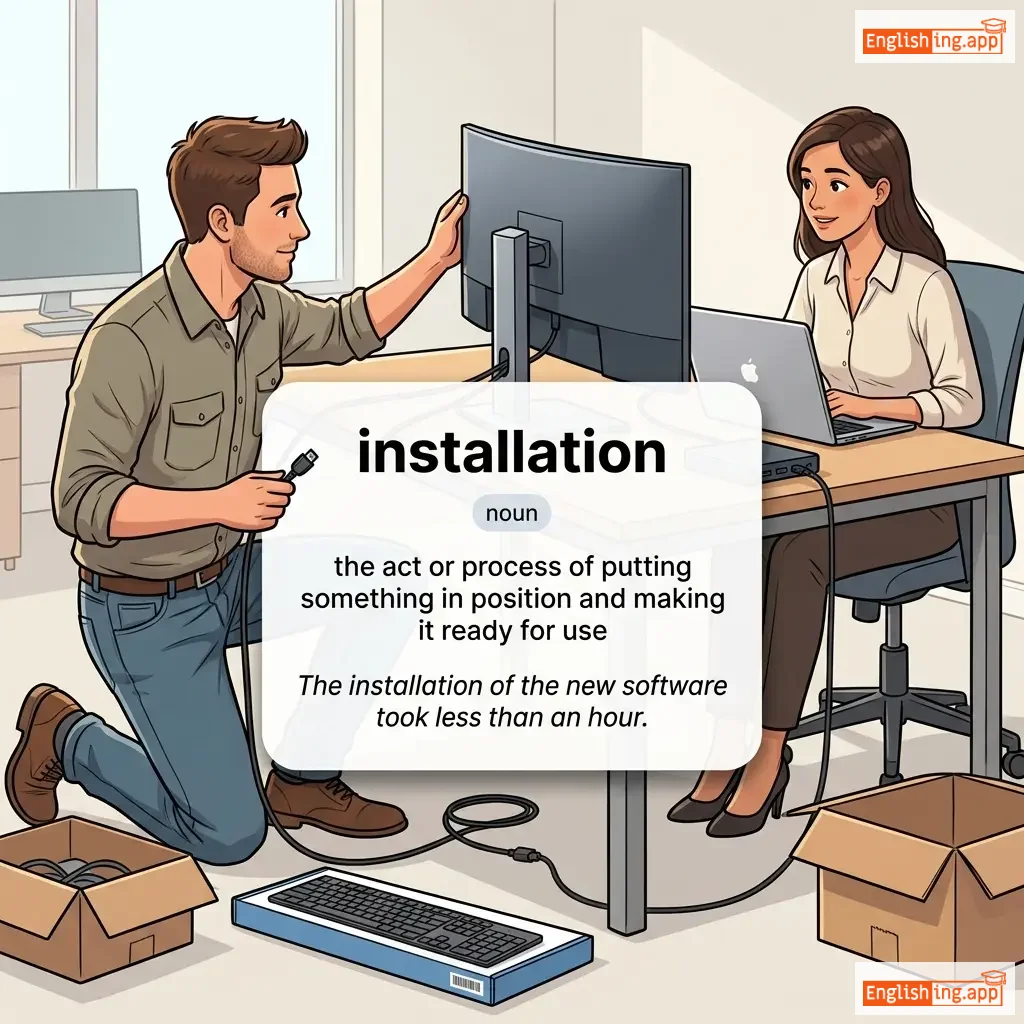
the act or process of putting something in position and making it ready for use
••••••
|
The installation of the new software took less than an hour.
新しいソフトウェアのインストールは1時間もかからなかった。
••••••
|
新しいソフトウェアのインストールは1時間もかからなかった。
Atarashii sofutowea no insutooru wa 1 jikan mo kakaranakatta.
••••••
|
- •••••• | - •••••• | - •••••• |
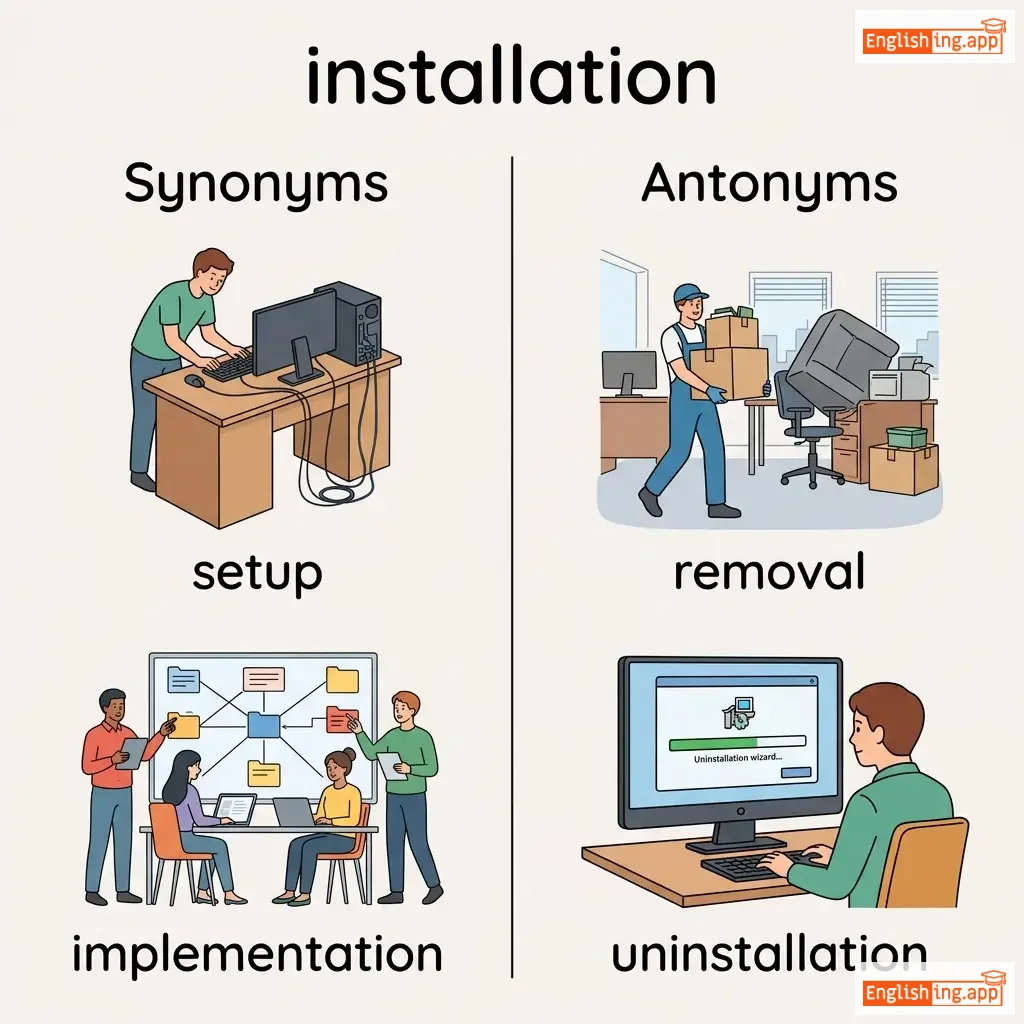
setup, implementation, deployment, placement, establishment
••••••
|
removal, uninstallation, dismantling
••••••
|
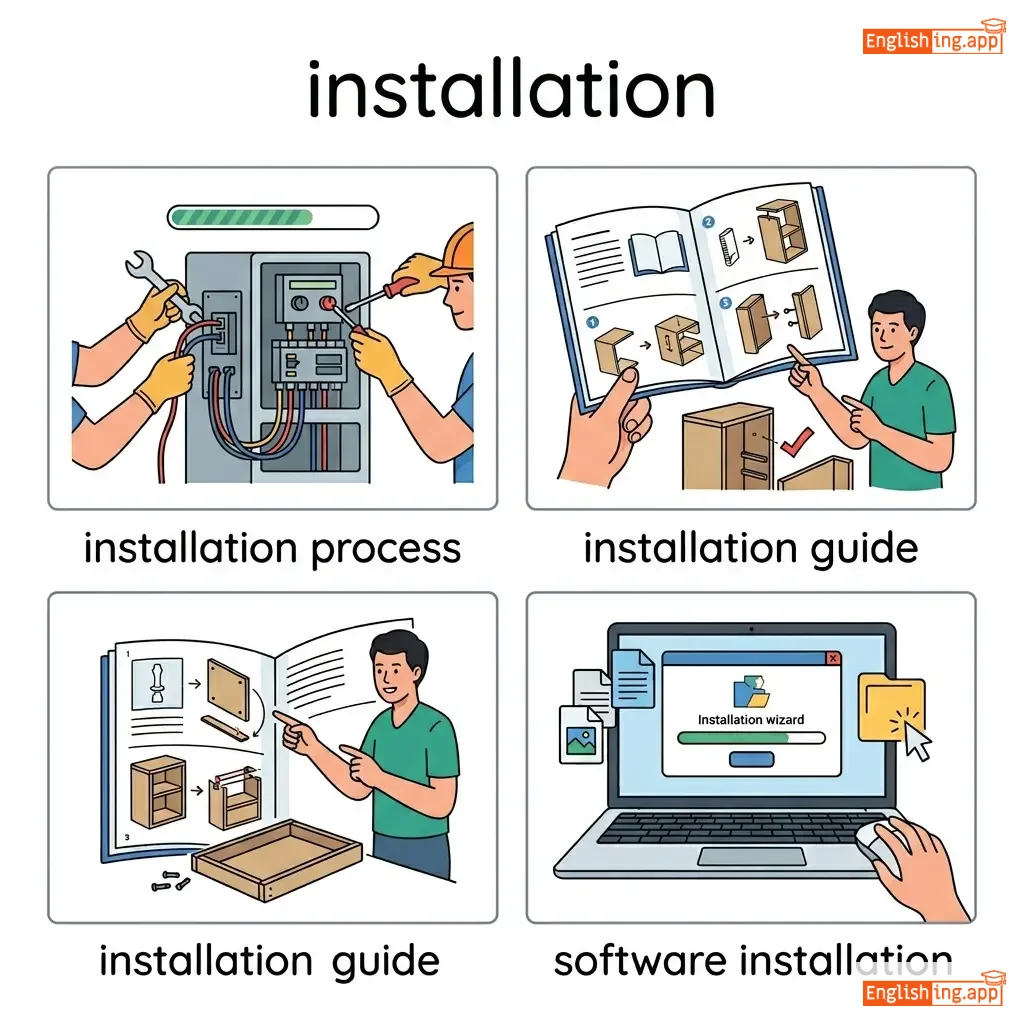
installation process, installation guide, software installation, electrical installation
••••••
|
インストールは物を設置すること、インストールプロセスは使えるようにすることを意味します。
••••••
|
|
#1
💡
|
/ˌɪnspəˈreɪʃən/
noun
(インスピレーション)
••••••
|
|
インスピレーション
insupirēshon
••••••
|
- •••••• | - •••••• | - •••••• | - •••••• |
the process of being mentally stimulated to do or feel something creative or positive
••••••
|
Her courage was a great inspiration to others.
彼女の勇気は他の人々にとって素晴らしいインスピレーションでした。
••••••
|
彼女の勇気は他の人々にとって素晴らしいインスピレーションでした。
Kanojo no yūki wa hoka no hitobito ni totte subarashī insupirēshon deshita.
••••••
|
source of inspiration
インスピレーションの源
••••••
|
something or someone that motivates or encourages creativity
••••••
|
インスピレーションの源
insupirēshon no minamoto
••••••
|
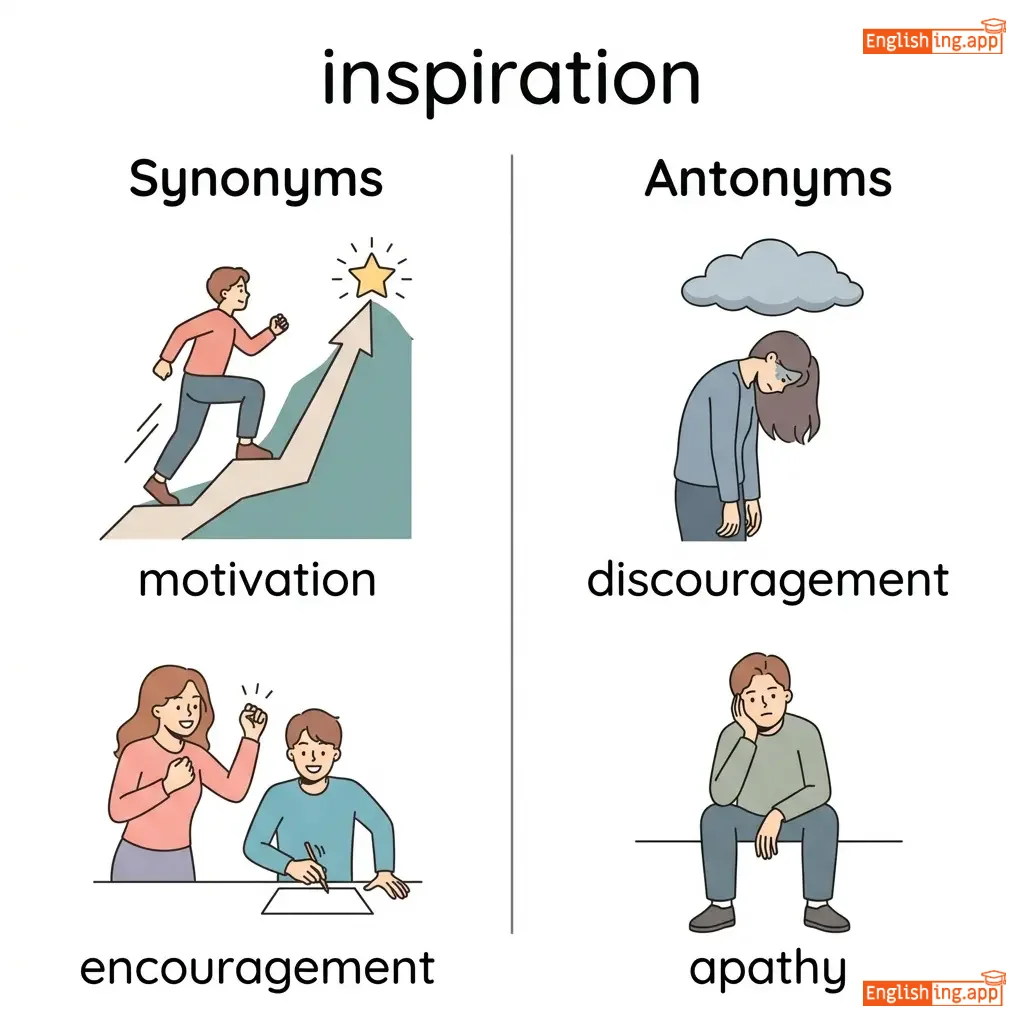
motivation, encouragement, influence, stimulus, drive
••••••
|
discouragement, apathy
••••••
|
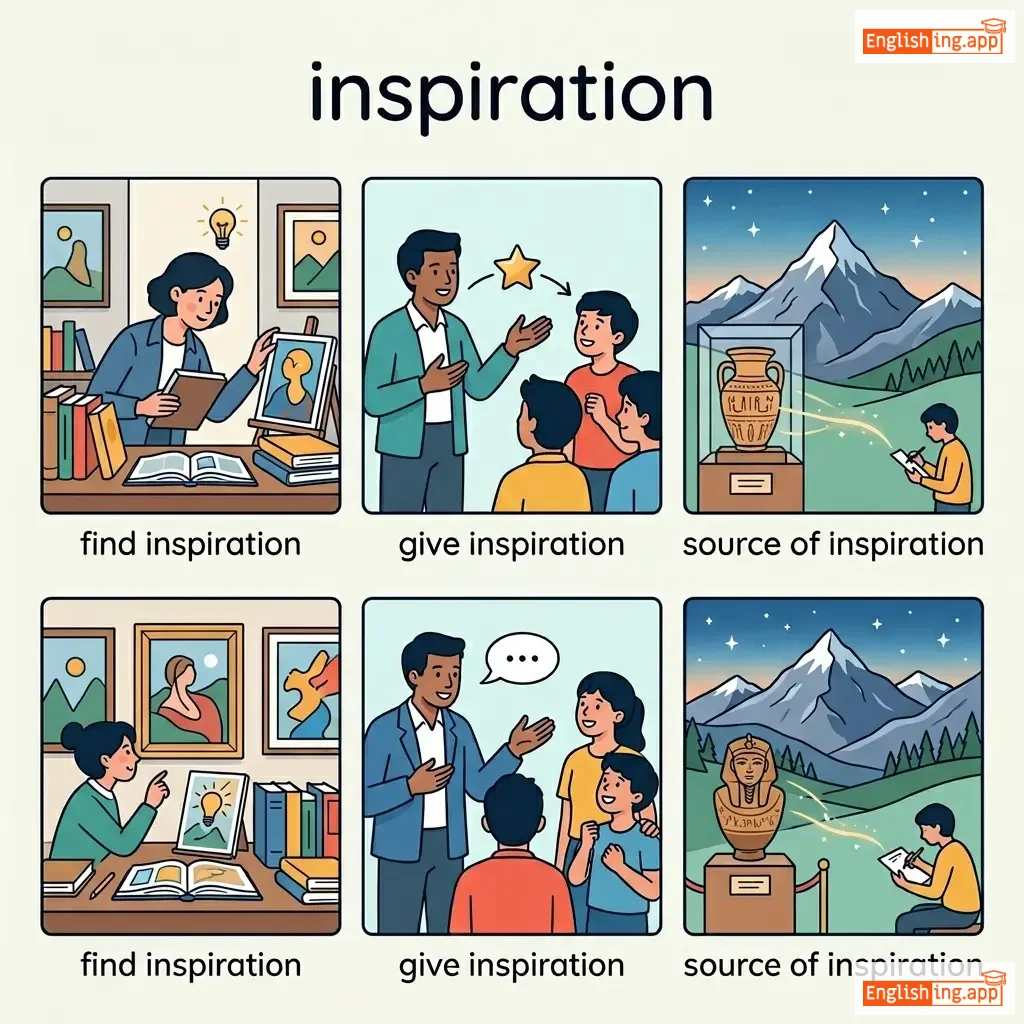
find inspiration, give inspiration, source of inspiration, draw inspiration
••••••
|
インスピレーション、創造の火花を灯す光。
••••••
|
|
#1
🔍
|
/ɪnˈspekʃən/
noun
(インスペクション)
••••••
|
- •••••• |
検査
kensa
••••••
|
- •••••• | - •••••• | - •••••• | - •••••• |
a careful examination of something, especially to check that it is correct or safe
••••••
|
The building passed the safety inspection last week. |
その建物は先週、安全検査に合格しました。
Sono tatemono wa senshuu, anzen kensa ni goukaku shimashita.
••••••
|
under inspection |
being examined carefully
••••••
|
検査中
kensachu
••••••
|
examination, review, scrutiny, check, audit
••••••
|
neglect, overlook
••••••
|
safety inspection, routine inspection, detailed inspection, building inspection
••••••
|
Inspection は検査(チェック)することを意味します 🔎
••••••
|
|
#1
📥
|
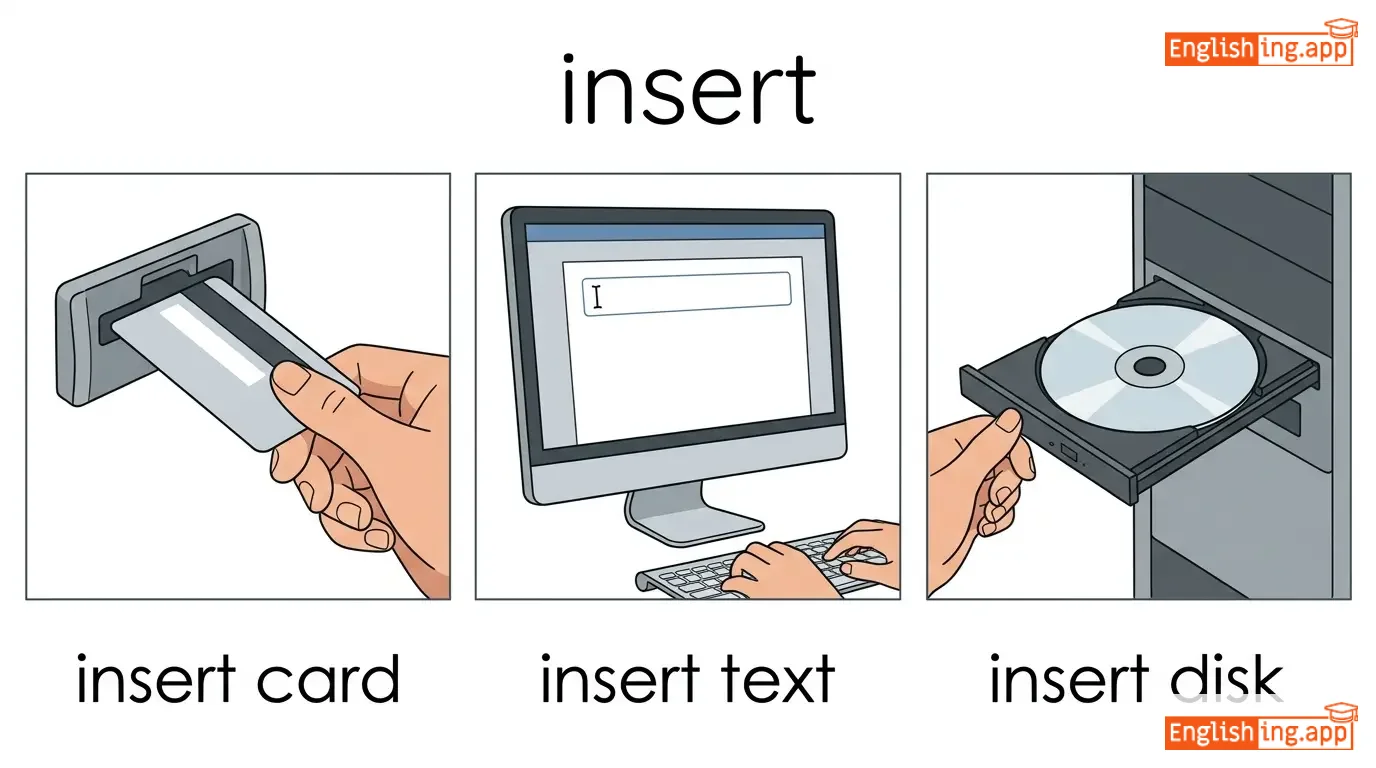
/ɪnˈsɜːt/
verb
(インサート)
••••••
|
|
挿入する
sānyū suru
••••••
|
inserted
インサーテッド
••••••
|
inserted
インサーテッド
••••••
|
inserts
インサーツ
••••••
|
inserting
インサーティング
••••••
|
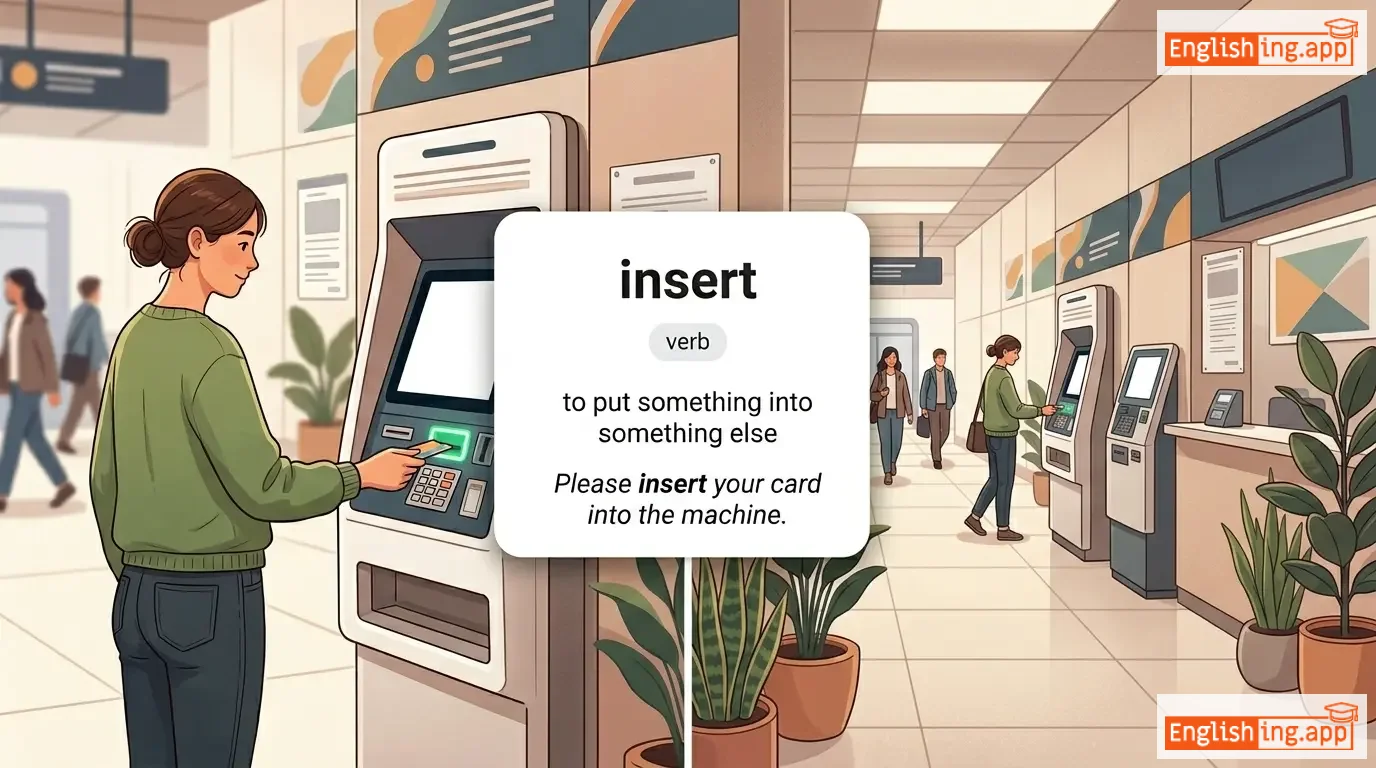
to put something into something else
••••••
|
Please insert your card into the machine.
カードを機械に挿入してください。
••••••
|
カードを機械に挿入してください。
Kādo o kikai ni sānyū shite kudasai.
••••••
|
insert coin
コイン挿入
••••••
|
instruction to put a coin into a machine to operate it
••••••
|
コイン挿入
koin sānyū
••••••
|
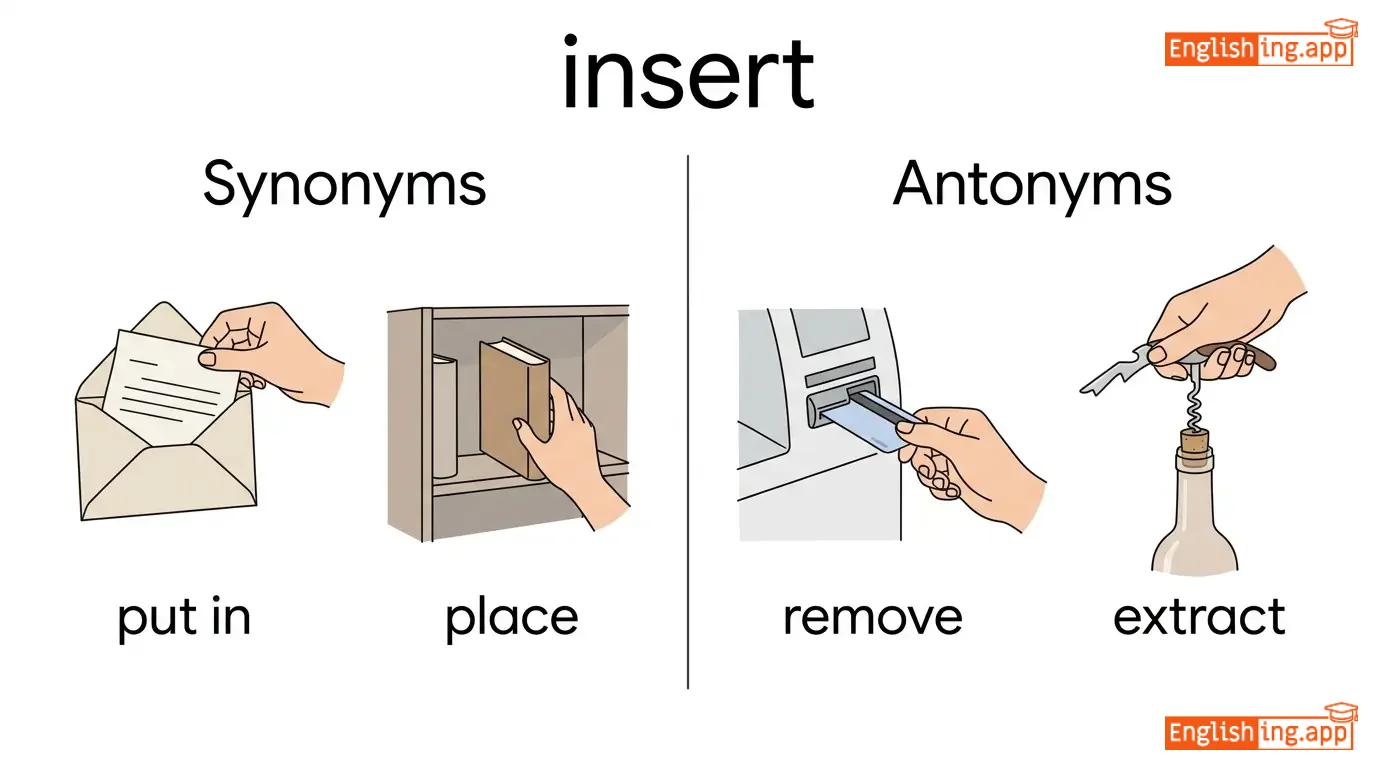
put in, place, embed, add, introduce
••••••
|
remove, extract
••••••
|
insert card, insert text, insert disk, insert key
••••••
|
挿入するは物を別の物に入れること、カードを挿入してみよう!
••••••
|
|
#1
🐞
|
/ˈɪnsekt/
noun
(インセクト)
••••••
|
- •••••• |
昆虫
konchū
••••••
|
- •••••• | - •••••• | - •••••• | - •••••• |
a small animal with six legs and usually wings, such as a bee or an ant
••••••
|
A butterfly is a beautiful type of insect.
蝶は美しい種類のインセクトです。
••••••
|
蝶は美しい種類のインセクトです。
Chou wa utsukushī shurui no inseku to desu.
••••••
|
insect bite
虫に刺された跡
••••••
|
a mark or swelling caused by an insect's sting or bite
••••••
|
虫に刺された跡
Mushi ni sasareta ato
••••••
|
bug, creature, ant, bee, beetle
••••••
|
mammal, reptile
••••••
|
flying insect, insect bite, insect species, insect repellent
••••••
|
In + seku = 小さなセクションに分かれた昆虫 🐜
••••••
|
|
#1
⌨️
|
/ˈɪnpʊt/
noun
(インプット)
••••••
|
- •••••• |
入力、提供された情報
input, teikyō sareta jōhō
••••••
|
- •••••• | - •••••• | - •••••• | - •••••• |
information, advice, or data that is put into a system, device, or process
••••••
|
The manager asked for everyone's input on the new project.
マネージャーは新しいプロジェクトに対する全員のインプットを求めました。
••••••
|
マネージャーは新しいプロジェクトに対する全員のインプットを求めました。
Manējā wa atarashī purojekuto ni taisuru zen'in no inputto o motomemashita.
••••••
|
data input
データ入力
••••••
|
the act of entering data into a computer system
••••••
|
データ入力
dēta nyūryoku
••••••
|
contribution, feedback, suggestion, data, information
••••••
|
output, result
••••••
|
user input, data input, input device, input field
••••••
|
インプットはシステムにデータを入れることです!
••••••
|
|
#1
💡
|
/ˈɪnəˌveɪtɪv/
adjective
(イノベーティブ)
••••••
|
|
革新的
kakushinteki
••••••
|
- •••••• | - •••••• | - •••••• | - •••••• |
introducing new ideas, methods, or products; creative and original
••••••
|
The company is known for its innovative solutions.
その会社は革新的な解決策で知られています。
••••••
|
その会社は革新的な解決策で知られています。
Sono kaisha wa kakushinteki na kaiketsusaku de shirareteimasu.
••••••
|
- •••••• | - •••••• | - •••••• |
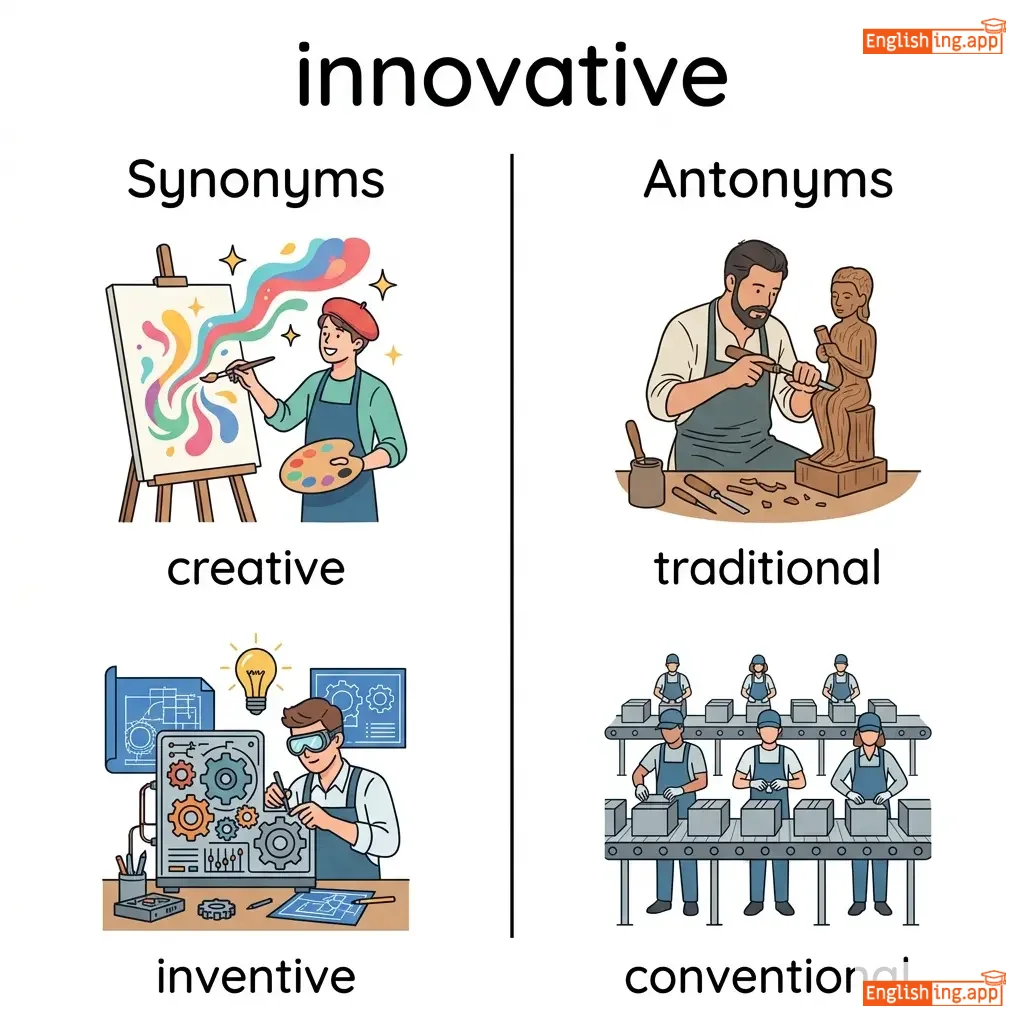
creative, inventive, original, cutting-edge, imaginative
••••••
|
traditional, conventional, old-fashioned
••••••
|
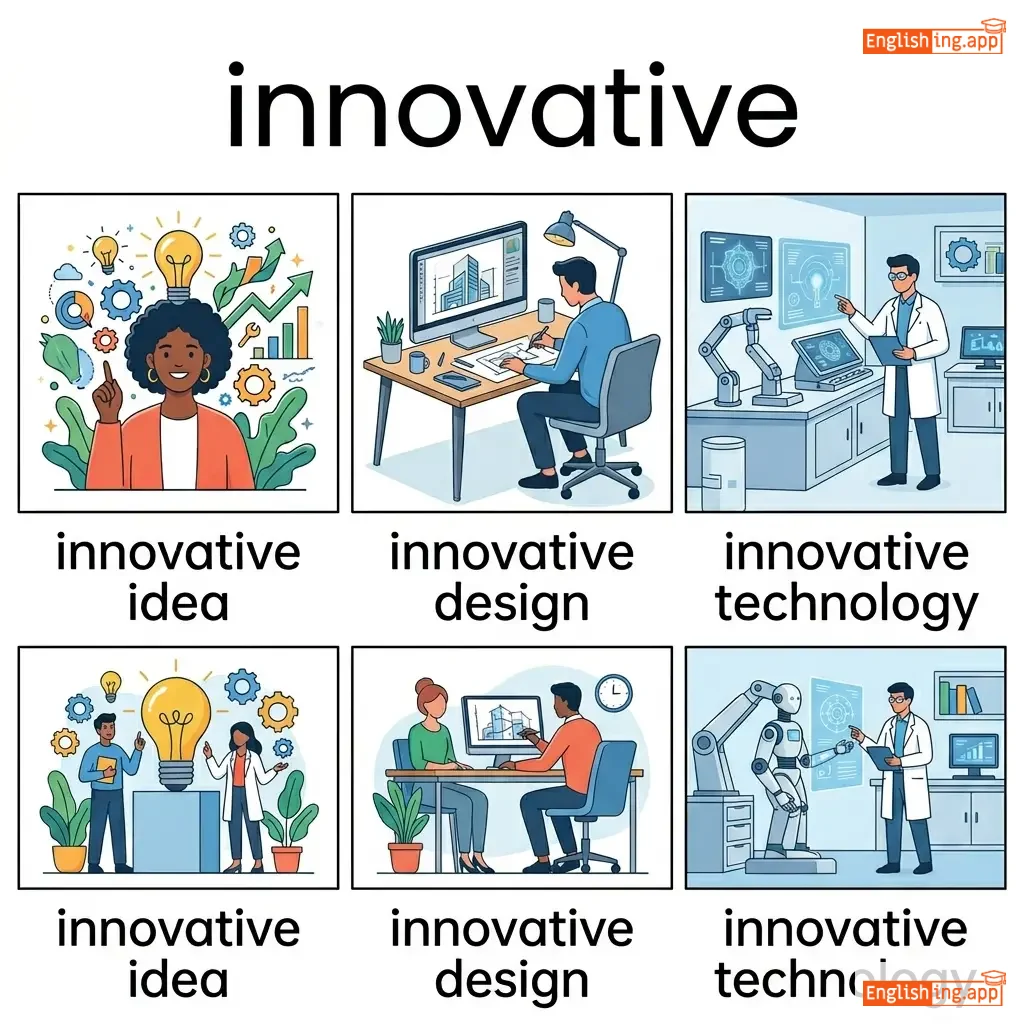
innovative idea, innovative design, innovative technology, innovative approach
••••••
|
革新的は新しいアイデアや方法を意味し、創造的であることを示します。
••••••
|
|
#1
🚔
|
/ˈɪnˌmeɪt/
noun
(インメート)
••••••
|
- •••••• |
囚人
shuujin
••••••
|
- •••••• | - •••••• | - •••••• | - •••••• |
a person confined to an institution such as a prison or hospital
••••••
|
The prison has over a thousand inmates.
刑務所には千人以上の囚人がいます。
••••••
|
刑務所には千人以上の囚人がいます。
Keimusho ni wa sen'nin ijou no shuuji ga imasu.
••••••
|
- •••••• | - •••••• | - •••••• |
prisoner, convict, detainee, captive
••••••
|
visitor, guard, free person
••••••
|
prison inmate, hospital inmate, fellow inmate, release an inmate
••••••
|
In + mate = 囚人, 刑務所の囚人
••••••
|
|
#1
🧬
|
/ˈhɔːrmoʊn/
noun
(ホルモン)
••••••
|
- •••••• |
ホルモン
horumon
••••••
|
- •••••• | - •••••• | - •••••• | - •••••• |
a chemical substance produced in the body that influences how the body grows or functions
••••••
|
Insulin is a hormone that controls blood sugar levels.
インスリンは血糖値をコントロールするホルモンです。
••••••
|
インスリンは血糖値をコントロールするホルモンです。
Insurin wa kettōchi o kontorōru suru horumon desu.
••••••
|
- •••••• | - •••••• | - •••••• |
chemical, secretion, enzyme, messenger
••••••
|
none, null
••••••
|
growth hormone, sex hormone, hormone levels
••••••
|
ホルモン:体内で化学反応を起こし、体をコントロールする!
••••••
|
|
#1
🏠
|
/ɪnˈhɛrɪt/
verb
(インヘリット)
••••••
|
|
相続する
souzoku suru
••••••
|
inherited
インヘリテッド
••••••
|
inherited
インヘリテッド
••••••
|
inherits
インヘリッツ
••••••
|
inheriting
インヘリティング
••••••
|
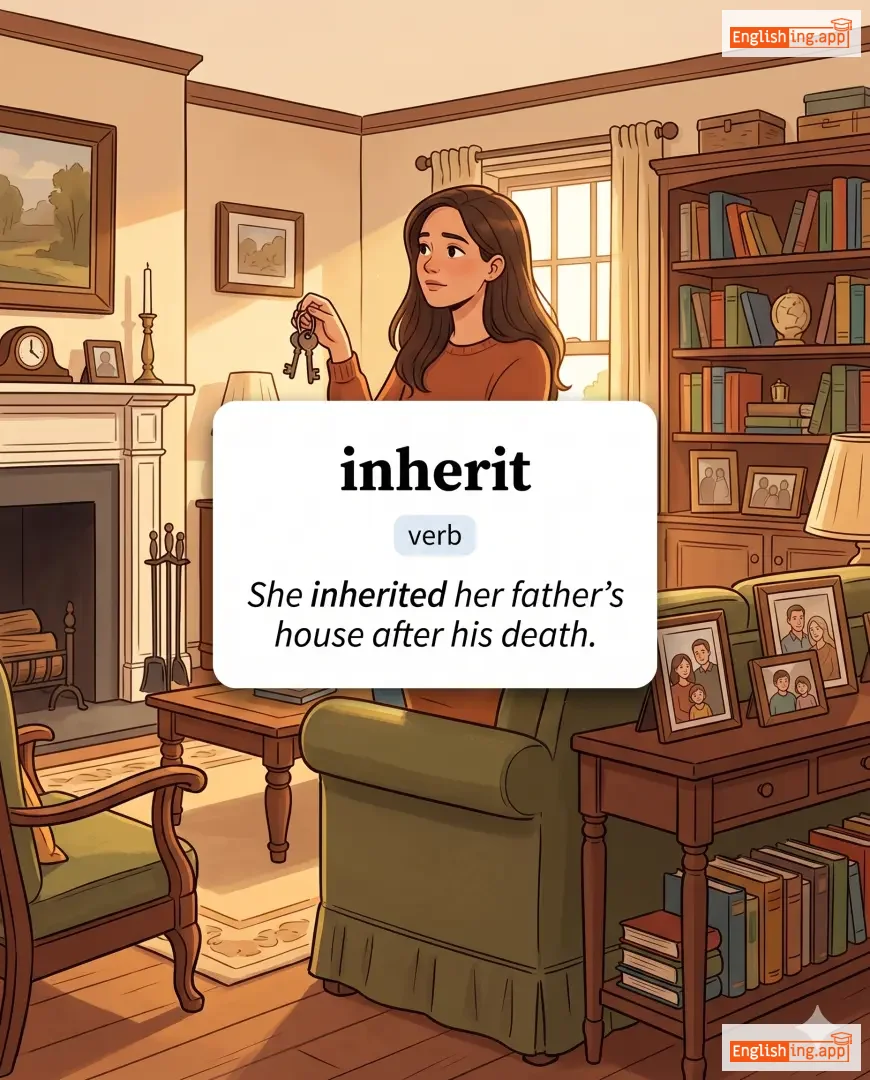
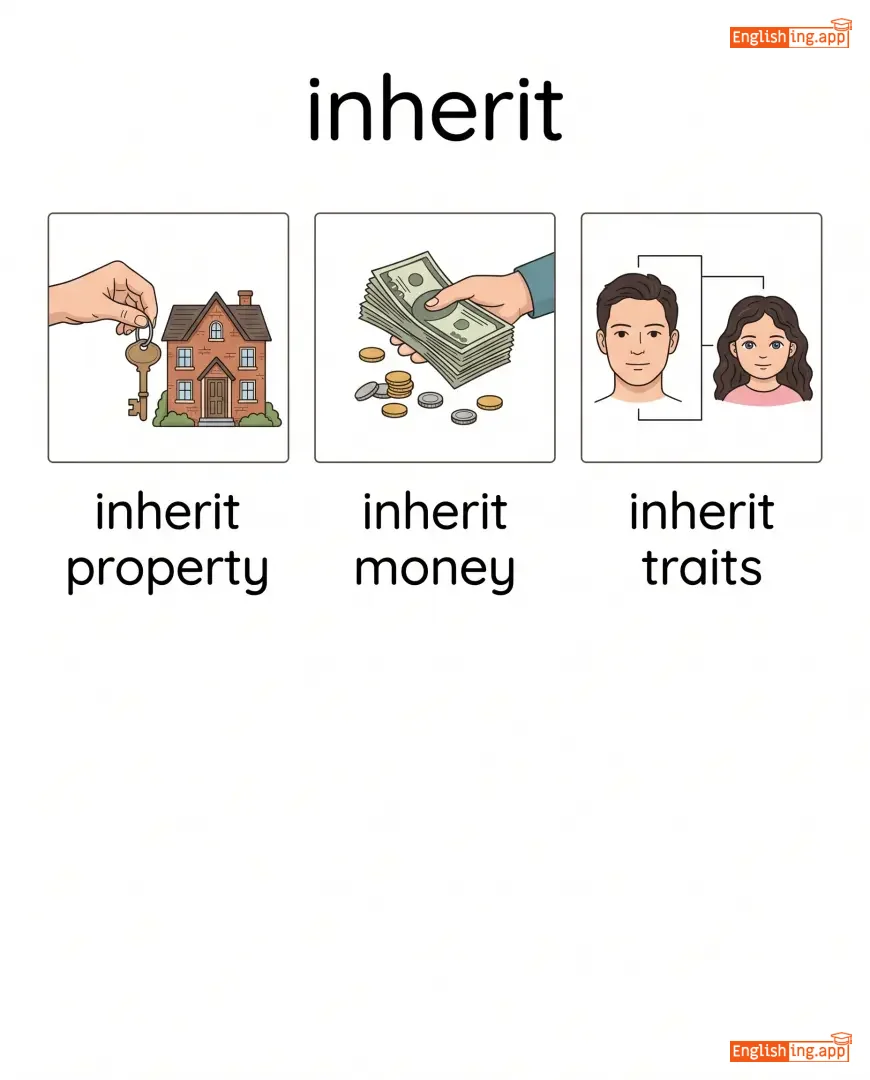
to receive property, money, or traits from someone after their death or from ancestors
••••••
|
She inherited her father's house after his death.
彼女は父親の死後、家を相続しました。
••••••
|
彼女は父親の死後、家を相続しました。
Kanojo wa chichi no shigo, ie o souzoku shimashita.
••••••
|
inherit the earth
地球を相続する
••••••
|
to gain control or possession of the world or land, often used metaphorically
••••••
|
地球を相続する
chikyuu o souzoku suru
••••••
|
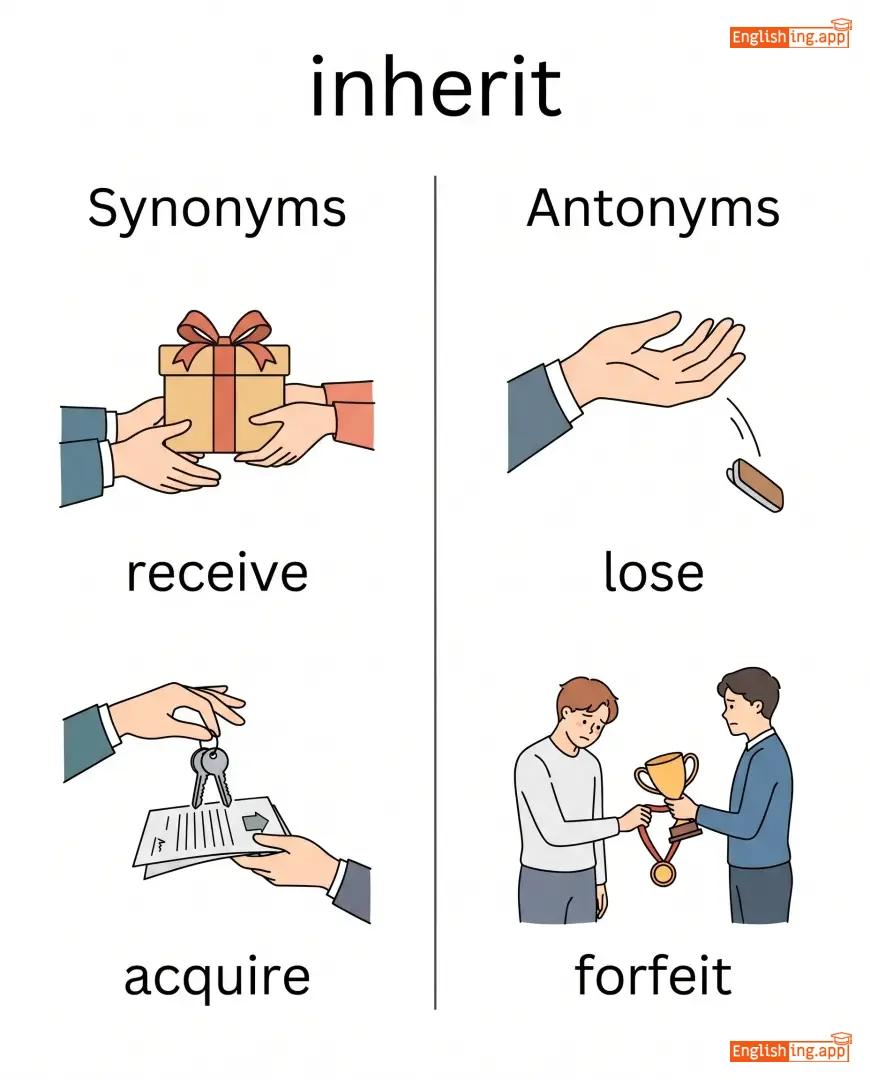
receive, acquire, obtain, succeed, derive
••••••
|
lose, forfeit, give up
••••••
|
inherit property, inherit money, inherit traits, inherit wealth
••••••
|
Inherit は in(中) + heritage(遺産) — 中 heritage は相続することです。
••••••
|
|
#1
🏗️
|
/ˈɪnfrəˌstrʌktʃər/
noun
(インフラストラクチャー)
••••••
|
|
インフラストラクチャー
infurasutorakuchaa
••••••
|
- •••••• | - •••••• | - •••••• | - •••••• |
the basic physical and organizational structures and facilities needed for the operation of a society or enterprise
••••••
|
The government is investing heavily in transport infrastructure.
政府は交通インフラに大規模な投資を行っています。
••••••
|
政府は交通インフラに大規模な投資を行っています。
Seifu wa kōtsū infura ni daikibō na tōshi o okonatteimasu.
••••••
|
- •••••• | - •••••• | - •••••• |
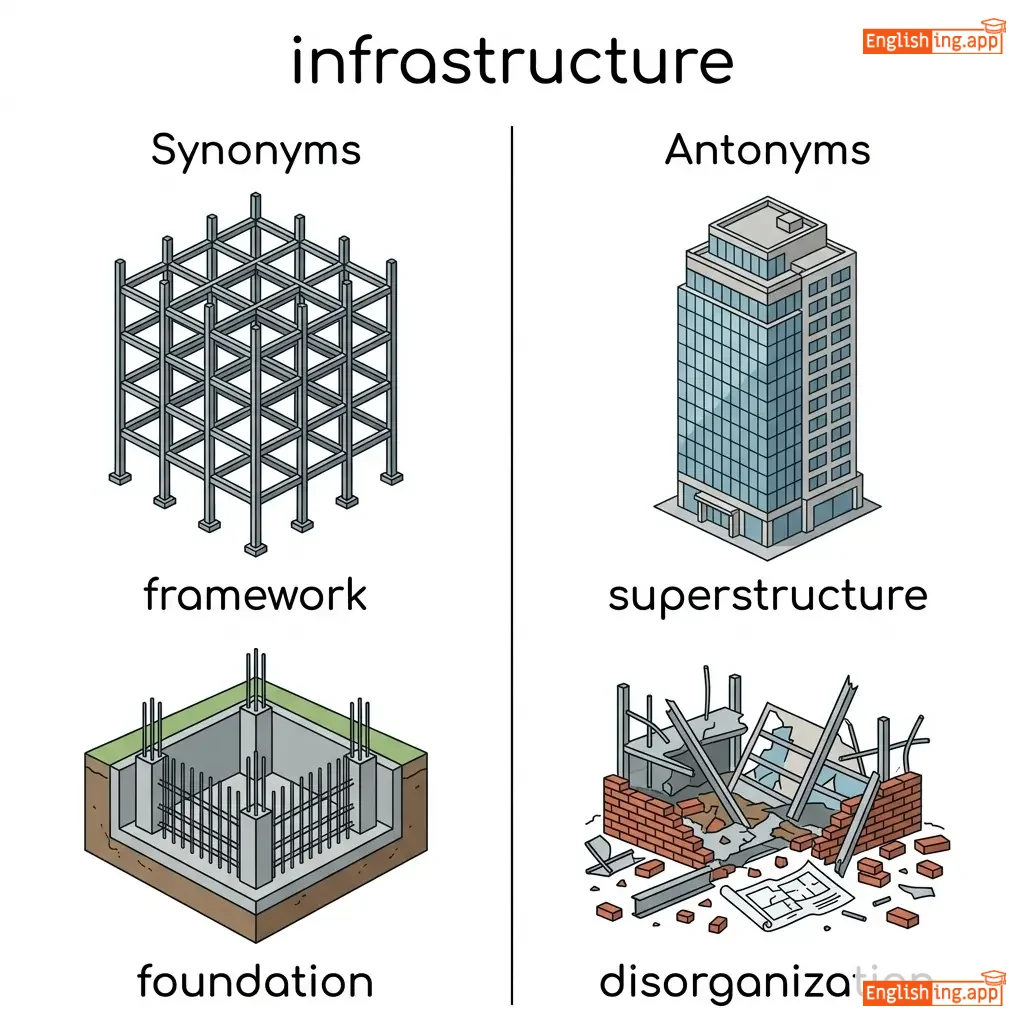
framework, foundation, base, system, network
••••••
|
superstructure, disorganization, destruction
••••••
|
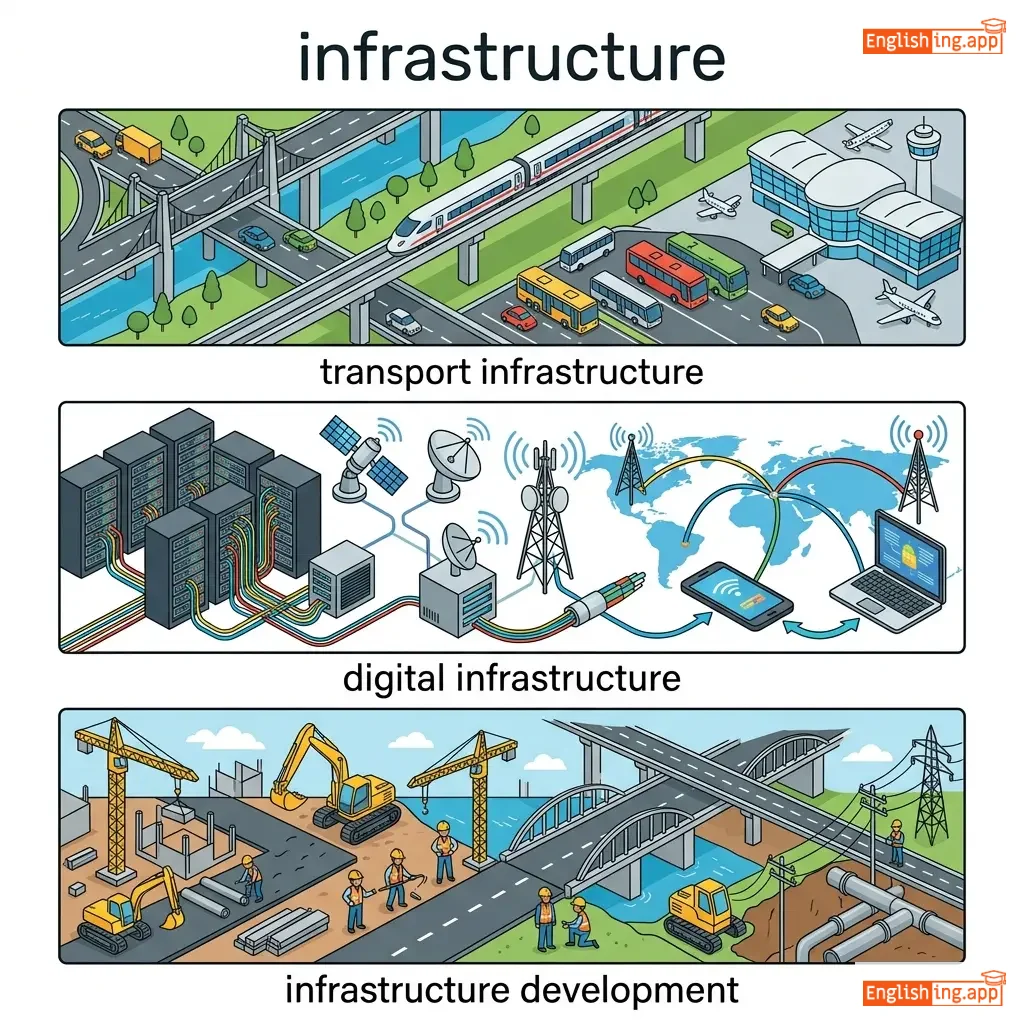
transport infrastructure, digital infrastructure, infrastructure development, public infrastructure
••••••
|
Infraは下に、structureは構造を意味します。インフラストラクチャーは基本的な構造です。
••••••
|
|
#1
🌀
|
/ɪnˈɛvɪtəbli/
adverb
(イネヴィタブリー)
••••••
|
- •••••• |
避けられない
sakerarenai
••••••
|
- •••••• | - •••••• | - •••••• | - •••••• |
in a way that cannot be avoided or prevented
••••••
|
Inevitably, the team faced challenges during the project. |
避けられないことに、チームはプロジェクト中に挑戦に直面しました。
Sakerarenai koto ni, chīmu wa purojekuto-chū ni chōsen ni chokumen shimashita.
••••••
|
as inevitably as night follows day |
something that is certain to happen
••••••
|
夜が昼に続くように避けられない
Yoru ga hiru ni tsuzuku yō ni sakerarenai
••••••
|
unavoidably, certainly, surely, predictably, inescapably
••••••
|
avoidably, preventably, uncertainly
••••••
|
inevitably lead, inevitably result, inevitably follow, inevitably happen
••••••
|
避けられないということは避けられないので、必ず避けられません 🌀
••••••
|
|
#1
🌟
|
/ɪnˈkrɛdɪbli/
adverb
(インクレディブリー)
••••••
|
- •••••• |
信じられないほど
shinjirarenai hodo
••••••
|
- •••••• | - •••••• | - •••••• | - •••••• |
to a great degree; extremely or unbelievably
••••••
|
The view from the top of the mountain was incredibly beautiful. |
山頂からの景色は信じられないほど美しかった。
Sanchō kara no keshiki wa shinjirarenai hodo utsukushikatta.
••••••
|
- •••••• | - •••••• | - •••••• |
extremely, amazingly, unbelievably, remarkably, extraordinarily
••••••
|
barely, slightly, hardly
••••••
|
incredibly beautiful, incredibly fast, incredibly talented, incredibly hard
••••••
|
信じられないほど は信じるのが難しいほど美しいという意味!
••••••
|
|
#1
⚡
|
/ˈɪmpʌls/
noun
(インパルス)
••••••
|
- •••••• |
衝動
shōdō
••••••
|
- •••••• | - •••••• | - •••••• | - •••••• |
a sudden strong desire or urge to act without thinking
••••••
|
He bought the watch on impulse without planning to. |
彼は計画なしで衝動的に時計を買いました。
Kare wa keikaku nashi de shōdō-teki ni tokei o kaimashita.
••••••
|
impulse buying |
purchasing things spontaneously without prior thought
••••••
|
衝動買い
shōdō-gai
••••••
|
urge, instinct, drive, compulsion, motivation
••••••
|
restraint, hesitation, caution
••••••
|
impulse control, sudden impulse, natural impulse, strong impulse
••••••
|
Impulse = 突然買いたくなる衝動 ⚡
••••••
|
|
#1
📈
|
/ɪmˈpruːvd/
adjective
(インプルーヴド)
••••••
|
- •••••• |
改善された
kaizen sareta
••••••
|
- •••••• | - •••••• | - •••••• | - •••••• |
made better or enhanced in quality or condition
••••••
|
Her health has significantly improved since last month.
彼女の健康は先月から大きく改善されました。
••••••
|
彼女の健康は先月から大きく改善されました。
Kanojo no kenkō wa sengetsu kara ōkiku kaizen saremashita.
••••••
|
improved version
改善版
••••••
|
a newer and better form of something
••••••
|
改善版
kaizen ban
••••••
|
enhanced, upgraded, refined, developed, advanced
••••••
|
worsened, declined, deteriorated
••••••
|
improved performance, improved quality, improved system, improved health
••••••
|
Improved はより良くなったという意味です — 更新された電話、改善版 📱
••••••
|
|
#1
⚡
|
/ɪmˈpɔːtəntli/
adverb
(インポータントリー)
••••••
|
- •••••• |
重要な方法で
jūyōna hōhō de
••••••
|
- •••••• | - •••••• | - •••••• | - •••••• |
in a way that is of great significance or value
••••••
|
Importantly, the report highlights the need for immediate action. |
重要な方法で、報告書は即時の行動の必要性を強調しました。
Jūyōna hōhō de, hōkokusho wa sokujitsu no kōdō no hitsuyō-sei o kyōchō shimashita.
••••••
|
- •••••• | - •••••• | - •••••• |
significantly, notably, crucially, essentially, vitally
••••••
|
insignificantly, trivially, unimportantly
••••••
|
importantly, more importantly, very importantly, most importantly
••••••
|
Importantlyという言葉は、重要な方法で何かを強調するときに使います。
••••••
|
|
#1
⚙️
|
/ˌɪmplɪmenˈteɪʃən/
noun
(インプリメンテーション)
••••••
|
|
実施
jisshi
••••••
|
- •••••• | - •••••• | - •••••• | - •••••• |
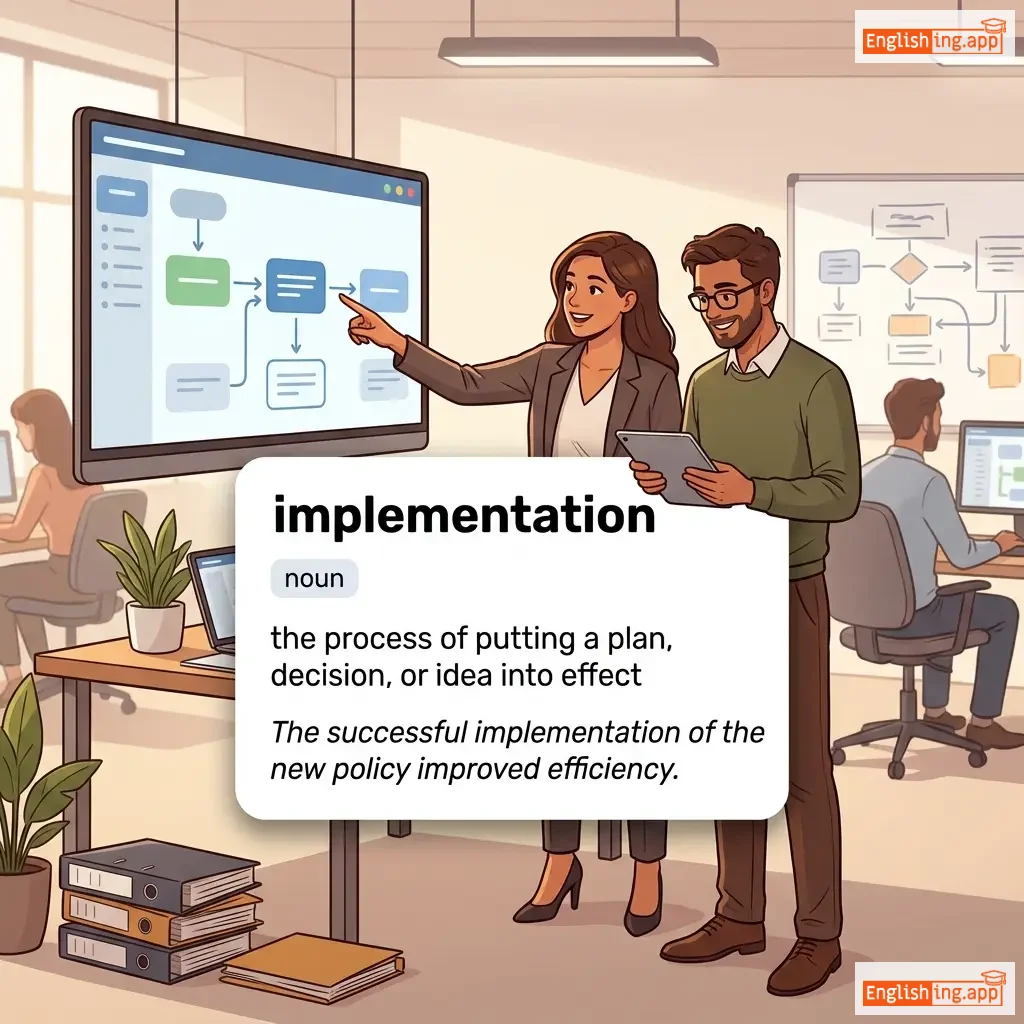
the process of putting a plan, decision, or idea into effect
••••••
|
The successful implementation of the new policy improved efficiency. |
新しい方針の実施が効率を向上させました。
Atarashii houshin no jisshi ga kōritsu o kōjō sasenomashita.
••••••
|
plan implementation |
the act of executing a planned action
••••••
|
計画の実施
keikaku no jisshi
••••••
|
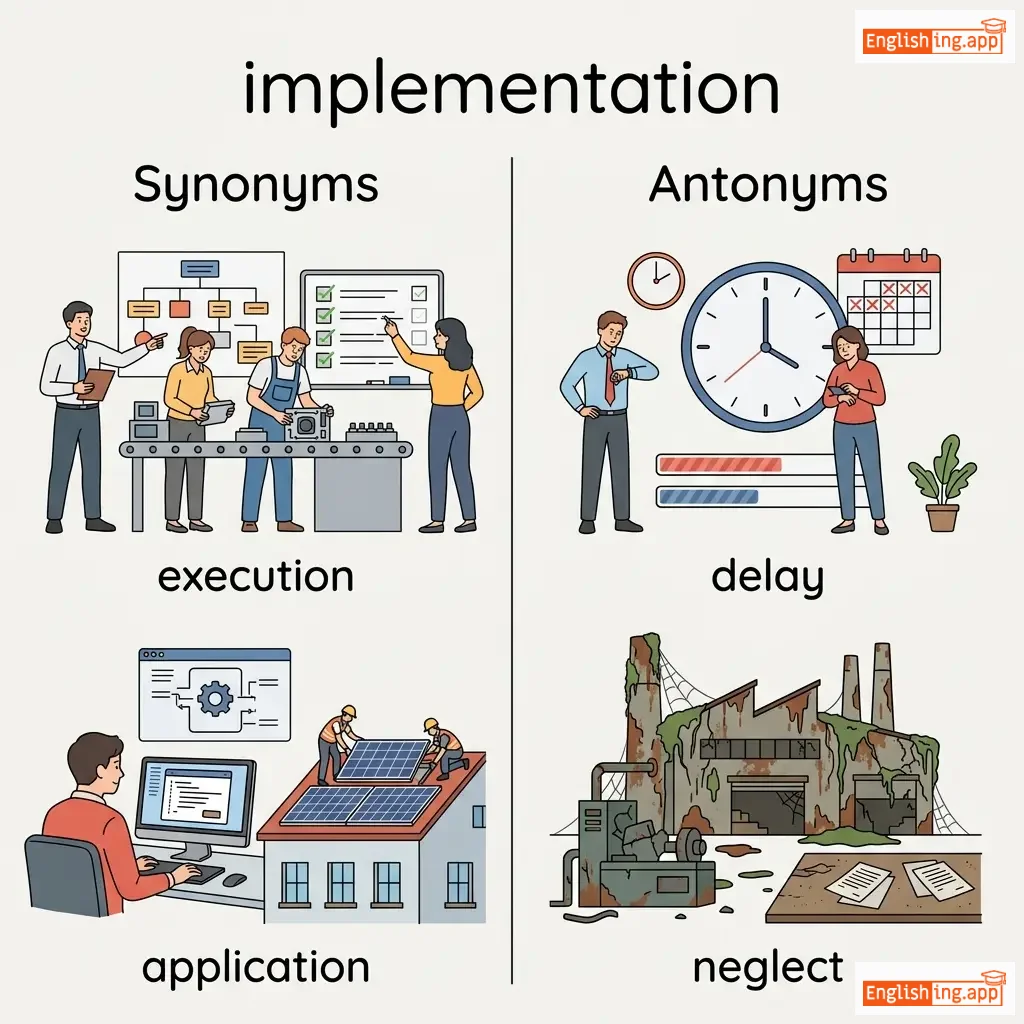
execution, application, realization, deployment, enforcement
••••••
|
delay, neglect, failure
••••••
|
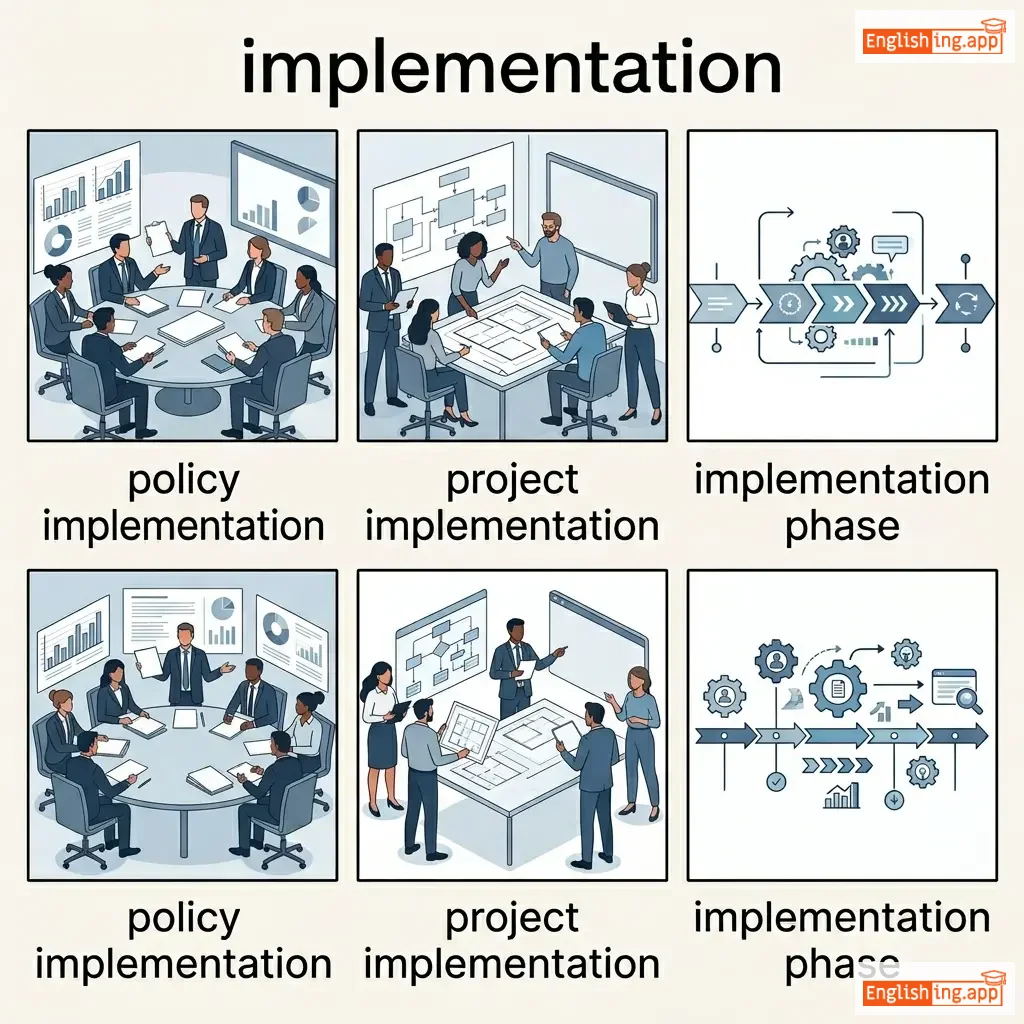
policy implementation, project implementation, implementation phase, strategy implementation
••••••
|
Implementは実行するという意味、実施はそのプロセスを示します。
••••••
|
|
#1
🏹
|
/hʌnt/
verb
(hant)
••••••
|
|
狩り
kari
••••••
|
hunted
hanted
••••••
|
hunted
hanted
••••••
|
hunts
hants
••••••
|
hunting
hanting
••••••
|
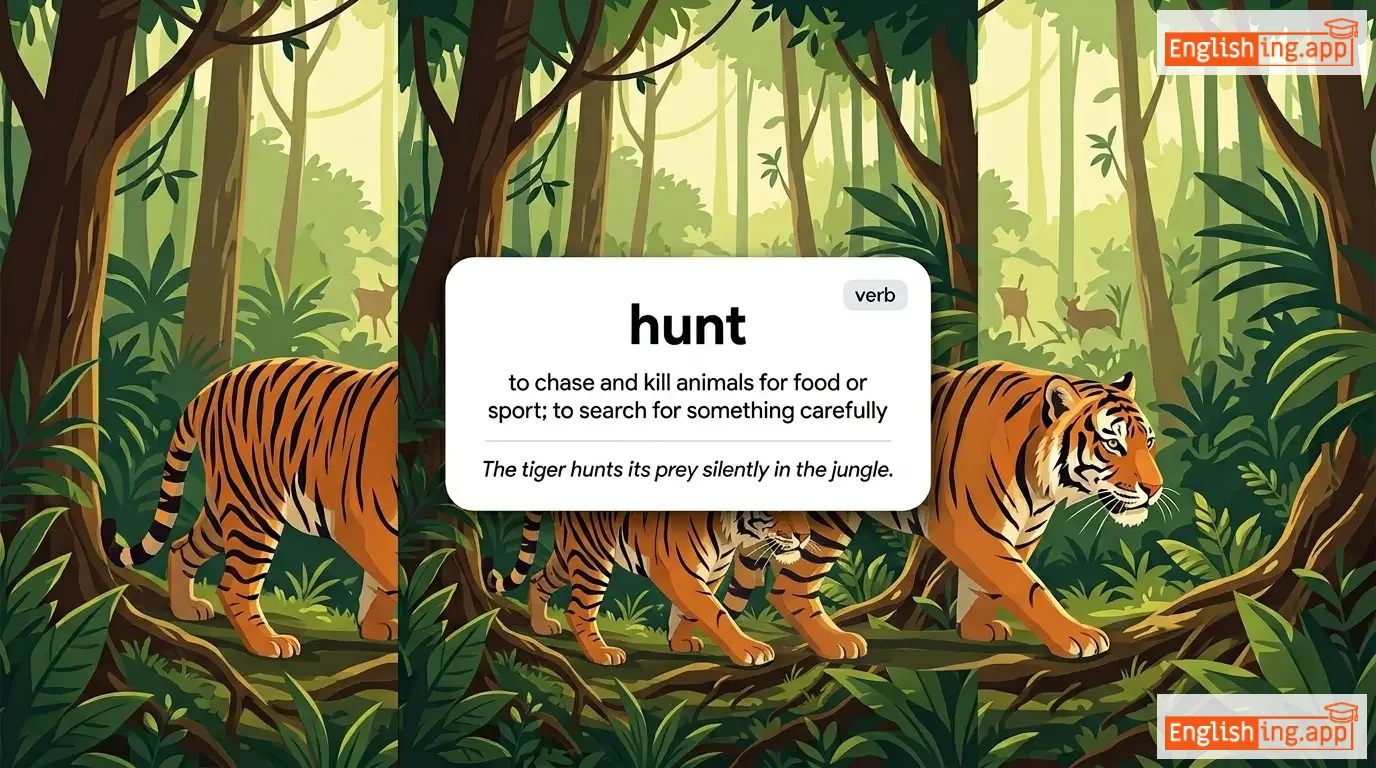
to chase and kill animals for food or sport; to search for something carefully
••••••
|
The tiger hunts its prey silently in the jungle.
トラはジャングルで静かに獲物を狩ります。
••••••
|
トラはジャングルで静かに獲物を狩ります。
Tora wa janguru de shizuka ni emono o karimasu.
••••••
|
on the hunt for
獲物を求めて
••••••
|
actively searching for something or someone
••••••
|
探し中
sagashichū
••••••
|
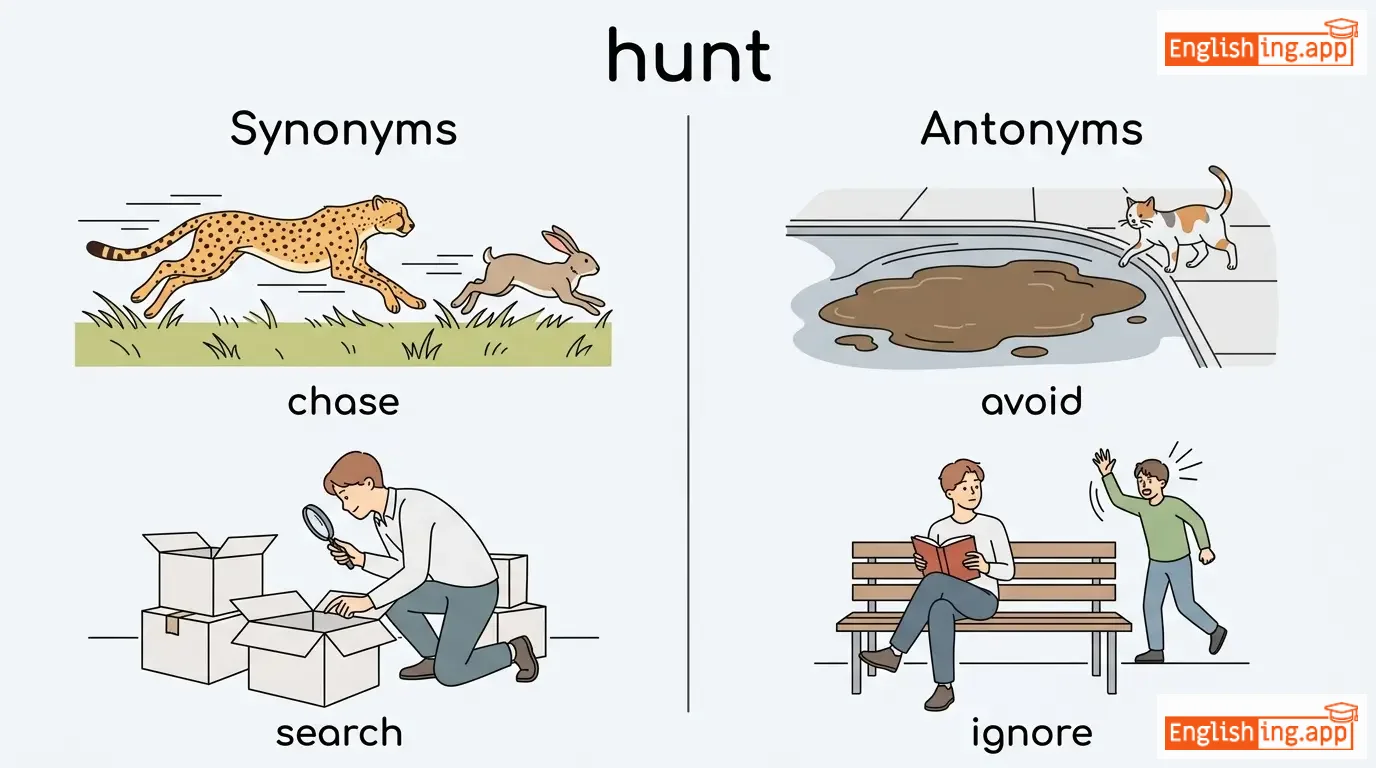
chase, search, track, pursue, seek
••••••
|
avoid, ignore, escape
••••••
|
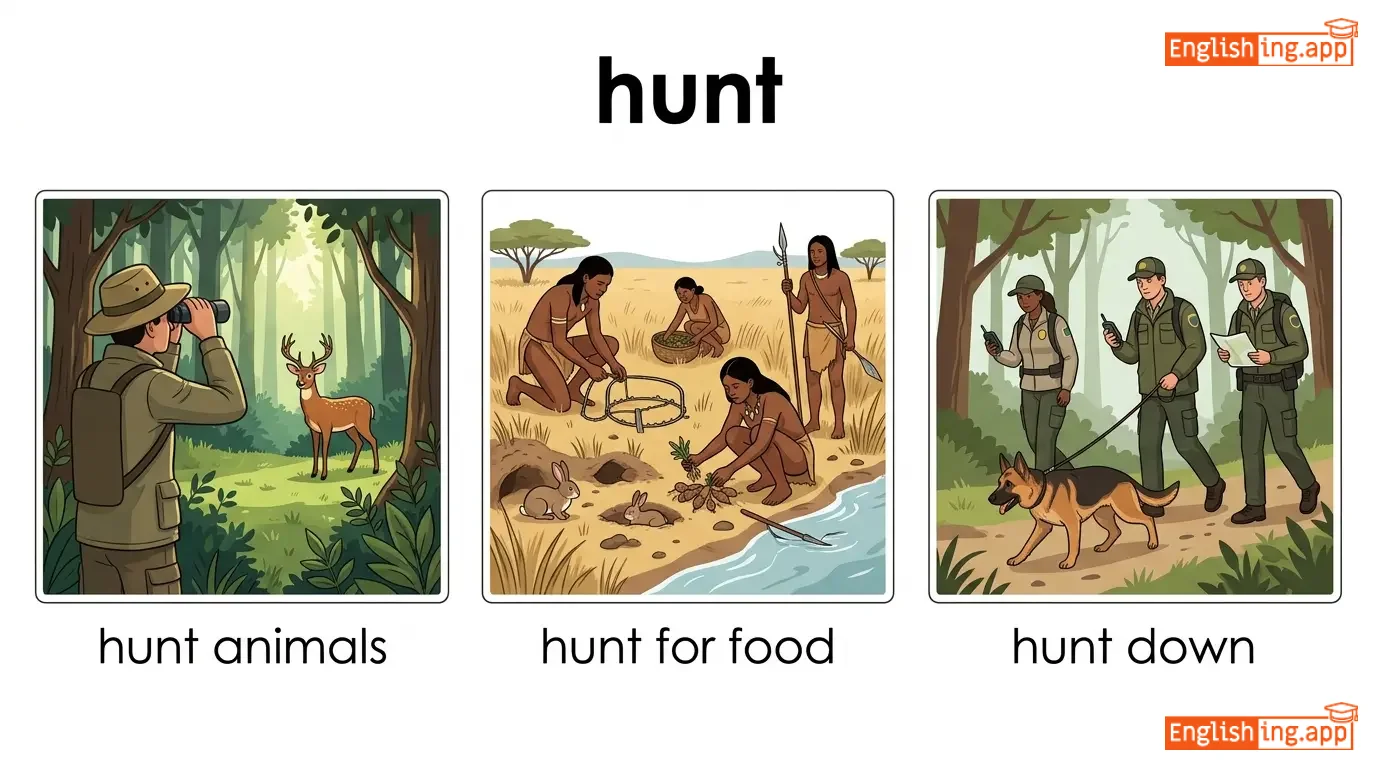
hunt animals, hunt for food, hunt down, go hunting
••••••
|
狩りに行く、目標を見つけよう!
••••••
|
|
#1
🌍
|
/hjuːˈmænɪti/
noun
(ヒューマニティ)
••••••
|
- •••••• |
人間性
ningen-sei
••••••
|
- •••••• | - •••••• | - •••••• | - •••••• |
the quality of being human; kindness or compassion towards others; all human beings collectively
••••••
|
Kindness is one of the greatest expressions of humanity. |
優しさは人間性の最も偉大な表現の一つです。
Yasashisa wa ningen-sei no mottomo idaina hyōgen no hitotsu desu.
••••••
|
crimes against humanity |
serious offenses that harm large groups of people
••••••
|
人道に対する罪
Jindō ni taisuru tsumi
••••••
|
mankind, humankind, compassion, benevolence, kindness
••••••
|
cruelty, inhumanity, brutality
••••••
|
show humanity, act with humanity, crimes against humanity, humanity and compassion
••••••
|
人間性は人間の本質、思いやりと優しさに表れる。
••••••
|
|
#1
🤔
|
/hʌ/
interjection
(は?)
••••••
|
- •••••• |
なんて言ったの?
nante itta no?
••••••
|
- •••••• | - •••••• | - •••••• | - •••••• |
used to express confusion, surprise, or that you did not hear something
••••••
|
Huh? What did you say? |
は?なんて言ったの?
Ha? Nante itta no?
••••••
|
- •••••• | - •••••• | - •••••• |
what, pardon, eh, really, oh
••••••
|
none, silence
••••••
|
say huh, huh expression, confused huh, huh reaction
••••••
|
何かを聞き逃したときは 'Huh?' と言おう — それは 'なんて言ったの?' の意味
••••••
|
|
#1
🤗
|
/hʌɡ/
verb
(ハグ)
••••••
|
- •••••• |
抱きしめる
dakishimeru
••••••
|
hugged
ハグド
••••••
|
hugged
ハグド
••••••
|
hugs
ハグス
••••••
|
hugging
ハギング
••••••
|
to hold someone tightly in your arms to show affection or comfort
••••••
|
She hugged her friend before leaving for the airport.
シー ハグド ハー フレンド ビフォー リービング フォー ザ エアポート。
••••••
|
彼女は空港に向かう前に友達を抱きしめた。
Kanojo wa kuukou ni mukau mae ni tomodachi wo dakishimeta.
••••••
|
a bear hug
ア ベア ハグ
••••••
|
a very tight and affectionate hug
••••••
|
強い抱擁
tsuyoi houyou
••••••
|
embrace, cuddle, hold, squeeze, clasp
••••••
|
ignore, release, separate
••••••
|
give a hug, warm hug, tight hug, hug someone, big hug
••••••
|
Hug は心で抱きしめること。
••••••
|
|
#1
😖
|
/ˈhɔːrɪbəl/
adjective
(ホリブル)
••••••
|
- •••••• |
ひどい, 恐ろしい
hidoi, osoroshii
••••••
|
- •••••• | - •••••• | - •••••• | - •••••• |
very unpleasant or causing horror; extremely bad or unpleasant
••••••
|
The food at that restaurant was horrible. |
そのレストランの料理はひどかった。
Sono resutoran no ryōri wa hidokatta.
••••••
|
horrible dream |
a very bad or frightening dream
••••••
|
恐ろしい夢
osoroshī yume
••••••
|
terrible, awful, dreadful, nasty, unpleasant
••••••
|
pleasant, wonderful, nice
••••••
|
horrible accident, horrible smell, horrible feeling
••••••
|
Horrible は Horror のようなもの — とても悪い! 😖
••••••
|
|
#1
📯
|
/hɔːrn/
noun
(ホーン)
••••••
|
- •••••• |
角, ホーン
kaku, hōn
••••••
|
- •••••• | - •••••• | - •••••• | - •••••• |
a hard, pointed part growing from the head of some animals; a device that makes a loud sound as a warning
••••••
|
The driver pressed the horn to warn the pedestrians. |
運転手は歩行者に警告するためにホーンを鳴らしました。
Untenshu wa hokōsha ni keikoku suru tame ni hōn o narashimashita.
••••••
|
toot your own horn |
to boast or brag about oneself
••••••
|
自分を自慢する
jibun o jiman suru
••••••
|
trumpet, alarm, antler, signal
••••••
|
silence, mute
••••••
|
car horn, blow horn, honk horn, horn sound
••••••
|
ホーンを鳴らす 📯 – 注意を引く、動物の角のように!
••••••
|
Vocabulary Quiz
Test your vocabulary by matching words with their translations or meanings.
Login to take the quiz
Comments (0)
Share your thoughts and join the discussion.
Join the discussion by logging in
Login to CommentNo comments yet
Be the first to share your thoughts!