

翻訳
過去
過去分詞
三人称単数
動名詞
意味
例文
例文の翻訳
同義語
対義語
コロケーション
ニーモニック

Swipe left or right, or use the buttons. Tap image to zoom.
例文の翻訳
単語
Lesson 269Lesson 269 - マスクトグル
|
絵文字
|
単語 | Images | 翻訳 | 過去 | 過去分詞 | 三人称単数 | 動名詞 | 意味 | 例文 | 例文の翻訳 | 表現例 | 表現例の意味 | 表現例の翻訳 | 同義語 | 対義語 | コロケーション | ニーモニック |
|---|---|---|---|---|---|---|---|---|---|---|---|---|---|---|---|---|---|
|
#8040
🐍
|
/ˈsɪbɪləns/
noun
(シビランス)
••••••
|
- •••••• |
シューシュー音
shūshū on
••••••
|
- •••••• | - •••••• | - •••••• | - •••••• |
A hissing or hushing sound, especially in speech with 's' or 'sh'.
••••••
|
The poet used sibilance to create a soft, hissing effect in the verse. |
詩人は詩の中で柔らかいシューシュー音を作り出すためにシビランスを使いました。
Shijin wa shi no naka de yawarakai shūshū on o tsukuridashu tame ni shibiransu o tsukaimashita.
••••••
|
- •••••• | - •••••• | - •••••• |
hiss, hissing, whisper, susurration, shushing
••••••
|
silence, quiet, stillness
••••••
|
sibilance in poetry, heavy sibilance, create sibilance, sibilance effect
••••••
|
シビランスはヘビのシューシュー音のようです。シューシュー!
••••••
|
|
#8041
🔤
|
/ˌsɪɡnɪfɪˈkeɪʃən/
noun
(シグニフィケーション)
••••••
|
- •••••• |
意味
imi
••••••
|
- •••••• | - •••••• | - •••••• | - •••••• |
the meaning or sense conveyed by a word, action, or symbol
••••••
|
The signification of the gesture was misunderstood. |
そのジェスチャーの意味は誤解されていました。
Sono jesuchā no imi wa gokai sarete imashita.
••••••
|
- •••••• | - •••••• | - •••••• |
meaning, sense, implication, interpretation
••••••
|
nonsense, insignificance
••••••
|
linguistic signification, symbolic signification, signification of terms
••••••
|
Signification は意味を示す、覚えやすい!
••••••
|
|
#8042
⭐
|
/sɪɡˈnɪfɪkənt/
adjective
(シグニフィカント)
••••••
|
|
重要な
jūyōna
••••••
|
- •••••• | - •••••• | - •••••• | - •••••• |
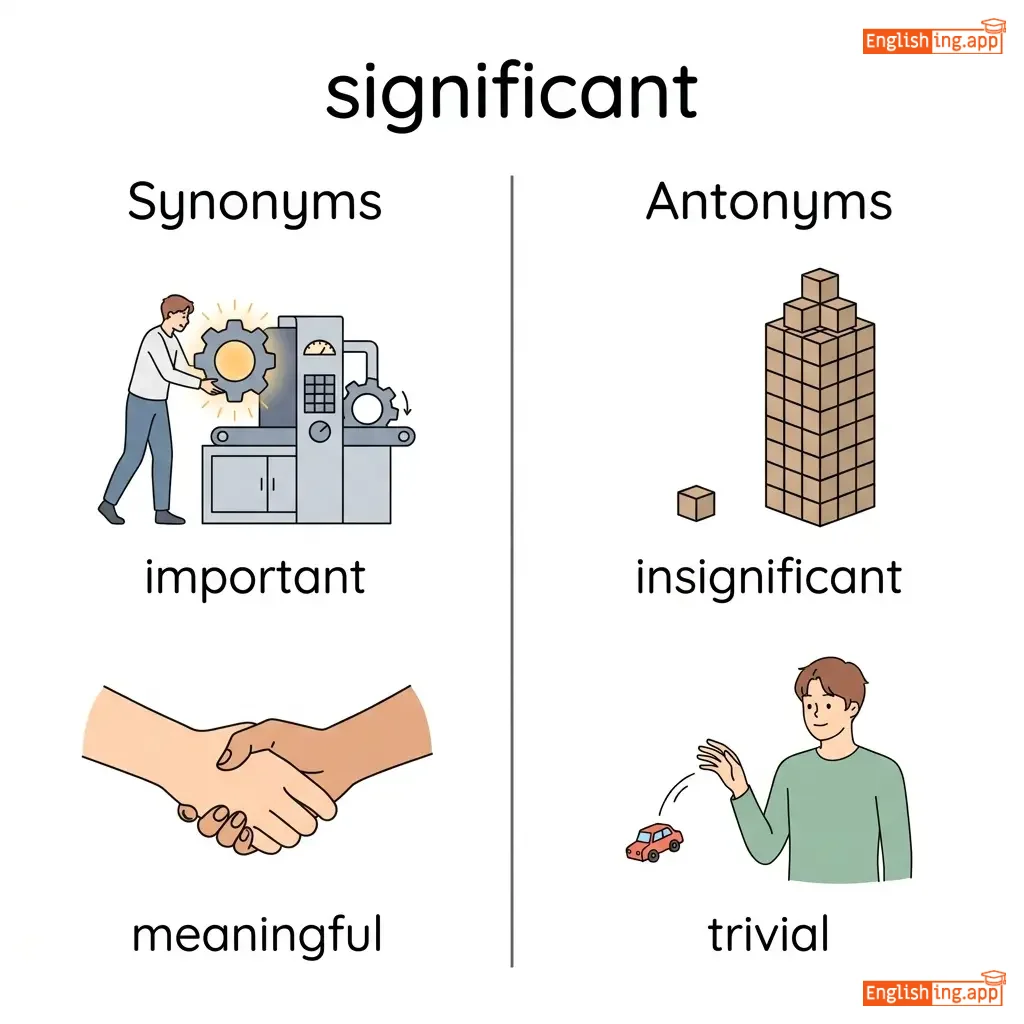
important, meaningful, or having a noticeable effect
••••••
|
The company made a significant investment in new technology. |
会社は新しい技術に重要な投資をしました。
Kaisha wa atarashī gijutsu ni jūyōna tōshi o shimashita.
••••••
|
significant other |
a person with whom someone has an established romantic or sexual relationship
••••••
|
重要な他者
jūyōna tasha
••••••
|
important, meaningful, considerable, notable, substantial
••••••
|
insignificant, trivial, minor
••••••
|
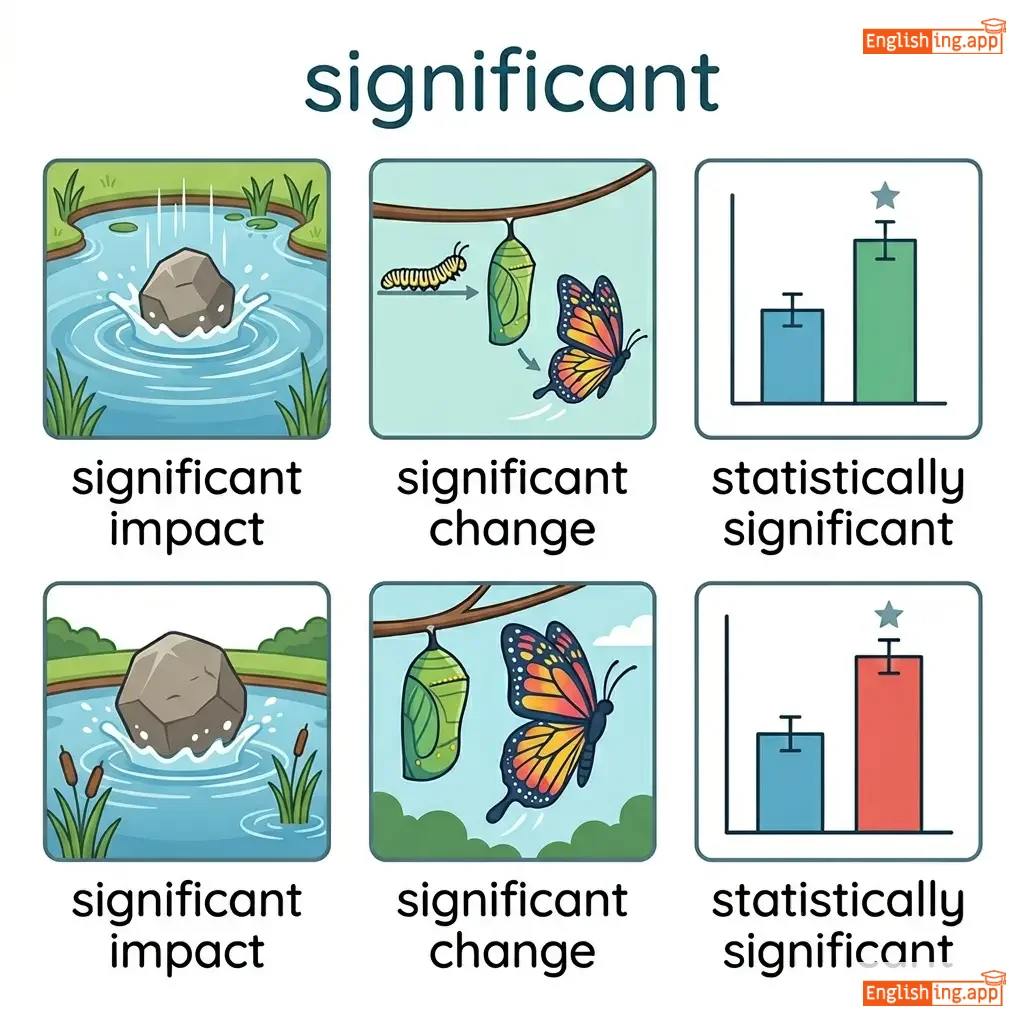
significant impact, significant change, statistically significant, significant role
••••••
|
重要な投資が重要な成果を生み出す
••••••
|
|
#8043
📌
|
/sɪɡˈnɪfɪkəns/
noun
(シグニフィカンス)
••••••
|
- •••••• |
重要性
jūyō-sei
••••••
|
- •••••• | - •••••• | - •••••• | - •••••• |
the quality of being important, meaningful, or worthy of attention
••••••
|
The significance of the discovery was recognized worldwide. |
その発見の重要性は世界中で認識されました。
Sono hakken no jūyō-sei wa sekaijū de ninshiki saremashita.
••••••
|
of great significance |
something very important or meaningful
••••••
|
非常に重要
hijō ni jūyō
••••••
|
importance, meaning, value, weight, consequence
••••••
|
insignificance, triviality
••••••
|
historical significance, cultural significance, great significance, significance level
••••••
|
Significanceは重要性を意味します - 重要なことには意味があります
••••••
|
|
#8044
🚦
|
/ˈsɪɡnəl/
noun/verb
(シグナル)
••••••
|
- •••••• |
合図
aizu
••••••
|
signaled
シグナルド
••••••
|
signaled
シグナルド
••••••
|
signals
シグナルズ
••••••
|
signaling
シグナリング
••••••
|
a gesture, sound, or action used to convey information or instructions
••••••
|
The driver gave a hand signal before turning left.
運転手は左に曲がる前に手の合図を出した。
••••••
|
運転手は左に曲がる前に手の合図を出した。
Unten-shu wa hidari ni magaru mae ni te no aizu o dashita.
••••••
|
signal a change
変化を示す
••••••
|
to indicate that something new is about to happen
••••••
|
変化を示す
henka o shimesu
••••••
|
gesture, indication, sign, cue, alert
••••••
|
silence, concealment
••••••
|
give a signal, danger signal, signal strength, signal failure
••••••
|
信号 = 信号機のように道を示す。
••••••
|
|
#8045
🪣
|
/sɪft/
verb
(シフト)
••••••
|
- •••••• |
ふるいにかける / 注意深く調べる
furui ni kakeru / chuui-bukaku shiraberu
••••••
|
sifted
シフテッド
••••••
|
sifted
シフテッド
••••••
|
sifts
シフツ
••••••
|
sifting
シフティング
••••••
|
to separate or sort through carefully, often using a sieve or by examining closely
••••••
|
She sifted the flour before adding it to the cake mixture.
ケーキのミックスに加える前に、小麦粉をふるいにかけました。
••••••
|
ケーキのミックスに加える前に、小麦粉をふるいにかけました。
Kēki no mikkusu ni kuwaeru mae ni, komugiko o furui ni kakemashita.
••••••
|
sift through
ふるいにかける
••••••
|
to examine something carefully in order to find what is important or useful
••••••
|
注意深く調べる
chuui-bukaku shiraberu
••••••
|
filter, screen, sort, examine, separate
••••••
|
ignore, overlook, neglect
••••••
|
sift flour, sift through evidence, sift carefully, sift information
••••••
|
小麦粉をふるいにかけるのと同じように、情報をふるいにかけて重要なものを見つける。
••••••
|
|
#8046
🏰
|
/siːdʒ/
noun
(シージ)
••••••
|
- •••••• |
包囲
hōi
••••••
|
- •••••• | - •••••• | - •••••• | - •••••• |
A military operation in which a place is surrounded to force its surrender.
••••••
|
The castle fell after a long siege.
城は長い包囲戦の後に落ちました。
••••••
|
城は長い包囲戦の後に落ちました。
Shiro wa nagai hōisen no ato ni ochimashita.
••••••
|
lay siege to
包囲する
••••••
|
to surround and attack a place continuously
••••••
|
包囲する
hōi suru
••••••
|
blockade, encirclement, assault, attack, investment
••••••
|
retreat, withdrawal, truce
••••••
|
under siege, lay siege, siege warfare, prolonged siege
••••••
|
Siegeは'包囲'を意味します → 城を包囲し、降伏させる。
••••••
|
|
#8047
🔀
|
/ˈsaɪdˌtræk/
verb
(サイドトラック)
••••••
|
- •••••• |
気を散らす
ki o chirasu
••••••
|
sidetracked
サイドトラクト
••••••
|
sidetracked
サイドトラクト
••••••
|
sidetracks
サイドトラックス
••••••
|
sidetracking
サイドトラッキング
••••••
|
To distract from the main subject or activity.
••••••
|
She was sidetracked by an unexpected phone call.
彼女は予期しない電話で気を取られた。
••••••
|
彼女は予期しない電話で気を取られた。
Kanojo wa yokishinai denwa de ki o torareta.
••••••
|
get sidetracked
脱線する
••••••
|
to become distracted and lose focus
••••••
|
集中を失う
Shūchū o ushinau
••••••
|
distract, divert, mislead, digress, deflect
••••••
|
focus, concentrate, continue
••••••
|
sidetrack discussion, easily sidetracked, sidetracked by
••••••
|
Side + track → 主要な道から外れるようなもの。
••••••
|
|
#8048
↩️
|
/ˈsaɪdˌstɛp/
verb
(サイドステップ)
••••••
|
- •••••• |
回避する
kaihi suru
••••••
|
sidestepped
サイドステップド
••••••
|
sidestepped
サイドステップド
••••••
|
sidesteps
サイドステップス
••••••
|
sidestepping
サイドステッピング
••••••
|
To avoid something by stepping aside; to evade a problem or question indirectly.
••••••
|
The politician tried to sidestep the difficult question.
政治家はその難しい質問を避けようとした。
••••••
|
政治家はその難しい質問を避けようとした。
Seijika wa sono muzukashii shitsumon wo sakeyou to shita.
••••••
|
sidestep the issue
問題を避ける
••••••
|
to avoid addressing a problem directly
••••••
|
問題を回避する
mondai wo kaihi suru
••••••
|
avoid, evade, dodge, bypass, elude
••••••
|
confront, face, tackle
••••••
|
sidestep the issue, sidestep responsibility, sidestep the question
••••••
|
Side + step → 問題を避けるために一歩外れる
••••••
|
|
#8049
🌌
|
/saɪˈdɪəriəl/
adjective
(サイディリアル)
••••••
|
|
恒星の
kōsei no
••••••
|
- •••••• | - •••••• | - •••••• | - •••••• |
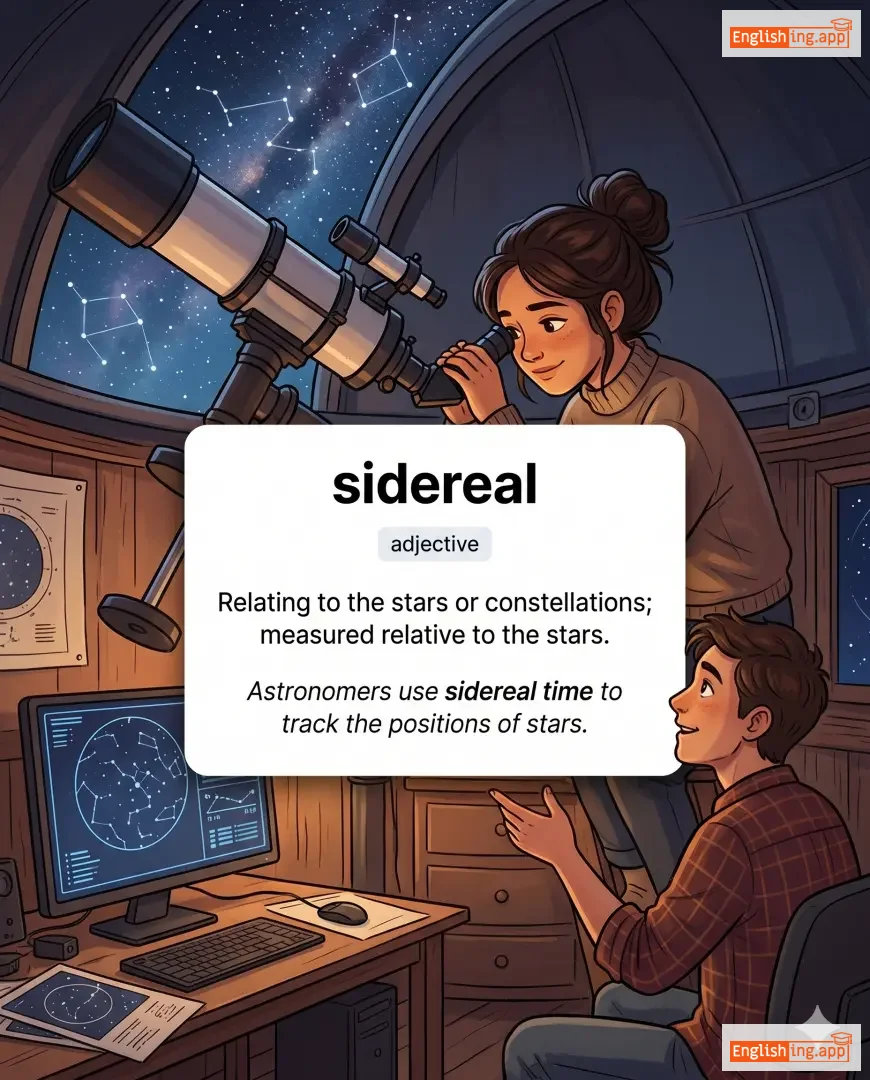
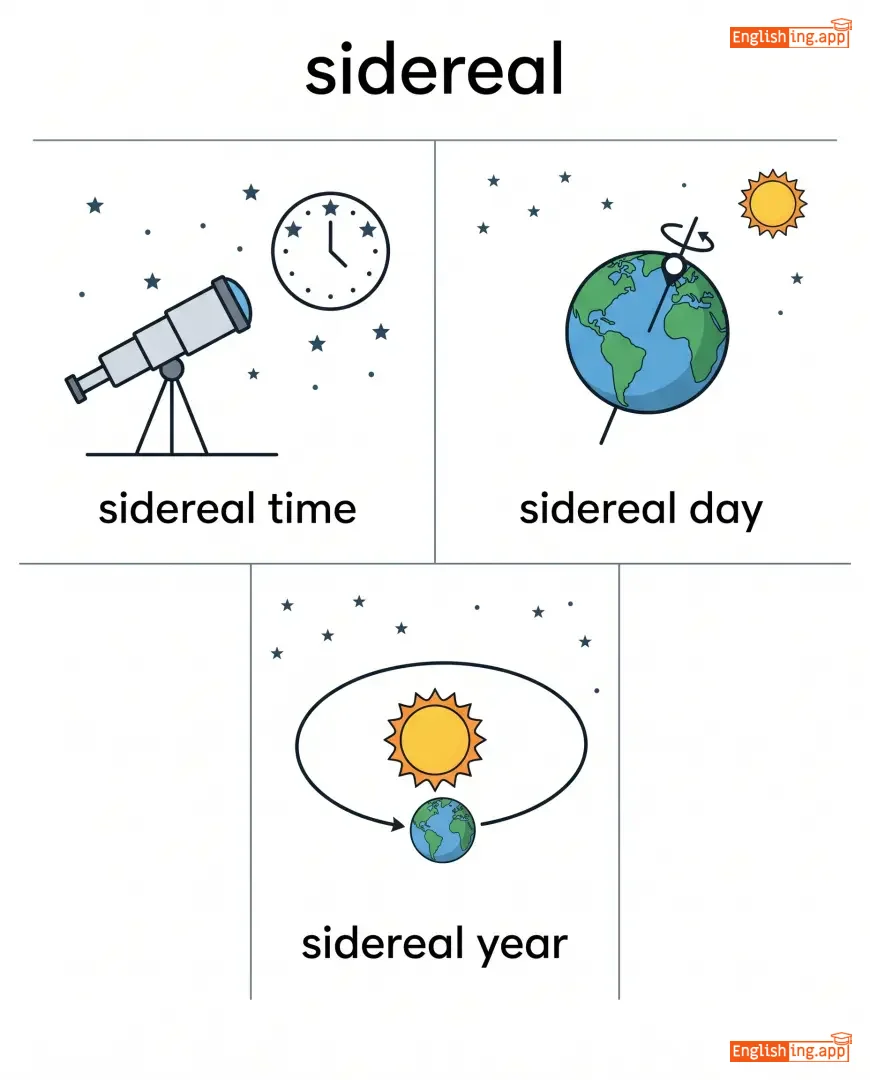
Relating to the stars or constellations; measured relative to the stars.
••••••
|
Astronomers use sidereal time to track the positions of stars. |
天文学者は恒星時を使用して星の位置を追跡します。
tenmongakusha wa kōsei-ji o shiyō shite hoshi no ichi o tsuiseki shimasu.
••••••
|
- •••••• | - •••••• | - •••••• |
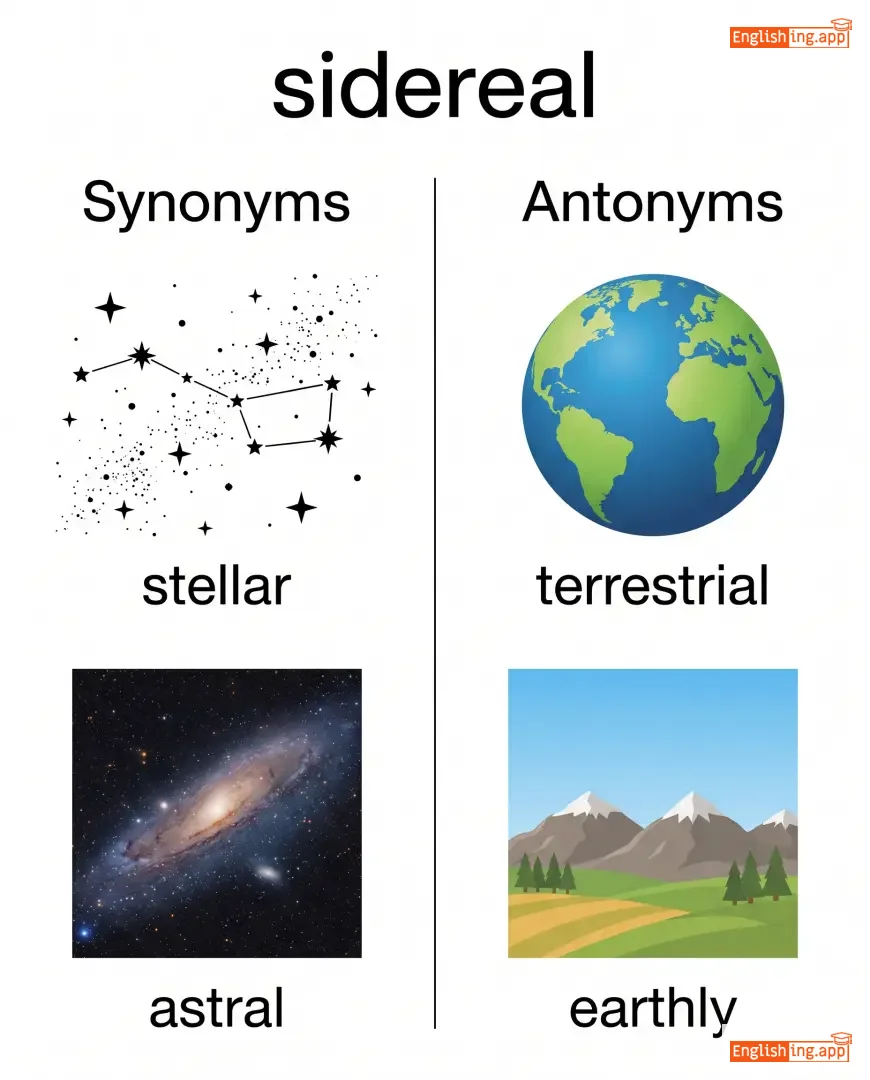
stellar, astral, cosmic, celestial
••••••
|
terrestrial, earthly
••••••
|
sidereal time, sidereal day, sidereal year
••••••
|
Sidereal → 星座のダイヤルを覚えましょう: それは星に関連しています。
••••••
|
|
#8050
👀
|
/ˈsaɪdlɔːŋ/
adjective, adverb
(サイドロング)
••••••
|
- •••••• |
斜め目線
naname mesen
••••••
|
- •••••• | - •••••• | - •••••• | - •••••• |
Directed to the side; indirect, furtive, or not straightforward.
••••••
|
She gave him a sidelong glance across the room. |
彼女は部屋を横切って彼に斜め目線を送った。
Kanojo wa heya o yokogitte kare ni naname mesen o okutta.
••••••
|
- •••••• | - •••••• | - •••••• |
indirect, oblique, sideways, slanting, furtive
••••••
|
direct, straight, frontal
••••••
|
sidelong glance, sidelong look, sidelong remark
••••••
|
Side + long → 横目で見る = 斜め目線
••••••
|
|
#8051
🔮
|
/ˈsɪbɪlaɪn/
adjective
(シビライン)
••••••
|
- •••••• |
神託的
shintokuteki
••••••
|
- •••••• | - •••••• | - •••••• | - •••••• |
Prophetic, mysterious, or cryptic in meaning.
••••••
|
The old woman gave a sibylline warning about the future. |
その老婦人は未来について神託的な警告をした。
Sono rō fujin wa mirai ni tsuite shintokuteki na keikoku o shita.
••••••
|
- •••••• | - •••••• | - •••••• |
prophetic, mystical, enigmatic, cryptic
••••••
|
clear, obvious, plain
••••••
|
sibylline prophecy, sibylline message, sibylline tone
••••••
|
Sibyllineは神託的な警告を意味します - 🔮水晶玉のように。
••••••
|
|
#8052
👫
|
/ˈsɪblɪŋ/
noun
(シブリング)
••••••
|
- •••••• |
兄弟姉妹
kyoudai shimai
••••••
|
- •••••• | - •••••• | - •••••• | - •••••• |
A brother or sister.
••••••
|
She has three siblings, two brothers and one sister.
彼女は三人の兄弟姉妹がいます。二人の兄と一人の妹。
••••••
|
彼女は三人の兄弟姉妹がいます。二人の兄と一人の妹。
Kanojo wa sannin no kyoudai shimai ga imasu. Futari no ani to hitori no imouto.
••••••
|
- •••••• | - •••••• | - •••••• |
brother, sister, kin, relative
••••••
|
stranger, outsider
••••••
|
sibling rivalry, younger sibling, elder sibling, sibling bond
••••••
|
Siblings という英単語は兄弟姉妹を意味します。家族みんなが一つのチームのようです。
••••••
|
|
#8053
💨
|
/ˈsɪbəleɪt/
verb
(シビレイト)
••••••
|
- •••••• |
シューという音で発音する
shū to iu oto de hatsuon suru
••••••
|
sibilated
シビレイテッド
••••••
|
sibilated
シビレイテッド
••••••
|
sibilates
シビレイツ
••••••
|
sibilating
シビレイティング
••••••
|
To pronounce with a hissing sound.
••••••
|
The actor sibilated his lines for dramatic effect.
俳優はドラマチックな効果のためにセリフをシビレイトしました。
••••••
|
俳優はドラマチックな効果のためにセリフをシューという音で発音しました。
Haiyū wa doramachikku na kōka no tame ni serifu o shū to iu oto de hatsuon shimashita.
••••••
|
- •••••• | - •••••• | - •••••• |
hiss, whisper, whistle, susurrate
••••••
|
silence, quiet
••••••
|
sibilate words, sibilate lines, sibilate softly
••••••
|
Sibilate: 言葉をシューと言って、ドラマチックな効果を出す。
••••••
|
|
#8054
🔊
|
/ˈsɪbɪlənt/
adjective
(シビラント)
••••••
|
- •••••• |
シーシー音がする
shīshī on ga suru
••••••
|
- •••••• | - •••••• | - •••••• | - •••••• |
Making or characterized by a hissing sound.
••••••
|
The word 'snake' starts with a sibilant sound.
'snake' という単語はシビラント音で始まります。
••••••
|
'snake' という単語はシビラント音で始まります。
'Snake' to iu tango wa shibiranto oto de hajimarimasu.
••••••
|
- •••••• | - •••••• | - •••••• |
hissing, whistling, susurrant, whispering
••••••
|
voiceless, muted, quiet
••••••
|
sibilant consonant, sibilant sound, sibilant noise, sibilant speech
••••••
|
シビラントはシーシー音、蛇のように 🐍。
••••••
|
|
#8055
🤜
|
/ʃʌv/
verb
(ショヴ)
••••••
|
- •••••• |
押す
osu
••••••
|
shoved
ショヴド
••••••
|
shoved
ショヴド
••••••
|
shoves
ショヴズ
••••••
|
shoving
ショヴィング
••••••
|
to push someone or something roughly
••••••
|
He shoved the box into the corner.
彼は箱を隅に押し込んだ。
••••••
|
彼は箱を隅に押し込んだ。
Kare wa hako o sumi ni oshikonda.
••••••
|
shove it
shove it
••••••
|
a rude way of telling someone to go away or stop bothering you
••••••
|
黙れ、去れ
damare, sare
••••••
|
push, thrust, jostle, force, propel
••••••
|
pull, drag, withdraw
••••••
|
shove aside, shove into, big shove, violent shove
••••••
|
Shoveは押すという意味で、冗談で誰かを押すときのように。
••••••
|
|
#8056
🕵️
|
/ˈʃaɪstər/
noun
(shaisutā)
••••••
|
- •••••• |
詐欺師
sagishi
••••••
|
- •••••• | - •••••• | - •••••• | - •••••• |
a person, especially a lawyer, who uses unscrupulous or dishonest methods
••••••
|
The businessman was exposed as a shyster who cheated clients. |
そのビジネスマンは、顧客を騙す詐欺師として暴露されました。
Sono bijinesuman wa, kokyaku o damasu sagishi to shite bakuro saremashita.
••••••
|
- •••••• | - •••••• | - •••••• |
swindler, cheat, fraud, trickster, crook
••••••
|
honest person, gentleman, professional
••••••
|
legal shyster, political shyster, exposed as a shyster
••••••
|
Shysterの意味は詐欺師 — 'Shysterはみんなを騙す!'
••••••
|
|
#8057
🚂
|
/ʃʌnt/
verb
(シャント)
••••••
|
- •••••• |
切り替える
kirikaeru
••••••
|
shunted
シャントッド
••••••
|
shunted
シャントッド
••••••
|
shunts
シャントス
••••••
|
shunting
シャントイング
••••••
|
to move or turn aside; to push or divert from one track to another
••••••
|
The train was shunted onto a different track.
列車は別の線路に切り替えられました。
••••••
|
列車は別の線路に切り替えられました。
Ressha wa betsu no senro ni kirikaeraremashita.
••••••
|
- •••••• | - •••••• | - •••••• |
divert, shift, transfer, redirect, push
••••••
|
retain, hold, keep
••••••
|
shunt aside, shunt into, shunt the train
••••••
|
Shuntは切り替える意味、列車が線路を切り替えるように。
••••••
|
|
#8058
🚫
|
/ʃʌn/
verb
(シャン)
••••••
|
|
避ける
sakeru
••••••
|
shunned
シャンデッド
••••••
|
shunned
シャンデッド
••••••
|
shuns
シャンス
••••••
|
shunning
シャンニング
••••••
|
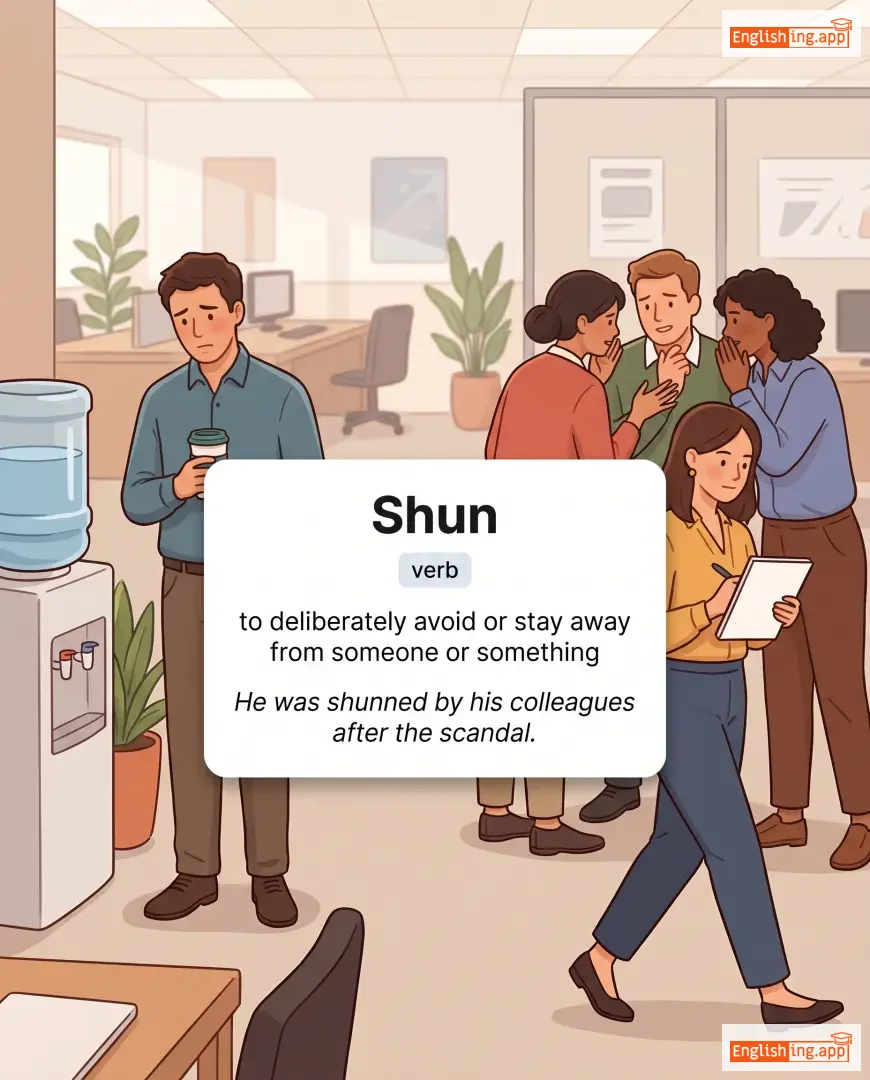
to deliberately avoid or stay away from someone or something
••••••
|
He was shunned by his colleagues after the scandal.
彼はスキャンダルの後、同僚から避けられました。
••••••
|
彼はスキャンダルの後、同僚から避けられました。
Kare wa sukyandaru no ato, dōryō kara sakeraremashita.
••••••
|
- •••••• | - •••••• | - •••••• |
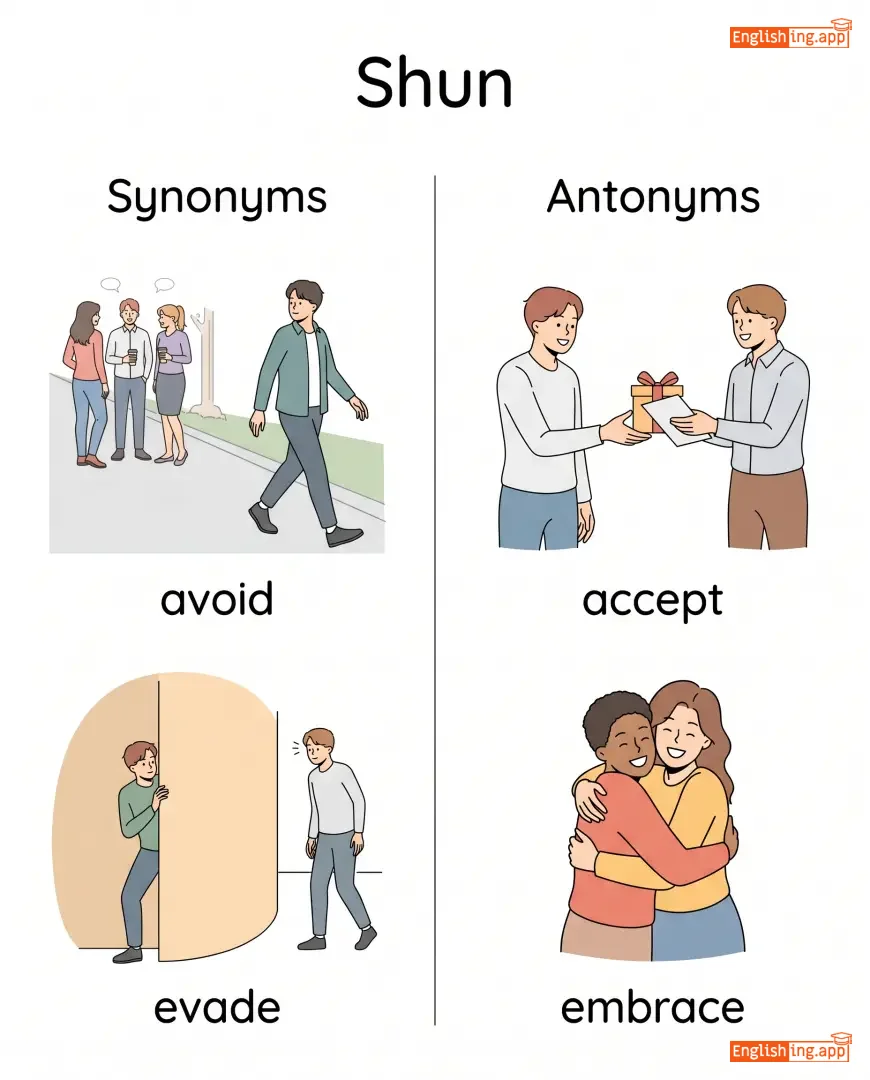
avoid, evade, ignore, reject, spurn
••••••
|
accept, embrace, welcome
••••••
|
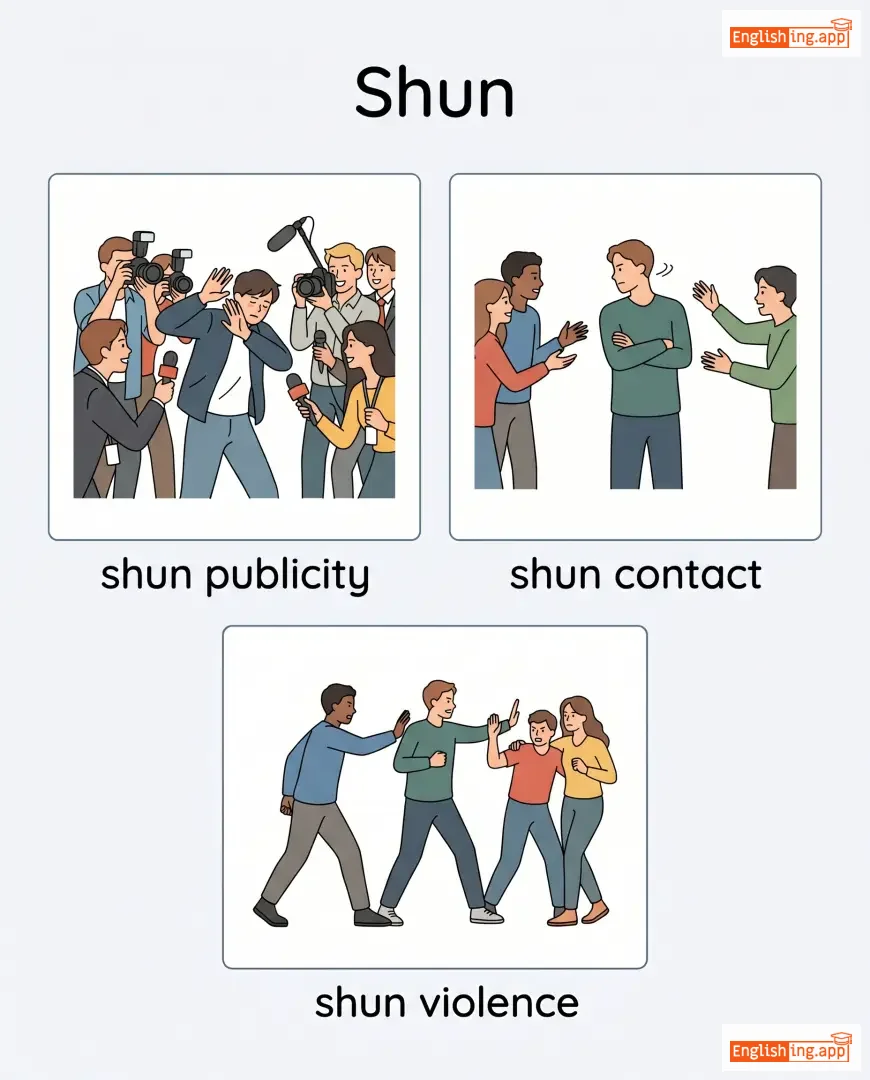
shun publicity, shun contact, shun violence
••••••
|
Shunは避けるという意味です — '土曜日はみんな私を避けます!'
••••••
|
|
#8059
🃏
|
/ˈʃʌfəl/
verb
••••••
|
- •••••• | - •••••• |
shuffled
••••••
|
shuffled
••••••
|
shuffles
••••••
|
shuffling
••••••
|
to walk by dragging one's feet along or without lifting them fully; to mix or rearrange
••••••
|
He shuffled the cards before dealing them. |
- •••••• |
shuffle the deck |
to mix things up or rearrange situations
••••••
|
- •••••• |
drag, mix, rearrange, stir, slide
••••••
|
lift, organize, order
••••••
|
shuffle cards, shuffle feet, shuffle the papers
••••••
|
No •••••• |
|
#8060
😨
|
/ˈʃʌdər/
verb
(シャダー)
••••••
|
- •••••• |
震える
furueru
••••••
|
shuddered
シャダード
••••••
|
shuddered
シャダード
••••••
|
shudders
シャダーズ
••••••
|
shuddering
シャダリング
••••••
|
to tremble or shake suddenly, often due to fear, cold, or strong emotion
••••••
|
She shuddered at the thought of walking alone in the dark forest.
彼女は暗い森を一人で歩くことを考えただけで身震いした。
••••••
|
彼女は暗い森を一人で歩くことを考えただけで震えた。
Kanojo wa kurai mori o hitori de aruku koto o kangaeta dake de furueta.
••••••
|
shudder to think
考えただけで身震い
••••••
|
used to express strong dislike or fear about something unpleasant to imagine
••••••
|
考えただけで身震いする
Kangaeta dake de miburui suru
••••••
|
tremble, quake, shake, quiver, recoil
••••••
|
steady, remain, relax
••••••
|
shudder with fear, shudder at the thought, make someone shudder
••••••
|
Shudderは震えること — 寒さに震えるような感じです。
••••••
|
|
#8061
🤷
|
/ʃrʌɡ/
verb
(シュラッグ)
••••••
|
- •••••• |
肩をすくめる
kata o sukumeru
••••••
|
shrugged
シュラッグド
••••••
|
shrugged
シュラッグド
••••••
|
shrugs
シュラッグス
••••••
|
shrugging
シュラッギング
••••••
|
To raise and lower the shoulders to express uncertainty or indifference.
••••••
|
He shrugged when asked about the missing file.
彼は失われたファイルについて聞かれると肩をすくめました。
••••••
|
彼は失われたファイルについて聞かれると肩をすくめました。
Kare wa ushinawareta fairu ni tsuite kikareru to kata o sukumemashita.
••••••
|
shrug off
肩をすくめる
••••••
|
To treat something as unimportant or not worth worrying about.
••••••
|
無視する
mushi suru
••••••
|
dismiss, disregard, ignore, downplay
••••••
|
acknowledge, accept, emphasize
••••••
|
shrug shoulders, shrug indifferently, shrug off criticism, shrug casually
••••••
|
肩をすくめる = 無関心や不確実性を示す動作。
••••••
|
|
#8062
🥀
|
/ˈʃrɪvəl/
verb
(ハピネス)
••••••
|
- •••••• |
しわになる
shiwa ni naru
••••••
|
shriveled
シュリヴェルド
••••••
|
shriveled
シュリヴェルド
••••••
|
shrivels
シュリヴェルズ
••••••
|
shriveling
シュリヴェリング
••••••
|
To become dry, wrinkled, and smaller due to lack of moisture.
••••••
|
The flowers shriveled under the hot sun.
ザ フラワーズ シュリヴェルド アンダー ザ ホット サン
••••••
|
花は暑い太陽の下でしわになった。
Hana wa atsui taiyou no moto de shiwa ni natta.
••••••
|
shrivel up
シュリヴェル アップ
••••••
|
To become shrunken or wrinkled, often from age or dehydration.
••••••
|
しわになる
shiwa ni naru
••••••
|
wither, wilt, dry up, decay, contract
••••••
|
bloom, expand, flourish
••••••
|
shrivel away, shrivel with age, shrivel in the sun, shrivel leaves
••••••
|
しわになるように縮む花のように。
••••••
|
|
#8063
📉
|
/ˈʃrɪŋkɪdʒ/
noun
(シュリンケージ)
••••••
|
- •••••• |
収縮
shūshuku
••••••
|
- •••••• | - •••••• | - •••••• | - •••••• |
The process of becoming smaller in size, amount, or value.
••••••
|
The company reported a shrinkage in profits this quarter. |
その会社は今四半期の利益の収縮を報告しました。
Sono kaisha wa ima shihanki no rieki no shūshuku o hōkoku shimashita.
••••••
|
- •••••• | - •••••• | - •••••• |
reduction, decrease, decline, contraction
••••••
|
growth, expansion, increase
••••••
|
shrinkage in profits, shrinkage of demand, retail shrinkage, natural shrinkage
••••••
|
Shrinkageという言葉は「縮む」と似ていて、何かが小さくなることです。
••••••
|
|
#8064
⛪
|
/ʃraɪn/
noun
(シュライン)
••••••
|
- •••••• |
聖地
seichi
••••••
|
- •••••• | - •••••• | - •••••• | - •••••• |
A place regarded as holy, often associated with a saint or deity.
••••••
|
Thousands of pilgrims visit the shrine each year. |
毎年、何千人もの巡礼者がその聖地を訪れます。
Mainen, nan-sen nin mo no junrei-sha ga sono seichi o otozuremasu.
••••••
|
shrine of memory |
A place or object kept as a reminder of someone or something revered.
••••••
|
記憶の聖地
Kioku no seichi
••••••
|
temple, sanctuary, altar, chapel
••••••
|
ordinary place, profane site
••••••
|
visit shrine, sacred shrine, holy shrine, build shrine
••••••
|
Shrine = Shine、神聖な場所、聖地!
••••••
|
|
#8065
📢
|
/ʃrɪl/
adjective
(シュリル)
••••••
|
- •••••• |
鋭い音
surudoi oto
••••••
|
- •••••• | - •••••• | - •••••• | - •••••• |
High-pitched and piercing in sound.
••••••
|
The shrill whistle startled everyone in the room. |
鋭い口笛の音が部屋の中の全員を驚かせた。
Surudoi kuchibue no oto ga heya no naka no zen'in o odorokaseta.
••••••
|
shrill cry |
A loud, high-pitched cry, usually expressing fear or pain.
••••••
|
鋭い叫び声
surudoi sakebigoe
••••••
|
piercing, high-pitched, sharp, squeaky, screeching
••••••
|
deep, low, mellow
••••••
|
shrill voice, shrill cry, shrill sound, shrill tone
••••••
|
Shrillは鋭い音を意味します — 高くて鋭い音が特徴的です。
••••••
|
|
#8066
😱
|
/ʃriːk/
verb
(シュリーク)
••••••
|
- •••••• |
叫ぶ
sakebu
••••••
|
shrieked
シュリークド
••••••
|
shrieked
シュリークド
••••••
|
shrieks
シュリークス
••••••
|
shrieking
シュリーキング
••••••
|
to make a loud, high-pitched cry
••••••
|
She shrieked when she saw the spider.
シー シュリークド ウェン シー ソー ザ スパイダー。
••••••
|
彼女はクモを見て叫んだ。
Kanojo wa kumo wo mite sakenda.
••••••
|
shriek with laughter
シュリーク ウィズ ラフター
••••••
|
to laugh loudly in a high-pitched voice
••••••
|
笑いながら叫ぶ
warai nagara sakebu
••••••
|
scream, yell, cry, screech, howl
••••••
|
whisper, murmur, mutter
••••••
|
shriek in fear, shriek of laughter, loud shriek, shriek with pain
••••••
|
Shriekは日本語で叫ぶという意味で、驚く時や笑う時に使います。
••••••
|
|
#8067
🧠
|
/ʃruːd/
adjective
(シュルード)
••••••
|
- •••••• |
抜け目のない
nukeme no nai
••••••
|
- •••••• | - •••••• | - •••••• | - •••••• |
having sharp judgment and practical intelligence
••••••
|
She made a shrewd investment in real estate. |
彼女は不動産に抜け目のない投資をした。
Kanojo wa fudōsan ni nukeme no nai tōshi o shita.
••••••
|
shrewd operator |
a clever and skillful person in business or politics
••••••
|
抜け目のない操作者
nukeme no nai sōsa-sha
••••••
|
astute, clever, smart, sharp, perceptive
••••••
|
naive, foolish, gullible
••••••
|
shrewd businessman, shrewd move, shrewd decision
••••••
|
Shrewdとは抜け目のない、常に賢い選択をする人のことです。
••••••
|
|
#8068
🐭
|
/ʃruː/
noun
(shuru)
••••••
|
- •••••• |
怒りっぽい女性 / 小さなネズミのような動物
ikari ppoi josei / chiisana nezumi no you na doubutsu
••••••
|
- •••••• | - •••••• | - •••••• | - •••••• |
a small mouse-like animal; also a woman with a bad temper
••••••
|
The play describes a strong-willed woman as a shrew. |
この劇は強い意志を持った女性を怒りっぽい女性として描いています。
Kono geki wa tsuyoi ishi o motta josei o ikarippoi josei to shite kakuiteimasu.
••••••
|
- •••••• | - •••••• | - •••••• |
nag, scold, termagant, rodent, critter
••••••
|
gentlewoman, lady
••••••
|
tame the shrew, angry shrew, tiny shrew
••••••
|
Shrewは怒りっぽい女性、思い出すのはネズミのように!
••••••
|
|
#8069
✂️
|
/ʃrɛd/
(シュレッド)
••••••
|
- •••••• |
引き裂く
hikisaku
••••••
|
shredded
シュレッドされた
••••••
|
shredded
シュレッドされた
••••••
|
shreds
シュレッドする
••••••
|
shredding
シュレッド中
••••••
|
to tear or cut something into small pieces
••••••
|
She shredded the old documents before throwing them away.
彼女は古い書類を捨てる前にシュレッドした。
••••••
|
彼女は古い書類を捨てる前にシュレッドした。
Kanojo wa furui shorui o suteru mae ni shred shita.
••••••
|
not a shred of evidence
証拠のかけらもない
••••••
|
no evidence at all
••••••
|
証拠のかけらもない
Shouko no kakera mo nai
••••••
|
tear, rip, cut, slice, fragment
••••••
|
mend, repair, fix
••••••
|
shred paper, shred cheese, shred evidence, shred into pieces
••••••
|
シュレッドは紙を小さく引き裂くようなイメージです。
••••••
|
Vocabulary Quiz
Test your vocabulary by matching words with their translations or meanings.
Login to take the quiz
Comments (0)
Share your thoughts and join the discussion.
Join the discussion by logging in
Login to CommentNo comments yet
Be the first to share your thoughts!