

翻訳
過去
過去分詞
三人称単数
動名詞
意味
例文
例文の翻訳
同義語
対義語
コロケーション
ニーモニック






Swipe left or right, or use the buttons. Tap image to zoom.
例文の翻訳
単語
Lesson 59Lesson 59 - マスクトグル
|
絵文字
|
単語 | Images | 翻訳 | 過去 | 過去分詞 | 三人称単数 | 動名詞 | 意味 | 例文 | 例文の翻訳 | 表現例 | 表現例の意味 | 表現例の翻訳 | 同義語 | 対義語 | コロケーション | ニーモニック |
|---|---|---|---|---|---|---|---|---|---|---|---|---|---|---|---|---|---|
|
#1741
🪄
|
/ˈkʌn.dʒər/
verb
(コンジャー)
••••••
|
- •••••• |
召喚する
shou-kan suru
••••••
|
conjured
コンジャード
••••••
|
conjured
コンジャード
••••••
|
conjures
コンジャーズ
••••••
|
conjuring
コンジャリング
••••••
|
to summon something as if by magic; to imagine vividly
••••••
|
The magician conjured a rabbit out of the hat.
魔法使いは帽子からウサギを召喚しました。
••••••
|
魔法使いは帽子からウサギを召喚しました。
Mahoutsukai wa boushi kara usagi wo shoukan shimashita.
••••••
|
conjure up
頭の中で召喚する
••••••
|
to bring to mind or create an image in the imagination
••••••
|
頭の中で召喚する
atama no naka de shoukan suru
••••••
|
summon, evoke, imagine, invoke, create
••••••
|
banish, dismiss, ignore
••••••
|
conjure up, conjure a spirit, conjure an image, conjure magic
••••••
|
魔法使い (conjure) が魔法で物を召喚する
••••••
|
|
#1742
👁️
|
/ˈkɒnʃəs/
adjective
(コンシャス)
••••••
|
- •••••• |
意識的
ishikiteki
••••••
|
- •••••• | - •••••• | - •••••• | - •••••• |
Aware of and responding to one's surroundings; awake.
••••••
|
She was fully conscious after the surgery.
手術後、彼女は完全に意識が戻った。
••••••
|
手術後、彼女は完全に意識が戻った。
Shujutsugo, kanojo wa kanzen ni ishiki ga modotta.
••••••
|
lose consciousness
意識を失う
••••••
|
To become unconscious or faint.
••••••
|
意識を失う
Ishiki o ushinau
••••••
|
aware, alert, awake, mindful, responsive
••••••
|
unconscious, unaware, oblivious
••••••
|
conscious mind, fully conscious, conscious effort
••••••
|
意識は耳(con)で聞いて、注意を払うことです。
••••••
|
|
#1743
📋
|
/ˌkɒnʃiˈɛnʃəs/
adjective
(コンシャス)
••••••
|
|
良心的で勤勉な
ryōshinteki de kinbenna
••••••
|
- •••••• | - •••••• | - •••••• | - •••••• |
Wishing to do what is right, especially to do one's work or duty well and thoroughly.
••••••
|
He is a conscientious employee who always meets deadlines. |
彼は常に締め切りを守る良心的で勤勉な社員です。
Kare wa tsuneni shimekiri o mamoru ryōshinteki de kinbenna shain desu.
••••••
|
- •••••• | - •••••• | - •••••• |
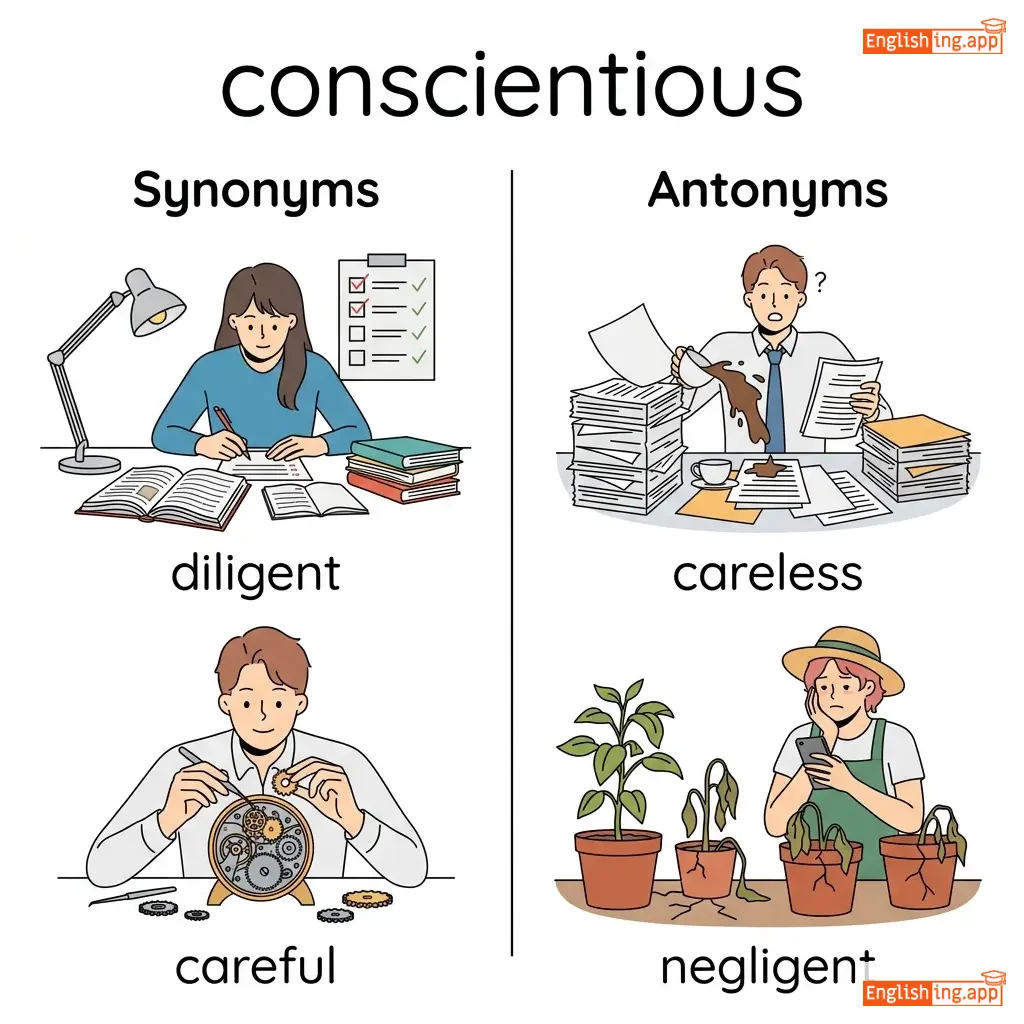
diligent, careful, meticulous, responsible, reliable
••••••
|
careless, negligent, irresponsible
••••••
|
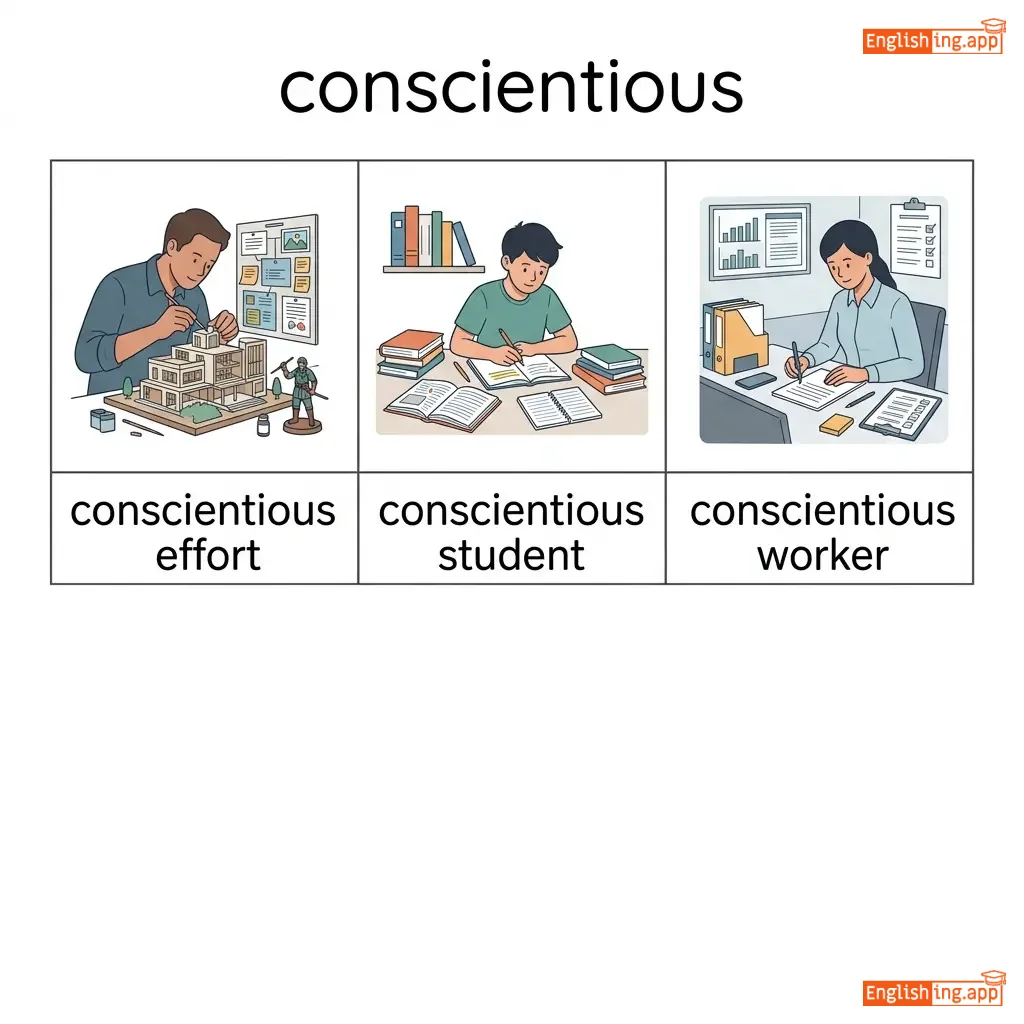
conscientious effort, conscientious student, conscientious worker
••••••
|
Conscientious = 良心 + 勤勉
••••••
|
|
#1744
🧠
|
/ˈkɒnʃəns/
noun
(コンシャス)
••••••
|
- •••••• |
良心
ryōshin
••••••
|
- •••••• | - •••••• | - •••••• | - •••••• |
An inner sense of right and wrong that guides a person's actions.
••••••
|
Her conscience told her to admit the mistake. |
彼女の良心は彼女に間違いを認めるように言った。
Kanojo no ryōshin wa kanojo ni machigai o mitomeru yō ni itta.
••••••
|
a guilty conscience |
A feeling of guilt caused by knowing you have done something wrong.
••••••
|
罪悪感のある良心
zaiakukan no aru ryōshin
••••••
|
morality, ethics, principles, scruples, integrity
••••••
|
immorality, corruption, wickedness
••••••
|
clear conscience, guilty conscience, prick of conscience
••••••
|
良心 (ryōshin) - 内面の声が指し示す、何が正しいか。
••••••
|
|
#1745
👨👩👧👦
|
/ˌkɒnsæŋˈɡwɪnɪti/
noun
(コンサングイニティ)
••••••
|
- •••••• |
血縁関係
ketsuen kankei
••••••
|
- •••••• | - •••••• | - •••••• | - •••••• |
The fact of being descended from the same ancestor; blood relationship.
••••••
|
The degree of consanguinity was important in inheritance laws. |
相続法では、血縁関係の程度が重要でした。
Souzoku hou de wa, ketsuen kankei no teido ga juuyou deshita.
••••••
|
- •••••• | - •••••• | - •••••• |
kinship, relationship, lineage, family tie, ancestry
••••••
|
strangeness, unrelatedness, separation
••••••
|
degree of consanguinity, consanguinity laws, consanguinity calculation
••••••
|
Con + sanguinity = 血 (ketsu) 関係 = 血縁関係
••••••
|
|
#1746
🧬
|
/ˌkɒnsæŋˈɡwɪniəs/
adjective
(コンサングウィニアス)
••••••
|
- •••••• |
血縁の
ketsuen no
••••••
|
- •••••• | - •••••• | - •••••• | - •••••• |
Related by blood; descended from the same ancestor.
••••••
|
The study focused on genetic disorders in consanguineous families. |
この研究は血縁のある家族における遺伝的障害に焦点を当てました。
Kono kenkyū wa ketsuen no aru kazoku ni okeru iden-teki shōgai ni shōten o atemashita.
••••••
|
- •••••• | - •••••• | - •••••• |
kin, related, familial, kindred, cognate
••••••
|
unrelated, unrelated by blood, distant
••••••
|
consanguineous marriage, consanguineous relationship, consanguineous family
••••••
|
Con + sanguineousは血縁関係を意味します—日本語では血縁の
••••••
|
|
#1747
🩸
|
/kɒnˈsæŋɡwɪn/
adjective
(konsanguin)
••••••
|
- •••••• |
血縁関係の
ketsuen kankei no
••••••
|
- •••••• | - •••••• | - •••••• | - •••••• |
Of the same blood or origin; related by birth.
••••••
|
The two families were consanguine through their grandparents. |
二つの家族は彼らの祖父母を通じて血縁関係にあった。
Futatsu no kazoku wa karera no sofubo o tōjite ketsuen kankei ni atta.
••••••
|
- •••••• | - •••••• | - •••••• |
related, kin, blood-related, familial
••••••
|
unrelated, stranger
••••••
|
consanguine relatives, consanguine ties, consanguine relation
••••••
|
Con + sanguine = 血によって結びつけられた; 'sanguine' は血液を意味する。
••••••
|
|
#1748
⚔️
|
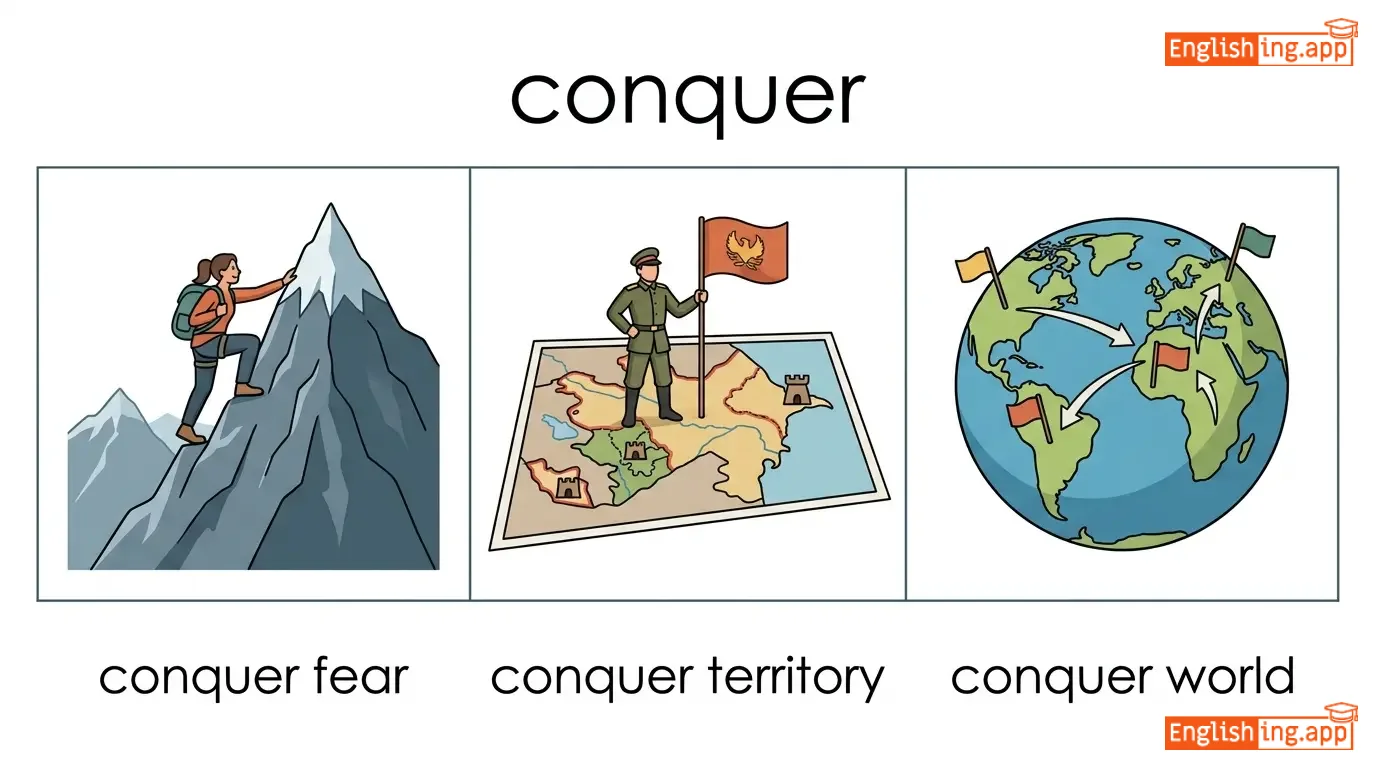
/ˈkɒŋkər/
verb
(kɔnkwəɹ)
••••••
|
|
征服する
seifuku suru
••••••
|
conquered
kɔnkwəd
••••••
|
conquered
kɔnkwəd
••••••
|
conquers
kɔnkwəz
••••••
|
conquering
kɔnkwɪəɹɪŋ
••••••
|
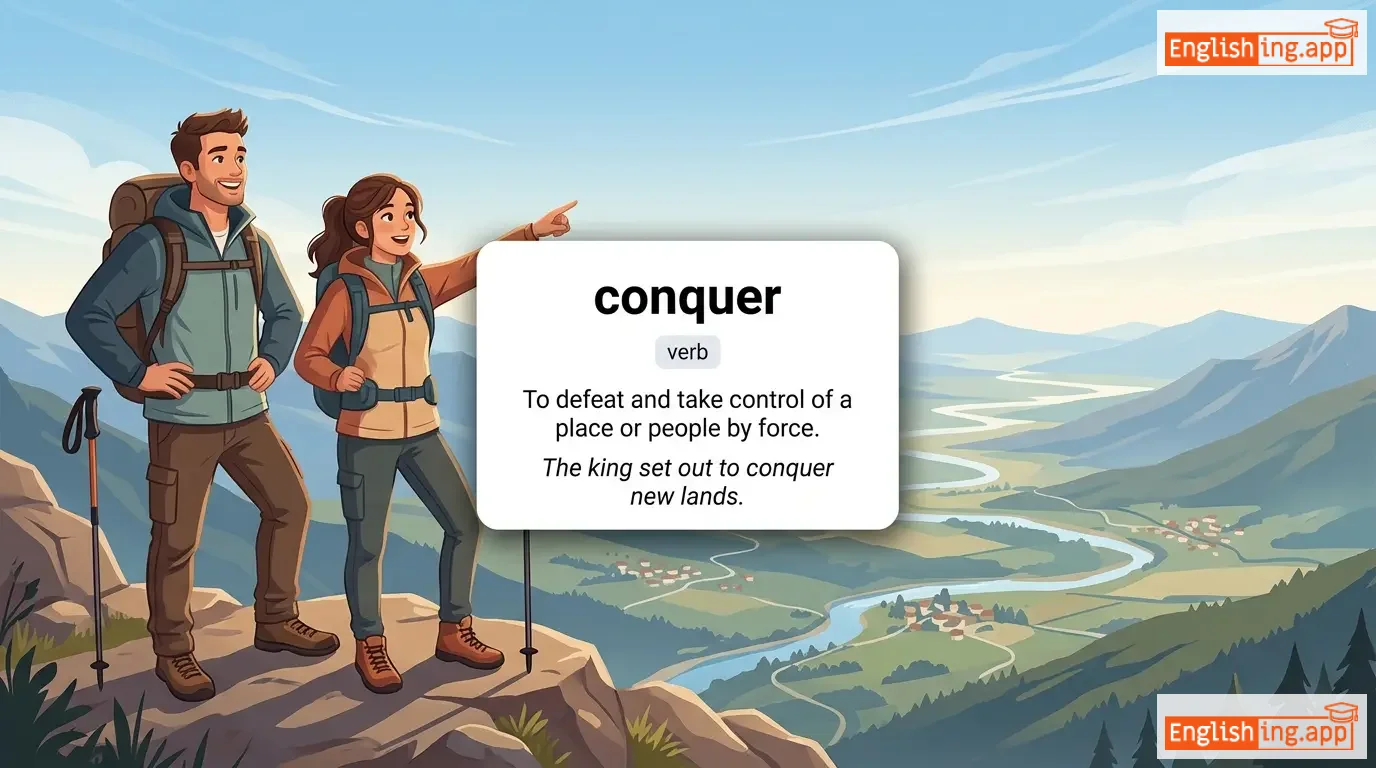
To defeat and take control of a place or people by force.
••••••
|
The king set out to conquer new lands.
王は新しい土地を征服するために出発した。
••••••
|
王は新しい土地を征服するために出発した。
Ō wa atarashī tochi o seifuku suru tame ni shuppatsu shita.
••••••
|
conquer your fears
恐怖を征服する
••••••
|
To overcome or defeat your fears.
••••••
|
恐怖を征服する
Kyōfu o seifuku suru
••••••
|
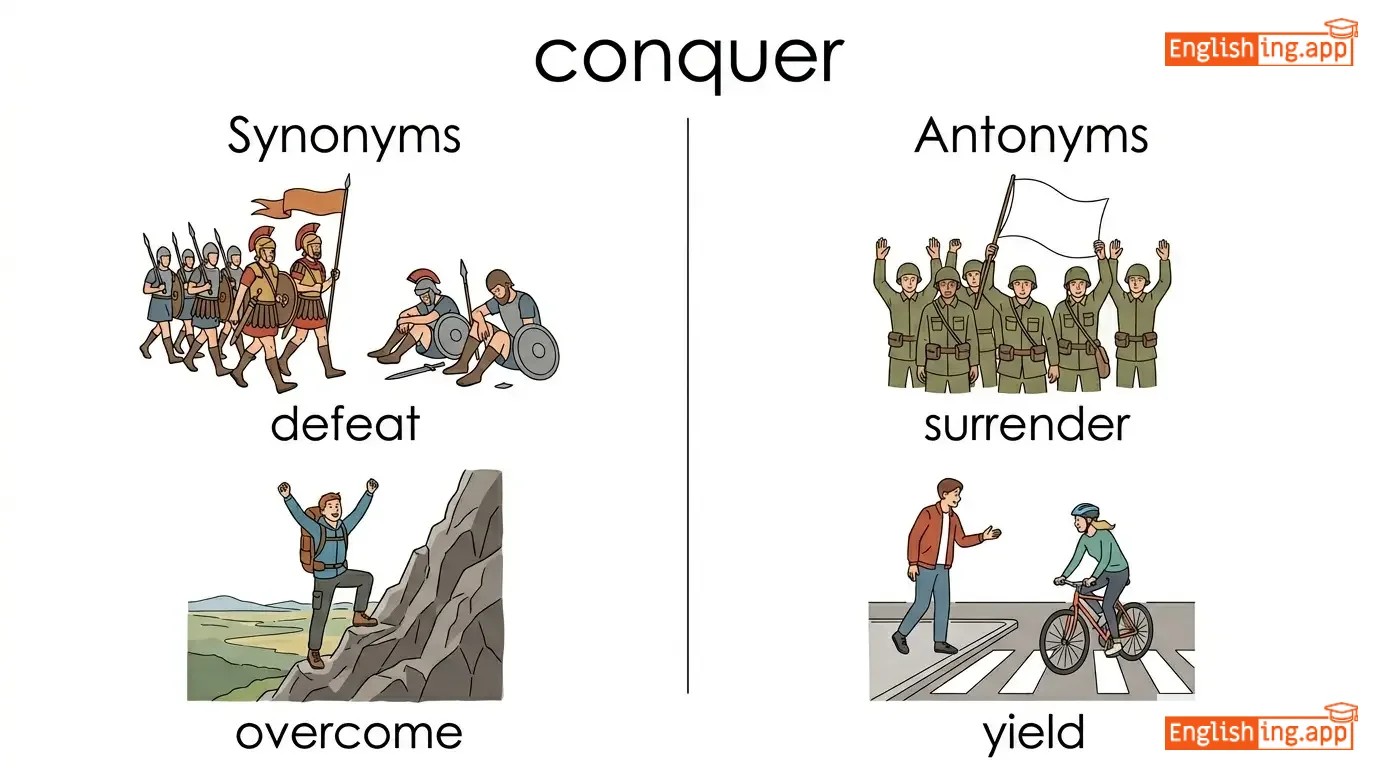
defeat, overcome, vanquish, subdue, master
••••••
|
surrender, yield, lose
••••••
|
conquer fear, conquer territory, conquer world, conquer disease
••••••
|
征服する、ナポレオンのように世界を征服する。
••••••
|
|
#1749
💍
|
/kəˈnjuːbiəl/
adjective
(カニュビアル)
••••••
|
- •••••• |
婚姻の
kon'in no
••••••
|
- •••••• | - •••••• | - •••••• | - •••••• |
Relating to marriage or the relationship of a married couple.
••••••
|
They celebrated their connubial bliss with a honeymoon trip. |
彼らはハネムーン旅行で婚姻の幸せを祝いました。
Karera wa hanemūn ryokō de kon'in no shiawase o iwai mashita.
••••••
|
- •••••• | - •••••• | - •••••• |
marital, matrimonial, spousal, wedded
••••••
|
single, unmarried
••••••
|
connubial bliss, connubial relationship, connubial bond
••••••
|
Connubial = 婚姻の, '婚'字は結婚を思い出させる。
••••••
|
|
#1750
📝
|
/kəˈnoʊt/
verb
(コノート)
••••••
|
- •••••• |
示唆する
shisa suru
••••••
|
connoted
コノーテッド
••••••
|
connoted
コノーテッド
••••••
|
connotes
コノーツ
••••••
|
connoting
コノーティング
••••••
|
To suggest or imply an additional meaning beyond the literal one.
••••••
|
The word 'youthful' connotes energy and vitality.
「若々しい」という言葉はエネルギーと活力を示唆します。
••••••
|
「若々しい」という言葉はエネルギーと活力を示唆します。
'Wakawakashii' to iu kotoba wa enerugī to katsuryoku o shisa shimasu.
••••••
|
- •••••• | - •••••• | - •••••• |
imply, suggest, indicate, signify
••••••
|
denote, state
••••••
|
connote meaning, connote power, connote importance, connote respect
••••••
|
示唆するは、文字以上に深い意味を持つ言葉です。
••••••
|
|
#1751
💭
|
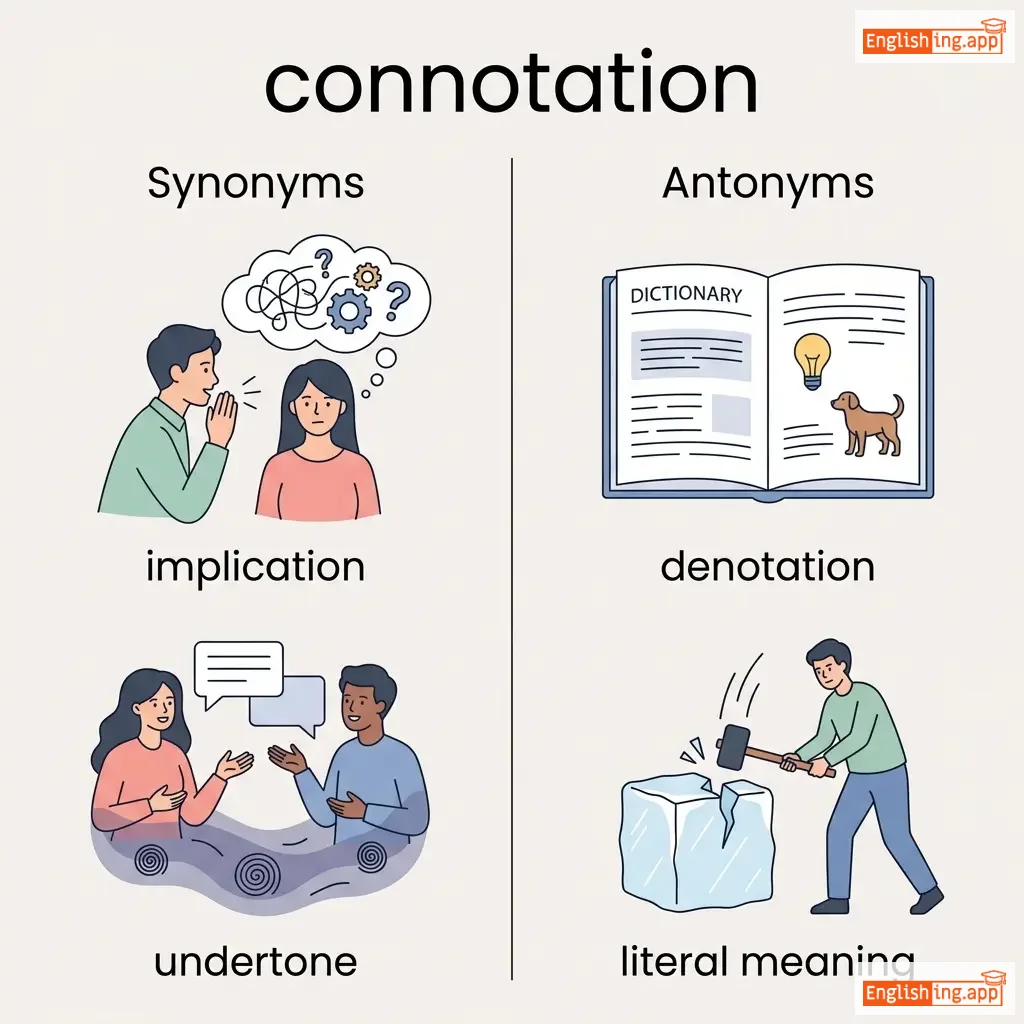
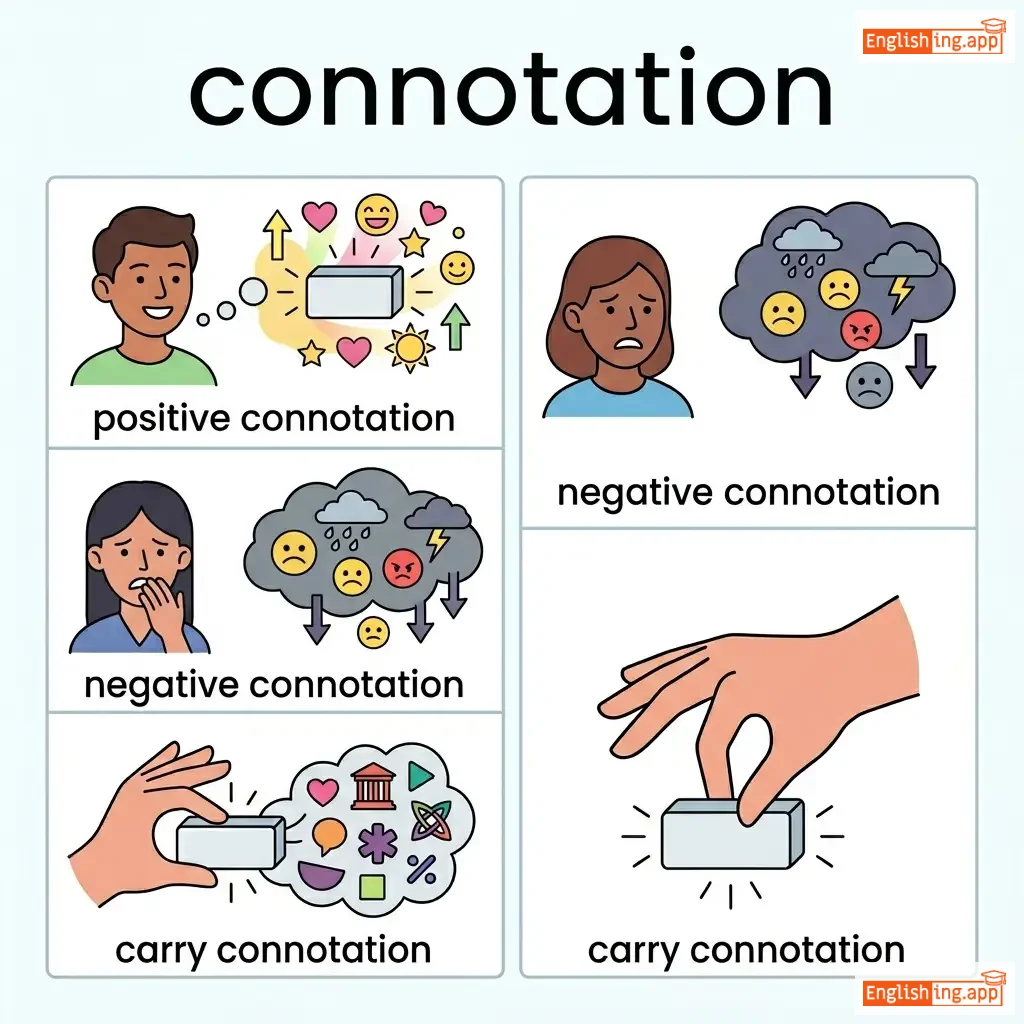
/ˌkɒnəˈteɪʃən/
noun
(コノテーション)
••••••
|
|
含意
gumi
••••••
|
- •••••• | - •••••• | - •••••• | - •••••• |
An idea or feeling that a word invokes in addition to its literal meaning.
••••••
|
The word 'home' has a positive connotation of warmth and family.
'ホーム'という言葉には、温かさと家族のポジティブなコノテーションがあります。
••••••
|
'ホーム'という言葉には、温かさと家族のポジティブな含意があります。
'Hōmu' to iu kotoba ni wa, atatakai to kazoku no pojitibu na gumi ga arimasu.
••••••
|
- •••••• | - •••••• | - •••••• |
implication, undertone, suggestion, nuance, hint
••••••
|
denotation, literal meaning
••••••
|
positive connotation, negative connotation, carry connotation, cultural connotation
••••••
|
含意は、言葉が持つ意味以上に心に響くものです。
••••••
|
|
#1752
🎨
|
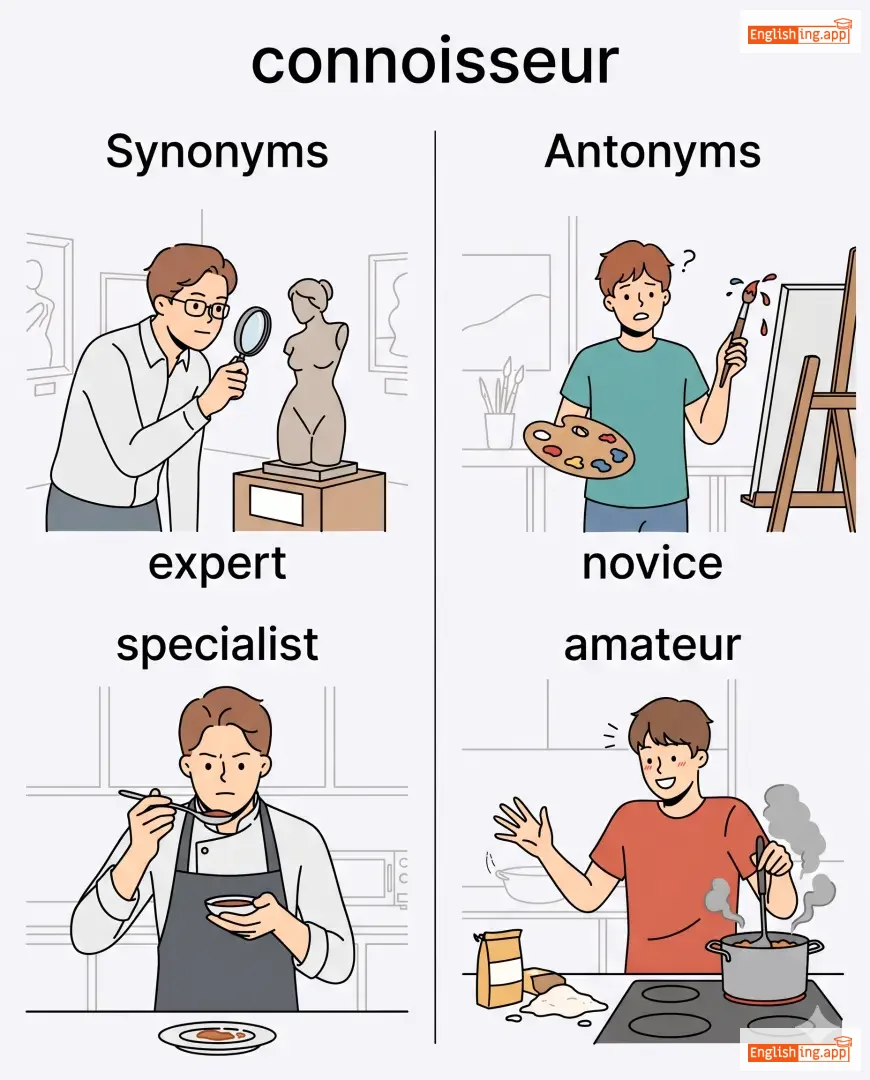
/ˌkɒn.əˈsɜːr/
noun
(コノスール)
••••••
|
|
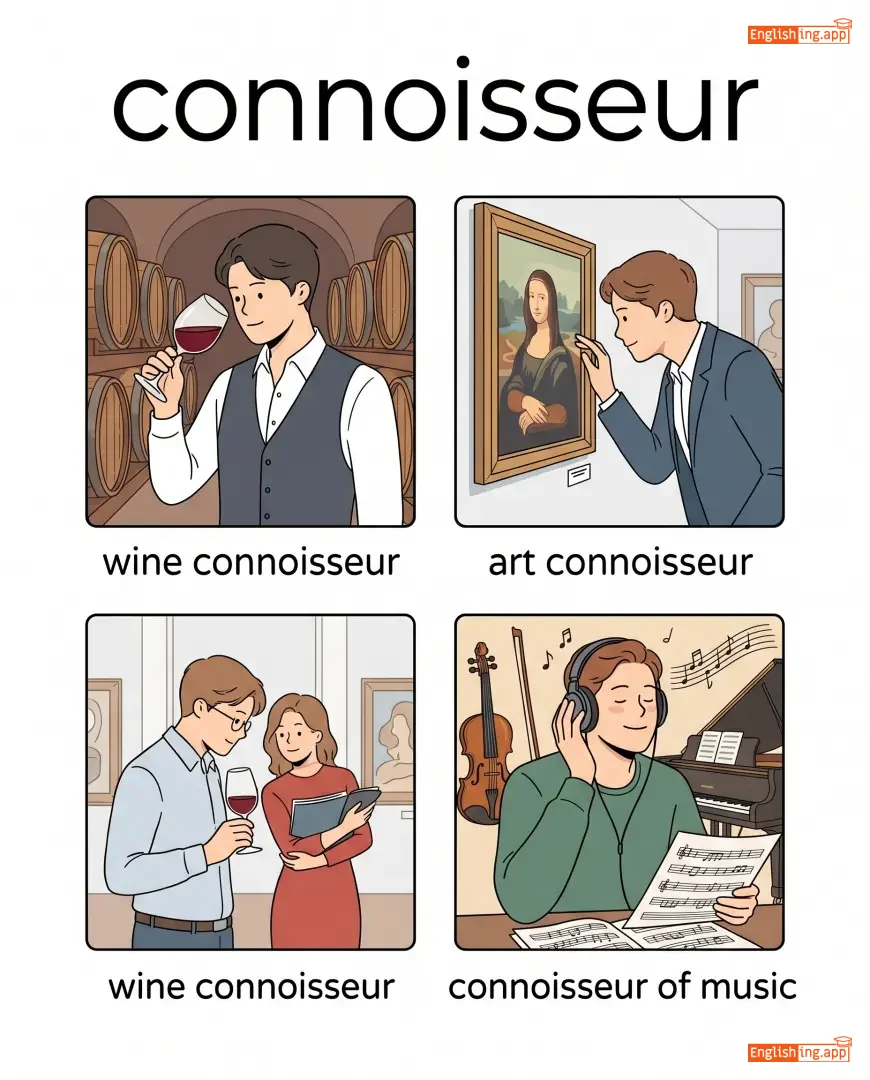
鑑定家
kanteika
••••••
|
- •••••• | - •••••• | - •••••• | - •••••• |
an expert judge in matters of taste, especially in food, art, or wine
••••••
|
She is a true connoisseur of fine art. |
彼女は本物の芸術の鑑定家です。
Kanojo wa honmono no geijutsu no kanteika desu.
••••••
|
- •••••• | - •••••• | - •••••• |
expert, specialist, critic, authority
••••••
|
novice, amateur, layman
••••••
|
wine connoisseur, art connoisseur, connoisseur of music
••••••
|
鑑定家は、優れた芸術やワインを見分けることができます。
••••••
|
|
#1753
🦊
|
/kəˈnaɪ.vɪŋ/
adjective
(カナイビング)
••••••
|
- •••••• |
陰険な
inken na
••••••
|
- •••••• | - •••••• | - •••••• | - •••••• |
secretly scheming or plotting to help in wrongdoing
••••••
|
He is a conniving politician who manipulates people for power. |
彼は権力のために人々を操る陰険な政治家です。
Kare wa kenryoku no tame ni hitobito o ayatsuru inken na seijika desu.
••••••
|
- •••••• | - •••••• | - •••••• |
scheming, plotting, cunning, deceitful
••••••
|
honest, sincere, loyal
••••••
|
conniving politician, conniving scheme, conniving attitude
••••••
|
陰険な人は常に裏で何かをたくらんでいる。
••••••
|
|
#1754
😏
|
/kəˈnaɪv/
verb
(コナイヴ)
••••••
|
- •••••• |
秘密裏に不正行為に関与する
himitsuri ni fusei kōi ni kan'yo suru
••••••
|
connived
コナイヴド
••••••
|
connived
コナイヴド
••••••
|
connives
コナイヴス
••••••
|
conniving
コナイヴィング
••••••
|
to secretly allow or be involved in a wrongdoing
••••••
|
The manager connived with the supplier to cheat the company.
マネージャーは供給者と共謀して会社を騙した。
••••••
|
マネージャーは供給者と共謀して会社を騙した。
Manējā wa kyōkyūsha to kyōbō shite kaisha o damashita.
••••••
|
- •••••• | - •••••• | - •••••• |
collude, conspire, plot, scheme
••••••
|
oppose, resist
••••••
|
connive at, connive with, connive in
••••••
|
'Naive' (素直) な人は秘密で悪い計画に参加する - connive
••••••
|
|
#1755
🤫
|
/kəˈnaɪ.vəns/
noun
(カナイヴェンス)
••••••
|
- •••••• |
共謀
kyōbō
••••••
|
- •••••• | - •••••• | - •••••• | - •••••• |
the act of secretly allowing or being involved in wrongdoing
••••••
|
The theft happened with the connivance of the security guard.
その窃盗は警備員の共謀で起こった。
••••••
|
その窃盗は警備員の共謀で起こった。
Sono settō wa keibiin no kyōbō de okotta.
••••••
|
- •••••• | - •••••• | - •••••• |
collusion, complicity, conspiracy, cooperation
••••••
|
honesty, integrity, opposition
••••••
|
connivance of, secret connivance, political connivance
••••••
|
共謀とは悪事をこっそり手伝うことです。
••••••
|
|
#1756
🚦
|
/kənˈdʒɛst/
verb
(コンジェスト)
••••••
|
- •••••• |
混雑
konzatsu
••••••
|
congested
コンジェステッド
••••••
|
congested
コンジェステッド
••••••
|
congests
コンジェスツ
••••••
|
congesting
コンジェスティング
••••••
|
To block or overcrowd a space, making movement or flow difficult.
••••••
|
Heavy traffic can congest the city streets during rush hour.
渋滞はラッシュアワーに都市の通りを混雑させることができます。
••••••
|
渋滞はラッシュアワーに都市の通りを混雑させることができます。
Jūtai wa rasshu awā ni toshi no tōri o konzatsu saseru koto ga dekimasu.
••••••
|
- •••••• | - •••••• | - •••••• |
clog, block, overcrowd, jam, choke
••••••
|
clear, empty, unblock
••••••
|
congested area, congested road, nasal congested, traffic congested
••••••
|
渋滞が混雑を引き起こし、道を塞ぐ!
••••••
|
|
#1757
➕
|
/kənˈdʒʌŋkʃən/
noun
(コンジャンクション)
••••••
|
- •••••• |
接続詞
setsuzokushi
••••••
|
- •••••• | - •••••• | - •••••• | - •••••• |
a word used to connect clauses or sentences, or to coordinate words
••••••
|
The words 'and' and 'but' are common conjunctions. |
'and' と 'but' は一般的な接続詞です。
'and' to 'but' wa ippanteki na setsuzokushi desu.
••••••
|
in conjunction with |
together with, combined with
••••••
|
と一緒に
to issho ni
••••••
|
connector, link, joiner, coordinating word
••••••
|
separation, disjunction
••••••
|
conjunction of planets, coordinating conjunction, subordinating conjunction
••••••
|
接続詞は言葉をつなげるもの、橋のように文をつなげる役割を果たします。
••••••
|
|
#1758
✍️
|
/ˌkɒndʒʊˈɡeɪʃən/
noun
(kondʑuɡeˈɪʃən)
••••••
|
- •••••• |
活用
katsuyou
••••••
|
- •••••• | - •••••• | - •••••• | - •••••• |
the variation of the form of a verb to indicate tense, person, and number
••••••
|
French verbs have complex conjugations.
フランス語の動詞には複雑な活用形があります。
••••••
|
フランス語の動詞には複雑な活用形があります。
Furansugo no doushi ni wa fukuzatsu na katsuyoukei ga arimasu.
••••••
|
- •••••• | - •••••• | - •••••• |
inflection, declension, modification, alteration
••••••
|
root form, unchanged form
••••••
|
verb conjugation, regular conjugation, irregular conjugation
••••••
|
活用は動詞が時制、人物、数に応じて変わることを意味します。
••••••
|
|
#1759
📖
|
/ˈkɒndʒʊɡeɪt/
verb
(コンジュゲイト)
••••••
|
- •••••• |
活用する
katsuyou suru
••••••
|
conjugated
コンジュゲイテッド
••••••
|
conjugated
コンジュゲイテッド
••••••
|
conjugates
コンジュゲイツ
••••••
|
conjugating
コンジュゲイティング
••••••
|
to list the different forms of a verb according to tense, person, and number
••••••
|
Students are asked to conjugate the verb 'to be'.
学生は「to be」動詞を活用するよう求められます。
••••••
|
学生は「to be」動詞を活用するよう求められます。
Gakusei wa 'to be' doushi wo katsuyou suru you motomeraremasu.
••••••
|
- •••••• | - •••••• | - •••••• |
inflect, decline, modify, alter
••••••
|
root, unchanged
••••••
|
conjugate a verb, conjugate properly, conjugate forms
••••••
|
活用するは動詞をゲートのように並べること - 時間によってゲートが開く。
••••••
|
|
#1760
💍
|
/ˈkɒndʒʊɡəl/
adjective
(kondʒugal)
••••••
|
|
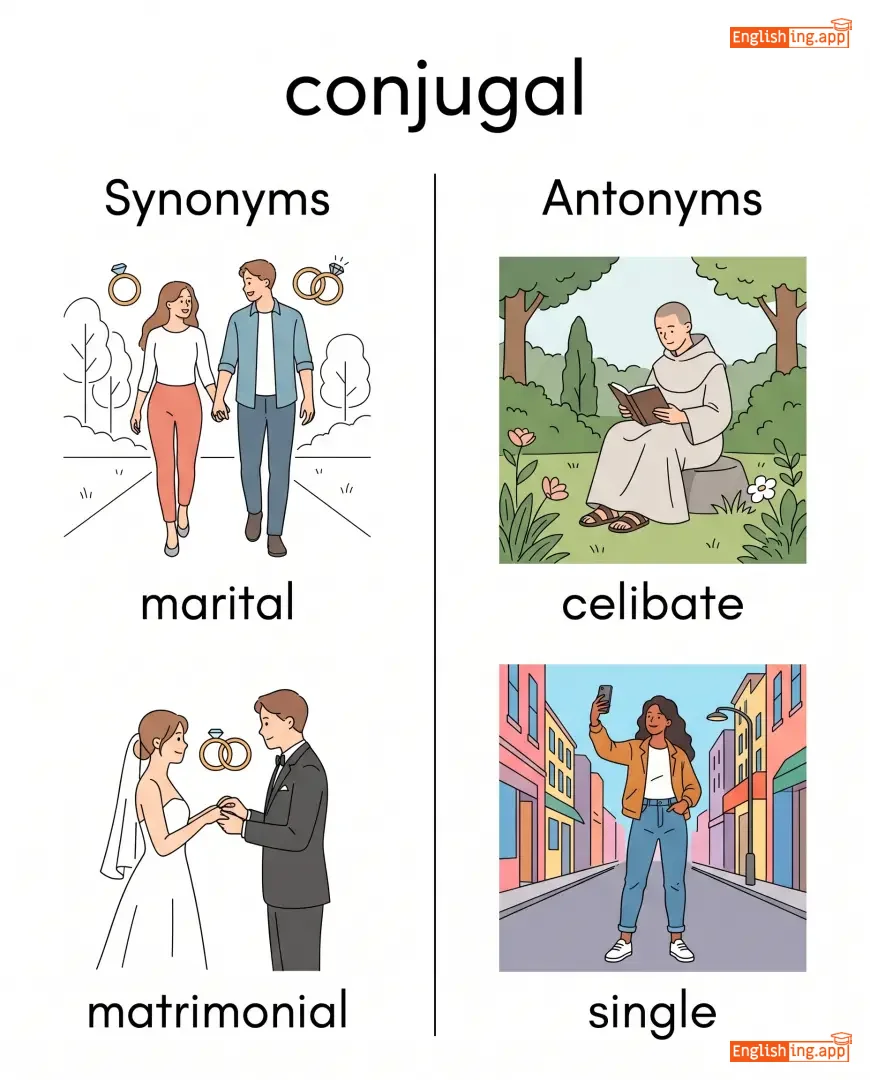
婚姻の
kon'in no
••••••
|
- •••••• | - •••••• | - •••••• | - •••••• |
relating to marriage or the relationship between husband and wife
••••••
|
They enjoyed a long life of conjugal happiness. |
彼らは長い結婚生活を楽しみました。
Karera wa nagai kekkon seikatsu o tanoshimimashita.
••••••
|
conjugal rights |
the rights enjoyed by married partners, especially sexual relations
••••••
|
婚姻権
kon'in ken
••••••
|
marital, matrimonial, spousal, wedded
••••••
|
celibate, single
••••••
|
conjugal life, conjugal relationship, conjugal duties
••••••
|
婚姻の生活 = 夫婦の生活 - 婚姻 = 結婚生活。
••••••
|
|
#1761
🔗
|
/kənˈdʒɔɪn/
verb
(コンジョイン)
••••••
|
- •••••• |
結合する
ketsugou suru
••••••
|
conjoined
コンジョインド
••••••
|
conjoined
コンジョインド
••••••
|
conjoins
コンジョインズ
••••••
|
conjoining
コンジョイニング
••••••
|
to join together or unite; to combine
••••••
|
The two rivers conjoin just before reaching the sea.
2つの川は海に到達する直前に合流します。
••••••
|
2つの川は海に到達する直前に合流します。
Futatsu no kawa wa umi ni tōtatsu suru chokumae ni gōryū shimasu.
••••••
|
- •••••• | - •••••• | - •••••• |
join, unite, combine, merge, connect
••••••
|
separate, divide, detach
••••••
|
conjoin efforts, conjoin forces, conjoin elements
••••••
|
結合は双子のように2つを一緒にする、conjoinはまさにそれを意味します。
••••••
|
|
#1762
💭
|
/kənˈdʒɛktʃər/
noun/verb
(kənˈdʒɛktʃər)
••••••
|
|
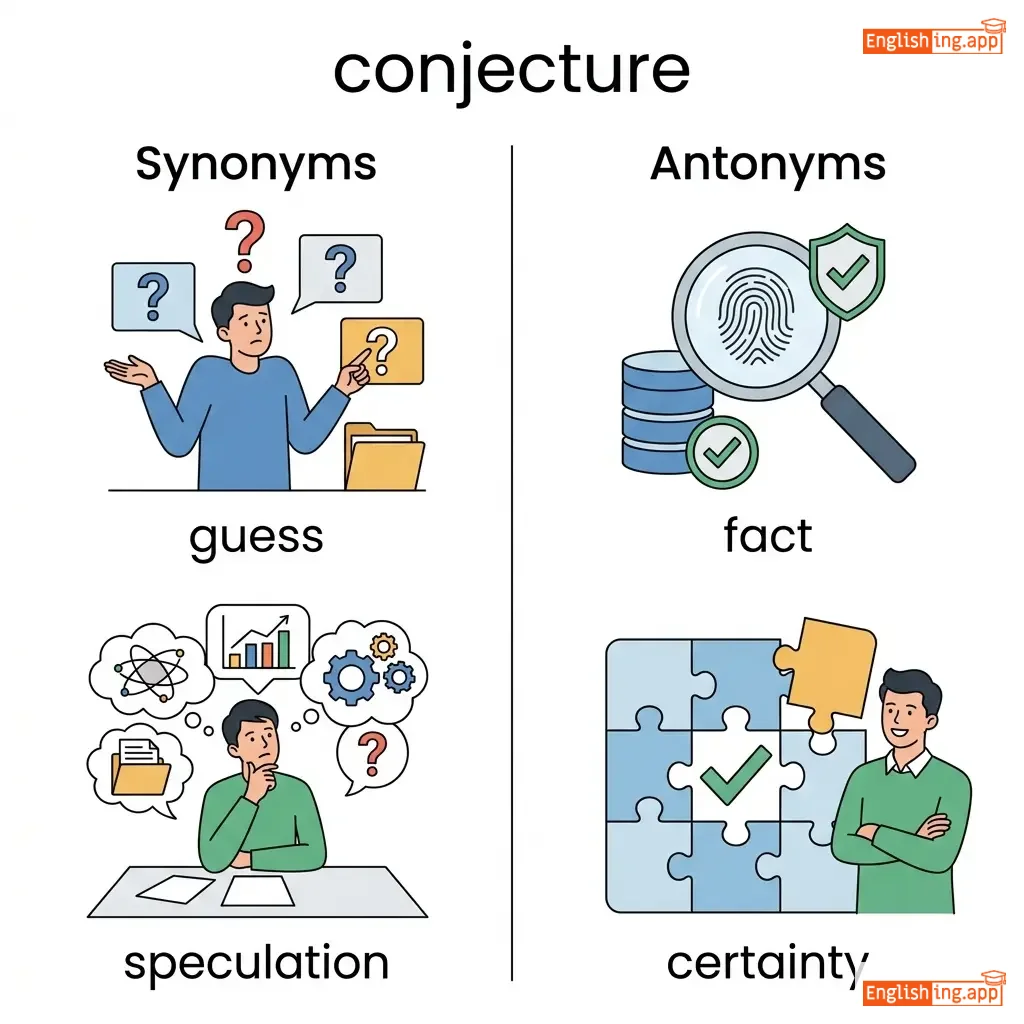
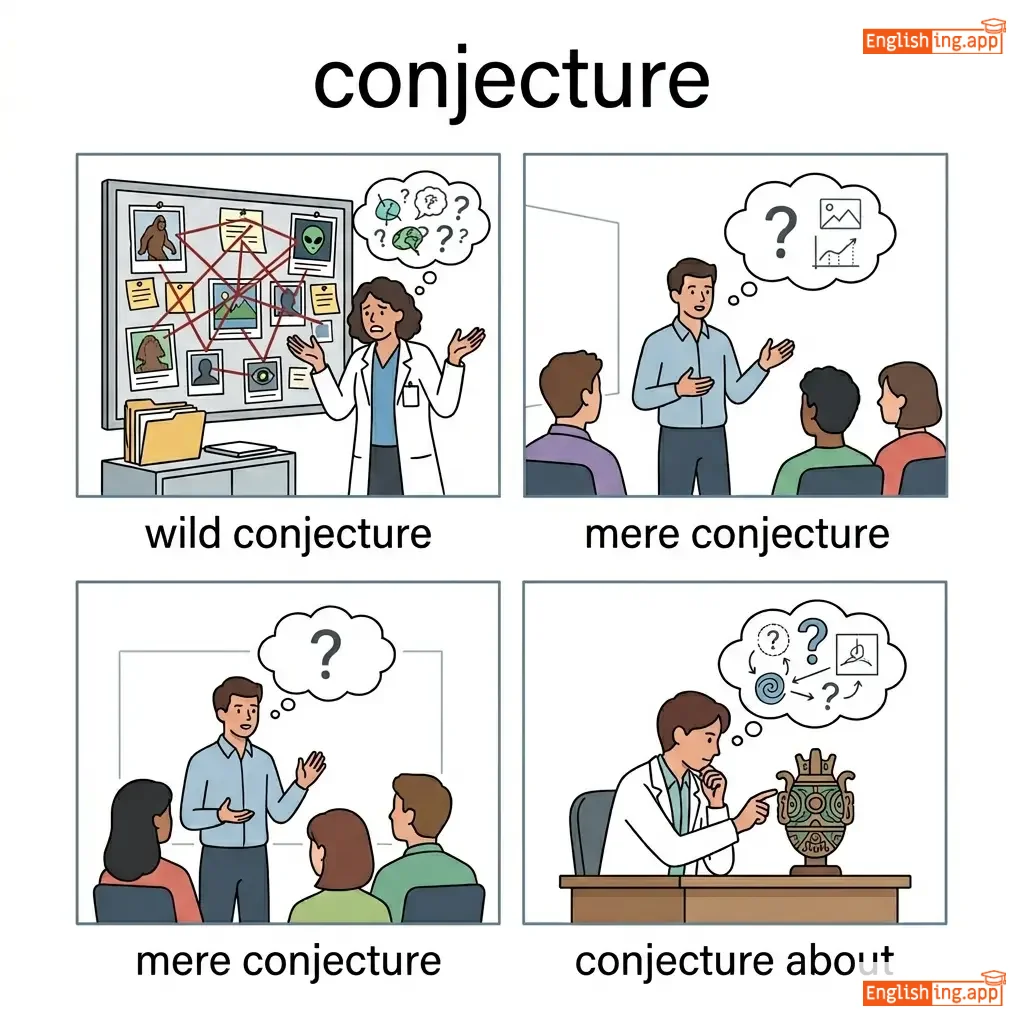
推測
suisei
••••••
|
conjectured
kənˈdʒɛktʃərd
••••••
|
conjectured
kənˈdʒɛktʃərd
••••••
|
conjectures
kənˈdʒɛktʃərz
••••••
|
conjecturing
kənˈdʒɛktʃərɪŋ
••••••
|
an opinion or conclusion formed on the basis of incomplete information; to form an opinion without sufficient evidence
••••••
|
The critics conjectured that the book was inspired by real events.
批評家たちは、その本が実際の出来事に触発されていると推測しました。
••••••
|
批評家たちは、その本が実際の出来事に触発されていると推測しました。
Hihyōka-tachi wa, sono hon ga jissai no dekigoto ni shokuhatsu sarete iru to suisei shimashita.
••••••
|
- •••••• | - •••••• | - •••••• |
guess, speculation, assumption, hypothesis, surmise
••••••
|
fact, certainty, proof
••••••
|
wild conjecture, mere conjecture, conjecture about, conjecture that
••••••
|
推測は何かを予測すること、例えば本の内容が現実に基づいているかどうかを考えること。
••••••
|
|
#1763
🤔
|
/kənˈdʒɛktʃərəl/
adjective
(コンジェクチュラル)
••••••
|
- •••••• |
推測的
すいそくてき
••••••
|
- •••••• | - •••••• | - •••••• | - •••••• |
based on guesswork or incomplete evidence rather than certain knowledge
••••••
|
His explanation was purely conjectural and lacked proof. |
彼の説明は完全に推測的で、証拠が欠けていました。
かれのせつめいはかんぜんにすいそくてきで、しょうこがかけていました。
••••••
|
- •••••• | - •••••• | - •••••• |
speculative, hypothetical, theoretical, uncertain
••••••
|
factual, proven, certain
••••••
|
conjectural evidence, conjectural explanation, conjectural theory, conjectural remarks
••••••
|
推測的とは確かな事実ではなく、予測に基づくものです。
••••••
|
|
#1764
🌲
|
/kəˈnɪfərəs/
adjective
(コニフェラス)
••••••
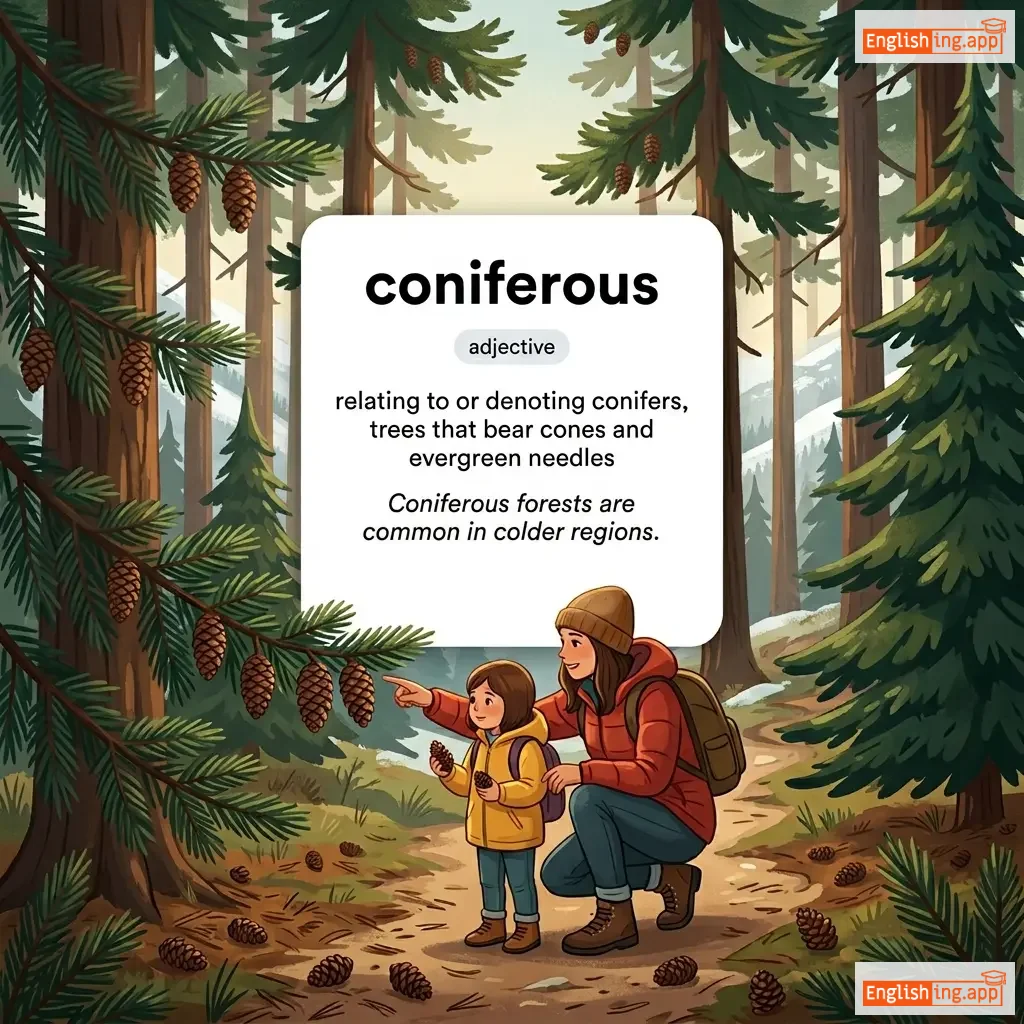
|
|
針葉樹
shinyōju
••••••
|
- •••••• | - •••••• | - •••••• | - •••••• |
relating to or denoting conifers, trees that bear cones and evergreen needles
••••••
|
Coniferous forests are common in colder regions. |
針葉樹の森は寒冷な地域に多く見られます。
Shinyōju no mori wa kanrei na chiiki ni ōku miraremasu.
••••••
|
- •••••• | - •••••• | - •••••• |
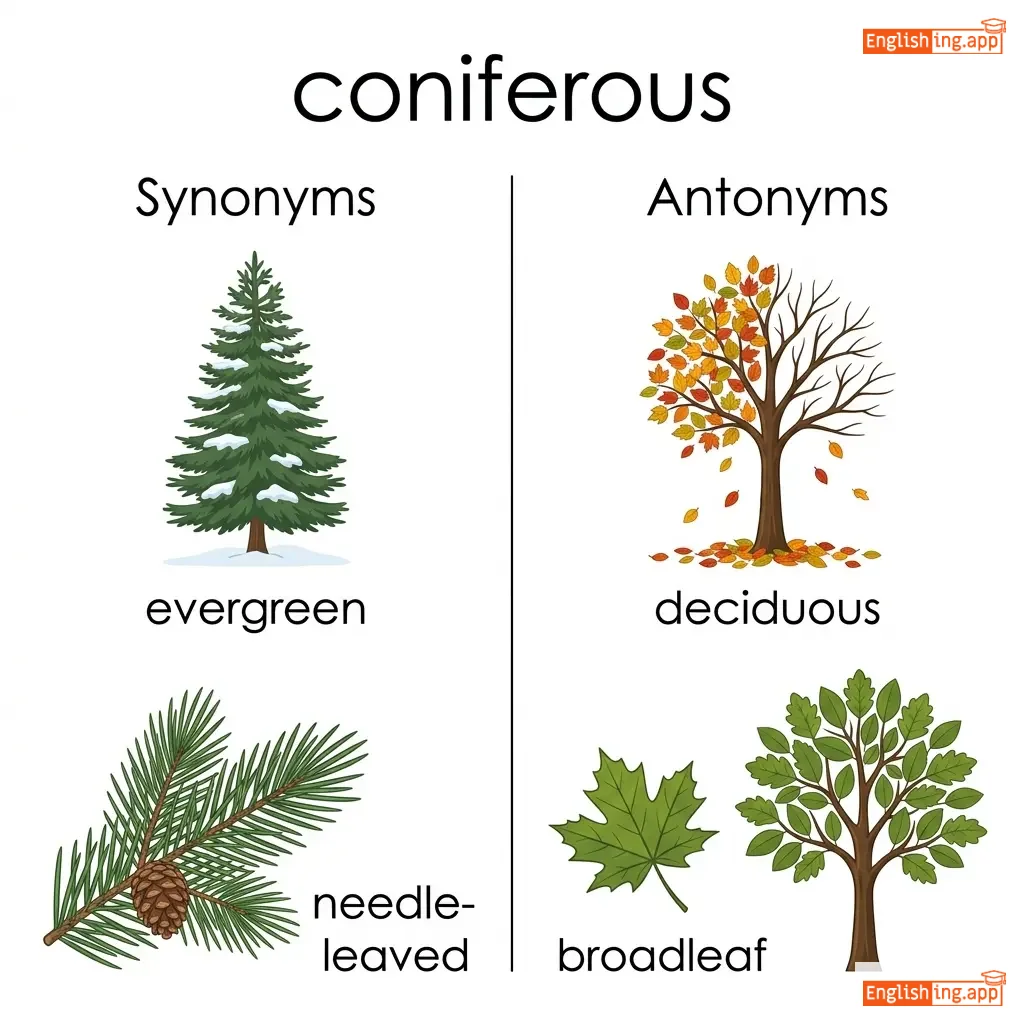
evergreen, needle-leaved, pine-bearing, cone-bearing
••••••
|
deciduous, broadleaf
••••••
|
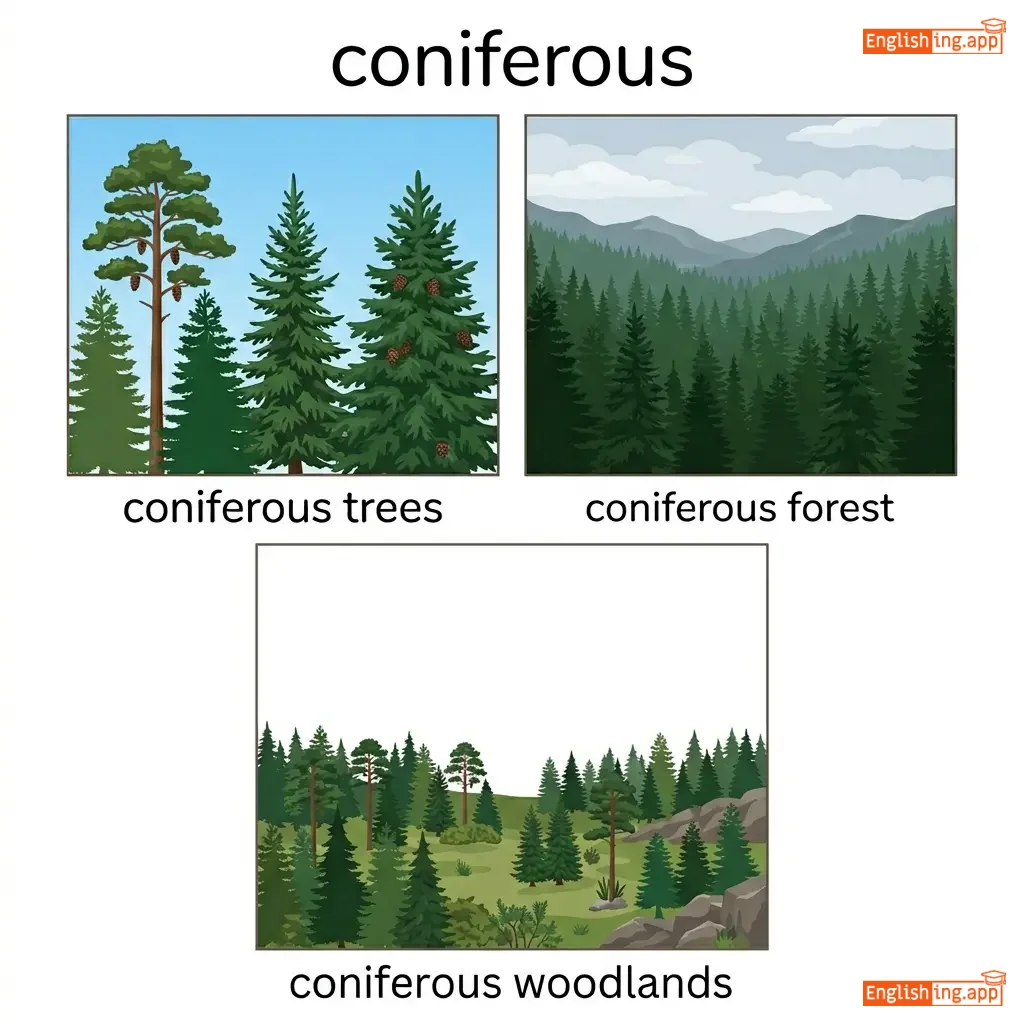
coniferous trees, coniferous forest, coniferous woodlands, coniferous species
••••••
|
Coniferous = 針葉樹、松ぼっくりと常緑の針葉を持つ木々、まるで松の木のよう。
••••••
|
|
#1765
🌲
|
/ˈkɒnɪfər/
noun
(コニファー)
••••••
|
- •••••• |
針葉樹
Shinyōju
••••••
|
- •••••• | - •••••• | - •••••• | - •••••• |
a type of tree that bears cones and evergreen needle-like leaves, such as pine or fir
••••••
|
The forest is dominated by conifers like pine and spruce.
森林は松やモミの木などの針葉樹によって支配されています。
••••••
|
森林は松やモミの木などの針葉樹によって支配されています。
Shinrin wa matsu ya momi no ki nado no shinyōju ni yotte shihai sareteimasu.
••••••
|
- •••••• | - •••••• | - •••••• |
evergreen, pine, fir, spruce, cedar
••••••
|
deciduous, broadleaf
••••••
|
conifer forest, conifer species, tall conifers, conifer plantation
••••••
|
針葉樹 : 針 (needle) + 木 (tree) 🌲. 針葉樹を覚えよう!
••••••
|
|
#1766
📐
|
/ˈkɒŋɡruənt/
adjective
(コングルーエント)
••••••
|
- •••••• |
合同
gōtō
••••••
|
- •••••• | - •••••• | - •••••• | - •••••• |
in agreement or harmony; having the same shape and size in geometry
••••••
|
Their values are congruent with the goals of the organization. |
彼らの価値観は組織の目標と一致しています。
Karera no kachikan wa soshiki no mokuhyō to icchi shiteimasu.
••••••
|
- •••••• | - •••••• | - •••••• |
consistent, compatible, harmonious, matching, corresponding
••••••
|
incongruent, inconsistent, conflicting
••••••
|
congruent values, congruent shapes, congruent triangles, congruent goals
••••••
|
合同は同じ形を持つこと、例えば2つの完全に一致した三角形のようなものです。
••••••
|
|
#1767
⚖️
|
/ˈkɒŋɡruəns/
noun
(コングルエンス)
••••••
|
|
整合性
seigōsei
••••••
|
- •••••• | - •••••• | - •••••• | - •••••• |
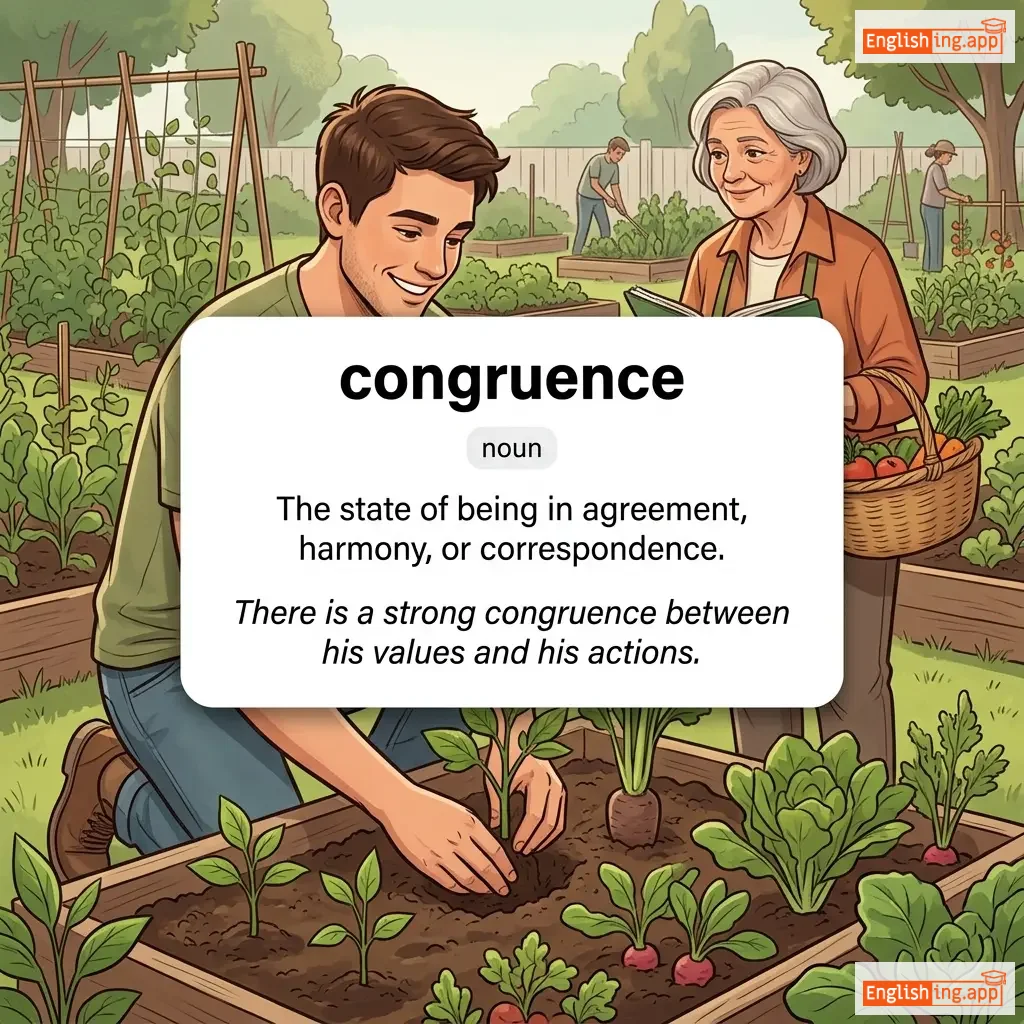
The state of being in agreement, harmony, or correspondence.
••••••
|
There is a strong congruence between his values and his actions.
彼の価値観と行動の間には強い整合性があります。
••••••
|
彼の価値観と行動の間には強い整合性があります。
Kare no kachikan to kōdō no aida ni wa tsuyoi seigōsei ga arimasu.
••••••
|
- •••••• | - •••••• | - •••••• |
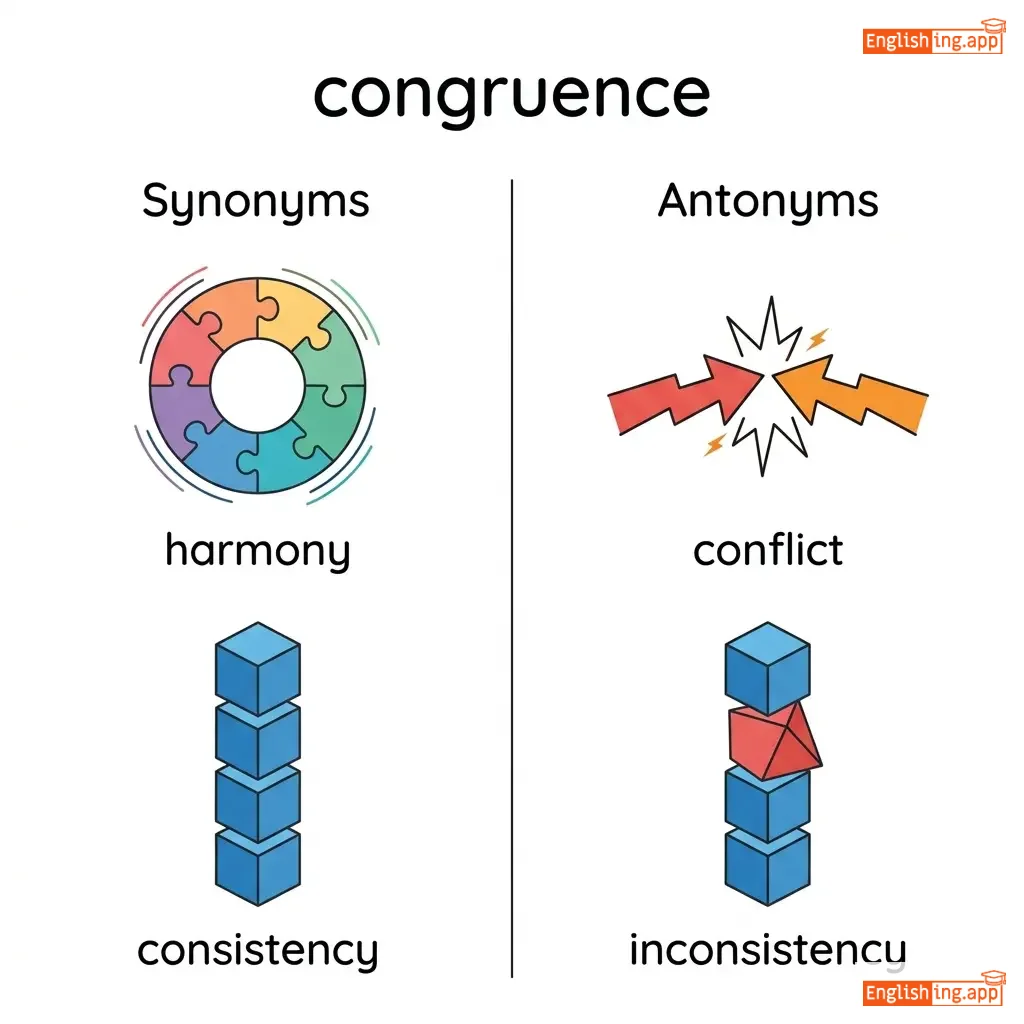
harmony, consistency, agreement, alignment, conformity
••••••
|
conflict, inconsistency, contradiction
••••••
|
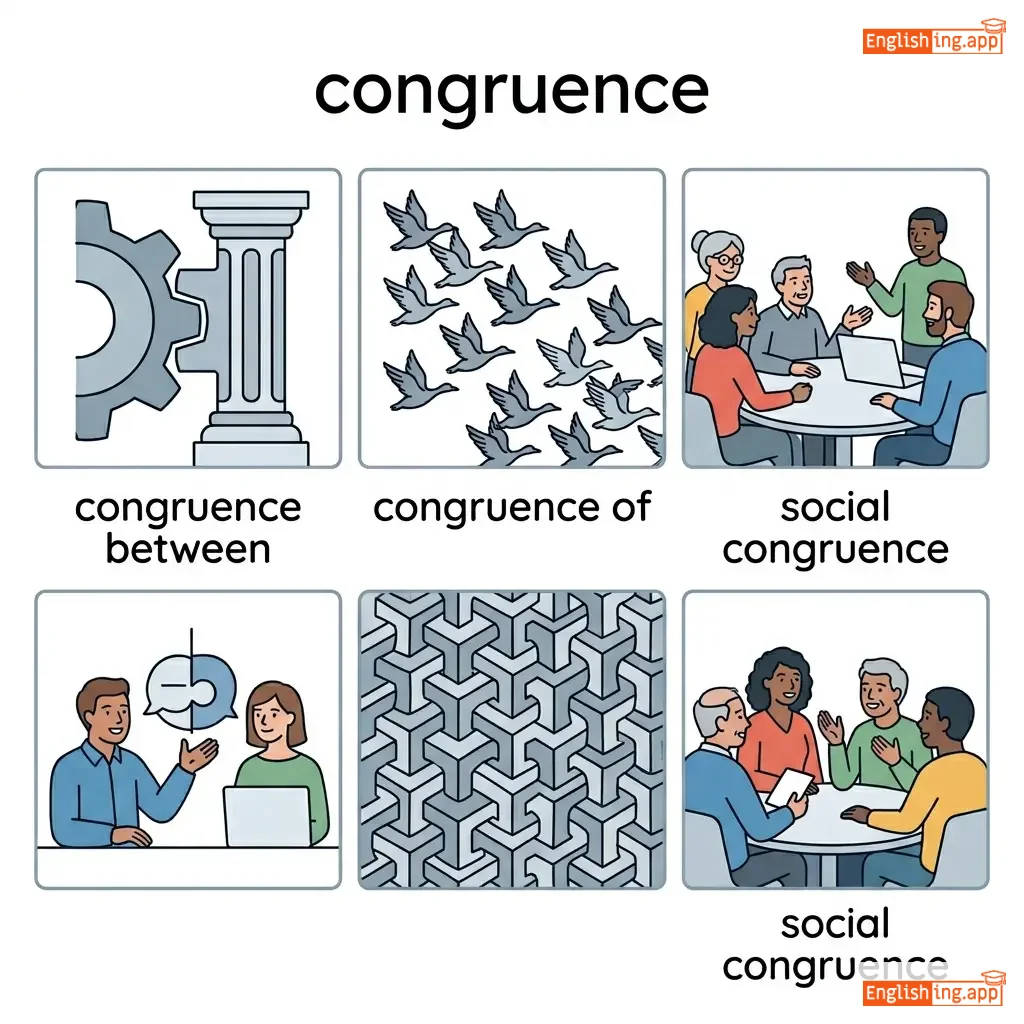
congruence between, congruence of, social congruence, cultural congruence
••••••
|
整合性 = 価値観と行動の一致
••••••
|
|
#1768
👥
|
/ˈkɒŋɡrɪˌɡeɪt/
verb
(コングリゲート)
••••••
|
|
集まる
atsumaru
••••••
|
congregated
コングリゲーテッド
••••••
|
congregated
コングリゲーテッド
••••••
|
congregates
コングリゲーツ
••••••
|
congregating
コングリゲーティング
••••••
|
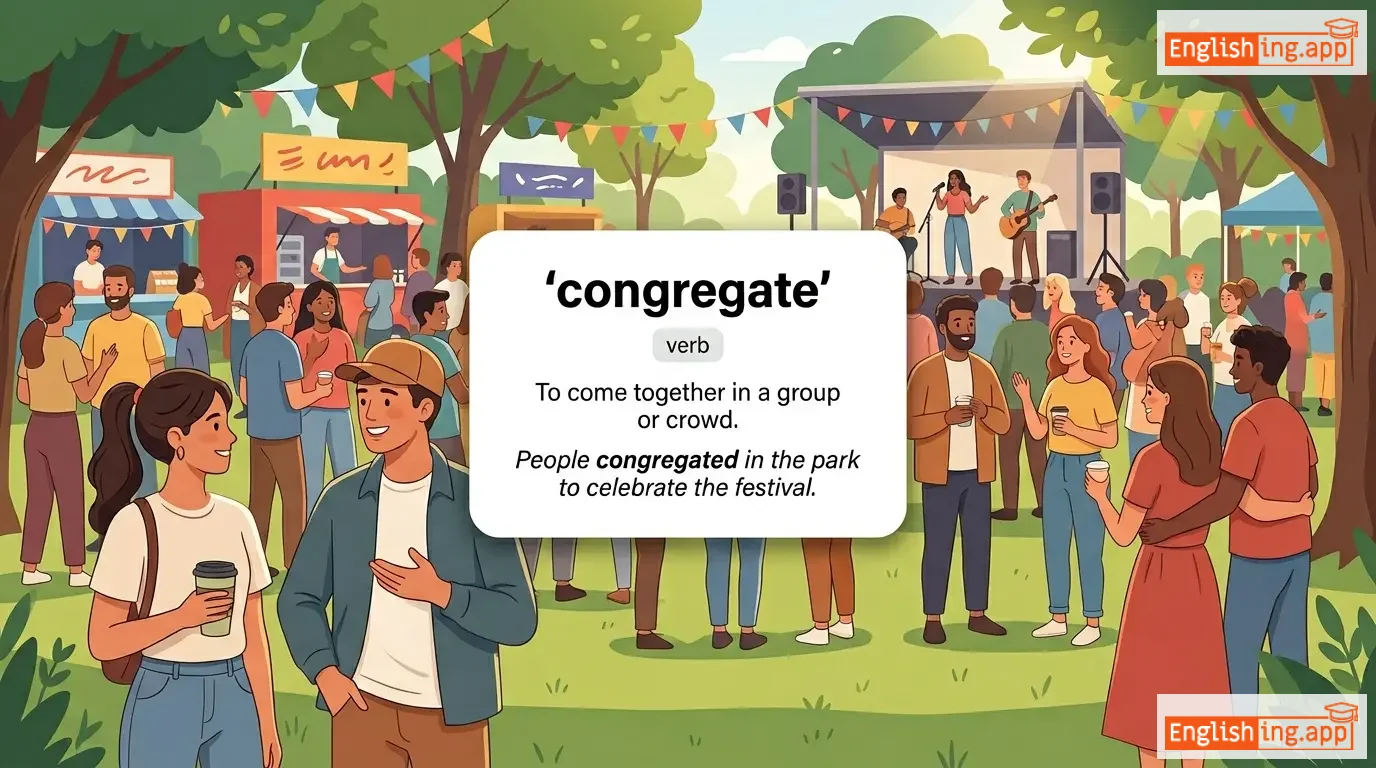
To come together in a group or crowd.
••••••
|
People congregated in the park to celebrate the festival.
人々は公園でお祭りを祝うために集まりました。
••••••
|
人々は公園でお祭りを祝うために集まりました。
Hitobito wa kōen de omatsuri o iwau tame ni atsumarimashita.
••••••
|
- •••••• | - •••••• | - •••••• |
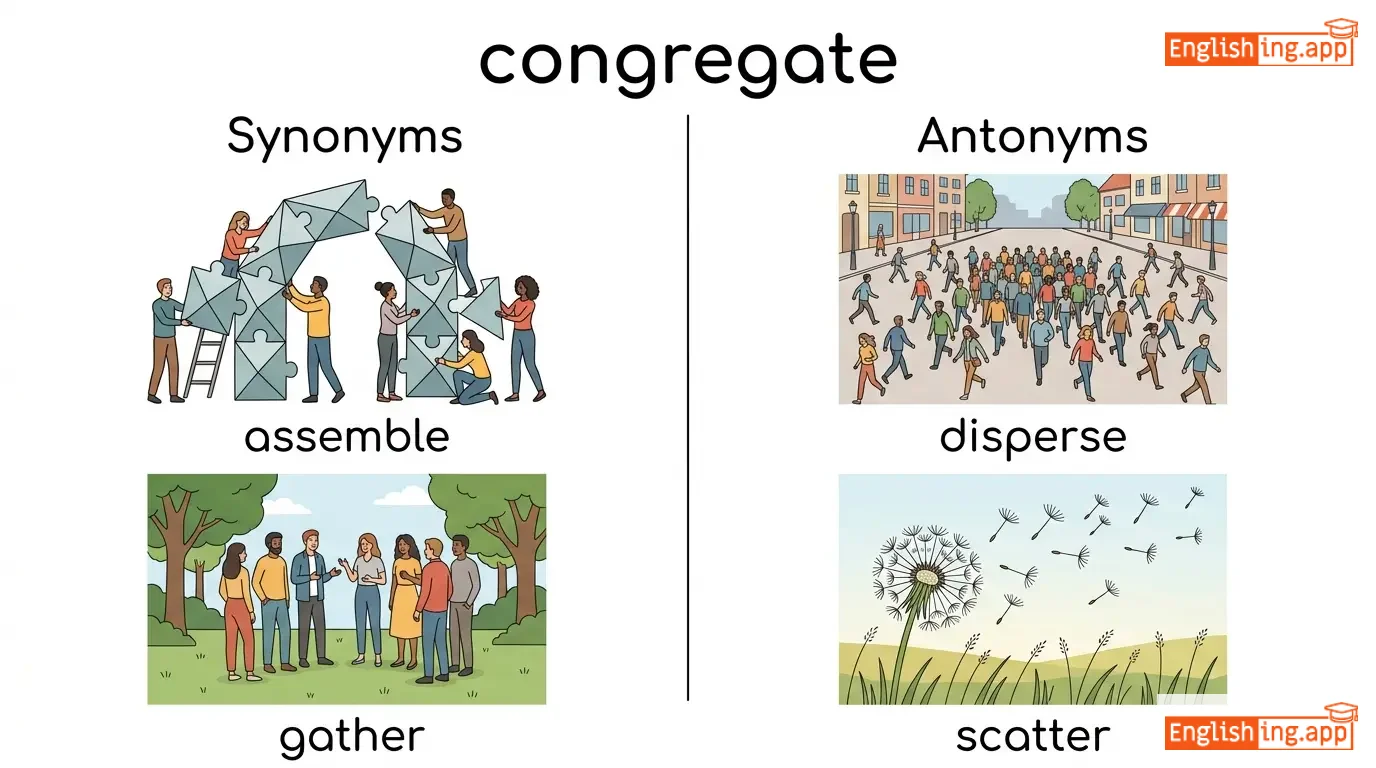
assemble, gather, meet, collect, rally
••••••
|
disperse, scatter, separate
••••••
|
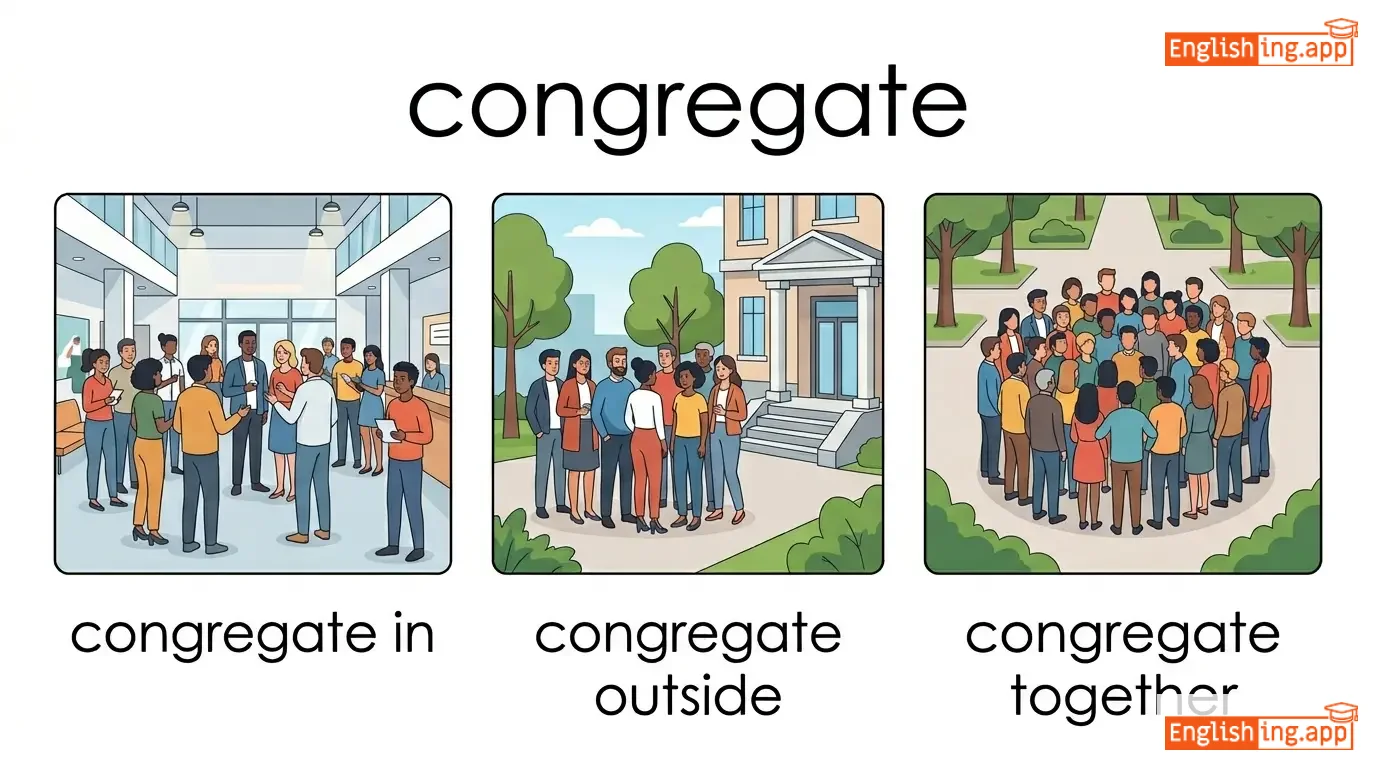
congregate in, congregate outside, congregate together
••••••
|
Congregateはお祭りのように人々が集まることを意味します。
••••••
|
|
#1769
🌀
|
/kənˌɡlɒməˈreɪʃən/
noun
(コングロメレーション)
••••••
|
- •••••• |
集合体
shūgōtai
••••••
|
- •••••• | - •••••• | - •••••• | - •••••• |
A collection or mixture of different things grouped together.
••••••
|
The market is a conglomeration of small shops and food stalls. |
市場は小さな店と食べ物の屋台の集合体です。
Ichiba wa chīsana mise to tabemono no yatai no shūgōtai desu.
••••••
|
- •••••• | - •••••• | - •••••• |
collection, mixture, aggregation, cluster, assortment
••••••
|
separation, division
••••••
|
conglomeration of companies, conglomeration of ideas, conglomeration of buildings
••••••
|
Conglomeration はいろいろな物が集まったものです。
••••••
|
|
#1770
🏢
|
/kənˈɡlɒmərət/
noun
(コンゴロメート)
••••••
|
|
さまざまな企業が集まった大企業グループ
samazama na kigyō ga atsumatta daikigyo gurūpu
••••••
|
- •••••• | - •••••• | - •••••• | - •••••• |
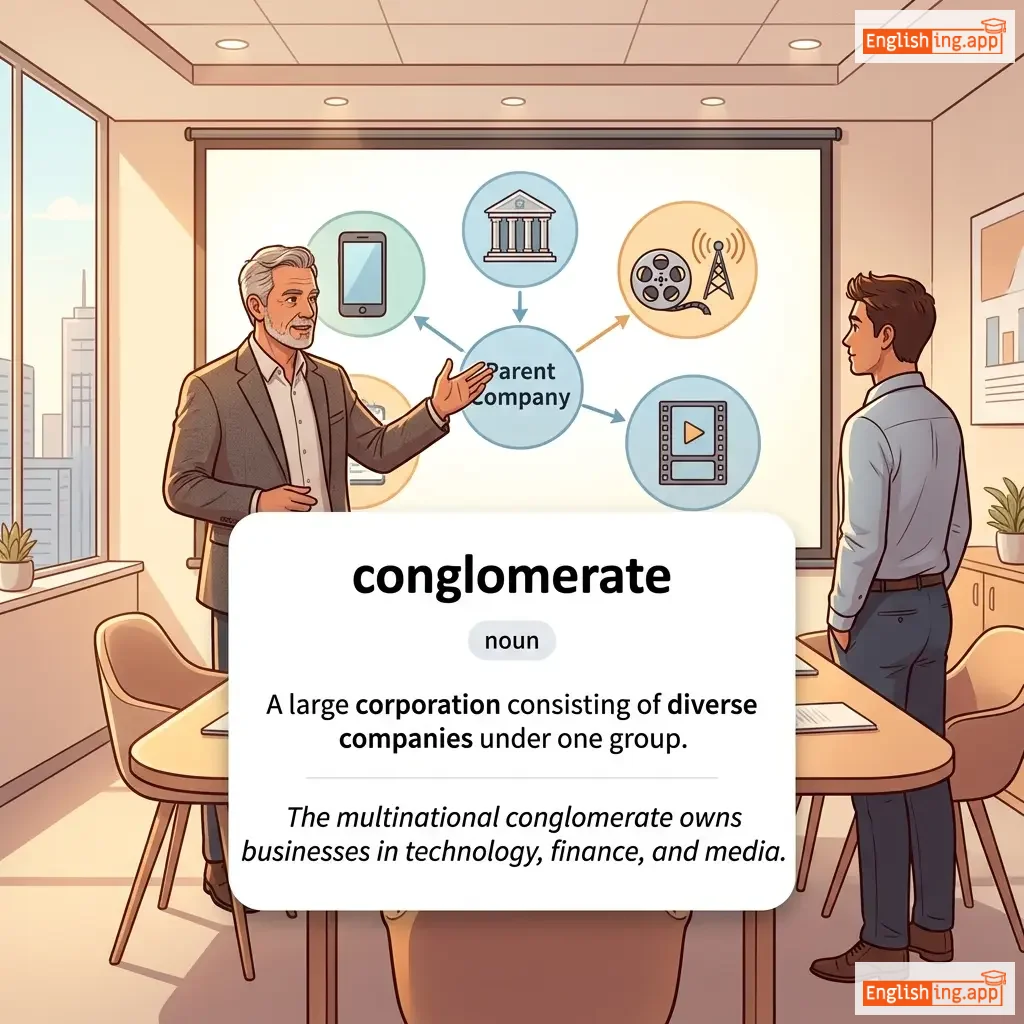
A large corporation consisting of diverse companies under one group.
••••••
|
The multinational conglomerate owns businesses in technology, finance, and media.
その多国籍コングロマリットは、技術、金融、メディアの分野で事業を展開しています。
••••••
|
その多国籍コングロマリットは、技術、金融、メディアの分野で事業を展開しています。
Sono takokuseki kongurōmaritto wa, gijutsu, kin'yū, media no bunya de jigyō o tenkai shiteimasu.
••••••
|
- •••••• | - •••••• | - •••••• |
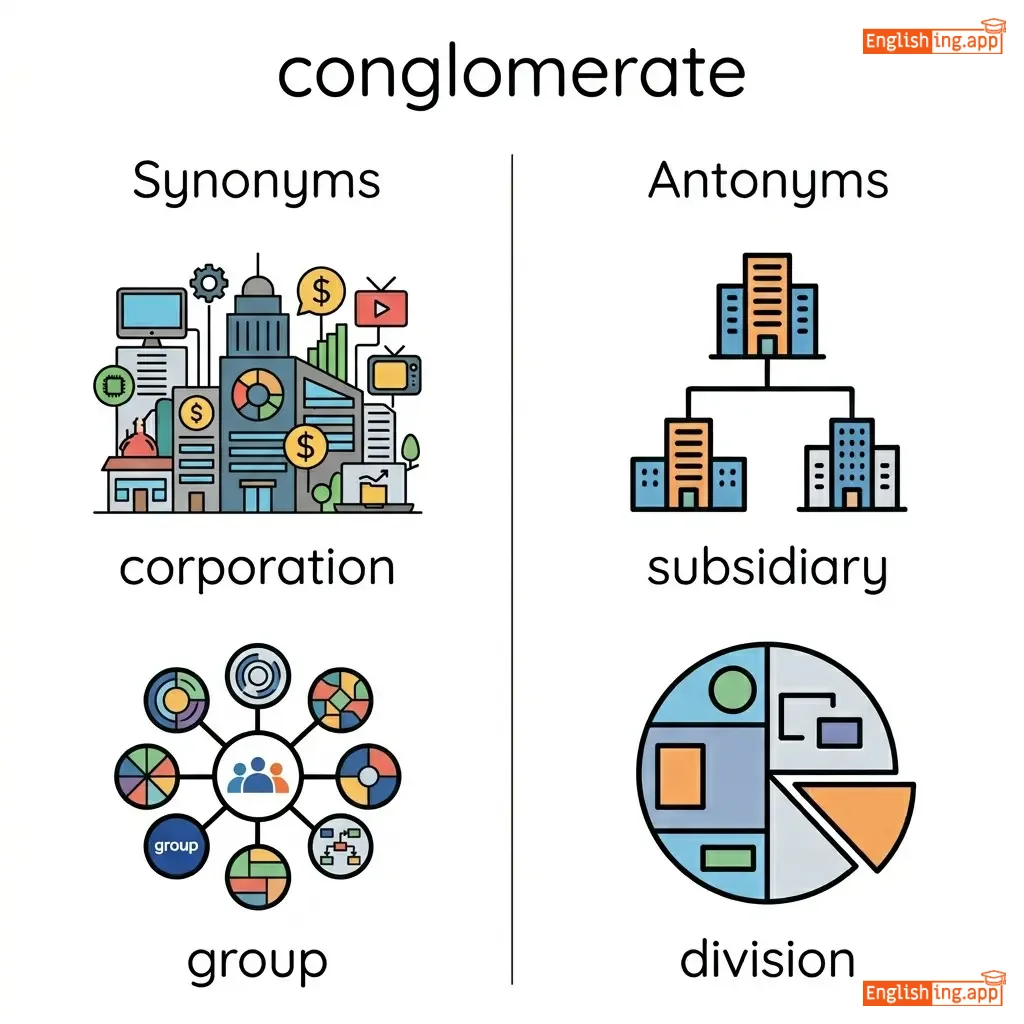
corporation, group, company, consortium, empire
••••••
|
subsidiary, division
••••••
|
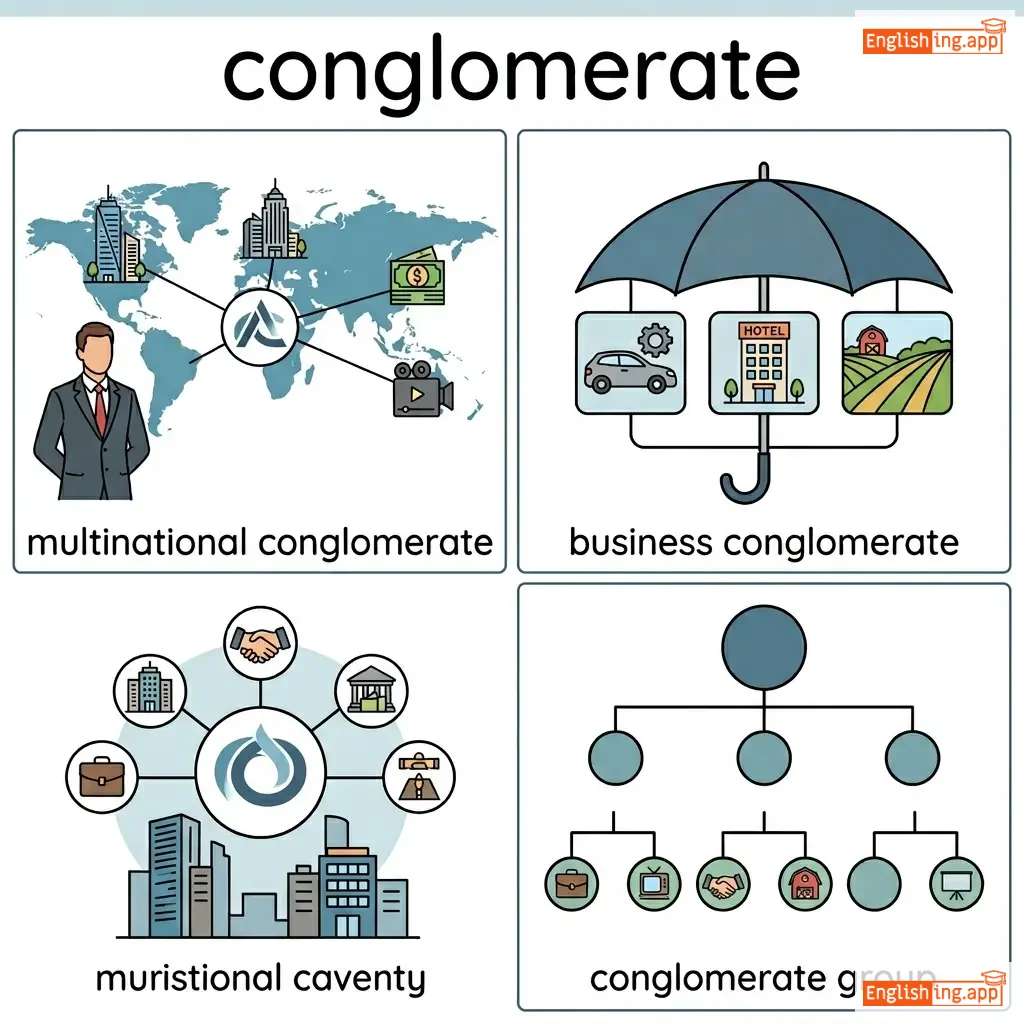
multinational conglomerate, business conglomerate, conglomerate group, corporate conglomerate
••••••
|
Conglomerate は、いろいろな会社を持つ大企業です。
••••••
|
Vocabulary Quiz
Test your vocabulary by matching words with their translations or meanings.
Login to take the quiz
Comments (0)
Share your thoughts and join the discussion.
Join the discussion by logging in
Login to CommentNo comments yet
Be the first to share your thoughts!