

翻訳
過去
過去分詞
三人称単数
動名詞
意味
例文
例文の翻訳
同義語
対義語
コロケーション
ニーモニック



Swipe left or right, or use the buttons. Tap image to zoom.
例文の翻訳
単語
Lesson 156Lesson 156 - マスクトグル
|
絵文字
|
単語 | Images | 翻訳 | 過去 | 過去分詞 | 三人称単数 | 動名詞 | 意味 | 例文 | 例文の翻訳 | 表現例 | 表現例の意味 | 表現例の翻訳 | 同義語 | 対義語 | コロケーション | ニーモニック |
|---|---|---|---|---|---|---|---|---|---|---|---|---|---|---|---|---|---|
|
#4651
🌱
|
/ɪnˈhɪərəns/
noun
(インヘレンス)
••••••
|
- •••••• |
内在性
naizaisē
••••••
|
- •••••• | - •••••• | - •••••• | - •••••• |
The state of being an essential or permanent part of something.
••••••
|
The inherence of risk is part of every business venture.
リスクの内在性はすべてのビジネス冒険の一部です。
••••••
|
リスクの内在性はすべてのビジネス冒険の一部です。
Risuku no naizaisē wa subete no bijinesu bōken no ichibu desu.
••••••
|
- •••••• | - •••••• | - •••••• |
intrinsicness, essence, permanence, innate quality, fundamental nature
••••••
|
separateness, externality, detachment
••••••
|
inherence in nature, inherence of value, natural inherence
••••••
|
Inherenceは日本語で'内在性'(組み込まれている)として表現されます。
••••••
|
|
#4652
☠️
|
/ɪnˈdʒʊəriəs/
adjective
(インジュリアス)
••••••
|
- •••••• |
有害な
yūgaina
••••••
|
- •••••• | - •••••• | - •••••• | - •••••• |
Causing or likely to cause harm or damage.
••••••
|
Smoking is injurious to health. |
喫煙は健康に有害です。
Kitsuen wa kenkō ni yūgaina desu.
••••••
|
- •••••• | - •••••• | - •••••• |
harmful, damaging, detrimental, hurtful
••••••
|
beneficial, helpful, harmless
••••••
|
injurious effects, injurious substance, injurious behavior
••••••
|
INJURIOUS は害を引き起こすこと - 有害な。
••••••
|
|
#4653
📜
|
/ɪnˈdʒʌŋkʃən/
noun
(インジャンクション)
••••••
|
- •••••• |
差止命令
sashitome meirei
••••••
|
- •••••• | - •••••• | - •••••• | - •••••• |
A judicial order restraining a person from an action or compelling a certain act.
••••••
|
The court issued an injunction to stop the company from polluting the river. |
裁判所は、会社が河川を汚染するのを防ぐために差止命令を出した。
Saibansho wa, kaisha ga kasen o osen suru no o fusegu tame ni sashitome meirei o dashita.
••••••
|
grant an injunction |
When a court provides an official order preventing or compelling action.
••••••
|
差止命令を出す
sashitome meirei o dasu
••••••
|
order, decree, mandate, ruling
••••••
|
permission, allowance
••••••
|
court injunction, temporary injunction, permanent injunction
••••••
|
INJUNCTIONは日本語でIN (中) + JUNCTION (交差点) の司法命令のようなものです。
••••••
|
|
#4654
💉
|
/ɪnˈdʒɛkt/
verb
(インジェクト)
••••••
|
- •••••• |
注射する
chūsha suru
••••••
|
injected
インジェクテッド
••••••
|
injected
インジェクテッド
••••••
|
injects
インジェクツ
••••••
|
injecting
インジェクティング
••••••
|
To introduce a substance, especially a drug, into the body using a needle.
••••••
|
The nurse will inject the vaccine into the patient's arm.
看護師は患者の腕にワクチンを注射します。
••••••
|
看護師は患者の腕にワクチンを注射します。
Kangoshi wa kanja no ude ni wakuchin o chūsha shimasu.
••••••
|
inject enthusiasm
熱意を注入する
••••••
|
To add energy or excitement into a situation.
••••••
|
熱意を注入する
netsui o chūnyū suru
••••••
|
administer, insert, infuse, introduce
••••••
|
withdraw, remove
••••••
|
inject medicine, inject drug, inject energy
••••••
|
INJECT は IN (中) + JECT (投げる) = 中に入れる。
••••••
|
|
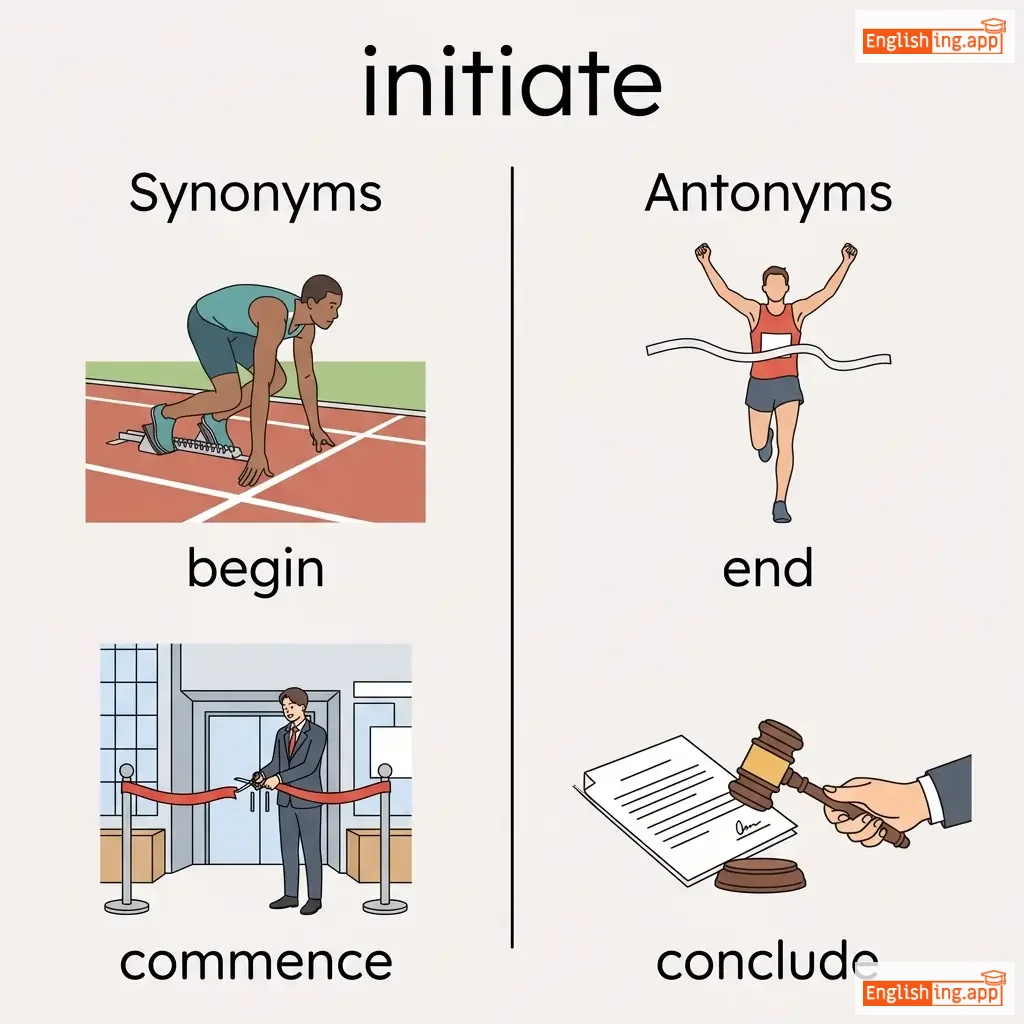
#4655
🚀
|
/ɪˈnɪʃieɪt/
verb
(イニシエイト)
••••••
|
|
開始する
kaishi suru
••••••
|
initiated
イニシエイテッド
••••••
|
initiated
イニシエイテッド
••••••
|
initiates
イニシエイツ
••••••
|
initiating
イニシエイティング
••••••
|
To cause something to begin; to start.
••••••
|
The company plans to initiate a new training program next month.
その会社は来月、新しいトレーニングプログラムを開始する予定です。
••••••
|
その会社は来月、新しいトレーニングプログラムを開始する予定です。
Sono kaisha wa raigetsu, atarashī torēningu puroguramu o kaishi suru yotei desu.
••••••
|
initiate proceedings
手続きを開始する
••••••
|
To begin a formal process or legal action.
••••••
|
手続きを開始する
Tetsuzuki o kaishi suru
••••••
|
begin, commence, launch, start, inaugurate
••••••
|
end, conclude, finish
••••••
|
initiate action, initiate process, initiate reform
••••••
|
イニシエイトはINI(始め) + シエイト(実行) = 開始する
••••••
|
|
#4656
⚖️
|
/ɪˈnɪkwɪti/
noun
(イニキウィティ)
••••••
|
- •••••• |
不正
fusei
••••••
|
- •••••• | - •••••• | - •••••• | - •••••• |
Immoral or grossly unfair behavior.
••••••
|
The dictator's regime was marked by corruption and iniquity. |
独裁者の政権は腐敗と不正で特徴づけられていました。
Dokusai-sha no seiken wa fuhai to fusei de tokuchōdzukerarete imashita.
••••••
|
den of iniquity |
A place associated with immoral or wicked behavior.
••••••
|
不正の巣
Fusei no su
••••••
|
wickedness, sin, immorality, evil, corruption
••••••
|
virtue, morality, goodness
••••••
|
acts of iniquity, den of iniquity, system of iniquity
••••••
|
INIQUItyはINI (不正) という単語を思い出させ、不正な行動が不正であることを思い出させます。
••••••
|
|
#4657
⚖️
|
/ɪˈnɪkwɪtəs/
adjective
(イニキュイタス)
••••••
|
- •••••• |
不正義
fuseigi
••••••
|
- •••••• | - •••••• | - •••••• | - •••••• |
grossly unfair and morally wrong
••••••
|
Slavery was one of the most iniquitous practices in history. |
奴隷制は歴史上最も不正義な行為の一つでした。
Doreisei wa rekishijou mottomo fuseigi na koui no hitotsu deshita.
••••••
|
- •••••• | - •••••• | - •••••• |
wicked, unjust, evil, immoral, unfair
••••••
|
just, fair, righteous
••••••
|
iniquitous system, iniquitous law, iniquitous practice
••••••
|
INIQUITousは不正義に似ているので、不正義は非常に不公平なことです。
••••••
|
|
#4658
🌟
|
/ɪˈnɪmɪtəbəl/
adjective
(イニミタブル)
••••••
|
|
唯一無二
yuiitsu muni
••••••
|
- •••••• | - •••••• | - •••••• | - •••••• |
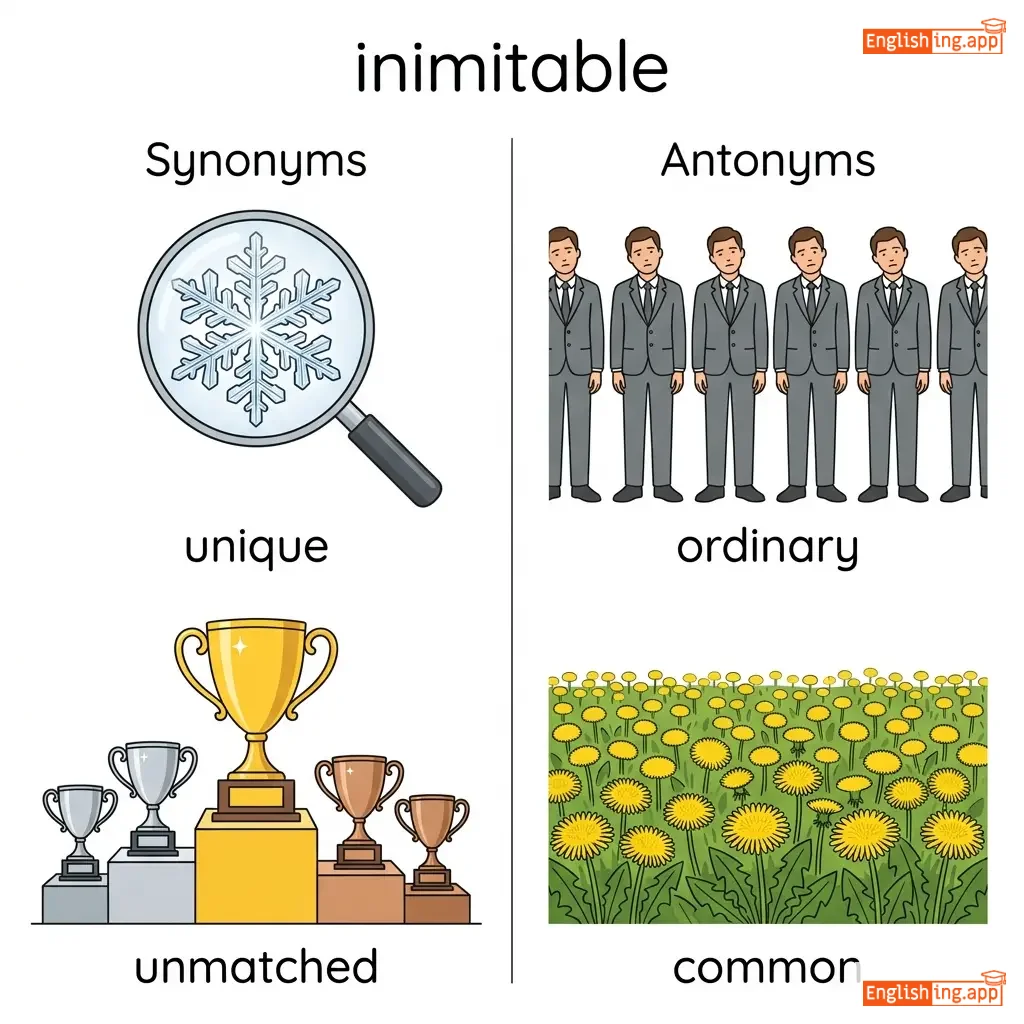
so good or unusual as to be impossible to copy; unique
••••••
|
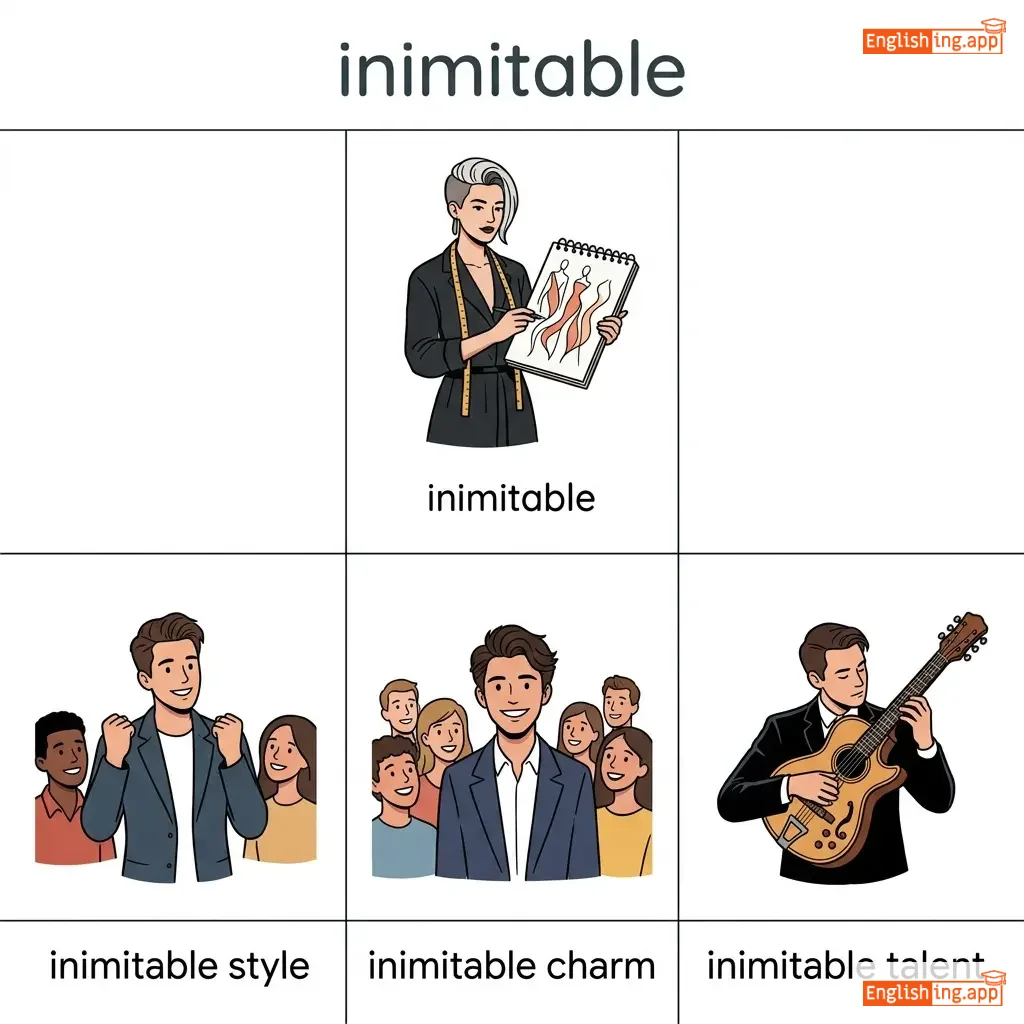
Her inimitable style made her stand out in the fashion industry. |
彼女の唯一無二のスタイルは、ファッション業界で彼女を際立たせました。
Kanojo no yuiitsu muni no sutairu wa, fasshon gyōkai de kanojo o kiwadata semashita.
••••••
|
- •••••• | - •••••• | - •••••• |
unique, unmatched, unparalleled, distinctive, exceptional
••••••
|
ordinary, common, imitable
••••••
|
inimitable style, inimitable charm, inimitable talent
••••••
|
唯一無二はコピーできないことを意味します。
••••••
|
|
#4659
⚔️
|
/ɪˈnɪmɪkəl/
adjective
(イニミカル)
••••••
|
- •••••• |
敵対的 / 不利な
tekitai-teki / furi na
••••••
|
- •••••• | - •••••• | - •••••• | - •••••• |
tending to obstruct or harm; unfriendly or hostile
••••••
|
The policy was inimical to the country's economic growth. |
その政策は国の経済成長に不利だった。
Sono seisaku wa kuni no keizai seichō ni furi datta.
••••••
|
- •••••• | - •••••• | - •••••• |
hostile, harmful, antagonistic, adverse, unfriendly
••••••
|
friendly, favorable, supportive
••••••
|
inimical to progress, inimical forces, inimical attitude
••••••
|
INIMy + CAL は敵対的な行動を意味します - 敵対的。
••••••
|
|
#4660
⚰️
|
/ɪnˈhjuːm/
verb
(インヒューム)
••••••
|
- •••••• |
埋葬する
maison suru
••••••
|
inhumed
インヒュームド
••••••
|
inhumed
インヒュームド
••••••
|
inhumes
インヒュームズ
••••••
|
inhuming
インヒューミング
••••••
|
to bury a dead body in the ground
••••••
|
They inhumed the warrior with full honors.
彼らは戦士を完全な名誉を持って埋葬しました。
••••••
|
彼らは戦士を完全な名誉を持って埋葬しました。
Karera wa senshi o kanzen'na meiyo o motte maison shimashita.
••••••
|
- •••••• | - •••••• | - •••••• |
bury, inter, entomb, lay to rest
••••••
|
exhume, unearth
••••••
|
inhume the body, properly inhumed, inhumed remains
••••••
|
HUMeは地面を意味し、inHUMEは地面に埋めることを意味します。
••••••
|
|
#4661
💔
|
/ɪnˈhjuːmən/
adjective
(インヒューマン)
••••••
|
- •••••• |
非人道的
hi jindōteki
••••••
|
- •••••• | - •••••• | - •••••• | - •••••• |
lacking human qualities of compassion and mercy; cruel or barbaric
••••••
|
The prisoners were kept in inhuman conditions. |
囚人たちは非人道的な状況で収容されていました。
Shūjin-tachi wa hi jindōteki na jōkyō de shūyō sarete imashita.
••••••
|
inhuman treatment |
extremely cruel or brutal behavior
••••••
|
非人道的な扱い
hi jindōteki na atsukai
••••••
|
cruel, brutal, merciless, savage, barbaric
••••••
|
humane, compassionate, kind
••••••
|
inhuman treatment, inhuman conditions, inhuman acts, inhuman behavior
••••••
|
Inhuman = 非人道的, 囚人が非人道的な扱いを受けていることを想像してみてください。
••••••
|
|
#4662
🏜️
|
/ˌɪnhɒˈspɪtəbl/
adjective
(インホスピタブル)
••••••
|
- •••••• |
住みにくい
suminikui
••••••
|
- •••••• | - •••••• | - •••••• | - •••••• |
Harsh and difficult to live in; unfriendly or unwelcoming to guests.
••••••
|
The desert is an inhospitable environment for most plants. |
砂漠はほとんどの植物にとって住みにくい環境です。
Sabaku wa hotondo no shokubutsu ni totte suminikui kankyō desu.
••••••
|
- •••••• | - •••••• | - •••••• |
unfriendly, unwelcoming, harsh, hostile, barren
••••••
|
hospitable, welcoming, friendly
••••••
|
inhospitable climate, inhospitable terrain, inhospitable environment
••••••
|
Inhospitableはhospitalに似ているけど、住みにくい場所。
••••••
|
|
#4663
😶
|
/ɪnˈhɪbɪtɪd/
adjective
(インヒビテッド)
••••••
|
- •••••• |
抑制された
yokusei sareta
••••••
|
- •••••• | - •••••• | - •••••• | - •••••• |
Unable to act in a relaxed and natural way, especially due to self-consciousness or restraint.
••••••
|
He was too inhibited to express his true feelings. |
彼は自分の本当の感情を表現するにはあまりにも抑制されていた。
Kare wa jibun no hontō no kanjō o hyōgen suru ni wa amari ni mo yokusei sarete ita.
••••••
|
- •••••• | - •••••• | - •••••• |
reserved, shy, self-conscious, restrained, timid
••••••
|
confident, outgoing, uninhibited
••••••
|
inhibited behavior, socially inhibited, emotionally inhibited
••••••
|
抑制されたは抑えるという意味、感情を抑えるようなもの。
••••••
|
|
#4664
⛔
|
/ɪnˈhɪbɪt/
verb
(インヒビット)
••••••
|
|
抑制する
yokusei suru
••••••
|
inhibited
インヒビテッド
••••••
|
inhibited
インヒビテッド
••••••
|
inhibits
インヒビッツ
••••••
|
inhibiting
インヒビティング
••••••
|
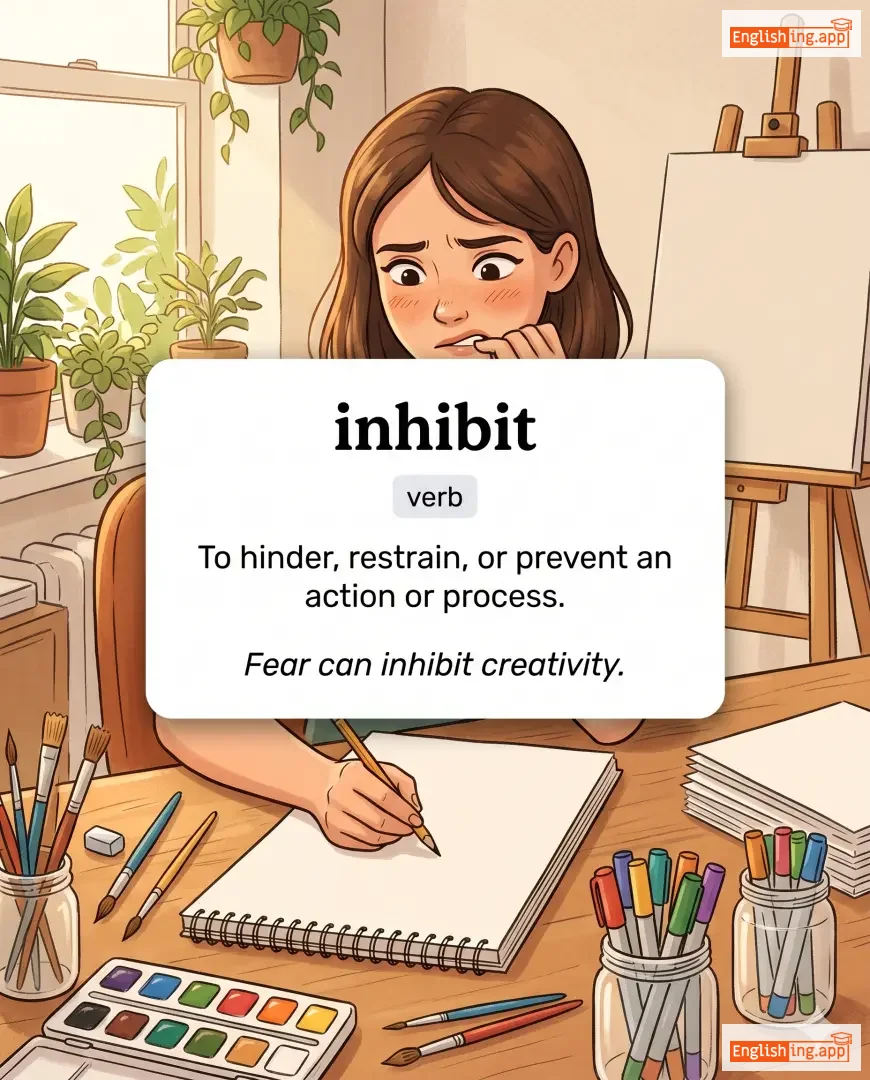
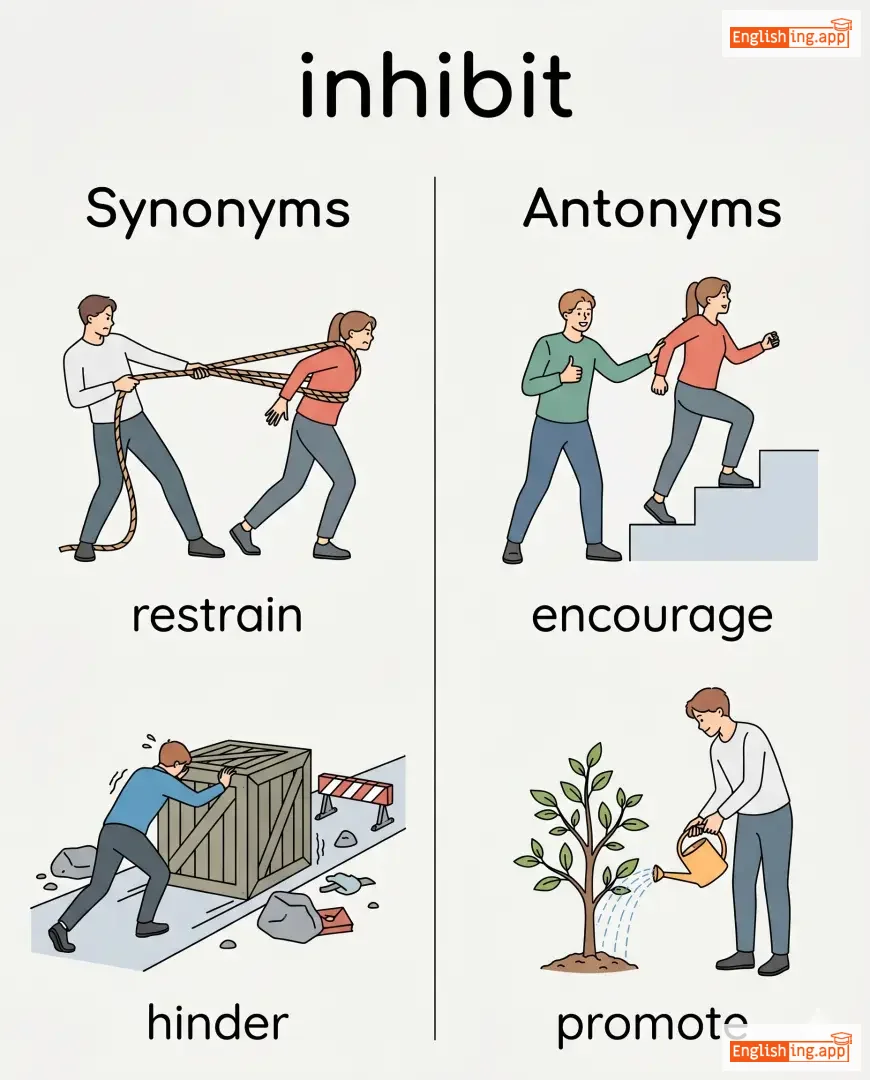
To hinder, restrain, or prevent an action or process.
••••••
|
Fear can inhibit creativity.
恐れは創造性を抑制する可能性があります。
••••••
|
恐れは創造性を抑制する可能性があります。
Osore wa sōzō-sei o yokusei suru kanō-sei ga arimasu.
••••••
|
socially inhibited
社会的に抑制された
••••••
|
Being shy or unable to act freely in social situations.
••••••
|
社会的に抑制された
Shakai-teki ni yokusei sareta
••••••
|
restrain, hinder, prevent, obstruct, suppress
••••••
|
encourage, promote, allow
••••••
|
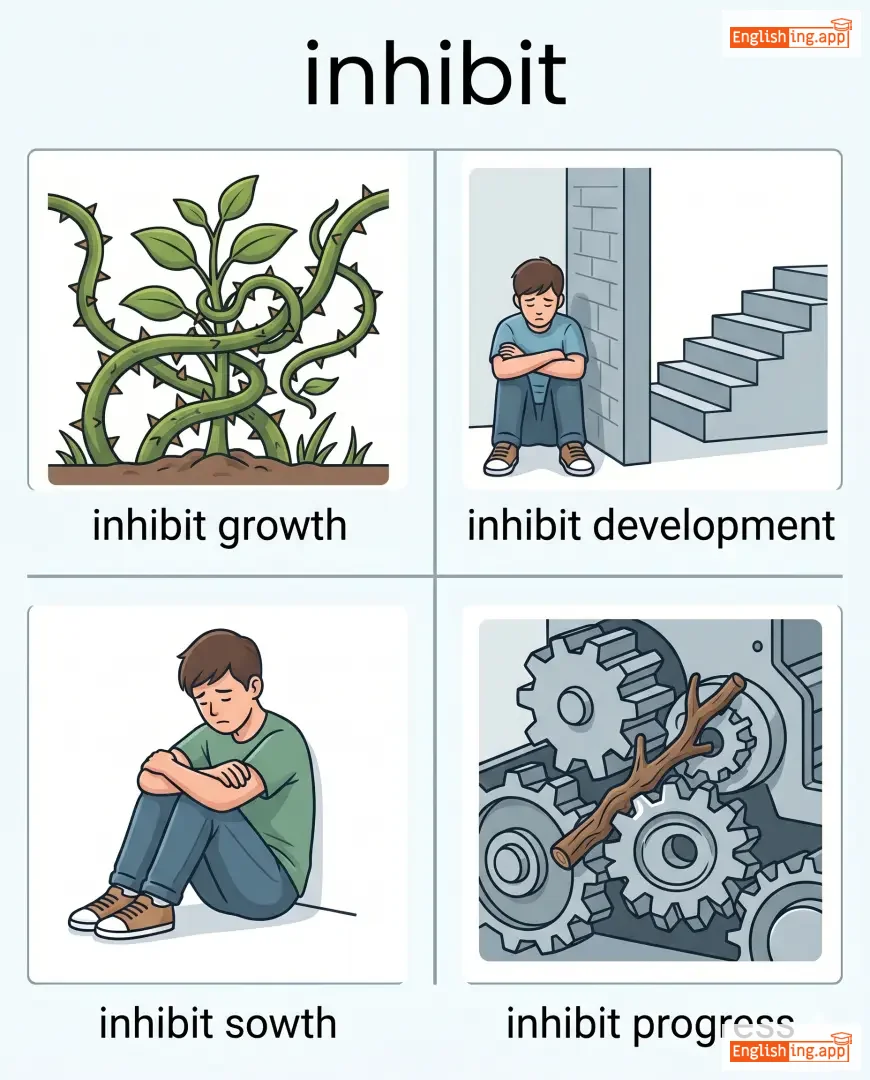
inhibit growth, inhibit development, inhibit progress
••••••
|
Inhibit (in + habit) は習慣で行動を抑制することを意味します。
••••••
|
|
#4665
⚖️
|
/ɪnˈhɛrənt/
adjective
(インヘレント)
••••••
|
|
固有の
koyū no
••••••
|
- •••••• | - •••••• | - •••••• | - •••••• |
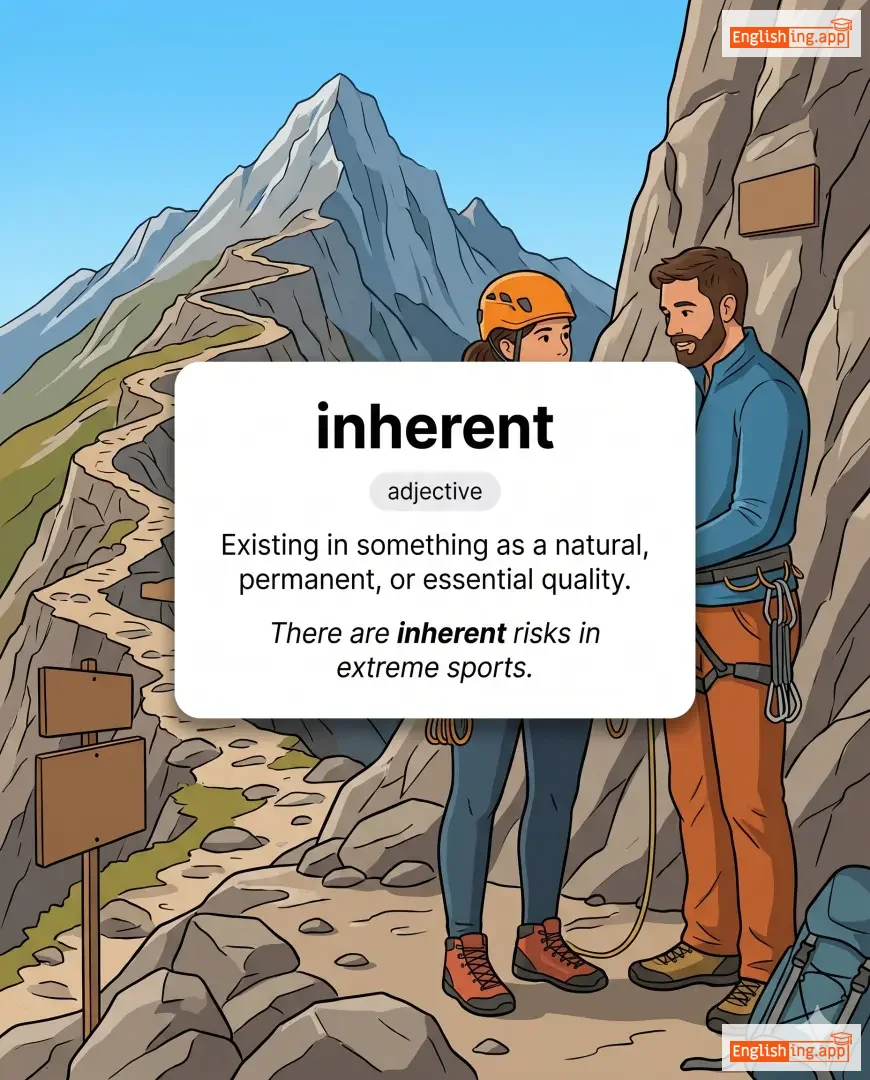
Existing in something as a natural, permanent, or essential quality.
••••••
|
There are inherent risks in extreme sports. |
エクストリームスポーツには固有のリスクが存在する。
ekusutorīmusupōtsu ni wa koyū no risuku ga sonzai suru.
••••••
|
inherent danger |
A danger that is naturally part of something and cannot be separated from it.
••••••
|
固有の危険
koyū no kiken
••••••
|
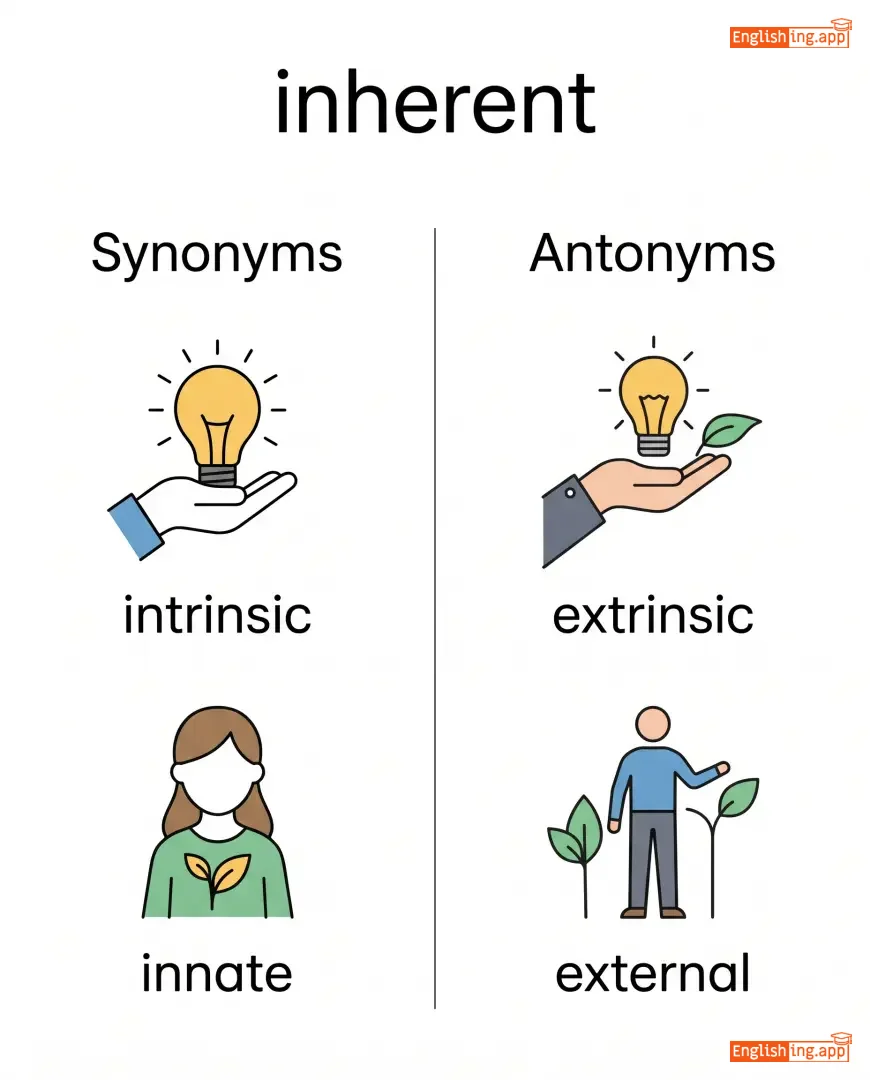
intrinsic, innate, built-in, essential, natural
••••••
|
extrinsic, external, acquired
••••••
|
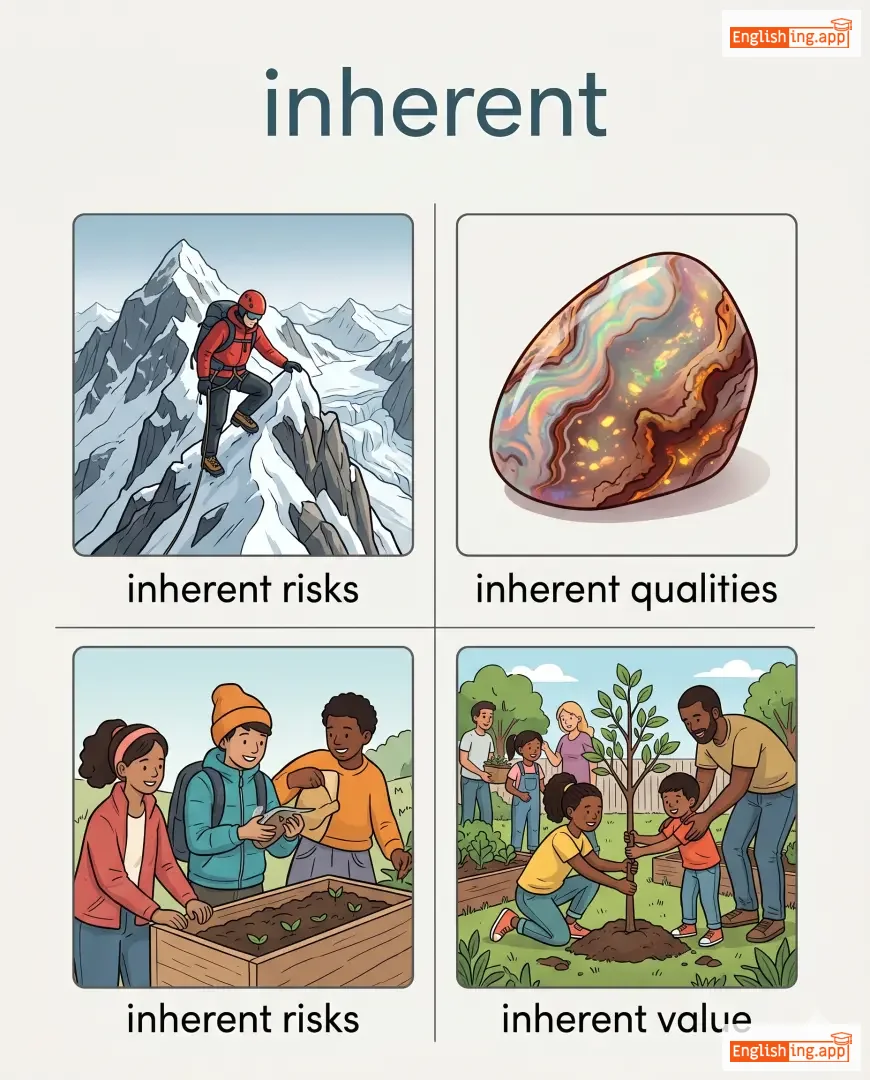
inherent risks, inherent qualities, inherent value
••••••
|
Inherentはin + heart(心の中にある)を意味し、固有のものです。
••••••
|
|
#4666
✨
|
/ɪnˈfjuːz/
verb
••••••
|
- •••••• | - •••••• |
infused
••••••
|
infused
••••••
|
infuses
••••••
|
infusing
••••••
|
to fill or spread through something; to instill a quality, idea, or feeling
••••••
|
The teacher tried to infuse her students with a love for reading. |
- •••••• |
infuse with energy |
to fill something with vitality or enthusiasm
••••••
|
- •••••• |
instill, imbue, inspire, permeate, inject
••••••
|
drain, extract, remove
••••••
|
infuse with, infuse energy, infuse flavor, infuse enthusiasm
••••••
|
No •••••• |
|
#4667
🥘
|
/ɪnˈɡriːdiənt/
noun
(イングリディエント)
••••••
|
- •••••• |
材料
zairyō
••••••
|
- •••••• | - •••••• | - •••••• | - •••••• |
A component part or element of something, especially in a recipe.
••••••
|
Flour is a key ingredient in baking bread. |
小麦粉はパン作りにおける重要な材料です。
Komugiko wa pan tsukuri ni okeru jūyō na zairyō desu.
••••••
|
secret ingredient |
a special or unique element that makes something successful
••••••
|
秘密の材料
himitsu no zairyō
••••••
|
component, element, part, material, constituent
••••••
|
whole, entirety
••••••
|
key ingredient, main ingredient, essential ingredient, secret ingredient
••••••
|
材料: 料理に欠かせない要素!
••••••
|
|
#4668
😒
|
/ɪnˈɡrætɪˌtjuːd/
noun
(イングラティチュード)
••••••
|
- •••••• |
恩知らず
on shirazu
••••••
|
- •••••• | - •••••• | - •••••• | - •••••• |
Lack of gratitude; failure to show thanks or appreciation.
••••••
|
His ingratitude hurt her feelings after all she had done for him. |
彼の恩知らずは、彼女が彼のために多くのことをした後、彼女の気持ちを傷つけた。
Kare no on shirazu wa, kanojo ga kare no tame ni ooku no koto wo shita ato, kanojo no kimochi wo kizutsuketa.
••••••
|
- •••••• | - •••••• | - •••••• |
thanklessness, ungratefulness, disregard, selfishness, neglect
••••••
|
gratitude, thankfulness, appreciation
••••••
|
show ingratitude, display ingratitude, bitter ingratitude
••••••
|
Ingratitude: IN 感謝がない—恩知らず。
••••••
|
|
#4669
😊
|
/ɪnˈɡreɪʃiˌeɪtɪŋ/
adjective
(イングレイシエイティング)
••••••
|
- •••••• |
お世辞を言う
oseji wo iu
••••••
|
- •••••• | - •••••• | - •••••• | - •••••• |
Charming or flattering in a way intended to gain favor.
••••••
|
His ingratiating smile made everyone trust him quickly. |
彼のお世辞を言う笑顔は、すべての人々に彼を素早く信頼させた。
Kare no oseji wo iu egao wa, subete no hitobito ni kare o subayaku shinrai saseta.
••••••
|
- •••••• | - •••••• | - •••••• |
flattering, charming, pleasing, fawning, persuasive
••••••
|
offensive, repulsive, annoying
••••••
|
ingratiating smile, ingratiating tone, ingratiating behavior
••••••
|
Ingratiatingはお世辞を言う意味—微笑みで好意を得る。
••••••
|
|
#4670
🤗
|
/ɪnˈɡreɪʃiˌeɪt/
verb
••••••
|
- •••••• | - •••••• |
ingratiated
••••••
|
ingratiated
••••••
|
ingratiates
••••••
|
ingratiating
••••••
|
To gain favor or approval by deliberate effort, often in a flattering way.
••••••
|
She tried to ingratiate herself with her boss by complimenting him often. |
- •••••• |
ingratiate oneself with |
to try to make someone like you by flattery or favor-seeking
••••••
|
- •••••• |
flatter, charm, curry favor, appease, win over
••••••
|
offend, alienate, repel
••••••
|
ingratiate oneself, ingratiate with boss, ingratiate to authority
••••••
|
No •••••• |
|
#4671
🙄
|
/ˈɪnˌɡreɪt/
noun
••••••
|
- •••••• | - •••••• | - •••••• | - •••••• | - •••••• | - •••••• |
An ungrateful person; someone who shows no appreciation.
••••••
|
He worked hard for his friend, but the ingrate never thanked him. |
- •••••• | - •••••• | - •••••• | - •••••• |
ungrateful person, thankless person, ingratitude, wretch, boor
••••••
|
grateful person, appreciative
••••••
|
selfish ingrate, thankless ingrate, spoiled ingrate
••••••
|
No •••••• |
|
#4672
🌳
|
/ɪnˈɡreɪnd/
adjective
(イングレインド)
••••••
|
- •••••• |
根強い
nezuoyoi
••••••
|
- •••••• | - •••••• | - •••••• | - •••••• |
Firmly fixed or established; deeply rooted and difficult to change.
••••••
|
His ingrained habits were hard to break. |
彼の根強い習慣は壊すのが難しかった。
Kare no nezuyoi shuukan wa kowasu no ga muzukashikatta.
••••••
|
- •••••• | - •••••• | - •••••• |
deep-rooted, embedded, fixed, entrenched
••••••
|
superficial, temporary
••••••
|
ingrained habit, ingrained belief, ingrained attitude
••••••
|
In + GRAIN (穀物) 土に深く根を張る 🌳 — ingrainedは根強い意味
••••••
|
|
#4673
🌱
|
/ɪnˈɡrɑːft/
verb
(イングラフト)
••••••
|
- •••••• |
根付ける
nedukeru
••••••
|
ingrafted
イングラフテッド
••••••
|
ingrafted
イングラフテッド
••••••
|
ingrafts
イングラフツ
••••••
|
ingrafting
イングラフティング
••••••
|
To implant or fix deeply, often used in the sense of grafting an idea or quality.
••••••
|
The teacher tried to ingraft good manners in the students.
先生は生徒たちに良いマナーを根付かせようとした。
••••••
|
先生は生徒たちに良いマナーを根付かせようとした。
Sensei wa seito-tachi ni yoi manā o nedukaseru yō to shita.
••••••
|
- •••••• | - •••••• | - •••••• |
implant, instill, embed, establish
••••••
|
remove, erase
••••••
|
ingraft values, ingraft habits, ingraft traditions
••••••
|
In GRAFTは木に枝を挿すことを意味します 🌱 — InGraftは心に良い特性を植え付けることを意味します。
••••••
|
|
#4674
😞
|
/ɪnˈɡlɔːriəs/
adjective
(イングローリアス)
••••••
|
- •••••• |
不名誉な
fumeiyona
••••••
|
- •••••• | - •••••• | - •••••• | - •••••• |
Causing shame or disgrace; not bringing honor or glory.
••••••
|
The army suffered an inglorious defeat. |
軍隊は不名誉な敗北を喫した。
Guntai wa fumeiyona haiboku o kicchi shita.
••••••
|
- •••••• | - •••••• | - •••••• |
shameful, disgraceful, dishonorable, humiliating
••••••
|
glorious, honorable, noble
••••••
|
inglorious defeat, inglorious end, inglorious episode
••••••
|
IN + GLORIOUSの逆 = 不名誉な意味は恥ずかしいこと。
••••••
|
|
#4675
🍽️
|
/ɪnˈdʒɛst/
verb
(インジェスト)
••••••
|
- •••••• |
摂取する
sesshu suru
••••••
|
ingested
インジェステッド
••••••
|
ingested
インジェステッド
••••••
|
ingests
インジェスツ
••••••
|
ingesting
インジェスティング
••••••
|
To take food, drink, or another substance into the body, usually by swallowing.
••••••
|
The patient must ingest the medicine with water.
患者は水と一緒に薬を摂取する必要があります。
••••••
|
患者は水と一緒に薬を摂取する必要があります。
Kanja wa mizu to issho ni kusuri wo sesshu suru hitsuyō ga arimasu.
••••••
|
ingest information
情報を摂取する
••••••
|
To absorb or take in knowledge or data
••••••
|
情報を摂取する
Jōhō wo sesshu suru
••••••
|
consume, swallow, absorb, devour
••••••
|
expel, vomit
••••••
|
ingest food, ingest medicine, ingest liquids, ingest information
••••••
|
摂取するは食べるのように、情報を摂取することをイメージしてください。
••••••
|
|
#4676
😊
|
/ɪnˈdʒɛnjuəs/
adjective
(インジェニュアス)
••••••
|
|
無邪気
mujaki
••••••
|
- •••••• | - •••••• | - •••••• | - •••••• |
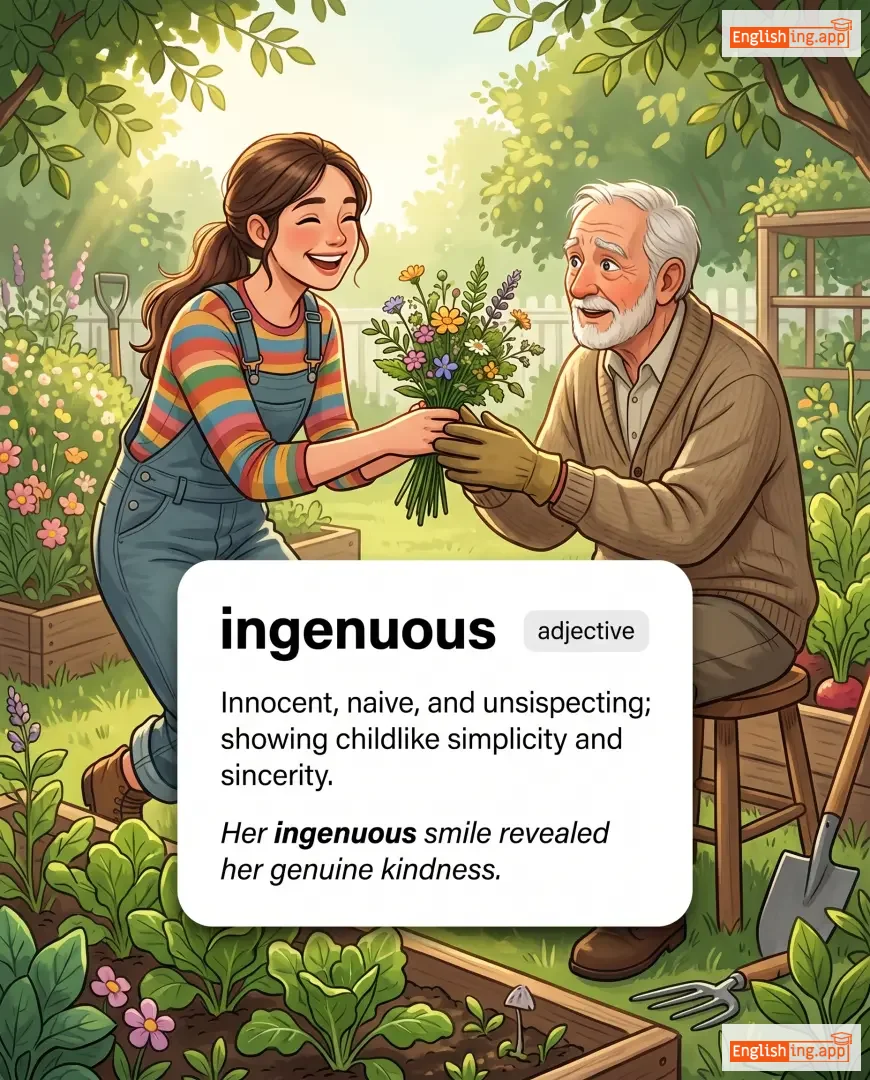
Innocent, naive, and unsuspecting; showing childlike simplicity and sincerity.
••••••
|
Her ingenuous smile revealed her genuine kindness. |
彼女の無邪気な笑顔は彼女の本当の優しさを明らかにしました。
Kanojo no mujaki na egao wa kanojo no hontou no yasashisa wo akirakani shimashita.
••••••
|
- •••••• | - •••••• | - •••••• |
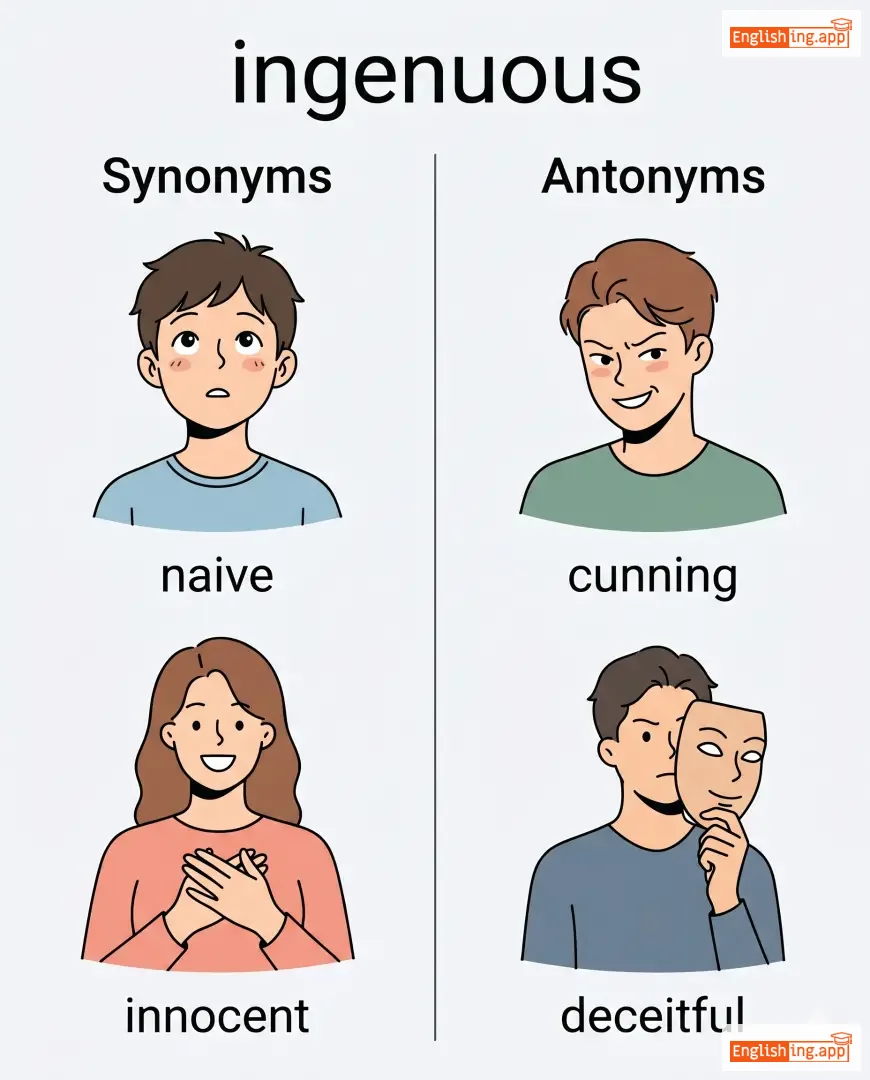
naive, innocent, sincere, candid, frank
••••••
|
cunning, deceitful, insincere
••••••
|
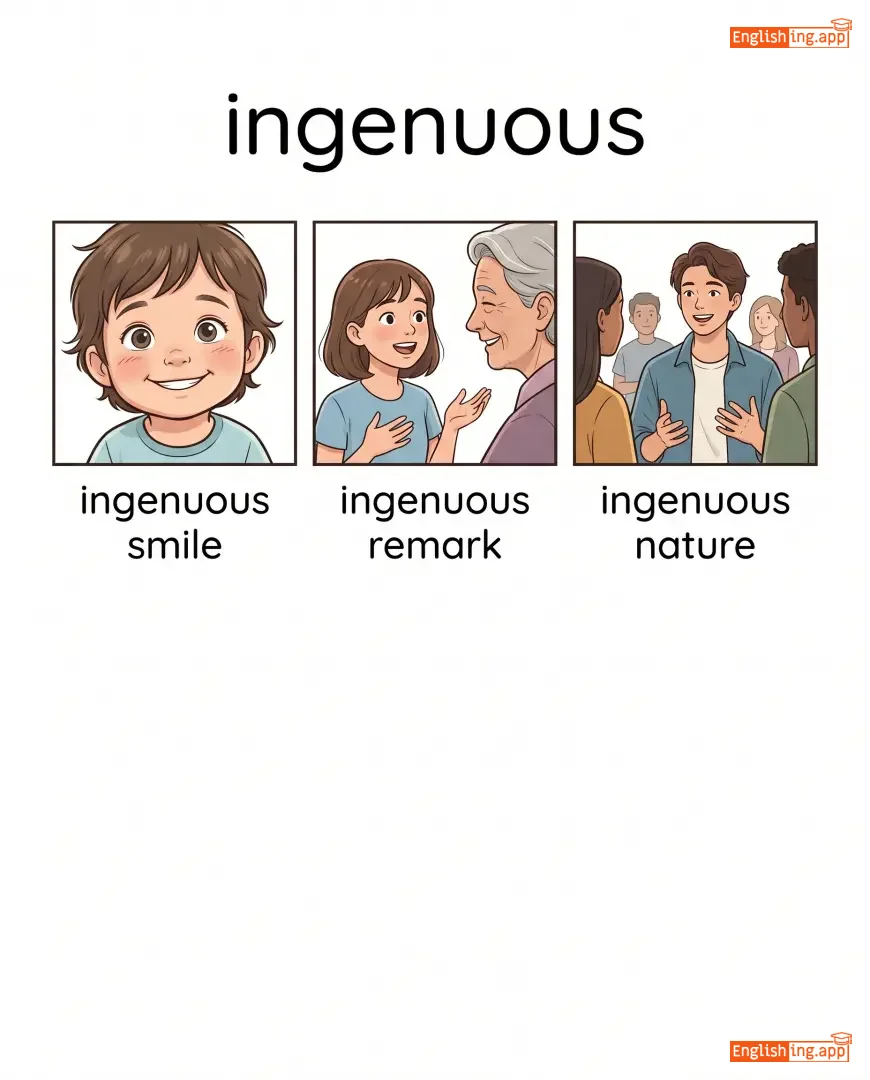
ingenuous smile, ingenuous remark, ingenuous nature, ingenuous expression
••••••
|
無邪気な笑顔が本物の優しさを示す 😊
••••••
|
|
#4677
🧠
|
/ˌɪndʒəˈnjuːɪti/
noun
(インジェニューイティ)
••••••
|
|
独創性
dokusousei
••••••
|
- •••••• | - •••••• | - •••••• | - •••••• |
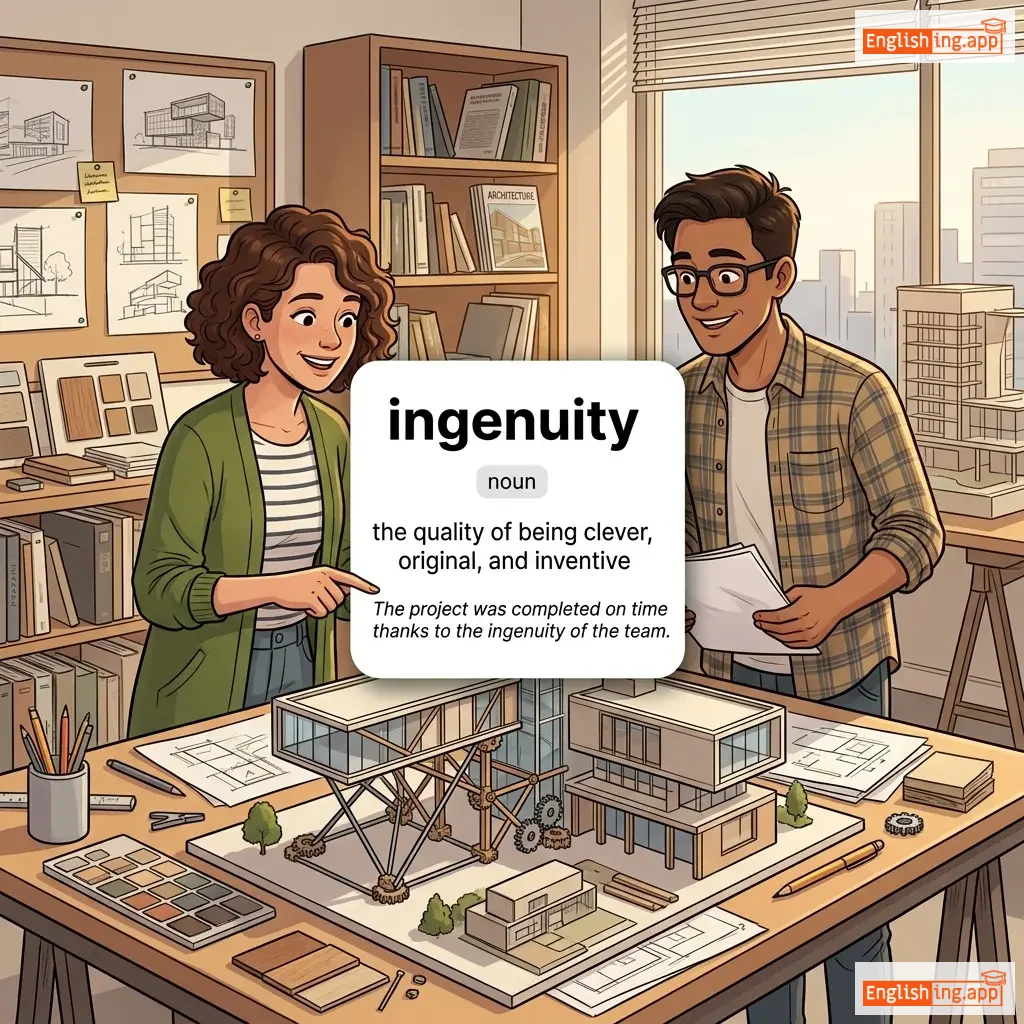
the quality of being clever, original, and inventive
••••••
|
The project was completed on time thanks to the ingenuity of the team.
そのプロジェクトは、チームの独創性のおかげで時間通りに完成しました。
••••••
|
そのプロジェクトは、チームの独創性のおかげで時間通りに完成しました。
Sono purojekuto wa, chiimu no dokusousei no okage de jikan doori ni kansei shimashita.
••••••
|
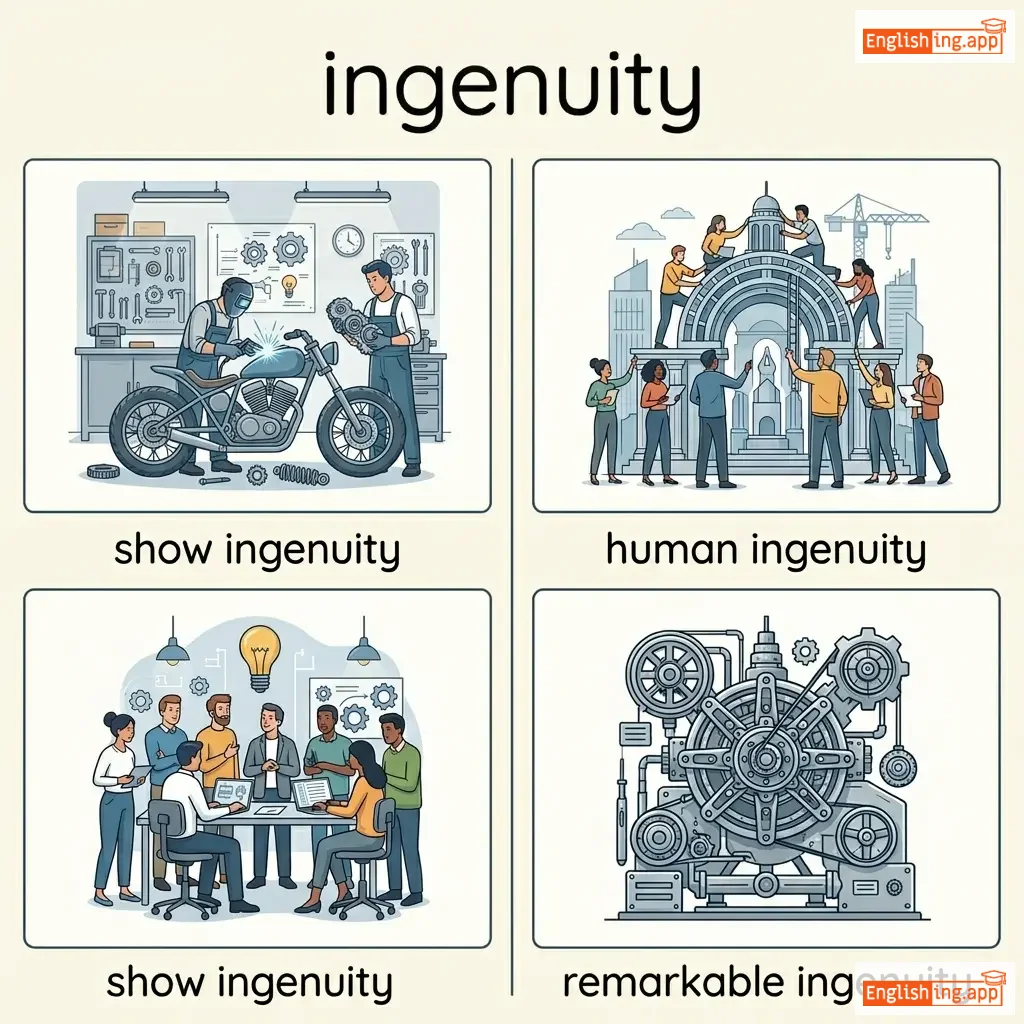
human ingenuity
人間の独創性
••••••
|
the ability of people to think creatively and solve problems
••••••
|
人間の独創性
ningen no dokusousei
••••••
|
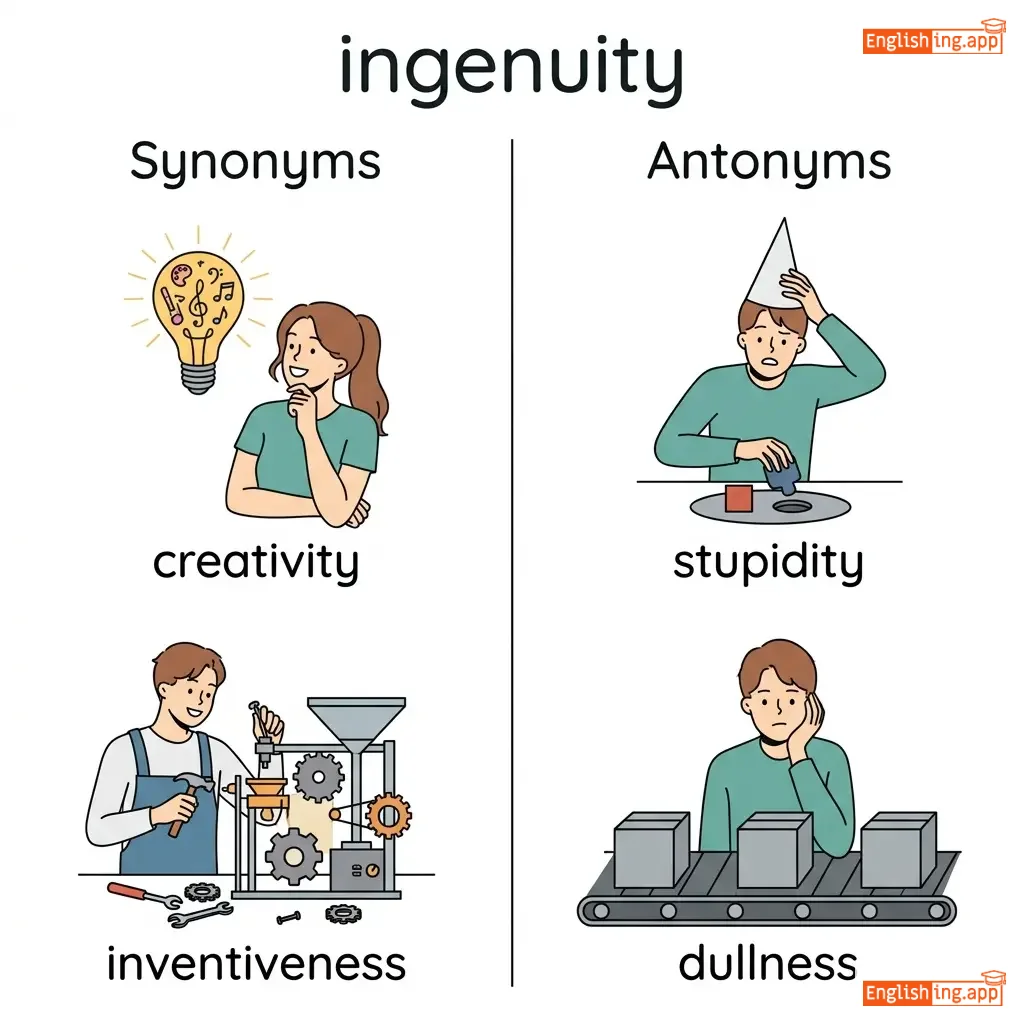
creativity, inventiveness, cleverness, resourcefulness, originality
••••••
|
stupidity, dullness
••••••
|
show ingenuity, human ingenuity, remarkable ingenuity, ingenuity of design
••••••
|
INGENUIty → INGENIOUS + NEW → 新しい発明と創造性
••••••
|
|
#4678
👩
|
/ˈænʒənuː/
noun
(インジェニュー)
••••••
|
- •••••• |
無邪気な若い女性
mujakina wakai josei
••••••
|
- •••••• | - •••••• | - •••••• | - •••••• |
an innocent, naïve young woman, especially as represented in literature or theater
••••••
|
She played the role of the ingénue in the play with great charm. |
彼女は劇で無邪気な若い女性の役を演じ、大きな魅力を発揮しました。
Kanojo wa geki de mujakina wakai josei no yaku o enji, ookina miryoku o hakki shimashita.
••••••
|
- •••••• | - •••••• | - •••••• |
naïve girl, innocent, young woman, damsel
••••••
|
sophisticate, cynic
••••••
|
innocent ingénue, naïve ingénue, role of ingénue
••••••
|
INGENUE → Innocent Girl → 無邪気な若い女性
••••••
|
|
#4679
💡
|
/ɪnˈdʒiːniəs/
adjective
(インジェニアス)
••••••
|
|
独創的
dokusōteki
••••••
|
- •••••• | - •••••• | - •••••• | - •••••• |
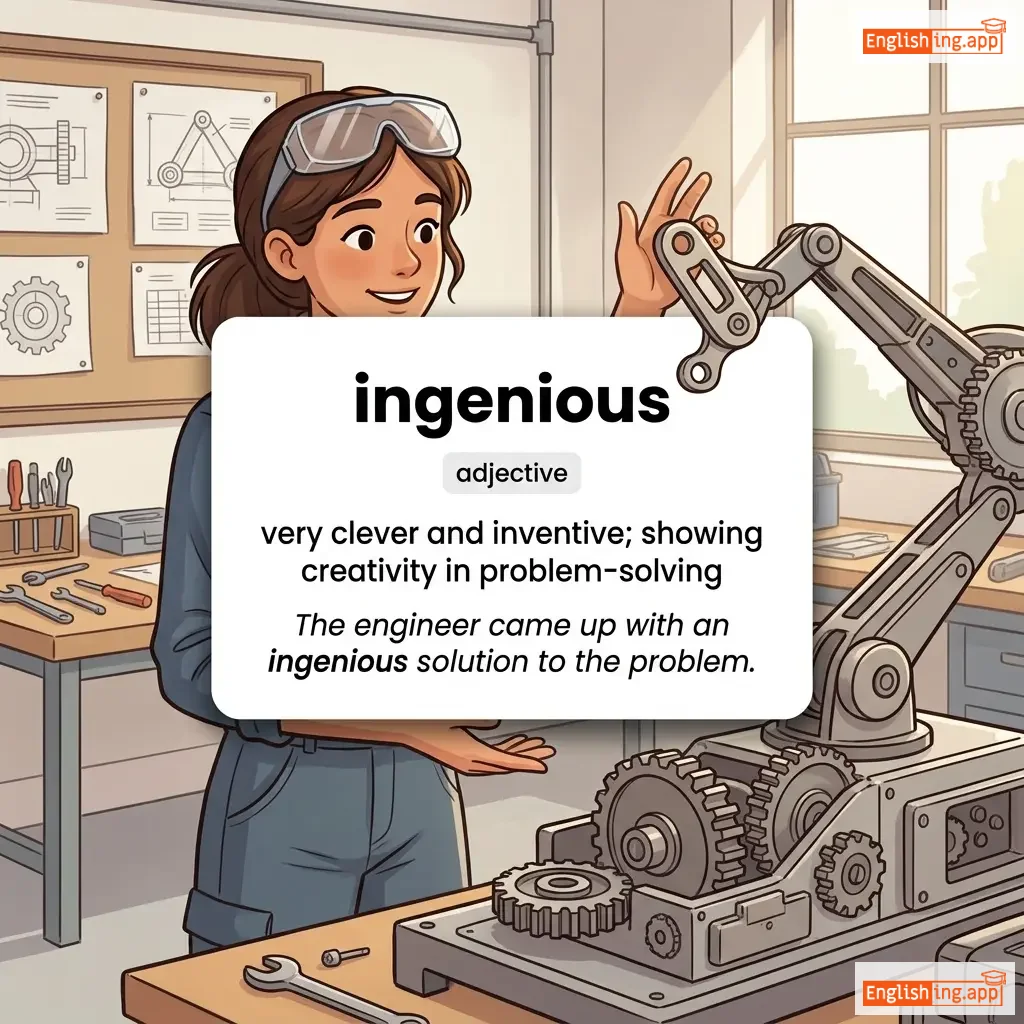
very clever and inventive; showing creativity in problem-solving
••••••
|
The engineer came up with an ingenious solution to the problem. |
エンジニアはその問題に対する独創的な解決策を見つけた。
Enjinia wa sono mondai ni taisuru dokusōteki na kaiketsusaku o mitsuketa.
••••••
|
ingenious idea |
a very clever and creative thought
••••••
|
独創的なアイデア
dokusōteki na aidea
••••••
|
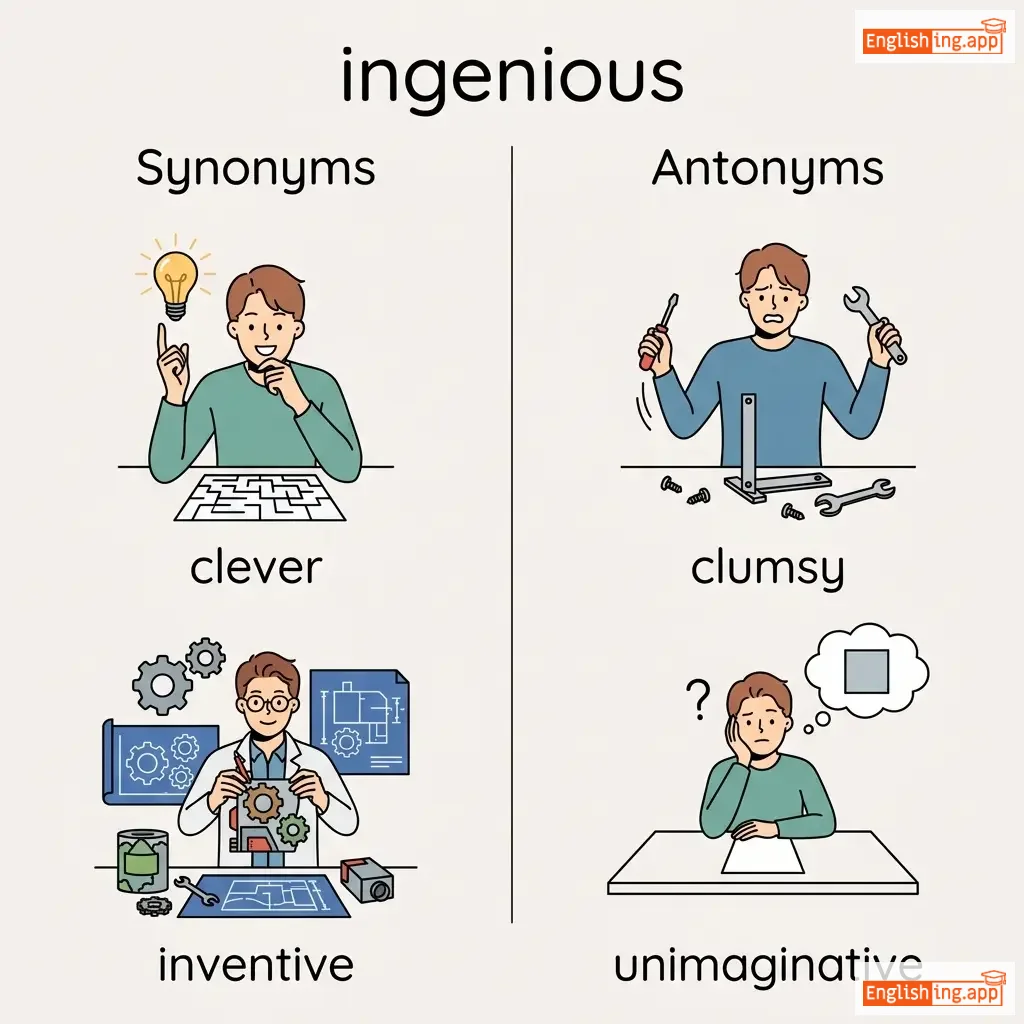
clever, inventive, resourceful, creative, original
••••••
|
clumsy, unimaginative, dull
••••••
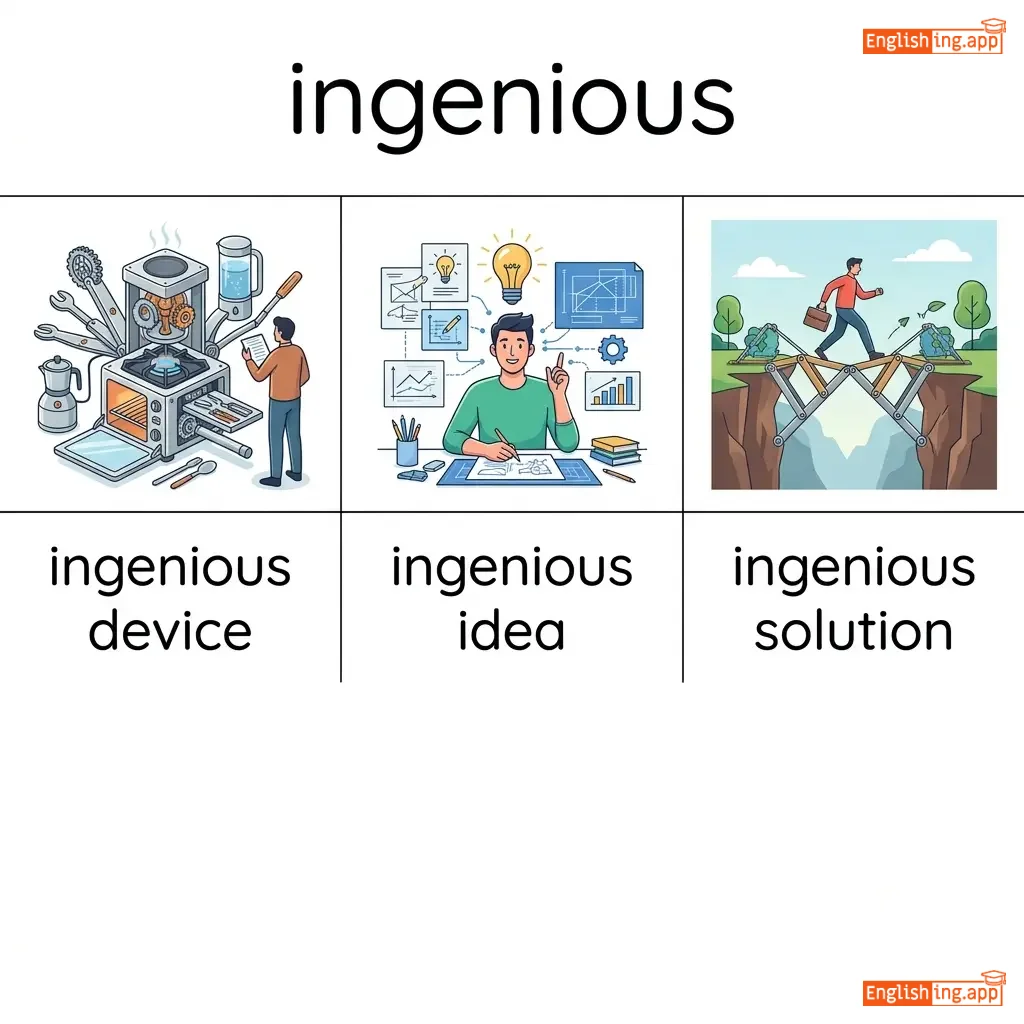
|
ingenious device, ingenious idea, ingenious solution, ingenious method
••••••
|
INGENIOUS = ENGINE + Genius → エンジニアのような天才的なアイデア。
••••••
|
|
#4680
🍵
|
/ɪnˈfjuːʒən/
noun
(インフュージョン)
••••••
|
- •••••• |
注入
chūnyū
••••••
|
- •••••• | - •••••• | - •••••• | - •••••• |
the act of introducing something into another; a drink made by steeping leaves or herbs in liquid
••••••
|
She prepared a calming infusion of chamomile tea. |
彼女はカモミールティーの落ち着く注入を準備しました。
Kanojo wa kamomīru tī no ochitsuku chūnyū wo junbi shimashita.
••••••
|
fresh infusion of ideas |
the introduction of new and innovative thoughts
••••••
|
新しいアイデアの注入
atarashī aidea no chūnyū
••••••
|
injection, introduction, mixture, blend, extract
••••••
|
depletion, removal
••••••
|
herbal infusion, tea infusion, infusion therapy, infusion of ideas
••••••
|
INFUsion = IN + Fusion、ハーブと水を混ぜて飲み物を作る。
••••••
|
Vocabulary Quiz
Test your vocabulary by matching words with their translations or meanings.
Login to take the quiz
Comments (0)
Share your thoughts and join the discussion.
Join the discussion by logging in
Login to CommentNo comments yet
Be the first to share your thoughts!