

翻訳
過去
過去分詞
三人称単数
動名詞
意味
例文
例文の翻訳
同義語
対義語
コロケーション
ニーモニック










Swipe left or right, or use the buttons. Tap image to zoom.
例文の翻訳
単語
Lesson 233Lesson 233 - マスクトグル
|
絵文字
|
単語 | Images | 翻訳 | 過去 | 過去分詞 | 三人称単数 | 動名詞 | 意味 | 例文 | 例文の翻訳 | 表現例 | 表現例の意味 | 表現例の翻訳 | 同義語 | 対義語 | コロケーション | ニーモニック |
|---|---|---|---|---|---|---|---|---|---|---|---|---|---|---|---|---|---|
|
#6960
👉
|
/prɒd/
verb
(プロッド)
••••••
|
- •••••• |
突っつく
tsutsuku
••••••
|
prodded
プロデッド
••••••
|
prodded
プロデッド
••••••
|
prods
プロッズ
••••••
|
prodding
プロディング
••••••
|
to poke or push someone or something with a finger, foot, or pointed object
••••••
|
She prodded him in the arm to get his attention.
彼女は彼の腕を突いて注意を引こうとした。
••••••
|
彼女は彼の腕を突いて注意を引こうとした。
Kanojo wa kare no ude o tsuite chuui o hikou to shita.
••••••
|
prod into action
行動に駆り立てる
••••••
|
to encourage or urge someone to take action
••••••
|
行動に駆り立てる
koudou ni karitateru
••••••
|
poke, jab, nudge, spur, urge
••••••
|
ignore, neglect, overlook
••••••
|
prod someone, prod into, gentle prod, prod with
••••••
|
Prod は突っつく、誰かを行動に駆り立てるような感じです。
••••••
|
|
#6961
🏰
|
/ˈprɑːflɪɡət/
adjective
(プロフリゲート)
••••••
|
- •••••• |
浪費家
rouhika
••••••
|
- •••••• | - •••••• | - •••••• | - •••••• |
recklessly extravagant or wasteful in resources
••••••
|
The king was known for his profligate lifestyle.
その王は贅沢なライフスタイルで知られていました。
••••••
|
その王は贅沢なライフスタイルで知られていました。
Sono ō wa zeitaku na raifusutairu de shirarete imashita.
••••••
|
- •••••• | - •••••• | - •••••• |
extravagant, wasteful, spendthrift, reckless
••••••
|
frugal, thrifty, economical
••••••
|
profligate spending, profligate lifestyle, profligate use of resources
••••••
|
Profligate = Profit + gate 空中にお金を撒く
••••••
|
|
#6962
💸
|
/ˈprɑːflɪɡəsi/
noun
(プロフリガシー)
••••••
|
- •••••• |
浪費
rōhi
••••••
|
- •••••• | - •••••• | - •••••• | - •••••• |
reckless wastefulness or extravagance
••••••
|
His profligacy with money led him to bankruptcy. |
彼の浪費は彼を破産させました。
Kare no rōhi wa kare o hasan sasemashita.
••••••
|
- •••••• | - •••••• | - •••••• |
extravagance, wastefulness, recklessness, squandering
••••••
|
frugality, thrift
••••••
|
financial profligacy, moral profligacy, profligacy of resources
••••••
|
Profligacyはpro-fly-gas→お金がガスのように飛ぶことを意味します
••••••
|
|
#6963
💰
|
/ˌprɑːfɪˈtɪr/
noun
(プロフィティア)
••••••
|
- •••••• |
利益を不正に得る者
rieki o fusei ni eru mono
••••••
|
- •••••• | - •••••• | - •••••• | - •••••• |
a person who makes excessive profits, especially unfairly or illegally
••••••
|
The government punished war profiteers. |
政府は戦争の利益を不正に得る者を罰した。
Seifu wa sensō no rieki o fusei ni eru mono o basshita.
••••••
|
- •••••• | - •••••• | - •••••• |
exploiter, speculator, opportunist, swindler
••••••
|
philanthropist, benefactor
••••••
|
war profiteer, greedy profiteer, punish profiteers
••••••
|
Profit + tier → 利益を不正に得る者は最終的に罰を受ける
••••••
|
|
#6964
👤
|
/ˈproʊˌfaɪl/
noun
(プロファイル)
••••••
|
- •••••• |
プロフィール
purōfairu
••••••
|
- •••••• | - •••••• | - •••••• | - •••••• |
a description or representation of someone or something; an outline
••••••
|
He updated his profile on the company website. |
彼は会社のウェブサイトでプロフィールを更新しました。
Kare wa kaisha no uebusaito de purofairu o kōshin shimashita.
••••••
|
low profile |
avoiding attention or publicity
••••••
|
低姿勢
teishisei
••••••
|
outline, description, sketch, representation
••••••
|
anonymity, obscurity
••••••
|
social profile, user profile, company profile, keep a low profile
••••••
|
Facebookのプロフィールはあなたの顔です。
••••••
|
|
#6965
🎯
|
/prəˈfɪʃənt/
adjective
(プロフィシエント)
••••••
|
|
熟練した
jukuren shita
••••••
|
- •••••• | - •••••• | - •••••• | - •••••• |
skilled and competent in doing something
••••••
|
She is proficient in both English and Spanish. |
彼女は英語とスペイン語の両方に熟練しています。
Kanojo wa eigo to Supeingo no ryōhō ni jukuren shiteimasu.
••••••
|
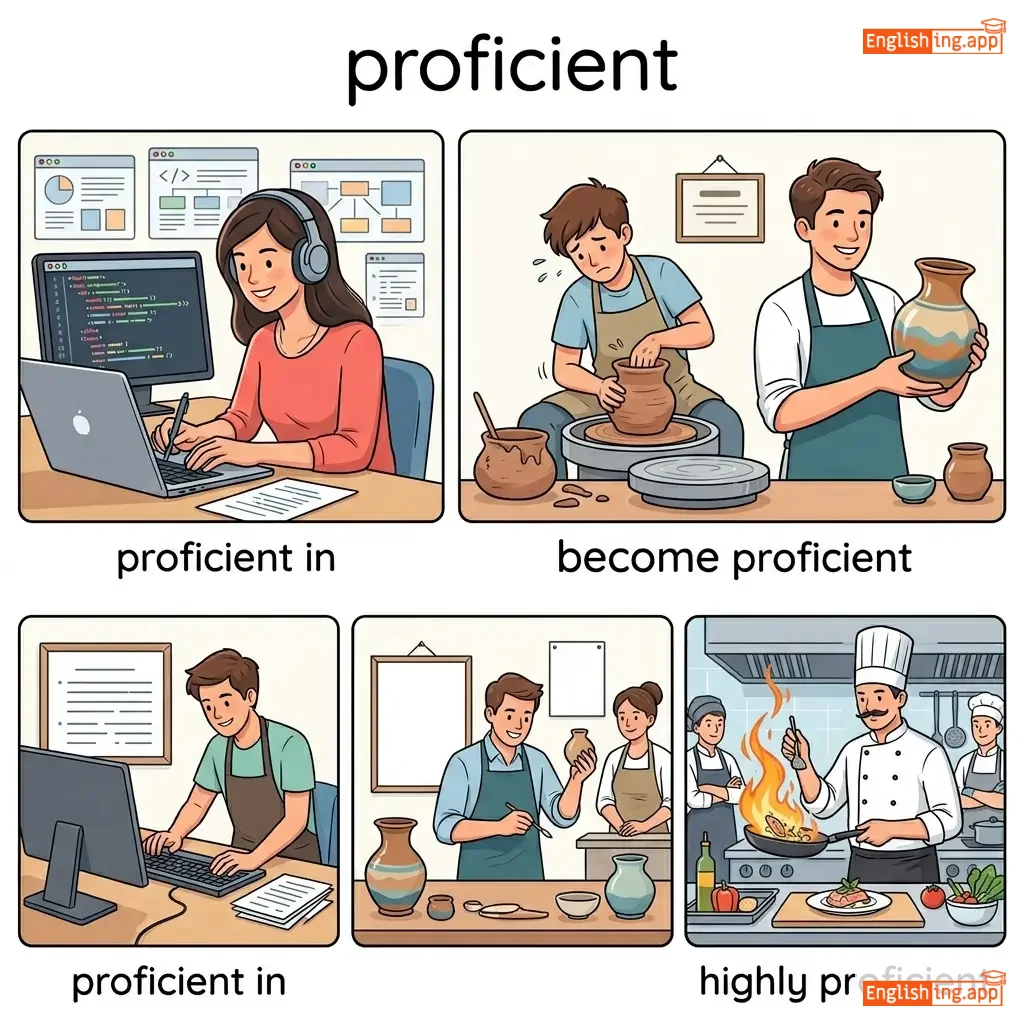
proficient in |
having skill in a particular area
••••••
|
熟練した
jukuren shita
••••••
|
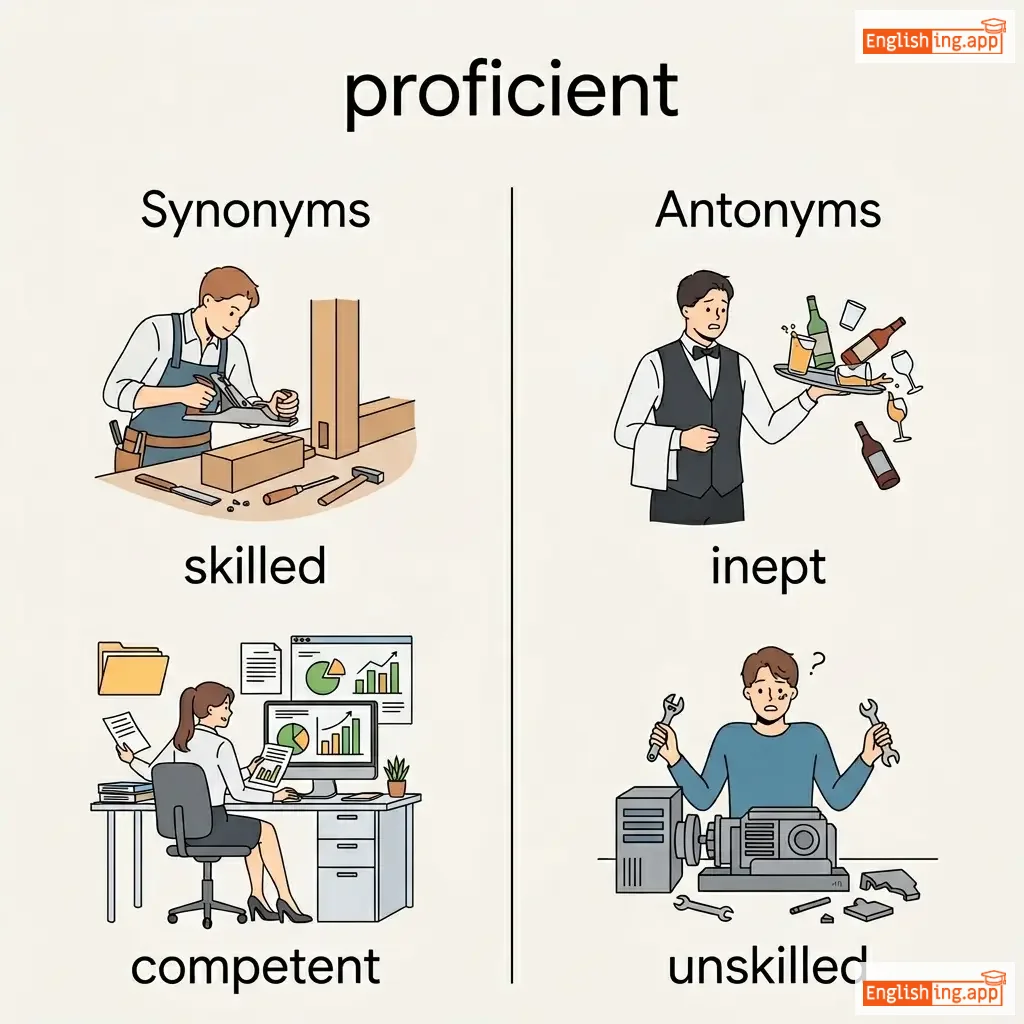
skilled, competent, adept, expert, capable
••••••
|
inept, unskilled, incompetent
••••••
|
proficient in, become proficient, highly proficient
••••••
|
pro fish ient → 魚釣りに熟練した漁師
••••••
|
|
#6966
📚
|
/prəˈfɪʃənsi/
noun
(プロフィシエンシー)
••••••
|
|
能力
nouryoku
••••••
|
- •••••• | - •••••• | - •••••• | - •••••• |
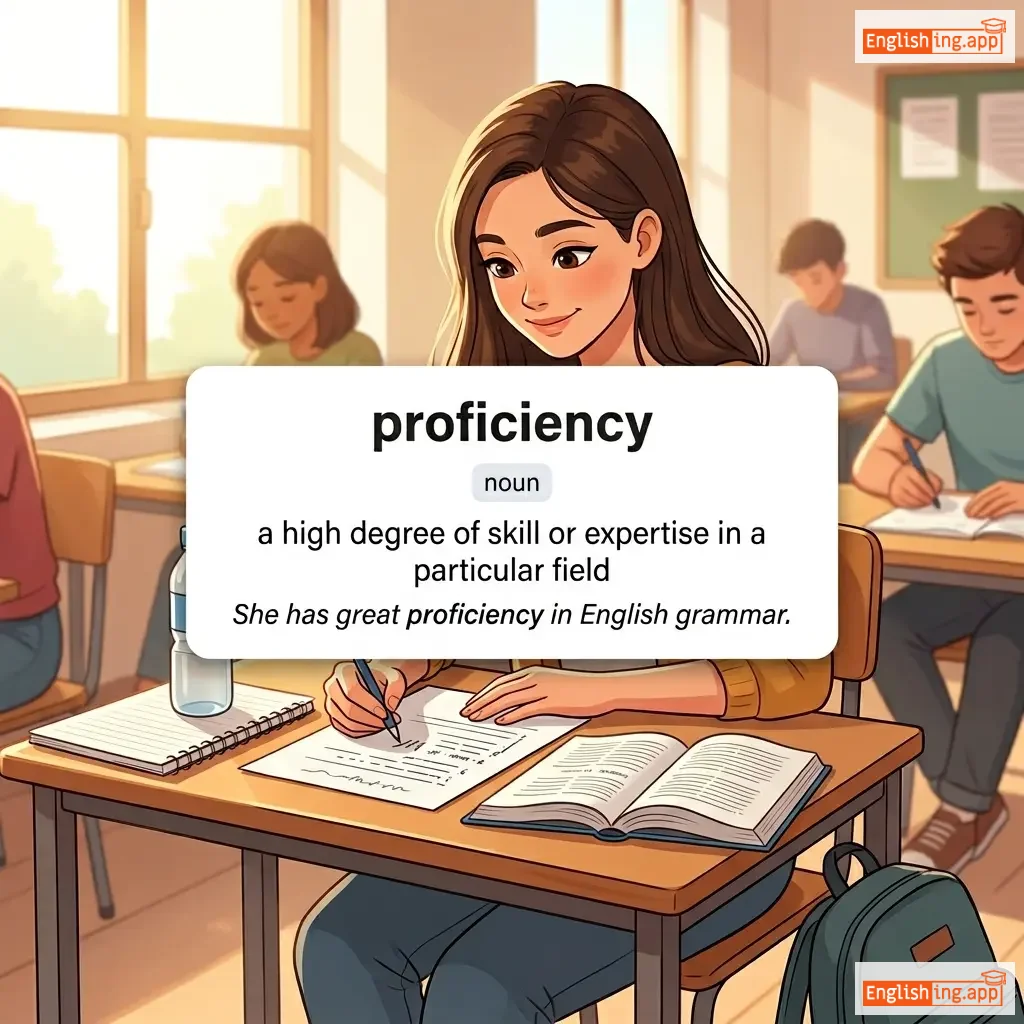
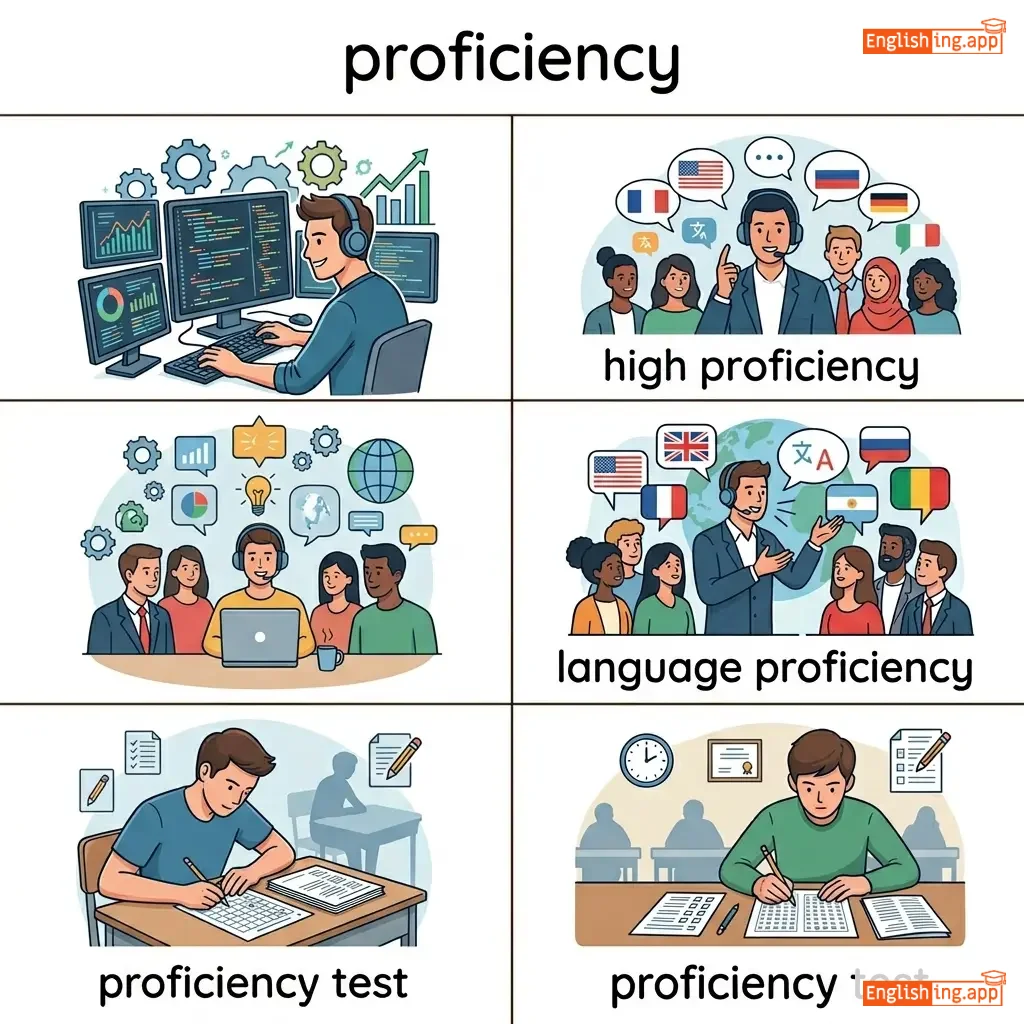
a high degree of skill or expertise in a particular field
••••••
|
She has great proficiency in English grammar.
彼女は英語の文法に優れた能力を持っています。
••••••
|
彼女は英語の文法に優れた能力を持っています。
Kanojo wa eigo no bunpou ni sugureta nouryoku wo motteimasu.
••••••
|
language proficiency
言語能力
••••••
|
skill level in using a language
••••••
|
言語能力
gengo nouryoku
••••••
|
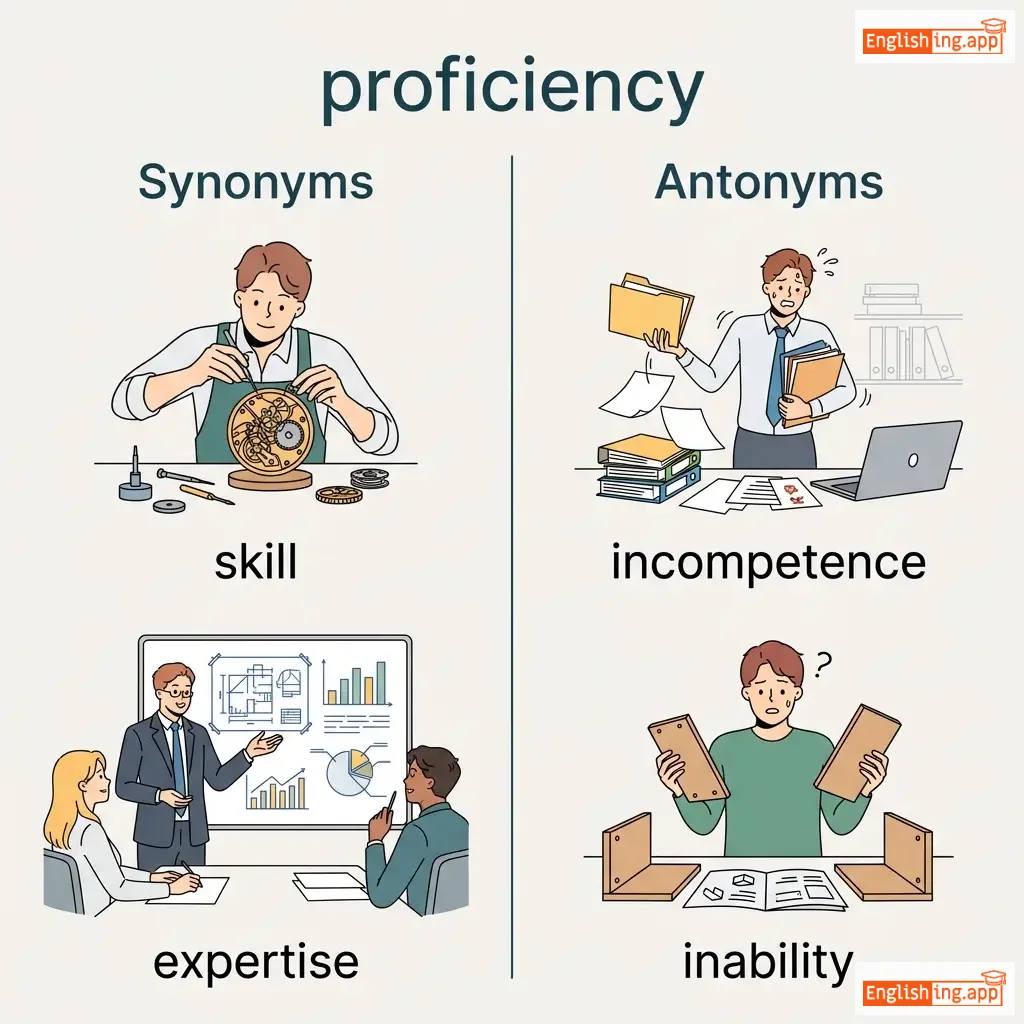
skill, expertise, competence, mastery, ability
••••••
|
incompetence, inability, weakness
••••••
|
high proficiency, language proficiency, proficiency test, demonstrate proficiency
••••••
|
Proficiency は Pro-fish-iency のように、魚のように高い能力を持っている!
••••••
|
|
#6967
🤲
|
/ˈprɒfər/
verb
(プロファー)
••••••
|
- •••••• |
提供する、提示する
teikyō suru, teiji suru
••••••
|
proffered
プロファード
••••••
|
proffered
プロファード
••••••
|
proffers
プロファーズ
••••••
|
proffering
プロフェリング
••••••
|
to offer something for acceptance; to present
••••••
|
She proffered her hand as a sign of friendship.
彼女は友情の印として手を差し出しました。
••••••
|
彼女は友情の印として手を差し出しました。
Kanojo wa yūjō no shirushi toshite te o sashidashimashita.
••••••
|
- •••••• | - •••••• | - •••••• |
offer, present, extend, propose, submit
••••••
|
withhold, refuse
••••••
|
proffer advice, proffer help, proffer an apology, proffer support
••••••
|
Proffer は専門的に提供すること。
••••••
|
|
#6968
👨🏫
|
/prəˈfɛsər/
noun
(教授)
••••••
|
- •••••• |
教授
kyouju
••••••
|
- •••••• | - •••••• | - •••••• | - •••••• |
a senior teacher or academic at a college or university
••••••
|
The professor explained the theory clearly. |
教授は理論を明確に説明しました。
Kyouju wa riron wo meikaku ni setsumei shimashita.
••••••
|
professor emeritus |
a retired professor who retains an honorary title
••••••
|
名誉教授
meiyo kyouju
••••••
|
lecturer, academic, scholar, instructor
••••••
|
student, pupil
••••••
|
university professor, assistant professor, professor emeritus, professor of law
••••••
|
Professor = Kyouju — これが専門分野のエキスパート教師
••••••
|
|
#6969
👔
|
/prəˈfɛʃən/
noun
(プロフェッション)
••••••
|
- •••••• |
職業
shokugyo
••••••
|
- •••••• | - •••••• | - •••••• | - •••••• |
a paid occupation, especially one requiring specialized education or training
••••••
|
Medicine is considered a noble profession. |
医学は高貴な職業と見なされています。
Igaku wa kōki na shokugyō to minasa reteimasu.
••••••
|
enter the profession |
to begin a career in a particular field
••••••
|
職業に就く
Shokugyō ni tsuku
••••••
|
career, occupation, vocation, trade, calling
••••••
|
unemployment, hobby
••••••
|
noble profession, teaching profession, medical profession, legal profession
••••••
|
職業はプロフェッショナルの仕事 — つまり職業。
••••••
|
|
#6970
🙊
|
/prəˈfeɪn/
adjective
(プロフェイン)
••••••
|
- •••••• |
不敬な、冒涜的な
fukeina, bōtoku-teki na
••••••
|
- •••••• | - •••••• | - •••••• | - •••••• |
showing disrespect or contempt for sacred things; irreverent or vulgar
••••••
|
His jokes were considered too profane for the ceremony.
彼のジョークは式典にはあまりにも不敬だと見なされました。
••••••
|
彼のジョークは式典にはあまりにも不敬だと見なされました。
kare no jōku wa shikiten ni wa amari ni mo fukei da to minasa remashita.
••••••
|
profane language
不敬な言葉
••••••
|
offensive or irreverent speech
••••••
|
不敬な言葉
fukei na kotoba
••••••
|
irreverent, blasphemous, vulgar, obscene, disrespectful
••••••
|
sacred, reverent, respectful
••••••
|
profane words, profane behavior, profane language, profane act
••••••
|
Profaneの意味は不敬または冒涜で、プロフェイン(プロフェイン)として覚えることができます。
••••••
|
|
#6971
💼
|
/prəˈdʌktɪv/
adjective
(プロダクティブ)
••••••
|
- •••••• |
生産的
seisanteki
••••••
|
- •••••• | - •••••• | - •••••• | - •••••• |
producing or achieving a significant amount of results, work, or output
••••••
|
She had a very productive day at the office. |
彼女はオフィスで非常に生産的な一日を過ごしました。
Kanojo wa ofisu de hijō ni seisanteki na ichinichi o sugoshimashita.
••••••
|
productive day |
a day when a lot of useful work is done
••••••
|
生産的な日
seisanteki na hi
••••••
|
efficient, fruitful, effective, prolific
••••••
|
unproductive, idle, ineffective
••••••
|
productive day, productive meeting, productive work
••••••
|
生産的=PROを生産して結果を出す!
••••••
|
|
#6972
🎼
|
/ˈprɒdɪdʒi/
noun
(プロディジー)
••••••
|
- •••••• |
天才児
tensaiji
••••••
|
- •••••• | - •••••• | - •••••• | - •••••• |
a person, especially a young one, with exceptional talents or abilities
••••••
|
Mozart was a child prodigy in music.
モーツァルトは音楽の天才児でした。
••••••
|
モーツァルトは音楽の天才児でした。
Mōtsaruto wa ongaku no tensaiji deshita.
••••••
|
child prodigy
天才児
••••••
|
a young person with extraordinary talent or ability
••••••
|
天才児
tensaiji
••••••
|
genius, wonder, talent, phenomenon
••••••
|
ordinary person, amateur
••••••
|
child prodigy, musical prodigy, math prodigy
••••••
|
天才児は‘天才’のように素晴らしい才能を持っている。
••••••
|
|
#6973
🌟
|
/prəˈdɪdʒəs/
adjective
(プロディジアス)
••••••
|
- •••••• |
驚異的
kyouiteki
••••••
|
- •••••• | - •••••• | - •••••• | - •••••• |
remarkably or impressively great in extent, size, or degree
••••••
|
The team made a prodigious effort to complete the project on time.
チームはプロジェクトを時間通りに完了するために並外れた努力をしました。
••••••
|
チームはプロジェクトを時間通りに完了するために驚異的な努力をしました。
Chiimu wa purojekuto o jikan doori ni kanryou suru tame ni kyouiteki na doryoku o shimashita.
••••••
|
- •••••• | - •••••• | - •••••• |
enormous, immense, vast, tremendous, colossal
••••••
|
tiny, small, insignificant
••••••
|
prodigious effort, prodigious talent, prodigious energy
••••••
|
驚異的な努力は、DJのようにすごい仕事をすることを意味します。
••••••
|
|
#6974
💸
|
/ˈprɒdɪɡəl/
adjective
(プロディガル)
••••••
|
|
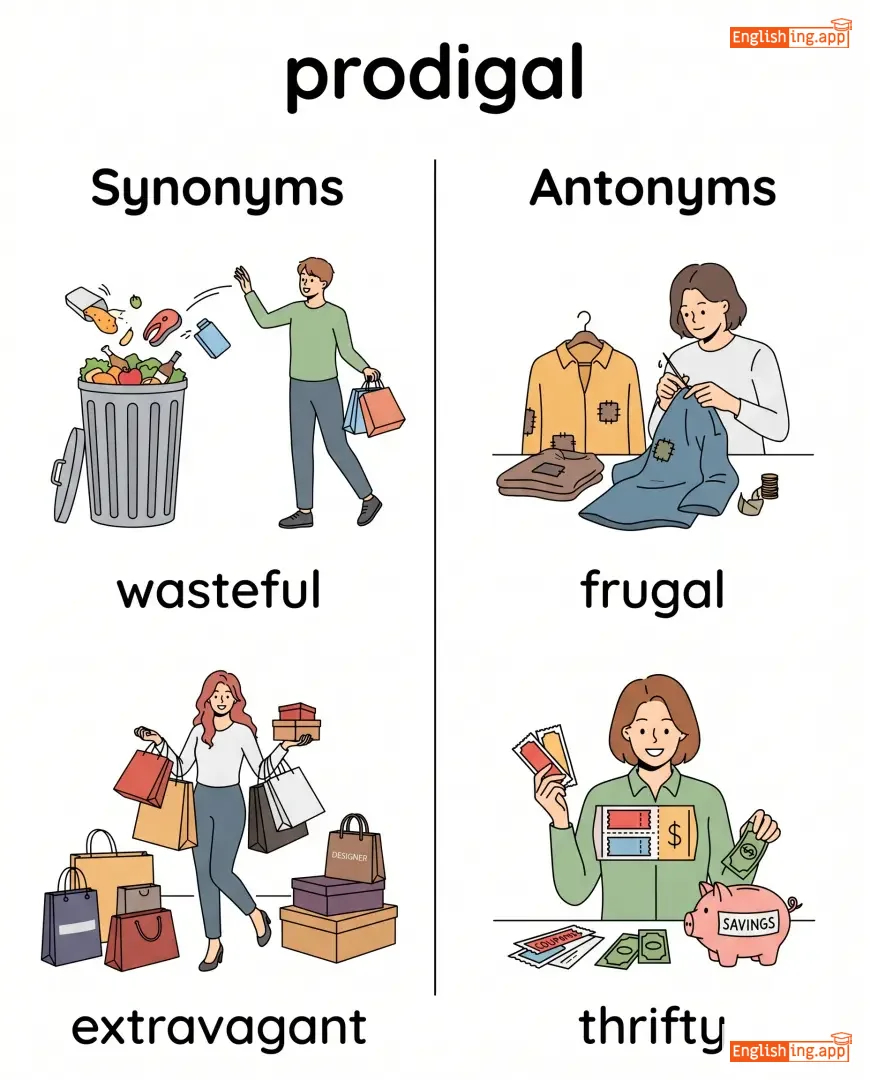
浪費家
rōhika
••••••
|
- •••••• | - •••••• | - •••••• | - •••••• |
spending money or resources freely and recklessly; wastefully extravagant
••••••
|
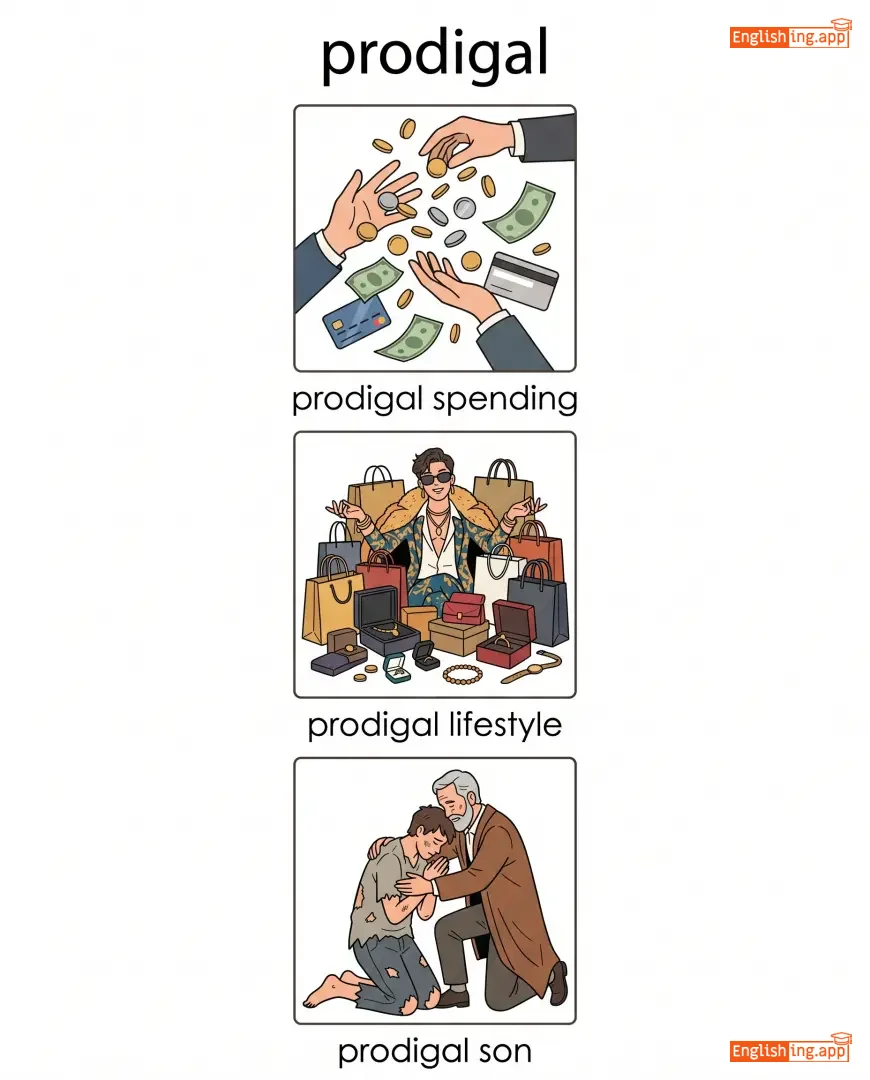
The prodigal son returned home after wasting his inheritance. |
浪費家の息子は、遺産を浪費した後、家に帰りました。
Rōhika no musuko wa, isan o rōhi shita ato, ie ni kaerimashita.
••••••
|
prodigal son |
a person who leaves home and behaves recklessly but later returns, repentant
••••••
|
浪費家の息子
rōhika no musuko
••••••
|
wasteful, extravagant, lavish, reckless
••••••
|
frugal, thrifty, economical
••••••
|
prodigal spending, prodigal lifestyle, prodigal son
••••••
|
浪費家、すべてを使い果たして悔い改めて帰る。
••••••
|
|
#6975
⚖️
|
/ˈproʊbɪti/
noun
(purobitī)
••••••
|
|
誠実
seijitsu
••••••
|
- •••••• | - •••••• | - •••••• | - •••••• |
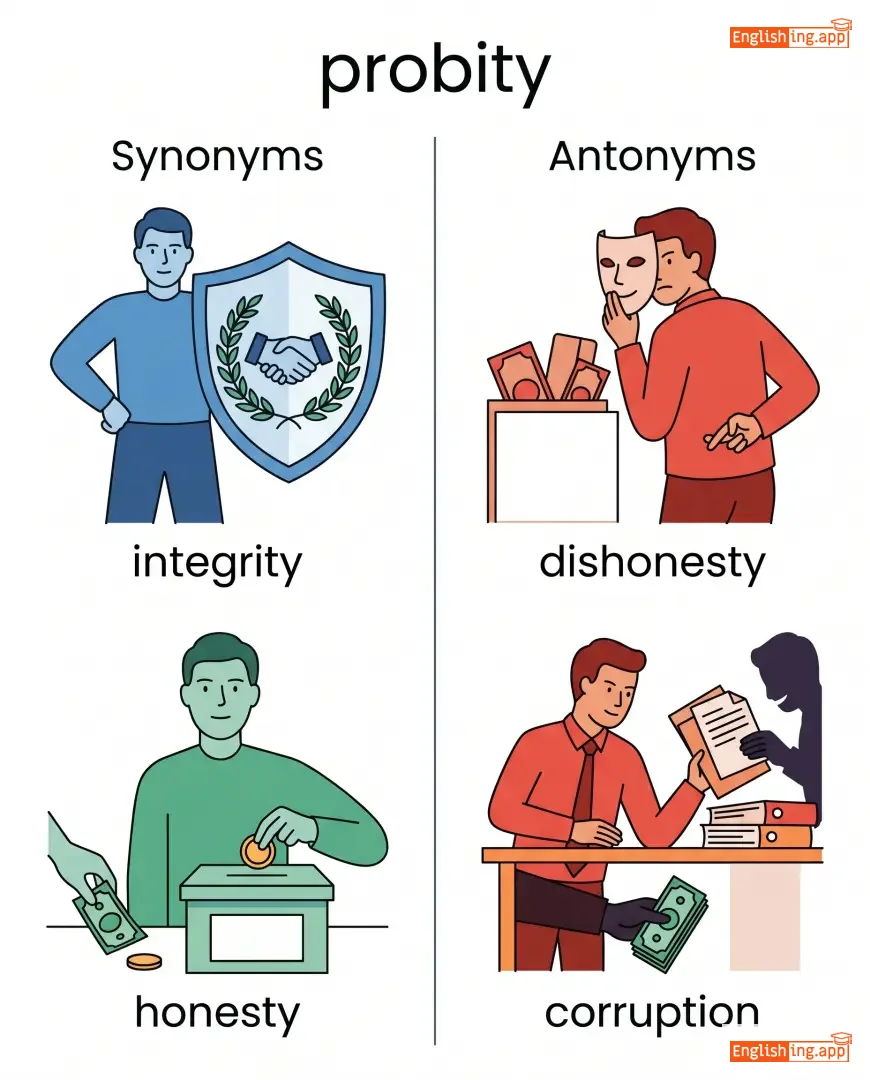
The quality of having strong moral principles; honesty and decency.
••••••
|
The judge was admired for his integrity and probity.
その裁判官は、誠実さと正直さで賞賛されました。
••••••
|
その裁判官は、誠実さと正直さで賞賛されました。
Sono saiban-kan wa, seijitsusa to shōjitsusa de shōsan saremashita.
••••••
|
- •••••• | - •••••• | - •••••• |
integrity, honesty, uprightness, morality, rectitude
••••••
|
dishonesty, corruption, immorality
••••••
|
probity in public life, professional probity, integrity and probity, probity standards
••••••
|
Probity = PROper + 誠実 - プロパー誠実とは誠実な人を意味します。
••••••
|
|
#6976
🛒
|
/prəˈkjʊə.mənt/
noun
(プロキュアメント)
••••••
|
|
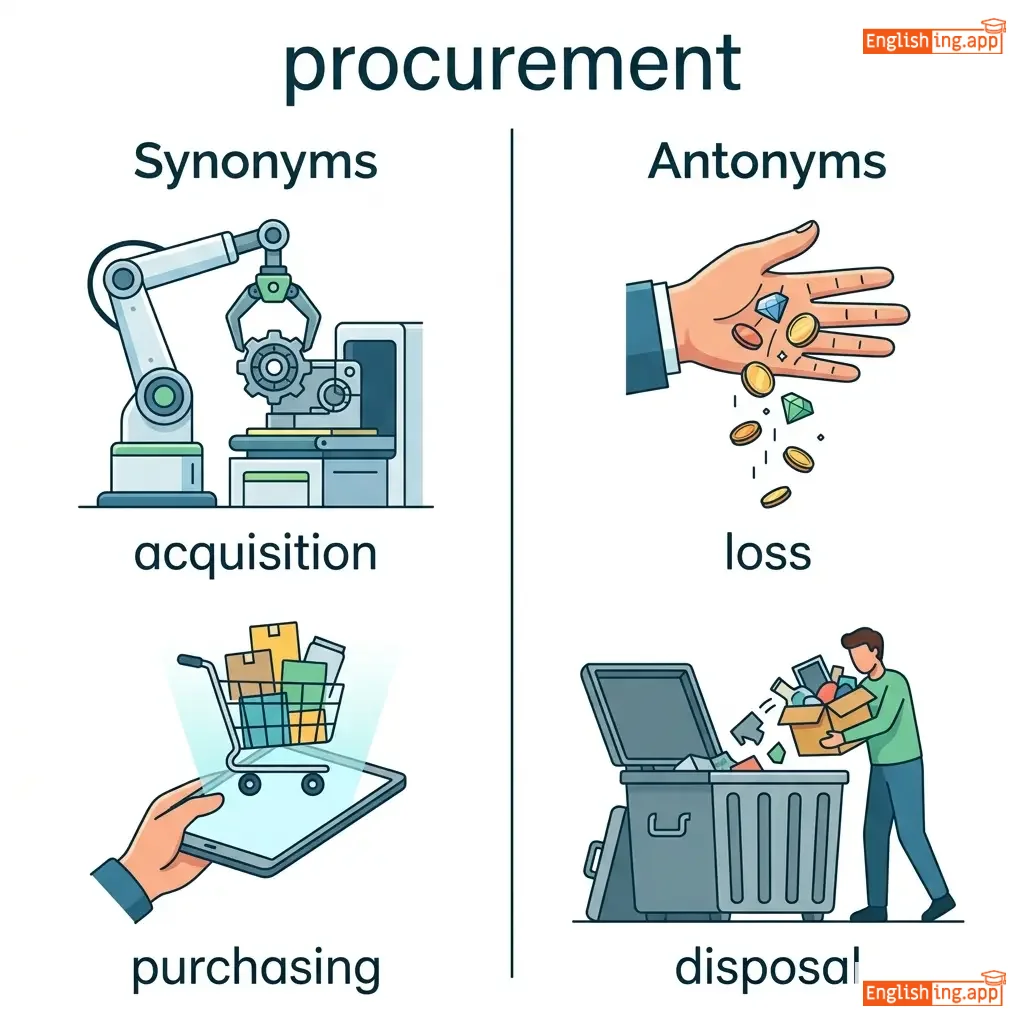
調達
choutatsu
••••••
|
- •••••• | - •••••• | - •••••• | - •••••• |
the process of obtaining goods or services, often for business or government
••••••
|
The company focuses on the efficient procurement of raw materials. |
会社は原材料の効率的な調達に集中しています。
Kaisha wa genzairyou no kouritsuteki na choutatsu ni shuuchuu shiteimasu.
••••••
|
- •••••• | - •••••• | - •••••• |
acquisition, purchasing, sourcing, obtaining
••••••
|
loss, disposal
••••••
|
procurement process, procurement department, public procurement
••••••
|
Procurement = 調達, 物資を効率的に集めるプロセス
••••••
|
|
#6977
📦
|
/prəˈkjʊər/
verb
(プロキュア)
••••••
|
- •••••• |
調達する
choutatsu suru
••••••
|
procured
プロキュアード
••••••
|
procured
プロキュアード
••••••
|
procures
プロキュアーズ
••••••
|
procuring
プロキュアリング
••••••
|
to obtain something, especially with effort or difficulty
••••••
|
They managed to procure enough supplies for the expedition.
彼らは遠征のために十分な物資を調達することができました。
••••••
|
彼らは遠征のために十分な物資を調達することができました。
Karera wa ensen no tame ni jūbun'na bussī o chōtatsu suru koto ga dekimashita.
••••••
|
- •••••• | - •••••• | - •••••• |
obtain, acquire, secure, get, fetch
••••••
|
lose, forfeit, fail
••••••
|
procure supplies, procure goods, procure resources
••••••
|
Procureは「プロ(プロフェッショナル)」と「キュア(治療)」で物資を調達することを意味します。
••••••
|
|
#6978
🧑🏫
|
/ˈprɒk.tər/
noun
(プロクター)
••••••
|
- •••••• |
試験監督者
shiken kantokusha
••••••
|
- •••••• | - •••••• | - •••••• | - •••••• |
a person who supervises students during an examination
••••••
|
The proctor reminded students to keep their phones switched off. |
試験監督者は学生に携帯電話を切るように注意しました。
Shiken kantokusha wa gakusei ni keitai denwa o kiru yō ni chūi shimashita.
••••••
|
- •••••• | - •••••• | - •••••• |
invigilator, supervisor, examiner, overseer
••••••
|
candidate, examinee
••••••
|
exam proctor, proctor duty, assigned proctor
••••••
|
Proctor = Pro + actor, 試験で監視する役者
••••••
|
|
#6979
🐢
|
/prəˌkræs.tɪˈneɪ.ʃən/
noun
(プロクラステイネーション)
••••••
|
|
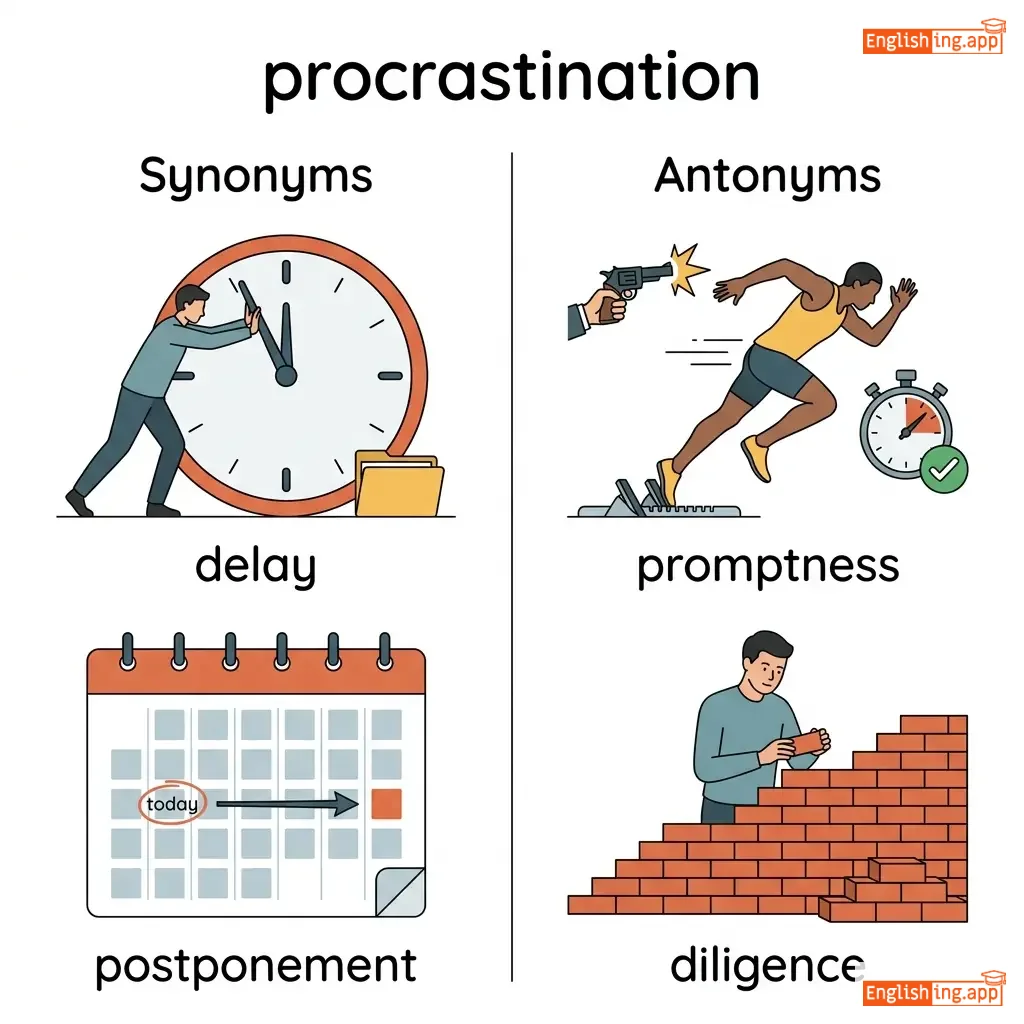
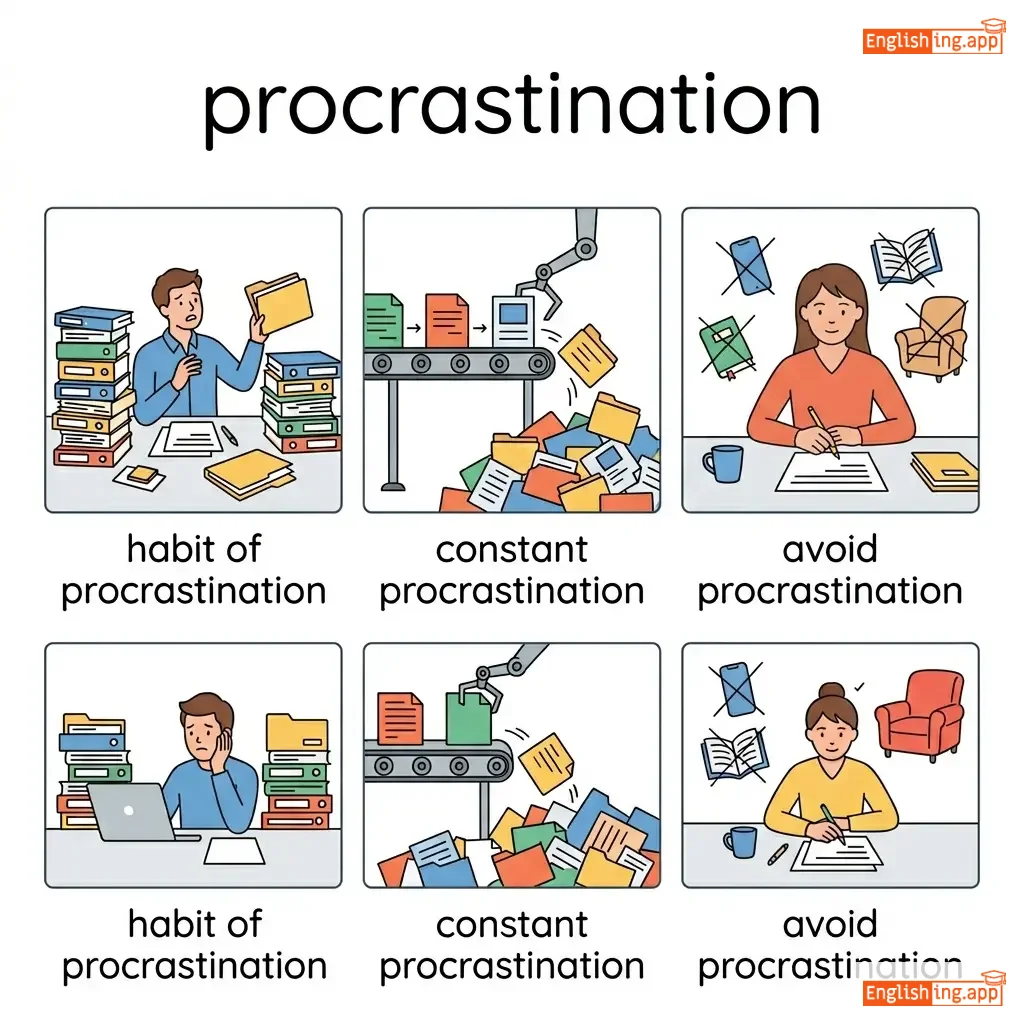
先延ばし
saki nobashi
••••••
|
- •••••• | - •••••• | - •••••• | - •••••• |
the act of delaying or postponing something
••••••
|
Procrastination often leads to unnecessary stress before deadlines. |
先延ばしはしばしば締め切り前に不必要なストレスを引き起こします。
Saki nobashi wa shibashiba shimekiri mae ni fuhitsuyō na sutoresu o hikiokoshimasu.
••••••
|
procrastination is the thief of time |
delaying tasks wastes valuable time
••••••
|
先延ばしは時間の泥棒である
Saki nobashi wa jikan no dorobō de aru
••••••
|
delay, postponement, stalling, hesitation
••••••
|
promptness, diligence, efficiency
••••••
|
habit of procrastination, constant procrastination, avoid procrastination
••••••
|
プロクラステイネーションはいつも仕事を先延ばしにすること!
••••••
|
|
#6980
⏳
|
/prəˈkræs.tɪ.neɪt/
verb
••••••
|
|
- •••••• |
procrastinated
••••••
|
procrastinated
••••••
|
procrastinates
••••••
|
procrastinating
••••••
|
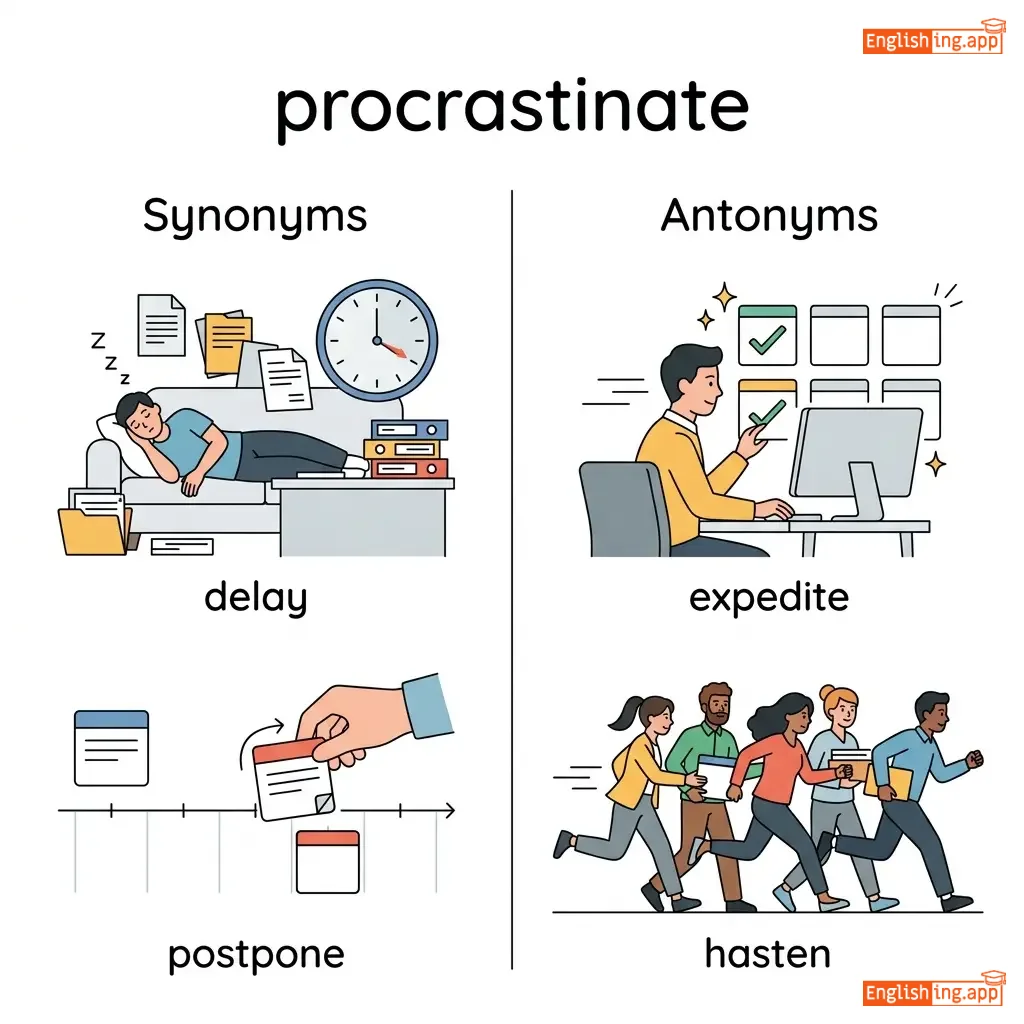
to delay doing something, often unnecessarily or habitually
••••••
|
He tends to procrastinate instead of finishing his assignments on time. |
- •••••• |
procrastinate till tomorrow |
to keep postponing tasks to a later time
••••••
|
- •••••• |
delay, postpone, stall, defer, put off
••••••
|
expedite, hasten, advance
••••••
|
procrastinate on tasks, procrastinate at work, tend to procrastinate
••••••
|
No •••••• |
|
#6981
🎯
|
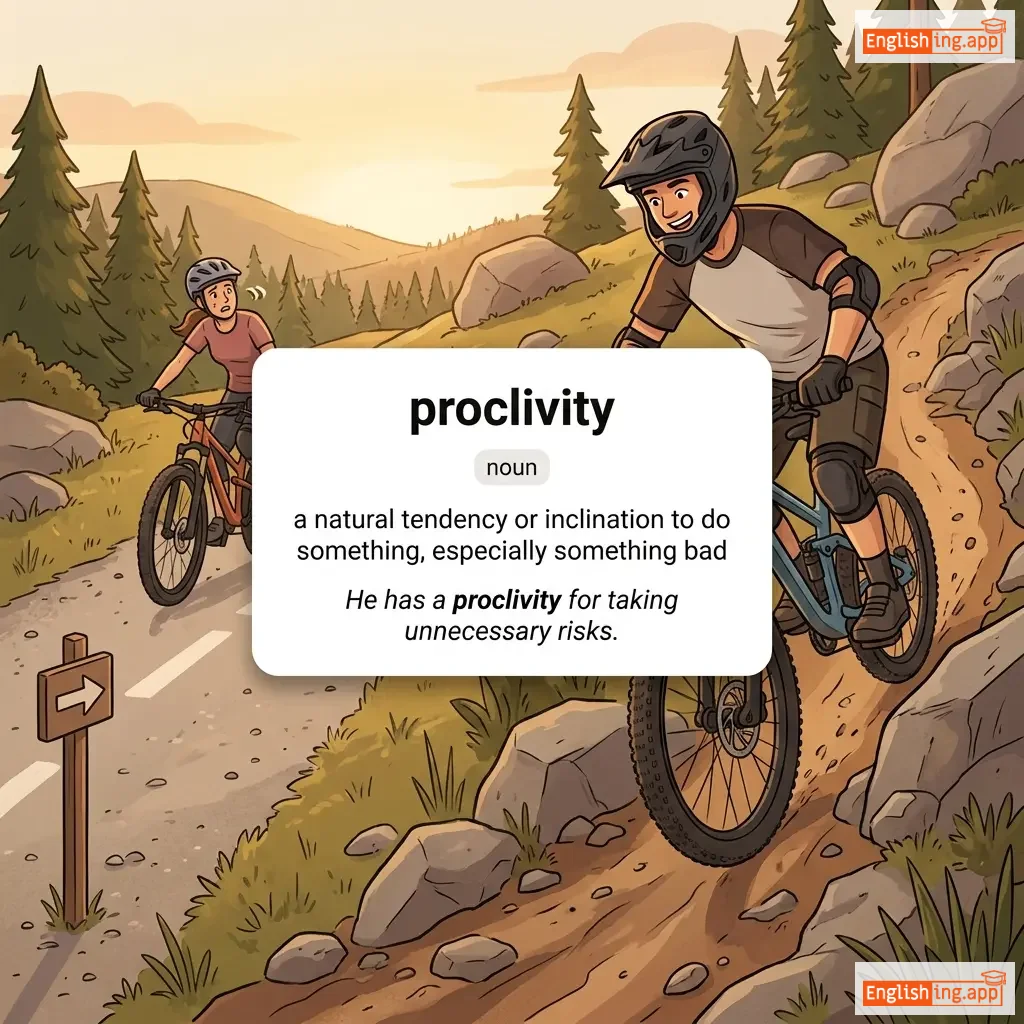
/prəˈklɪvɪti/
noun
(プロクリビティ)
••••••
|
|
傾向
keikou
••••••
|
- •••••• | - •••••• | - •••••• | - •••••• |
a natural tendency or inclination to do something, especially something bad
••••••
|
He has a proclivity for taking unnecessary risks. |
彼は不必要なリスクを取る傾向がある。
Kare wa fuhitsuyou na risuku wo toru keikou ga aru.
••••••
|
- •••••• | - •••••• | - •••••• |
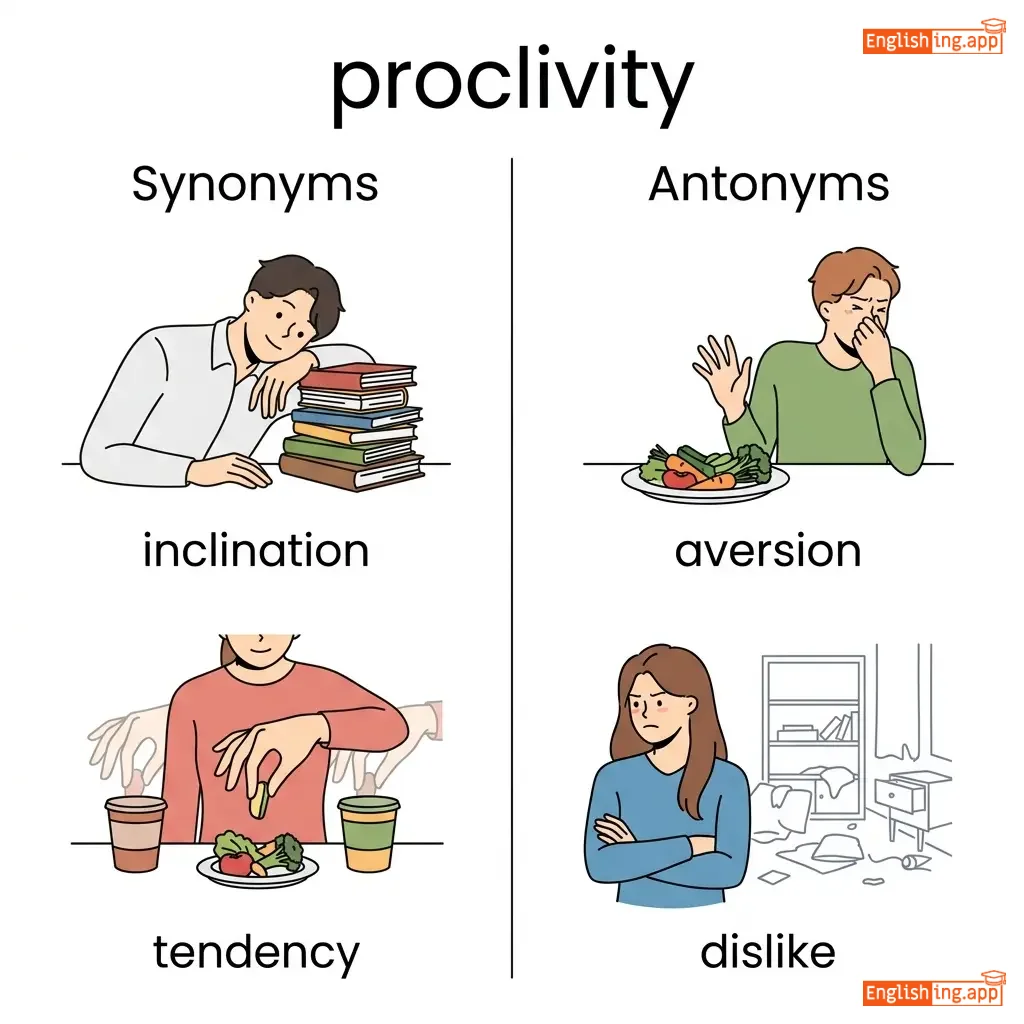
inclination, tendency, predisposition, propensity, leaning
••••••
|
aversion, dislike
••••••
|
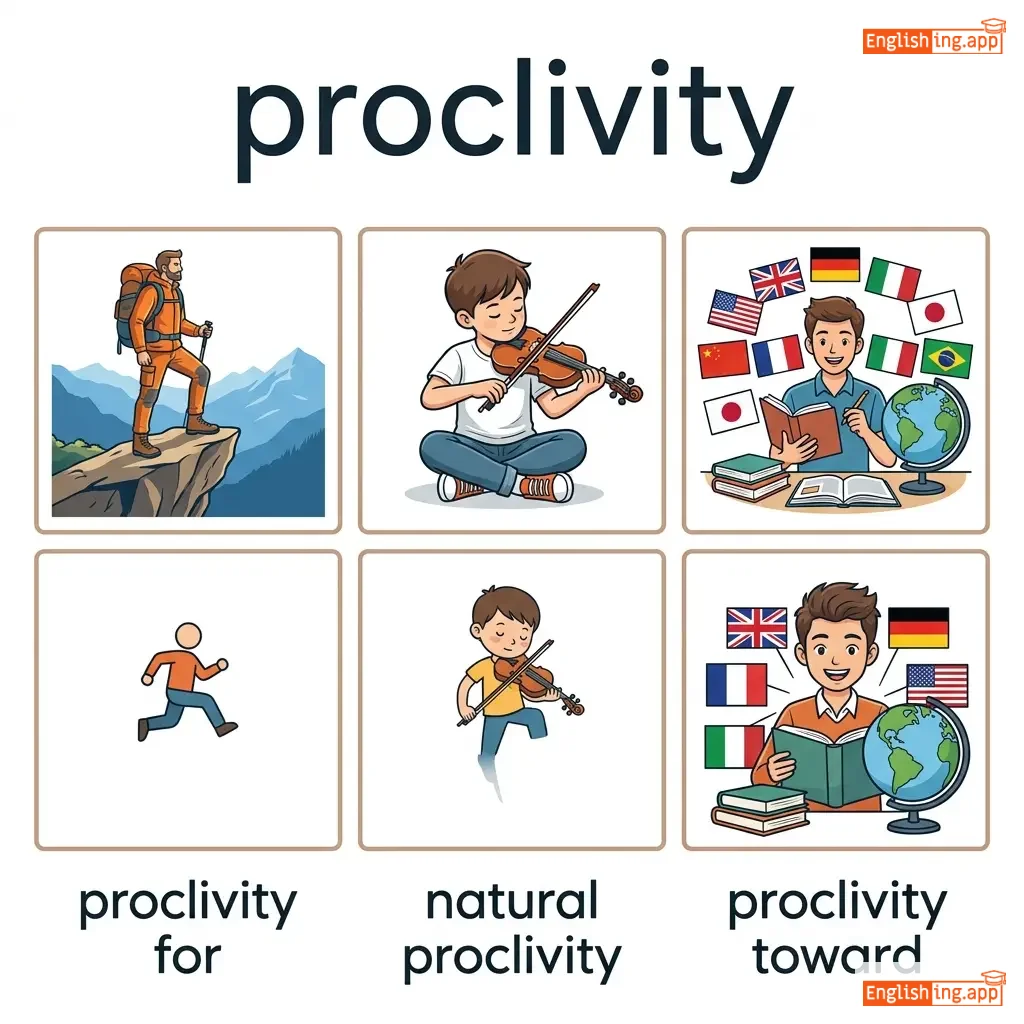
proclivity for, natural proclivity, proclivity toward, strong proclivity
••••••
|
Proclivityは傾向—プロクリビティは何かに傾くように思い出す。
••••••
|
|
#6982
📢
|
/ˌprɒkləˈmeɪʃən/
noun
(purokureimēshon)
••••••
|
- •••••• |
宣言
sengen
••••••
|
- •••••• | - •••••• | - •••••• | - •••••• |
an official public announcement made by a person in authority
••••••
|
The king issued a proclamation declaring the new law. |
王は新しい法律を発表する宣言を出した。
Ō wa atarashī hōritsu o happyō suru sengen o dashita.
••••••
|
royal proclamation |
an official announcement made by a king or queen
••••••
|
王の宣言
ō no sengen
••••••
|
announcement, declaration, decree, statement, edict
••••••
|
silence, secrecy
••••••
|
issue a proclamation, make a proclamation, royal proclamation, official proclamation
••••••
|
宣言は発表—📢 宣言で重要な発表をする。
••••••
|
|
#6983
💰
|
/ˈprəʊsiːdz/
noun
(プロシーズ)
••••••
|
- •••••• |
収益
shuueki
••••••
|
- •••••• | - •••••• | - •••••• | - •••••• |
money obtained from an event, activity, or sale
••••••
|
The proceeds from the charity event were donated to the orphanage. |
チャリティイベントの収益は孤児院に寄付されました。
Charity ibento no shuueki wa kojin ni kifu saremashita.
••••••
|
net proceeds |
the remaining amount of money after expenses are deducted
••••••
|
純収益
jun shuueki
••••••
|
earnings, revenue, profit, income, returns
••••••
|
loss, deficit
••••••
|
sale proceeds, net proceeds, distribute proceeds, donate proceeds
••••••
|
Proceedsは収益を意味します。まるで種を蒔いて得た収穫のように。
••••••
|
|
#6984
⚖️
|
/prəˈsiːdɪŋ/
noun
(prəˈsiːdɪŋ)
••••••
|
- •••••• |
手続き
tetsudzuki
••••••
|
- •••••• | - •••••• | - •••••• | - •••••• |
a course of action; often used for a legal process or event
••••••
|
The court proceedings lasted for several hours.
裁判所の手続きは数時間続きました。
••••••
|
裁判所の手続きは数時間続きました。
Saibansho no tetsudzuki wa suujikan tsuzukimashita.
••••••
|
- •••••• | - •••••• | - •••••• |
process, action, event, case, trial
••••••
|
inaction, stoppage
••••••
|
legal proceeding, court proceeding, official proceeding, ongoing proceeding
••••••
|
Proceedingは裁判所の手続きの進行中を意味します。
••••••
|
|
#6985
➡️
|
/prəˈsiːd/
verb
••••••
|
- •••••• | - •••••• |
proceeded
••••••
|
proceeded
••••••
|
proceeds
••••••
|
proceeding
••••••
|
to begin or continue an action or process after a pause or interruption
••••••
|
After the short break, the speaker proceeded with his lecture. |
- •••••• |
proceed with caution |
to continue carefully and with attention to potential risks
••••••
|
- •••••• |
continue, advance, move forward, progress, go on
••••••
|
stop, halt, cease
••••••
|
proceed further, proceed with caution, proceed against, proceed to
••••••
|
No •••••• |
|
#6986
📝
|
/prəˈsiːdʒər/
noun
(プロシージャ)
••••••
|
|
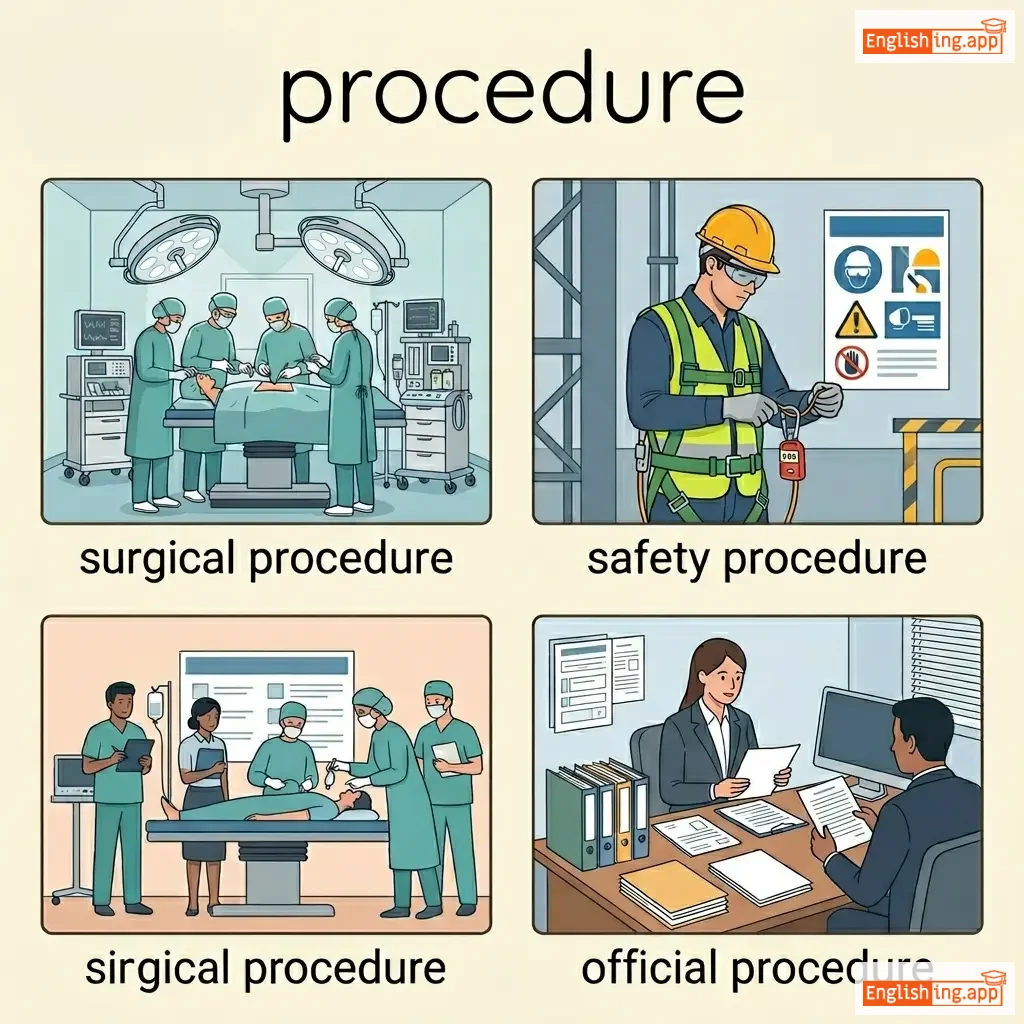
手順
tejun
••••••
|
- •••••• | - •••••• | - •••••• | - •••••• |
An established or official way of doing something; a series of actions conducted in a certain order.
••••••
|
The doctor explained the procedure before the surgery. |
医者は手術の前に手順を説明しました。
Isha wa shujutsu no mae ni tejun o setsumei shimashita.
••••••
|
- •••••• | - •••••• | - •••••• |
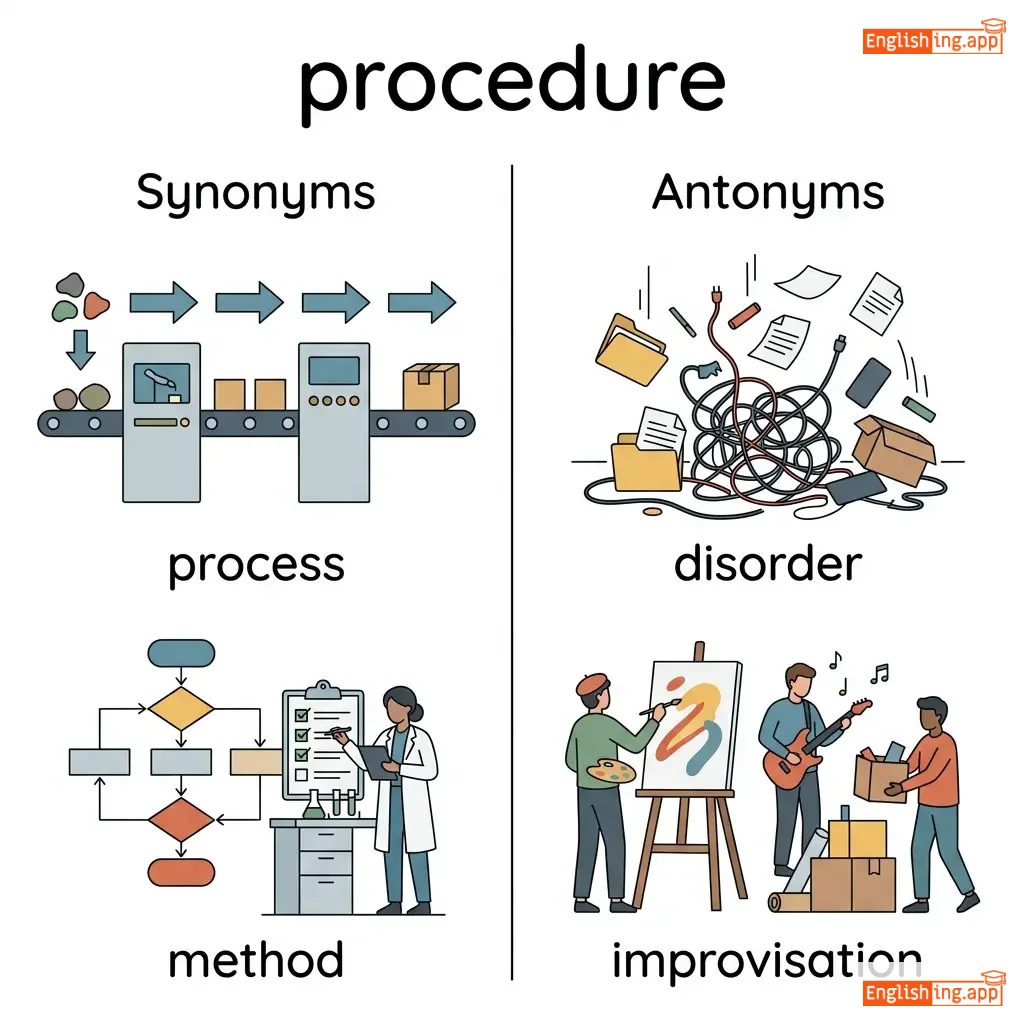
process, method, operation, protocol, routine
••••••
|
disorder, improvisation
••••••
|
surgical procedure, safety procedure, official procedure, legal procedure
••••••
|
Procedure = PROセス + ジュン (順) - 手順を踏んで行う方法。
••••••
|
|
#6987
📜
|
/prəˈsiːdʒərəl/
adjective
(プロシージュラル)
••••••
|
- •••••• |
手続き的な
tetsudzukiteki na
••••••
|
- •••••• | - •••••• | - •••••• | - •••••• |
Relating to an established or official way of doing something; concerned with procedure.
••••••
|
The committee followed the procedural rules strictly.
委員会はプロシージュラルなルールを厳格に守った。
••••••
|
委員会は手続き的なルールを厳格に守った。
Iinkai wa tetsudzukiteki na rūru o genkaku ni mamotta.
••••••
|
- •••••• | - •••••• | - •••••• |
formal, systematic, methodical, administrative
••••••
|
informal, unstructured
••••••
|
procedural rules, procedural error, procedural steps, procedural requirements
••••••
|
Proceduralは手続き + ルール - ルールを守る。
••••••
|
|
#6988
🐘
|
/proʊˈbɑːsɪs/
noun
(プロボシス)
••••••
|
- •••••• |
象の鼻
zou no hana
••••••
|
- •••••• | - •••••• | - •••••• | - •••••• |
The long, flexible nose of some animals, especially an elephant, or a tubular feeding and sucking organ in insects.
••••••
|
The elephant used its proboscis to grab food.
ゾウは食べ物を取るためにそのプロボシスを使った。
••••••
|
ゾウは食べ物を取るためにその象の鼻を使った。
Zō wa tabemono o toru tame ni sono zō no hana o tsukatta.
••••••
|
- •••••• | - •••••• | - •••••• |
trunk, snout, nose, muzzle
••••••
|
tail, wing
••••••
|
elephant's proboscis, insect proboscis, long proboscis, flexible proboscis
••••••
|
ProboscisはPRO + Boss + 象の鼻、象の鼻はbossです。
••••••
|
|
#6989
⚠️
|
/ˌprɒbləˈmætɪk/
adjective
(プロブレマティック)
••••••
|
|
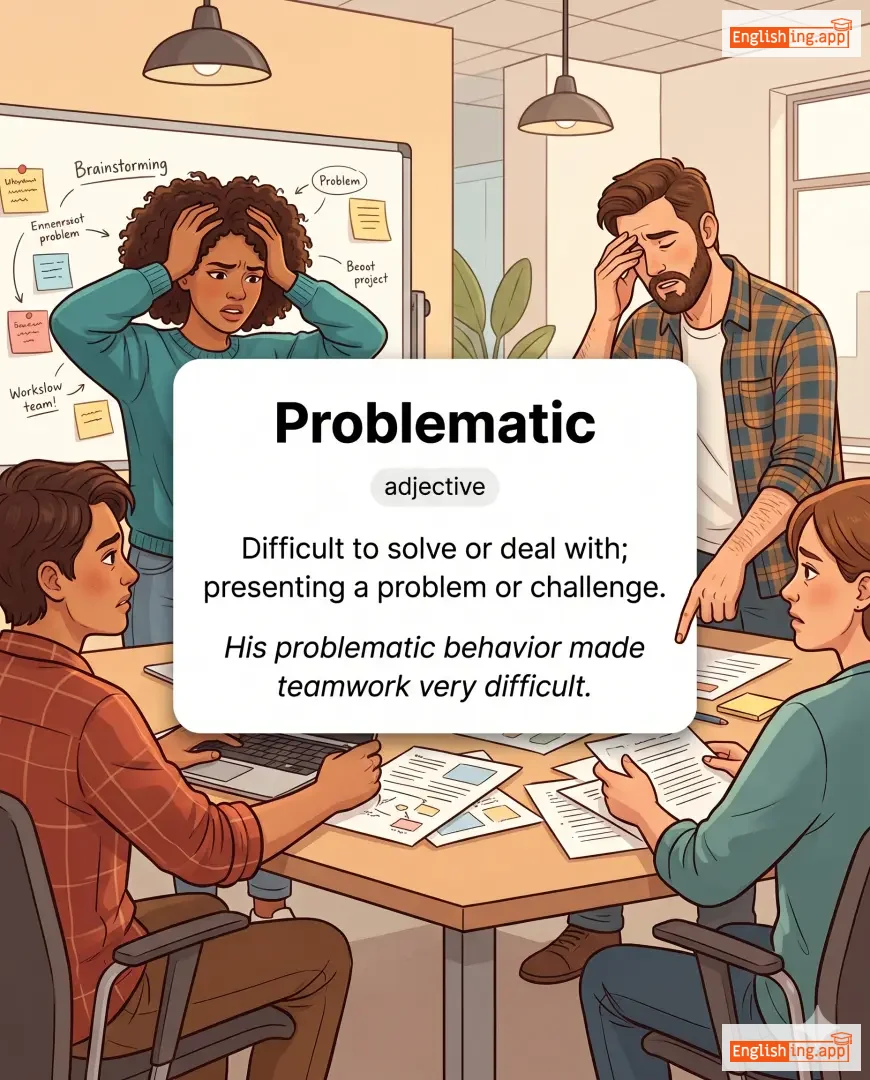
問題のある
mondai no aru
••••••
|
- •••••• | - •••••• | - •••••• | - •••••• |
Difficult to solve or deal with; presenting a problem or challenge.
••••••
|
His problematic behavior made teamwork very difficult.
彼の問題のある行動はチームワークを非常に難しくしました。
••••••
|
彼の問題のある行動はチームワークを非常に難しくしました。
Kare no mondai no aru kōdō wa chīmu wāku o hijō ni muzukashiku shimashita.
••••••
|
- •••••• | - •••••• | - •••••• |
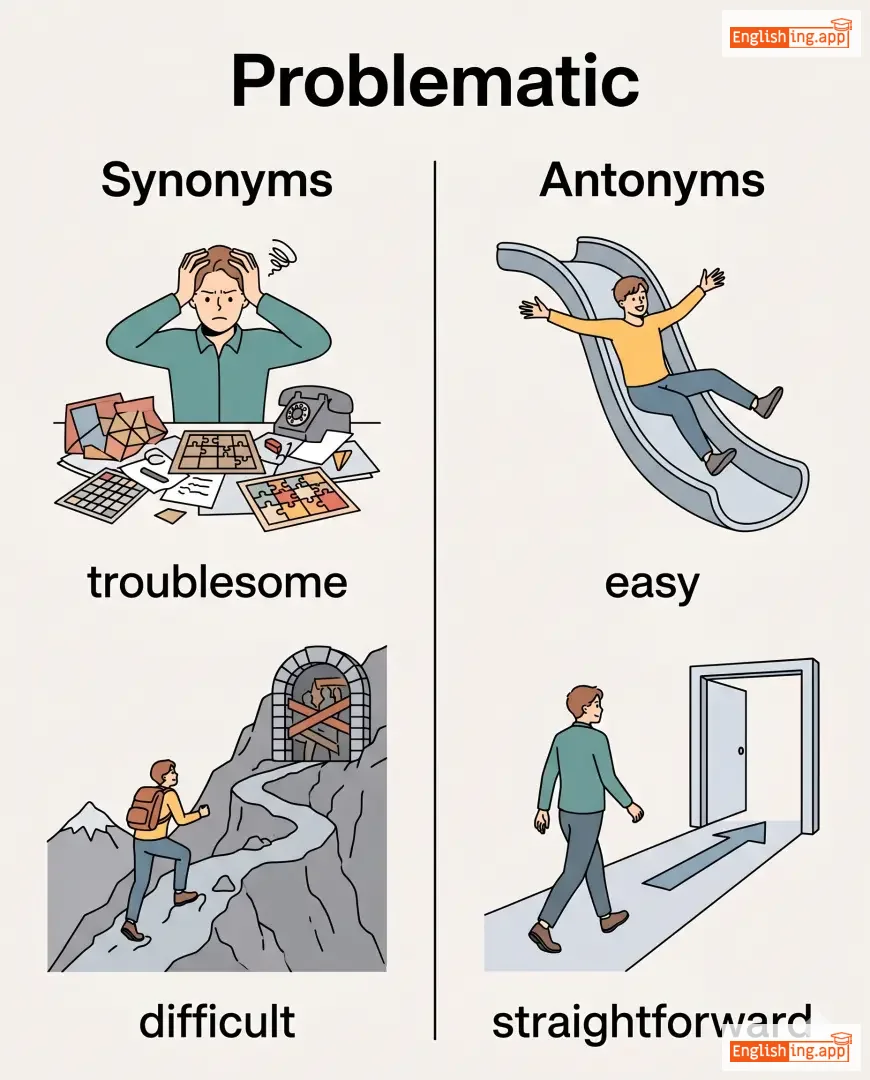
troublesome, difficult, challenging, awkward, vexing
••••••
|
easy, straightforward, simple
••••••
|
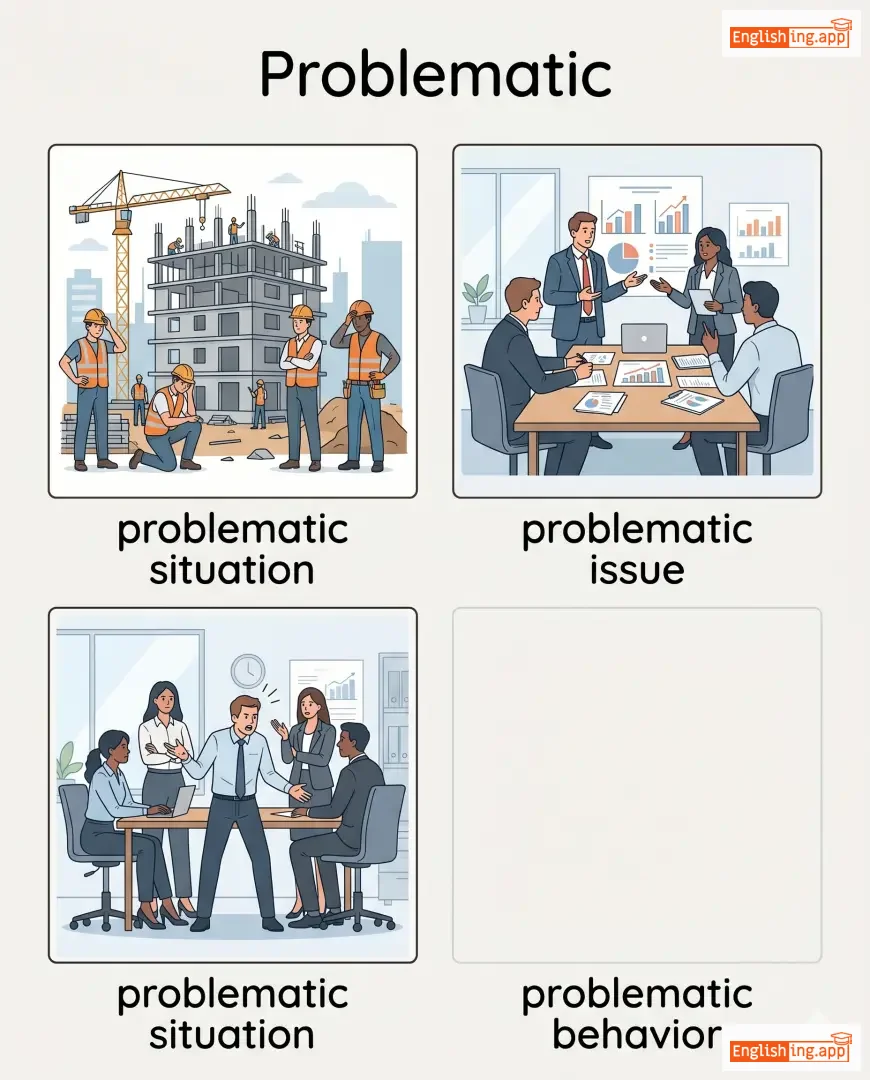
problematic situation, problematic issue, problematic behavior, problematic area
••••••
|
Problematic は問題を引き起こすものを指します。
••••••
|
Vocabulary Quiz
Test your vocabulary by matching words with their translations or meanings.
Login to take the quiz
Comments (0)
Share your thoughts and join the discussion.
Join the discussion by logging in
Login to CommentNo comments yet
Be the first to share your thoughts!