

翻訳
過去
過去分詞
三人称単数
動名詞
意味
例文
例文の翻訳
同義語
対義語
コロケーション
ニーモニック

Swipe left or right, or use the buttons. Tap image to zoom.
例文の翻訳
単語
Lesson 78Lesson 78 - マスクトグル
|
絵文字
|
単語 | Images | 翻訳 | 過去 | 過去分詞 | 三人称単数 | 動名詞 | 意味 | 例文 | 例文の翻訳 | 表現例 | 表現例の意味 | 表現例の翻訳 | 同義語 | 対義語 | コロケーション | ニーモニック |
|---|---|---|---|---|---|---|---|---|---|---|---|---|---|---|---|---|---|
|
#2311
😏
|
/dɪˈrɪʒən/
noun
(デリジョン)
••••••
|
- •••••• |
嘲笑
choushou
••••••
|
- •••••• | - •••••• | - •••••• | - •••••• |
Contemptuous ridicule or mockery.
••••••
|
His ideas were greeted with derision by the audience. |
彼のアイデアは観客によって嘲笑された。
Kare no aidea wa kankyaku ni yotte choushou sareta.
••••••
|
hold up to derision |
to mock or ridicule someone publicly
••••••
|
嘲笑する
choushou suru
••••••
|
mockery, ridicule, scorn, disdain, sneering
••••••
|
praise, admiration, respect
••••••
|
subject of derision, with derision, treat with derision
••••••
|
Derisionは嘲笑を意味する– 誰かが「デリソン」と言って、みんなが笑うところを想像してください。
••••••
|
|
#2312
↘️
|
/dɪˈsɛndənt/
adjective
(ディセンドエント)
••••••
|
- •••••• |
下降する
kōka suru
••••••
|
- •••••• | - •••••• | - •••••• | - •••••• |
Moving downward; going down or descending.
••••••
|
The river followed a descendent course toward the valley. |
川は谷に向かって下降するコースをたどった。
Kawa wa tani ni mukatte kōka suru kōsu o tadotta.
••••••
|
- •••••• | - •••••• | - •••••• |
descending, downward, sloping, declining
••••••
|
ascending, rising
••••••
|
descendent path, descendent movement, descendent course
••••••
|
下降するは下へ行くこと ↘️ 坂道のように
••••••
|
|
#2313
👶
|
/dɪˈsɛndənt/
noun
(ディセンダント)
••••••
|
- •••••• |
子孫
shison
••••••
|
- •••••• | - •••••• | - •••••• | - •••••• |
A person who is descended from a particular ancestor.
••••••
|
She is a descendant of a famous poet. |
彼女は有名な詩人の子孫です。
Kanojo wa yūmei na shijin no shison desu.
••••••
|
- •••••• | - •••••• | - •••••• |
offspring, heir, successor, progeny
••••••
|
ancestor, forefather
••••••
|
direct descendant, descendant of, royal descendant
••••••
|
Descendant つまり下に降りていく (descend) ー 子孫
••••••
|
|
#2314
⬇️
|
/dɪˈsɛnd/
verb
••••••
|
- •••••• | - •••••• |
descended
••••••
|
descended
••••••
|
descends
••••••
|
descending
••••••
|
To move or fall downward; to come or go down from a higher place.
••••••
|
The hikers descended the steep mountain path. |
- •••••• |
descend into chaos |
To fall into disorder or confusion
••••••
|
- •••••• |
drop, fall, decline, lower, sink
••••••
|
ascend, rise, climb
••••••
|
descend slowly, descend rapidly, descend into
••••••
|
No •••••• |
|
#2315
🎶
|
/ˈdɛskænt/
noun
(デスカント)
••••••
|
- •••••• |
追加メロディー
tsuika merodī
••••••
|
- •••••• | - •••••• | - •••••• | - •••••• |
An additional melody or counterpoint sung or played above the main melody.
••••••
|
The choir added a beautiful descant to the hymn.
ザ・クワイア・アディッド・ア・ビューティフル・デスカント・トゥ・ザ・ヒム。
••••••
|
合唱団は賛美歌に美しい追加メロディーを加えました。
Gasshōdan wa sanbika ni utsukushī tsuika merodī o kuwaemashita.
••••••
|
- •••••• | - •••••• | - •••••• |
counterpoint, harmony, accompaniment, overtone
••••••
|
silence, monotone
••••••
|
sing descant, descant voice, descant part
••••••
|
Descant = 主旋律の上に浮かぶ追加メロディー
••••••
|
|
#2316
🏗️
|
/ˈdɛrɪk/
noun
(デリック)
••••••
|
- •••••• |
掘削塔
kutsusaku-tō
••••••
|
- •••••• | - •••••• | - •••••• | - •••••• |
A framework or tower used for supporting a crane, especially for oil drilling or lifting heavy loads.
••••••
|
The workers assembled a derrick at the oil drilling site. |
作業員たちは石油掘削サイトで掘削塔を組み立てました。
Sagyouin-tachi wa sekiyū kutsusaku saito de kutsusaku-tō o kumitatemashita.
••••••
|
- •••••• | - •••••• | - •••••• |
tower, crane, hoist, rig, scaffold
••••••
|
ground, base
••••••
|
oil derrick, drilling derrick, derrick crane
••••••
|
Derrick は掘削塔 🏗️
••••••
|
|
#2317
🚫
|
/dɪˈrɒɡətɔːri/
adjective
(デロガトリー)
••••••
|
- •••••• |
侮辱的
bujokuteki
••••••
|
- •••••• | - •••••• | - •••••• | - •••••• |
Showing a critical or disrespectful attitude.
••••••
|
The article contained derogatory comments about the politician. |
その記事には政治家について侮辱的なコメントが含まれていました。
Sono kiji ni wa seijika ni tsuite bujokuteki na komento ga fukumarete imashita.
••••••
|
- •••••• | - •••••• | - •••••• |
offensive, insulting, belittling, demeaning
••••••
|
respectful, flattering
••••••
|
derogatory comment, derogatory remark, derogatory statement
••••••
|
Derogatory = 'de' (侮辱する) + 'story' → 侮辱的な話。
••••••
|
|
#2318
👎
|
/dɪˈrɒɡətɪv/
adjective
(デロゲイティブ)
••••••
|
- •••••• |
侮辱的
bujokuteki
••••••
|
- •••••• | - •••••• | - •••••• | - •••••• |
Expressing a low opinion or showing lack of respect.
••••••
|
He made a derogative remark about her work. |
彼は彼女の仕事について侮辱的な発言をした。
Kare wa kanojo no shigoto ni tsuite bujokuteki na hatsugen o shita.
••••••
|
- •••••• | - •••••• | - •••••• |
disparaging, insulting, belittling, disrespectful
••••••
|
respectful, complimentary
••••••
|
derogative remark, derogative term, derogative comment
••••••
|
Derogative は侮辱的 (bujokuteki) という意味です。
••••••
|
|
#2319
🧴
|
/ˌdɜːrməˈtɑːlədʒi/
noun
(ダーマトロジー)
••••••
|
- •••••• |
皮膚科学
hifu kagaku
••••••
|
- •••••• | - •••••• | - •••••• | - •••••• |
The branch of medicine concerned with the skin and its diseases.
••••••
|
He studied dermatology at medical school.
彼は医学部で皮膚科学を学んだ。
••••••
|
彼は医学部で皮膚科学を学んだ。
Kare wa igakubu de hifukagaku o mananda.
••••••
|
- •••••• | - •••••• | - •••••• |
skin science, skin medicine, cutaneous medicine
••••••
|
none
••••••
|
study dermatology, dermatology clinic, dermatology department
••••••
|
皮膚科学 = 皮膚 (皮膚) + 学 (学問) → 皮膚の学問。
••••••
|
|
#2320
🩺
|
/ˌdɜːrməˈtɑːlədʒɪst/
noun
(ダーマトロジスト)
••••••
|
- •••••• |
皮膚科医
hifuka-i
••••••
|
- •••••• | - •••••• | - •••••• | - •••••• |
A doctor who specializes in the treatment of skin diseases.
••••••
|
She consulted a dermatologist for her skin allergy.
彼女は皮膚のアレルギーのために皮膚科医に相談した。
••••••
|
彼女は皮膚のアレルギーのために皮膚科医に相談した。
Kanojo wa hifu no arerugī no tame ni hifuka-i ni soudan shita.
••••••
|
- •••••• | - •••••• | - •••••• |
skin doctor, skin specialist, physician, dermatologist
••••••
|
general practitioner
••••••
|
consult a dermatologist, dermatologist appointment, dermatologist clinic
••••••
|
皮膚科医 = 皮膚 (hifu) + 科 (ka) → 皮膚の病気を治療する医者。
••••••
|
|
#2321
🔗
|
/dɪˈraɪvd/
adjective
(deráivd)
••••••
|
- •••••• |
派生した
hasē shita
••••••
|
- •••••• | - •••••• | - •••••• | - •••••• |
Developed or obtained from something else; not original.
••••••
|
The word is derived from Latin.
その単語はラテン語から派生しています。
••••••
|
その単語はラテン語から派生しています。
Sono tango wa Raten-go kara hasē shiteimasu.
••••••
|
- •••••• | - •••••• | - •••••• |
originated, obtained, extracted, obtained from
••••••
|
original, independent
••••••
|
derived from, derived benefit, derived form
••••••
|
Derived: 派生した、他の場所から来たもので、元々のものではない。
••••••
|
|
#2322
📜
|
/dɪˈraɪv/
verb
(デリヴ)
••••••
|
- •••••• |
導き出す
michibikidasu
••••••
|
derived
デリヴド
••••••
|
derived
デリヴド
••••••
|
derives
デリヴス
••••••
|
deriving
デリヴィング
••••••
|
To obtain something from a source.
••••••
|
Many English words derive from Latin.
メニー・イングリッシュ・ワーズ・デリヴ・フロム・ラテン。
••••••
|
多くの英語の単語はラテン語から導き出される。
ooku no eigo no tango wa raten-go kara michibikidasareru.
••••••
|
derive benefit
デリヴ・ベネフィット
••••••
|
to gain an advantage from something
••••••
|
利益を得る
rieki o eru
••••••
|
obtain, acquire, originate, extract, gain
••••••
|
lose, give, surrender
••••••
|
derive from, derive meaning, derive benefit
••••••
|
Deriveは何かを源から得ること — '導き出す'として覚えよう。
••••••
|
|
#2323
🔄
|
/dɪˈrɪvətɪv/
noun, adjective
(デリバティブ)
••••••
|
|
派生物
haseibutsu
••••••
|
- •••••• | - •••••• | - •••••• | - •••••• |
Something that is based on another source; in math, a measure of how a function changes.
••••••
|
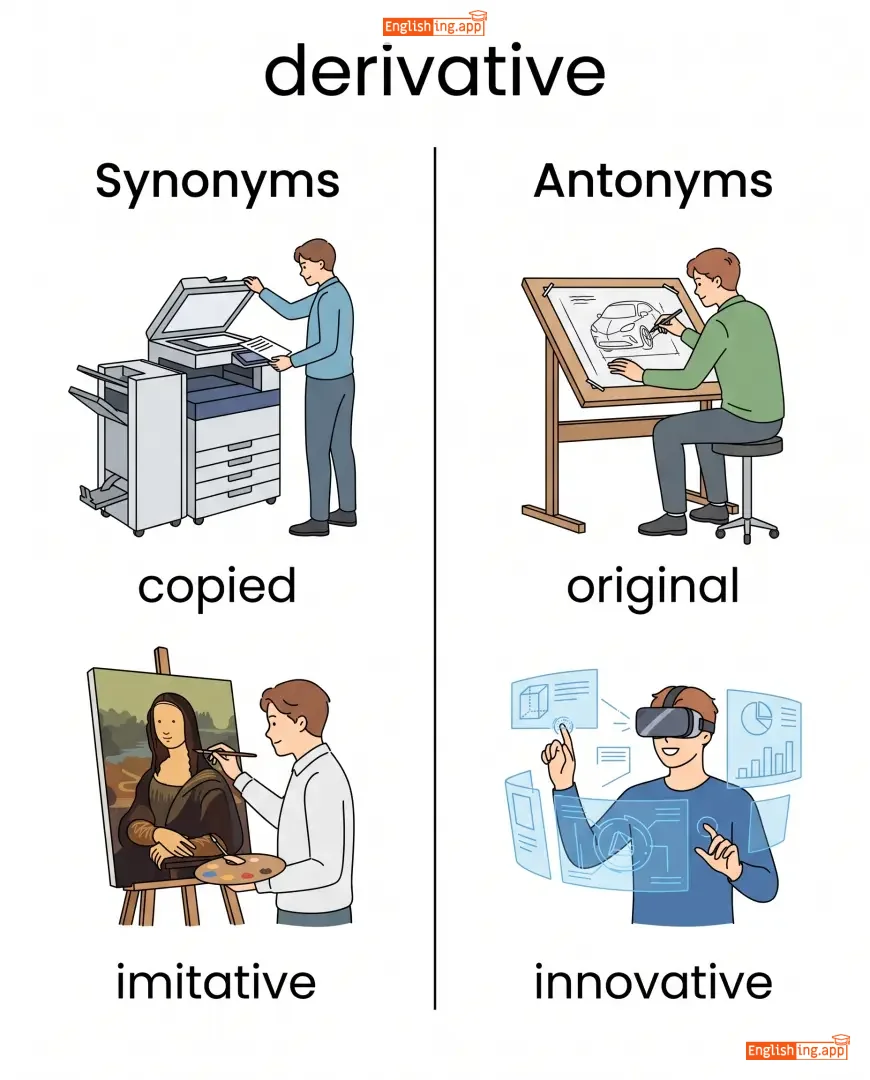
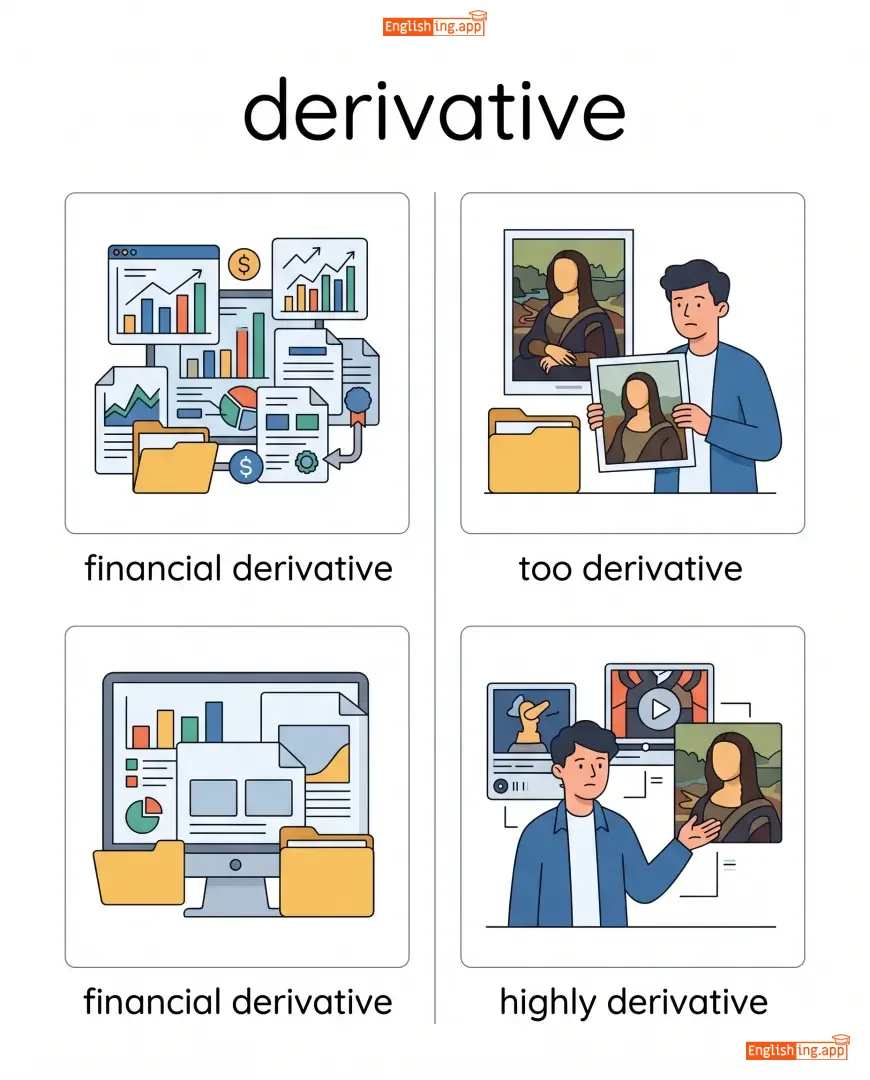
The film was criticized for being too derivative of earlier works.
その映画は、前の作品を模倣しすぎて批判されました。
••••••
|
その映画は、前の作品を模倣しすぎて批判されました。
Sono eiga wa, mae no sakuhin o mohō shisugite hihan saremashita.
••••••
|
- •••••• | - •••••• | - •••••• |
copied, imitative, secondary, unoriginal
••••••
|
original, innovative, creative
••••••
|
financial derivative, too derivative, highly derivative
••••••
|
派生物とは他のものから取られたもの – 'デリバティブ'は模倣から来ている。
••••••
|
|
#2324
📖
|
/ˌdɛrɪˈveɪʃən/
noun
(デリヴェイション)
••••••
|
- •••••• |
派生
hasei
••••••
|
- •••••• | - •••••• | - •••••• | - •••••• |
The origin or development of something from a source.
••••••
|
The derivation of the word comes from Latin.
その単語の起源はラテン語から来ている。
••••••
|
その単語の起源はラテン語から来ている。
Sono tango no kigen wa raten-go kara kite iru.
••••••
|
- •••••• | - •••••• | - •••••• |
origin, source, root, formation, extraction
••••••
|
end, result, conclusion
••••••
|
word derivation, derivation of formula, derivation from
••••••
|
派生は、単語の起源を見つけること、源から発展することを意味します。
••••••
|
|
#2325
😒
|
/dɪˈraɪsɪv/
adjective
(デリシブ)
••••••
|
- •••••• |
軽蔑的な
keibetsuteki na
••••••
|
- •••••• | - •••••• | - •••••• | - •••••• |
Expressing contempt or ridicule.
••••••
|
She gave a derisive laugh at his attempt to sing. |
彼女は彼の歌おうとする試みに対して軽蔑的な笑い声を上げた。
Kanojo wa kare no utaou to suru kokoromi ni taishite keibetsuteki na waraigoe wo ageta.
••••••
|
- •••••• | - •••••• | - •••••• |
mocking, scornful, sneering, disdainful, sarcastic
••••••
|
respectful, admiring, supportive
••••••
|
derisive laugh, derisive comment, derisive tone
••••••
|
Derisiveは軽蔑的な、'デリ'(怒る)を思い出そう。
••••••
|
|
#2326
📉
|
/dɪˌpriːʃiˈeɪʃən/
noun
(ディプリシエーション)
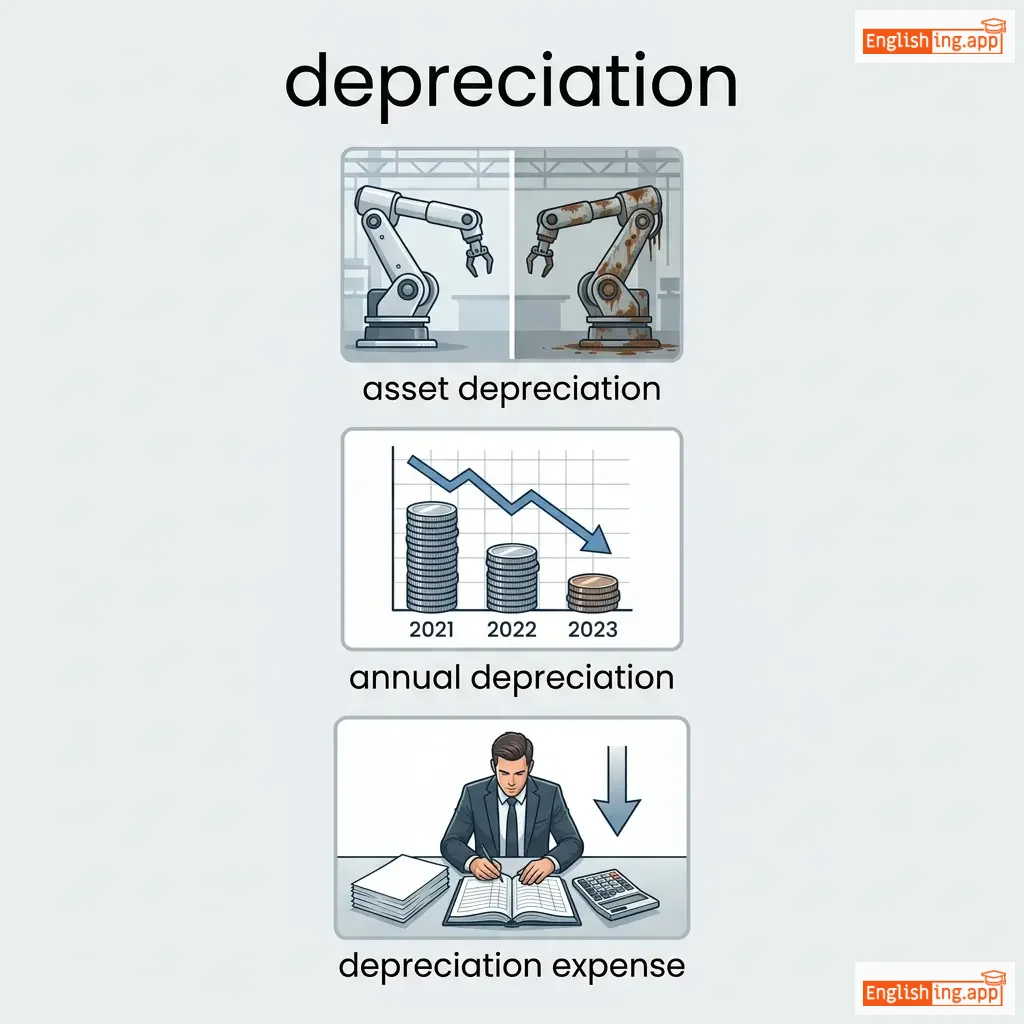
••••••
|
|
減価償却
genka shoukyaku
••••••
|
- •••••• | - •••••• | - •••••• | - •••••• |
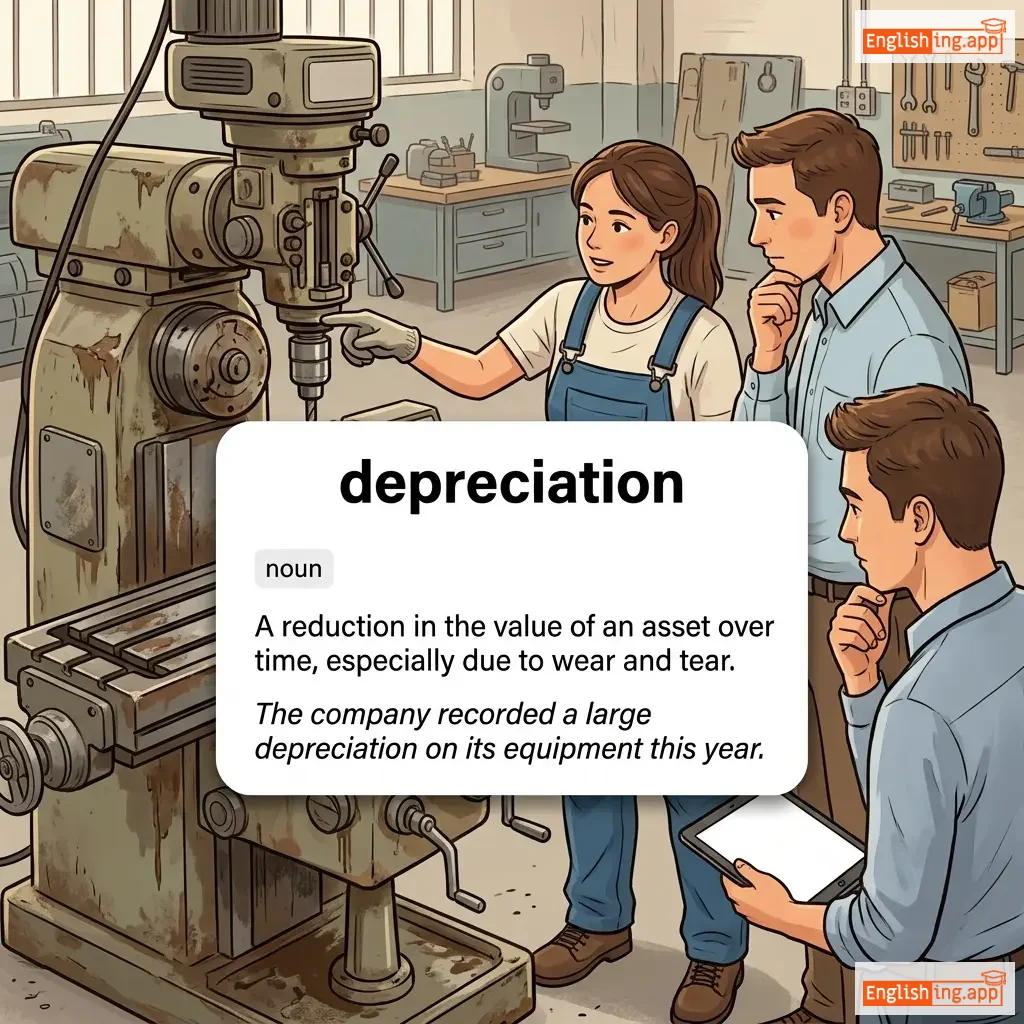
A reduction in the value of an asset over time, especially due to wear and tear.
••••••
|
The company recorded a large depreciation on its equipment this year. |
会社は今年、機器の大きな減価償却を記録しました。
Kaisha wa kotoshi, kiki no ookina genka shoukyaku o kiroku shimashita.
••••••
|
- •••••• | - •••••• | - •••••• |
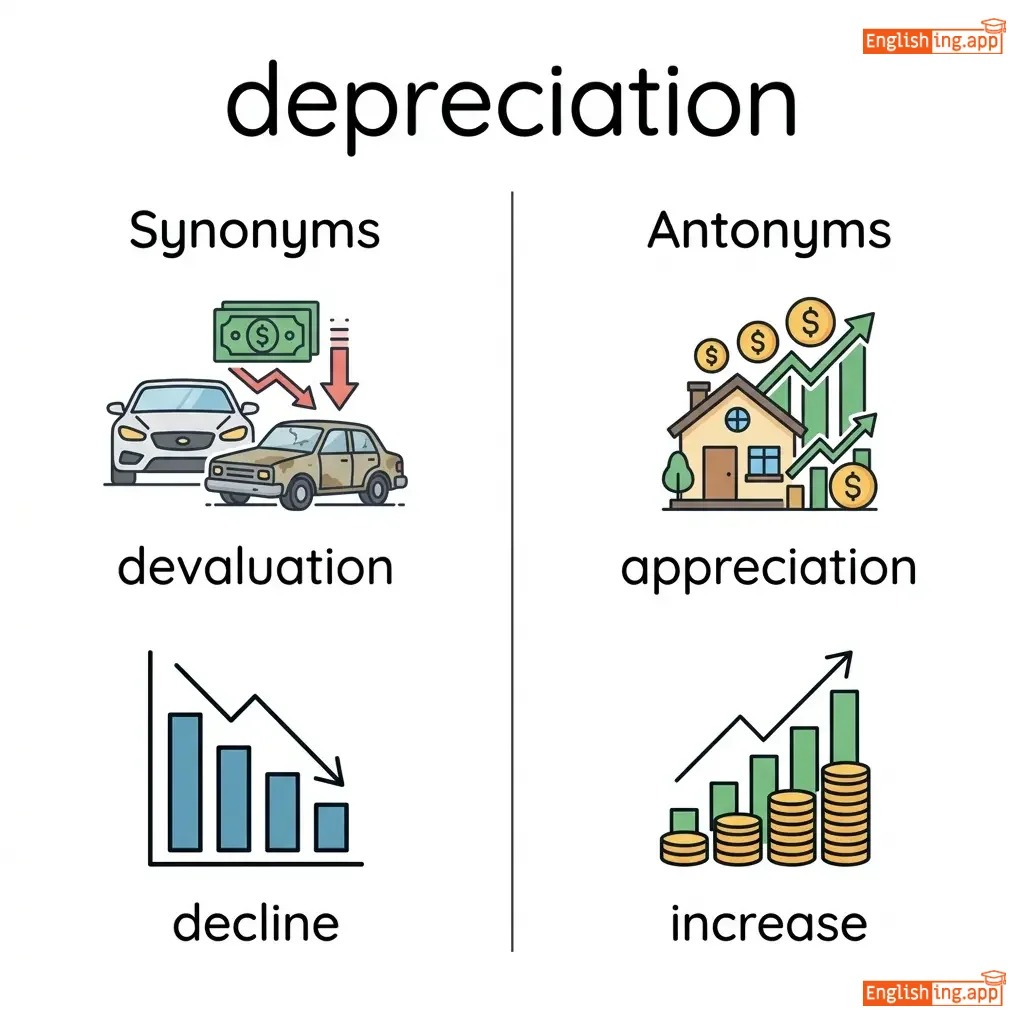
devaluation, decline, reduction, amortization, drop
••••••
|
appreciation, increase, rise
••••••
|
asset depreciation, annual depreciation, depreciation expense, depreciation rate
••••••
|
減価償却は、時間が経つにつれて物の価値が減ることです。
••••••
|
|
#2327
🤣
|
/dɪˈrɪzəbl/
adjective
(デリジブル)
••••••
|
- •••••• |
嘲笑に値する
choushou ni ataisuru
••••••
|
- •••••• | - •••••• | - •••••• | - •••••• |
deserving ridicule or mockery
••••••
|
His excuse was so weak that it was plainly derisible. |
彼の言い訳は非常に弱く、明らかに嘲笑に値した。
Kare no iiwake wa hijou ni yowaku, akiraka ni choushou ni ataishita.
••••••
|
- •••••• | - •••••• | - •••••• |
laughable, absurd, ridiculous, contemptible
••••••
|
respectable, credible, reasonable
••••••
|
derisible claim, derisible excuse, almost derisible
••••••
|
Derisibleはde-risibleと似ている - 嘲笑に値するもの。
••••••
|
|
#2328
😂
|
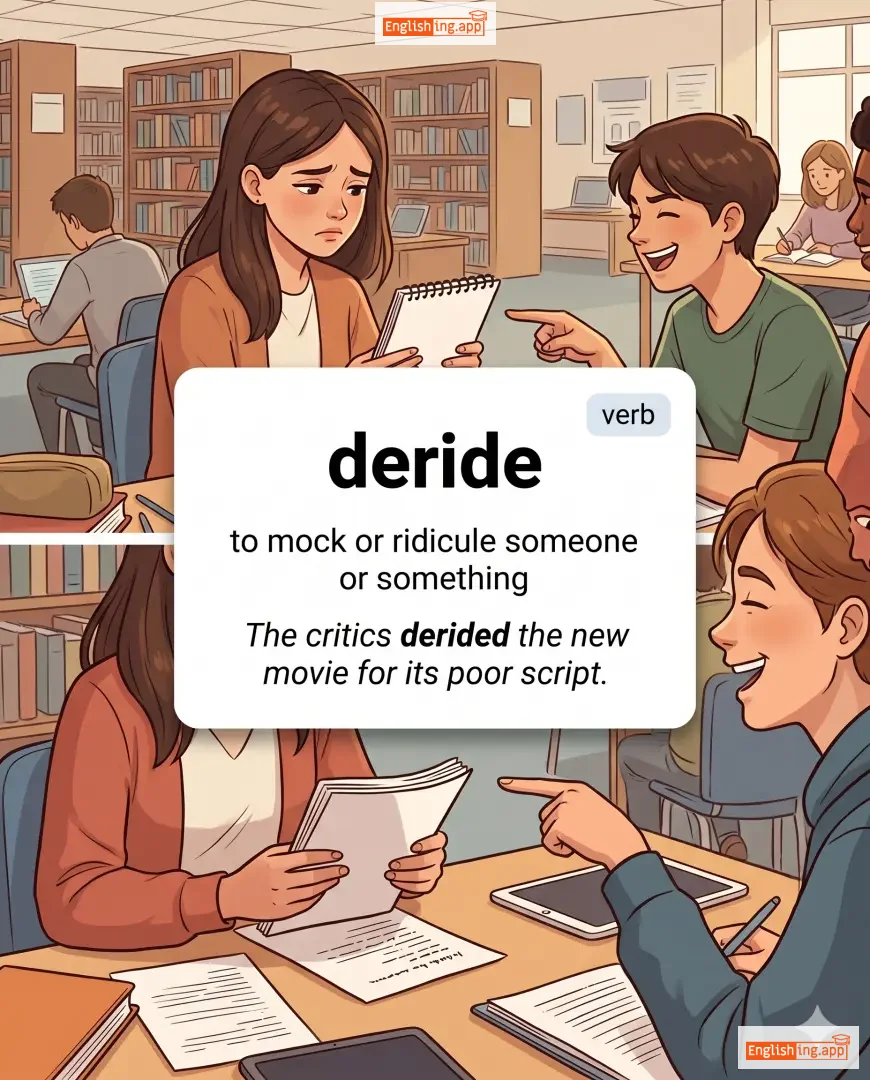
/dɪˈraɪd/
verb
(ディライド)
••••••
|
|
嘲笑する
choushou suru
••••••
|
derided
ディライデッド
••••••
|
derided
ディライデッド
••••••
|
derides
ディライドス
••••••
|
deriding
ディライディング
••••••
|
to mock or ridicule someone or something
••••••
|
The critics derided the new movie for its poor script.
批評家たちはその新しい映画を悪い脚本のせいで嘲笑した。
••••••
|
批評家たちはその新しい映画を悪い脚本のせいで嘲笑した。
Hihyōka-tachi wa sono atarashī eiga wo warui kyakuhon no sei de chōshō shita.
••••••
|
- •••••• | - •••••• | - •••••• |
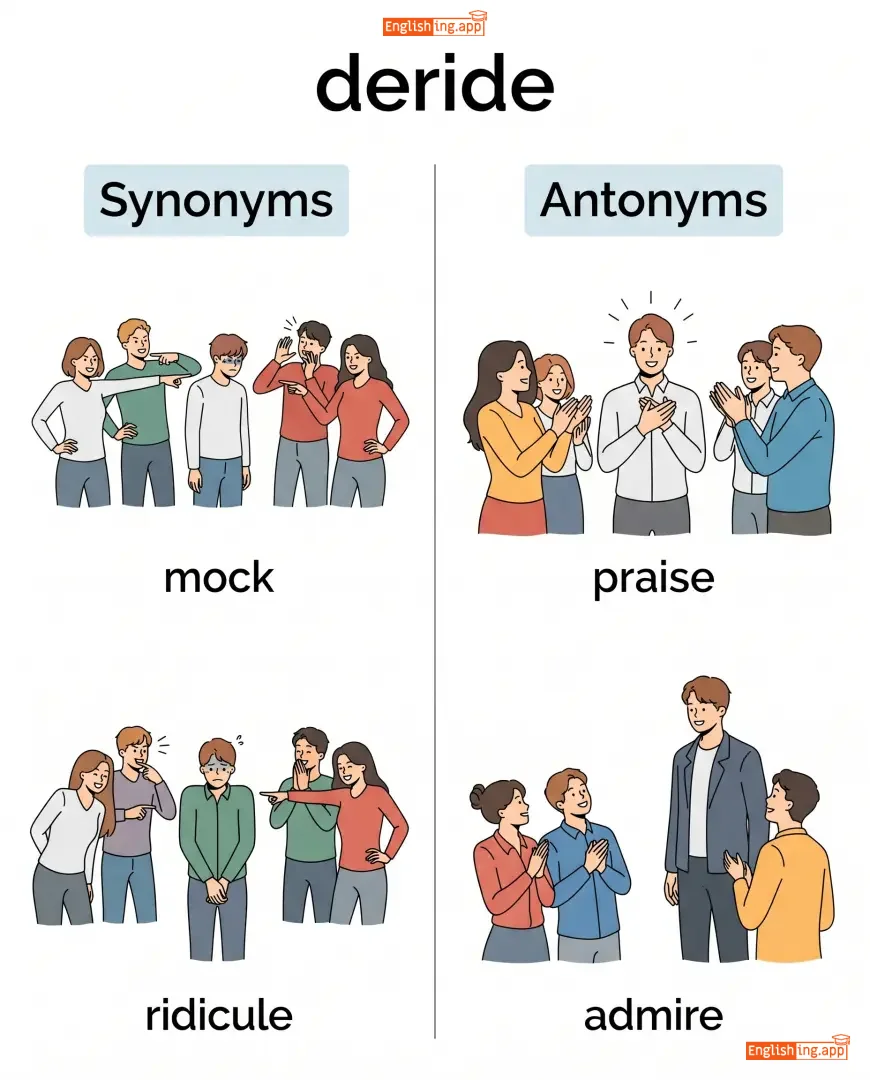
mock, ridicule, scorn, sneer, jeer
••••••
|
praise, admire, respect
••••••
|
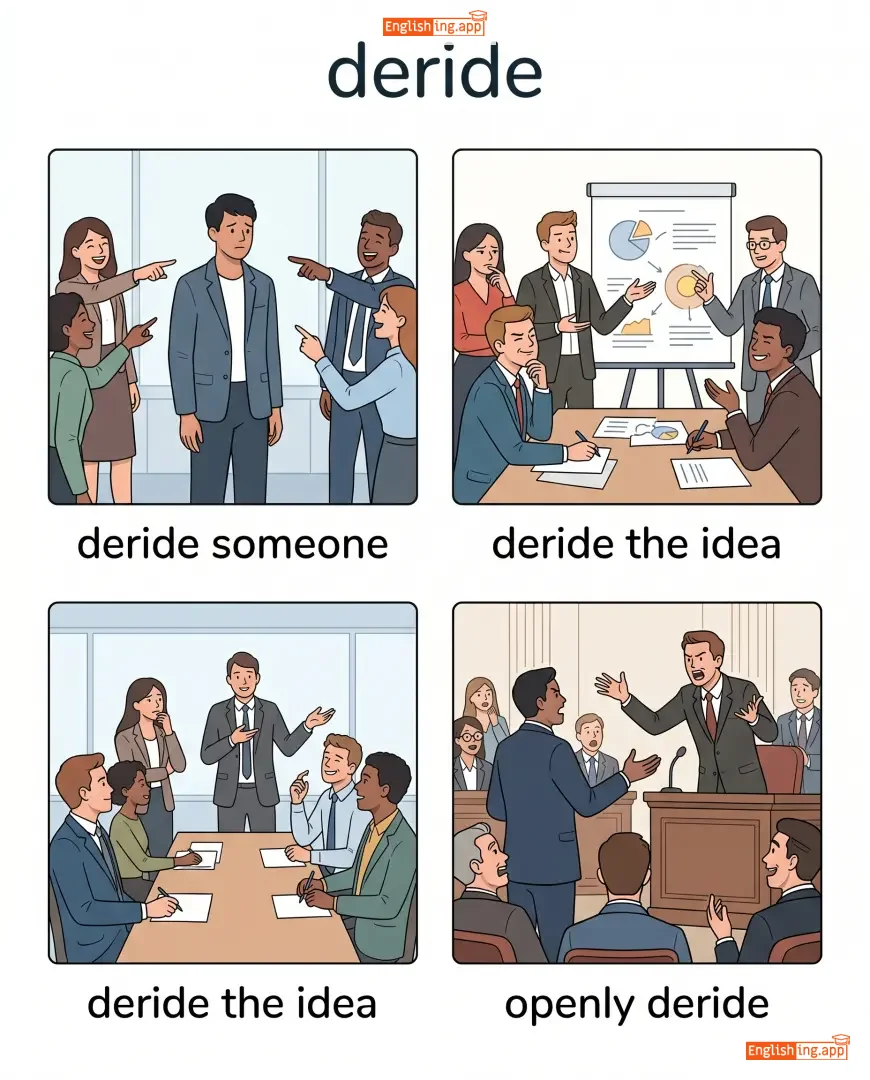
deride someone, deride the idea, openly deride
••••••
|
‘Deride’は‘嘲笑する’のように聞こえます – 何かを見下して笑う。
••••••
|
|
#2329
⚠️
|
/ˌdɛrɪˈlɪkʃən/
noun
(デレリクション)
••••••
|
- •••••• |
職務怠慢
shokumu taimann
••••••
|
- •••••• | - •••••• | - •••••• | - •••••• |
the state of being abandoned; neglect of duty
••••••
|
The officer was charged with dereliction of duty.
その役人は職務怠慢で起訴された。
••••••
|
その役人は職務怠慢で起訴された。
Sono yakunin wa shokumu taimann de kiso sareta.
••••••
|
dereliction of duty
職務怠慢
••••••
|
failure to perform one's responsibilities
••••••
|
職務怠慢
shokumu taimann
••••••
|
neglect, abandonment, failure, negligence
••••••
|
responsibility, diligence, care
••••••
|
dereliction of duty, complete dereliction, gross dereliction
••••••
|
Derelictionは日本語で職務怠慢と呼ばれ、職務を果たさないことです。
••••••
|
|
#2330
🏚️
|
/ˈdɛrəlɪkt/
adjective, noun
(デレリクト)
••••••
|
- •••••• |
放棄された
houkisareta
••••••
|
- •••••• | - •••••• | - •••••• | - •••••• |
in poor condition due to neglect or disuse; a homeless or neglected person
••••••
|
The old factory stood derelict for decades.
古い工場は何十年も放置されていました。
••••••
|
古い工場は何十年も放置されていました。
Furui koujou wa nanshūnen mo houchi sarete imashita.
••••••
|
- •••••• | - •••••• | - •••••• |
abandoned, neglected, ruined, dilapidated
••••••
|
maintained, cared-for, preserved
••••••
|
derelict building, derelict ship, derelict land
••••••
|
Derelictは'放棄された'という言葉を連想させ、放置された場所にぴったりです。
••••••
|
|
#2331
🤯
|
/dɪˈreɪndʒd/
adjective
(ディレインジド)
••••••
|
- •••••• |
狂気
kyouki
••••••
|
- •••••• | - •••••• | - •••••• | - •••••• |
mentally disturbed or insane; behaving irrationally
••••••
|
The deranged man shouted nonsense in the street. |
狂った男が街で無意味なことを叫んでいた。
Kurutta otoko ga machi de muimi na koto o sakendete ita.
••••••
|
- •••••• | - •••••• | - •••••• |
insane, mad, crazy, unhinged, disturbed
••••••
|
sane, rational, balanced
••••••
|
deranged mind, deranged individual, mentally deranged
••••••
|
Deranged, '狂気', 精神的におかしくなった人が叫ぶ。
••••••
|
|
#2332
🌱❌
|
/dɪˈræsɪˌneɪt/
verb
(デラシネイト)
••••••
|
- •••••• |
根こそぎ引き抜く
nekosogi hikinuku
••••••
|
deracinated
デラシネイテッド
••••••
|
deracinated
デラシネイテッド
••••••
|
deracinates
デラシネイツ
••••••
|
deracinating
デラシネイティング
••••••
|
To uproot something completely; to displace people from their native environment or culture.
••••••
|
The conflict deracinated many families from their homeland.
その紛争は多くの家族を故郷から追い出しました。
••••••
|
その紛争は多くの家族を故郷から追い出しました。
Sono funsō wa ōku no kazoku o kokyō kara oidasimashita.
••••••
|
- •••••• | - •••••• | - •••••• |
uproot, eradicate, extirpate, displace, remove
••••••
|
plant, establish, settle
••••••
|
deracinate culture, deracinate traditions, deracinate families, deracinate completely
••••••
|
Deracinateはde-rootを意味します = 根こそぎ引き抜く
••••••
|
|
#2333
🤠
|
/ˈdɛpjʊˌtaɪz/
verb
(デピュタイズ)
••••••
|
- •••••• |
副職に任命する
fukushoku ni ninmei suru
••••••
|
deputized
デピュタイズド
••••••
|
deputized
デピュタイズド
••••••
|
deputizes
デピュタイゼス
••••••
|
deputizing
デピュタイジング
••••••
|
To appoint someone as a deputy; to act as a substitute or representative.
••••••
|
The sheriff decided to deputize several locals to help maintain order.
保安官は秩序を維持するために数人の地元の人々を副職に任命することを決定しました。
••••••
|
保安官は秩序を維持するために数人の地元の人々を副職に任命することを決定しました。
Hoankan wa chitsujo o iji suru tame ni suunin no jimoto no hitobito o fukushoku ni ninmei suru koto o kettei shimashita.
••••••
|
- •••••• | - •••••• | - •••••• |
appoint, authorize, commission, designate, empower
••••••
|
dismiss, discharge, remove
••••••
|
deputize someone, deputize officers, deputize locals, deputize quickly
••••••
|
Deputizeは誰かを副職にすることです - 副職に任命する。
••••••
|
|
#2334
🌊
|
/dɛpθ/
noun
(デプス)
••••••
|
- •••••• |
深さ
fukasa
••••••
|
- •••••• | - •••••• | - •••••• | - •••••• |
The distance from the top to the bottom of something; the intensity or complexity of a subject.
••••••
|
The diver measured the depth of the ocean trench. |
ダイバーは海洋の溝の深さを測定した。
Daibā wa kaiyō no mizu no fukasa o sokutei shita.
••••••
|
in depth |
In great detail or thoroughly.
••••••
|
深く
fukaku
••••••
|
deepness, intensity, profoundness, extent, complexity
••••••
|
shallowness, surface, height
••••••
|
great depth, depth of knowledge, emotional depth, depth perception
••••••
|
Depth = 深さ = 深いところへ進む。
••••••
|
|
#2335
🥀
|
/ˌdɛprɪˈveɪʃən/
noun
(デプリベーション)
••••••
|
|
欠乏
ketsubou
••••••
|
- •••••• | - •••••• | - •••••• | - •••••• |
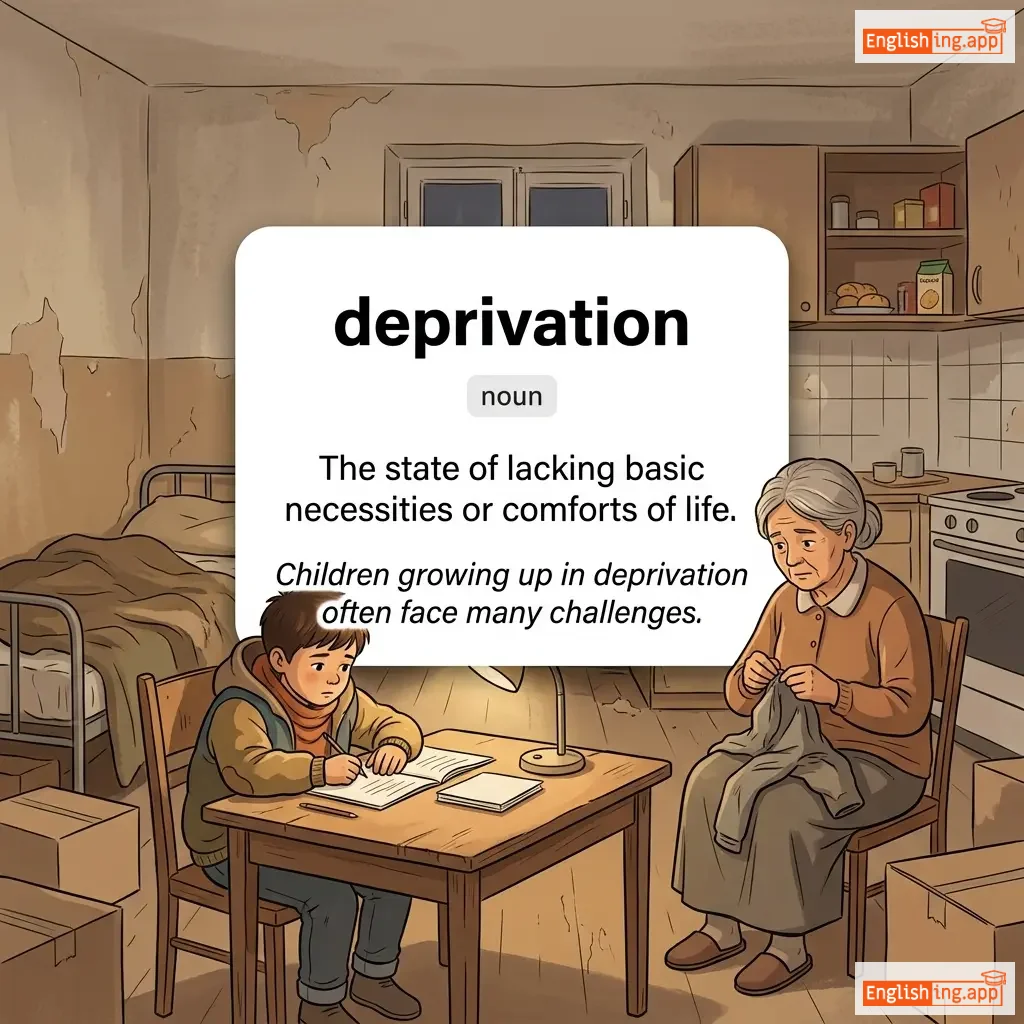
The state of lacking basic necessities or comforts of life.
••••••
|
Children growing up in deprivation often face many challenges. |
欠乏状態で育った子供たちは、多くの課題に直面することがよくあります。
Ketsubou joutai de sodatta kodomotachi wa, ooku no kadai ni chokumen suru koto ga yoku arimasu.
••••••
|
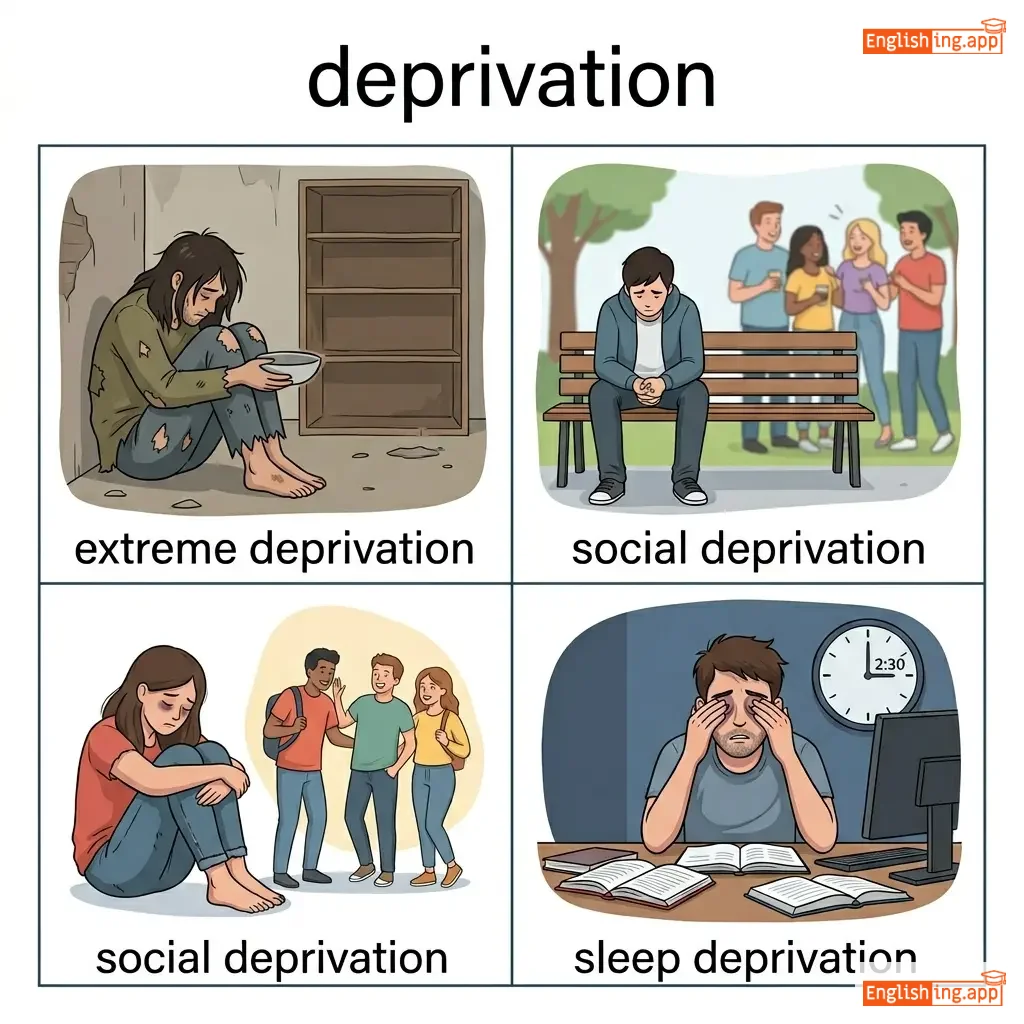
sleep deprivation |
A state of not getting enough sleep.
••••••
|
睡眠不足
suimin busoku
••••••
|
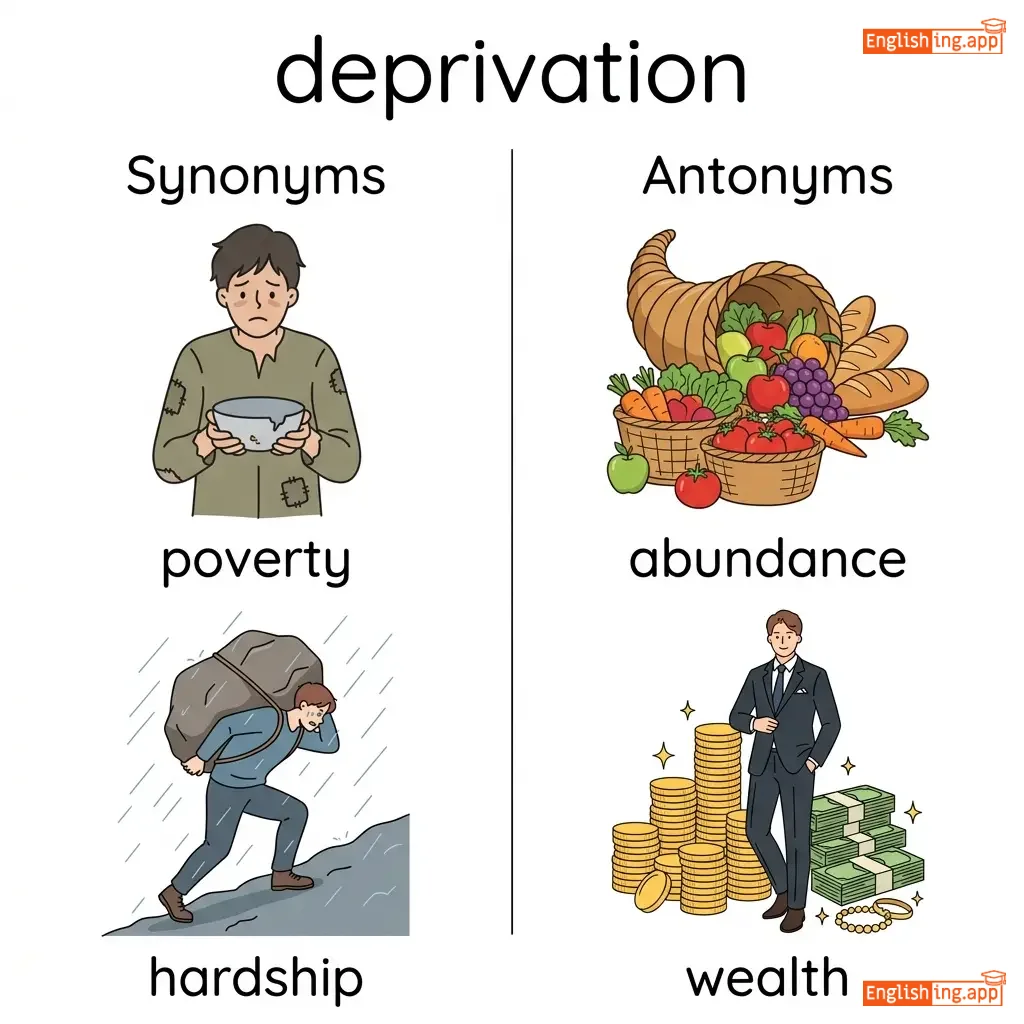
poverty, hardship, lack, deficiency, want
••••••
|
abundance, wealth, plenty
••••••
|
extreme deprivation, social deprivation, sleep deprivation, sensory deprivation
••••••
|
Deprivationはderive + provisionがない=欠乏。
••••••
|
|
#2336
😔
|
/dɪˈprɛʃən/
noun
(デプレッション)
••••••
|
- •••••• |
デプレッション
depresshon
••••••
|
- •••••• | - •••••• | - •••••• | - •••••• |
A state of severe sadness or hopelessness; also a prolonged downturn in economic activity.
••••••
|
She has been battling depression for several months. |
彼女は数ヶ月間、デプレッションと戦っています。
Kanojo wa suukagetsu kan, depresshon to tatakatteimasu.
••••••
|
economic depression |
A long-term downturn in economic activity.
••••••
|
経済的なデプレッション
keizaiteki na depresshon
••••••
|
melancholy, sadness, gloom, slump, recession
••••••
|
happiness, joy, boom
••••••
|
suffer from depression, clinical depression, deep depression, economic depression
••••••
|
デプレッション = deep + pressure = 心の深い圧力感。
••••••
|
|
#2337
😔
|
/dɪˈprɛst/
adjective
(ディプレスド)
••••••
|
- •••••• |
落ち込んでいる
ochikondeiru
••••••
|
- •••••• | - •••••• | - •••••• | - •••••• |
Feeling very sad and without hope; in a state of unhappiness.
••••••
|
She felt depressed after losing her job. |
彼女は仕事を失った後、落ち込んでいました。
Kanojo wa shigoto o ushinatta ato, ochikondeimashita.
••••••
|
feeling blue |
Feeling sad or unhappy.
••••••
|
ブルーな気分
burū na kibun
••••••
|
sad, downcast, gloomy, unhappy, melancholic
••••••
|
happy, cheerful, joyful
••••••
|
deeply depressed, clinically depressed, depressed mood
••••••
|
落ち込んでいるのは仕事を失った後、ブルーな気分になるからです。
••••••
|
|
#2338
💊
|
/dɪˈprɛsənt/
noun
(抑制剤)
••••••
|
- •••••• |
抑制剤
yokuseizai
••••••
|
- •••••• | - •••••• | - •••••• | - •••••• |
A drug that reduces functional or nervous activity in the body.
••••••
|
Alcohol acts as a depressant on the central nervous system.
アルコールは中枢神経系に抑制剤として作用します。
••••••
|
アルコールは中枢神経系に抑制剤として作用します。
Arukōru wa chūsū shinkei-kei ni yokuseizai to shite sayō shimasu.
••••••
|
- •••••• | - •••••• | - •••••• |
sedative, tranquilizer, downer, suppressant
••••••
|
stimulant, energizer
••••••
|
depressant effect, central depressant, depressant drugs
••••••
|
抑制剤は心を落ち着ける、眠気薬のように。
••••••
|
|
#2339
😞
|
/dɪˈprɛs/
verb
(デプレス)
••••••
|
- •••••• |
落ち込ませる
ochikomaseru
••••••
|
depressed
デプレスト
••••••
|
depressed
デプレスト
••••••
|
depresses
デプレッシズ
••••••
|
depressing
デプレッシング
••••••
|
To make someone feel sad or without hope; to reduce the level or strength of something.
••••••
|
The gloomy weather tends to depress people.
陰鬱な天気は人々を落ち込ませる傾向がある。
••••••
|
陰鬱な天気は人々を落ち込ませる傾向がある。
In'utsu na tenki wa hitobito o ochikomaseru keikou ga aru.
••••••
|
press down
押し下げる
••••••
|
To push something down physically or emotionally.
••••••
|
押し下げる
oshisageru
••••••
|
sadden, discourage, lower, weaken, deject
••••••
|
encourage, uplift, inspire
••••••
|
depress the economy, depress the price, deeply depress, depress mood
••••••
|
Depressは押し下げるという意味 - 落ち込ませるも気分を押し下げる。
••••••
|
|
#2340
⚔️
|
/ˌdɛprɪˈdeɪʃən/
noun
(デプレデイション)
••••••
|
- •••••• |
略奪
ryakudatsu
••••••
|
- •••••• | - •••••• | - •••••• | - •••••• |
An act of attacking or plundering; damage caused by such acts.
••••••
|
The villagers feared the depredation of wild animals at night. |
村人たちは夜間の野生動物の略奪を恐れていた。
Murabito-tachi wa yakan no yasei dōbutsu no ryakudatsu o osorete ita.
••••••
|
- •••••• | - •••••• | - •••••• |
plunder, raid, destruction, pillage, devastation
••••••
|
protection, preservation, safeguard
••••••
|
depredation of war, animal depredation, depredation on crops
••••••
|
Depredation は略奪と破壊を連想させる。
••••••
|
Vocabulary Quiz
Test your vocabulary by matching words with their translations or meanings.
Login to take the quiz
Comments (0)
Share your thoughts and join the discussion.
Join the discussion by logging in
Login to CommentNo comments yet
Be the first to share your thoughts!