

翻訳
過去
過去分詞
三人称単数
動名詞
意味
例文
例文の翻訳
同義語
対義語
コロケーション
ニーモニック
Swipe left or right, or use the buttons. Tap image to zoom.
例文の翻訳
単語
Lesson 349Lesson 349 - マスクトグル
|
絵文字
|
単語 | Images | 翻訳 | 過去 | 過去分詞 | 三人称単数 | 動名詞 | 意味 | 例文 | 例文の翻訳 | 表現例 | 表現例の意味 | 表現例の翻訳 | 同義語 | 対義語 | コロケーション | ニーモニック |
|---|---|---|---|---|---|---|---|---|---|---|---|---|---|---|---|---|---|
|
#10435
👀
|
/əˈwɛər/
adjective
(アウェア)
••••••
|
- •••••• |
気づいている
kizuite iru
••••••
|
- •••••• | - •••••• | - •••••• | - •••••• |
having knowledge or perception of a situation or fact
••••••
|
She is aware of the risks involved. |
彼女はそのリスクに気づいている。
Kanojo wa sono risuku ni kizuite iru.
••••••
|
become aware of |
to realize or gain knowledge about something
••••••
|
気づく
kizuku
••••••
|
conscious, informed, mindful, alert, knowledgeable
••••••
|
unaware, ignorant, oblivious
••••••
|
aware of, fully aware, become aware, make aware
••••••
|
Awareは気づいているという意味👀 — もし気づいていなければ、気づいている(kizuite iru)間違いを犯すかもしれません。
••••••
|
|
#10436
🔑
|
/ˈbeɪsɪkli/
adverb
(ベーシックリー)
••••••
|
- •••••• |
基本的に
kihon teki ni
••••••
|
- •••••• | - •••••• | - •••••• | - •••••• |
in the most important or fundamental way; essentially
••••••
|
Basically, the project was a success despite some small issues. |
基本的に、いくつかの小さな問題があったにもかかわらず、そのプロジェクトは成功でした。
Kihon teki ni, ikutsuka no chiisana mondai ga atta ni mo kakawarazu, sono purojekuto wa seikou deshita.
••••••
|
- •••••• | - •••••• | - •••••• |
essentially, fundamentally, primarily, essentially, in essence
••••••
|
complicatedly, secondarily
••••••
|
basically true, basically correct, basically simple, basically sound
••••••
|
Basically は基本的に重要なこと - 基本的に
••••••
|
|
#10437
🔑
|
/ˈbeɪsɪk/
adjective
(ベーシック)
••••••
|
- •••••• |
基本的
kibanteki
••••••
|
- •••••• | - •••••• | - •••••• | - •••••• |
forming the most important or simplest part of something
••••••
|
She taught me the basic rules of chess. |
彼女は私にチェスの基本的なルールを教えてくれました。
Kanojo wa watashi ni chesu no kibanteki na ruuru wo oshiete kuremashita.
••••••
|
back to basics |
returning to simple, fundamental principles
••••••
|
基本に戻る
kibun ni modoru
••••••
|
fundamental, essential, primary, simple, elementary
••••••
|
advanced, complex, secondary
••••••
|
basic knowledge, basic needs, basic rules, basic skills
••••••
|
Basicは基本的という意味; 'basic needs = 基本的なニーズ'を覚えておこう。
••••••
|
|
#10438
⚾
|
/ˈbeɪsˌbɔːl/
noun
(ベースボール)
••••••
|
- •••••• |
ベースボール
bēsubōru
••••••
|
- •••••• | - •••••• | - •••••• | - •••••• |
a sport in which two teams try to score runs by hitting a ball and running around bases
••••••
|
He loves watching baseball games on TV. |
彼はテレビで野球の試合を見るのが好きです。
Kare wa terebi de yakyū no shiai o miru no ga suki desu.
••••••
|
- •••••• | - •••••• | - •••••• |
sport, game, pastime
••••••
|
work, chore
••••••
|
baseball game, baseball bat, baseball team, baseball player
••••••
|
ベースボールはスポーツを意味します; 'ベースを打って走って得点'を想像して
••••••
|
|
#10439
🛢️
|
/ˈbærəl/
noun
(バレル)
••••••
|
- •••••• |
大樽
o-taru
••••••
|
- •••••• | - •••••• | - •••••• | - •••••• |
a large cylindrical container used to hold liquids
••••••
|
The wine was stored in a wooden barrel. |
ワインは木製の大樽に保管されていた。
Wain wa mokusei no o-taru ni hokan sarete ita.
••••••
|
over a barrel |
in a helpless or difficult situation
••••••
|
困難な状況で
Konnan na joukyou de
••••••
|
cask, drum, keg, container
••••••
|
bottle, flask
••••••
|
oil barrel, wooden barrel, barrel of wine, barrel full
••••••
|
Barrel は大樽を意味し、ワイン用の大きな樽を想像してください。
••••••
|
|
#10440
😬
|
/ˈbɛərli/
adverb
(ベアリー)
••••••
|
- •••••• |
かろうじて
karōjite
••••••
|
- •••••• | - •••••• | - •••••• | - •••••• |
only just; almost not
••••••
|
She barely passed the exam.
彼女はギリギリ試験に合格しました。
••••••
|
彼女はギリギリ試験に合格しました。
Kanojo wa girigiri shiken ni gōkaku shimashita.
••••••
|
- •••••• | - •••••• | - •••••• |
hardly, scarcely, just, narrowly
••••••
|
easily, certainly, clearly
••••••
|
barely enough, barely visible, barely alive, barely noticeable
••••••
|
Barelyはかろうじてという意味で、'かろうじて試験に合格'のように覚えましょう。
••••••
|
|
#10441
🎵
|
/bænd/
noun
(バンド)
••••••
|
- •••••• |
バンド
bando
••••••
|
- •••••• | - •••••• | - •••••• | - •••••• |
a group of musicians who play music together
••••••
|
The band performed live at the concert. |
バンドはコンサートでライブパフォーマンスをしました。
Bando wa konsāto de raibu pafōmansu o shimashita.
••••••
|
band together |
to unite for a common purpose
••••••
|
団結する
danketsu suru
••••••
|
group, ensemble, orchestra, troupe, crew
••••••
|
soloist, individual
••••••
|
rock band, marching band, jazz band, live band
••••••
|
日本語でもバンドは音楽グループ、バンドを思い出す!
••••••
|
|
#10442
⚽
|
/bɔːl/
noun
(ボール)
••••••
|
- •••••• |
ボール
booru
••••••
|
- •••••• | - •••••• | - •••••• | - •••••• |
a round object used in games or sports
••••••
|
The children played with a ball in the park. |
子供たちは公園でボールで遊びました。
Kodomotachi wa kouen de booru de asobimashita.
••••••
|
have a ball |
to have a very enjoyable time
••••••
|
楽しむ
tanoshimu
••••••
|
sphere, globe, orb, pellet, boule
••••••
|
cube, block
••••••
|
football, throw the ball, tennis ball, ball game
••••••
|
Ballはボールを意味し、'ボールで遊んで楽しむ'という意味です。
••••••
|
|
#10443
⚖️
|
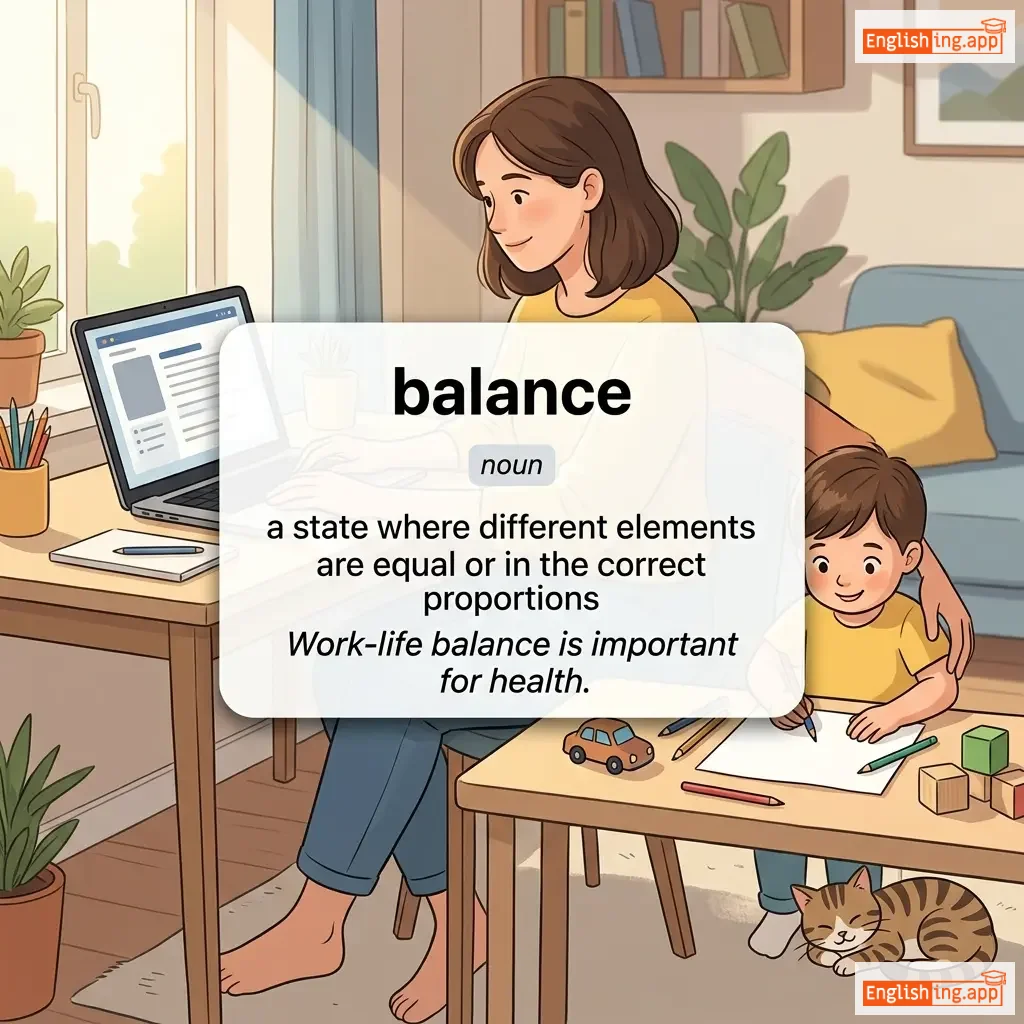
/ˈbæləns/
noun
(バランス)
••••••
|
|
バランス
baransu
••••••
|
- •••••• | - •••••• | - •••••• | - •••••• |
a state where different elements are equal or in the correct proportions
••••••
|
Work-life balance is important for health. |
仕事と生活のバランスは健康にとって重要です。
Shigoto to seikatsu no baransu wa kenkō ni totte jūyō desu.
••••••
|
hang in the balance |
to be uncertain or at risk
••••••
|
未確定な状態
mikakutei na jōtai
••••••
|
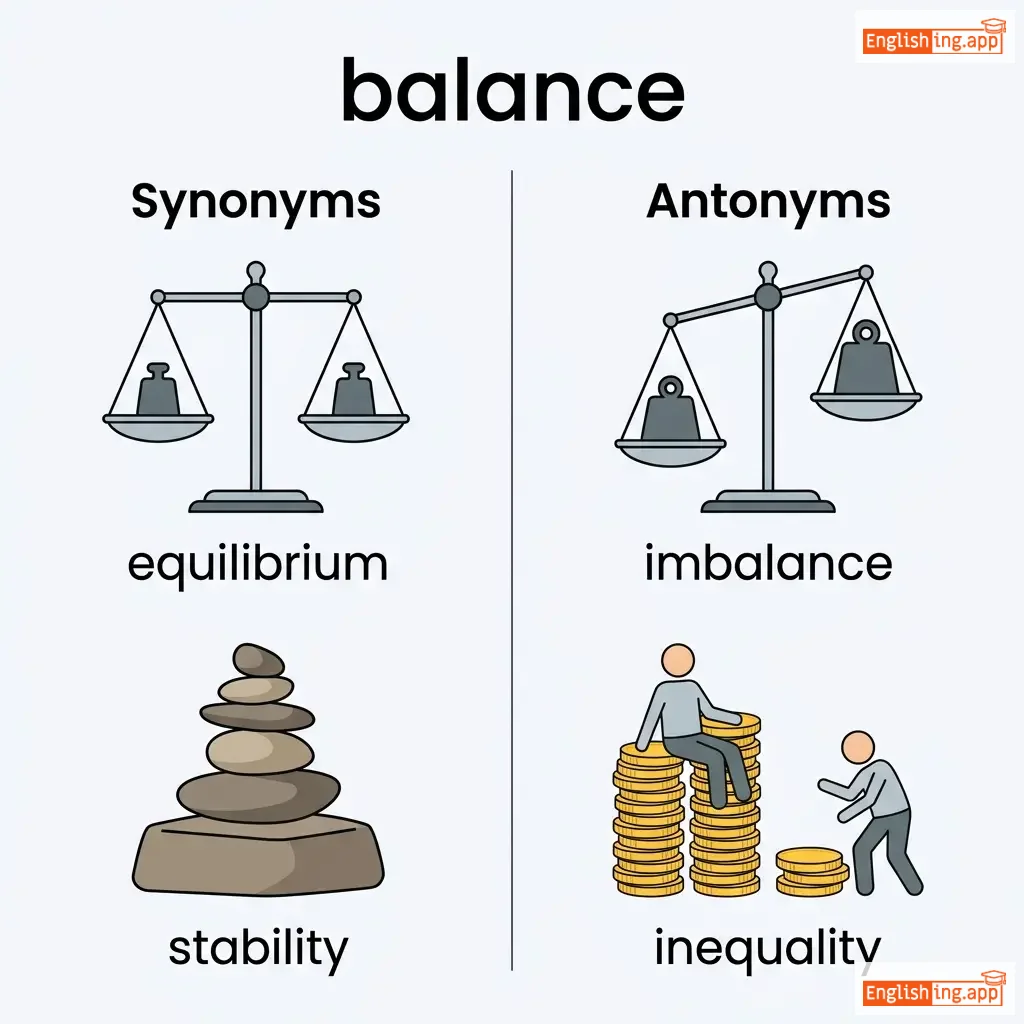
equilibrium, stability, harmony, fairness, symmetry
••••••
|
imbalance, inequality, disorder
••••••
|
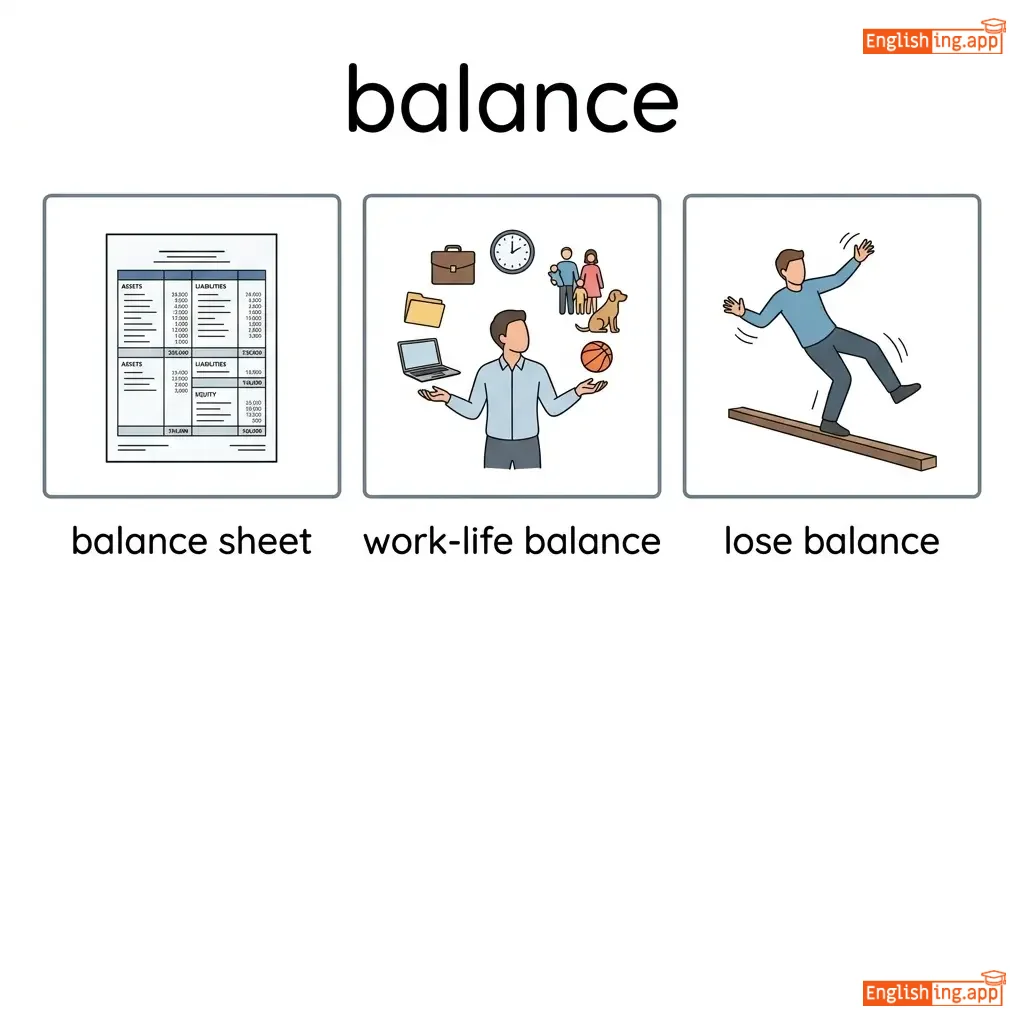
balance sheet, work-life balance, lose balance, maintain balance
••••••
|
日本語でバランスは仕事と生活の調和を意味します。
••••••
|
|
#10444
🍞
|
/beɪk/
verb
(ベイク)
••••••
|
- •••••• |
焼く
yaku
••••••
|
baked
ベイクド
••••••
|
baked
ベイクド
••••••
|
bakes
ベイクス
••••••
|
baking
ベイキング
••••••
|
to cook food using dry heat, usually in an oven
••••••
|
She baked a cake for her friend's birthday.
彼女は友達の誕生日のためにケーキを焼きました。
••••••
|
彼女は友達の誕生日のためにケーキを焼きました。
Kanojo wa tomodachi no tanjōbi no tame ni kēki o yakimashita.
••••••
|
half-baked idea
半分焼けたアイデア
••••••
|
a poorly thought out idea
••••••
|
半焼きのアイデア
han yaki no aidea
••••••
|
cook, roast, grill, prepare, brown
••••••
|
freeze, chill
••••••
|
bake a cake, bake bread, bake cookies, freshly baked
••••••
|
焼くはケーキを作る意味、日本語で「ケーキを焼こう」。
••••••
|
|
#10445
👜
|
/bæɡ/
noun
(バッグ)
••••••
|
- •••••• |
バッグ
baggu
••••••
|
- •••••• | - •••••• | - •••••• | - •••••• |
a container made of flexible material, used for carrying items
••••••
|
She carried her books in a bag.
彼女は本をバッグに入れて持ち運んだ。
••••••
|
彼女は本をバッグに入れて持ち運んだ。
Kanojo wa hon o baggu ni irete mochi hakonda.
••••••
|
let the cat out of the bag
猫を袋から出す
••••••
|
to reveal a secret
••••••
|
秘密を明かす
himitsu o akasu
••••••
|
sack, pouch, backpack, handbag, tote
••••••
|
box, case
••••••
|
plastic bag, shopping bag, school bag, travel bag
••••••
|
バッグ、'本をバッグに入れる'のように。
••••••
|
|
#10446
😞
|
/ˈbædli/
adverb
(バッドリー)
••••••
|
- •••••• |
悪く
waruku
••••••
|
- •••••• | - •••••• | - •••••• | - •••••• |
in a way that is not good; poorly or severely
••••••
|
He performed badly in the exam.
彼は試験でひどい成績を取った。
••••••
|
彼は試験でひどい成績を取った。
Kare wa shiken de hidoi seiseki wo totta.
••••••
|
badly off
困った状態
••••••
|
to be in a poor or difficult situation
••••••
|
困った状況にいる
komatta joukyou ni iru
••••••
|
poorly, severely, inadequately, wrongly, defectively
••••••
|
well, successfully, adequately
••••••
|
badly hurt, badly damaged, badly need, badly affected
••••••
|
Badlyは悪くという意味で、テストで悪い結果を出すときに 'badly done'と言います。
••••••
|
|
#10447
🌄
|
/ˈbækɡraʊnd/
noun
(バックグラウンド)
••••••
|
- •••••• |
背景
haikei
••••••
|
- •••••• | - •••••• | - •••••• | - •••••• |
the circumstances, environment, or past history of a person or thing; the part behind the main subject in an image
••••••
|
She comes from a strong academic background.
彼女は強力な学問的バックグラウンドを持っています。
••••••
|
彼女は強力な学問的背景を持っています。
Kanojo wa kyōryokuna gakumon-teki haikei o motteimasu.
••••••
|
in the background
バックグラウンドで
••••••
|
happening without attracting much attention
••••••
|
バックグラウンドで
bakkuraundo de
••••••
|
history, context, setting, backdrop, environment
••••••
|
foreground, spotlight
••••••
|
family background, cultural background, background noise, background information
••••••
|
Background 🌄 は背景を意味します — 画像の中で、背景は主要な対象の後ろにあります (haikei)。
••••••
|
|
#10448
👶
|
/ˈbeɪbi/
noun
(ベビー)
••••••
|
- •••••• |
赤ちゃん
akachan
••••••
|
- •••••• | - •••••• | - •••••• | - •••••• |
a very young child, especially one newly or recently born
••••••
|
The baby is sleeping peacefully in the crib. |
赤ちゃんはベビーベッドで静かに寝ています。
Akachan wa bebiibeddo de shizuka ni neteimasu.
••••••
|
cry like a baby |
to cry loudly and uncontrollably
••••••
|
赤ちゃんのように泣く
Akachan no you ni naku
••••••
|
infant, child, newborn, toddler
••••••
|
adult, grown-up
••••••
|
baby boy, baby girl, baby food, baby care
••••••
|
Baby 👶 は日本語で赤ちゃん、かわいくて無敵の存在です!
••••••
|
|
#10449
💡
|
/əˈwɛərnəs/
noun
••••••
|
|
- •••••• | - •••••• | - •••••• | - •••••• | - •••••• |
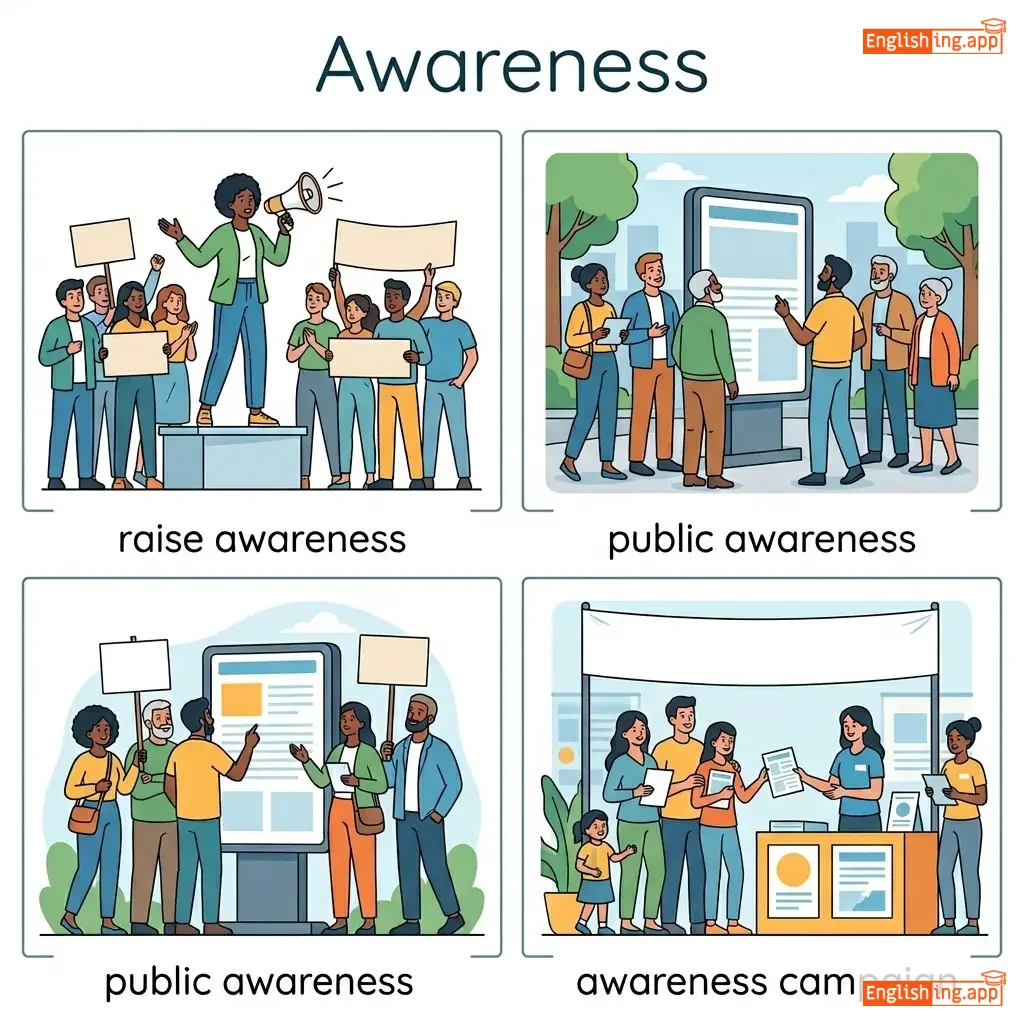
knowledge or perception of a situation, fact, or issue
••••••
|
Public awareness of climate change is increasing. |
- •••••• |
raise awareness |
to make people more conscious about an issue
••••••
|
- •••••• |
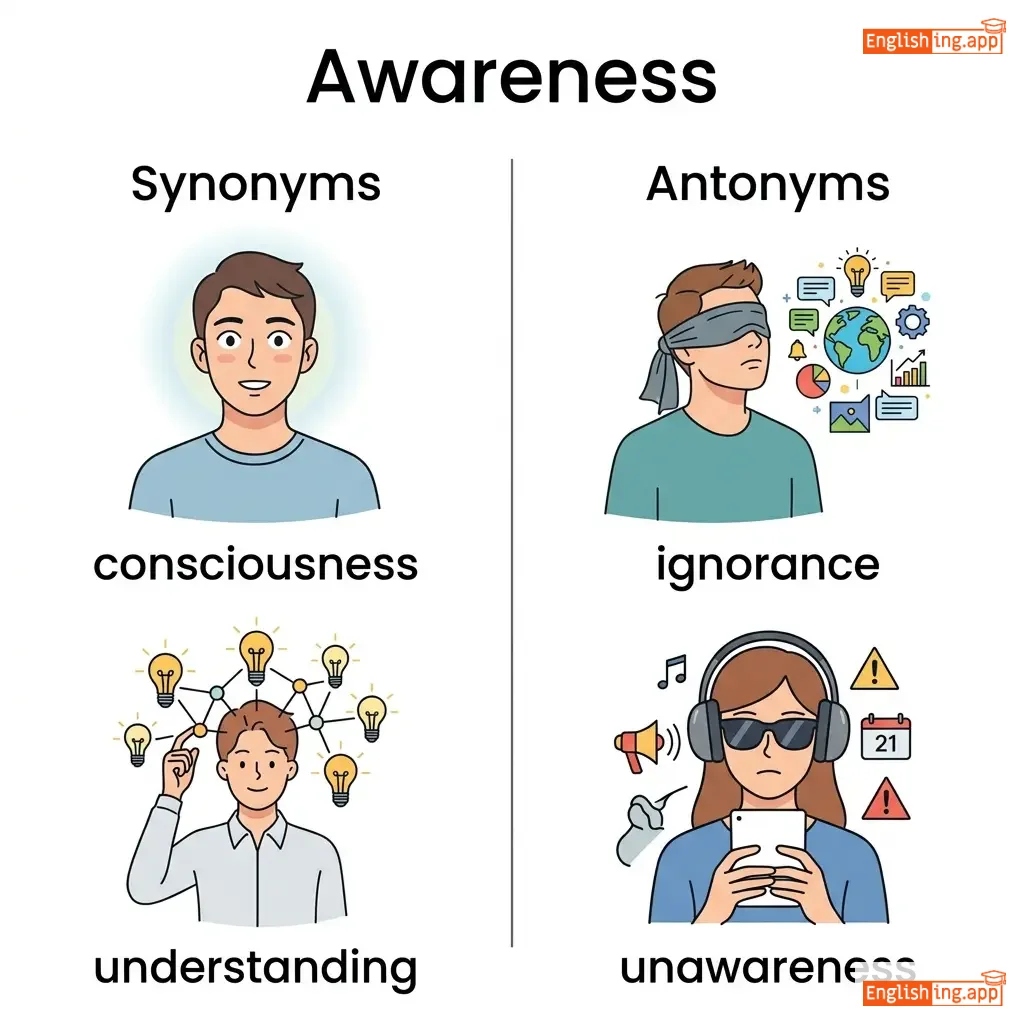
consciousness, understanding, recognition, mindfulness
••••••
|
ignorance, unawareness
••••••
|
raise awareness, public awareness, awareness campaign, awareness level
••••••
|
No •••••• |
|
#10450
🏋️
|
/æθˈlɛtɪk/
adjective
(アスレチック)
••••••
|
- •••••• |
アスレチックな、力強い
asuretikkuna, chikara-zuyoi
••••••
|
- •••••• | - •••••• | - •••••• | - •••••• |
physically strong, fit, and active; related to athletes or sports
••••••
|
She has an athletic body because she exercises regularly.
彼女は定期的に運動しているので、アスレチックな体を持っています。
••••••
|
彼女は定期的に運動しているので、アスレチックな体を持っています。
Kanojo wa teikiteki ni undō shiteiru node, asurettikku na karada o motteimasu.
••••••
|
athletic build
アスレチック体型
••••••
|
a body type that is muscular and fit
••••••
|
アスレチック体型
asurettikku taikei
••••••
|
fit, strong, active, sporty, muscular
••••••
|
weak, unfit, frail
••••••
|
athletic body, athletic skills, athletic ability, athletic performance
••••••
|
アスレチックはジムの体 💪 - フィットしていて活発!
••••••
|
|
#10451
🏆
|
/əˈwɔːrd/
noun/verb
(アワード)
••••••
|
- •••••• |
賞
shou
••••••
|
awarded
アワーデッド
••••••
|
awarded
アワーデッド
••••••
|
awards
アワーズ
••••••
|
awarding
アワーディング
••••••
|
a prize or recognition given for an achievement; to give a prize or recognition
••••••
|
She received an award for her outstanding performance.
彼女は優れたパフォーマンスで賞を受けました。
••••••
|
彼女は優れたパフォーマンスで賞を受けました。
Kanojo wa sugureta pafōmansu de shō o ukemashita.
••••••
|
win an award
賞を取る
••••••
|
to receive recognition or a prize for an achievement
••••••
|
賞を取る
shou o toru
••••••
|
prize, honor, trophy, recognition, accolade
••••••
|
penalty, punishment
••••••
|
receive an award, present an award, award ceremony, award-winning
••••••
|
Award は 🏆 賞 という意味です — 努力すれば賞 (shou) をもらえます!
••••••
|
|
#10452
🙅
|
/əˈvɔɪd/
verb
(アヴォイド)
••••••
|
- •••••• |
避ける
sakeru
••••••
|
avoided
アヴォイデッド
••••••
|
avoided
アヴォイデッド
••••••
|
avoids
アヴォイッズ
••••••
|
avoiding
アヴォイディング
••••••
|
To keep away from or stop oneself from doing something.
••••••
|
He tries to avoid junk food.
彼はジャンクフードを避けようとしています。
••••••
|
彼はジャンクフードを避けようとしています。
Kare wa janku fūdo o sakeyō to shiteimasu.
••••••
|
avoid like the plague
疫病のように避ける
••••••
|
To stay far away from something or someone.
••••••
|
疫病のように避ける
Ekyō no yō ni sakeru
••••••
|
evade, escape, dodge, shun, bypass
••••••
|
face, confront, seek
••••••
|
avoid conflict, avoid risk, avoid mistakes, avoid responsibility
••••••
|
避ける=ジャンクフードを避けて健康を守ろう!
••••••
|
|
#10453
✅
|
/əˈveɪləbl/
adjective
(アヴェイラブル)
••••••
|
- •••••• |
利用可能
riyō kanō
••••••
|
- •••••• | - •••••• | - •••••• | - •••••• |
Able to be used, obtained, or accessed.
••••••
|
The product is now available in all stores. |
その製品はすべての店舗で利用可能です。
Sono seihin wa subete no tenpo de riyō kanō desu.
••••••
|
readily available |
Easy to obtain or use.
••••••
|
簡単に利用可能
kantan ni riyō kanō
••••••
|
accessible, obtainable, ready, at hand, convenient
••••••
|
unavailable, inaccessible, limited
••••••
|
make available, available resources, available information, readily available
••••••
|
利用可能は、'リオ'と覚えて、簡単に手に入るもの。
••••••
|
|
#10454
🚗
|
/ˈɔːtoʊ/
noun
(オート)
••••••
|
- •••••• |
オート
o-to
••••••
|
- •••••• | - •••••• | - •••••• | - •••••• |
A motor vehicle, especially a car.
••••••
|
He drove his auto to the market.
彼はオートで市場に行きました。
••••••
|
彼はオートで市場に行きました。
Kare wa o-to de shijou ni ikimashita.
••••••
|
auto industry
自動車産業
••••••
|
The industry that designs, manufactures, and sells cars.
••••••
|
自動車産業
jidousha sangyou
••••••
|
car, automobile, vehicle, motorcar
••••••
|
bicycle, pedestrian
••••••
|
auto repair, auto industry, auto parts, auto shop
••••••
|
Auto(オート)といえば車、まさに自動車産業のこと!
••••••
|
|
#10455
✍️
|
/ˈɔːθər/
noun
(オーサー)
••••••
|
- •••••• |
著者
chosha
••••••
|
- •••••• | - •••••• | - •••••• | - •••••• |
A person who writes books, articles, or other literary works.
••••••
|
She is the author of several bestselling novels. |
彼女は何冊かのベストセラー小説の著者です。
Kanojo wa nansatsu ka no besutoserā shōsetsu no chosha desu.
••••••
|
author of one's own fate |
To be responsible for shaping one's own future.
••••••
|
自分の運命の著者
Jibun no unmei no chosha
••••••
|
writer, novelist, creator, originator, composer
••••••
|
reader, follower
••••••
|
famous author, best-selling author, author of a book, aspiring author
••••••
|
Author は著者を意味する — Author は書き、他の人が読む。
••••••
|
|
#10456
👥
|
/ˈɔːdiəns/
noun
(オーディエンス)
••••••
|
- •••••• |
観客
kankyaku
••••••
|
- •••••• | - •••••• | - •••••• | - •••••• |
A group of people who gather to watch, listen to, or experience a performance, event, or broadcast.
••••••
|
The audience clapped loudly after the performance. |
パフォーマンス後、観客は大きな拍手を送った。
Pafōmansu go, kankyaku wa ōkina hakushu o okutta.
••••••
|
captive audience |
An audience that has no choice but to listen or pay attention.
••••••
|
囚われの観客
toraware no kankyaku
••••••
|
spectators, viewers, listeners, crowd, public
••••••
|
performer, speaker
••••••
|
large audience, live audience, attract an audience, audience reaction
••••••
|
オーディエンスは公演を観るために集まった人々、例えば大きなホールにいる観客のように。
••••••
|
|
#10457
🧲
|
/əˈtrækt/
verb
(アトラクト)
••••••
|
- •••••• |
引き付ける
hikitsukeru
••••••
|
attracted
アトラクテッド
••••••
|
attracted
アトラクテッド
••••••
|
attracts
アトラクツ
••••••
|
attracting
アトラキン
••••••
|
to cause someone to have interest or draw something towards
••••••
|
The flowers attract bees with their bright colors.
ザ・フラワーズ アトラクト ビーズ ウィズ ゼア ブライト カラーズ。
••••••
|
花はその鮮やかな色で蜂を引き寄せます。
Hana wa sono azayakana iro de hachi o hikiyosemasu.
••••••
|
attract attention
アトラクト アテンション
••••••
|
to cause people to notice
••••••
|
注目を集める
chūmoku o atsumeru
••••••
|
draw, allure, entice, fascinate
••••••
|
repel, deter, reject
••••••
|
attract customers, attract investment, attract tourists, attract attention
••••••
|
引き付けるは花が蜂を引き寄せるように。
••••••
|
|
#10458
⚖️
|
/əˈtɜːrni/
noun
(アトーニー)
••••••
|
- •••••• |
弁護士
bengoshi
••••••
|
- •••••• | - •••••• | - •••••• | - •••••• |
a person who practices law; a lawyer
••••••
|
She hired an attorney to represent her in court. |
彼女は裁判所で彼女を代表するために弁護士を雇いました。
Kanojo wa saibansho de kanojo o daihyō suru tame ni bengoshi o yatomimashita.
••••••
|
power of attorney |
the legal authority to act for another person
••••••
|
委任状
ininjō
••••••
|
lawyer, advocate, counsel, solicitor
••••••
|
client, defendant
••••••
|
defense attorney, criminal attorney, power of attorney, hire attorney
••••••
|
Attorneyは日本語で弁護士, 弁護士は法廷であなたを代表します。
••••••
|
|
#10459
👀
|
/əˈtɛnʃən/
noun
(アテンション)
••••••
|
- •••••• |
注意
chuui
••••••
|
- •••••• | - •••••• | - •••••• | - •••••• |
the act of focusing on something or someone
••••••
|
The teacher asked for the students' attention. |
先生は学生の注意を求めました。
Sensei wa gakusei no chuui o motomemashita.
••••••
|
pay attention |
to listen or concentrate carefully
••••••
|
注意を払う
chuui o harau
••••••
|
focus, notice, concentration, regard
••••••
|
ignore, neglect, inattention
••••••
|
draw attention, attract attention, pay attention, special attention
••••••
|
Attentionは日本語で注意、つまり集中することです。
••••••
|
|
#10460
🎓
|
/əˈtɛnd/
verb
(アテンド)
••••••
|
|
参加する
sanka suru
••••••
|
attended
アテンドしました
••••••
|
attended
アテンドしました
••••••
|
attends
アテンドします
••••••
|
attending
アテンドしている
••••••
|
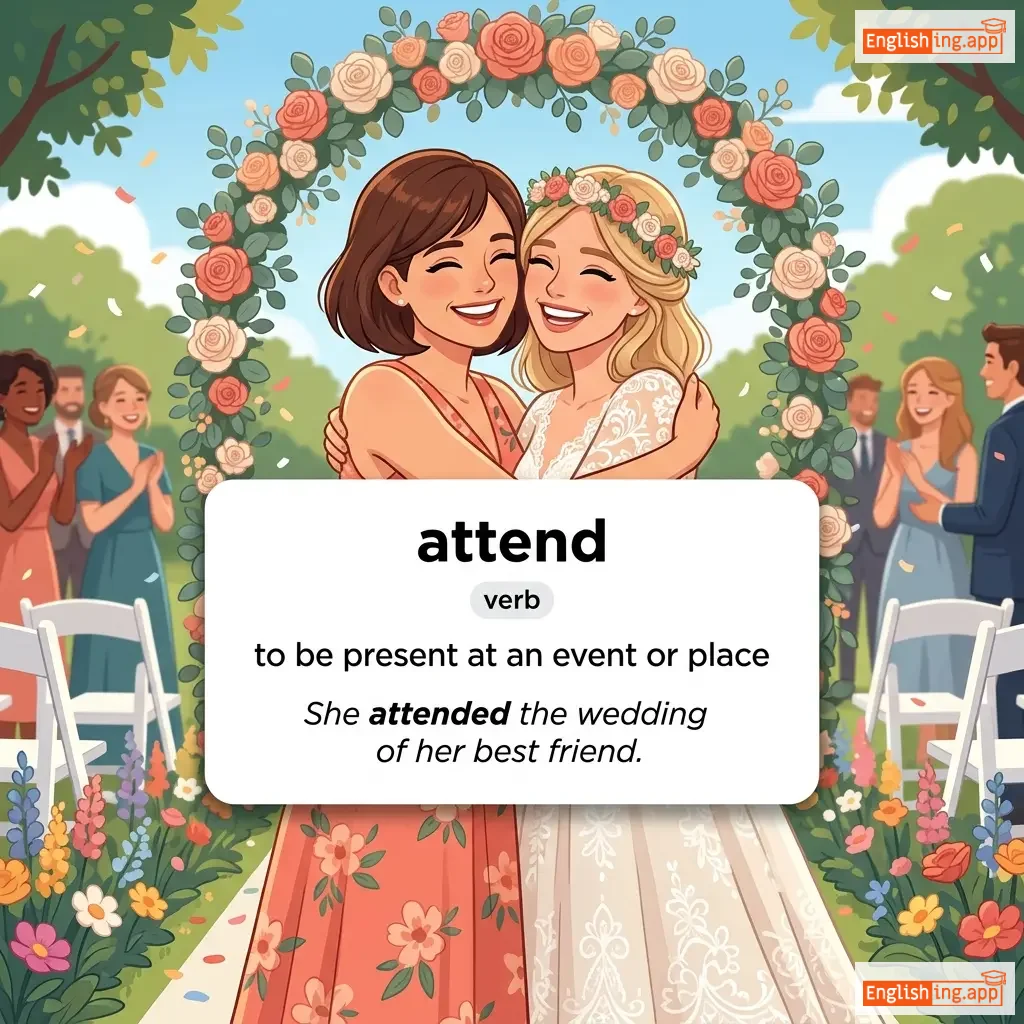
to be present at an event or place
••••••
|
She attended the wedding of her best friend.
彼女は親友の結婚式に出席しました。
••••••
|
彼女は親友の結婚式に出席しました。
Kanojo wa shinyuu no kekkonshiki ni shusseki shimashita.
••••••
|
attend to
アテンドする
••••••
|
to deal with or take care of something
••••••
|
注意を払う
chuui o harau
••••••
|
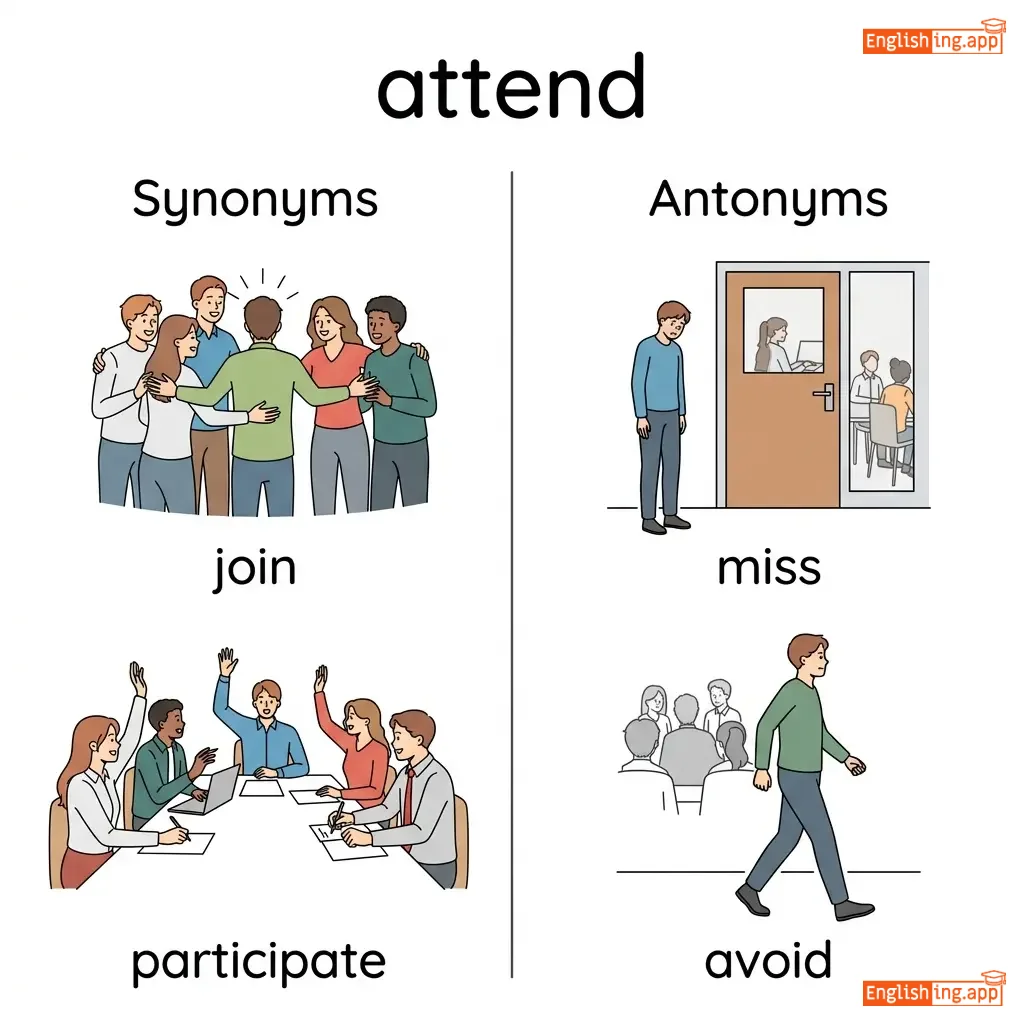
join, participate, visit, appear
••••••
|
miss, avoid, neglect
••••••
|
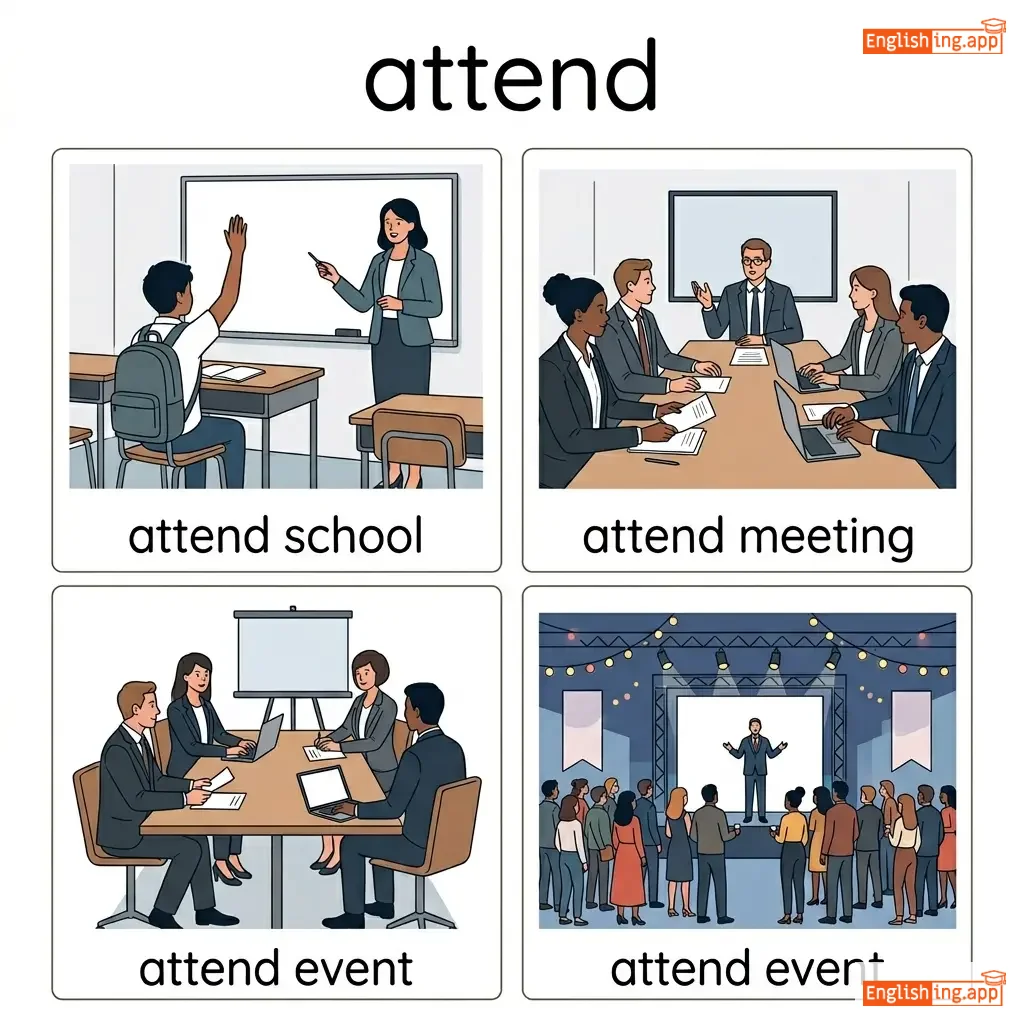
attend school, attend meeting, attend event, attend function
••••••
|
参加するのは、イベントに出席することです。
••••••
|
|
#10461
🎯
|
/əˈtɛmpt/
verb
••••••
|
- •••••• | - •••••• |
attempted
••••••
|
attempted
••••••
|
attempts
••••••
|
attempting
••••••
|
to make an effort to achieve or complete something difficult
••••••
|
He attempted to climb the mountain despite the bad weather. |
- •••••• |
make an attempt |
to try to do something
••••••
|
- •••••• |
try, endeavor, undertake, pursue, strive
••••••
|
ignore, neglect, avoid
••••••
|
attempt to do, failed attempt, first attempt, serious attempt
••••••
|
No •••••• |
|
#10462
⚔️
|
/əˈtæk/
verb
(アタック)
••••••
|
|
攻撃する
kōgeki suru
••••••
|
attacked
アタックド
••••••
|
attacked
アタックド
••••••
|
attacks
アタックス
••••••
|
attacking
アタッキング
••••••
|
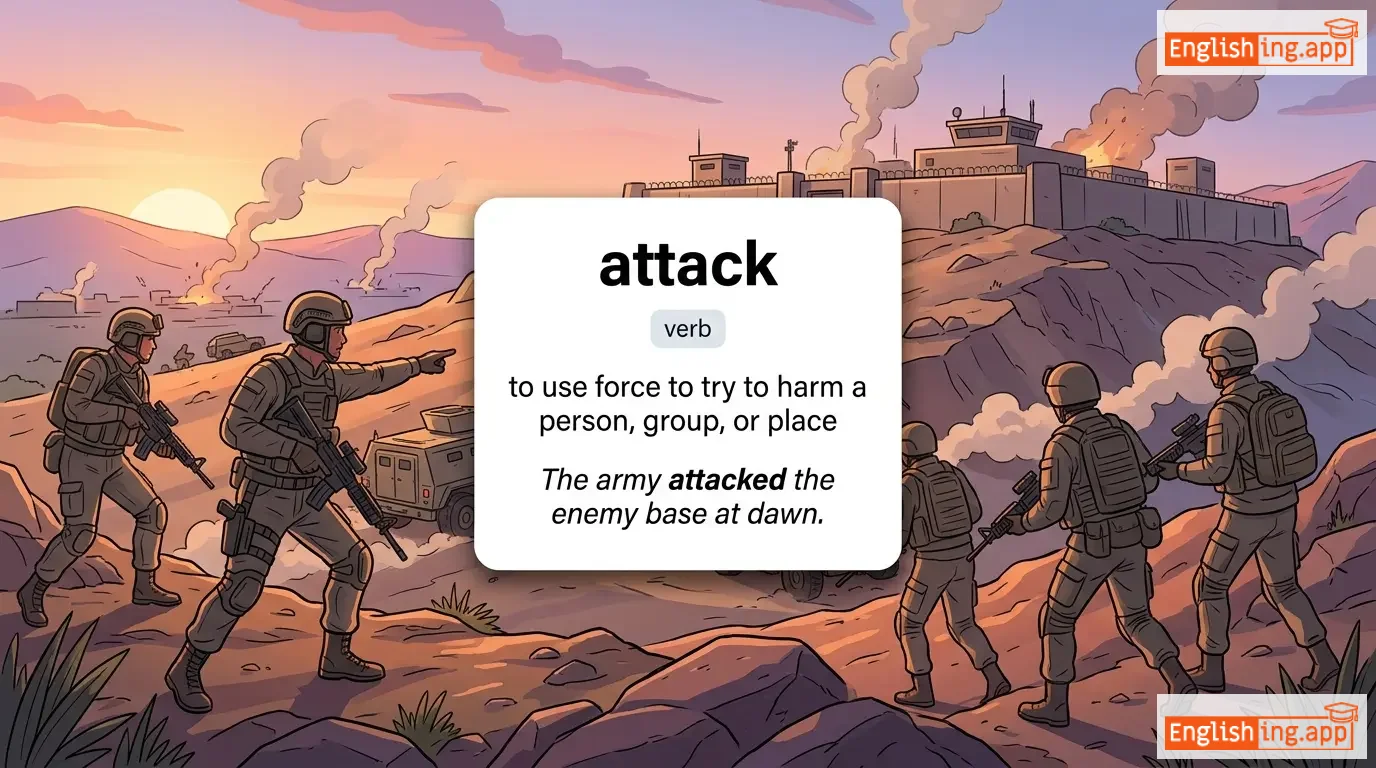
to use force to try to harm a person, group, or place
••••••
|
The army attacked the enemy base at dawn.
軍隊は夜明けに敵基地を攻撃した。
••••••
|
軍隊は夜明けに敵基地を攻撃した。
Guntai wa yoake ni teki kichi o kōgeki shita.
••••••
|
heart attack
心臓発作
••••••
|
a sudden serious medical condition when the heart stops working properly
••••••
|
心臓発作
shinzō hossa
••••••
|
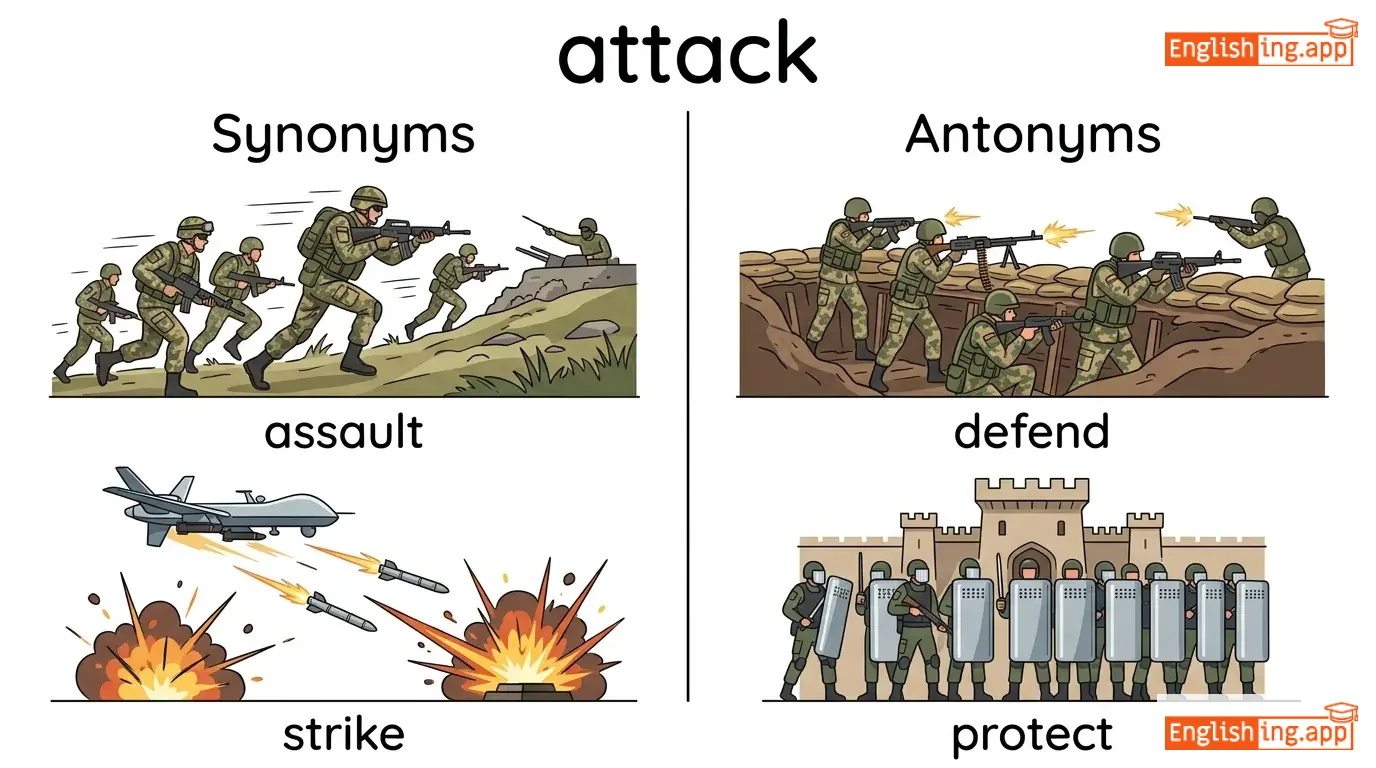
assault, strike, charge, raid, ambush
••••••
|
defend, protect, guard
••••••
|
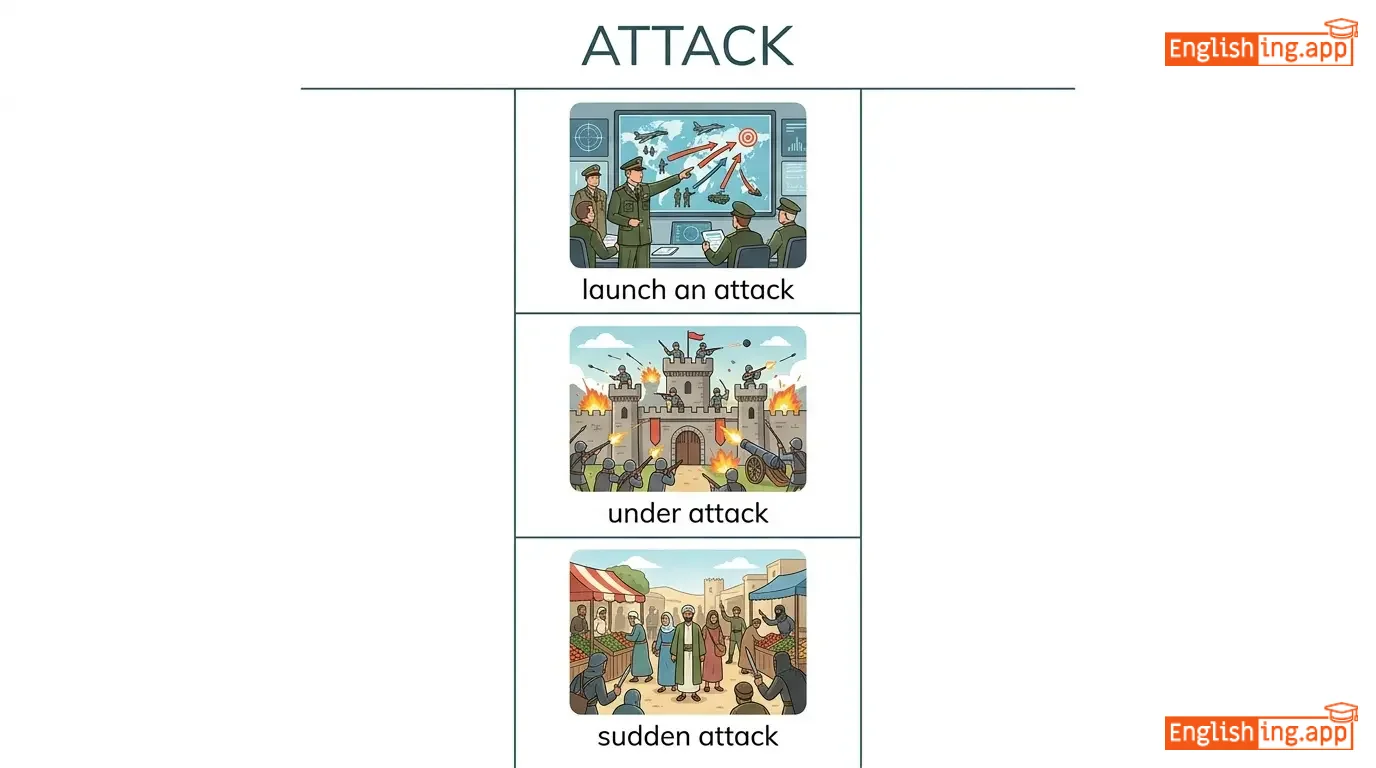
launch an attack, under attack, sudden attack, heart attack
••••••
|
攻撃する = 最初の一歩を踏み出すこと!⚔️
••••••
|
|
#10463
📎
|
/əˈtætʃ/
verb
(アタッチ)
••••••
|
- •••••• |
添付する
tenpu suru
••••••
|
attached
アタッチド
••••••
|
attached
アタッチド
••••••
|
attaches
アタッチズ
••••••
|
attaching
アタッチング
••••••
|
to join or fasten something to another thing
••••••
|
Please attach the document to the email before sending.
送信する前に、ドキュメントをメールに添付してください。
••••••
|
送信する前に、ドキュメントをメールに添付してください。
Sōshin suru mae ni, dokyumento o mēru ni tenpu shite kudasai.
••••••
|
emotionally attached
感情的に結びついている
••••••
|
having strong emotional feelings towards someone or something
••••••
|
感情的に結びついている
kanjōteki ni musubitsuite iru
••••••
|
connect, join, fasten, fix, link
••••••
|
detach, remove, separate
••••••
|
attach a file, attach importance, attach a label, attach responsibility
••••••
|
Attachは物をクリップで付けるようなもの📎。
••••••
|
|
#10464
🌍
|
/ˈætməsfɪər/
noun
(アトモスフィア)
••••••
|
- •••••• |
大気
taiki
••••••
|
- •••••• | - •••••• | - •••••• | - •••••• |
the layer of gases surrounding the Earth; the mood or feeling of a place
••••••
|
The restaurant had a warm and welcoming atmosphere. |
レストランには温かくて歓迎的な雰囲気がありました。
Resutoran ni wa atatakakute kangei-teki na fun'iki ga arimashita.
••••••
|
tense atmosphere |
a stressful or uneasy environment
••••••
|
緊張した雰囲気
kinchou shita fun'iki
••••••
|
environment, mood, climate, aura, ambience
••••••
|
emptiness, vacuum
••••••
|
earth's atmosphere, friendly atmosphere, tense atmosphere, atmosphere of peace
••••••
|
Atmosphere = 空気 + 場所のムード
••••••
|
Vocabulary Quiz
Test your vocabulary by matching words with their translations or meanings.
Login to take the quiz
Comments (0)
Share your thoughts and join the discussion.
Join the discussion by logging in
Login to CommentNo comments yet
Be the first to share your thoughts!