

翻訳
過去
過去分詞
三人称単数
動名詞
意味
例文
例文の翻訳
同義語
対義語
コロケーション
ニーモニック

Swipe left or right, or use the buttons. Tap image to zoom.
例文の翻訳
単語
Lesson 417Lesson 417 - マスクトグル
|
絵文字
|
単語 | Images | 翻訳 | 過去 | 過去分詞 | 三人称単数 | 動名詞 | 意味 | 例文 | 例文の翻訳 | 表現例 | 表現例の意味 | 表現例の翻訳 | 同義語 | 対義語 | コロケーション | ニーモニック |
|---|---|---|---|---|---|---|---|---|---|---|---|---|---|---|---|---|---|
|
#1
🙇
|
/baʊ/ (verb), /boʊ/ (noun)
verb
(バウ)
••••••
|
- •••••• |
お辞儀
ojigi
••••••
|
bowed
バウド
••••••
|
bowed
バウド
••••••
|
bows
バウズ
••••••
|
bowing
バウイング
••••••
|
to bend the upper part of the body forward as a sign of respect or greeting.
••••••
|
The performer bowed deeply after the show.
パフォーマーはショーの後に深くお辞儀をしました。
••••••
|
パフォーマーはショーの後に深くお辞儀をしました。
Pafōmā wa shō no ato ni fukaku ojigi o shimashita.
••••••
|
bow down
お辞儀をする
••••••
|
to show deep respect or submission
••••••
|
深くお辞儀をする
fukaku ojigi o suru
••••••
|
bend, incline, stoop, kneel, nod
••••••
|
stand, rise, resist
••••••
|
bow deeply, bow politely, bow down, bow before
••••••
|
お辞儀をすると敬意や挨拶を示します。
••••••
|
|
#1
🚕
|
/kæb/
noun
(キャブ)
••••••
|
- •••••• |
タクシー
takushī
••••••
|
- •••••• | - •••••• | - •••••• | - •••••• |
a taxi or car for hire with a driver
••••••
|
We took a cab to the airport. |
空港までタクシーで行きました。
Kūkō made takushī de ikimashita.
••••••
|
hail a cab |
to signal or call a taxi to stop
••••••
|
タクシーを呼ぶ
takushī o yobu
••••••
|
taxi, taxi cab, ride, car, vehicle
••••••
|
bus, train
••••••
|
cab driver, yellow cab, take a cab, call a cab
••••••
|
Cab = タクシー、両方ともあなたを目的地に運びます!
••••••
|
|
#1
🦋
|
/ˈbʌtərflaɪ/
noun
(bātāfurai)
••••••
|
- •••••• |
蝶々
chōchō
••••••
|
- •••••• | - •••••• | - •••••• | - •••••• |
an insect with large, often brightly colored wings that flies during the day
••••••
|
A beautiful butterfly landed on the flower. |
美しい蝶々が花の上に止まった。
Utsukushī chōchō ga hana no ue ni tomatta.
••••••
|
social butterfly |
a person who loves to socialize and move among people
••••••
|
- •••••• |
moth, insect, flier, creature, bug
••••••
|
caterpillar, larva
••••••
|
butterfly wings, butterfly garden, butterfly effect, butterfly species
••••••
|
Butter + fly = 蝶々、蝶々のように飛ぶ。
••••••
|
|
#1
💼
|
/ˈbɪznəsmæn/
noun
(ビジネスマン)
••••••
|
- •••••• |
ビジネスマン
bijinesuman
••••••
|
- •••••• | - •••••• | - •••••• | - •••••• |
a person engaged in commercial or industrial business activities
••••••
|
The businessman invested heavily in new technology. |
ビジネスマンは新しい技術に多額の投資をしました。
Bijinesuman wa atarashī gijutsu ni tagaku no tōshi o shimashita.
••••••
|
- •••••• | - •••••• | - •••••• |
entrepreneur, trader, merchant, industrialist, executive
••••••
|
employee, worker
••••••
|
successful businessman, local businessman, young businessman, wealthy businessman
••••••
|
Businessman はビジネスマン 💼 — Business は商業、だから businessman はビジネスをする人です!
••••••
|
|
#1
🌿
|
/bʊʃ/
noun
(ブッシュ)
••••••
|
- •••••• |
茂み
shigemi
••••••
|
- •••••• | - •••••• | - •••••• | - •••••• |
a plant with many small branches growing close to the ground; a shrub
••••••
|
A rabbit was hiding under the bush. |
ウサギは茂みの下に隠れていました。
Usagi wa shigemi no shita ni kakurete imashita.
••••••
|
beat around the bush |
to avoid talking about the main point
••••••
|
遠回しに話す
toomawashi ni hanasu
••••••
|
shrub, hedge, thicket, plant, undergrowth
••••••
|
tree, lawn
••••••
|
bush fire, rose bush, green bush, dense bush
••••••
|
Bushは茂みを意味します🌿 — 誰かが遠回しに話して、主なポイントを避けている様子を想像してください!
••••••
|
|
#1
💥
|
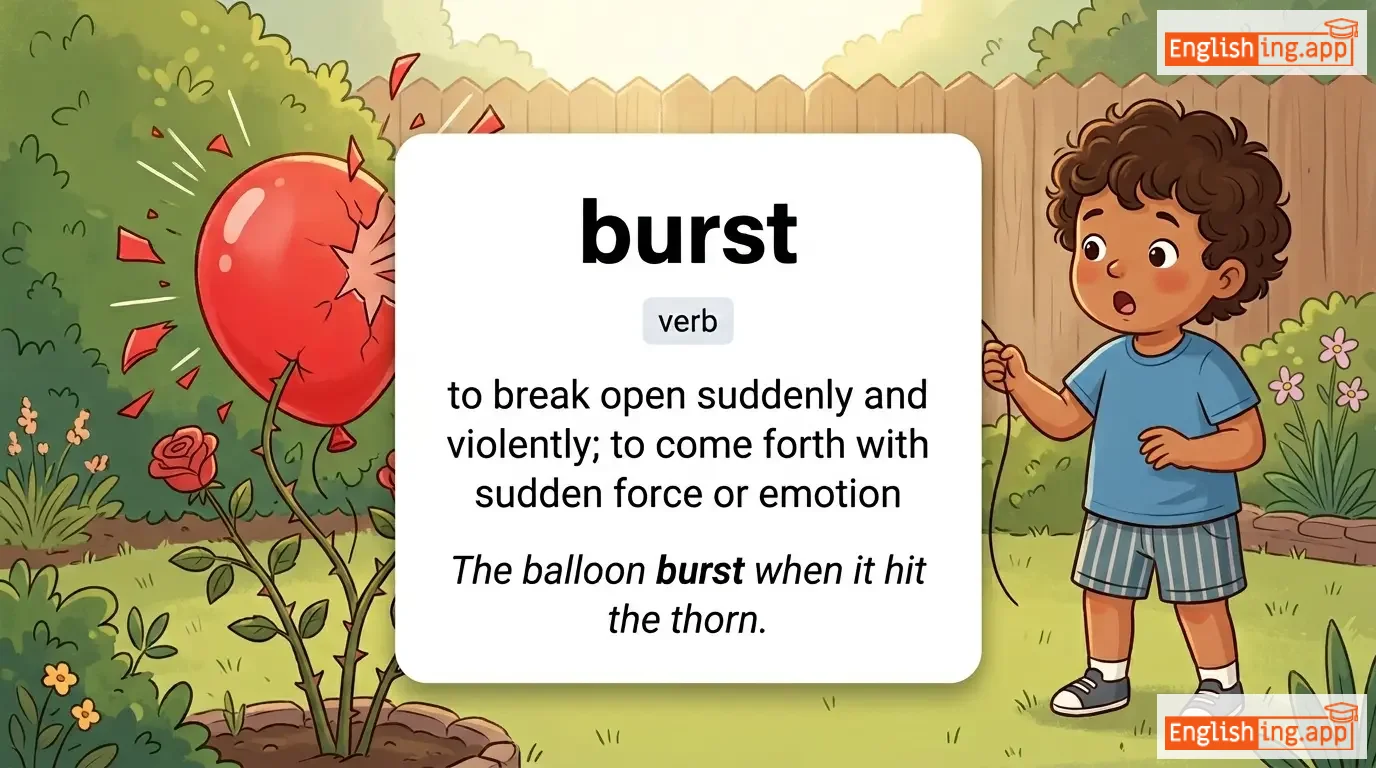
/bɜːst/
verb
(バースト)
••••••
|
|
破裂する
haretsu suru
••••••
|
burst
バースト
••••••
|
burst
バースト
••••••
|
bursts
バーストス
••••••
|
bursting
バースティング
••••••
|
to break open suddenly and violently; to come forth with sudden force or emotion
••••••
|
The balloon burst when it hit the thorn.
風船は棘に当たったときにバーストした。
••••••
|
風船は棘に当たったときに破裂した。
Fusen wa toge ni atatta toki ni haretsu shita.
••••••
|
burst into tears
涙を流してバーストする
••••••
|
to start crying suddenly
••••••
|
涙を流して破裂する
namida wo nagashite haretsu suru
••••••
|
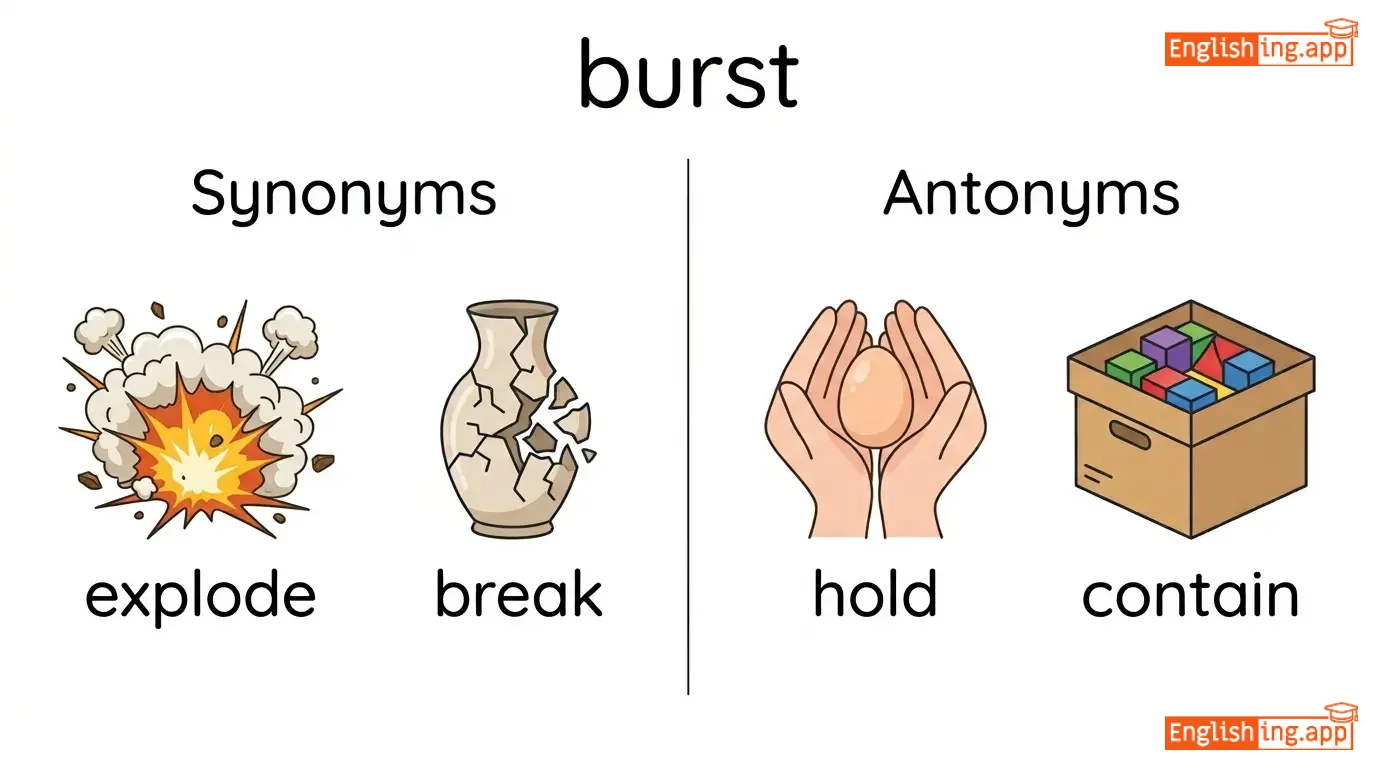
explode, break, crack, erupt, rupture
••••••
|
hold, contain, restrain
••••••
|
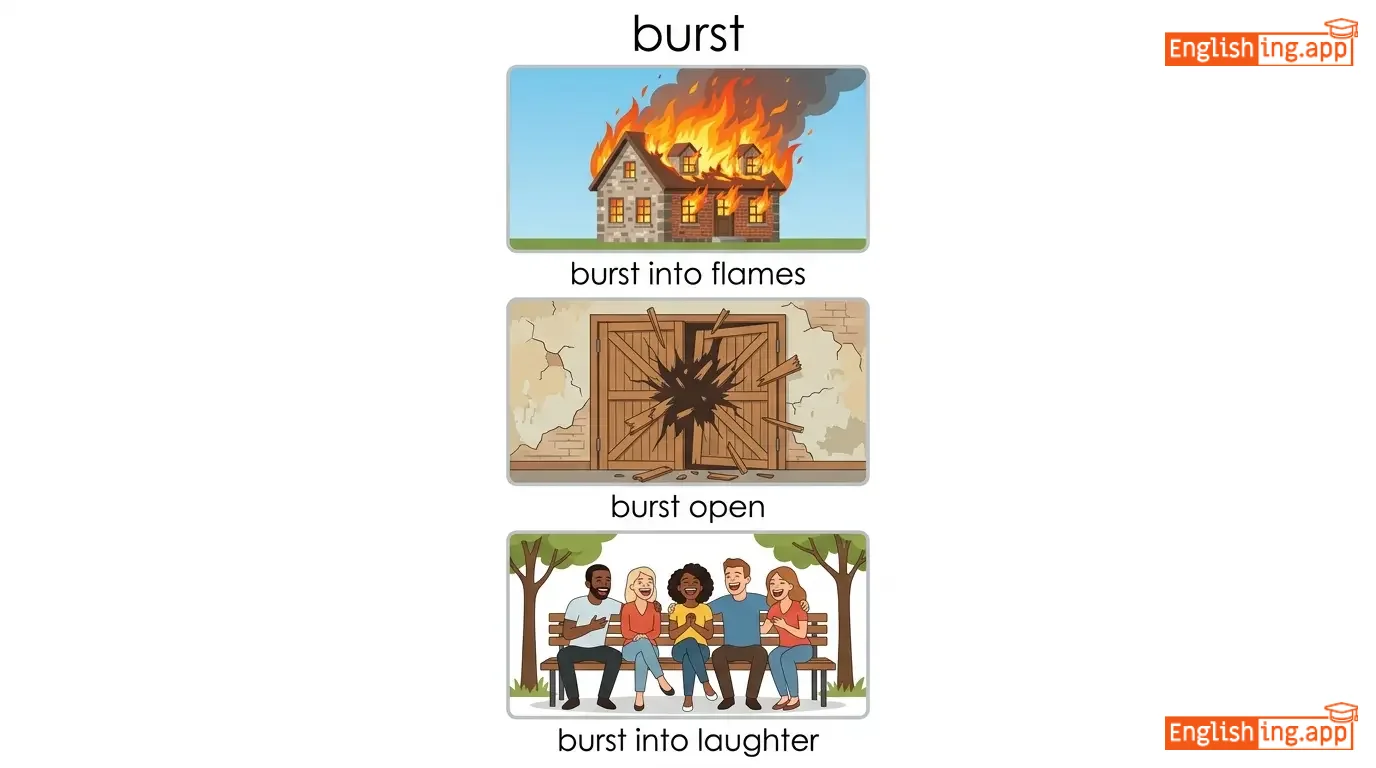
burst into flames, burst open, burst into laughter, burst with joy
••••••
|
風船が破裂して音を立てる!
••••••
|
|
#1
🔥
|
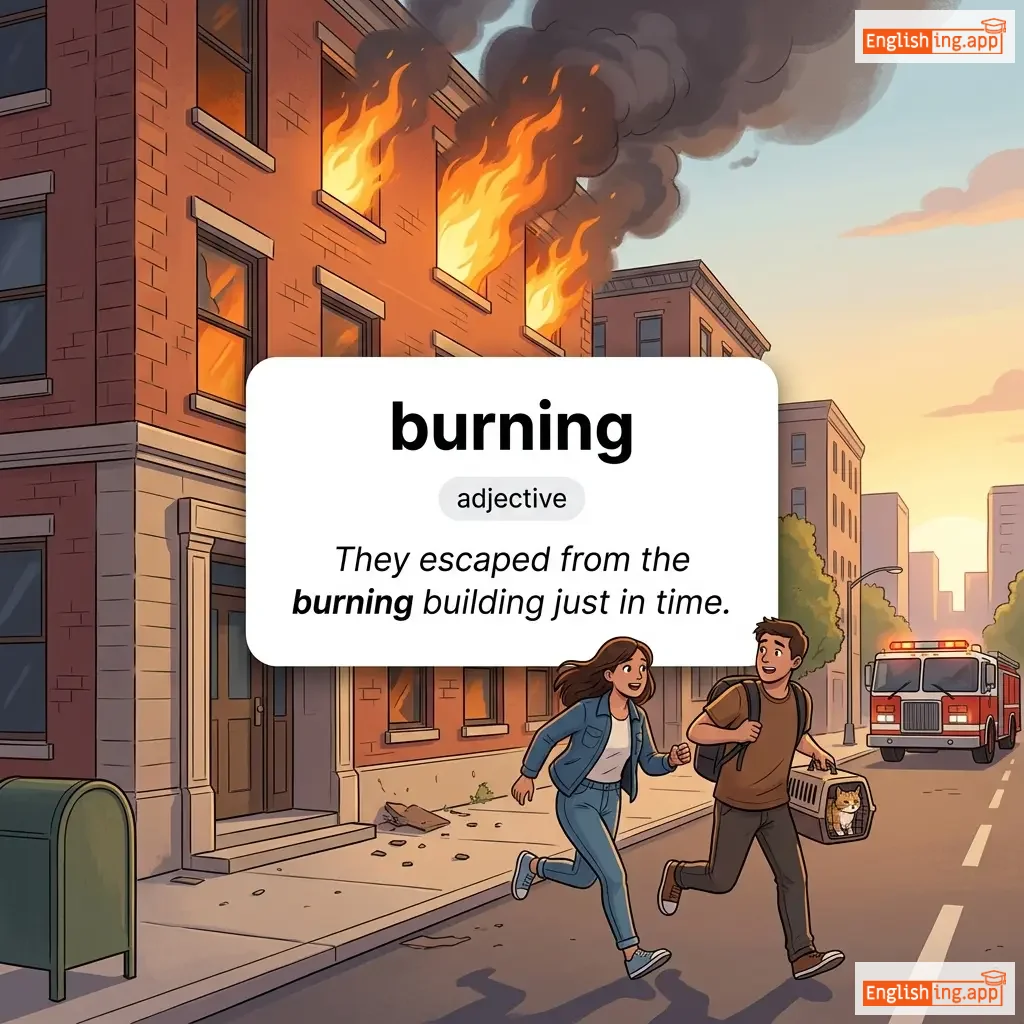
/ˈbɜːnɪŋ/
adjective
(バーンニング)
••••••
|
|
燃えている
moeteiru
••••••
|
- •••••• | - •••••• | - •••••• | - •••••• |
producing flames or intense heat; also used metaphorically for intense emotions or urgency
••••••
|
They escaped from the burning building just in time. |
彼らは燃えている建物から間に合って逃げました。
Karera wa moeteiru tatemono kara maniatte nigemashita.
••••••
|
burning question |
an important or urgent issue that needs immediate attention
••••••
|
燃えるような質問
moeru yōna shitsumon
••••••
|
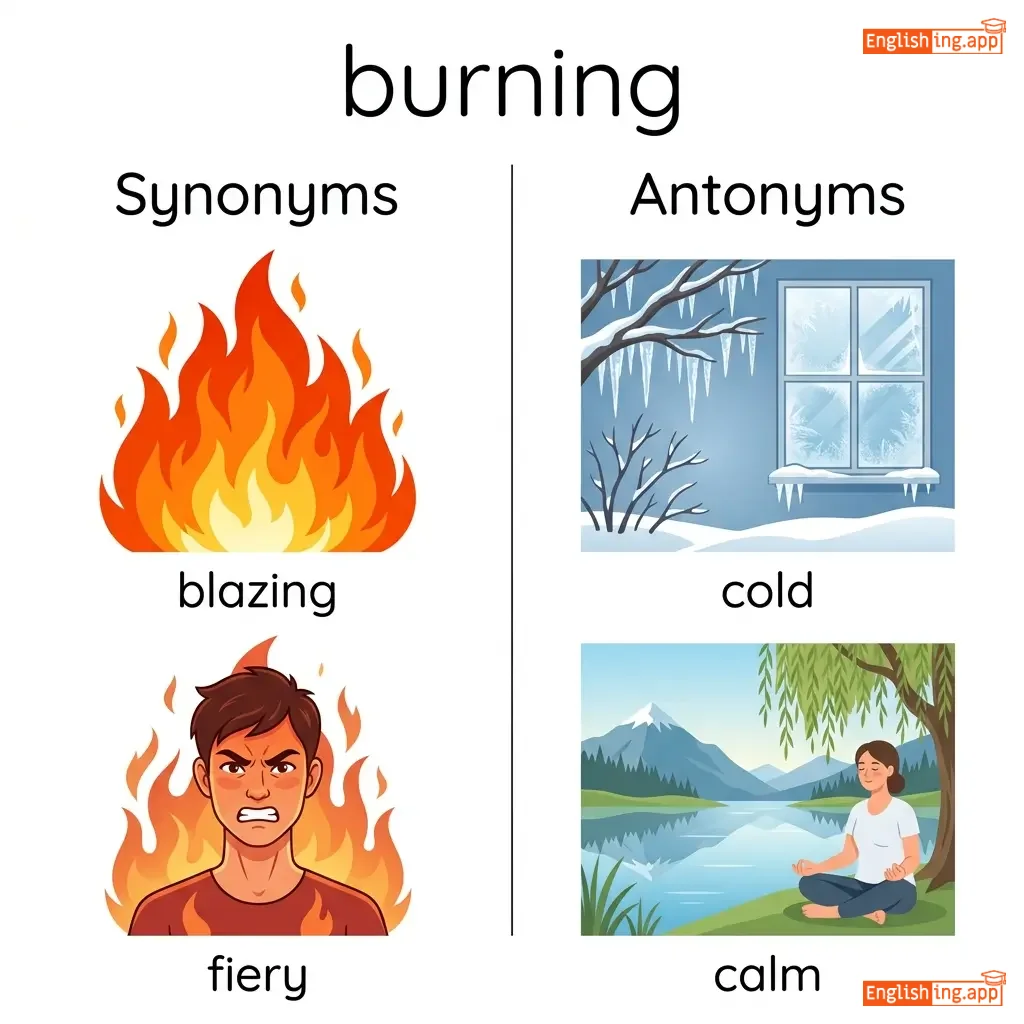
blazing, fiery, flaming, intense, passionate
••••••
|
cold, calm, extinguished
••••••
|
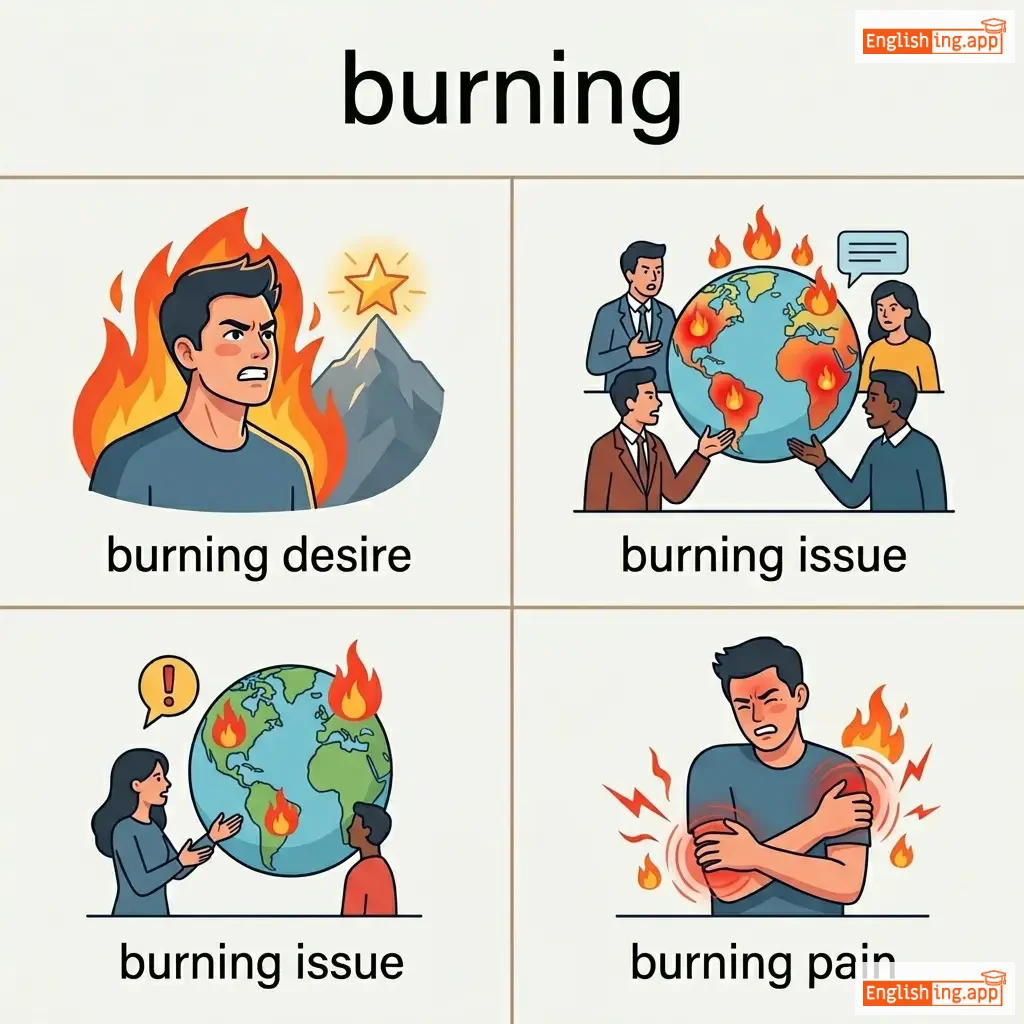
burning desire, burning issue, burning pain, burning sensation
••••••
|
Burning は燃えている 🔥 — 焼けるのが Burning !
••••••
|
|
#1
🐂
|
/bʊl/
noun
(ブル)
••••••
|
- •••••• |
雄牛
osushi
••••••
|
- •••••• | - •••••• | - •••••• | - •••••• |
a male animal of the cattle family; sometimes refers to a strong or aggressive man
••••••
|
The bull charged across the field towards the red flag. |
雄牛は赤い旗に向かって畑を突進した。
Osushi wa akai hata ni mukatte hatake wo tosshin shita.
••••••
|
a bull in a china shop |
a clumsy person who breaks or spoils things easily
••••••
|
食器棚の中の雄牛
Shokkidana no naka no osushi
••••••
|
ox, beast, male cow, brute, stud
••••••
|
cow, heifer
••••••
|
bull market, bull run, raging bull, bull fight
••••••
|
Bullは雄牛🐂 — 強くて攻撃的な雄牛のように強くなる!
••••••
|
|
#1
🫧
|
/ˈbʌb.əl/
noun
(babu)
••••••
|
- •••••• |
泡
awa
••••••
|
- •••••• | - •••••• | - •••••• | - •••••• |
a thin sphere of liquid enclosing air or gas; a temporary state of inflated value or excitement
••••••
|
The children chased the bubbles in the air. |
子供たちは空中の泡を追いかけました。
Kodomotachi wa kūchū no awa o oikakemashita.
••••••
|
economic bubble |
a market situation where prices are much higher than the actual value
••••••
|
経済泡
keizai awa
••••••
|
sphere, blister, balloon, foam
••••••
|
burst, deflate
••••••
|
soap bubble, economic bubble, bubble burst, bubble bath
••••••
|
Bubble は泡を意味します — 泡のように膨らんで弾けるように、経済でもバブルは破裂することがあります!
••••••
|
|
#1
💣
|
/ˈbruː.təl/
adjective
(ブルータル)
••••••
|
- •••••• |
残酷
zankoku
••••••
|
- •••••• | - •••••• | - •••••• | - •••••• |
extremely cruel or harsh; violent and without feeling
••••••
|
The dictator’s rule was marked by brutal violence. |
独裁者の統治は残酷な暴力によって特徴付けられていた。
Dokusaisha no tōchi wa zankoku na bōryoku ni yotte tokuchōzukerareteita.
••••••
|
brutal truth |
a painful but honest fact
••••••
|
残酷な真実
zankoku na shinjitsu
••••••
|
cruel, savage, harsh, ruthless, violent
••••••
|
kind, gentle, merciful
••••••
|
brutal attack, brutal murder, brutal regime, brutal truth
••••••
|
Brutal は残酷を意味します — brute(野蛮)と似ていて、暴力的で冷酷です。
••••••
|
|
#1
🥉
|
/brɑːnz/
noun
(ブロンズ)
••••••
|
- •••••• |
銅
dou
••••••
|
- •••••• | - •••••• | - •••••• | - •••••• |
a metal made by combining copper and tin, often used for statues and medals
••••••
|
The statue was made of solid bronze. |
その像は固い銅でできていました。
Sono zou wa katai dou de dekiteimashita.
••••••
|
bronze medal |
the third-place award in a competition
••••••
|
銅メダル
dou medaru
••••••
|
alloy, metal, copper, sculpture
••••••
|
iron, silver, gold
••••••
|
bronze medal, bronze statue, bronze color, cast in bronze
••••••
|
銅メダルは第三位、金でも銀でもない!
••••••
|
|
#1
💼
|
/ˈbroʊ.kər/
noun
(ブローカー)
••••••
|
- •••••• |
ブローカー
burōkā
••••••
|
- •••••• | - •••••• | - •••••• | - •••••• |
a person who buys and sells things for others as a middleman, especially in financial or property deals
••••••
|
He works as a real estate broker in the city. |
彼は都市で不動産のブローカーとして働いています。
Kare wa toshi de fudōsan no burōkā to shite hataraiteimasu.
••••••
|
power broker |
a person who influences decisions or controls power without holding an official position
••••••
|
権力のブローカー
kenryoku no burōkā
••••••
|
agent, dealer, mediator, negotiator, intermediary
••••••
|
client, buyer
••••••
|
insurance broker, real estate broker, stock broker, power broker
••••••
|
ブローカー = 取引をまとめる仲介者
••••••
|
|
#1
👰
|
/braɪd/
noun
(ブライド)
••••••
|
- •••••• |
花嫁
hanayome
••••••
|
- •••••• | - •••••• | - •••••• | - •••••• |
a woman on her wedding day or just before and after the event
••••••
|
The bride looked stunning in her white dress.
ブライドは白いドレスで素晴らしく見えた。
••••••
|
花嫁は白いドレスで素晴らしく見えた。
Hanayome wa shiroi doresu de subarashiku mieteta.
••••••
|
blushing bride
恥ずかしがり屋の花嫁
••••••
|
a traditional phrase describing a happy or shy bride on her wedding day
••••••
|
恥ずかしがり屋の花嫁
Hazukashigariya no hanayome
••••••
|
wife, newlywed, spouse, consort, partner
••••••
|
groom, bachelor
••••••
|
beautiful bride, bride and groom, blushing bride, the bride's family
••••••
|
Bride は花嫁 — 花嫁はブライドとして最も美しい!
••••••
|
|
#1
🍃
|
/briːz/
noun
(ブリーズ)
••••••
|
- •••••• |
軽い風
karui kaze
••••••
|
- •••••• | - •••••• | - •••••• | - •••••• |
a gentle wind; a light and pleasant current of air.
••••••
|
A cool breeze came through the window. |
涼しい風が窓から入ってきた。
Suzushī kaze ga mado kara haitte kita.
••••••
|
shoot the breeze |
to chat casually or gossip
••••••
|
おしゃべりする
oshaberi suru
••••••
|
wind, gust, airflow, draught, waft
••••••
|
storm, gale
••••••
|
cool breeze, gentle breeze, sea breeze, morning breeze
••••••
|
Breeze、軽い風、友達とおしゃべりしながら風を感じる!
••••••
|
|
#1
🌬️
|
/ˈbriːðɪŋ/
noun
(ハピネス)
••••••
|
- •••••• |
幸せ
shiawase
••••••
|
- •••••• | - •••••• | - •••••• | - •••••• |
the process of taking air into and expelling it from the lungs.
••••••
|
Deep breathing can help you relax. |
彼女は賞を受け取ったとき、幸せを隠せませんでした。
Kanojo wa shō o uketotta toki, shiawase o kakusemasen deshita.
••••••
|
take a deep breath |
to inhale deeply to calm oneself
••••••
|
幸せを追求する
shiawase o tsuikyū suru
••••••
|
respiration, inhalation, exhalation, ventilation, gasp
••••••
|
suffocation, choking
••••••
|
deep breathing, breathing exercise, heavy breathing, shallow breathing
••••••
|
幸せ = '幸' + 'せ' — 幸せは毎日の積み重ね!
••••••
|
|
#1
🧠
|
/bɪˈheɪvjərəl/
adjective
(ビヘイビオラル)
••••••
|
- •••••• |
行動的
kōdō-teki
••••••
|
- •••••• | - •••••• | - •••••• | - •••••• |
relating to the way a person or animal acts
••••••
|
The psychologist studied the child's behavioral patterns.
心理学者は子供の行動パターンを研究した。
••••••
|
心理学者は子供の行動パターンを研究した。
Shinrigakusha wa kodomo no kōdō patān o kenkyū shita.
••••••
|
- •••••• | - •••••• | - •••••• |
conduct-related, mannerly, social, psychological
••••••
|
involuntary, instinctive
••••••
|
behavioral science, behavioral pattern, behavioral problem, behavioral therapy
••••••
|
行動的 = 行動 + 的 ➜ 人や動物の行動に関連しています。
••••••
|
|
#1
🏀
|
/baʊns/
verb
(baunsu)
••••••
|
- •••••• |
跳ね返る
hane kaeru
••••••
|
bounced
baunsudo
••••••
|
bounced
baunsudo
••••••
|
bounces
baunsesu
••••••
|
bouncing
baunsingu
••••••
|
to spring back after hitting something; to rebound.
••••••
|
The ball bounced off the wall and hit the window.
ボールは壁にバウンドして、窓に当たりました。
••••••
|
ボールは壁に当たって跳ね返り、窓に当たりました。
Bōru wa kabe ni atatte hane kaeri, mado ni atarimashita.
••••••
|
bounce back
バウンスバック
••••••
|
to recover quickly from difficulties
••••••
|
素早く回復する
subayaku kaifuku suru
••••••
|
rebound, spring, ricochet, leap, jump
••••••
|
fall, drop, sink
••••••
|
bounce off, bounce back, bounce a ball, bounce ideas
••••••
|
Bounceは跳ね返る、ボールが壁に当たって跳ね返るように。
••••••
|
|
#1
😴
|
/ˈbɔːrɪŋ/
adjective
(ボーリング)
••••••
|
- •••••• |
退屈
taikutsu
••••••
|
- •••••• | - •••••• | - •••••• | - •••••• |
not interesting or exciting; dull.
••••••
|
The lecture was so boring that several students fell asleep. |
講義は退屈すぎて、何人かの学生が眠ってしまった。
Kōgi wa taikutsu sugite, nan-nin ka no gakusei ga netotte shimatta.
••••••
|
bored to death |
extremely bored
••••••
|
死ぬほど退屈
shinu hodo taikutsu
••••••
|
dull, tedious, uninteresting, monotonous, tiresome
••••••
|
exciting, interesting, engaging
••••••
|
boring lecture, boring movie, boring person, boring day
••••••
|
退屈な講義を聞くと'退屈'の意味がわかります。
••••••
|
|
#1
☎️
|
/buːθ/
noun
(ブース)
••••••
|
- •••••• |
ブース
bu-su
••••••
|
- •••••• | - •••••• | - •••••• | - •••••• |
a small enclosed space or area used for a specific purpose, such as voting or selling.
••••••
|
He went into the voting booth to cast his ballot. |
彼は投票ブースに入り、投票をしました。
Kare wa touhyou bu-su ni hairi, touhyou o shimashita.
••••••
|
telephone booth |
a small cubicle containing a public telephone.
••••••
|
電話ボックス
denwa bokkusu
••••••
|
stall, kiosk, cubicle, stand
••••••
|
open space, hall
••••••
|
voting booth, ticket booth, photo booth, information booth
••••••
|
Booth は小さな空間、電話ボックスのようなものです。
••••••
|
|
#1
💰
|
/ˈbəʊnəs/
noun
(ボーナス)
••••••
|
- •••••• |
ボーナス
bōnasu
••••••
|
- •••••• | - •••••• | - •••••• | - •••••• |
an extra payment or reward given in addition to what is usual or expected.
••••••
|
Employees received a year-end bonus for their hard work.
従業員はその努力に対して年末のボーナスを受け取った。
••••••
|
従業員はその努力に対して年末のボーナスを受け取った。
Jūgyōin wa sono doryoku ni taishite nenmatsu no bōnasu o uketotta.
••••••
|
added bonus
追加のボーナス
••••••
|
an extra benefit or advantage.
••••••
|
追加の利益
tsuika no rieki
••••••
|
reward, incentive, gift, premium, perk
••••••
|
penalty, deduction
••••••
|
year-end bonus, performance bonus, cash bonus, annual bonus
••••••
|
Bonus – これは良い仕事に対する追加の報酬!
••••••
|
|
#1
🥘
|
/bɔɪl/
verb
••••••
|
- •••••• | - •••••• |
boiled
••••••
|
boiled
••••••
|
boils
••••••
|
boiling
••••••
|
to heat a liquid until it starts to bubble and turn into vapor.
••••••
|
Please boil some water for tea. |
- •••••• |
boil over |
to overflow or to become uncontrollable (emotionally or physically).
••••••
|
- •••••• |
heat, simmer, steam, cook
••••••
|
freeze, chill
••••••
|
boil water, boil eggs, bring to a boil, hard boil
••••••
|
No •••••• |
|
#1
🩸
|
/ˈblʌdi/
adjective
(ブラッディ)
••••••
|
- •••••• |
血まみれ
chimamire
••••••
|
- •••••• | - •••••• | - •••••• | - •••••• |
covered in, involving, or containing blood; also used informally for emphasis in British English.
••••••
|
The soldier returned from battle with a bloody arm. |
兵士は戦いから血まみれの腕で帰還しました。
Heishi wa tatakai kara chimamire no ude de kikan shimashita.
••••••
|
bloody hell |
a British expression of anger or surprise.
••••••
|
怒りや驚きの英国の表現。
Ikari ya odoroki no Eikoku no hyōgen.
••••••
|
gory, violent, sanguinary, crimson
••••••
|
clean, bloodless
••••••
|
bloody nose, bloody fight, bloody battle, bloody mess
••••••
|
Bloody は血まみれを意味します – 血 (chi) がどこにでもあることを想像してください。
••••••
|
|
#1
👱♀️
|
/blɒnd/
adjective
••••••
|
- •••••• | - •••••• | - •••••• | - •••••• | - •••••• | - •••••• |
having light-colored hair, typically pale yellow or golden.
••••••
|
She has long blond hair that shines in the sunlight. |
- •••••• |
blond moment |
a temporary lapse in concentration or judgment.
••••••
|
- •••••• |
fair-haired, light-haired, golden, pale-haired
••••••
|
dark-haired, brunette
••••••
|
blond hair, blond boy, blond woman, natural blond
••••••
|
No •••••• |
|
#1
😉
|
/blɪŋk/
verb
(ブリンク)
••••••
|
- •••••• |
まばたきする
mabataki suru
••••••
|
blinked
ブリンクド
••••••
|
blinked
ブリンクド
••••••
|
blinks
ブリンクス
••••••
|
blinking
ブリンキング
••••••
|
to close and open the eyes quickly.
••••••
|
She blinked rapidly to clear the dust from her eyes.
彼女は目からほこりを取り除くために素早く瞬きをした。
••••••
|
彼女は目からほこりを取り除くために素早く瞬きをした。
Kanojo wa me kara hokori o torinozoku tame ni subayaku mabataki shita.
••••••
|
in the blink of an eye
一瞬のうちに
••••••
|
very quickly; almost instantly.
••••••
|
一瞬のうちに
isshun no uchi ni
••••••
|
wink, flicker, flutter, flash, twinkle
••••••
|
stare, gaze
••••••
|
blink rapidly, blink lights, blink away tears, blink twice
••••••
|
Blink はまばたきする — まばたきすることで、ほこりが消えます!
••••••
|
|
#1
🌸
|
/ˈblɛsɪŋ/
noun
(ブレッシング)
••••••
|
- •••••• |
祝福
shukufuku
••••••
|
- •••••• | - •••••• | - •••••• | - •••••• |
a prayer asking for divine favor; something that brings happiness or benefit.
••••••
|
Good health is a blessing we often take for granted. |
健康は私たちが当然のように見過ごす祝福です。
Kenkou wa watashitachi ga touzen no you ni misugosu shukufuku desu.
••••••
|
a mixed blessing |
something that has both advantages and disadvantages.
••••••
|
混合された祝福
kongou sareta shukufuku
••••••
|
favor, gift, boon, grace, benefit
••••••
|
curse, misfortune, bane
••••••
|
divine blessing, family blessing, count your blessings, a true blessing
••••••
|
Blessingは祝福を意味します — 忘れないで、健康は祝福です!
••••••
|
|
#1
🙏
|
/blɛs/
verb
(ブレス)
••••••
|
|
祝福する
shukufuku suru
••••••
|
blessed
ブレスド
••••••
|
blessed
ブレスド
••••••
|
blesses
ブレスズ
••••••
|
blessing
ブレッシング
••••••
|
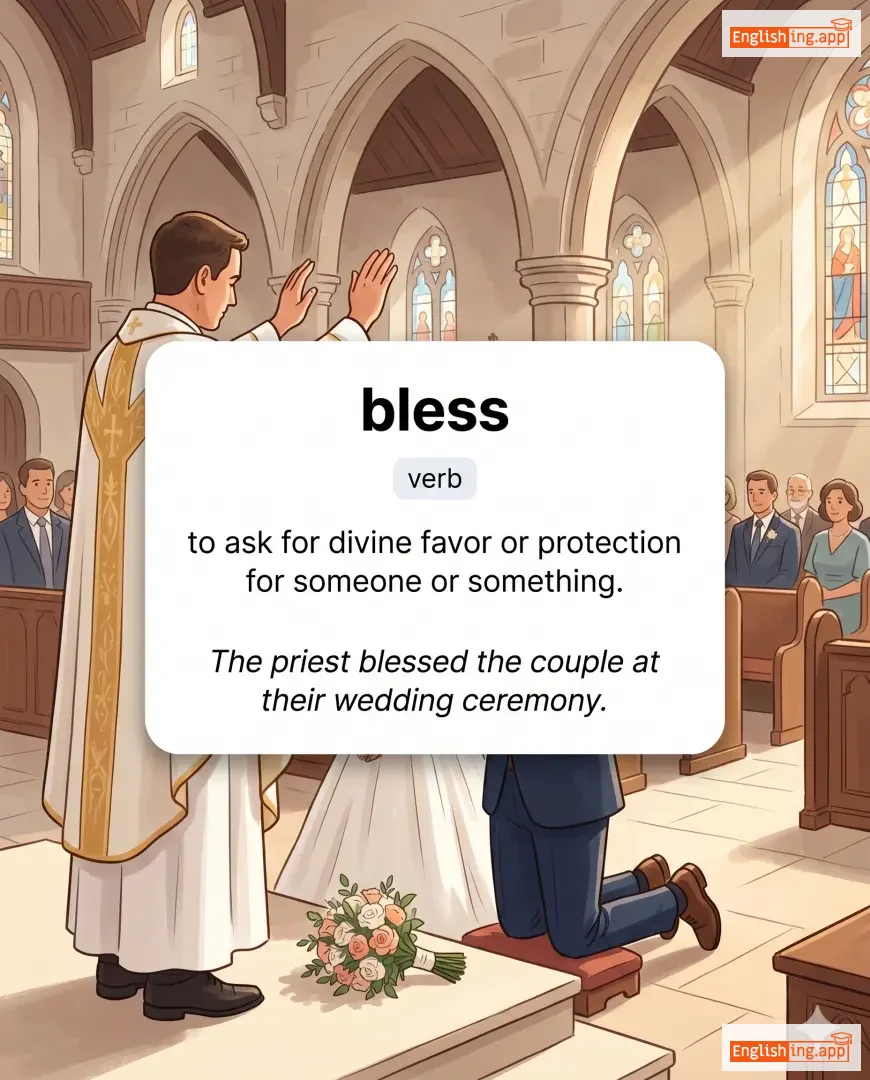
to ask for divine favor or protection for someone or something.
••••••
|
The priest blessed the couple at their wedding ceremony.
司祭は結婚式でカップルを祝福しました。
••••••
|
司祭は結婚式でカップルを祝福しました。
Shisai wa kekkonshiki de kappuru o shukufuku shimashita.
••••••
|
count your blessings
自分の祝福を数えなさい
••••••
|
to be thankful for the good things you have.
••••••
|
自分の祝福を数えなさい
Jibun no shukufuku o kazoenasai
••••••
|
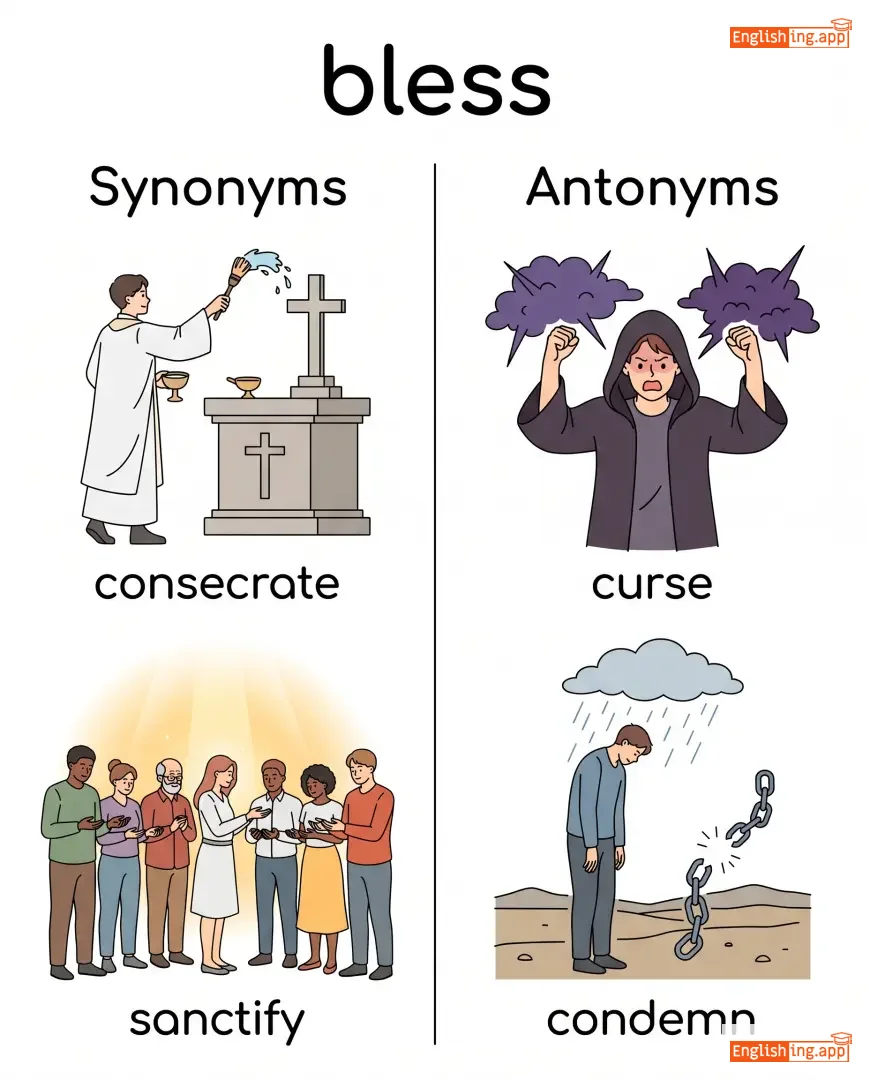
consecrate, sanctify, praise, thank, favor
••••••
|
curse, condemn
••••••
|
bless someone, bless you, God bless, bless the day
••••••
|
Blessingは祝福、神からの良いエネルギー!
••••••
|
|
#1
📄
|
/blæŋk/
adjective
(ブランク)
••••••
|
- •••••• |
空白
kuhaku
••••••
|
- •••••• | - •••••• | - •••••• | - •••••• |
showing no expression or containing nothing written, printed, or recorded.
••••••
|
Her face went blank when she heard the bad news. |
悪いニュースを聞いたとき、彼女の顔は空白になった。
Warui nyuusu o kiita toki, kanojo no kao wa kuhaku ni natta.
••••••
|
a blank slate |
a fresh start with no previous record or experience.
••••••
|
白紙の状態
hakushi no joutai
••••••
|
empty, vacant, expressionless, plain, void
••••••
|
filled, expressive, occupied
••••••
|
blank page, blank look, blank screen, blank form
••••••
|
Blankは空白を意味します — 試験で空白の用紙を提出すると、落ちます!
••••••
|
|
#1
⛪
|
/ˈbɪʃəp/
noun
(ビショップ)
••••••
|
- •••••• |
司教
shikyō
••••••
|
- •••••• | - •••••• | - •••••• | - •••••• |
a senior member of the Christian clergy, usually in charge of a diocese and empowered to confer holy orders.
••••••
|
The bishop delivered a powerful sermon during Sunday service. |
司教は日曜日の礼拝で力強い説教をしました。
Shikyō wa nichiyōbi no reihai de chikara tsuyoi sekkyō o shimashita.
••••••
|
move diagonally like a bishop |
to act or move in a way that avoids direct confrontation, like the bishop piece in chess.
••••••
|
ビショップのように斜めに動く
Bishoppu no yō ni naname ni ugoku
••••••
|
clergyman, priest, pastor, archbishop, prelate
••••••
|
layman, civilian
••••••
|
Catholic bishop, Anglican bishop, bishop's palace, ordained bishop
••••••
|
司教は教会のリーダーです。覚えておいてください、‘⛪ 司教が祈りを導く’。
••••••
|
|
#1
🚴♂️
|
/ˈbaɪsɪkl/
noun
(ハピネス)
••••••
|
- •••••• |
幸福
kōfuku
••••••
|
- •••••• | - •••••• | - •••••• | - •••••• |
a vehicle with two wheels that you ride by pedaling
••••••
|
He rides his bicycle to school every day. |
彼女は賞を受け取ったとき、幸せを隠すことができませんでした。
Kanojo wa shō o uketotta toki, kōfuku o kakusu koto ga dekimasen deshita.
••••••
|
ride a bicycle |
to travel by bicycle
••••••
|
幸福を追求する
kōfuku o tsuikyū suru
••••••
|
bike, cycle, two-wheeler, pedal bike
••••••
|
car, motorcycle
••••••
|
ride a bicycle, mountain bicycle, bicycle lane, bicycle helmet
••••••
|
幸せは毎日の小さな喜びを大切にすること。
••••••
|
|
#1
⚖️
|
/ˈbaɪəs/
noun
(バイアス)
••••••
|
|
偏見
henken
••••••
|
- •••••• | - •••••• |
biases
バイアセス
••••••
|
biasing
バイアシング
••••••
|
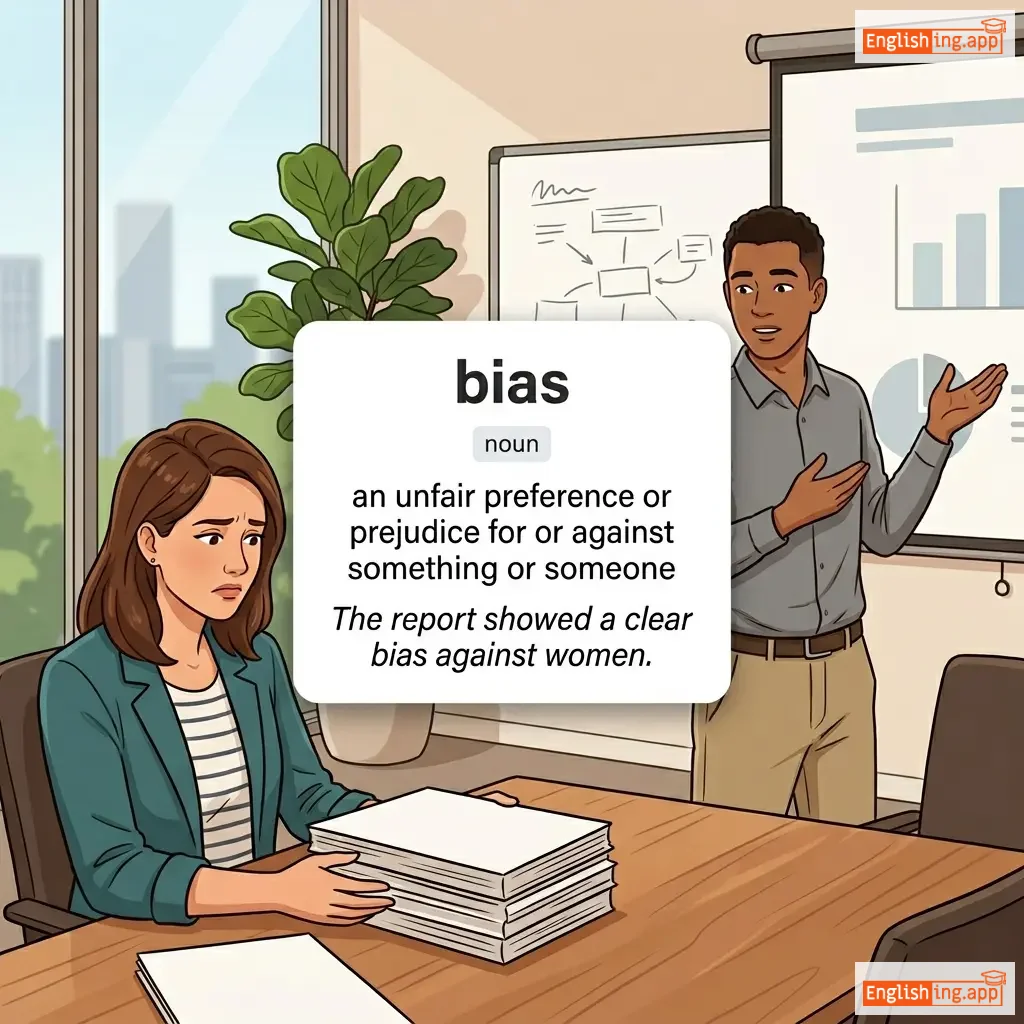
an unfair preference or prejudice for or against something or someone
••••••
|
The report showed a clear bias against women.
報告書は女性に対する明確な偏見を示しました。
••••••
|
報告書は女性に対する明確な偏見を示しました。
Hōkokusho wa josei ni taisuru meikaku na henken o shimeshimashita.
••••••
|
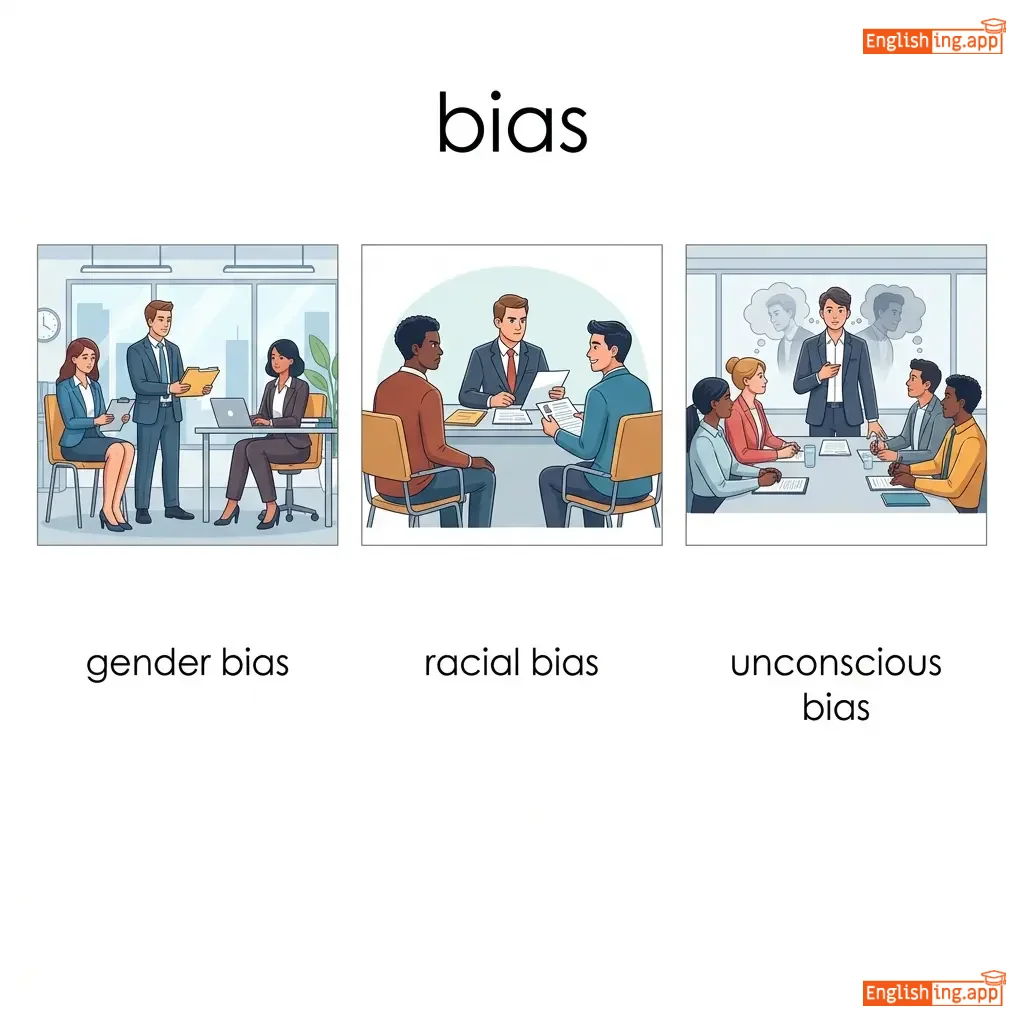
unconscious bias
無意識の偏見
••••••
|
prejudice that a person is unaware of having
••••••
|
無意識の偏見
Muishiki no henken
••••••
|
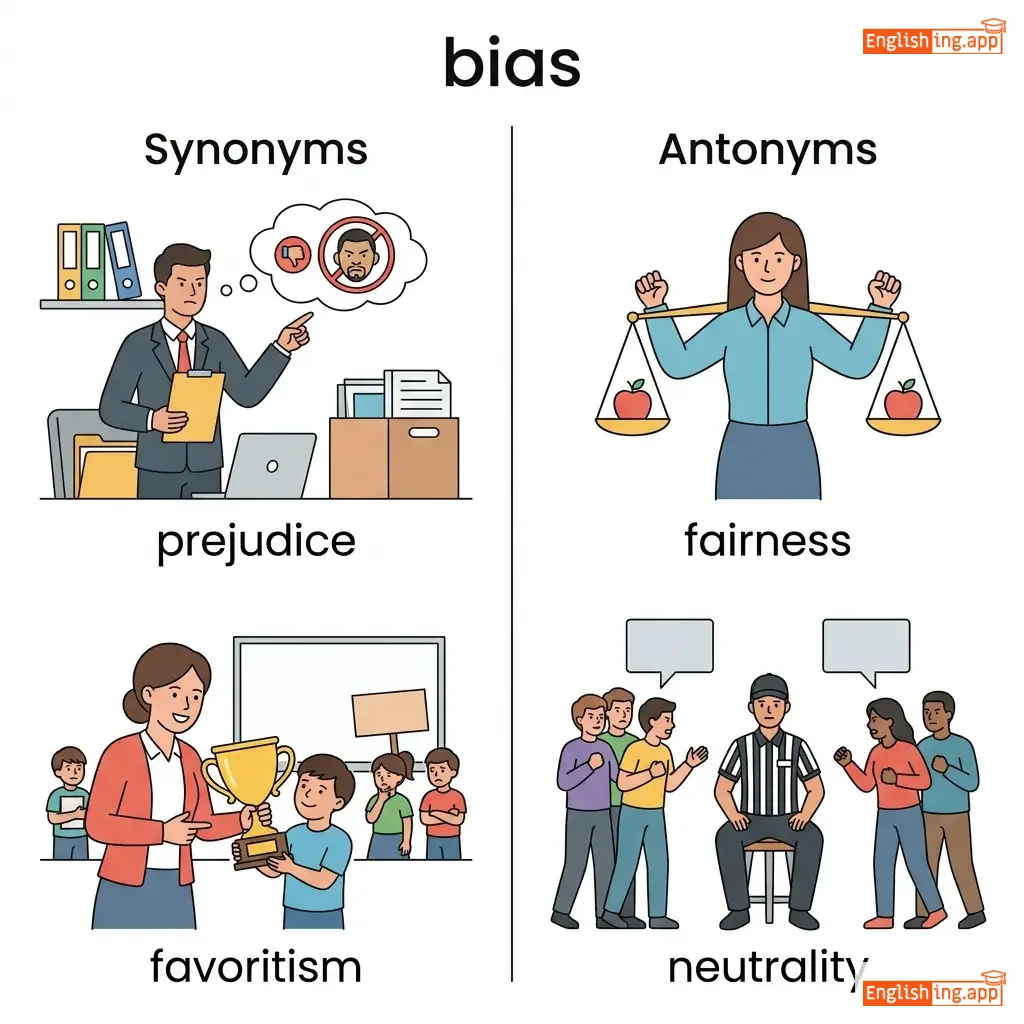
prejudice, favoritism, partiality, inclination, tendency
••••••
|
fairness, neutrality, objectivity
••••••
|
gender bias, racial bias, unconscious bias, bias towards
••••••
|
偏見は不公平なことを意味します — 覚えておいて、‘バイアス’は‘自分に有利な方向に’です!
••••••
|
Vocabulary Quiz
Test your vocabulary by matching words with their translations or meanings.
Login to take the quiz
Comments (0)
Share your thoughts and join the discussion.
Join the discussion by logging in
Login to CommentNo comments yet
Be the first to share your thoughts!