

翻訳
過去
過去分詞
三人称単数
動名詞
意味
例文
例文の翻訳
同義語
対義語
コロケーション
ニーモニック

Swipe left or right, or use the buttons. Tap image to zoom.
例文の翻訳
単語
Lesson 345Lesson 345 - マスクトグル
|
絵文字
|
単語 | Images | 翻訳 | 過去 | 過去分詞 | 三人称単数 | 動名詞 | 意味 | 例文 | 例文の翻訳 | 表現例 | 表現例の意味 | 表現例の翻訳 | 同義語 | 対義語 | コロケーション | ニーモニック |
|---|---|---|---|---|---|---|---|---|---|---|---|---|---|---|---|---|---|
|
#10315
➕
|
/əˈdɪʃən/
noun
••••••
|
- •••••• | - •••••• | - •••••• | - •••••• | - •••••• | - •••••• |
the process of adding something to something else
••••••
|
The addition of solar panels made the house more energy-efficient. |
- •••••• |
in addition |
used to introduce an extra piece of information
••••••
|
- •••••• |
inclusion, increase, supplement, augmentation
••••••
|
removal, subtraction, elimination
••••••
|
addition to, make an addition, new addition, addition of features
••••••
|
No •••••• |
|
#10316
💡
|
/ədˈvaɪs/
noun
••••••
|
|
- •••••• | - •••••• | - •••••• | - •••••• | - •••••• |
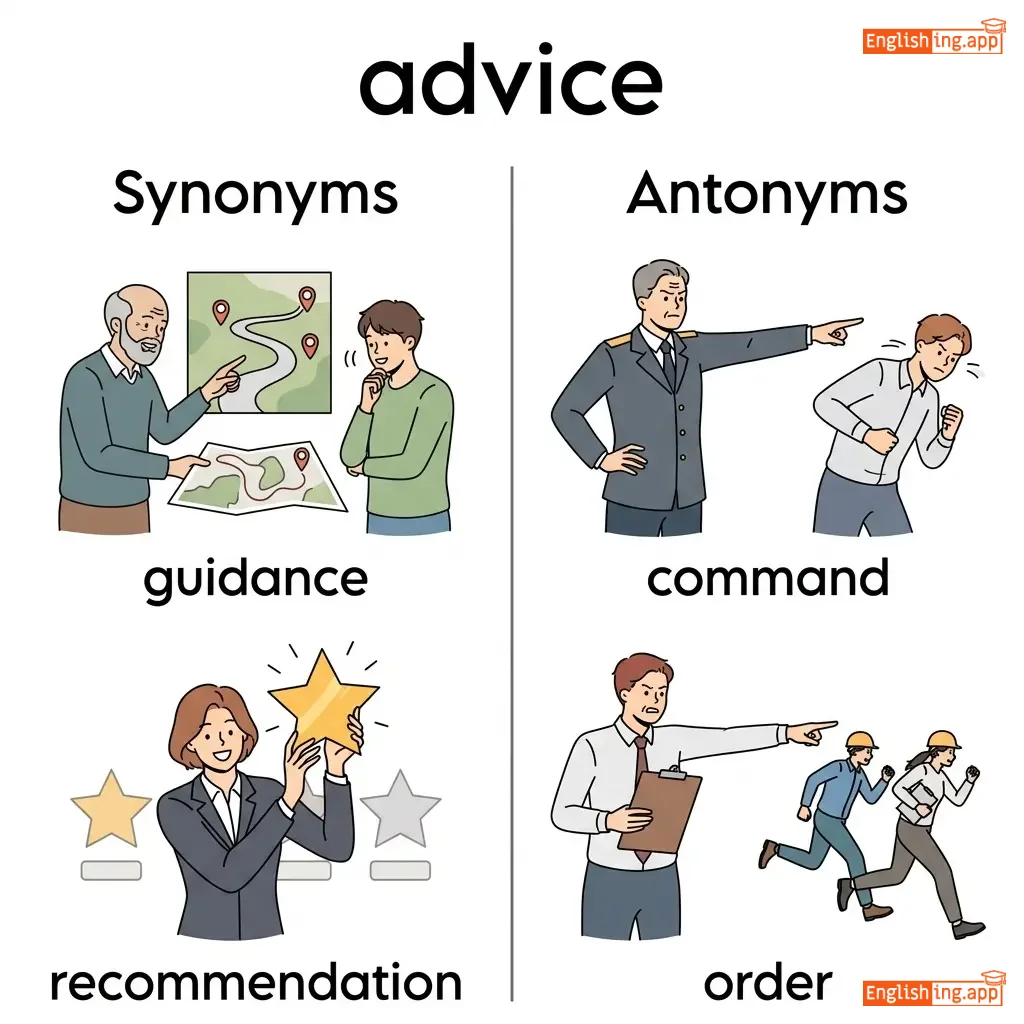
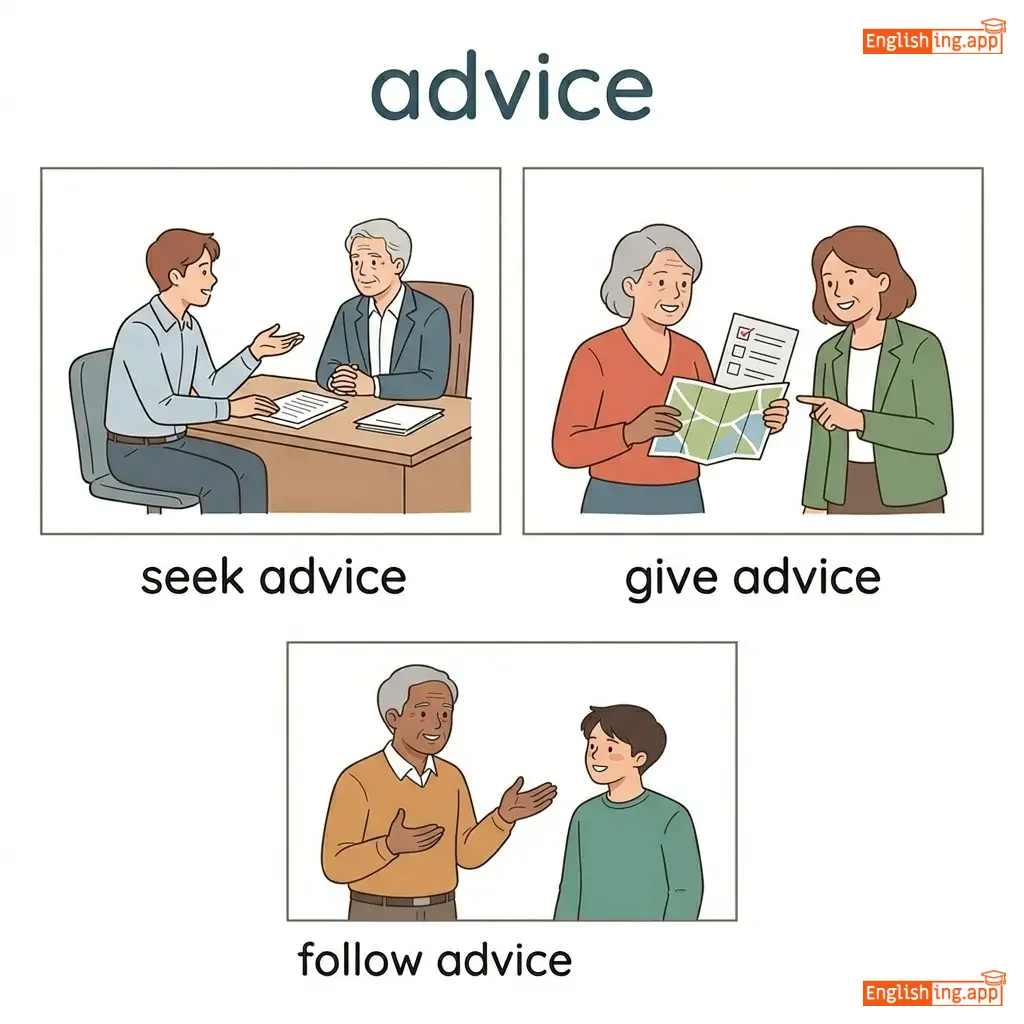
a suggestion or recommendation about what someone should do
••••••
|
She gave me good advice about managing money. |
- •••••• |
take someone's advice |
to follow the suggestion or recommendation given by someone
••••••
|
- •••••• |
guidance, recommendation, counsel, tip, suggestion
••••••
|
command, order
••••••
|
seek advice, give advice, follow advice, professional advice
••••••
|
No •••••• |
|
#10317
📢
|
/ˈædvərˌtaɪzɪŋ/
noun
(ædvərˈtaɪzɪŋ)
••••••
|
- •••••• |
広告
kōkoku
••••••
|
- •••••• | - •••••• | - •••••• | - •••••• |
the activity of producing advertisements for products or services
••••••
|
The company spends millions on advertising every year. |
その会社は毎年広告に何百万も費やしています。
Sono kaisha wa mainen kōkoku ni nanbyakuman mo tsuiyashiteimasu.
••••••
|
false advertising |
misleading or deceptive promotion of a product
••••••
|
虚偽広告
kyogi kōkoku
••••••
|
promotion, marketing, publicity, propaganda
••••••
|
concealment, secrecy
••••••
|
advertising campaign, advertising industry, online advertising, false advertising
••••••
|
Advertising は広告です—'Ad!みんな広告が好き!'
••••••
|
|
#10318
🏔️
|
/ədˈvɛntʃər/
noun
(アドベンチャー)
••••••
|
|
冒険
bōken
••••••
|
- •••••• | - •••••• | - •••••• | - •••••• |
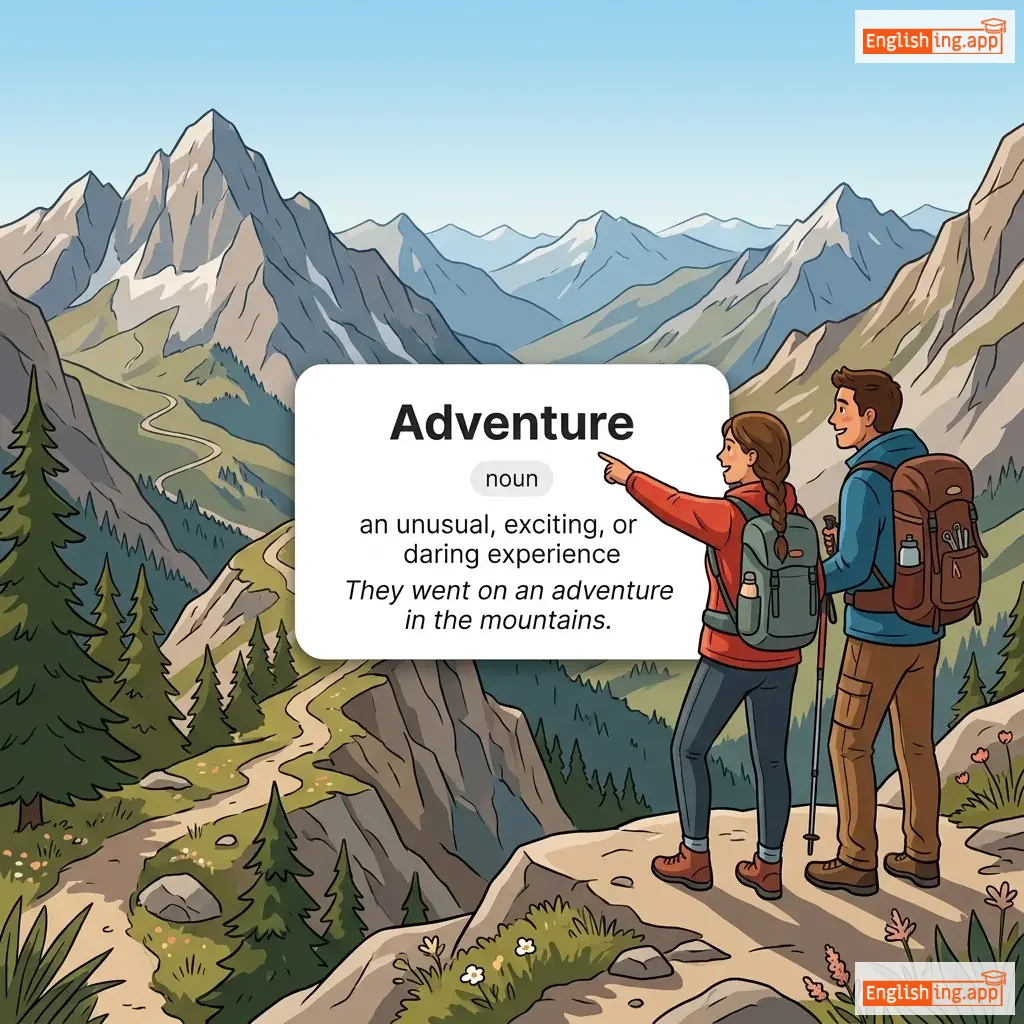
an unusual, exciting, or daring experience
••••••
|
They went on an adventure in the mountains. |
彼らは山で冒険をしました。
Karera wa yama de bōken o shimashita.
••••••
|
spirit of adventure |
the willingness to try exciting or risky things
••••••
|
冒険心
bōkenshin
••••••
|
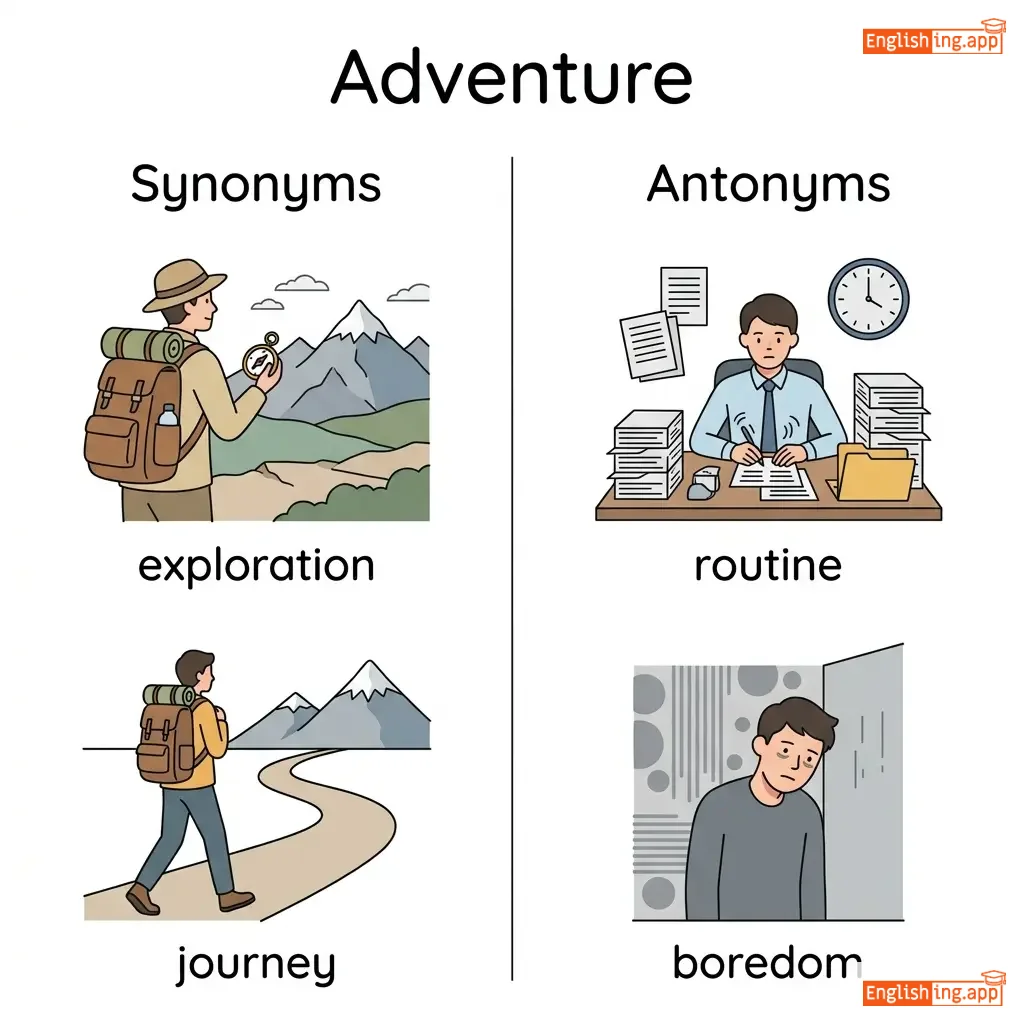
exploration, journey, quest, expedition
••••••
|
routine, boredom, safety
••••••
|
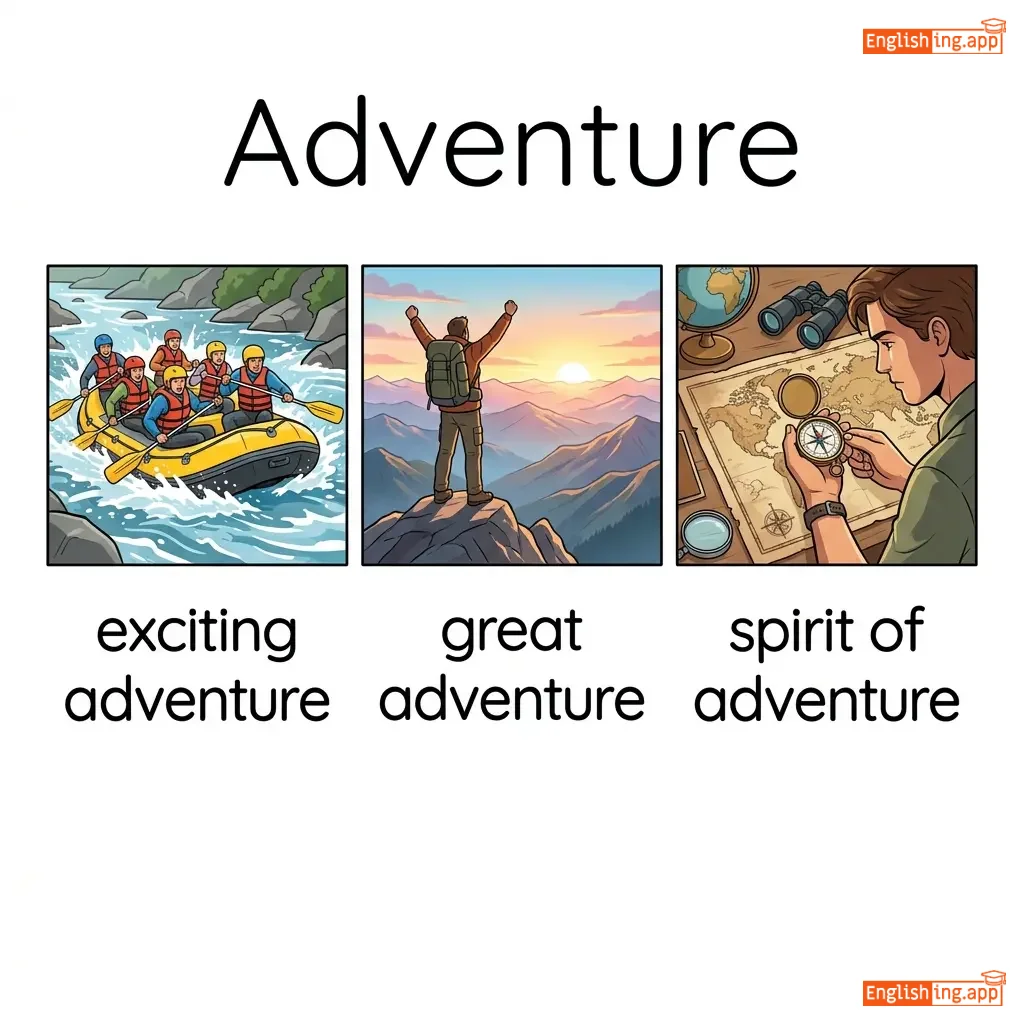
exciting adventure, great adventure, spirit of adventure, adventure story
••••••
|
Adventure は冒険、'Ad vent' で温かい風、楽しくてワクワクすることが始まる!
••••••
|
|
#10319
💡
|
/ədˈvæntɪdʒ/
noun
(アドバンテージ)
••••••
|
- •••••• |
利点
riten
••••••
|
- •••••• | - •••••• | - •••••• | - •••••• |
a condition or circumstance that puts one in a favorable position
••••••
|
Having strong communication skills is a great advantage in business. |
強力なコミュニケーションスキルはビジネスにおいて大きな利点です。
Kyouryoku na komyunikeeshon sukiru wa bijinesu ni oite ookina riten desu.
••••••
|
take advantage of |
to make good use of something
••••••
|
利点を活用する
riten o katsuyou suru
••••••
|
benefit, edge, asset, gain, upper hand
••••••
|
disadvantage, drawback, handicap
••••••
|
competitive advantage, great advantage, take advantage, clear advantage
••••••
|
Advantage の意味は「利点」—'Ad van' はレースで一位、それが利点!
••••••
|
|
#10320
🚀
|
/ədˈvænst/
adjective
(アドバンスト)
••••••
|
- •••••• |
進んだ
sunda
••••••
|
- •••••• | - •••••• | - •••••• | - •••••• |
highly developed or complex
••••••
|
He is studying an advanced level of mathematics. |
彼は高度な数学のレベルを学んでいます。
Kare wa kōdo na suugaku no reberu o manande imasu.
••••••
|
advanced technology |
highly developed and modern technology
••••••
|
先進技術
senshin gijutsu
••••••
|
sophisticated, developed, progressive, modern
••••••
|
basic, simple, primitive
••••••
|
advanced level, advanced stage, advanced degree, advanced course
••••••
|
Advanced = 進んだ。'Advanced course' は難しくて複雑な内容です。
••••••
|
|
#10321
⏩
|
/ədˈvæns/
verb
(アドヴァンス)
••••••
|
- •••••• |
前進
zenshin
••••••
|
advanced
アドヴァンスド
••••••
|
advanced
アドヴァンスド
••••••
|
advances
アドヴァンセズ
••••••
|
advancing
アドヴァンシング
••••••
|
to move forward or make progress
••••••
|
The army advanced towards the city.
軍隊は都市に向かって進んだ。
••••••
|
軍隊は都市に向かって進んだ。
Guntai wa toshi ni mukatte susunda.
••••••
|
advance notice
事前通知
••••••
|
prior information given before an event happens
••••••
|
事前通知
Jizen tsuuchi
••••••
|
progress, proceed, promote, improve, forward
••••••
|
retreat, withdraw, regress
••••••
|
advance payment, advance notice, advance booking, technological advance
••••••
|
Advance は前進する意味—「進んで行こう!」という気持ちで覚えておこう。
••••••
|
|
#10322
👨👩👧
|
/əˈdɒpt/
verb
(アダプト)
••••••
|
- •••••• |
養子を迎える
youshi wo mukaeru
••••••
|
adopted
アダプテッド
••••••
|
adopted
アダプテッド
••••••
|
adopts
アダプトス
••••••
|
adopting
アダプティング
••••••
|
To take something as your own, such as a child, idea, or method.
••••••
|
They decided to adopt a child from the orphanage.
彼らは孤児院から子供を養子にすることに決めました。
••••••
|
彼らは孤児院から子供を養子にすることに決めました。
Karera wa kodomogoya kara kodomo wo youshi ni suru koto ni kimemashita.
••••••
|
adopt a policy
政策を採用する
••••••
|
To formally accept and begin to use a policy.
••••••
|
政策を採用する
seisaku wo saiyou suru
••••••
|
accept, embrace, foster, implement, take on
••••••
|
abandon, reject, refuse
••••••
|
adopt a child, adopt a policy, adopt a method, adopt a strategy
••••••
|
Adoptは養子を迎えるという意味です – A ドット (A dopt) 家族になります。
••••••
|
|
#10323
🧑🎓
|
/ˌædəˈlɛsənt/
noun/adjective
(アドレセント)
••••••
|
- •••••• |
思春期の人
shishunki no hito
••••••
|
- •••••• | - •••••• | - •••••• | - •••••• |
A young person in the process of developing from a child into an adult.
••••••
|
Adolescents often experience rapid physical and emotional changes. |
思春期の人々はしばしば急速な身体的および感情的な変化を経験します。
shishunki no hitobito wa shibashiba kyūsokuna shintai-teki oyobi kanjō-teki na henka o keiken shimasu.
••••••
|
- •••••• | - •••••• | - •••••• |
teenager, youth, minor, juvenile
••••••
|
adult, mature
••••••
|
adolescent behavior, adolescent years, adolescent development, adolescent health
••••••
|
Adolescent = 思春期の人、大人に成長しつつある若者。
••••••
|
|
#10324
🎟️
|
/ədˈmɪʃən/
noun
(アドミッション)
••••••
|
- •••••• |
入場
nyūjō
••••••
|
- •••••• | - •••••• | - •••••• | - •••••• |
The process or fact of being allowed to enter a place or join an organization.
••••••
|
The admission fee to the museum is five dollars.
博物館の入場料は5ドルです。
••••••
|
博物館の入場料は5ドルです。
Hakubutsukan no nyūjō-ryō wa 5 doru desu.
••••••
|
free admission
無料入場
••••••
|
Entry without cost.
••••••
|
無料入場
muryō nyūjō
••••••
|
entry, access, acceptance, enrollment
••••••
|
exclusion, denial, rejection
••••••
|
admission fee, admission test, admission process, admission ticket
••••••
|
Admission = 入場、許可される入場。
••••••
|
|
#10325
😍
|
/ədˈmaɪər/
verb
(エイドマイア)
••••••
|
- •••••• |
賞賛する
shōsan suru
••••••
|
admired
エイドマイアード
••••••
|
admired
エイドマイアード
••••••
|
admires
エイドマイアーズ
••••••
|
admiring
エイドマイアリング
••••••
|
To respect, appreciate, or look up to someone or something.
••••••
|
I really admire her dedication to education.
私は本当に彼女の教育への献身を賞賛します。
••••••
|
私は本当に彼女の教育への献身を賞賛します。
Watashi wa hontōni kanojo no kyōiku e no kenshin o shōsan shimasu.
••••••
|
admire from afar
遠くから賞賛する
••••••
|
To respect or like someone without approaching them directly.
••••••
|
遠くから賞賛する
tōku kara shōsan suru
••••••
|
respect, appreciate, praise, value, esteem
••••••
|
despise, dislike, scorn
••••••
|
admire greatly, admire deeply, admire the beauty, admire courage
••••••
|
賞賛するはadmireの意味 – 私は彼女を遠くから賞賛します。
••••••
|
|
#10326
🏛️
|
/ədˌmɪnɪˈstreɪʃən/
noun
(アドミニストレーション)
••••••
|
- •••••• |
行政
gyousei
••••••
|
- •••••• | - •••••• | - •••••• | - •••••• |
The management or organization of a business, institution, or government.
••••••
|
The new administration introduced several reforms. |
新しい行政は幾つかの改革を導入しました。
atarashii gyousei wa ikutsuka no kaikaku o dounyuu shimashita.
••••••
|
public administration |
The management of government affairs and policies.
••••••
|
公共行政
koukyou gyousei
••••••
|
management, governance, supervision, leadership, control
••••••
|
mismanagement, neglect, chaos
••••••
|
school administration, government administration, business administration, administration office
••••••
|
行政は「アドミニストレーション」の日本語、整理整頓された組織!
••••••
|
|
#10327
🔧
|
/əˈdʒʌstmənt/
noun
••••••
|
- •••••• | - •••••• | - •••••• | - •••••• | - •••••• | - •••••• |
a small change made to improve something or make it work better
••••••
|
The doctor made an adjustment to the patient’s medication. |
- •••••• |
make an adjustment |
to change something slightly to improve it
••••••
|
- •••••• |
modification, alteration, correction, change
••••••
|
rigidity, stagnation
••••••
|
adjustment to, minor adjustment, adjustment period, policy adjustment
••••••
|
No •••••• |
|
#10328
⚙️
|
/əˈdʒʌst/
verb
(アジャスト)
••••••
|
- •••••• |
調整する
chousei suru
••••••
|
adjusted
アジャステッド
••••••
|
adjusted
アジャステッド
••••••
|
adjusts
アジャスツ
••••••
|
adjusting
アジャスティング
••••••
|
to change something slightly to make it more suitable or effective
••••••
|
She adjusted the mirror to see the road clearly.
彼女は鏡を調整して道路をはっきり見えました。
••••••
|
彼女は鏡を調整して道路をはっきり見えました。
Kanojo wa kagami wo chousei shite, douro wo hakkiri miemashita.
••••••
|
adjust to
調整する
••••••
|
to get used to a new situation
••••••
|
適応する
tekiou suru
••••••
|
modify, alter, adapt, regulate
••••••
|
disturb, disarrange, upset
••••••
|
adjust settings, adjust position, adjust speed, adjust focus
••••••
|
調整=少し変更して適応する
••••••
|
|
#10329
➕
|
/əˈdɪʃənəl/
adjective
(アディショナル)
••••••
|
- •••••• |
追加の
tsuika no
••••••
|
- •••••• | - •••••• | - •••••• | - •••••• |
added, extra, or supplementary to what already exists
••••••
|
The teacher gave the students additional homework. |
先生は生徒に追加の宿題を出しました。
Sensei wa seito ni tsuika no shukudai o dashimashita.
••••••
|
additional cost |
extra expense beyond the basic cost
••••••
|
追加費用
tsuika hiyou
••••••
|
extra, further, supplementary, added
••••••
|
basic, minimal, primary
••••••
|
additional information, additional charge, additional support, additional effort
••••••
|
Additional は加えること - 追加のもの。
••••••
|
|
#10330
🌍
|
/əˈbrɔːd/
adverb
(アブロード)
••••••
|
- •••••• |
海外
kaigai
••••••
|
- •••••• | - •••••• | - •••••• | - •••••• |
In or to a foreign country or countries.
••••••
|
She studied abroad for two years in Germany. |
彼女はドイツで2年間海外で勉強した。
Kanojo wa Doitsu de 2 nenkan kaigai de benkyou shita.
••••••
|
go abroad |
To travel to another country.
••••••
|
海外に行く
kaigai ni iku
••••••
|
overseas, internationally, foreign, away
••••••
|
domestic, local
••••••
|
study abroad, travel abroad, live abroad, go abroad
••••••
|
Abroadは海外に行くこと。日本から出て行く感覚。
••••••
|
|
#10331
📢
|
/æd/
noun
(アド)
••••••
|
- •••••• |
広告
koukoku
••••••
|
- •••••• | - •••••• | - •••••• | - •••••• |
a notice or announcement in a public medium promoting a product, service, or event
••••••
|
The company released a new ad for their smartphone. |
会社はスマートフォンの新しい広告を公開しました。
Kaisha wa sumaatofon no atarashii koukoku o koukai shimashita.
••••••
|
run an ad |
to publish or broadcast an advertisement
••••••
|
広告を出す
koukoku o dasu
••••••
|
advertisement, commercial, announcement, promotion, notice
••••••
|
silence, concealment
••••••
|
TV ad, online ad, newspaper ad, place an ad, run an ad
••••••
|
Adは広告を意味し、広告は注目を集めるための手段です。
••••••
|
|
#10332
🔎
|
/ˈæktʃuəli/
adverb
(アクチュアリー)
••••••
|
- •••••• |
実際に
jissai ni
••••••
|
- •••••• | - •••••• | - •••••• | - •••••• |
used to emphasize that something is true, especially when surprising
••••••
|
She actually completed the project ahead of schedule. |
彼女は実際に予定より早くプロジェクトを完了させた。
Kanojo wa jissai ni yotei yori hayaku purojekuto o kanryō saseta.
••••••
|
actually speaking |
used to emphasize the truth when expressing an opinion
••••••
|
実際に話すと
jissai ni hanasu to
••••••
|
really, indeed, truly, genuinely
••••••
|
supposedly, allegedly
••••••
|
actually true, actually happen, actually mean, actually exist
••••••
|
Actuallyは '実際に'という意味で、例えば 'Actually, I did it'は '実際に、私はそれをやった' という意味です。
••••••
|
|
#10333
✅
|
/ˈæktʃuəl/
adjective
(アクチュアル)
••••••
|
- •••••• |
実際の
jissai no
••••••
|
- •••••• | - •••••• | - •••••• | - •••••• |
real and existing, not just imagined or supposed
••••••
|
The actual cost was higher than expected. |
実際のコストは予想より高かった。
Jissai no kosuto wa yosō yori takakatta.
••••••
|
in actual fact |
used to emphasize that something is really true
••••••
|
実際には
jissai ni wa
••••••
|
real, genuine, factual, true, authentic
••••••
|
fake, false, imaginary
••••••
|
actual cost, actual reason, actual situation, actual fact
••••••
|
Actualは実際のを意味する—実際には本当に真実を強調する
••••••
|
|
#10334
🌟
|
/ˈæktrəs/
noun
(ˈæktrəs)
••••••
|
- •••••• |
女優
joyū
••••••
|
- •••••• | - •••••• | - •••••• | - •••••• |
a female performer in plays, movies, or television
••••••
|
The actress looked stunning on the red carpet. |
その女優は赤い絨毯の上で素晴らしく見えました。
Sono joyū wa akai jūtantan no ue de subarashiku miemashita.
••••••
|
famous actress |
a well-known female performer
••••••
|
有名な女優
yūmei na joyū
••••••
|
performer, artist, star, entertainer
••••••
|
audience, spectator
••••••
|
film actress, stage actress, award-winning actress, leading actress
••••••
|
女優はactress。映画やテレビで有名な女優のように。
••••••
|
|
#10335
🎭
|
/ˈæktər/
noun
(アクター)
••••••
|
- •••••• |
俳優
haiyū
••••••
|
- •••••• | - •••••• | - •••••• | - •••••• |
a person who performs in plays, movies, or television
••••••
|
The actor received an award for his performance. |
その俳優はパフォーマンスで賞を受け取った。
sono haiyū wa pafōmansu de shō o uketotta.
••••••
|
leading actor |
the main performer in a play or movie
••••••
|
主役
shuyaku
••••••
|
performer, artist, star, entertainer
••••••
|
audience, spectator
••••••
|
famous actor, stage actor, Hollywood actor, professional actor
••••••
|
Actor は俳優を意味します—映画のヒーローでも、サイドアクターでも、すべてが俳優です。
••••••
|
|
#10336
🏃
|
/ækˈtɪvɪti/
noun
(アクティビティ)
••••••
|
- •••••• |
活動
katsudou
••••••
|
- •••••• | - •••••• | - •••••• | - •••••• |
something that people do for enjoyment, work, or a particular purpose
••••••
|
The children were engaged in outdoor activity. |
子供たちは屋外活動に従事していました。
Kodomotachi wa okugai katsudou ni juuji shiteimashita.
••••••
|
burst of activity |
a sudden period of intense action or effort
••••••
|
活動の爆発
katsudou no bakuhatsu
••••••
|
action, task, pursuit, exercise, operation
••••••
|
inactivity, rest, idleness
••••••
|
outdoor activity, group activity, economic activity, physical activity
••••••
|
Activityは行動や活動を意味します — 学校でsports activityはスポーツ活動を意味します
••••••
|
|
#10337
✊
|
/ˈæktɪvɪst/
noun
(アクティビスト)
••••••
|
- •••••• |
活動家
katsudōka
••••••
|
- •••••• | - •••••• | - •••••• | - •••••• |
A person who works to bring about social or political change.
••••••
|
The activist organized a protest against pollution. |
活動家は汚染に反対する抗議を組織しました。
Katsudōka wa osen ni hantai suru kōgi o soshiki shimashita.
••••••
|
- •••••• | - •••••• | - •••••• |
campaigner, advocate, reformer, protester
••••••
|
opponent, bystander
••••••
|
political activist, social activist, human rights activist, student activist
••••••
|
活動家は社会を変えるために行動する人、'活動'で覚えよう。
••••••
|
|
#10338
⚡
|
/ˈækʃən/
noun
(アクション)
••••••
|
- •••••• |
アクション
akushon
••••••
|
- •••••• | - •••••• | - •••••• | - •••••• |
The process of doing something, typically to achieve a goal.
••••••
|
The government took immediate action to control inflation. |
政府はインフレーションを抑制するために迅速に行動を起こした。
Seifu wa infurēshon o yokusei suru tame ni jinsoku ni kōdō o okoshita.
••••••
|
take action |
to do something to achieve an effect
••••••
|
行動を起こす
kōdō o okosu
••••••
|
deed, operation, measure, step, effort
••••••
|
inaction, rest
••••••
|
take action, legal action, direct action, military action
••••••
|
アクションは何かをすること、アクション映画のヒーローのように。
••••••
|
|
#10339
🎭
|
/ækt/
verb/noun
••••••
|
|
- •••••• |
acted
••••••
|
acted
••••••
|
acts
••••••
|
acting
••••••
|
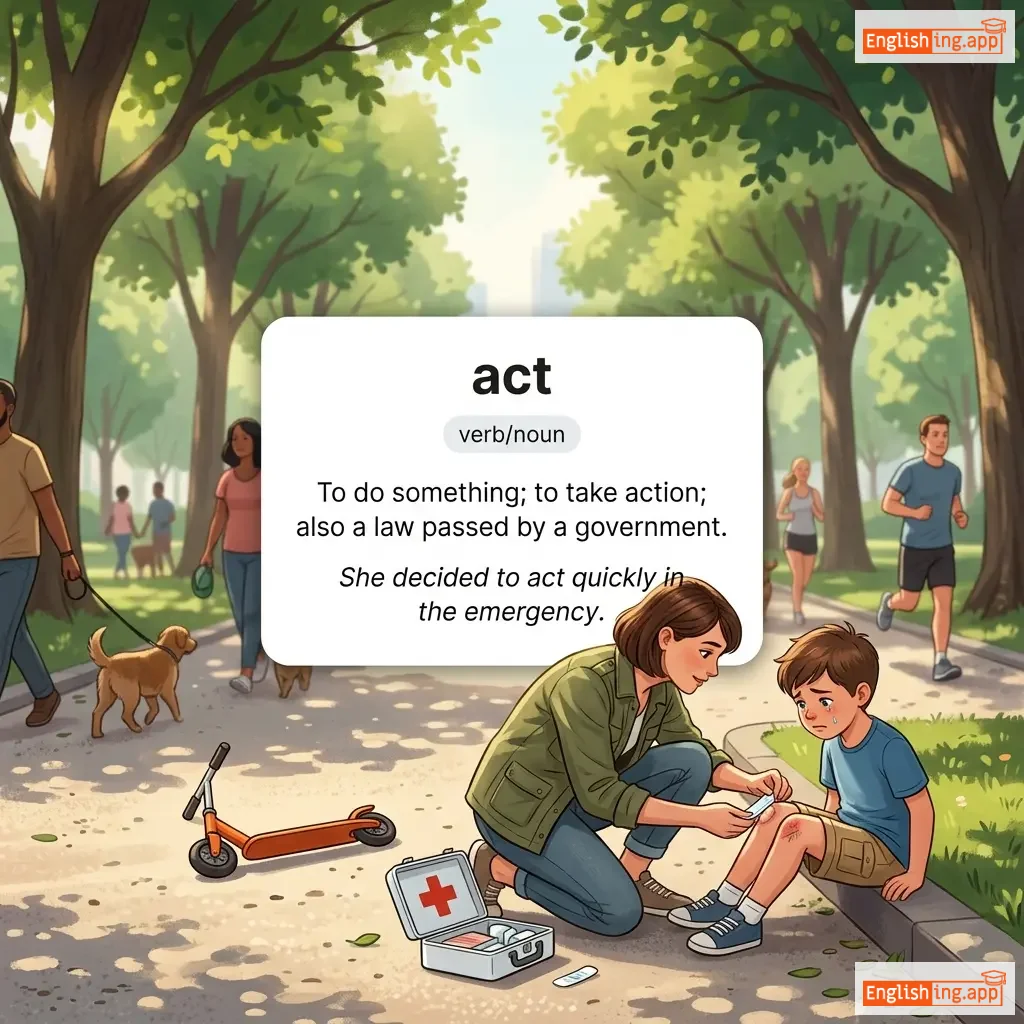
To do something; to take action; also a law passed by a government.
••••••
|
She decided to act quickly in the emergency. |
- •••••• |
act of kindness |
a good or helpful action
••••••
|
- •••••• |
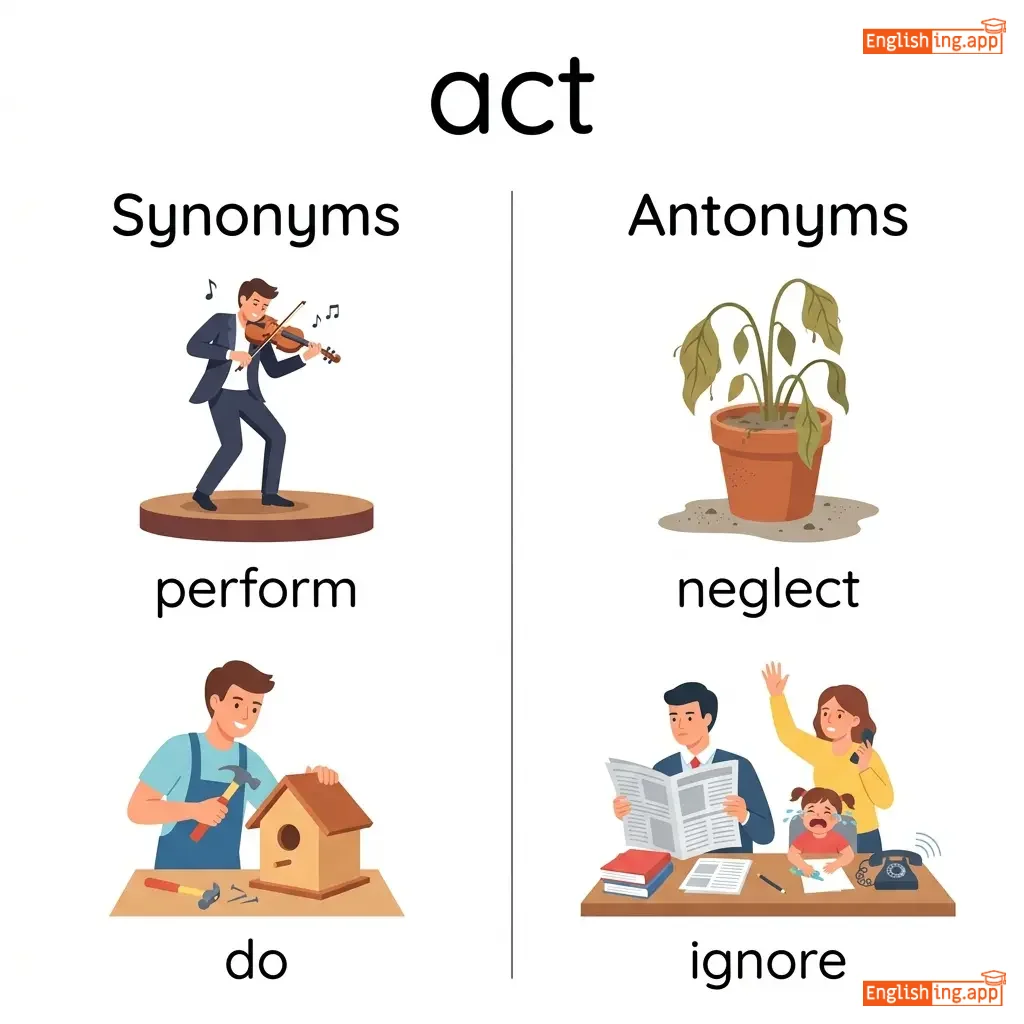
perform, do, operate, behave, enact
••••••
|
neglect, ignore
••••••
|
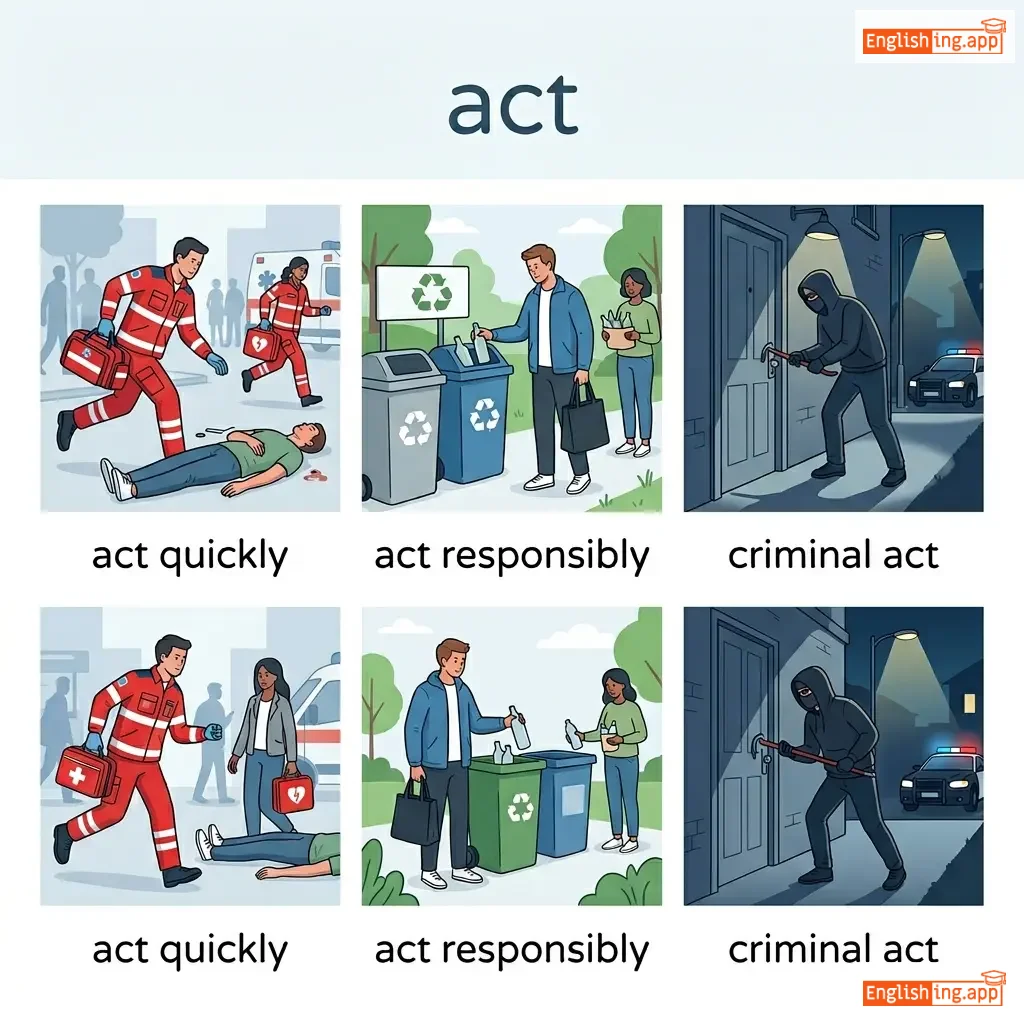
act quickly, act responsibly, criminal act, act of kindness
••••••
|
No •••••• |
|
#10340
➡️
|
/əˈkrɒs/
preposition/adverb
(アクロス)
••••••
|
- •••••• |
横断する
oudan suru
••••••
|
- •••••• | - •••••• | - •••••• | - •••••• |
From one side to the other side of something.
••••••
|
He ran across the street to catch the bus. |
彼はバスに乗るために通りを横断した。
Kare wa basu ni noru tame ni toori o oudanshita.
••••••
|
across the board |
affecting everyone or everything equally
••••••
|
全体にわたって
zentai ni watatte
••••••
|
over, through, beyond, opposite
••••••
|
along, within
••••••
|
run across, go across, look across, spread across
••••••
|
Acrossは横断すること。道路を横断するのは、片側からもう片側へ行くこと。
••••••
|
|
#10341
🏆
|
/əˈtʃiːvmənt/
noun
(アチーブメント)
••••••
|
- •••••• |
達成
tassei
••••••
|
- •••••• | - •••••• | - •••••• | - •••••• |
Something that has been successfully completed or accomplished through effort or skill.
••••••
|
Graduating from university was her greatest achievement. |
大学を卒業することは彼女の最大の達成でした。
Daigaku o sotsugyō suru koto wa kanojo no saidai no tassei deshita.
••••••
|
a sense of achievement |
a feeling of pride in accomplishing something
••••••
|
達成感
tasseikan
••••••
|
accomplishment, success, triumph, attainment, feat
••••••
|
failure, defeat
••••••
|
great achievement, outstanding achievement, sense of achievement, academic achievement
••••••
|
Achievementは達成; 試験に合格すると達成感が得られる。
••••••
|
|
#10342
📑
|
/əˈkɔːrdɪŋ/
preposition/adverb
(アコーディング)
••••••
|
- •••••• |
によると
niyoruto
••••••
|
- •••••• | - •••••• | - •••••• | - •••••• |
As stated by or in agreement with.
••••••
|
According to the report, sales increased last quarter. |
報告書によると、売上は前四半期に増加しました。
Houkokusho niyoruto, uriage wa zenshihanki ni zouka shimashita.
••••••
|
according to plan |
Happening as it was intended or arranged.
••••••
|
計画によると
Keikaku niyoruto
••••••
|
as stated, as reported, in line with, consistent with
••••••
|
contrary to, against
••••••
|
according to law, according to rules, according to tradition
••••••
|
According はによると、報告書に基づいてすべてが進む。
••••••
|
|
#10343
🚑
|
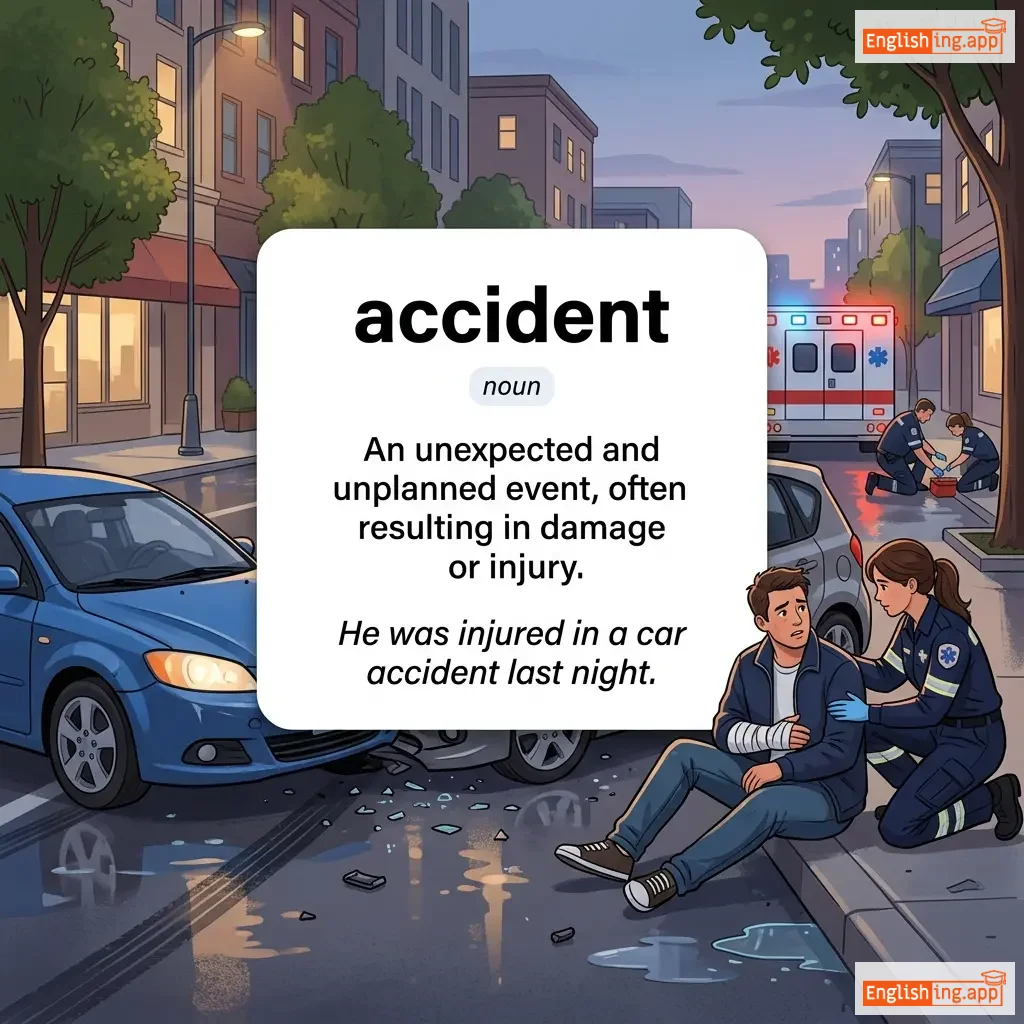
/ˈæksɪdənt/
noun
(akkusidento)
••••••
|
|
事故
jiko
••••••
|
- •••••• | - •••••• | - •••••• | - •••••• |
An unexpected and unplanned event, often resulting in damage or injury.
••••••
|
He was injured in a car accident last night. |
彼は昨晩の車の事故で怪我をしました。
Kare wa sakuban no kuruma no jiko de kega o shimashita.
••••••
|
by accident |
Something done unintentionally.
••••••
|
うっかり
ukkari
••••••
|
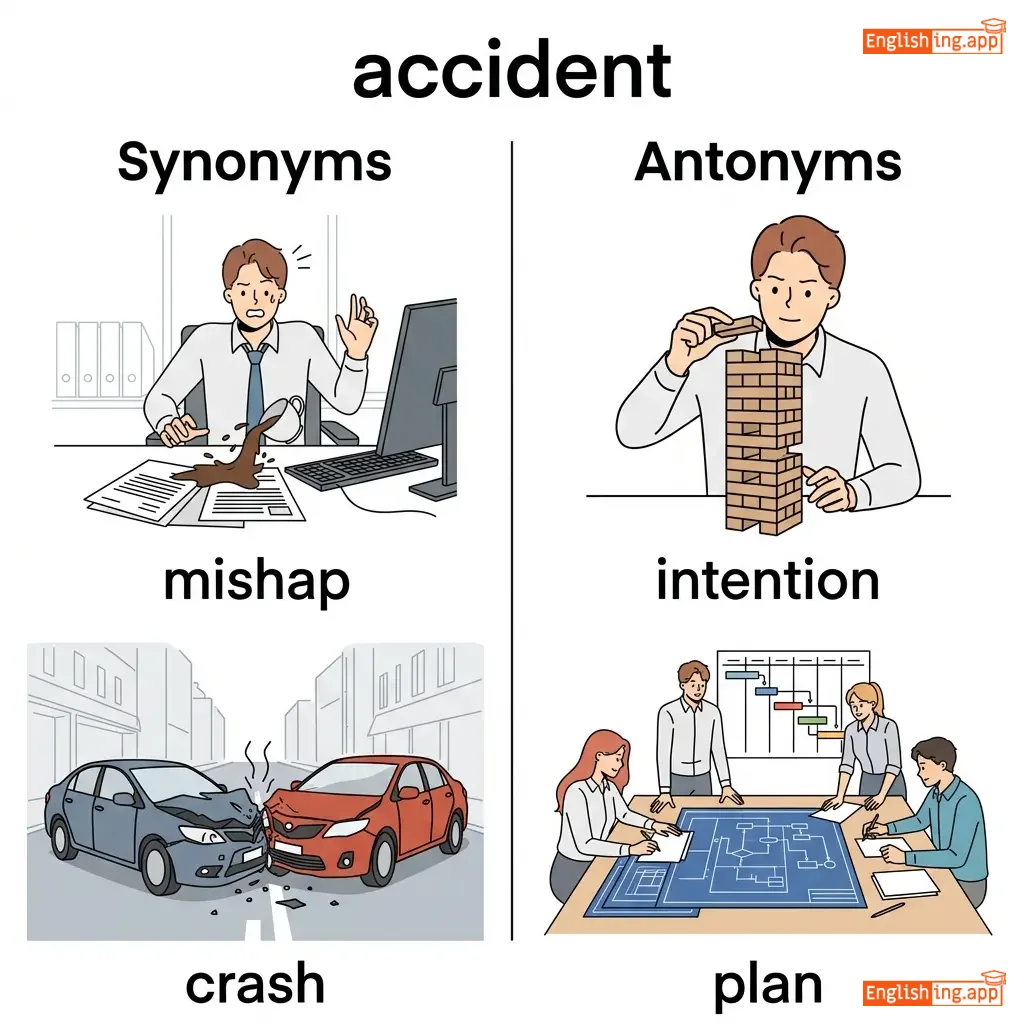
mishap, crash, disaster, incident
••••••
|
intention, plan
••••••
|
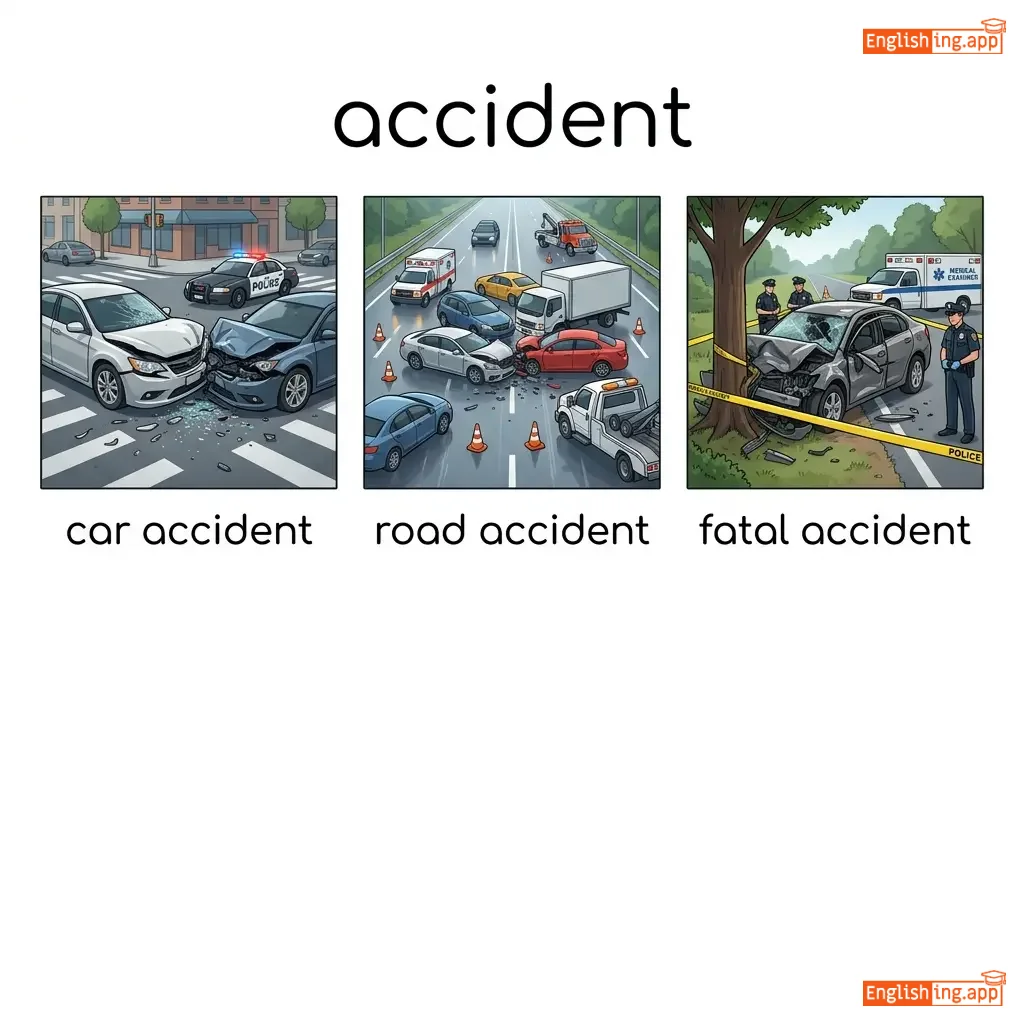
car accident, road accident, fatal accident, happen by accident
••••••
|
事故は事故を意味します — 車の事故が起こると、🚑 救急車が来ます。
••••••
|
|
#10344
✅
|
/ˈæbsəluːtli/
adverb
(アブソリュートリー)
••••••
|
- •••••• |
完全に
kanzen ni
••••••
|
- •••••• | - •••••• | - •••••• | - •••••• |
Completely; without qualification or restriction.
••••••
|
I absolutely agree with your decision. |
私はあなたの決定に完全に同意します。
Watashi wa anata no kettei ni kanzen ni dōi shimasu.
••••••
|
absolutely not |
A strong way of saying no.
••••••
|
絶対に違う
zettai ni chigau
••••••
|
completely, totally, entirely, fully
••••••
|
partially, somewhat
••••••
|
absolutely sure, absolutely necessary, absolutely amazing
••••••
|
Absolutelyは完全にという意味です — '絶対に確信している'を思い出してください。
••••••
|
Vocabulary Quiz
Test your vocabulary by matching words with their translations or meanings.
Login to take the quiz
Comments (0)
Share your thoughts and join the discussion.
Join the discussion by logging in
Login to CommentNo comments yet
Be the first to share your thoughts!