

翻訳
過去
過去分詞
三人称単数
動名詞
意味
例文
例文の翻訳
同義語
対義語
コロケーション
ニーモニック
Swipe left or right, or use the buttons. Tap image to zoom.
例文の翻訳
単語
Lesson 374Lesson 374 - マスクトグル
|
絵文字
|
単語 | Images | 翻訳 | 過去 | 過去分詞 | 三人称単数 | 動名詞 | 意味 | 例文 | 例文の翻訳 | 表現例 | 表現例の意味 | 表現例の翻訳 | 同義語 | 対義語 | コロケーション | ニーモニック |
|---|---|---|---|---|---|---|---|---|---|---|---|---|---|---|---|---|---|
|
#11185
🤒
|
/ɪl/
adjective
(イル)
••••••
|
- •••••• |
病気
byouki
••••••
|
- •••••• | - •••••• | - •••••• | - •••••• |
Not in good health; sick or unwell.
••••••
|
He has been feeling ill since yesterday. |
彼は昨日から体調が悪いです。
Kare wa kinou kara taichou ga warui desu.
••••••
|
ill at ease |
feeling uncomfortable or uneasy
••••••
|
不快
fukai
••••••
|
sick, unwell, unhealthy, ailing
••••••
|
healthy, well, fine
••••••
|
feel ill, fall ill, ill health, ill effects
••••••
|
Ill は病気を意味します。覚えておいて、 'ill' は病気です 🤒.
••••••
|
|
#11186
📍
|
/ɪn/
preposition
(イン)
••••••
|
- •••••• |
中
naka
••••••
|
- •••••• | - •••••• | - •••••• | - •••••• |
expressing the situation of being enclosed or surrounded by something
••••••
|
She is in the kitchen preparing dinner. |
彼女は台所で夕食を準備している。
Kanojo wa daidokoro de yuushoku o junbi shiteiru.
••••••
|
in trouble |
to be in a difficult or problematic situation
••••••
|
困っている
komatteiru
••••••
|
inside, within, enclosed, into, surrounded
••••••
|
out, outside
••••••
|
in fact, in time, in charge, in need
••••••
|
中は内部という意味、'中の家'は家の中を意味します。
••••••
|
|
#11187
🔧
|
/ɪmˈpruːvmənt/
noun
(imprúvment)
••••••
|
- •••••• |
改善
kaizen
••••••
|
- •••••• | - •••••• | - •••••• | - •••••• |
the act of making something better
••••••
|
There has been a significant improvement in his health.
彼の健康には重要な改善がありました。
••••••
|
彼の健康には重要な改善がありました。
kare no kenko ni wa jūyō na kaizen ga arimashita.
••••••
|
continuous improvement
継続的な改善
••••••
|
the ongoing effort to make things better
••••••
|
継続的な改善
keizokuteki na kaizen
••••••
|
progress, enhancement, advancement, growth, development
••••••
|
decline, deterioration, regression
••••••
|
health improvement, significant improvement, gradual improvement, scope for improvement
••••••
|
Improvement は改善です – 改善は improvement です
••••••
|
|
#11188
📈
|
/ɪmˈpruːv/
verb
(インプルーヴ)
••••••
|
- •••••• |
改善する
kaizen suru
••••••
|
improved
インプルーブド
••••••
|
improved
インプルーブド
••••••
|
improves
インプルーヴス
••••••
|
improving
インプルーヴィング
••••••
|
to make something better or become better
••••••
|
Regular practice will improve your skills.
定期的な練習はあなたのスキルを向上させるでしょう。
••••••
|
定期的な練習はあなたのスキルを向上させるでしょう。
teikiteki na renshū wa anata no sukiru o kōjō saseru deshō.
••••••
|
room for improvement
改善の余地
••••••
|
a possibility or need for something to be made better
••••••
|
改善の余地
kaizen no yochi
••••••
|
enhance, develop, refine, upgrade, boost
••••••
|
worsen, decline, degrade
••••••
|
improve performance, improve quality, improve skills, continuously improve
••••••
|
Improveは、良くするために使う
••••••
|
|
#11189
🏆
|
/ɪmˈprɛsɪv/
adjective
(im-pu-re-shi-bu)
••••••
|
- •••••• |
印象的な、賞賛に値する
in-shou-teki na, shou-san ni atai suru
••••••
|
- •••••• | - •••••• | - •••••• | - •••••• |
causing admiration or respect; remarkable
••••••
|
The building is an impressive example of modern architecture.
その建物は現代建築の印象的な例です。
••••••
|
その建物は現代建築の印象的な例です。
Sono tatemono wa gendai kenchiku no inshouteki na rei desu.
••••••
|
- •••••• | - •••••• | - •••••• |
remarkable, striking, extraordinary, admirable, notable
••••••
|
ordinary, unimpressive, dull
••••••
|
impressive achievement, impressive performance, impressive skills, impressive building
••••••
|
印象的な建物は、見る人を圧倒する力があります。
••••••
|
|
#11190
🖼️
|
/ɪmˈprɛʃən/
noun
(インプレッション)
••••••
|
- •••••• |
印象, 概念
inpuresshon, gainen
••••••
|
- •••••• | - •••••• | - •••••• | - •••••• |
an idea, feeling, or opinion about something or someone
••••••
|
The book gave me a good first impression. |
その本は私に良い最初の印象を与えました。
Sono hon wa watashi ni yoi saisho no inshou o ataemashita.
••••••
|
leave an impression |
to have a lasting effect on someone
••••••
|
印象を残す
inshou o nokosu
••••••
|
impact, effect, influence, perception, opinion
••••••
|
ignorance, indifference
••••••
|
first impression, strong impression, lasting impression, overall impression
••••••
|
First impression is last impression – 最初の印象が大切
••••••
|
|
#11191
✨
|
/ɪmˈprɛs/
verb
(インプレッス)
••••••
|
- •••••• |
感動させる
kandō saseru
••••••
|
impressed
インプレスト
••••••
|
impressed
インプレスト
••••••
|
impresses
インプレッシズ
••••••
|
impressing
インプレッシング
••••••
|
to cause someone to feel admiration or respect
••••••
|
Her speech managed to impress the audience.
彼女のスピーチは聴衆を感動させました。
••••••
|
彼女のスピーチは聴衆を感動させました。
Kanojo no supīchi wa chōshū o kandō sasemashita.
••••••
|
make an impression
印象を残す
••••••
|
to have a strong effect on someone
••••••
|
印象を残す
inshō o nokosu
••••••
|
amaze, astonish, inspire, move, influence
••••••
|
bore, disappoint, discourage
••••••
|
impress deeply, impress someone, impress with, fail to impress
••••••
|
インプレッスする時にみんなが言う 'インプレッシブ!' – 感動させる
••••••
|
|
#11192
🚫
|
/ɪmˈpɑːsəbl/
adjective
(インポッシブル)
••••••
|
- •••••• |
不可能
fukanou
••••••
|
- •••••• | - •••••• | - •••••• | - •••••• |
not able to occur, exist, or be done
••••••
|
It is impossible to finish this work in one day.
この仕事を1日で終わらせるのは不可能です。
••••••
|
この仕事を1日で終わらせるのは不可能です。
Kono shigoto wo ichinichi de owaraseru no wa fukanou desu.
••••••
|
nothing is impossible
何事も不可能ではない
••••••
|
everything can be achieved with effort
••••••
|
何事も不可能ではない
Nanikoto mo fukanou de wa nai
••••••
|
unachievable, unattainable, hopeless, impracticable
••••••
|
possible, achievable, feasible
••••••
|
seem impossible, make impossible, impossible task, impossible mission
••••••
|
不可能、それは挑戦することを意味します!💪
••••••
|
|
#11193
📜
|
/ɪmˈpoʊz/
verb
(インポーズ)
••••••
|
|
課す
kasu
••••••
|
imposed
インポーズド
••••••
|
imposed
インポーズド
••••••
|
imposes
インポーズズ
••••••
|
imposing
インポージング
••••••
|
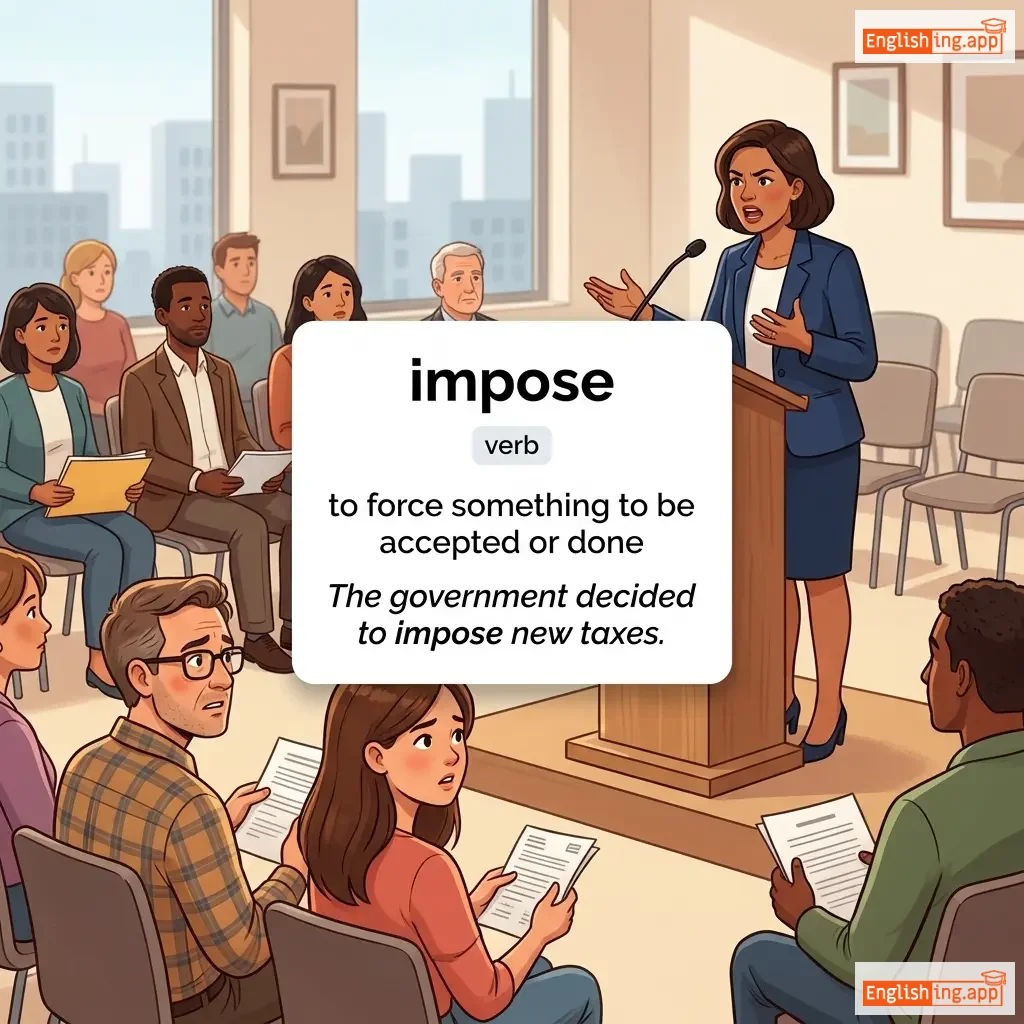
to force something to be accepted or done
••••••
|
The government decided to impose new taxes.
政府は新しい税金を課すことを決定した。
••••••
|
政府は新しい税金を課すことを決定した。
Seifu wa atarashī zeikin o kasu koto o kettei shita.
••••••
|
impose a ban
禁止を課す
••••••
|
to officially prohibit something
••••••
|
禁止を課す
kinshi o kasu
••••••
|
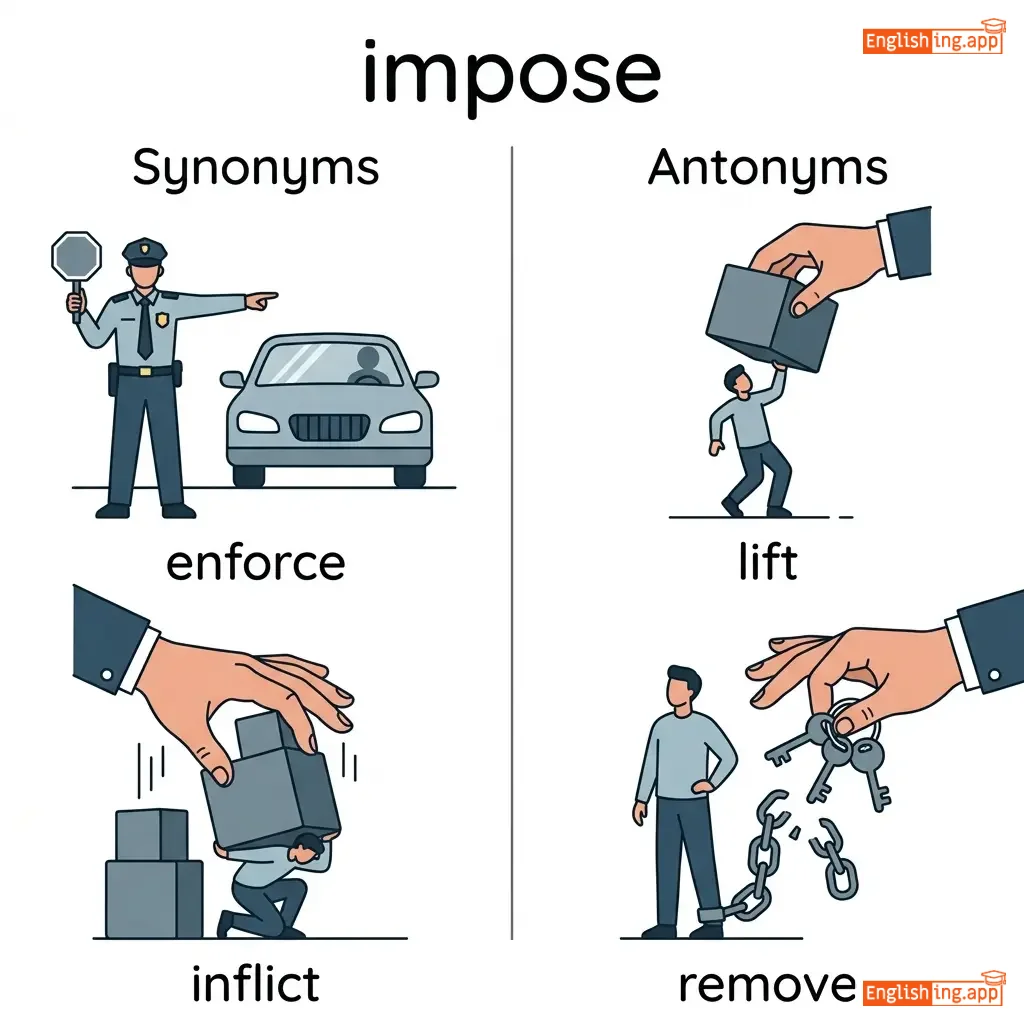
enforce, inflict, apply, establish, dictate
••••••
|
lift, remove, withdraw
••••••
|
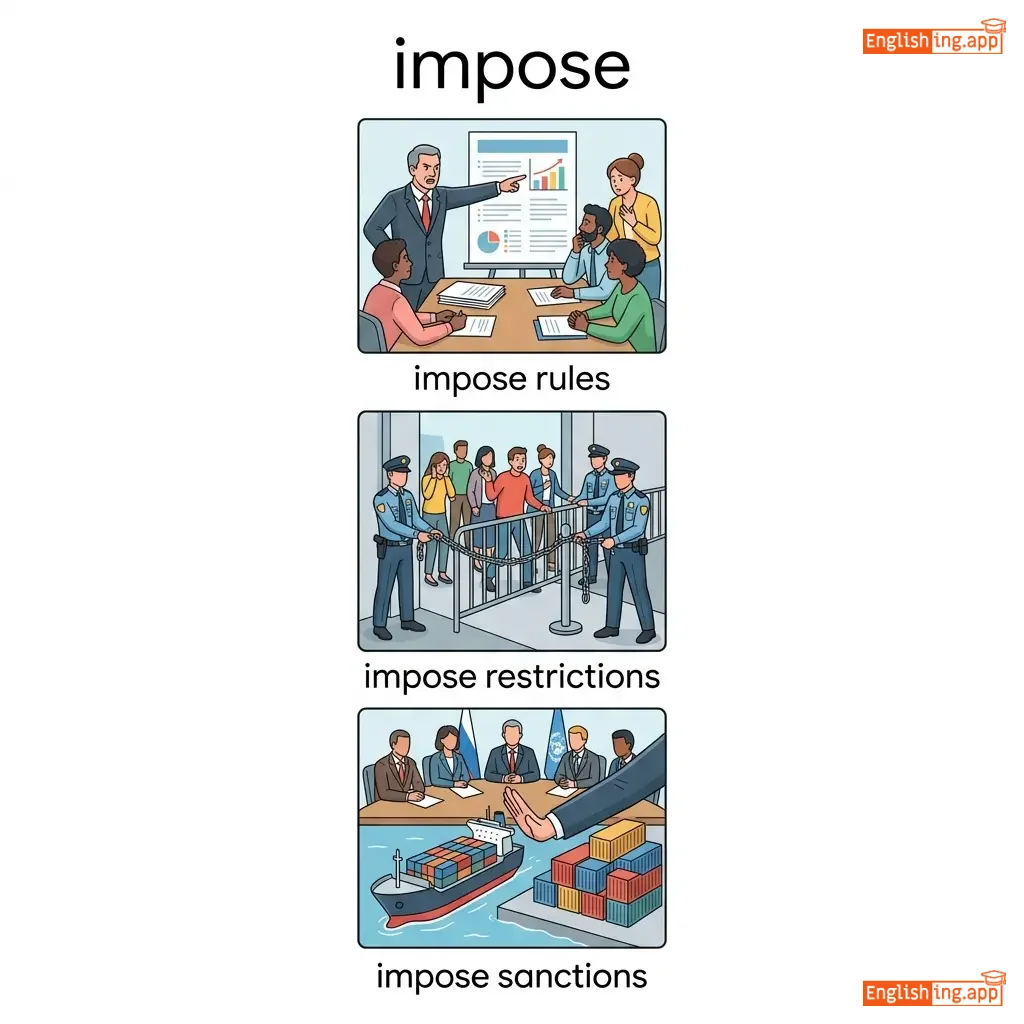
impose rules, impose restrictions, impose sanctions, impose fines
••••••
|
Imposeは課すです - 法律を課す、制限を課す!
••••••
|
|
#11194
⭐
|
/ɪmˈpɔːrtəns/
noun
(インポータンス)
••••••
|
|
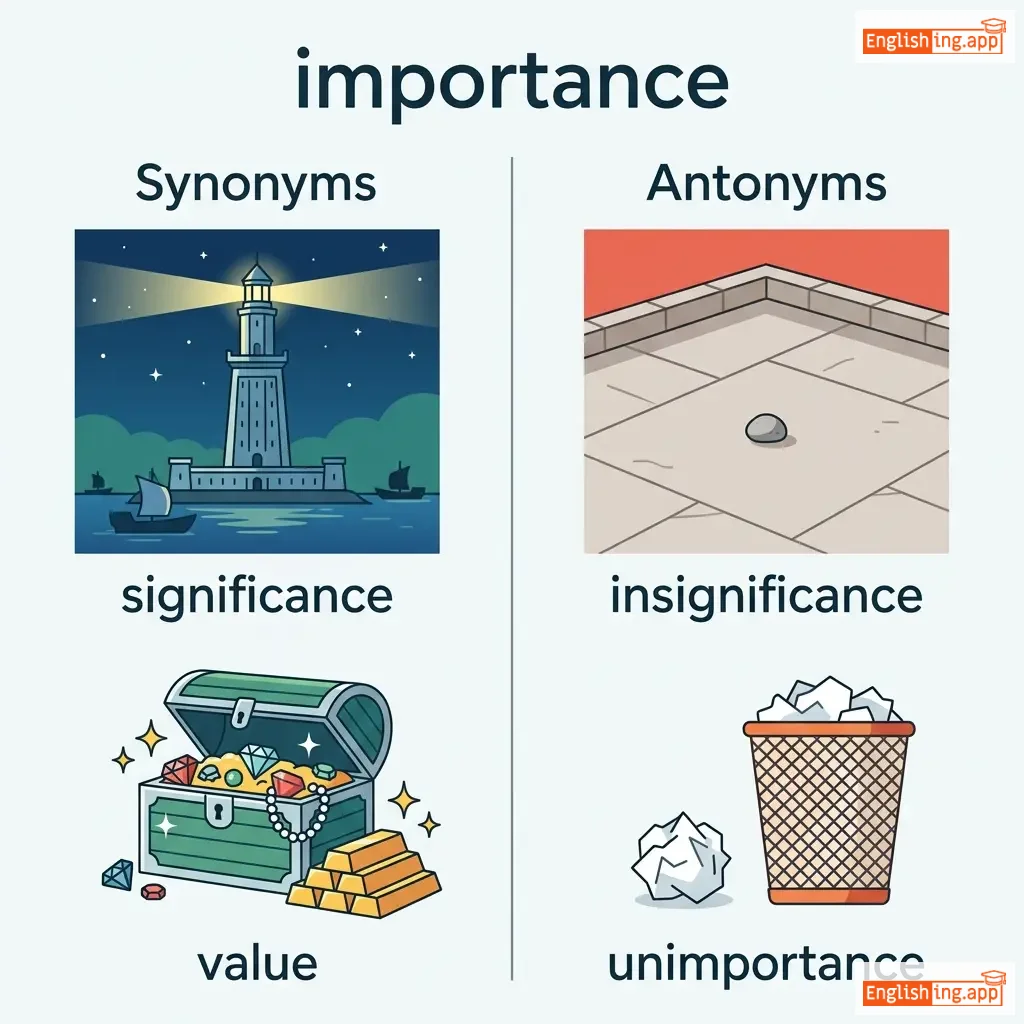
重要性
jūyō-sei
••••••
|
- •••••• | - •••••• | - •••••• | - •••••• |
the state or fact of being of great significance or value
••••••
|
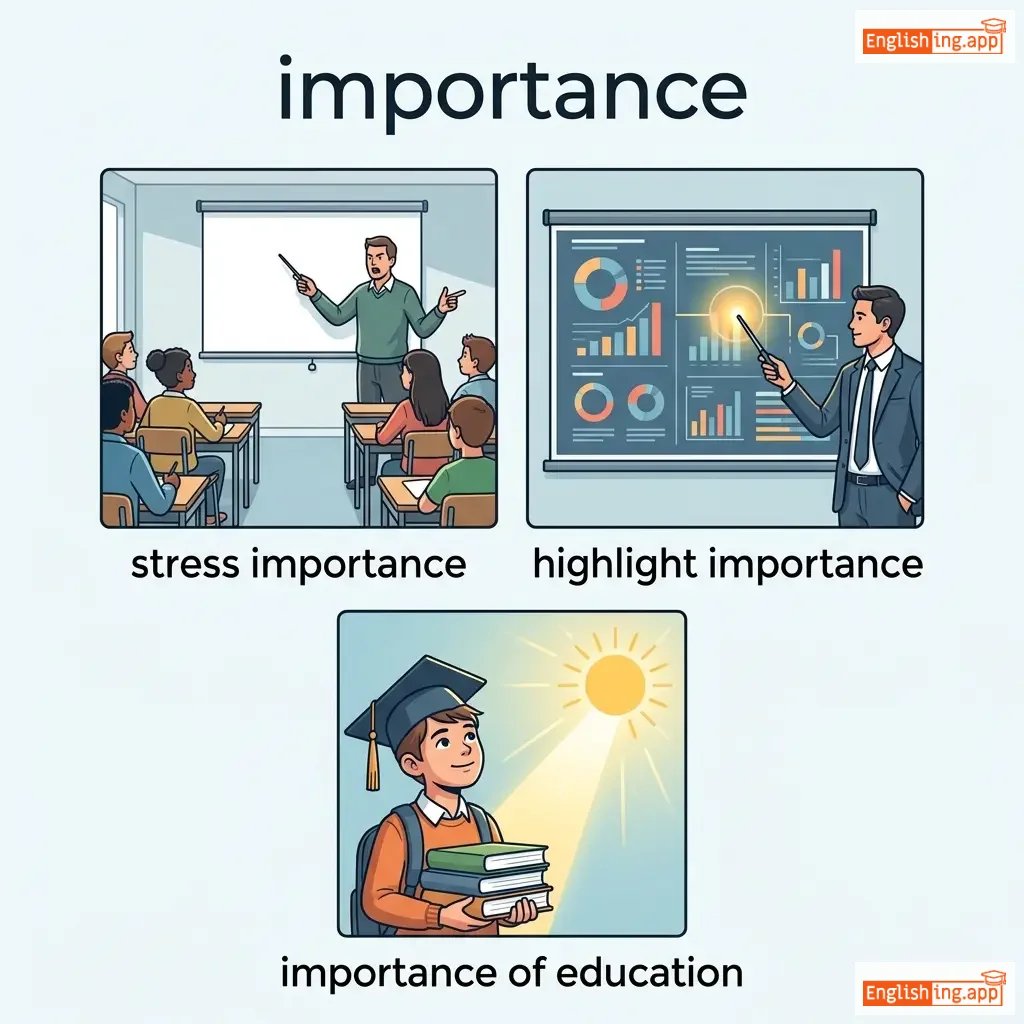
She stressed the importance of honesty in all relationships. |
彼女はすべての関係における誠実の重要性を強調しました。
Kanojo wa subete no kankei ni okeru seijitsu no jūyō-sei o kyōchō shimashita.
••••••
|
of great importance |
extremely valuable or significant
••••••
|
非常に重要
hijō ni jūyō
••••••
|
significance, value, weight, relevance, consequence
••••••
|
insignificance, unimportance
••••••
|
stress importance, highlight importance, importance of education, importance of health
••••••
|
重要性 = Importance, 忘れないでね! 🌟
••••••
|
|
#11195
🛂
|
/ˌɪmɪˈɡreɪʃən/
noun
(イミグレーション)
••••••
|
- •••••• |
移民
imin
••••••
|
- •••••• | - •••••• | - •••••• | - •••••• |
the action of coming to live permanently in a foreign country
••••••
|
Immigration policies vary from country to country.
移民政策は国によって異なります。
••••••
|
移民政策は国によって異なります。
Imin seisaku wa kuni ni yotte kotonari masu.
••••••
|
illegal immigration
不法移民
••••••
|
the act of entering a country without legal permission
••••••
|
不法移民
fuhō imin
••••••
|
migration, settlement, relocation, entry
••••••
|
emigration, deportation
••••••
|
immigration policy, immigration law, illegal immigration, mass immigration
••••••
|
移民は「移」+「民」- 他の国に移住すること
••••••
|
|
#11196
⚡
|
/ɪˈmiːdiətli/
adverb
(イミディアトリー)
••••••
|
- •••••• |
直ちに
tadachini
••••••
|
- •••••• | - •••••• | - •••••• | - •••••• |
at once; without delay
••••••
|
She responded immediately to the emergency call. |
彼女は緊急の電話に直ちに応答した。
Kanojo wa kinkyū no denwa ni tadachini ōtō shita.
••••••
|
immediately after |
right after something happens
••••••
|
直ちに後
tadachini ato
••••••
|
instantly, promptly, directly, quickly, right away
••••••
|
later, eventually, afterward
••••••
|
respond immediately, happen immediately, immediately after, immediately before
••••••
|
直ちにとは遅れることなく、直ちに対応すること。
••••••
|
|
#11197
🌈
|
/ɪˌmædʒɪˈneɪʃən/
noun
(イマジネーション)
••••••
|
- •••••• |
想像力
souzouryoku
••••••
|
- •••••• | - •••••• | - •••••• | - •••••• |
The ability of the mind to create ideas or pictures not present to the senses.
••••••
|
Children often use their imagination while playing. |
子供たちは遊んでいるときによく想像力を使います。
Kodomotachi wa asonde iru toki ni yoku souzouryoku o tsukaimasu.
••••••
|
wild imagination |
an ability to think of ideas or scenarios that are unusual or unrealistic
••••••
|
豊かな想像力
yutakana souzouryoku
••••••
|
creativity, fantasy, vision, invention, ingenuity
••••••
|
reality, fact
••••••
|
use imagination, vivid imagination, spark imagination, fertile imagination
••••••
|
想像力 = imagination 🌈, 'Image in nation' とは国の中に画像を想像することを意味します。
••••••
|
|
#11198
🖼️
|
/ˈɪmɪdʒ/
noun
(イメージ)
••••••
|
- •••••• |
画像
gazo
••••••
|
- •••••• | - •••••• | - •••••• | - •••••• |
A visual representation of something, such as a picture or likeness.
••••••
|
The magazine published a clear image of the celebrity.
雑誌は有名人の鮮明な画像を公開しました。
••••••
|
雑誌は有名人の鮮明な画像を公開しました。
Zasshi wa yūmeijin no senmei na gazō o kōkai shimashita.
••••••
|
public image
パブリックイメージ
••••••
|
the perception that people have of a person or organization
••••••
|
公共のイメージ
kōkyō no imēji
••••••
|
picture, photo, likeness, representation, figure
••••••
|
reality, truth
••••••
|
digital image, mental image, image quality, image editing
••••••
|
画像 = 見るもの、覚えておいてね!
••••••
|
|
#11199
🩺
|
/ˈɪlnəs/
noun
(irunesu)
••••••
|
- •••••• |
病気
byōki
••••••
|
- •••••• | - •••••• | - •••••• | - •••••• |
A condition of being unwell or suffering from a disease.
••••••
|
She missed school due to a serious illness.
彼女は深刻な病気のため学校を休んだ。
••••••
|
彼女は深刻な病気のため学校を休んだ。
Kanojo wa shinkoku na byōki no tame gakkō o yasunda.
••••••
|
- •••••• | - •••••• | - •••••• |
sickness, disease, ailment, disorder
••••••
|
health, wellness
••••••
|
chronic illness, mental illness, recover from illness, illness symptoms
••••••
|
Illness = 病気。 'Ill' と 'ness' は病気になること。
••••••
|
|
#11200
❓
|
/haʊ/
adverb
(ハウ)
••••••
|
- •••••• |
どう
dou
••••••
|
- •••••• | - •••••• | - •••••• | - •••••• |
in what way or manner; by what means
••••••
|
How do you solve this problem?
この問題をどう解決しますか?
••••••
|
この問題をどう解決しますか?
Kono mondai o dou kaiketsu shimasu ka?
••••••
|
how come
どうしてそうなったのですか?
••••••
|
used to ask why something has happened
••••••
|
どうしてそうなったのですか?
Doushite sou natta no desu ka?
••••••
|
in what way, by what means, in what manner
••••••
|
why not, never
••••••
|
how often, how much, how many, how long
••••••
|
Howは日本語でどう、覚えておいてね、何かを尋ねるときに使う言葉。
••••••
|
|
#11201
ℹ️
|
/ˌaɪˈiː/
abbreviation
(アイ・イー)
••••••
|
- •••••• |
すなわち
sunawachi
••••••
|
- •••••• | - •••••• | - •••••• | - •••••• |
That is to say; used to clarify or explain something more precisely.
••••••
|
Many amphibians, i.e., frogs and salamanders, can live both in water and on land.
多くの両生類、すなわちカエルとサラマンダーは、水中と陸上の両方で生きることができます。
••••••
|
多くの両生類、すなわちカエルとサラマンダーは、水中と陸上の両方で生きることができます。
Ooku no ryouseirui, sunawachi kaeru to sarramanda wa, suichuu to rikujou no ryouhou de ikiru koto ga dekimasu.
••••••
|
- •••••• | - •••••• | - •••••• |
that is, namely, specifically, in other words
••••••
|
etc, for example
••••••
|
i.e. meaning, i.e. used, i.e. example
••••••
|
i.e. はすなわち - 'ie = すなわち' と覚えておいて、いつも明確にするために使います。
••••••
|
|
#11202
🪪
|
/aɪˈdɛntɪti/
noun
(アイデンティティ)
••••••
|
|
アイデンティティ
aidentiti
••••••
|
- •••••• | - •••••• | - •••••• | - •••••• |
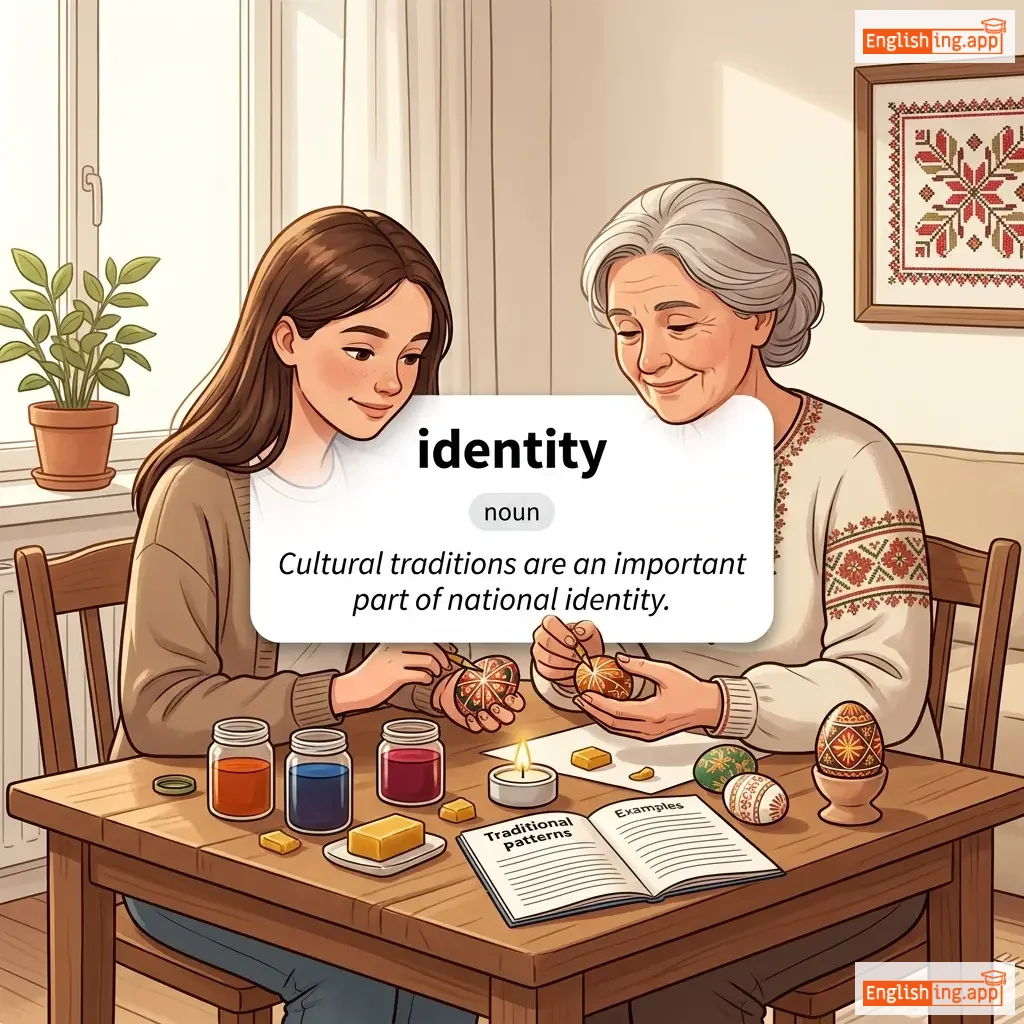
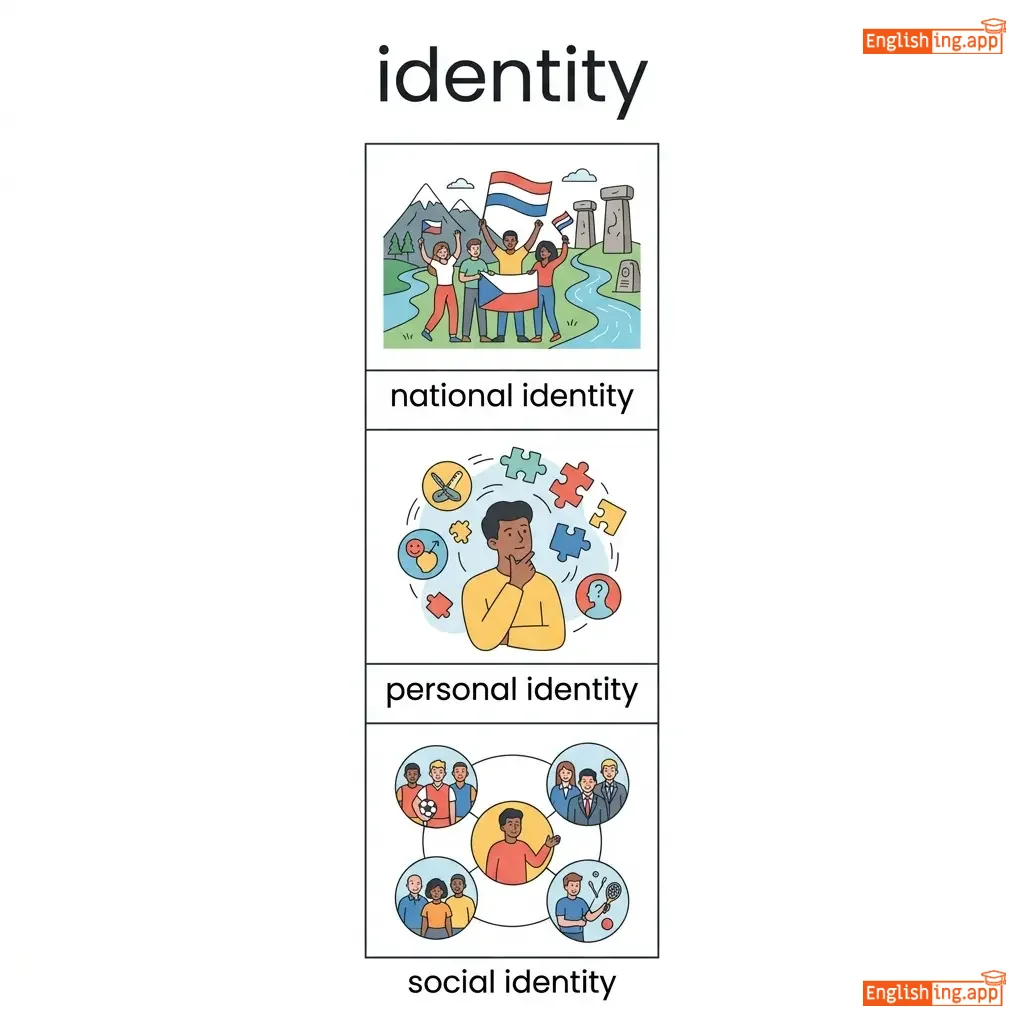
the characteristics, feelings, or beliefs that make a person or group different from others
••••••
|
Cultural traditions are an important part of national identity. |
文化的な伝統は、国のアイデンティティの重要な部分です。
bunkateki na dentou wa, kuni no aidentiti no juuyou na bubun desu
••••••
|
identity crisis |
a period of uncertainty about one's sense of self
••••••
|
アイデンティティ危機
aidentiti kiki
••••••
|
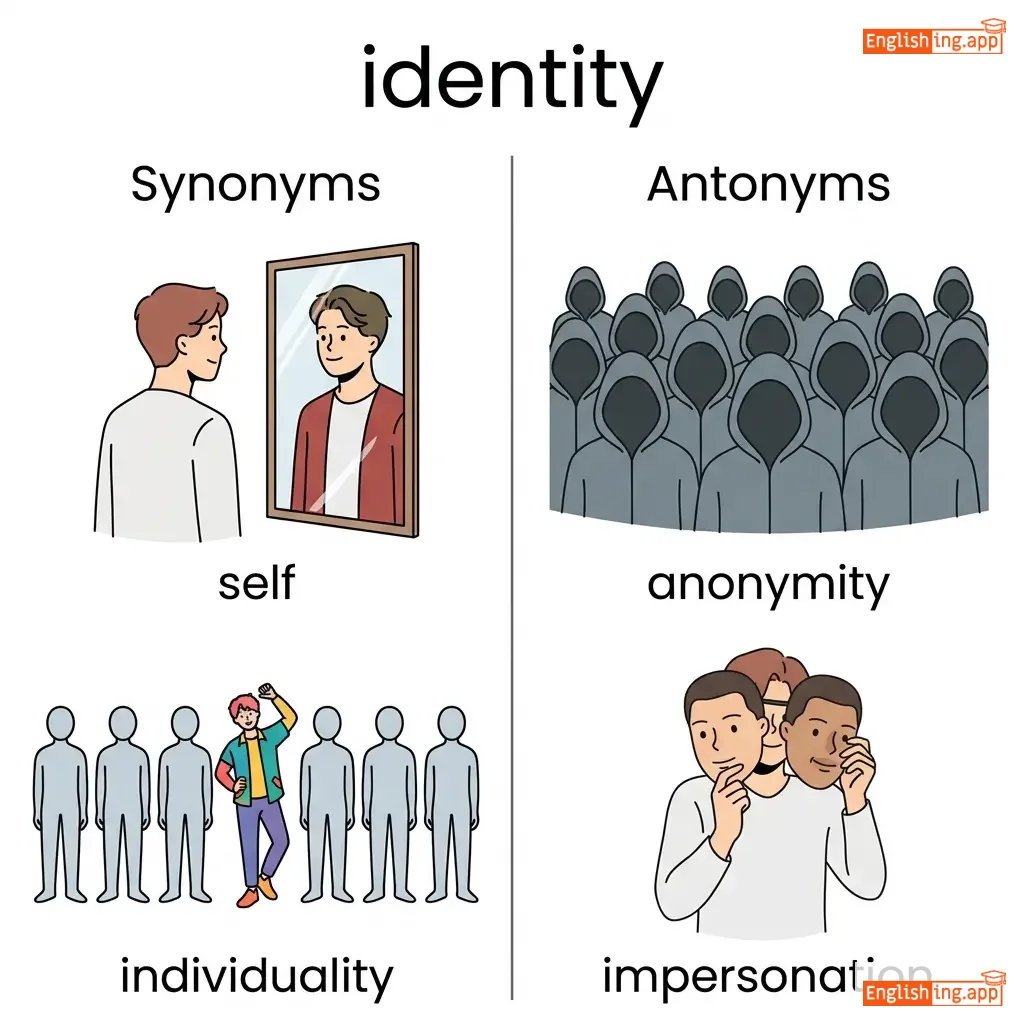
self, individuality, character, personality
••••••
|
anonymity, impersonation
••••••
|
national identity, personal identity, social identity, identity card
••••••
|
アイデンティティはアイデンティティです - 身分証明書でアイデンティティが証明されます
••••••
|
|
#11203
🔍
|
/aɪˈdɛntɪfaɪ/
verb
(アイデンティファイ)
••••••
|
|
識別する
shikibetsu suru
••••••
|
identified
アイデンティファイド
••••••
|
identified
アイデンティファイド
••••••
|
identifies
アイデンティファイズ
••••••
|
identifying
アイデンティファイイング
••••••
|
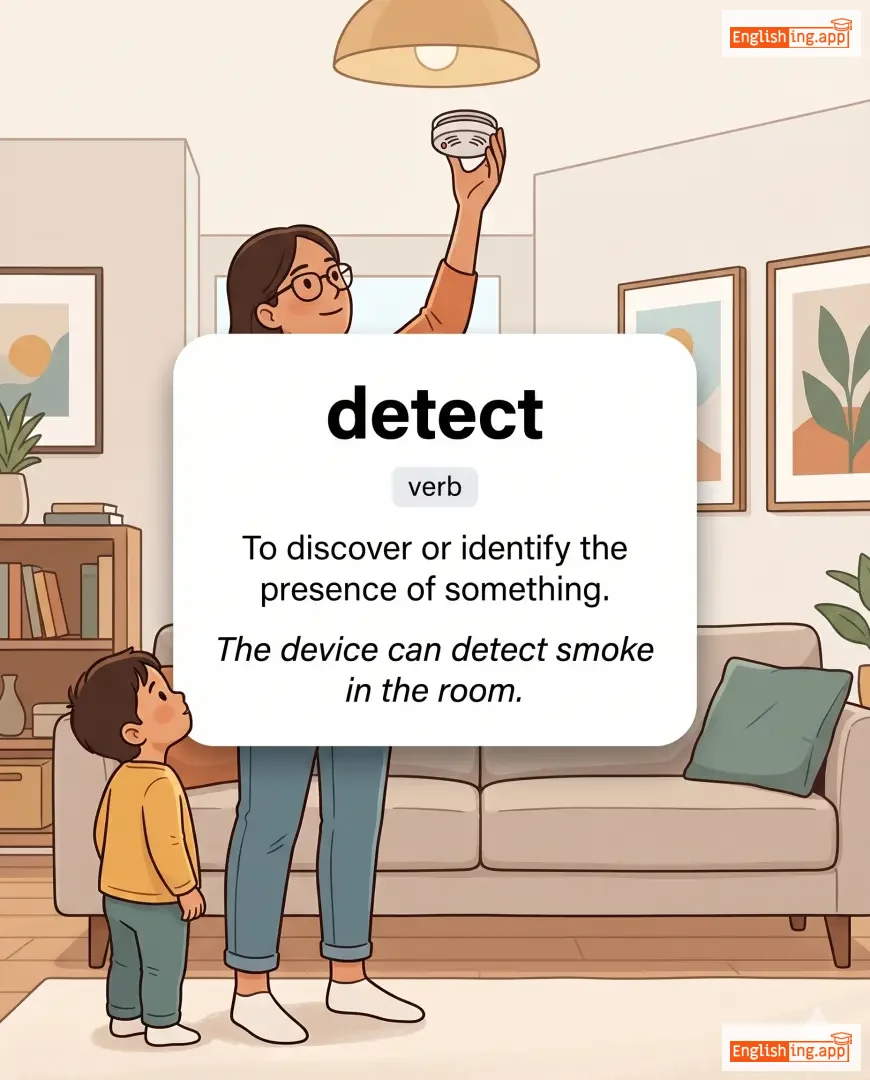
to recognize or establish what something or someone is
••••••
|
The police could not identify the suspect.
警察は容疑者を識別できませんでした。
••••••
|
警察は容疑者を識別できませんでした。
keisatsu wa yougisha o shikibetsu dekimasen deshita.
••••••
|
identify with
同一視する
••••••
|
to feel that you understand someone because you have had similar experiences
••••••
|
共感する
kyoukan suru
••••••
|
recognize, detect, determine, distinguish, verify
••••••
|
confuse, misidentify
••••••
|
identify problems, identify needs, identify the source, identify correctly
••••••
|
識別はIDのように認識すること。
••••••
|
|
#11204
🪪
|
/aɪˌdɛntɪfɪˈkeɪʃən/
noun
(アイデンティフィケーション)
••••••
|
- •••••• |
身分証明
minbun shoumei
••••••
|
- •••••• | - •••••• | - •••••• | - •••••• |
the process of recognizing or proving who or what someone or something is
••••••
|
You need proper identification to enter the building. |
ビルに入るには適切な身分証明が必要です。
Biru ni hairu ni wa tekisetsu na minbun shoumei ga hitsuyou desu.
••••••
|
- •••••• | - •••••• | - •••••• |
recognition, verification, authentication, validation
••••••
|
misidentification, confusion
••••••
|
identity card, identification number, personal identification, photo identification
••••••
|
Identification は日本語で身分証明書。IDカードを見せれば覚えやすい!
••••••
|
|
#11205
✨
|
/aɪˈdiːəl/
adjective
(アイディアル)
••••••
|
- •••••• |
理想的な
risōtekina
••••••
|
- •••••• | - •••••• | - •••••• | - •••••• |
the best possible; perfect for a situation
••••••
|
This place is ideal for a picnic. |
この場所はピクニックに理想的です。
Kono basho wa pikunikku ni risōteki desu.
••••••
|
- •••••• | - •••••• | - •••••• |
perfect, excellent, optimal, model, flawless
••••••
|
imperfect, flawed, unsuitable
••••••
|
ideal situation, ideal choice, ideal candidate, ideal time
••••••
|
理想的なは完璧という意味、例えば‘理想的な仕事’は完璧な仕事。
••••••
|
|
#11206
🧊
|
/aɪs/
noun
(aisu)
••••••
|
- •••••• |
氷
kōri
••••••
|
- •••••• | - •••••• | - •••••• | - •••••• |
frozen water, a solid form of water
••••••
|
The lake was covered with thick ice in winter. |
湖は冬に厚い氷で覆われていた。
Mizuumi wa fuyu ni atsui kōri de ōwarete ita.
••••••
|
break the ice |
to start a conversation in a social situation
••••••
|
氷を破る
kōri o yaburu
••••••
|
frost, snow, glacier, icicle
••••••
|
heat, fire
••••••
|
ice cubes, ice cream, ice skating, thin ice
••••••
|
Ice = 氷、アイスクリームのようなもの 🍦
••••••
|
|
#11207
🙋
|
/aɪ/
pronoun
(アイ)
••••••
|
- •••••• |
私
watashi
••••••
|
- •••••• | - •••••• | - •••••• | - •••••• |
used by a speaker to refer to himself or herself
••••••
|
I am learning English every day. |
私は毎日英語を学んでいます。
Watashi wa mainichi eigo o manandeimasu.
••••••
|
- •••••• | - •••••• | - •••••• |
me, myself
••••••
|
you, they
••••••
|
I think, I know, I want, I am
••••••
|
I は私 — 'アイ' は '私' に似ています。
••••••
|
|
#11208
🤕
|
/hɜːrt/
verb/adjective
(ハート)
••••••
|
- •••••• |
傷つける
kizutsukeru
••••••
|
hurt
ハート
••••••
|
hurt
ハート
••••••
|
hurts
ハーツ
••••••
|
hurting
ハーティング
••••••
|
to cause pain or injury; to feel pain
••••••
|
He hurt his knee while playing football.
ヒー ハート ヒズ ニー ワイル プレイング フットボール。
••••••
|
彼はサッカーをしている時に膝を傷つけた。
Kare wa sakkā o shite iru toki ni hiza o kizutsuketa.
••••••
|
hurt feelings
ハート フィーリングス
••••••
|
emotional pain caused by someone's words or actions
••••••
|
傷ついた感情
kizutsuita kanjō
••••••
|
injure, wound, damage, bruise
••••••
|
heal, comfort, soothe
••••••
|
hurt badly, hurt someone, hurt feelings
••••••
|
Hurtは傷つけること — 心も体も痛くなる。
••••••
|
|
#11209
🎯
|
/ˈhʌntɪŋ/
noun/verb
(ハンティング)
••••••
|
- •••••• |
狩猟
shuryou
••••••
|
- •••••• | - •••••• |
hunts
ハンツ
••••••
|
hunting
ハンティング
••••••
|
the activity of chasing and killing wild animals
••••••
|
Hunting is strictly regulated in many countries.
狩猟は多くの国で厳格に規制されています。
••••••
|
狩猟は多くの国で厳格に規制されています。
Shuryou wa ooku no kuni de genkaku ni kisei sareteimasu.
••••••
|
house-hunting
家探し
••••••
|
the act of searching for a house to live in
••••••
|
家探し
ie sagashi
••••••
|
pursuing, tracking, chasing, stalking
••••••
|
protecting, preserving
••••••
|
go hunting, hunting season, hunting ground
••••••
|
Hunting とは狩猟 — Hunt とは狩猟。
••••••
|
|
#11210
🏹
|
/ˈhʌntər/
noun
(ハンター)
••••••
|
- •••••• |
ハンター
hantā
••••••
|
- •••••• | - •••••• | - •••••• | - •••••• |
a person or animal that hunts animals for food or sport
••••••
|
The hunter tracked the deer through the forest.
ハンターは森を通って鹿を追跡しました。
••••••
|
ハンターは森を通って鹿を追跡しました。
Hantā wa mori o tōtte shika o tsuiseki shimashita.
••••••
|
- •••••• | - •••••• | - •••••• |
trapper, chaser, pursuer, stalker
••••••
|
prey, victim
••••••
|
skilled hunter, deer hunter, big-game hunter
••••••
|
Hunterは狩人を意味します - 食べ物やスポーツのために狩る。
••••••
|
|
#11211
🍽️
|
/ˈhʌŋɡri/
adjective
(ハングリー)
••••••
|
- •••••• |
空腹
kuufuku
••••••
|
- •••••• | - •••••• | - •••••• | - •••••• |
feeling or showing the need for food
••••••
|
The children were hungry after playing outside all day. |
子供たちは一日中外で遊んだ後、空腹だった。
Kodomotachi wa ichinichijuu soto de asonda ato, kuufuku datta.
••••••
|
hungry for success |
eager or ambitious to achieve something
••••••
|
成功への飢え
seikou e no ue
••••••
|
starving, famished, ravenous, peckish
••••••
|
full, satisfied, stuffed
••••••
|
very hungry, feel hungry, go hungry, hungry eyes
••••••
|
Hungry は空腹を意味する — 空腹時に腹が鳴る音が 'ハングリー' という感じ。
••••••
|
|
#11212
💯
|
/ˈhʌndrəd/
noun, numeral
(handoreddo)
••••••
|
- •••••• |
百
hyaku
••••••
|
- •••••• | - •••••• | - •••••• | - •••••• |
the number 100
••••••
|
There are a hundred students in the hall. |
ホールには百人の学生がいます。
Hōru ni wa hyaku-nin no gakusei ga imasu.
••••••
|
hundred percent |
completely; fully
••••••
|
百分の百
hyaku bun no hyaku
••••••
|
century, 100, large number
••••••
|
zero, none
••••••
|
one hundred, hundred percent, hundred times
••••••
|
百 = 100、百分の百は完全に。
••••••
|
|
#11213
🧑
|
/ˈhjuːmən/
noun, adjective
(ヒューマン)
••••••
|
|
人間
ningen
••••••
|
- •••••• | - •••••• | - •••••• | - •••••• |
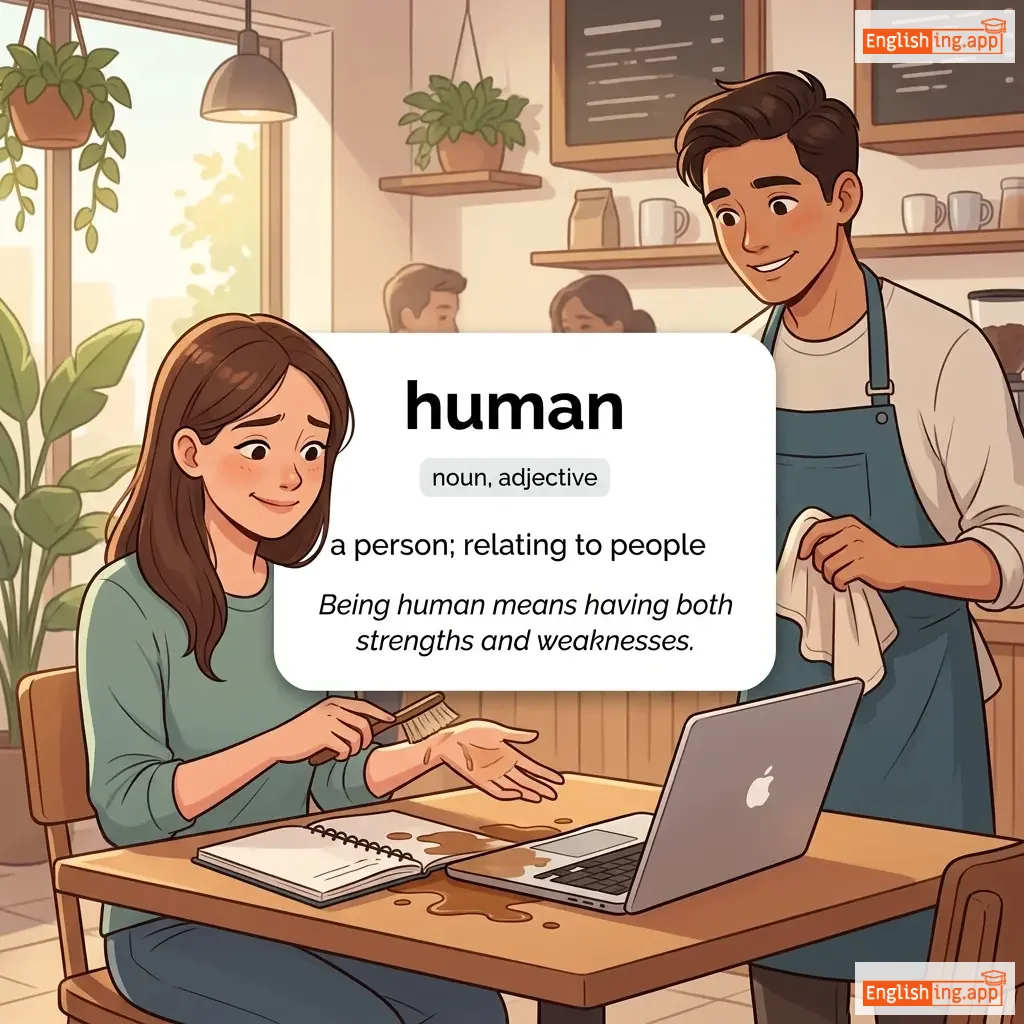
a person; relating to people
••••••
|
Being human means having both strengths and weaknesses. |
人間であることは、強さと弱さの両方を持つことを意味します。
Ningen de aru koto wa, tsuyo-sa to yowa-sa no ryōhō o motsu koto o imi shimasu.
••••••
|
to err is human |
making mistakes is a natural part of being human
••••••
|
過ちは人間の本性
ayamani wa ningen no honshō
••••••
|
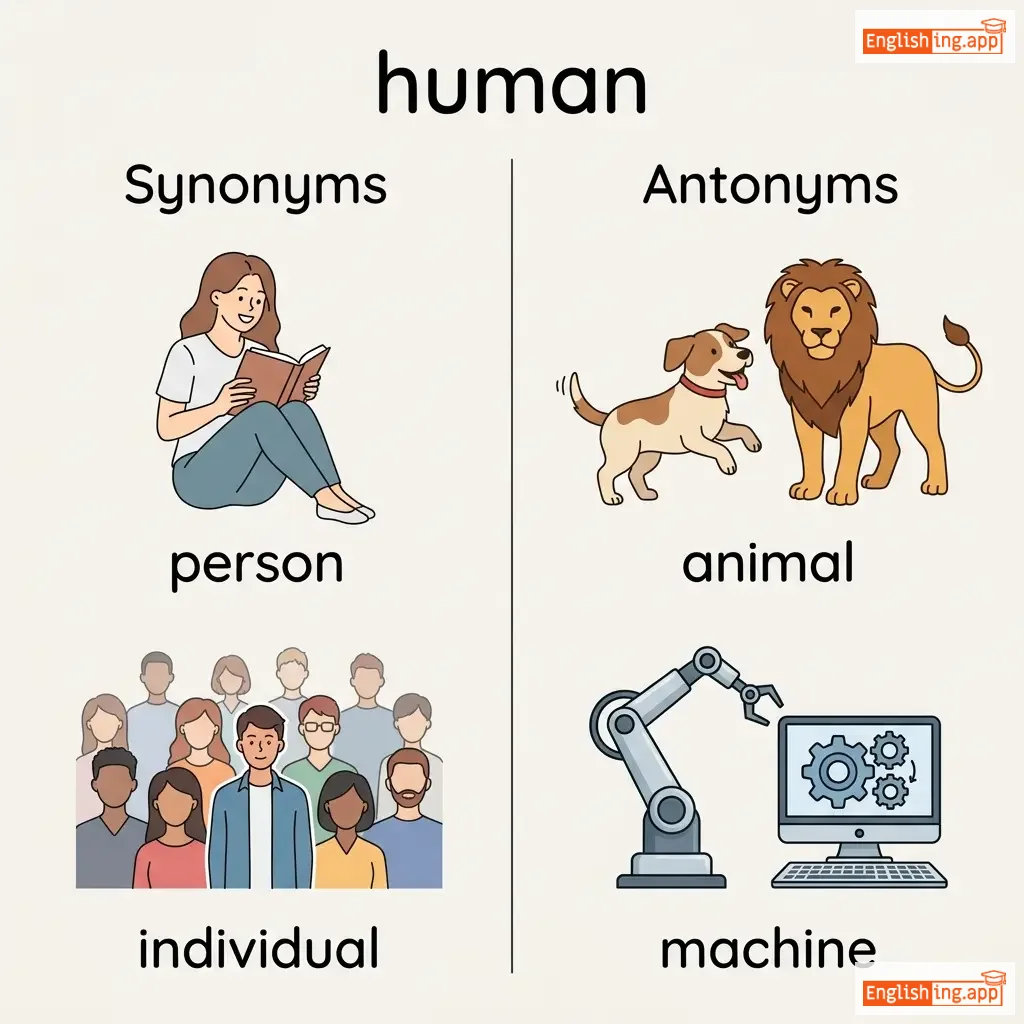
person, individual, mortal, man, woman
••••••
|
animal, machine, robot
••••••
|
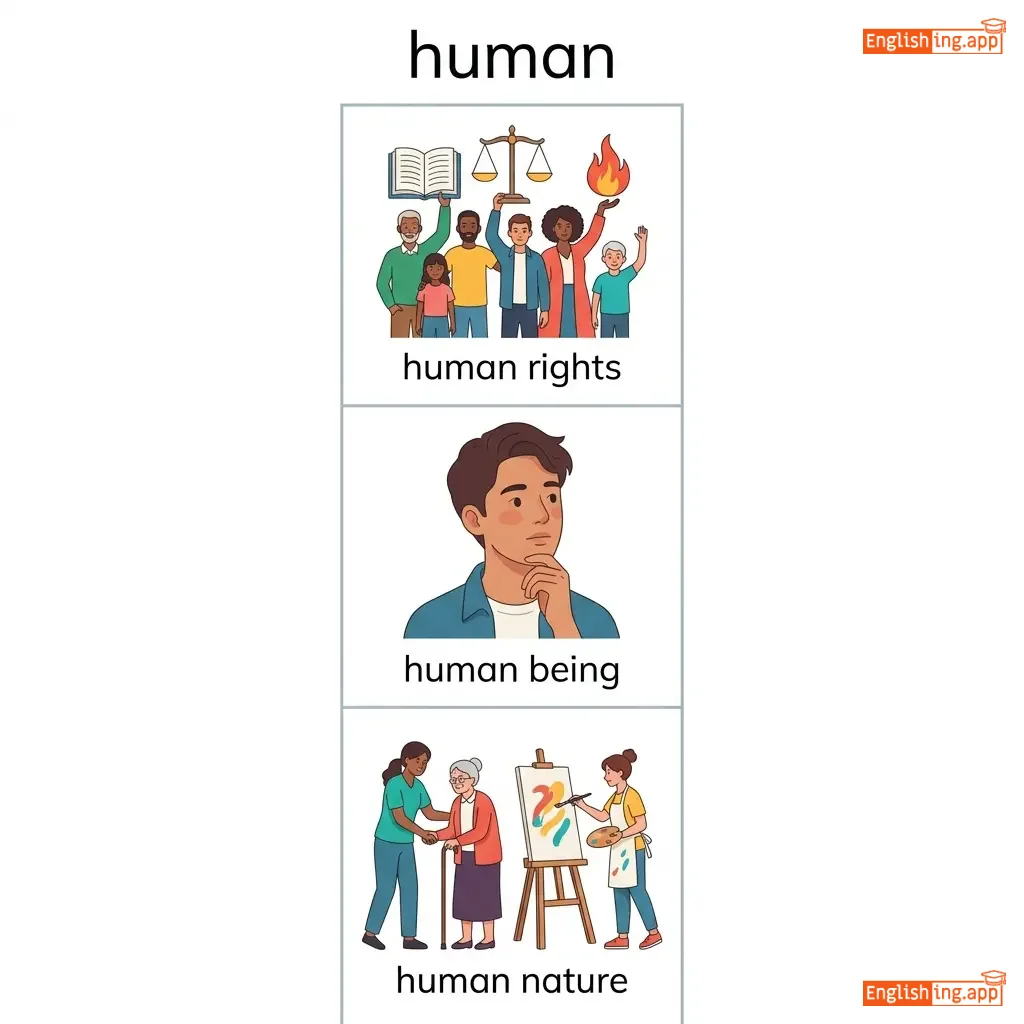
human rights, human being, human nature, human body
••••••
|
Human = 'ningen' (人間) → それは人間が持つ特性です。
••••••
|
|
#11214
⚖️
|
/haʊˈɛvər/
adverb, conjunction
(ハウエヴァー)
••••••
|
- •••••• |
しかし
shikashi
••••••
|
- •••••• | - •••••• | - •••••• | - •••••• |
used to introduce a statement that contrasts with or seems to contradict something previously said
••••••
|
The journey was long; however, it was enjoyable. |
旅は長かった; しかし、それは楽しかった。
Tabi wa nagakatta; shikashi, sore wa tanoshikatta.
••••••
|
- •••••• | - •••••• | - •••••• |
nevertheless, but, still, yet
••••••
|
therefore, thus
••••••
|
however hard, however much, however difficult
••••••
|
However は日本語で しかし と言います。長い旅だったけど、でも楽しかった!
••••••
|
Vocabulary Quiz
Test your vocabulary by matching words with their translations or meanings.
Login to take the quiz
Comments (0)
Share your thoughts and join the discussion.
Join the discussion by logging in
Login to CommentNo comments yet
Be the first to share your thoughts!