

翻訳
過去
過去分詞
三人称単数
動名詞
意味
例文
例文の翻訳
同義語
対義語
コロケーション
ニーモニック
Swipe left or right, or use the buttons. Tap image to zoom.
例文の翻訳
単語
Lesson 6Lesson 6 - マスクトグル
|
絵文字
|
単語 | Images | 翻訳 | 過去 | 過去分詞 | 三人称単数 | 動名詞 | 意味 | 例文 | 例文の翻訳 | 表現例 | 表現例の意味 | 表現例の翻訳 | 同義語 | 対義語 | コロケーション | ニーモニック |
|---|---|---|---|---|---|---|---|---|---|---|---|---|---|---|---|---|---|
|
#151
✔️
|
/ˈædɪkwət/
adjective
(アディクウェット)
••••••
|
- •••••• |
適切
tekisetsu
••••••
|
- •••••• | - •••••• | - •••••• | - •••••• |
sufficient or acceptable in quality or quantity
••••••
|
The food was adequate for the small group. |
食べ物は小さなグループにとって適切でした。
Tabemono wa chiisana gurūpu ni totte tekisetsu deshita.
••••••
|
adequate to the task |
sufficiently capable of completing a responsibility
••••••
|
タスクに適切
tasuku ni tekisetsu
••••••
|
sufficient, enough, satisfactory, suitable, ample
••••••
|
inadequate, insufficient, lacking
••••••
|
adequate supply, adequate amount, adequate support, adequate protection
••••••
|
適切はadequateと同じ、適切な食べ物は十分な食べ物
••••••
|
|
#152
🙏
|
/ˌædʒʊˈreɪʃən/
noun
(アジュレイション)
••••••
|
- •••••• |
厳粛なお願い
genshuku na onegai
••••••
|
- •••••• | - •••••• | - •••••• | - •••••• |
a solemn urging or appeal
••••••
|
The priest made an adjuration for peace and unity. |
神父は平和と団結のために厳粛なお願いをしました。
Shinpu wa heiwa to danketsu no tame ni genshuku na onegai o shimashita.
••••••
|
- •••••• | - •••••• | - •••••• |
plea, appeal, entreaty, supplication, exhortation
••••••
|
command, order, disregard
••••••
|
earnest adjuration, solemn adjuration, adjuration for peace
••••••
|
Adjuration - 'アジュレイション' は、厳粛で真摯なお願いです。
••••••
|
|
#153
➕
|
/ˈædʒʌŋkt/
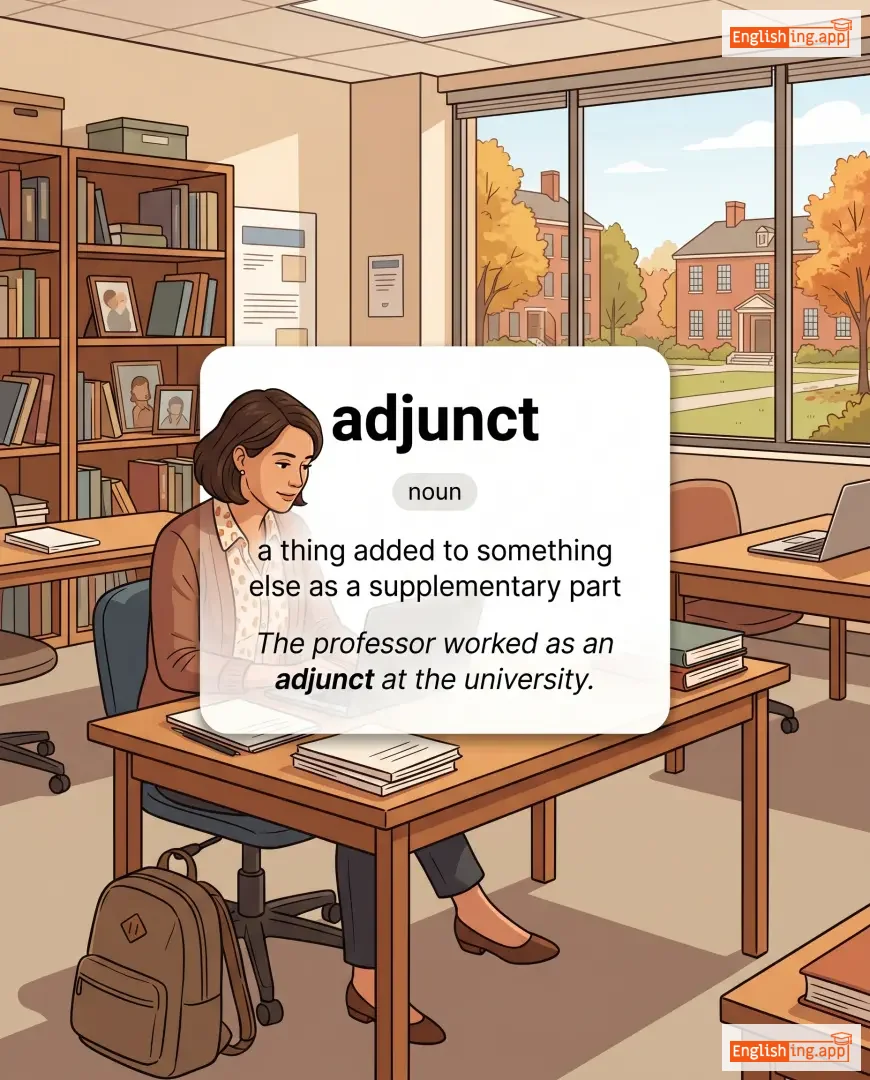
noun
(ædʒʌŋkt)
••••••
|
|
補助的
hojoteki
••••••
|
- •••••• | - •••••• | - •••••• | - •••••• |
a thing added to something else as a supplementary part
••••••
|
The professor worked as an adjunct at the university. |
教授は大学で補助的な役職で働いていました。
Kyoju wa daigaku de hojoteki na yakushoku de hataraite imashita.
••••••
|
- •••••• | - •••••• | - •••••• |
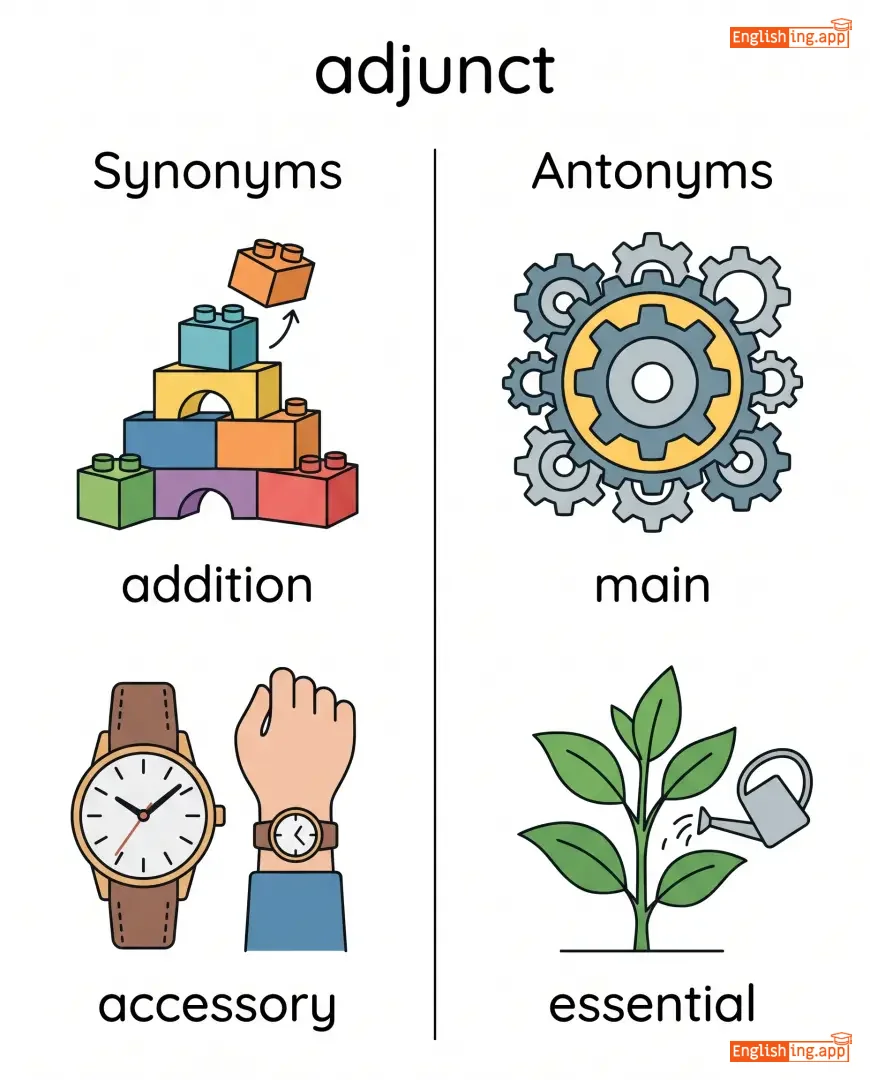
addition, accessory, supplement, appendage, auxiliary
••••••
|
main, essential, principal
••••••
|
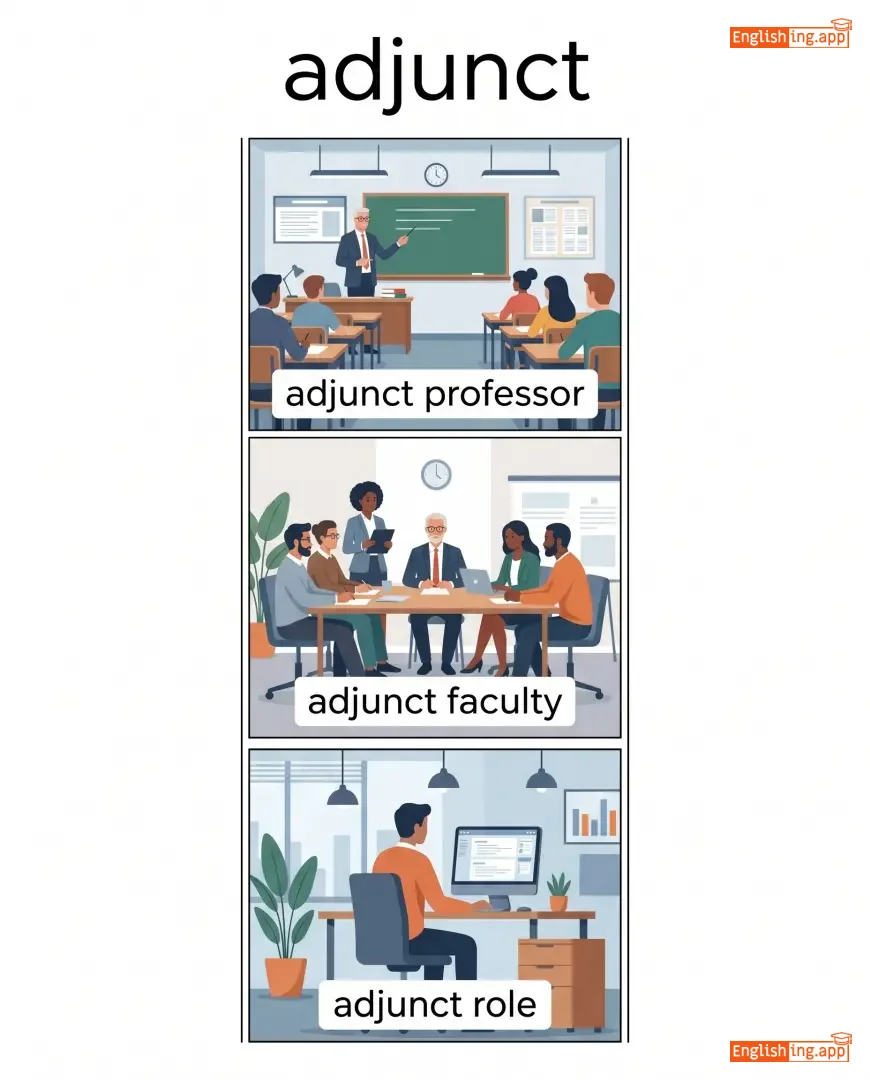
adjunct professor, adjunct faculty, adjunct role, adjunct therapy
••••••
|
Adjunct = 追加 + 連結、つまり追加されたもの。
••••••
|
|
#154
👨⚖️
|
/əˈdʒuːdɪˌkeɪt/
verb
(アジュディケイト)
••••••
|
- •••••• |
裁定する
saitei suru
••••••
|
adjudicated
アジュディケイテッド
••••••
|
adjudicated
アジュディケイテッド
••••••
|
adjudicates
アジュディケイツ
••••••
|
adjudicating
アジュディケイティング
••••••
|
to make a formal judgment or decision about a problem or dispute
••••••
|
The committee was formed to adjudicate disputes between the parties.
委員会は当事者間の争いを審理するために結成されました。
••••••
|
委員会は当事者間の争いを審理するために結成されました。
Iinkai wa tōjisha-kan no arasoi o shinri suru tame ni kessei saremashita.
••••••
|
adjudicate a dispute
争いを審理する
••••••
|
to settle a conflict officially
••••••
|
争いを審理する
arasoi o shinri suru
••••••
|
arbitrate, judge, decide, settle, resolve
••••••
|
ignore, delay, neglect
••••••
|
adjudicate disputes, adjudicate cases, adjudicate claims
••••••
|
Adjudicate = A Judge + Indicate = 裁判官が決定を下します。
••••••
|
|
#155
⚖️
|
/əˈdʒʌdʒ/
verb
(adujji)
••••••
|
- •••••• |
判決する
hanketsu suru
••••••
|
adjudged
adujjido
••••••
|
adjudged
adujjido
••••••
|
adjudges
adujjesu
••••••
|
adjudging
adujjingu
••••••
|
to consider or declare officially in a legal or formal manner
••••••
|
He was adjudged guilty by the court.
彼は裁判所によって有罪とされました。
••••••
|
彼は裁判所によって有罪とされました。
Kare wa saibansho ni yotte yuu-zai to saremashita.
••••••
|
- •••••• | - •••••• | - •••••• |
deem, declare, rule, decide, pronounce
••••••
|
ignore, disregard, overlook
••••••
|
adjudge guilty, adjudge bankrupt, adjudge innocent
••••••
|
Adjudgeは'判決する'に似ていて、裁判所で有罪を宣告することです。
••••••
|
|
#156
⏸️
|
/əˈdʒɜrn/
verb
(アジョーン)
••••••
|
- •••••• |
延期する
enki suru
••••••
|
adjourned
アジョーンド
••••••
|
adjourned
アジョーンド
••••••
|
adjourns
アジョーンズ
••••••
|
adjourning
アジョーニング
••••••
|
to suspend a meeting or session to another time or place
••••••
|
The judge decided to adjourn the hearing until next week.
裁判官は次の週まで聴聞を延期することに決めました。
••••••
|
裁判官は次の週まで聴聞を延期することに決めました。
Saibankan wa tsugi no shū made chōmon o enki suru koto ni kimemashita.
••••••
|
motion to adjourn
動議による延期
••••••
|
a formal proposal to end a meeting or session
••••••
|
動議による延期
Dōgi ni yoru enki
••••••
|
suspend, postpone, delay, recess, discontinue
••••••
|
resume, continue, proceed
••••••
|
adjourn a meeting, adjourn the session, adjourn temporarily, motion to adjourn
••••••
|
Adjourn は、会議を後に延期する意味で、アジョーンの響きがそれを表します。
••••••
|
|
#157
🏡
|
/əˈdʒɔɪn/
verb
(アドジョイン)
••••••
|
- •••••• |
隣接する
rinsetsu suru
••••••
|
adjoined
アドジョインド
••••••
|
adjoined
アドジョインド
••••••
|
adjoins
アドジョインズ
••••••
|
adjoining
アドジョイニング
••••••
|
To be next to and joined with something.
••••••
|
Their house adjoins the park.
彼らの家は公園に隣接しています。
••••••
|
彼らの家は公園に隣接しています。
Karera no ie wa kōen ni rinsetsu shiteimasu.
••••••
|
- •••••• | - •••••• | - •••••• |
border, connect, neighbor, join, touch
••••••
|
separate, detach, divide
••••••
|
adjoin property, adjoin land, houses adjoin
••••••
|
Adjoin は隣接することを意味します - 'Add + join' というフレーズを思い出してください、それは何かに隣接していることです。
••••••
|
|
#158
🏖️
|
/əˈdʒeɪsənt/
adjective
(アジャセント)
••••••
|
- •••••• |
隣接
rinsetsu
••••••
|
- •••••• | - •••••• | - •••••• | - •••••• |
Next to or adjoining something else.
••••••
|
The hotel is adjacent to the beach.
ホテルはビーチに隣接しています。
••••••
|
ホテルはビーチに隣接しています。
Hoteru wa bīchi ni rinsetsu shite imasu.
••••••
|
- •••••• | - •••••• | - •••••• |
near, neighboring, adjoining, bordering, beside
••••••
|
distant, remote, far
••••••
|
adjacent room, adjacent property, adjacent area
••••••
|
隣接は '隣' から来て、すぐ隣にあることを意味します。
••••••
|
|
#159
🏘️
|
/əˈdʒeɪsənsi/
noun
(アジェセンシー)
••••••
|
- •••••• |
隣接性
rinnsetusei
••••••
|
- •••••• | - •••••• | - •••••• | - •••••• |
The state of being next to or adjoining something else.
••••••
|
The adjacency of the two buildings made it easy to connect them.
二つの建物の隣接性は、それらを接続するのを簡単にしました。
••••••
|
二つの建物の隣接性は、それらを接続するのを簡単にしました。
Futatsu no tatemono no rinsetsusei wa, sorera o setsuzoku suru no o kantan ni shimashita.
••••••
|
- •••••• | - •••••• | - •••••• |
nearness, closeness, vicinity, contiguity, proximity
••••••
|
distance, separation, remoteness
••••••
|
adjacency matrix, adjacency list, adjacency of buildings
••••••
|
Adjacencyは隣接性を意味します – Adjacentの名詞形、「隣の席」を思い浮かべてください。
••••••
|
|
#160
🍔
|
/ˈædɪˌpoʊs/
adjective
(アディポーズ)
••••••
|
- •••••• |
脂肪の
shibō no
••••••
|
- •••••• | - •••••• | - •••••• | - •••••• |
Relating to or consisting of animal fat; fatty.
••••••
|
The doctor explained that the tissue was mainly adipose in nature. |
医者は、組織が主に脂肪性であることを説明しました。
Isha wa, soshiki ga shūni shibō-sei de aru koto o setsumei shimashita.
••••••
|
- •••••• | - •••••• | - •••••• |
fatty, greasy, plump, corpulent, obese
••••••
|
lean, thin, slender
••••••
|
adipose tissue, adipose cells, adipose body
••••••
|
Adiposeは脂肪に関連している意味です。'Addi + pose'で太ると覚えておいてください。
••••••
|
|
#161
👋
|
/əˈdjuː/
noun
••••••
|
- •••••• | - •••••• | - •••••• | - •••••• | - •••••• | - •••••• |
A farewell or goodbye, often used in a formal or poetic sense.
••••••
|
She bid her friends adieu before leaving for France. |
- •••••• |
bid adieu |
to say goodbye formally
••••••
|
- •••••• |
farewell, goodbye, parting, send-off, leave-taking
••••••
|
greeting, hello, welcome
••••••
|
bid adieu, final adieu, fond adieu
••••••
|
No •••••• |
|
#162
🩹
|
/ədˈhiːʒən/
noun
(アドヒージョン)
••••••
|
- •••••• |
付着
fuchaku
••••••
|
- •••••• | - •••••• | - •••••• | - •••••• |
the process or state of sticking to something
••••••
|
Strong adhesion is needed for the tiles to stay in place. |
タイルがその位置に留まるためには強い付着が必要です。
Tairu ga sono ichi ni todomaru tame ni wa tsuyoi fuchaku ga hitsuyō desu.
••••••
|
adhesion contract |
a contract where one party has much stronger bargaining power
••••••
|
付着契約
fuchaku keiyaku
••••••
|
sticking, attachment, grip, bond, cohesion
••••••
|
detachment, separation, looseness
••••••
|
strong adhesion, adhesion force, adhesion property, adhesion surface
••••••
|
付着は、シールのようにくっつくことです。
••••••
|
|
#163
🙋
|
/ədˈhɪərənt/
noun
(アドヒアレント)
••••••
|
- •••••• |
支持者
shijisha
••••••
|
- •••••• | - •••••• | - •••••• | - •••••• |
a person who supports or follows a particular belief, cause, or leader
••••••
|
He is a strong adherent of democratic values. |
彼は民主的な価値観の強力な支持者です。
Kare wa minshuteki na kachikan no kyōryokuna shijisha desu.
••••••
|
- •••••• | - •••••• | - •••••• |
supporter, follower, disciple, advocate, devotee
••••••
|
opponent, critic, rival
••••••
|
adherent of faith, loyal adherent, political adherent, true adherent
••••••
|
Adherent は支持者、特定の事業を支持する人。
••••••
|
|
#164
📜
|
/ədˈhɪərəns/
noun
(アドヒアランス)
••••••
|
|
遵守
junshu
••••••
|
- •••••• | - •••••• | - •••••• | - •••••• |
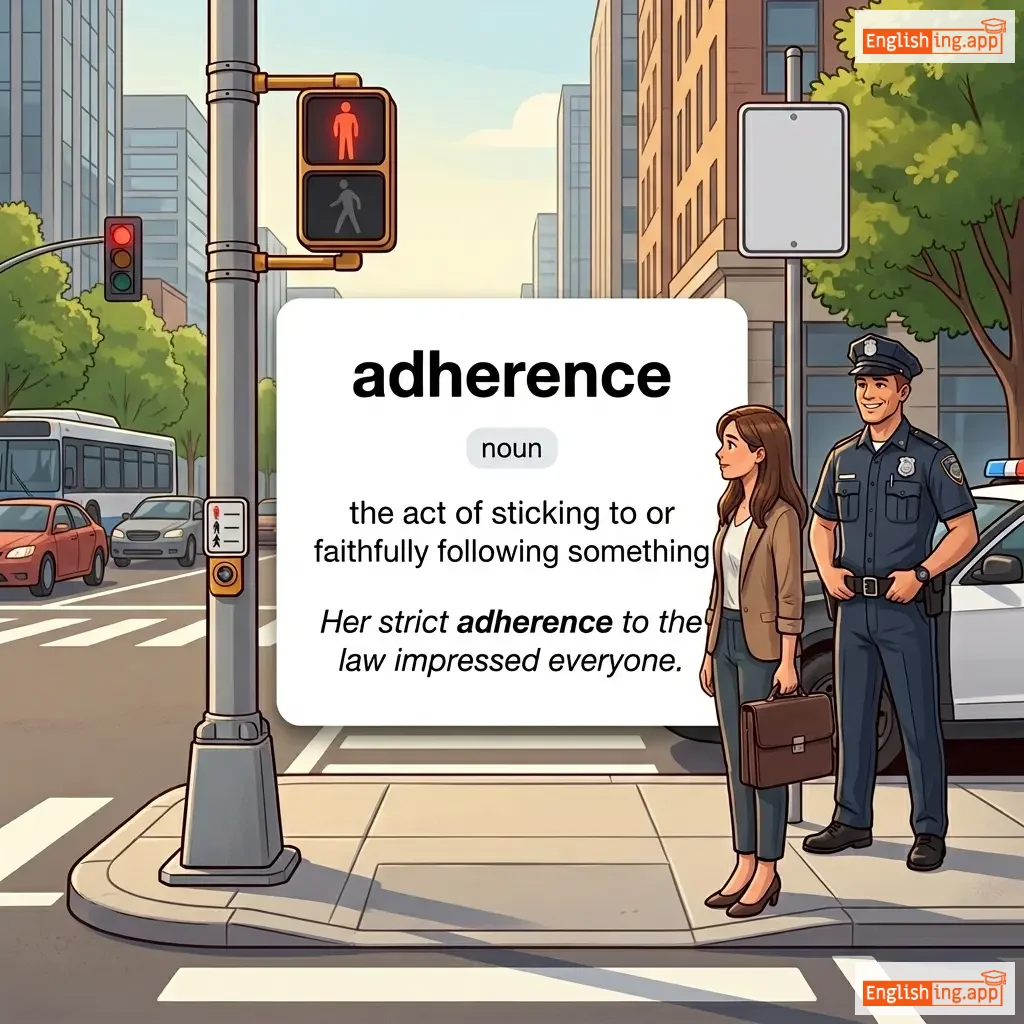
the act of sticking to or faithfully following something
••••••
|
Her strict adherence to the law impressed everyone.
彼女の法への厳格な遵守は、みんなに感銘を与えました。
••••••
|
彼女の法への厳格な遵守は、みんなに感銘を与えました。
Kanojo no hō e no gengaku na junshu wa, minna ni kanmei o ataemashita.
••••••
|
adherence to tradition
伝統への遵守
••••••
|
faithfully following traditional practices
••••••
|
伝統への遵守
Dentō e no junshu
••••••
|
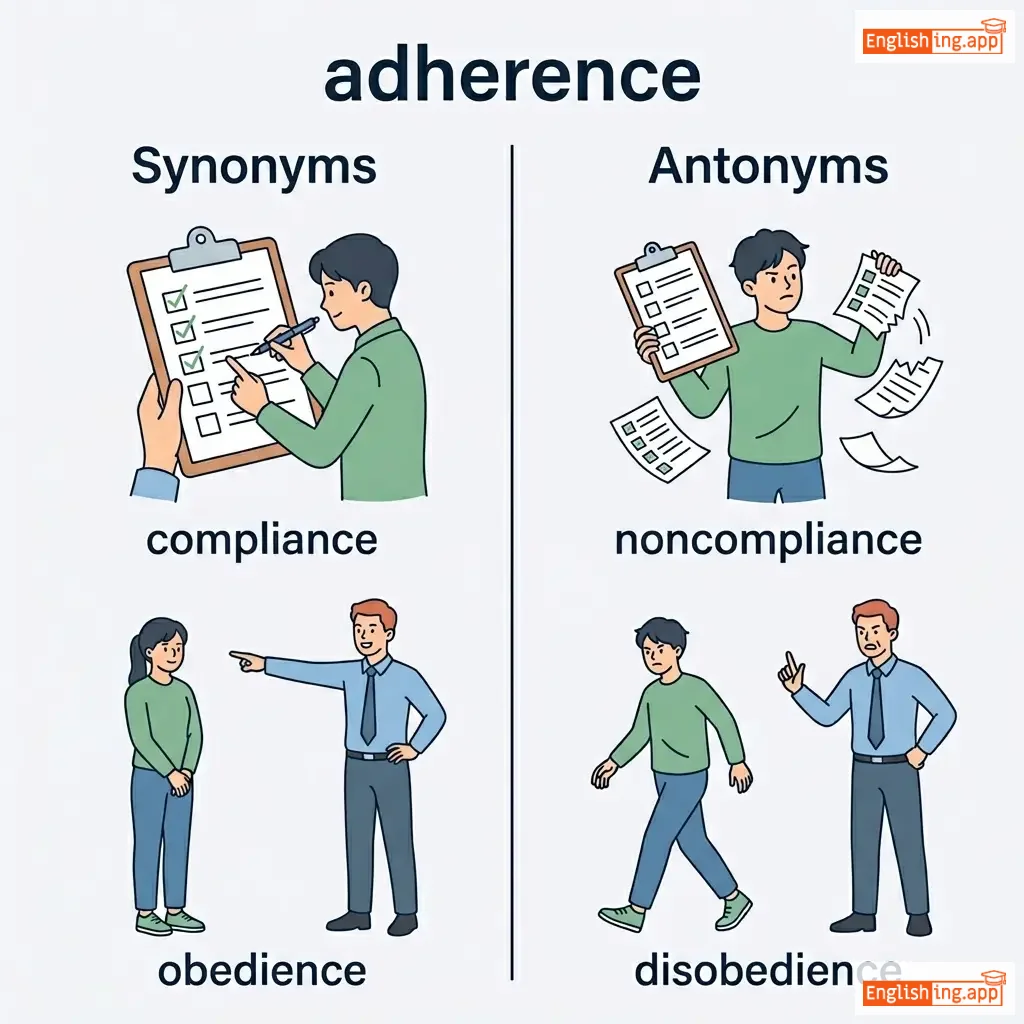
compliance, obedience, loyalty, attachment, devotion
••••••
|
noncompliance, disobedience, defiance
••••••
|
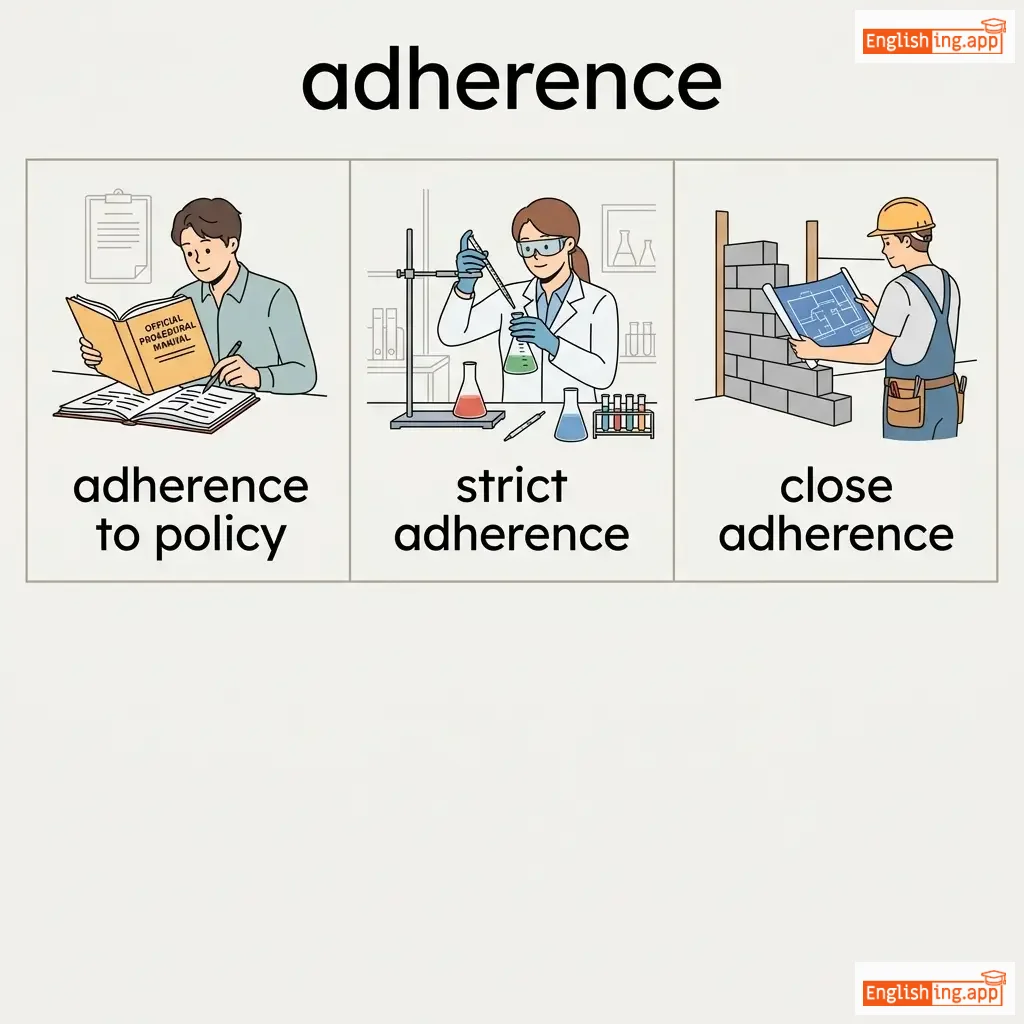
adherence to policy, strict adherence, close adherence, adherence standards
••••••
|
Adherence は遵守という意味です、Adhere + ence = 遵守
••••••
|
|
#165
🧷
|
/ədˈhɪər/
verb
(アディア)
••••••
|
|
付着する、従う
fuchaku suru, shitagau
••••••
|
adhered
アディアード
••••••
|
adhered
アディアード
••••••
|
adheres
アディアーズ
••••••
|
adhering
アディアリング
••••••
|
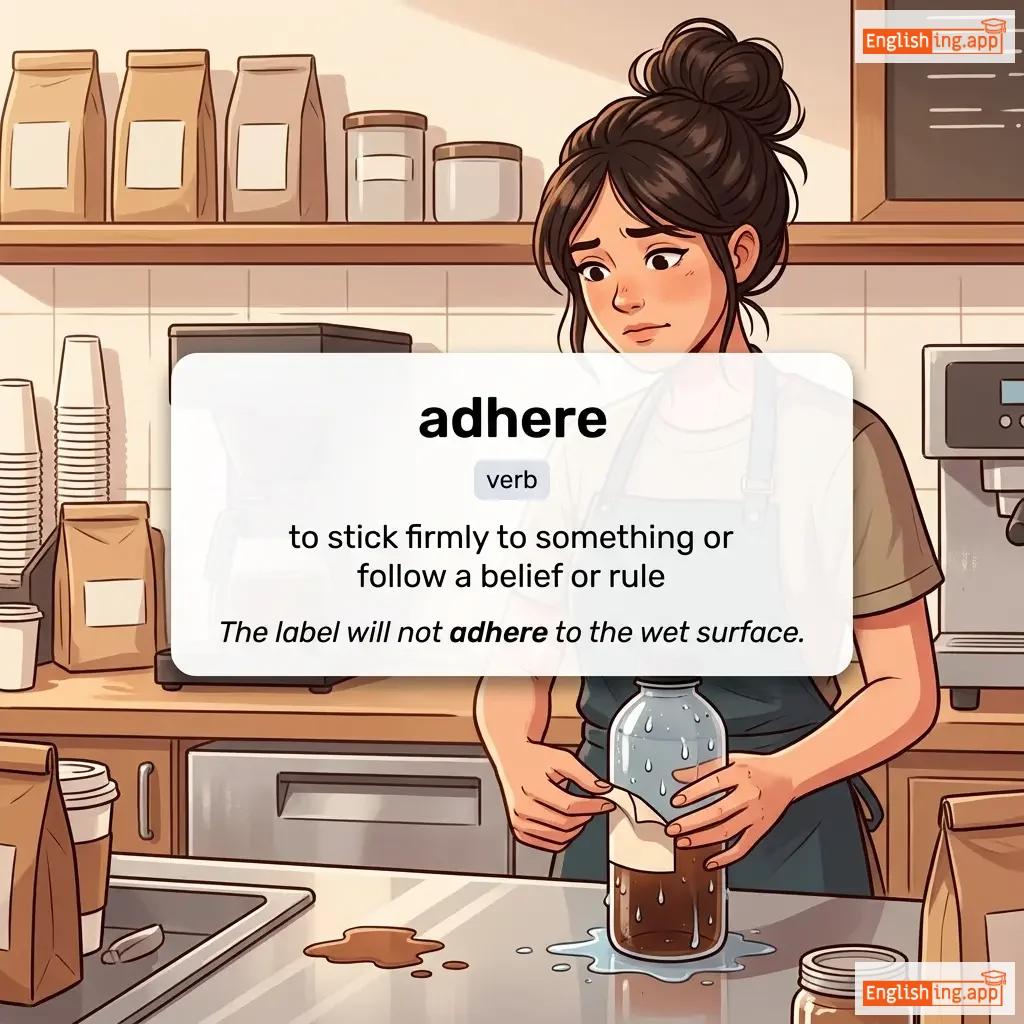
to stick firmly to something or follow a belief or rule
••••••
|
The label will not adhere to the wet surface.
ラベルは濡れた表面に付着しません。
••••••
|
ラベルは濡れた表面に付着しません。
Raberu wa nureta hyōmen ni fuchaku shimasen.
••••••
|
adhere to rules
ルールに従う
••••••
|
to strictly follow rules or principles
••••••
|
規則に従う
kisoku ni shitagau
••••••
|
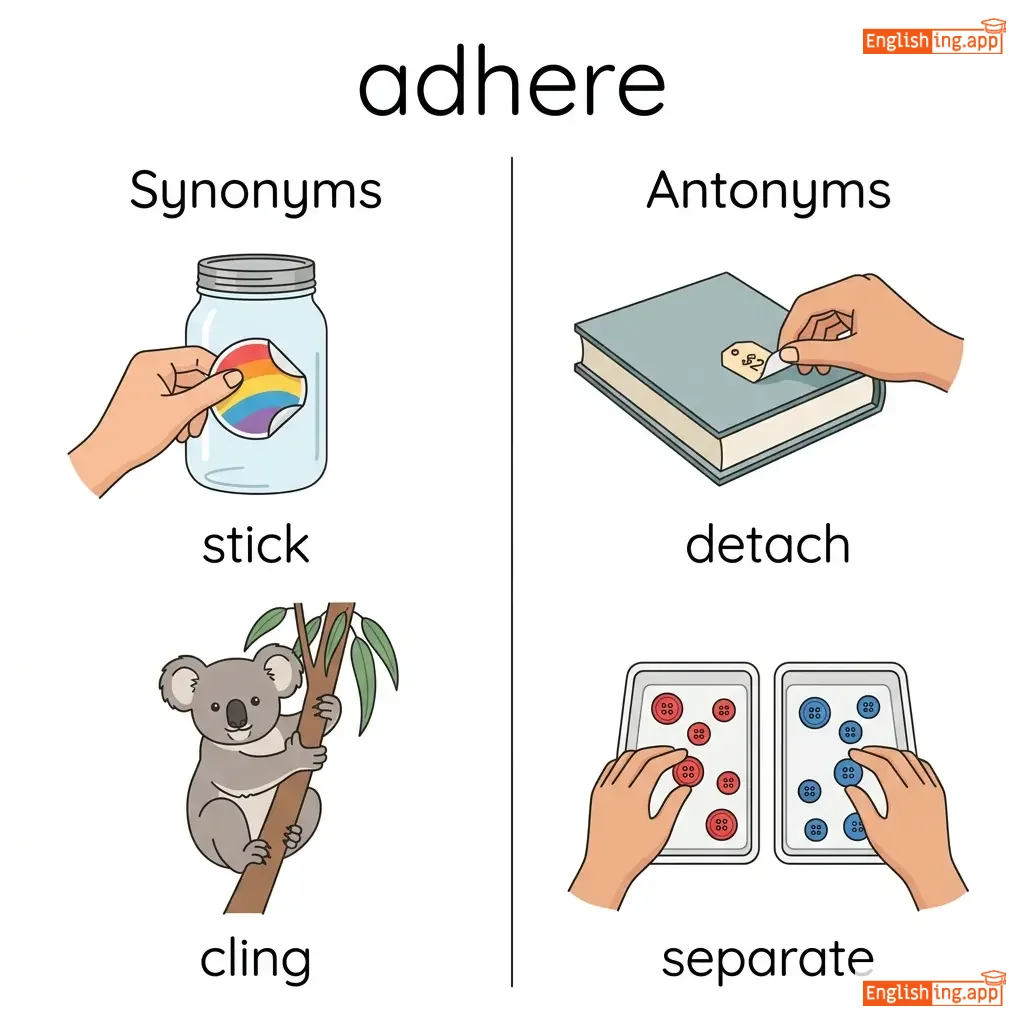
stick, cling, attach, comply, follow
••••••
|
detach, separate, ignore
••••••
|
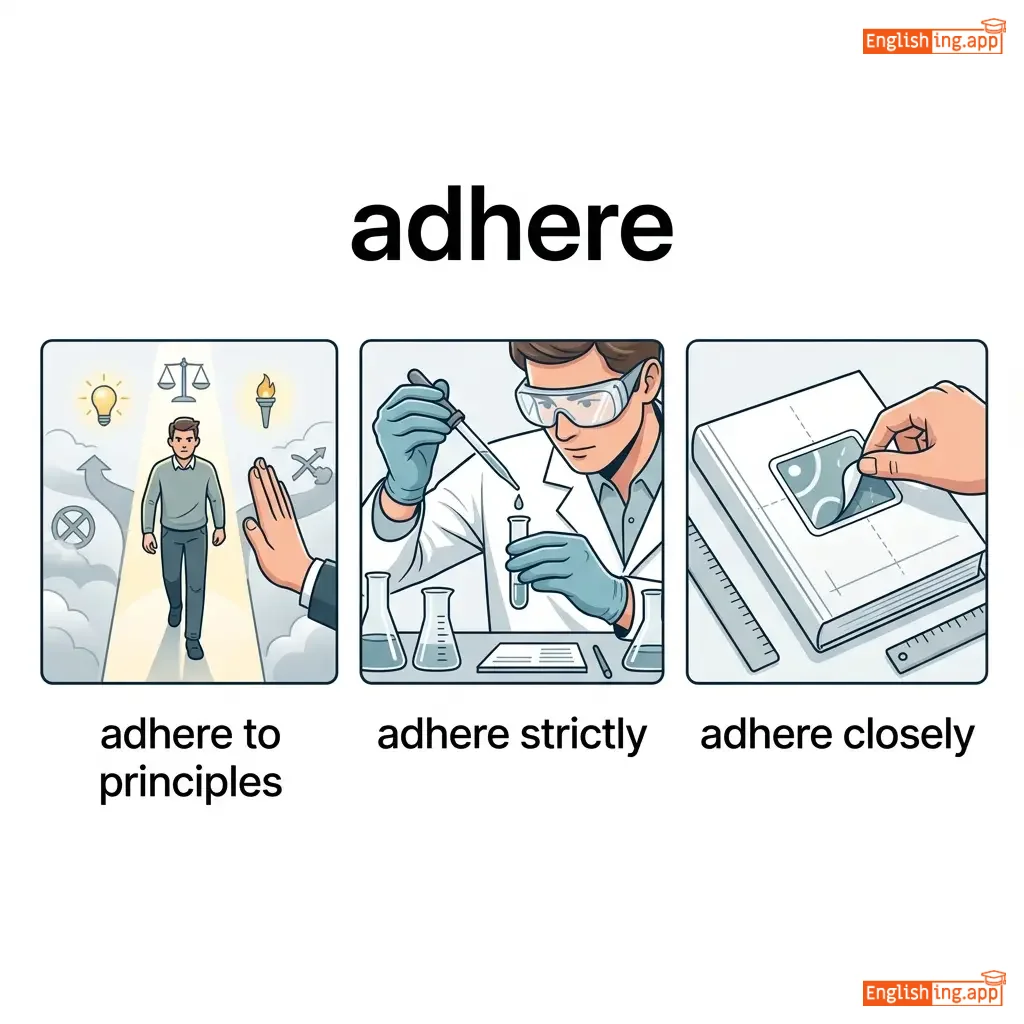
adhere to principles, adhere strictly, adhere closely, adhere firmly
••••••
|
Adhere は貼り付けるようなもの、まるで接着剤が何かに付着するように。
••••••
|
|
#166
⚙️
|
/ˈæktʃueɪt/
verb
(アクチュエイト)
••••••
|
- •••••• |
作動させる
sudoku saseru
••••••
|
actuated
アクチュエイテッド
••••••
|
actuated
アクチュエイテッド
••••••
|
actuates
アクチュエイツ
••••••
|
actuating
アクチュエイティング
••••••
|
to put into action or motion; to motivate or activate
••••••
|
The engineer actuated the machine with a simple switch.
エンジニアは簡単なスイッチで機械をアクチュエイトしました。
••••••
|
エンジニアは簡単なスイッチで機械を作動させました。
Enjinia wa kantan na suicchi de kikai o sakudō sasemashita.
••••••
|
- •••••• | - •••••• | - •••••• |
activate, trigger, drive, initiate, propel
••••••
|
halt, stop, block
••••••
|
actuate a device, actuate a mechanism, actuate a system
••••••
|
作動させる = スイッチをオンにして機械を動かすように。
••••••
|
|
#167
🎯
|
/əˈdɛpt/
adjective
••••••
|
|
- •••••• | - •••••• | - •••••• | - •••••• | - •••••• |
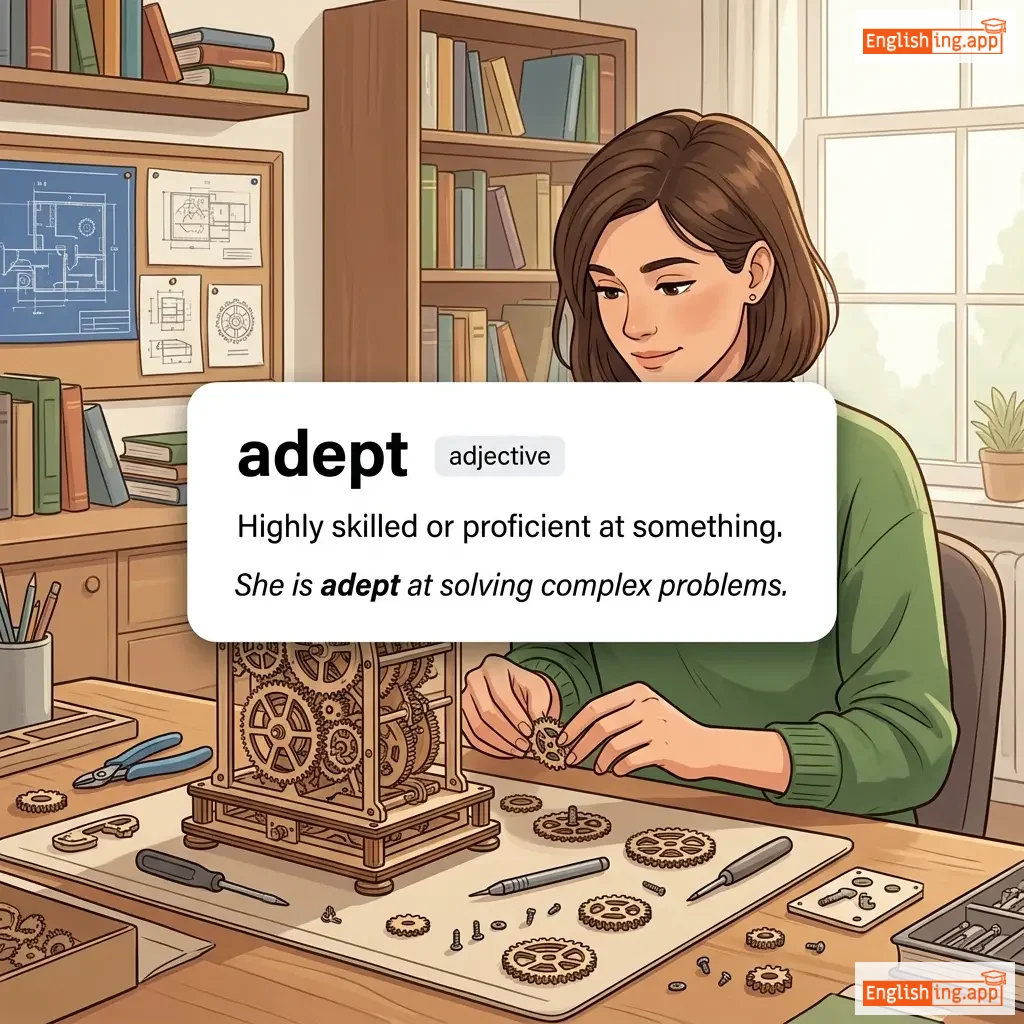
Highly skilled or proficient at something.
••••••
|
She is adept at solving complex problems. |
- •••••• |
adept at |
very skilled or proficient in a particular activity
••••••
|
- •••••• |
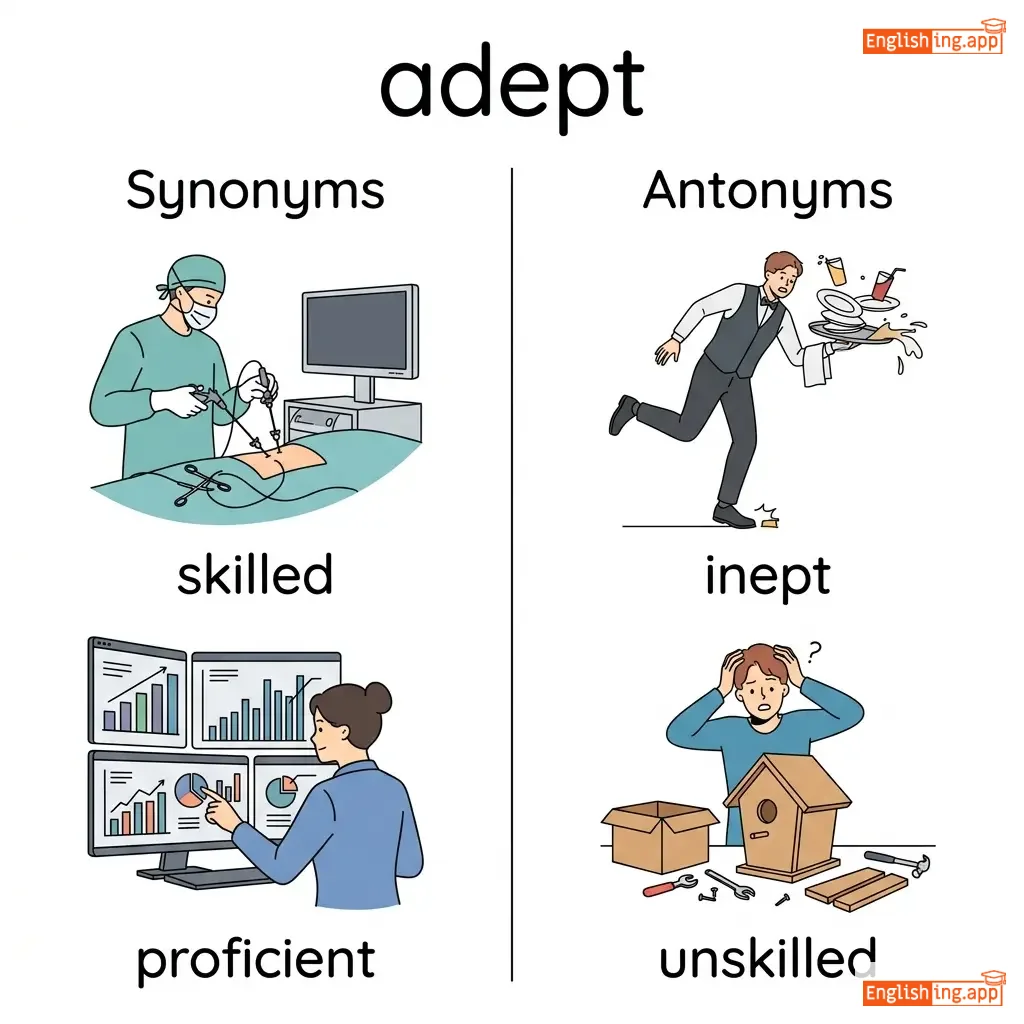
skilled, proficient, expert, talented, accomplished
••••••
|
inept, unskilled, clumsy
••••••
|
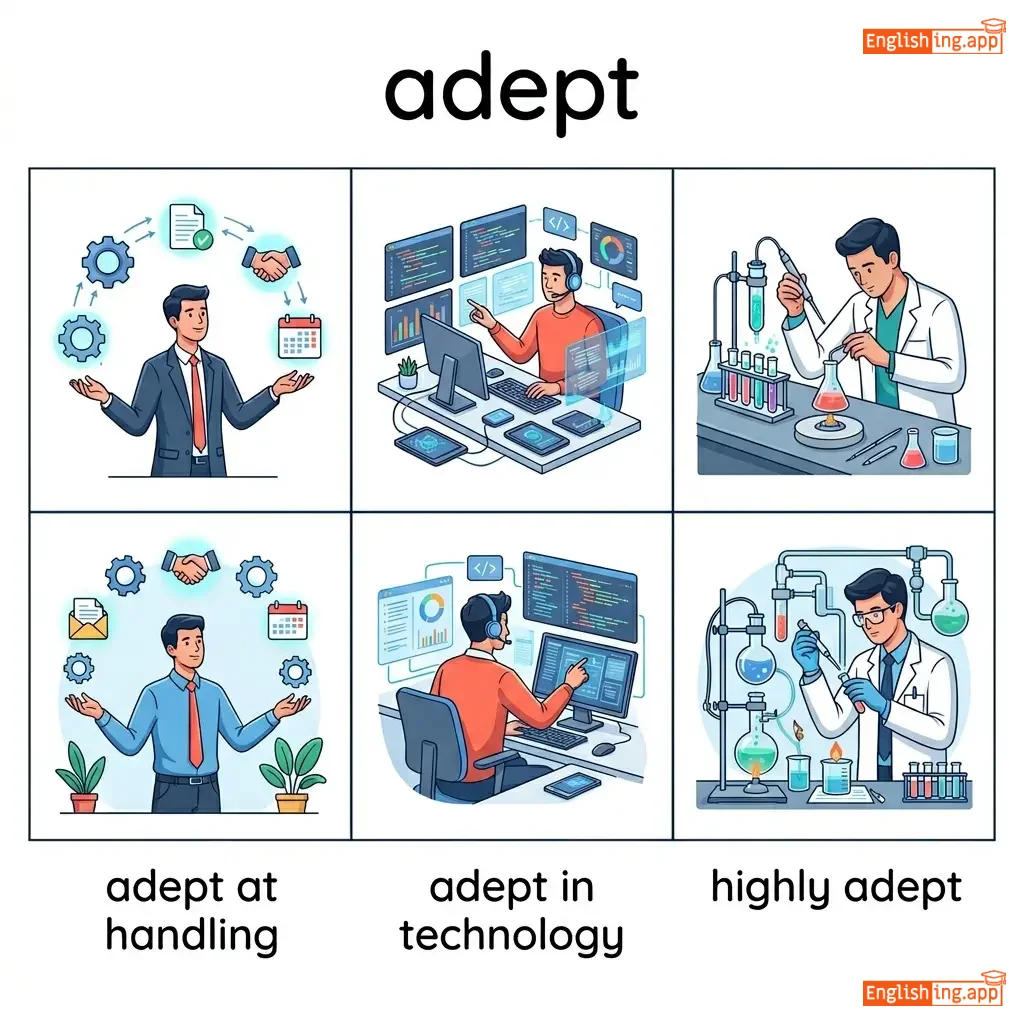
adept at handling, adept in technology, highly adept
••••••
|
No •••••• |
|
#168
📑
|
/əˈdjuːs/
verb
(アデューズ)
••••••
|
- •••••• |
証拠や理由を提供する
shouko ya riyuu o teikyou suru
••••••
|
adduced
アデューズド
••••••
|
adduced
アデューズド
••••••
|
adduces
アデューセス
••••••
|
adducing
アデューシング
••••••
|
To provide evidence or reasons to support an argument or idea.
••••••
|
The lawyer adduced several examples to support his case.
弁護士は自分のケースを支持するためにいくつかの例を挙げた。
••••••
|
弁護士は自分のケースを支持するためにいくつかの例を挙げた。
Bengoshi wa jibun no kēsu o shiji suru tame ni ikutsuka no rei o ageta.
••••••
|
- •••••• | - •••••• | - •••••• |
cite, present, offer, advance, produce
••••••
|
conceal, withhold, suppress
••••••
|
adduce evidence, adduce reasons, adduce examples
••••••
|
Adduceは証拠を追加してアイデアを支持することを意味します。
••••••
|
|
#169
📢
|
/əˈdrɛs/
verb
(アドレス)
••••••
|
|
対処する、解決する
taisho suru, kaiketsu suru
••••••
|
addressed
アドレスド
••••••
|
addressed
アドレスド
••••••
|
addresses
アドレスィズ
••••••
|
addressing
アドレスィング
••••••
|
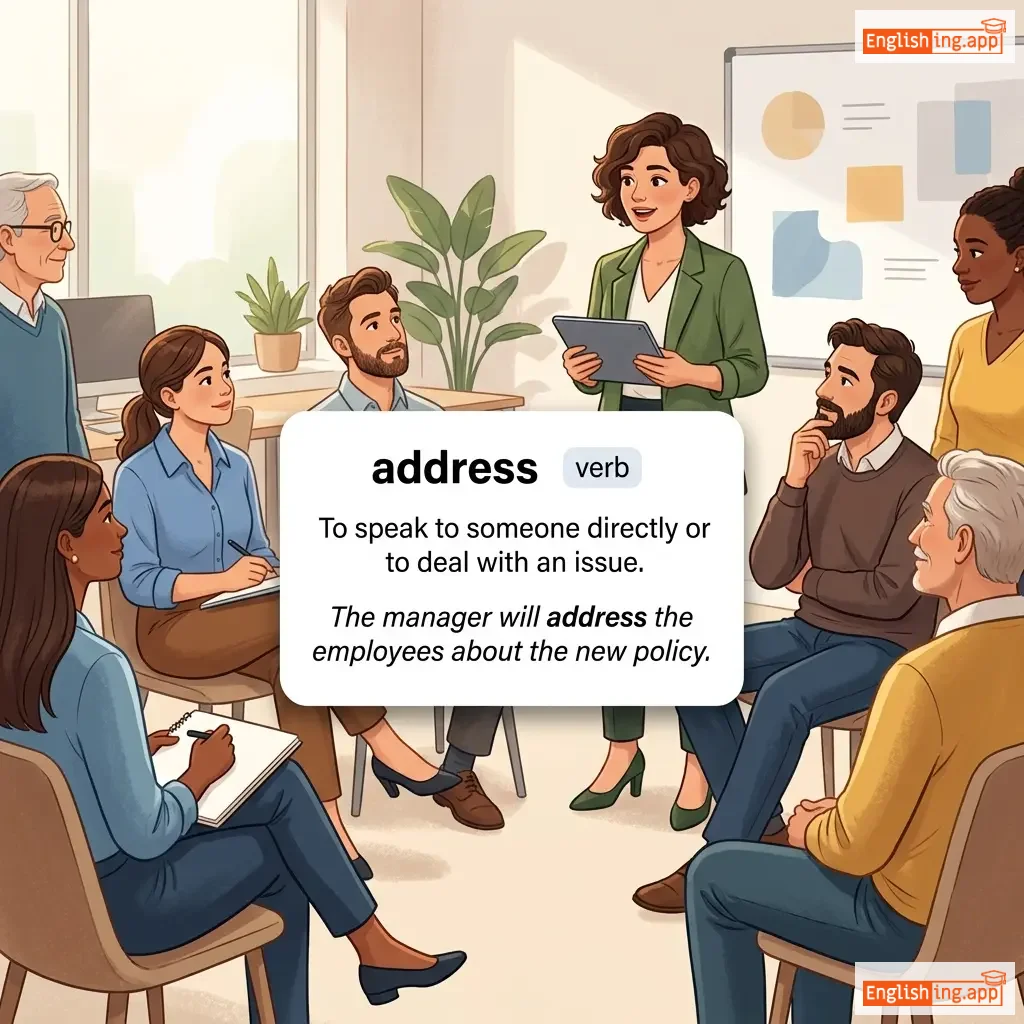
To speak to someone directly or to deal with an issue.
••••••
|
The manager will address the employees about the new policy.
マネージャーは新しい方針について従業員にアドレスします。
••••••
|
マネージャーは新しい方針について従業員にアドレスします。
Manejā wa atarashī hōshin ni tsuite jūgyōin ni adoresu shimasu.
••••••
|
address the issue
問題に対処する
••••••
|
to deal with or solve a problem
••••••
|
問題に対処する
mondai ni taisho suru
••••••
|
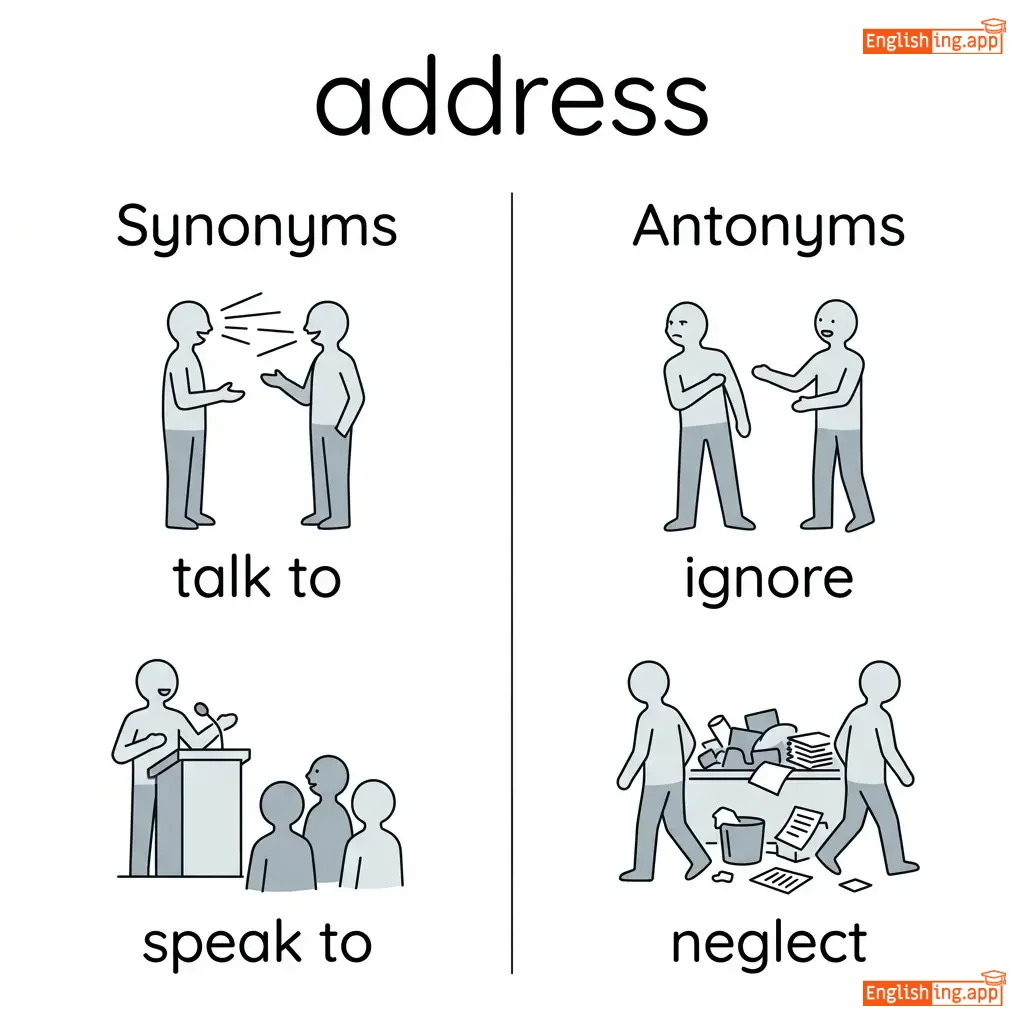
talk to, speak to, deal with, handle
••••••
|
ignore, neglect, avoid
••••••
|
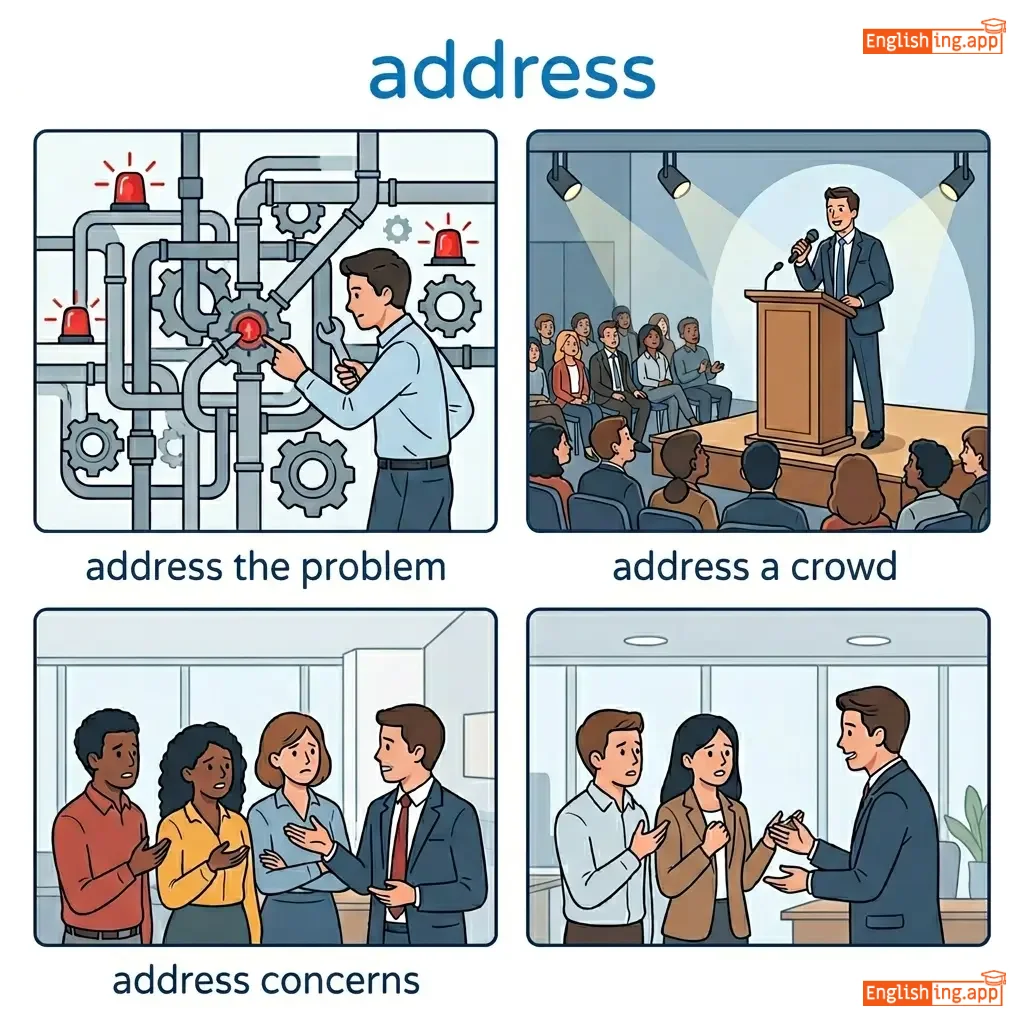
address the problem, address a crowd, address concerns, address formally
••••••
|
Addressはただの場所ではなく、問題に対処することでもある。
••••••
|
|
#170
🤯
|
/ˈæd.l̩/
verb
(アドル)
••••••
|
- •••••• |
混乱させる
konran saseru
••••••
|
addled
アドルド
••••••
|
addled
アドルド
••••••
|
addles
アドルズ
••••••
|
addling
アドリング
••••••
|
To confuse or muddle someone’s mind.
••••••
|
The complicated instructions only served to addle him.
複雑な指示は彼を混乱させるだけでした。
••••••
|
複雑な指示は彼を混乱させるだけでした。
Fukuzatsu na shiji wa kare o konran saseru dake deshita.
••••••
|
- •••••• | - •••••• | - •••••• |
confuse, perplex, bewilder, muddle
••••••
|
clarify, enlighten, explain
••••••
|
addle the brain, addle the mind, completely addled
••••••
|
Addleは混乱を意味する—心を混乱させる
••••••
|
|
#171
⚠️
|
/əˈdɪkʃən/
noun
(アディクション)
••••••
|
- •••••• |
依存
izon
••••••
|
- •••••• | - •••••• | - •••••• | - •••••• |
A strong and harmful need to regularly have or do something, such as drugs, alcohol, or habits.
••••••
|
His addiction to video games affected his studies. |
彼のビデオゲームへの依存は彼の学業に影響を与えました。
Kare no bideo geemu e no izon wa kare no gakugyou ni eikyou o ataemashita.
••••••
|
fight an addiction |
to struggle against a harmful habit
••••••
|
依存と戦う
Izon to tatakau
••••••
|
dependence, craving, obsession, compulsion, habit
••••••
|
freedom, independence, control
••••••
|
drug addiction, gambling addiction, addiction recovery, overcome addiction
••••••
|
Addictionは悪い習慣に陥ること—依存
••••••
|
|
#172
⚠️
|
/ˈædɪkt/ (noun), /əˈdɪkt/ (verb)
noun, verb
(アディクト)
••••••
|
- •••••• |
中毒者
chuudoku-sha
••••••
|
addicted
アディクテッド
••••••
|
addicted
アディクテッド
••••••
|
addicts
アディクツ
••••••
|
addicting
アディクティング
••••••
|
a person who is unable to stop using a harmful substance or doing something harmful; to cause someone to become dependent on something
••••••
|
He is a video game addict who spends hours playing every day.
彼は毎日何時間もゲームをするゲーム中毒者です。
••••••
|
彼は毎日何時間もゲームをするゲーム中毒者です。
Kare wa mainichi nanjikan mo geemu o suru geemu chuudoku-sha desu.
••••••
|
addicted to
中毒に
••••••
|
being unable to stop doing or using something
••••••
|
中毒になる
chuudoku ni naru
••••••
|
user, abuser, dependent, fanatic
••••••
|
nonuser, free, independent
••••••
|
drug addict, video game addict, addicted to, hopeless addict
••••••
|
Addictとは中毒者、ゲームから抜け出せない!
••••••
|
|
#173
📑
|
/əˈdɛndəm/
noun
(アデンダム)
••••••
|
- •••••• |
補遺
hoi
••••••
|
- •••••• | - •••••• | - •••••• | - •••••• |
an additional item or piece of information added at the end of a document or book
••••••
|
The report included an addendum with updated statistics. |
報告書には更新された統計データが含まれている補遺が含まれていた。
Hōkokusho ni wa kōshin sareta tōkei dēta ga fukumarete iru hoi ga fukumarete ita.
••••••
|
- •••••• | - •••••• | - •••••• |
appendix, supplement, addition, attachment
••••••
|
main text, omission
••••••
|
report addendum, contract addendum, addendum section, addendum included
••••••
|
Addendumは終わりに追加することを意味します—Add + End = Addendum
••••••
|
|
#174
🔄
|
/əˈdæpt/
verb
(アダプト)
••••••
|
- •••••• |
適応する
tekiō suru
••••••
|
adapted
アダプテッド
••••••
|
adapted
アダプテッド
••••••
|
adapts
アダプトス
••••••
|
adapting
アダプティング
••••••
|
to adjust or change something to suit new conditions or situations
••••••
|
He quickly adapted to the new environment.
彼はすぐに新しい環境に適応しました。
••••••
|
彼はすぐに新しい環境に適応しました。
Kare wa sugu ni atarashī kankyō ni tekiō shimashita.
••••••
|
adapt to change
変化に適応する
••••••
|
to adjust oneself according to new circumstances
••••••
|
変化に適応する
Henka ni tekiō suru
••••••
|
adjust, modify, alter, accommodate
••••••
|
resist, reject
••••••
|
adapt to, adapt for, adapt quickly, adapt easily
••••••
|
適応するは変化に合わせること。'A Dress' を適応させる = 適応する
••••••
|
|
#175
🪨
|
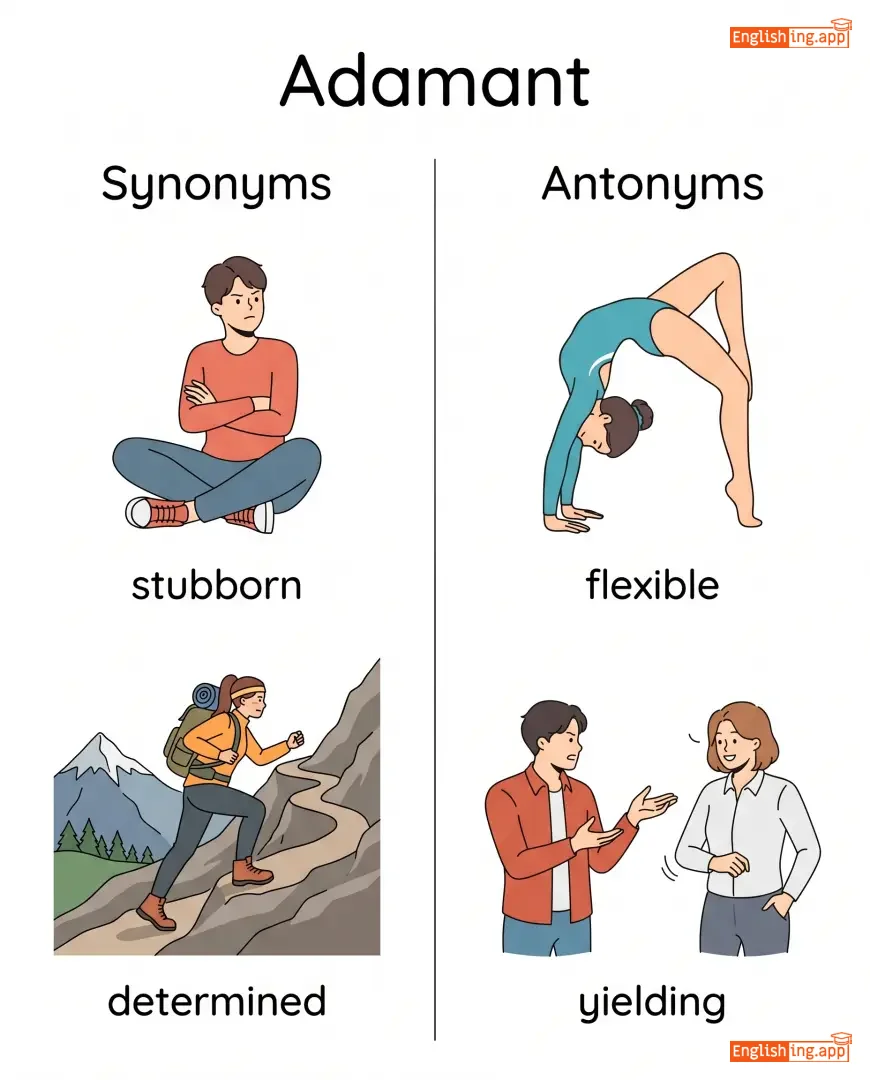
/ˈædəmənt/
adjective
(アダマント)
••••••
|
|
頑固な
ganko na
••••••
|
- •••••• | - •••••• | - •••••• | - •••••• |
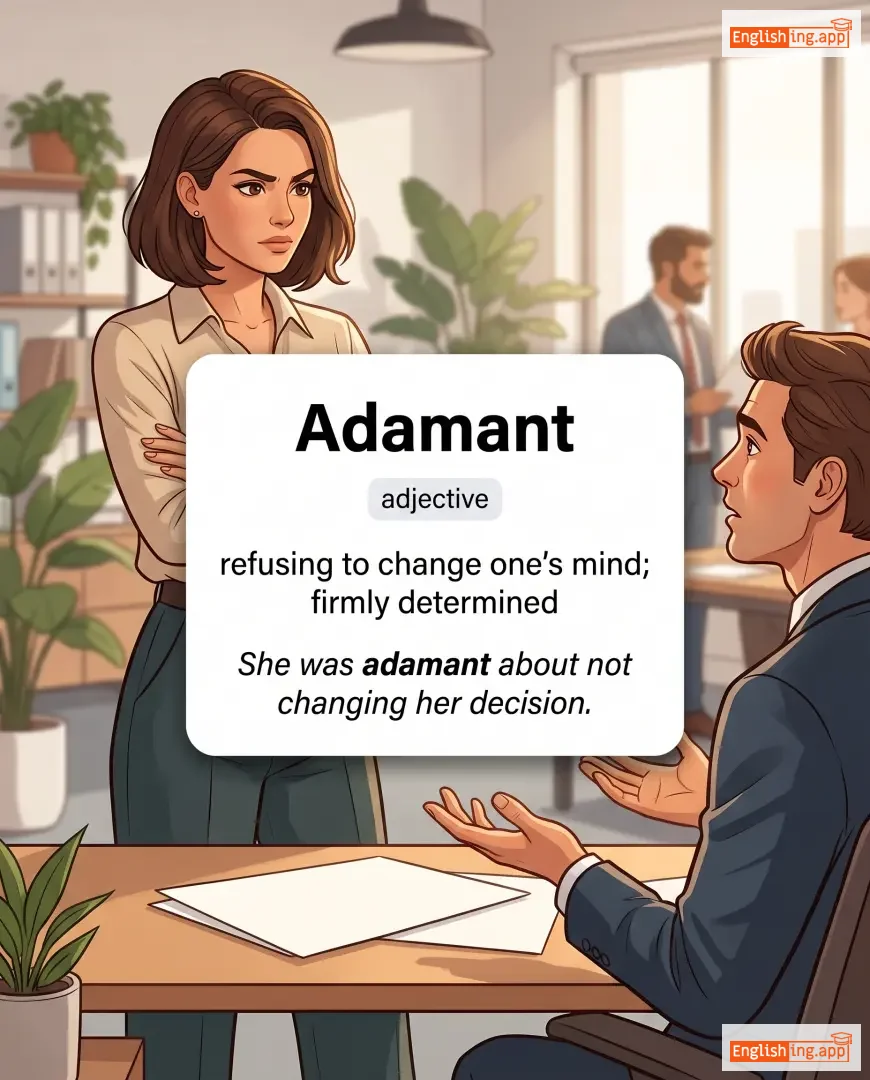
refusing to change one's mind; firmly determined
••••••
|
She was adamant about not changing her decision. |
彼女は自分の決定を変えないことに頑固だった。
Kanojo wa jibun no kettei o kaenai koto ni ganko datta.
••••••
|
- •••••• | - •••••• | - •••••• |
stubborn, determined, unyielding, resolute
••••••
|
flexible, yielding, uncertain
••••••
|
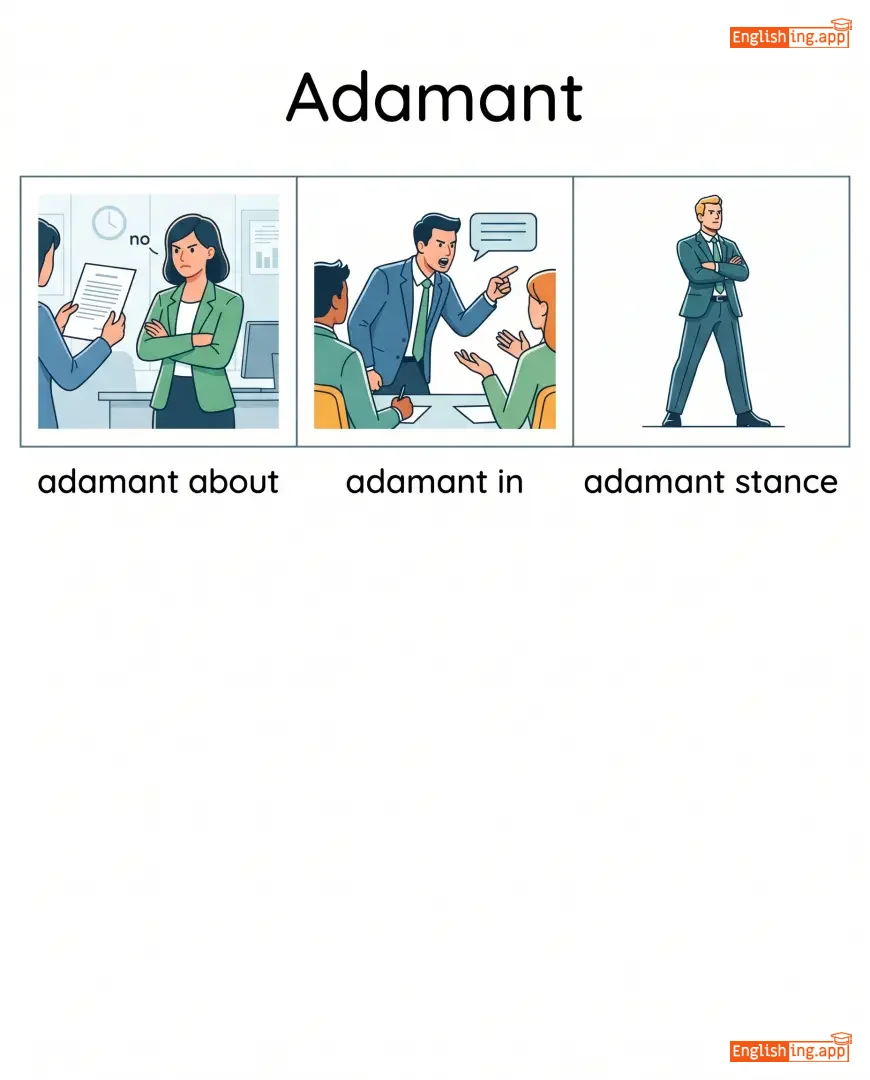
adamant about, adamant in, adamant stance, adamant refusal
••••••
|
Adam + Ant = アリが頑固に進むように、Adam (adamant) も頑固です。
••••••
|
|
#176
📜
|
/ˈædɪdʒ/
noun
(アデージ)
••••••
|
- •••••• |
格言
kakugen
••••••
|
- •••••• | - •••••• | - •••••• | - •••••• |
a short, well-known saying that expresses a general truth or piece of advice
••••••
|
The old adage says that honesty is the best policy. |
古い格言は、正直は最良の政策だと言っています。
Furui kakugen wa, shōjiki wa sairyō no seisaku da to itteimasu.
••••••
|
- •••••• | - •••••• | - •••••• |
proverb, saying, maxim, aphorism, motto
••••••
|
falsehood, nonsense
••••••
|
old adage, famous adage, popular adage, ancient adage
••••••
|
Adage means old saying, remember 'Aged' saying = Adage
••••••
|
|
#177
🎤
|
/ˌæd ˈlɪb/
verb
(アドリブ)
••••••
|
- •••••• |
即興
sokkyou
••••••
|
ad-libbed
アドリブド
••••••
|
ad-libbed
アドリブド
••••••
|
ad-libs
アドリブス
••••••
|
ad-libbing
アドリブング
••••••
|
to speak or perform without preparation; to improvise
••••••
|
The comedian ad-libbed a joke when the microphone failed.
コメディアンはマイクの故障でジョークをアドリブしました。
••••••
|
コメディアンはマイクの故障でジョークをアドリブしました。
Komedian wa maiku no koshou de jooku wo adoribu shimashita.
••••••
|
ad-lib remark
アドリブのコメント
••••••
|
an unplanned or spontaneous comment
••••••
|
即興のコメント
sokkyou no komento
••••••
|
improvise, extemporize, invent, wing it
••••••
|
prepare, rehearse
••••••
|
ad-lib speech, ad-lib joke, ad-lib performance
••••••
|
Ad-lib は ad (lib) に入れて — 準備なしで話すこと、即興
••••••
|
|
#178
📐
|
/əˈkjuːt/
adjective
(akyuto)
••••••
|
- •••••• |
急性
kyūsei
••••••
|
- •••••• | - •••••• | - •••••• | - •••••• |
present or experienced to a severe or intense degree; having sharp perception
••••••
|
The patient suffered from acute pain after the surgery. |
手術後、患者は激しい痛みを感じました。
Shujutsugo, kanja wa hageshī itami o kanjimashita.
••••••
|
acute angle |
an angle less than 90 degrees
••••••
|
鋭角
eikaku
••••••
|
severe, sharp, intense, critical, keen
••••••
|
chronic, mild, dull
••••••
|
acute pain, acute illness, acute awareness
••••••
|
Acute は Cute のように見えるが、鋭い — 激しい痛みや鋭角
••••••
|
|
#179
🧠
|
/ˈækjʊmən/
noun
(アキュメン)
••••••
|
|
鋭敏さ
eibinsa
••••••
|
- •••••• | - •••••• | - •••••• | - •••••• |
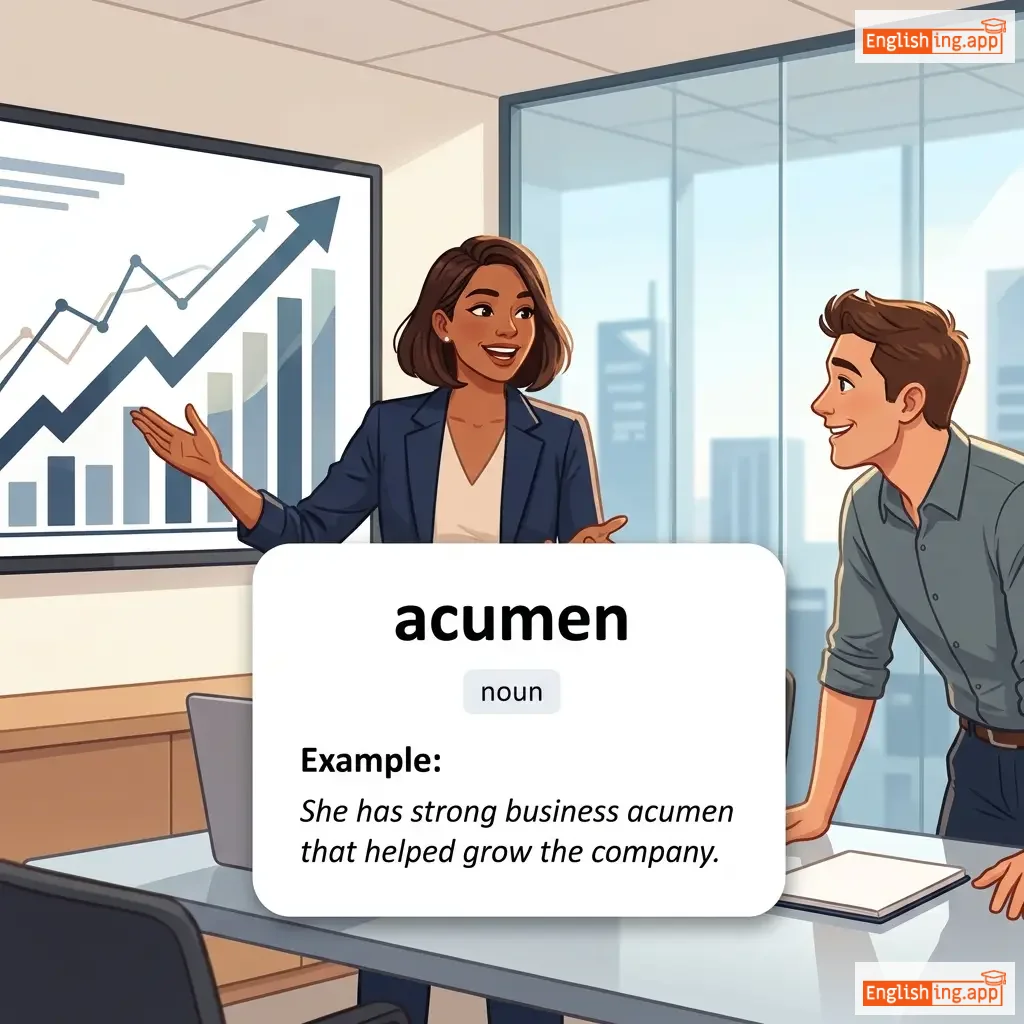
the ability to make good judgments and quick decisions, typically in a particular domain
••••••
|
She has strong business acumen that helped grow the company. |
彼女は強いビジネス鋭敏さを持っており、会社の成長を助けました。
Kanojo wa tsuyoi bijinesu eibinsa o motte ori, kaisha no seichō o tasukemashita.
••••••
|
- •••••• | - •••••• | - •••••• |
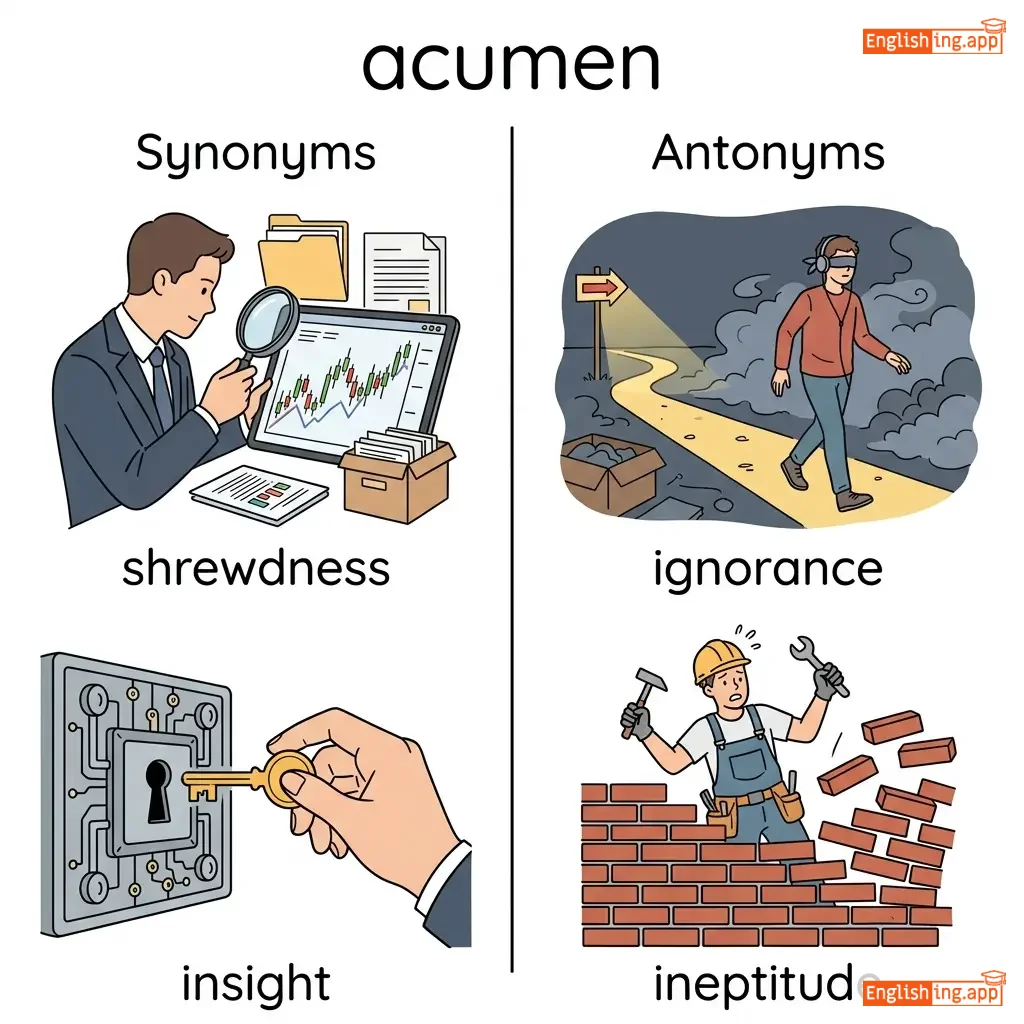
shrewdness, insight, sharpness, intelligence, wisdom
••••••
|
ignorance, ineptitude
••••••
|
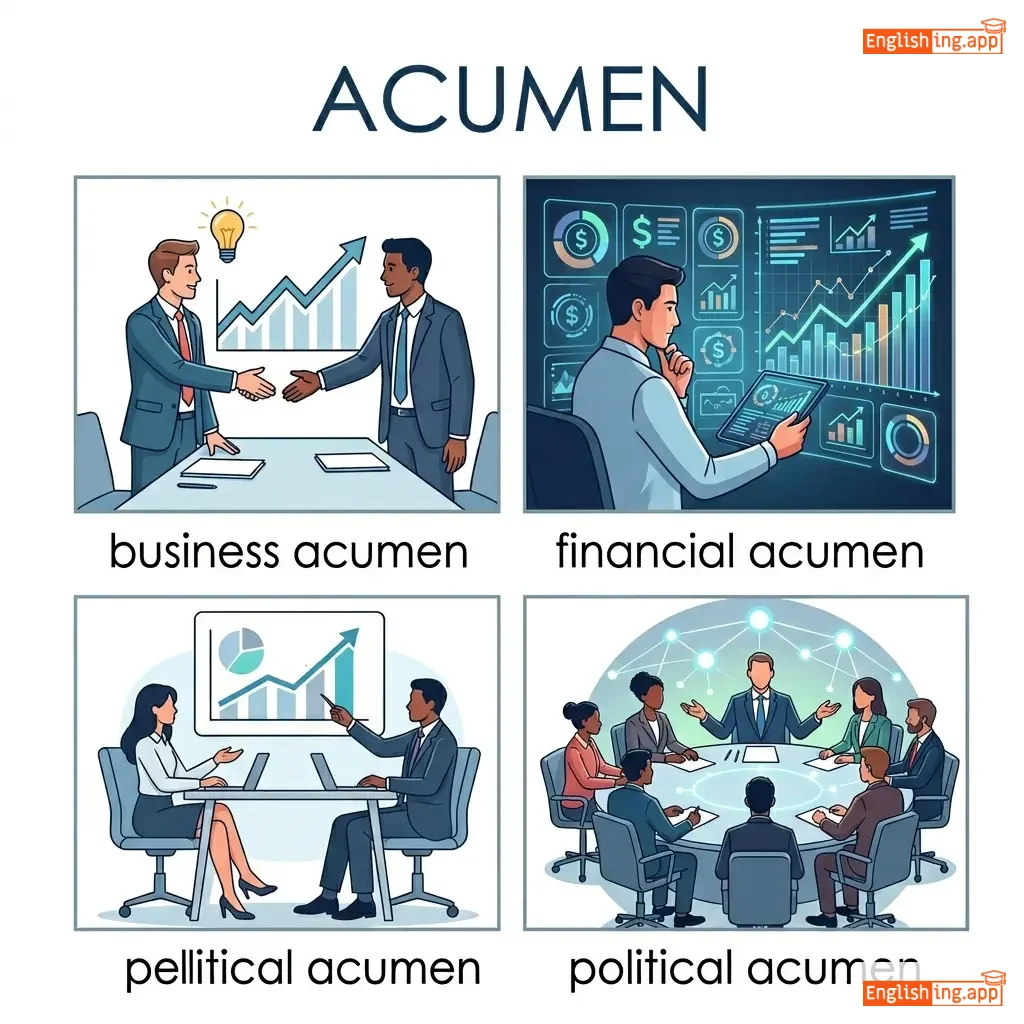
business acumen, financial acumen, political acumen
••••••
|
Acumenは、鋭い判断力と迅速な決断を意味する。
••••••
|
|
#180
👀
|
/əˈkjuːɪti/
noun
(アキュイティ)
••••••
|
|
鋭敏
eibin
••••••
|
- •••••• | - •••••• | - •••••• | - •••••• |
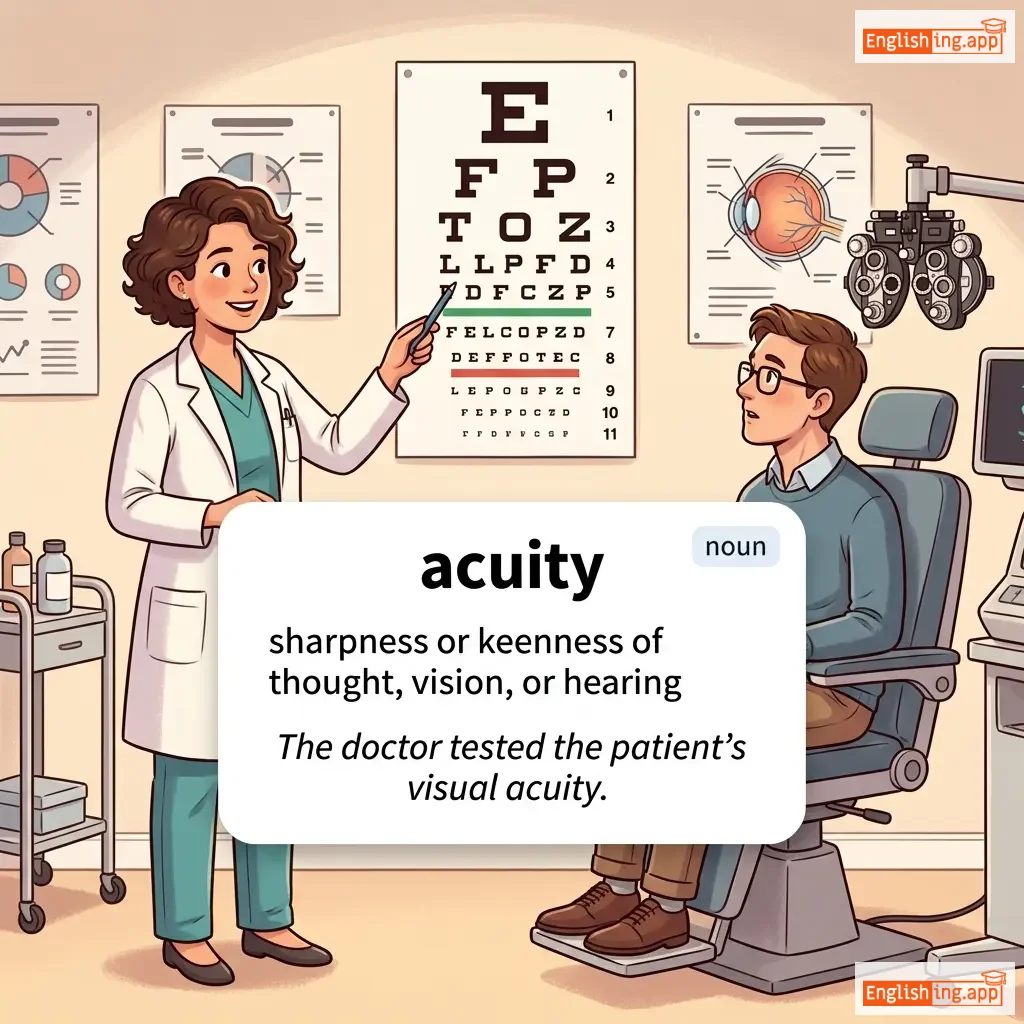
sharpness or keenness of thought, vision, or hearing
••••••
|
The doctor tested the patient’s visual acuity. |
医師は患者の視力鋭敏度をテストしました。
Ishi wa kanja no shiryoku eibin do wo tesuto shimashita.
••••••
|
- •••••• | - •••••• | - •••••• |
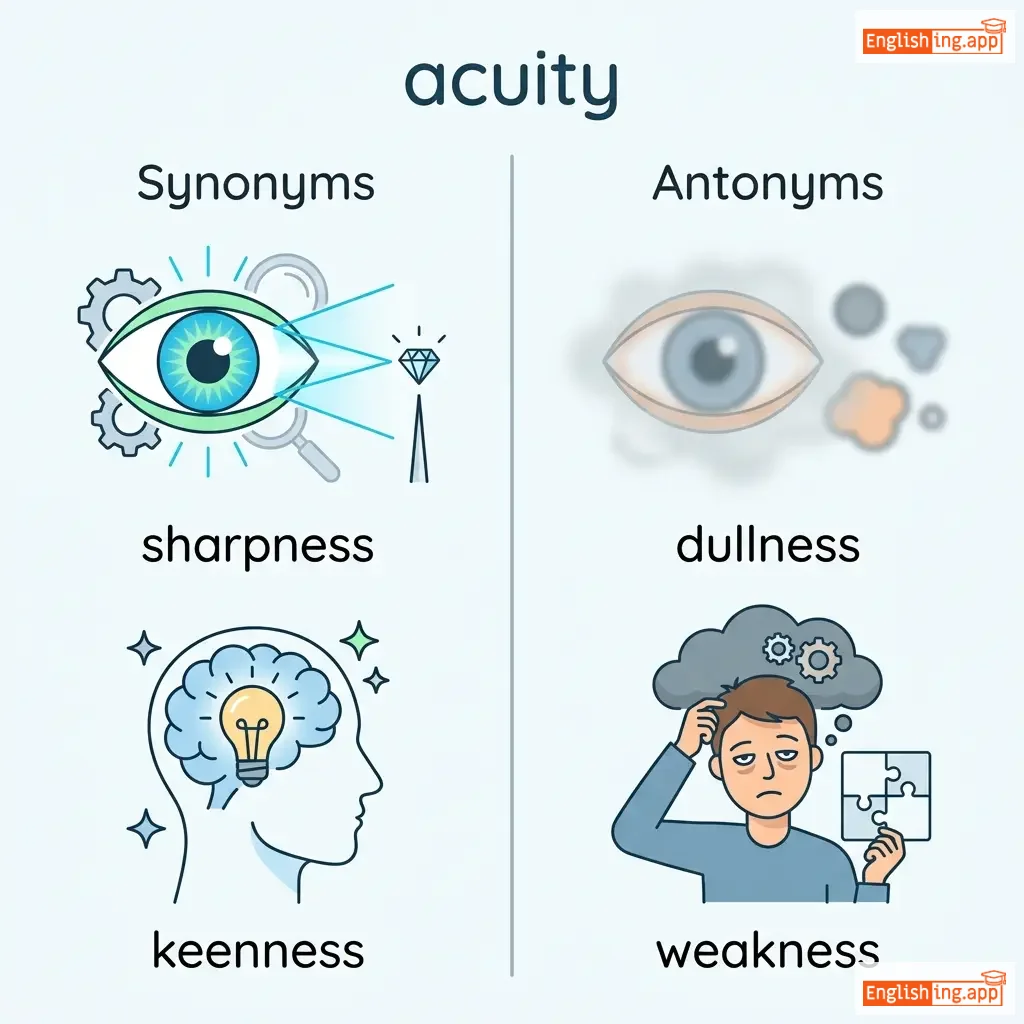
sharpness, keenness, clarity, alertness
••••••
|
dullness, weakness
••••••
|
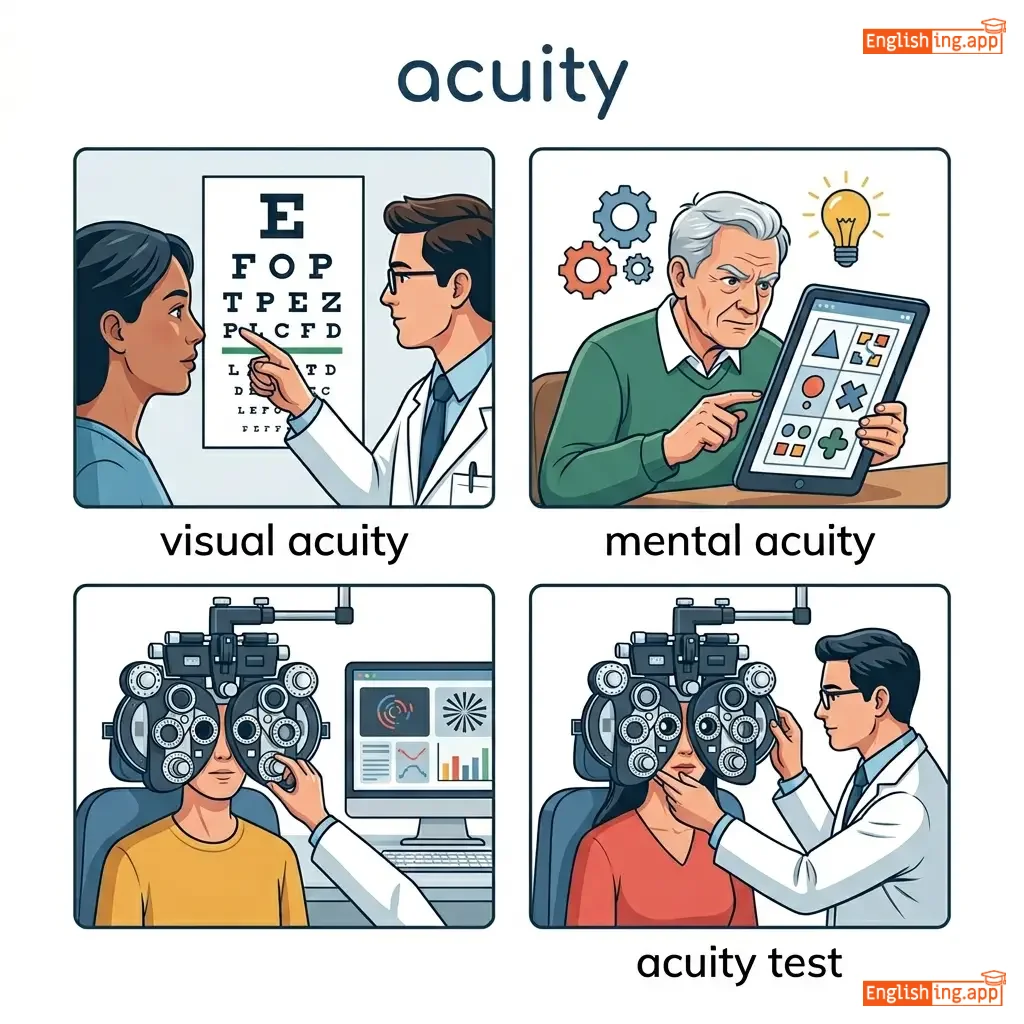
visual acuity, mental acuity, acuity test
••••••
|
Acuity = 鋭敏 — 鋭い思考や視力
••••••
|
Vocabulary Quiz
Test your vocabulary by matching words with their translations or meanings.
Login to take the quiz
Comments (0)
Share your thoughts and join the discussion.
Join the discussion by logging in
Login to CommentNo comments yet
Be the first to share your thoughts!