

翻訳
過去
過去分詞
三人称単数
動名詞
意味
例文
例文の翻訳
同義語
対義語
コロケーション
ニーモニック
Swipe left or right, or use the buttons. Tap image to zoom.
例文の翻訳
単語
Lesson 370Lesson 370 - マスクトグル
|
絵文字
|
単語 | Images | 翻訳 | 過去 | 過去分詞 | 三人称単数 | 動名詞 | 意味 | 例文 | 例文の翻訳 | 表現例 | 表現例の意味 | 表現例の翻訳 | 同義語 | 対義語 | コロケーション | ニーモニック |
|---|---|---|---|---|---|---|---|---|---|---|---|---|---|---|---|---|---|
|
#11065
🧬
|
/dʒəˈnɛtɪk/
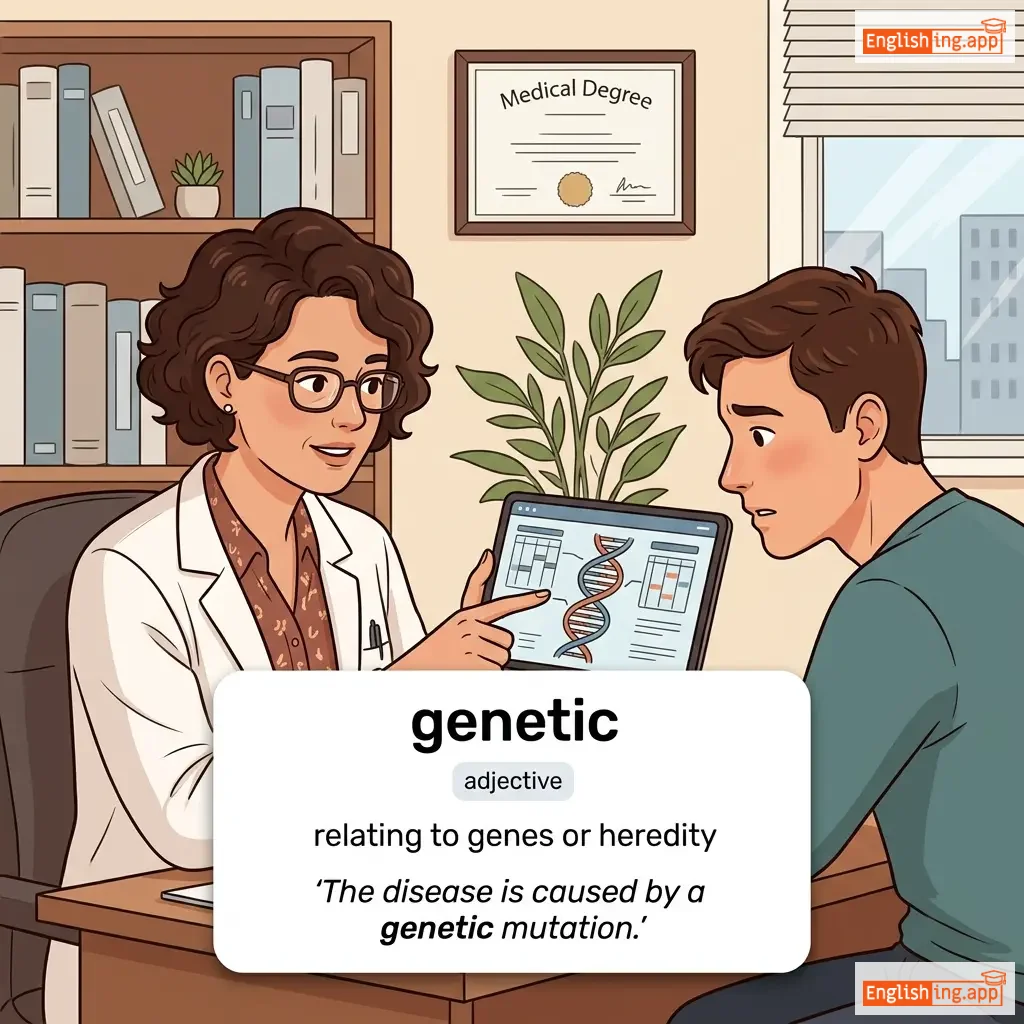
adjective
(ジェネティック)
••••••
|
|
遺伝的
identeki
••••••
|
- •••••• | - •••••• | - •••••• | - •••••• |
relating to genes or heredity
••••••
|
The disease is caused by a genetic mutation.
その病気は遺伝的変異によって引き起こされます。
••••••
|
その病気は遺伝的変異によって引き起こされます。
sono byōki wa iden teki hen'i ni yotte hikiokosaremasu.
••••••
|
genetic makeup
遺伝的構造
••••••
|
the set of genes that make up an individual
••••••
|
遺伝的構造
iden teki kōzō
••••••
|
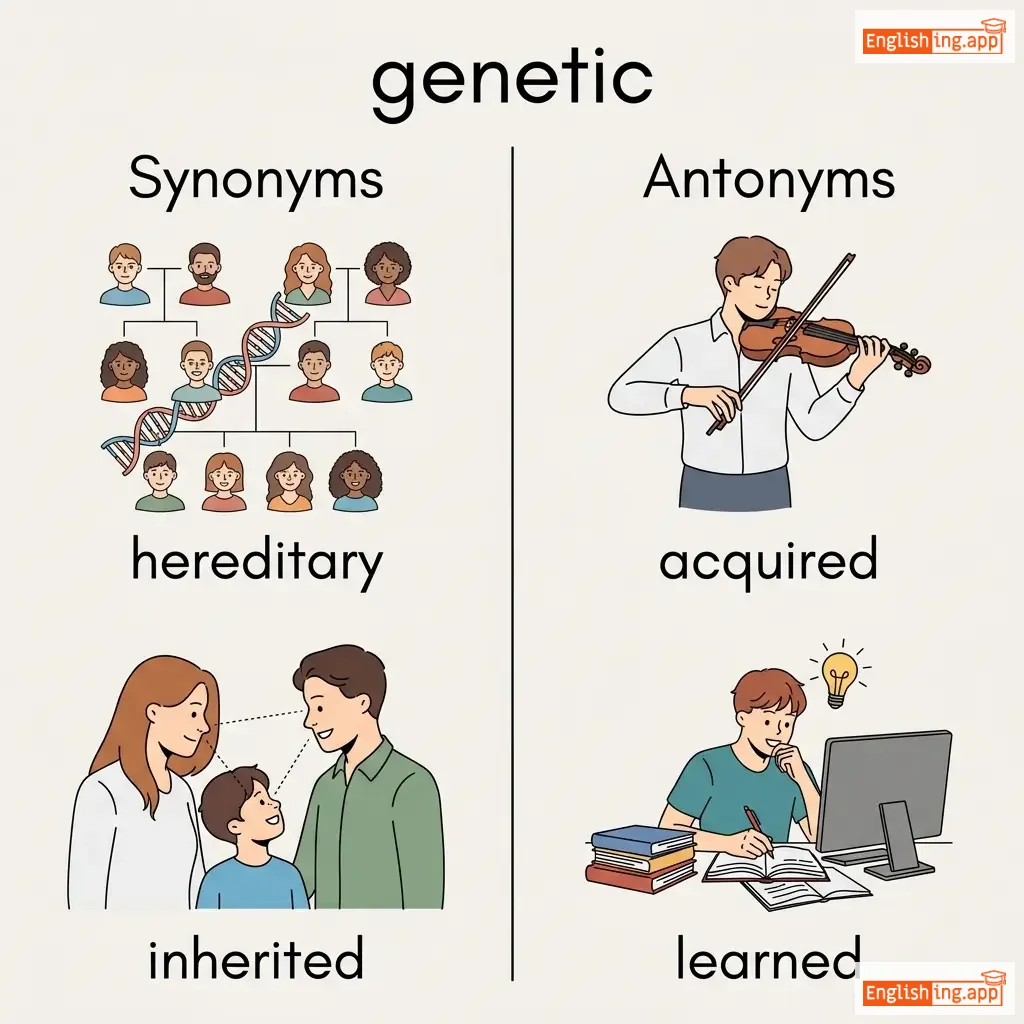
hereditary, inherited, biological, genomic
••••••
|
acquired, learned
••••••
|
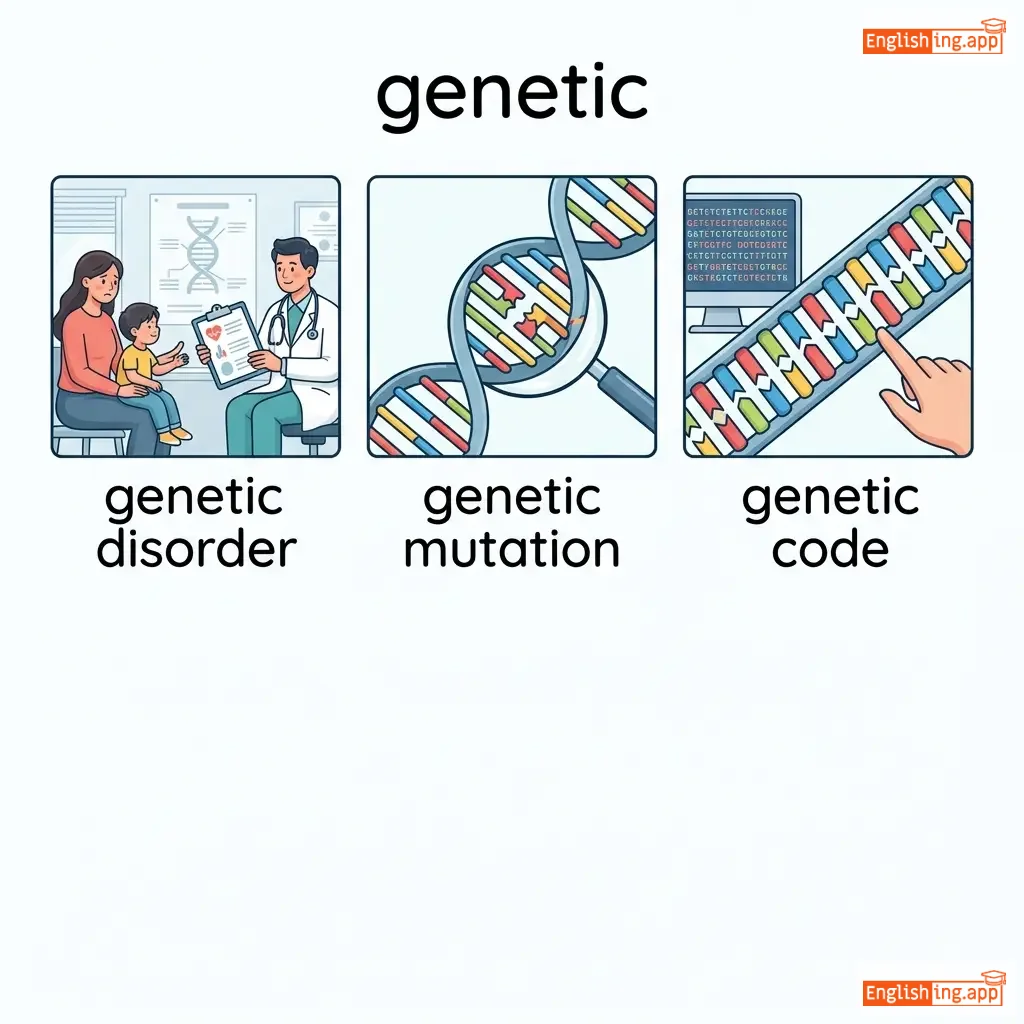
genetic disorder, genetic mutation, genetic code, genetic makeup
••••••
|
GENは遺伝的に関連しており、ジェネティックがその意味です。
••••••
|
|
#11066
🏃
|
/ɡoʊ/
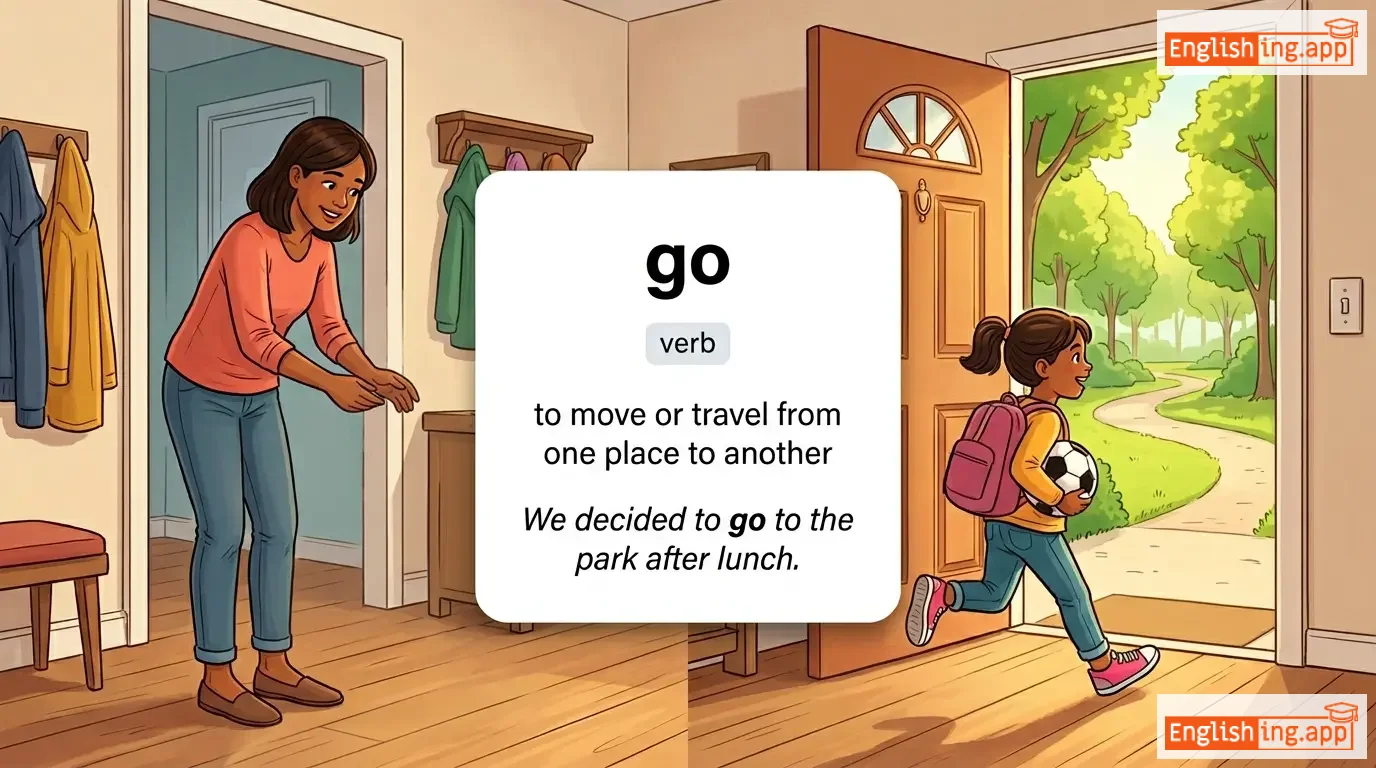
verb
(ゴ)
••••••
|
|
行く
iku
••••••
|
went
行った
••••••
|
gone
行った
••••••
|
goes
行きます
••••••
|
going
行く
••••••
|
to move or travel from one place to another
••••••
|
We decided to go to the park after lunch.
私たちは昼食後に公園に行くことに決めました。
••••••
|
私たちは昼食後に公園に行くことに決めました。
Watashitachi wa chuushoku go ni kouen ni iku koto ni kimemashita.
••••••
|
go the extra mile
余分な努力をする
••••••
|
to make a special effort to achieve something
••••••
|
余分な努力をする
yobun na doryoku wo suru
••••••
|
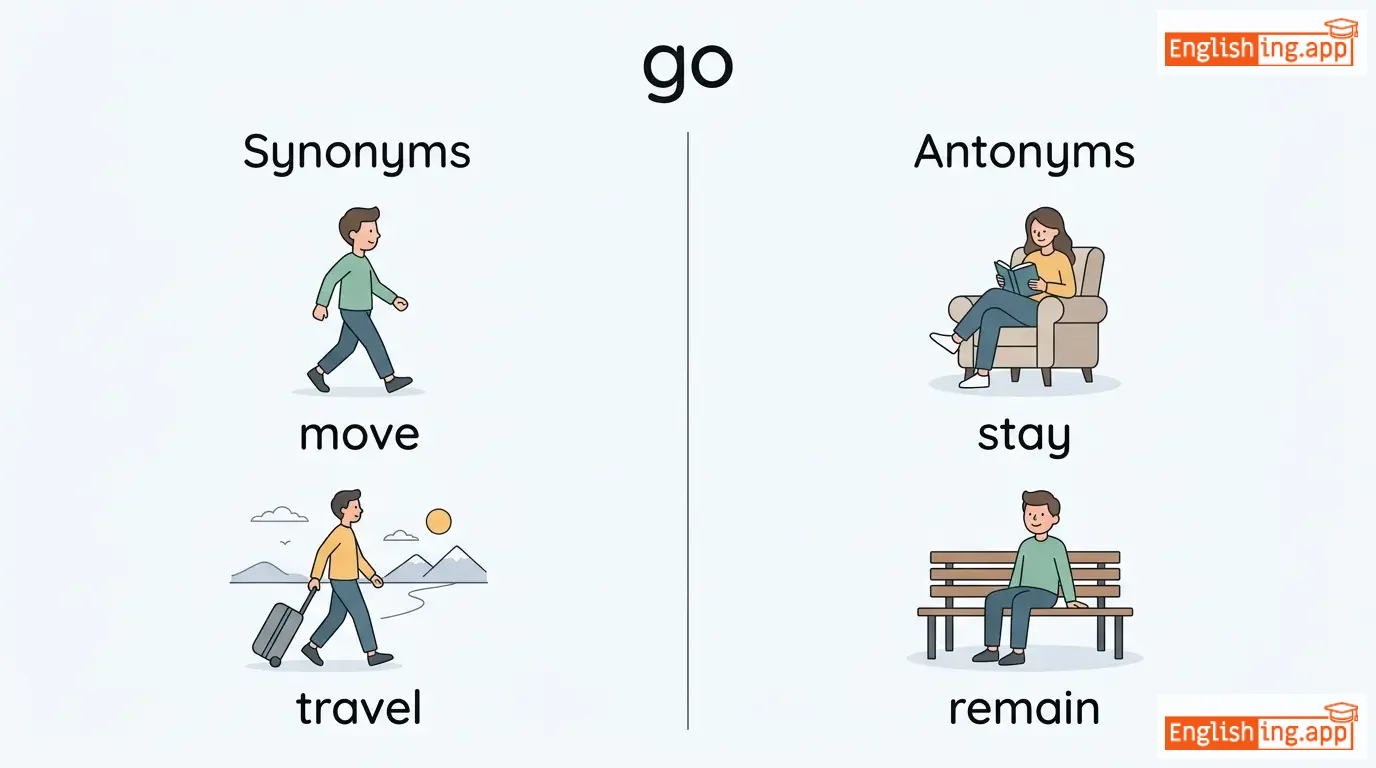
move, travel, proceed, depart, advance
••••••
|
stay, remain, stop
••••••
|
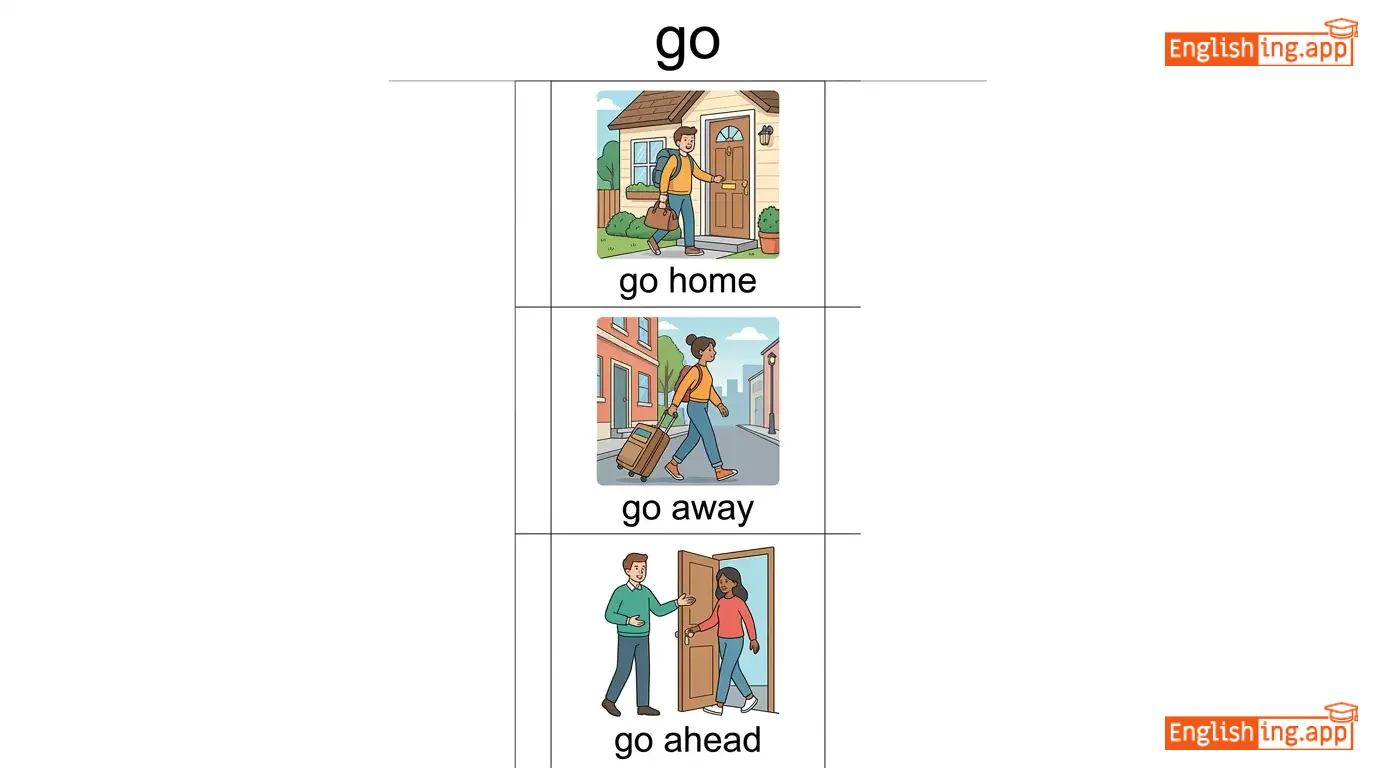
go home, go away, go ahead, go out, go to bed
••••••
|
Goは行くことを意味します。'さあ、goしよう!'と言っているようです。
••••••
|
|
#11067
🧤
|
/ɡlʌv/
noun
(グローブ)
••••••
|
- •••••• |
手袋
tebukuro
••••••
|
- •••••• | - •••••• | - •••••• | - •••••• |
A covering for the hand with separate parts for the fingers and thumb.
••••••
|
She wore gloves to protect her hands from the cold. |
彼女は寒さから手を守るために手袋をしました。
Kanojo wa samusa kara te o mamoru tame ni tebukuro o shimashita.
••••••
|
fit like a glove |
To fit perfectly.
••••••
|
手袋のようにぴったり
Tebukuro no yō ni pittari
••••••
|
mitt, mitten, handwear, covering
••••••
|
barehand, uncovered
••••••
|
wear gloves, leather gloves, boxing gloves, winter gloves
••••••
|
手袋は寒さから守る手の愛。
••••••
|
|
#11068
🌍
|
/ˈɡloʊbəl/
adjective
(グローバル)
••••••
|
|
グローバル
gurobaru
••••••
|
- •••••• | - •••••• | - •••••• | - •••••• |
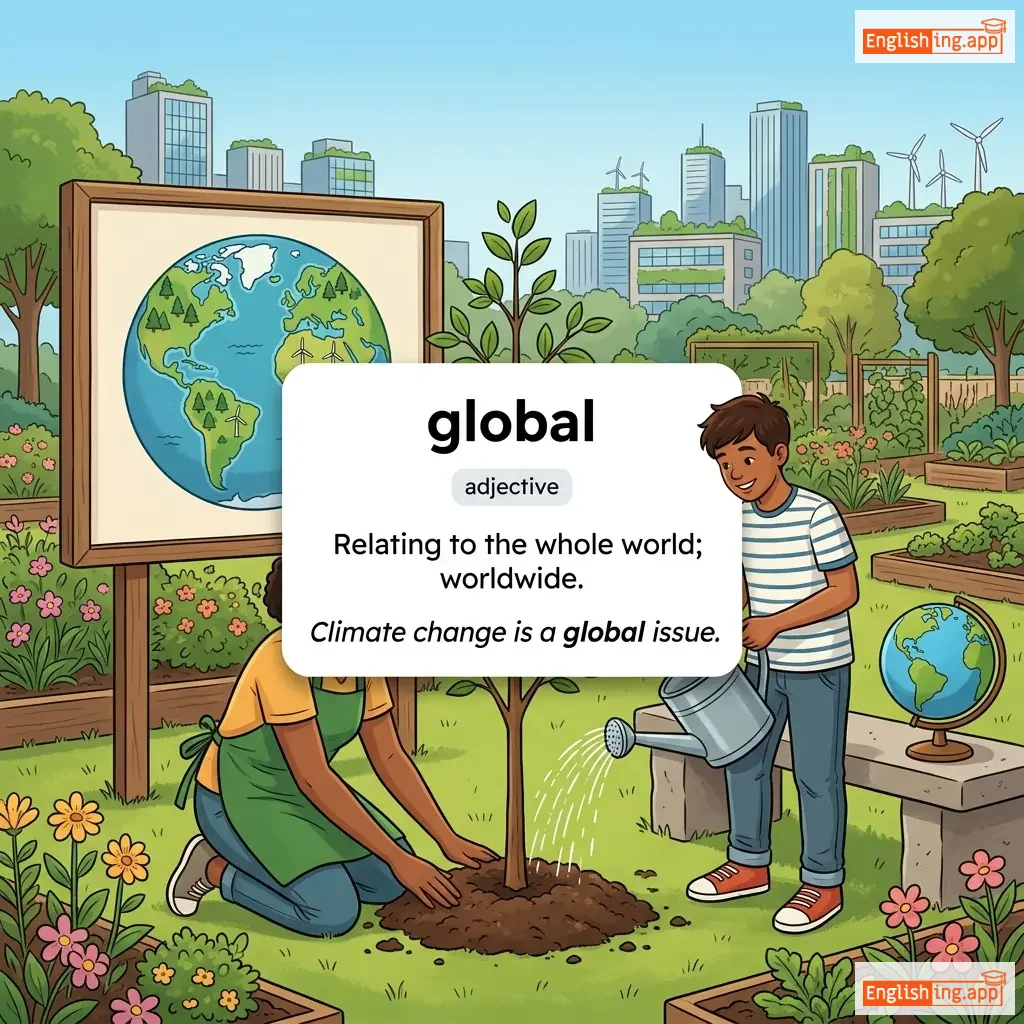
Relating to the whole world; worldwide.
••••••
|
Climate change is a global issue. |
気候変動は世界的な問題です。
Kikō hendō wa sekai-teki na mondai desu.
••••••
|
global village |
The world considered as a community connected by technology and communication.
••••••
|
グローバル村
gurōbaru mura
••••••
|
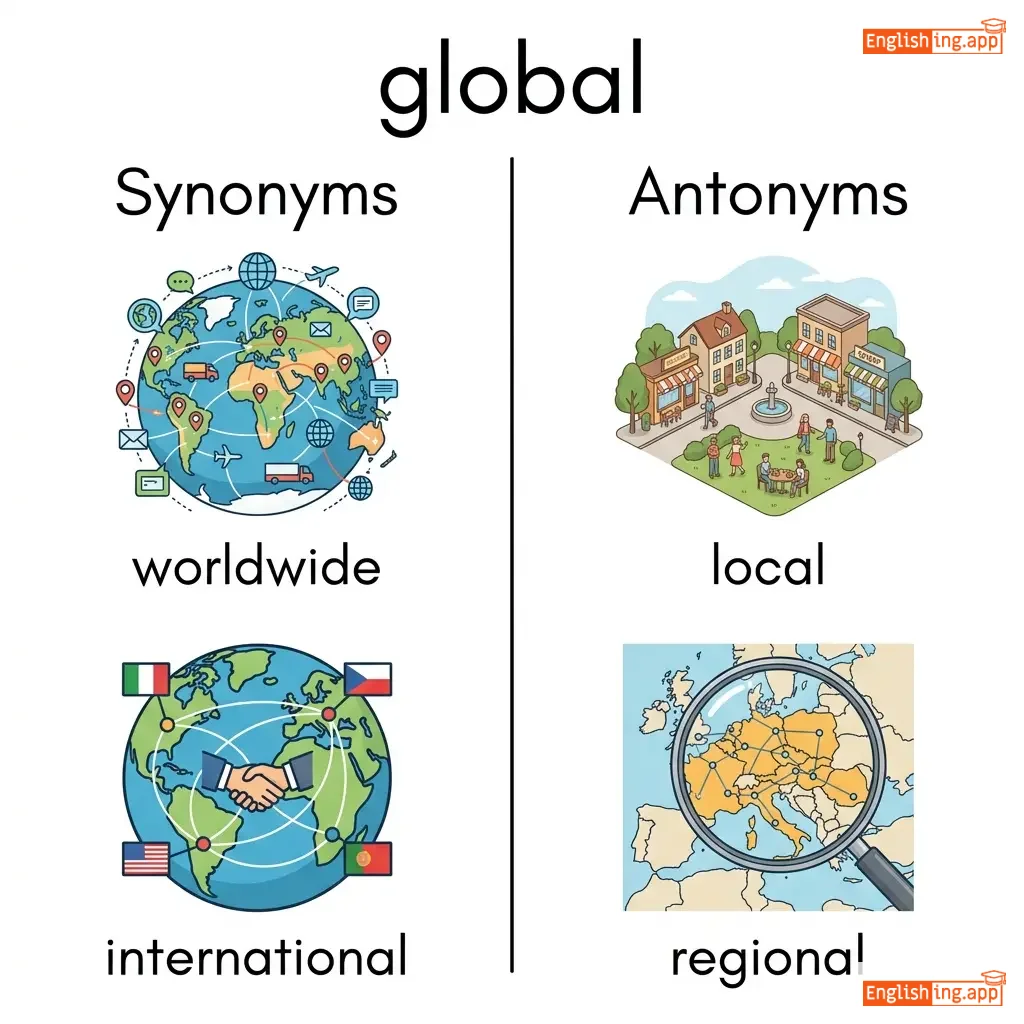
worldwide, international, universal, planetary
••••••
|
local, regional
••••••
|
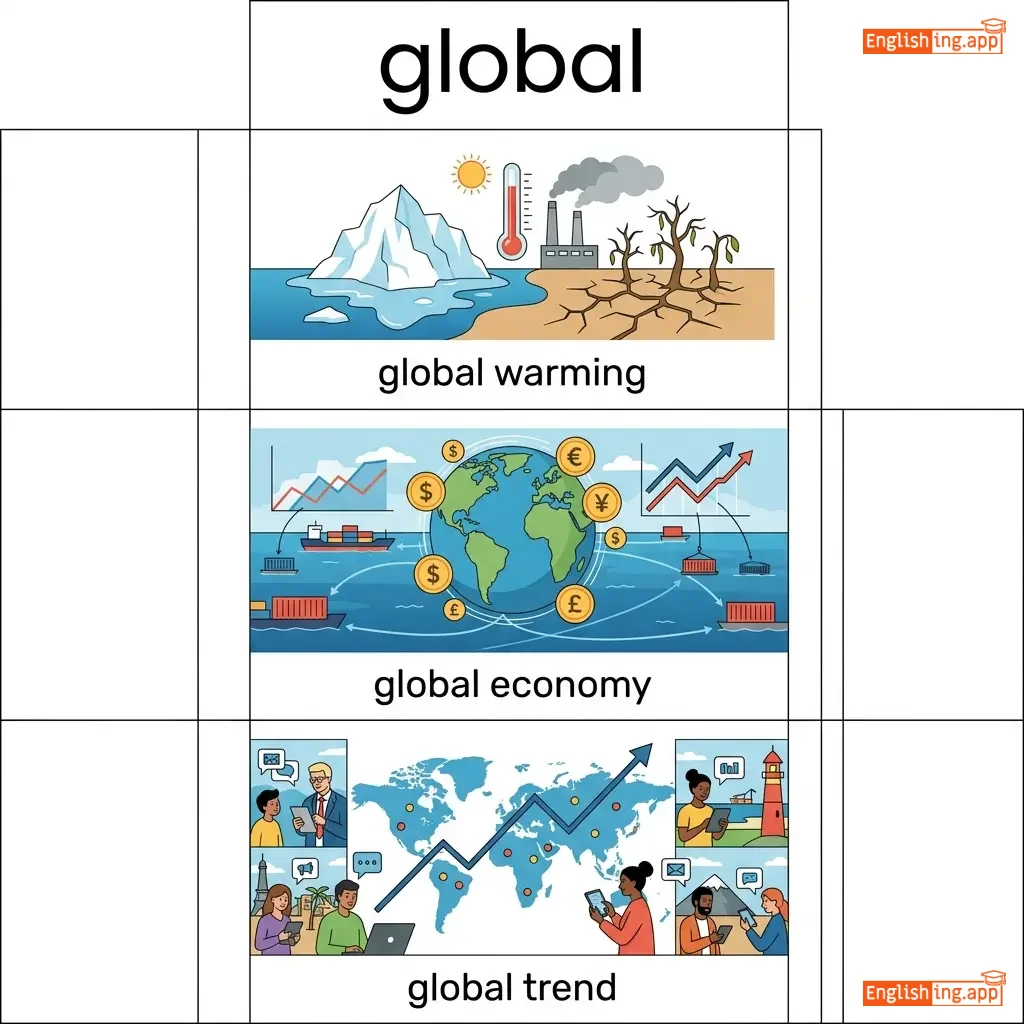
global warming, global economy, global trend, global community
••••••
|
Global = Go + Ball = 世界中のボールのようなもの。
••••••
|
|
#11069
👀
|
/ɡlæns/
verb
(グランス)
••••••
|
|
一瞥
ichime
••••••
|
glanced
グランスド
••••••
|
glanced
グランスド
••••••
|
glances
グランセス
••••••
|
glancing
グランシング
••••••
|
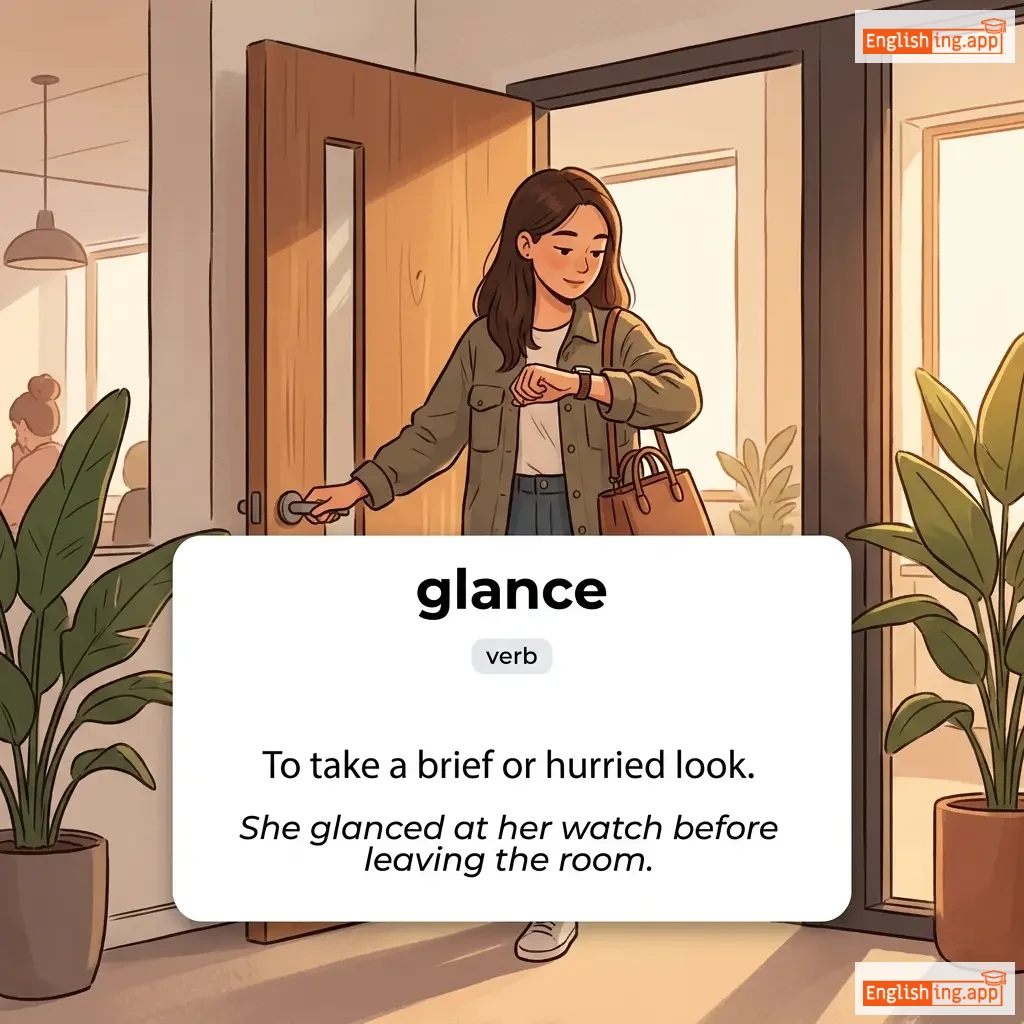
To take a brief or hurried look.
••••••
|
She glanced at her watch before leaving the room.
彼女は部屋を出る前に時計を一目見た。
••••••
|
彼女は部屋を出る前に時計を一目見た。
Kanojo wa heya o deru mae ni tokei o ichime mita.
••••••
|
at a glance
一目で
••••••
|
Immediately; with a quick look.
••••••
|
一目で
ichime de
••••••
|
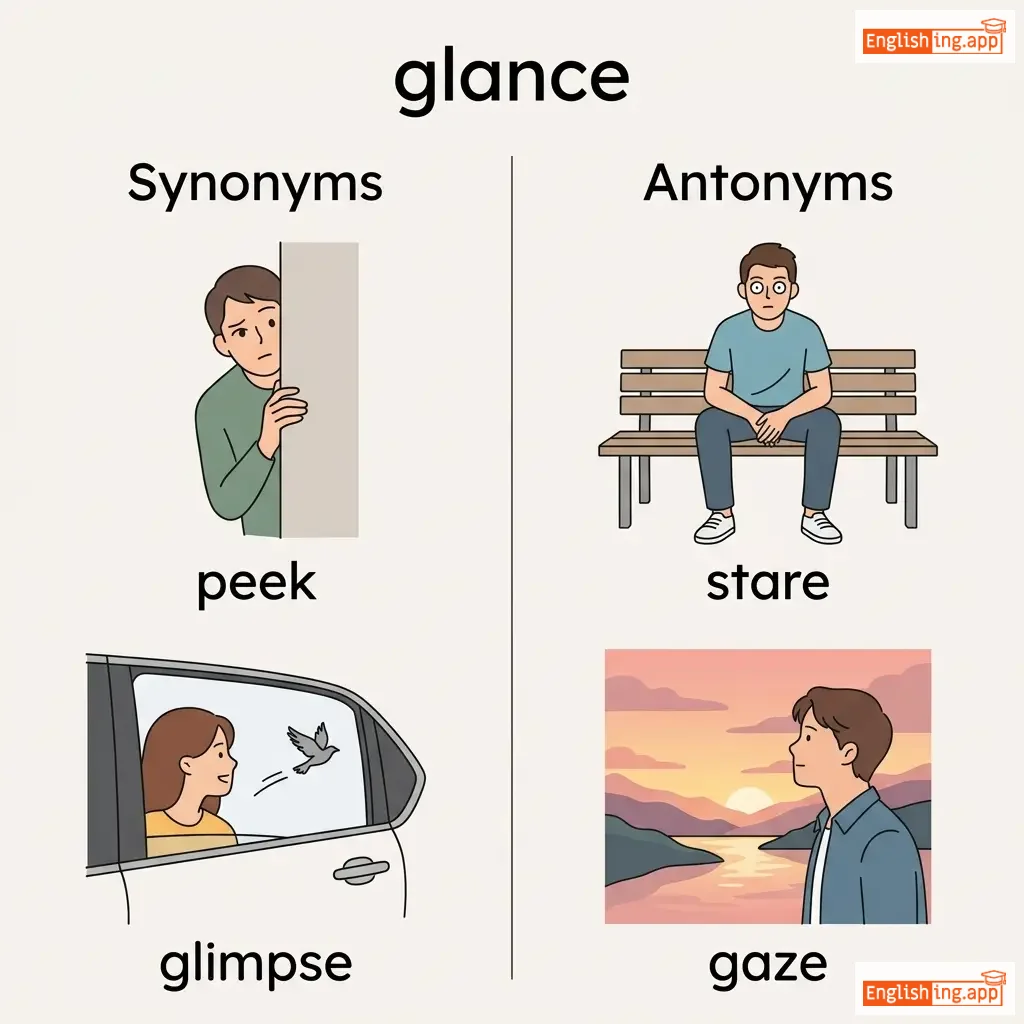
peek, glimpse, scan, view
••••••
|
stare, gaze
••••••
|
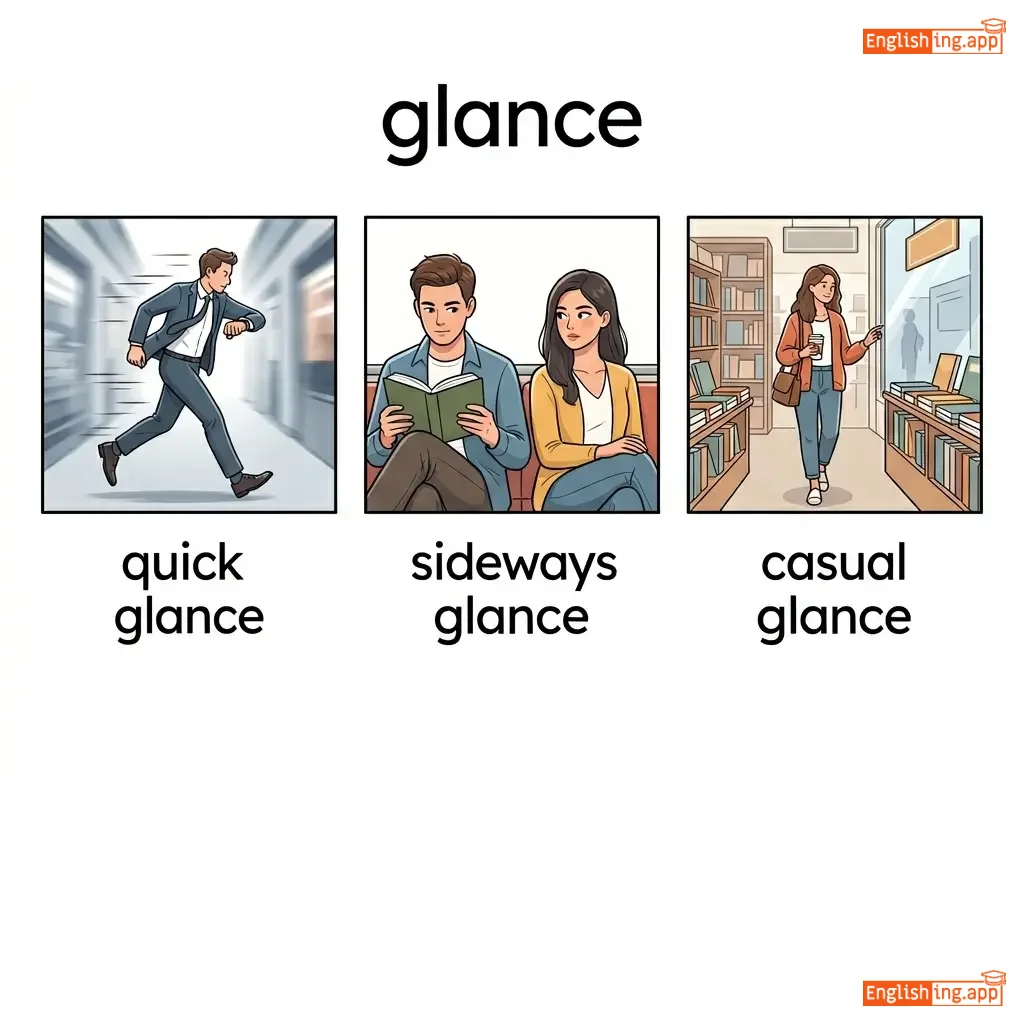
quick glance, sideways glance, casual glance, first glance
••••••
|
Glanceは「一瞥」を意味します – 試験で問題用紙を一瞥することで全てが分かります。
••••••
|
|
#11070
✅
|
/ˈɡɪvən/
adjective
(ギヴン)
••••••
|
- •••••• |
既定
kitei
••••••
|
- •••••• | - •••••• | - •••••• | - •••••• |
Specified or stated; already decided or certain.
••••••
|
It is a given fact that hard work leads to success. |
努力は成功に導くというのは既定の事実です。
Doryoku wa seikou ni michibiku to iu no wa kitei no jijitsu desu.
••••••
|
take for granted |
To assume something as true or certain without questioning.
••••••
|
当たり前とみなす
atarimae to minasu
••••••
|
certain, established, fixed, determined
••••••
|
uncertain, doubtful
••••••
|
given situation, given fact, given conditions, given time
••••••
|
‘Given’はすでに決まっている、または確定しているものです。
••••••
|
|
#11071
👩❤️👨
|
/ˈɡɜːrlfrɛnd/
noun
(ガールフレンド)
••••••
|
- •••••• |
彼女
kareshi
••••••
|
- •••••• | - •••••• | - •••••• | - •••••• |
A woman or girl with whom someone is romantically or emotionally involved.
••••••
|
He introduced his girlfriend to his family. |
彼は彼女を家族に紹介した。
Kare wa kanojo o kazoku ni shōkai shita.
••••••
|
meet the girlfriend |
To introduce one’s romantic partner to friends or family.
••••••
|
彼女を紹介する
Kanojo o shōkai suru
••••••
|
partner, companion, sweetheart, beloved, significant other
••••••
|
boyfriend, stranger
••••••
|
ex-girlfriend, girlfriend experience, girlfriend material, girlfriend problem
••••••
|
彼女 = 彼女 (kanojo) - あなたの大切な人。
••••••
|
|
#11072
👧
|
/ɡɜːrl/
noun
(ガール)
••••••
|
- •••••• |
女の子
onnanoko
••••••
|
- •••••• | - •••••• | - •••••• | - •••••• |
a female child or young woman
••••••
|
The girl was playing with her friends in the park. |
その女の子は公園で友達と遊んでいました。
Sono onnanoko wa kōen de tomodachi to asonde imashita.
••••••
|
girls' night out |
an evening when female friends go out together socially
••••••
|
女子会
joshikai
••••••
|
young woman, lass, maiden, miss
••••••
|
boy, man
••••••
|
school girl, little girl, young girl, girl group
••••••
|
Girl 👧 とは女の子 - 公園で遊んでいる女の子を思い浮かべてください。
••••••
|
|
#11073
🌟
|
/ˈɡɪftɪd/
adjective
(ギフテッド)
••••••
|
- •••••• |
才能のある
sainou no aru
••••••
|
- •••••• | - •••••• | - •••••• | - •••••• |
having exceptional talent or natural ability
••••••
|
The gifted student solved the math problem in seconds. |
その才能のある学生は数秒で数学の問題を解決しました。
Sono sainou no aru gakusei wa suubyou de suugaku no mondai wo kaiketsu shimashita.
••••••
|
- •••••• | - •••••• | - •••••• |
talented, skilled, brilliant, exceptional
••••••
|
ordinary, average
••••••
|
gifted child, gifted musician, gifted writer, gifted program
••••••
|
Gifted 🌟 とは特別な才能を持っていること、覚えておいてください gifted = sainou no aru。
••••••
|
|
#11074
🎁
|
/ɡɪft/
noun
(ギフト)
••••••
|
- •••••• |
ギフト
gifuto
••••••
|
- •••••• | - •••••• | - •••••• | - •••••• |
something given willingly to someone without payment; a present
••••••
|
She gave him a beautiful gift for his birthday.
彼女は誕生日に彼に美しいギフトを贈った。
••••••
|
彼女は誕生日に彼に美しいギフトを贈った。
Kanojo wa tanjōbi ni kare ni utsukushī gifuto o okutta.
••••••
|
gift of the gab
gift of the gab
••••••
|
the ability to speak easily and persuasively
••••••
|
おしゃべりの才能
oshaberi no sainō
••••••
|
present, offering, donation, award
••••••
|
penalty, fine
••••••
|
birthday gift, wedding gift, special gift, gift shop
••••••
|
Gift 🎁 日本語でギフト、思いやりを込めて贈りましょう!
••••••
|
|
#11075
🗿
|
/ˈdʒaɪənt/
noun
(ジャイアント)
••••••
|
- •••••• |
巨人
kyojin
••••••
|
- •••••• | - •••••• | - •••••• | - •••••• |
an extremely large and powerful being or a very large person or thing
••••••
|
The company grew into a giant in the tech industry. |
その会社はテクノロジー業界で巨人になった。
Sono kaisha wa tekunorojī gyōkai de kyojin ni natta.
••••••
|
gentle giant |
a person who is very large but kind and gentle
••••••
|
優しい巨人
yasashī kyojin
••••••
|
colossus, titan, behemoth, mammoth
••••••
|
dwarf, tiny
••••••
|
giant company, giant step, giant leap, giant figure
••••••
|
ジャイアント = 巨大な存在
••••••
|
|
#11076
👻
|
/ɡoʊst/
noun
(ゴースト)
••••••
|
- •••••• |
おばけ
obake
••••••
|
- •••••• | - •••••• | - •••••• | - •••••• |
the spirit of a dead person that is believed to appear to the living
••••••
|
She felt as if a ghost was watching her in the dark hallway. |
彼女は暗い廊下でおばけが彼女を見ているように感じた。
Kanojo wa kurai rōka de obake ga kanojo o mite iru yō ni kanjita.
••••••
|
give up the ghost |
to die or to stop working
••••••
|
死ぬか、動かなくなる
shinu ka, ugokanakunaru
••••••
|
spirit, phantom, specter, apparition, soul
••••••
|
body, reality
••••••
|
ghost story, ghost house, ghost town, ghost sighting
••••••
|
おばけとghost - 闇夜にひっそりと現れる亡霊の影。
••••••
|
|
#11077
🇩🇪
|
/ˈdʒɜːrmən/
noun/adjective
(ジャーマン)
••••••
|
- •••••• |
ドイツ語
doitsugo
••••••
|
- •••••• | - •••••• | - •••••• | - •••••• |
relating to Germany, its people, or its language
••••••
|
She is learning German to study abroad. |
彼女は海外で勉強するためにドイツ語を学んでいます。
kanojo wa kaigai de benkyou suru tame ni doitsugo o manandeimasu.
••••••
|
German shepherd |
a breed of large dog originally bred in Germany
••••••
|
ジャーマン・シェパード
jāman shepādo
••••••
|
Teutonic, Deutsch, European
••••••
|
non-German, foreign
••••••
|
German language, German culture, German shepherd, German food
••••••
|
ドイツ語はドイツで話されており、ドイツ語の犬であるジャーマン・シェパードもドイツから来た!
••••••
|
|
#11078
🌸
|
/ˈdʒɛntli/
adverb
(ジェントリー)
••••••
|
- •••••• |
優しく
yasashiku
••••••
|
- •••••• | - •••••• | - •••••• | - •••••• |
in a kind, careful, or soft way
••••••
|
She gently placed the baby in the crib. |
彼女は赤ちゃんを優しくベビーベッドに置きました。
Kanojo wa akachan o yasashiku bebībeddo ni okimashita.
••••••
|
gently does it |
a reminder to do something slowly and carefully
••••••
|
優しくやって
yasashiku yatte
••••••
|
softly, tenderly, lightly, calmly
••••••
|
harshly, roughly
••••••
|
speak gently, touch gently, gently smiling, gently place
••••••
|
優しく、ジェントリー、どちらも丁寧!
••••••
|
|
#11079
🤵
|
/ˈdʒɛntəlmən/
noun
(ジェントルマン)
••••••
|
- •••••• |
紳士
shin-shi
••••••
|
- •••••• | - •••••• | - •••••• | - •••••• |
a man who is polite, courteous, and honorable
••••••
|
He opened the door for her like a true gentleman. |
彼は本物の紳士のように彼女のためにドアを開けた。
Kare wa honmono no shin-shi no yō ni kanojo no tame ni doa o aketa.
••••••
|
perfect gentleman |
a man who behaves very politely and respectfully
••••••
|
完璧な紳士
kanpeki na shin-shi
••••••
|
man, sir, nobleman, gallant, gent
••••••
|
boor, rude man
••••••
|
true gentleman, perfect gentleman, young gentleman, gentleman's club
••••••
|
紳士 (shin-shi) は Gentle (ジェントル) な男性で、尊敬を集めます
••••••
|
|
#11080
➕
|
/ˌfɜːrðərˈmɔːr/
adverb
(ファーザー・モア)
••••••
|
- •••••• |
その上
sono ue
••••••
|
- •••••• | - •••••• | - •••••• | - •••••• |
Used to introduce an additional point or idea; in addition.
••••••
|
The plan is simple and, furthermore, it is affordable. |
その計画は簡単で、さらに、手頃な価格です。
Sono keikaku wa kantan de, sara ni, tegorona kakaku desu.
••••••
|
- •••••• | - •••••• | - •••••• |
moreover, in addition, also, besides
••••••
|
however, nevertheless
••••••
|
furthermore argue, furthermore demonstrate, simple and furthermore
••••••
|
Furthermore は 'その上' を意味します ➕ 思い出してください: 'もっとポイントがあります。'
••••••
|
|
#11081
👶
|
/ˌdʒɛnəˈreɪʃən/
noun
(ジェネレーション)
••••••
|
- •••••• |
世代
sedai
••••••
|
- •••••• | - •••••• | - •••••• | - •••••• |
all the people born and living at about the same time; the process of producing something
••••••
|
The younger generation is more comfortable with technology. |
若い世代はテクノロジーにもっと慣れています。
wakai sedai wa tekunorojī ni motto nareteimasu.
••••••
|
generation gap |
the difference in attitudes and behavior between older and younger people
••••••
|
世代間のギャップ
sedaikan no gyappu
••••••
|
cohort, age group, era, production, creation
••••••
|
ancestors, destruction
••••••
|
younger generation, next generation, generation gap, generation of energy
••••••
|
各世代 (sedai) は新しいGENを作ります - Generationは世代を意味します
••••••
|
|
#11082
🌍
|
/ˈdʒɛnərəl/
adjective
(ジェネラル)
••••••
|
- •••••• |
一般的
ippan-teki
••••••
|
- •••••• | - •••••• | - •••••• | - •••••• |
Relating to all or most people, things, or situations; not specific.
••••••
|
He made a general comment about the project. |
彼はプロジェクトに関する一般的なコメントをしました。
Kare wa purojekuto ni kansuru ippan-teki na komento o shimashita.
••••••
|
in general |
usually or mostly
••••••
|
一般的に
ippan-teki ni
••••••
|
common, overall, broad, universal, widespread
••••••
|
specific, particular
••••••
|
general idea, general knowledge, general opinion, general rule
••••••
|
一般的は一般的、'一般的に'は通常または主にを意味します。
••••••
|
|
#11083
🧬
|
/dʒiːn/
noun
(ジーン)
••••••
|
- •••••• |
遺伝子
iden-shi
••••••
|
- •••••• | - •••••• | - •••••• | - •••••• |
A unit of heredity in living organisms, transferred from parent to offspring, determining traits.
••••••
|
Eye color is influenced by genes inherited from parents. |
目の色は親から受け継いだ遺伝子によって影響を受けます。
me no iro wa oya kara uketsuida idenshi ni yotte eikyo o ukemasu.
••••••
|
in one's genes |
a natural trait inherited from family
••••••
|
誰かの遺伝子に
dareka no idenshi ni
••••••
|
DNA, chromosome, heredity, trait, genome
••••••
|
environment, nurture
••••••
|
gene mutation, gene therapy, human gene, dominant gene
••••••
|
遺伝子 = Gene、DNA 🧬 忘れないで!
••••••
|
|
#11084
⚧️
|
/ˈdʒɛndər/
noun
(ジェンダー)
••••••
|
- •••••• |
性別
seibetsu
••••••
|
- •••••• | - •••••• | - •••••• | - •••••• |
The state of being male, female, or another identity as recognized socially or culturally.
••••••
|
The survey asked about participants' age and gender. |
調査は参加者の年齢と性別について尋ねました。
Chousa wa sanka-sha no nenrei to seibetsu ni tsuite tazunemashita.
••••••
|
- •••••• | - •••••• | - •••••• |
sex, identity, category, type
••••••
|
neutrality, indifference
••••••
|
gender equality, gender roles, gender identity, gender discrimination
••••••
|
Genderは性別を意味します、男性と女性のように。
••••••
|
|
#11085
👀
|
/ɡeɪz/
verb
(ゲイズ)
••••••
|
- •••••• |
じっと見る
jitto miru
••••••
|
gazed
ゲイズド
••••••
|
gazed
ゲイズド
••••••
|
gazes
ゲイゼス
••••••
|
gazing
ゲイジング
••••••
|
To look steadily and intently at something, usually with admiration, surprise, or thought.
••••••
|
He gazed at the stars in wonder.
彼は驚きで星を見つめた。
••••••
|
彼は驚きで星を見つめた。
kare wa odoroki de hoshi o mitsumeta.
••••••
|
gaze into the distance
遠くを見つめる
••••••
|
to look far away thoughtfully
••••••
|
遠くを見つめる
tōku o mitsumeru
••••••
|
stare, look, peer, glance, observe
••••••
|
ignore, overlook
••••••
|
gaze at, gaze into, gaze upward, gaze longingly
••••••
|
ゲイズはじっと見るということです。
••••••
|
|
#11086
🚪
|
/ɡeɪt/
noun
(ハピネス)
••••••
|
- •••••• |
幸せ
shiawase
••••••
|
- •••••• | - •••••• | - •••••• | - •••••• |
A movable barrier that opens and closes to allow or prevent entry through an opening.
••••••
|
She closed the gate behind her as she left the garden. |
彼女は賞を受け取ったとき、喜びを隠すことができませんでした。
Kanojo wa shō o uketotta toki, yorokobi o kakusu koto ga dekimasen deshita.
••••••
|
at death's gate |
very close to dying
••••••
|
幸せの追求
shiawase no tsuikyū
••••••
|
door, entrance, barrier, portal, gateway
••••••
|
exit, opening
••••••
|
front gate, garden gate, iron gate, open the gate
••••••
|
幸せはあなたが追い求めるべき目標です。
••••••
|
|
#11087
⛽
|
/ɡæs/
noun
(ガス)
••••••
|
- •••••• |
ガス
gasu
••••••
|
- •••••• | - •••••• | - •••••• | - •••••• |
A substance like air that is neither solid nor liquid and can expand freely.
••••••
|
The balloon was filled with gas. |
風船はガスで満たされていた。
Fūsen wa gasu de mitasarete ita.
••••••
|
step on the gas |
To accelerate or go faster.
••••••
|
アクセルを踏む
Akuseru o fumu
••••••
|
vapor, fume, air, fuel
••••••
|
solid, liquid
••••••
|
natural gas, gas station, gas leak, gas supply
••••••
|
ガス – ガスは速く広がる、車を速く進ませる。
••••••
|
|
#11088
🧄
|
/ˈɡɑːrlɪk/
noun
(ガーリック)
••••••
|
- •••••• |
にんにく
ninniku
••••••
|
- •••••• | - •••••• | - •••••• | - •••••• |
A strong-smelling plant used as a seasoning in cooking.
••••••
|
She added garlic to the curry. |
彼女はカレーににんにくを加えました。
Kanojo wa karē ni ninniku o kuwaemashita.
••••••
|
- •••••• | - •••••• | - •••••• |
allium, clove, spice, herb
••••••
|
sweetener, sugar
••••••
|
garlic bread, garlic clove, garlic paste, garlic sauce
••••••
|
Garlicはにんにく – ‘カレーににんにくを加えると、美味しさが増します。’
••••••
|
|
#11089
🌱
|
/ˈɡɑːrdn/
noun
(ガーデン)
••••••
|
- •••••• |
庭
niwa
••••••
|
- •••••• | - •••••• | - •••••• | - •••••• |
A piece of ground where flowers, vegetables, or plants are grown.
••••••
|
She grows roses in her garden. |
彼女は自分の庭でバラを育てています。
Kanojo wa jibun no niwa de bara o sodateteimasu.
••••••
|
lead someone up the garden path |
To deceive or mislead someone.
••••••
|
誰かを庭道に誘う
Dareka o niwadori ni sasou
••••••
|
yard, lawn, park, orchard
••••••
|
wasteland, desert
••••••
|
botanical garden, back garden, flower garden, vegetable garden
••••••
|
庭で花を育てる場所 – ガーデンから庭へ。
••••••
|
|
#11090
🚗
|
/ɡəˈrɑːʒ/ or /ɡəˈrɑːdʒ/
noun
(ガレージ)
••••••
|
- •••••• |
ガレージ
gareeji
••••••
|
- •••••• | - •••••• | - •••••• | - •••••• |
A building or space for housing cars or vehicles.
••••••
|
He parked his car in the garage.
彼はガレージに車を駐車しました。
••••••
|
彼はガレージに車を駐車しました。
Kare wa gareeji ni kuruma o chūsha shimashita.
••••••
|
- •••••• | - •••••• | - •••••• |
carport, workshop, depot, shed
••••••
|
open space, outdoors
••••••
|
double garage, underground garage, park in the garage
••••••
|
ガレージは車を置く場所 – ‘ガレージに車を駐車する’。
••••••
|
|
#11091
🕳️
|
/ɡæp/
noun
(ギャップ)
••••••
|
- •••••• |
ギャップ / 隙間
gyappu / sukima
••••••
|
- •••••• | - •••••• | - •••••• | - •••••• |
An empty space or break between two objects or parts; a difference or disparity.
••••••
|
There is a huge gap between the rich and the poor. |
裕福な人々と貧しい人々の間には大きなギャップがあります。
Yūfukuna hitobito to mazushī hitobito no aida ni wa ōkina gyappu ga arimasu.
••••••
|
generation gap |
The difference in attitudes or values between younger and older people.
••••••
|
世代間ギャップ
sedai-kan gyappu
••••••
|
space, opening, break, divide, interval
••••••
|
closure, connection, link
••••••
|
bridge the gap, fill the gap, gap year, income gap
••••••
|
Gapはギャップです – ‘Gapは隙間を埋めます’
••••••
|
|
#11092
👥
|
/ɡæŋ/
noun
(ギャング)
••••••
|
- •••••• |
ギャング
gyangu
••••••
|
- •••••• | - •••••• | - •••••• | - •••••• |
An organized group of people, often involved in crime or violence.
••••••
|
The gang was arrested by the police last night. |
そのギャングは昨晩警察に逮捕されました。
Sono gyangu wa sakuban keisatsu ni taiho saremashita.
••••••
|
gang up on |
to join together against someone in a hostile way
••••••
|
誰かに対して団結する
Dareka ni taishite danketsu suru
••••••
|
crew, group, band, mob, clique
••••••
|
individual, loner
••••••
|
street gang, criminal gang, gang leader, gang violence
••••••
|
ギャング 👥 はみんなで集まること、まるでギャングのように!
••••••
|
|
#11093
🎮
|
/ɡeɪm/
noun
(gēmu)
••••••
|
- •••••• |
ゲーム
gēmu
••••••
|
- •••••• | - •••••• | - •••••• | - •••••• |
An activity or sport played for amusement, competition, or skill.
••••••
|
They played a football game in the afternoon. |
彼らは午後にサッカーの試合をしました。
Karera wa gogo ni sakkā no shiai o shimashita.
••••••
|
fair game |
a target that is considered legitimate to criticize or attack
••••••
|
フェアプレイ
Feāpurei
••••••
|
match, play, contest, sport, competition
••••••
|
work, duty
••••••
|
play a game, video game, board game, win the game, lose the game
••••••
|
ゲームを楽しむ — 友達と一緒にプレイする楽しい時間。
••••••
|
|
#11094
🖼️
|
/ˈɡæləri/
noun
(ギャラリー)
••••••
|
- •••••• |
ギャラリー
gyararī
••••••
|
- •••••• | - •••••• | - •••••• | - •••••• |
A room or building for the display or sale of works of art.
••••••
|
The gallery showcased modern paintings by local artists. |
ギャラリーは地元のアーティストによる現代絵画を展示しました。
Gyararī wa jimoto no ātisuto ni yoru gendai kaiga o tenji shimashita.
••••••
|
peanut gallery |
an audience or group of critics, often giving unsolicited comments
••••••
|
ピーナッツギャラリー
pīnattsu gyararī
••••••
|
exhibition hall, showroom, museum, studio, display room
••••••
|
storage, warehouse
••••••
|
art gallery, photo gallery, gallery space, gallery exhibition
••••••
|
ギャラリー 🖼️ — 芸術作品を集めて展示する場所を思い浮かべよう。
••••••
|
Vocabulary Quiz
Test your vocabulary by matching words with their translations or meanings.
Login to take the quiz
Comments (0)
Share your thoughts and join the discussion.
Join the discussion by logging in
Login to CommentNo comments yet
Be the first to share your thoughts!