

翻訳
過去
過去分詞
三人称単数
動名詞
意味
例文
例文の翻訳
同義語
対義語
コロケーション
ニーモニック
Swipe left or right, or use the buttons. Tap image to zoom.
例文の翻訳
単語
Lesson 81Lesson 81 - マスクトグル
|
絵文字
|
単語 | Images | 翻訳 | 過去 | 過去分詞 | 三人称単数 | 動名詞 | 意味 | 例文 | 例文の翻訳 | 表現例 | 表現例の意味 | 表現例の翻訳 | 同義語 | 対義語 | コロケーション | ニーモニック |
|---|---|---|---|---|---|---|---|---|---|---|---|---|---|---|---|---|---|
|
#2401
💬
|
/ˌdaɪəˈlɛktɪk/
noun
••••••
|
- •••••• | - •••••• | - •••••• | - •••••• | - •••••• | - •••••• |
A method of argument or reasoning by dialogue, especially as a means of investigating truth.
••••••
|
The philosopher used dialectic to challenge his students' assumptions. |
- •••••• |
dialectical method |
A method of reasoning through dialogue and logical argument.
••••••
|
- •••••• |
reasoning, logic, debate, discussion, argumentation
••••••
|
agreement, harmony, consensus
••••••
|
dialectic process, dialectic method, dialectic reasoning
••••••
|
No •••••• |
|
#2402
⚖️
|
/ˈdɪfərəns/
noun
(ディファレンス)
••••••
|
- •••••• |
違い
chigai
••••••
|
- •••••• | - •••••• | - •••••• | - •••••• |
A point or way in which things are not the same.
••••••
|
There is a big difference between theory and practice. |
理論と実践の間に大きな違いがあります。
Riron to jissen no aida ni ōkina chigai ga arimasu.
••••••
|
make a difference |
To have a significant impact or effect
••••••
|
違いを作る
chigai o tsukuru
••••••
|
distinction, variation, contrast, diversity, disparity
••••••
|
similarity, resemblance, sameness
••••••
|
big difference, subtle difference, cultural difference, make a difference
••••••
|
違いは物が異なるとき、覚えておいて '違うと違い'。
••••••
|
|
#2403
🔥
|
/ˈdaɪhɑːrd/
noun
••••••
|
- •••••• | - •••••• | - •••••• | - •••••• | - •••••• | - •••••• |
A person who strongly resists change and remains loyal to a belief or cause.
••••••
|
He is a diehard fan of classic rock music. |
- •••••• | - •••••• | - •••••• | - •••••• |
loyalist, traditionalist, fanatic, devotee, supporter
••••••
|
opponent, critic, reformer
••••••
|
diehard fan, diehard supporter, diehard opponent, diehard attitude
••••••
|
No •••••• |
|
#2404
⚰️
|
/daɪ/
verb
(ダイ)
••••••
|
|
死ぬ
shinu
••••••
|
died
ダイド
••••••
|
died
ダイド
••••••
|
dies
ダイズ
••••••
|
dying
ダイイング
••••••
|
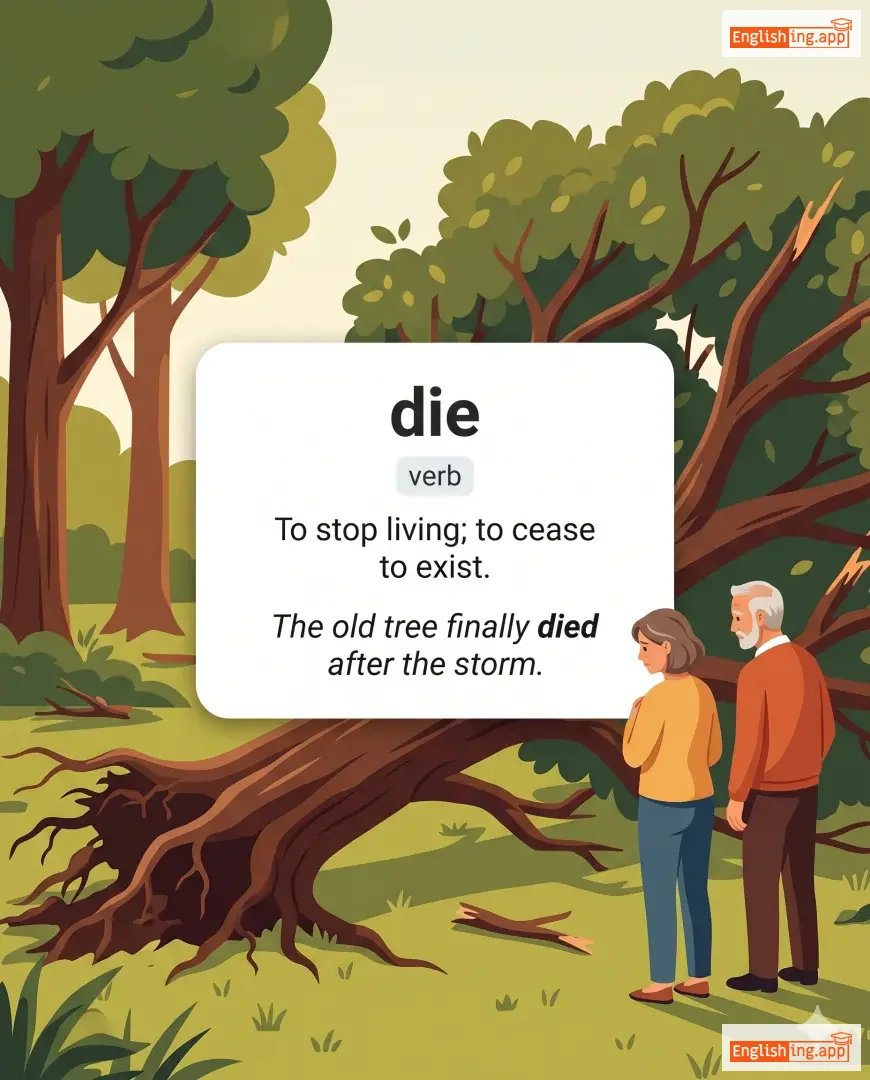
To stop living; to cease to exist.
••••••
|
The old tree finally died after the storm.
ザ・オールド・ツリー・ファイナリー・ダイド・アフター・ザ・ストーム。
••••••
|
古い木は嵐の後、最終的に死にました。
Furui ki wa arashi no ato, saishū-teki ni shinimashita.
••••••
|
die hard
ダイ・ハード
••••••
|
To disappear or change very slowly, if at all
••••••
|
非常にゆっくり変化する
Hijō ni yukkuri henka suru
••••••
|
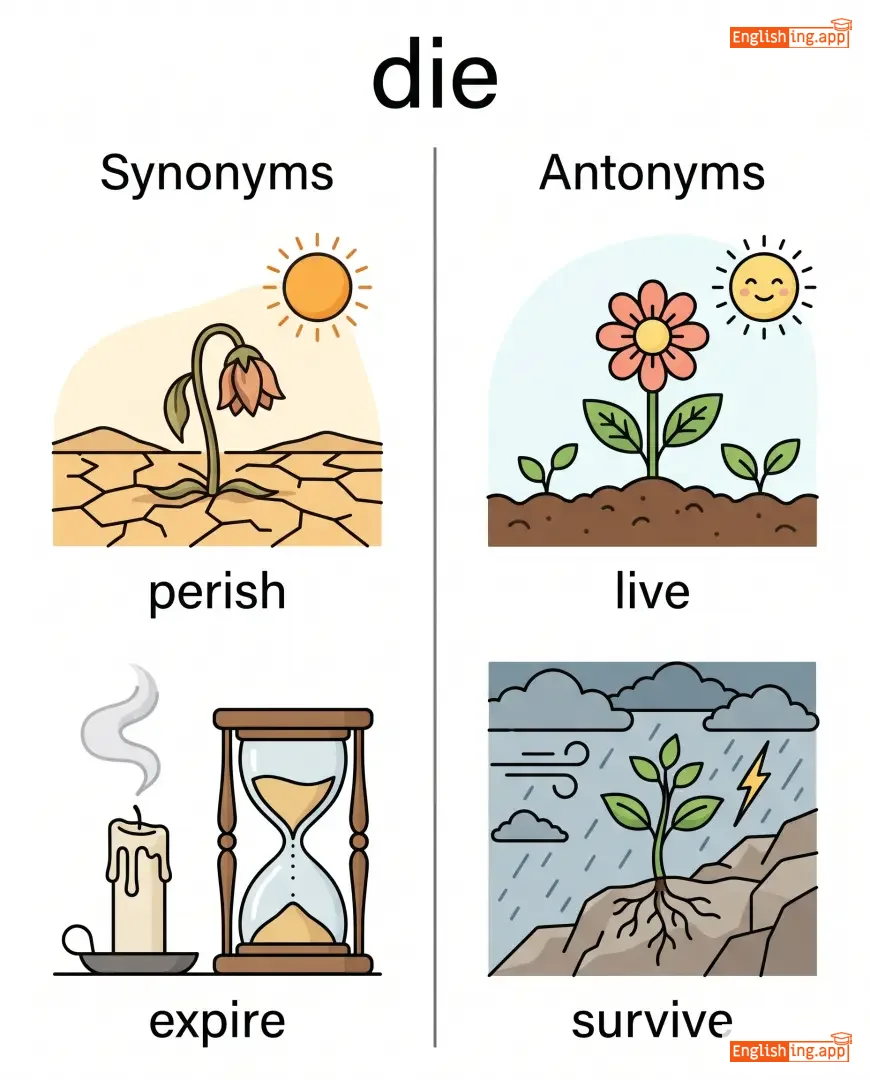
perish, expire, pass away, cease, decease
••••••
|
live, survive, exist
••••••
|
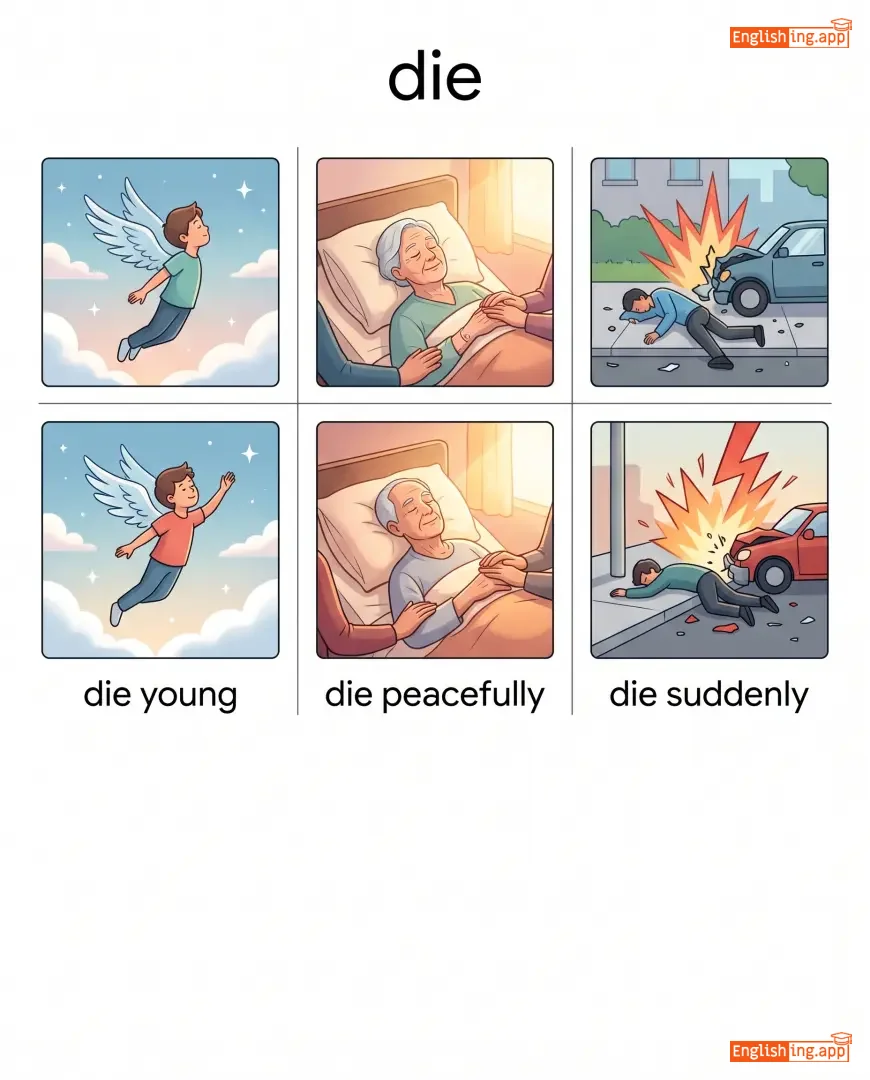
die young, die peacefully, die suddenly, die from
••••••
|
Die は死ぬという意味です、覚えておいて: 'Dieして永遠に生きる'
••••••
|
|
#2405
📘
|
/daɪˈdæktɪk/
adjective
(ディダクティック)
••••••
|
- •••••• |
教育的な
kyoikuteki na
••••••
|
- •••••• | - •••••• | - •••••• | - •••••• |
Intended to teach, often with a moral lesson.
••••••
|
The novel is not just entertaining but also didactic in nature. |
その小説はただの娯楽ではなく、教育的な性質も持っている。
Sono shōsetsu wa tada no goraku de wa naku, kyoikuteki na seishitsu mo motte iru.
••••••
|
- •••••• | - •••••• | - •••••• |
educational, instructive, informative, enlightening
••••••
|
uninformative, uneducational
••••••
|
didactic tone, didactic purpose, didactic story, didactic approach
••••••
|
Didactic は 'Did + Act' 教えるため、教育的な
••••••
|
|
#2406
📜
|
/ˈdɪktəm/
noun
(ディクトム)
••••••
|
- •••••• |
格言
kakugen
••••••
|
- •••••• | - •••••• | - •••••• | - •••••• |
A formal pronouncement, authoritative statement, or maxim.
••••••
|
The judge’s dictum clarified the principle of equality before the law. |
裁判官の格言は法の前での平等の原則を明確にしました。
Saibankan no kakugen wa hō no mae de no byōdō no gensoku o meikaku ni shimashita.
••••••
|
- •••••• | - •••••• | - •••••• |
pronouncement, decree, command, maxim, statement
••••••
|
question, ambiguity, silence
••••••
|
judicial dictum, famous dictum, legal dictum, ancient dictum
••••••
|
Dictum = 格言, 権威ある声明や格言。
••••••
|
|
#2407
👑
|
/ˌdɪktəˈtɔːriəl/
adjective
(ディクテトリアル)
••••••
|
- •••••• |
独裁的
dokusai teki
••••••
|
- •••••• | - •••••• | - •••••• | - •••••• |
Having or showing a tendency to tell people what to do in an autocratic way.
••••••
|
His dictatorial style made him unpopular among colleagues. |
彼の独裁的なスタイルは、同僚たちの間で不人気だった。
Kare no dokusai-teki na sutairu wa, dōryō-tachi no aida de funinki datta.
••••••
|
- •••••• | - •••••• | - •••••• |
authoritarian, autocratic, tyrannical, overbearing
••••••
|
democratic, liberal
••••••
|
dictatorial regime, dictatorial rule, dictatorial power
••••••
|
Dictatorialは日本語で独裁的で、強権的な意味があります。
••••••
|
|
#2408
📜
|
/dɪkˈteɪt/
verb
(ディクテート)
••••••
|
|
口述する
kōjutsu suru
••••••
|
dictated
ディクテーテッド
••••••
|
dictated
ディクテーテッド
••••••
|
dictates
ディクテーツ
••••••
|
dictating
ディクテイティング
••••••
|
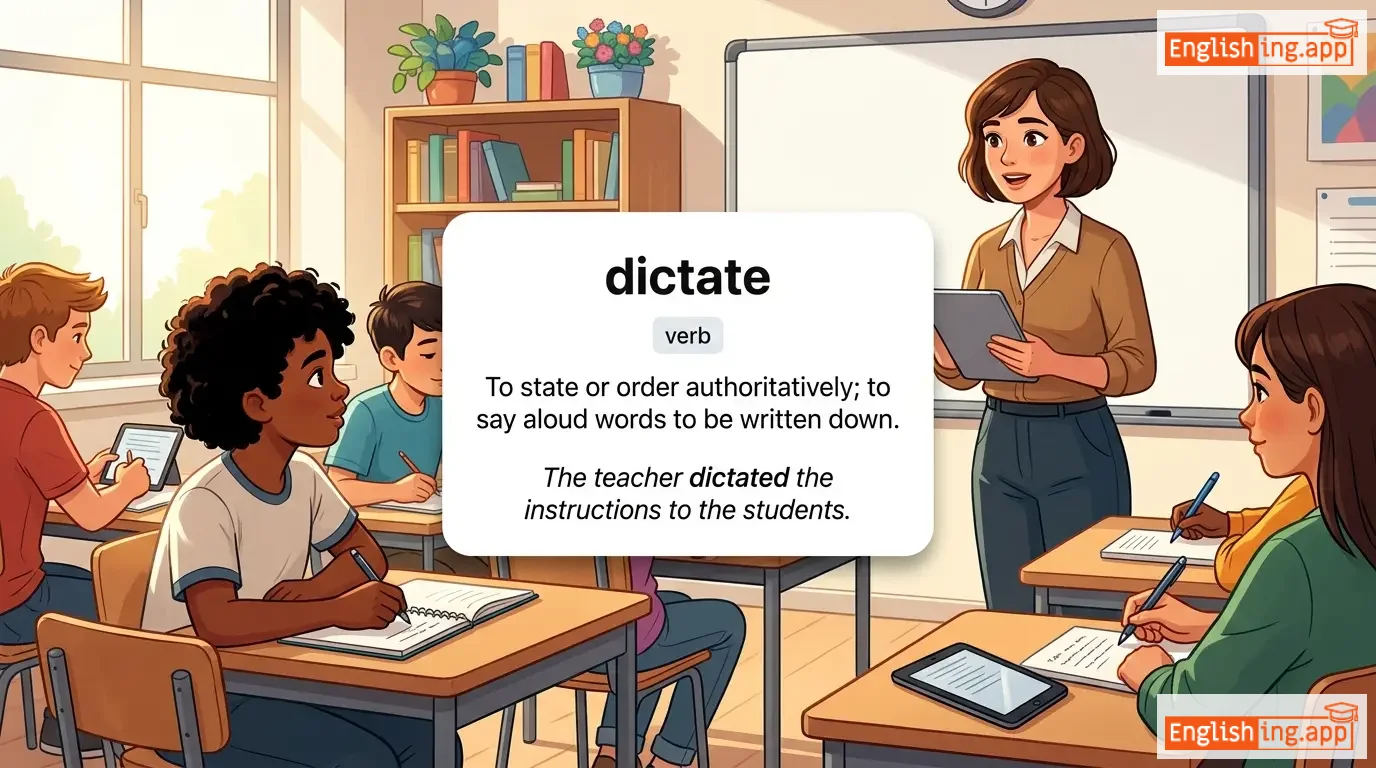
To state or order authoritatively; to say aloud words to be written down.
••••••
|
The teacher dictated the instructions to the students.
先生は学生に指示を口述しました。
••••••
|
先生は学生に指示を口述しました。
Sensei wa gakusei ni shiji o kōjutsu shimashita.
••••••
|
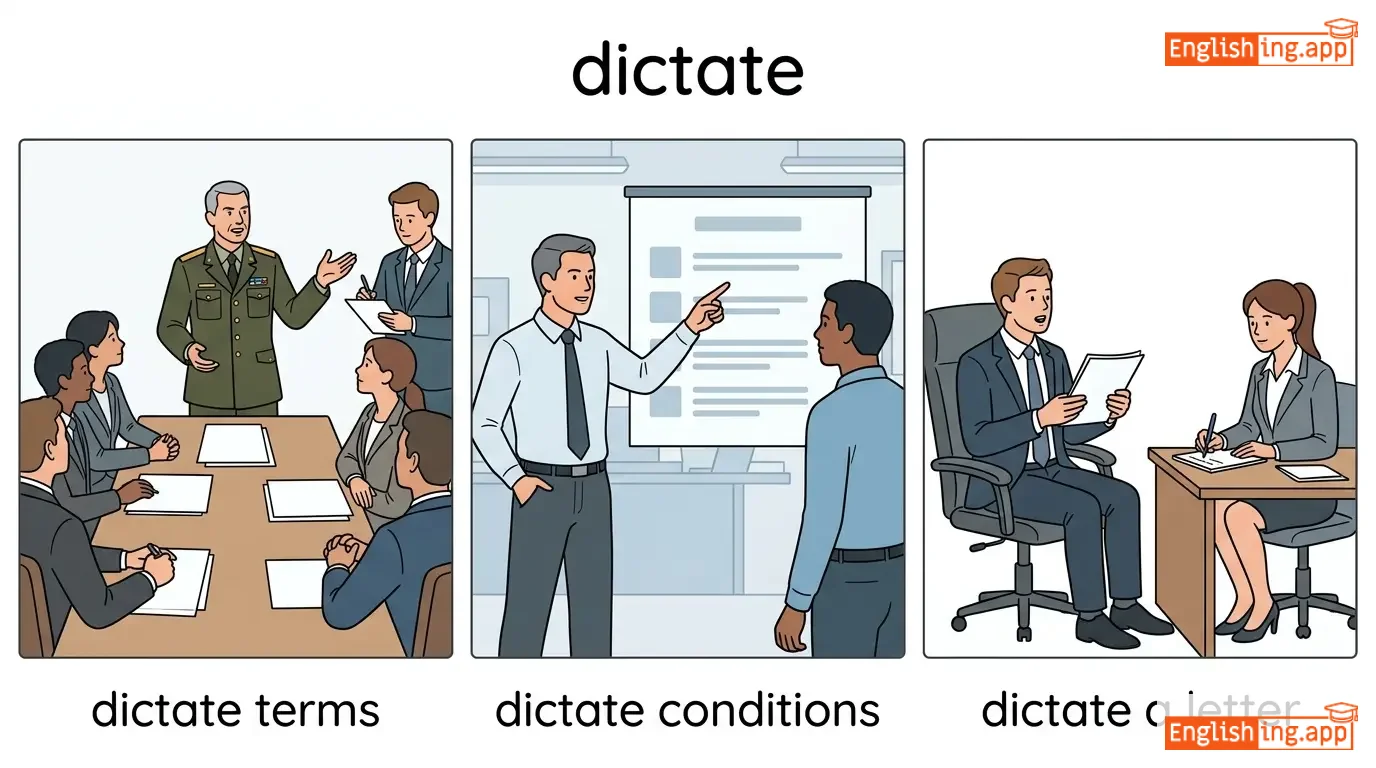
dictate terms
条件を口述する
••••••
|
To impose rules or conditions on others.
••••••
|
条件を口述する
Jōken o kōjutsu suru
••••••
|
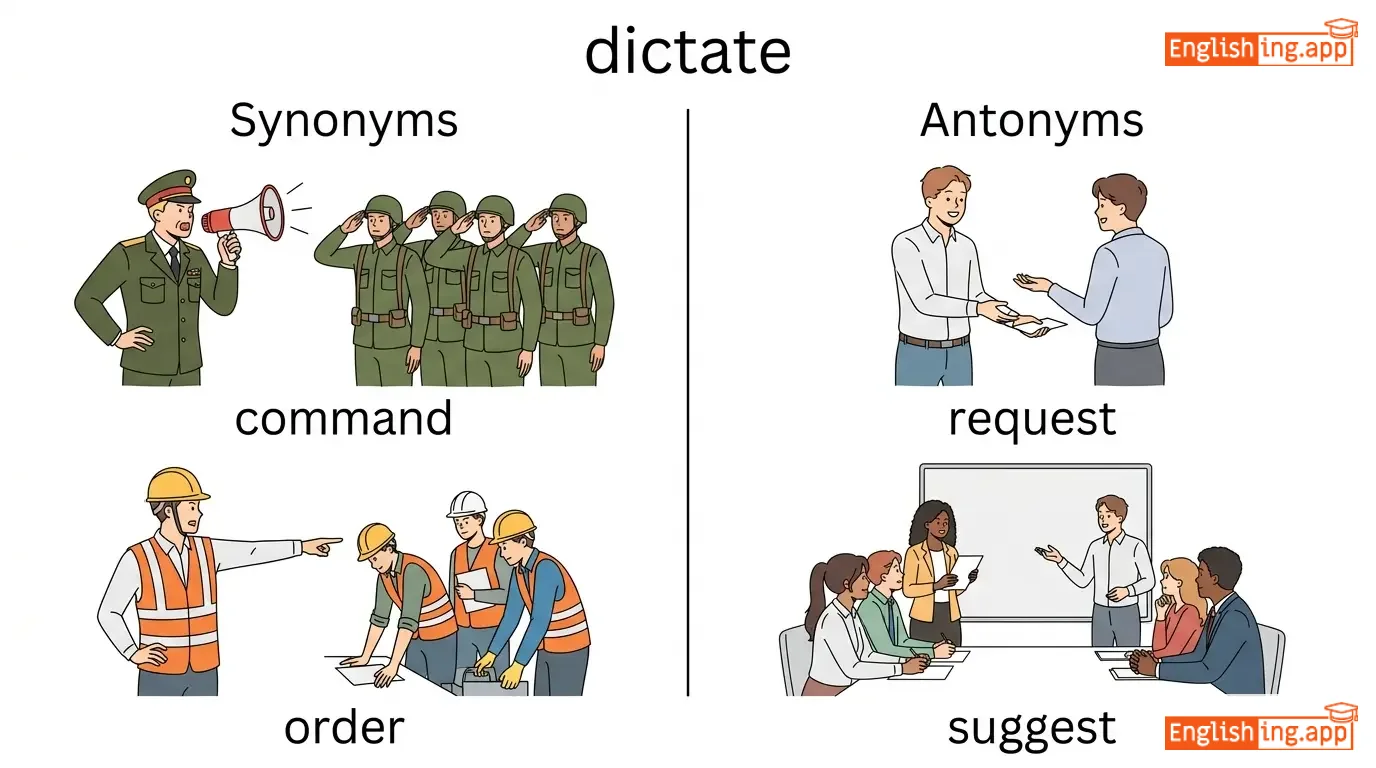
command, order, prescribe, decree
••••••
|
request, suggest
••••••
|
dictate terms, dictate conditions, dictate a letter
••••••
|
口述する = 声に出して書かせる
••••••
|
|
#2409
⚖️
|
/daɪˈkɒtəmi/
noun
(ダイコトミー)
••••••
|
|
二項対立
nikou tairitsu
••••••
|
- •••••• | - •••••• | - •••••• | - •••••• |
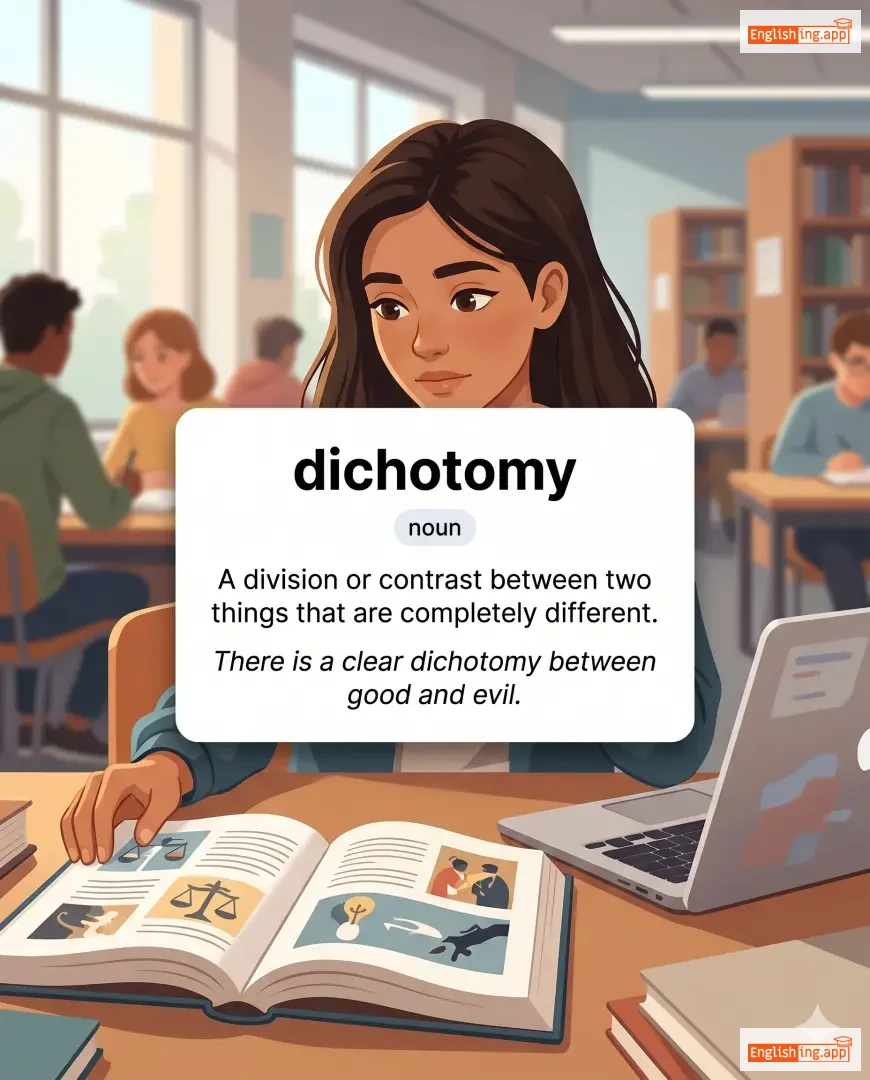
A division or contrast between two things that are completely different.
••••••
|
There is a clear dichotomy between good and evil. |
善と悪の間には明確な二項対立があります。
Zen to aku no aida ni wa meikaku na nikou tairitsu ga arimasu.
••••••
|
- •••••• | - •••••• | - •••••• |
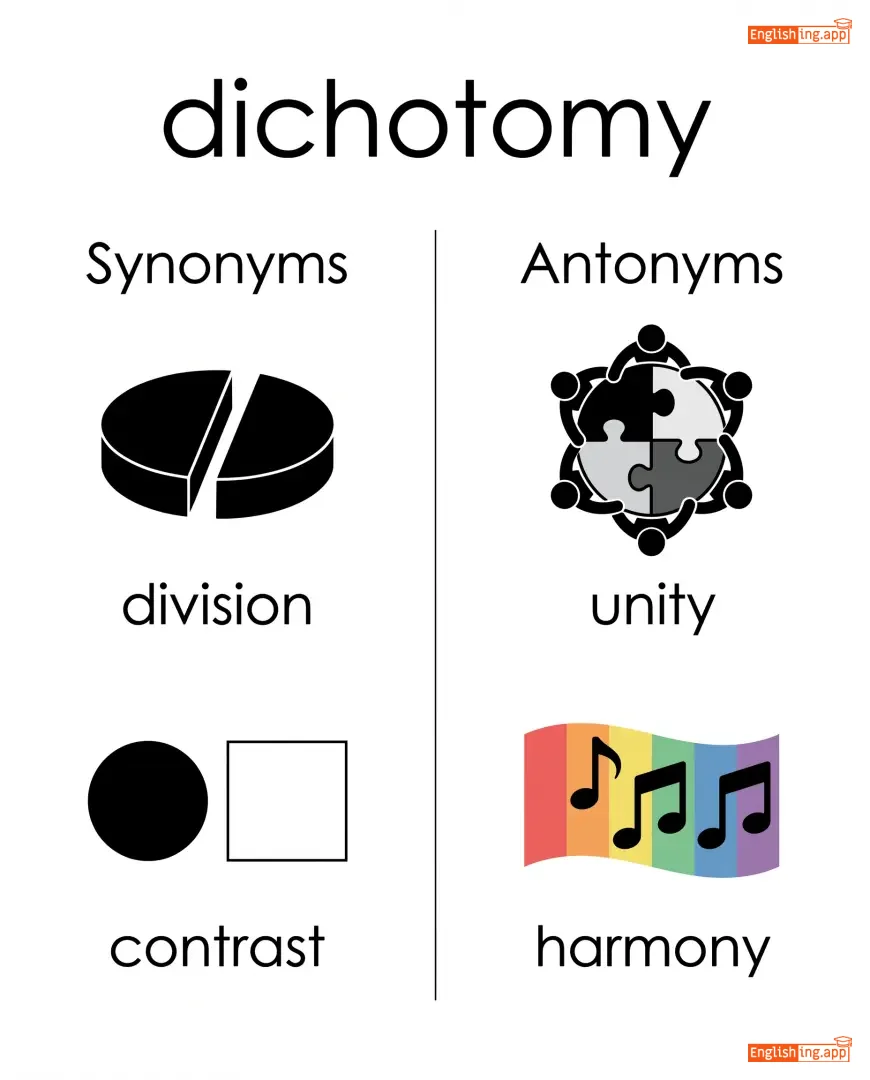
division, contrast, split, dualism
••••••
|
unity, harmony
••••••
|
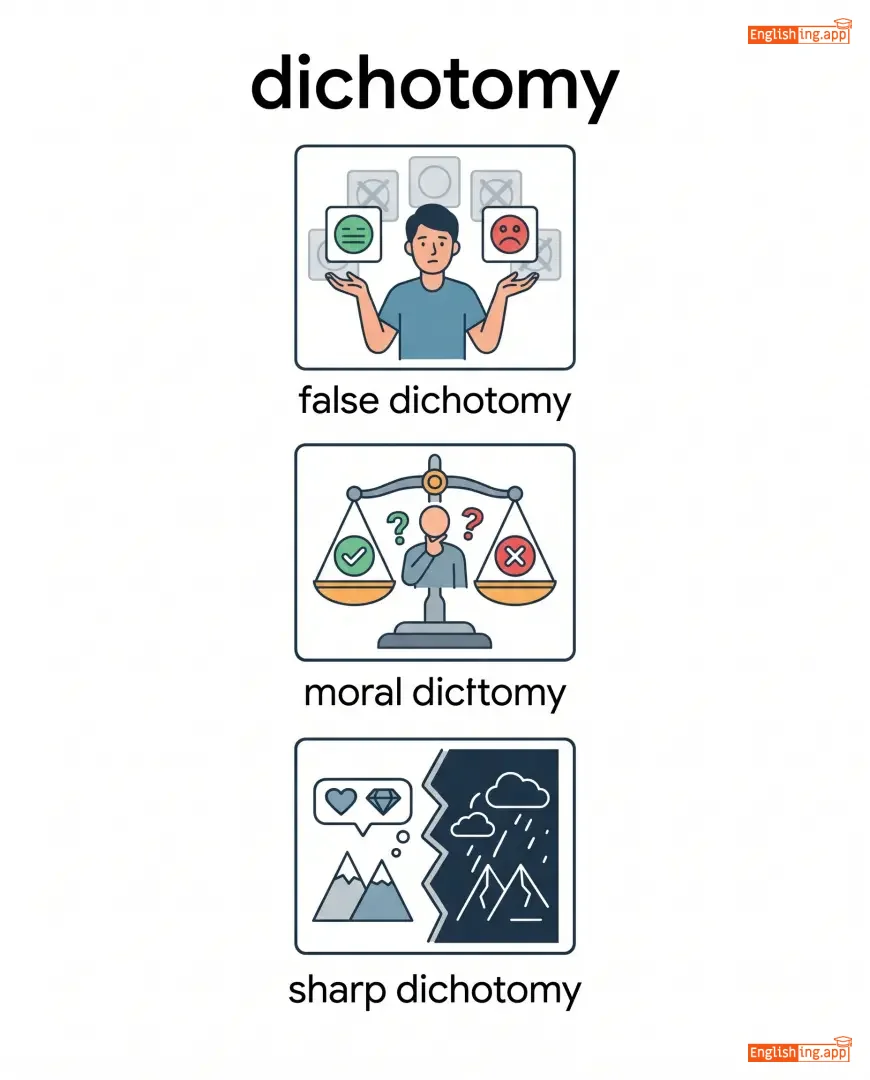
false dichotomy, moral dichotomy, sharp dichotomy
••••••
|
DIE は二つ + CUT は切る → Dichotomy は二つに分けることを意味する
••••••
|
|
#2410
🗣️
|
/ˈdaɪətraɪb/
noun
(ダイアトライブ)
••••••
|
|
激しい非難
hageshī hinan
••••••
|
- •••••• | - •••••• | - •••••• | - •••••• |
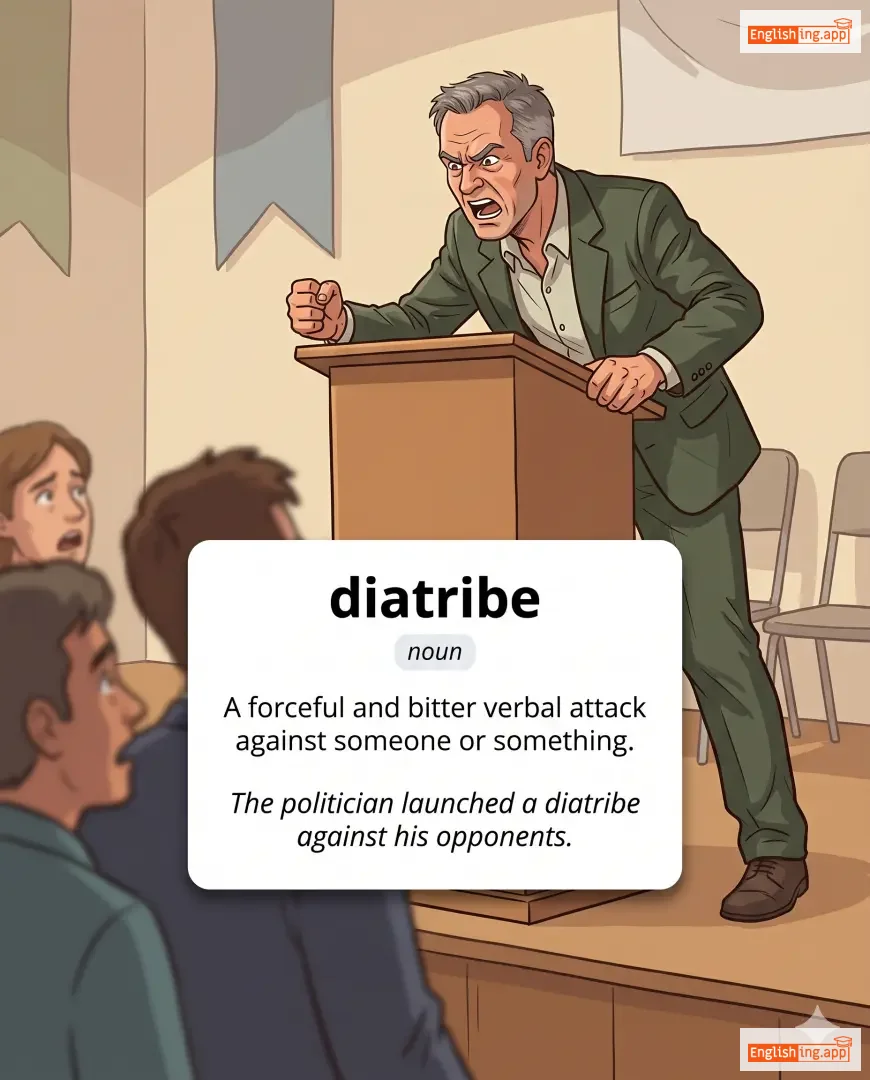
A forceful and bitter verbal attack against someone or something.
••••••
|
The politician launched a diatribe against his opponents. |
政治家は自分の対戦相手に対して激しい非難を始めた。
Seijika wa jibun no taisen aite ni taishite hageshī hinan o hajimeta.
••••••
|
- •••••• | - •••••• | - •••••• |
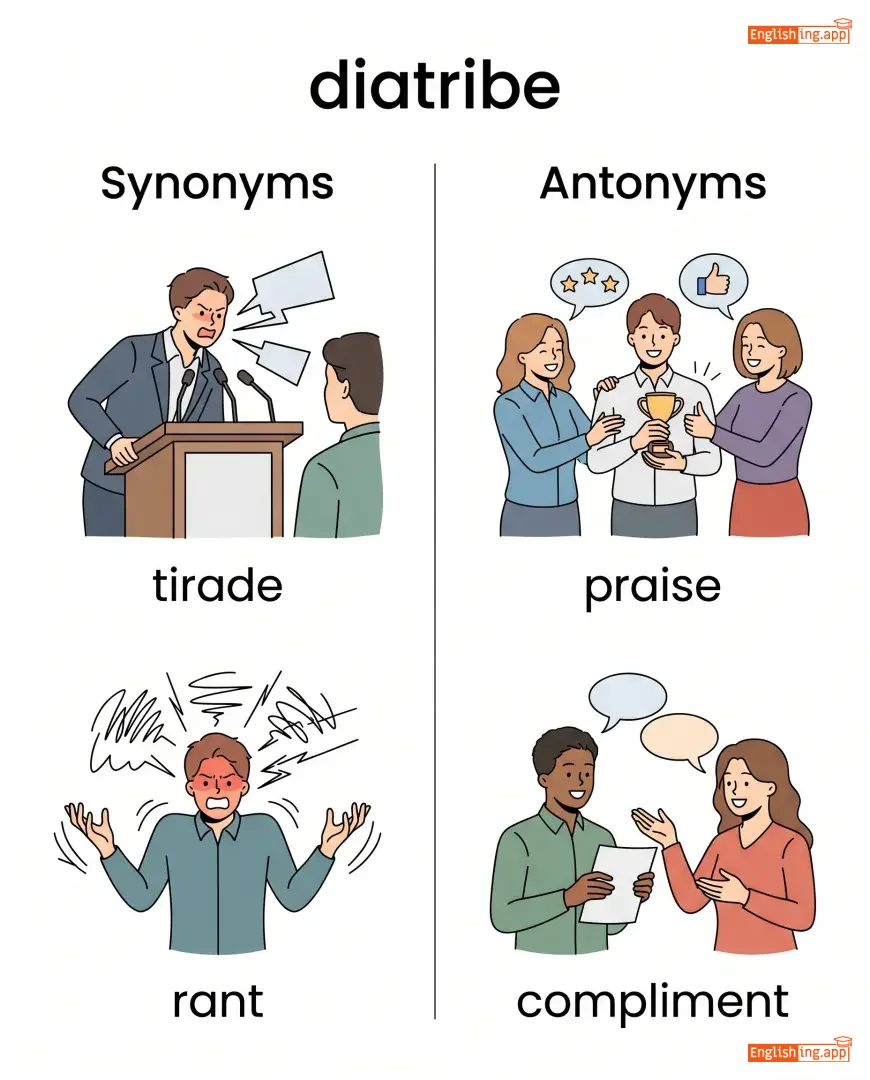
tirade, rant, criticism, denunciation, invective
••••••
|
praise, compliment
••••••
|
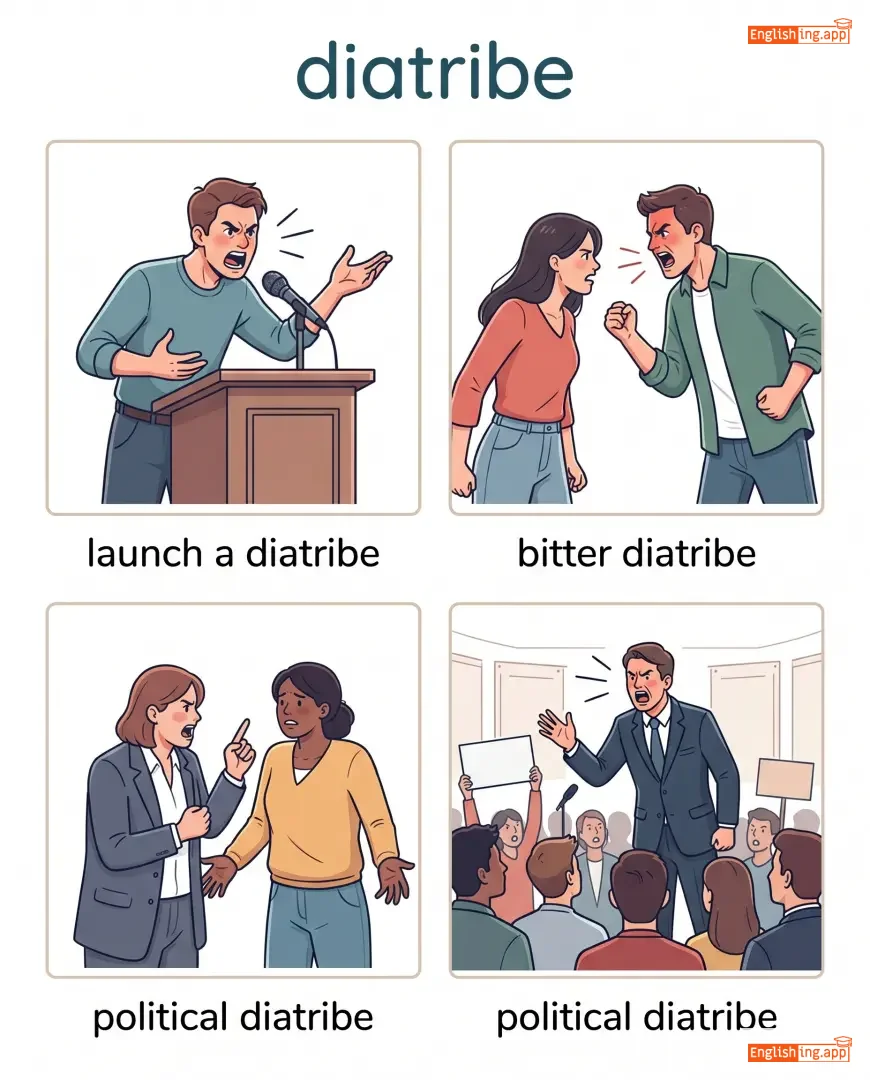
launch a diatribe, bitter diatribe, political diatribe
••••••
|
DIAlogueでTRIBeの激しい非難 → Diatribe = 激しい非難
••••••
|
|
#2411
⚛️
|
/ˌdaɪəˈtɒmɪk/
adjective
(ダイアトミック)
••••••
|
- •••••• |
二原子
ni gen-shi
••••••
|
- •••••• | - •••••• | - •••••• | - •••••• |
Consisting of two atoms.
••••••
|
Oxygen is a diatomic molecule. |
酸素は二原子分子です。
Sanso wa ni gen-shi bunshi desu.
••••••
|
- •••••• | - •••••• | - •••••• |
two-atom, molecular, dual-atom, binary
••••••
|
polyatomic, monoatomic
••••••
|
diatomic molecule, diatomic gas, diatomic oxygen, diatomic hydrogen
••••••
|
DIAは二つ + ATOMは原子 → Diatomicは二つの原子
••••••
|
|
#2412
👗
|
/daɪˈæfənəs/
adjective
(ダイアファヌス)
••••••
|
|
透けている
suketeiru
••••••
|
- •••••• | - •••••• | - •••••• | - •••••• |
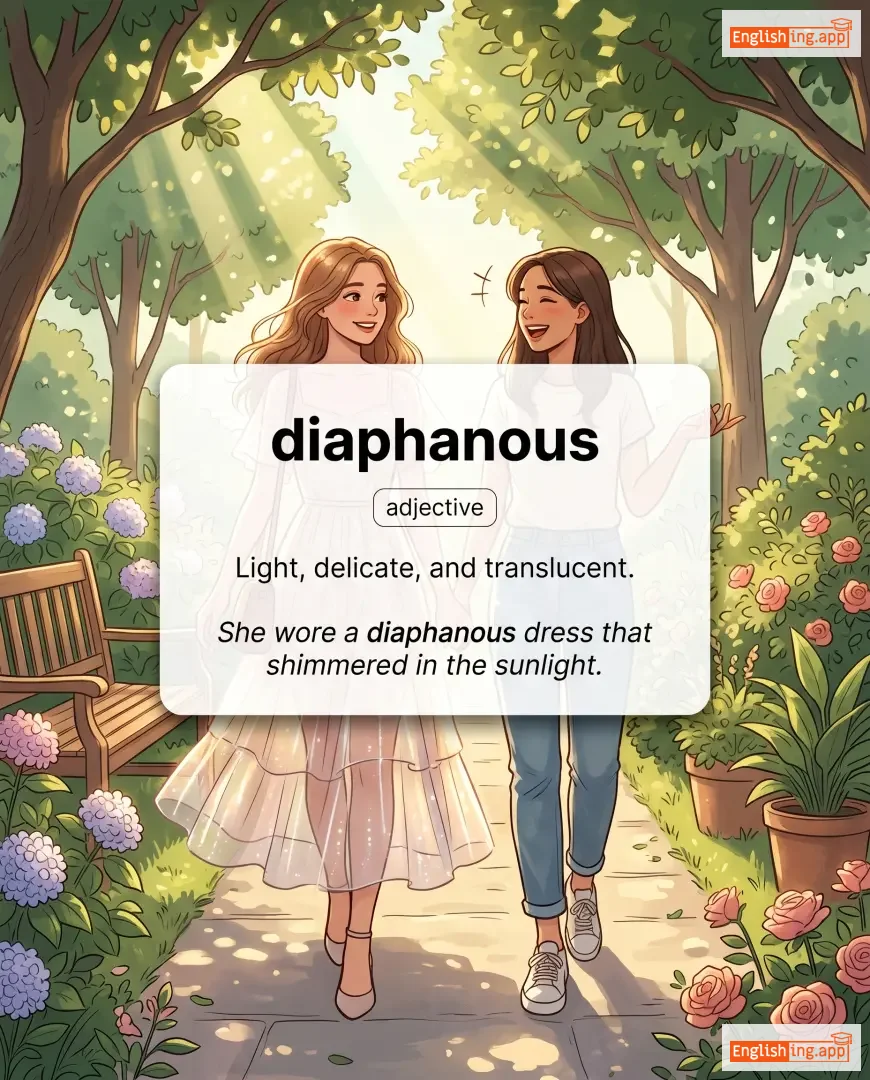
Light, delicate, and translucent.
••••••
|
She wore a diaphanous dress that shimmered in the sunlight. |
彼女は太陽の光の中で輝く透けているドレスを着ていた。
Kanojo wa taiyou no hikari no naka de kagayaku suketeiru doresu o kiteita.
••••••
|
- •••••• | - •••••• | - •••••• |
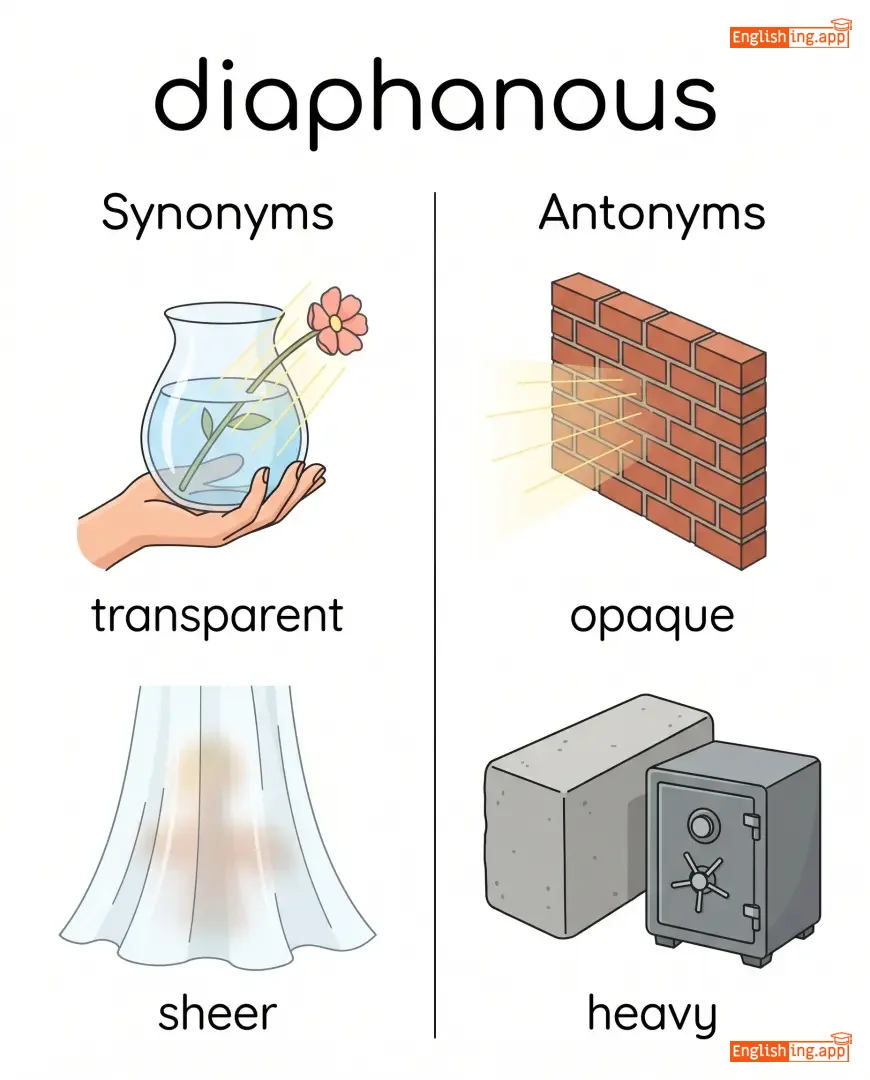
transparent, sheer, delicate, translucent, gossamer
••••••
|
opaque, heavy, thick
••••••
|
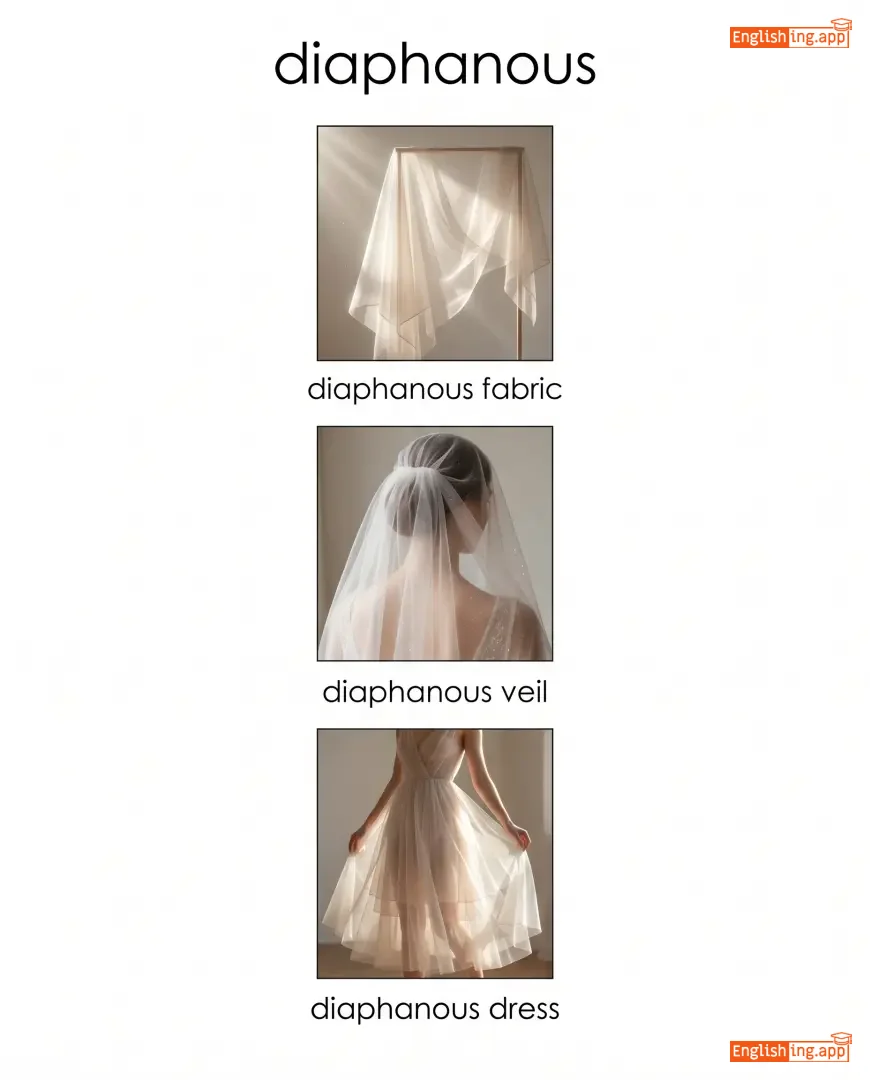
diaphanous fabric, diaphanous veil, diaphanous dress
••••••
|
Diaphanous = Dia+fan+ous → 太陽の下で輝く透けているドレス
••••••
|
|
#2413
🗣️
|
/ˈdaɪəlɔːɡ/
noun
(ダイアログ)
••••••
|
- •••••• |
対話
taiwa
••••••
|
- •••••• | - •••••• | - •••••• | - •••••• |
A conversation between two or more people, or a discussion aimed at reaching understanding.
••••••
|
The two countries engaged in a dialogue to resolve their differences. |
二国は自国の違いを解決するために対話を行いました。
Nikoku wa jikoku no chigai o kaiketsu suru tame ni taiwa o okonai mashita.
••••••
|
open dialogue |
A transparent and constructive conversation.
••••••
|
開かれた対話
Hirakareta taiwa
••••••
|
conversation, discussion, talk, exchange, communication
••••••
|
silence, monologue
••••••
|
constructive dialogue, political dialogue, open dialogue
••••••
|
ダイアログ = conversation → 日本語で映画のダイアログ = 対話。
••••••
|
|
#2414
👨🏫
|
/ˌdaɪələˈtɪʃən/
noun
(ダイアレクティシャン)
••••••
|
- •••••• |
弁証法の専門家
benshōhō no senmonka
••••••
|
- •••••• | - •••••• | - •••••• | - •••••• |
A person skilled in dialectic or logical argument.
••••••
|
Socrates is often considered the greatest dialectician in history. |
ソクラテスはしばしば歴史上最も偉大な弁証法の専門家と見なされます。
Sokuratesu wa shibashiba rekishijō mottomo idaina benshōhō no senmonka to minasarerumasu.
••••••
|
- •••••• | - •••••• | - •••••• |
logician, debater, philosopher, reasoner
••••••
|
layman, novice
••••••
|
great dialectician, skilled dialectician
••••••
|
弁証法の専門家 = 論理の魔術師 → 弁証法の専門家
••••••
|
|
#2415
🧠
|
/ˌdaɪəˈlɛktɪkəl/
adjective
(ダイアレクティカル)
••••••
|
- •••••• |
弁証法的
benshōhōteki
••••••
|
- •••••• | - •••••• | - •••••• | - •••••• |
Relating to the logical discussion of ideas and opinions.
••••••
|
She took a dialectical approach to solve the complex issue. |
彼女は複雑な問題を解決するために弁証法的なアプローチを取りました。
Kanojo wa fukuzatsu na mondai o kaiketsu suru tame ni benshōhōteki na apurōchi o torimashita.
••••••
|
dialectical reasoning |
A way of reasoning that involves dialogue and opposing viewpoints.
••••••
|
弁証法的推論
benshōhōteki suiron
••••••
|
logical, argumentative, rational, discursive
••••••
|
illogical, irrational, unreasonable
••••••
|
dialectical approach, dialectical reasoning, dialectical materialism
••••••
|
弁証法的 = logical discussion style, 日本語弁証法的推論
••••••
|
|
#2416
❌
|
/dɪˈvɔɪd/
adjective
(ディヴォイド)
••••••
|
- •••••• |
空虚
kūkyō
••••••
|
- •••••• | - •••••• | - •••••• | - •••••• |
Completely lacking or without something.
••••••
|
His speech was devoid of any real emotion. |
彼のスピーチは実際の感情が空虚だった。
Kare no supīchi wa jissai no kanjō ga kūkyō datta.
••••••
|
- •••••• | - •••••• | - •••••• |
lacking, empty, barren, absent, void
••••••
|
full, complete, abundant
••••••
|
devoid of meaning, devoid of life, devoid of emotion
••••••
|
De-Voidは空 = 内容がない、だからdevoid = 空虚
••••••
|
|
#2417
🗣️
|
/ˈdaɪəˌlɛkt/
noun
(ダイアレクト)
••••••
|
- •••••• |
方言
hougen
••••••
|
- •••••• | - •••••• | - •••••• | - •••••• |
A particular form of a language spoken in a specific region or by a specific group.
••••••
|
He speaks a dialect of Bengali that is common in rural areas. |
彼は田舎で一般的なベンガル語の方言を話します。
Kare wa inaka de ippantekina bengarugo no hōgen o hanashimasu.
••••••
|
- •••••• | - •••••• | - •••••• |
vernacular, tongue, idiom, lingo
••••••
|
standard language, universal language
••••••
|
regional dialect, local dialect, dialect speaker
••••••
|
Dial = ダイヤル, ect = 話す → 方言は特定の地域で話される言語の特別な形です。
••••••
|
|
#2418
📋
|
/ˌdaɪəɡˈnoʊsɪs/
noun
••••••
|
- •••••• | - •••••• | - •••••• | - •••••• | - •••••• | - •••••• |
The identification of a disease, condition, or problem through examination of symptoms.
••••••
|
The diagnosis confirmed that she had diabetes. |
- •••••• | - •••••• | - •••••• | - •••••• |
identification, detection, finding, determination
••••••
|
misdiagnosis, guess
••••••
|
medical diagnosis, accurate diagnosis, early diagnosis
••••••
|
No •••••• |
|
#2419
🩺
|
/ˌdaɪəɡˈnoʊz/
verb
(ダイアグノーズ)
••••••
|
- •••••• |
診断する
shindan suru
••••••
|
diagnosed
ダイアグノーズド
••••••
|
diagnosed
ダイアグノーズド
••••••
|
diagnoses
ダイアグノーズズ
••••••
|
diagnosing
ダイアグノージング
••••••
|
To identify a disease, condition, or problem by examining symptoms.
••••••
|
The doctor diagnosed him with pneumonia.
医者は彼に肺炎と診断しました。
••••••
|
医者は彼に肺炎と診断しました。
Isha wa kare ni haien to shindan shimashita.
••••••
|
diagnose a problem
問題を診断する
••••••
|
To identify the cause of an issue
••••••
|
問題を診断する
Mondai o shindan suru
••••••
|
identify, detect, determine, analyze, recognize
••••••
|
misdiagnose, ignore
••••••
|
diagnose disease, diagnose illness, diagnose condition, diagnose problem
••••••
|
診断は医者が症状を見て病気を突き止めることです。
••••••
|
|
#2420
👑
|
/ˈdaɪəˌdɛm/
noun
(ダイアデム)
••••••
|
- •••••• |
王冠
ōkan
••••••
|
- •••••• | - •••••• | - •••••• | - •••••• |
A crown or headband worn as a symbol of royalty or authority.
••••••
|
The queen wore a glittering diadem at the coronation.
女王は戴冠式で輝くダイアデムを身に着けていました。
••••••
|
女王は戴冠式で輝く王冠を身に着けていました。
Joō wa taikan-shiki de kagayaku ōkan o mi ni tsukete imashita.
••••••
|
- •••••• | - •••••• | - •••••• |
crown, coronet, tiara, headpiece
••••••
|
cap, hat
••••••
|
royal diadem, golden diadem, glittering diadem
••••••
|
Dia = ダイヤモンド, dem = ドーム、ダイヤモンドの王冠!
••••••
|
|
#2421
🔡
|
/ˌdaɪəˈkrɪtɪkəl/
adjective
(ダイアクリティカル)
••••••
|
- •••••• |
ダイアクリティカル
diakuritikar
••••••
|
- •••••• | - •••••• | - •••••• | - •••••• |
Relating to a mark added to a letter to indicate a different pronunciation or stress.
••••••
|
The word résumé has diacritical marks that change its meaning from resume. |
‘レジュメ’という言葉には、意味を変えるダイアクリティカルマークがあります。
'Rejume' to iu kotoba ni wa, imi o kaeru daiakuritikaru maaku ga arimasu.
••••••
|
- •••••• | - •••••• | - •••••• |
accentual, phonetic, orthographic, linguistic
••••••
|
plain, unmarked
••••••
|
diacritical mark, diacritical accent, diacritical system
••••••
|
ダイアクリティカルは‘アクセント’のようなもので、日本語のアクセント記号のようです。
••••••
|
|
#2422
👹
|
/ˌdaɪəˈbɒlɪkəl/
adjective
(ダイアボリカル)
••••••
|
- •••••• |
悪魔的
akumateki
••••••
|
- •••••• | - •••••• | - •••••• | - •••••• |
Wicked, cruel, or outrageously bad; resembling the devil.
••••••
|
The dictator’s diabolical rule brought misery to the nation. |
独裁者の悪魔的な支配は国に苦しみをもたらした。
Dokusaisha no akumateki na shihai wa kuni ni kurushimi o motarashita.
••••••
|
- •••••• | - •••••• | - •••••• |
evil, cruel, monstrous, satanic, vile
••••••
|
kind, benevolent, angelic
••••••
|
diabolical plot, diabolical laughter, diabolical crime, diabolical tyranny
••••••
|
Diabolical ruleは悪魔的な支配 — 悪魔の暴政
••••••
|
|
#2423
😈
|
/ˌdaɪəˈbɒlɪk/
adjective
(ダイアボリック)
••••••
|
- •••••• |
悪魔的
akumateki
••••••
|
- •••••• | - •••••• | - •••••• | - •••••• |
Extremely evil or cruel; characteristic of the devil.
••••••
|
The villain devised a diabolic scheme. |
悪役は悪魔的な計画を立てた。
Akuyaku wa akumateki na keikaku o tateta.
••••••
|
- •••••• | - •••••• | - •••••• |
devilish, demonic, fiendish, satanic, wicked
••••••
|
angelic, good, holy
••••••
|
diabolic plan, diabolic act, diabolic scheme, diabolic laughter
••••••
|
Diabolic plan は悪魔的な計画を意味する — 悪魔に関連する
••••••
|
|
#2424
👐
|
/ˈdɛkstrəs/
adjective
(デクストラス)
••••••
|
|
器用
kiyou
••••••
|
- •••••• | - •••••• | - •••••• | - •••••• |
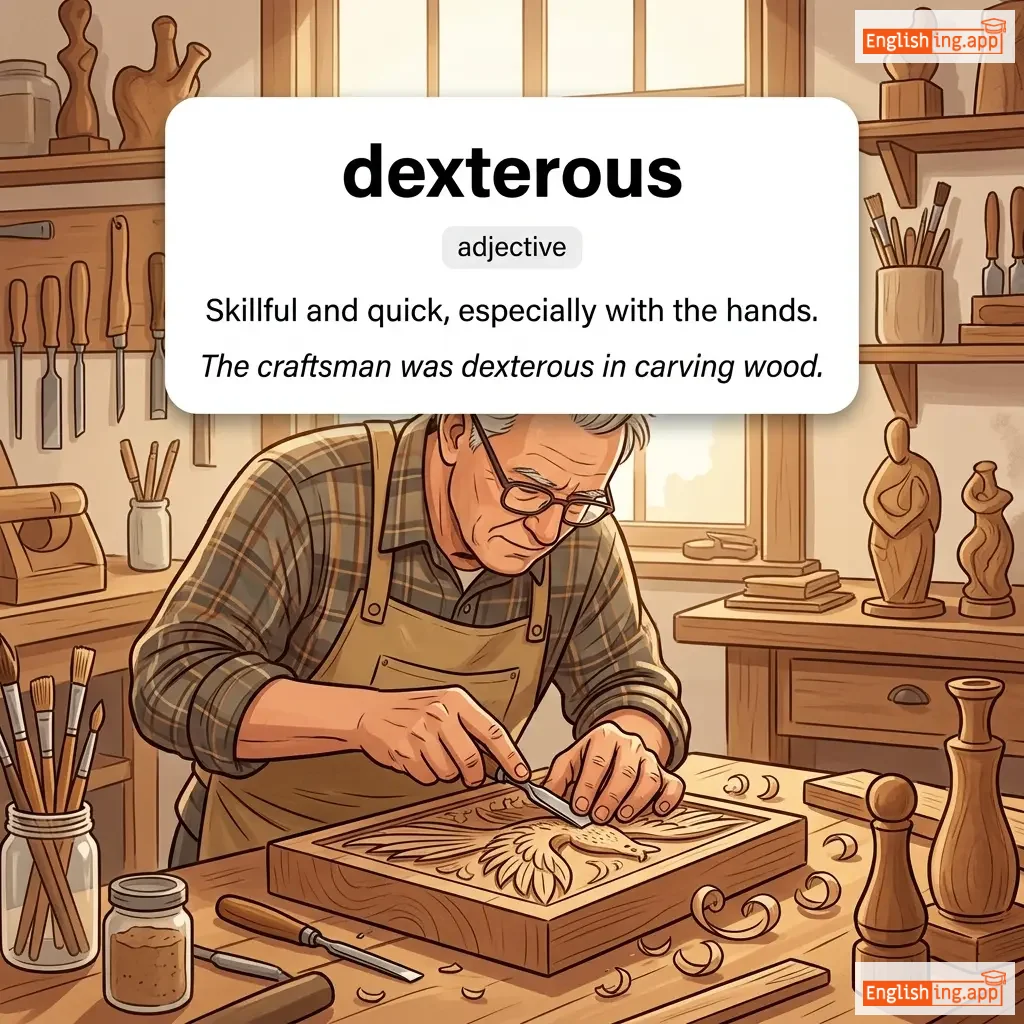
Skillful and quick, especially with the hands.
••••••
|
The craftsman was dexterous in carving wood. |
職人は木を彫るのが器用だった。
Shokunin wa ki o horu no ga kiyou datta.
••••••
|
- •••••• | - •••••• | - •••••• |
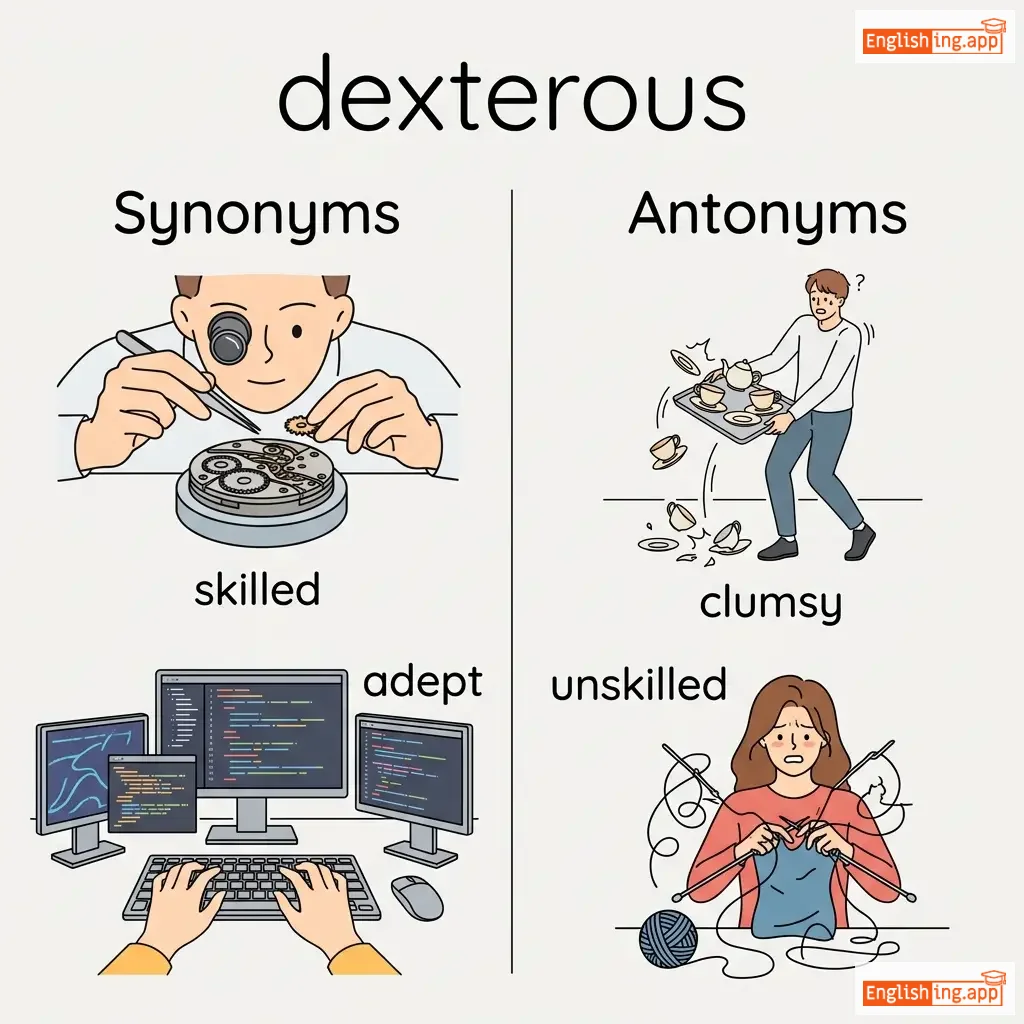
skilled, adept, agile, nimble, proficient
••••••
|
clumsy, unskilled, awkward
••••••
|
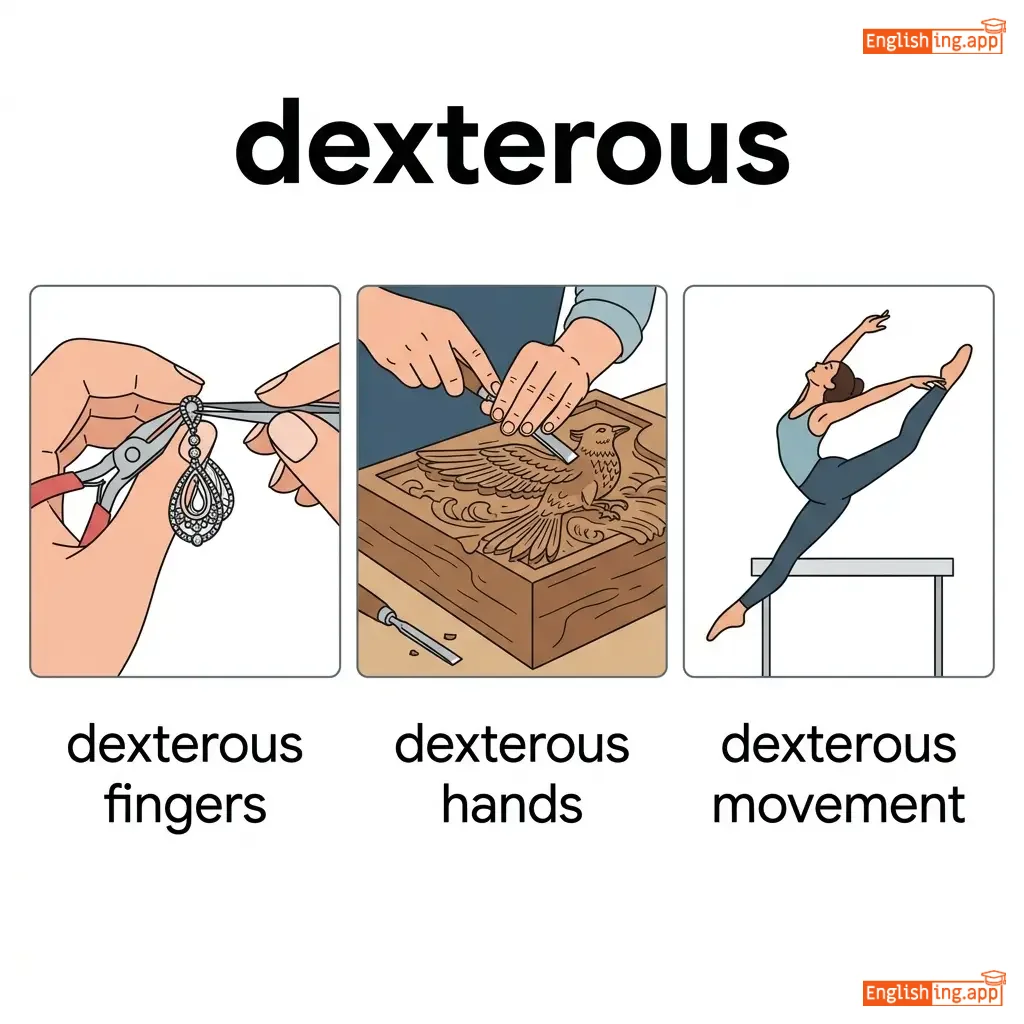
dexterous fingers, dexterous hands, dexterous movement
••••••
|
Dexterous は器用を意味する — Dexter という名前の人々は手先がとても器用です!
••••••
|
|
#2425
🤲
|
/dɛkˈstɛrɪti/
noun
(デクステリティ)
••••••
|
|
器用さ
kiyousa
••••••
|
- •••••• | - •••••• | - •••••• | - •••••• |
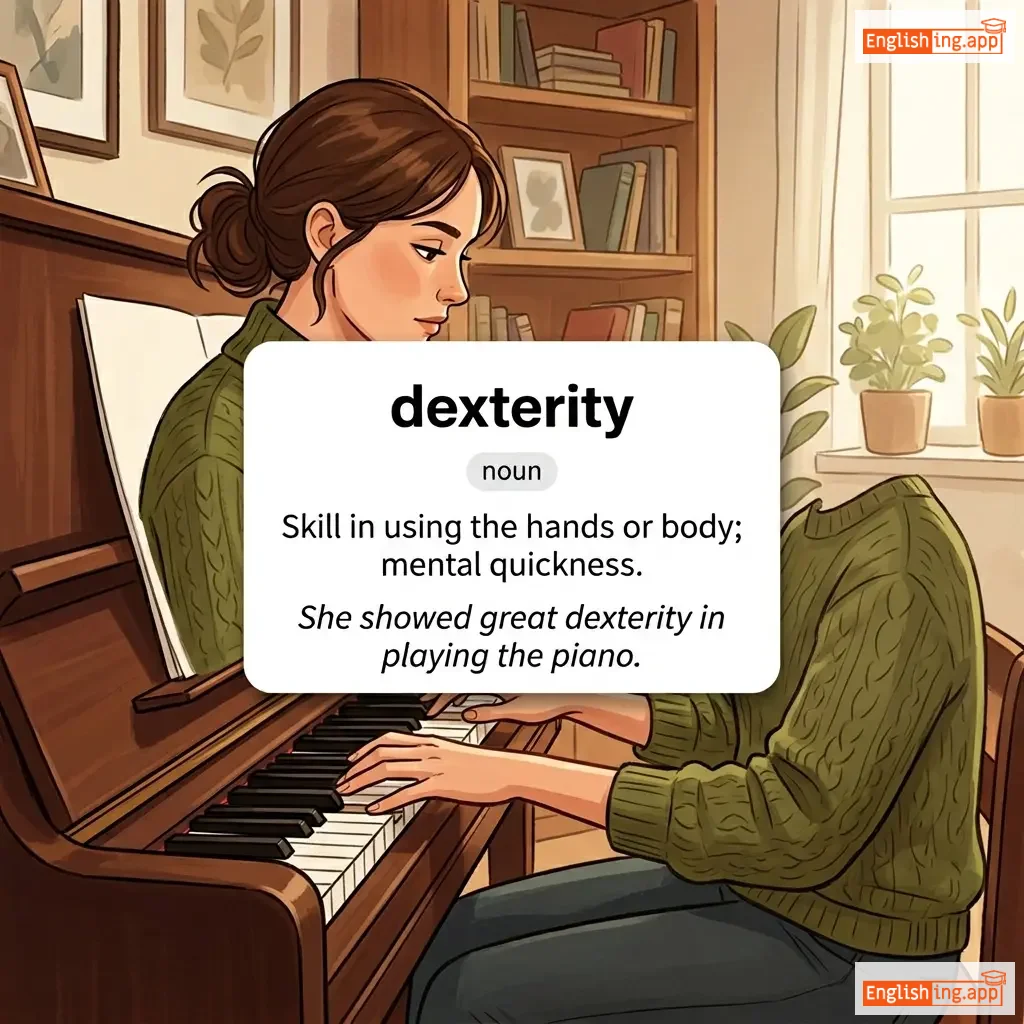
Skill in using the hands or body; mental quickness.
••••••
|
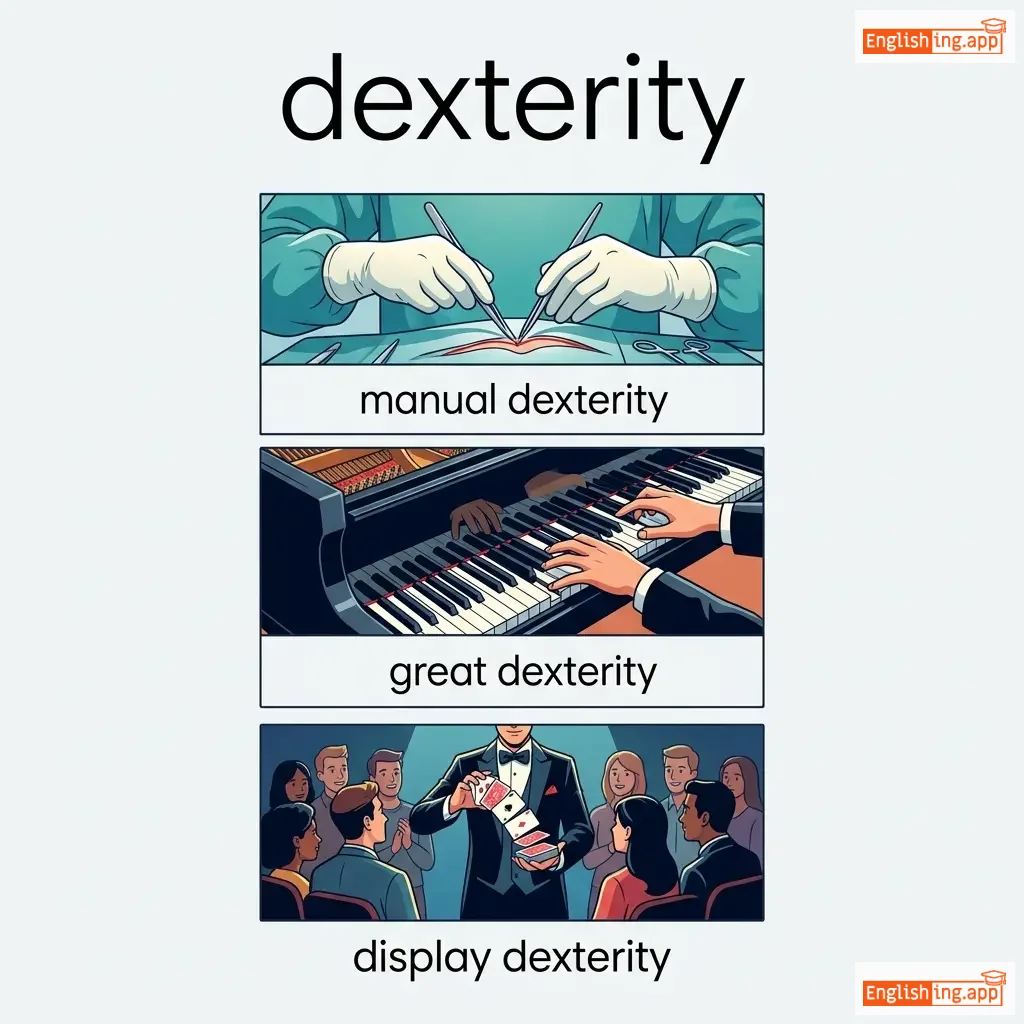
She showed great dexterity in playing the piano. |
彼女はピアノを弾く際に優れた器用さを示しました。
Kanojo wa piano o hiku sai ni sugureta kiyousa o shimeshimashita.
••••••
|
- •••••• | - •••••• | - •••••• |
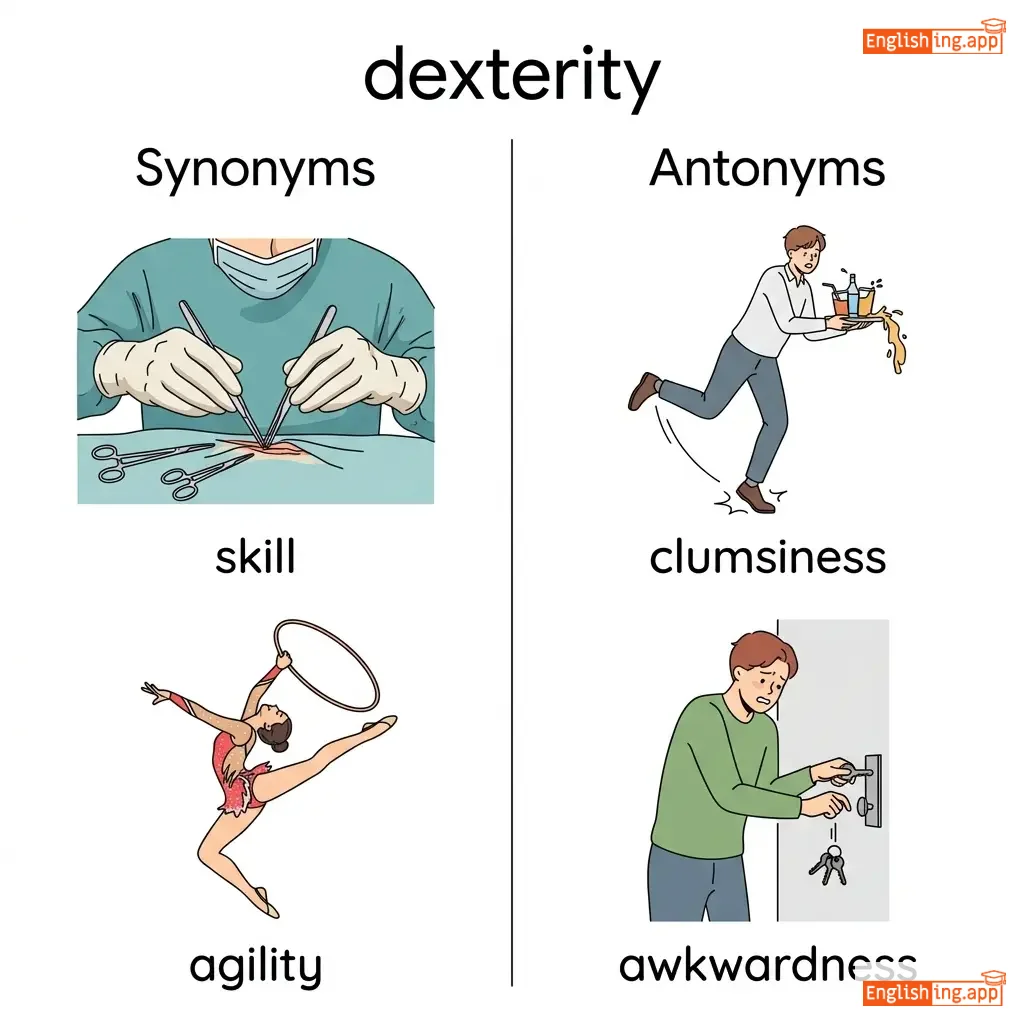
skill, agility, expertise, proficiency, finesse
••••••
|
clumsiness, awkwardness
••••••
|
manual dexterity, great dexterity, display dexterity, dexterity with hands
••••••
|
Dexterityは器用さを意味する — ピアノを弾くには器用さが必要です。
••••••
|
|
#2426
💧
|
/djuː/
noun
(デュー)
••••••
|
- •••••• |
露
tsuyu
••••••
|
- •••••• | - •••••• | - •••••• | - •••••• |
Tiny drops of water that form on cool surfaces at night from condensation.
••••••
|
The grass was wet with morning dew. |
草は朝の露で濡れていた。
Kusa wa asa no tsuyu de nurete ita.
••••••
|
fresh as the morning dew |
very fresh, pure, and clean
••••••
|
朝露のように新鮮
Asa tsuyu no yō ni shinsen
••••••
|
moisture, condensation, droplets, mist, vapor
••••••
|
dryness, aridity
••••••
|
morning dew, drops of dew, covered in dew, sparkling dew
••••••
|
朝露のように新鮮なもの — 露 = 新鮮
••••••
|
|
#2427
🕌
|
/dɪˈvaʊt/
adjective
(デヴァウト)
••••••
|
- •••••• |
献身的
kenshin-teki
••••••
|
- •••••• | - •••••• | - •••••• | - •••••• |
Deeply religious or sincere.
••••••
|
He is a devout believer who prays every day. |
彼は毎日祈る献身的な信者です。
Kare wa mainichi inoru kenshin-teki na shinja desu.
••••••
|
a devout hope |
a strong and sincere hope
••••••
|
献身的な希望
kenshin-teki na kibou
••••••
|
pious, religious, faithful, sincere, devoted
••••••
|
irreligious, insincere
••••••
|
devout Muslim, devout Christian, devout believer, devout follower
••••••
|
Devoutは '献身的' という意味—常に誠実に.
••••••
|
|
#2428
🙏
|
/ˌdɛvəˈtiː/
noun
(デヴォティ)
••••••
|
- •••••• |
献身者
kenshinsha
••••••
|
- •••••• | - •••••• | - •••••• | - •••••• |
A person who is very enthusiastic about or strongly dedicated to something or someone.
••••••
|
He is a great devotee of classical music. |
彼はクラシック音楽の大きな献身者です。
kare wa kurashikku ongaku no ookina kenshinsha desu
••••••
|
- •••••• | - •••••• | - •••••• |
enthusiast, admirer, fan, follower, supporter
••••••
|
opponent, critic
••••••
|
devotee of art, devotee of music, temple devotee
••••••
|
Devoteeは献身者、音楽に捧げる心。
••••••
|
|
#2429
❤️
|
/dɪˈvoʊtɪd/
adjective
(デヴォーテッド)
••••••
|
- •••••• |
献身的
kenshin-teki
••••••
|
- •••••• | - •••••• | - •••••• | - •••••• |
Very loving, loyal, or dedicated.
••••••
|
She is a devoted mother who always puts her children first. |
彼女は常に子供たちを最優先にする献身的な母親です。
Kanojo wa tsuneni kodomotachi o sai yūsen ni suru kenshin-teki na hahaoya desu.
••••••
|
- •••••• | - •••••• | - •••••• |
dedicated, loyal, faithful, loving, committed
••••••
|
disloyal, indifferent, neglectful
••••••
|
devoted fan, devoted friend, devoted to work, devoted couple
••••••
|
Devoted = 献身的、献身は全力を尽くすことを意味します。
••••••
|
|
#2430
🔄
|
/dɪˈvɒlv/
verb
(ディヴォルヴ)
••••••
|
- •••••• |
委譲する
いじょうする
••••••
|
devolved
ディヴォルヴド
••••••
|
devolved
ディヴォルヴド
••••••
|
devolves
ディヴォルヴス
••••••
|
devolving
ディヴォルヴィング
••••••
|
To pass power, responsibility, or duties to another person or group.
••••••
|
The responsibility will devolve on the new manager.
責任は新しいマネージャーに委譲されます。
••••••
|
責任は新しいマネージャーに委譲されます。
Sekinin wa atarashī manējā ni ijō saremasu.
••••••
|
- •••••• | - •••••• | - •••••• |
delegate, transfer, assign, hand over, pass
••••••
|
retain, keep, withhold
••••••
|
devolve power, devolve responsibility, devolve authority
••••••
|
Devolveは'委譲する'、責任を渡すことです。
••••••
|
Vocabulary Quiz
Test your vocabulary by matching words with their translations or meanings.
Login to take the quiz
Comments (0)
Share your thoughts and join the discussion.
Join the discussion by logging in
Login to CommentNo comments yet
Be the first to share your thoughts!