

Обновитесь для доступа ко всему словарю
Получите неограниченный доступ ко всем словам с подпиской Pro
Обновить до ProПеревод
Прошедшее
Причастие прошедшего времени
Третье лицо единственного числа
Герундий
Значение
Пример предложения
Перевод примера предложения
Синонимы
Антонимы
Коллокации
Мнемоника
Swipe left or right, or use the buttons. Tap image to zoom.
Обновитесь для доступа ко всем предложениям
Получите неограниченный доступ ко всем предложениям с подпиской Pro
Обновить до ProПеревод примера предложения
Слово
Lesson 81Lesson 81 - Переключатель маски
|
Эмодзи
|
Слово | Images | Перевод | Прошедшее | Причастие прошедшего времени | Третье лицо единственного числа | Герундий | Значение | Пример предложения | Перевод примера предложения | Пример выражения | Значение примера выражения | Перевод примера выражения | Синонимы | Антонимы | Коллокации | Мнемоника |
|---|---|---|---|---|---|---|---|---|---|---|---|---|---|---|---|---|---|
|
#2401
💬
|
/ˌdaɪəˈlɛktɪk/
noun
(дайалетик)
••••••
|
- •••••• |
диалектика
dialektika
••••••
|
- •••••• | - •••••• | - •••••• | - •••••• |
A method of argument or reasoning by dialogue, especially as a means of investigating truth.
••••••
|
The philosopher used dialectic to challenge his students' assumptions.
Философ применял диалектику, чтобы ставить под сомнение предположения своих студентов.
••••••
|
Философ применял диалектику, чтобы ставить под сомнение предположения своих студентов.
Filosof primenyal dialektiku chtoby stavit pod somneniya svoih studentov.
••••••
|
dialectical method |
A method of reasoning through dialogue and logical argument.
••••••
|
диалектический метод
dialekticheskiy metod
••••••
|
reasoning, logic, debate, discussion, argumentation
••••••
|
agreement, harmony, consensus
••••••
|
dialectic process, dialectic method, dialectic reasoning
••••••
|
Диалог и logic спорят, пока не рождается диалектика
••••••
|
|
#2402
⚖️
|
/ˈdɪfərəns/
noun
(диференс)
••••••
|
- •••••• |
разница
raznitsa
••••••
|
- •••••• | - •••••• | - •••••• | - •••••• |
A point or way in which things are not the same.
••••••
|
There is a big difference between theory and practice. |
Есть большая разница между теорией и практикой.
Yest' bol'shaya raznitsa mezhdu teoriey i praktiekoy.
••••••
|
make a difference |
To have a significant impact or effect
••••••
|
внести разницу
vznesti raznitsu
••••••
|
distinction, variation, contrast, diversity, disparity
••••••
|
similarity, resemblance, sameness
••••••
|
big difference, subtle difference, cultural difference, make a difference
••••••
|
Разница — это когда что-то не одинаково, помни 'разное и разница'.
••••••
|
|
#2403
🔥
|
/ˈdaɪhɑːrd/
noun
••••••
|
- •••••• | - •••••• | - •••••• | - •••••• | - •••••• | - •••••• |
A person who strongly resists change and remains loyal to a belief or cause.
••••••
|
He is a diehard fan of classic rock music. |
- •••••• | - •••••• | - •••••• | - •••••• |
loyalist, traditionalist, fanatic, devotee, supporter
••••••
|
opponent, critic, reformer
••••••
|
diehard fan, diehard supporter, diehard opponent, diehard attitude
••••••
|
No •••••• |
|
#2404
⚰️
|
/daɪ/
verb
(dai)
••••••
|
|
умереть
umeryet'
••••••
|
died
daid
••••••
|
died
daid
••••••
|
dies
dais
••••••
|
dying
daiing
••••••
|
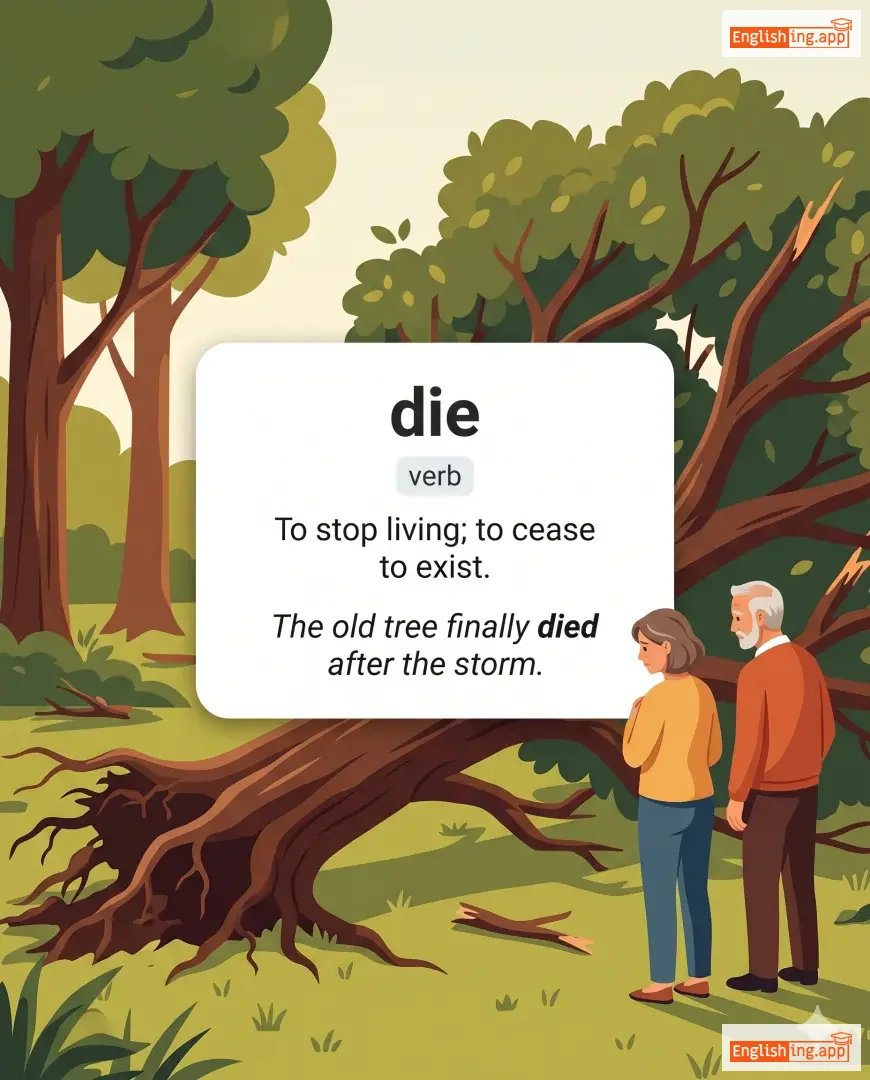
To stop living; to cease to exist.
••••••
|
The old tree finally died after the storm.
de old tree fainali daid afte de storm.
••••••
|
Старое дерево наконец умерло после шторма.
Staroye derevo nakonech umyerylo posle shtorma.
••••••
|
die hard
dai hard
••••••
|
To disappear or change very slowly, if at all
••••••
|
очень медленно изменяться
ochen' medlenno izmenyat'sya
••••••
|
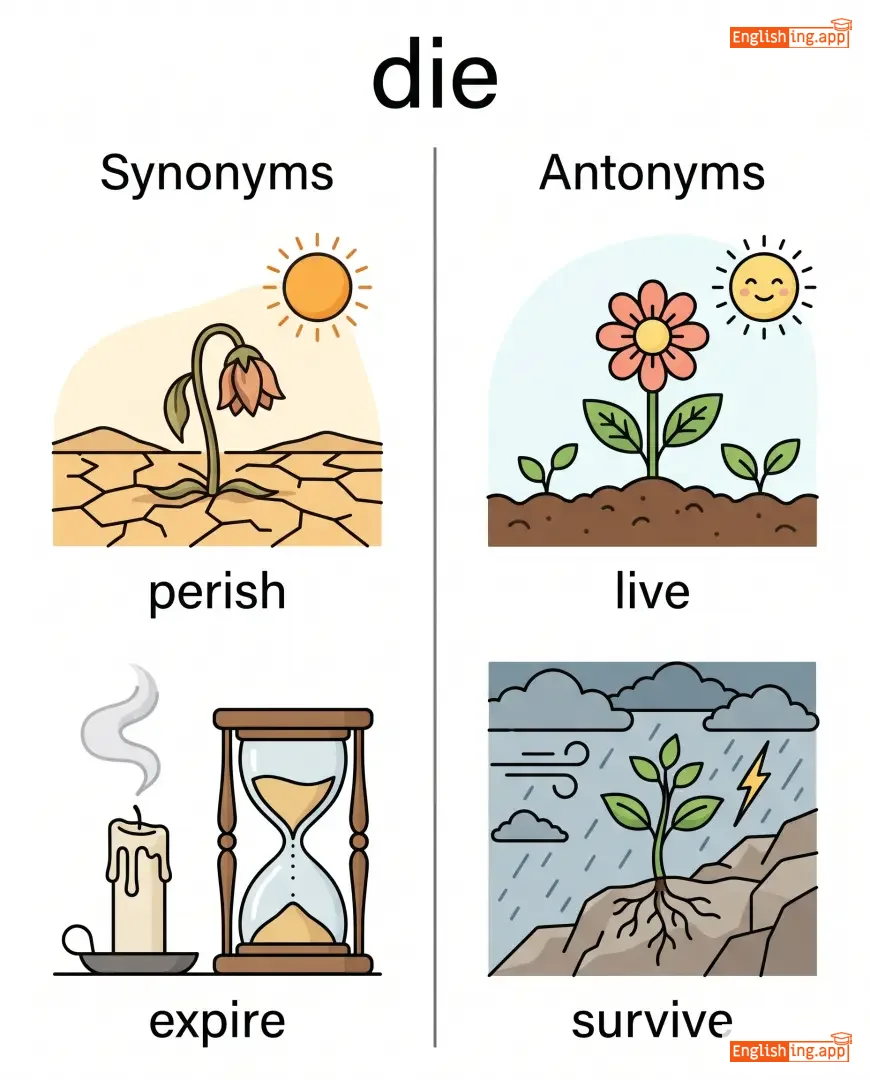
perish, expire, pass away, cease, decease
••••••
|
live, survive, exist
••••••
|
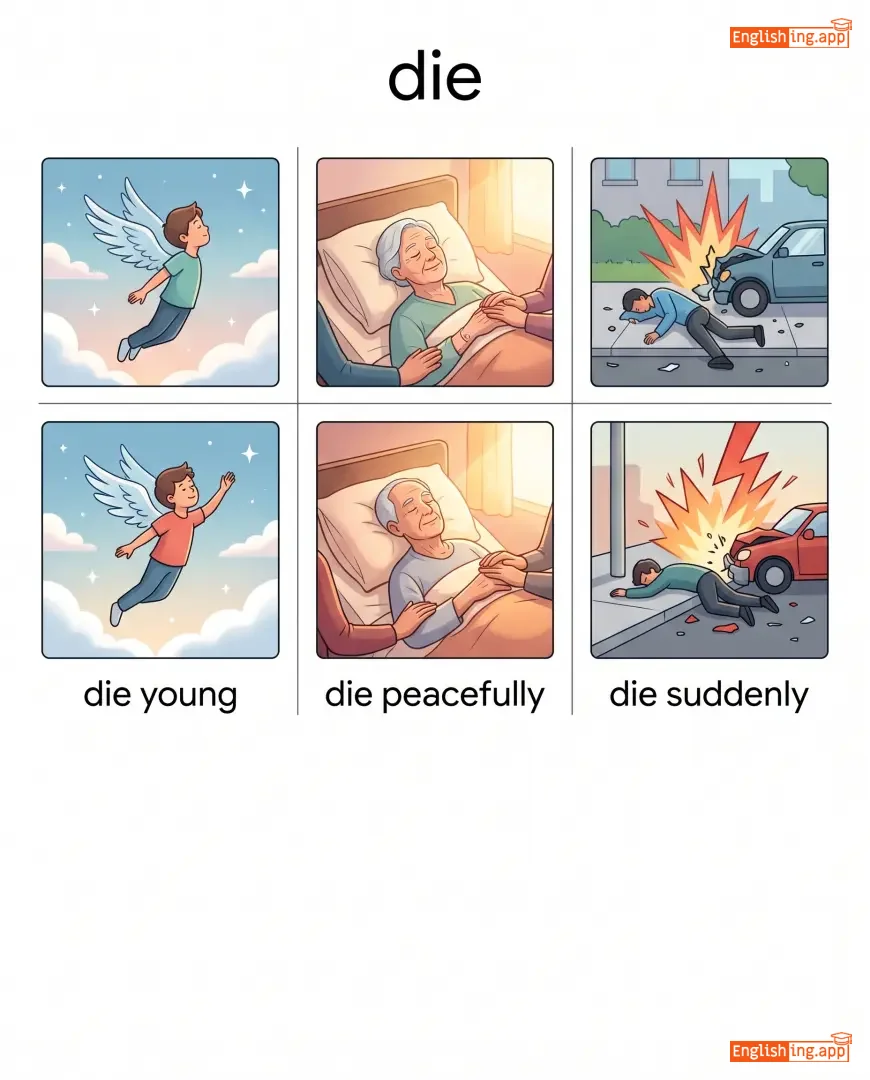
die young, die peacefully, die suddenly, die from
••••••
|
Die это умереть, запомни: 'Die чтобы жить вечно'
••••••
|
|
#2405
📘
|
/daɪˈdæktɪk/
adjective
(дидактический)
••••••
|
- •••••• |
дидактический
didakticheskiy
••••••
|
- •••••• | - •••••• | - •••••• | - •••••• |
Intended to teach, often with a moral lesson.
••••••
|
The novel is not just entertaining but also didactic in nature. |
Роман не только развлекательный, но и дидактический по своей природе.
Roman ne tol'ko razvlekatel'nyy, no i didakticheskiy po svoey prirode.
••••••
|
- •••••• | - •••••• | - •••••• |
educational, instructive, informative, enlightening
••••••
|
uninformative, uneducational
••••••
|
didactic tone, didactic purpose, didactic story, didactic approach
••••••
|
Дидактический значит 'Did + Act' для обучения, так что это обучающий.
••••••
|
|
#2406
📜
|
/ˈdɪktəm/
noun
(диктам)
••••••
|
- •••••• |
диктум
diktum
••••••
|
- •••••• | - •••••• | - •••••• | - •••••• |
A formal pronouncement, authoritative statement, or maxim.
••••••
|
The judge’s dictum clarified the principle of equality before the law. |
Диктум судьи разъяснил принцип равенства перед законом.
Diktum sud'i raz'yasnil printsip ravenstva pered zakonom.
••••••
|
- •••••• | - •••••• | - •••••• |
pronouncement, decree, command, maxim, statement
••••••
|
question, ambiguity, silence
••••••
|
judicial dictum, famous dictum, legal dictum, ancient dictum
••••••
|
Dictum = Диктум, авторитетное утверждение.
••••••
|
|
#2407
👑
|
/ˌdɪktəˈtɔːriəl/
adjective
(диктаторский)
••••••
|
- •••••• |
диктаторский
diktatorskiy
••••••
|
- •••••• | - •••••• | - •••••• | - •••••• |
Having or showing a tendency to tell people what to do in an autocratic way.
••••••
|
His dictatorial style made him unpopular among colleagues. |
Его диктаторский стиль сделал его непопулярным среди коллег.
Ego diktatorskiy stil' sdelal ego nepopulyarnym sredi kolleg.
••••••
|
- •••••• | - •••••• | - •••••• |
authoritarian, autocratic, tyrannical, overbearing
••••••
|
democratic, liberal
••••••
|
dictatorial regime, dictatorial rule, dictatorial power
••••••
|
Диктаторский стиль – это способ управления, как у диктатора.
••••••
|
|
#2408
📜
|
/dɪkˈteɪt/
verb
(диктейт)
••••••
|
|
диктовать
diktovat
••••••
|
dictated
диктейтед
••••••
|
dictated
диктейтед
••••••
|
dictates
диктейтс
••••••
|
dictating
диктейтинг
••••••
|
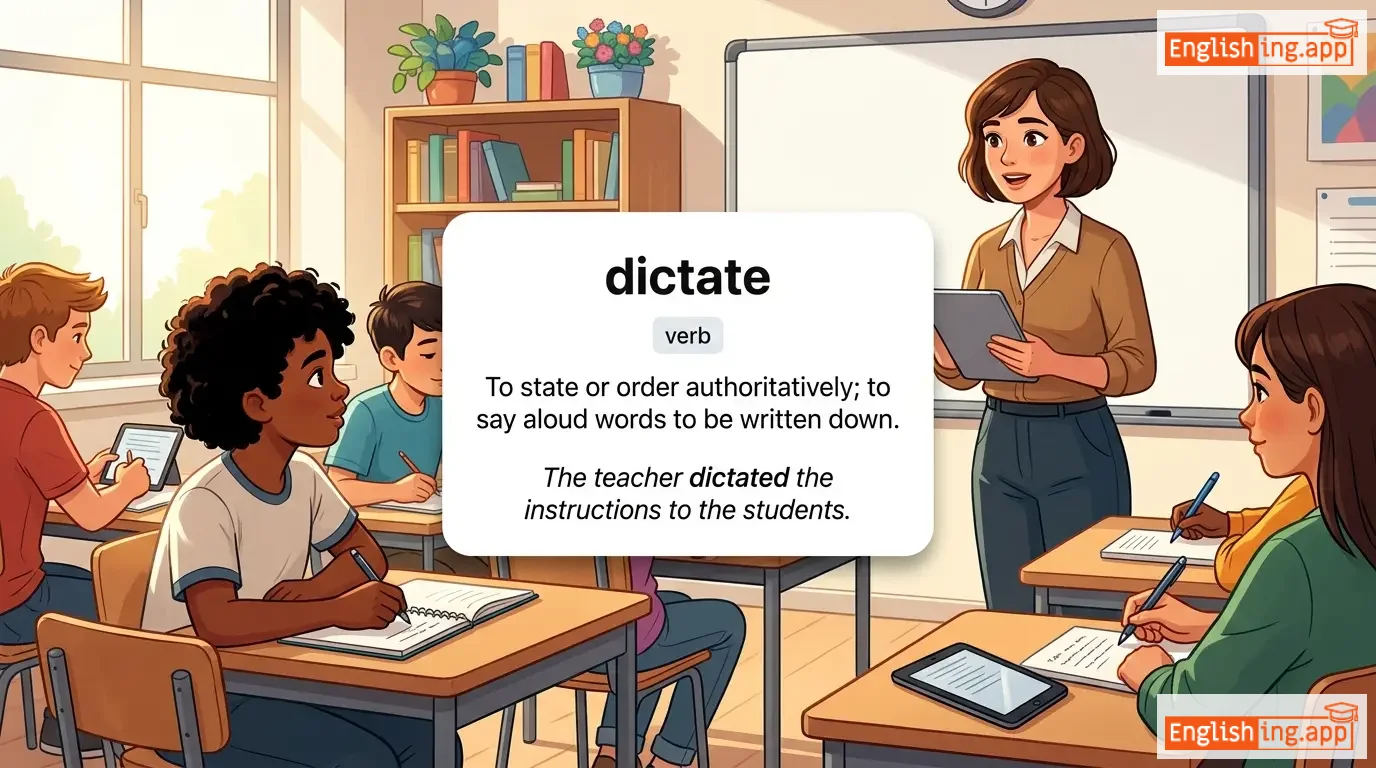
To state or order authoritatively; to say aloud words to be written down.
••••••
|
The teacher dictated the instructions to the students.
Учитель диктовал инструкции студентам.
••••••
|
Учитель диктовал инструкции студентам.
Uchitel' diktoval instruktsii studentam.
••••••
|
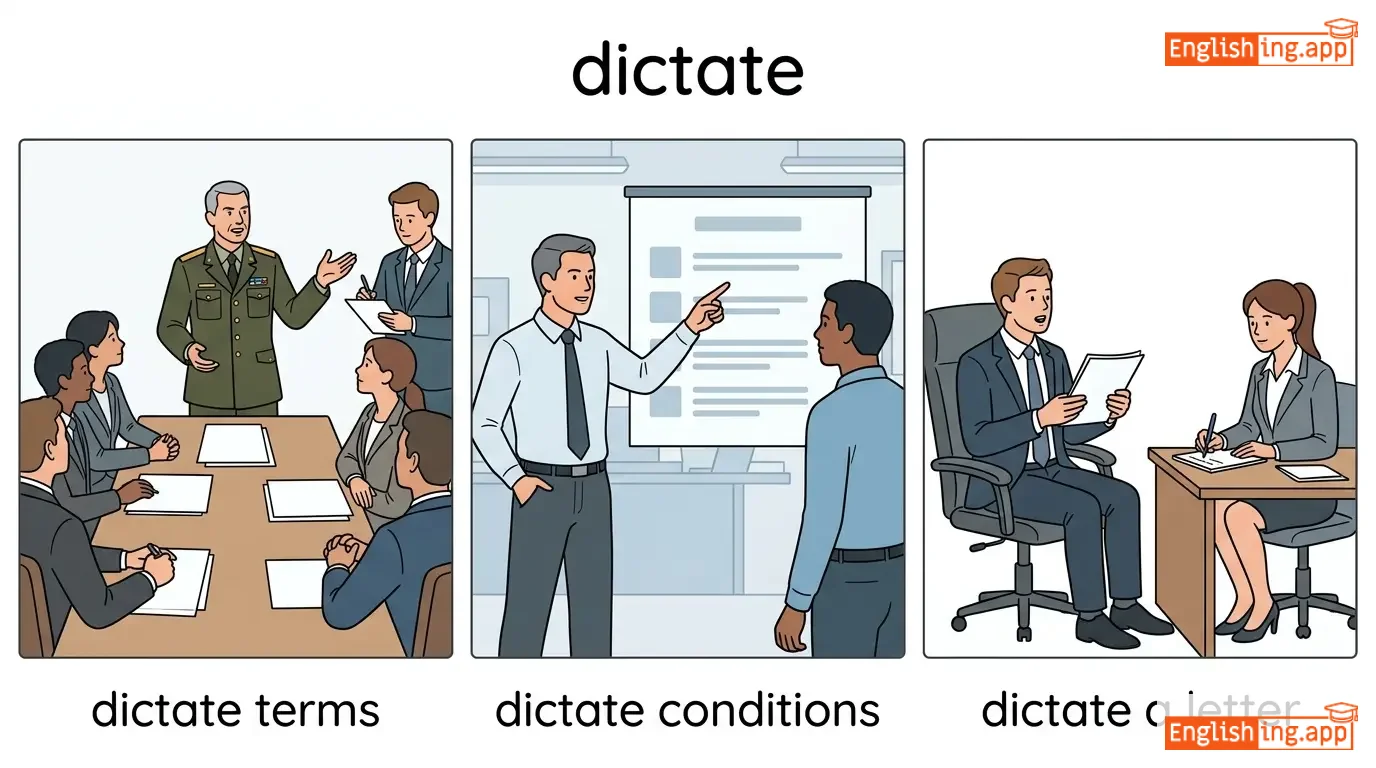
dictate terms
диктовать условия
••••••
|
To impose rules or conditions on others.
••••••
|
диктовать условия
diktovat usloviya
••••••
|
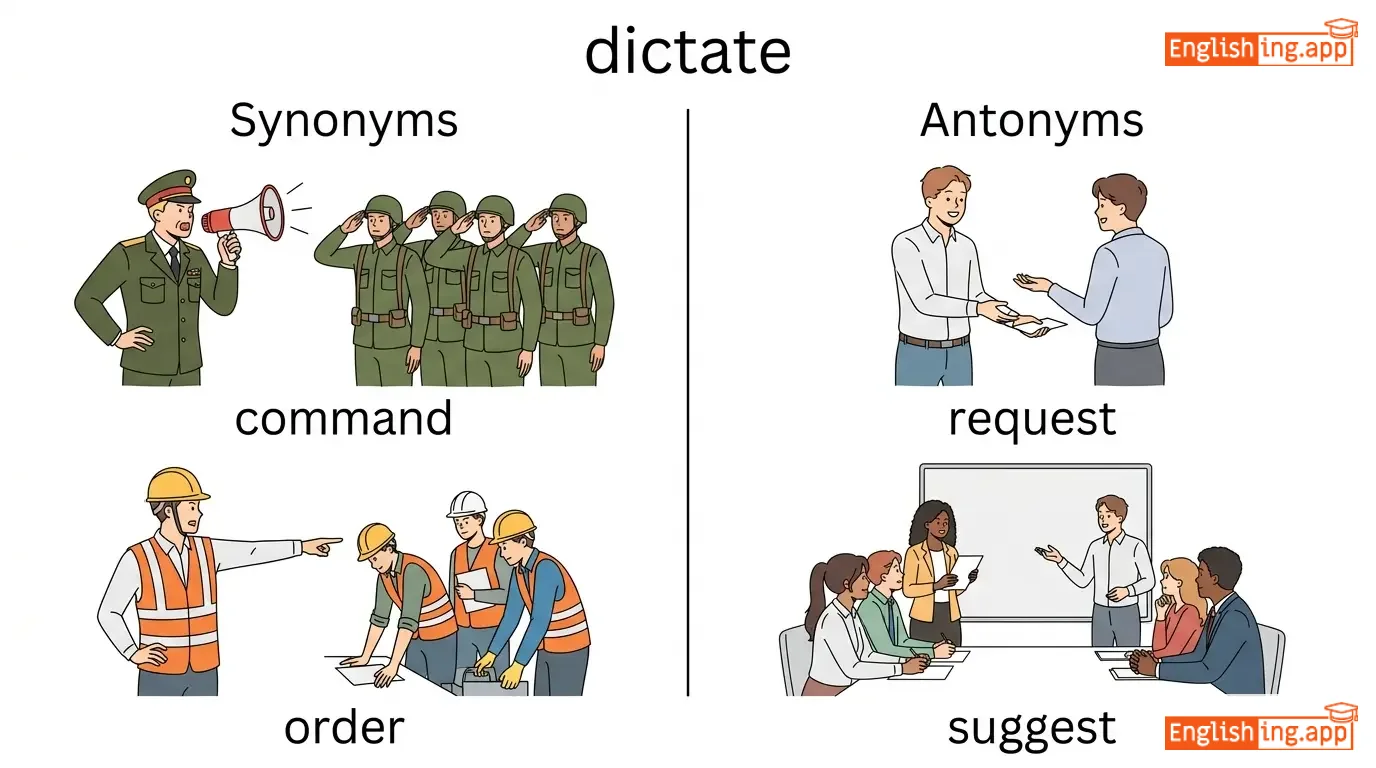
command, order, prescribe, decree
••••••
|
request, suggest
••••••
|
dictate terms, dictate conditions, dictate a letter
••••••
|
ДИКТОВАТЬ = сказать вслух слова для записи
••••••
|
|
#2409
⚖️
|
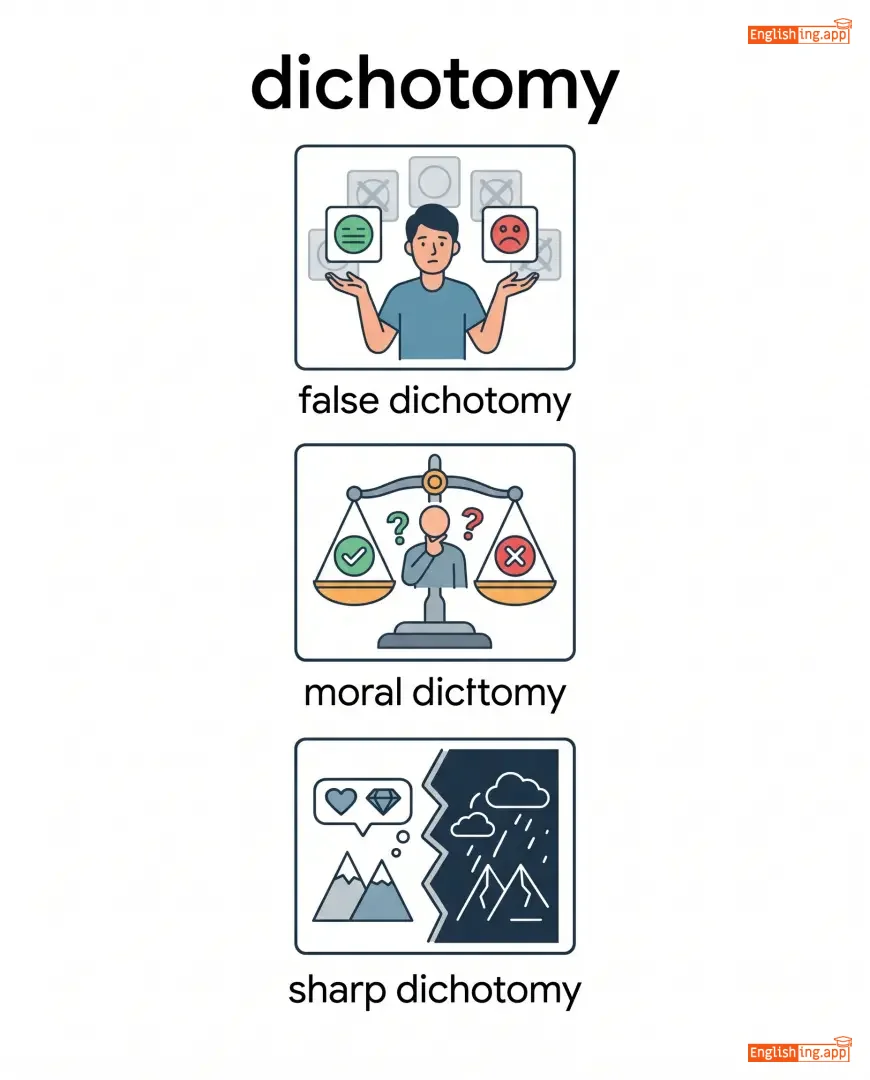
/daɪˈkɒtəmi/
noun
(дайˈкɒтэми)
••••••
|
|
дихотомия
dikhotomiya
••••••
|
- •••••• | - •••••• | - •••••• | - •••••• |
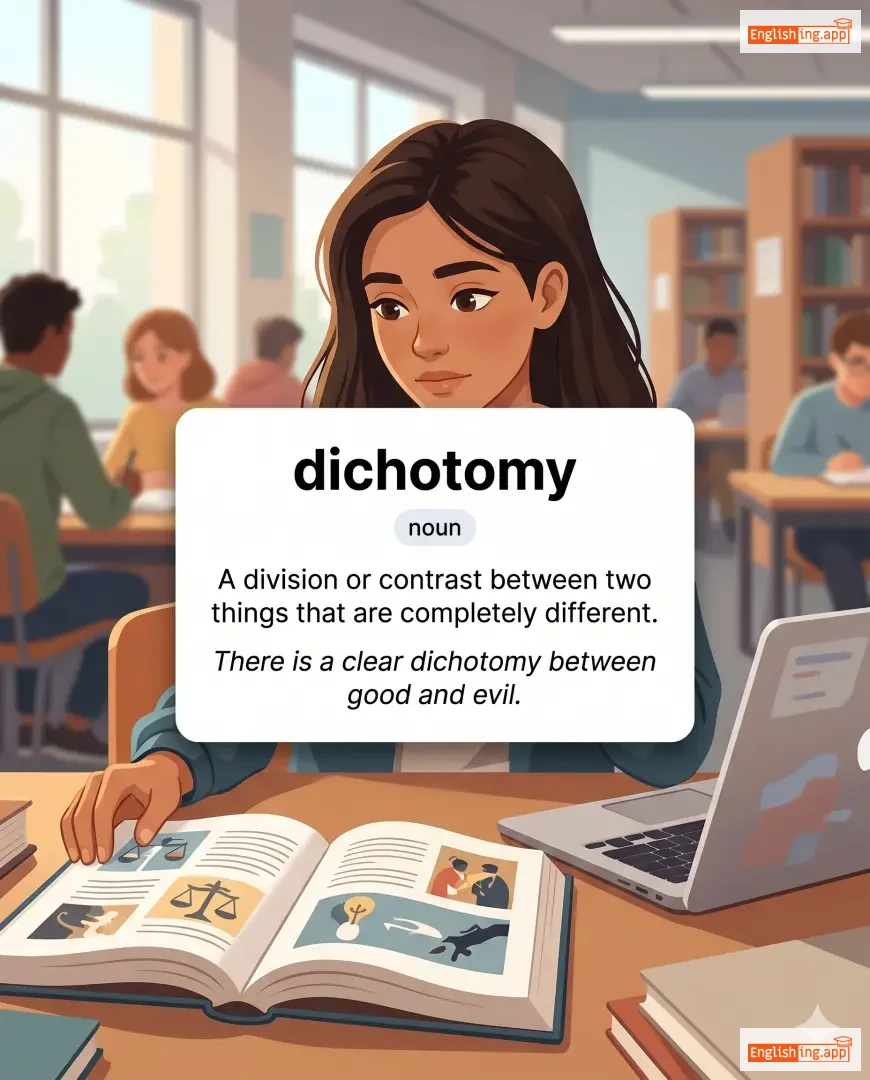
A division or contrast between two things that are completely different.
••••••
|
There is a clear dichotomy between good and evil. |
Существует явная дихотомия между добром и злом.
Sushchestvuyet yavnyaya dikhotomiya mezhdu dobrom i zlom.
••••••
|
- •••••• | - •••••• | - •••••• |
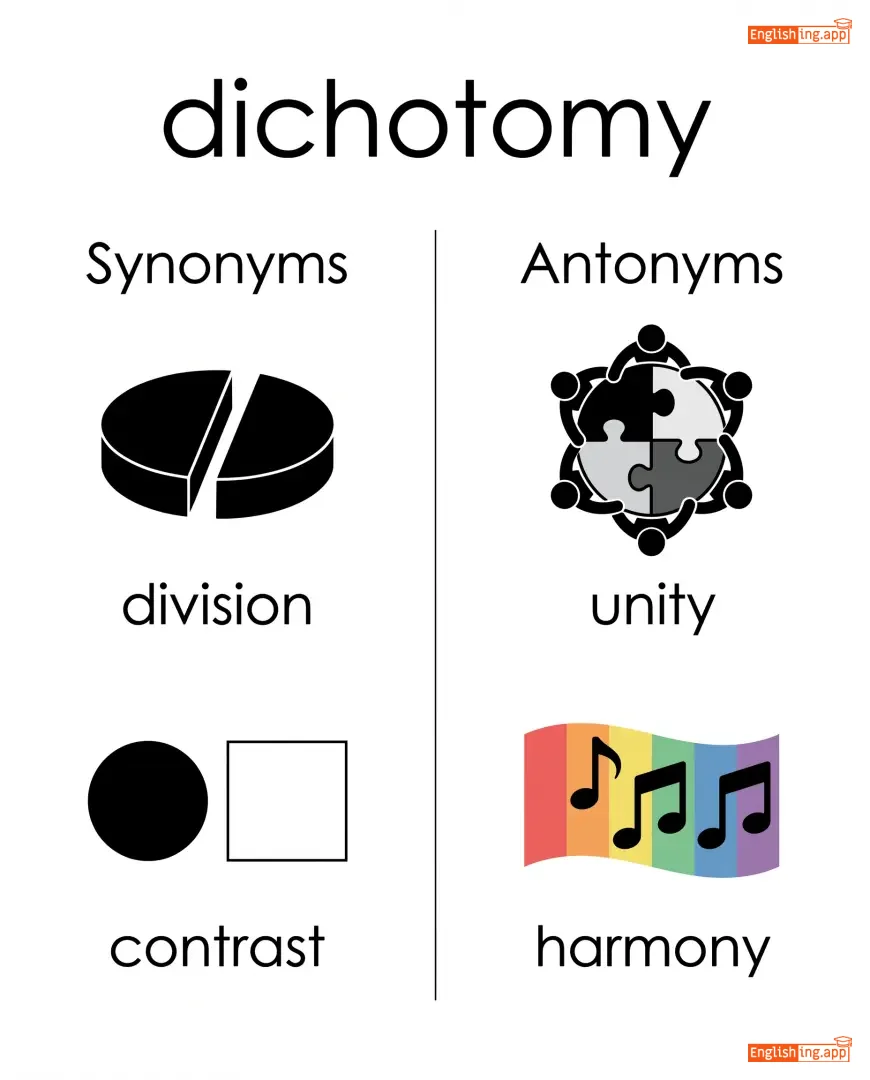
division, contrast, split, dualism
••••••
|
unity, harmony
••••••
|
false dichotomy, moral dichotomy, sharp dichotomy
••••••
|
DIE означает два + CUT означает разрезать → Дихотомия означает разделение на два
••••••
|
|
#2410
🗣️
|
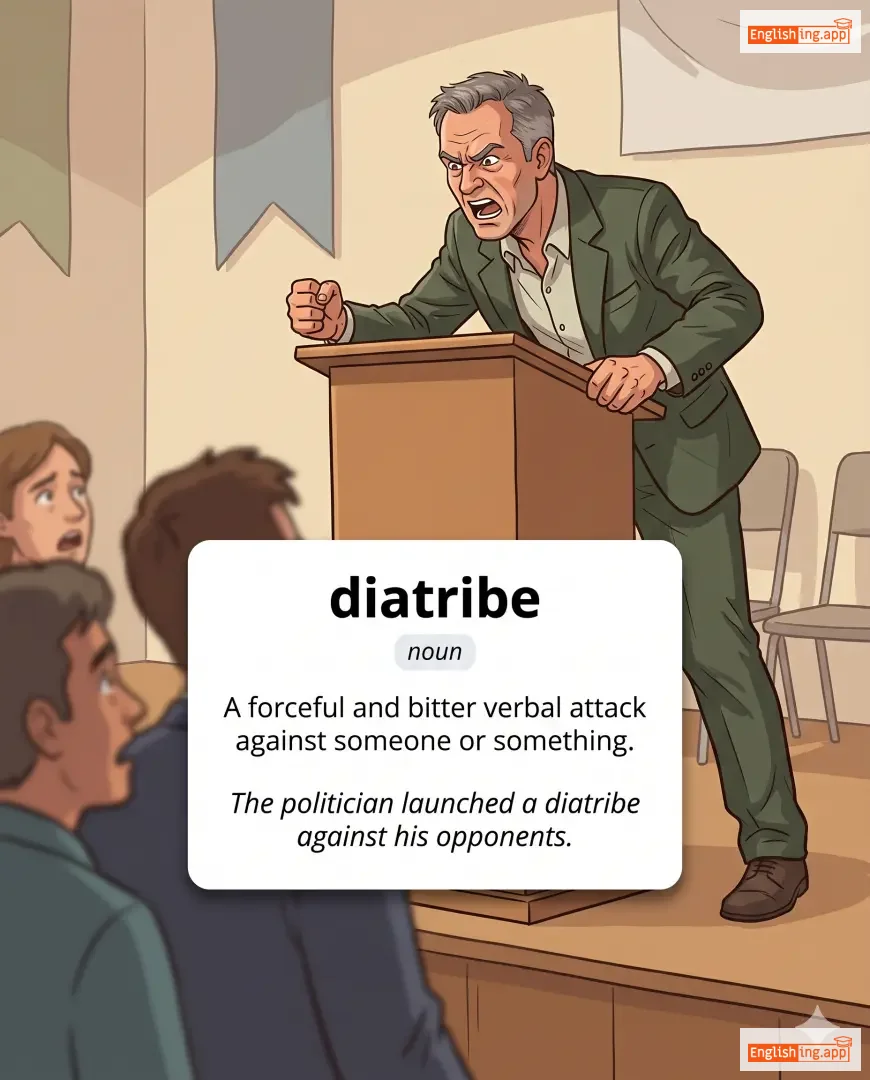
/ˈdaɪətraɪb/
noun
(даятрайб)
••••••
|
|
диатриба
diatriba
••••••
|
- •••••• | - •••••• | - •••••• | - •••••• |
A forceful and bitter verbal attack against someone or something.
••••••
|
The politician launched a diatribe against his opponents. |
Политик начал диатрибу против своих оппонентов.
Politik nachal diatribu protiv svoikh opponentov.
••••••
|
- •••••• | - •••••• | - •••••• |
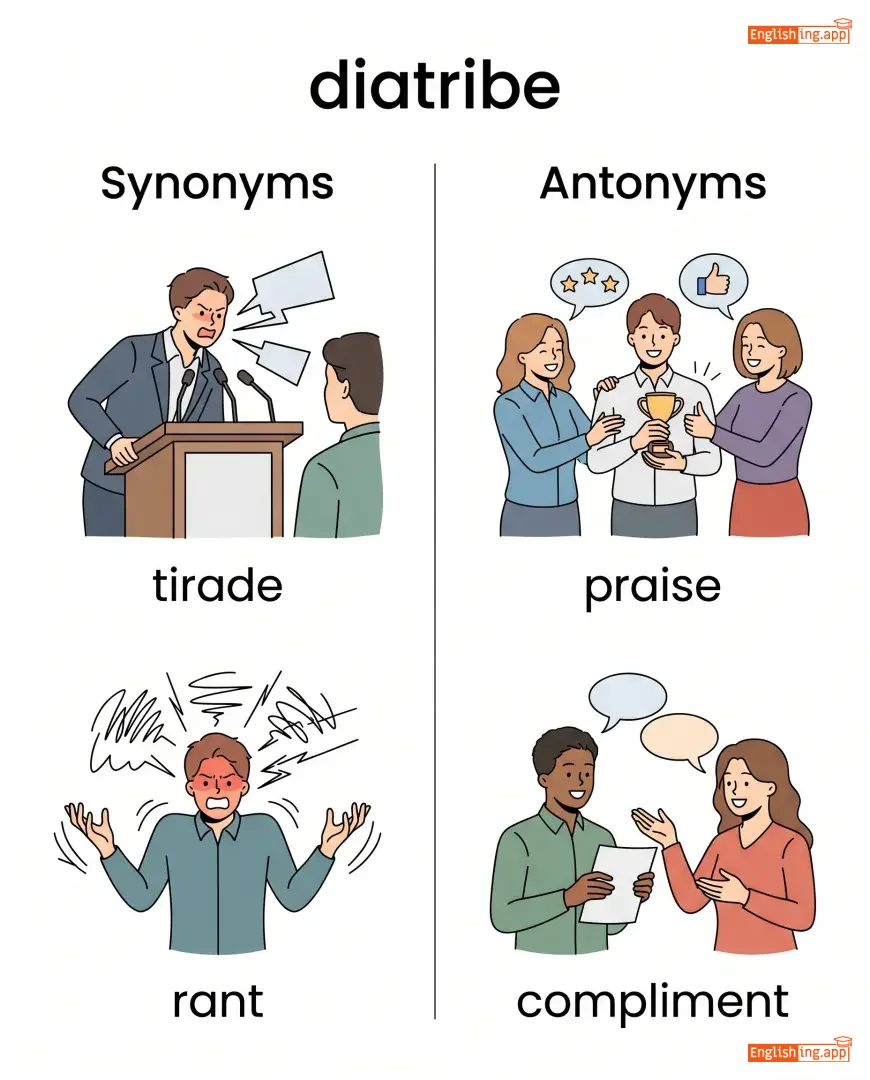
tirade, rant, criticism, denunciation, invective
••••••
|
praise, compliment
••••••
|
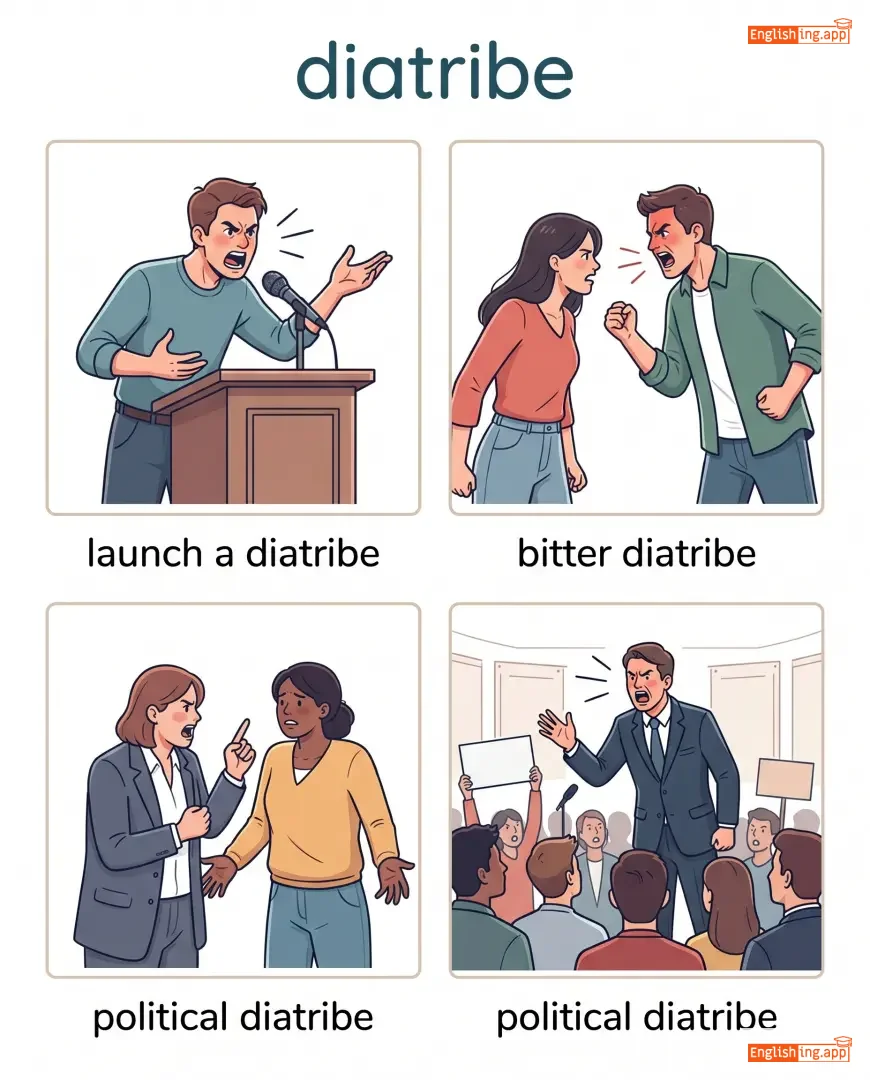
launch a diatribe, bitter diatribe, political diatribe
••••••
|
DIAlog v TRIBune - diatriba, zlostnaya kritika.
••••••
|
|
#2411
⚛️
|
/ˌdaɪəˈtɒmɪk/
adjective
(дайˈэтɒмик)
••••••
|
- •••••• |
диатомический
diatomicheskiy
••••••
|
- •••••• | - •••••• | - •••••• | - •••••• |
Consisting of two atoms.
••••••
|
Oxygen is a diatomic molecule. |
Кислород — это диатомическая молекула.
Kislorod — eto diatomicheskaya molekula.
••••••
|
- •••••• | - •••••• | - •••••• |
two-atom, molecular, dual-atom, binary
••••••
|
polyatomic, monoatomic
••••••
|
diatomic molecule, diatomic gas, diatomic oxygen, diatomic hydrogen
••••••
|
DIA значит два + ATOM значит атом → Диатомический значит два атома
••••••
|
|
#2412
👗
|
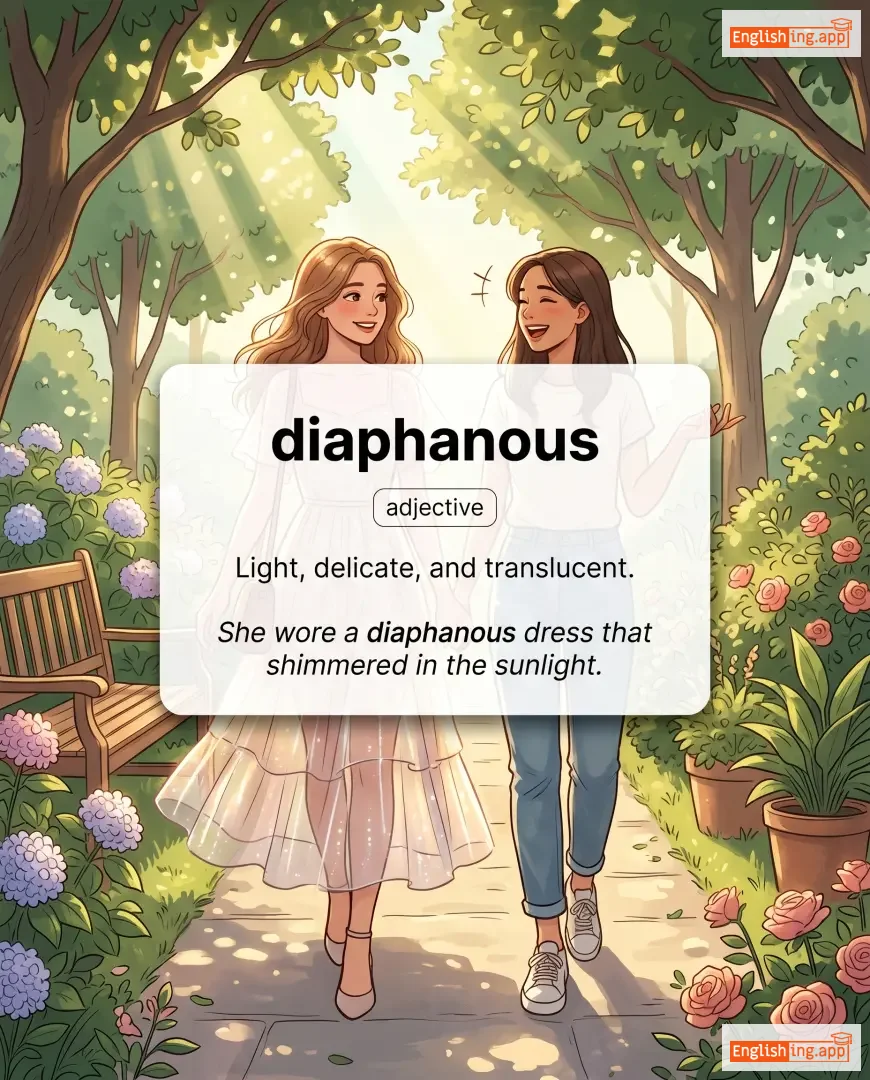
/daɪˈæfənəs/
adjective
(дайафенас)
••••••
|
|
прозрачный
prozrachny
••••••
|
- •••••• | - •••••• | - •••••• | - •••••• |
Light, delicate, and translucent.
••••••
|
She wore a diaphanous dress that shimmered in the sunlight. |
Она носила прозрачное платье, которое мерцало на солнечном свете.
Ona nosila prozrachnoe plat'ye, kotoroe mertsalo na solnechnom svete.
••••••
|
- •••••• | - •••••• | - •••••• |
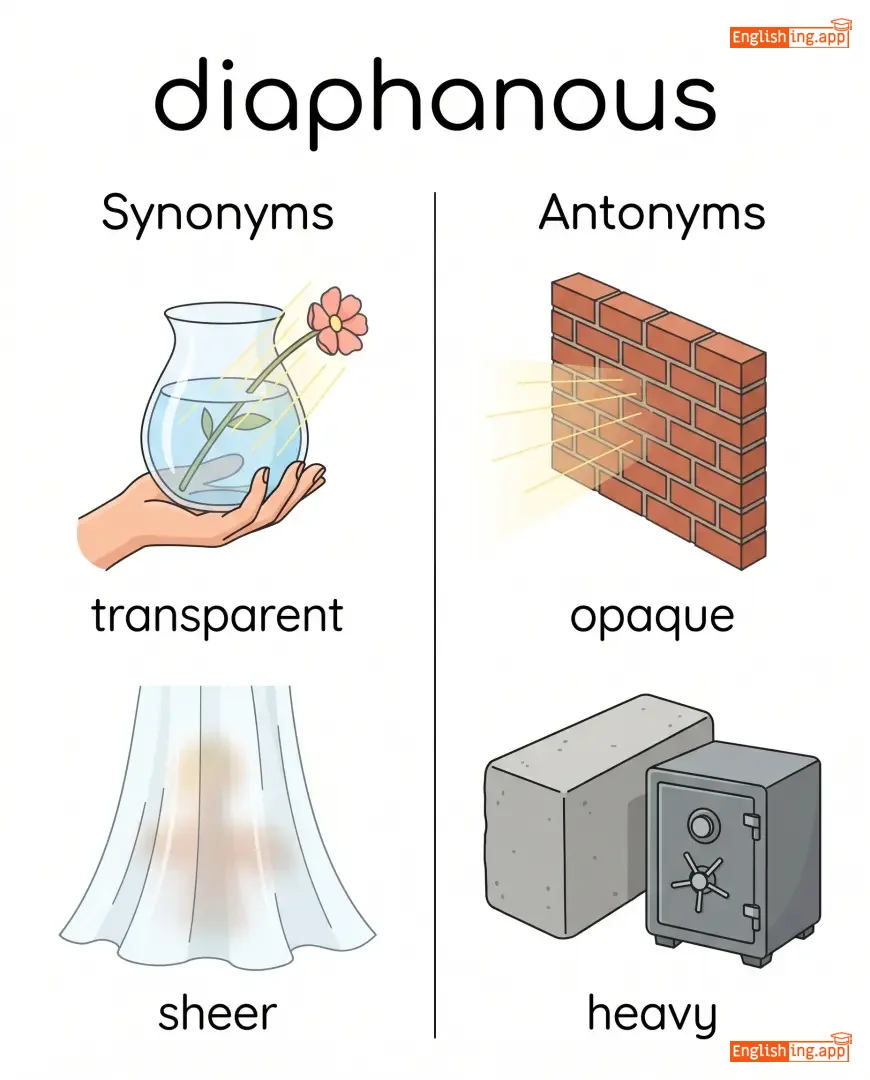
transparent, sheer, delicate, translucent, gossamer
••••••
|
opaque, heavy, thick
••••••
|
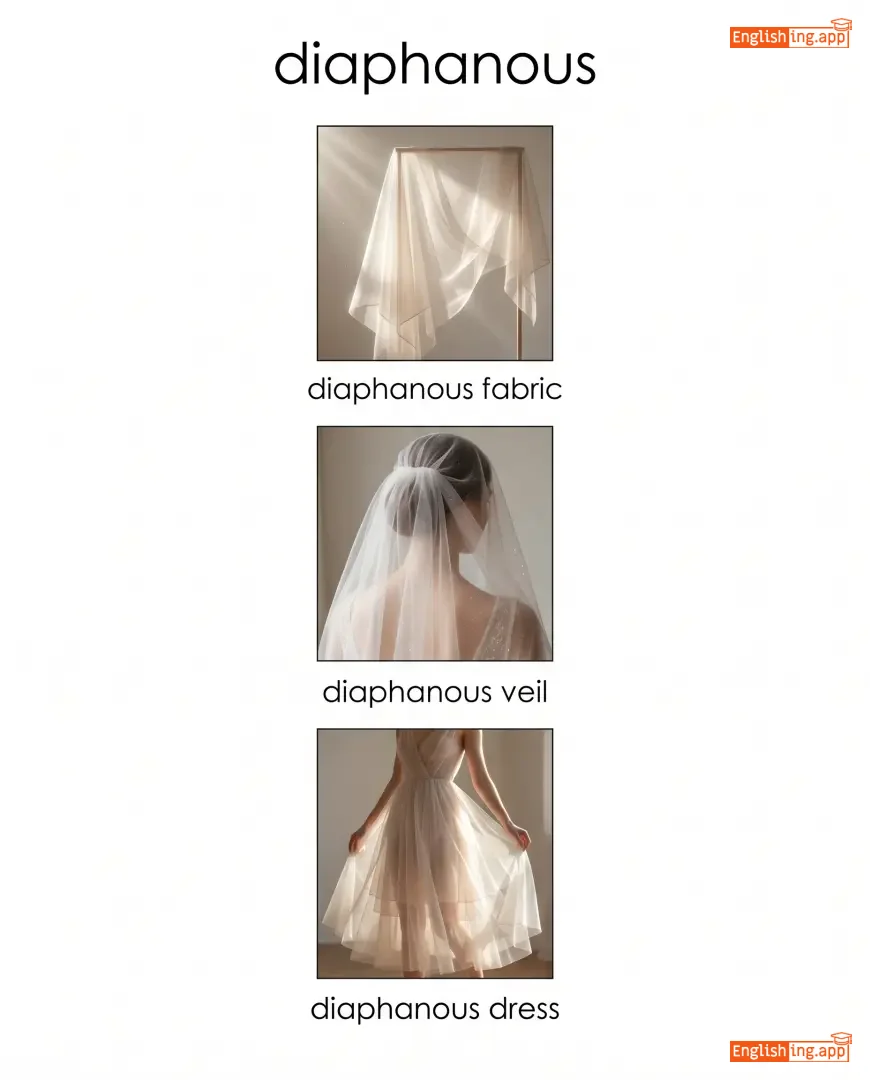
diaphanous fabric, diaphanous veil, diaphanous dress
••••••
|
Diaphanous = Dia+fan+ous → Легкое платье, которое сверкает на солнце.
••••••
|
|
#2413
🗣️
|
/ˈdaɪəlɔːɡ/
noun
(диалог)
••••••
|
- •••••• |
диалог
dialog
••••••
|
- •••••• | - •••••• | - •••••• | - •••••• |
A conversation between two or more people, or a discussion aimed at reaching understanding.
••••••
|
The two countries engaged in a dialogue to resolve their differences. |
Две страны вступили в диалог, чтобы разрешить свои разногласия.
Dve strany vstupili v dialog, chtoby razreshit' svoi raznoglasiya.
••••••
|
open dialogue |
A transparent and constructive conversation.
••••••
|
открытый диалог
otkrytyy dialog
••••••
|
conversation, discussion, talk, exchange, communication
••••••
|
silence, monologue
••••••
|
constructive dialogue, political dialogue, open dialogue
••••••
|
Диалог = разговор → В русском языке диалог = разговор в фильме.
••••••
|
|
#2414
👨🏫
|
/ˌdaɪələˈtɪʃən/
noun
(дайəˈлɛктишən)
••••••
|
- •••••• |
диалектика
dialektika
••••••
|
- •••••• | - •••••• | - •••••• | - •••••• |
A person skilled in dialectic or logical argument.
••••••
|
Socrates is often considered the greatest dialectician in history. |
Сократа часто считают величайшим диалектиком в истории.
Sokrata chasto schitayut velichayshim dialektikom v istorii.
••••••
|
- •••••• | - •••••• | - •••••• |
logician, debater, philosopher, reasoner
••••••
|
layman, novice
••••••
|
great dialectician, skilled dialectician
••••••
|
диалектика = маг в искусстве логики → диалектика
••••••
|
|
#2415
🧠
|
/ˌdaɪəˈlɛktɪkəl/
adjective
(дайəˈлɛктикəl)
••••••
|
- •••••• |
диалектический
dialekticheskiy
••••••
|
- •••••• | - •••••• | - •••••• | - •••••• |
Relating to the logical discussion of ideas and opinions.
••••••
|
She took a dialectical approach to solve the complex issue. |
Она приняла диалектический подход для решения сложной проблемы.
Ona prinila dialekticheskiy podkhod dlya resheniya slozhnoy problemy.
••••••
|
dialectical reasoning |
A way of reasoning that involves dialogue and opposing viewpoints.
••••••
|
диалектическое мышление
dialekticheskoe myshlenie
••••••
|
logical, argumentative, rational, discursive
••••••
|
illogical, irrational, unreasonable
••••••
|
dialectical approach, dialectical reasoning, dialectical materialism
••••••
|
диалектический = logical discussion style, на русском диалектическое мышление
••••••
|
|
#2416
❌
|
/dɪˈvɔɪd/
adjective
(дивойд)
••••••
|
- •••••• |
пустой
pustoy
••••••
|
- •••••• | - •••••• | - •••••• | - •••••• |
Completely lacking or without something.
••••••
|
His speech was devoid of any real emotion. |
Его речь была пустой от всякой реальной эмоции.
Yego rech' byla pustoy ot vsyakoy real'noy emotsii.
••••••
|
- •••••• | - •••••• | - •••••• |
lacking, empty, barren, absent, void
••••••
|
full, complete, abundant
••••••
|
devoid of meaning, devoid of life, devoid of emotion
••••••
|
De-Void означает пустой = без содержания, поэтому devoid = пустой
••••••
|
|
#2417
🗣️
|
/ˈdaɪəˌlɛkt/
noun
(дайэлект)
••••••
|
- •••••• |
диалект
dialekt
••••••
|
- •••••• | - •••••• | - •••••• | - •••••• |
A particular form of a language spoken in a specific region or by a specific group.
••••••
|
He speaks a dialect of Bengali that is common in rural areas. |
Он говорит на диалекте бенгальского, который распространен в сельских районах.
On govorit na dialekte bengalskogo, kotoryi rasprostranen v selskih rayonah.
••••••
|
- •••••• | - •••••• | - •••••• |
vernacular, tongue, idiom, lingo
••••••
|
standard language, universal language
••••••
|
regional dialect, local dialect, dialect speaker
••••••
|
Dial = Звонить, ekt = говорить → Диалект значит форма речи на определенном языке.
••••••
|
|
#2418
📋
|
/ˌdaɪəɡˈnoʊsɪs/
noun
••••••
|
- •••••• | - •••••• | - •••••• | - •••••• | - •••••• | - •••••• |
The identification of a disease, condition, or problem through examination of symptoms.
••••••
|
The diagnosis confirmed that she had diabetes. |
- •••••• | - •••••• | - •••••• | - •••••• |
identification, detection, finding, determination
••••••
|
misdiagnosis, guess
••••••
|
medical diagnosis, accurate diagnosis, early diagnosis
••••••
|
No •••••• |
|
#2419
🩺
|
/ˌdaɪəɡˈnoʊz/
verb
(дайəɡˈнoʊз)
••••••
|
- •••••• |
диагностировать
diagnostirovat'
••••••
|
diagnosed
дайəɡˈнoʊзд
••••••
|
diagnosed
дайəɡˈнoʊзд
••••••
|
diagnoses
дайəɡˈнoʊзес
••••••
|
diagnosing
дайəɡˈнoʊзинг
••••••
|
To identify a disease, condition, or problem by examining symptoms.
••••••
|
The doctor diagnosed him with pneumonia.
Врач диагностировал у него пневмонию.
••••••
|
Врач диагностировал у него пневмонию.
Vrach diagnostiroval u nego pneumoniyu.
••••••
|
diagnose a problem
диагностировать проблему
••••••
|
To identify the cause of an issue
••••••
|
диагностировать проблему
diagnostirovat' problemu
••••••
|
identify, detect, determine, analyze, recognize
••••••
|
misdiagnose, ignore
••••••
|
diagnose disease, diagnose illness, diagnose condition, diagnose problem
••••••
|
Диагностировать — это как разгадывать медицинскую загадку, используя симптомы.
••••••
|
|
#2420
👑
|
/ˈdaɪəˌdɛm/
noun
(diadem)
••••••
|
- •••••• |
диадема
diadema
••••••
|
- •••••• | - •••••• | - •••••• | - •••••• |
A crown or headband worn as a symbol of royalty or authority.
••••••
|
The queen wore a glittering diadem at the coronation.
Королева носила сверкающий диадему на коронации.
••••••
|
Королева носила сверкающий диадему на коронации.
Koroleva nosila sverkayushchiy diademu na koronatsii.
••••••
|
- •••••• | - •••••• | - •••••• |
crown, coronet, tiara, headpiece
••••••
|
cap, hat
••••••
|
royal diadem, golden diadem, glittering diadem
••••••
|
Dia = Диамант, dem = Dome, диадема как корона из бриллиантов!
••••••
|
|
#2421
🔡
|
/ˌdaɪəˈkrɪtɪkəl/
adjective
(диакритический)
••••••
|
- •••••• |
диакритический
diakriticheskiy
••••••
|
- •••••• | - •••••• | - •••••• | - •••••• |
Relating to a mark added to a letter to indicate a different pronunciation or stress.
••••••
|
The word résumé has diacritical marks that change its meaning from resume. |
Слово 'резюме' имеет диакритические знаки, которые изменяют его значение от 'resume'.
Slovo 'rezume' imeyet diakriticheskiye znaki, kotoryye izmenyayut yego znacheniye ot 'resume'.
••••••
|
- •••••• | - •••••• | - •••••• |
accentual, phonetic, orthographic, linguistic
••••••
|
plain, unmarked
••••••
|
diacritical mark, diacritical accent, diacritical system
••••••
|
Диакритический как 'акцент' – как в русском языке.
••••••
|
|
#2422
👹
|
/ˌdaɪəˈbɒlɪkəl/
adjective
(дайаболикал)
••••••
|
- •••••• |
дьявольский
dyavolskiy
••••••
|
- •••••• | - •••••• | - •••••• | - •••••• |
Wicked, cruel, or outrageously bad; resembling the devil.
••••••
|
The dictator’s diabolical rule brought misery to the nation. |
Дьявольское правление диктатора принесло страдания народу.
Dyavolskoe pravlenie diktatora prineslo stradaniya narodu.
••••••
|
- •••••• | - •••••• | - •••••• |
evil, cruel, monstrous, satanic, vile
••••••
|
kind, benevolent, angelic
••••••
|
diabolical plot, diabolical laughter, diabolical crime, diabolical tyranny
••••••
|
Diabolical rule значит дьявольское правление — адская тирания
••••••
|
|
#2423
😈
|
/ˌdaɪəˈbɒlɪk/
adjective
(дайаболик)
••••••
|
- •••••• |
диаболический
diabolicheskiy
••••••
|
- •••••• | - •••••• | - •••••• | - •••••• |
Extremely evil or cruel; characteristic of the devil.
••••••
|
The villain devised a diabolic scheme. |
Злодей придумал дьявольский план.
Zlodey pridumal d'yavol'skiy plan.
••••••
|
- •••••• | - •••••• | - •••••• |
devilish, demonic, fiendish, satanic, wicked
••••••
|
angelic, good, holy
••••••
|
diabolic plan, diabolic act, diabolic scheme, diabolic laughter
••••••
|
Diabolic plan означает дьявольский план — связанный с дьяволом
••••••
|
|
#2424
👐
|
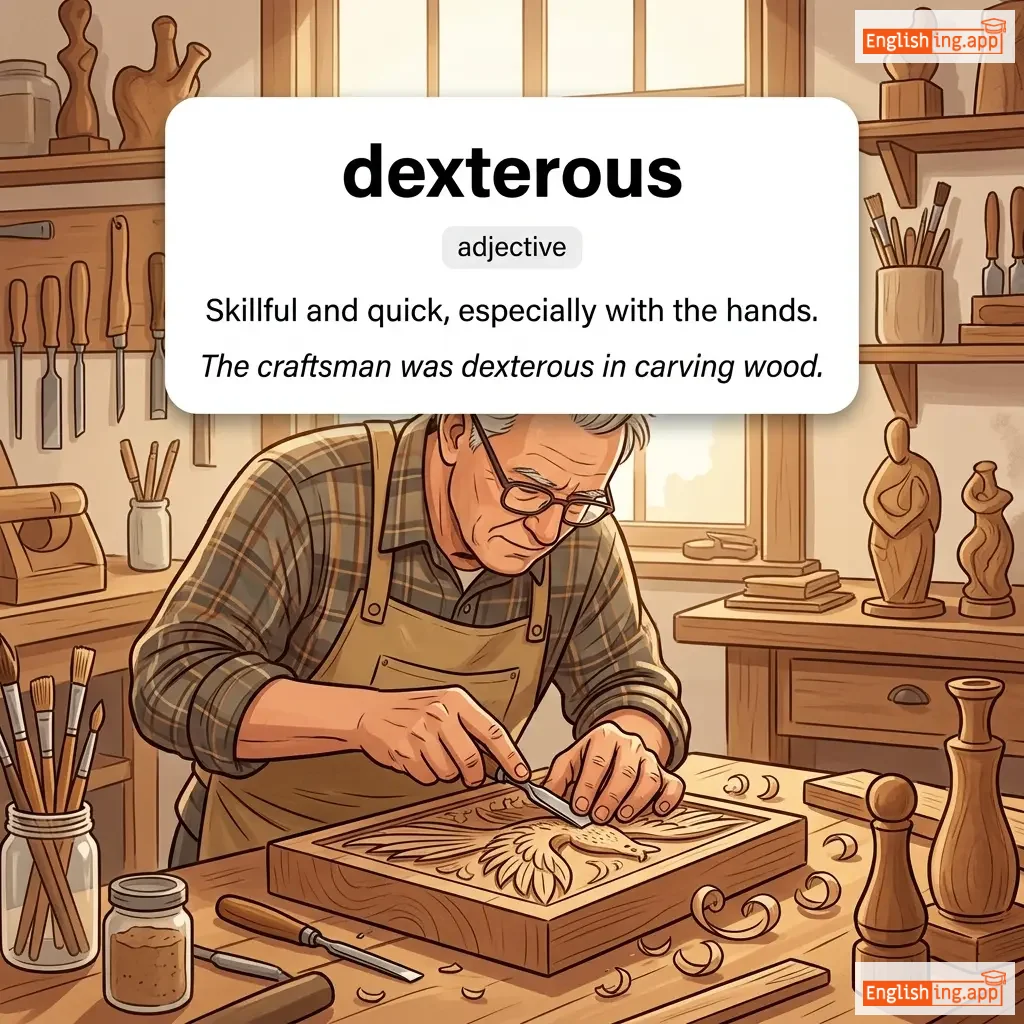
/ˈdɛkstrəs/
adjective
(декстрэс)
••••••
|
|
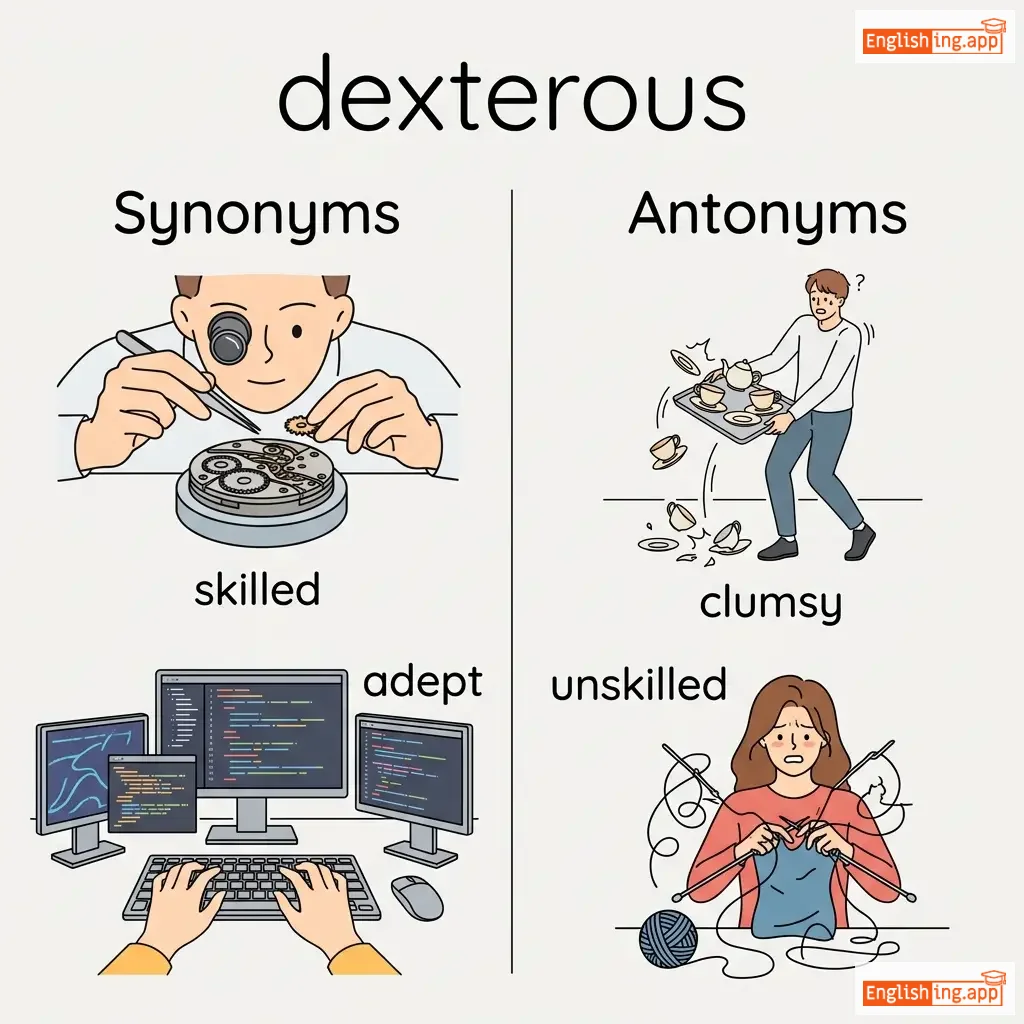
ловкий
lovkiy
••••••
|
- •••••• | - •••••• | - •••••• | - •••••• |
Skillful and quick, especially with the hands.
••••••
|
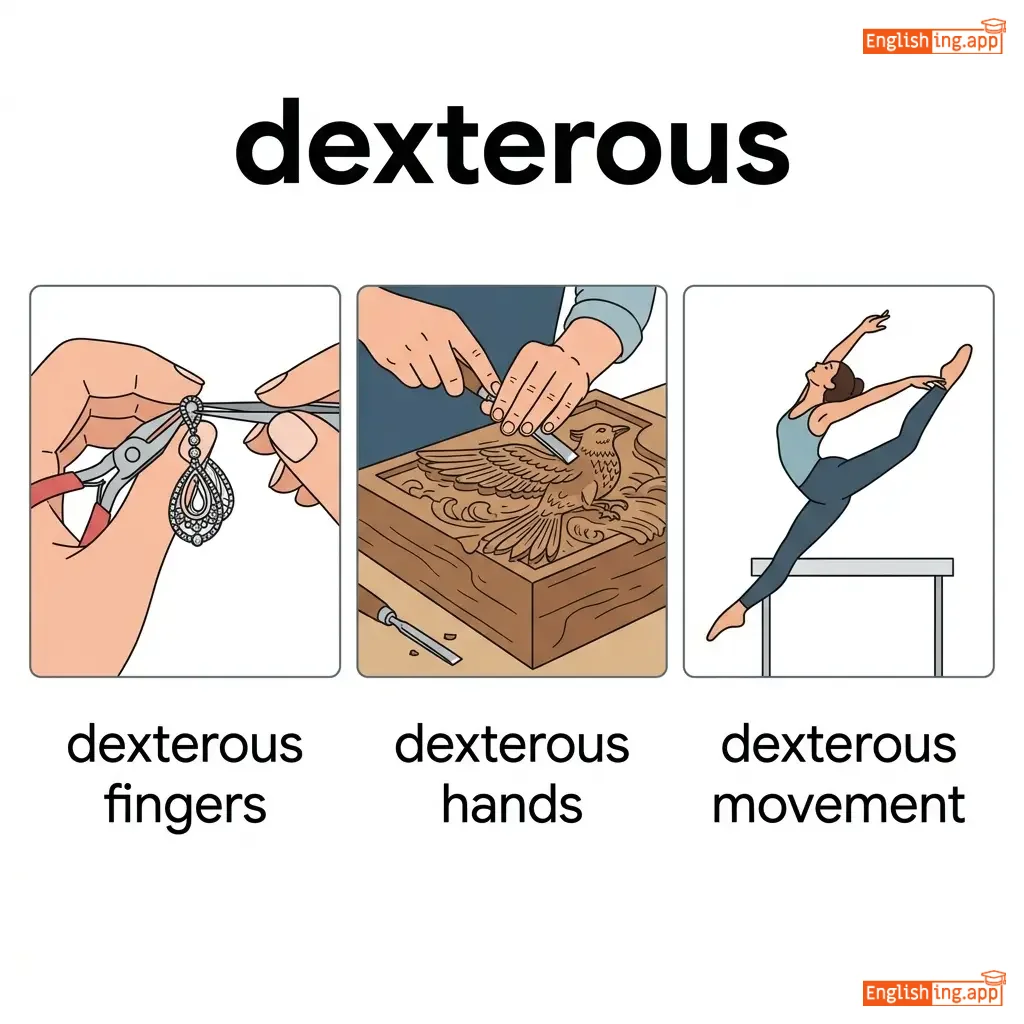
The craftsman was dexterous in carving wood. |
Ремесленник был ловким в резьбе по дереву.
Remeslennik byl lovkim v rez'be po derevu.
••••••
|
- •••••• | - •••••• | - •••••• |
skilled, adept, agile, nimble, proficient
••••••
|
clumsy, unskilled, awkward
••••••
|
dexterous fingers, dexterous hands, dexterous movement
••••••
|
Dexterous значит ловкий — люди по имени Декстер очень ловкие в работе руками!
••••••
|
|
#2425
🤲
|
/dɛkˈstɛrɪti/
noun
(дэкстери́ти)
••••••
|
|
ловкость
lovkost
••••••
|
- •••••• | - •••••• | - •••••• | - •••••• |
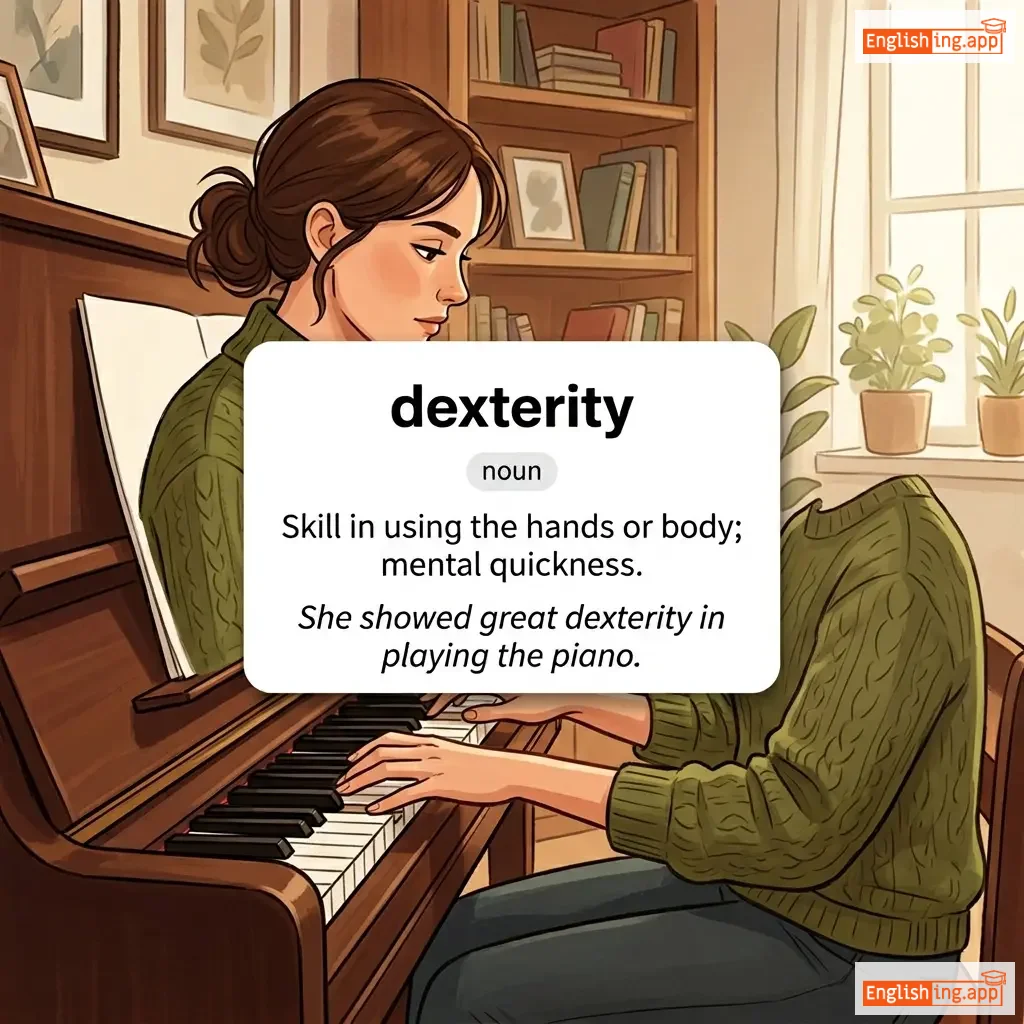
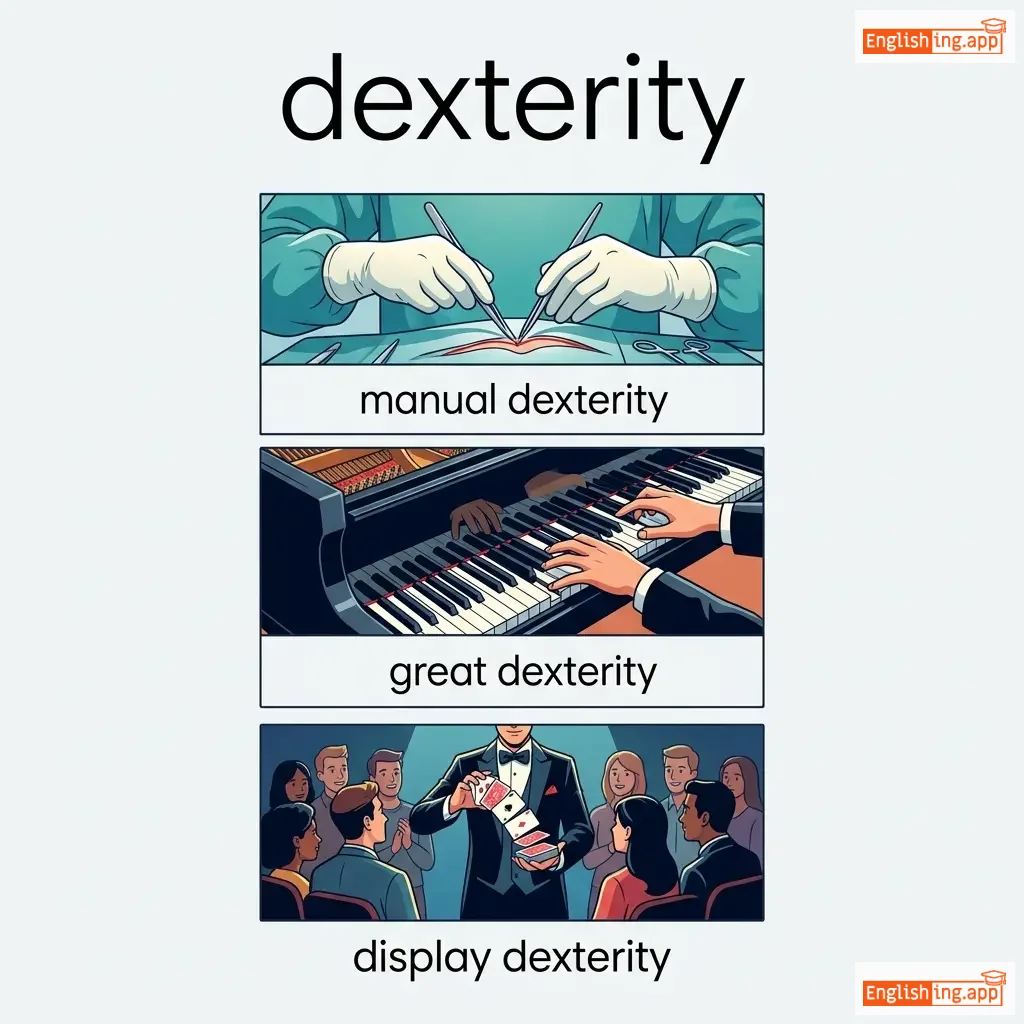
Skill in using the hands or body; mental quickness.
••••••
|
She showed great dexterity in playing the piano. |
Она продемонстрировала большую ловкость, играя на пианино.
Ona prodemonstrirovala bol'shuyu lovkost', igraya na pianino.
••••••
|
- •••••• | - •••••• | - •••••• |
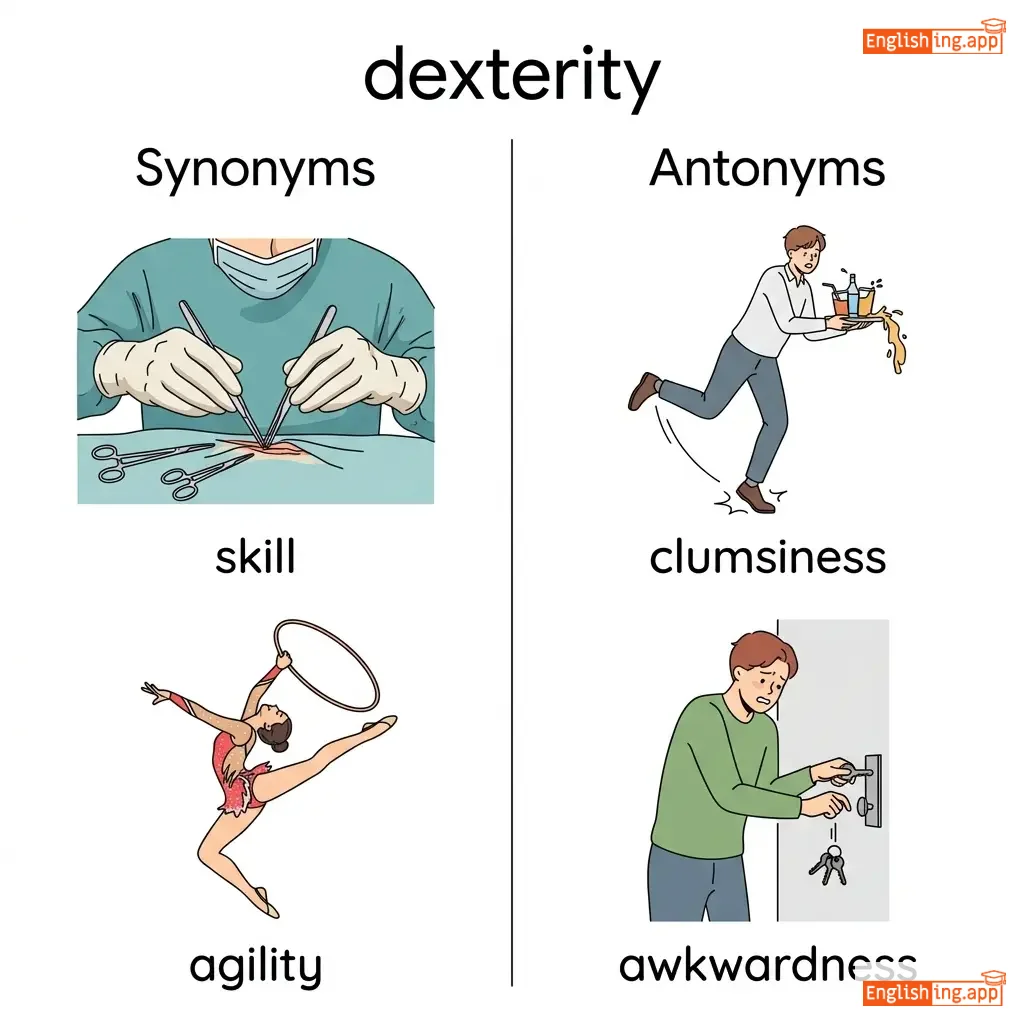
skill, agility, expertise, proficiency, finesse
••••••
|
clumsiness, awkwardness
••••••
|
manual dexterity, great dexterity, display dexterity, dexterity with hands
••••••
|
Dexterity значит ловкость — Для игры на пианино нужна ловкость.
••••••
|
|
#2426
💧
|
/djuː/
noun
(дью)
••••••
|
- •••••• |
роса
rosa
••••••
|
- •••••• | - •••••• | - •••••• | - •••••• |
Tiny drops of water that form on cool surfaces at night from condensation.
••••••
|
The grass was wet with morning dew. |
Трава была мокрой от утренней росы.
Trava byla mokroy ot utreyney rosy.
••••••
|
fresh as the morning dew |
very fresh, pure, and clean
••••••
|
свежий как утренняя роса
svezhiy kak utreyney rosy
••••••
|
moisture, condensation, droplets, mist, vapor
••••••
|
dryness, aridity
••••••
|
morning dew, drops of dew, covered in dew, sparkling dew
••••••
|
Утренняя роса олицетворяет свежесть — роса = свежесть
••••••
|
|
#2427
🕌
|
/dɪˈvaʊt/
adjective
(девоут)
••••••
|
- •••••• |
набожный
nabozhnyy
••••••
|
- •••••• | - •••••• | - •••••• | - •••••• |
Deeply religious or sincere.
••••••
|
He is a devout believer who prays every day. |
Он является набожным верующим, который молится каждый день.
On yavlyaetsya nabožnym veruyushchim, kotoryy molitsya kazhdyy den'.
••••••
|
a devout hope |
a strong and sincere hope
••••••
|
набожная надежда
nabožnaya nadezhda
••••••
|
pious, religious, faithful, sincere, devoted
••••••
|
irreligious, insincere
••••••
|
devout Muslim, devout Christian, devout believer, devout follower
••••••
|
Devout похоже на 'набожный'—всегда с религиозной преданностью.
••••••
|
|
#2428
🙏
|
/ˌdɛvəˈtiː/
noun
(дево-ти)
••••••
|
- •••••• |
преданный
predanny
••••••
|
- •••••• | - •••••• | - •••••• | - •••••• |
A person who is very enthusiastic about or strongly dedicated to something or someone.
••••••
|
He is a great devotee of classical music. |
Он большой поклонник классической музыки.
On bol'shoy poklonnik klassicheskoy muzyki
••••••
|
- •••••• | - •••••• | - •••••• |
enthusiast, admirer, fan, follower, supporter
••••••
|
opponent, critic
••••••
|
devotee of art, devotee of music, temple devotee
••••••
|
Devotee — это преданный, и Tea всегда с ним!
••••••
|
|
#2429
❤️
|
/dɪˈvoʊtɪd/
adjective
(девотед)
••••••
|
- •••••• |
преданный
predanny
••••••
|
- •••••• | - •••••• | - •••••• | - •••••• |
Very loving, loyal, or dedicated.
••••••
|
She is a devoted mother who always puts her children first. |
Она преданная мать, которая всегда ставит своих детей на первое место.
Ona predannaya mat, kotoraya vsegda stavit svoikh detey na pervoye mesto.
••••••
|
- •••••• | - •••••• | - •••••• |
dedicated, loyal, faithful, loving, committed
••••••
|
disloyal, indifferent, neglectful
••••••
|
devoted fan, devoted friend, devoted to work, devoted couple
••••••
|
Devoted = преданный, потому что преданность означает верность.
••••••
|
|
#2430
🔄
|
/dɪˈvɒlv/
verb
(дɪвóлв)
••••••
|
- •••••• |
передавать
peredavat
••••••
|
devolved
дɪвóлвд
••••••
|
devolved
дɪвóлвд
••••••
|
devolves
дɪвóлвс
••••••
|
devolving
дɪвóлвинг
••••••
|
To pass power, responsibility, or duties to another person or group.
••••••
|
The responsibility will devolve on the new manager.
Ответственность будет передана новому менеджеру.
••••••
|
Ответственность будет передана новому менеджеру.
Otvetstvennost' budet peredana novomu menedzheru.
••••••
|
- •••••• | - •••••• | - •••••• |
delegate, transfer, assign, hand over, pass
••••••
|
retain, keep, withhold
••••••
|
devolve power, devolve responsibility, devolve authority
••••••
|
Devolve - это как 'передавать', передача ответственности.
••••••
|
Vocabulary Quiz
Test your vocabulary by matching words with their translations or meanings.
Login to take the quiz
Comments (0)
Share your thoughts and join the discussion.
Join the discussion by logging in
Login to CommentNo comments yet
Be the first to share your thoughts!