

Обновитесь для доступа ко всему словарю
Получите неограниченный доступ ко всем словам с подпиской Pro
Обновить до ProПеревод
Прошедшее
Причастие прошедшего времени
Третье лицо единственного числа
Герундий
Значение
Пример предложения
Перевод примера предложения
Синонимы
Антонимы
Коллокации
Мнемоника



Swipe left or right, or use the buttons. Tap image to zoom.
Обновитесь для доступа ко всем предложениям
Получите неограниченный доступ ко всем предложениям с подпиской Pro
Обновить до ProПеревод примера предложения
Слово
Lesson 372Lesson 372 - Переключатель маски
|
Эмодзи
|
Слово | Images | Перевод | Прошедшее | Причастие прошедшего времени | Третье лицо единственного числа | Герундий | Значение | Пример предложения | Перевод примера предложения | Пример выражения | Значение примера выражения | Перевод примера выражения | Синонимы | Антонимы | Коллокации | Мнемоника |
|---|---|---|---|---|---|---|---|---|---|---|---|---|---|---|---|---|---|
|
#11125
❤️
|
/hɑːrt/
noun
(харт)
••••••
|
- •••••• |
сердце
serdtse
••••••
|
- •••••• | - •••••• | - •••••• | - •••••• |
the organ that pumps blood through the body; also the center of emotions
••••••
|
Her heart was beating fast with excitement.
Ее сердце билось быстро от волнения.
••••••
|
Ее сердце билось быстро от волнения.
Eeyo serdtse bilos' bystro ot volneniya.
••••••
|
at heart
по сердцу
••••••
|
in essence or fundamentally
••••••
|
по сердцу
po serdtsu
••••••
|
core, center, emotion, spirit, soul
••••••
|
mind, brain
••••••
|
heart attack, broken heart, kind heart, follow your heart
••••••
|
Сердце ❤️ означает сердце – любовь и эмоции исходят из сердца
••••••
|
|
#11126
👩
|
/hɜːrˈsɛlf/
pronoun
(хёрсэлф)
••••••
|
- •••••• |
сама
sama
••••••
|
- •••••• | - •••••• | - •••••• | - •••••• |
used to refer to a female person as the object of a verb or preposition when she is the subject
••••••
|
She prepared the meal all by herself.
Она приготовила еду сама.
••••••
|
Она приготовила еду сама.
Ona prigotovila yedu sama.
••••••
|
by herself
сама
••••••
|
alone, without help
••••••
|
сама
sama
••••••
|
on her own, alone, independently, solo, unaided
••••••
|
together, with others
••••••
|
by herself, for herself, to herself, herself alone
••••••
|
Her SELF означает 'сама' — запомни, herself означает сделать что-то самой.
••••••
|
|
#11127
🦸
|
/ˈhɪəroʊ/
noun
(герой)
••••••
|
|
герой
geroy
••••••
|
- •••••• | - •••••• | - •••••• | - •••••• |
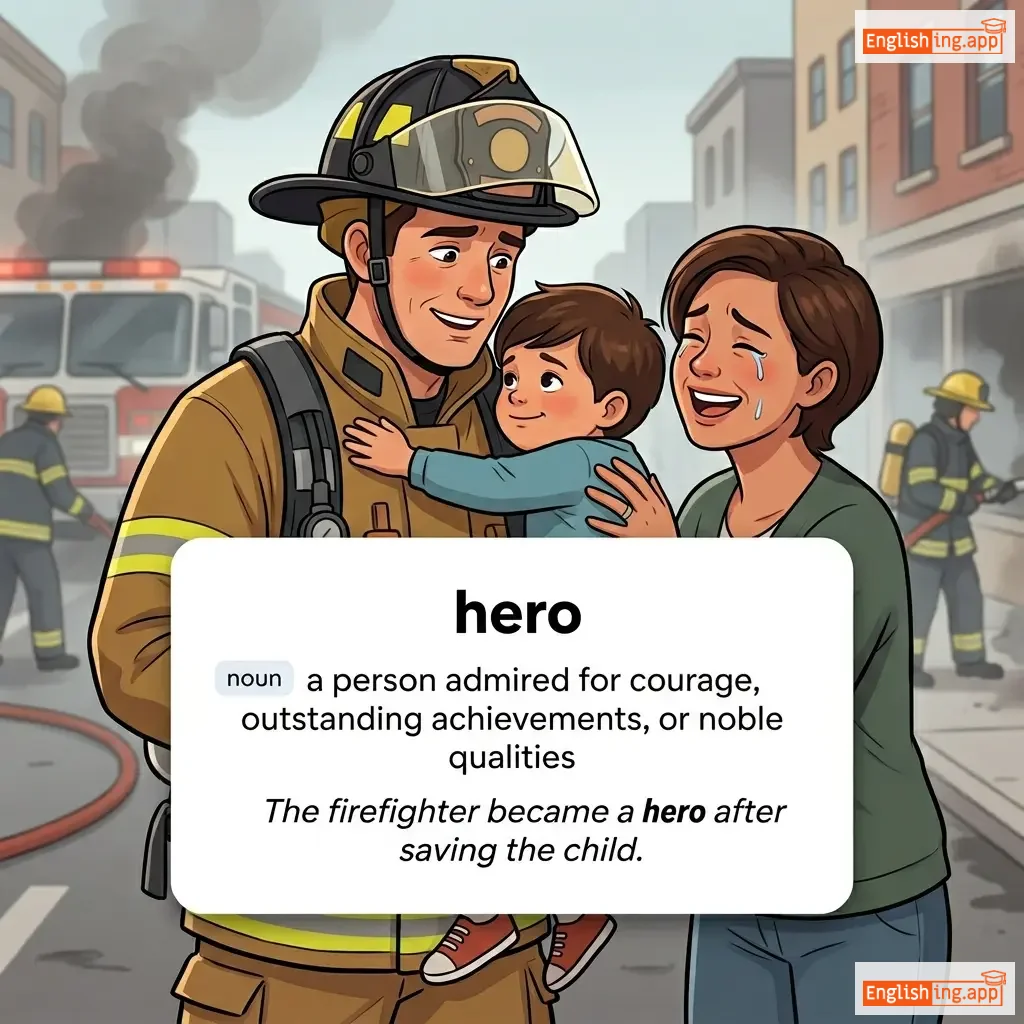
a person admired for courage, outstanding achievements, or noble qualities
••••••
|
The firefighter became a hero after saving the child. |
Пожарный стал героем после того, как спас ребенка.
Pozharnyy stal geroyem posle togo, kak spas rebenka.
••••••
|
unsung hero |
a person who makes a great contribution without recognition
••••••
|
непознанный герой
nepoznannyy geroy
••••••
|
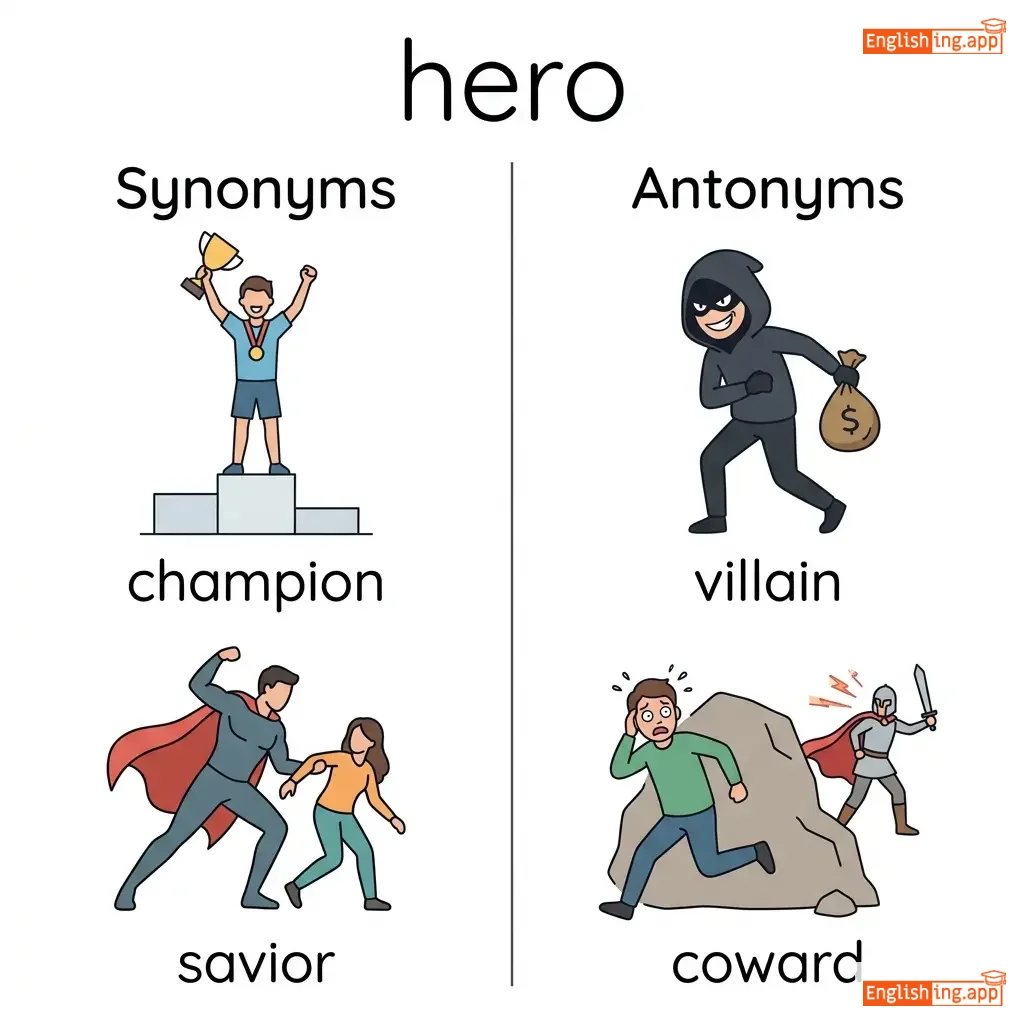
champion, savior, idol, warrior, legend
••••••
|
villain, coward
••••••
|
national hero, war hero, real hero, unsung hero
••••••
|
Герой - это герой 🦸 - На русском 'герой' означает того, кто совершает великие поступки.
••••••
|
|
#11128
📍
|
/hɪr/
adverb
(хир)
••••••
|
- •••••• |
здесь
zdes
••••••
|
- •••••• | - •••••• | - •••••• | - •••••• |
in, at, or to this place
••••••
|
Please come here quickly.
Пожалуйста, приходите сюда быстро.
••••••
|
Пожалуйста, приходите сюда быстро.
Pozhaluysta, prikhodite syuda bystro.
••••••
|
here and there
здесь и там
••••••
|
in various places
••••••
|
здесь и там
zdes i tam
••••••
|
present, nearby, close, around
••••••
|
there, away
••••••
|
come here, right here, here today, stay here
••••••
|
Here это здесь 📍 - По-русски 'здесь' напоминает 'here' по-английски
••••••
|
|
#11129
👩
|
/hɜːr/
pronoun
(хёр)
••••••
|
- •••••• |
её
eyo
••••••
|
- •••••• | - •••••• | - •••••• | - •••••• |
used to refer to a female person or animal already mentioned or easily identified
••••••
|
I saw her at the park yesterday. |
Я видел её в парке вчера.
Ya videl yeyo v parke vchera.
••••••
|
give her a hand |
to help her
••••••
|
помочь ей
pomoch' yey
••••••
|
herself, that woman, the girl
••••••
|
him, his
••••••
|
her book, her house, with her, for her
••••••
|
Her означает 'её' (о женщине) - запомни: 'Her house' означает 'её дом'
••••••
|
|
#11130
🤝
|
/ˈhɛlpfəl/
adjective
(хэлпфул)
••••••
|
- •••••• |
полезный
polezny
••••••
|
- •••••• | - •••••• | - •••••• | - •••••• |
giving help or being useful
••••••
|
The guide was very helpful during our trip. |
Гид был очень полезен во время нашего путешествия.
Gid byl ochen' polezen vo vremya nashego puteshestviya.
••••••
|
- •••••• | - •••••• | - •••••• |
supportive, useful, kind, accommodating, beneficial
••••••
|
unhelpful, useless, uncooperative
••••••
|
helpful advice, helpful guide, helpful information, helpful staff
••••••
|
Helpful означает полезный, как полезный гид
••••••
|
|
#11131
👋
|
/həˈloʊ/
interjection
(хэ-ло)
••••••
|
- •••••• |
привет
privet
••••••
|
- •••••• | - •••••• | - •••••• | - •••••• |
a greeting or expression used when meeting someone or starting a conversation
••••••
|
She answered the phone with a cheerful hello.
Она ответила на звонок с радостным 'привет'.
••••••
|
Она ответила на звонок с радостным 'привет'.
Ona otvetila na zvonok s radostnym 'privet'.
••••••
|
say hello to
сказать привет
••••••
|
to greet someone
••••••
|
сказать привет
skazat' privet
••••••
|
hi, greetings, hey, howdy, welcome
••••••
|
goodbye, farewell
••••••
|
say hello, hello there, big hello, hello everyone
••••••
|
В русском мы говорим 'привет', как в английском 'hello'.
••••••
|
|
#11132
🔥
|
/hɛl/
noun
(хэл)
••••••
|
- •••••• |
ад
ad
••••••
|
- •••••• | - •••••• | - •••••• | - •••••• |
a place or state of great suffering and torment, often in religious belief
••••••
|
He feared that his sins would send him to hell. |
Он боялся, что его грехи отправят его в ад.
On boyalsya, chto ego grekhi otpravyat ego v ad.
••••••
|
raise hell |
to cause trouble or a noisy disturbance
••••••
|
поднять шум
podnyat' shuum
••••••
|
inferno, torment, misery, damnation
••••••
|
heaven, paradise
••••••
|
living hell, go to hell, raise hell
••••••
|
Ад — это место страданий 🔥— вспомни, что «ад» означает мучения.
••••••
|
|
#11133
🚁
|
/ˈhɛlɪˌkɒptər/
noun
(хеликоптер)
••••••
|
- •••••• |
вертолет
vertolyot
••••••
|
- •••••• | - •••••• | - •••••• | - •••••• |
an aircraft with rotating blades that can take off and land vertically
••••••
|
The helicopter landed safely on the hospital roof. |
Вертолет приземлился безопасно на крыше больницы.
Vertolyot prizemlilsya bezopasno na kryshe bol'nitsy.
••••••
|
helicopter parenting |
a style of parenting where parents are overly focused on their children
••••••
|
вертолетное родительство
vertolyotnoe roditel'stvo
••••••
|
chopper, rotorcraft, whirlybird
••••••
|
airplane, glider
••••••
|
helicopter ride, helicopter landing, helicopter rescue
••••••
|
Вертолет 🚁 помните, что ‘верт’ означает вращение, а ‘олет’ означает полет.
••••••
|
|
#11134
📏
|
/haɪt/
noun
(хаит)
••••••
|
- •••••• |
высота
vysota
••••••
|
- •••••• | - •••••• | - •••••• | - •••••• |
the measurement of someone or something from base to top
••••••
|
The height of the tower impressed the visitors. |
Высота башни впечатлила посетителей.
Vysota bashni vpechatlila posetiteley.
••••••
|
at the height of |
at the most intense point of something
••••••
|
на пике
na pike
••••••
|
altitude, elevation, tallness, stature
••••••
|
depth, low
••••••
|
average height, great height, height measurement
••••••
|
Height означает высота — представьте себе самую высокую точку.
••••••
|
|
#11135
👠
|
/hiːl/
noun
(хил)
••••••
|
- •••••• |
пятка
pyatka
••••••
|
- •••••• | - •••••• | - •••••• | - •••••• |
the back part of the human foot below the ankle
••••••
|
Her shoe was rubbing against her heel.
Её туфля терлась о её пятку.
••••••
|
Её туфля терлась о её пятку.
Yeyo tuflya terlas' o yeyo pyatku.
••••••
|
at someone's heels
по пятам за кем-то
••••••
|
closely following someone
••••••
|
следовать по пятам за кем-то
sledovat' po pyatam za kem-to
••••••
|
backfoot, rear, sole, spur
••••••
|
toe, front
••••••
|
high heel, cracked heel, Achilles heel
••••••
|
Пятка — это задняя часть стопы, помни, высокие каблуки делают пятки высокими.
••••••
|
|
#11136
⚖️
|
/ˈhɛvi/
adjective
(хэви)
••••••
|
- •••••• |
тяжелый
tyazhely
••••••
|
- •••••• | - •••••• | - •••••• | - •••••• |
having great weight; difficult to lift or move
••••••
|
The box was too heavy for her to carry alone. |
Коробка была слишком тяжелой, чтобы она могла поднять ее одна.
Korobka byla slishkom tyazheloy, chtoby ona mogla podnyat' yeye odna.
••••••
|
heavy heart |
a feeling of deep sadness
••••••
|
тяжелое сердце
tyazheloe serdtse
••••••
|
weighty, massive, bulky, hefty, substantial
••••••
|
light, weightless, airy
••••••
|
heavy rain, heavy traffic, heavy bag, heavy burden
••••••
|
Heavy — это тяжелый. Представьте себе тяжелую коробку, которую вы не можете поднять.
••••••
|
|
#11137
🌧️
|
/ˈhɛvɪli/
adverb
(хэвили)
••••••
|
- •••••• |
тяжело / сильно
tyazhelo / sil'no
••••••
|
- •••••• | - •••••• | - •••••• | - •••••• |
to a great degree; with a lot of weight, intensity, or force
••••••
|
It rained heavily all night. |
Шел сильный дождь всю ночь.
Shel sil'nyy dozhd' vsyu noch'.
••••••
|
- •••••• | - •••••• | - •••••• |
intensely, strongly, severely, weightily
••••••
|
lightly, mildly
••••••
|
heavily loaded, heavily armed, heavily influenced, heavily involved
••••••
|
Heavily 🌧️ означает сильно – помни: сильный дождь означает heavily rain
••••••
|
|
#11138
☁️
|
/ˈhɛvən/
noun
(heven)
••••••
|
- •••••• |
небеса
nebesa
••••••
|
- •••••• | - •••••• | - •••••• | - •••••• |
the place believed to be the home of God and the afterlife of the good; a state of extreme happiness
••••••
|
They believe that good people go to heaven after death. |
Они верят, что хорошие люди идут в небеса после смерти.
Oni veryat, chto khoroshie lyudi idut v nebeso posle smerti.
••••••
|
move heaven and earth |
to do everything possible to achieve something
••••••
|
двигать небом и землёй
dvigat' nebom i zemlyoy
••••••
|
paradise, bliss, afterlife, nirvana, delight
••••••
|
hell, misery
••••••
|
go to heaven, heaven on earth, gates of heaven, pray to heaven
••••••
|
Небеса = место счастья 🌠 – когда ты счастлив, ты как в небесах.
••••••
|
|
#11139
🔥
|
/hiːt/
noun/verb
(хит)
••••••
|
|
жара / тепло
zhara / teplo
••••••
|
heated
хитед
••••••
|
heated
хитед
••••••
|
heats
хитс
••••••
|
heating
хитинг
••••••
|
intensity of hotness; to make something warm or hot
••••••
|
They heated the soup on the stove.
Они разогрели суп на плите.
••••••
|
Они разогрели суп на плите.
Oni razogreli sup na plite.
••••••
|
in the heat of the moment
В жару момента
••••••
|
acting without thinking due to strong emotions
••••••
|
Действовать без размышлений из-за сильных эмоций
Deystvovat' bez razmyshleniy iz-za sil'nykh emotsiy
••••••
|
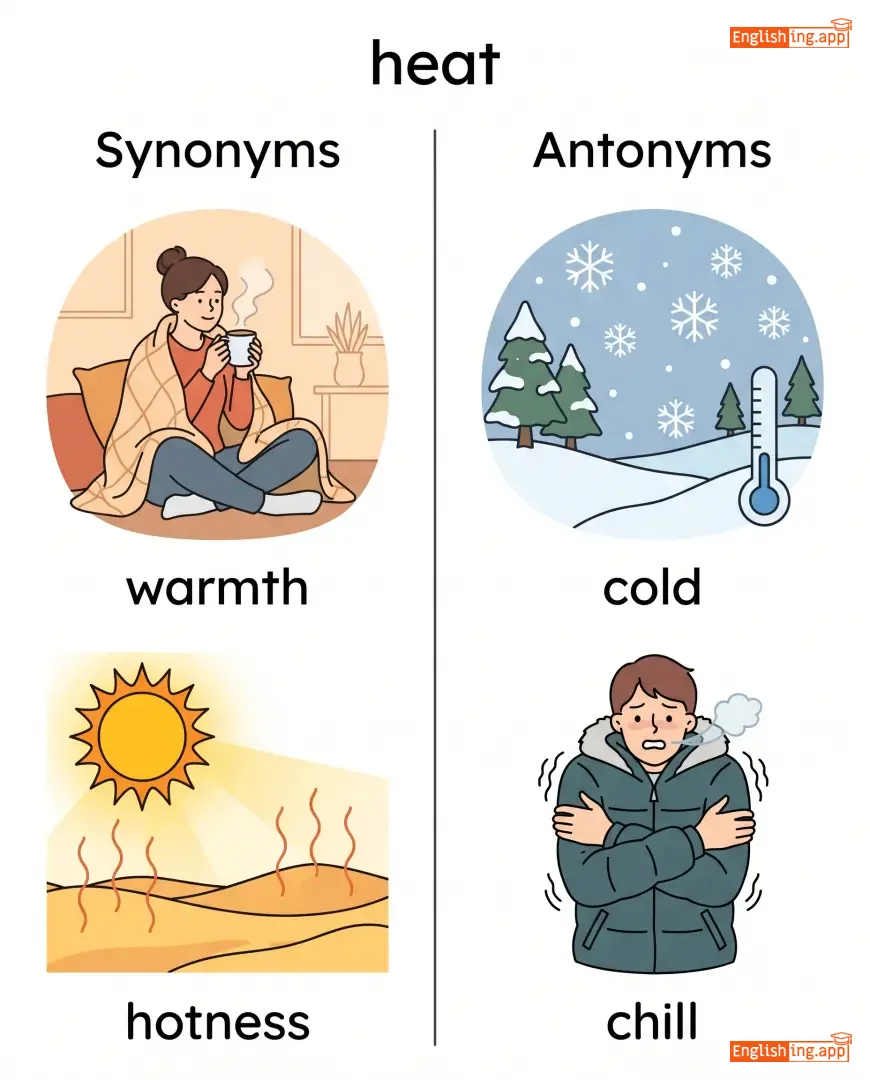
warmth, hotness, fire, passion, energy
••••••
|
cold, chill
••••••
|
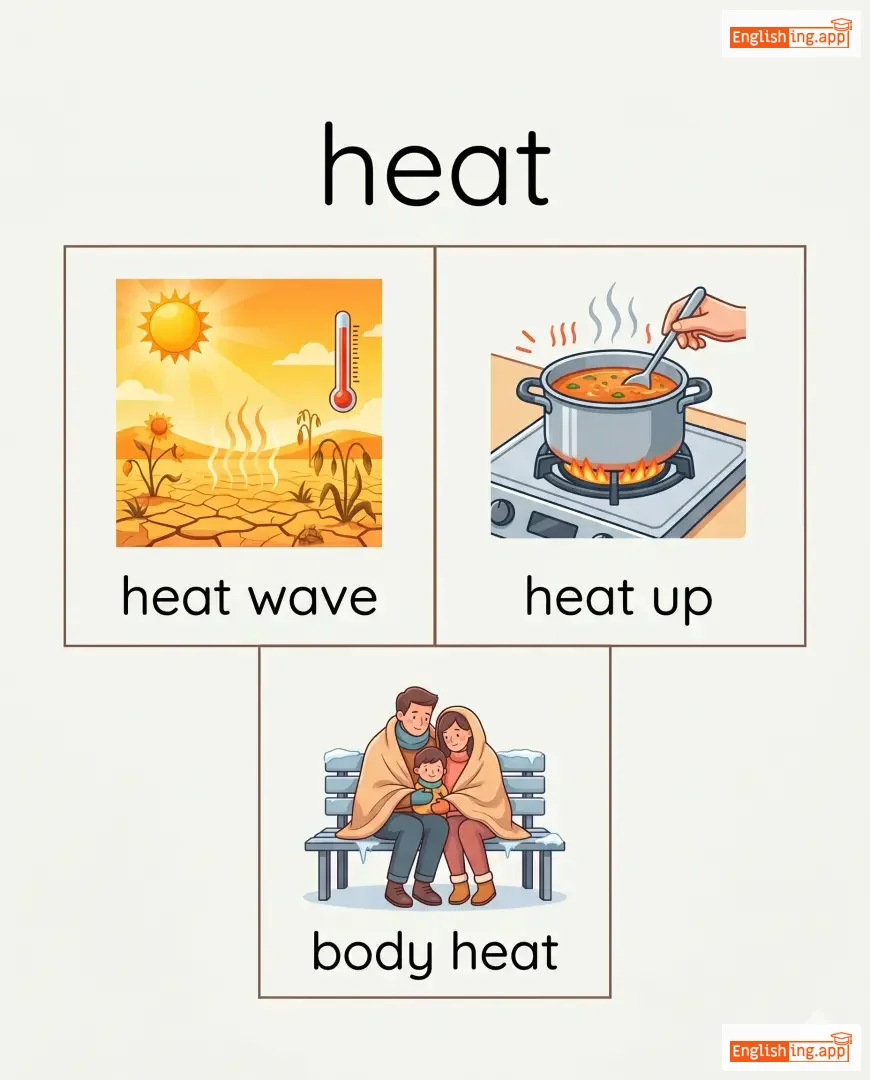
heat wave, heat up, body heat, generate heat
••••••
|
Heat как огненная жара 🔥 – разогревает всё вокруг!
••••••
|
|
#11140
½
|
/hæf/
noun, adjective
(хэлф)
••••••
|
- •••••• |
половина
polovina
••••••
|
- •••••• | - •••••• | - •••••• | - •••••• |
one of two equal parts of something
••••••
|
He ate half of the cake. |
Он съел половину торта.
On syel polovinu torta.
••••••
|
half-hearted |
without much effort or enthusiasm
••••••
|
половинчатый
polovinchatiy
••••••
|
portion, part, piece, division
••••••
|
whole, complete
••••••
|
half price, half hour, half life, half way
••••••
|
Half это половина, представь, что ты делишь торт, половина = half
••••••
|
|
#11141
👂
|
/ˈhɪərɪŋ/
noun
(хи-рин)
••••••
|
- •••••• |
слушание / слух
slushanie / slukh
••••••
|
- •••••• | - •••••• | - •••••• | - •••••• |
the ability to perceive sounds or an official meeting to listen to arguments or evidence
••••••
|
The judge scheduled a hearing for next week. |
Судья назначил слушание на следующую неделю.
Sudya naznachil slushanie na sleduyushchuyu nedelyu.
••••••
|
hard of hearing |
having partial hearing loss
••••••
|
частичная потеря слуха
chastichnaya poterya slukha
••••••
|
listening, audition, perception, trial, meeting
••••••
|
deafness, silence
••••••
|
court hearing, public hearing, hearing aid, hearing loss
••••••
|
Hearing означает слушание — в суде проходят слушания, а слух осуществляют с помощью ушей 👂
••••••
|
|
#11142
👂
|
/hɪr/
verb
(khir)
••••••
|
|
слышать
slyshat
••••••
|
heard
khard
••••••
|
heard
khard
••••••
|
hears
khirs
••••••
|
hearing
kheering
••••••
|
To perceive sound with the ear.
••••••
|
I can hear birds singing outside.
Ya mogu uslyshat ptits pesnyu na ulitse.
••••••
|
Я могу слышать птиц, поющих на улице.
Ya mogu slyshat' ptits, poyushchikh na ulitse.
••••••
|
hear from someone
uslyshat ot kogo-to
••••••
|
to receive news or communication from someone
••••••
|
слышать от кого-то
slyshat' ot kogo-to
••••••
|
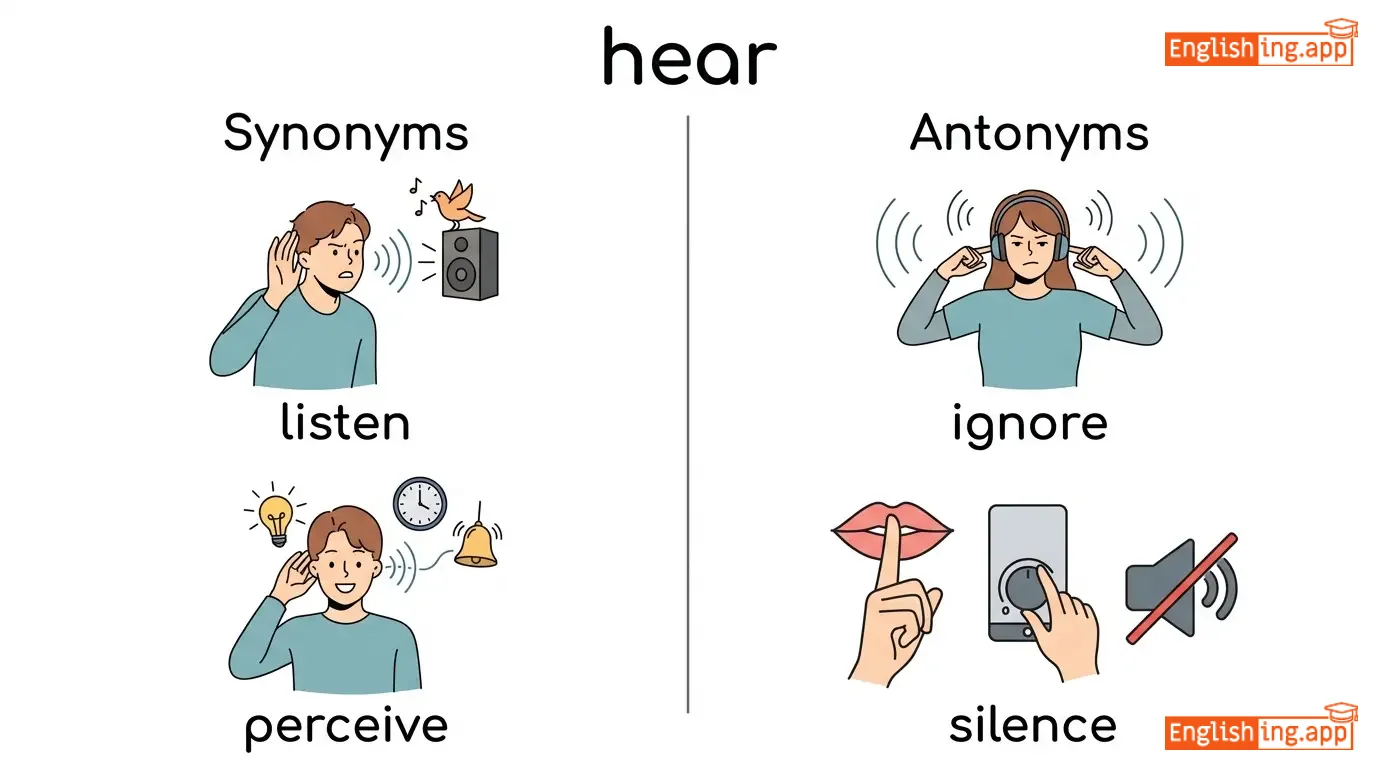
listen, perceive, detect, notice, overhear
••••••
|
ignore, silence
••••••
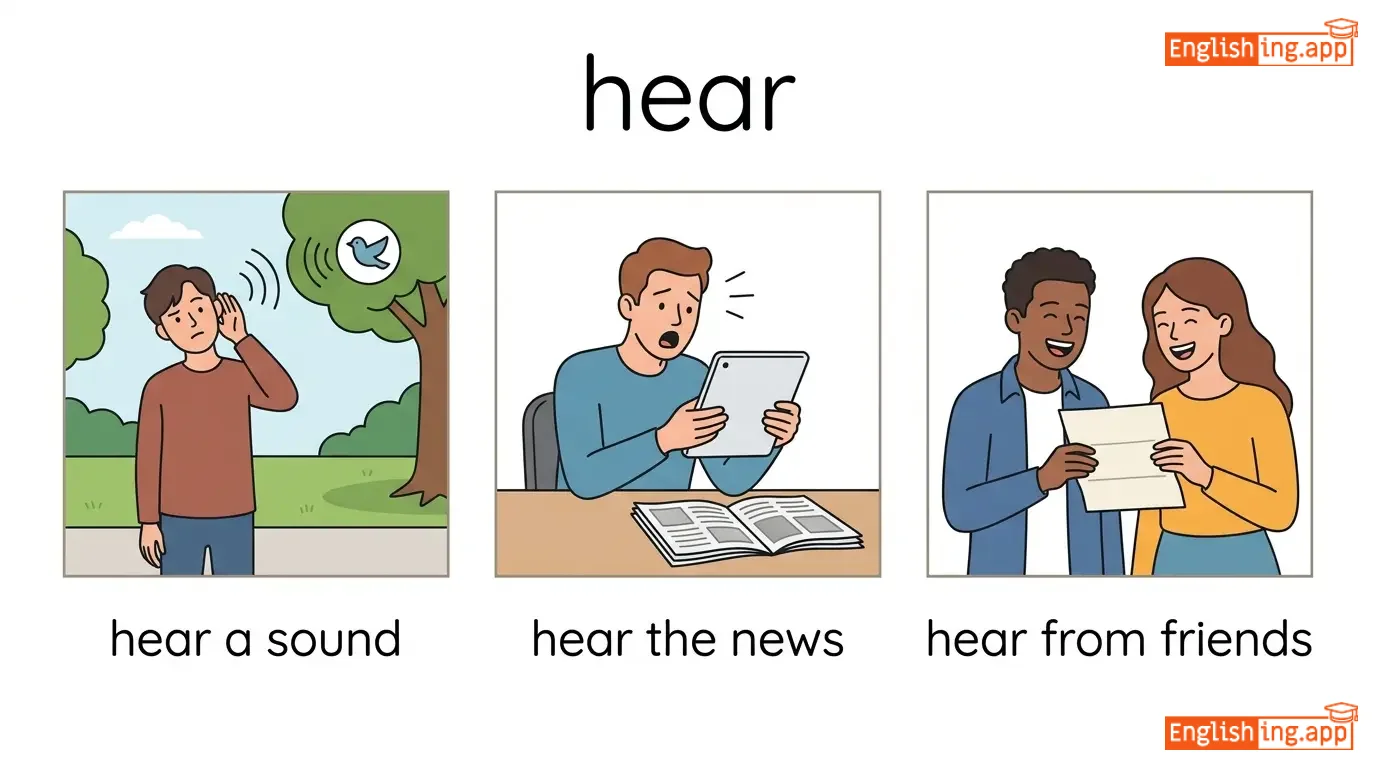
|
hear a sound, hear the news, hear from friends, hear clearly
••••••
|
Слышать значит воспринимать звук ухом.
••••••
|
|
#11143
💪
|
/hɛlθ/
noun
(хелс)
••••••
|
- •••••• |
здоровье
zdorovye
••••••
|
- •••••• | - •••••• | - •••••• | - •••••• |
The state of being free from illness or injury.
••••••
|
Exercise is important for good health. |
Физические упражнения важны для хорошего здоровья.
Fizicheskie uprazhneniya vazhny dlya khoroshego zdorov'ya.
••••••
|
in good health |
being healthy
••••••
|
в хорошем здоровье
v khoroshem zdorov'ye
••••••
|
wellness, fitness, condition, wellbeing
••••••
|
illness, sickness, disease
••••••
|
good health, health care, public health, mental health
••••••
|
Health означает здоровье, здоровье - ключ к счастью.
••••••
|
|
#11144
🏢
|
/ˈhɛdˌkwɔːrtərz/
noun
(хэдквартэрз)
••••••
|
- •••••• |
главный офис
glavnyy ofis
••••••
|
- •••••• | - •••••• | - •••••• | - •••••• |
The main office or center of operations of an organization.
••••••
|
The company’s headquarters is located in New York. |
Главный офис компании находится в Нью-Йорке.
Glavnyy ofis kompanii nakhoditsya v N'yu-Yorke.
••••••
|
- •••••• | - •••••• | - •••••• |
main office, center, base, hub, command post
••••••
|
branch, outpost
••••••
|
corporate headquarters, police headquarters, company headquarters, military headquarters
••••••
|
Headquarters = head + quarters → главный офис, основное место работы.
••••••
|
|
#11145
📰
|
/ˈhɛdˌlaɪn/
noun
(хэдлайн)
••••••
|
- •••••• |
заголовок
zagolovok
••••••
|
- •••••• | - •••••• | - •••••• | - •••••• |
The title of a newspaper article printed in large letters.
••••••
|
The scandal made front-page headlines.
Этот скандал стал главной новостью.
••••••
|
Этот скандал стал заголовком первой страницы.
Etot skandal stal zagolovkom pervoy stranitsy.
••••••
|
grab the headlines
попасть в заголовки
••••••
|
to attract public attention
••••••
|
привлечь внимание общественности
privlech' vnimanie obshchestvennosti
••••••
|
title, heading, banner, caption, news
••••••
|
detail, footnote
••••••
|
front-page headline, news headline, headline story, write a headline
••••••
|
Заголовок = строка на главной странице = заголовок.
••••••
|
|
#11146
👤
|
/hɛd/
noun, verb
(голова)
••••••
|
- •••••• |
голова / глава
golova / glava
••••••
|
headed
возглавил
••••••
|
headed
возглавил
••••••
|
heads
возглавляет
••••••
|
heading
возглавляя
••••••
|
The upper part of the human body or to lead or be in charge of something.
••••••
|
She turned her head to look out the window.
Она повернула голову, чтобы посмотреть в окно.
••••••
|
Она повернула голову, чтобы посмотреть в окно.
Ona povernula golovu, chtoby posmotret' v okno.
••••••
|
head over heels
по уши влюблен
••••••
|
completely in love
••••••
|
по уши влюблен
po ushi vlyublen
••••••
|
chief, leader, boss, director, skull
••••••
|
follower, subordinate
••••••
|
head of department, head office, head a team, shake your head
••••••
|
Голова означает голову, и по уши влюблен означает быть полностью влюбленным.
••••••
|
|
#11147
👨
|
/hiː/
pronoun
(хи)
••••••
|
- •••••• |
он (мужской род)
on (muzhskoy rod)
••••••
|
- •••••• | - •••••• | - •••••• | - •••••• |
used to refer to a male person or animal already mentioned or easily identified
••••••
|
He is my best friend. |
Он мой лучший друг.
On moy luchshiy drug.
••••••
|
- •••••• | - •••••• | - •••••• |
the man, that person, him
••••••
|
she, her
••••••
|
he said, he was, he went, he did
••••••
|
He означает он (мужской род), как HE-ro (Герой), который обычно мужской.
••••••
|
|
#11148
👒
|
/hæt/
noun
(хэт)
••••••
|
- •••••• |
шляпа
shlyapa
••••••
|
- •••••• | - •••••• | - •••••• | - •••••• |
a shaped covering for the head, often with a brim
••••••
|
He wore a black hat to the party. |
Он надел черную шляпу на вечеринку.
On nadel chernuyu shlyapu na vecherinku.
••••••
|
to wear many hats |
to have many roles or responsibilities
••••••
|
иметь много ролей или обязанностей
imet' mnogo roley ili obyazannostey
••••••
|
cap, headgear, helmet, bonnet
••••••
|
barehead
••••••
|
wear a hat, take off hat, straw hat, cowboy hat
••••••
|
Hat - это шляпа, которая носится на голове.
••••••
|
|
#11149
😯
|
/ˈhɑːrdli/
adverb
(харли)
••••••
|
- •••••• |
едва
yedva
••••••
|
- •••••• | - •••••• | - •••••• | - •••••• |
almost not; scarcely
••••••
|
She could hardly believe her eyes.
Она едва могла поверить своим глазам.
••••••
|
Она едва могла поверить своим глазам.
Ona yedva mogla poverit' svoim glazam.
••••••
|
- •••••• | - •••••• | - •••••• |
barely, scarcely, rarely, seldom, infrequently
••••••
|
easily, certainly, often
••••••
|
hardly ever, hardly any, hardly noticeable, hardly believe
••••••
|
HARDly по-русски означает 'едва', как если бы что-то едва возможно.
••••••
|
|
#11150
✨
|
/ˈhæpən/
verb
(хэпэн)
••••••
|
- •••••• |
случаться
sluchatsya
••••••
|
happened
хэпэнд
••••••
|
happened
хэпэнд
••••••
|
happens
хэпэнс
••••••
|
happening
хэпэнинг
••••••
|
to take place or occur, usually by chance
••••••
|
Accidents can happen at any time.
Аварии могут произойти в любое время.
••••••
|
Аварии могут случиться в любое время.
Avarii mogut sluchitsya v lyuboye vremya.
••••••
|
what happens, happens
что происходит, то происходит
••••••
|
an expression used to accept events as they occur without worry
••••••
|
что происходит, то происходит
chto proiskhodit, to proiskhodit
••••••
|
occur, take place, transpire, arise, ensue
••••••
|
prevent, stop, avoid
••••••
|
happen suddenly, happen accidentally, happen again, happen quickly
••••••
|
HAPPEN означает что-то, что может произойти неожиданно, как несчастный случай.
••••••
|
|
#11151
🖼️
|
/hæŋ/
verb
••••••
|
|
- •••••• |
hung
••••••
|
hung
••••••
|
hangs
••••••
|
hanging
••••••
|
to suspend or attach something from above so that it moves freely or is supported
••••••
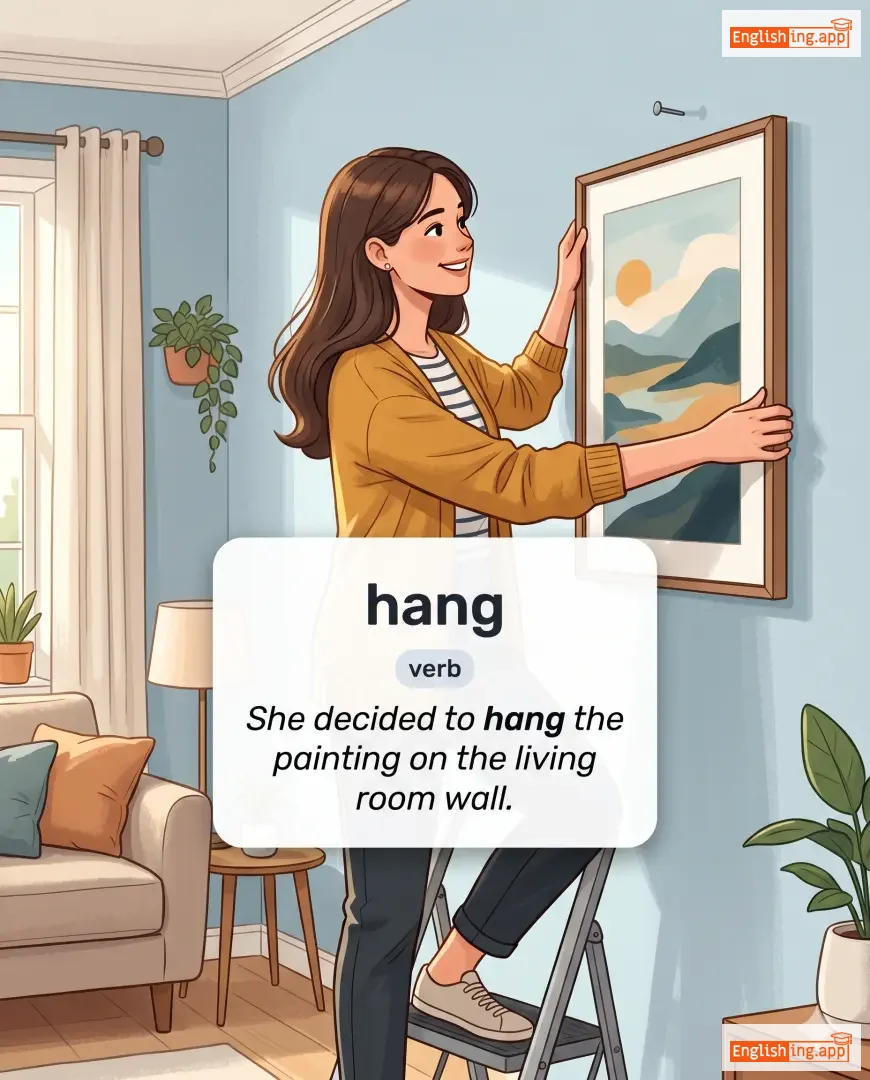
|
She decided to hang the painting on the living room wall. |
- •••••• |
hang in there |
used to encourage someone to persevere through a difficult time
••••••
|
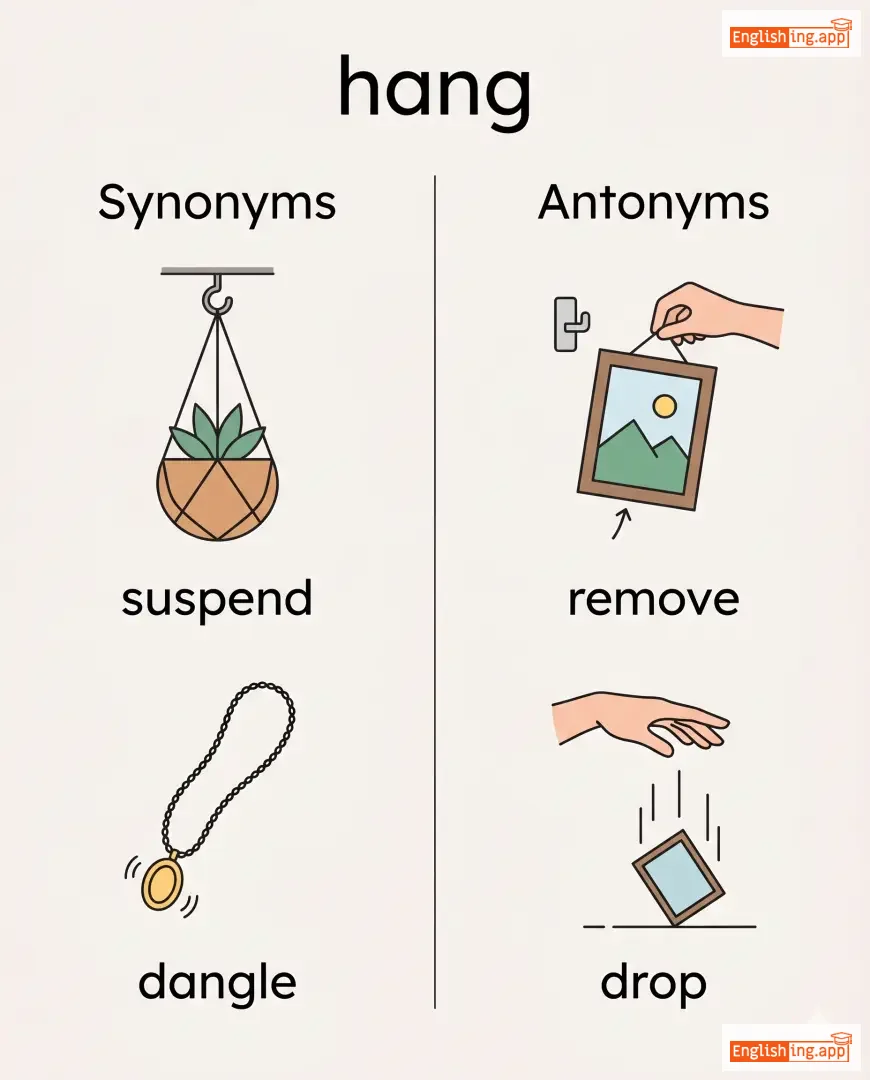
- •••••• |
suspend, dangle, attach, display, drape
••••••
|
remove, drop, take down
••••••
|
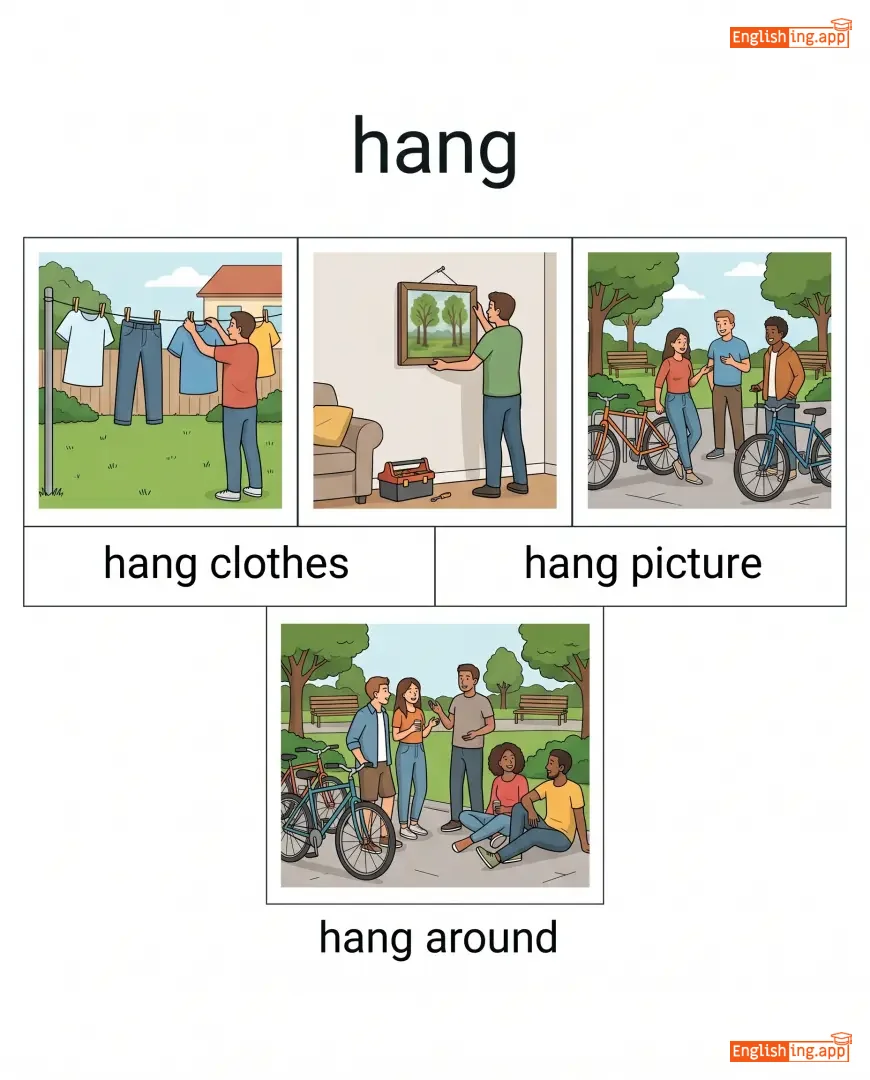
hang clothes, hang picture, hang around, hang up
••••••
|
No •••••• |
|
#11152
🪟
|
/ˈhændl̩/
noun, verb
(хэндл)
••••••
|
|
рукоятка / справляться
rukoyatka / spravlyatsya
••••••
|
handled
хэндлд
••••••
|
handled
хэндлд
••••••
|
handles
хэндлс
••••••
|
handling
хэндлинг
••••••
|
the part of an object designed to be held in the hand; to deal with or manage a situation
••••••
|
He could not handle the pressure of the job.
Он не смог справиться с давлением на работе.
••••••
|
Он не смог справиться с давлением на работе.
On ne smog spravitsya s davleniem na rabote.
••••••
|
fly off the handle
выходить из себя
••••••
|
to suddenly become very angry
••••••
|
вспыхнуть от злости
vspykhnut' ot zlosti
••••••
|
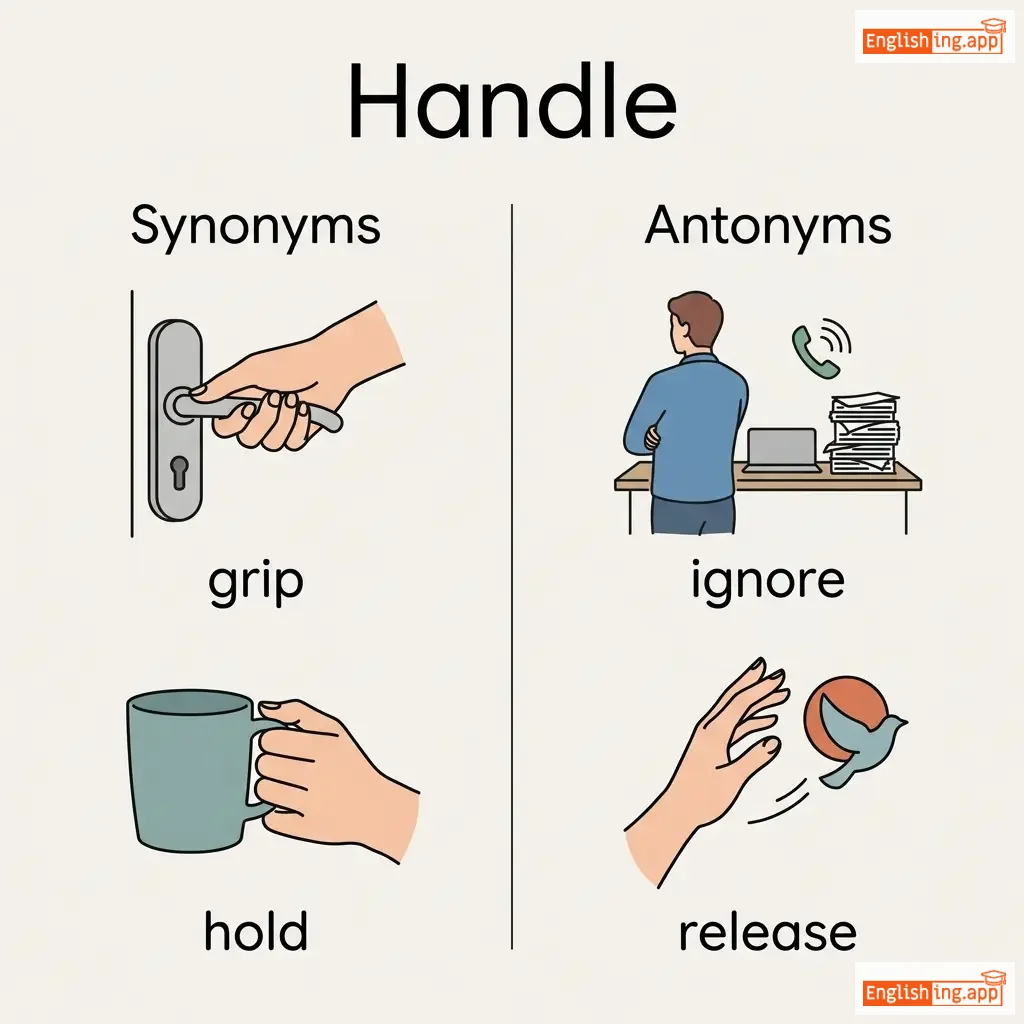
grip, hold, control, manage
••••••
|
ignore, release
••••••
|
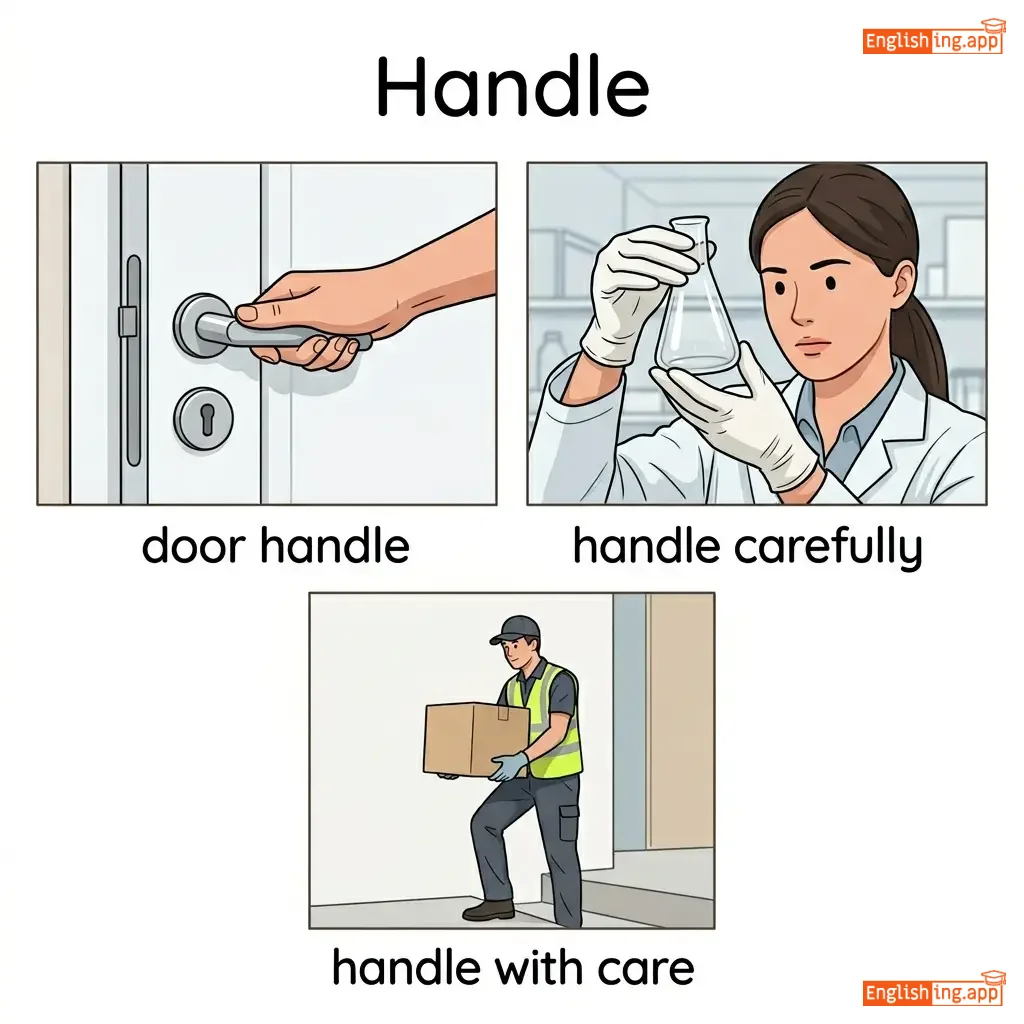
door handle, handle carefully, handle with care
••••••
|
Rukoyatka - вспоминайте, что вы держите рукоятку для управления
••••••
|
|
#11153
✋
|
/ˈhænd.fʊl/
noun
(хэндфул)
••••••
|
- •••••• |
горсть
gorst'
••••••
|
- •••••• | - •••••• | - •••••• | - •••••• |
the amount of something that can be held in one hand; a small number
••••••
|
She took a handful of nuts. |
Она взяла горсть орехов.
Ona vzyala gorst' orekhov.
••••••
|
a handful |
a small number of people or things; someone difficult to manage
••••••
|
небольшое количество людей или вещей; кого-то трудно контролировать
nebol'shoe kolichestvo lyudei ili veshchei; kogo-to trudno kontrolirovat'
••••••
|
few, small amount, little, portion
••••••
|
many, plenty
••••••
|
a handful of, only a handful, just a handful
••••••
|
горсть в руке, легко запомнить
••••••
|
|
#11154
🤚
|
/hænd/
noun, verb
(хэнд)
••••••
|
- •••••• |
рука
ruka
••••••
|
handed
хэндед
••••••
|
handed
хэндед
••••••
|
hands
хэндс
••••••
|
handing
хэндɪнг
••••••
|
the part of the body at the end of the arm used for holding things
••••••
|
She raised her hand to ask a question.
ши рэйзд хер хэнд ту аск э квесчн.
••••••
|
Она подняла руку, чтобы задать вопрос.
Ona podnyala ruku, chtoby zadat' vopros.
••••••
|
in safe hands
ин сейф хэндс
••••••
|
being looked after by someone competent and reliable
••••••
|
в надежных руках
v nadezhnykh rukakh
••••••
|
palm, fist, grip, hold
••••••
|
foot, neglect
••••••
|
shake hands, hand in, hand out, raise hand
••••••
|
‘Ruka’ на русском – значит рука на английском, держите вещи в руке!
••••••
|
Vocabulary Quiz
Test your vocabulary by matching words with their translations or meanings.
Login to take the quiz
Comments (0)
Share your thoughts and join the discussion.
Join the discussion by logging in
Login to CommentNo comments yet
Be the first to share your thoughts!