

Обновитесь для доступа ко всему словарю
Получите неограниченный доступ ко всем словам с подпиской Pro
Обновить до ProПеревод
Прошедшее
Причастие прошедшего времени
Третье лицо единственного числа
Герундий
Значение
Пример предложения
Перевод примера предложения
Синонимы
Антонимы
Коллокации
Мнемоника



Swipe left or right, or use the buttons. Tap image to zoom.
Обновитесь для доступа ко всем предложениям
Получите неограниченный доступ ко всем предложениям с подпиской Pro
Обновить до ProПеревод примера предложения
Слово
Lesson 414Lesson 414 - Переключатель маски
|
Эмодзи
|
Слово | Images | Перевод | Прошедшее | Причастие прошедшего времени | Третье лицо единственного числа | Герундий | Значение | Пример предложения | Перевод примера предложения | Пример выражения | Значение примера выражения | Перевод примера выражения | Синонимы | Антонимы | Коллокации | Мнемоника |
|---|---|---|---|---|---|---|---|---|---|---|---|---|---|---|---|---|---|
|
#1
👍
|
/əkˈsɛptəbəl/
adjective
(akseptabel)
••••••
|
- •••••• |
приемлемый
priemliemy
••••••
|
- •••••• | - •••••• | - •••••• | - •••••• |
able to be agreed upon; satisfactory or suitable
••••••
|
Your proposal is acceptable to the committee. |
Ваше предложение приемлемо для комитета.
Vashe predlozhenie priyemlemo dlya komiteta.
••••••
|
socially acceptable |
considered appropriate by society
••••••
|
социально приемлемый
sotsial'no priyemlemyi
••••••
|
satisfactory, adequate, tolerable, suitable, agreeable
••••••
|
unacceptable, unsuitable, improper
••••••
|
acceptable level, acceptable standard, acceptable behavior, socially acceptable
••••••
|
Acceptable означает то, что можно принять, легко запомнить.
••••••
|
|
#1
💬
|
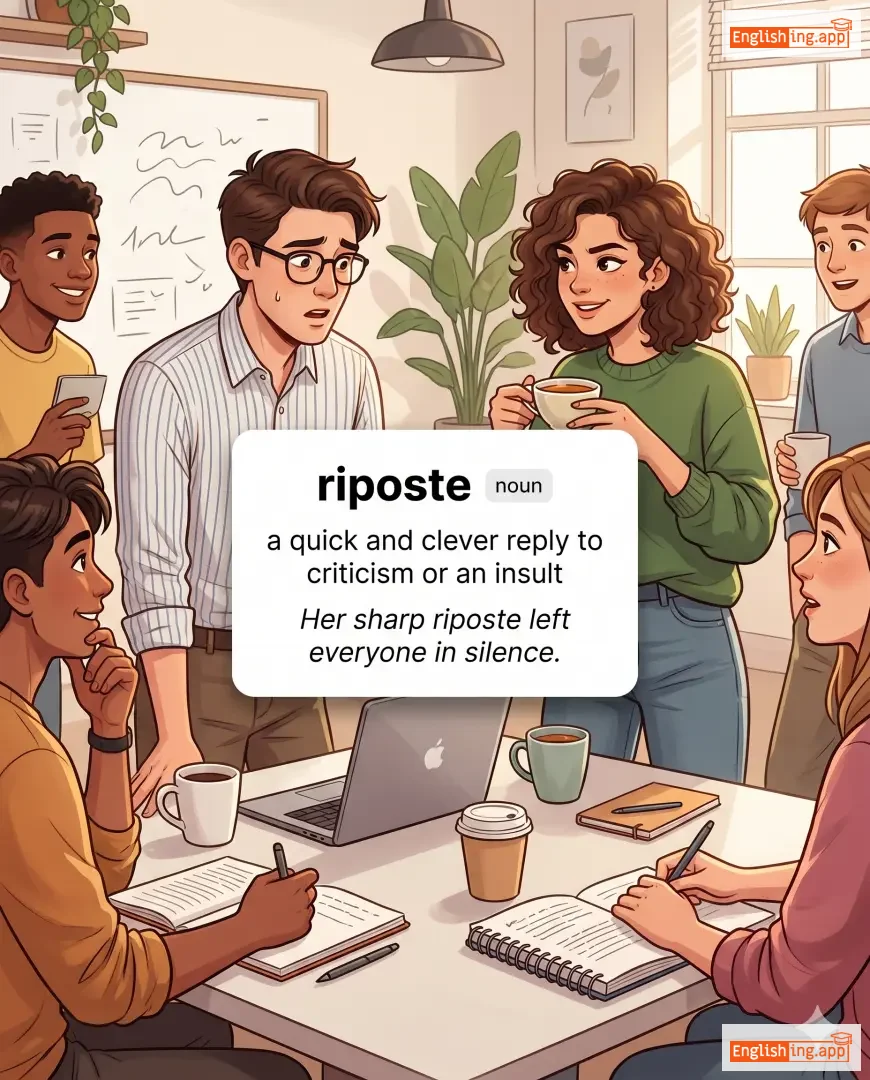
/rɪˈpoʊst/
noun
(рɪˈпоʊст)
••••••
|
|
острая реплика
ostrya replika
••••••
|
- •••••• | - •••••• | - •••••• | - •••••• |
a quick and clever reply to criticism or an insult
••••••
|
Her sharp riposte left everyone in silence. |
Ее острая реплика оставила всех в молчании.
Eyo ostryaya replika ostavila vsekh v molchanii.
••••••
|
- •••••• | - •••••• | - •••••• |
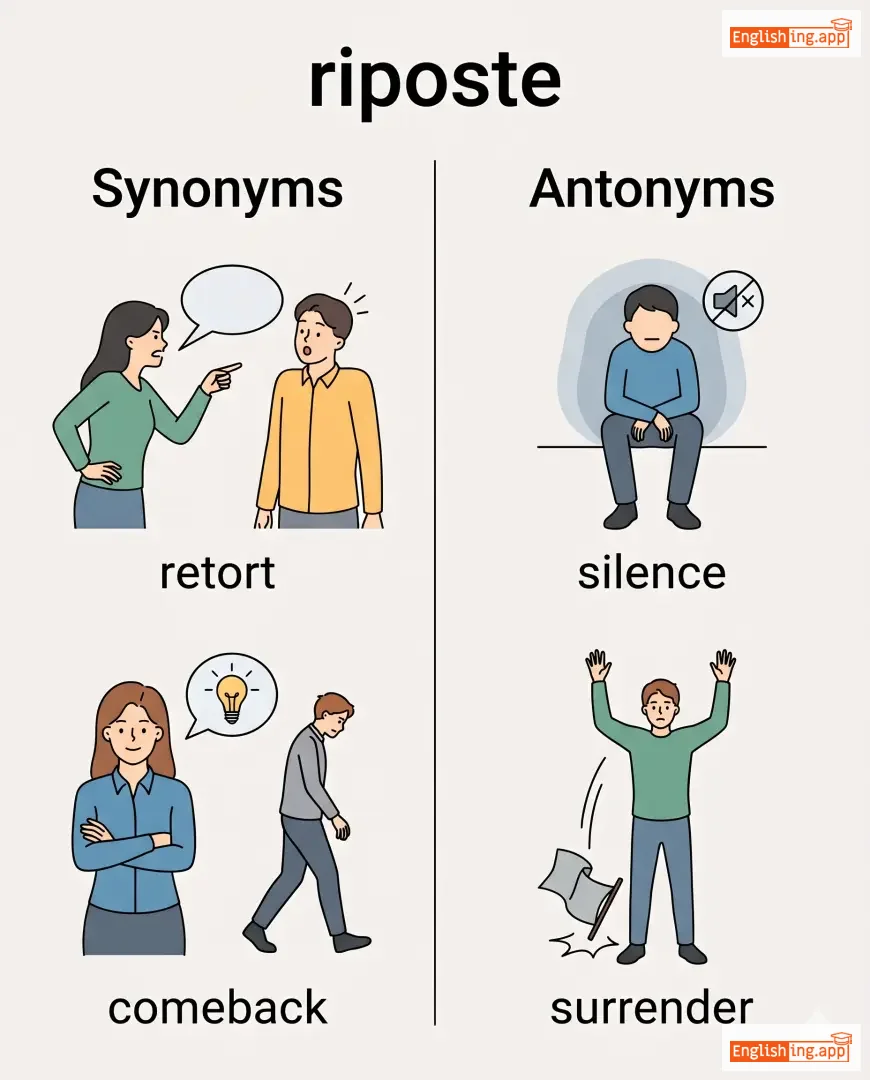
retort, comeback, reply, rejoinder, counter
••••••
|
silence, surrender
••••••
|
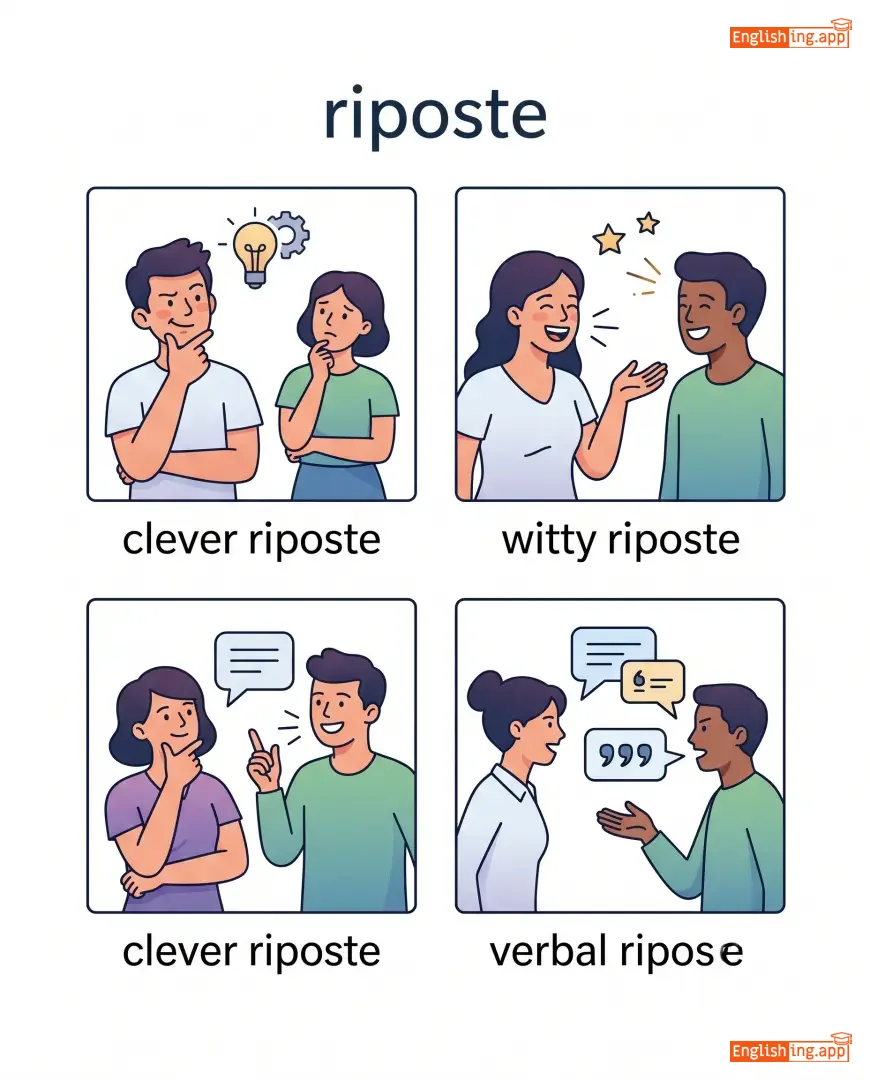
clever riposte, witty riposte, verbal riposte, quick riposte
••••••
|
Reply + post = riposte значит остроумный ответ 💬
••••••
|
|
#1
🌦️
|
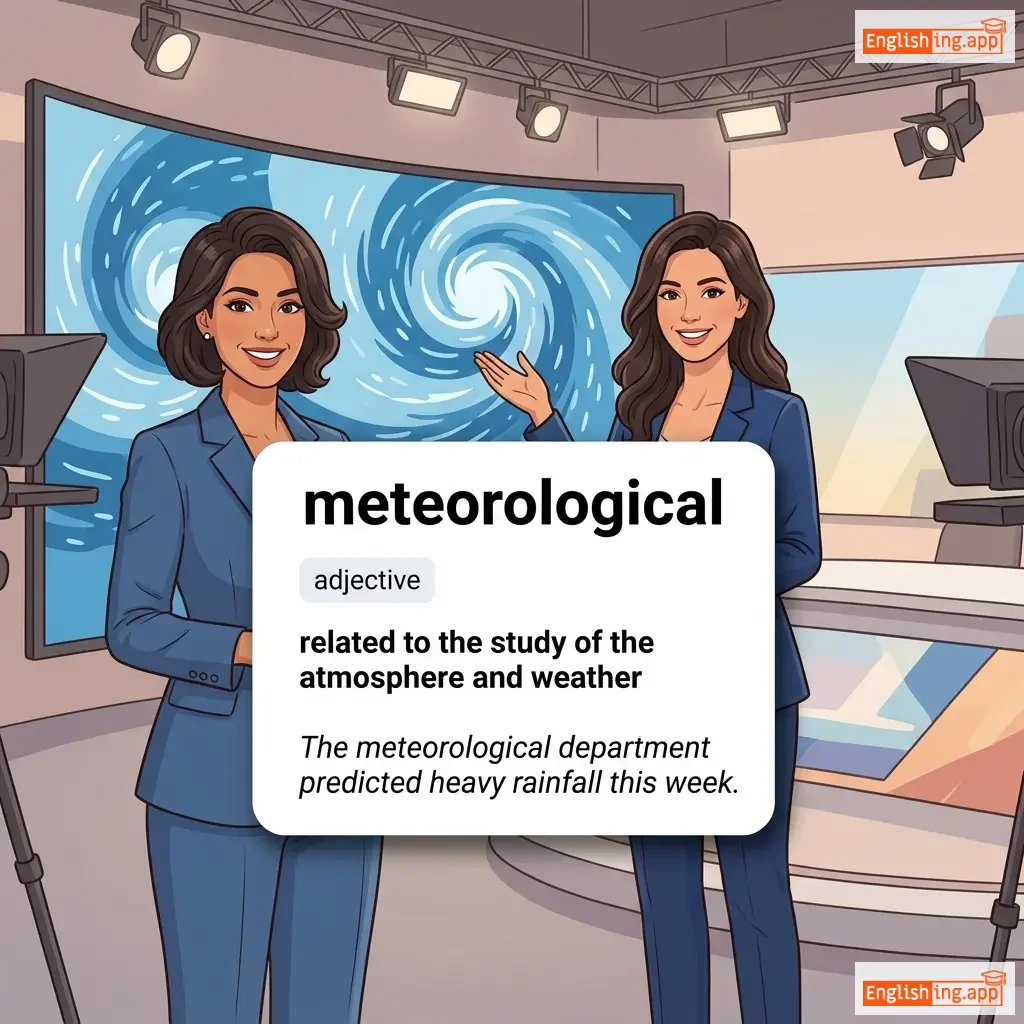
/ˌmiː.ti.ə.rəˈlɒ.dʒɪ.kəl/
adjective
(метеорологический)
••••••
|
|
метеорологический
meteorologicheskiy
••••••
|
- •••••• | - •••••• | - •••••• | - •••••• |
related to the study of the atmosphere and weather
••••••
|
The meteorological department predicted heavy rainfall this week. |
Метеорологический департамент предсказал сильные дожди на этой неделе.
Meteorologicheskiy departament predskazal silnye dozhdi na etoy nedele.
••••••
|
- •••••• | - •••••• | - •••••• |
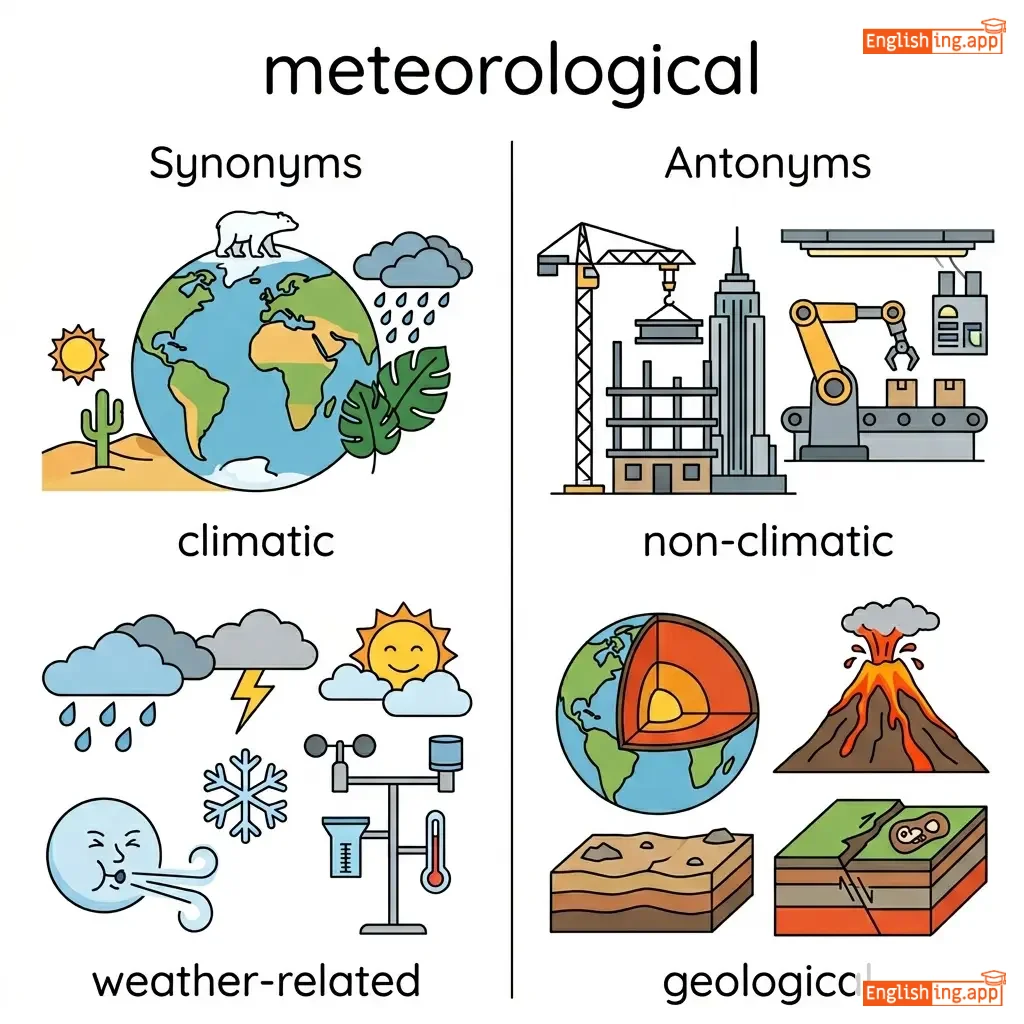
climatic, weather-related, atmospheric
••••••
|
non-climatic, geological
••••••
|
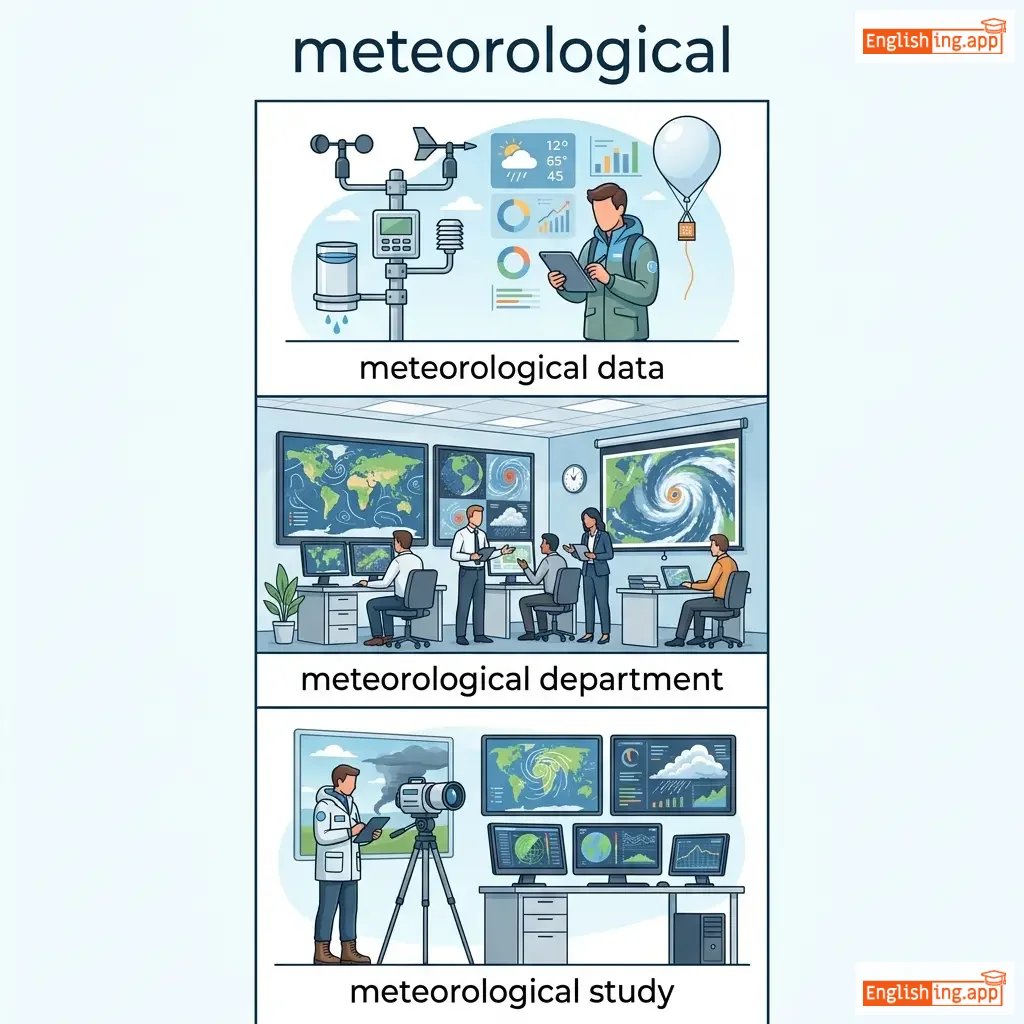
meteorological data, meteorological department, meteorological study, meteorological report
••••••
|
Метеорологический от 'метеор', связан с погодой 🌦️
••••••
|
|
#1
📚
|
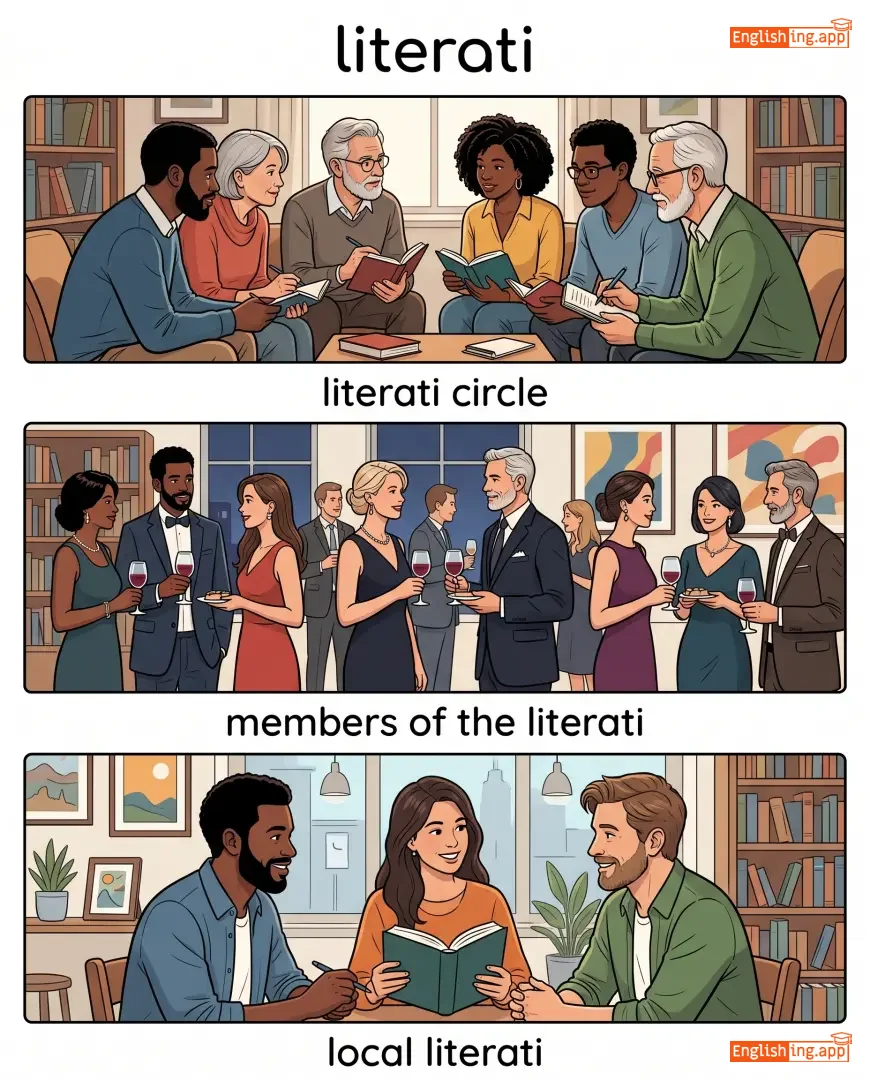
/ˌlɪt.əˈrɑː.ti/
noun
(литерати)
••••••
|
|
литераторы
literatory
••••••
|
- •••••• | - •••••• | - •••••• | - •••••• |
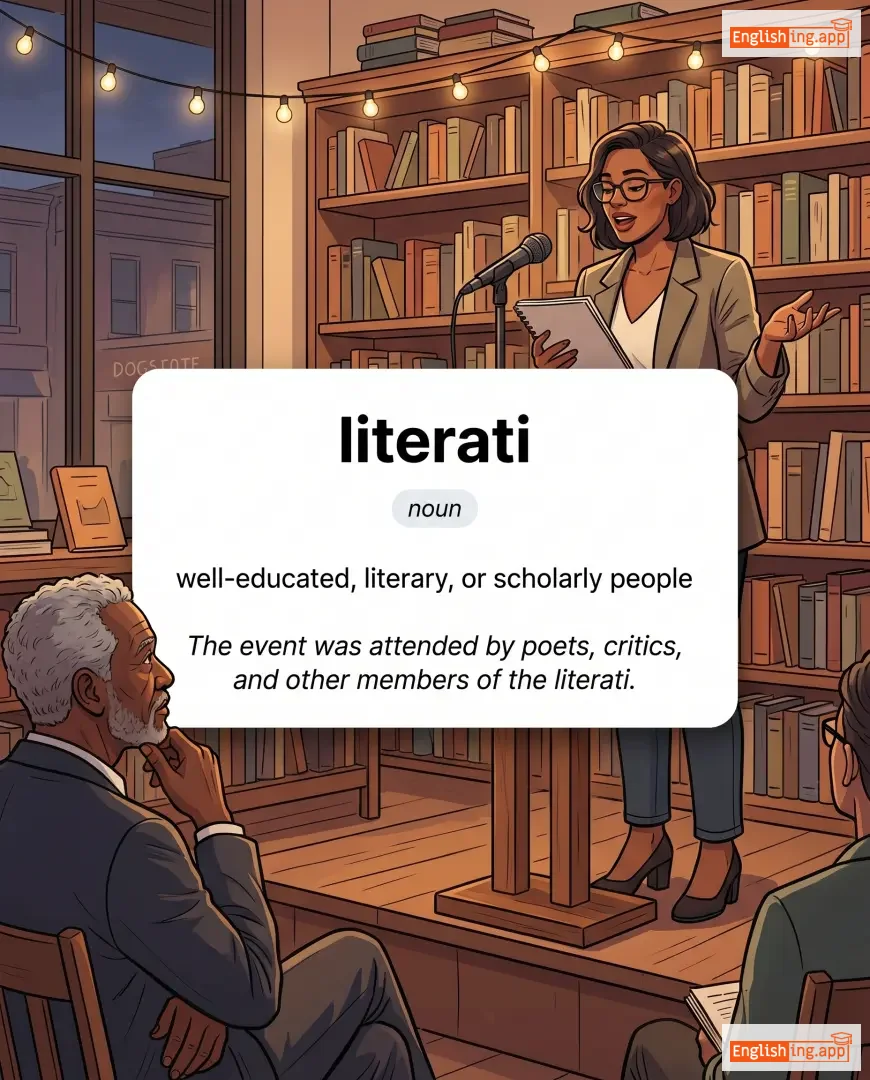
well-educated, literary, or scholarly people
••••••
|
The event was attended by poets, critics, and other members of the literati. |
Мероприятие было посещено поэтами, критиками и другими членами литературного круга.
Meropriyatie bylo poseshcheno poetami, kritikami i drugimi chlenami literaturnogo kruga.
••••••
|
- •••••• | - •••••• | - •••••• |
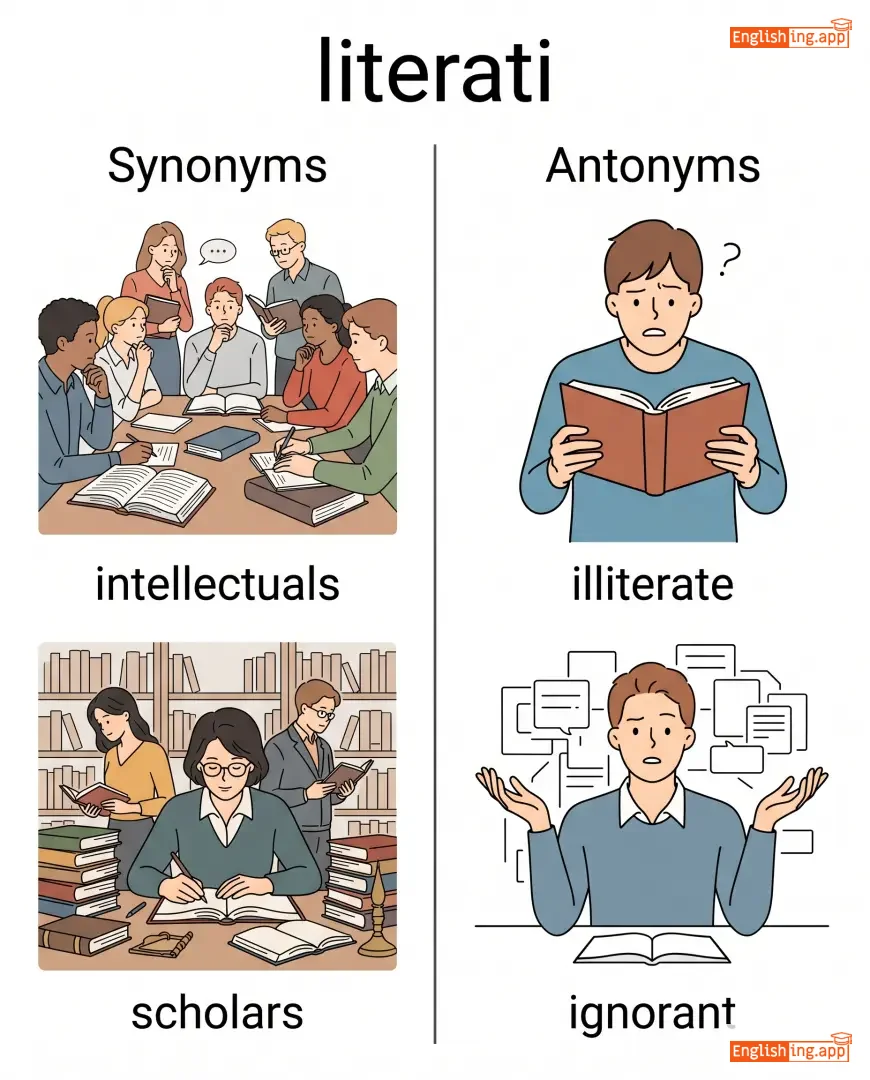
intellectuals, scholars, academics, writers, thinkers
••••••
|
illiterate, ignorant
••••••
|
literati circle, members of the literati, local literati, literary community
••••••
|
Литература = Литераторы 📚
••••••
|
|
#1
🔤
|
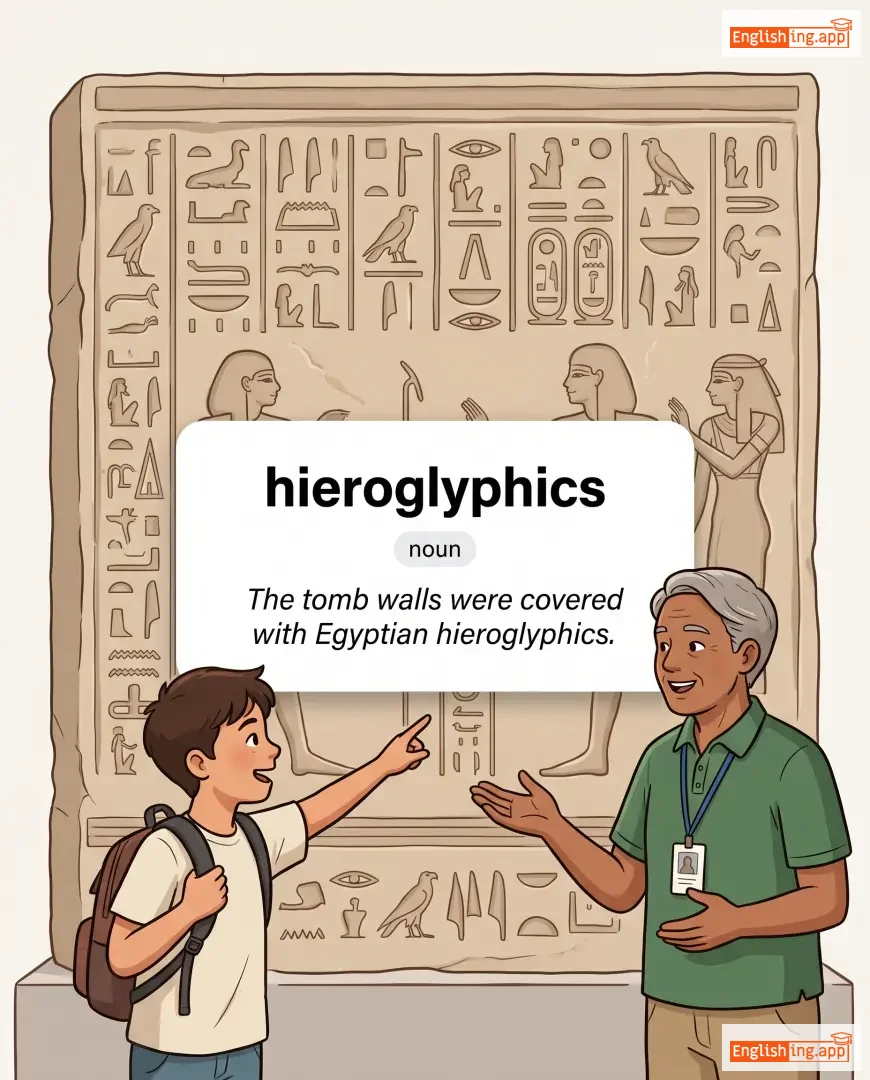
/ˌhaɪ.roʊˈɡlɪf.ɪks/
noun
(хай·ро·глиф·икс)
••••••
|
|
иероглифы
ieroglify
••••••
|
- •••••• | - •••••• | - •••••• | - •••••• |
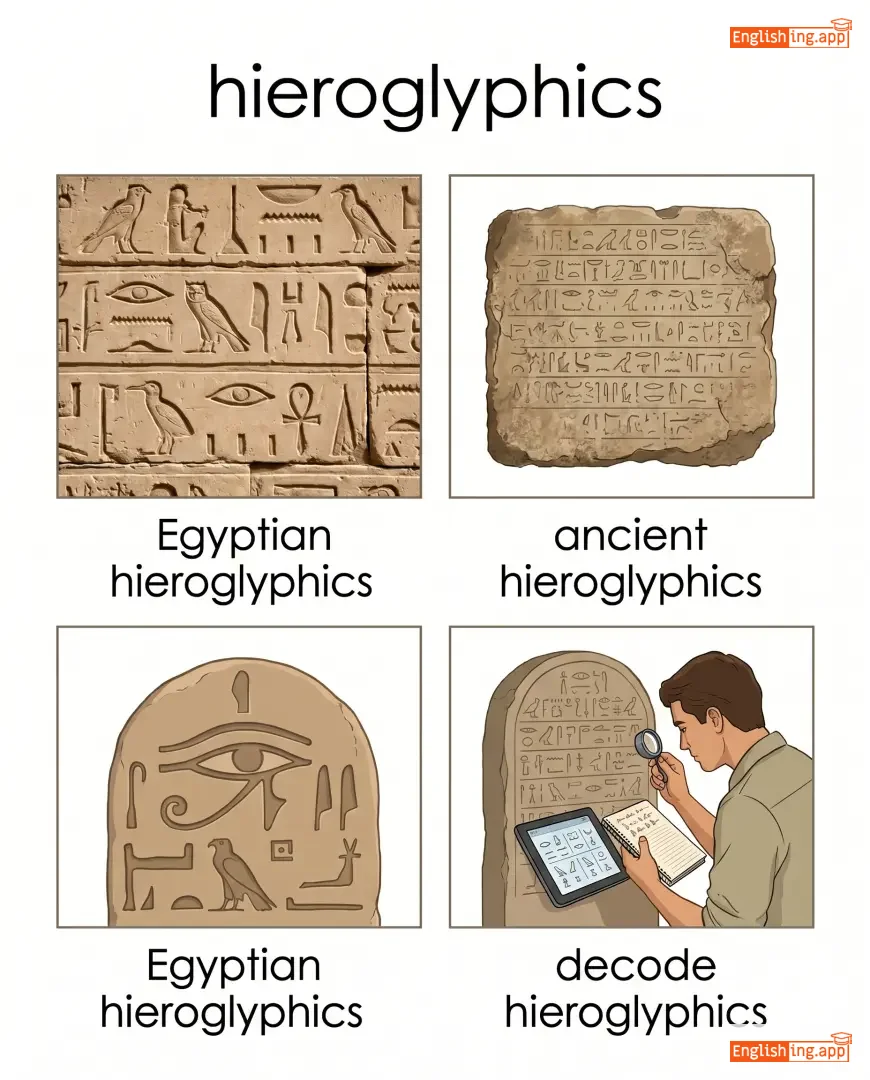
a system of writing using pictures or symbols, used especially by ancient Egyptians
••••••
|
The tomb walls were covered with Egyptian hieroglyphics. |
Стены гробницы были покрыты египетскими иероглифами.
Steny grobnitsy byli pokryty egipetskymi ieroglifami.
••••••
|
- •••••• | - •••••• | - •••••• |
pictograph, symbol, script, glyph
••••••
|
alphabet, plain text
••••••
|
Egyptian hieroglyphics, ancient hieroglyphics, decode hieroglyphics, hieroglyphic writing
••••••
|
Hieroglyphics, как 'high graphics', но для древних египтян 🔤
••••••
|
|
#1
🧠
|
/juːˈdʒen.ɪks/
noun
(югеникс)
••••••
|
|
евгеника
evgenika
••••••
|
- •••••• | - •••••• | - •••••• | - •••••• |
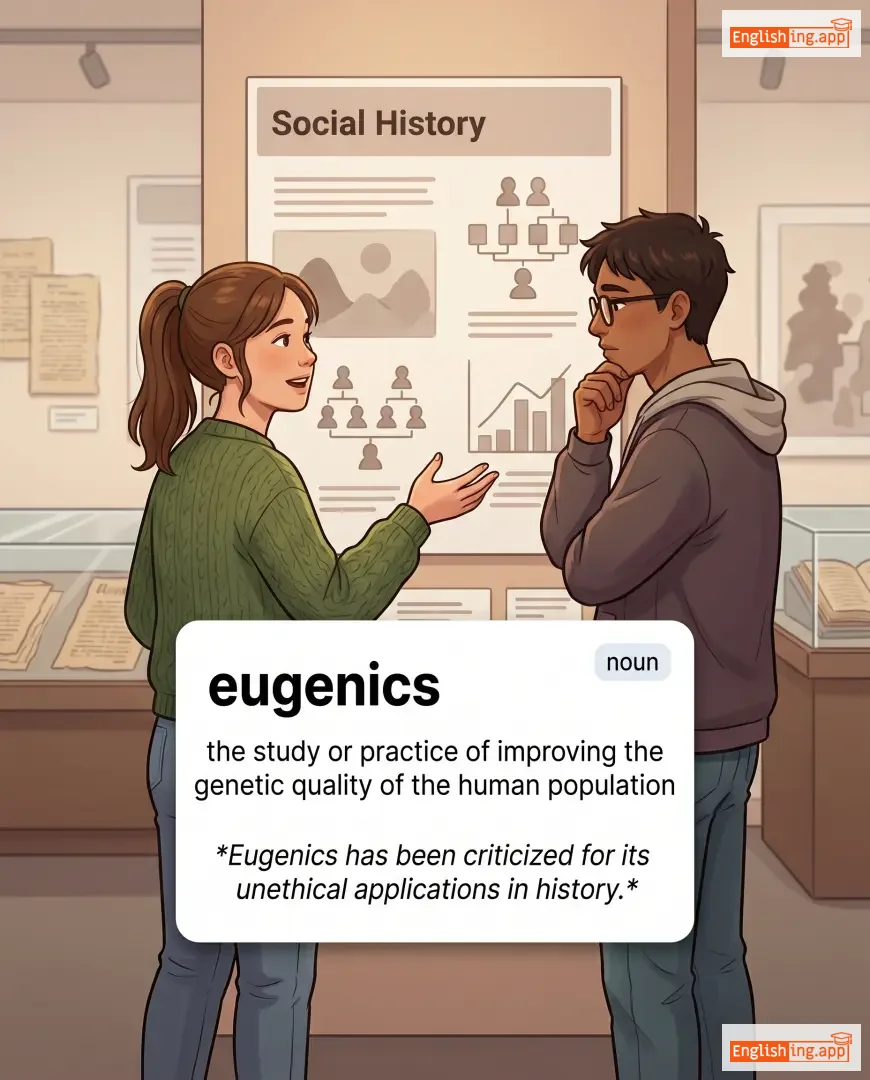
the study or practice of improving the genetic quality of the human population
••••••
|
Eugenics has been criticized for its unethical applications in history. |
Евгеника была подвергнута критике за свои неэтичные применения в истории.
Yevgenika byla podvergnuta kritike za svoi neetichnye primeneniya v istorii.
••••••
|
- •••••• | - •••••• | - •••••• |
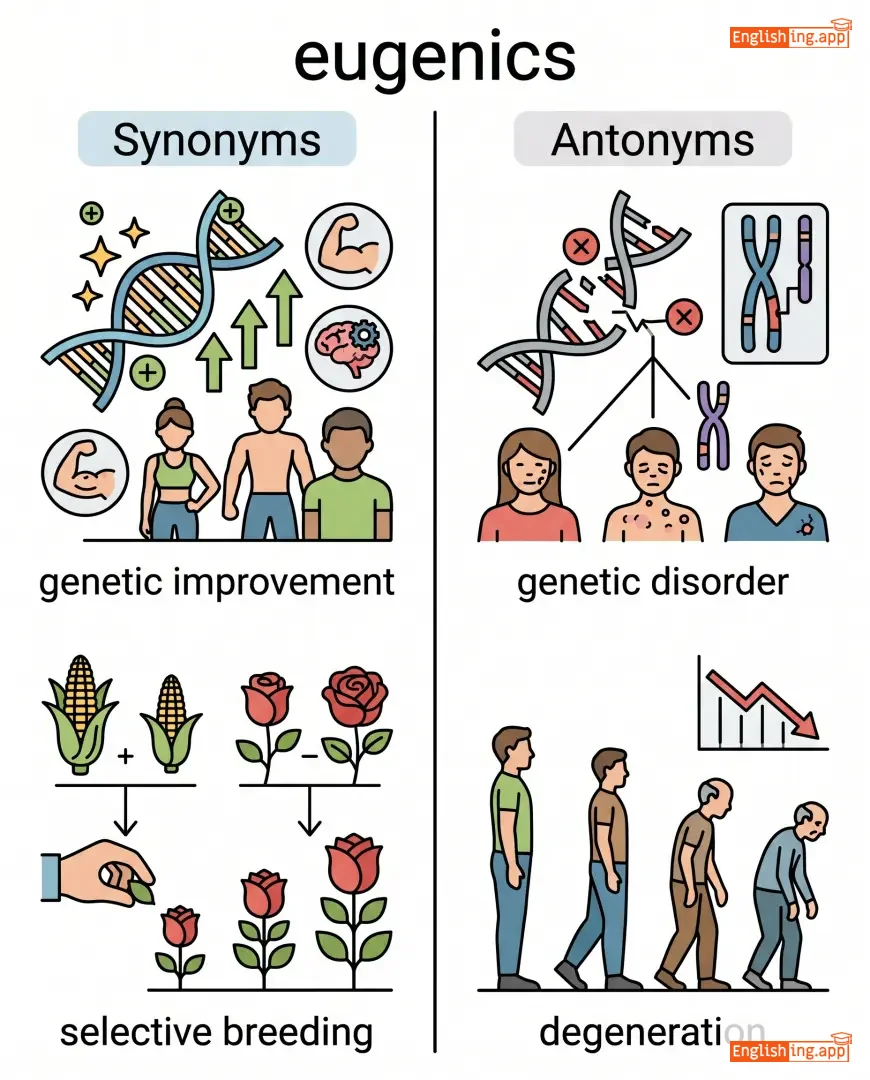
genetic improvement, selective breeding, heredity study
••••••
|
genetic disorder, degeneration
••••••
|
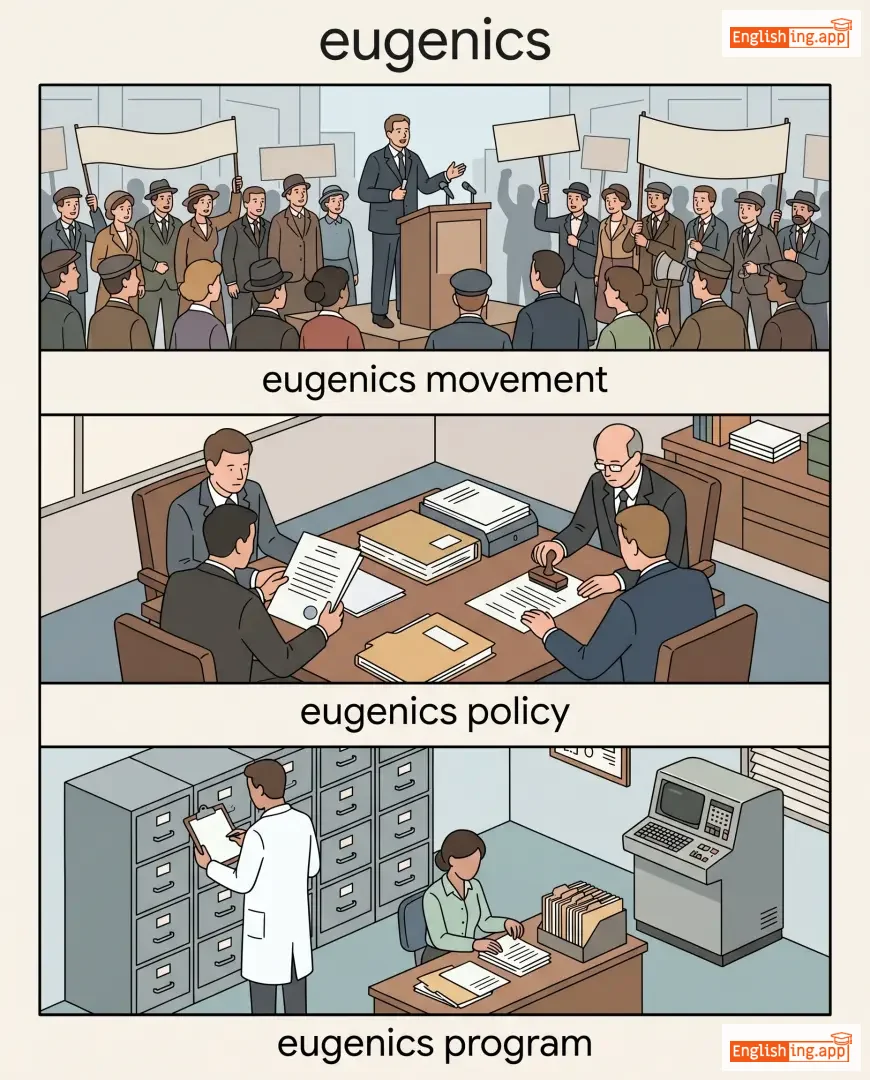
eugenics movement, eugenics policy, eugenics program, eugenics experiment
••••••
|
Евгеника = наука об улучшении человеческих генов.
••••••
|
|
#1
🧬
|
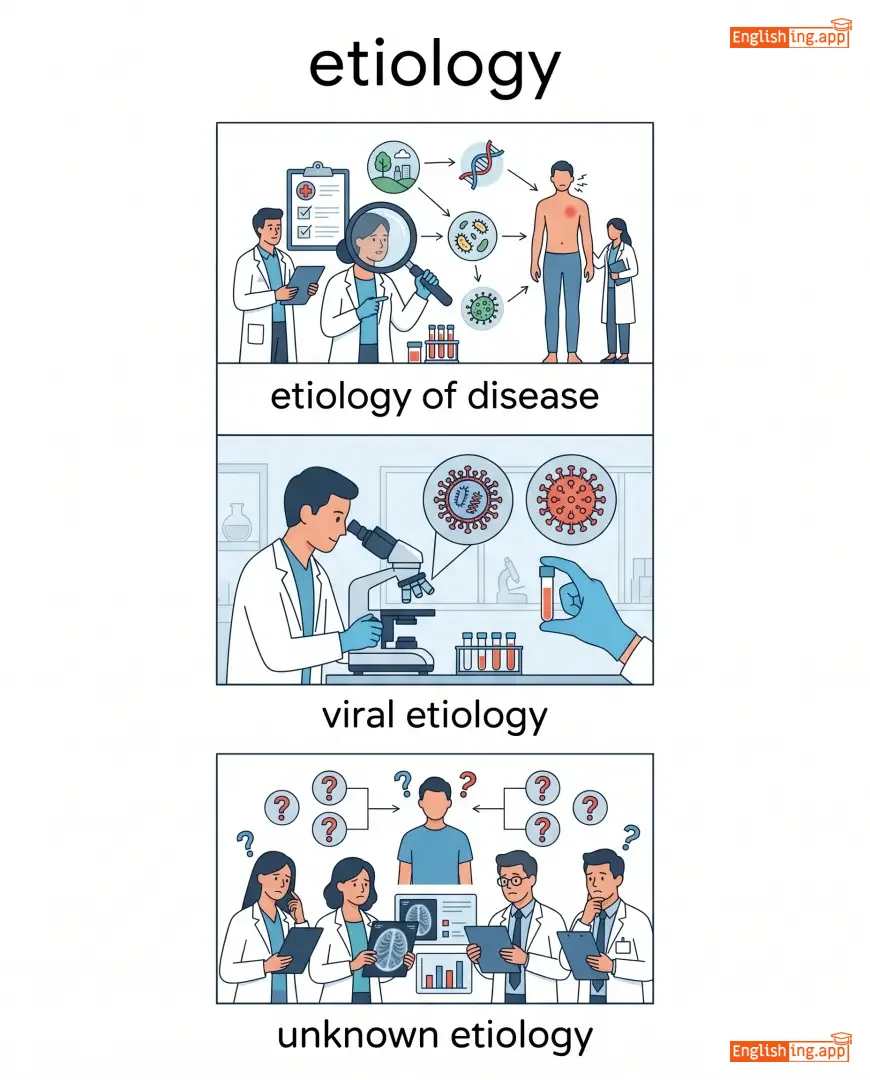
/ˌiː.tiˈɒ.lə.dʒi/
noun
(этиология)
••••••
|
|
этиология
etilogiya
••••••
|
- •••••• | - •••••• | - •••••• | - •••••• |
the cause or origin of a disease or condition
••••••
|
Doctors are studying the etiology of the new virus. |
Врачи изучают этиологию нового вируса.
Vrachi izuchayut etiologyu novogo virusa.
••••••
|
- •••••• | - •••••• | - •••••• |
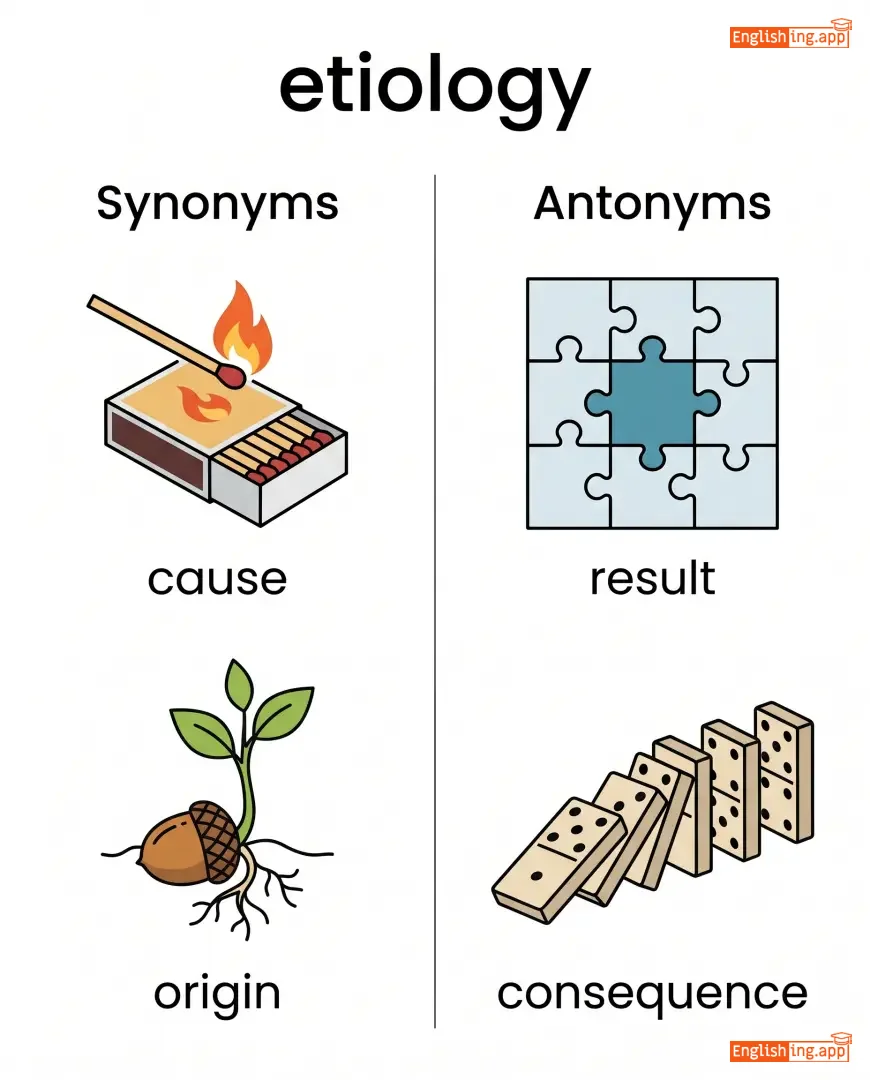
cause, origin, source, root, reason
••••••
|
result, consequence
••••••
|
etiology of disease, viral etiology, unknown etiology, medical etiology
••••••
|
Etiology значит 'eti' (это) причина болезни 🧬
••••••
|
|
#1
🌍
|
/ˌeθ.noʊˈsen.trɪk/
adjective
(этноцентричный)
••••••
|
|
этноцентричный
etnocentrichnyy
••••••
|
- •••••• | - •••••• | - •••••• | - •••••• |
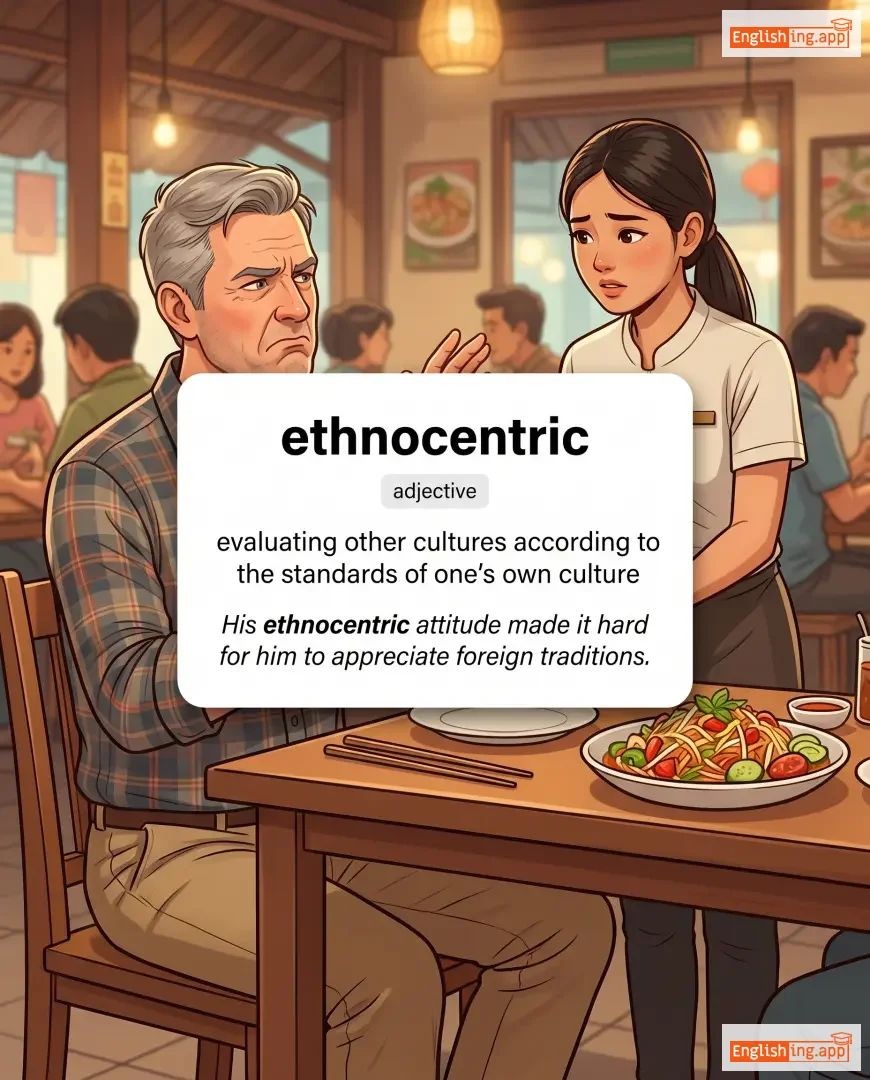
evaluating other cultures according to the standards of one's own culture
••••••
|
His ethnocentric attitude made it hard for him to appreciate foreign traditions. |
Его этноцентричный взгляд мешал ему оценить традиции других стран.
Yego etnocentrichnyy vzglyad meshal emu otsenit' traditsii drugikh stran.
••••••
|
- •••••• | - •••••• | - •••••• |
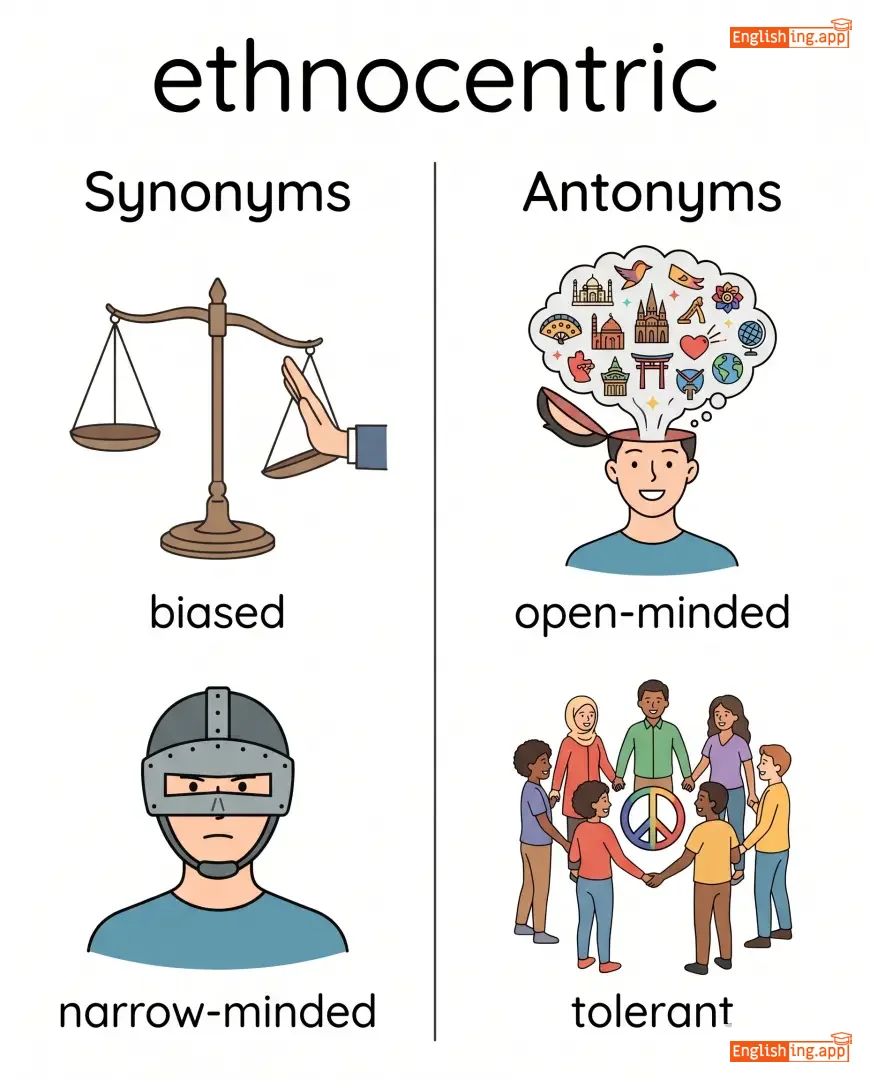
biased, narrow-minded, prejudiced, parochial, intolerant
••••••
|
open-minded, tolerant, cosmopolitan
••••••
|
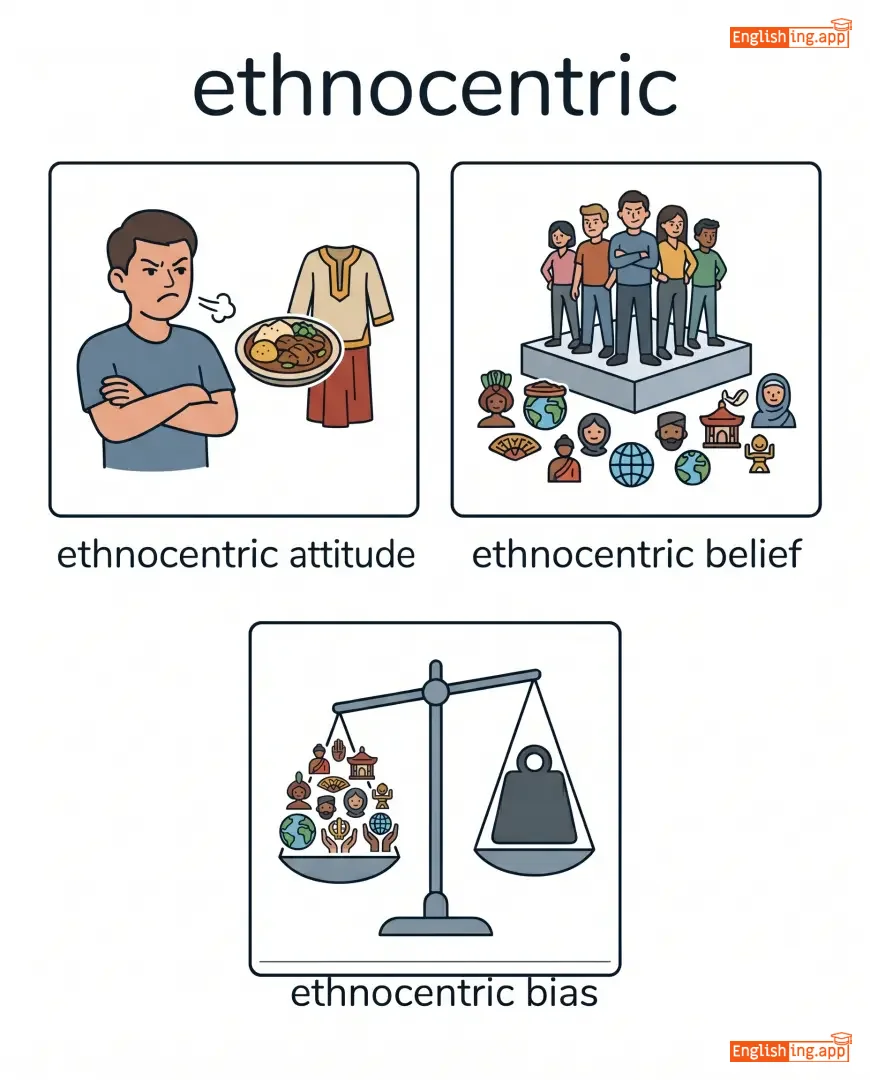
ethnocentric attitude, ethnocentric belief, ethnocentric bias, ethnocentric perspective
••••••
|
Ethno + centric = оценка мира с позиций своей культуры 🌍
••••••
|
|
#1
🏺
|
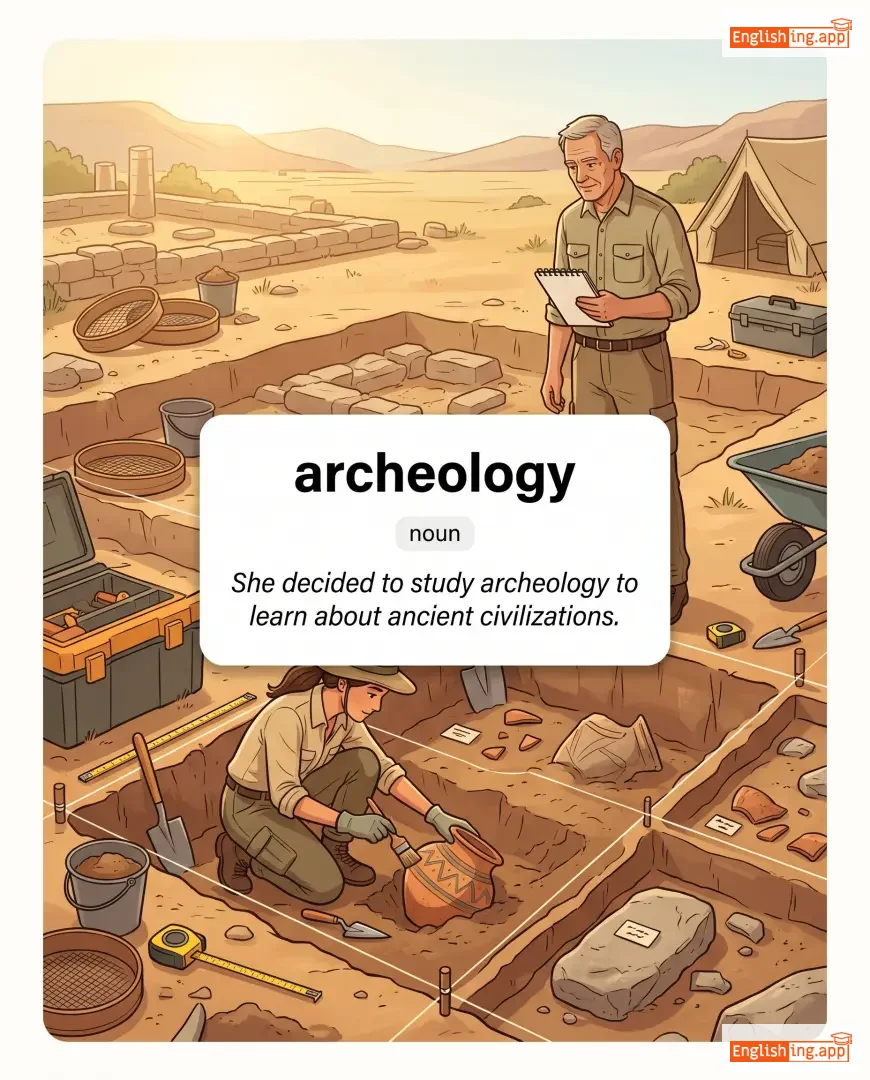
/ˌɑːr.kiˈɑː.lə.dʒi/
noun
(археология)
••••••
|
|
археология
arkheologiya
••••••
|
- •••••• | - •••••• | - •••••• | - •••••• |
the study of human history and prehistory through excavation and analysis of artifacts and structures
••••••
|
She decided to study archeology to learn about ancient civilizations. |
Она решила изучать археологию, чтобы узнать о древних цивилизациях.
Ona reshil izuchat' arkheologiyu, chtoby uznat' o drevnikh tsivilizatsiyakh.
••••••
|
- •••••• | - •••••• | - •••••• |
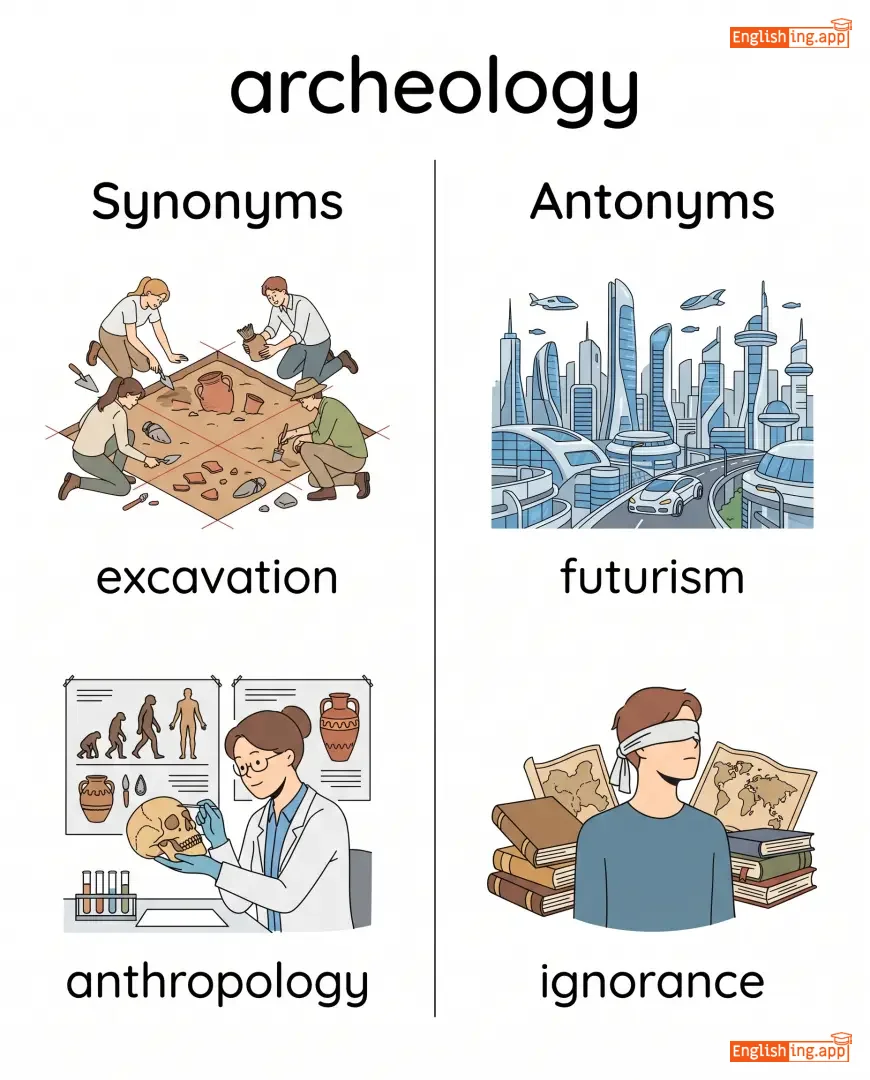
excavation, anthropology, prehistory, paleontology, history
••••••
|
futurism, ignorance
••••••
|
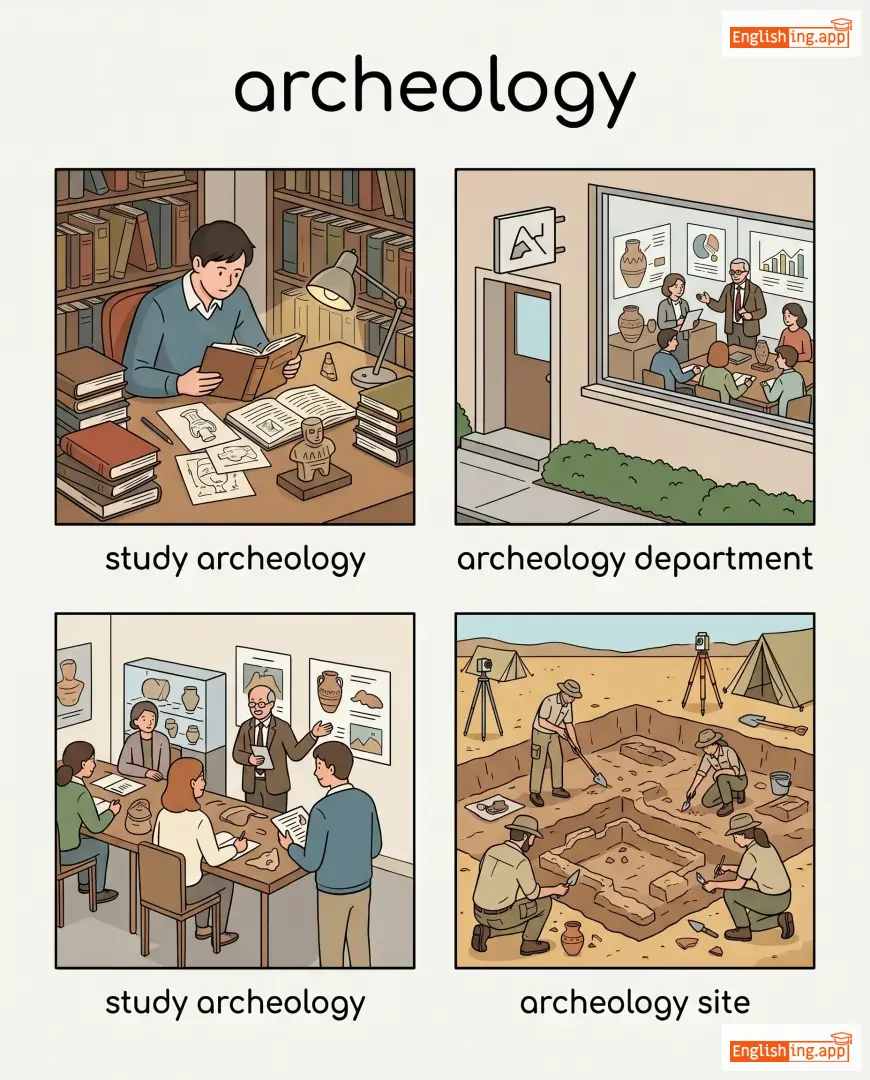
study archeology, archeology department, archeology site, archeology research
••••••
|
Археология - изучение древних 'архов' и артефактов
••••••
|
|
#1
🎨
|
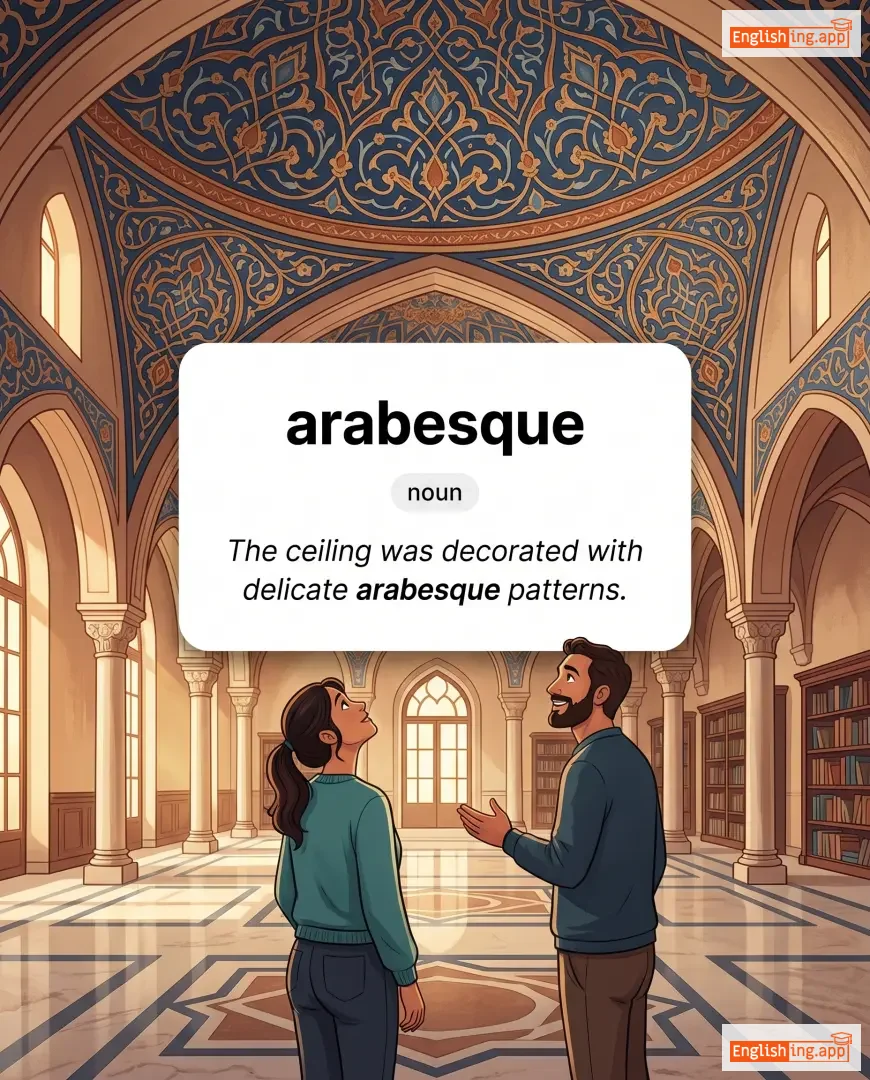
/ˌær.əˈbesk/
noun
(арабеск)
••••••
|
|
орнаментальный дизайн
ornamental'nyy dizayn
••••••
|
- •••••• | - •••••• | - •••••• | - •••••• |
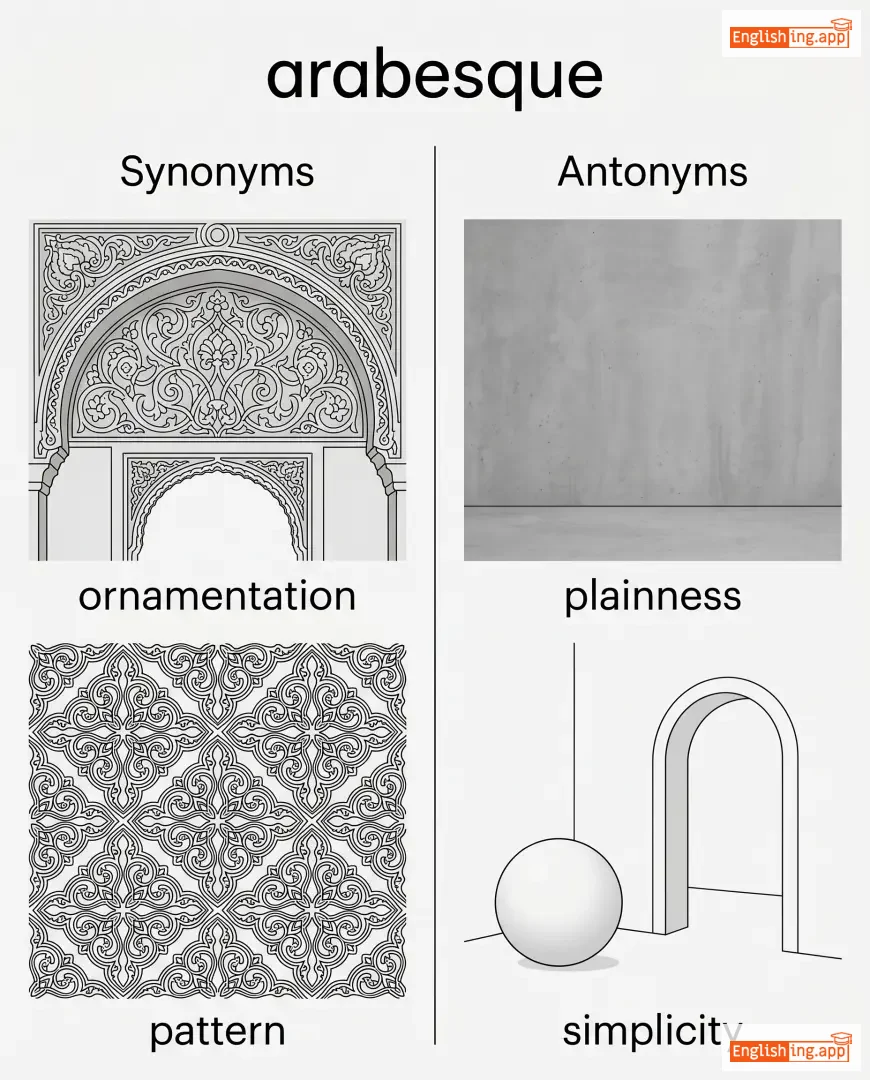
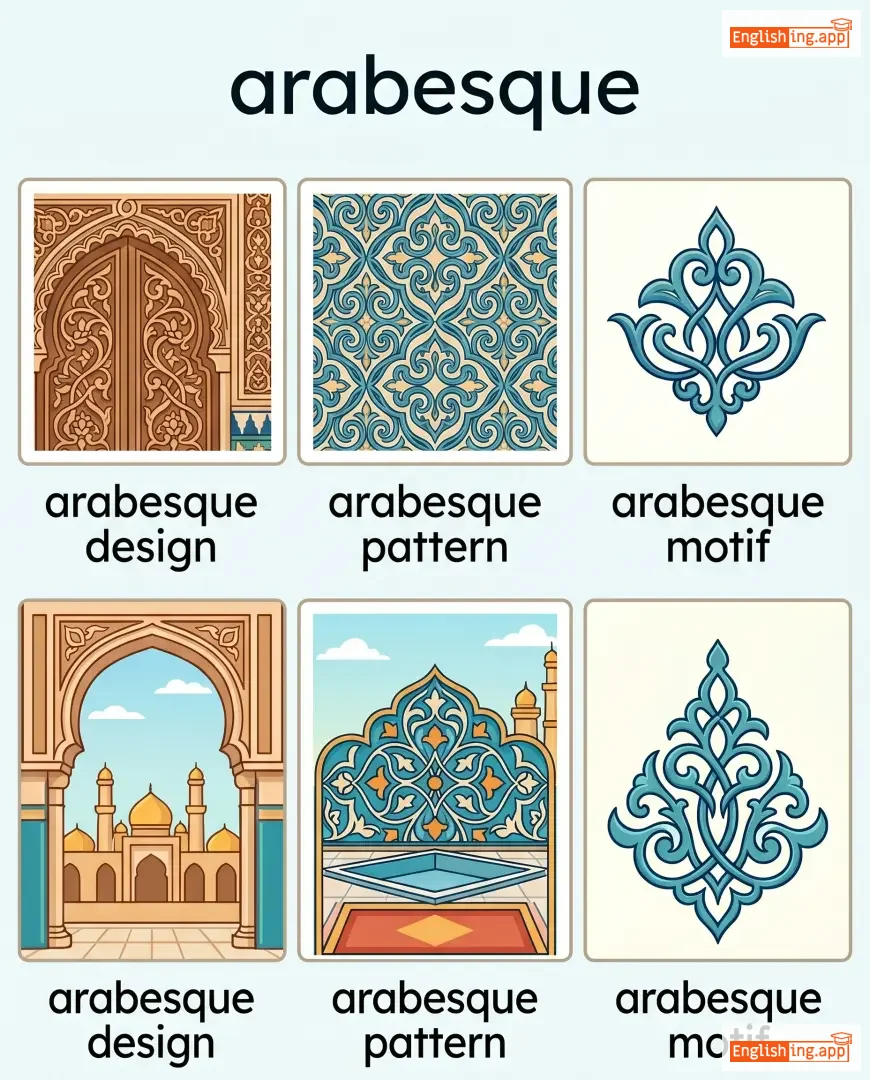
a complex, ornate design featuring intertwined flowing lines, often used in architecture or ballet poses
••••••
|
The ceiling was decorated with delicate arabesque patterns. |
Потолок был украшен изысканными арабесками.
Potolok byl ukrashen izyskannymi arabeskami.
••••••
|
- •••••• | - •••••• | - •••••• |
ornamentation, pattern, motif, design, flourish
••••••
|
plainness, simplicity
••••••
|
arabesque design, arabesque pattern, arabesque motif, arabesque architecture
••••••
|
Арабески можно найти в архитектуре арабских мечетей 🎨
••••••
|
|
#1
⏰
|
/ˈæftərwərd/
adverb
(афтервёрд)
••••••
|
- •••••• |
позже
pozhe
••••••
|
- •••••• | - •••••• | - •••••• | - •••••• |
at a later time; subsequently
••••••
|
We went to dinner and watched a movie afterward.
Мы поужинали и после этого посмотрели фильм.
••••••
|
Мы поужинали и после этого посмотрели фильм.
My pozhinali i posle etogo posmotreli film.
••••••
|
- •••••• | - •••••• | - •••••• |
later, subsequently, thereafter, next, then
••••••
|
before, earlier, previously
••••••
|
soon afterward, shortly afterward, day afterward
••••••
|
Afterward означает позже — как после ужина смотреть фильм.
••••••
|
|
#1
🏢
|
/ədˈmɪnɪstrətɪv/
adjective
(административный)
••••••
|
|
административный
administrativny
••••••
|
- •••••• | - •••••• | - •••••• | - •••••• |
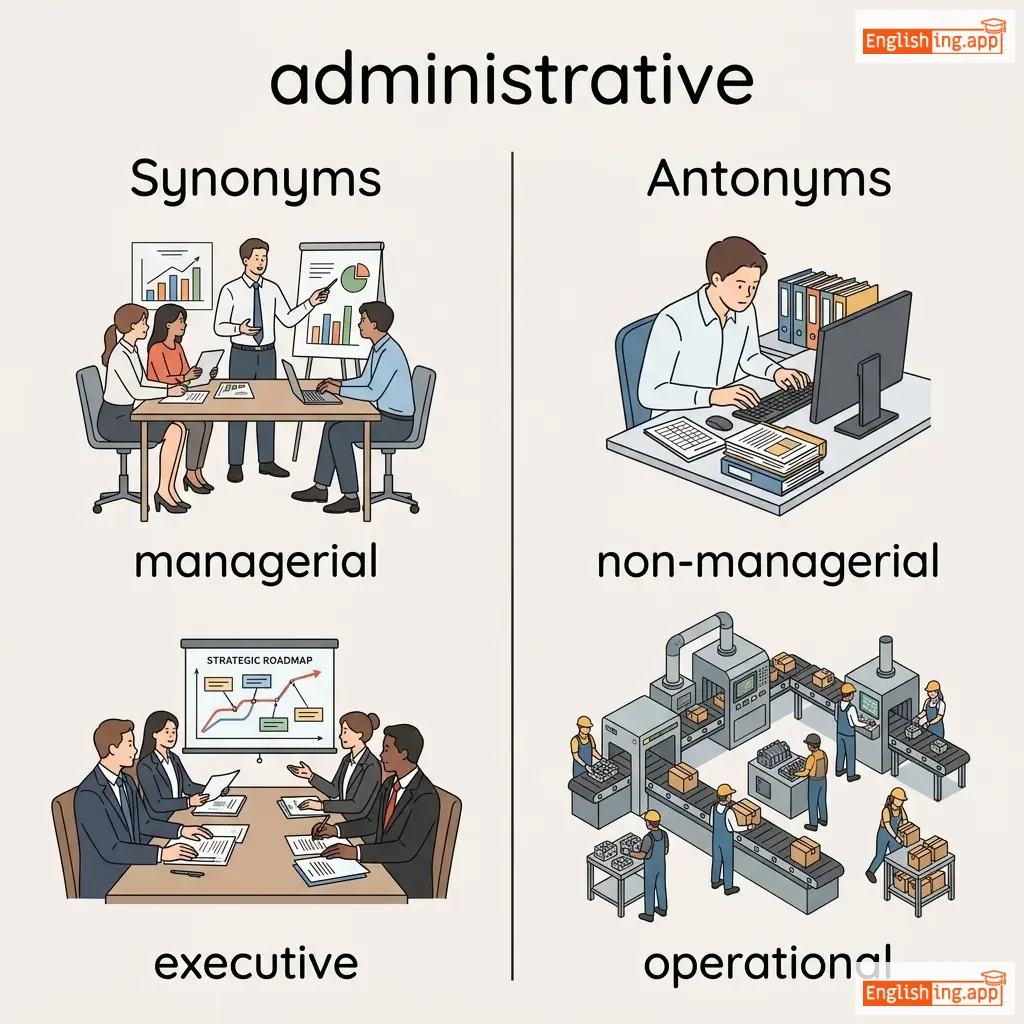
relating to the management or organization of an institution or business
••••••
|
She handles all the administrative tasks in the office. |
Она выполняет все административные задачи в офисе.
Ona vypolnyayet vse administrativnye zadachi v ofise.
••••••
|
- •••••• | - •••••• | - •••••• |
managerial, executive, organizational, supervisory
••••••
|
non-managerial, subordinate
••••••
|
administrative staff, administrative work, administrative office, administrative system
••••••
|
Admin значит офис, поэтому административный означает, что связано с управлением офисом 🏢
••••••
|
|
#1
🗣️
|
/ˈæksɛnt/
noun
(aktsent)
••••••
|
- •••••• |
акцент
aktsent
••••••
|
- •••••• | - •••••• | - •••••• | - •••••• |
a distinctive way of pronouncing a language, especially one associated with a particular country or region
••••••
|
She spoke English with a strong French accent.
Она говорила по-английски с сильным французским акцентом.
••••••
|
Она говорила по-английски с сильным французским акцентом.
Ona govoryla po-angliyski s sil'nym frantsuzskim aktsentom.
••••••
|
foreign accent
иностранный акцент
••••••
|
a way of speaking that shows the influence of another language
••••••
|
иностранный акцент
inostrannyy aktsent
••••••
|
intonation, pronunciation, tone, inflection
••••••
|
monotone, uniformity
••••••
|
strong accent, foreign accent, regional accent, British accent
••••••
|
Акцент — это как ‘акцентуация’ — особый способ произношения.
••••••
|
|
#1
🤲
|
/əkˈsɛptəns/
noun
(akseptans)
••••••
|
- •••••• |
принятие
prinyatie
••••••
|
- •••••• | - •••••• | - •••••• | - •••••• |
the act of agreeing to receive or undertake something offered
••••••
|
Her acceptance of the award was met with applause. |
Её принятие награды было встречено аплодисментами.
Eyo prinyatiye nagrady bylo vstrecheno aplodismentami.
••••••
|
acceptance speech |
a speech given when accepting an award or honor
••••••
|
речь при получении награды
rech' pri poluchenii nagrady
••••••
|
approval, agreement, consent, recognition
••••••
|
rejection, refusal, denial
••••••
|
letter of acceptance, acceptance speech, acceptance of offer, gain acceptance
••••••
|
Acceptance: принять и отпраздновать с аплодисментами!
••••••
|
|
#1
🏆
|
/əˈkʌmplɪʃmənt/
noun
(аккомплишмент)
••••••
|
- •••••• |
достижение
dostizhenie
••••••
|
- •••••• | - •••••• | - •••••• | - •••••• |
something that has been achieved successfully
••••••
|
Graduating from university was a major accomplishment for him. |
Окончание университета стало для него большим достижением.
Okonchaniye universiteta stalo dlya nego bol'shim dostizheniyem.
••••••
|
sense of accomplishment |
a feeling of pride and satisfaction from achieving something
••••••
|
чувство достижения
chuvstvo dostizheniya
••••••
|
achievement, success, fulfillment, attainment
••••••
|
failure, defeat
••••••
|
great accomplishment, remarkable accomplishment, personal accomplishment, sense of accomplishment
••••••
|
Accomplishment — это достижение цели, как успешная миссия!
••••••
|
|
#1
📋
|
/əˌkaʊntəˈbɪlɪti/
noun
(akɑʊntəˈbɪlɪti)
••••••
|
|
ответственность
otvetstvennost
••••••
|
- •••••• | - •••••• | - •••••• | - •••••• |
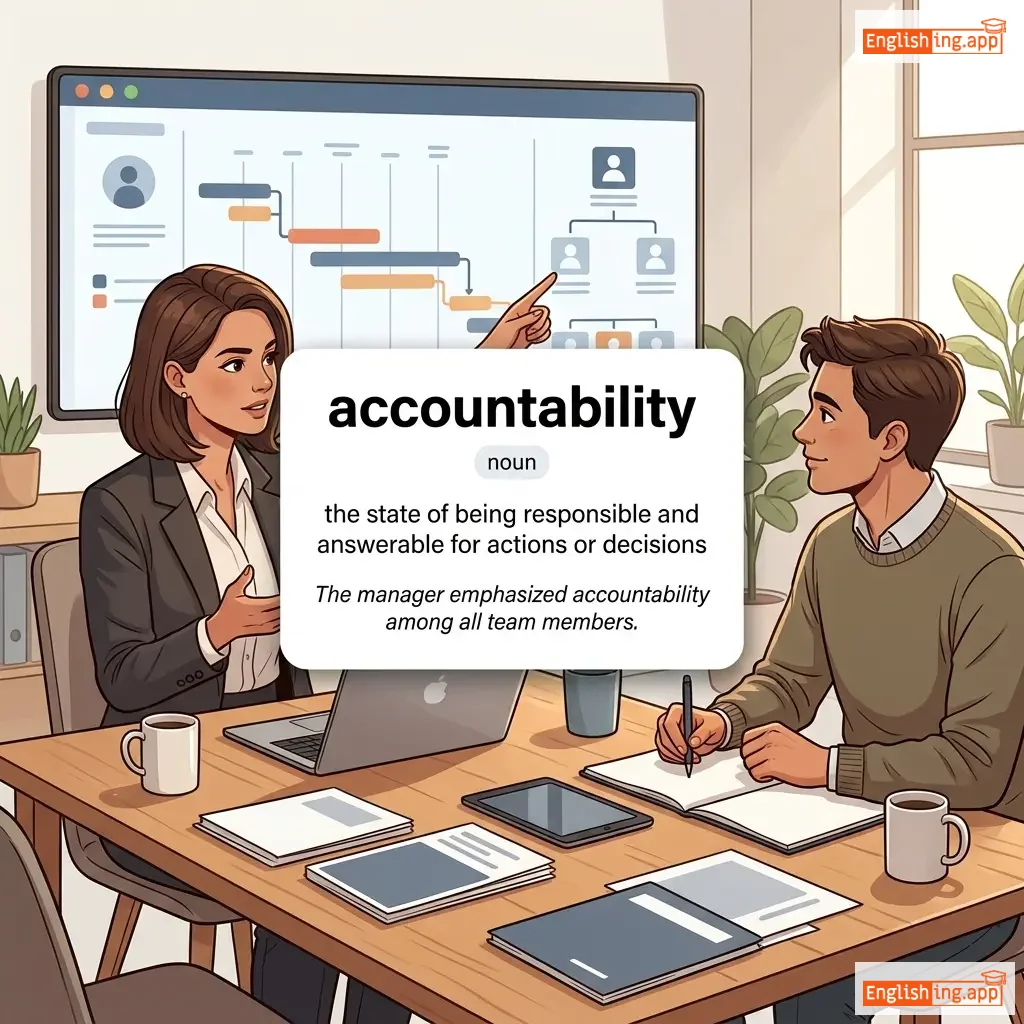
the state of being responsible and answerable for actions or decisions
••••••
|
The manager emphasized accountability among all team members. |
Менеджер подчеркнул ответственность среди всех членов команды.
Menedzher podcherknul otvetstvennost' sredi vsekh chlenov komandy.
••••••
|
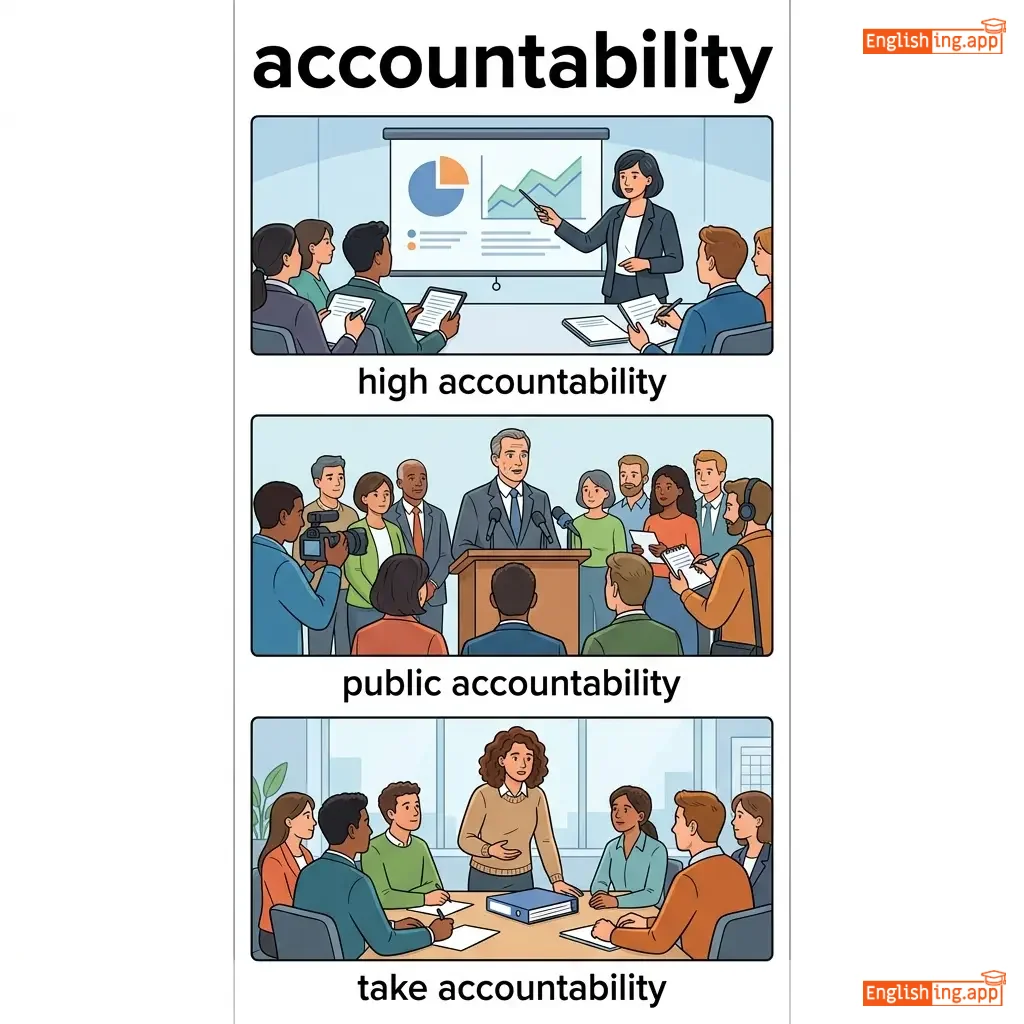
take accountability |
to accept responsibility for one’s actions
••••••
|
принять ответственность
prinyat' otvetstvennost'
••••••
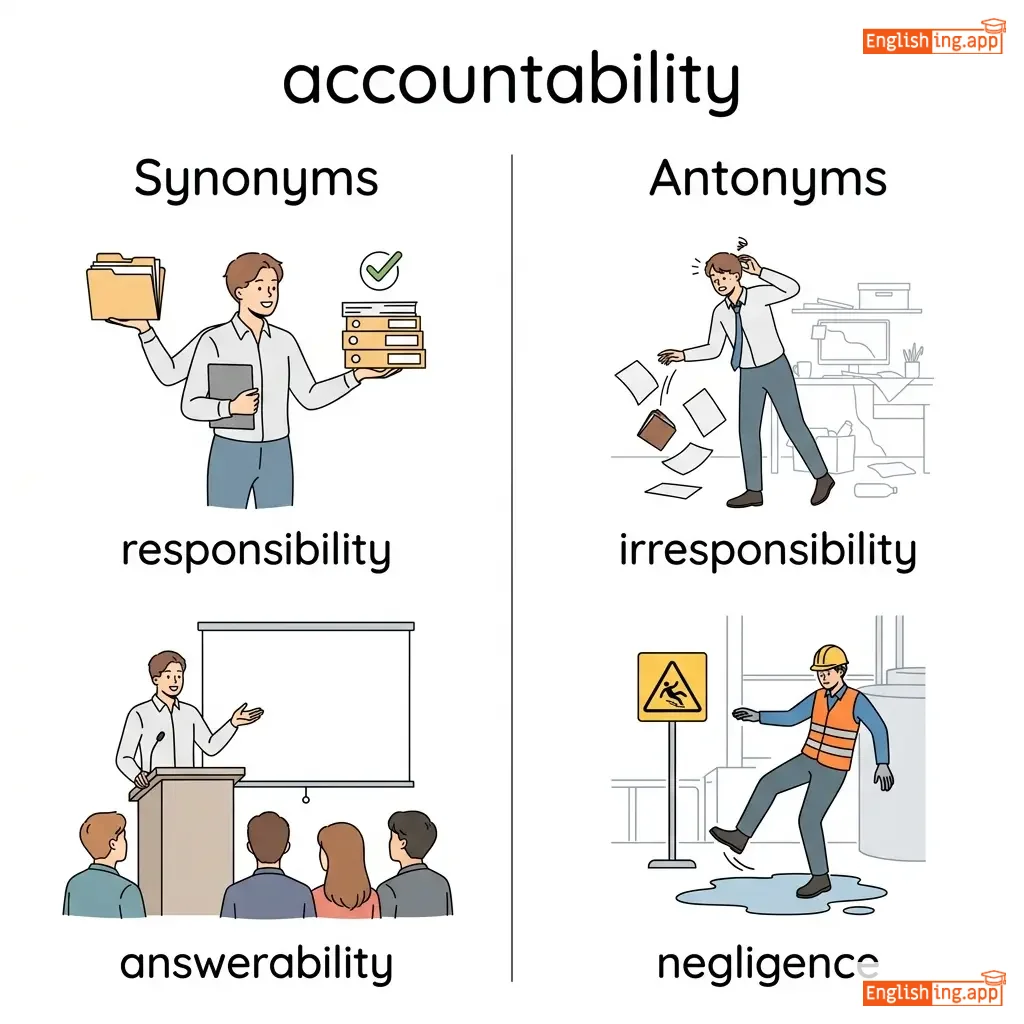
|
responsibility, answerability, liability, obligation
••••••
|
irresponsibility, negligence
••••••
|
high accountability, public accountability, take accountability, ensure accountability
••••••
|
Ответственность как ответ на действия — нужно быть готовым отвечать!
••••••
|
|
#1
📊
|
/əˈkaʊntɪŋ/
noun
(əkˈaʊntɪŋ)
••••••
|
- •••••• |
бухгалтерия
bukhgalteriya
••••••
|
- •••••• | - •••••• | - •••••• | - •••••• |
the process of recording, summarizing, and reporting financial transactions
••••••
|
She works in the accounting department of a large firm. |
Она работает в бухгалтерии большой компании.
Ona rabotaet v bukhgalterii bol'shoy kompanii.
••••••
|
creative accounting |
manipulating financial records to make a company look more profitable
••••••
|
креативная бухгалтерия
kreativnaya bukhgalteriya
••••••
|
bookkeeping, auditing, finance, record-keeping, budgeting
••••••
|
spending, mismanagement
••••••
|
accounting standards, accounting system, accounting firm, financial accounting, management accounting
••••••
|
Accounting значит учет, бухгалтерия — это профессия учета 📘
••••••
|
|
#1
🎯
|
/ˈækjərətli/
adverb
(аккьюрэтили)
••••••
|
- •••••• |
точно
tochno
••••••
|
- •••••• | - •••••• | - •••••• | - •••••• |
in a way that is correct and without errors
••••••
|
She can accurately predict the weather conditions. |
Она может точно предсказать погодные условия.
Ona mozhet točno predskazat' pogodnye usloviya.
••••••
|
- •••••• | - •••••• | - •••••• |
precisely, exactly, correctly, faithfully, truly
••••••
|
incorrectly, roughly, inaccurately
••••••
|
measure accurately, report accurately, calculate accurately, describe accurately
••••••
|
Accurate означает точно, поэтому accurately означает точно.
••••••
|
|
#1
💪
|
/ˈæktɪvli/
adverb
(æktɪvli)
••••••
|
- •••••• |
активно
aktivno
••••••
|
- •••••• | - •••••• | - •••••• | - •••••• |
in a way that involves energetic participation or effort
••••••
|
He is actively involved in community service.
Он активно участвует в общественных работах.
••••••
|
Он активно участвует в общественных работах.
On aktivno uchastvuet v obshchestvennykh rabotakh.
••••••
|
- •••••• | - •••••• | - •••••• |
energetically, dynamically, vigorously, busily
••••••
|
passively, lazily, idly
••••••
|
actively participate, actively support, actively engage, actively promote
••••••
|
Активно означает быть вовлеченным, поэтому активно значит действовать с усилием.
••••••
|
|
#1
➕
|
/ˈædɪd/
verb
(эдэд)
••••••
|
- •••••• |
добавленный
dobavlennyy
••••••
|
added
эдэд
••••••
|
added
эдэд
••••••
|
adds
эдс
••••••
|
adding
эдинг
••••••
|
to join something to something else to increase its size, number, or amount
••••••
|
She added sugar to her coffee.
Она добавила сахар в свой кофе.
••••••
|
Она добавила сахар в свой кофе.
Ona dobavila sakhar v svoy kofe.
••••••
|
add fuel to the fire
подлить масла в огонь
••••••
|
to make a bad situation worse
••••••
|
подлить масла в огонь
podlit' masla v ogon'
••••••
|
include, attach, combine, supplement, increase
••••••
|
subtract, remove, deduct
••••••
|
added value, added benefit, added sugar, added bonus
••••••
|
Add означает добавить, так что added означает уже добавлено.
••••••
|
|
#1
👶
|
/əˈdɒpʃən/
noun
(адопция)
••••••
|
|
усыновление
usynovlenie
••••••
|
- •••••• | - •••••• | - •••••• | - •••••• |
the act of legally taking another's child and bringing it up as one's own, or accepting and starting to use something new
••••••
|
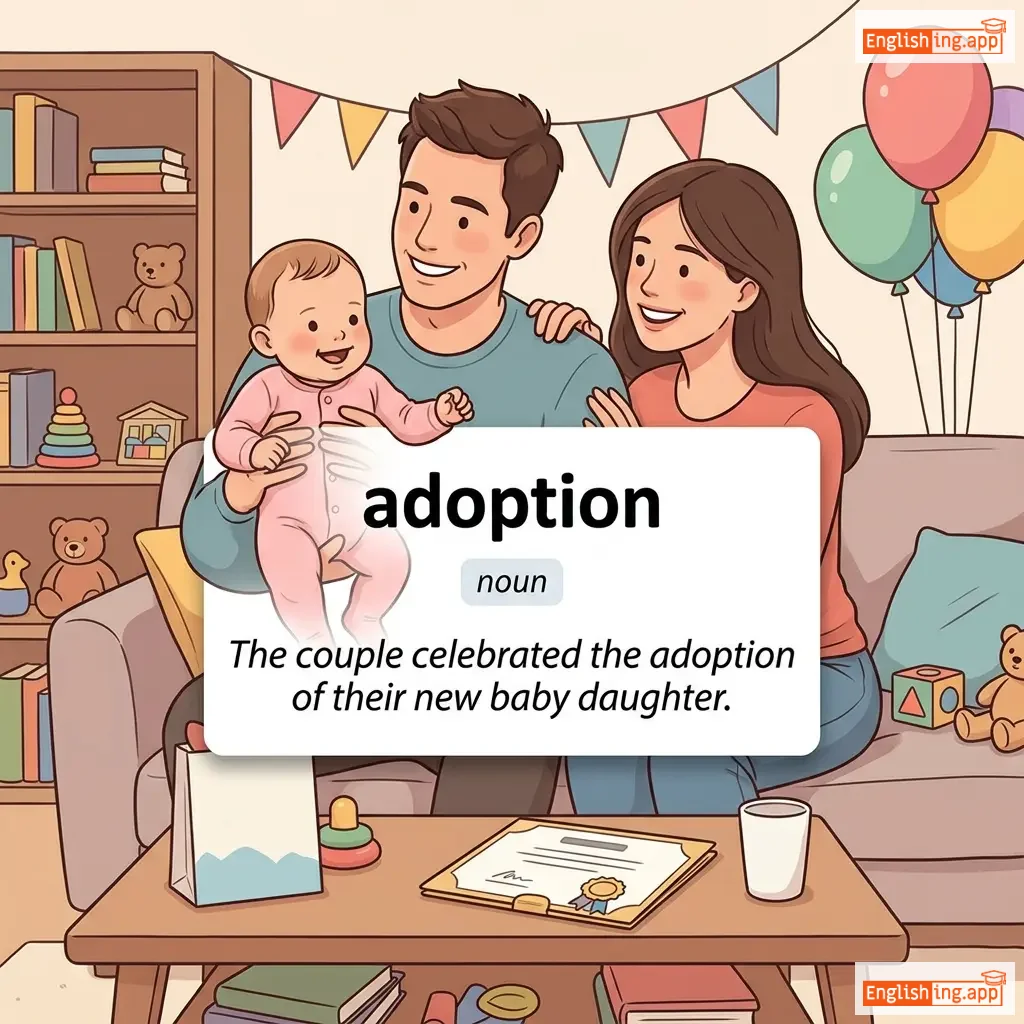
The couple celebrated the adoption of their new baby daughter.
Пара отпраздновала усыновление своей новой дочери.
••••••
|
Пара отпраздновала усыновление своей новой дочери.
Para otprazdnovala usynovlenie svoey novoy dochery.
••••••
|
put up for adoption
отдать на усыновление
••••••
|
to make a child available to be adopted by someone else
••••••
|
отдать на усыновление
otdat' na usynovlenie
••••••
|
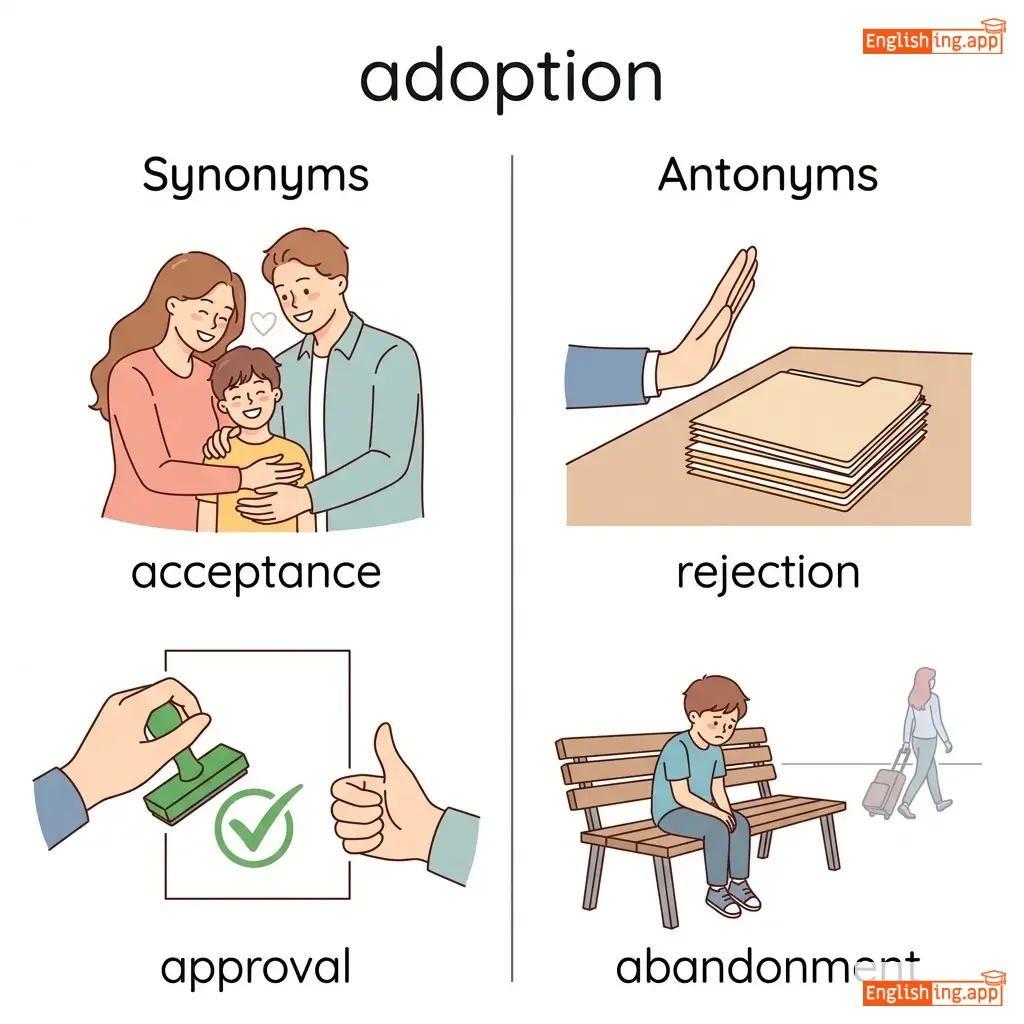
acceptance, approval, embrace, fostering, implementation
••••••
|
rejection, abandonment, refusal
••••••
|
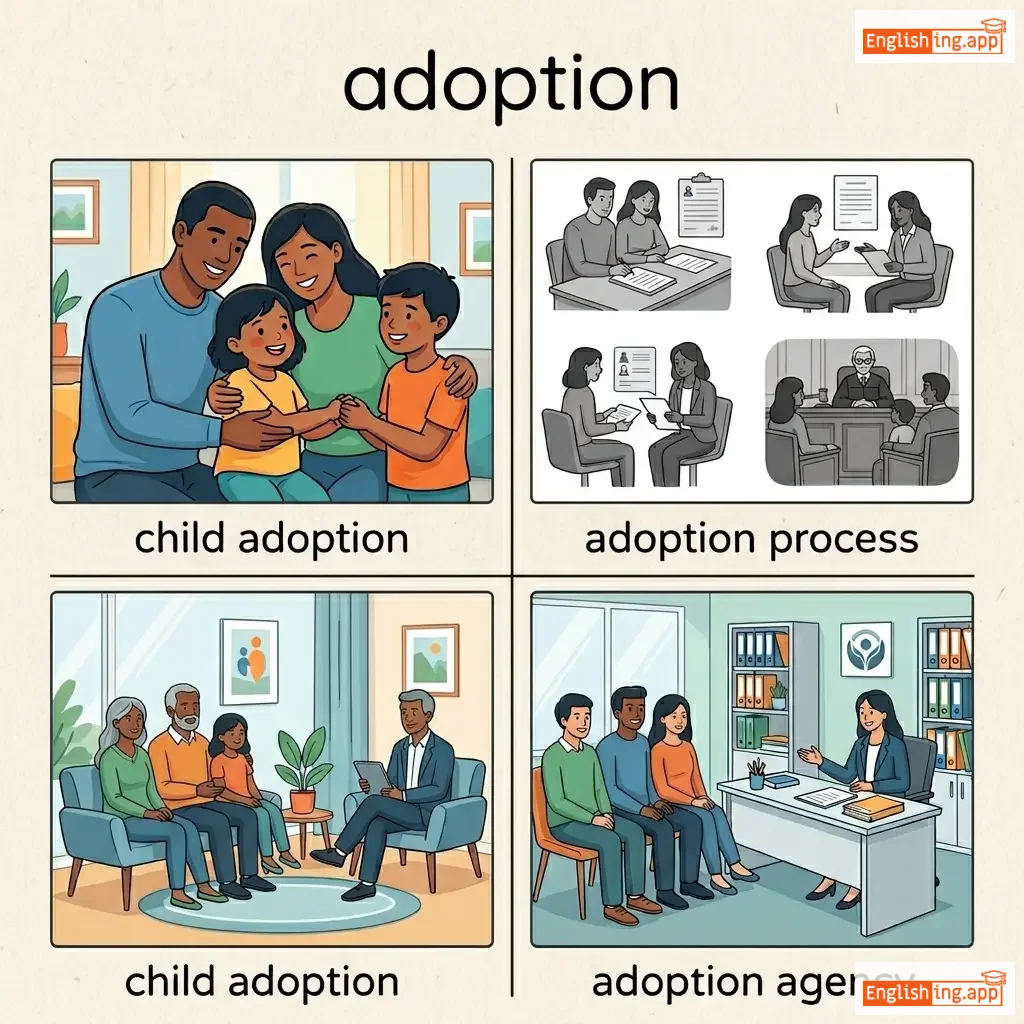
child adoption, adoption process, adoption agency, international adoption
••••••
|
Adoption = Добавление опции — взять ребенка в свою семью.
••••••
|
|
#12385
📅
|
/ˈjɛstərdeɪ/
noun
(вчера)
••••••
|
- •••••• |
вчера
vchera
••••••
|
- •••••• | - •••••• | - •••••• | - •••••• |
the day before today
••••••
|
Yesterday, we went to the park. |
Вчера мы пошли в парк.
Vchera my poshli v park.
••••••
|
- •••••• | - •••••• | - •••••• |
the previous day, last day
••••••
|
today, tomorrow
••••••
|
yesterday afternoon, yesterday evening, just yesterday, yesterday morning
••••••
|
Yesterday, I remember it as VCHERA (Yesterday in Russian).
••••••
|
|
#12386
⏳
|
/jɛt/
adverb
(йет)
••••••
|
- •••••• |
еще
eshche
••••••
|
- •••••• | - •••••• | - •••••• | - •••••• |
up until the present time, or a point in the past
••••••
|
I haven’t finished my homework yet. |
Я еще не закончил свои домашние задания.
Ya eshche ne zakonchil svoi domashnie zadanija.
••••••
|
- •••••• | - •••••• | - •••••• |
still, up to now, so far, as of now
••••••
|
already, now
••••••
|
not yet, yet to come, yet again, yet another
••••••
|
Yet, I haven’t finished yet! Eshche in Russian means 'yet'.
••••••
|
|
#12387
🙂
|
/juː/
pronoun
(ты)
••••••
|
- •••••• |
ты
ty
••••••
|
- •••••• | - •••••• | - •••••• | - •••••• |
used to refer to the person or people being spoken to
••••••
|
You are doing a great job!
Ты делаешь отличную работу!
••••••
|
Ты делаешь отличную работу!
Ty delayesh' otlichnuyu rabotu!
••••••
|
- •••••• | - •••••• | - •••••• |
yourself, yourself
••••••
|
I, he, she
••••••
|
you are, you can, you will, you need
••••••
|
You, ТЫ, are the person you’re talking about.
••••••
|
|
#12388
🧑🦱
|
/jʌŋ/
adjective
(йоунг)
••••••
|
- •••••• |
молодой
molodoy
••••••
|
- •••••• | - •••••• | - •••••• | - •••••• |
having lived or existed for a short time
••••••
|
The young boy loves to play football.
Молодой мальчик любит играть в футбол.
••••••
|
Молодой мальчик любит играть в футбол.
Molodoy malchik lyubit igrat' v futbol.
••••••
|
- •••••• | - •••••• | - •••••• |
youthful, juvenile, adolescent, fresh
••••••
|
old, aged
••••••
|
young generation, young people, young age
••••••
|
Young = MOLODOY in Russian, think of a young athlete with a lot of energy.
••••••
|
|
#12389
📚
|
/jɔːr/
pronoun
(твой)
••••••
|
- •••••• |
твой
tvoy
••••••
|
- •••••• | - •••••• | - •••••• | - •••••• |
used to indicate possession or association
••••••
|
Your book is on the table. |
Твоя книга на столе.
Tvoya kniga na stole.
••••••
|
- •••••• | - •••••• | - •••••• |
your own, belonging to you
••••••
|
my, theirs
••••••
|
your opinion, your responsibility, your time
••••••
|
Твоя книга на столе - Your book is on the table
••••••
|
|
#12390
✍️
|
/jɔːrz/
pronoun
(йорз)
••••••
|
- •••••• |
твой
tvoy
••••••
|
- •••••• | - •••••• | - •••••• | - •••••• |
belonging to or associated with the person or people that the speaker is addressing
••••••
|
This pen is yours. |
Эта ручка твоя.
E-ta ruch-ka tvoya.
••••••
|
- •••••• | - •••••• | - •••••• |
your property, belonging to you
••••••
|
mine, theirs
••••••
|
yours to keep, this is yours
••••••
|
Твоя ручка (Tvoya ruchka) - This pen is yours.
••••••
|
|
#12391
🤳
|
/jɔːrˈsɛlf/
pronoun
(йɔːрˈсɛлф)
••••••
|
- •••••• |
себя
sebya
••••••
|
- •••••• | - •••••• | - •••••• | - •••••• |
used to refer to the person being addressed, often for emphasis or reflection
••••••
|
You should look after yourself. |
Тебе следует заботиться о себе.
Tebe sleduyet zabotit'sya o sebe.
••••••
|
- •••••• | - •••••• | - •••••• |
your own self, personally
••••••
|
no one, others
••••••
|
look after yourself, enjoy yourself, be yourself
••••••
|
Заботься о себе. (Zabot'sya o sebe) - Take care of yourself.
••••••
|
|
#12392
👦👧
|
/juːθ/
noun
(молодежь)
••••••
|
- •••••• |
молодежь
mолодezh
••••••
|
- •••••• | - •••••• | - •••••• | - •••••• |
the period of life when a person is young, often associated with energy and vitality
••••••
|
The youth are the future of the country. |
Молодежь — будущее страны.
Molodezh — budushcheye strany.
••••••
|
- •••••• | - •••••• | - •••••• |
adolescence, young people, teenagers
••••••
|
old age, adulthood
••••••
|
youth culture, youth movement, youth organization
••••••
|
Молодежь — энергия будущего (Molodezh — energiya budushchego) - Youth is the energy of the future.
••••••
|
|
#12393
🌍
|
/zoʊn/
noun
(зона)
••••••
|
|
зона
zona
••••••
|
- •••••• | - •••••• | - •••••• | - •••••• |
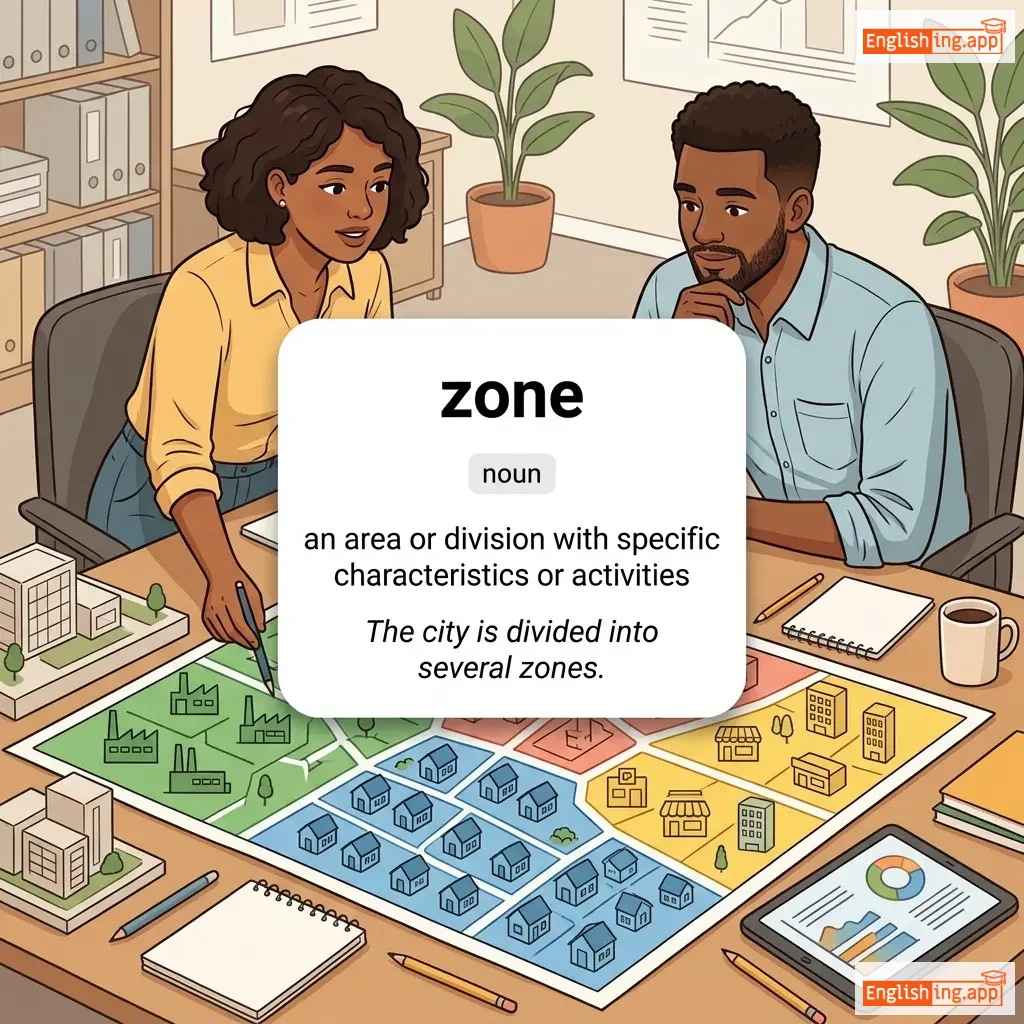
an area or division with specific characteristics or activities
••••••
|
The city is divided into several zones. |
Город разделен на несколько зон.
Gorod razdelen na neskol'ko zon.
••••••
|
- •••••• | - •••••• | - •••••• |
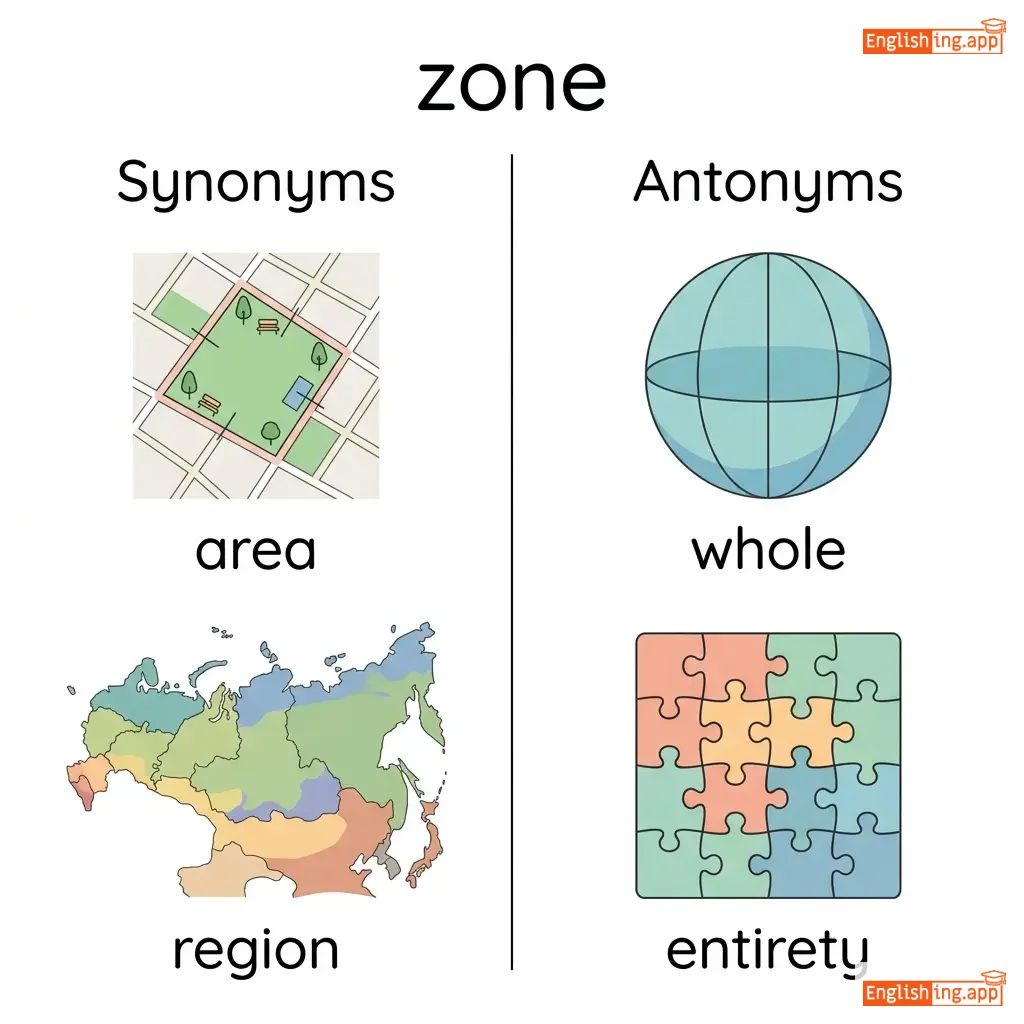
area, region, district
••••••
|
whole, entirety
••••••
|
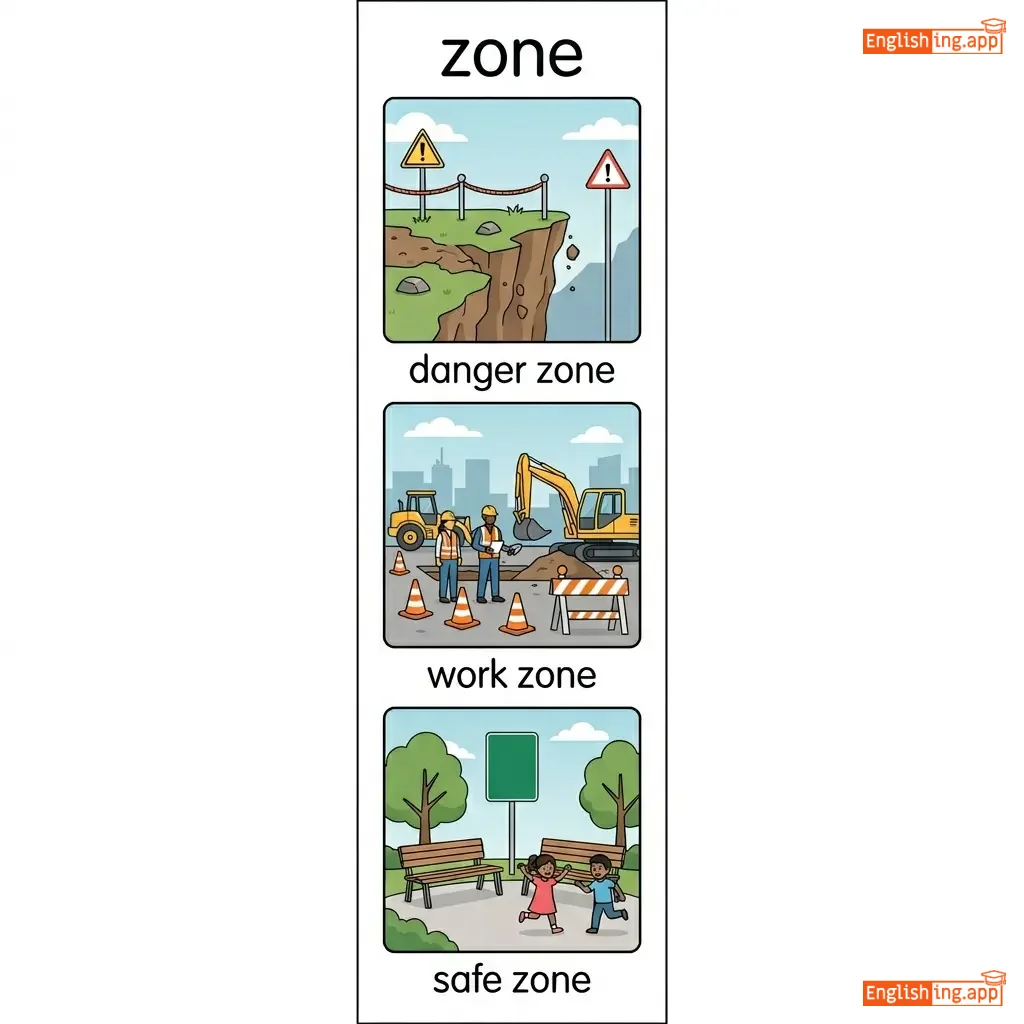
danger zone, work zone, safe zone
••••••
|
Город разделён на зоны (Gorod razdelen na zony) - The city is divided into zones.
••••••
|
Vocabulary Quiz
Test your vocabulary by matching words with their translations or meanings.
Login to take the quiz
Comments (0)
Share your thoughts and join the discussion.
Join the discussion by logging in
Login to CommentNo comments yet
Be the first to share your thoughts!