

Обновитесь для доступа ко всему словарю
Получите неограниченный доступ ко всем словам с подпиской Pro
Обновить до ProПеревод
Прошедшее
Причастие прошедшего времени
Третье лицо единственного числа
Герундий
Значение
Пример предложения
Перевод примера предложения
Синонимы
Антонимы
Коллокации
Мнемоника



Swipe left or right, or use the buttons. Tap image to zoom.
Обновитесь для доступа ко всем предложениям
Получите неограниченный доступ ко всем предложениям с подпиской Pro
Обновить до ProПеревод примера предложения
Слово
Lesson 336Lesson 336 - Переключатель маски
|
Эмодзи
|
Слово | Images | Перевод | Прошедшее | Причастие прошедшего времени | Третье лицо единственного числа | Герундий | Значение | Пример предложения | Перевод примера предложения | Пример выражения | Значение примера выражения | Перевод примера выражения | Синонимы | Антонимы | Коллокации | Мнемоника |
|---|---|---|---|---|---|---|---|---|---|---|---|---|---|---|---|---|---|
|
#10045
👴
|
/oʊld/
adjective
(олд)
••••••
|
- •••••• |
старый
staryj
••••••
|
- •••••• | - •••••• | - •••••• | - •••••• |
having lived for a long time; not new or young
••••••
|
He still drives his old car. |
Он все еще ездит на своей старой машине.
On vse eshche ezdit na svoej staroj mashine.
••••••
|
old habits die hard |
It is difficult to stop doing things you have been doing for a long time
••••••
|
старые привычки трудно искоренить
starye privychki trudno iskorenit'
••••••
|
aged, elderly, ancient, worn, mature
••••••
|
young, new, fresh
••••••
|
old man, old friend, old building, old story
••••••
|
СТАРЫЙ — как старые воспоминания и старые люди.
••••••
|
|
#10046
💪
|
/ˌoʊvərˈkʌm/
verb
(оверкам)
••••••
|
|
преодолеть
preodolety
••••••
|
overcame
оверкейм
••••••
|
overcome
оверкам
••••••
|
overcomes
оверкамс
••••••
|
overcoming
оверка́минг
••••••
|
to succeed in dealing with a problem or difficulty; to defeat
••••••
|
She managed to overcome all the challenges in her career.
Она смогла преодолеть все трудности в своей карьере.
••••••
|
Она смогла преодолеть все трудности в своей карьере.
Ona smogla preodolety vse trudnosti v svoej kar'ere.
••••••
|
overcome with emotion
подавленное чувство эмоций
••••••
|
deeply affected by strong feelings
••••••
|
подавленное чувство эмоций
podavlennoe chuvstvo emotsij
••••••
|
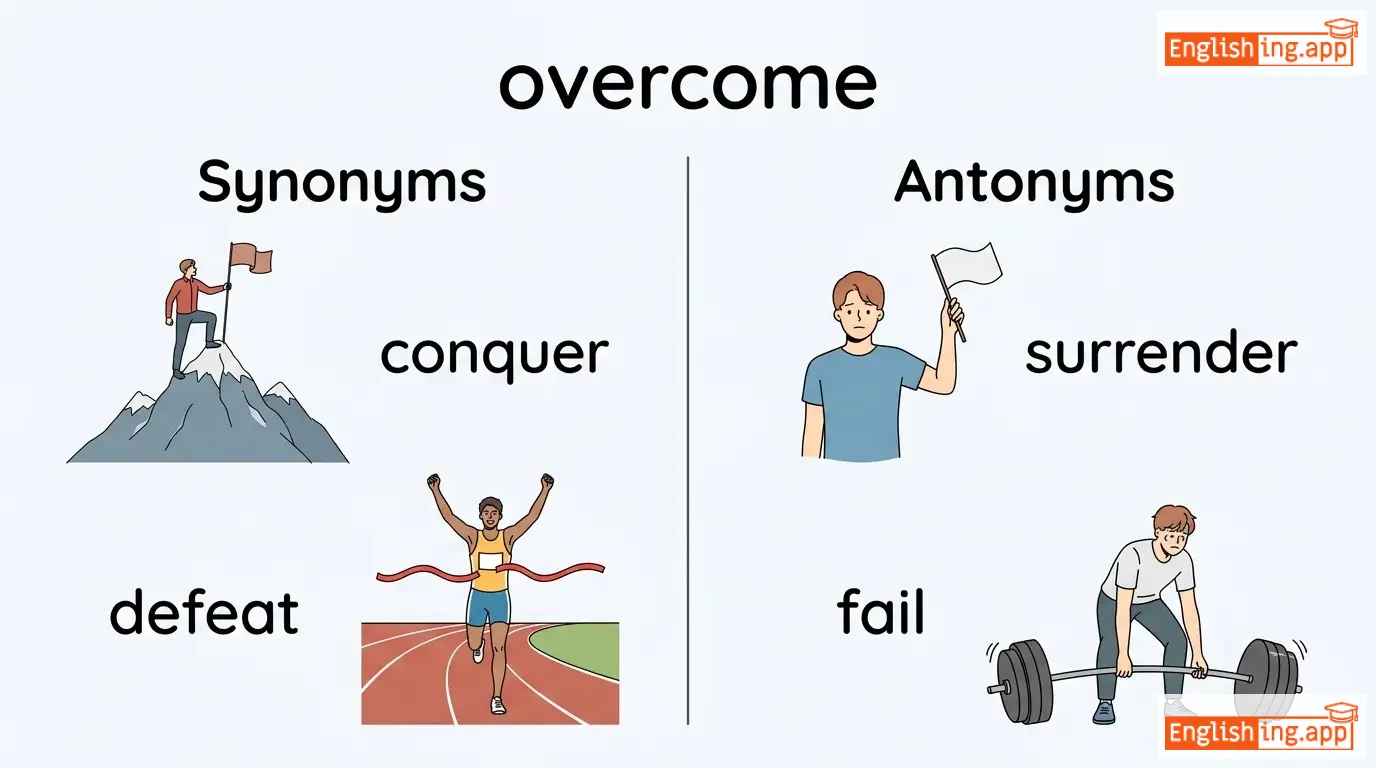
conquer, defeat, prevail, master
••••••
|
surrender, fail
••••••
|
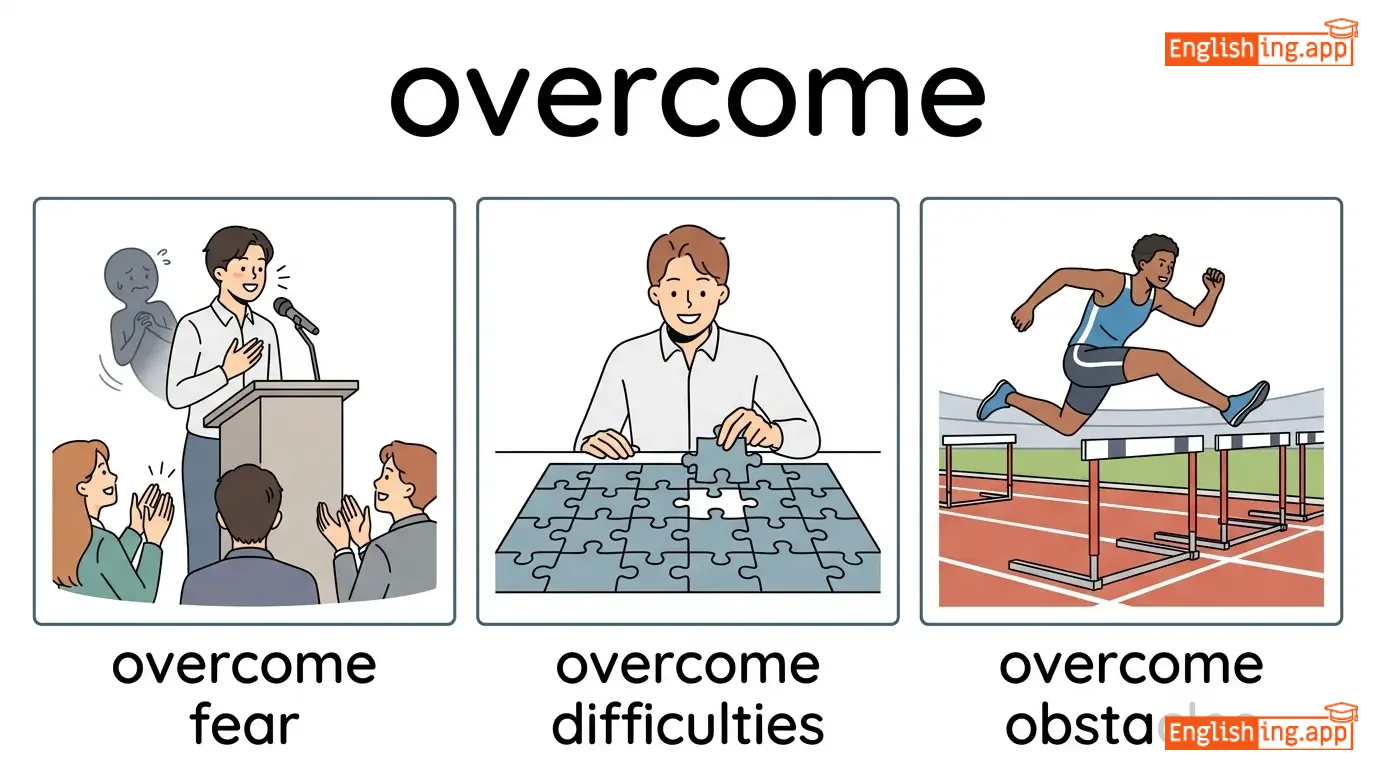
overcome fear, overcome difficulties, overcome obstacles, overcome challenges
••••••
|
Преодолеть - преодолеть трудности и победить.
••••••
|
|
#10047
🏆
|
/aʊtˈstændɪŋ/
adjective
(аутстендинг)
••••••
|
- •••••• |
выдающийся
vydajushchijsya
••••••
|
- •••••• | - •••••• | - •••••• | - •••••• |
extremely good or impressive; not yet resolved or paid
••••••
|
She received an award for her outstanding performance. |
Она получила награду за свою выдающуюся работу.
Ona polučila nagradu za svoju vydajushchijsya rabotu.
••••••
|
outstanding debt |
unpaid amount of money that is still owed
••••••
|
неоплаченный долг
neoplachennyj dolg
••••••
|
excellent, remarkable, exceptional, notable
••••••
|
ordinary, mediocre
••••••
|
outstanding achievement, outstanding performance, outstanding debt, outstanding issue
••••••
|
Outstanding - это когда стоишь отдельно, все тебя замечают, потому что ты так хорош
••••••
|
|
#10048
🌳
|
/ˌaʊtˈsaɪd/
noun/adjective/adverb
(аутсайд)
••••••
|
- •••••• |
снаружи
snaruzhi
••••••
|
- •••••• | - •••••• | - •••••• | - •••••• |
the external part or surface of something; beyond the boundary
••••••
|
Children were playing outside in the yard.
Дети играли на улице в саду.
••••••
|
Дети играли на улице в саду.
Deti igrali na ulitse v sadu.
••••••
|
on the outside
снаружи
••••••
|
viewed externally; not part of a group
••••••
|
снаружи
snaruzhi
••••••
|
exterior, surface, outdoors, external
••••••
|
inside, interior
••••••
|
outside world, outside chance, outside influence, outside the box
••••••
|
Outside значит снаружи, снаружи это за пределами, значит снаружи = Outside
••••••
|
|
#10049
🌱
|
/ˈaʊtˌɡroʊθ/
noun
(аутгрoуθ)
••••••
|
- •••••• |
развитие
razvitiye
••••••
|
- •••••• | - •••••• | - •••••• | - •••••• |
something that grows out of something else; a natural development or result
••••••
|
The new policy was an outgrowth of years of debate. |
Новая политика стала развитием многолетних дебатов.
Novaya politika stala razvitiem mnogoletnikh debatov.
••••••
|
- •••••• | - •••••• | - •••••• |
result, consequence, development, outcome
••••••
|
cause, origin
••••••
|
natural outgrowth, political outgrowth, economic outgrowth
••••••
|
Рост ведет к Outgrowth - развитие происходит из роста.
••••••
|
|
#10050
➡️
|
/aʊt/
adverb
(аут)
••••••
|
- •••••• |
наружу
naruzhu
••••••
|
- •••••• | - •••••• | - •••••• | - •••••• |
moving or appearing away from the inside or center; not at home or present
••••••
|
He stepped out of the room quietly. |
Он тихо вышел из комнаты.
On tikho vyshel iz komnaty.
••••••
|
out of the blue |
happening unexpectedly
••••••
|
внезапно
vnezapno
••••••
|
outside, away, absent, beyond
••••••
|
in, inside
••••••
|
out of control, out of reach, out of stock, out of time
••••••
|
Out означает наружу - В футболе, когда игрок выходит, он идет наружу.
••••••
|
|
#10051
🦴
|
/ˈɑːsɪˌfaɪd/
adjective
(оссифайд)
••••••
|
- •••••• |
превращенный в кость, жесткий
prevrashchyonnyy v kost', zhestkiy
••••••
|
- •••••• | - •••••• | - •••••• | - •••••• |
Turned into bone or become rigid; unwilling to change.
••••••
|
The company had an ossified management structure that resisted innovation. |
Компания имела жесткую структуру управления, которая сопротивлялась инновациям.
Kompaniya imela zhestkuyu strukturu upravleniya, kotoraya soprotivlyalas' innovatsiyam.
••••••
|
- •••••• | - •••••• | - •••••• |
hardened, rigid, inflexible, fossilized
••••••
|
flexible, adaptable
••••••
|
ossified structure, ossified system, ossified attitude, ossified tradition
••••••
|
Ossified означает как кость—не меняется.
••••••
|
|
#10052
🌺
|
/ˌɔːrnəˈmɛntl/
adjective
(орнаментал)
••••••
|
- •••••• |
декоративный
dekorativnyy
••••••
|
- •••••• | - •••••• | - •••••• | - •••••• |
Serving as decoration; decorative rather than functional.
••••••
|
The garden was filled with ornamental plants. |
Сад был заполнен декоративными растениями.
Sad byl zapolnen dekorativnymi rasteniyami.
••••••
|
- •••••• | - •••••• | - •••••• |
decorative, embellishing, aesthetic, fancy
••••••
|
functional, practical
••••••
|
ornamental plants, ornamental design, ornamental garden, ornamental architecture
••••••
|
Ornamental означает только для украшения, не для работы.
••••••
|
|
#10053
🎄
|
/ˈɔːrnəmənt/
noun
(орнамент)
••••••
|
- •••••• |
украшение
ukrasheniye
••••••
|
- •••••• | - •••••• | - •••••• | - •••••• |
A decorative object that adds beauty to something.
••••••
|
The Christmas tree was decorated with colorful ornaments. |
Рождественская елка была украшена цветными украшениями.
Rozhdestvenskaya yolka byla ukrashena tsvetnymi ukrasheniya.
••••••
|
- •••••• | - •••••• | - •••••• |
decoration, adornment, embellishment, trinket
••••••
|
plainness, bareness
••••••
|
Christmas ornament, gold ornament, ornamental piece, temple ornament
••••••
|
Ornament похоже на 'украшение', которое используется для декорации.
••••••
|
|
#10054
🥦
|
/ɔːrˈɡænɪk/
adjective
(ɔːrˈɡænɪk)
••••••
|
|
органический
organicheskiy
••••••
|
- •••••• | - •••••• | - •••••• | - •••••• |
Relating to or derived from living matter; produced without artificial chemicals.
••••••
|
They prefer to eat organic fruits and vegetables. |
Они предпочитают есть органические фрукты и овощи.
Oni predpochitayut est' organicheskie frukty i ovoshchi.
••••••
|
organic growth |
Natural, gradual development without external force.
••••••
|
органический рост
organicheskiy rost
••••••
|
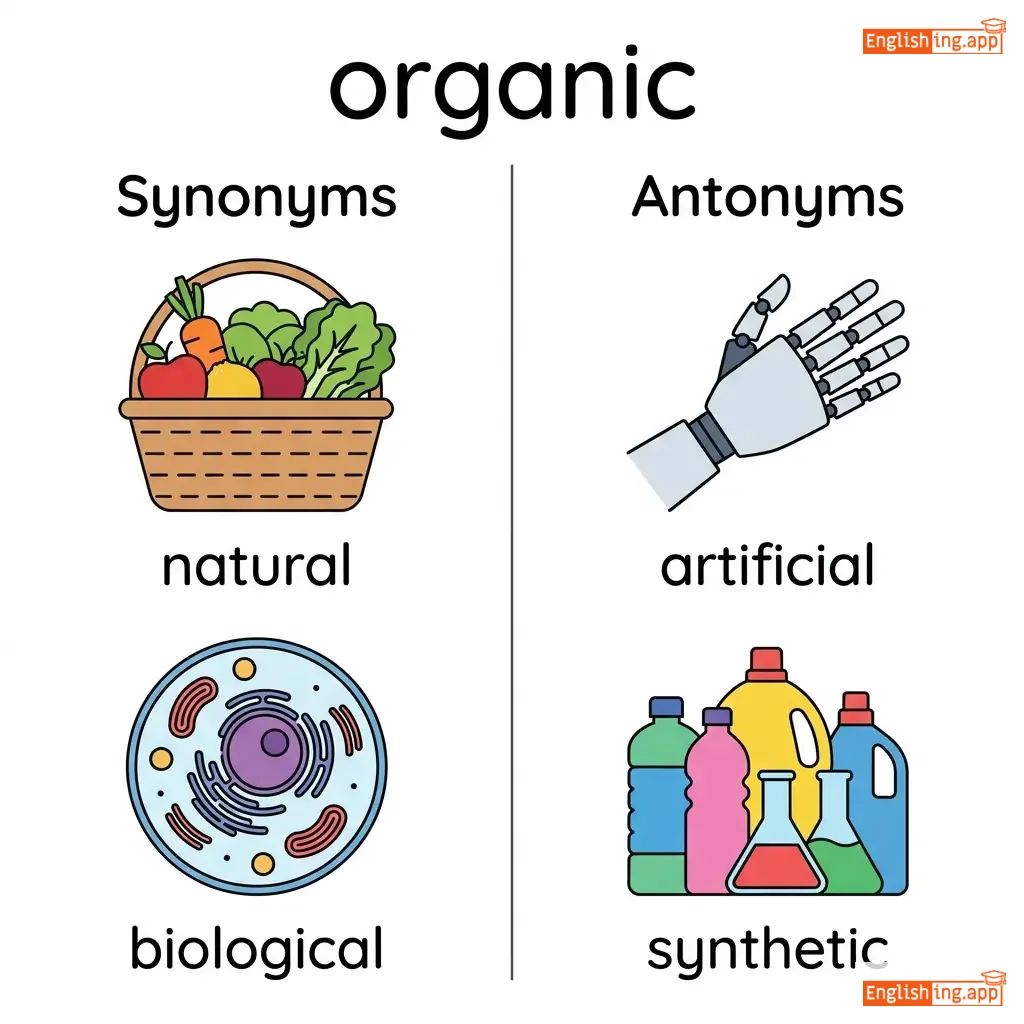
natural, biological, ecological, pure
••••••
|
artificial, synthetic, chemical
••••••
|
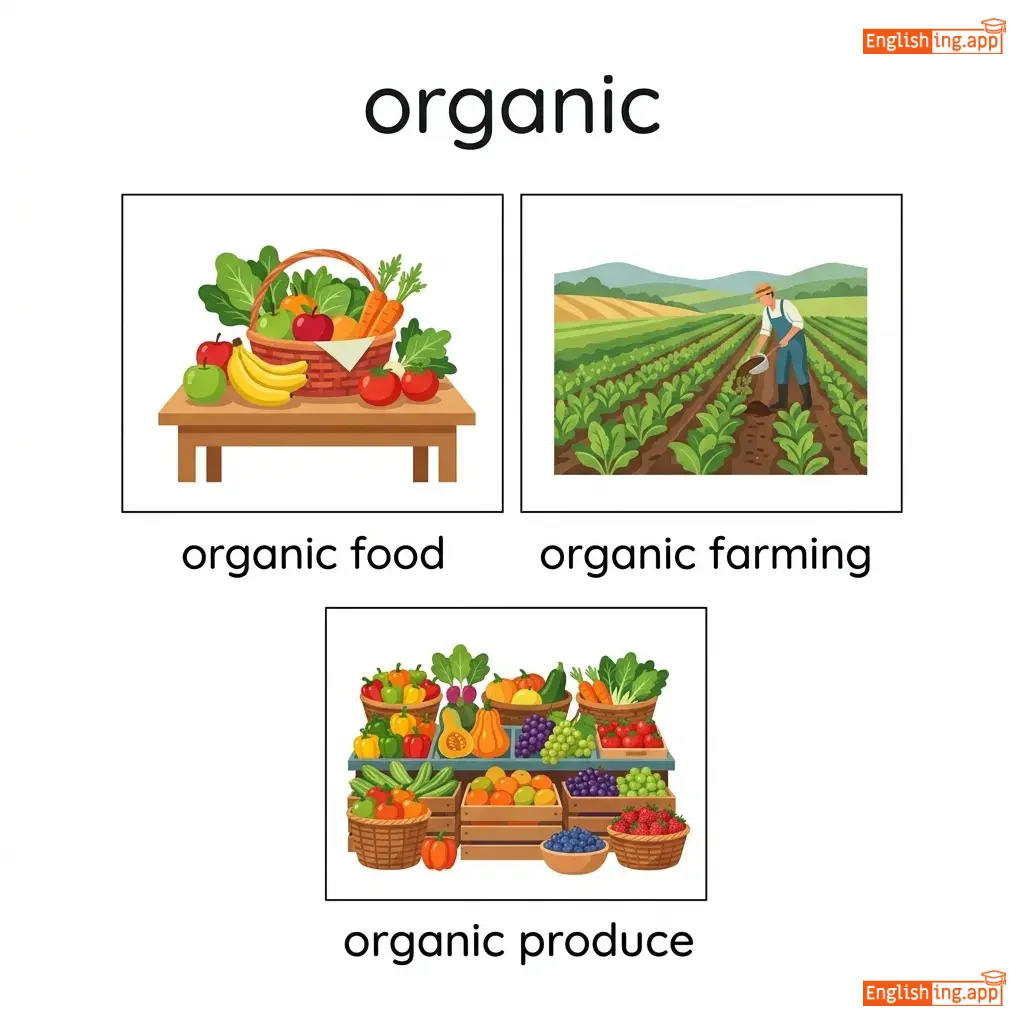
organic food, organic farming, organic produce, organic material
••••••
|
Органический = как органические продукты, природные.
••••••
|
|
#10055
📘
|
/ˈɔːrdəˌnɛri/
adjective
(орди-нари)
••••••
|
- •••••• |
обычный
obychny
••••••
|
- •••••• | - •••••• | - •••••• | - •••••• |
Common, usual, or not special; something that happens regularly.
••••••
|
She wore an ordinary dress to the party. |
Она носила обычное платье на вечеринку.
Ona nosila obychnoye plat'ye na vecherinku.
••••••
|
out of the ordinary |
Something unusual or different from what is normal.
••••••
|
вне обычного
vne obychnogo
••••••
|
common, usual, regular, normal, typical
••••••
|
extraordinary, exceptional, unusual
••••••
|
ordinary life, ordinary people, ordinary day, ordinary circumstances
••••••
|
‘Ordinary’ означает ‘порядок’ — всё в порядке, всё обычное.
••••••
|
|
#10056
🌞
|
/ˌɑːp.təˈmɪs.tɪk/
adjective
(оптимистик)
••••••
|
- •••••• |
оптимистичный
optimistichnyy
••••••
|
- •••••• | - •••••• | - •••••• | - •••••• |
hopeful and confident about the future
••••••
|
She is optimistic about the success of her new project. |
Она оптимистична относительно успеха своего нового проекта.
Ona optimistichna otnositel'no uspekha svoego novogo proyektu.
••••••
|
glass half full |
viewing a situation positively
••••••
|
половина стакана полна
polovina stakana polna
••••••
|
hopeful, positive, confident, cheerful, upbeat
••••••
|
pessimistic, doubtful, hopeless
••••••
|
optimistic view, optimistic outlook, optimistic about, remain optimistic
••••••
|
ОПТИМИСТИЧНЫЙ значит 'полный надежды' 🌞 — запомните, 'optimist' на английском языке это 'оптимистичный'.
••••••
|
|
#10057
🔓
|
/ˈoʊ.pən/
verb, adjective
••••••
|
- •••••• | - •••••• |
opened
••••••
|
opened
••••••
|
opens
••••••
|
opening
••••••
|
to move something so that it is no longer closed; not closed
••••••
|
She opened the window to let in fresh air. |
- •••••• |
open secret |
something widely known but not officially acknowledged
••••••
|
- •••••• |
uncover, unlock, reveal, accessible, available
••••••
|
close, shut, lock
••••••
|
open door, open window, open opportunity, open mind
••••••
|
No •••••• |
|
#10058
1️⃣
|
/wʌn/
pronoun, noun, adjective
(van)
••••••
|
- •••••• |
один
odin
••••••
|
- •••••• | - •••••• | - •••••• | - •••••• |
the number equivalent to the sum of zero and one; a single person or thing
••••••
|
Only one student answered the question.
Только один студент ответил на вопрос.
••••••
|
Только один студент ответил на вопрос.
Tol'ko odin student otvetil na vopros.
••••••
|
one of a kind
один из своего рода
••••••
|
unique; very special
••••••
|
один из своего рода
odin iz svoego roda
••••••
|
single, individual, sole, unique
••••••
|
many, multiple
••••••
|
one day, one time, one person, one chance
••••••
|
ONE означает один 1️⃣ — 'odin iz svoego roda' запомни
••••••
|
|
#10059
📖
|
/ɒn/
preposition
(он)
••••••
|
- •••••• |
на
na
••••••
|
- •••••• | - •••••• | - •••••• | - •••••• |
physically in contact with and supported by a surface
••••••
|
The book is on the table. |
Книга на столе.
Kniga na stole.
••••••
|
on time |
punctual; not late
••••••
|
вовремя
vovremya
••••••
|
upon, atop, over, above
••••••
|
off, away
••••••
|
on the table, on the way, on purpose, on duty
••••••
|
Книга на столе 📖 — запомните, что 'on' означает 'на'
••••••
|
|
#10060
😊
|
/naɪs/
adjective
(nais)
••••••
|
- •••••• |
милый
milyi
••••••
|
- •••••• | - •••••• | - •••••• | - •••••• |
pleasant, kind, or enjoyable
••••••
|
She is a very nice person to work with. |
Она очень приятный человек, с которым приятно работать.
Ona ochen' priyatnyi chelovek, s kotorym priyatno rabotat'.
••••••
|
nice and easy |
something simple and comfortable
••••••
|
приятно и легко
priyatno i legko
••••••
|
pleasant, kind, friendly, agreeable, charming
••••••
|
mean, rude, unpleasant
••••••
|
nice day, nice person, nice weather, nice job, nice to meet
••••••
|
Милый человек всегда приятно работать.
••••••
|
|
#10061
👶
|
/ˈɒf.sprɪŋ/
noun
(оф-спринг)
••••••
|
- •••••• |
потомство
potomstvo
••••••
|
- •••••• | - •••••• | - •••••• | - •••••• |
a person's child or children; an animal's young
••••••
|
The bird carefully fed its offspring.
Птица осторожно кормит свое потомство.
••••••
|
Птица осторожно кормит свое потомство.
Ptitsa ostorozhno kormit svoe potomstvo.
••••••
|
- •••••• | - •••••• | - •••••• |
children, progeny, descendants, young
••••••
|
parent, ancestor
••••••
|
human offspring, animal offspring, produce offspring, healthy offspring
••••••
|
Offspring = 'off' (вне) + 'spring' (весна) → новый цикл жизни → потомство.
••••••
|
|
#10062
🏢
|
/ˈɒf.ɪs/
noun
(ofis)
••••••
|
- •••••• |
офис
ofis
••••••
|
- •••••• | - •••••• | - •••••• | - •••••• |
a room or building where people work, usually at desks
••••••
|
She left the office early to attend a family event.
Она ушла из офиса рано, чтобы посетить семейное мероприятие.
••••••
|
Она ушла из офиса рано, чтобы посетить семейное мероприятие.
Ona ushla iz ofisa rano, chtoby posetit' semeynoe meropriyatie.
••••••
|
hold office
занимать пост
••••••
|
to be in a position of authority or responsibility
••••••
|
занимать пост
zanimat' post
••••••
|
workplace, bureau, department, agency, company
••••••
|
home, outdoors
••••••
|
office building, office hours, office desk, office staff
••••••
|
Офис - это место для работы; в офисе люди всегда работают.
••••••
|
|
#10063
😠
|
/əˈfɛnd/
verb
(офенд)
••••••
|
- •••••• |
обидеть
obidet
••••••
|
offended
офендед
••••••
|
offended
офендед
••••••
|
offends
офендс
••••••
|
offending
офендийнг
••••••
|
to cause someone to feel upset, insulted, or annoyed
••••••
|
She didn’t mean to offend anyone with her remarks.
Она не хотела обидеть кого-либо своими замечаниями.
••••••
|
Она не хотела обидеть кого-либо своими замечаниями.
Ona ne khotela obidet' kogo-libo svoimi zamechaniyami.
••••••
|
take offense
воспринять как обиду
••••••
|
to feel insulted or hurt
••••••
|
воспринять как обиду
vosprinyat' kak obidu
••••••
|
insult, upset, irritate, annoy, disrespect
••••••
|
please, satisfy, comfort
••••••
|
offend someone, deeply offend, intentionally offend, offend against
••••••
|
Обидеть — это причинить боль через слова.
••••••
|
|
#10064
🤔
|
/ɒd/
adjective
(одд)
••••••
|
- •••••• |
странный
strannyy
••••••
|
- •••••• | - •••••• | - •••••• | - •••••• |
different from what is usual or expected; strange or peculiar
••••••
|
He has some odd habits that surprise everyone. |
У него есть несколько странных привычек, которые удивляют всех.
U nego yest' neskol'ko strannykh privychek, kotorye udivlyayut vsekh.
••••••
|
odd one out |
something or someone that is different from the rest
••••••
|
чёрная овца
chornaya ovtsa
••••••
|
strange, unusual, peculiar, weird, irregular
••••••
|
normal, usual, regular
••••••
|
odd number, odd job, odd behavior, odd coincidence
••••••
|
Odd означает странный; Odd = странно.
••••••
|
|
#10065
👀
|
/ˈɒb.vi.əs/
adjective
(обвиэс)
••••••
|
- •••••• |
очевидный
ochevidny
••••••
|
- •••••• | - •••••• | - •••••• | - •••••• |
easily perceived or understood; clear and apparent
••••••
|
It was obvious that she was upset after the meeting. |
Было очевидно, что она была расстроена после встречи.
Bylo ochevidno, chto ona byla rasstroena posle vstrechi.
••••••
|
the obvious choice |
something that is the most evident or suitable option
••••••
|
очевидный выбор
ochevidnyy vybor
••••••
|
clear, evident, apparent, noticeable, plain
••••••
|
hidden, unclear, obscure
••••••
|
obvious reason, obvious fact, obvious mistake, obvious difference
••••••
|
Очевидный = очевидно, как очевидное решение.
••••••
|
|
#10066
🙇
|
/oʊˈbeɪ/
verb
(обей)
••••••
|
|
повиноваться
povinovatsya
••••••
|
obeyed
обейд
••••••
|
obeyed
обейд
••••••
|
obeys
обейс
••••••
|
obeying
обеинг
••••••
|
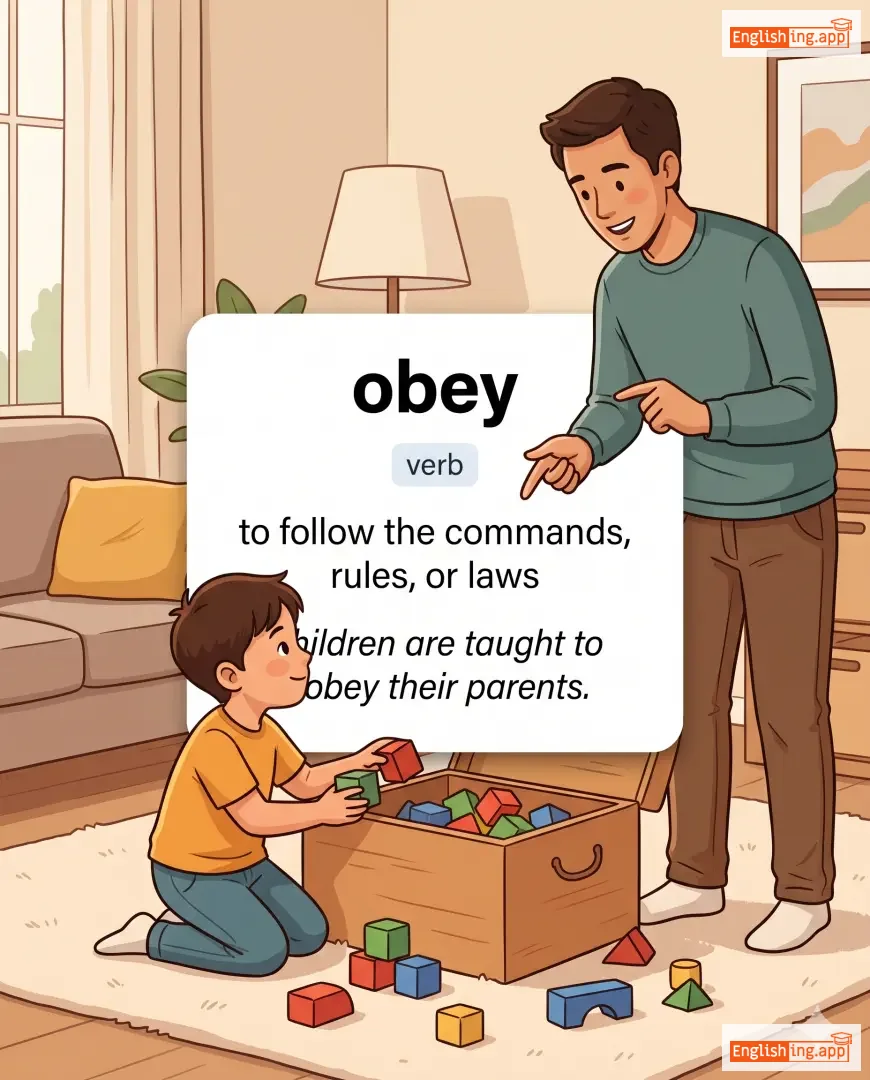
to follow the commands, rules, or laws
••••••
|
Children are taught to obey their parents.
Детей учат повиноваться своим родителям.
••••••
|
Детей учат повиноваться своим родителям.
Detey uchat' povinovatsya svoim roditelyam.
••••••
|
obey the law
повиноваться закону
••••••
|
to follow legal rules and regulations
••••••
|
повиноваться закону
povinovatsya zakonu
••••••
|
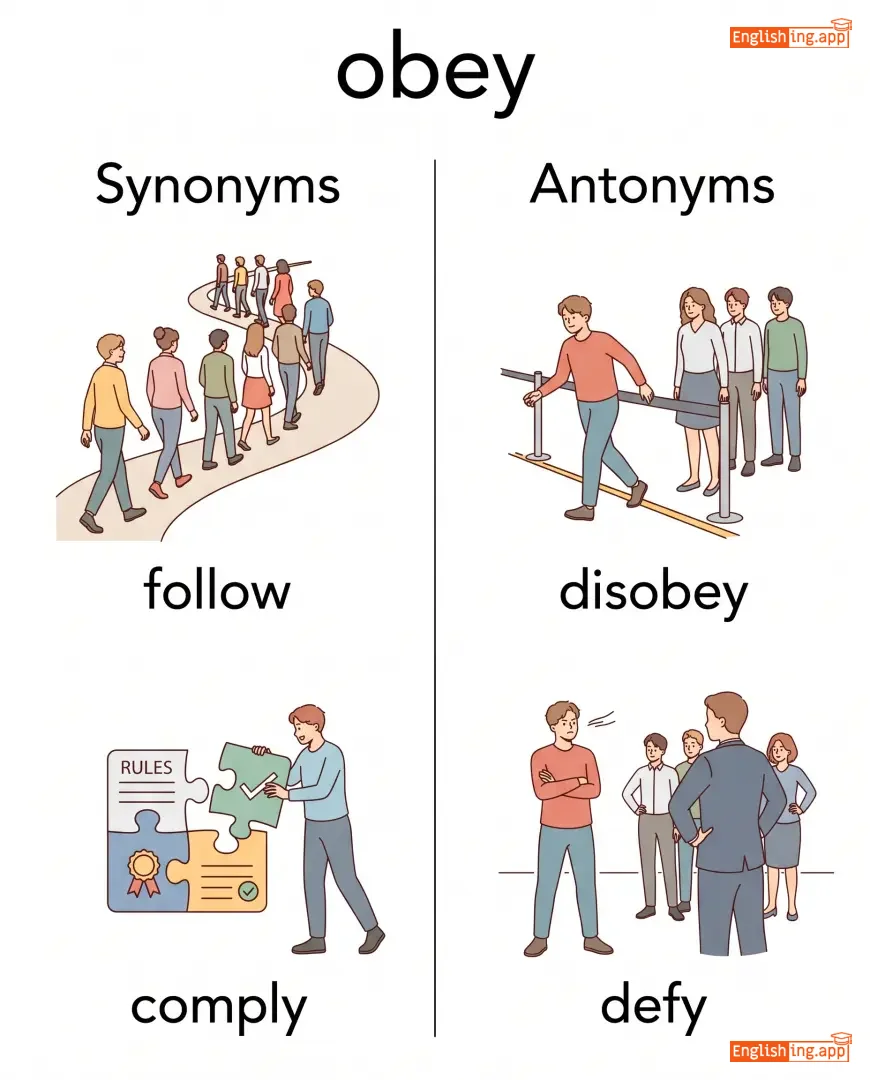
follow, comply, respect, submit
••••••
|
disobey, defy
••••••
|
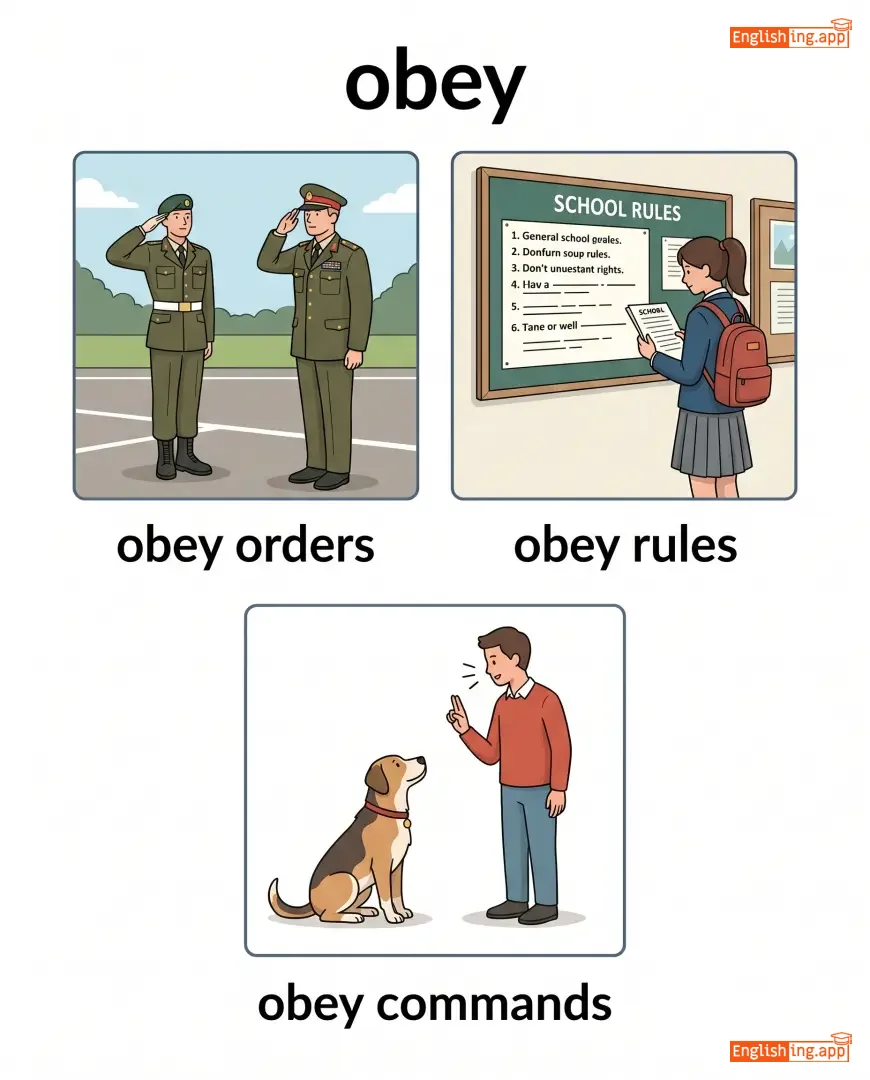
obey orders, obey rules, obey commands, obey instantly
••••••
|
Повиноваться — это следовать приказам — по (повиноваться) вин (законам).
••••••
|
|
#10067
🔢
|
/ˈnjuːmərəs/
adjective
(ньюмерос)
••••••
|
- •••••• |
множество
mnozhestvo
••••••
|
- •••••• | - •••••• | - •••••• | - •••••• |
existing in large numbers; many
••••••
|
There are numerous opportunities for growth in this field.
Существует множество возможностей для роста в этой области.
••••••
|
Существует множество возможностей для роста в этой области.
Sushchestvuyet mnozhestvo vozmozhnostey dlya rosta v etoy oblasti.
••••••
|
- •••••• | - •••••• | - •••••• |
many, countless, abundant, multiple
••••••
|
few, scarce
••••••
|
numerous times, numerous opportunities, numerous examples, numerous occasions
••••••
|
Numerous означает много — Number от Numerous, означает много чисел.
••••••
|
|
#10068
📢
|
/ˈnoʊtɪfaɪ/
verb
(ноутифа́й)
••••••
|
- •••••• |
уведомить
uvedomit
••••••
|
notified
ноутифа́йд
••••••
|
notified
ноутифа́йд
••••••
|
notifies
ноутифа́йз
••••••
|
notifying
ноутифа́йинг
••••••
|
to inform someone officially about something
••••••
|
The manager will notify the staff about the schedule change.
Менеджер уведомит персонал о смене расписания.
••••••
|
Менеджер уведомит персонал о смене расписания.
Menedzher uvedomit personal o smene raspisaniya.
••••••
|
notify of
уведомить о
••••••
|
to inform about something specific
••••••
|
уведомить о
uvedomit o
••••••
|
inform, alert, announce, communicate
••••••
|
hide, conceal
••••••
|
notify immediately, notify customers, notify authorities, notify in writing
••••••
|
Notify означает уведомить — уведомление приходит, когда нужно сообщить.
••••••
|
|
#10069
⭐
|
/ˈnoʊtɪd/
adjective, verb
(ноутид)
••••••
|
- •••••• |
известный
izvestny
••••••
|
noted
ноутид
••••••
|
noted
ноутид
••••••
|
- •••••• | - •••••• |
well known or famous; written down or observed
••••••
|
He is a noted author in the field of history.
Он известный автор в области истории.
••••••
|
Он известный автор в области истории.
On izvestnyy avtory v oblasti istorii.
••••••
|
- •••••• | - •••••• | - •••••• |
renowned, famous, distinguished, prominent
••••••
|
unknown, obscure
••••••
|
noted scholar, noted for, noted writer, noted speaker
••••••
|
Noted означает известный — как автор, о котором все знают.
••••••
|
|
#10070
📝
|
/noʊt/
noun, verb
(ноут)
••••••
|
|
заметка
zametka
••••••
|
noted
ноутед
••••••
|
noted
ноутед
••••••
|
notes
ноутс
••••••
|
noting
ноутинг
••••••
|
a brief record of facts, topics, or thoughts written down; to observe or remark upon something
••••••
|
She wrote a quick note to remind herself of the meeting.
Она написала быстрые заметки, чтобы напомнить себе о встрече.
••••••
|
Она написала быстрые заметки, чтобы напомнить себе о встрече.
Ona napisal bystrye zametki, chtoby napomnit' sebe o vstreche.
••••••
|
take note
обратить внимание
••••••
|
to pay attention or give special consideration
••••••
|
обратить внимание
obratit' vnimanie
••••••
|
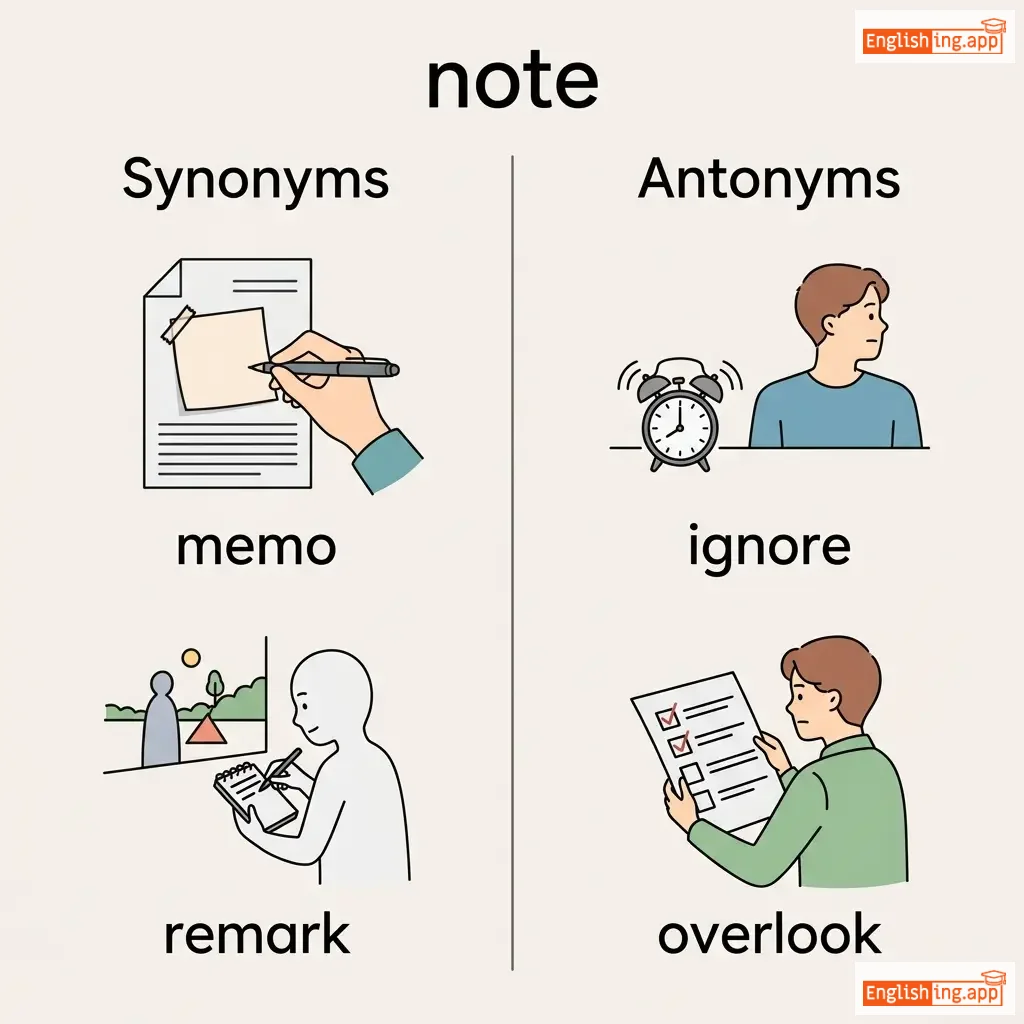
memo, remark, message, record, observation
••••••
|
ignore, overlook
••••••
|
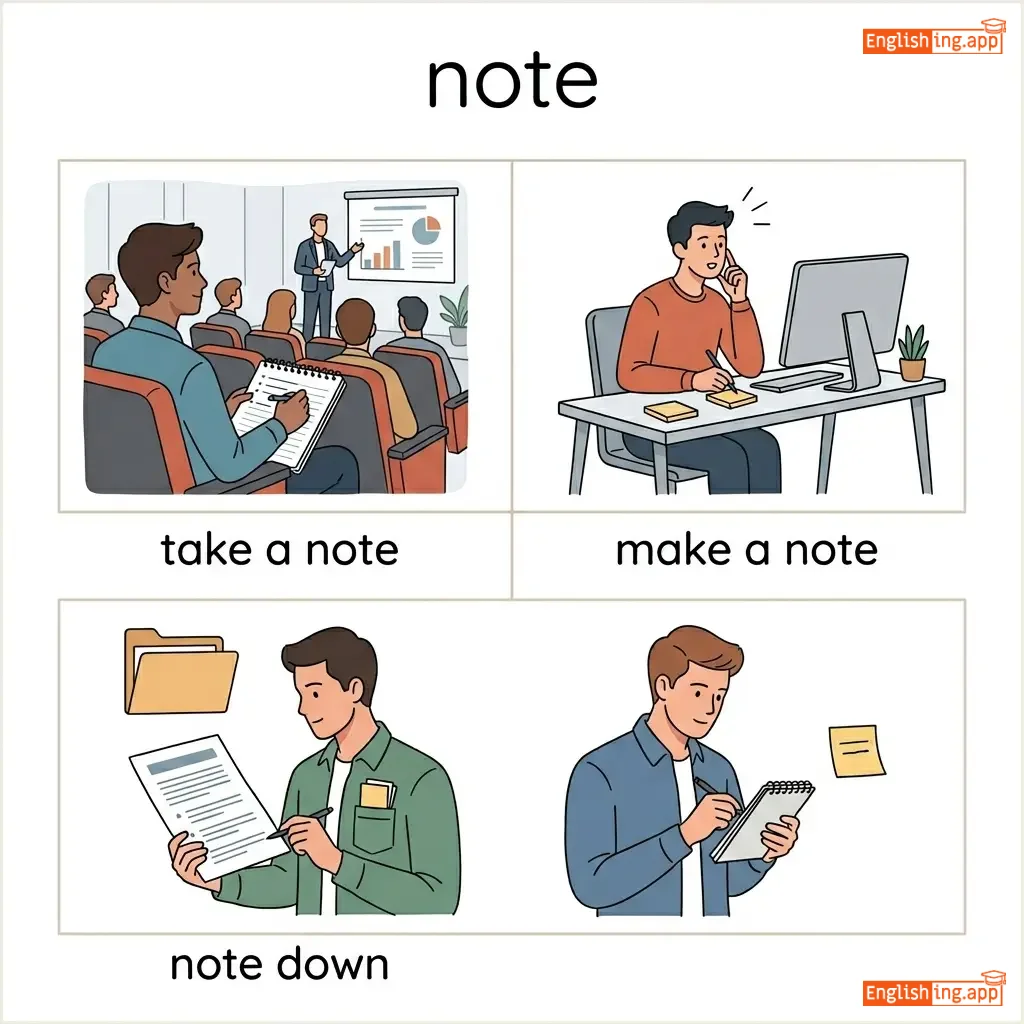
take a note, make a note, note down, note carefully
••••••
|
Записать важное, чтобы не забыть.
••••••
|
|
#10071
📏
|
/ˈnɔː.məl/
adjective
(нормал)
••••••
|
- •••••• |
нормальный
normal'nyy
••••••
|
- •••••• | - •••••• | - •••••• | - •••••• |
conforming to a standard; usual, typical, or expected
••••••
|
It is normal to feel nervous before an interview. |
Это нормально чувствовать нервозность перед интервью.
Eto normal'no chuvstvovat' nervoznost' pered interview.
••••••
|
back to normal |
returning to a usual or typical state
••••••
|
вернуться к норме
vernut'sya k norme
••••••
|
usual, ordinary, typical, standard, regular
••••••
|
abnormal, unusual, strange
••••••
|
normal life, normal situation, normal condition, back to normal
••••••
|
Normal = нормальный, всё по порядку 🧳
••••••
|
|
#10072
☀️
|
/nuːn/
noun
(нун)
••••••
|
- •••••• |
полдень
polden
••••••
|
- •••••• | - •••••• | - •••••• | - •••••• |
12 o'clock in the daytime; midday
••••••
|
The meeting will start at noon. |
Встреча начнется в полдень.
Vstrecha nachnyotsya v polden.
••••••
|
high noon |
exactly midday; sometimes used to describe a decisive confrontation
••••••
|
полдень
polden
••••••
|
midday, twelve o'clock, middaytime
••••••
|
midnight
••••••
|
at noon, by noon, until noon, high noon
••••••
|
Noon означает полдень, солнце ☀️ в зените
••••••
|
|
#10073
👑
|
/nəʊˈbɪləti/
noun
(нобилити)
••••••
|
- •••••• |
благородство
blagorodstvo
••••••
|
- •••••• | - •••••• | - •••••• | - •••••• |
the quality of being noble in character or the group of people belonging to the aristocracy
••••••
|
The king praised her for her nobility and courage.
Царь похвалил её за её благородство и мужество.
••••••
|
Царь похвалил её за её благородство и мужество.
Tsar' pokhvalil yeyo za yeye blagorodstvo i muzhestrvo.
••••••
|
- •••••• | - •••••• | - •••••• |
aristocracy, honor, dignity, virtue
••••••
|
baseness, dishonor
••••••
|
nobility of spirit, nobility of character, the nobility
••••••
|
Noble + ity = Благородство означает благородство
••••••
|
|
#10074
🌙
|
/ˈnaɪt.fɔːl/
noun
(naytfɔl)
••••••
|
- •••••• |
сумерки
sumyerki
••••••
|
- •••••• | - •••••• | - •••••• | - •••••• |
the time when night begins; dusk
••••••
|
They decided to return home before nightfall. |
Они решили вернуться домой до наступления сумерек.
Oni reshili vernut'sya domoy do nastupleniya sumerek.
••••••
|
- •••••• | - •••••• | - •••••• |
dusk, evening, sundown, twilight
••••••
|
daybreak, sunrise
••••••
|
before nightfall, until nightfall, at nightfall
••••••
|
Night + Fall = сумерки
••••••
|
Vocabulary Quiz
Test your vocabulary by matching words with their translations or meanings.
Login to take the quiz
Comments (0)
Share your thoughts and join the discussion.
Join the discussion by logging in
Login to CommentNo comments yet
Be the first to share your thoughts!