

Обновитесь для доступа ко всему словарю
Получите неограниченный доступ ко всем словам с подпиской Pro
Обновить до ProПеревод
Прошедшее
Причастие прошедшего времени
Третье лицо единственного числа
Герундий
Значение
Пример предложения
Перевод примера предложения
Синонимы
Антонимы
Коллокации
Мнемоника

Swipe left or right, or use the buttons. Tap image to zoom.
Обновитесь для доступа ко всем предложениям
Получите неограниченный доступ ко всем предложениям с подпиской Pro
Обновить до ProПеревод примера предложения
Слово
Lesson 165Lesson 165 - Переключатель маски
|
Эмодзи
|
Слово | Images | Перевод | Прошедшее | Причастие прошедшего времени | Третье лицо единственного числа | Герундий | Значение | Пример предложения | Перевод примера предложения | Пример выражения | Значение примера выражения | Перевод примера выражения | Синонимы | Антонимы | Коллокации | Мнемоника |
|---|---|---|---|---|---|---|---|---|---|---|---|---|---|---|---|---|---|
|
#4921
🧳
|
/aɪˈtɪnərənt/
adjective
(айтинерант)
••••••
|
|
странствующий
stranstvuyushchiy
••••••
|
- •••••• | - •••••• | - •••••• | - •••••• |
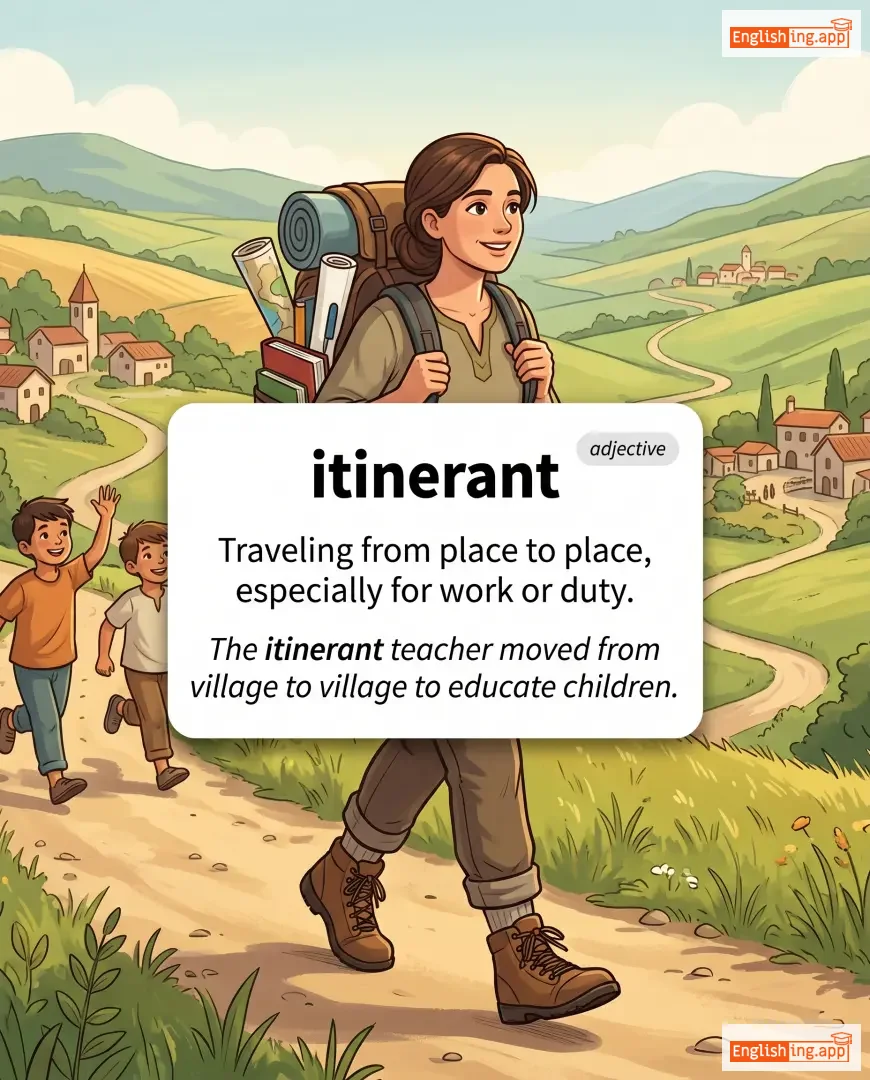
Traveling from place to place, especially for work or duty.
••••••
|
The itinerant teacher moved from village to village to educate children. |
Странствующий учитель переезжал из деревни в деревню, чтобы обучать детей.
Stranstvuyushchiy uchitel' pereezhal iz derevni v derevnyu, chtoby obuchat' detey.
••••••
|
- •••••• | - •••••• | - •••••• |
wandering, roving, traveling, nomadic, peripatetic
••••••
|
settled, stationary, resident
••••••
|
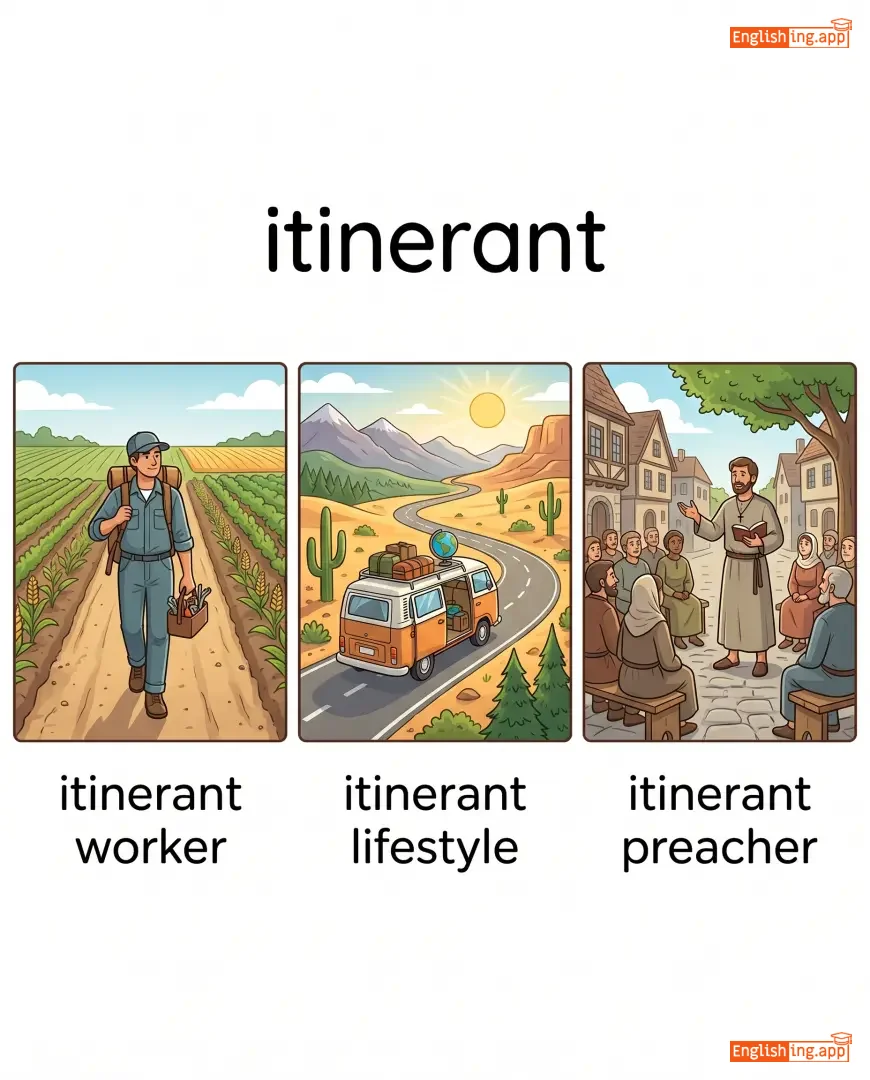
itinerant worker, itinerant lifestyle, itinerant preacher, itinerant musician
••••••
|
Странствующий означает путешествующий – представьте себе учителя, который путешествует по деревням.
••••••
|
|
#4922
⚠️
|
/ˈdʒɛpərdaɪz/
verb
(джепардаиз)
••••••
|
|
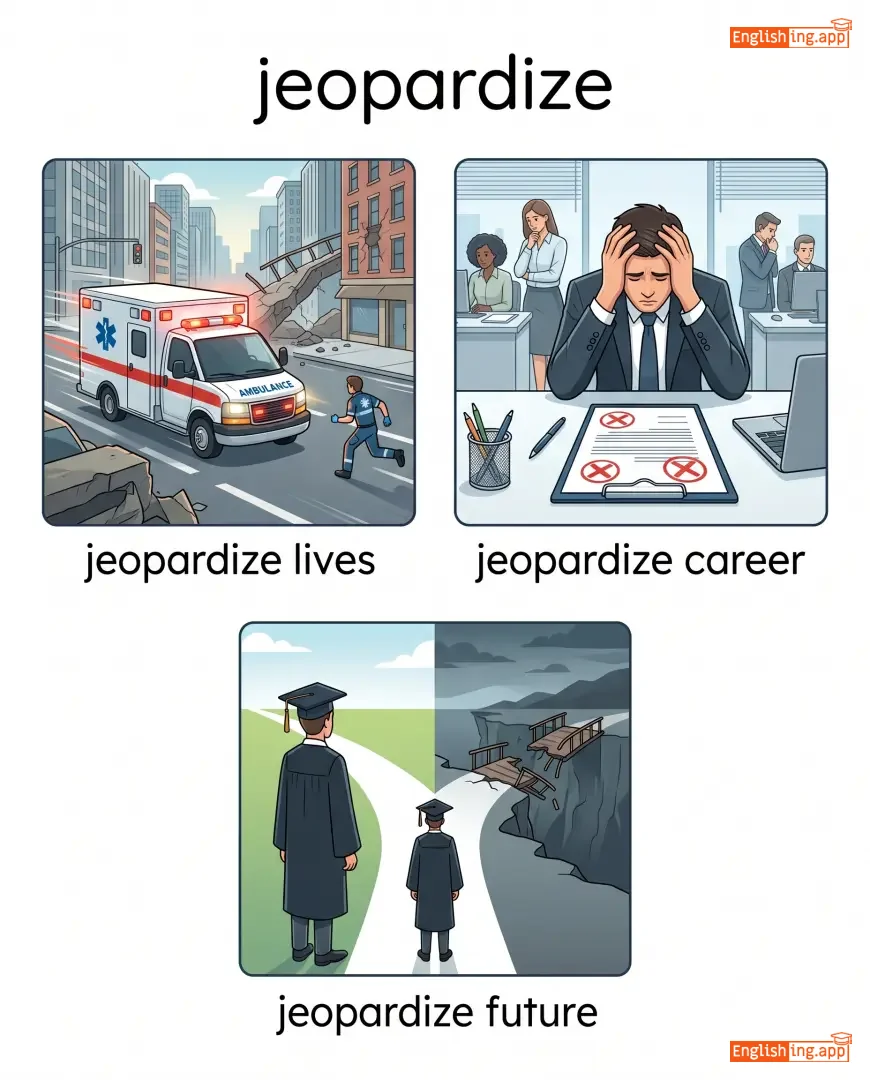
подвергать опасности
podvergat' opasnosti
••••••
|
jeopardized
джепардаизд
••••••
|
jeopardized
джепардаизд
••••••
|
jeopardizes
джепардаизез
••••••
|
jeopardizing
джепардаизинг
••••••
|
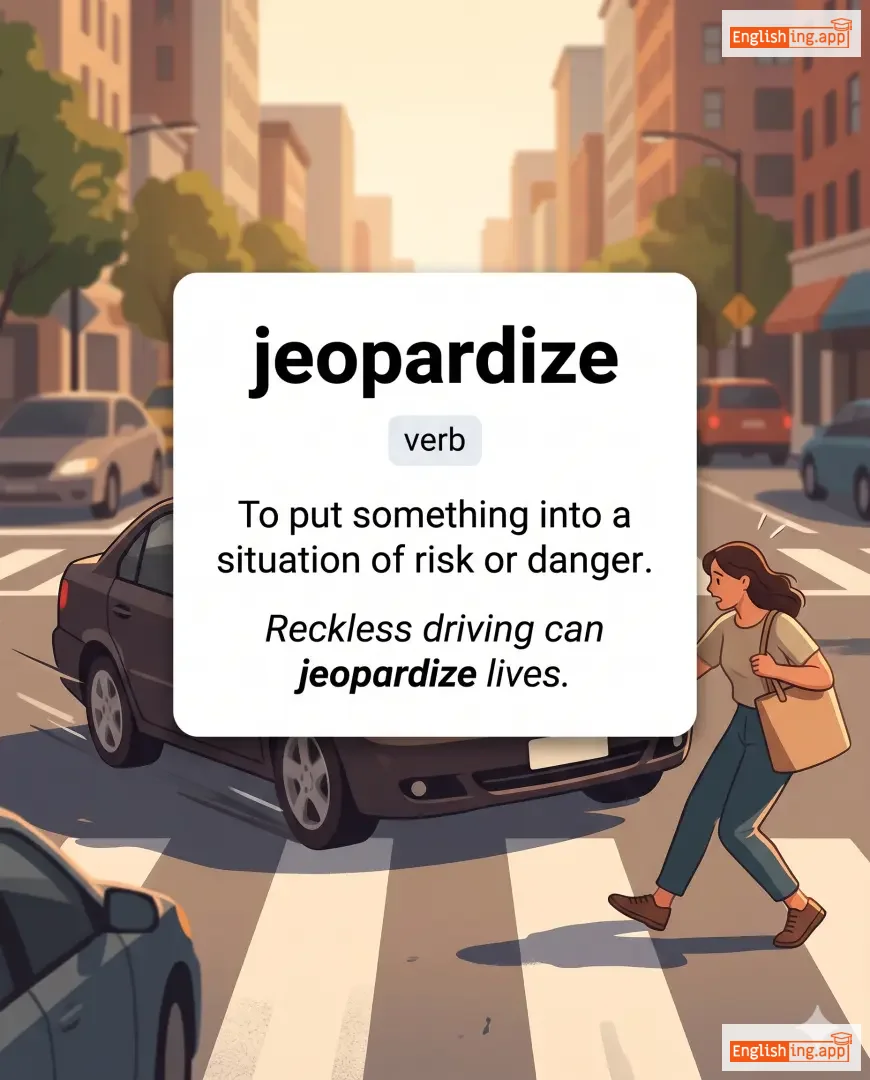
To put something into a situation of risk or danger.
••••••
|
Reckless driving can jeopardize lives.
Безрассудное вождение может поставить жизни под угрозу.
••••••
|
Безрассудное вождение может поставить жизни под угрозу.
Bezrassudnoe vozdenie mozhet postavit' zhizni pod ugrozu.
••••••
|
jeopardize the future
поставить будущее под угрозу
••••••
|
to put the future at risk
••••••
|
поставить будущее под угрозу
postavit' budushchee pod ugrozu
••••••
|
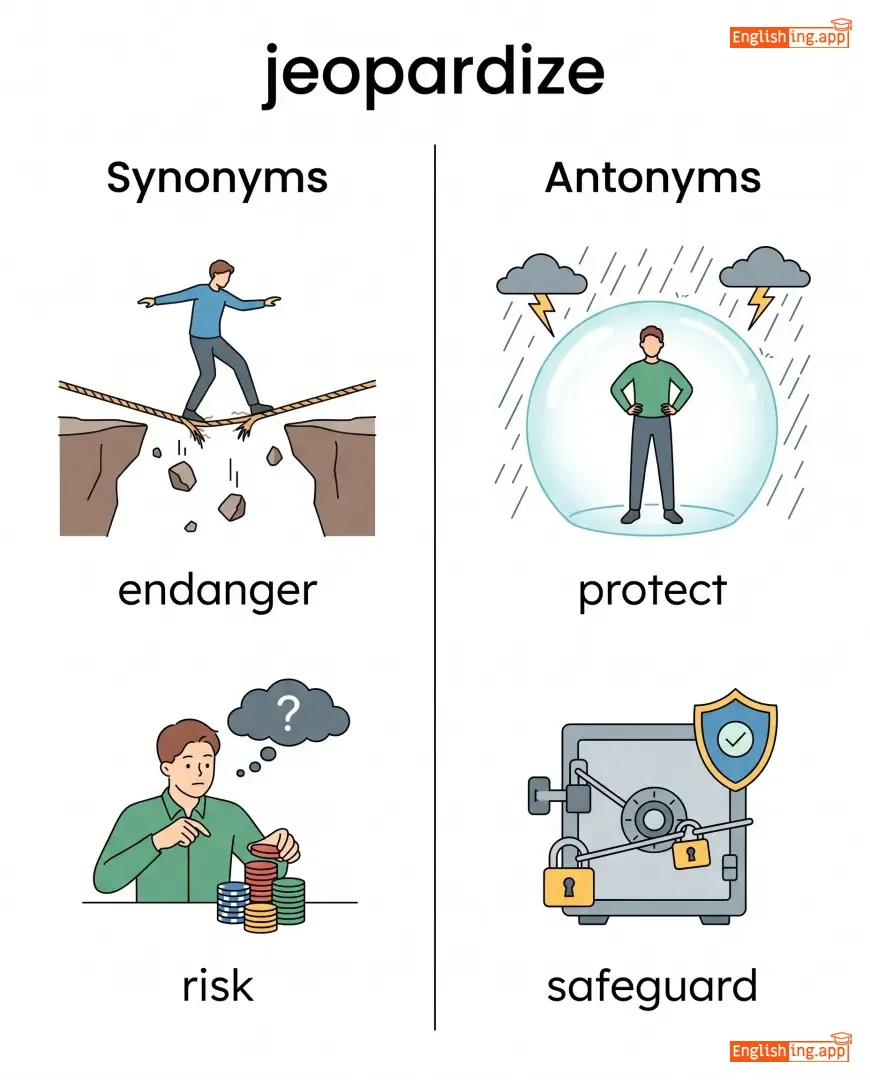
endanger, risk, imperil, threaten, compromise
••••••
|
protect, safeguard, secure
••••••
|
jeopardize lives, jeopardize career, jeopardize future, jeopardize health
••••••
|
Jeopardize означает подвергать опасности — как в игре Jeopardy, если ты ошибешься, ты рискуешь потерять приз.
••••••
|
|
#4923
🙄
|
/dʒɪˈdʒuːn/
adjective
(джиˈжун)
••••••
|
- •••••• |
наивный / поверхностный / скучный
naivnyj / poverkhnostnyj / skuchnyj
••••••
|
- •••••• | - •••••• | - •••••• | - •••••• |
Naive, simplistic, and superficial; also dull or uninteresting.
••••••
|
The professor dismissed the essay as jejune and lacking depth. |
Профессор отклонил эссе как наивное и без глубины.
Professor otklonil esse kak naivnoe i bez glubiny.
••••••
|
- •••••• | - •••••• | - •••••• |
immature, simplistic, shallow, trivial, naive
••••••
|
mature, profound, deep
••••••
|
jejune ideas, jejune argument, jejune writing
••••••
|
Jejune напоминает ‘жизнь простая’, что означает что-то скучное и поверхностное.
••••••
|
|
#4924
😎
|
/ˈdʒɔːnti/
adjective
(джонти)
••••••
|
- •••••• |
оживленный
ozhivlennyy
••••••
|
- •••••• | - •••••• | - •••••• | - •••••• |
Having a lively, cheerful, and self-confident manner or appearance.
••••••
|
He walked into the room with a jaunty step. |
Он вошел в комнату с оживленным шагом.
On voshel v komnatu s ozhivlennym shagom.
••••••
|
- •••••• | - •••••• | - •••••• |
cheerful, lively, buoyant, confident, spirited
••••••
|
gloomy, depressed, dull
••••••
|
jaunty step, jaunty hat, jaunty smile
••••••
|
Jaunty = Веселый + Уверенный — всегда с энергией и уверенностью!
••••••
|
|
#4925
🚗
|
/dʒɔːnt/
noun
(джонт)
••••••
|
- •••••• |
короткая поездка
korotkaya poyezdka
••••••
|
- •••••• | - •••••• | - •••••• | - •••••• |
A short journey or excursion, usually taken for pleasure.
••••••
|
They went on a weekend jaunt to the countryside. |
Они поехали на короткую поездку в деревню на выходных.
Oni poyekhali na korotkuyu poyezdku v derevnyu na vykhodnykh.
••••••
|
- •••••• | - •••••• | - •••••• |
trip, excursion, outing, tour, journey
••••••
|
stay, permanence
••••••
|
weekend jaunt, little jaunt, holiday jaunt
••••••
|
Jaunt = Короткая поездка для отдыха.
••••••
|
|
#4926
😒
|
/ˈdʒɔːndɪst/
adjective
(джондист)
••••••
|
|
предвзятый / завистливый / поражённый желтухой
predvzyatyj / zavistlivyj / porazhyonnij zheltukhoy
••••••
|
- •••••• | - •••••• | - •••••• | - •••••• |
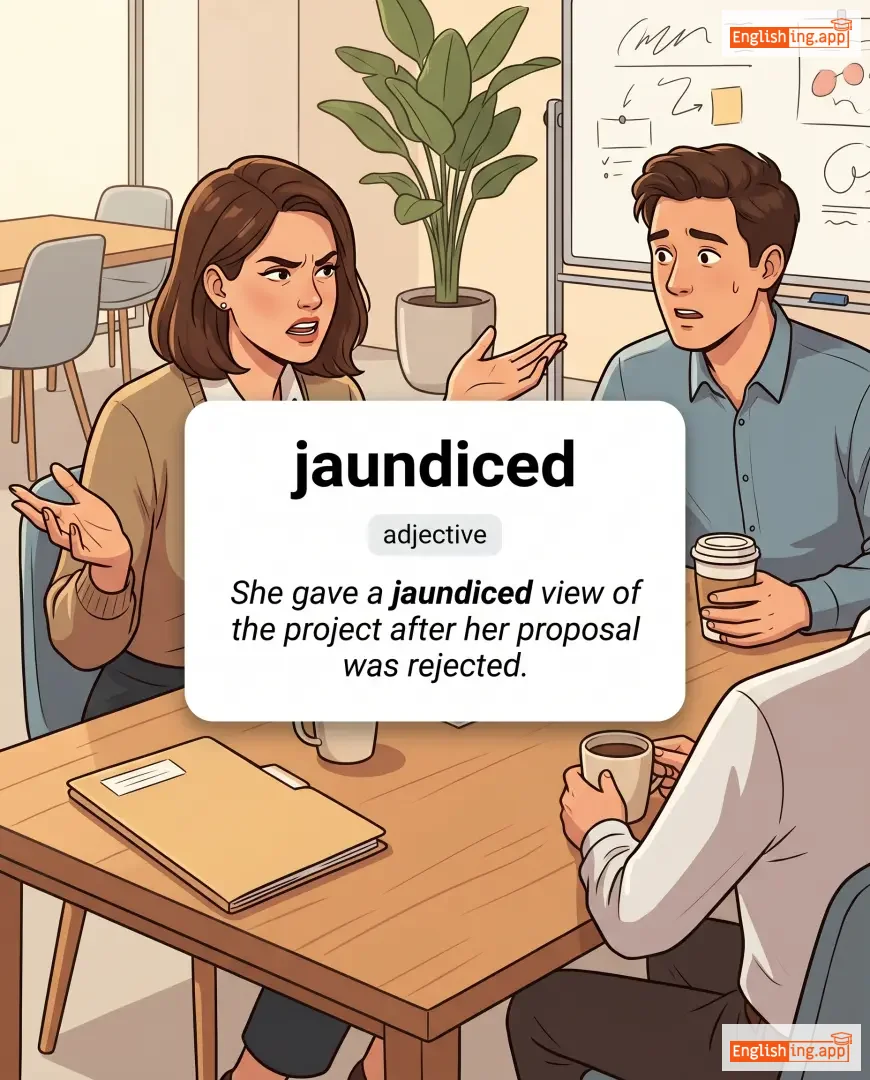
Affected by or displaying prejudice, envy, or bitterness; also refers to having a yellowish discoloration of the skin due to jaundice.
••••••
|
She gave a jaundiced view of the project after her proposal was rejected. |
Она дала предвзятое мнение о проекте после того, как её предложение было отклонено.
Ona dala predvzyatoe mnenie o proyekte posle togo, kak yejo predlozhenie bylo otkloneno.
••••••
|
- •••••• | - •••••• | - •••••• |
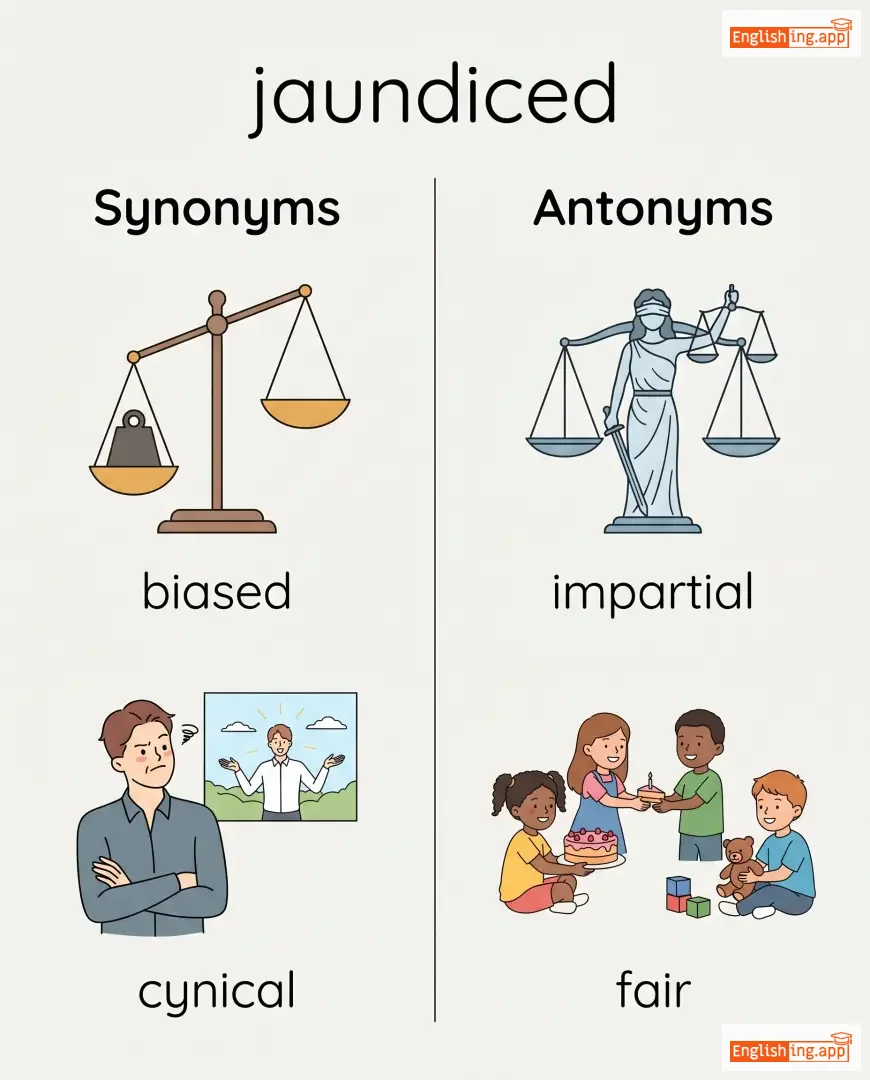
biased, cynical, resentful, prejudiced, skeptical
••••••
|
impartial, fair, unbiased
••••••
|
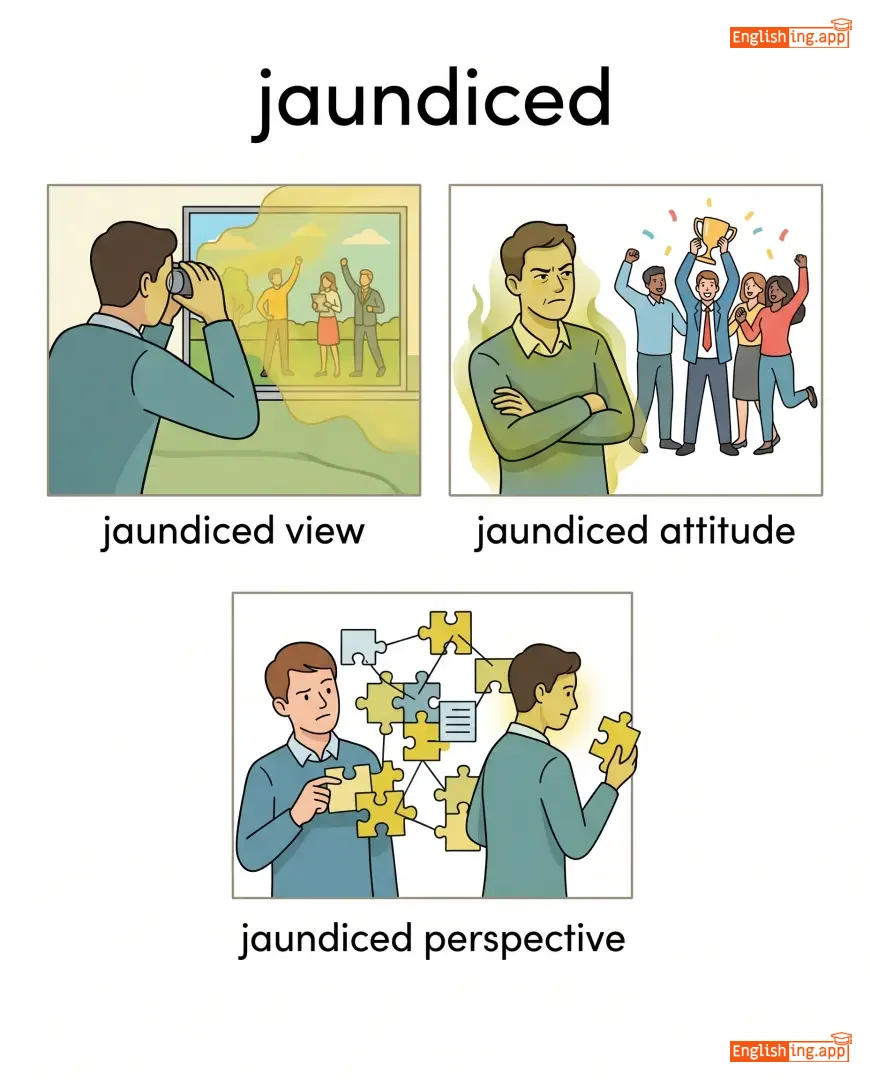
jaundiced view, jaundiced attitude, jaundiced perspective
••••••
|
Желтуха вызывает пожелтение кожи, и 'жёлтый' взгляд — это предвзятое мнение.
••••••
|
|
#4927
🟡
|
/ˈdʒɔːn.dɪs/
noun
(джондис)
••••••
|
- •••••• |
желтуха
zheltukha
••••••
|
- •••••• | - •••••• | - •••••• | - •••••• |
A medical condition in which the skin and eyes become yellow due to liver problems.
••••••
|
The doctor diagnosed the baby with jaundice. |
Доктор поставил диагноз ребенку — желтуха.
Doktor postavil diagnoz rebenku — zheltukha.
••••••
|
jaundiced view |
a biased or cynical outlook
••••••
|
предвзятое мнение
predzyatoe mnenie
••••••
|
yellowing, liver disease, icterus
••••••
|
health, wellness
••••••
|
neonatal jaundice, jaundice patient, jaundice symptoms
••••••
|
Желтуха = желтая кожа и глаза из-за печени, легко запоминается.
••••••
|
|
#4928
⚡
|
/ˈdʒɑː.rɪŋ/
adjective
(джаринг)
••••••
|
- •••••• |
пугающий, неожиданный удар
pugayushchiy, neozhidannyy udar
••••••
|
- •••••• | - •••••• | - •••••• | - •••••• |
Striking or shocking in a way that creates a strong contrast or clash.
••••••
|
The sudden loud noise was jarring to everyone in the room. |
Внезапный громкий шум был шокирующим для всех в комнате.
Vnezapnyy gromkiy shum byl shokiruyushchim dlya vsekh v komnate.
••••••
|
- •••••• | - •••••• | - •••••• |
shocking, disturbing, unpleasant, grating
••••••
|
pleasant, soothing, harmonious
••••••
|
jarring sound, jarring effect, jarring contrast
••••••
|
Jarring звучит как шок, что-то, что вас пугает или раздражает.
••••••
|
|
#4929
🗣️
|
/ˈdʒɑːr.ɡən/
noun
(жаргон)
••••••
|
- •••••• |
жаргон
zhargon
••••••
|
- •••••• | - •••••• | - •••••• | - •••••• |
Specialized or technical language used by a particular group or profession.
••••••
|
The lawyer’s explanation was full of legal jargon. |
Объяснение адвоката было полно юридического жаргона.
Ob'yasnenie advokata bylo polno yuridicheskogo zhargona.
••••••
|
technical jargon |
special words or phrases used in a specific technical field
••••••
|
технический жаргон
tekhnicheskiy zhargon
••••••
|
terminology, lingo, argot, slang, dialect
••••••
|
plain language, simplicity
••••••
|
legal jargon, medical jargon, technical jargon
••••••
|
Jargon означает сложный язык – чем больше жаргона, тем сложнее работа.
••••••
|
|
#4930
😂
|
/dʒeɪp/
noun
(джейп)
••••••
|
- •••••• |
шутка, прикол
shutka, prikol
••••••
|
- •••••• | - •••••• | - •••••• | - •••••• |
A practical joke or humorous remark.
••••••
|
He enjoyed a harmless jape with his friends.
Он насладился безобидной шуткой с друзьями.
••••••
|
Он насладился безобидной шуткой с друзьями.
On naslazhdyalsya bezobidnoy shutkoy s druz'yami.
••••••
|
- •••••• | - •••••• | - •••••• |
joke, jest, prank, gag
••••••
|
seriousness, sincerity
••••••
|
harmless jape, playful jape, silly jape
••••••
|
Jape звучит как 'joke', что означает шутка или прикол.
••••••
|
|
#4931
😩
|
/ˈdʒeɪ.dɪd/
adjective
(ˈʤeɪ.dɪd)
••••••
|
- •••••• |
утомленный, равнодушный
utomlennyj, ravnodushnyj
••••••
|
- •••••• | - •••••• | - •••••• | - •••••• |
Tired, bored, or lacking enthusiasm, typically after having had too much of something.
••••••
|
After years of traveling, she felt jaded by the constant movement. |
После многих лет путешествий, она почувствовала усталость от постоянного движения.
Posle mnogikh let puteshestvij, ona pochuvstvovala ustalost ot postoyannogo dvizhniya.
••••••
|
jaded appetite |
a loss of interest or enthusiasm due to overindulgence
••••••
|
утомленный аппетит
utomlennyy appetit
••••••
|
weary, tired, bored, apathetic, cynical
••••••
|
enthusiastic, energetic, fresh
••••••
|
jaded by, jaded feeling, jaded traveler, jaded outlook
••••••
|
Джадед (Jaded) означает камень, но слишком много его может усталить.
••••••
|
|
#4932
🗣️
|
/ˈdʒæbər/
verb
(джабер)
••••••
|
- •••••• |
болтать
boltat
••••••
|
jabbered
джаберд
••••••
|
jabbered
джаберд
••••••
|
jabbers
джаберс
••••••
|
jabbering
джаберинг
••••••
|
To talk quickly and excitedly but with little sense.
••••••
|
The children jabbered happily after the show.
Дети джаберили счастливо после шоу.
••••••
|
Дети болтали счастливо после шоу.
Deti boltali schastlivo posle shou.
••••••
|
- •••••• | - •••••• | - •••••• |
chatter, babble, prattle, ramble, gabble
••••••
|
silence, muteness
••••••
|
jabber away, jabber excitedly, jabber nonsense
••••••
|
Jabber означает болтать – представьте, что Джаббер всегда болтает.
••••••
|
|
#4933
👊
|
/dʒæb/
verb
(джаб)
••••••
|
- •••••• |
пихать
pihat
••••••
|
jabbed
••••••
|
jabbed
••••••
|
jabs
••••••
|
jabbing
••••••
|
To poke or thrust quickly, often with a finger or something pointed.
••••••
|
He jabbed his finger at the map to show the location. |
Он пихал пальцем по карте, чтобы показать местоположение.
On pikhал pal'tsem po karte, chtoby pokazat' mestopolozhenie.
••••••
|
jab someone in the ribs |
to poke someone playfully in the side
••••••
|
пихать кого-то в ребра
pihat' kogo-to v rebra
••••••
|
poke, prod, thrust, punch, stab
••••••
|
caress, pat
••••••
|
jab hard, jab finger, jab needle, jab punch
••••••
|
Jab значит пихать – представьте, что врач пихает иглой!
••••••
|
|
#4934
🚶
|
/aɪˈtɪnəˌreɪt/
verb
(aitineret)
••••••
|
- •••••• |
путешествовать
puteshestvovat
••••••
|
itinerated
aitinereted
••••••
|
itinerated
aitinereted
••••••
|
itinerates
aitinerets
••••••
|
itinerating
aitinereting
••••••
|
To travel from place to place, usually for the purpose of work or preaching.
••••••
|
The missionary itinerated throughout the region to spread the message.
Миссионер путешествовал по региону, чтобы распространить послание.
••••••
|
Миссионер путешествовал по региону, чтобы распространить послание.
Missioner puteshestvoval po regionu, chtoby rasprostranit poslanie.
••••••
|
- •••••• | - •••••• | - •••••• |
travel, journey, wander, roam, peregrinate
••••••
|
settle, stay, remain
••••••
|
itinerate regularly, itinerate through, itinerate region
••••••
|
Itinerar означает путешествовать – Представьте, что он путешествует по интернету.
••••••
|
|
#4935
🗺️
|
/aɪˈtɪnərɛri/
noun
(aɪˈtɪnərɛri)
••••••
|
|
маршрут
marshrut
••••••
|
- •••••• | - •••••• | - •••••• | - •••••• |
A planned route or schedule of a journey or trip.
••••••
|
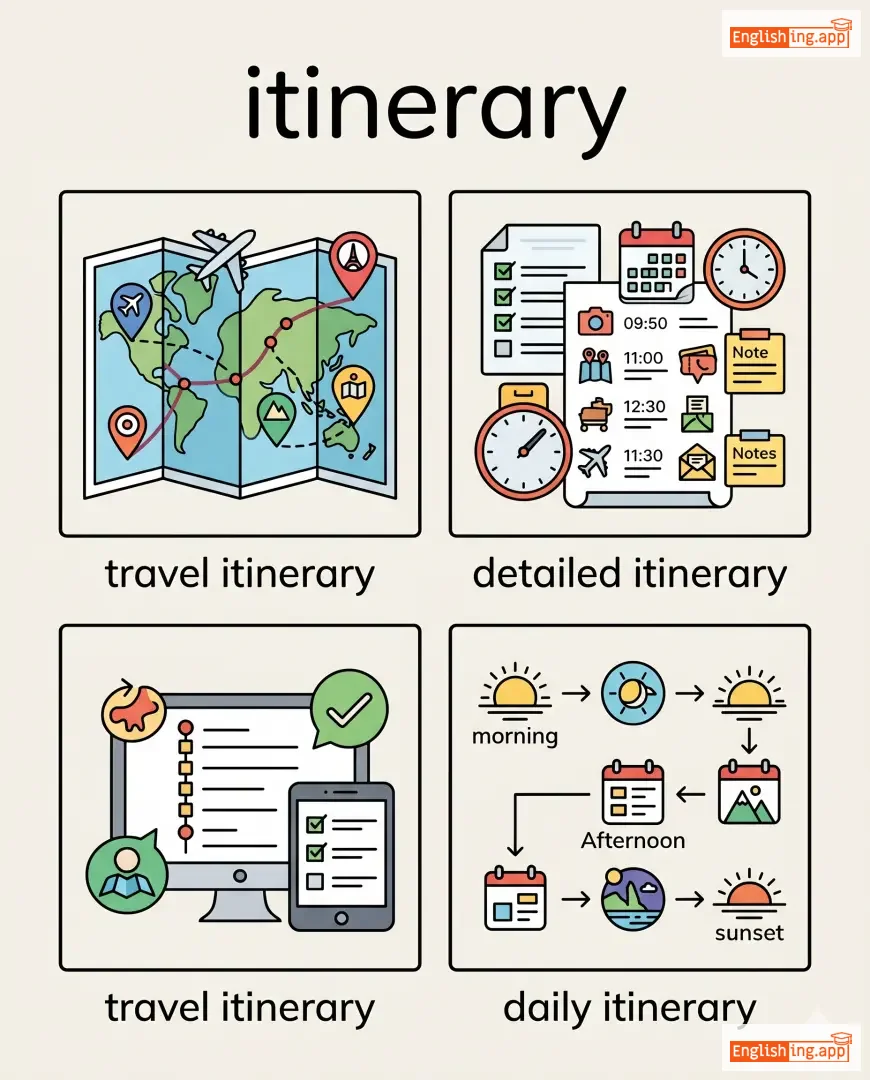
The travel agent gave us a detailed itinerary for our vacation. |
Туристический агент дал нам подробный маршрут для нашего отпуска.
Turisticheskiy agent dal nam podrobnoye marshrut dlya nashego otpuska.
••••••
|
- •••••• | - •••••• | - •••••• |
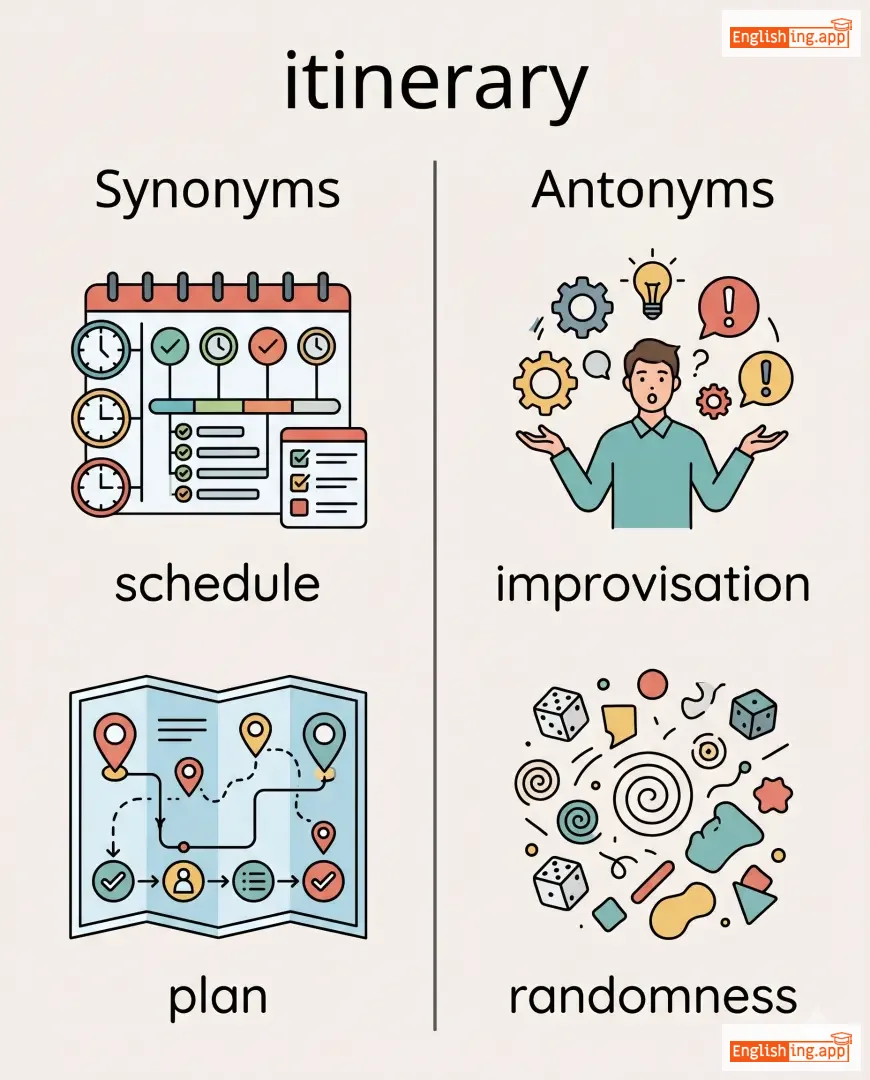
schedule, plan, agenda, route, timetable
••••••
|
improvisation, randomness
••••••
|
travel itinerary, detailed itinerary, daily itinerary, itinerary plan
••••••
|
Itinerary означает маршрут – запомни 'ITIN' = In Time, In Route.
••••••
|
|
#4936
😠
|
/ˈɪrɪtəbl/
adjective
••••••
|
- •••••• | - •••••• | - •••••• | - •••••• | - •••••• | - •••••• |
easily annoyed or made angry
••••••
|
She became irritable after working long hours without rest. |
- •••••• |
irritable mood |
a state of being easily annoyed or angered
••••••
|
- •••••• |
grumpy, short-tempered, cranky, testy, moody
••••••
|
calm, patient, cheerful
••••••
|
irritable child, irritable behavior, irritable response, feel irritable
••••••
|
No •••••• |
|
#4937
🔄
|
/ˈɪtəreɪt/
verb
(итерировать)
••••••
|
- •••••• |
итерировать
iterirovat
••••••
|
iterated
итерировал
••••••
|
iterated
итерировал
••••••
|
iterates
итерирует
••••••
|
iterating
итерируя
••••••
|
To repeat a process or statement, often to improve or refine.
••••••
|
The software team will iterate the design until it meets user needs.
Команда разработчиков будет итерационно улучшать дизайн до тех пор, пока он не будет соответствовать требованиям пользователей.
••••••
|
Команда разработчиков будет итерационно улучшать дизайн до тех пор, пока он не будет соответствовать требованиям пользователей.
Komanda razrabotchikov budet iterrirovat' dizajn do tekh por, poka on ne budet sootvetstvovat' trebuyemym pol'zovateley.
••••••
|
iterate over
итерировать по
••••••
|
to go through each item in a sequence one by one
••••••
|
итерировать по
iterirovat po
••••••
|
repeat, redo, revise, cycle, loop
••••••
|
ignore, skip
••••••
|
iterate process, iterate design, iterate quickly, iterate over data
••••••
|
Итерация - это как повторение процесса, как в цикле.
••••••
|
|
#4938
🌍
|
/ˈɪsməs/ or /ˈɪsθməs/
noun
(исмус)
••••••
|
- •••••• |
перешеек
peresheek
••••••
|
- •••••• | - •••••• | - •••••• | - •••••• |
A narrow strip of land connecting two larger land areas, often with water on either side.
••••••
|
The Panama Canal cuts through the Isthmus of Panama. |
Панамский канал проходит через перешеек Панамы.
Panamskiy kanal prokhodit cherez peresheek Panamy.
••••••
|
- •••••• | - •••••• | - •••••• |
land bridge, neck, causeway, peninsula
••••••
|
strait, wide landmass
••••••
|
Isthmus of Panama, narrow isthmus, coastal isthmus
••••••
|
Isthmus = перешеек → Подумайте о перешейке Панамы, который соединяет две большие земли.
••••••
|
|
#4939
📄
|
/ˈɪʃuː/
noun, verb
(isshu)
••••••
|
- •••••• |
проблема, публикация, распределение
problema, publikatsiya, raspredeleniye
••••••
|
issued
isshud
••••••
|
issued
isshud
••••••
|
issues
issuz
••••••
|
issuing
issuing
••••••
|
A problem, topic, or the act of supplying or distributing something.
••••••
|
The magazine will issue a new edition next week.
Журнал выпустит новое издание на следующей неделе.
••••••
|
Журнал выпустит новое издание на следующей неделе.
Zhurnal vypustit novoye izdaniye na sleduyushchey nedele.
••••••
|
take issue with
иметь проблему с чем-то
••••••
|
to disagree strongly with something
••••••
|
иметь разногласия с чем-то
imet' raznoglasiya s chem-to
••••••
|
problem, matter, topic, distribute, release
••••••
|
solution, agreement
••••••
|
serious issue, raise an issue, address an issue, issue a statement
••••••
|
Issue означает проблема— как результат issue вызывает проблему.
••••••
|
|
#4940
⚛️
|
/ˈaɪsətəʊp/
noun
(айсотоп)
••••••
|
- •••••• |
изотоп
izotop
••••••
|
- •••••• | - •••••• | - •••••• | - •••••• |
Atoms of the same element with equal number of protons but different numbers of neutrons.
••••••
|
Carbon-14 is a radioactive isotope used in dating fossils. |
Углерод-14 — это радиоактивный изотоп, используемый для датировки окаменелостей.
Uglerod-14 — eto radioaktivnyy izotop, ispol'zuyemyy dlya datirovki okanenelostey.
••••••
|
- •••••• | - •••••• | - •••••• |
variant, atomic form, nuclide, isotope species
••••••
|
element, uniform atom
••••••
|
radioactive isotope, stable isotope, isotope analysis, isotope ratio
••••••
|
Iso означает одинаковый + топ означает тип → одинаковые элементы, разные типы = изотоп.
••••••
|
|
#4941
🌡️
|
/ˌaɪsəʊˈθɜːrməl/
adjective
(aizotermal)
••••••
|
- •••••• |
изотермический
izotermicheskiy
••••••
|
- •••••• | - •••••• | - •••••• | - •••••• |
Having or maintaining equal or constant temperature.
••••••
|
The experiment was conducted under isothermal conditions. |
Эксперимент был проведён при изотермических условиях.
Eksperiment byl provedyony pri izotermicheskikh usloviyakh.
••••••
|
- •••••• | - •••••• | - •••••• |
constant-temperature, uniform, steady, stable
••••••
|
variable, fluctuating
••••••
|
isothermal process, isothermal condition, isothermal reaction, isothermal expansion
••••••
|
Iso значит одинаковый, термический значит тепло — так что изотермический значит одинаковая температура (изотермический).
••••••
|
|
#4942
🛑
|
/ˈaɪ.sə.leɪt/
verb
(айсолейт)
••••••
|
- •••••• |
изолировать
izolirovat
••••••
|
isolated
изолированный
••••••
|
isolated
изолированный
••••••
|
isolates
изолирует
••••••
|
isolating
изолируя
••••••
|
To separate something or someone from others.
••••••
|
Doctors tried to isolate the patient to prevent the spread of infection.
Врачи пытались изолировать пациента, чтобы предотвратить распространение инфекции.
••••••
|
Врачи пытались изолировать пациента, чтобы предотвратить распространение инфекции.
Vrachi pytalis izolirovat patsiyenta, chtoby predotvratit rasprostranenie infektsii.
••••••
|
isolate oneself
изолировать себя
••••••
|
to deliberately avoid contact with others
••••••
|
изолировать себя
izolirovat sebya
••••••
|
separate, detach, segregate, quarantine, seclude
••••••
|
unite, connect, integrate
••••••
|
isolate the virus, isolate the problem, isolate from others, isolate oneself
••••••
|
изолировать означает оставить кого-то одного, как лед ❄️
••••••
|
|
#4943
⏱️
|
/aɪˈsɒ.krə.nəs/
adjective
(айˈсокрoнoс)
••••••
|
- •••••• |
происходящий через равные промежутки времени
proiskhodyashchiy cherez ravnye promezhutki vremeni
••••••
|
- •••••• | - •••••• | - •••••• | - •••••• |
Occurring at equal time intervals; in unison or synchrony.
••••••
|
The pendulum swings are isochronous, repeating at equal intervals. |
Колебания маятника изохроны, повторяются через равные интервалы.
Kolebaniya mayatnika izokhrony, povtoryayutsya cherez ravnye intervaly.
••••••
|
- •••••• | - •••••• | - •••••• |
synchronous, simultaneous, rhythmic, periodic
••••••
|
asynchronous, irregular
••••••
|
isochronous motion, isochronous oscillation, isochronous process
••••••
|
Iso = одинаково, chronos = время → Isochronous = через равные промежутки времени ⏱️
••••••
|
|
#4944
🌦️
|
/ˈaɪ.səˌbɑːr/
noun
(айсобáр)
••••••
|
- •••••• |
изобара
izobara
••••••
|
- •••••• | - •••••• | - •••••• | - •••••• |
A line on a weather map connecting points of equal atmospheric pressure.
••••••
|
The meteorologist explained how isobars indicate wind speed and direction. |
Метеоролог объяснил, как изобары показывают скорость и направление ветра.
Meteorolog ob'yasnil, kak izobary pokazyvayut skorost' i napravlenie vetra.
••••••
|
- •••••• | - •••••• | - •••••• |
pressure line, contour line, weather line
••••••
|
altitude line
••••••
|
weather isobar, pressure isobar, isobar map, draw isobars
••••••
|
Iso = одинаковый, bar = давление → Линия одинакового давления = изобара 🌦️
••••••
|
|
#4945
🌊
|
/ˈaɪ.lət/
noun
(айлэт)
••••••
|
- •••••• |
островок
ostrovok
••••••
|
- •••••• | - •••••• | - •••••• | - •••••• |
A very small island.
••••••
|
The fishermen rested on a tiny islet before continuing their journey. |
Рыбаки отдыхали на маленьком островке, прежде чем продолжить свое путешествие.
Rybaki otdykhali na malen'kom ostrovke, prezhde chem prodolzhit' svoe puteshestvie.
••••••
|
- •••••• | - •••••• | - •••••• |
island, cay, atoll, key, reef
••••••
|
mainland, continent
••••••
|
tiny islet, coral islet, remote islet, rocky islet
••••••
|
Islet = маленький остров - островок 🌊
••••••
|
|
#4946
🏝️
|
/aɪl/
noun
(aɪl)
••••••
|
- •••••• |
маленький остров
malen'kiy ostrov
••••••
|
- •••••• | - •••••• | - •••••• | - •••••• |
A small island or peninsula, often poetic or literary.
••••••
|
They spent their honeymoon on a beautiful tropical isle. |
Они провели медовый месяц на прекрасном тропическом острове.
oni proveli medovyy mesyats na prekrasnom tropicheskom ostrove.
••••••
|
isle of peace |
a calm and peaceful place
••••••
|
остров мира
ostrov mira
••••••
|
island, atoll, cay, key, peninsula
••••••
|
mainland, continent
••••••
|
lonely isle, tropical isle, remote isle, isle of beauty
••••••
|
Остров - это маленькая версия 'island' на английском - маленький остров 🏝️
••••••
|
|
#4947
🚨
|
/ɪˈrʌpʃən/
noun
(ирʌпшн)
••••••
|
- •••••• |
иррупция
irruptsiya
••••••
|
- •••••• | - •••••• | - •••••• | - •••••• |
a sudden and violent entry or invasion
••••••
|
The irruption of protesters surprised the authorities. |
Иррупция протестующих удивила власти.
Irrupciya protestuyushchikh udivila vlasti.
••••••
|
- •••••• | - •••••• | - •••••• |
invasion, incursion, outbreak, surge
••••••
|
retreat, withdrawal
••••••
|
sudden irruption, violent irruption, irruption of protesters, irruption into
••••••
|
Иррупция как внезапное вторжение, как взрыв.
••••••
|
|
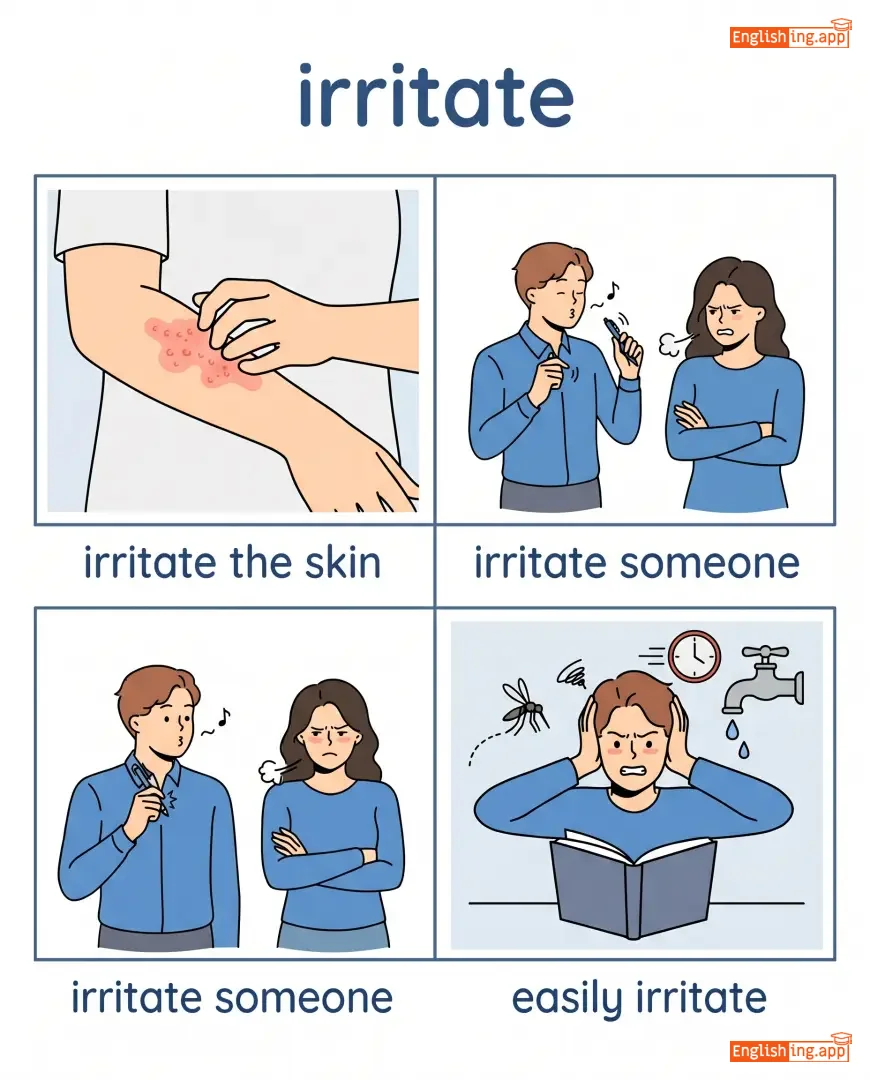
#4948
😤
|
/ˈɪrɪteɪt/
verb
(ирритировать)
••••••
|
|
раздражать
razdrazhat
••••••
|
irritated
раздражать
••••••
|
irritated
раздражать
••••••
|
irritates
раздражает
••••••
|
irritating
раздражая
••••••
|
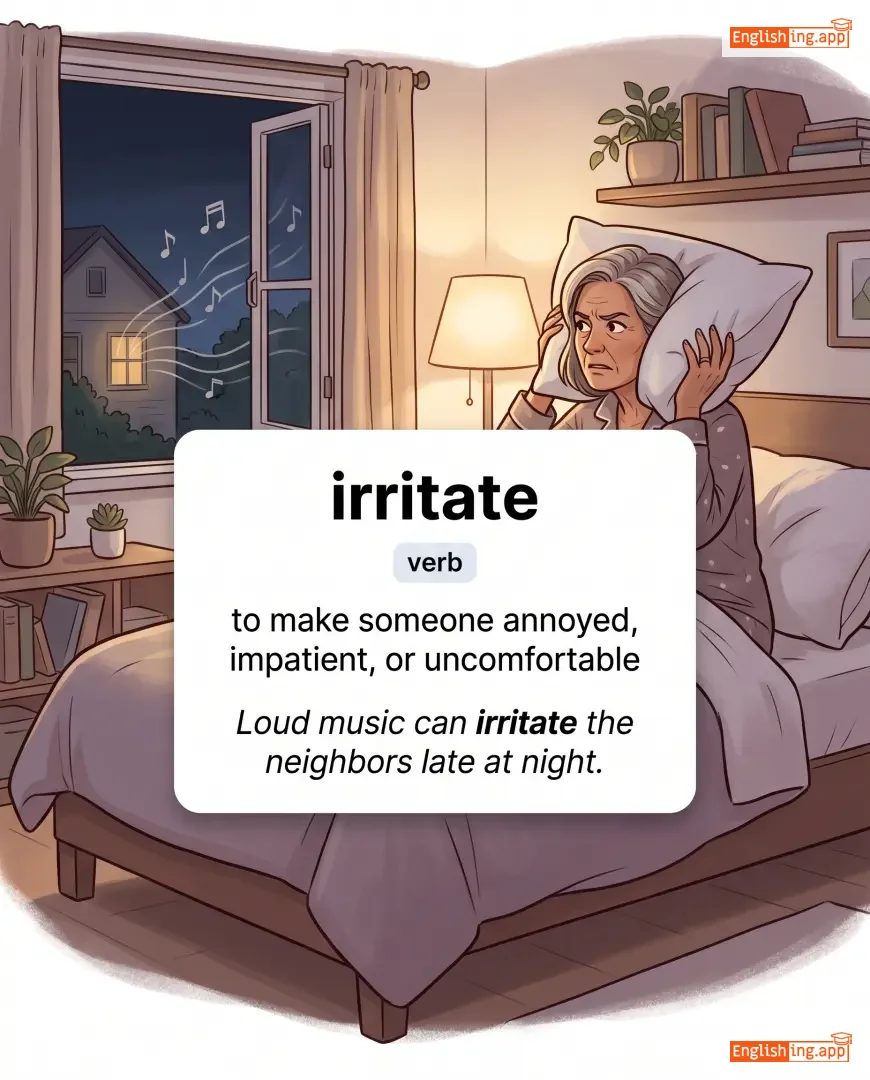
to make someone annoyed, impatient, or uncomfortable
••••••
|
Loud music can irritate the neighbors late at night.
Громкая музыка может раздражать соседей поздно ночью.
••••••
|
Громкая музыка может раздражать соседей поздно ночью.
Gromkaya muzyka mozhet razdrazhat' sosedey pozdno noch'yu.
••••••
|
rub the wrong way
терзать не по делу
••••••
|
to annoy or irritate someone unintentionally
••••••
|
непреднамеренно раздражать
neprednamerenno razdrazhat'
••••••
|
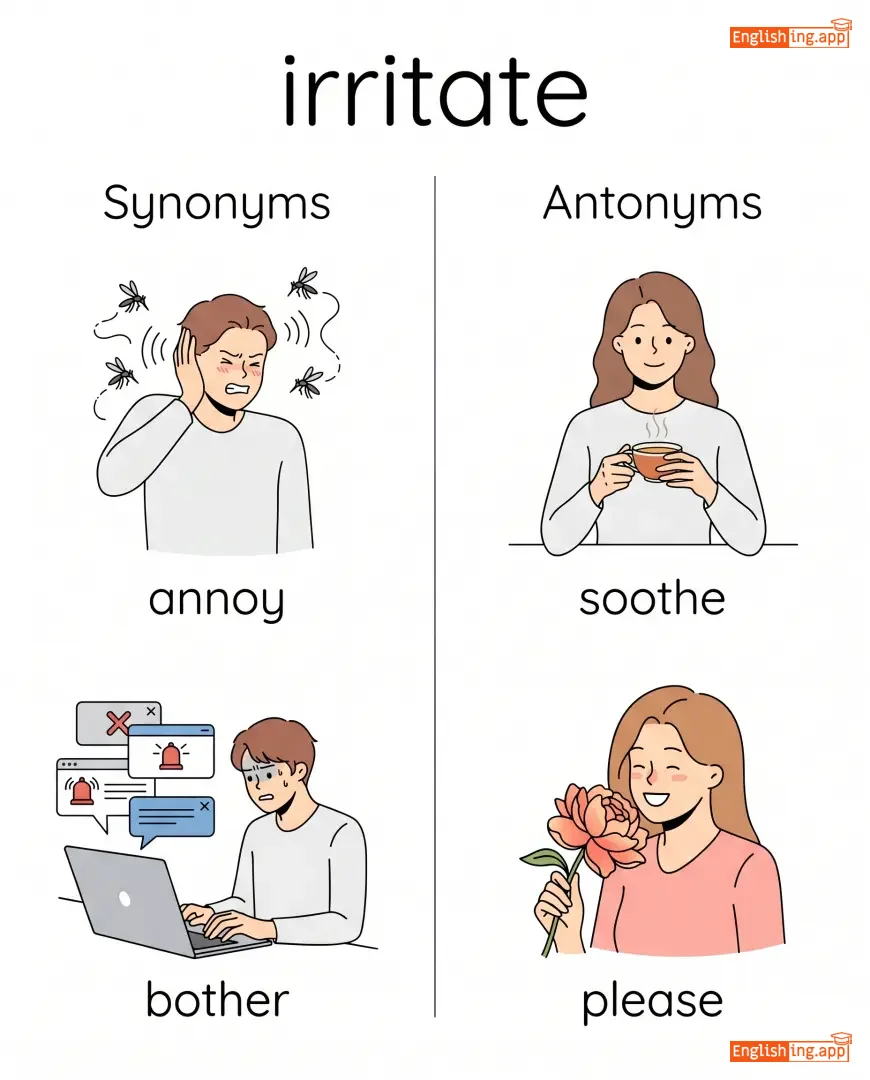
annoy, bother, provoke, aggravate, disturb
••••••
|
soothe, please, comfort
••••••
|
irritate the skin, irritate someone, easily irritate, irritate eyes
••••••
|
Irritate означает раздражать, как 'ирри' (irri) когда кто-то раздражается.
••••••
|
|
#4949
🌫️
|
/ˈɪrɪtənt/
noun
(иритант)
••••••
|
- •••••• |
раздражающее вещество
razdrazhayushchee veshchestvo
••••••
|
- •••••• | - •••••• | - •••••• | - •••••• |
something that causes irritation or discomfort
••••••
|
Dust is a common irritant for people with allergies. |
Пыль является обычным раздражающим веществом для людей с аллергией.
Pyl' yavlyaetsya obychnym razdrazhayushchim veshchestvom dlya lyudey s allergiyey.
••••••
|
- •••••• | - •••••• | - •••••• |
allergen, annoyance, stimulant, aggravator
••••••
|
soother, comfort
••••••
|
skin irritant, chemical irritant, major irritant, source of irritant
••••••
|
Irritant означает раздражающее вещество, как пыль, которая является раздражающим веществом для людей с аллергией.
••••••
|
|
#4950
⚠️
|
/ˈɪrɪtənsi/
noun
(ирритэнси)
••••••
|
- •••••• |
раздражение
razdrazhenie
••••••
|
- •••••• | - •••••• | - •••••• | - •••••• |
the quality or state of causing irritation; legal or formal invalidation
••••••
|
The constant noise became an irritancy to the neighbors. |
Постоянный шум стал раздражением для соседей.
Postoyannyy shum stal razdrazheniem dlya sosedey.
••••••
|
- •••••• | - •••••• | - •••••• |
annoyance, nuisance, provocation, aggravation
••••••
|
comfort, relief
••••••
|
legal irritancy, irritancy clause, source of irritancy
••••••
|
Irritancy означает раздражение, как постоянный шум вызывает раздражение.
••••••
|
Vocabulary Quiz
Test your vocabulary by matching words with their translations or meanings.
Login to take the quiz
Comments (0)
Share your thoughts and join the discussion.
Join the discussion by logging in
Login to CommentNo comments yet
Be the first to share your thoughts!