

Обновитесь для доступа ко всему словарю
Получите неограниченный доступ ко всем словам с подпиской Pro
Обновить до ProПеревод
Прошедшее
Причастие прошедшего времени
Третье лицо единственного числа
Герундий
Значение
Пример предложения
Перевод примера предложения
Синонимы
Антонимы
Коллокации
Мнемоника
Swipe left or right, or use the buttons. Tap image to zoom.
Обновитесь для доступа ко всем предложениям
Получите неограниченный доступ ко всем предложениям с подпиской Pro
Обновить до ProПеревод примера предложения
Слово
Lesson 134Lesson 134 - Переключатель маски
|
Эмодзи
|
Слово | Images | Перевод | Прошедшее | Причастие прошедшего времени | Третье лицо единственного числа | Герундий | Значение | Пример предложения | Перевод примера предложения | Пример выражения | Значение примера выражения | Перевод примера выражения | Синонимы | Антонимы | Коллокации | Мнемоника |
|---|---|---|---|---|---|---|---|---|---|---|---|---|---|---|---|---|---|
|
#3991
🏷️
|
/ˈhɔːl.mɑːrk/
noun
(холмарк)
••••••
|
- •••••• |
характерная черта
kharakternaya cherta
••••••
|
- •••••• | - •••••• | - •••••• | - •••••• |
a typical characteristic or feature of someone or something
••••••
|
Honesty is the hallmark of a good leader. |
Честность - это характерная черта хорошего лидера.
Chestnost' - eto kharakternaya cherta khoroshego lidera.
••••••
|
- •••••• | - •••••• | - •••••• |
feature, attribute, characteristic, trait, emblem
••••••
|
anomaly, exception
••••••
|
hallmark of success, hallmark of quality, hallmark of excellence
••••••
|
Hallmark означает 'Зал с отметкой' – особая характеристика или знак.
••••••
|
|
#3992
🧍
|
/ˌhæŋ.ər ˈɒn/
noun
(хэнгер-он)
••••••
|
- •••••• |
прилипала
prilipala
••••••
|
- •••••• | - •••••• | - •••••• | - •••••• |
a person who spends time with a powerful or famous person to gain benefits.
••••••
|
The celebrity was always surrounded by hangers-on. |
Знаменитость всегда была окружена прилипалами.
Znamenitost' vsegda byla okruzhenna prilipalami.
••••••
|
- •••••• | - •••••• | - •••••• |
parasite, sycophant, follower, dependent
••••••
|
leader, independent
••••••
|
political hanger-on, social hanger-on, hangers-on
••••••
|
Hanger-on = тот, кто всегда рядом с теми, кто может ему помочь.
••••••
|
|
#3993
😞
|
/ˈhæŋ.dɔːɡ/
adjective
(хэндог)
••••••
|
- •••••• |
смущённый
smushchyonny
••••••
|
- •••••• | - •••••• | - •••••• | - •••••• |
looking or feeling ashamed, guilty, or defeated.
••••••
|
He gave me a hangdog look after being caught lying. |
Он посмотрел на меня с смущённым взглядом после того, как его поймали на лжи.
On posmotreli na menya s smushchyonnym vzglyadom posle togo, kak ego poymali na lzhi.
••••••
|
- •••••• | - •••••• | - •••••• |
ashamed, guilty, embarrassed, downcast
••••••
|
proud, confident, cheerful
••••••
|
hangdog look, hangdog expression, hangdog face
••••••
|
Hang + Dog = Если повесить собаку, она будет выглядеть смущённо.
••••••
|
|
#3994
✍️
|
/ˈhændˌraɪ.tɪŋ/
noun
(хэндрайтинг)
••••••
|
- •••••• |
почерк
pocherk
••••••
|
- •••••• | - •••••• | - •••••• | - •••••• |
the style or manner of writing by hand.
••••••
|
Her handwriting is very neat and easy to read. |
Ее почерк очень аккуратный и легко читаемый.
Eyo pocherk ochen' akuratnyy i legko chitayemyy.
••••••
|
the handwriting on the wall |
a sign that something bad will happen
••••••
|
надпись на стене
nadpis' na stene
••••••
|
script, penmanship, calligraphy, writing
••••••
|
typing, print
••••••
|
neat handwriting, improve handwriting, handwriting style, handwriting analysis
••••••
|
HAND + Написание = Почерк
••••••
|
|
#3995
😎
|
/ˈhæn.səm/
adjective
(счастье)
••••••
|
- •••••• |
счастье
schastye
••••••
|
- •••••• | - •••••• | - •••••• | - •••••• |
attractive in appearance, usually referring to men; also can mean generous or impressive in size.
••••••
|
He looked very handsome in his new suit.
Она не могла скрыть своего счастья, когда получила награду.
••••••
|
Она не могла скрыть своего счастья, когда получила награду.
Ona ne mogla skryt' svoego schast'ya, kogda poluchila nagradu.
••••••
|
handsome reward
поиск счастья
••••••
|
a large or generous reward
••••••
|
поиск счастья
poisk schast'ya
••••••
|
attractive, good-looking, striking, dashing, elegant
••••••
|
ugly, unattractive, plain
••••••
|
handsome man, handsome reward, handsome profit, look handsome
••••••
|
Чтобы найти счастье, начни с улыбки.
••••••
|
|
#3996
🤲
|
/ˈhænd ˌrɪŋɪŋ/
noun
(хэнд-ˈрингинг)
••••••
|
- •••••• |
чрезмерная тревога
chrezmernaya trevoga
••••••
|
- •••••• | - •••••• | - •••••• | - •••••• |
excessive worry or concern expressed in a visible or dramatic way.
••••••
|
There was much hand-wringing over the political crisis.
Было много драматической озабоченности по поводу политического кризиса.
••••••
|
Было много драматической озабоченности по поводу политического кризиса.
Bylo mnogo dramaticheskoy ozabochennosti po povodu politicheskogo krizisa.
••••••
|
- •••••• | - •••••• | - •••••• |
worrying, fretting, anxiety, concern, agitation
••••••
|
calmness, confidence, composure
••••••
|
political hand-wringing, endless hand-wringing, public hand-wringing
••••••
|
Hand wringing - это чрезмерное беспокойство в драматической форме. Запомни тревогу.
••••••
|
|
#3997
⛓️
|
/ˈhæmstrʌŋ/
verb (past tense, past participle), adjective
(хэмстронг)
••••••
|
- •••••• |
парализованный или ограниченный
paralizovannyy ili ogranichennyy
••••••
|
- •••••• | - •••••• | - •••••• | - •••••• |
crippled or severely restricted in movement or progress.
••••••
|
The team was hamstrung by lack of resources.
Команду ограничивал дефицит ресурсов.
••••••
|
Команда была ограничена нехваткой ресурсов.
Komanda byla ogranichena nekhvatkoy resursov.
••••••
|
- •••••• | - •••••• | - •••••• |
crippled, hindered, paralyzed, obstructed
••••••
|
free, enabled, empowered
••••••
|
hamstrung by rules, hamstrung by limitations
••••••
|
Hamstrung означает, что ты не можешь ничего сделать, как если бы твои руки и ноги были связаны.
••••••
|
|
#3998
🦵
|
/ˈhæmstrɪŋ/
noun, verb
(хэмстринг)
••••••
|
- •••••• |
сухожилие на задней части бедра; как глагол, ослабить или сильно ограничить эффективность кого-то или чего-то
sukhozhilie na zadney chasti bedra; kak glagol, oslabit' ili sil'no ogranichit' effektivnost' kogo-to ili chego-to
••••••
|
hamstrung
хамстранг
••••••
|
hamstrung
хамстранг
••••••
|
hamstrings
хэмстрингс
••••••
|
hamstringing
хэмстрингинг
••••••
|
a tendon at the back of the thigh; as a verb, to cripple or severely restrict the effectiveness of someone or something.
••••••
|
Budget cuts hamstrung the organization’s plans.
Сокращения бюджета ослабили планы организации.
••••••
|
Сокращения бюджета ослабили планы организации.
Sokrashcheniya byudzheta oslabili plany organizatsii.
••••••
|
- •••••• | - •••••• | - •••••• |
cripple, weaken, disable, paralyze, hinder
••••••
|
strengthen, empower, support
••••••
|
hamstring injury, hamstring muscles, hamstring the effort
••••••
|
Hamstring - это травма, которая ослабляет (oslablyaet) игрока.
••••••
|
|
#3999
🧺
|
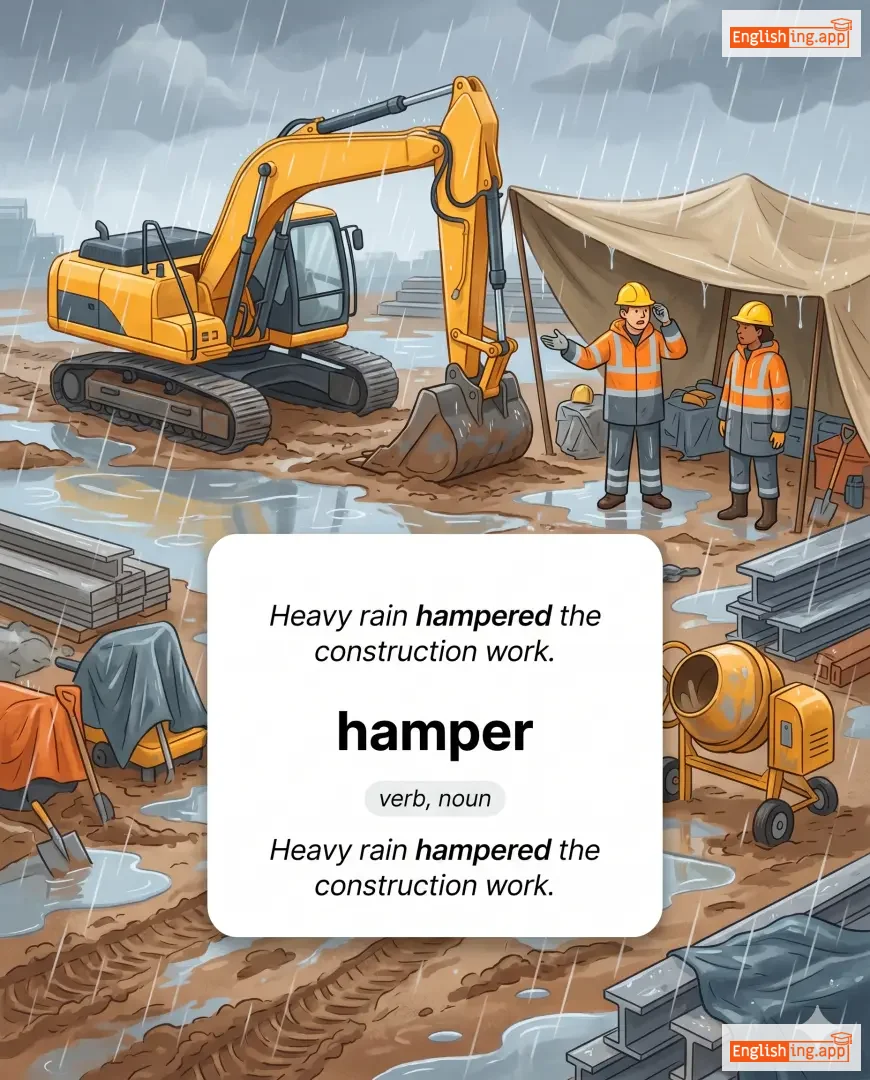
/ˈhæmpər/
verb, noun
(хампер)
••••••
|
|
препятствовать, корзина для белья
prepyatstvovat, korzina dlya belya
••••••
|
hampered
хамперд
••••••
|
hampered
хамперд
••••••
|
hampers
хамперс
••••••
|
hampering
хамперинг
••••••
|
to prevent or slow down the progress of something; also, a basket with a lid, typically for laundry.
••••••
|
Heavy rain hampered the construction work.
Сильный дождь затруднил строительные работы.
••••••
|
Сильный дождь затруднил строительные работы.
Sil'nyy dozhd' zatrudnil stroitel'nye raboty.
••••••
|
- •••••• | - •••••• | - •••••• |
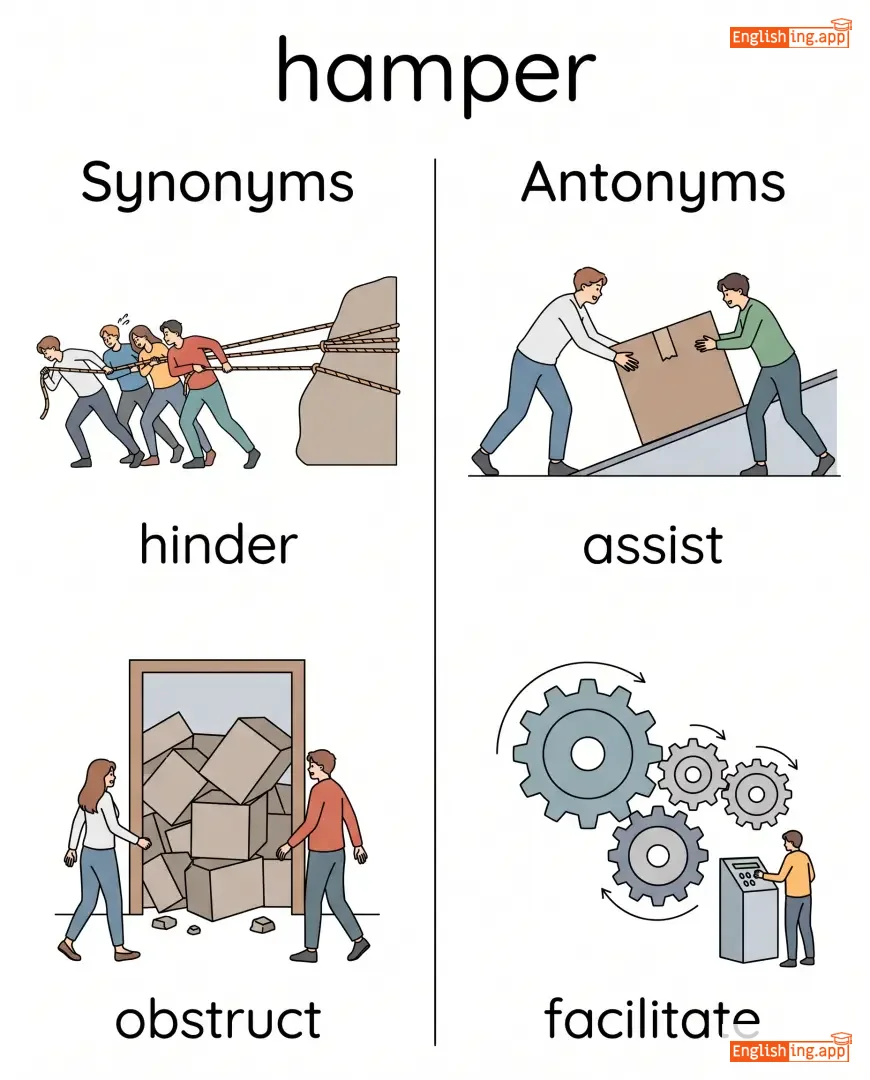
hinder, obstruct, impede, restrict, block
••••••
|
assist, facilitate, help
••••••
|
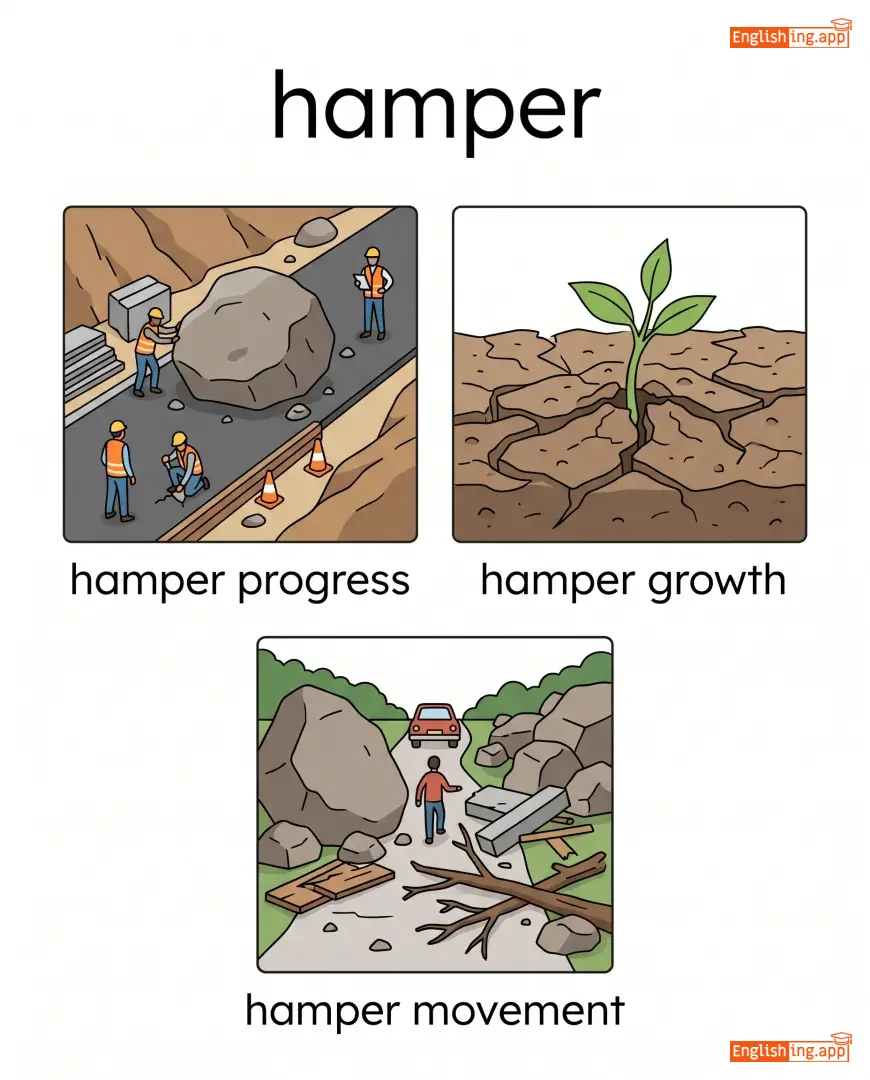
hamper progress, hamper growth, hamper movement, hamper efforts
••••••
|
Hamper - это когда что-то останавливает прогресс, как корзина для белья, которая не позволяет двигаться.
••••••
|
|
#4000
🔨
|
/ˈhæmər/
noun, verb
••••••
|
- •••••• | - •••••• |
hammered
••••••
|
hammered
••••••
|
hammers
••••••
|
hammering
••••••
|
a tool with a heavy metal head used for breaking things or driving in nails; to hit something forcefully with a hammer or similar object.
••••••
|
He used a hammer to fix the broken chair. |
- •••••• |
hammer out |
to work out the details of something through discussion and effort
••••••
|
- •••••• |
mallet, pound, strike, beat, smash
••••••
|
caress, stroke
••••••
|
hammer blow, hammer strike, hammer nails, hammer out, hammer away
••••••
|
No •••••• |
|
#4001
🙈
|
/ˈhæm ˌhændɪd/
adjective
(хэм-хэндид)
••••••
|
- •••••• |
неуклюжий
neuklyuzhiy
••••••
|
- •••••• | - •••••• | - •••••• | - •••••• |
clumsy or inept in handling things or situations
••••••
|
His ham-handed attempt to fix the computer made it worse.
Его неуклюжая попытка починить компьютер только ухудшила ситуацию.
••••••
|
Его неуклюжая попытка починить компьютер только ухудшила ситуацию.
Yego neuklyuzhaya popytka pochinit' komp'yuter tol'ko ukhudshila situatsiyu.
••••••
|
- •••••• | - •••••• | - •••••• |
clumsy, awkward, unskilled, bungling, inept
••••••
|
skilled, deft, adept
••••••
|
ham-handed attempt, ham-handed approach, ham-handed handling
••••••
|
Как если бы есть ветчину неуклюже, то и получится неуклюже
••••••
|
|
#4002
⏸️
|
/ˈhɔːltɪŋ/
adjective
(холтинг)
••••••
|
- •••••• |
колеблющийся
koleblyushchijsya
••••••
|
- •••••• | - •••••• | - •••••• | - •••••• |
slow and hesitant, especially due to lack of confidence
••••••
|
She gave a halting reply during the interview.
Она дала запоздалый ответ на интервью.
••••••
|
Она дала запоздалый ответ на интервью.
Ona dala zapozdalyj otvet na interv'yu.
••••••
|
- •••••• | - •••••• | - •••••• |
hesitant, faltering, unsure, unsteady, stammering
••••••
|
confident, fluent, smooth
••••••
|
halting voice, halting speech, halting reply, halting steps
••••••
|
Halting на русском означает колеблющийся, как нерешительный ответ.
••••••
|
|
#4003
👁️
|
/həˌluːsɪˈneɪʃən/
noun
(галлюцинация)
••••••
|
- •••••• |
галлюцинация
gallyutsinatsiya
••••••
|
- •••••• | - •••••• | - •••••• | - •••••• |
a false perception of objects or events, usually caused by mental illness or drugs
••••••
|
After the medication, he began to experience vivid hallucinations.
После приема лекарства он начал испытывать яркие галлюцинации.
••••••
|
После приема лекарства он начал испытывать яркие галлюцинации.
Posle priema lekarstva on nachal ispytyvat' yarkie gallyutsinatsii.
••••••
|
- •••••• | - •••••• | - •••••• |
illusion, vision, mirage, delusion, fantasy
••••••
|
reality, fact, truth
••••••
|
visual hallucination, auditory hallucination, drug-induced hallucination, experience hallucination
••••••
|
Hall + кино дает галлюцинацию
••••••
|
|
#4004
⛪
|
/ˈhæloʊd/
adjective
(helod)
••••••
|
|
священный
svyashchennyy
••••••
|
- •••••• | - •••••• | - •••••• | - •••••• |
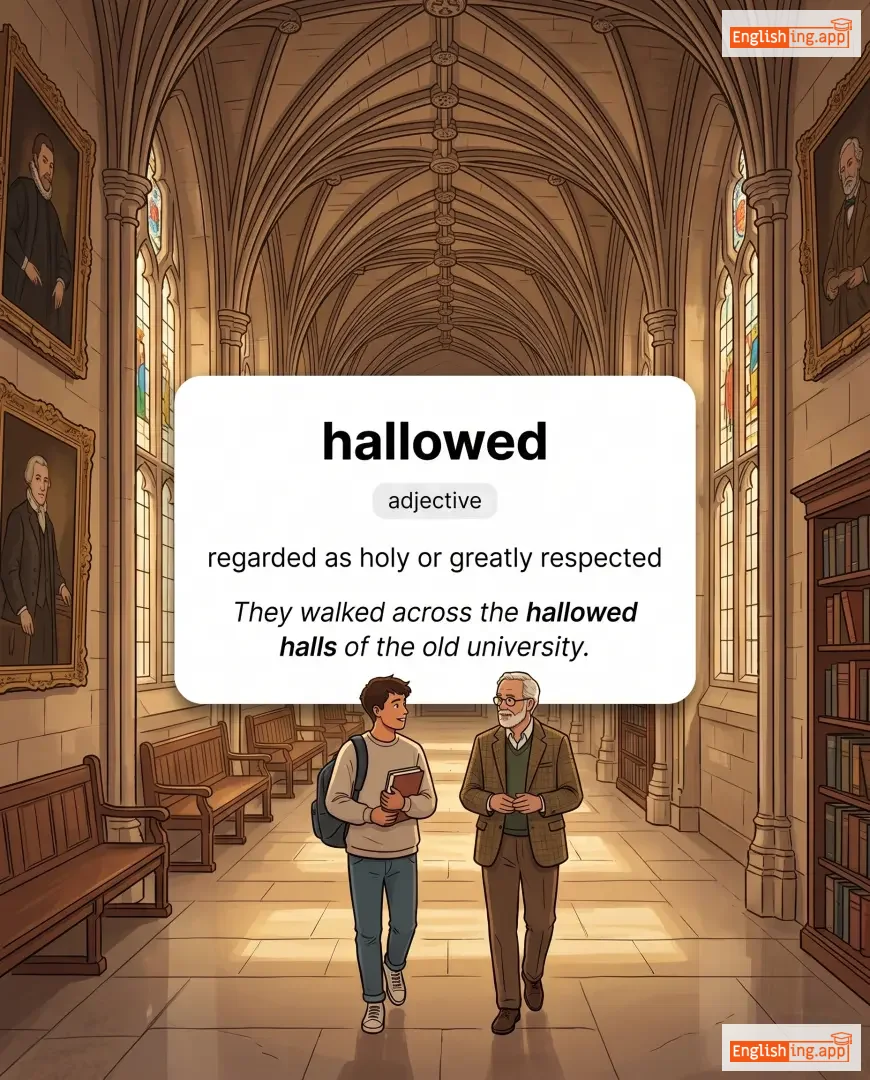
regarded as holy or greatly respected
••••••
|
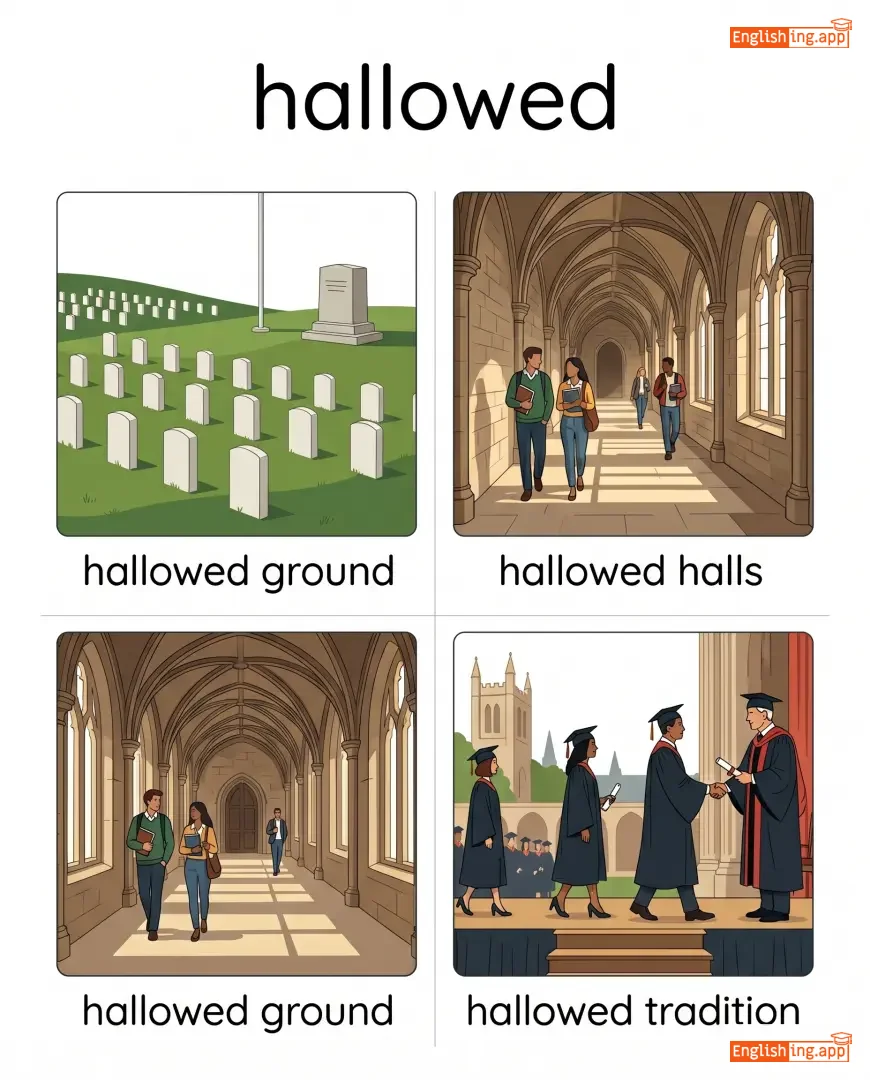
They walked across the hallowed halls of the old university. |
Они прошли через священные залы старого университета.
Oni proshli cherez svyashchennye zaly starogo universiteta.
••••••
|
hallowed traditions |
long-standing customs that are deeply respected
••••••
|
священные традиции
svyashchennyye traditsii
••••••
|
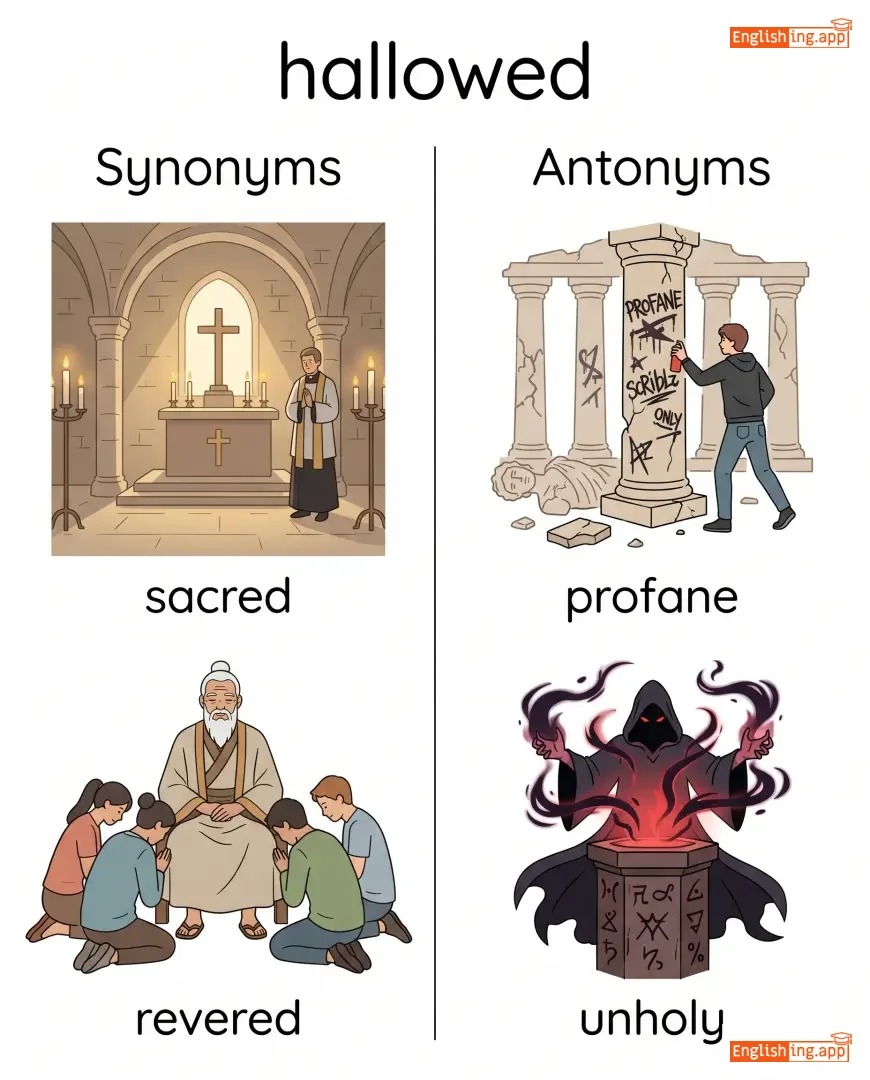
sacred, revered, blessed, sanctified, honored
••••••
|
profane, unholy, disrespectful
••••••
|
hallowed ground, hallowed halls, hallowed tradition, hallowed memory
••••••
|
Hallowed означает уже быть святым
••••••
|
|
#4005
🙏
|
/ˈhæloʊ/
verb
(хэллоу)
••••••
|
- •••••• |
освящать
osvyashchat
••••••
|
hallowed
хэллоуд
••••••
|
hallowed
хэллоуд
••••••
|
hallows
хэллос
••••••
|
hallowing
хэллоуинг
••••••
|
to honor as holy; to make sacred or greatly respected
••••••
|
The ancient temple was hallowed by centuries of worship.
ди эйншент тэмпл уоз хэллоуд бай сэнчуэриз ов вёршип.
••••••
|
Древний храм был освящен веками поклонения.
Drevniy khram byl osvyashchen vekami pokloneniya.
••••••
|
hallowed ground
хэллоуд граўнд
••••••
|
a place made holy or respected through association with something important or sacred
••••••
|
освященная земля
osvyashchennaya zemlya
••••••
|
sanctify, consecrate, bless, revere, honor
••••••
|
desecrate, profane, defile
••••••
|
hallow a tradition, hallow the memory, hallow ground, hallow the name
••••••
|
Hallow - это освящение, что-то делает священным
••••••
|
|
#4006
🔁
|
/həˈbɪtʃuəl/
adjective
(хабитуал)
••••••
|
- •••••• |
привычный
privychny
••••••
|
- •••••• | - •••••• | - •••••• | - •••••• |
Done or doing constantly or as a habit; customary.
••••••
|
He was a habitual latecomer to class.
Он был привычным опоздавшим на занятия.
••••••
|
Он был привычным опоздавшим на занятия.
On byl privychnym opazdvshim na zanyatiya.
••••••
|
habitual offender
привычный преступник
••••••
|
A person who repeatedly commits crimes or offenses.
••••••
|
привычный преступник
privychnyy prestupnik
••••••
|
customary, regular, routine, usual, typical
••••••
|
occasional, rare, irregular
••••••
|
habitual behavior, habitual offender, habitual routine, habitual pattern
••••••
|
Привычный означает, что это связано с привычкой → Вспоминай Привычный с Привычкой.
••••••
|
|
#4007
😒
|
/ˌhæfˈhɑːr.tɪd/
adjective
(хэфхартед)
••••••
|
- •••••• |
половинчатый
polovinchatyy
••••••
|
- •••••• | - •••••• | - •••••• | - •••••• |
lacking enthusiasm or determination; unenthusiastic
••••••
|
His halfhearted attempt to study did not bring good results. |
Его половинчатая попытка учиться не принесла хороших результатов.
Yego polovinchataya popytka uchitsya ne prinesla khoroshikh rezul'tatov.
••••••
|
- •••••• | - •••••• | - •••••• |
lukewarm, indifferent, apathetic, unenthusiastic
••••••
|
eager, determined, enthusiastic
••••••
|
halfhearted effort, halfhearted response, halfhearted attempt
••••••
|
Halfhearted - это когда ты не выкладываешься полностью, как результат - плохие результаты.
••••••
|
|
#4008
🥖
|
/ˌhæfˈbeɪkt/
adjective
(хав-бейкд)
••••••
|
- •••••• |
недоделанный
nedodelannyy
••••••
|
- •••••• | - •••••• | - •••••• | - •••••• |
poorly thought out or badly planned
••••••
|
The manager quickly rejected his half-baked proposal. |
Менеджер быстро отклонил его недоделанное предложение.
Menedzher bystro otklonil ego nedodelannoye predlozheniye.
••••••
|
- •••••• | - •••••• | - •••••• |
ill-conceived, unrealistic, impractical, foolish
••••••
|
well-planned, sensible, practical
••••••
|
half-baked idea, half-baked plan, half-baked scheme
••••••
|
Half-baked означает недоделанный – как сырое блюдо, так и план, не доведенный до конца, всегда будет плохим.
••••••
|
|
#4009
💪
|
/heɪl/
adjective
(heyl)
••••••
|
- •••••• |
здоровый
zdorovyi
••••••
|
- •••••• | - •••••• | - •••••• | - •••••• |
strong and healthy, especially of an elderly person
••••••
|
Despite his age, the man remained hale and active.
Несмотря на его возраст, этот мужчина остался здоровым и активным.
••••••
|
Несмотря на его возраст, этот мужчина остался здоровым и активным.
Nesmotrya na ego vozrast, etot muzhchina ostalsya zdorovym i aktivnym.
••••••
|
- •••••• | - •••••• | - •••••• |
healthy, robust, vigorous, fit
••••••
|
frail, weak, sick
••••••
|
hale and hearty, remain hale, hale condition
••••••
|
Hale означает 'здоровый' – сильный и крепкий.
••••••
|
|
#4010
🌅
|
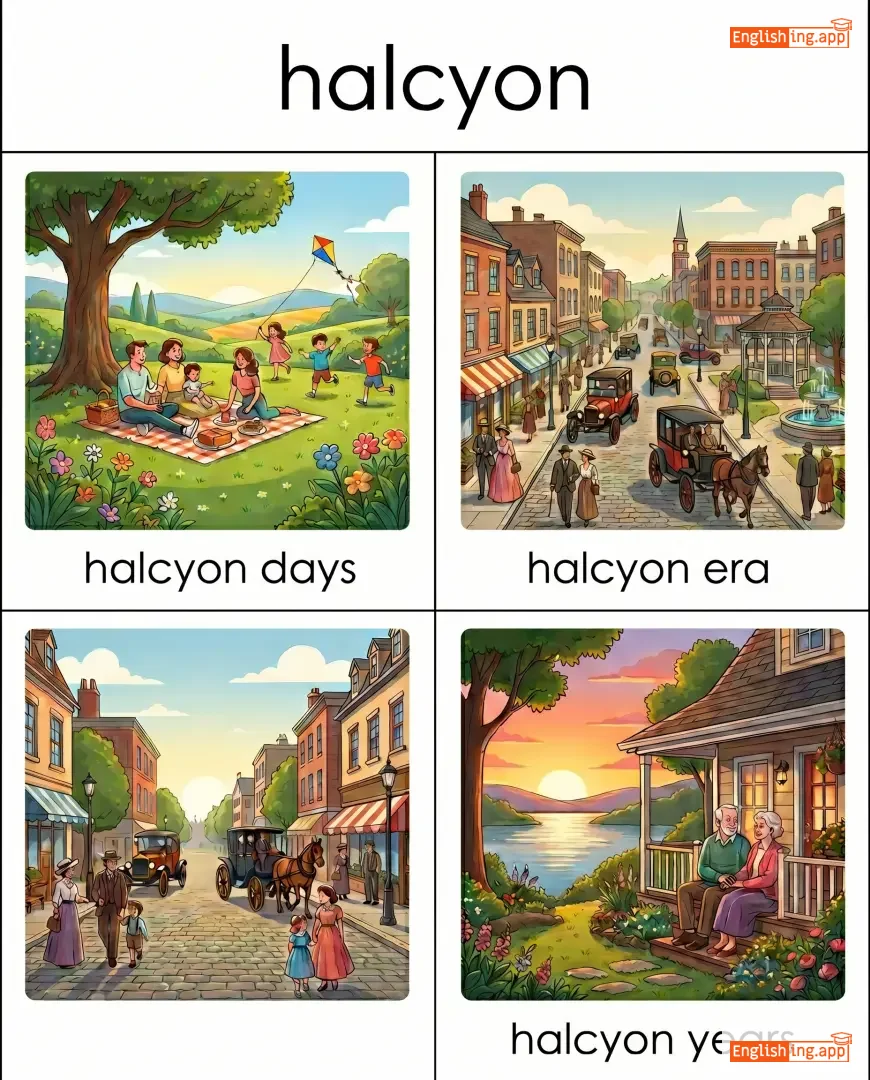
/ˈhæl.si.ən/
adjective
(хэл-сийон)
••••••
|
|
безмятежный
bezmyatezhnyy
••••••
|
- •••••• | - •••••• | - •••••• | - •••••• |
calm, peaceful, and happy; denoting a period of time in the past that was idyllically happy and peaceful
••••••
|
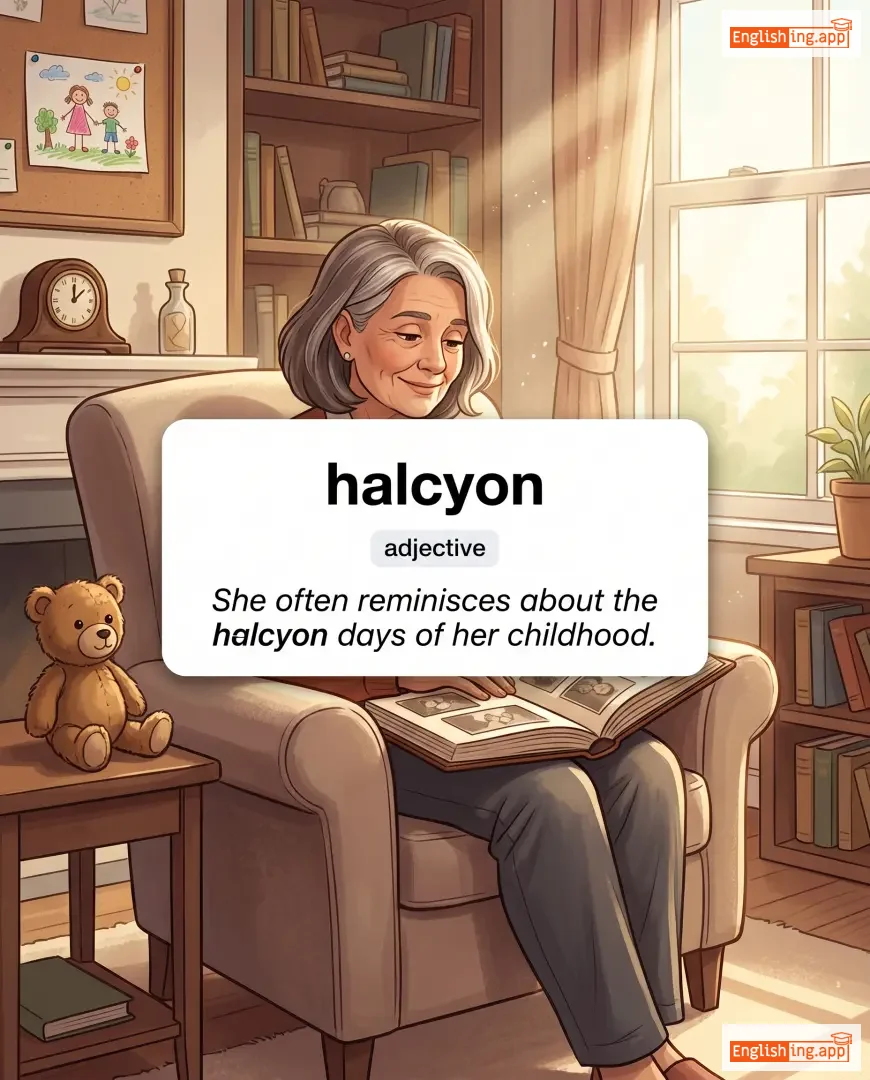
She often reminisces about the halcyon days of her childhood. |
Она часто вспоминает безмятежные дни своего детства.
Ona chasto vspominaet bezmyatezhnye dni svoego detstva.
••••••
|
- •••••• | - •••••• | - •••••• |
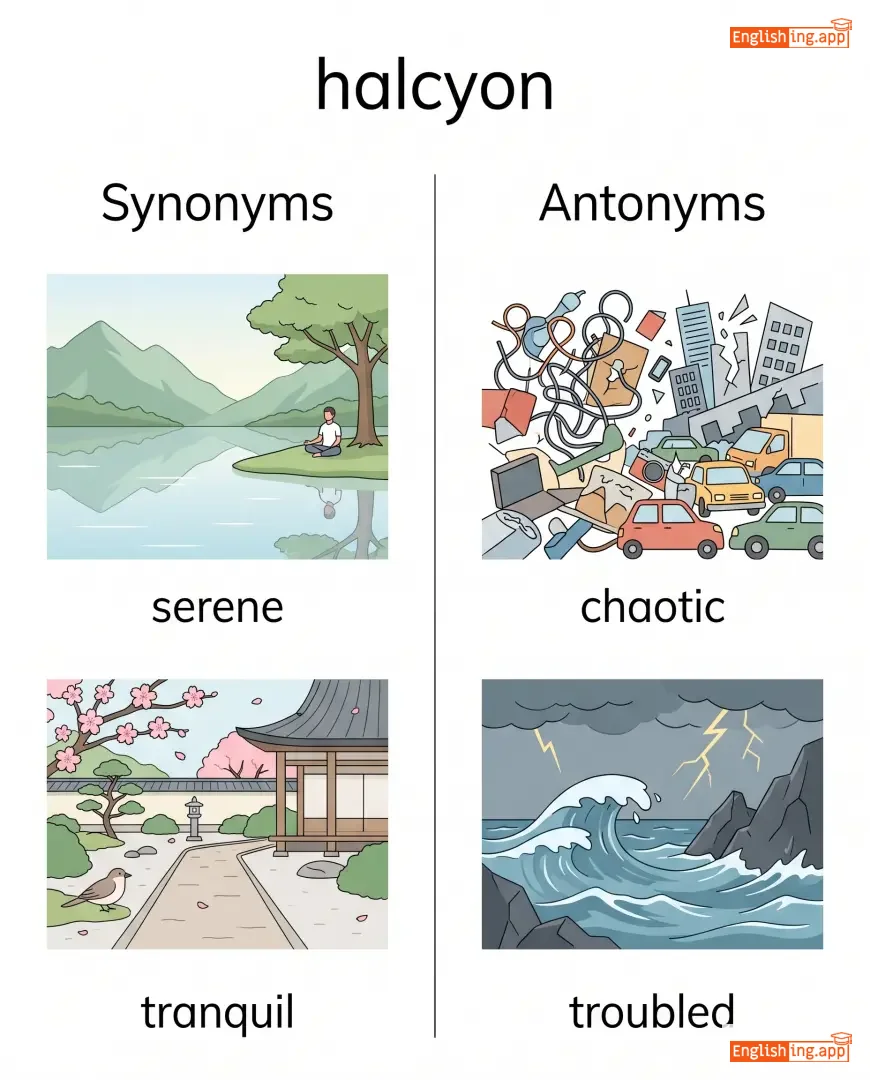
serene, tranquil, blissful, idyllic, peaceful
••••••
|
chaotic, troubled, stormy
••••••
|
halcyon days, halcyon era, halcyon years
••••••
|
Halcyon напоминает 'безмятежную зону' – дни счастья и спокойствия.
••••••
|
|
#4011
🙌
|
/heɪl/
verb
(хейл)
••••••
|
- •••••• |
звать / приветствовать
zvat' / privetstvovat'
••••••
|
hailed
хейлд
••••••
|
hailed
хейлд
••••••
|
hails
хейлс
••••••
|
hailing
хейлинг
••••••
|
To call out to attract attention or to praise enthusiastically.
••••••
|
The athlete was hailed as a hero after the victory.
Атлета приветствовали как героя после победы.
••••••
|
Атлета приветствовали как героя после победы.
Atleta privetstvovali kak geroja posle pobedy.
••••••
|
hail a taxi
поймать такси
••••••
|
to signal and stop a taxi to get a ride
••••••
|
поймать такси
poimat' taksi
••••••
|
greet, call, acclaim, praise, salute
••••••
|
ignore, condemn, dismiss
••••••
|
hail a taxi, hail as a hero, hail the decision, hail enthusiastically
••••••
|
Hail = звать или приветствовать с восхищением
••••••
|
|
#4012
📚
|
/ˌhæɡ.i.əˈɡræf.ɪk/
adjective
(хагиографический)
••••••
|
- •••••• |
чрезмерно льстивый
chrezmerno l'stivyy
••••••
|
- •••••• | - •••••• | - •••••• | - •••••• |
Excessively flattering or idealized, often in a biography or portrayal of someone.
••••••
|
The documentary was criticized for its hagiographic portrayal of the leader. |
Документальный фильм был подвергнут критике за чрезмерно льстивое изображение лидера.
Dokumental'nyy film byl podvergnut kritike za chrezmerno l'stivoye izobrazheniye lidera.
••••••
|
- •••••• | - •••••• | - •••••• |
idealized, flattering, reverential, adulatory, worshipful
••••••
|
critical, realistic, objective
••••••
|
hagiographic biography, hagiographic portrayal, hagiographic account, hagiographic style
••••••
|
Hagiographic означает биографию, но полную только похвалы (льстивое)
••••••
|
|
#4013
🤝
|
/ˈhæɡ.l̩/
verb
(хэггл)
••••••
|
|
торговаться
torgovatsya
••••••
|
haggled
хэгглд
••••••
|
haggled
хэгглд
••••••
|
haggles
хэгглс
••••••
|
haggling
хэгглинг
••••••
|
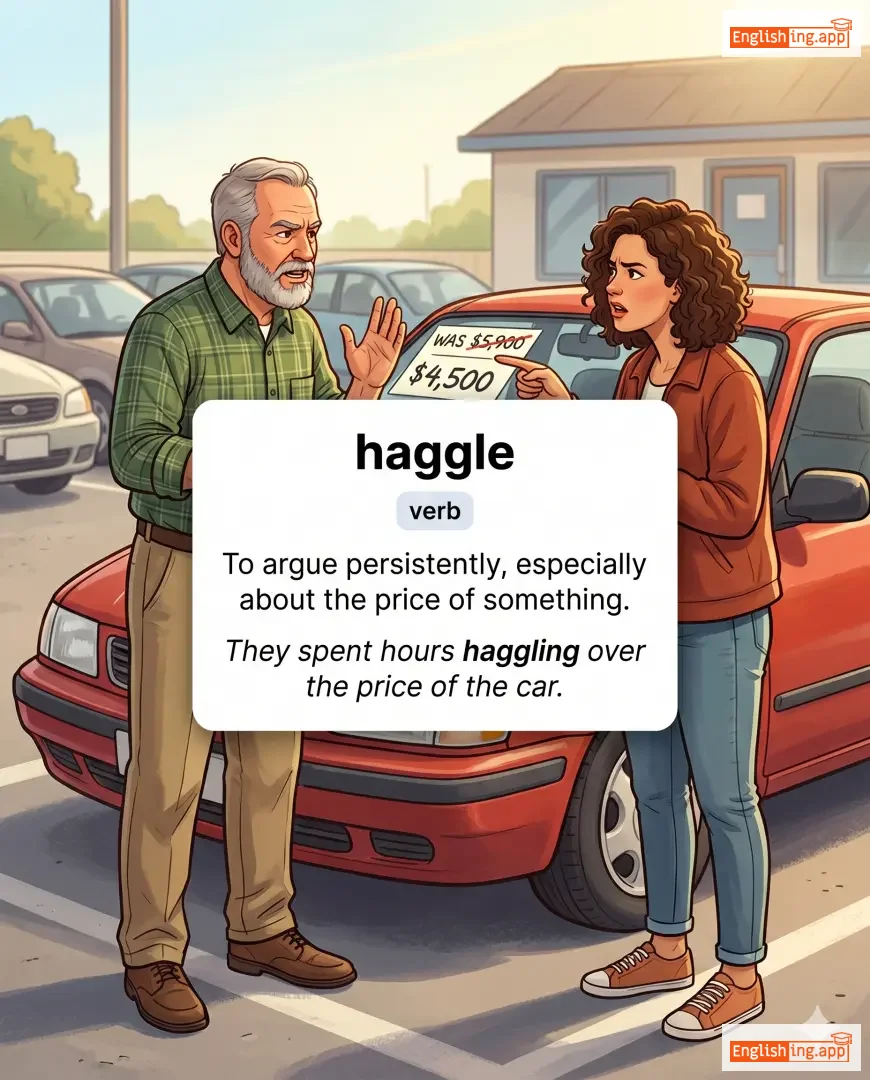
To argue persistently, especially about the price of something.
••••••
|
They spent hours haggling over the price of the car.
Они провели часы, торгуясь о цене машины.
••••••
|
Они провели часы, торгуясь о цене машины.
Oni proveli chasy, torguyas' o tsene mashiny.
••••••
|
haggle over the price
торговаться о цене
••••••
|
to argue or negotiate persistently about the cost of something
••••••
|
торговаться о цене
torgovatsya o tsene
••••••
|
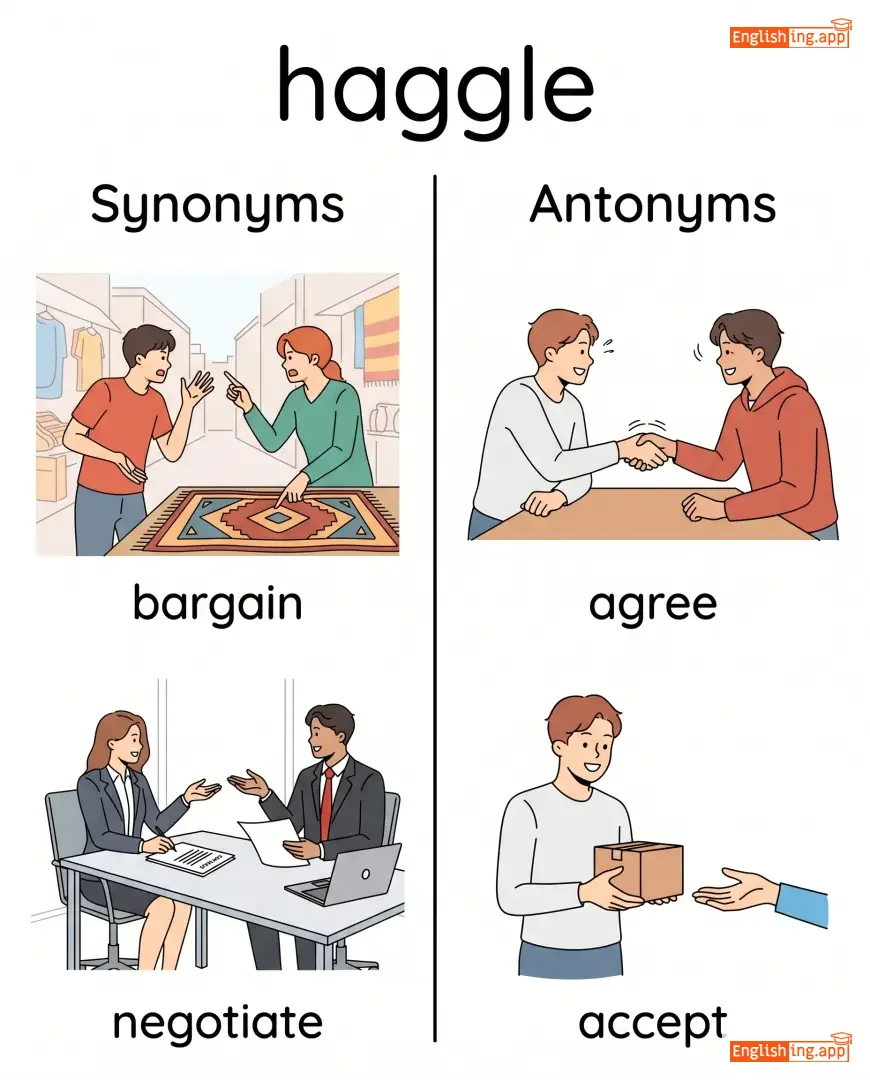
bargain, negotiate, wrangle, barter, dispute
••••••
|
agree, accept, consent
••••••
|
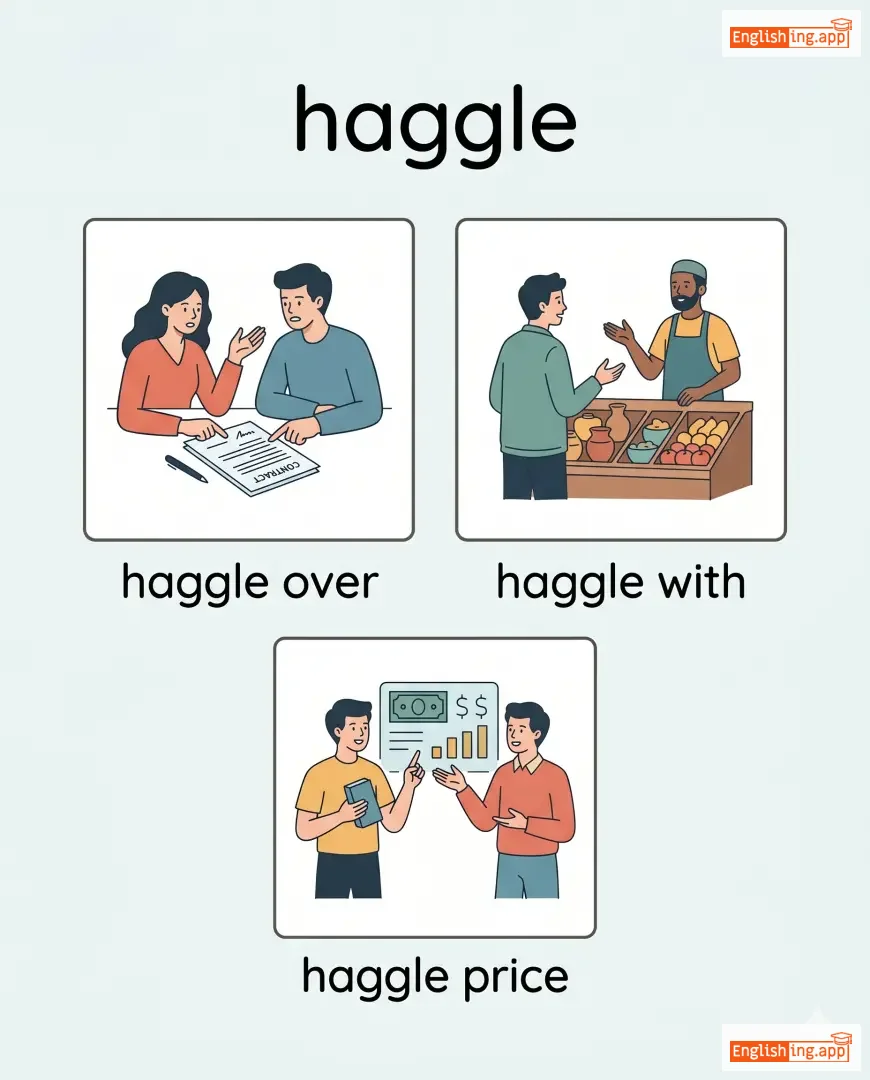
haggle over, haggle with, haggle price, haggle endlessly
••••••
|
Haggle = Торговаться на рынке (torgovatsya na rynke)
••••••
|
|
#4014
😩
|
/ˈhæɡ.ərd/
adjective
(хэгард)
••••••
|
- •••••• |
истощённый
istoŝchennyj
••••••
|
- •••••• | - •••••• | - •••••• | - •••••• |
Looking exhausted, unwell, or worn out, especially from fatigue or suffering.
••••••
|
After working all night, she looked pale and haggard.
После работы всю ночь она выглядела бледной и измождённой.
••••••
|
После работы всю ночь она выглядела бледной и измождённой.
Posle raboty vsyu noch' ona vyglyadela blednoy i izmozhdyonnoy.
••••••
|
- •••••• | - •••••• | - •••••• |
exhausted, gaunt, worn, fatigued, drawn
••••••
|
healthy, fresh, vigorous
••••••
|
look haggard, appear haggard, pale and haggard, haggard face
••••••
|
Haggard означает истощённый, как человек, который долго трудится без отдыха.
••••••
|
|
#4015
📄
|
/ˈhæk.nid/
adjective
(хэппинед)
••••••
|
- •••••• |
избитый
izbity
••••••
|
- •••••• | - •••••• | - •••••• | - •••••• |
Used too often and therefore lacking originality or freshness.
••••••
|
The speech was filled with hackneyed phrases that failed to inspire the audience. |
Речь была полна избитых фраз, которые не смогли вдохновить аудиторию.
Rech' byla polna izbitykh fraz, kotorye ne smogli vdokhnovit' auditoriyu.
••••••
|
- •••••• | - •••••• | - •••••• |
trite, clichéd, stale, overused, banal
••••••
|
original, fresh, novel
••••••
|
hackneyed phrase, hackneyed expression, hackneyed cliché, hackneyed idea
••••••
|
Hackneyed = избитый, это то, что слишком часто повторяется и теряет смысл.
••••••
|
|
#4016
🐎
|
/ˈhæknɪ/
noun
(хэкни)
••••••
|
- •••••• |
арендованная лошадь, избитый
arendovannaya loshad, izbityi
••••••
|
- •••••• | - •••••• | - •••••• | - •••••• |
a horse kept for ordinary riding or hire; also used for something overused or trite
••••••
|
The old hackney was still pulling the carriage. |
Старая арендованная лошадь всё ещё везла повозку.
Staraya arendovannaya loshad vsyo eshchyo vezla povozku.
••••••
|
hackneyed phrase |
an overused and unoriginal expression
••••••
|
избитая фраза
izbitaya fraza
••••••
|
horse, carriage horse, cliché, trite expression
••••••
|
freshness, originality
••••••
|
hackney carriage, hackney horse, hackneyed phrase, hackney expression
••••••
|
Hackney означает арендованная лошадь, а hackneyed - это что-то, что использовалось так часто, что стало скучным.
••••••
|
|
#4017
🐕
|
/ˈhækəlz/
noun
••••••
|
- •••••• | - •••••• | - •••••• | - •••••• | - •••••• | - •••••• |
the hairs on the back of an animal’s neck that rise when it is angry or alarmed; figuratively, feelings of anger or resentment
••••••
|
His rude comment raised my hackles. |
- •••••• |
raise someone's hackles |
to make someone angry or annoyed
••••••
|
- •••••• |
bristles, anger, resentment, irritation
••••••
|
calm, peace, composure
••••••
|
raise hackles, hackles rise, lower hackles
••••••
|
No •••••• |
|
#4018
💻
|
/hæk/
verb
••••••
|
- •••••• | - •••••• |
hacked
••••••
|
hacked
••••••
|
hacks
••••••
|
hacking
••••••
|
to cut or chop roughly; to gain unauthorized access to a computer system
••••••
|
The programmer managed to hack into the system. |
- •••••• |
hack it |
to cope or manage with something
••••••
|
- •••••• |
chop, cut, slash, break into, breach
••••••
|
build, secure, protect
••••••
|
hack into a system, hack code, hack solution, life hack
••••••
|
No •••••• |
|
#4019
📜
|
/ˈhæbɪtjuːd/
noun
(хэбитьюд)
••••••
|
- •••••• |
привычка, обычай
privychka, obychay
••••••
|
- •••••• | - •••••• | - •••••• | - •••••• |
a customary condition or mode of life; habitual practice
••••••
|
He lived in a quiet habitude, avoiding the noise of the city. |
Он жил в тихой привычке, избегая шума города.
On zhil v tikhoy privychke, izbegaya shuma goroda.
••••••
|
- •••••• | - •••••• | - •••••• |
habit, custom, practice, routine, lifestyle
••••••
|
change, novelty, irregularity
••••••
|
peaceful habitude, social habitude, cultural habitude, daily habitude
••••••
|
Habitude - это как привычка и отношение к ней.
••••••
|
|
#4020
🔄
|
/həˈbɪtʃueɪt/
verb
(хэбичуэйт)
••••••
|
|
привыкать
privykat
••••••
|
habituated
хэбичуэйтед
••••••
|
habituated
хэбичуэйтед
••••••
|
habituates
хэбичуэйтс
••••••
|
habituating
хэбичуэйтинг
••••••
|
to accustom someone or oneself to something through frequent exposure or experience
••••••
|
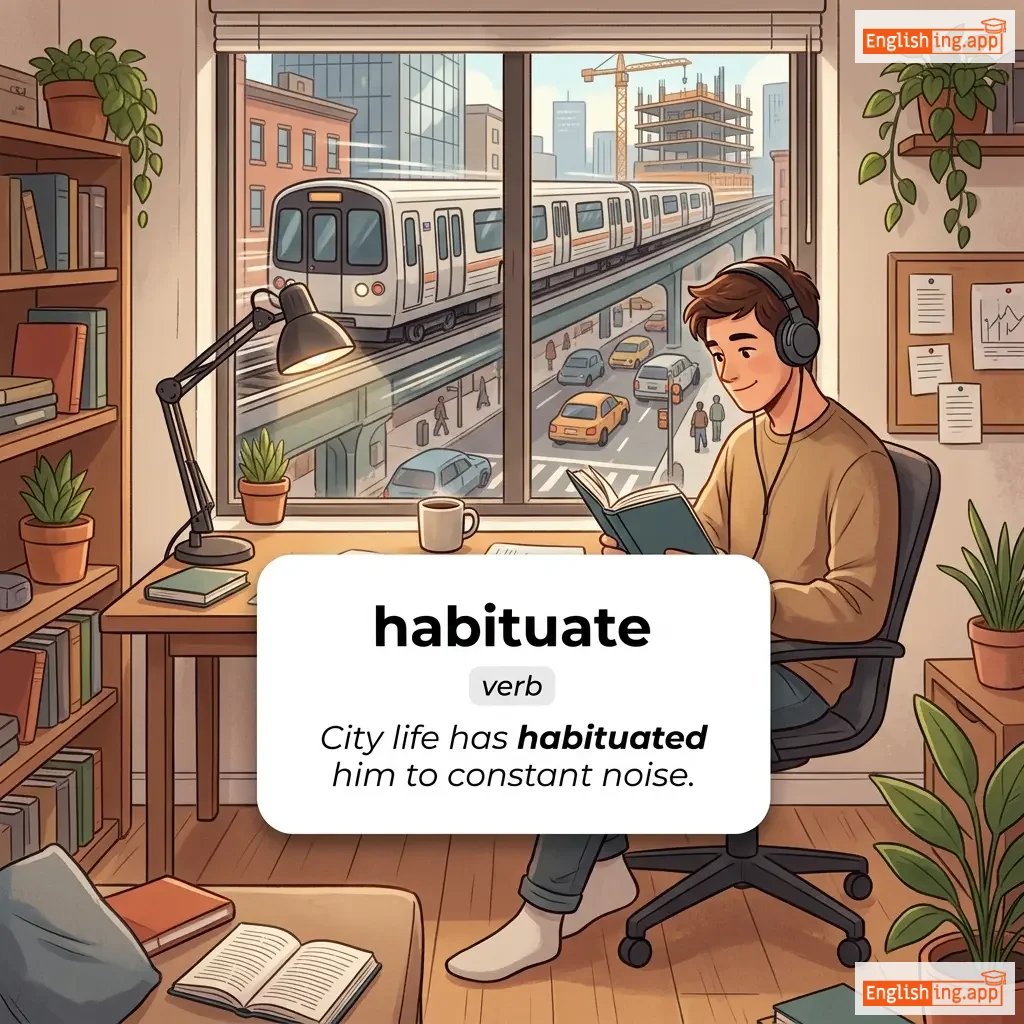
City life has habituated him to constant noise.
Городская жизнь приучила его к постоянному шуму.
••••••
|
Городская жизнь приучила его к постоянному шуму.
Gorodskaya zhizn priuchila ego k postoyannomu shumu.
••••••
|
- •••••• | - •••••• | - •••••• |
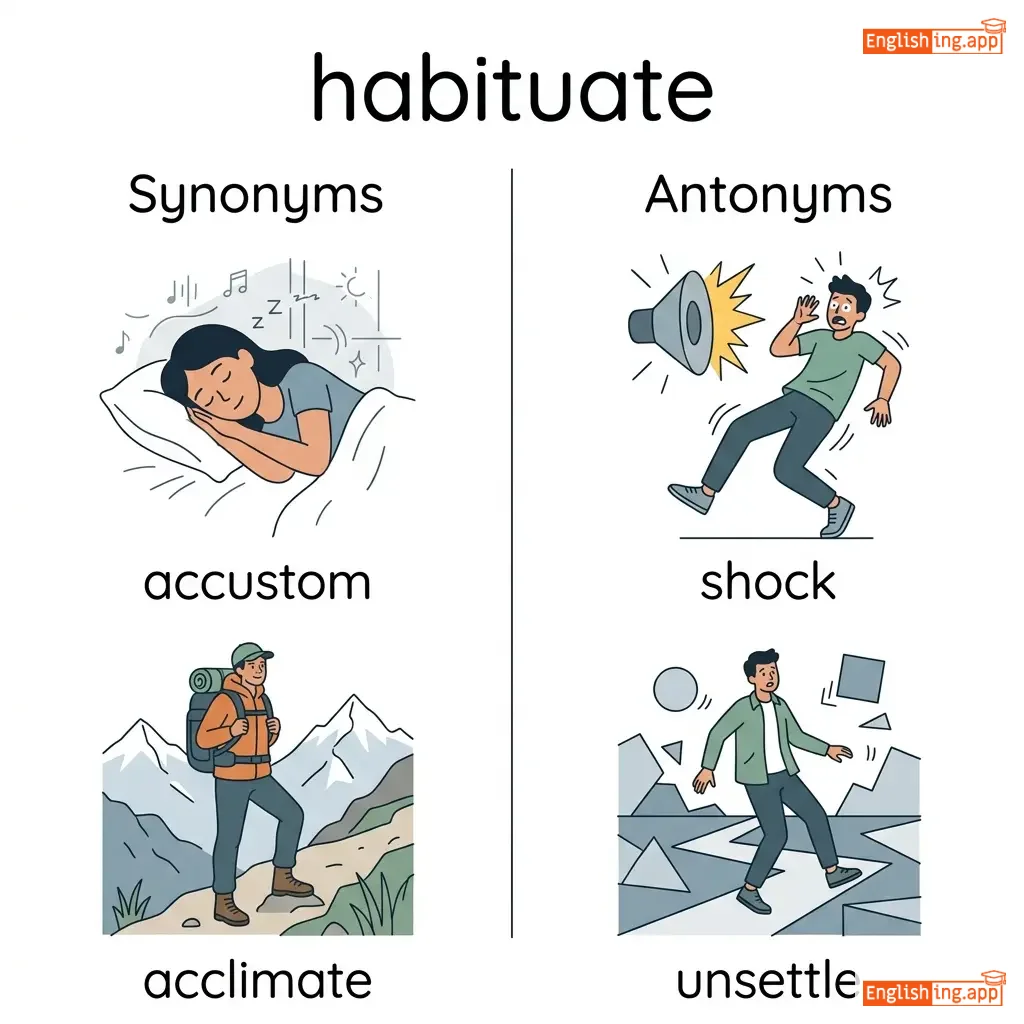
accustom, acclimate, familiarize, adapt, train
••••••
|
shock, unsettle, surprise
••••••
|
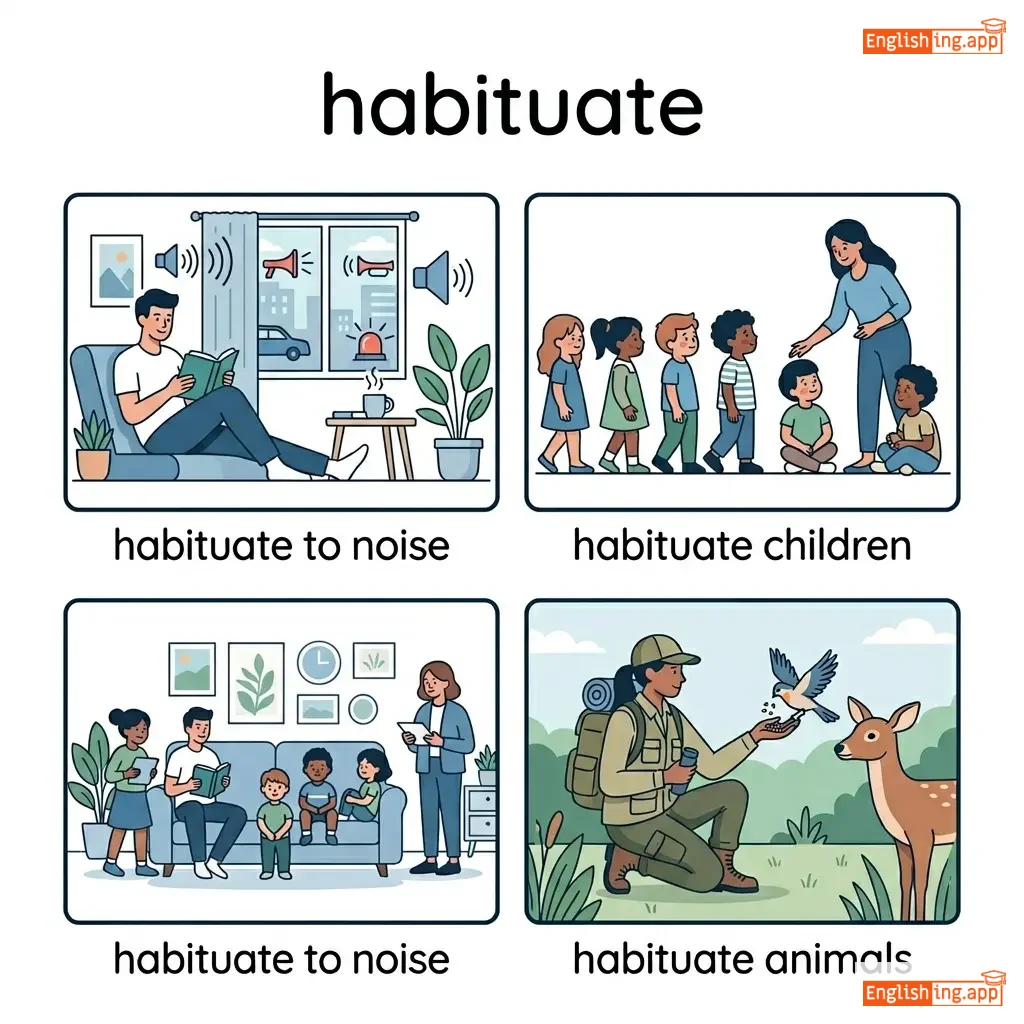
habituate to noise, habituate children, habituate animals, habituate oneself
••••••
|
Habit + uate → связано с 'привыкать'; хэбичуэйт означает привыкать.
••••••
|
Vocabulary Quiz
Test your vocabulary by matching words with their translations or meanings.
Login to take the quiz
Comments (0)
Share your thoughts and join the discussion.
Join the discussion by logging in
Login to CommentNo comments yet
Be the first to share your thoughts!