

Обновитесь для доступа ко всему словарю
Получите неограниченный доступ ко всем словам с подпиской Pro
Обновить до ProПеревод
Прошедшее
Причастие прошедшего времени
Третье лицо единственного числа
Герундий
Значение
Пример предложения
Перевод примера предложения
Синонимы
Антонимы
Коллокации
Мнемоника




Swipe left or right, or use the buttons. Tap image to zoom.
Обновитесь для доступа ко всем предложениям
Получите неограниченный доступ ко всем предложениям с подпиской Pro
Обновить до ProПеревод примера предложения
Слово
Lesson 57Lesson 57 - Переключатель маски
|
Эмодзи
|
Слово | Images | Перевод | Прошедшее | Причастие прошедшего времени | Третье лицо единственного числа | Герундий | Значение | Пример предложения | Перевод примера предложения | Пример выражения | Значение примера выражения | Перевод примера выражения | Синонимы | Антонимы | Коллокации | Мнемоника |
|---|---|---|---|---|---|---|---|---|---|---|---|---|---|---|---|---|---|
|
#1681
📄
|
/kənˈdɛns/
verb
(kohn-dens)
••••••
|
|
сжать
szhat
••••••
|
condensed
kohn-dens-d
••••••
|
condensed
kohn-dens-d
••••••
|
condenses
kohn-dens-es
••••••
|
condensing
kohn-dens-ing
••••••
|
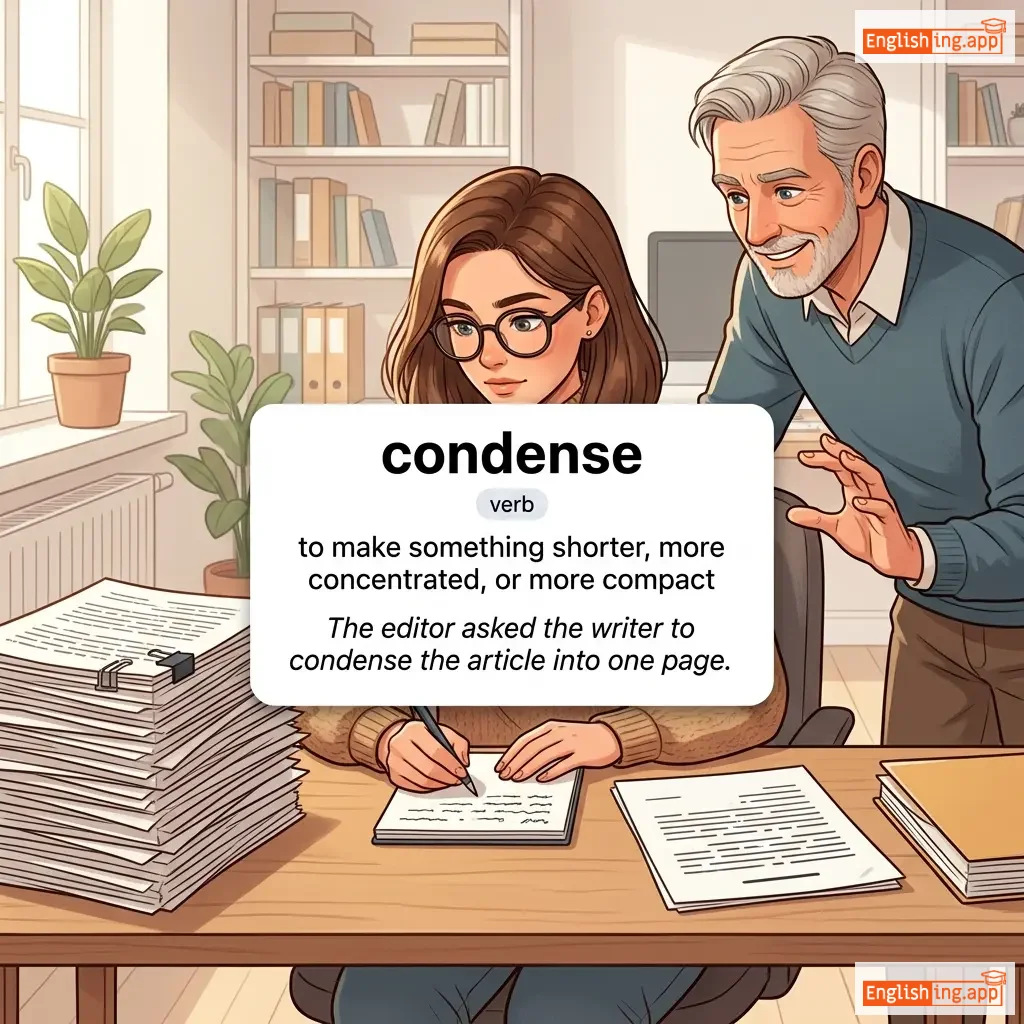
to make something shorter, more concentrated, or more compact
••••••
|
The editor asked the writer to condense the article into one page.
Редактор попросил писателя сократить статью до одной страницы.
••••••
|
Редактор попросил писателя сократить статью до одной страницы.
Redaktor poprosil pisatelya sokratit' stat'yu do odnoi stranitzy.
••••••
|
- •••••• | - •••••• | - •••••• |
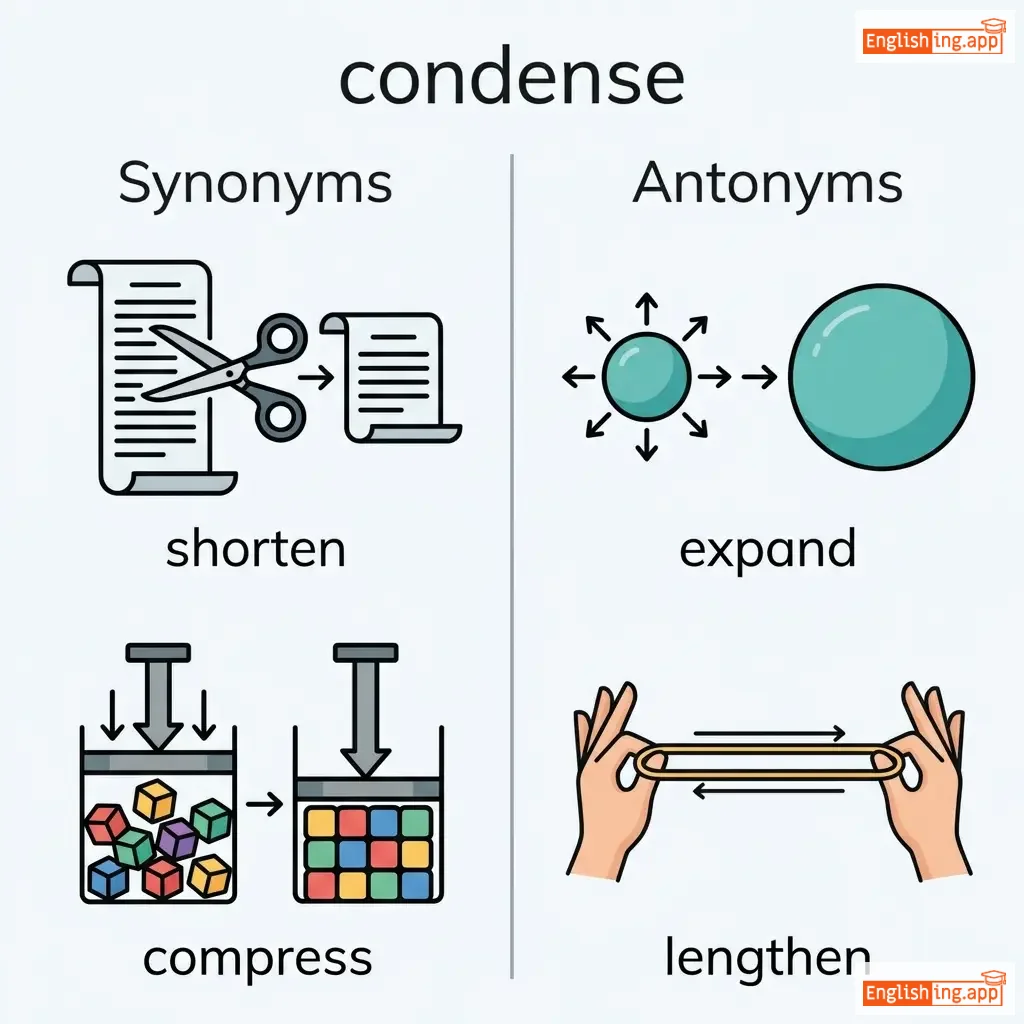
shorten, compress, summarize, compact, reduce
••••••
|
expand, lengthen, elaborate
••••••
|
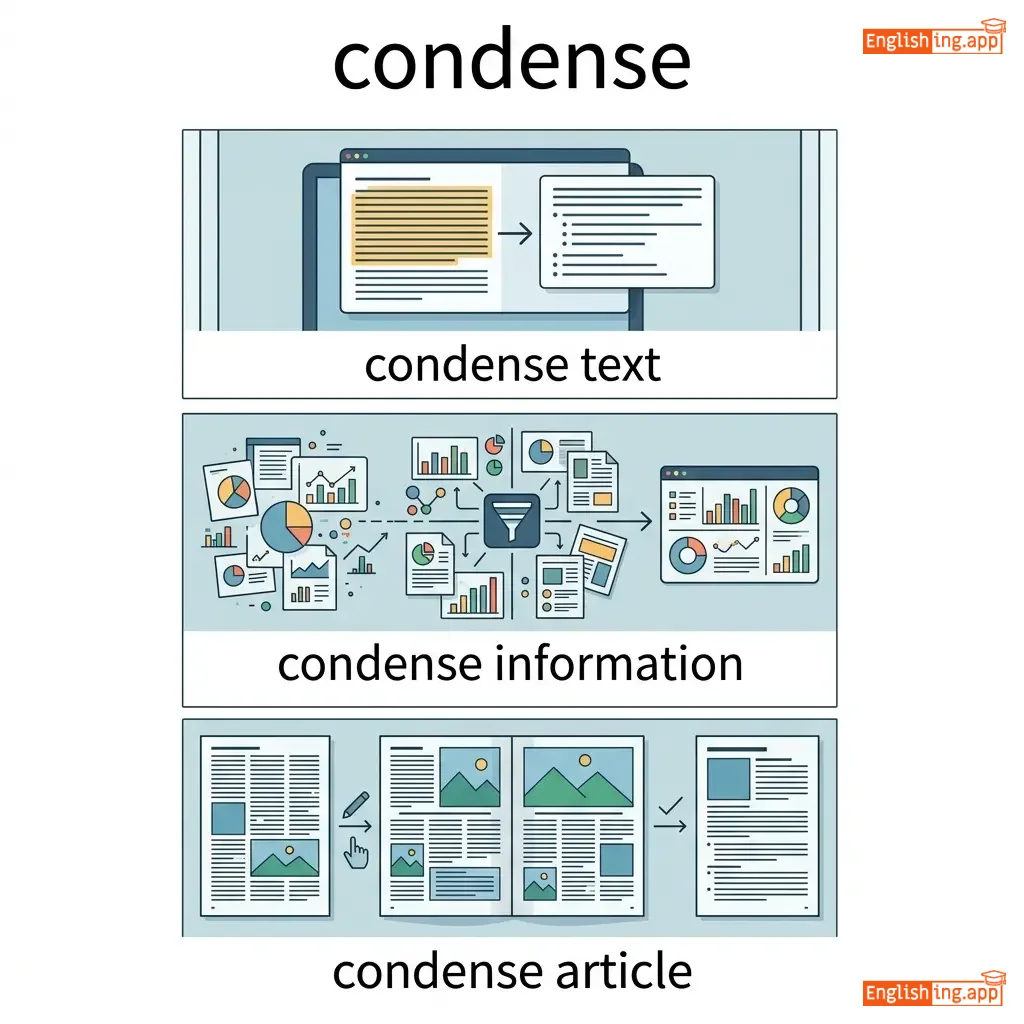
condense text, condense information, condense article, condense speech
••••••
|
Condense означает сжать, как когда ты сжимаешь данные или текст.
••••••
|
|
#1682
🔌
|
/ˈkɒndjuɪt/ or /ˈkɑːnduɪt/
noun
(konduit)
••••••
|
- •••••• |
трубопровод / средство
truboprovod / sredstvo
••••••
|
- •••••• | - •••••• | - •••••• | - •••••• |
a channel or pipe for conveying water, electricity, or information
••••••
|
The cable was placed inside a protective conduit. |
Кабель был помещен в защитный трубопровод.
Kabel' byl pomeshchen v zashchitnyy truboprovod.
••••••
|
a conduit for |
a means of transmitting or distributing something
••••••
|
средство для
sredstvo dlya
••••••
|
channel, pipe, passage, medium, carrier
••••••
|
blockage, barrier
••••••
|
electrical conduit, water conduit, conduit for information
••••••
|
Conduit используется для защиты проводов, а также для передачи информации.
••••••
|
|
#1683
🎼
|
/kənˈdʌktər/
noun
(кондоктор)
••••••
|
- •••••• |
дирижер / проводник
dirizher / provodnik
••••••
|
- •••••• | - •••••• | - •••••• | - •••••• |
a person who directs a performance or someone who collects fares on public transport; or a material that conducts electricity
••••••
|
The conductor waved his baton to start the orchestra. |
Дирижер взмахнул своей палочкой, чтобы начать оркестр.
Dirizher vzmakhnul svoey palochkoy, chtoby nachat' orkestr.
••••••
|
- •••••• | - •••••• | - •••••• |
leader, director, guide, controller
••••••
|
follower, insulator
••••••
|
train conductor, orchestra conductor, electrical conductor
••••••
|
Conductor означает дирижера или проводника электричества.
••••••
|
|
#1684
⚡
|
/kənˈdʌktəbl̩/
adjective
(kənˈdʌktəbl̩)
••••••
|
- •••••• |
проводящий
provodyashchiy
••••••
|
- •••••• | - •••••• | - •••••• | - •••••• |
capable of being conducted, especially electricity or heat
••••••
|
Copper is highly conductible to electricity.
Медь хорошо проводит электричество.
••••••
|
Медь отлично проводит электричество.
Med' otlichno provodit elektrichestvo.
••••••
|
- •••••• | - •••••• | - •••••• |
transmissible, transferable, conductive, conveyable
••••••
|
non-conductive, insulating
••••••
|
conductible material, conductible property, highly conductible
••••••
|
Проводящий - значит проводить + способный, способный проводить электричество или тепло.
••••••
|
|
#1685
🧑🏫
|
/ˈkɒndʌkt/ (noun), /kənˈdʌkt/ (verb)
noun, verb
••••••
|
- •••••• | - •••••• |
conducted
••••••
|
conducted
••••••
|
conducts
••••••
|
conducting
••••••
|
to organize or carry out; or a person's behavior
••••••
|
The teacher conducted the exam fairly. |
- •••••• |
conduct oneself |
to behave in a particular manner
••••••
|
- •••••• |
manage, carry out, perform, behavior, demeanor
••••••
|
mismanage, neglect, misconduct
••••••
|
conduct research, conduct business, professional conduct
••••••
|
No •••••• |
|
#1686
🌱
|
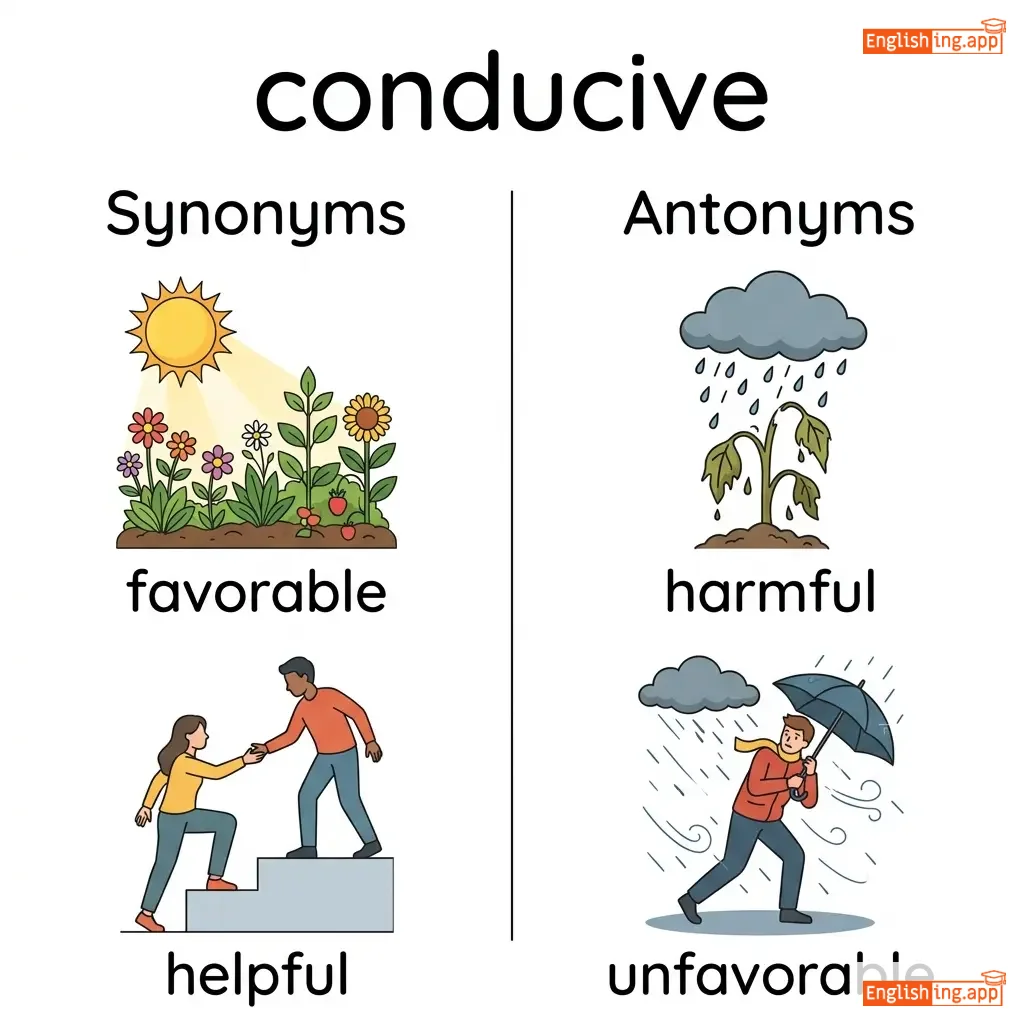
/kənˈdjuːsɪv/
adjective
(кənˈdюːсɪв)
••••••
|
|
способствующий
sposobstvuyushchiy
••••••
|
- •••••• | - •••••• | - •••••• | - •••••• |
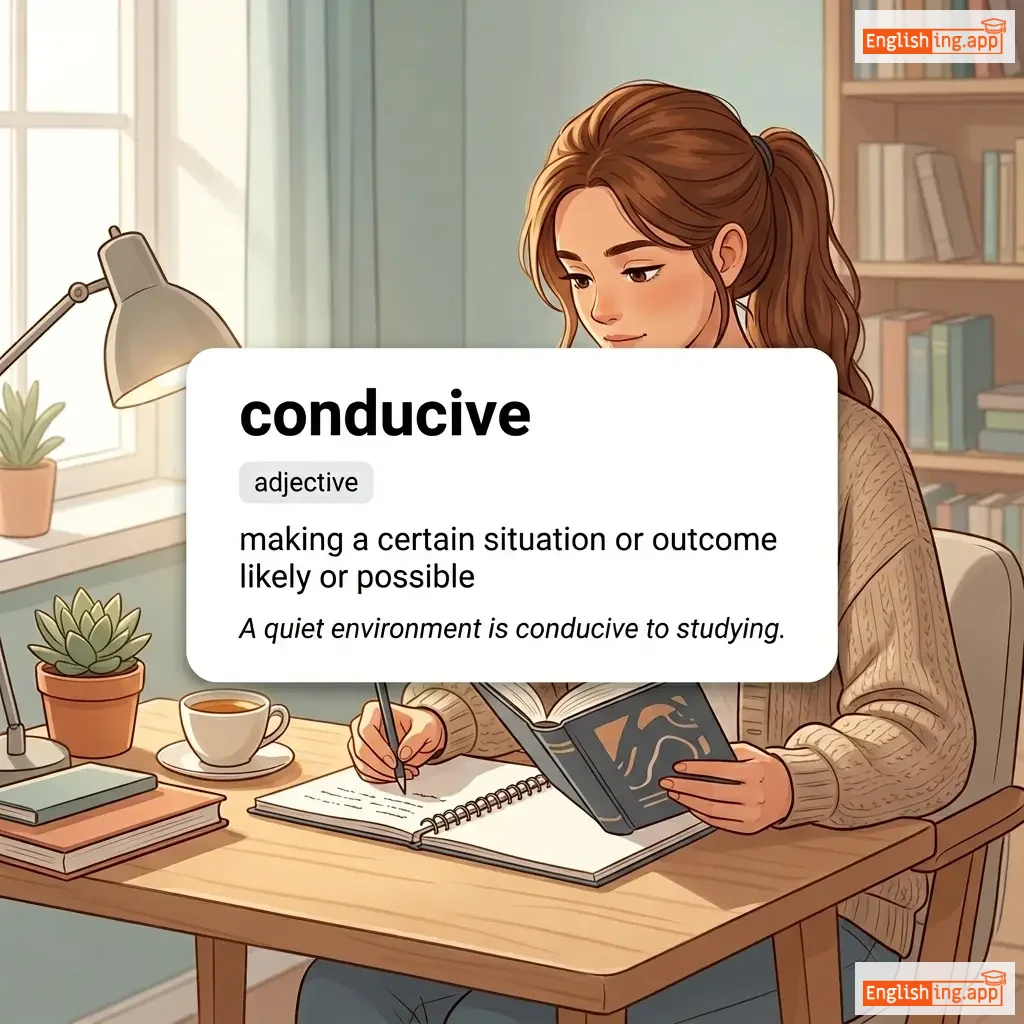
making a certain situation or outcome likely or possible
••••••
|
A quiet environment is conducive to studying. |
Тихая обстановка способствует учебе.
Tikhaya obstanovka sposobstvuyet uchebe.
••••••
|
- •••••• | - •••••• | - •••••• |
favorable, helpful, beneficial, advantageous, supportive
••••••
|
harmful, unfavorable, obstructive
••••••
|
conducive to learning, conducive environment, conducive atmosphere
••••••
|
Conducive означает способствующий, как способствующий учебе.
••••••
|
|
#1687
➡️
|
/kənˈdjuːs/
verb
(кондьюс)
••••••
|
- •••••• |
способствовать
sposobstvovat
••••••
|
conduced
кондьюсд
••••••
|
conduced
кондьюсд
••••••
|
conduces
кондьюсес
••••••
|
conducing
кондьюсинг
••••••
|
To help bring about a particular result; to contribute to something.
••••••
|
Regular exercise conduces to better health.
Регулярные упражнения способствуют лучшему здоровью.
••••••
|
Регулярные упражнения способствуют лучшему здоровью.
Regulyarnye uprazhneniya sposobstvuyut luchshemu zdorov'yu.
••••••
|
- •••••• | - •••••• | - •••••• |
contribute, lead, promote, foster
••••••
|
hinder, obstruct, prevent
••••••
|
conduce to, directly conduce, conduce towards
••••••
|
Conduce означает способствовать улучшению здоровья.
••••••
|
|
#1688
🙈
|
/kənˈdəʊn/
verb
(кондон)
••••••
|
|
прощать
proshchat
••••••
|
condoned
кондонирован
••••••
|
condoned
кондонирован
••••••
|
condones
кондонит
••••••
|
condoning
кондонируя
••••••
|
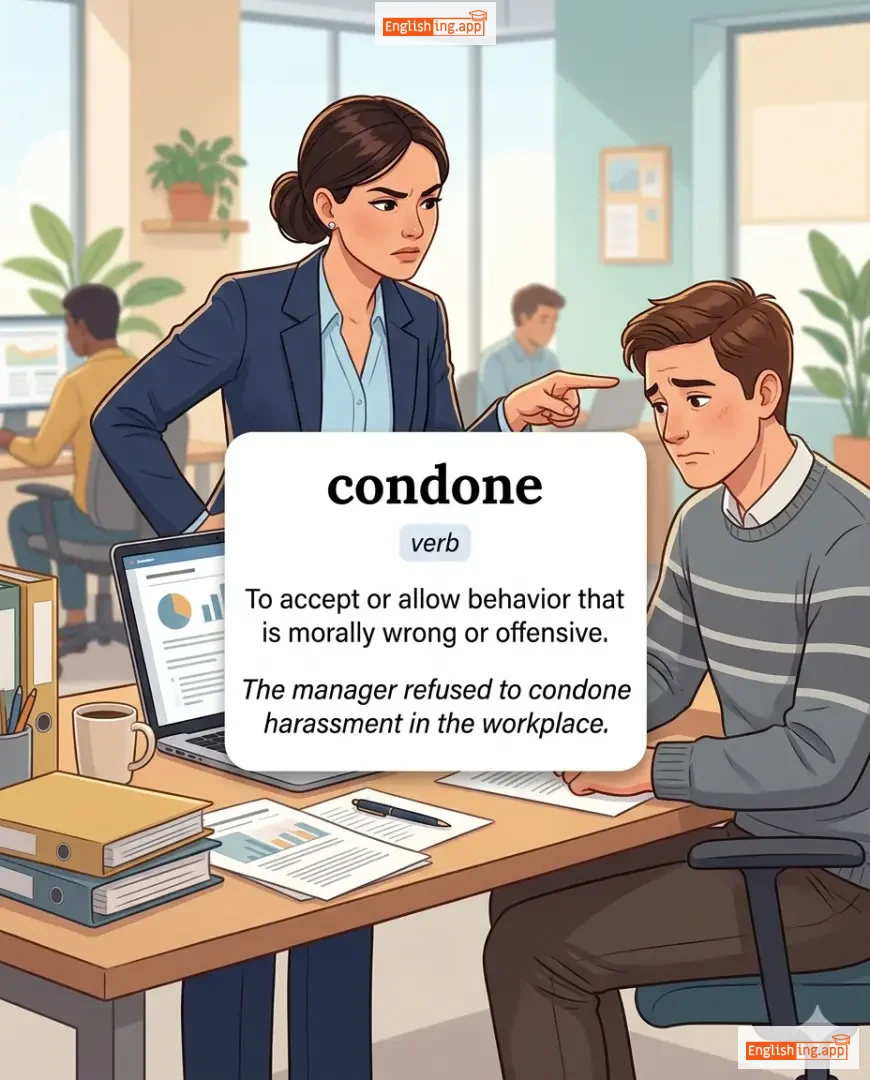
To accept or allow behavior that is morally wrong or offensive.
••••••
|
The manager refused to condone harassment in the workplace.
Менеджер отказался кондонировать домогательства на рабочем месте.
••••••
|
Менеджер отказался кондонировать домогательства на рабочем месте.
Menedzher otkazalsya kondonirovat' domogatel'stva na rabochem meste.
••••••
|
- •••••• | - •••••• | - •••••• |
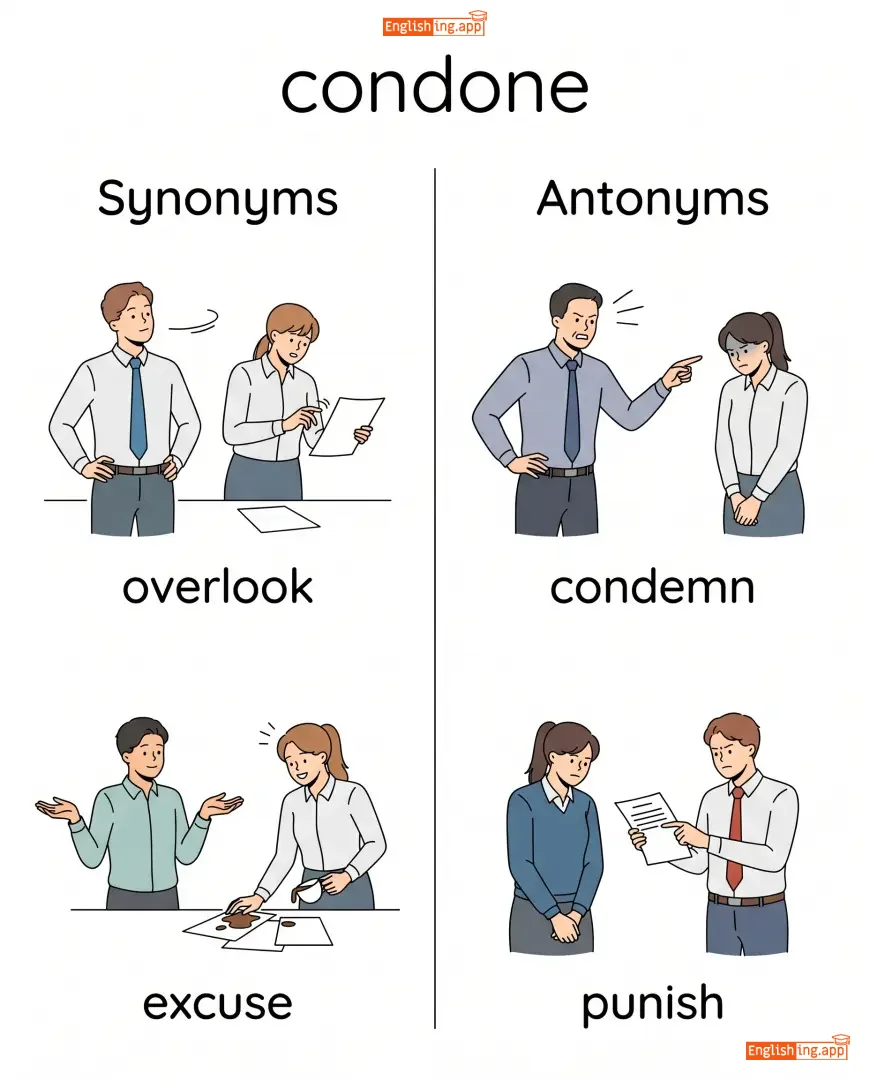
overlook, excuse, forgive, tolerate
••••••
|
condemn, punish, disapprove
••••••
|
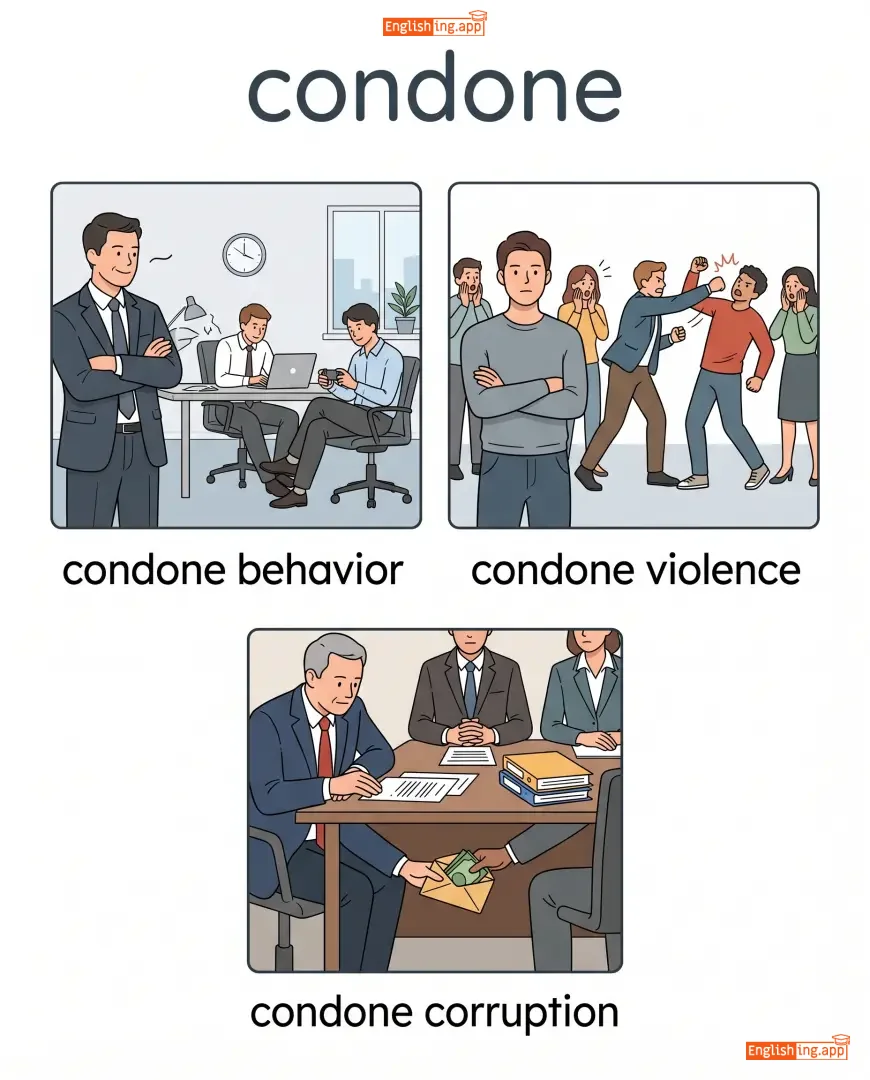
condone behavior, condone violence, condone corruption
••••••
|
Condone означает прощать без условий
••••••
|
|
#1689
🕊️
|
/kənˈdəʊləns/
noun
(kənˈdʌləns)
••••••
|
- •••••• |
соболезнования
soboleznovaniya
••••••
|
- •••••• | - •••••• | - •••••• | - •••••• |
An expression of sympathy, especially on the occasion of death.
••••••
|
She offered her sincere condolence to the grieving family.
Она выразила свои искренние соболезнования семье, переживающей утрату.
••••••
|
Она выразила свои искренние соболезнования семье, переживающей утрату.
Ona vyrazila svoi iskrennie soboleznovaniya sem'ye, perezhivayushchey utratu.
••••••
|
send condolences
отправить соболезнования
••••••
|
to express sympathy for someone's loss
••••••
|
отправить соболезнования
otpravit' soboleznovaniya
••••••
|
sympathy, compassion, pity, comfort
••••••
|
cruelty, indifference
••••••
|
offer condolence, express condolence, heartfelt condolence
••••••
|
Condolence = Когда кто-то уходит, мы отправляем соболезнования.
••••••
|
|
#1690
🤍
|
/kənˈdəʊl/
verb
(кондол)
••••••
|
- •••••• |
выражать соболезнования
vyrazhat' soboleznovaniya
••••••
|
condoled
кондолед
••••••
|
condoled
кондолед
••••••
|
condoles
кондолс
••••••
|
condoling
кондолинг
••••••
|
To express sympathy for someone who is suffering or grieving.
••••••
|
Neighbors came to condole with the family after the tragedy.
Соседи пришли выразить соболезнования семье после трагедии.
••••••
|
Соседи пришли выразить соболезнования семье после трагедии.
Sosedi prishli vyrazhit' soboleznovaniya sem'ye posle tragedii.
••••••
|
- •••••• | - •••••• | - •••••• |
sympathize, commiserate, console, comfort
••••••
|
ignore, neglect, disregard
••••••
|
condole with, condole over, condole deeply
••••••
|
Condole похоже на соболезнования—выражать сочувствие
••••••
|
|
#1691
🥫
|
/ˈkɒndɪmənts/
noun
(кондиментс)
••••••
|
- •••••• |
приправы или соусы
pripavy ili sousy
••••••
|
- •••••• | - •••••• | - •••••• | - •••••• |
Seasonings or sauces used to add flavor to food.
••••••
|
Ketchup and mustard are popular condiments for burgers. |
Кетчуп и горчица популярны как приправы для бургеров.
Ketchup i gorchitsa popularny kak pripavy dlya burgerov.
••••••
|
- •••••• | - •••••• | - •••••• |
seasonings, sauces, toppings, flavorings, garnishes
••••••
|
blandness, plainness
••••••
|
table condiments, spice condiments, popular condiments, condiments section
••••••
|
Приправы или соусы могут сделать еду вкуснее.
••••••
|
|
#1692
🥫
|
/ˈkɒndɪmənt/
noun
(kondiment)
••••••
|
- •••••• |
приправы/соус
pripravy/sous
••••••
|
- •••••• | - •••••• | - •••••• | - •••••• |
a substance such as salt, mustard, or ketchup that is used to add flavor to food
••••••
|
Ketchup is a popular condiment in many countries. |
Кетчуп - популярная приправа во многих странах.
Ketchup - populyarnaya priprava vo mnogikh stranak.
••••••
|
- •••••• | - •••••• | - •••••• |
seasoning, sauce, dressing, flavoring
••••••
|
unseasoned, bland
••••••
|
add condiment, condiment table, condiment shelf
••••••
|
Condiment похоже на 'приправа' для еды.
••••••
|
|
#1693
⚖️
|
/ˈkɒndaɪn/
adjective
(кондэйн)
••••••
|
- •••••• |
заслуженный
zasluzhennyy
••••••
|
- •••••• | - •••••• | - •••••• | - •••••• |
deserved, appropriate, and fitting (especially punishment)
••••••
|
The criminal received condign punishment for his crimes. |
Преступник получил заслуженное наказание за свои преступления.
Prestuplnik poluchil zasluzhennoye nakazaniye za svoi prestupleniya.
••••••
|
- •••••• | - •••••• | - •••••• |
deserved, fitting, appropriate, just, suitable
••••••
|
undeserved, unfair, inappropriate
••••••
|
condign punishment, condign penalty, condign justice
••••••
|
Condign punishment значит 'кон-дейн' → Заслуженное наказание за преступление.
••••••
|
|
#1694
🙄
|
/ˌkɒndɪˈsɛndɪŋ/
adjective
(kəndɪ'sɛndɪŋ)
••••••
|
- •••••• |
снисходительный
sniskhoditel'nyy
••••••
|
- •••••• | - •••••• | - •••••• | - •••••• |
having or showing an attitude of patronizing superiority
••••••
|
Her condescending tone upset her colleagues. |
Её снисходительный тон обидел коллег.
Yeyo sniskhoditel'nyy ton obidel kolleg.
••••••
|
- •••••• | - •••••• | - •••••• |
patronizing, snobbish, arrogant, disdainful, superior
••••••
|
respectful, humble, modest
••••••
|
condescending tone, condescending attitude, condescending remark
••••••
|
Снисходительный – это когда ты смотришь на других свысока.
••••••
|
|
#1695
😒
|
/ˌkɒndɪˈsɛnd/
verb
(kəndɪˈsɛnd)
••••••
|
- •••••• |
снисходительно быть добрым
sniskhoditel'no byt' dobrym
••••••
|
condescended
kəndɪˈsɛndɪd
••••••
|
condescended
kəndɪˈsɛndɪd
••••••
|
condescends
kəndɪˈsɛndz
••••••
|
condescending
kəndɪˈsɛndɪŋ
••••••
|
to behave as if one is superior while being gracious to others
••••••
|
He would not condescend to answer such a trivial question.
Он не стал бы унижаться, отвечая на такой тривиальный вопрос.
••••••
|
Он не стал бы унижаться, отвечая на такой тривиальный вопрос.
On ne stal by unizhat'sya, otvechaya na takoy triviial'nyy vopros.
••••••
|
- •••••• | - •••••• | - •••••• |
patronize, deign, stoop, belittle, humiliate
••••••
|
respect, honor, admire
••••••
|
condescend to help, refuse to condescend, condescend to answer
••••••
|
Condescend в русском — это значит 'снисходительно' относиться к другим.
••••••
|
|
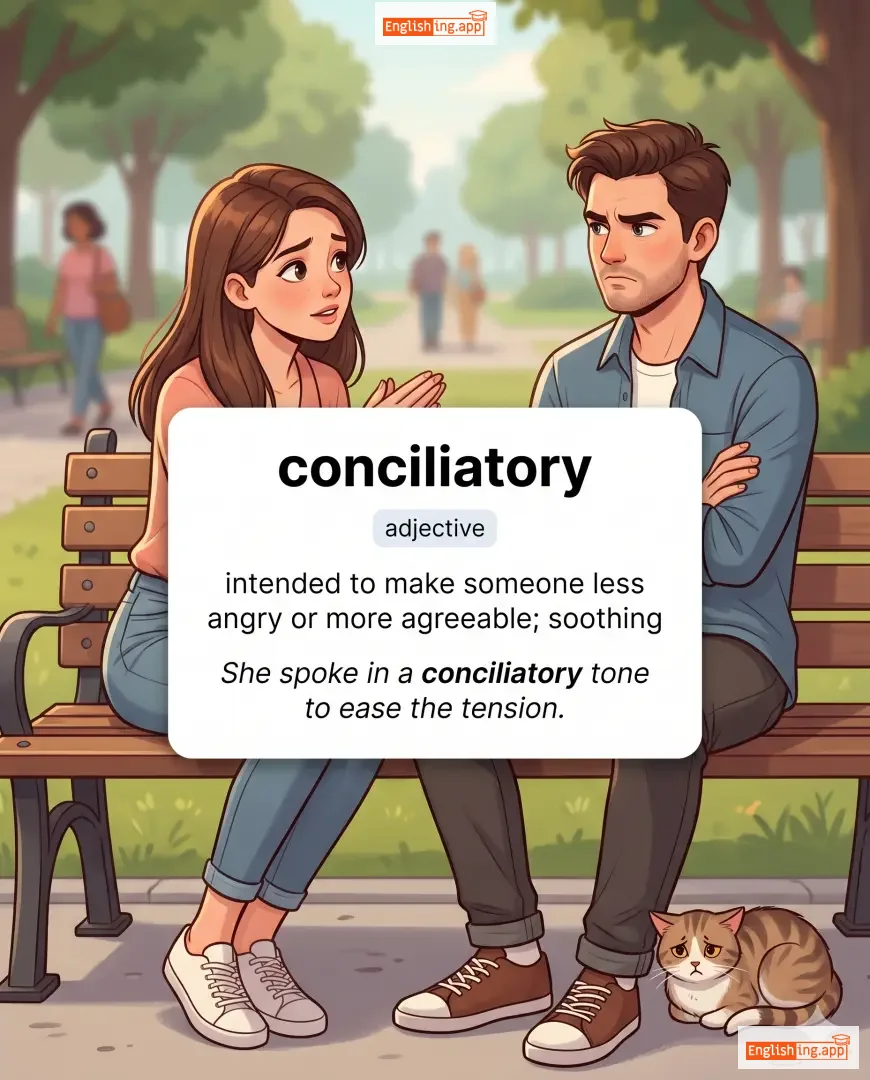
#1696
🕊️
|
/kənˈsɪliətɔːri/
adjective
(kon-sil-ee-ya-to-ri)
••••••
|
|
примирительный
primiritel'nyy
••••••
|
- •••••• | - •••••• | - •••••• | - •••••• |
intended to make someone less angry or more agreeable; soothing
••••••
|
She spoke in a conciliatory tone to ease the tension. |
Она говорила примирительным тоном, чтобы уменьшить напряжение.
Ona govoryla primiritel'nym tonom, chtoby umen'shit' napryazhenie.
••••••
|
- •••••• | - •••••• | - •••••• |
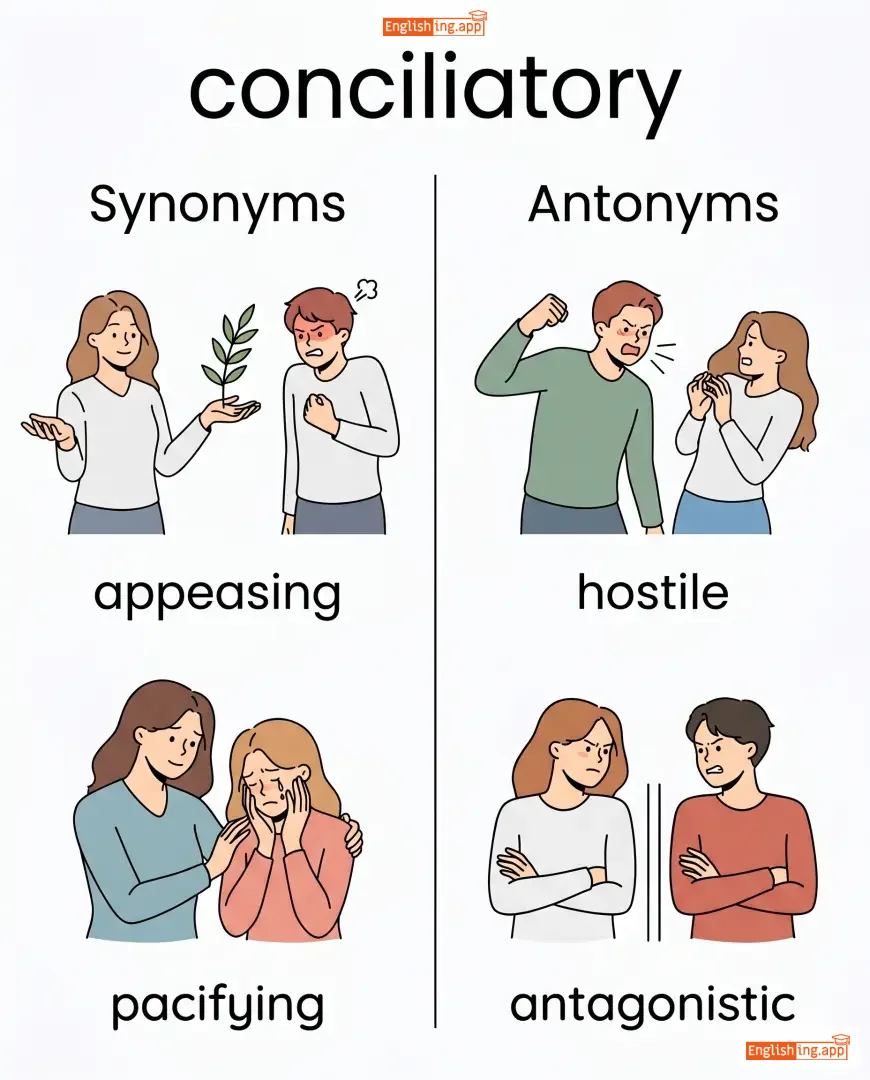
appeasing, pacifying, soothing, placatory, calming
••••••
|
hostile, antagonistic, confrontational
••••••
|
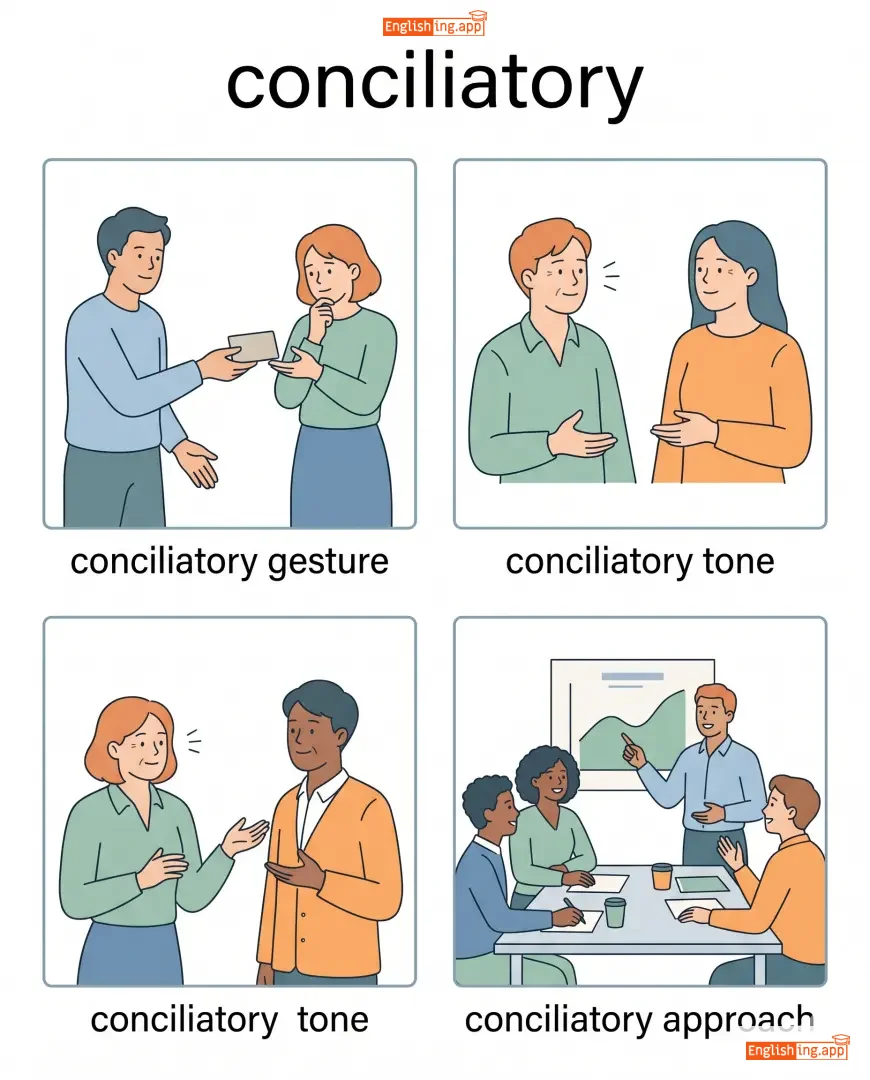
conciliatory gesture, conciliatory tone, conciliatory approach
••••••
|
Примирительный - это слово для примирения, когда пытаемся успокоить
••••••
|
|
#1697
💧
|
/ˌkɒndɛnˈseɪʃən/
noun
(kondensatsiya)
••••••
|
- •••••• |
конденсация
kondensatsiya
••••••
|
- •••••• | - •••••• | - •••••• | - •••••• |
The process of water vapor changing into liquid; also, the act of making something more concise.
••••••
|
Condensation formed on the windows during the cold night. |
Конденсация образовалась на окнах в холодную ночь.
Kondensatsiya obrazovalas' na oknakh v kholodnuyu noch'.
••••••
|
- •••••• | - •••••• | - •••••• |
liquefaction, compression, concentration, distillation
••••••
|
evaporation, expansion
••••••
|
water condensation, condensation process, condensation on glass, condensation reaction
••••••
|
Конденсация — как 'конденсатор', который превращает пар в воду.
••••••
|
|
#1698
❌
|
/kənˈdɛm/
verb
(kondem)
••••••
|
|
осуждать
osuzhdat
••••••
|
condemned
kondemd
••••••
|
condemned
kondemd
••••••
|
condemns
kondemz
••••••
|
condemning
kondem-ing
••••••
|
To express strong disapproval of; to declare something as wrong or unacceptable.
••••••
|
The government condemned the act of violence.
Правительство осудило акт насилия.
••••••
|
Правительство осудило акт насилия.
Pravitel'stvo osudilo akt nasiliya.
••••••
|
condemn to death
приговорить к смерти
••••••
|
to sentence someone to death as punishment
••••••
|
приговорить к смерти
prigovorit' k smerti
••••••
|
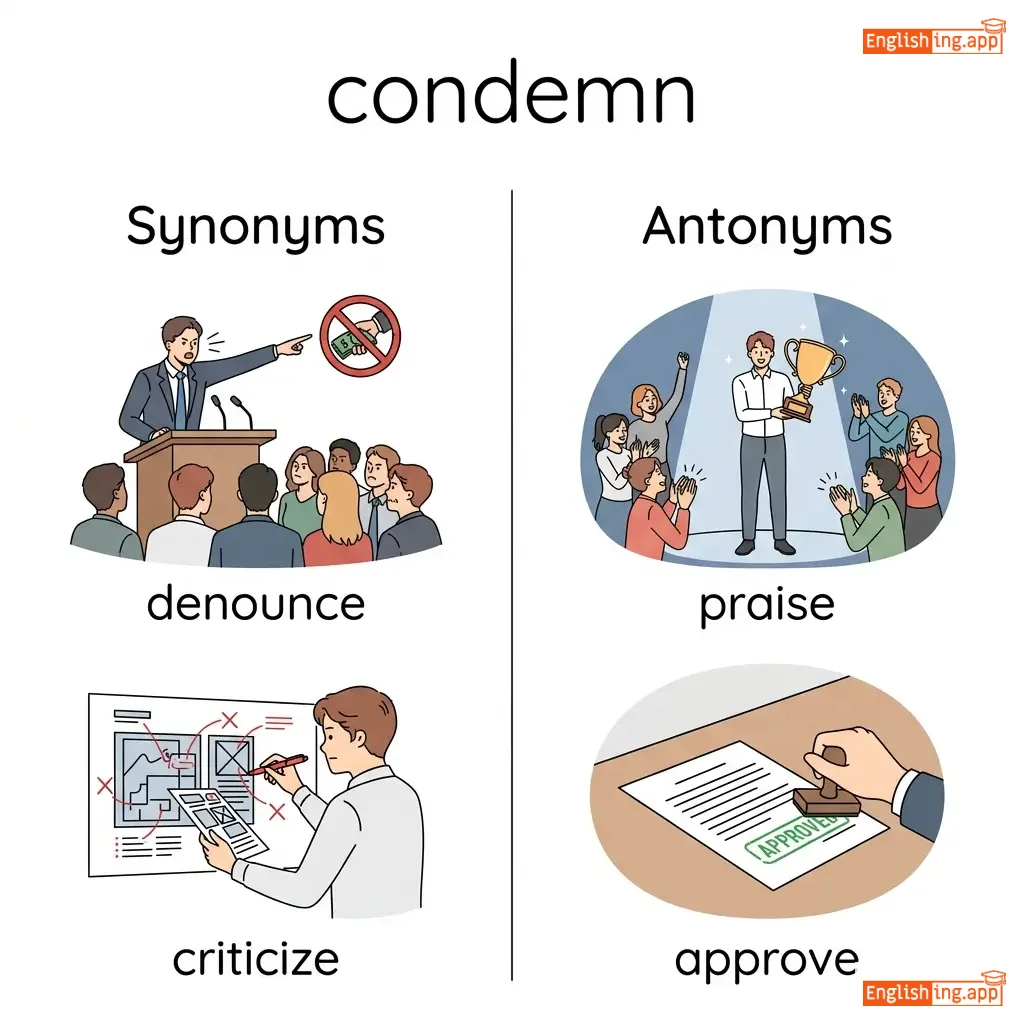
denounce, criticize, censure, blame
••••••
|
praise, approve, support
••••••
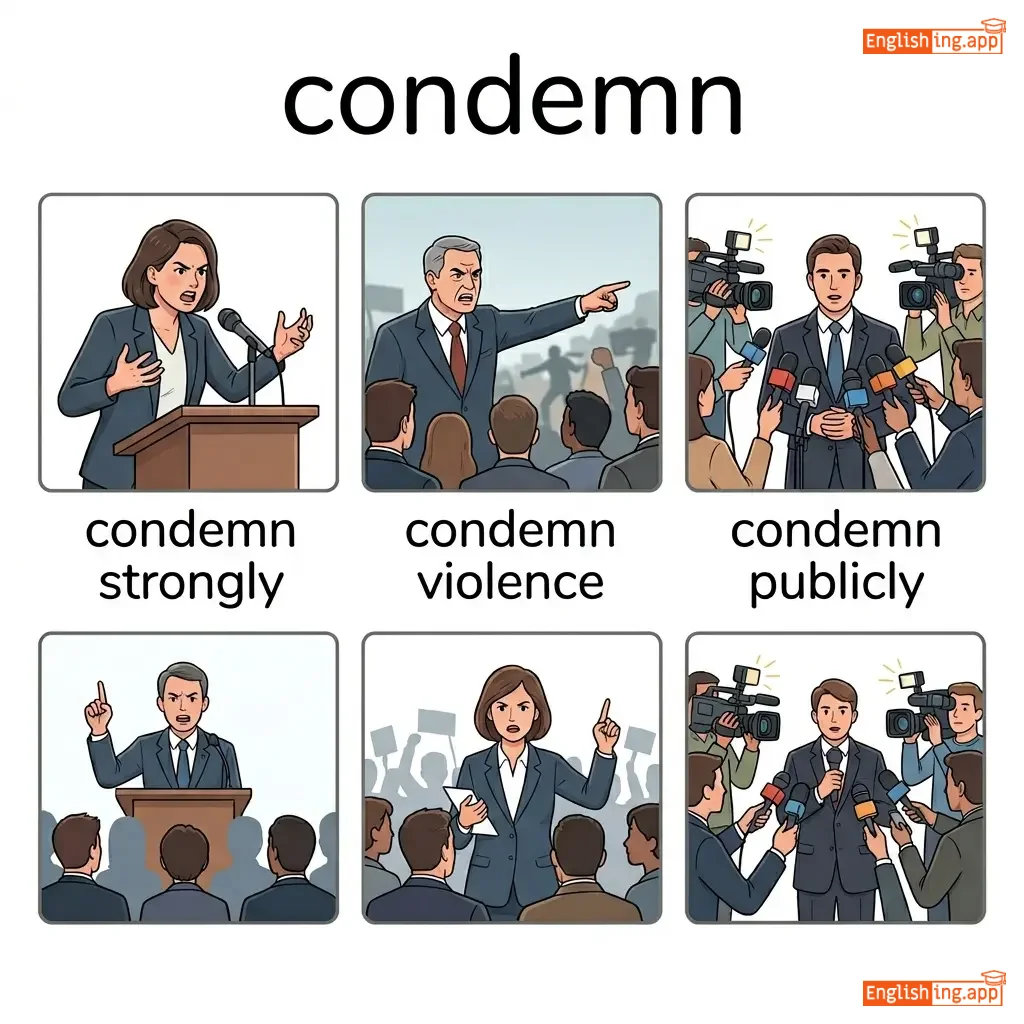
|
condemn strongly, condemn violence, condemn publicly, condemn actions
••••••
|
Condemn значит 'осуждать', как в случае с обвинением в преступлении.
••••••
|
|
#1699
🤕
|
/kənˈkʌʃən/
noun
(konkushen)
••••••
|
- •••••• |
сотрясение мозга
sotryasenie mozga
••••••
|
- •••••• | - •••••• | - •••••• | - •••••• |
A temporary unconsciousness or shock caused by a blow to the head.
••••••
|
He suffered a concussion after falling from the bike. |
Он получил сотрясение мозга после того, как упал с велосипеда.
On poluchil sotryasenie mozga posle togo, kak upal s velosipeda.
••••••
|
- •••••• | - •••••• | - •••••• |
brain injury, trauma, shock, head injury
••••••
|
health, wellness
••••••
|
mild concussion, severe concussion, concussion symptoms, concussion treatment
••••••
|
Concussion напоминает 'конк' - это удар по голове.
••••••
|
|
#1700
⏳
|
/kənˈkʌrənt/
adjective
(konkurrent)
••••••
|
|
одновременный
odnovremennyy
••••••
|
- •••••• | - •••••• | - •••••• | - •••••• |
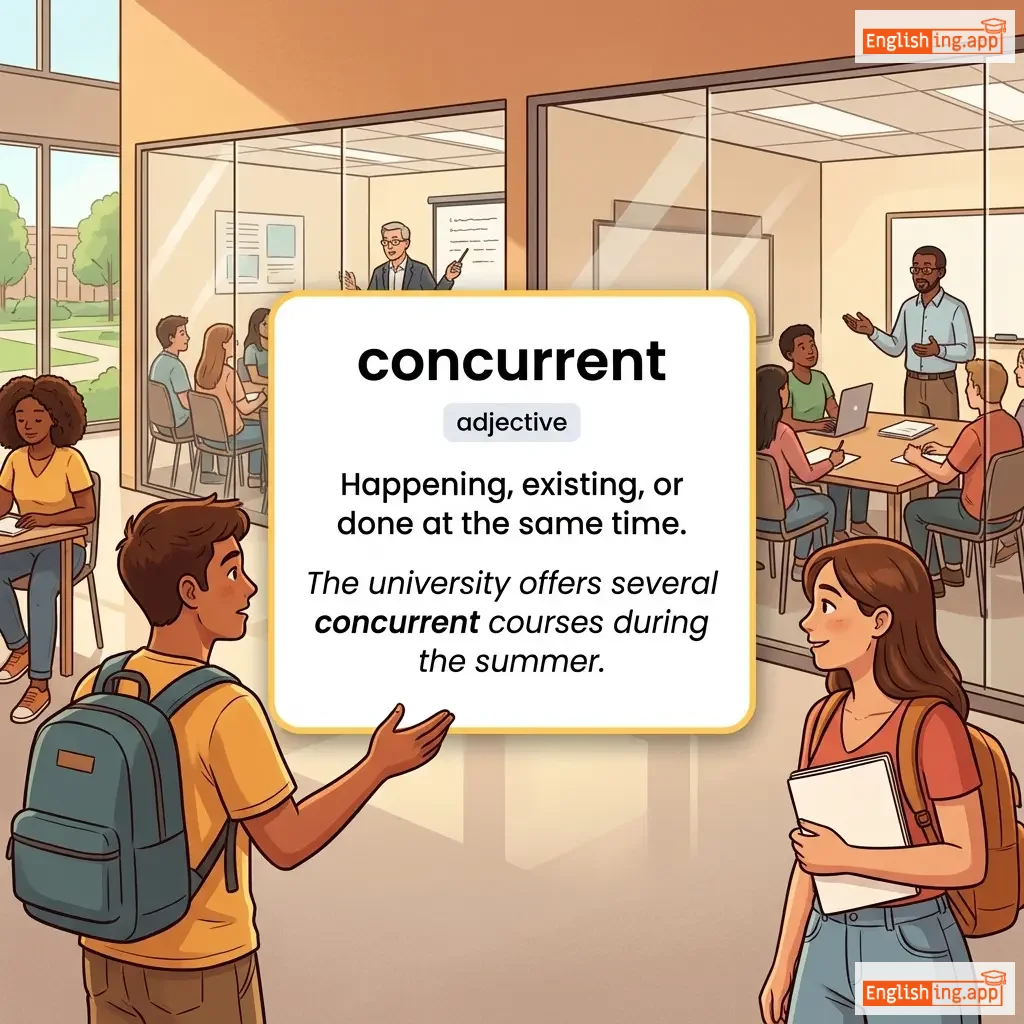
Happening, existing, or done at the same time.
••••••
|
The university offers several concurrent courses during the summer. |
Университет предлагает несколько одновременных курсов летом.
Universitet predlagayet neskol'ko odnovremennykh kursov letom.
••••••
|
concurrent with |
happening at the same time as
••••••
|
одновременный с
odnovremennyy s
••••••
|
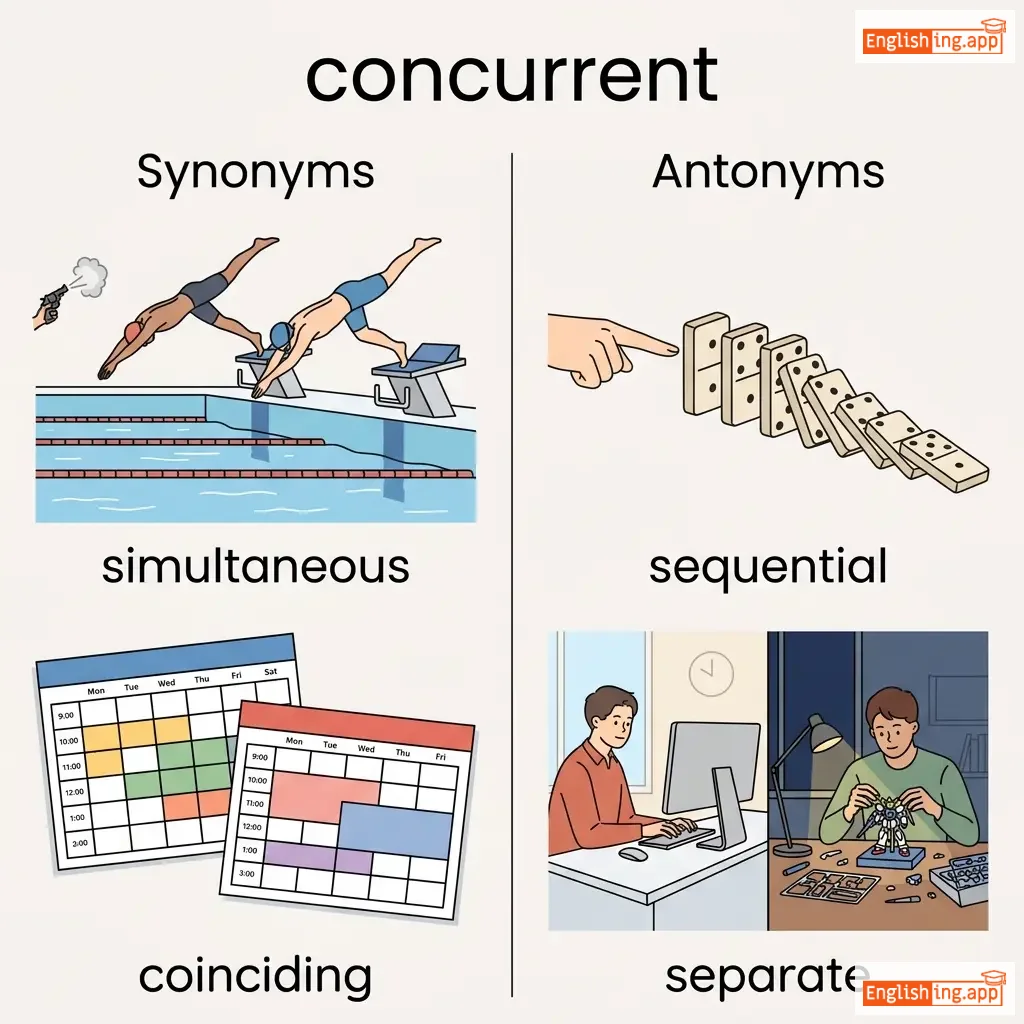
simultaneous, coinciding, synchronous, parallel
••••••
|
sequential, separate, different
••••••
|
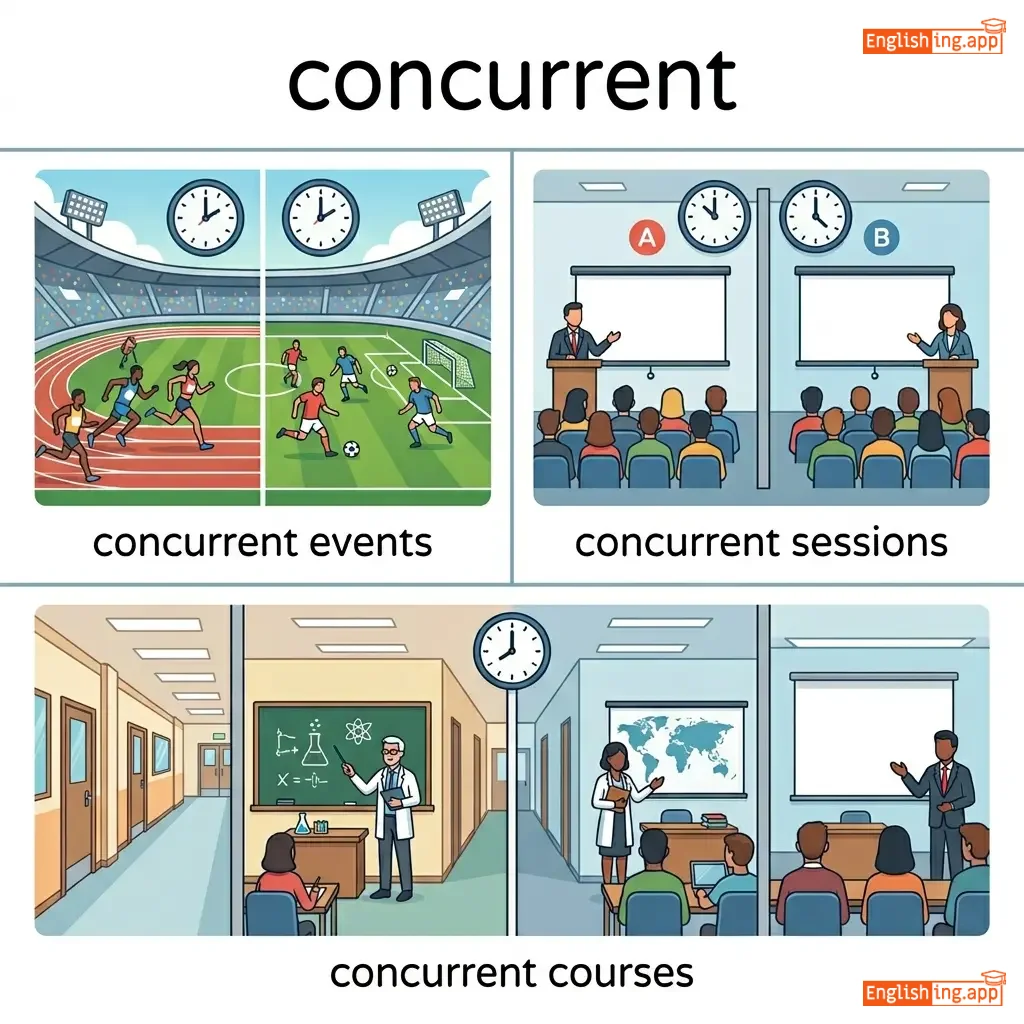
concurrent events, concurrent sessions, concurrent courses, concurrent use
••••••
|
Одновременный - когда два события происходят в одно и то же время, как два трамвая на одном пути.
••••••
|
|
#1701
🤝
|
/kənˈkʌrəns/
noun
(kon-ker-ens)
••••••
|
- •••••• |
согласие
soglasie
••••••
|
- •••••• | - •••••• | - •••••• | - •••••• |
Agreement or union in action, opinion, or occurrence; simultaneous happening of events.
••••••
|
The project was completed with the concurrence of all departments.
Проект был завершён с согласия всех отделов.
••••••
|
Проект был завершён с согласия всех отделов.
Proyekt byl zavershyon s soglasiya vsekh otdelov.
••••••
|
in concurrence with
в соответствии с
••••••
|
in agreement or in accordance with
••••••
|
в соответствии с
v sootvetstvii s
••••••
|
agreement, harmony, consent, accord, unity
••••••
|
disagreement, conflict, discord
••••••
|
mutual concurrence, general concurrence, concurrence of opinion, concurrence with
••••••
|
Concurrence – это когда все согласны с решением, как все департаменты для проекта.
••••••
|
|
#1702
✅
|
/kənˈkɜːr/
verb
(конкур)
••••••
|
- •••••• |
согласиться
soglasitsya
••••••
|
concurred
конкурред
••••••
|
concurred
конкурред
••••••
|
concurs
конкурс
••••••
|
concurring
конкуринг
••••••
|
To agree with someone or something.
••••••
|
I concur with your opinion on this matter.
Я согласен с вашим мнением по этому вопросу.
••••••
|
Я согласен с вашим мнением по этому вопросу.
Ya soglasen s vashim mneniem po etomu voprosu.
••••••
|
concur with
согласиться с
••••••
|
to agree with someone or something
••••••
|
согласиться с
soglasitsya s
••••••
|
agree, assent, approve, consent, coincide
••••••
|
disagree, dissent, oppose
••••••
|
concur with opinion, concur in decision, concur fully
••••••
|
Concur - согласиться, как 'соглашаемся вместе'.
••••••
|
|
#1703
📜
|
/ˈkɒŋ.kɔː.dæt/
noun
(kon-kor-dat)
••••••
|
- •••••• |
конкордат
konkordat
••••••
|
- •••••• | - •••••• | - •••••• | - •••••• |
An agreement or treaty, especially between the Vatican and a secular government.
••••••
|
The concordat established the rights of the church within the country. |
Конкордат установил права церкви в стране.
Konkordat ustanovil prava tserkvi v strane.
••••••
|
- •••••• | - •••••• | - •••••• |
agreement, treaty, pact, settlement
••••••
|
conflict, dispute, disagreement
••••••
|
sign a concordat, concordat agreement, historic concordat
••••••
|
Конкордат означает формальное соглашение - договор между церковью и правительством
••••••
|
|
#1704
📑
|
/kənˈkɔːrdəns/
noun
(kənˈkɔːrdəns)
••••••
|
- •••••• |
согласованность
soglasovannost
••••••
|
- •••••• | - •••••• | - •••••• | - •••••• |
Agreement; also an alphabetical index of the principal words in a book.
••••••
|
There is a strong concordance between the two reports. |
Существует сильная согласованность между двумя отчетами.
Sushchestvuet sil'naya soglasovannost' mezhdu dvumya otchety.
••••••
|
- •••••• | - •••••• | - •••••• |
agreement, harmony, consistency, correspondence
••••••
|
conflict, discord, inconsistency
••••••
|
statistical concordance, concordance index, high concordance
••••••
|
Concordance = согласие - когда все в гармонии
••••••
|
|
#1705
☮️
|
/ˈkɒŋ.kɔːd/
noun
(конкорд)
••••••
|
|
согласие
soglasie
••••••
|
- •••••• | - •••••• | - •••••• | - •••••• |
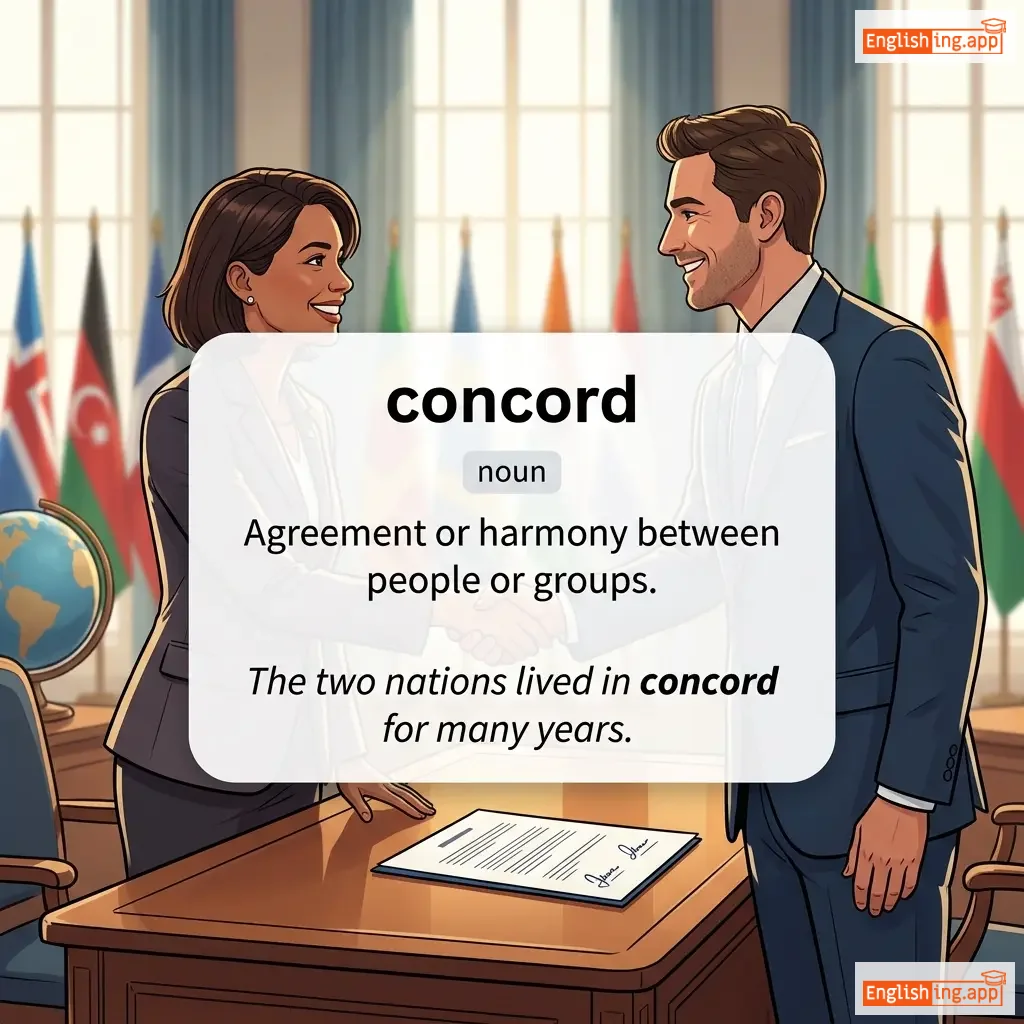
Agreement or harmony between people or groups.
••••••
|
The two nations lived in concord for many years.
Два государства жили в конкорде много лет.
••••••
|
Два государства жили в согласии много лет.
Dva gosudarstva zhili v soglasii mnogo let.
••••••
|
in concord with
в конкорде с
••••••
|
in agreement or harmony with
••••••
|
в согласии с
v soglasii s
••••••
|
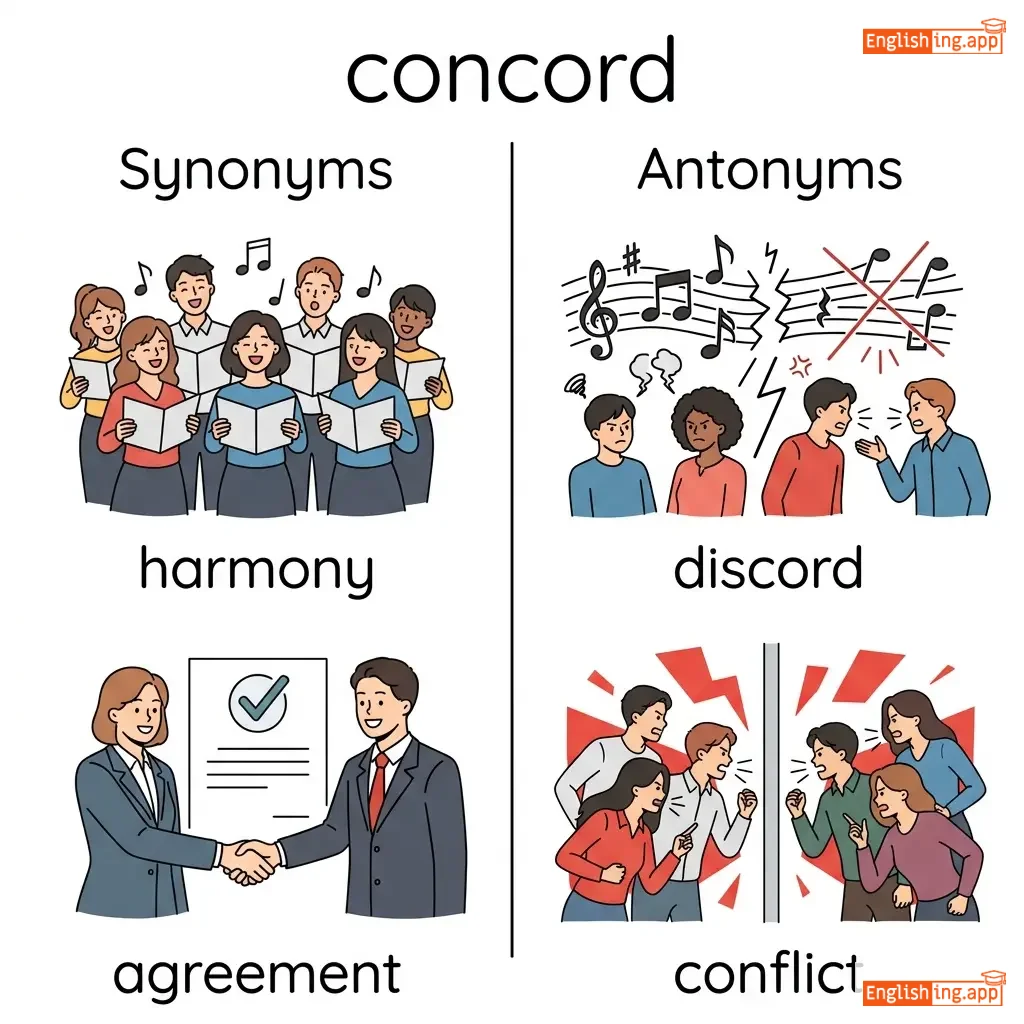
harmony, agreement, peace, unity, accord
••••••
|
discord, conflict, disagreement
••••••
|
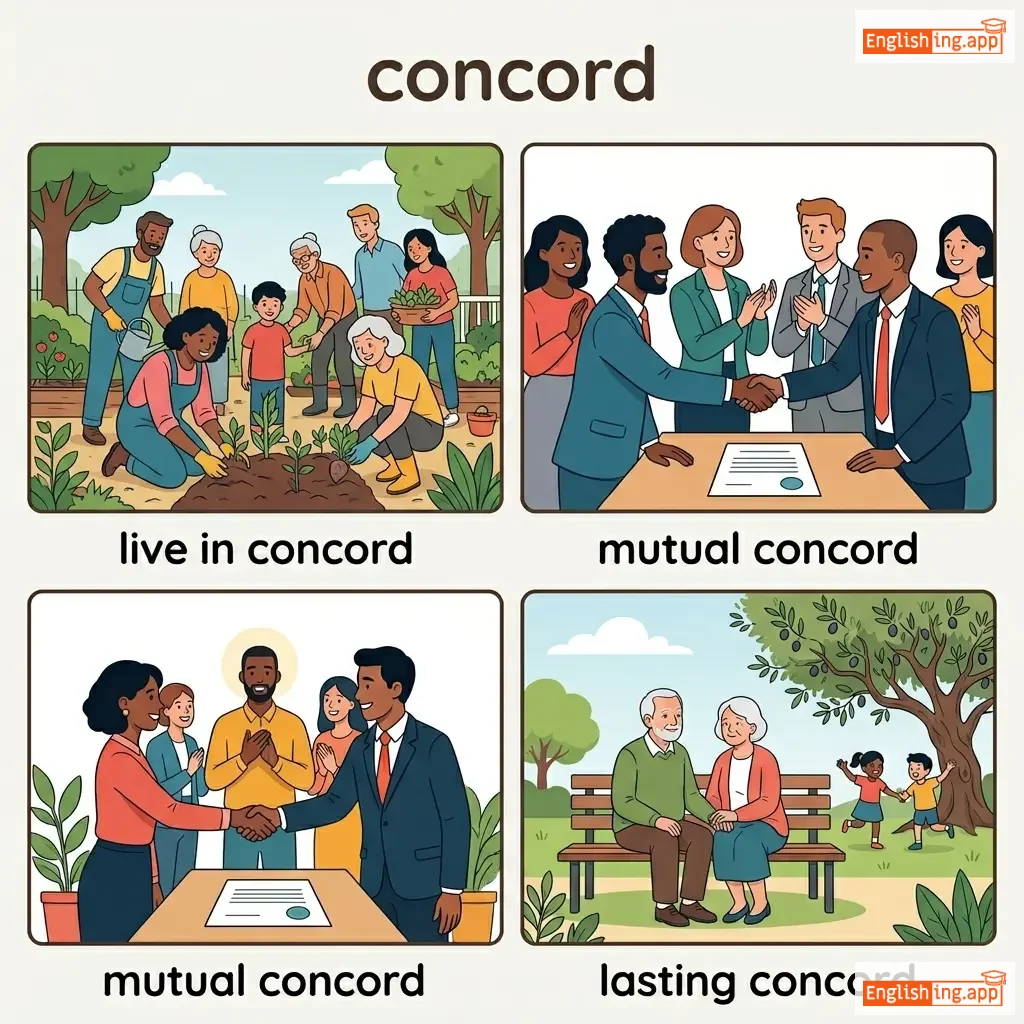
live in concord, mutual concord, lasting concord
••••••
|
Конкорд и согласие - ключ к гармонии в обществе.
••••••
|
|
#1706
➕
|
/kənˈkɒmɪtənt/
adjective
(kənˈkəmɪtənt)
••••••
|
|
сопутствующий
soputstvuyushchiy
••••••
|
- •••••• | - •••••• | - •••••• | - •••••• |
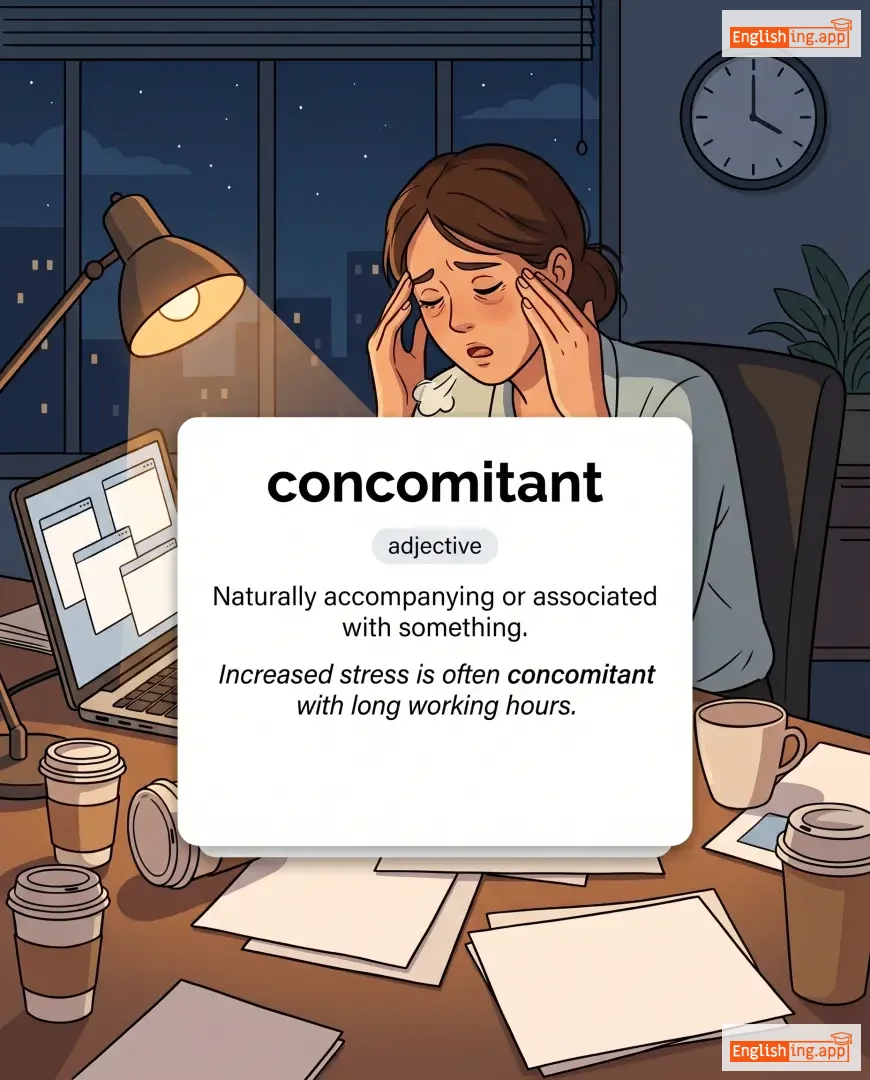
Naturally accompanying or associated with something.
••••••
|
Increased stress is often concomitant with long working hours.
Увеличение стресса часто сопряжено с длительным рабочим временем.
••••••
|
Увеличение стресса часто сопряжено с длительным рабочим временем.
Uvelichenie stressa chasto soputstvuyet s dlitelnym rabochim vremyanym.
••••••
|
- •••••• | - •••••• | - •••••• |
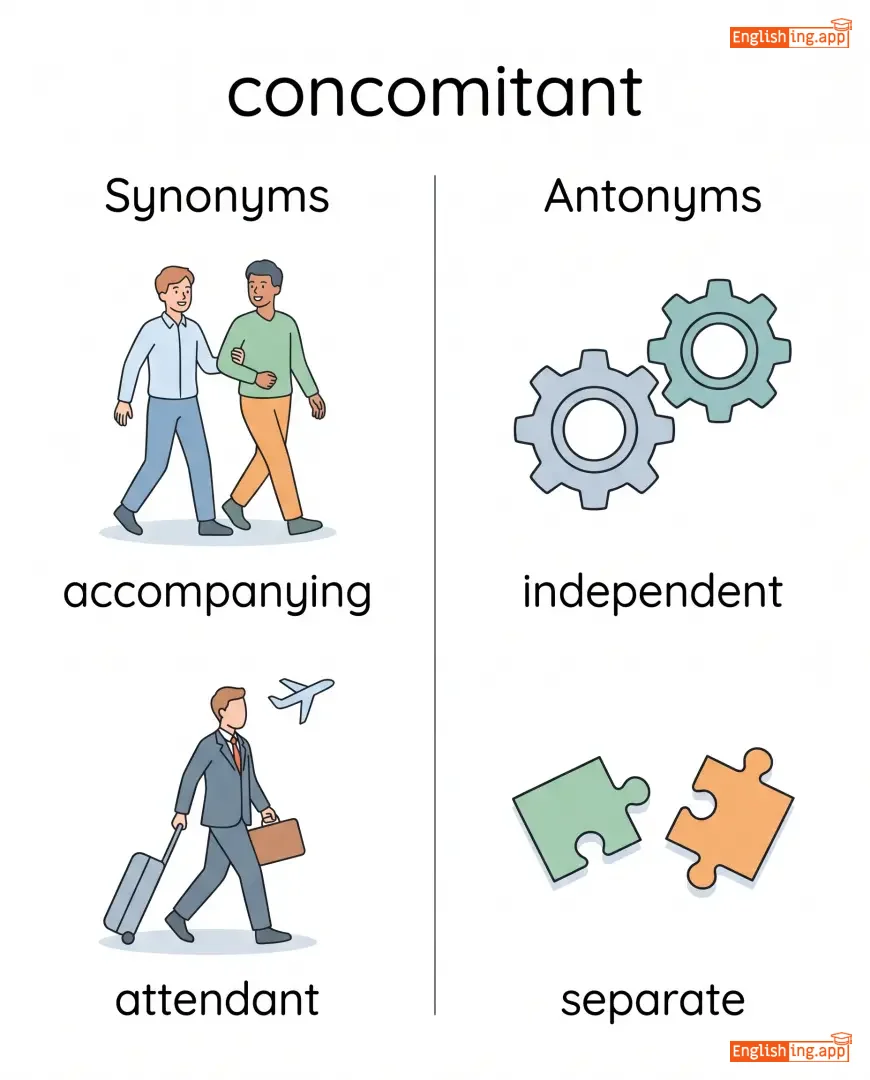
accompanying, attendant, coincident, simultaneous, related
••••••
|
independent, separate, unrelated
••••••
|
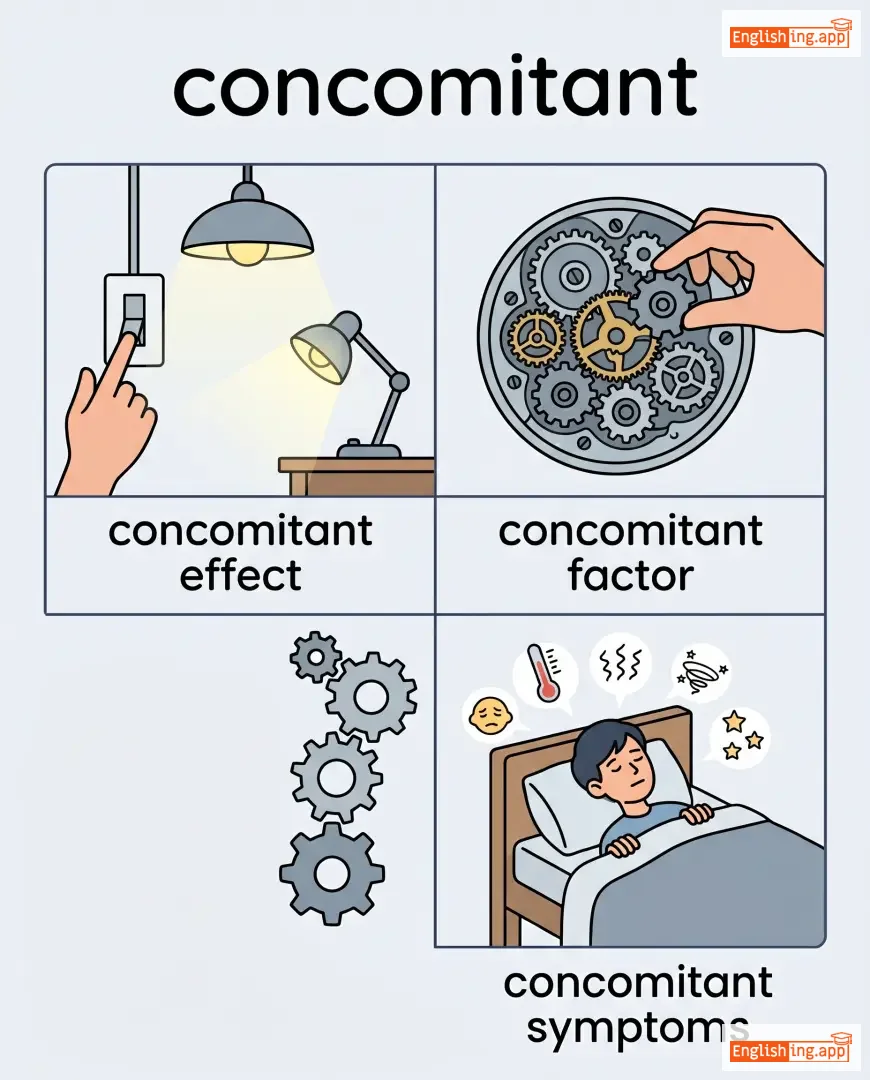
concomitant effect, concomitant factor, concomitant symptoms, concomitant risks
••••••
|
Сопутствие – ходить вместе с чем-то
••••••
|
|
#1707
🧪
|
/kənˈkɒkt/
verb
(кэнкокт)
••••••
|
|
составить или придумать
sostavit' ili pridumat'
••••••
|
concocted
кэнкоктэд
••••••
|
concocted
кэнкоктэд
••••••
|
concocts
кэнкоктс
••••••
|
concocting
кэнкоктинг
••••••
|
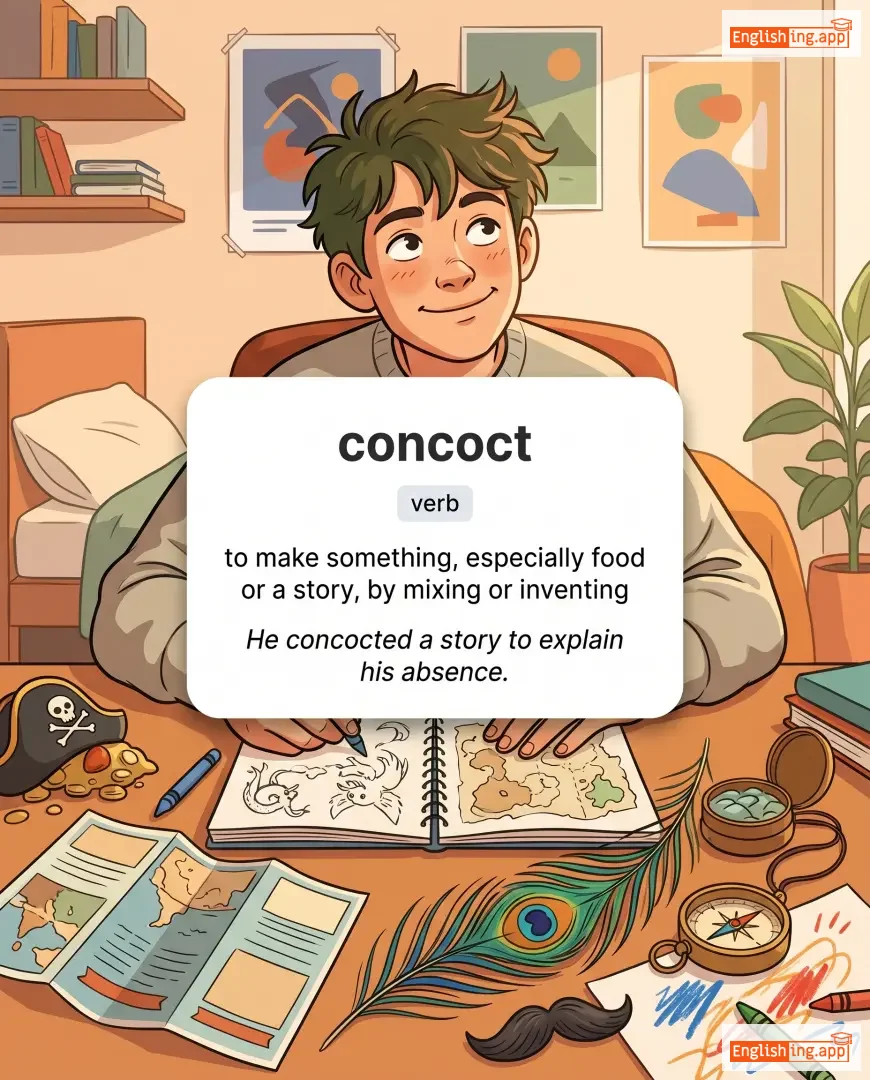
to make something, especially food or a story, by mixing or inventing
••••••
|
He concocted a story to explain his absence.
Он придумал историю, чтобы объяснить свое отсутствие.
••••••
|
Он придумал историю, чтобы объяснить свое отсутствие.
On pridumal istoriyu, chtoby ob'yasnit' svoe otsutstvie.
••••••
|
concoct a plan
выдумать план
••••••
|
to invent or devise a plan
••••••
|
выдумать план
vydumat' plan
••••••
|
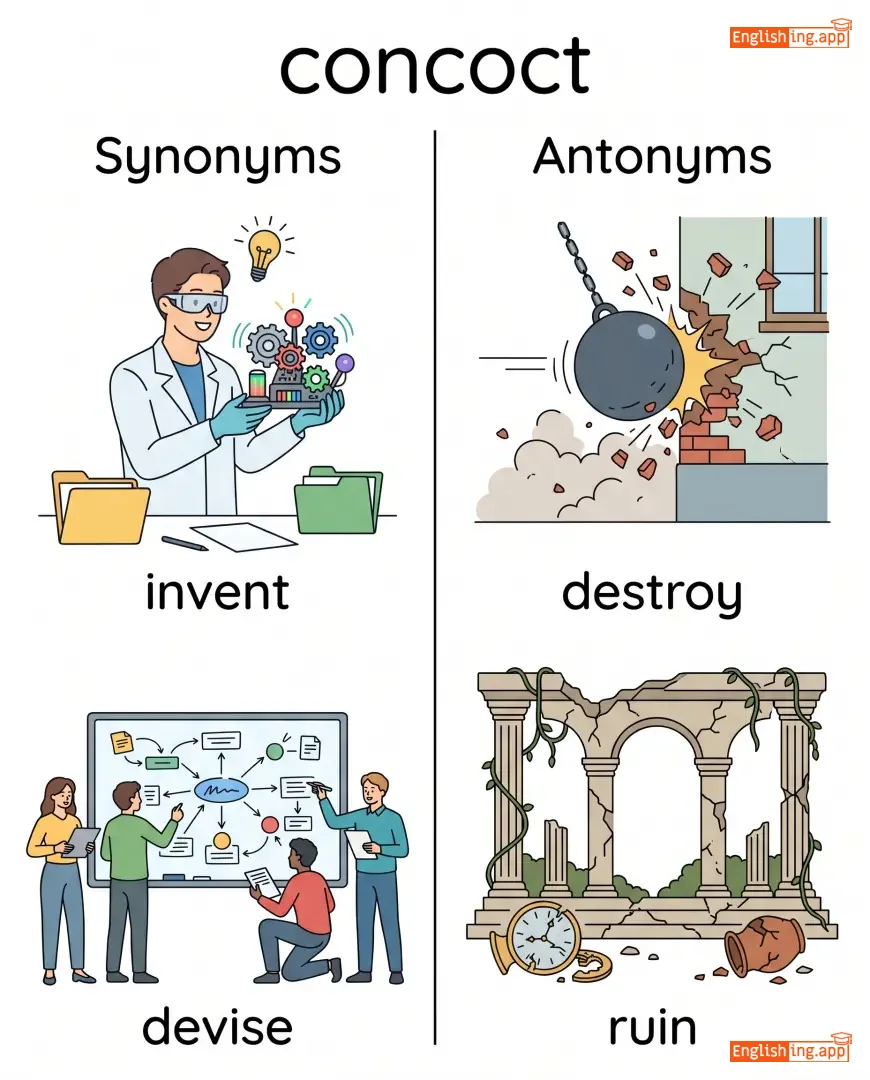
invent, devise, fabricate, prepare, create
••••••
|
destroy, ruin, dismantle
••••••
|
concoct a story, concoct a plan, concoct a dish
••••••
|
Concoct - как создавать что-то путем смешивания
••••••
|
|
#1708
✅
|
/kənˈkluːsɪv/
adjective
(kənˈkluːsɪv)
••••••
|
- •••••• |
окончательный
okonychatel'nyj
••••••
|
- •••••• | - •••••• | - •••••• | - •••••• |
serving to prove a case; decisive or convincing
••••••
|
The DNA test provided conclusive evidence of his innocence.
Тест ДНК предоставил убедительные доказательства его невиновности.
••••••
|
Тест ДНК предоставил убедительные доказательства его невиновности.
Test DNA predostavil ubeditel'nye dokazy ego nevinovnosti.
••••••
|
- •••••• | - •••••• | - •••••• |
decisive, convincing, final, definite, certain
••••••
|
inconclusive, uncertain, doubtful
••••••
|
conclusive evidence, conclusive proof, conclusive result
••••••
|
Окончательный, как в решении — завершающий, доказанный.
••••••
|
|
#1709
📜
|
/ˈkɒnk.leɪv/
noun
(kənkleɪv)
••••••
|
- •••••• |
секретное собрание
sekretnoe sobranie
••••••
|
- •••••• | - •••••• | - •••••• | - •••••• |
a private meeting, especially a secret or important one
••••••
|
The leaders met in a secret conclave to discuss the strategy.
Лидеры встретились на секретном конклаве, чтобы обсудить стратегию.
••••••
|
Лидеры встретились на секретном конклаве, чтобы обсудить стратегию.
Lidery vstretilis na sekretnom konklave, chtoby obsudit' strategiyu.
••••••
|
- •••••• | - •••••• | - •••••• |
meeting, gathering, assembly, conference, council
••••••
|
public meeting, open forum
••••••
|
secret conclave, political conclave, conclave of leaders
••••••
|
Conclave это как конференция, но секретная.
••••••
|
|
#1710
✍️
|
/kənˈsaɪs/
adjective
(kənˈsaɪs)
••••••
|
|
краткий
kratkiy
••••••
|
- •••••• | - •••••• | - •••••• | - •••••• |
giving much information clearly and in a few words; brief but comprehensive
••••••
|
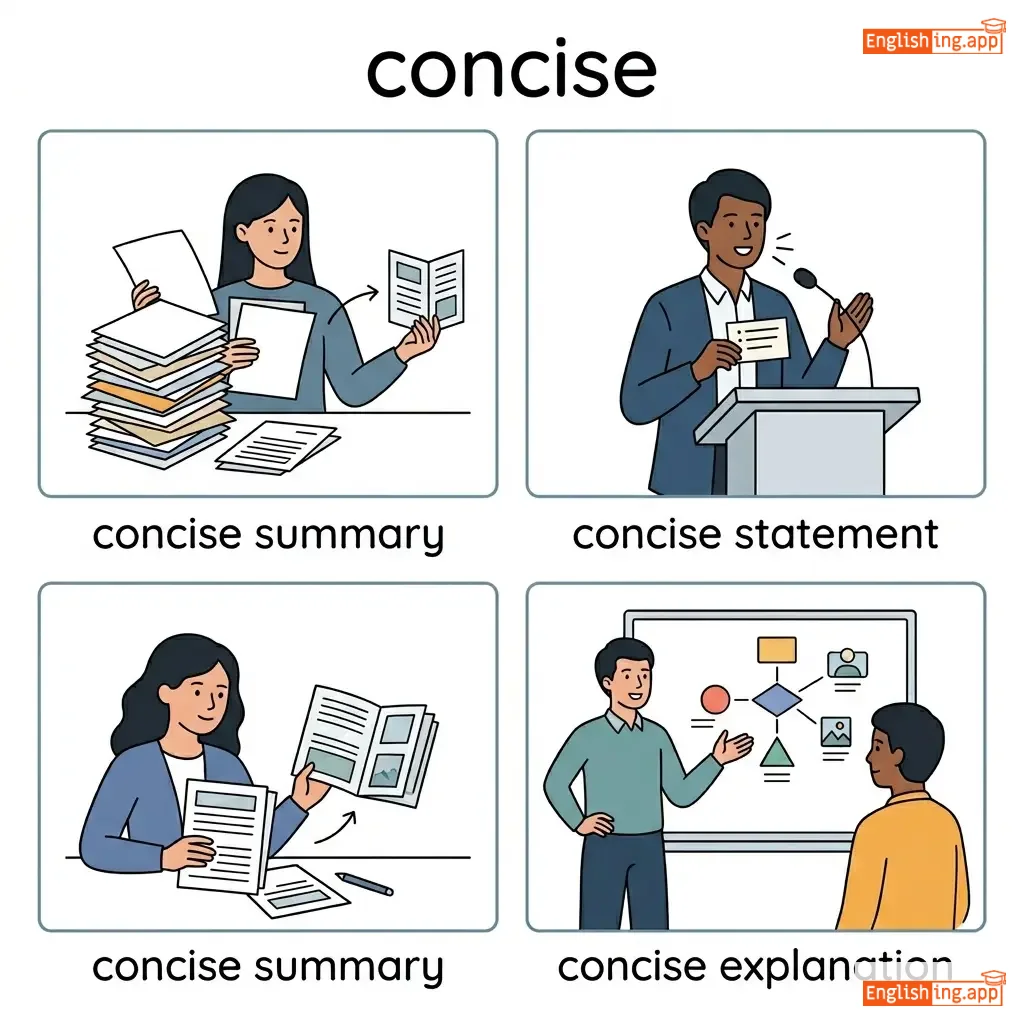
The teacher asked for a concise summary of the article. |
Учитель попросил краткое изложение статьи.
Uchitel' poprosil kratkoe izlozhenie stat'i.
••••••
|
in concise terms |
expressed clearly and briefly
••••••
|
кратко говоря
kratko govorya
••••••
|
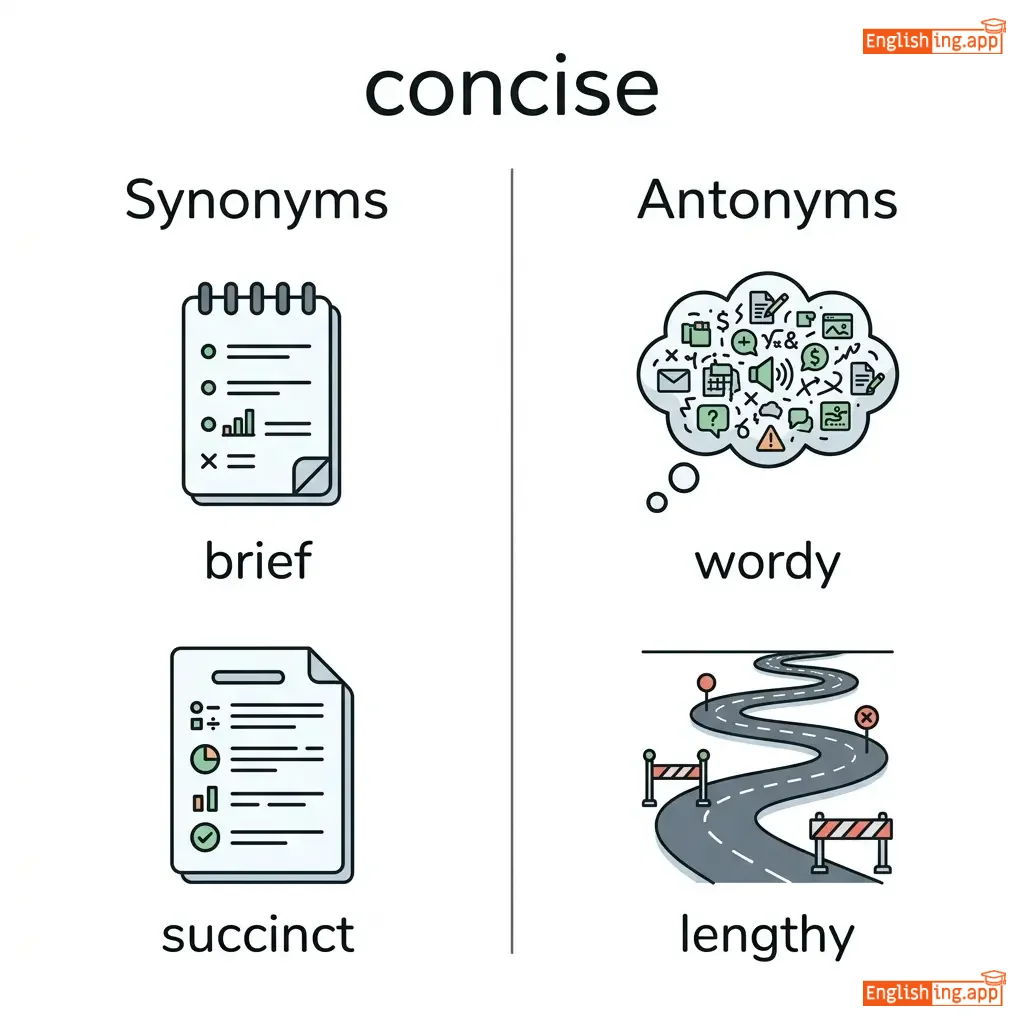
brief, succinct, clear, compact, terse
••••••
|
wordy, lengthy, verbose
••••••
|
concise summary, concise statement, concise explanation
••••••
|
Краткий = меньше слов, больше смысла.
••••••
|
Vocabulary Quiz
Test your vocabulary by matching words with their translations or meanings.
Login to take the quiz
Comments (0)
Share your thoughts and join the discussion.
Join the discussion by logging in
Login to CommentNo comments yet
Be the first to share your thoughts!