

Обновитесь для доступа ко всему словарю
Получите неограниченный доступ ко всем словам с подпиской Pro
Обновить до ProПеревод
Прошедшее
Причастие прошедшего времени
Третье лицо единственного числа
Герундий
Значение
Пример предложения
Перевод примера предложения
Синонимы
Антонимы
Коллокации
Мнемоника


Swipe left or right, or use the buttons. Tap image to zoom.
Обновитесь для доступа ко всем предложениям
Получите неограниченный доступ ко всем предложениям с подпиской Pro
Обновить до ProПеревод примера предложения
Слово
Lesson 50Lesson 50 - Переключатель маски
|
Эмодзи
|
Слово | Images | Перевод | Прошедшее | Причастие прошедшего времени | Третье лицо единственного числа | Герундий | Значение | Пример предложения | Перевод примера предложения | Пример выражения | Значение примера выражения | Перевод примера выражения | Синонимы | Антонимы | Коллокации | Мнемоника |
|---|---|---|---|---|---|---|---|---|---|---|---|---|---|---|---|---|---|
|
#1471
✅
|
/ˈklɪərəns/
noun
(klíerens)
••••••
|
- •••••• |
разрешение / санкция
razreshenie / sanktsiya
••••••
|
- •••••• | - •••••• | - •••••• | - •••••• |
official permission or authorization; the removal of something unwanted; the distance between two objects
••••••
|
The pilot received clearance to land the plane. |
Пилот получил разрешение на посадку.
Pilot poluchil razresheniye na posadku.
••••••
|
customs clearance |
official permission to move goods through customs
••••••
|
таможенное разрешение
tamozhennoe razresheniye
••••••
|
authorization, approval, permit, permission, license
••••••
|
restriction, denial, prohibition
••••••
|
security clearance, customs clearance, medical clearance, final clearance
••••••
|
Clear + License = Clearance означает разрешение, как в случае с таможенным разрешением.
••••••
|
|
#1472
🚰
|
/klɑːɡ/
verb, noun
(клог)
••••••
|
- •••••• |
забивать / деревянный башмак
zabivat / derevyanny bashmak
••••••
|
clogged
клогд
••••••
|
clogged
клогд
••••••
|
clogs
клогс
••••••
|
clogging
клогинг
••••••
|
to block or become blocked; a type of heavy wooden shoe
••••••
|
The sink was clogged with food waste.
Раковина была забита пищевыми отходами.
••••••
|
Раковина была забита пищевыми отходами.
Rakovina byla zabita pishchevymi otkhodami.
••••••
|
clog up
забиваться
••••••
|
to become blocked or obstructed
••••••
|
забиваться
zabivat'sya
••••••
|
block, obstruct, choke, jam, plug
••••••
|
clear, unblock, free
••••••
|
clog the drain, clog with, clog shoes
••••••
|
Когда слив забивается, образуется CLOG, деревянный башмак.
••••••
|
|
#1473
🕵️
|
/kloʊk/
noun, verb
(klok)
••••••
|
- •••••• |
плащ
plashch
••••••
|
cloaked
klokt
••••••
|
cloaked
klokt
••••••
|
cloaks
kloks
••••••
|
cloaking
kloking
••••••
|
a loose outer garment; to cover, hide, or disguise
••••••
|
The spy cloaked his identity with a false name.
Шпион скрыл свою личность под ложным именем.
••••••
|
Шпион скрыл свою личность под ложным именем.
Shpion skryl svoyu lichnost' pod lozhnym imenem.
••••••
|
cloak and dagger
плащ и кинжал
••••••
|
activities involving mystery, secrecy, or espionage
••••••
|
плащ и кинжал
plashch i kinzhal
••••••
|
cover, disguise, veil, cape, conceal
••••••
|
expose, reveal, uncover
••••••
|
cloak of secrecy, cloak room, cloak identity
••••••
|
CLOAK означает 'плащ', как носить плащ, чтобы скрыться от дождя
••••••
|
|
#1474
👥
|
/kliːk/
noun
(klik)
••••••
|
|
клика
klika
••••••
|
- •••••• | - •••••• | - •••••• | - •••••• |
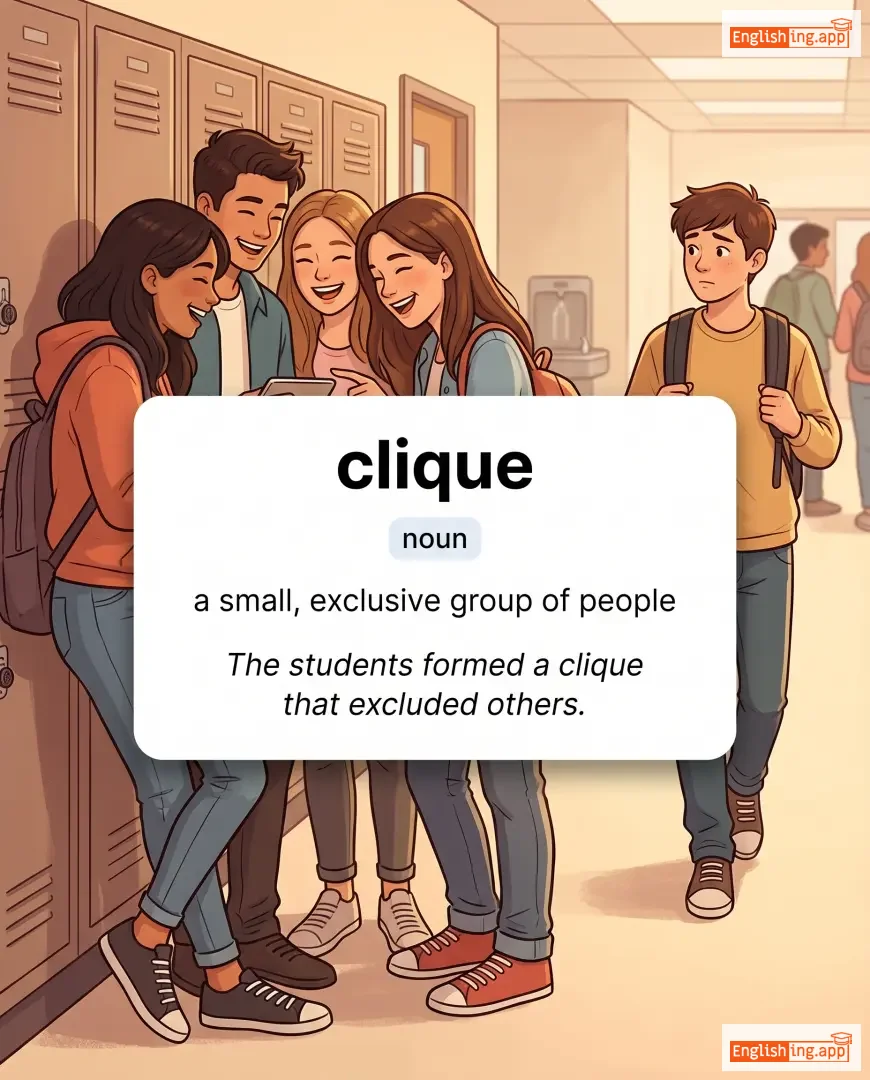
a small, exclusive group of people
••••••
|
The students formed a clique that excluded others. |
Студенты создали клику, которая исключала других.
Studenty sozdali kliku, kotoraya isklyuchala drugikh.
••••••
|
- •••••• | - •••••• | - •••••• |
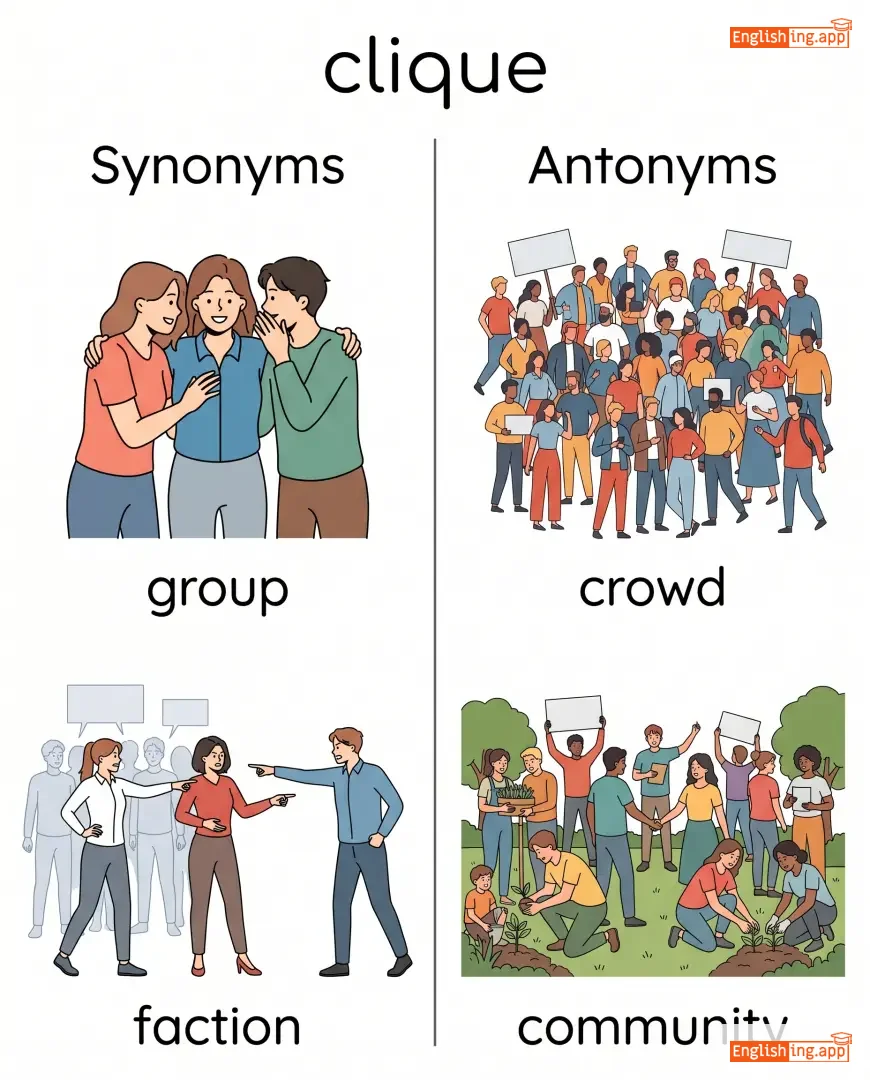
group, faction, circle, set, gang
••••••
|
crowd, community, mass
••••••
|
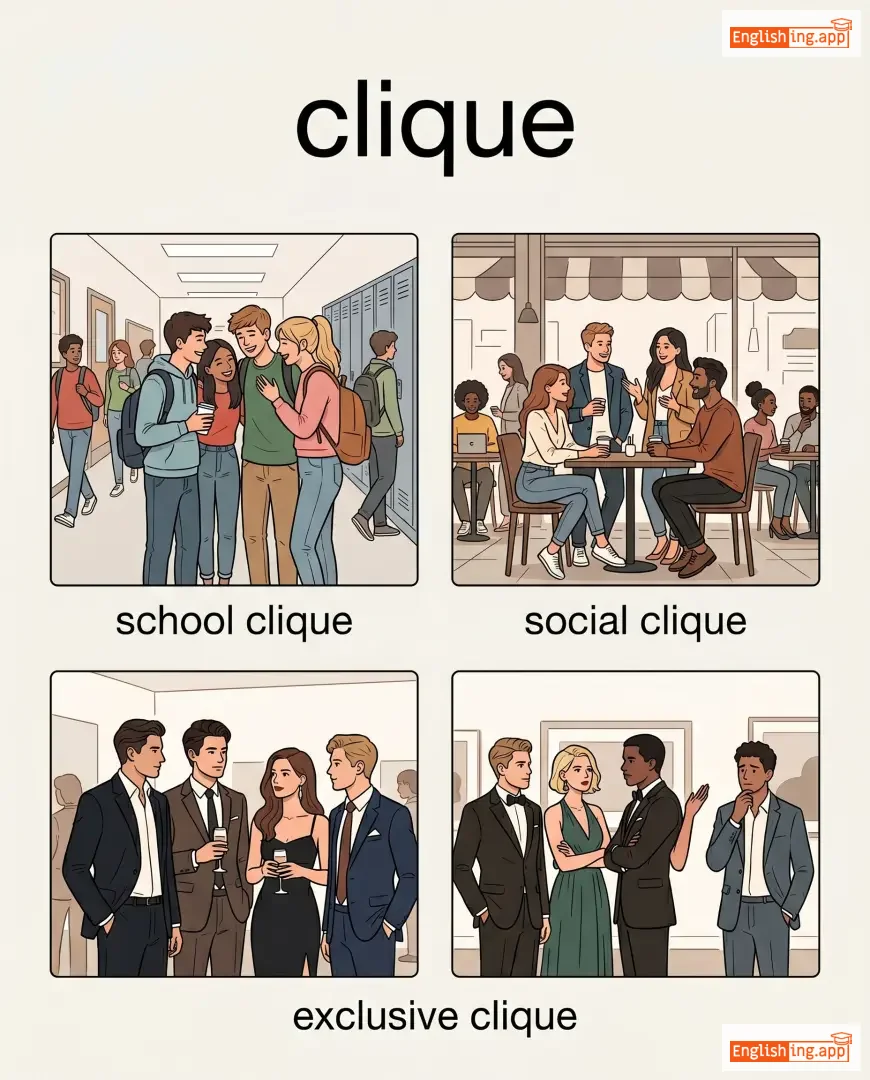
school clique, social clique, exclusive clique
••••••
|
КЛИКА — это группа, куда не попасть.
••••••
|
|
#1475
💇
|
/ˈklɪpər/
noun
(клиппер)
••••••
|
- •••••• |
машинка для стрижки / быстрое парусное судно XIX века
mashinka dlya strizhkи / bystroye parusnoye sudno XIX veka
••••••
|
- •••••• | - •••••• | - •••••• | - •••••• |
a tool used for cutting, or a fast sailing ship of the 19th century
••••••
|
The barber used clippers to trim his hair. |
Парикмахер использовал машинку для стрижки, чтобы подстричь его волосы.
Parikmakher ispol'zoval mashinku dlya strizhki, chtoby podstrich' ego volosy.
••••••
|
- •••••• | - •••••• | - •••••• |
cutter, trimmer, shear, vessel, ship
••••••
|
grower, extender
••••••
|
hair clippers, nail clippers, clipper ship
••••••
|
Парикмахер использует 'клиппер' для стрижки волос
••••••
|
|
#1476
✂️
|
/klɪp/
verb, noun
••••••
|
- •••••• | - •••••• |
clipped
••••••
|
clipped
••••••
|
clips
••••••
|
clipping
••••••
|
to cut or trim something; a short extract from a film, broadcast, or recording
••••••
|
She clipped the coupon from the newspaper. |
- •••••• |
clip along |
to move quickly and energetically
••••••
|
- •••••• |
cut, trim, snip, shorten, extract
••••••
|
extend, lengthen, add
••••••
|
clip a coupon, video clip, paper clip, clip wings
••••••
|
No •••••• |
|
#1477
🤝
|
/klɪntʃ/
verb
••••••
|
- •••••• | - •••••• |
clinched
••••••
|
clinched
••••••
|
clinches
••••••
|
clinching
••••••
|
To secure or settle something decisively; to grasp tightly.
••••••
|
The team clinched the championship with a last-minute goal. |
- •••••• |
clinch a deal |
To successfully secure an agreement.
••••••
|
- •••••• |
secure, finalize, grasp, confirm, win
••••••
|
lose, miss, abandon
••••••
|
clinch a deal, clinch the title, clinch victory, clinch the championship
••••••
|
No •••••• |
|
#1478
🌍
|
/klaɪm/
noun
(klajm)
••••••
|
- •••••• |
климатическая зона
klimaticheskaya zona
••••••
|
- •••••• | - •••••• | - •••••• | - •••••• |
A region defined by its climate.
••••••
|
He traveled to warmer climes during the winter. |
Он путешествовал в более теплые климатические зоны зимой.
On puteshestvoval v boleye teplye klimaticheskiye zony zimoy.
••••••
|
- •••••• | - •••••• | - •••••• |
region, land, zone, area
••••••
|
indoor, shelter
••••••
|
warmer climes, tropical climes, foreign climes, distant climes
••••••
|
Clime напоминает климат - регион, связанный с климатом.
••••••
|
|
#1479
🌋
|
/klaɪˈmæktɪk/
adjective
(клайˈмэктик)
••••••
|
- •••••• |
климактический
klimakticheskiy
••••••
|
- •••••• | - •••••• | - •••••• | - •••••• |
Relating to the most exciting or important moment of something.
••••••
|
The film ended with a climactic battle scene. |
Фильм завершился кульминационной сценой битвы.
Film zavershilsya kul'minatsionnoj stsenoj bitvy.
••••••
|
- •••••• | - •••••• | - •••••• |
peak, final, decisive, critical
••••••
|
anticlimactic, unimportant
••••••
|
climactic moment, climactic scene, climactic battle, climactic finale
••••••
|
Климактический — это момент кульминации, наивысшая точка волнения.
••••••
|
|
#1480
👥
|
/ˌklaɪənˈtɛl/
noun
(klaj-ên-tèl)
••••••
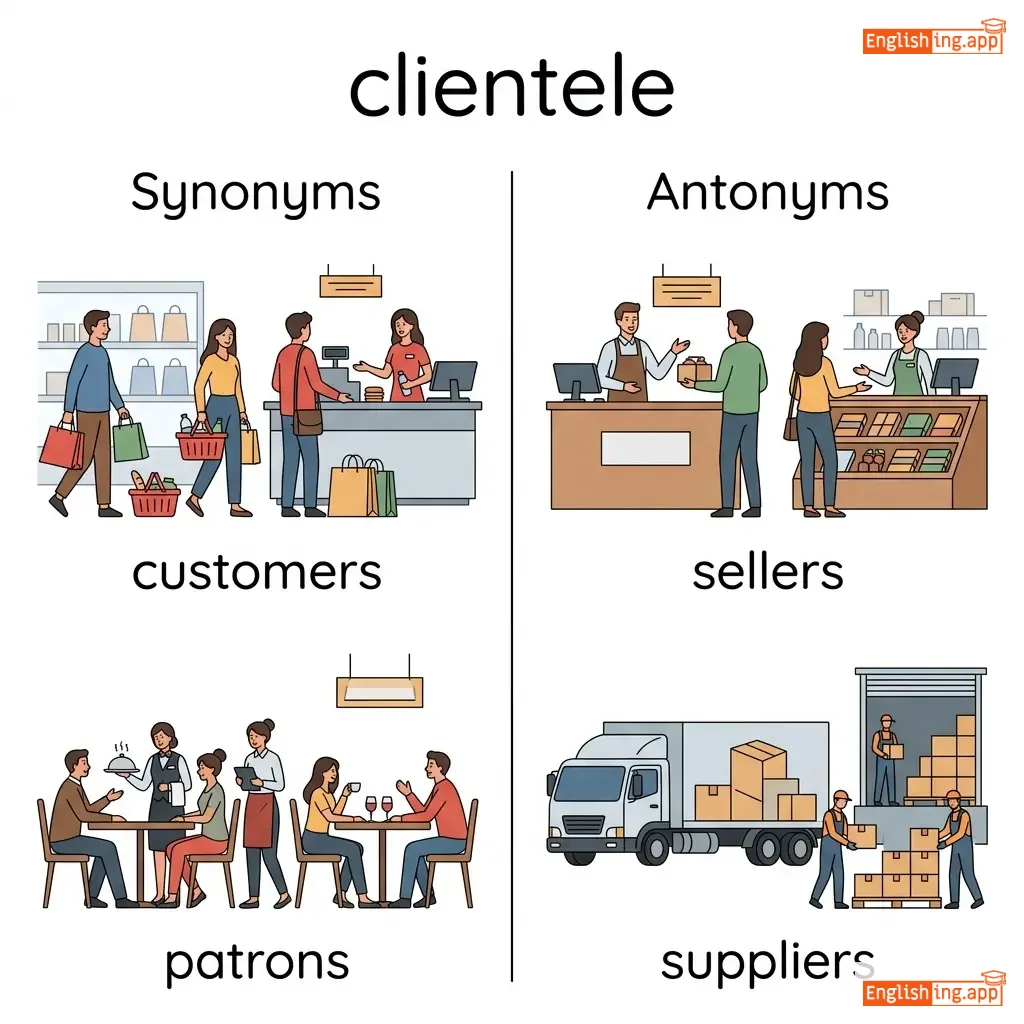
|
|
клиентура
klientura
••••••
|
- •••••• | - •••••• | - •••••• | - •••••• |
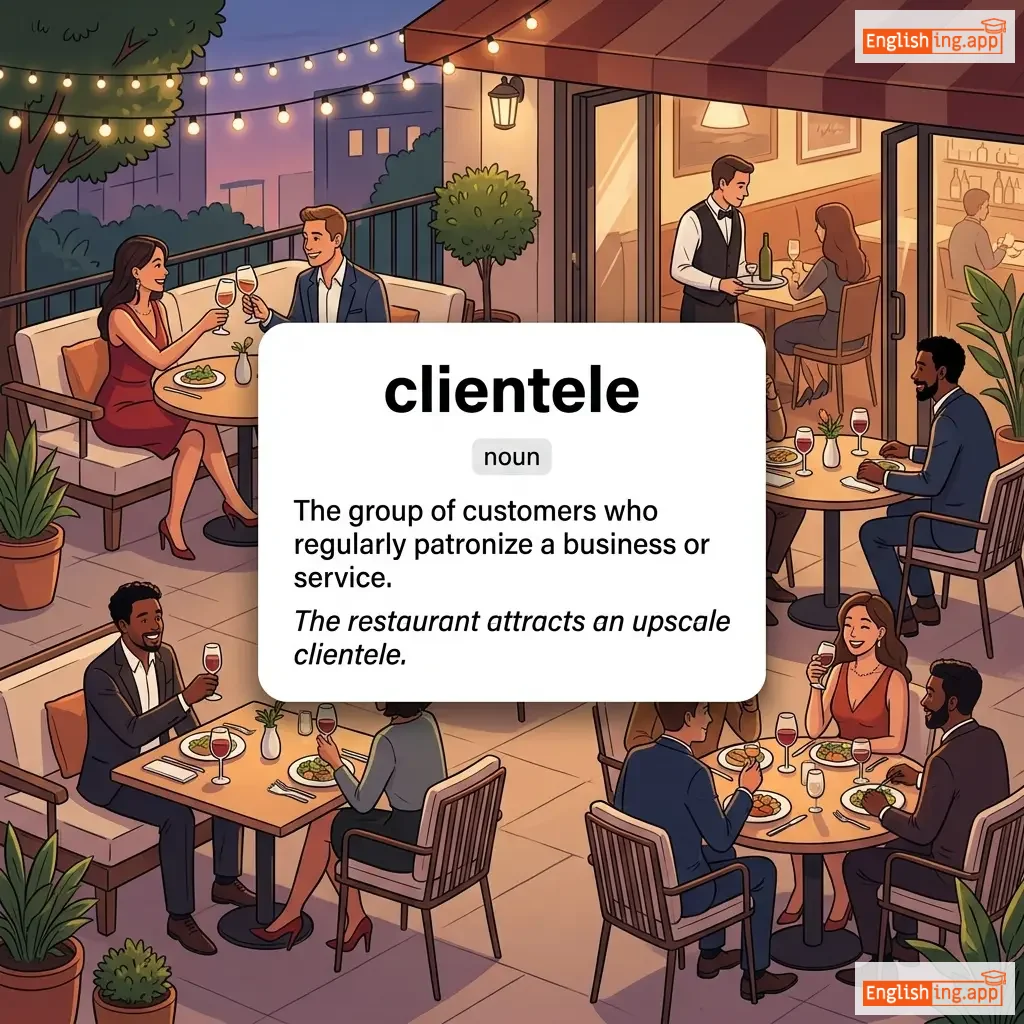
The group of customers who regularly patronize a business or service.
••••••
|
The restaurant attracts an upscale clientele. |
Ресторан привлекает состоятельную клиентуру.
Restoran privlekaet sostoyatelnuyu klienturu.
••••••
|
- •••••• | - •••••• | - •••••• |
customers, patrons, buyers, consumers
••••••
|
sellers, suppliers
••••••
|
loyal clientele, regular clientele, wealthy clientele, exclusive clientele
••••••
|
Client + El = Клиентура = Все клиенты приходят вместе.
••••••
|
|
#1481
🗯️
|
/kliːˈʃeɪ/
noun
(клише)
••••••
|
- •••••• |
клише
klishe
••••••
|
- •••••• | - •••••• | - •••••• | - •••••• |
An overused expression or idea that has lost its originality or impact.
••••••
|
The speech was filled with old clichés that failed to inspire the audience. |
Речь была наполнена старыми клише, которые не смогли вдохновить аудиторию.
Rech' byla napolnena starymi klishye, kotorye ne smogli vdokhnovit' auditoriyu.
••••••
|
old cliché |
An expression that has become boring or unoriginal due to overuse.
••••••
|
старое клише
starye klishye
••••••
|
platitude, truism, stereotype, banality, commonplace
••••••
|
originality, novelty, uniqueness
••••••
|
old cliché, tired cliché, worn-out cliché, common cliché
••••••
|
Клише - это что-то, что мы слышим постоянно, и оно теряет свой смысл.
••••••
|
|
#1482
🌤️
|
/ˈklɛmənt/
adjective
(клемэнт)
••••••
|
- •••••• |
милостивый / мягкий
milostivyy / myagkiy
••••••
|
- •••••• | - •••••• | - •••••• | - •••••• |
mild or merciful; describing weather as mild and pleasant
••••••
|
The prisoners hoped for a clement judge. |
Заключенные надеялись на милостивого судью.
Zaklyuchennyye nadeyalis' na milostivogo sud'yu.
••••••
|
- •••••• | - •••••• | - •••••• |
merciful, lenient, gentle, mild, kind
••••••
|
harsh, severe, cruel
••••••
|
clement judge, clement ruler, clement weather, mild and clement
••••••
|
Clement напоминает о мягкой погоде или милосердном судье.
••••••
|
|
#1483
🙏
|
/ˈklɛmənsi/
noun
(klʲɪˈmʲɛnsɨ)
••••••
|
- •••••• |
помилование
pomilovaniye
••••••
|
- •••••• | - •••••• | - •••••• | - •••••• |
mercy, leniency, or forgiveness shown towards someone
••••••
|
The judge showed clemency and reduced his sentence. |
Судья проявил помилование и смягчил его приговор.
Sud'ya proyavil pomilovaniye i smyagchil ego prigovor.
••••••
|
show clemency |
to grant mercy or leniency
••••••
|
проявить помилование
proyavit' pomilovaniye
••••••
|
mercy, leniency, forgiveness, compassion, pity
••••••
|
harshness, severity, cruelty
••••••
|
grant clemency, show clemency, presidential clemency, appeal for clemency
••••••
|
Clemency — это как сделать 'claim' и получить 'mercy'.
••••••
|
|
#1484
⛰️
|
/klɛft/
noun/adjective
(клефт)
••••••
|
- •••••• |
тресина
tresina
••••••
|
- •••••• | - •••••• | - •••••• | - •••••• |
a split or crack; a space or opening made by cleavage
••••••
|
The goat disappeared into a cleft in the rocks. |
Коза исчезла в тресине на скалах.
Koza ischezla v tresine na skalah.
••••••
|
cleft palate |
a congenital split in the roof of the mouth
••••••
|
расщелина неба
rasshelina neba
••••••
|
crack, fissure, split, opening, division
••••••
|
solid, whole, intact
••••••
|
cleft in rock, cleft palate, cleft lip, deep cleft
••••••
|
Cleft - как трещина в скале.
••••••
|
|
#1485
🪓
|
/kliːv/
verb
(kliv)
••••••
|
|
раскалывать / цепляться
raskalyvat / tseplyatsya
••••••
|
clove
klov
••••••
|
cloven
kloven
••••••
|
cleaves
kliv
••••••
|
cleaving
kliving
••••••
|
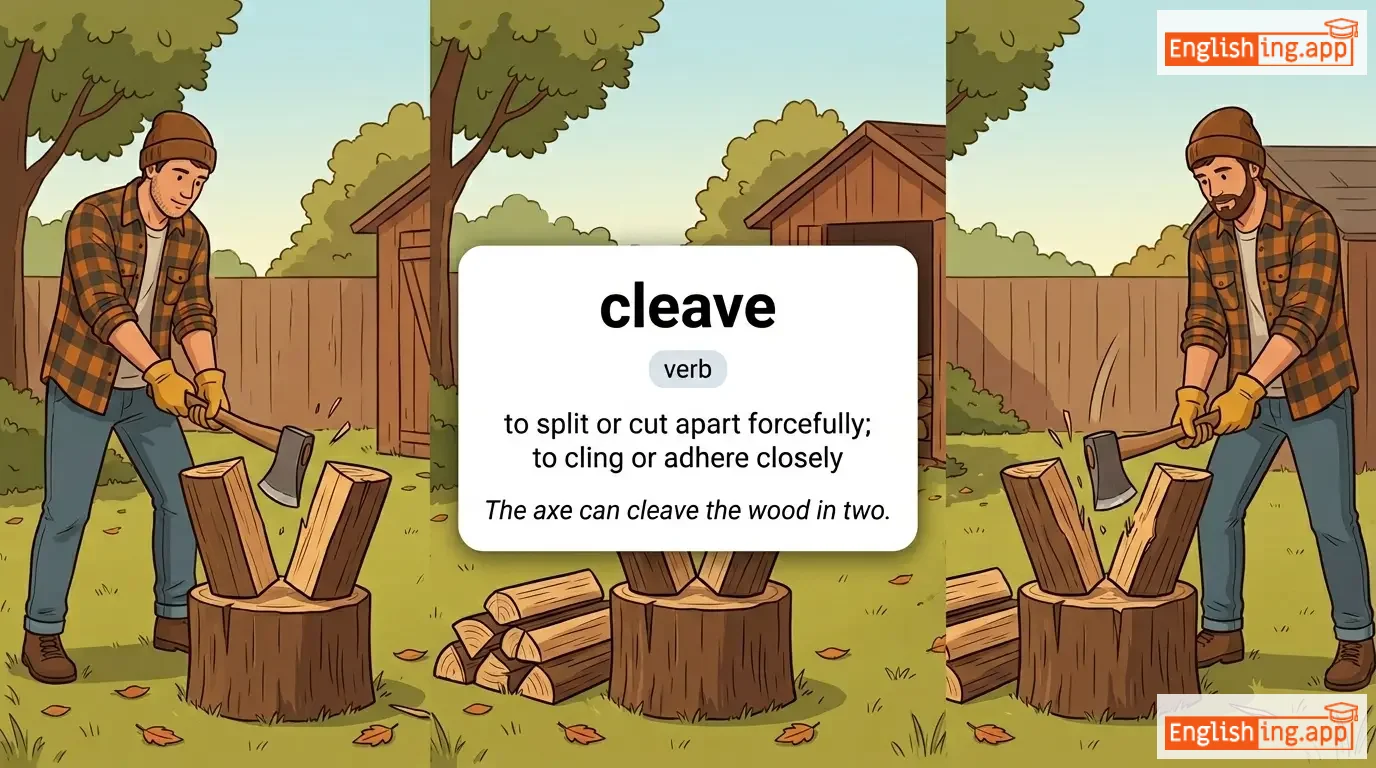
to split or cut apart forcefully; to cling or adhere closely
••••••
|
The axe can cleave the wood in two.
Топор может расколоть дерево на две части.
••••••
|
Топор может расколоть дерево на две части.
Topor mozhet raskolot' derevo na dve chasti.
••••••
|
cleave to
придерживаться
••••••
|
to stick to something or remain faithful
••••••
|
цепляться к
tseplyatsya k
••••••
|
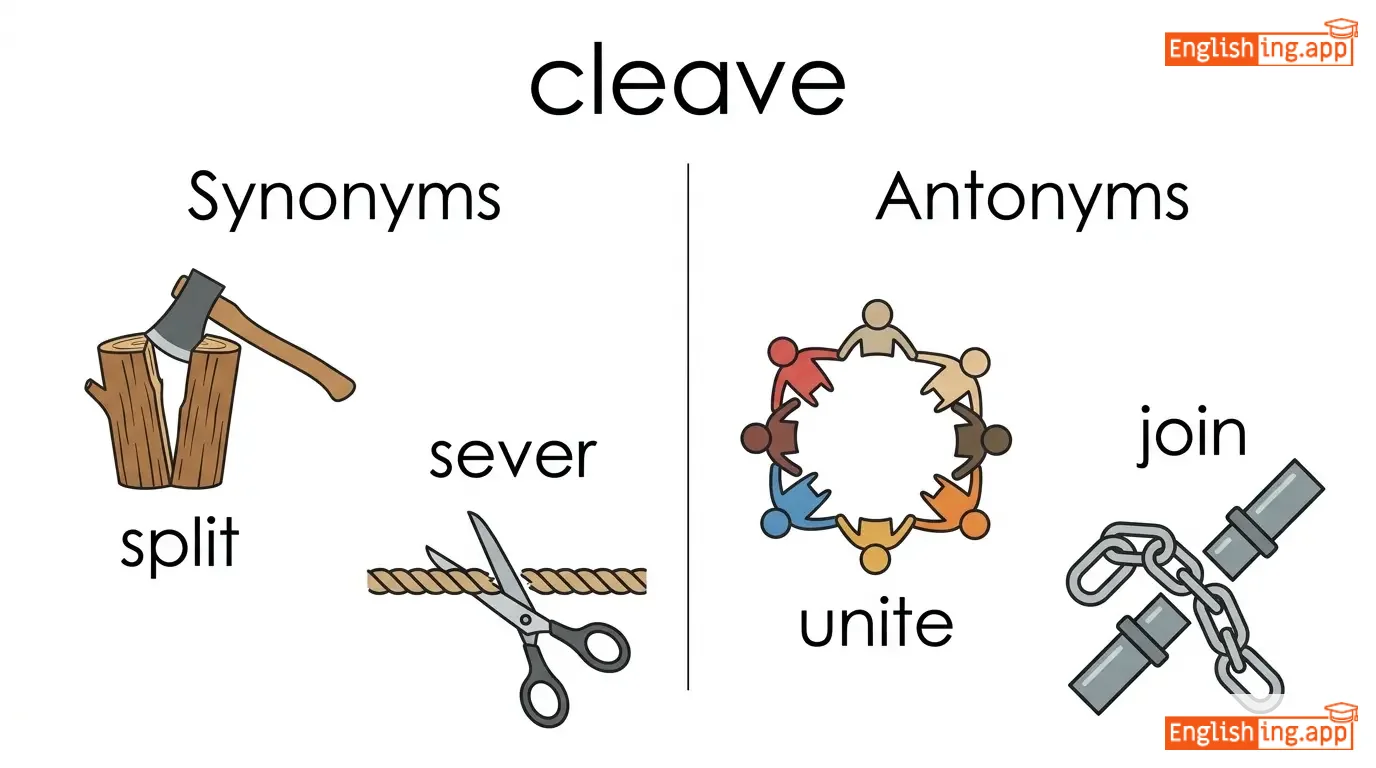
split, sever, divide, adhere, cling
••••••
|
unite, join, combine
••••••
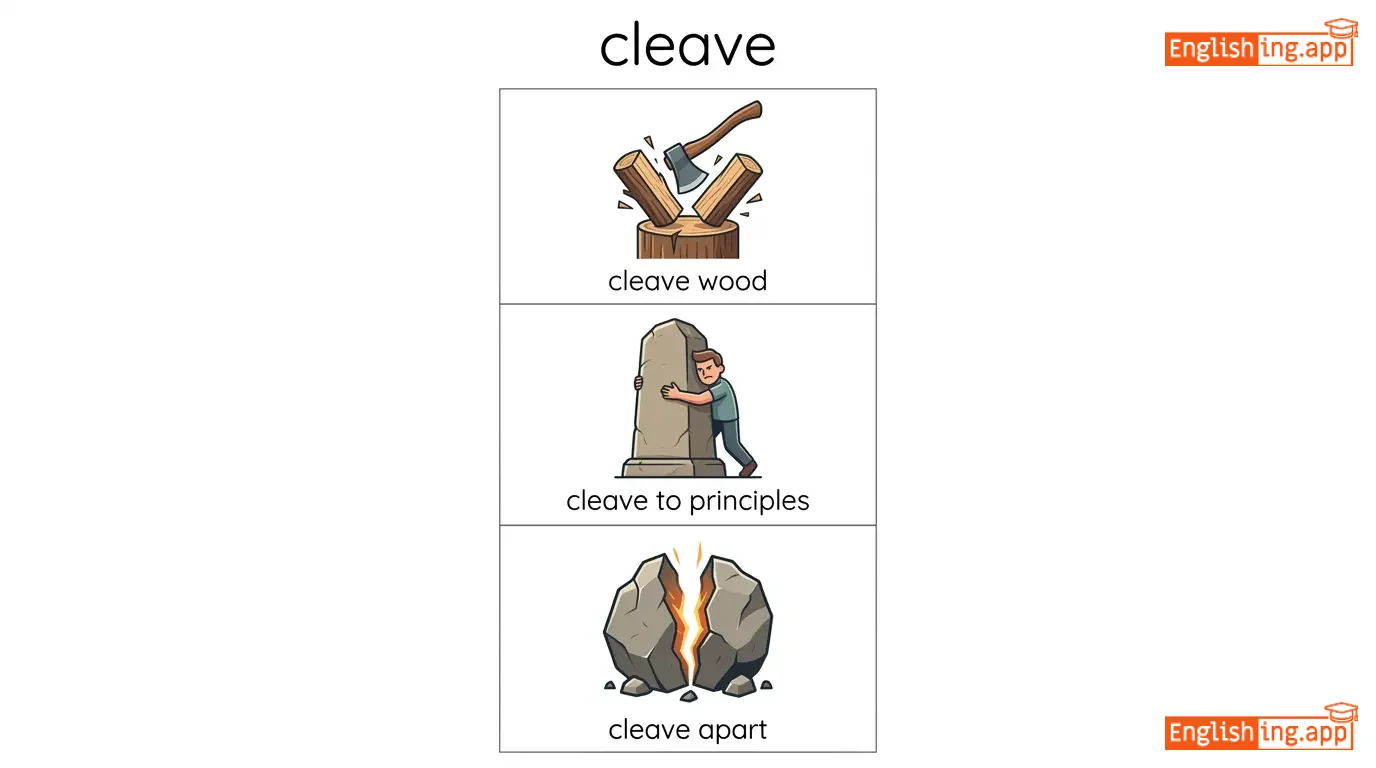
|
cleave wood, cleave to principles, cleave apart, cleave through
••••••
|
Cleave означает раскалывать дерево топором или цепляться к чему-то.
••••••
|
|
#1486
🧗
|
/ˈklæmbər/
verb
(клембер)
••••••
|
- •••••• |
взбираться с усилием
vzbiraт'sya s usilieм
••••••
|
clambered
клембёрд
••••••
|
clambered
клембёрд
••••••
|
clambers
клембёрс
••••••
|
clambering
клемберинг
••••••
|
to climb with effort or difficulty, often using both hands and feet
••••••
|
The children clambered over the rocks to reach the cave.
Дети клемберили по скалам, чтобы добраться до пещеры.
••••••
|
Дети взбирались по скалам, чтобы добраться до пещеры.
Deti vzbiralis' po skalam, chtoby dobrat'sya do peshchery.
••••••
|
- •••••• | - •••••• | - •••••• |
scramble, climb, scale, mount, ascend
••••••
|
descend, fall, slip
••••••
|
clamber over, clamber up, clamber onto, clamber down
••••••
|
Clamber звучит как 'взбираться', но с трудом.
••••••
|
|
#1487
🦴
|
/ˈklævɪkəl/
noun
(klavikal)
••••••
|
- •••••• |
ключица
klyuchitsa
••••••
|
- •••••• | - •••••• | - •••••• | - •••••• |
the collarbone, a long bone that serves as a strut between the shoulder blade and the sternum
••••••
|
He fractured his clavicle in the accident. |
Он сломал ключицу в аварии.
On slomal klyuchitsu v avarii.
••••••
|
- •••••• | - •••••• | - •••••• |
collarbone, shoulder bone, bone
••••••
|
null
••••••
|
fractured clavicle, broken clavicle, left clavicle, clavicle bone
••••••
|
Ключица звучит как 'ключ', она может сломаться при аварии
••••••
|
|
#1488
😨
|
/ˌklɔːstrəˈfəʊbiə/
noun
••••••
|
- •••••• | - •••••• | - •••••• | - •••••• | - •••••• | - •••••• |
an extreme or irrational fear of being in confined spaces
••••••
|
He avoids elevators because of his claustrophobia. |
- •••••• | - •••••• | - •••••• | - •••••• |
fear of enclosed spaces, confinement anxiety, panic, dread
••••••
|
comfort, ease, calm
••••••
|
suffer from claustrophobia, overcome claustrophobia, fear of claustrophobia
••••••
|
No •••••• |
|
#1489
🗂️
|
/ˈklæsɪfaɪ/
verb
(klæsɪfaɪ)
••••••
|
- •••••• |
классифицировать
klassifitsirovat
••••••
|
classified
klæsɪfaɪd
••••••
|
classified
klæsɪfaɪd
••••••
|
classifies
klæsɪfaɪz
••••••
|
classifying
klæsɪfaɪɪŋ
••••••
|
to arrange or organize into categories or groups
••••••
|
The librarian classified the books by subject.
Библиотекарь классифицировал книги по темам.
••••••
|
Библиотекарь классифицировал книги по темам.
Bibliotekar' klassifitsiroval knigi po temam.
••••••
|
classify information
классифицировать информацию
••••••
|
to categorize data, often in terms of security or confidentiality
••••••
|
классифицировать информацию
klassifitsirovat informatsiyu
••••••
|
categorize, sort, organize, group, arrange
••••••
|
confuse, mix, disorder
••••••
|
classify data, classify books, classify animals, classify documents
••••••
|
Classify = class + файл → разделить на группы или категории
••••••
|
|
#1490
🤲
|
/klæsp/
verb
(клапс)
••••••
|
- •••••• |
схватить / застежка
skhvatit' / zastezhka
••••••
|
clasped
клапсд
••••••
|
clasped
клапсд
••••••
|
clasps
клапсс
••••••
|
clasping
клапсинг
••••••
|
to grasp or hold tightly; also a device for fastening
••••••
|
She clasped her hands together in prayer.
Ши клапсд хер хэндс тугедер ин прэйр.
••••••
|
Она сжала руки вместе в молитве.
Ona szhala ruki vmeste v molitve.
••••••
|
clasp hands
клапс хэндс
••••••
|
to hold one's own hands tightly, often in prayer or emotion
••••••
|
схватить руки
skhvatit' ruki
••••••
|
grip, clutch, grasp, fasten, embrace
••••••
|
release, let go, loosen
••••••
|
clasp hands, clasp tightly, silver clasp, necklace clasp
••••••
|
Clasp означает крепко держать руки в молитве
••••••
|
|
#1491
🔍
|
/ˈklærəti/
noun
(клерити)
••••••
|
|
ясность
yasnost
••••••
|
- •••••• | - •••••• | - •••••• | - •••••• |
the quality of being clear, easy to understand, or transparent
••••••
|
The teacher's clarity helped the students understand the complex topic. |
Ясность учителя помогла студентам понять сложную тему.
Yasnost' uchitelya pomogla studentam ponyat' slozhnuyu temu.
••••••
|
crystal clarity |
complete and perfect clearness
••••••
|
кристальная ясность
kristal'naya yasnost'
••••••
|
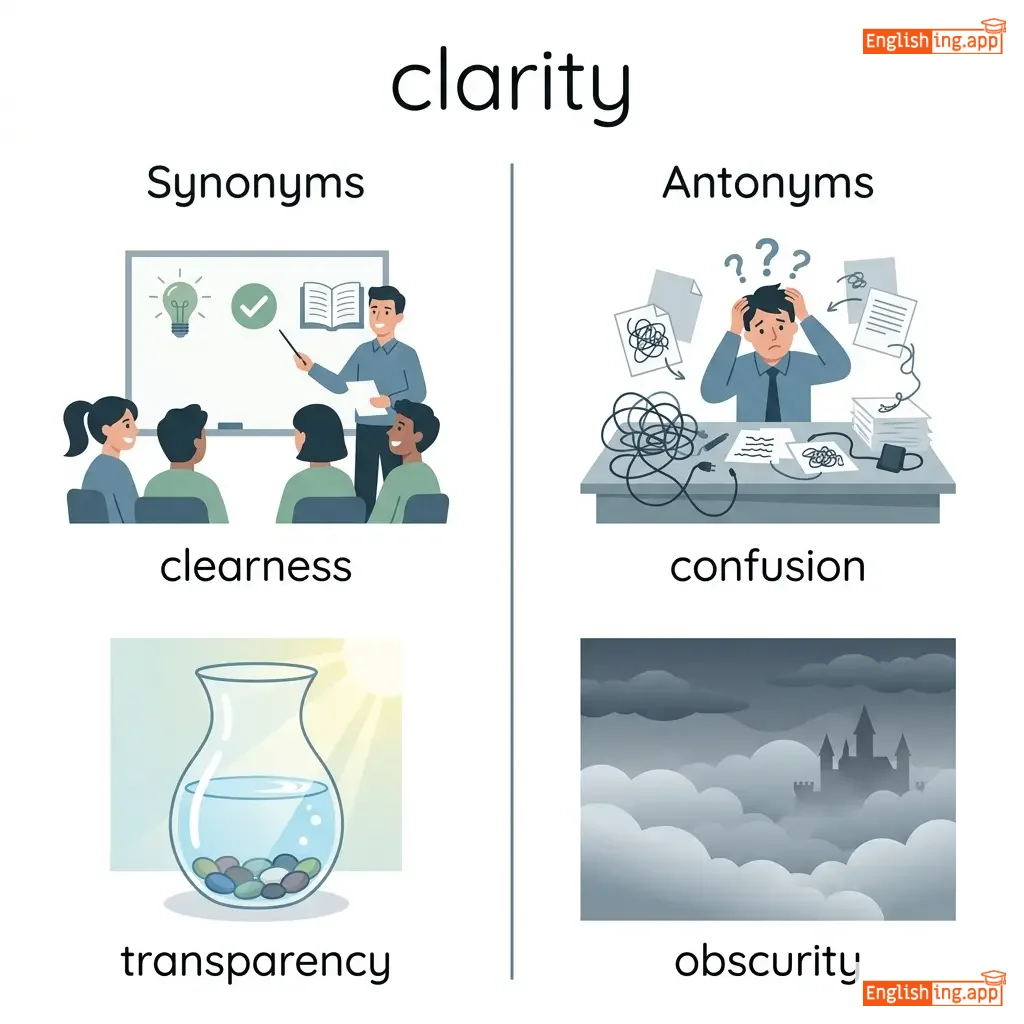
clearness, transparency, precision, lucidity, simplicity
••••••
|
confusion, obscurity, vagueness
••••••
|
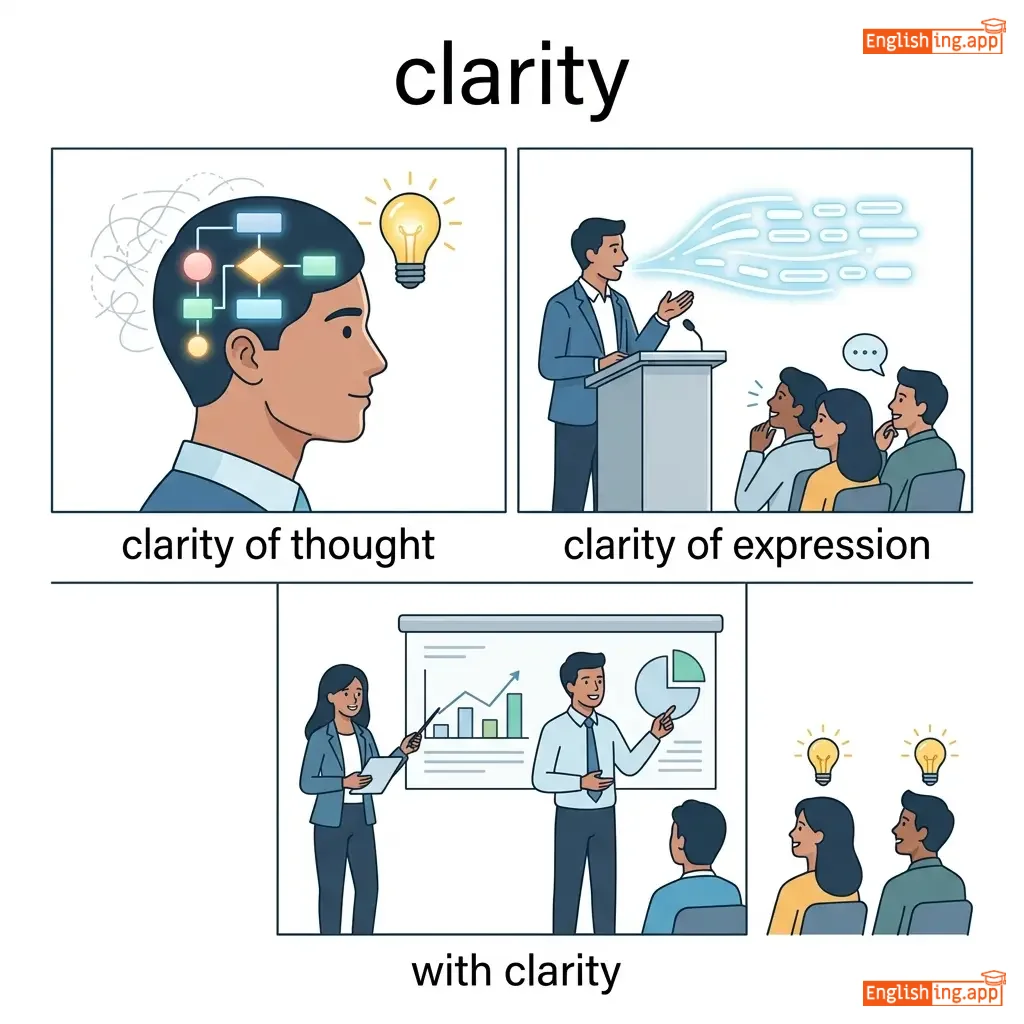
clarity of thought, clarity of expression, with clarity, lack of clarity
••••••
|
Clarity = clear + ity → ясно или прозрачно
••••••
|
|
#1492
📢
|
/ˈklæriən/
adjective
(клерион)
••••••
|
- •••••• |
громкий и ясный призыв
gromkiy i yasnyy prizyv
••••••
|
- •••••• | - •••••• | - •••••• | - •••••• |
Loud and clear, like the sound of a trumpet; strongly expressed.
••••••
|
The leader’s clarion call for unity inspired the crowd. |
Ясный призыв лидера к единству вдохновил толпу.
Yasnyy prizyv lidera k yedinstvu vdokhnovil tolpu.
••••••
|
clarion call |
a strong and clear appeal to action
••••••
|
ясный призыв
yasnyy prizyv
••••••
|
loud, clear, resounding, ringing
••••••
|
faint, weak, muffled
••••••
|
clarion call, clarion voice, clarion message
••••••
|
Clarion call означает громкий и ясный призыв, как звук трубы.
••••••
|
|
#1493
💡
|
/ˈklærɪfaɪ/
verb
(кле́рифаи)
••••••
|
|
прояснять
proyasnyat
••••••
|
clarified
кле́рифаид
••••••
|
clarified
кле́рифаид
••••••
|
clarifies
кле́рифаиз
••••••
|
clarifying
кле́рифаинг
••••••
|
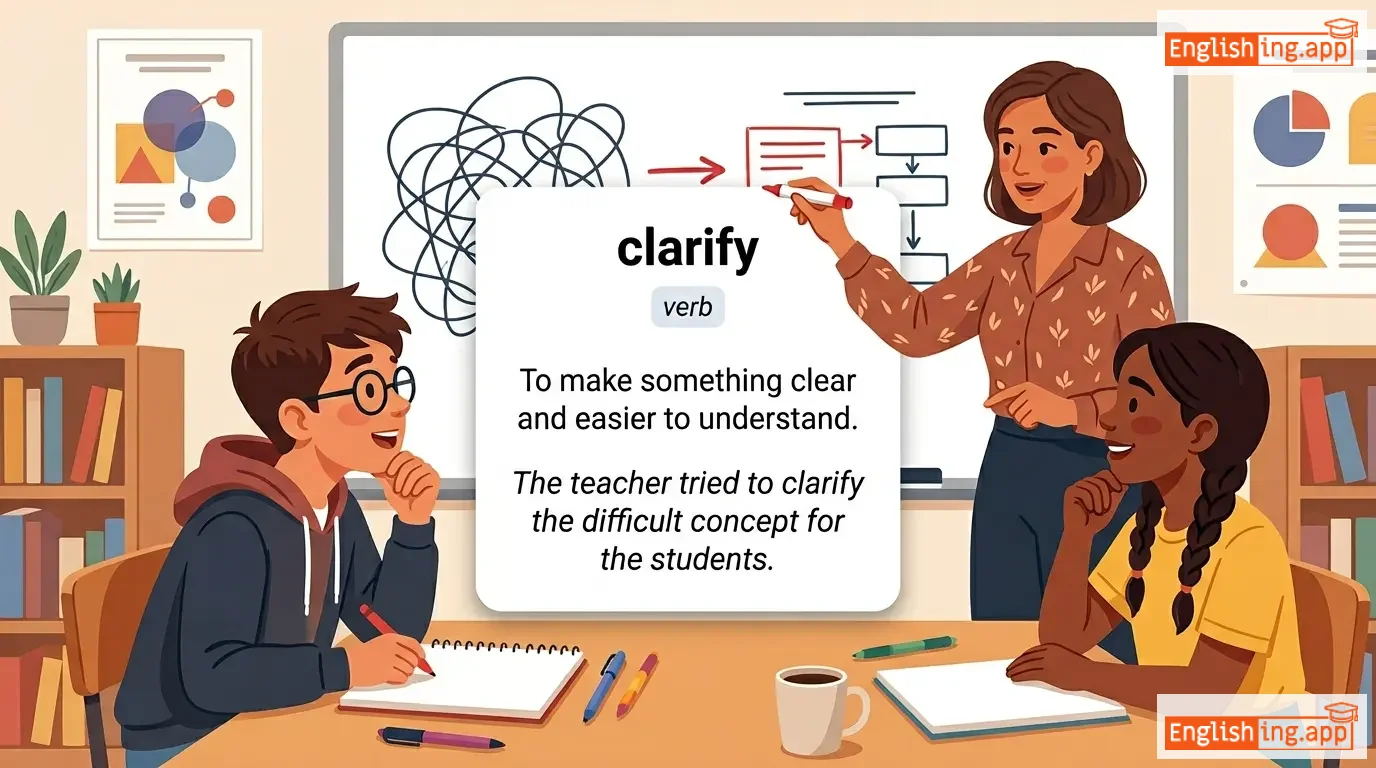
To make something clear and easier to understand.
••••••
|
The teacher tried to clarify the difficult concept for the students.
Учитель попытался прояснить сложную концепцию для студентов.
••••••
|
Учитель попытался прояснить сложную концепцию для студентов.
Uchitel' popytalsya proyasnit' slozhnuyu kontseptsiyu dlya studentov.
••••••
|
clarify the situation
прояснить ситуацию
••••••
|
to explain or resolve something confusing
••••••
|
прояснить ситуацию
proyasnit' situatsiyu
••••••
|
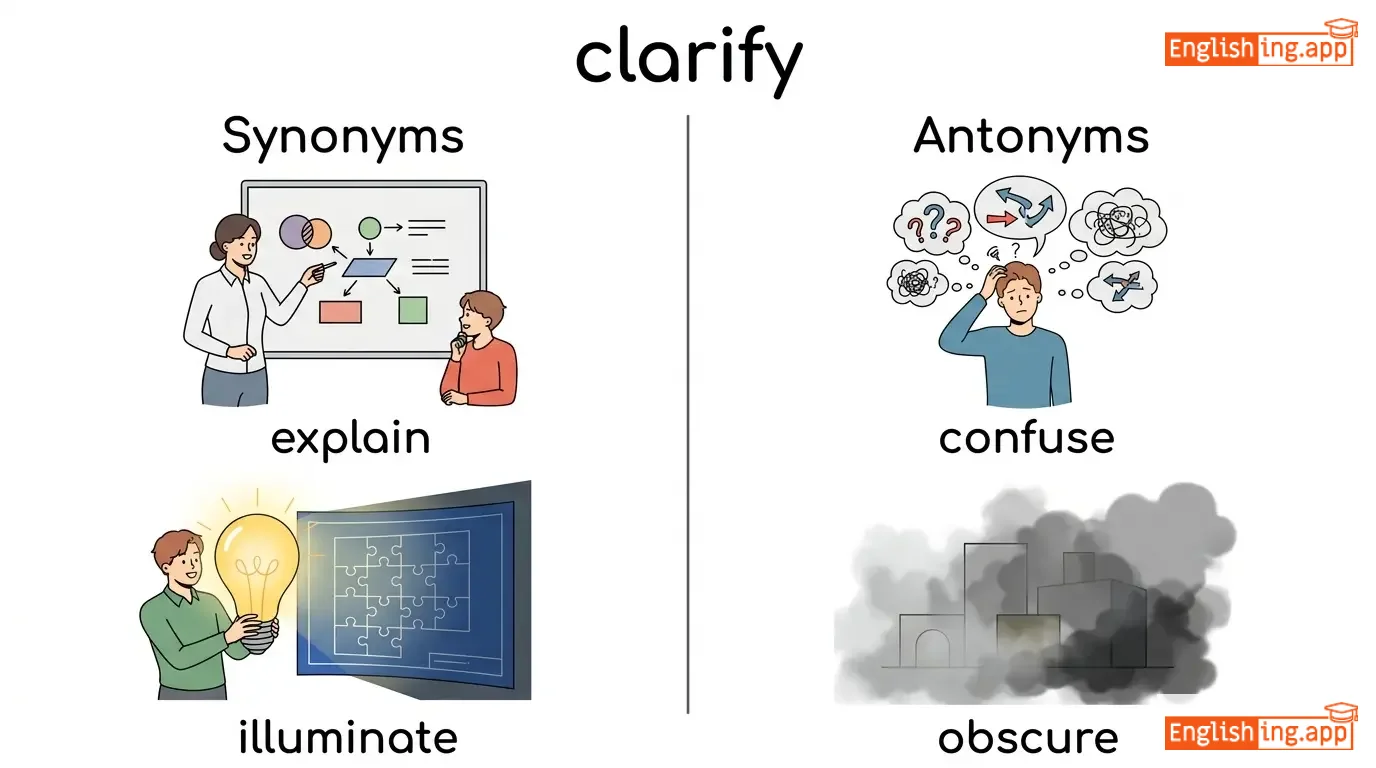
explain, illuminate, simplify, resolve, interpret
••••••
|
confuse, obscure, complicate
••••••
|
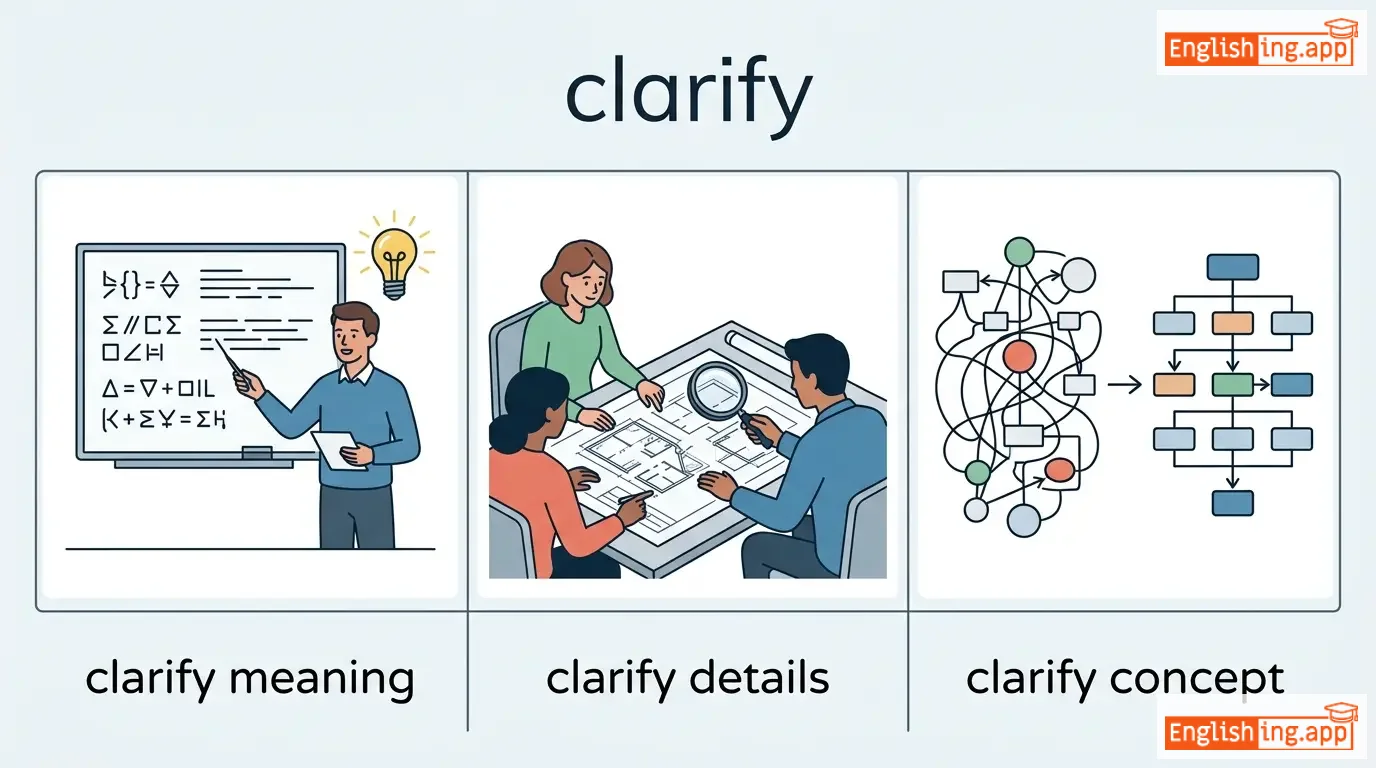
clarify meaning, clarify details, clarify concept, clarify question
••••••
|
Clarify звучит как 'прояснять' на русском, как когда учитель проясняет что-то.
••••••
|
|
#1494
🔔
|
/ˈklæpər/
noun
(клапер)
••••••
|
- •••••• |
металлическая деталь внутри колокола, которая ударяет по нему, чтобы издать звук
metallicheskaya detal' vnutri kolokola, kotoraya udaryayet po nemu, chtoby izdat' zvuk
••••••
|
- •••••• | - •••••• | - •••••• | - •••••• |
The free-swinging metal piece inside a bell that strikes it to produce sound.
••••••
|
The clapper inside the bell was broken. |
Металлическая деталь внутри колокола была сломана.
Metallicheskaya detal' vnutri kolokola byla slomana.
••••••
|
- •••••• | - •••••• | - •••••• |
bell hammer, striker, tongue
••••••
|
silencer, stopper
••••••
|
bell clapper, broken clapper, clapper inside
••••••
|
Clapper — это часть в колоколе, которая ударяет и издает звук.
••••••
|
|
#1495
👏
|
/klæp/
verb
(клап)
••••••
|
- •••••• |
хлопать
khlopat
••••••
|
clapped
клапт
••••••
|
clapped
клапт
••••••
|
claps
клапс
••••••
|
clapping
клаппинг
••••••
|
To strike the palms of the hands together, usually to express approval or create a sharp sound.
••••••
|
The audience began to clap loudly after the performance.
Зрители начали громко хлопать после выступления.
••••••
|
Зрители начали громко хлопать после выступления.
Zriteli nachali gromko khlopat' posle vystupleniya.
••••••
|
clap your hands
хлопать руками
••••••
|
to show approval or enjoyment by striking your hands together
••••••
|
хлопать руками
khlopat' rukami
••••••
|
applaud, cheer, smack, slap
••••••
|
boo, jeer
••••••
|
clap loudly, clap hands, clap along, clap for someone
••••••
|
Хлопать означает ударить ладонями друг о друга.
••••••
|
|
#1496
🔔
|
/ˈklæŋər/
noun
(клангор)
••••••
|
- •••••• |
шум, грохот
shum, grokhot
••••••
|
- •••••• | - •••••• | - •••••• | - •••••• |
A loud, resonant, and continuous noise, often metallic.
••••••
|
The clangor of the church bells filled the town square. |
Грохот церковных колоколов заполнил площадь города.
Grohot tserkovnykh kolokolov zapolnil ploshchad' goroda.
••••••
|
- •••••• | - •••••• | - •••••• |
clatter, clamor, racket, din, noise
••••••
|
silence, quiet, hush
••••••
|
clangor of bells, metallic clangor, constant clangor
••••••
|
Clangor означает громкий звук - представь себе КЛАНГ колоколов.
••••••
|
|
#1497
🤫
|
/klænˈdɛstaɪn/
adjective
••••••
|
- •••••• | - •••••• | - •••••• | - •••••• | - •••••• | - •••••• |
kept secret or done secretly, especially for illicit purposes
••••••
|
They held a clandestine meeting late at night. |
- •••••• |
clandestine operation |
a secret activity, often illegal or unauthorized
••••••
|
- •••••• |
secret, covert, hidden, furtive, undercover
••••••
|
open, public, overt
••••••
|
clandestine meeting, clandestine operation, clandestine affair, clandestine group
••••••
|
No •••••• |
|
#1498
👨👩👧👦
|
/klæn/
noun
(клан)
••••••
|
- •••••• |
клан
klan
••••••
|
- •••••• | - •••••• | - •••••• | - •••••• |
a large family group or a close-knit community with shared interests or ancestry
••••••
|
The entire clan gathered to celebrate the festival.
The entire clan gathered to celebrate the festival.
••••••
|
Весь клан собрался, чтобы отпраздновать фестиваль.
Ves' klan sobralsya, chtoby otprrazdnovat' festival'.
••••••
|
clan gathering
собрание клана
••••••
|
a meeting or reunion of members of the same extended family or group
••••••
|
собрание клана
sobranie klana
••••••
|
tribe, family, kin, community, group
••••••
|
individual, outsider
••••••
|
Scottish clan, clan leader, clan gathering, powerful clan
••••••
|
Клан собирается как большая семья, чтобы отпраздновать важные моменты.
••••••
|
|
#1499
🔊
|
/ˈklæmərəs/
adjective
(клэмерэс)
••••••
|
- •••••• |
шумный
shumnyy
••••••
|
- •••••• | - •••••• | - •••••• | - •••••• |
making a loud and confused noise; expressing strong demands noisily
••••••
|
The clamorous audience demanded an encore from the band. |
Шумная аудитория потребовала дополнительный номер от группы.
Shumnaya auditoriya potrebovala dopolnitel'nyy nomer ot gruppy.
••••••
|
- •••••• | - •••••• | - •••••• |
noisy, loud, vociferous, boisterous, uproarious
••••••
|
quiet, silent, calm
••••••
|
clamorous protest, clamorous demand, clamorous voices, clamorous applause
••••••
|
Clamorous - это когда всё вокруг шумит и требует внимания.
••••••
|
|
#1500
📢
|
/ˈklæmər/
noun
(кламор)
••••••
|
|
гвалт
gvalt
••••••
|
- •••••• | - •••••• | - •••••• | - •••••• |
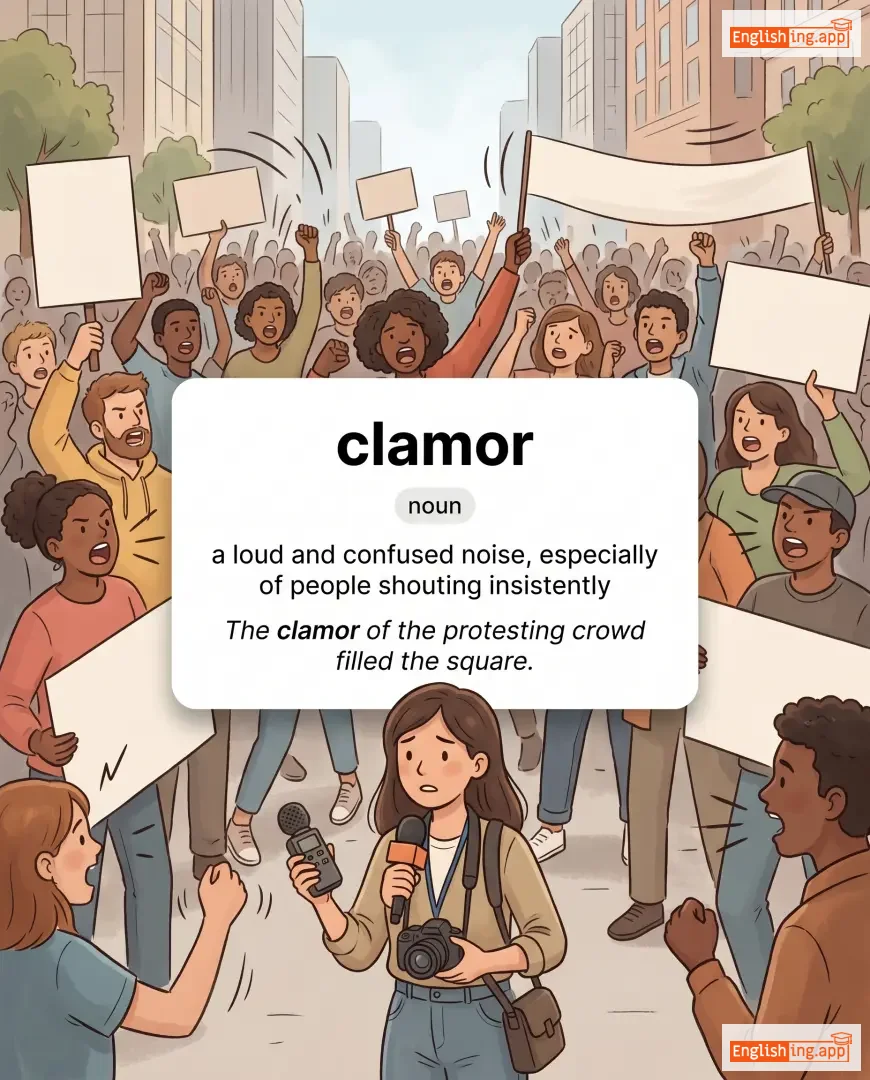
a loud and confused noise, especially of people shouting insistently
••••••
|
The clamor of the protesting crowd filled the square.
Кламор протестующих заполнил площадь.
••••••
|
Гвалт протестующих заполнил площадь.
Gvalt protestuyushchikh zapolnil ploshchad.
••••••
|
raise a clamor
поднять кламор
••••••
|
to express strong demands or complaints loudly
••••••
|
поднять гвалт
podnyat' gvalt
••••••
|
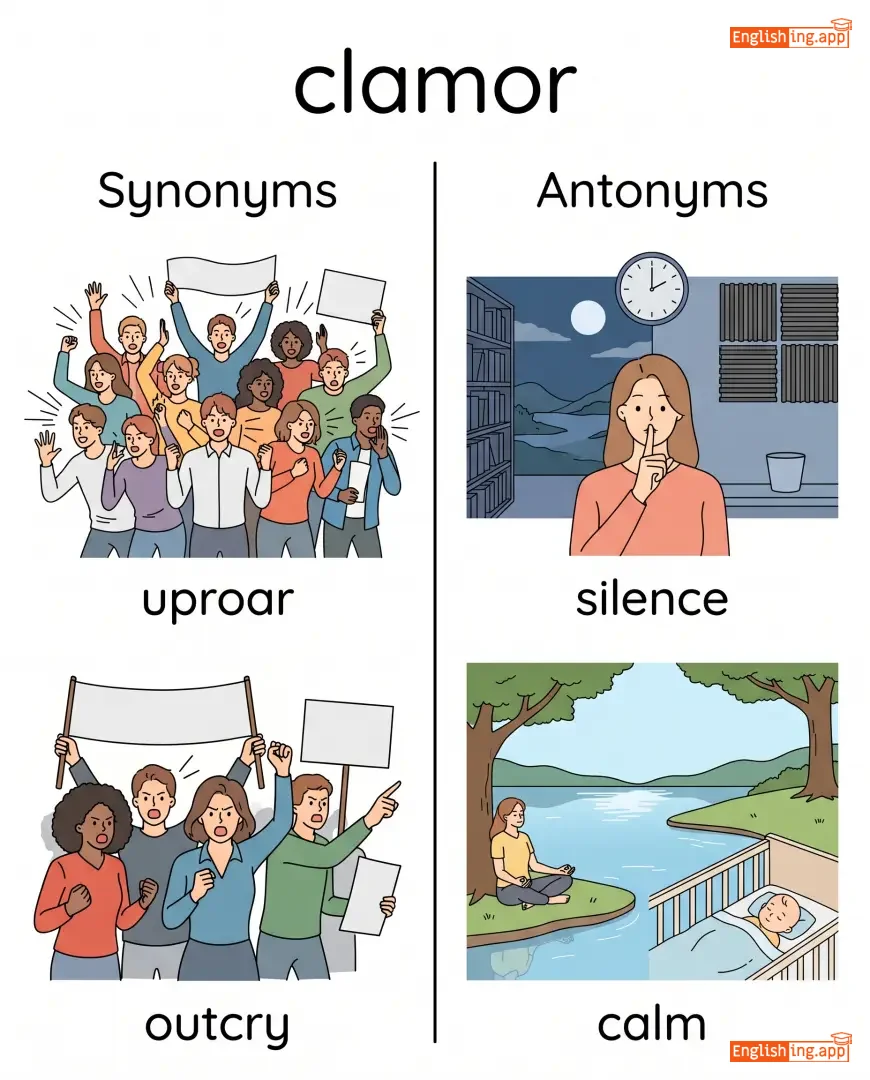
uproar, outcry, noise, din, commotion
••••••
|
silence, calm, quiet
••••••
|
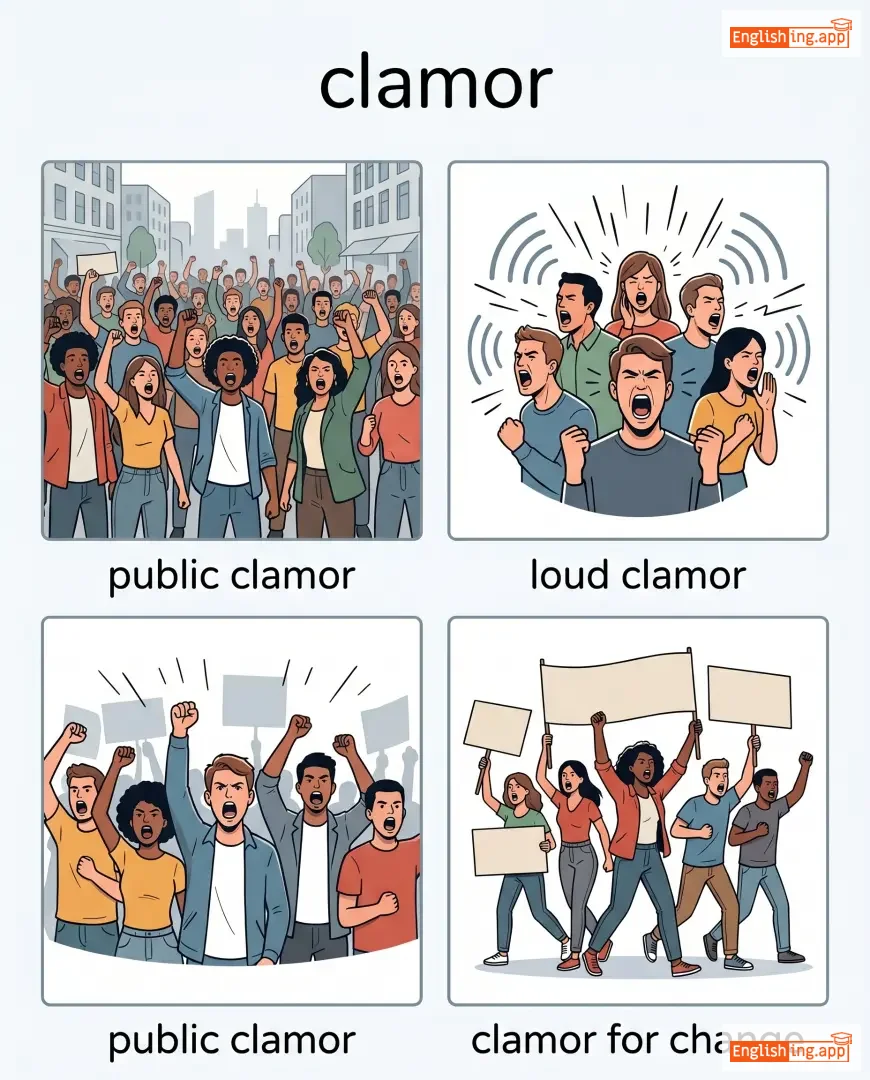
public clamor, loud clamor, clamor for change, clamor of voices
••••••
|
Clamor в русском - это гвалт, как когда люди протестуют и кричат.
••••••
|
Vocabulary Quiz
Test your vocabulary by matching words with their translations or meanings.
Login to take the quiz
Comments (0)
Share your thoughts and join the discussion.
Join the discussion by logging in
Login to CommentNo comments yet
Be the first to share your thoughts!