

Обновитесь для доступа ко всему словарю
Получите неограниченный доступ ко всем словам с подпиской Pro
Обновить до ProПеревод
Прошедшее
Причастие прошедшего времени
Третье лицо единственного числа
Герундий
Значение
Пример предложения
Перевод примера предложения
Синонимы
Антонимы
Коллокации
Мнемоника


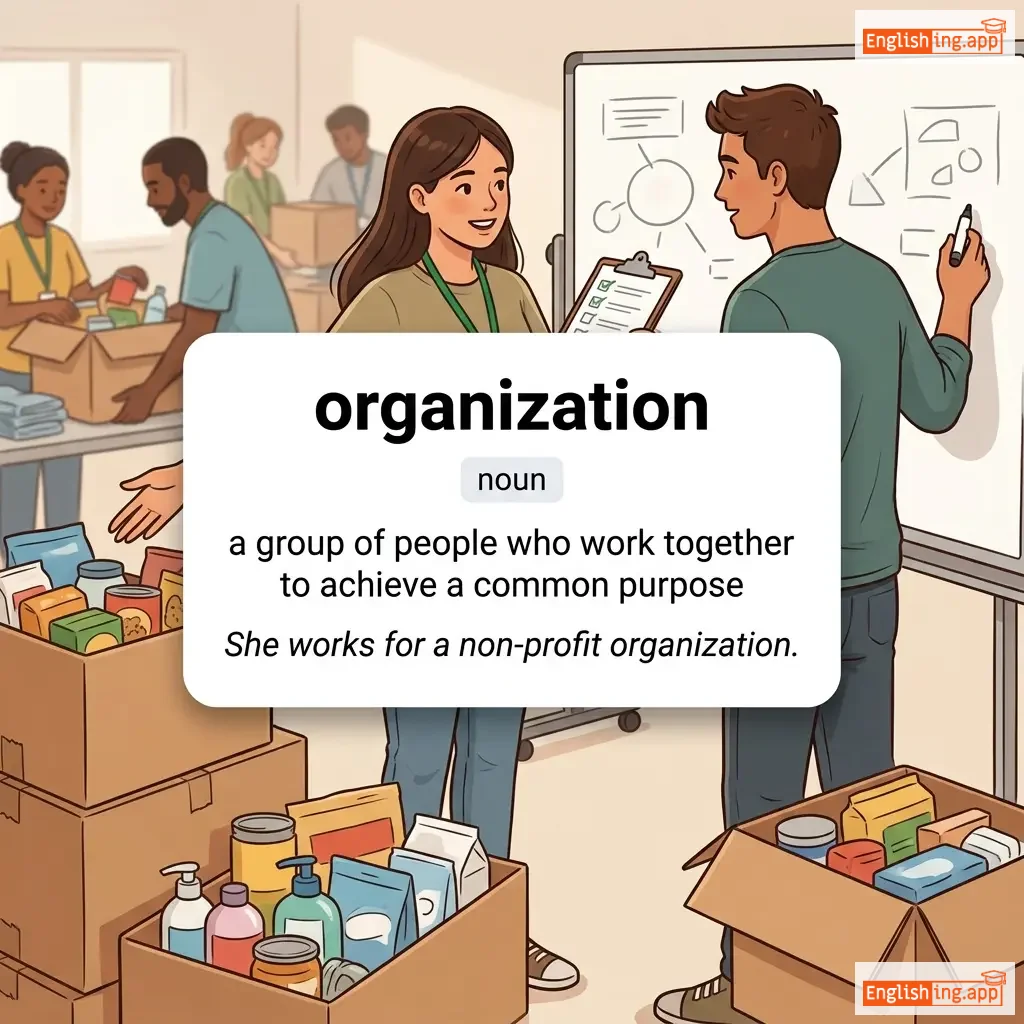
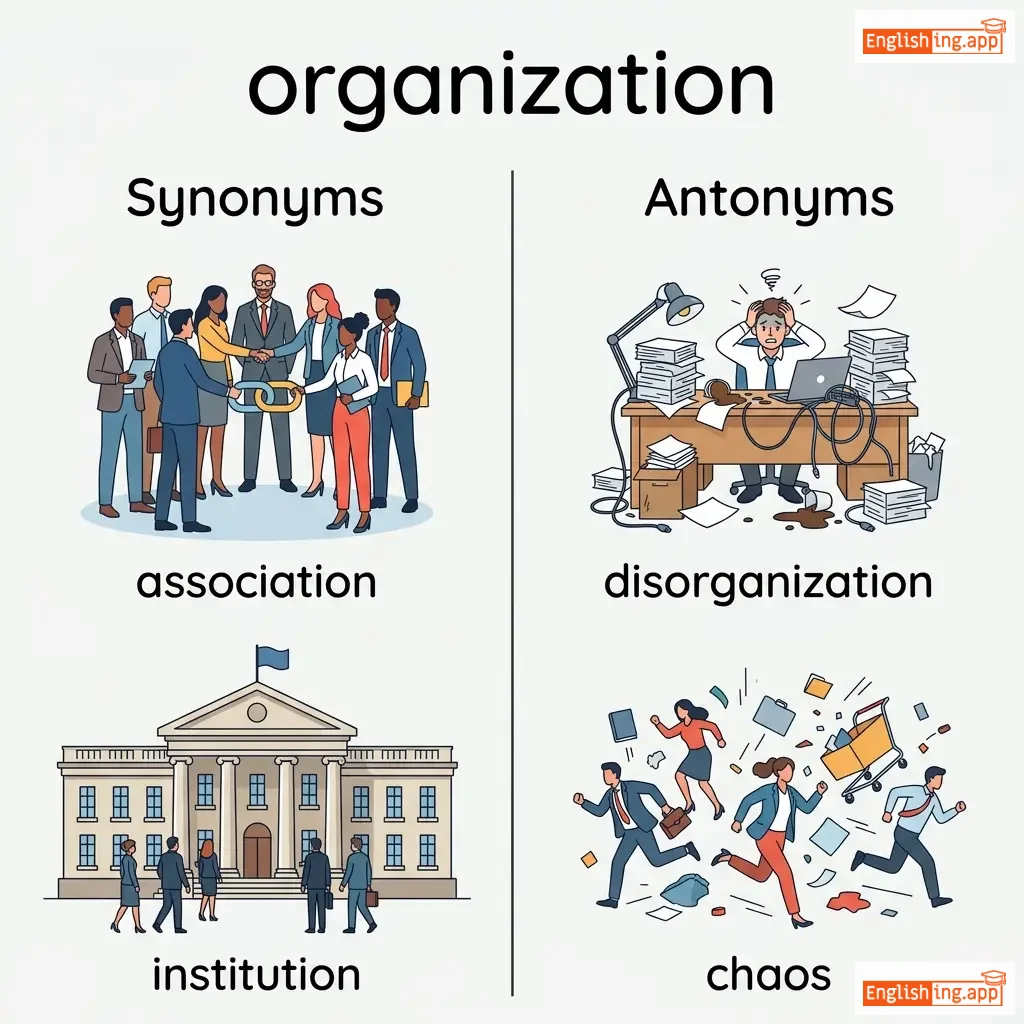

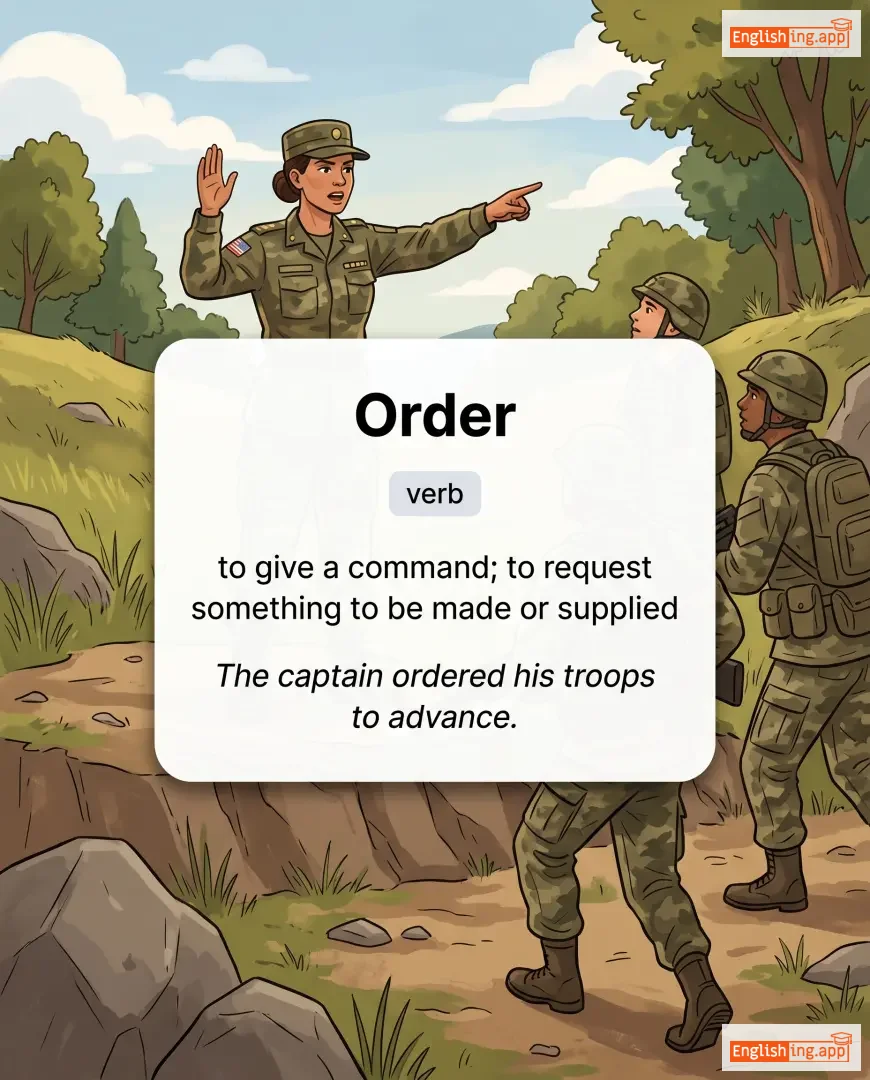
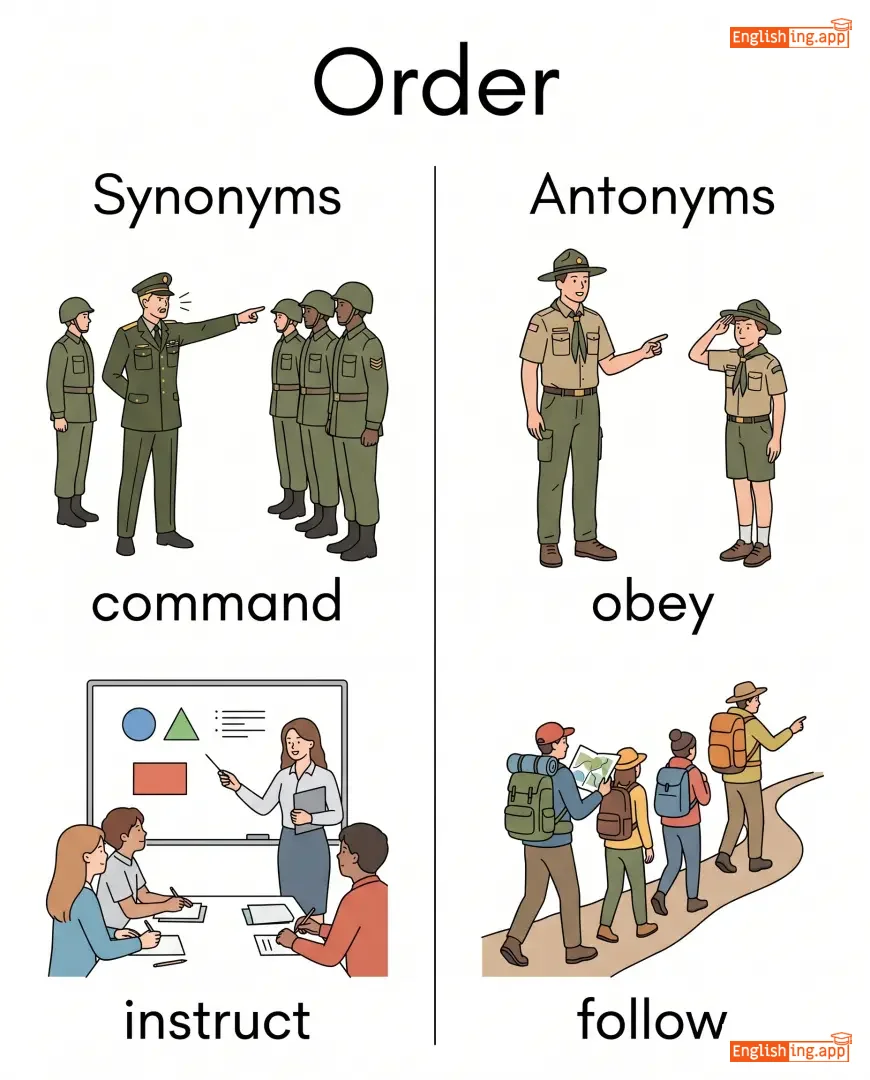
Swipe left or right, or use the buttons. Tap image to zoom.
Обновитесь для доступа ко всем предложениям
Получите неограниченный доступ ко всем предложениям с подпиской Pro
Обновить до ProПеревод примера предложения
Слово
Lesson 386Lesson 386 - Переключатель маски
|
Эмодзи
|
Слово | Images | Перевод | Прошедшее | Причастие прошедшего времени | Третье лицо единственного числа | Герундий | Значение | Пример предложения | Перевод примера предложения | Пример выражения | Значение примера выражения | Перевод примера выражения | Синонимы | Антонимы | Коллокации | Мнемоника |
|---|---|---|---|---|---|---|---|---|---|---|---|---|---|---|---|---|---|
|
#11545
🔄
|
/ˈʌðərwaɪz/
adverb
(azherwaiz)
••••••
|
- •••••• |
иначе
inache
••••••
|
- •••••• | - •••••• | - •••••• | - •••••• |
in a different or other way
••••••
|
We need to hurry; otherwise, we'll miss the train. |
Нам нужно поторопиться, иначе мы опоздаем на поезд.
Nam nuzhno potoropitsya, inache my opozdaem na poezd.
••••••
|
- •••••• | - •••••• | - •••••• |
alternatively, if not, or else
••••••
|
similarly
••••••
|
otherwise known as, do otherwise, otherwise stated
••••••
|
Поторопись, иначе ты опоздаешь на поезд.
••••••
|
|
#11546
😖
|
/ˈpeɪn.fəl/
adjective
(пэйнфул)
••••••
|
- •••••• |
болезненный
boleznennyj
••••••
|
- •••••• | - •••••• | - •••••• | - •••••• |
causing physical or emotional pain
••••••
|
The injury was very painful, and he needed immediate care. |
Травма была очень болезненной, и ему нужна была немедленная медицинская помощь.
Travma byla ochen' boleznennoy, i emu nuzhna byla nemedlennaya meditsinskaya pomoshch'.
••••••
|
- •••••• | - •••••• | - •••••• |
aching, sore, excruciating, distressing
••••••
|
comfortable, painless, soothing
••••••
|
painful experience, painful injury, painful memories
••••••
|
Painful - пэйнфул, помните, что боль всегда вызывает сильные ощущения, как если бы она 'полняла' ваше тело.
••••••
|
|
#11547
😖
|
/peɪn/
noun
(пэйн)
••••••
|
- •••••• |
боль
bol
••••••
|
- •••••• | - •••••• | - •••••• | - •••••• |
physical suffering or discomfort caused by illness or injury
••••••
|
She felt a sharp pain in her chest.
Ши фэлт э шарп пэйн ин хе чэст.
••••••
|
Она почувствовала резкую боль в груди.
Ona pochuvstvovala rezkuyu bol v grudi.
••••••
|
- •••••• | - •••••• | - •••••• |
ache, hurt, suffering, discomfort
••••••
|
comfort, ease, relief
••••••
|
sharp pain, chronic pain, painkiller, unbearable pain
••••••
|
Pain is 'bol' in Russian – like saying 'ball' of pain in the chest.
••••••
|
|
#11548
📄
|
/peɪdʒ/
noun
(peydzh)
••••••
|
- •••••• |
страница
stranitsa
••••••
|
- •••••• | - •••••• | - •••••• | - •••••• |
one side of a sheet of paper, or a single sheet of paper in a book or document
••••••
|
Turn to the next page for more information.
Перейдите на следующую страницу для получения дополнительной информации.
••••••
|
Перейдите на следующую страницу для получения дополнительной информации.
Pereydite na sleduyushchuyu stranitsu dlya polucheniya dopolnitel'noy informatsii.
••••••
|
- •••••• | - •••••• | - •••••• |
leaf, sheet, folio, document
••••••
|
blank, empty space
••••••
|
turn the page, page number, front page, last page
••••••
|
Страница, как страница книги
••••••
|
|
#11549
📦
|
/ˈpækɪdʒ/
noun
(пакет)
••••••
|
- •••••• |
пакет
paket
••••••
|
- •••••• | - •••••• | - •••••• | - •••••• |
a container or wrapping in which something is packed
••••••
|
He received a package in the mail. |
Он получил пакет по почте.
On poluchil paket po pochte.
••••••
|
- •••••• | - •••••• | - •••••• |
parcel, bundle, box, shipment
••••••
|
unpacking, unpacked item
••••••
|
shipping package, gift package, delivery package, large package
••••••
|
Пакет — это как упаковка, в которой что-то спрятано, например, подарок!
••••••
|
|
#11550
🏃♀️
|
/peɪs/
noun
(peis)
••••••
|
- •••••• |
темп
temp
••••••
|
- •••••• | - •••••• | - •••••• | - •••••• |
the speed at which something happens or is done
••••••
|
She walked at a slow pace.
Она шла медленным темпом.
••••••
|
Она шла медленным темпом.
Ona shla medlennym tempom.
••••••
|
- •••••• | - •••••• | - •••••• |
speed, rate, tempo, velocity
••••••
|
slowness, delay, retardation
••••••
|
fast pace, slow pace, quick pace, steady pace
••••••
|
Pace - это идти медленно, с темпом.
••••••
|
|
#11551
🏠
|
/ˈoʊnər/
noun
(óvner)
••••••
|
- •••••• |
владелец
vladel'ets
••••••
|
- •••••• | - •••••• | - •••••• | - •••••• |
a person who owns something
••••••
|
She is the owner of the car.
Она владелица машины.
••••••
|
Она владелица машины.
Ona vladelitsa mashiny.
••••••
|
- •••••• | - •••••• | - •••••• |
proprietor, possessor, holder, landlord
••••••
|
tenant, renter, lessee
••••••
|
property owner, business owner, car owner, house owner
••••••
|
Владелец (vladel'ets) - тот, кто владеет машиной.
••••••
|
|
#11552
🏠
|
/oʊn/
verb, adjective
(own)
••••••
|
- •••••• |
владеть
vladet'
••••••
|
owned
owned
••••••
|
owned
owned
••••••
|
owns
owns
••••••
|
owning
owning
••••••
|
to possess something; belonging to oneself
••••••
|
She owns a beautiful house in the city.
Она владеет красивым домом в городе.
••••••
|
Она владеет красивым домом в городе.
Ona vladeyet krasivym domom v gorode.
••••••
|
- •••••• | - •••••• | - •••••• |
possess, have, hold
••••••
|
lack, not have
••••••
|
own a house, own property, own up
••••••
|
Own means you possess something - 'Владеть' означает, что вы что-то имеете.
••••••
|
|
#11553
💰
|
/oʊ/
verb
(о)
••••••
|
|
долг
dolg
••••••
|
owed
оуд
••••••
|
owed
оуд
••••••
|
owes
оуз
••••••
|
owing
оуинг
••••••
|
to be obligated to pay or give something to someone
••••••
|
I owe you twenty dollars.
Я должен тебе двадцать долларов.
••••••
|
Я должен тебе двадцать долларов.
Ya dolzhen tebe dvadtsat' dollarov.
••••••
|
- •••••• | - •••••• | - •••••• |
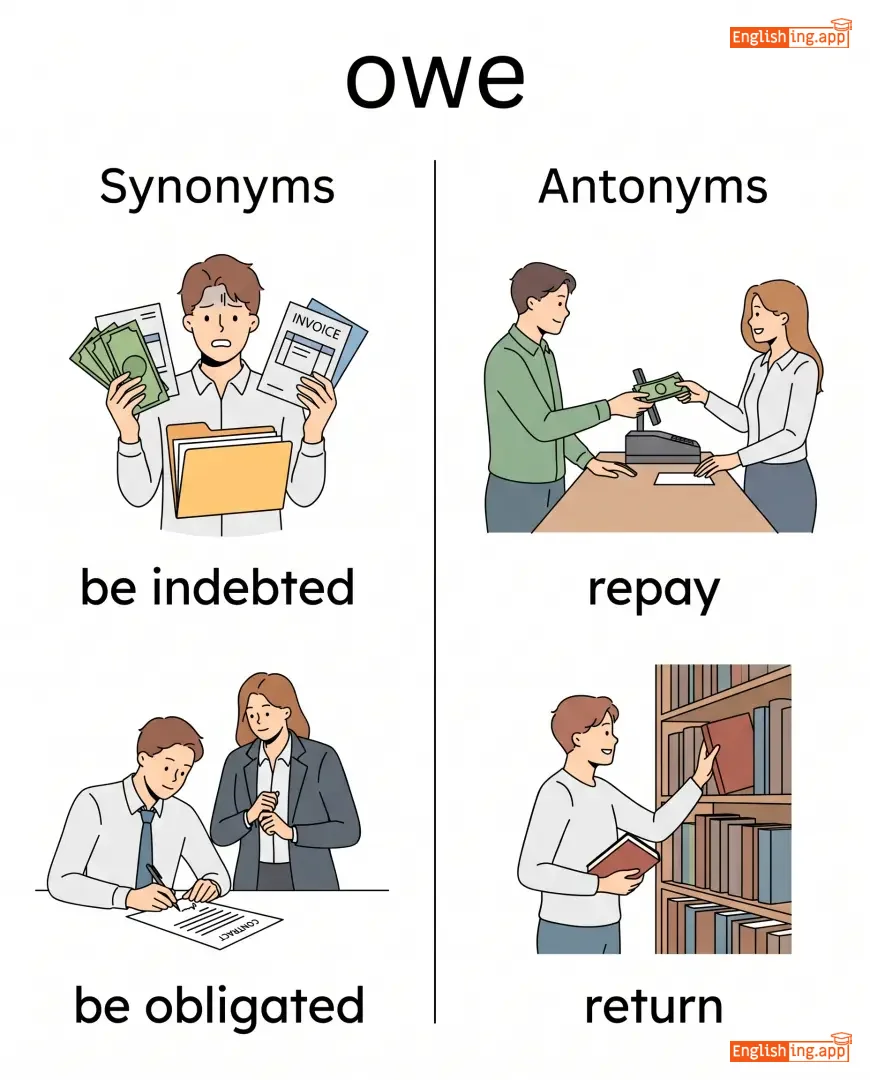
be indebted, be obligated, be in debt
••••••
|
repay, return
••••••
|
owe money, owe a debt, owe someone
••••••
|
Owe означает долг, напоминает слово долг.
••••••
|
|
#11554
🌍
|
/ˈoʊvərɔːl/
adjective, adverb
(оувэрол)
••••••
|
- •••••• |
в целом
v tse lom
••••••
|
- •••••• | - •••••• | - •••••• | - •••••• |
in general or as a whole
••••••
|
Overall, the project has been successful. |
В целом, проект был успешным.
V tse lom, proyekt byl uspeshnym.
••••••
|
- •••••• | - •••••• | - •••••• |
generally, broadly, in total
••••••
|
specifically, individually
••••••
|
overall view, overall performance, overall result
••••••
|
Overall означает в целом - полный успех
••••••
|
|
#11555
⬆️
|
/ˈoʊvər/
preposition, adverb
(о́вэр)
••••••
|
- •••••• |
наверху
naverkhu
••••••
|
- •••••• | - •••••• | - •••••• | - •••••• |
across, on top of, or beyond
••••••
|
The book is lying over the table. |
Книга лежит на столе.
Kniga lezhit na stole.
••••••
|
- •••••• | - •••••• | - •••••• |
above, across, beyond
••••••
|
under, beneath
••••••
|
over the table, over the years, over there
••••••
|
Книга лежит на столе – Book goes over the table
••••••
|
|
#11556
🍕
|
/ˈʌvən/
noun
(овен)
••••••
|
- •••••• |
духовка
duhovka
••••••
|
- •••••• | - •••••• | - •••••• | - •••••• |
a chamber used for baking, roasting, or heating food
••••••
|
I put the pizza in the oven to bake.
Я положил пиццу в духовку, чтобы испечь.
••••••
|
Я положил пиццу в духовку, чтобы испечь.
Ya polozhil pitzzu v dukhovku, chtoby ispech'.
••••••
|
- •••••• | - •••••• | - •••••• |
stove, cooker, range
••••••
|
microwave, freezer
••••••
|
bake in the oven, oven temperature, preheat the oven
••••••
|
Духовка = готовить пиццу.
••••••
|
|
#11557
🎯
|
/ˈaʊtkʌm/
noun
(ауткам)
••••••
|
- •••••• |
результат
rezultat
••••••
|
- •••••• | - •••••• | - •••••• | - •••••• |
the result or consequence of an action or situation
••••••
|
The outcome of the project was beyond expectations. |
Результат проекта превзошел ожидания.
Rezultat proyekte prevzoshyel ozhidaniya.
••••••
|
- •••••• | - •••••• | - •••••• |
result, consequence, effect, outcome
••••••
|
cause
••••••
|
final outcome, positive outcome, outcome of the situation
••••••
|
Результат (rezultat) приходит после выполнения задачи.
••••••
|
|
#11558
🤗
|
/aʊərˈsɛlvz/
pronoun
(аурселвз)
••••••
|
- •••••• |
мы сами
my samyi
••••••
|
- •••••• | - •••••• | - •••••• | - •••••• |
used by the speaker to refer to themselves and one or more others as the object of the verb
••••••
|
We should help ourselves before helping others. |
Мы должны помочь себе, прежде чем помочь другим.
My dolzhny pomoch' sebe, prezhde chem pomoch' drugim.
••••••
|
- •••••• | - •••••• | - •••••• |
we, we ourselves, our own
••••••
|
themselves, others
••••••
|
help ourselves, find ourselves, express ourselves
••••••
|
Мы (my) используем 'мы сами', чтобы обозначить себя
••••••
|
|
#11559
🏡
|
/aʊər/
pronoun
(ауэр)
••••••
|
- •••••• |
наш
nash
••••••
|
- •••••• | - •••••• | - •••••• | - •••••• |
belonging to or associated with the speaker and one or more other people
••••••
|
This is our house. |
Это наш дом.
Eto nash dom.
••••••
|
- •••••• | - •••••• | - •••••• |
ours, belonging to us, our own
••••••
|
their, your
••••••
|
our family, our team, our responsibility
••••••
|
Мы (наш) говорим, что это наш дом.
••••••
|
|
#11560
⚪
|
/ˈoʊnli/
adjective/adverb
(óunli)
••••••
|
- •••••• |
только
tolko
••••••
|
- •••••• | - •••••• | - •••••• | - •••••• |
without others; solely
••••••
|
He is the only person who knows the secret.
Он единственный человек, который знает секрет.
••••••
|
Он единственный человек, который знает секрет.
On yedinstenniy chelovek, kotoryy znayet sekret.
••••••
|
- •••••• | - •••••• | - •••••• |
sole, exclusive, unique, solitary
••••••
|
multiple, many
••••••
|
only one, only person, only choice, only option
••••••
|
Ты только лучший! - You are only the best!
••••••
|
|
#11561
👥
|
/ˈʌðərz/
pronoun
(aðerz)
••••••
|
- •••••• |
другие
drugie
••••••
|
- •••••• | - •••••• | - •••••• | - •••••• |
people or things distinct from the ones already mentioned or known
••••••
|
I like to spend time with others. |
Мне нравится проводить время с другими.
Mne nravitsya provodit' vremya s drugimi.
••••••
|
- •••••• | - •••••• | - •••••• |
people, individuals, others, another
••••••
|
self, oneself
••••••
|
help others, other people, among others
••••••
|
Работа с другими помогает развиваться - Working with others helps to grow
••••••
|
|
#11562
🔄
|
/ˈʌðər/
adjective
(адер)
••••••
|
- •••••• |
другой
drugoy
••••••
|
- •••••• | - •••••• | - •••••• | - •••••• |
used to refer to something different from the one already mentioned or known
••••••
|
I don't want this one, I will take the other one. |
Я не хочу это, я возьму другое.
Ya ne khochu eto, ya voz'mu drugoye.
••••••
|
the other side of the coin |
the opposite aspect of a situation
••••••
|
другая сторона медали
drugaya storona medali
••••••
|
alternative, different, another, else
••••••
|
same, identical
••••••
|
the other side, the other person, the other day
••••••
|
Other, для всего есть своя альтернатива!
••••••
|
|
#11563
⏳
|
/əˈrɪdʒɪnəli/
adverb
(оригинально)
••••••
|
- •••••• |
изначально
iznachal'no
••••••
|
- •••••• | - •••••• | - •••••• | - •••••• |
in the beginning, at first
••••••
|
Originally, she wanted to be a doctor. |
Изначально она хотела стать врачом.
Iznachal'no ona hotela stat' vrachom.
••••••
|
- •••••• | - •••••• | - •••••• |
initially, at first, at the outset, in the beginning
••••••
|
finally, ultimately
••••••
|
originally from, originally intended, originally planned
••••••
|
Изначально всё начиналось с желания, которое могло измениться.
••••••
|
|
#11564
📅
|
/ˈɔːɡənaɪz/
verb
(организировать)
••••••
|
|
организовать
organizovat
••••••
|
organized
организовал
••••••
|
organized
организованный
••••••
|
organizes
организует
••••••
|
organizing
организуя
••••••
|
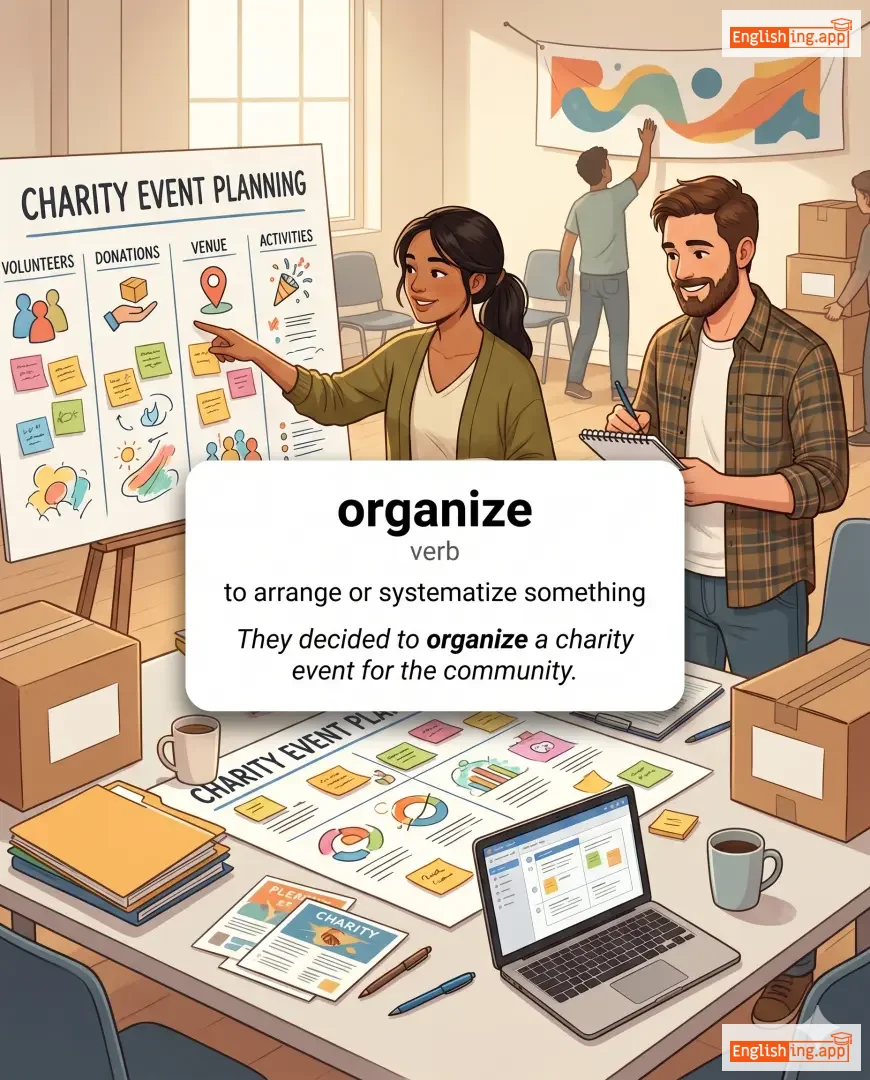
to arrange or systematize something
••••••
|
They decided to organize a charity event for the community.
Они решили организовать благотворительное мероприятие для сообщества.
••••••
|
Они решили организовать благотворительное мероприятие для сообщества.
Oni reshili organizovat blagotvoritel'noe meropriyatie dlya soobshchestva.
••••••
|
- •••••• | - •••••• | - •••••• |
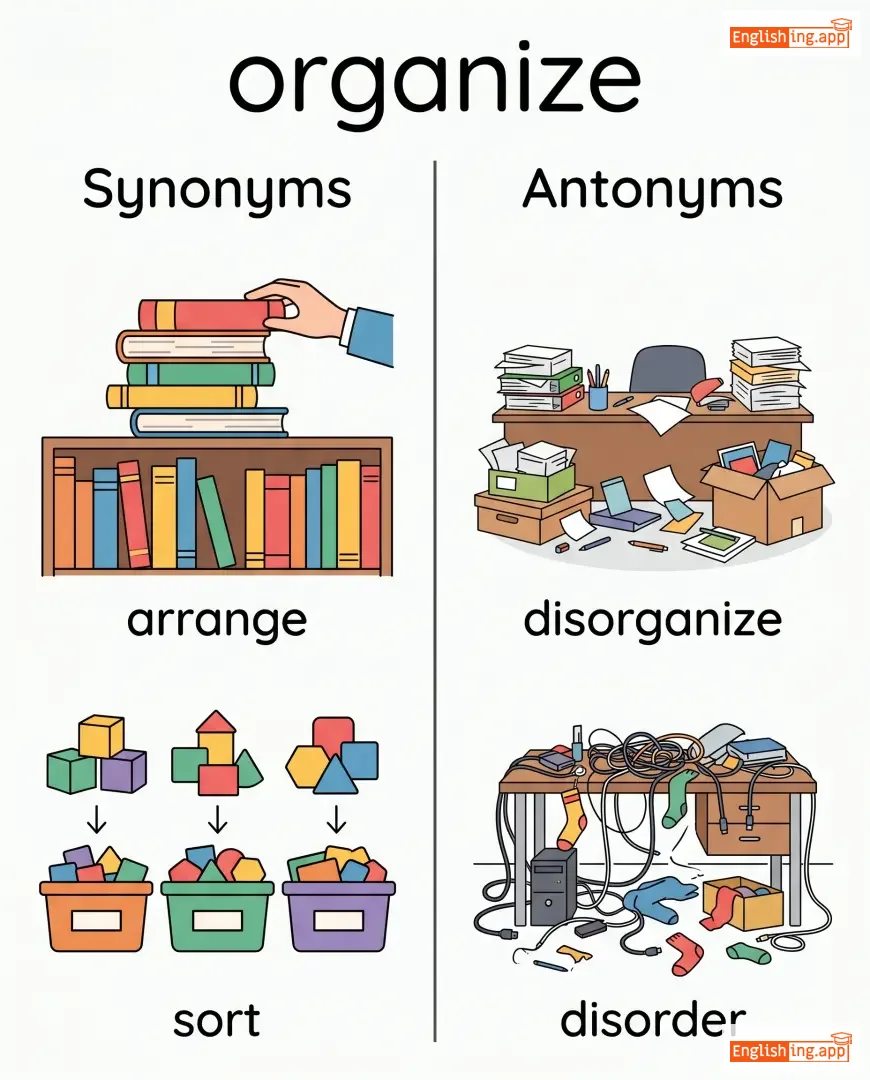
arrange, sort, systematize, coordinate
••••••
|
disorganize, disorder, scatter
••••••
|
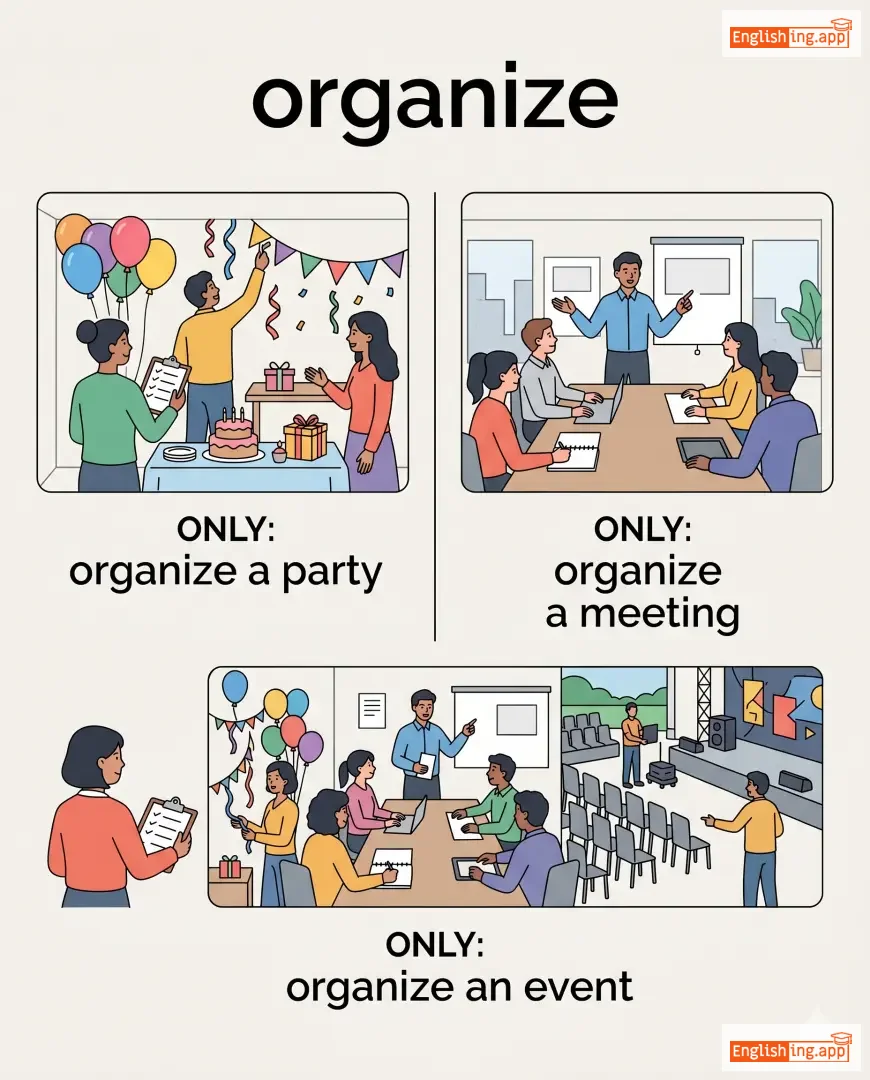
organize a party, organize a meeting, organize an event
••••••
|
Организуй всё, и все соберутся!
••••••
|
|
#11565
🏢
|
/ˌɔːɡənaɪˈzeɪʃn/
noun
(ɔːɡənaɪˈzeɪʃn)
••••••
|
|
организация
organizatsiya
••••••
|
- •••••• | - •••••• | - •••••• | - •••••• |
a group of people who work together to achieve a common purpose
••••••
|
She works for a non-profit organization. |
Она работает в некоммерческой организации.
Ona rabotayet v nekomecheskoy organizatsii.
••••••
|
- •••••• | - •••••• | - •••••• |
association, institution, group, establishment
••••••
|
disorganization, chaos
••••••
|
join an organization, non-profit organization, corporate organization
••••••
|
Организация - это когда все работают вместе!
••••••
|
|
#11566
📦
|
/ˈɔːdə(r)/
noun
(о́рдер)
••••••
|
|
заказ
zakaz
••••••
|
- •••••• | - •••••• | - •••••• | - •••••• |
an arrangement or command; a request for something to be made, done, or delivered
••••••
|
He placed an order for a new laptop. |
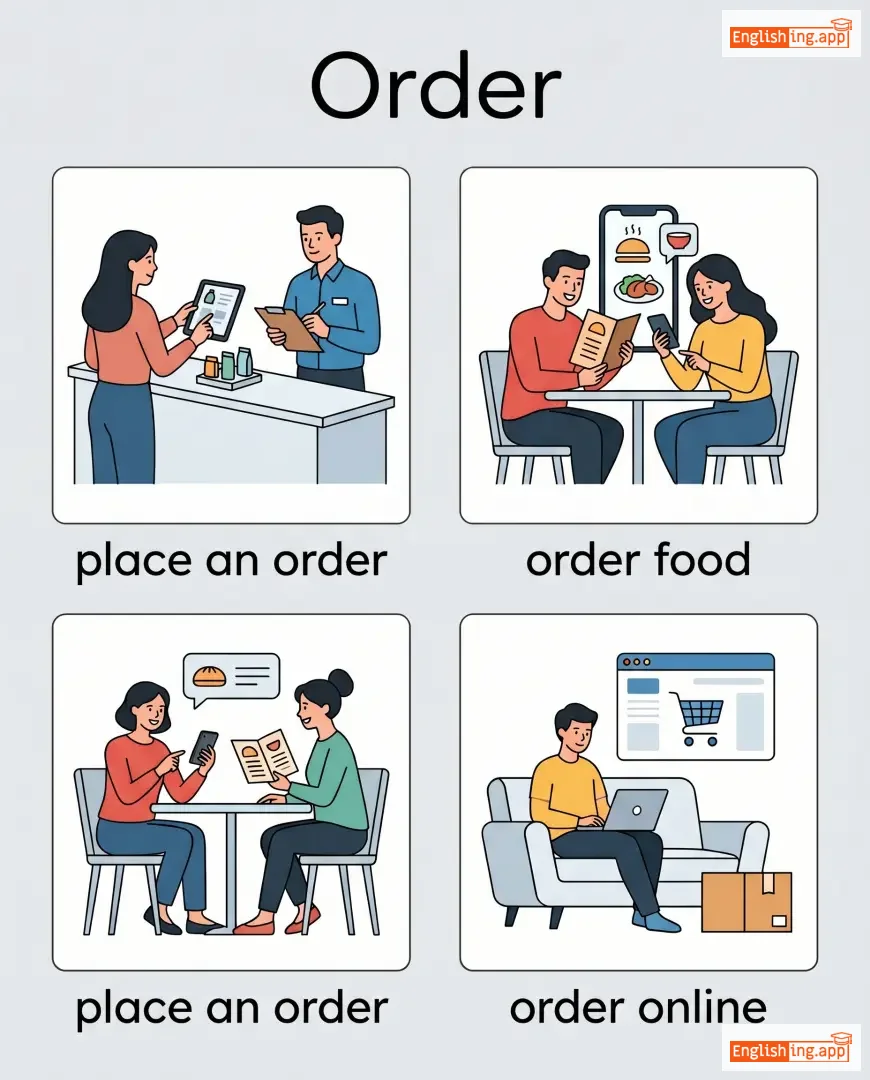
Он разместил заказ на новый ноутбук.
On razmestil zakaz na novyy noutbuk.
••••••
|
- •••••• | - •••••• | - •••••• |
arrangement, command, request, instruction
••••••
|
disorder, chaos
••••••
|
order food, order products, place an order
••••••
|
Закажи и получишь, как только можно.
••••••
|
|
#11567
🍊
|
/ˈɒrɪndʒ/
noun
(апельсин)
••••••
|
- •••••• |
апельсин
apelsin
••••••
|
- •••••• | - •••••• | - •••••• | - •••••• |
a fruit that is typically round and orange in color
••••••
|
She ate an orange for breakfast. |
Она съела апельсин на завтрак.
Ona syela apelsin na zavtrak.
••••••
|
- •••••• | - •••••• | - •••••• |
fruit, citrus, tangerine
••••••
|
apple, pear
••••••
|
eat an orange, orange juice, orange peel
••••••
|
Апельсин (orange) на русском, и цвет такой же!
••••••
|
|
#11568
❓
|
/ɔːr/
conjunction
(ор)
••••••
|
- •••••• |
или
ili
••••••
|
- •••••• | - •••••• | - •••••• | - •••••• |
used to link alternatives
••••••
|
You can have tea or coffee.
Вы можете пить чай или кофе.
••••••
|
Вы можете пить чай или кофе.
Vy mozhete pit' chai ili kofe.
••••••
|
- •••••• | - •••••• | - •••••• |
either, alternatively
••••••
|
neither
••••••
|
tea or coffee, this or that, yes or no
••••••
|
или (or) означает выбор между двумя вариантами, как чай или кофе.
••••••
|
|
#11569
✊
|
/ˌɒpəˈzɪʃən/
noun
(оппозиция)
••••••
|
- •••••• |
оппозиция
oppozitsiya
••••••
|
- •••••• | - •••••• | - •••••• | - •••••• |
the action of opposing or resisting something
••••••
|
The opposition to the new law was strong. |
Оппозиция новому закону была сильной.
Oppozitsiya novomu zakonu byla sil'noy.
••••••
|
- •••••• | - •••••• | - •••••• |
resistance, defiance, objection, protest
••••••
|
support, cooperation
••••••
|
political opposition, strong opposition, fierce opposition, lead the opposition
••••••
|
Запомните ‘оппозиция’ как противостояние.
••••••
|
|
#11570
✋
|
/əˈpəʊz/
verb
(опоз)
••••••
|
|
противостоять
protivostoyat
••••••
|
opposed
опозд
••••••
|
opposed
опозд
••••••
|
opposes
опозес
••••••
|
opposing
опозинг
••••••
|
to disagree with or fight against something
••••••
|
He opposed the new policy at the meeting.
Он выступил против новой политики на собрании.
••••••
|
Он выступил против новой политики на собрании.
On vystupil protiv novoy politiki na sobraniji.
••••••
|
- •••••• | - •••••• | - •••••• |
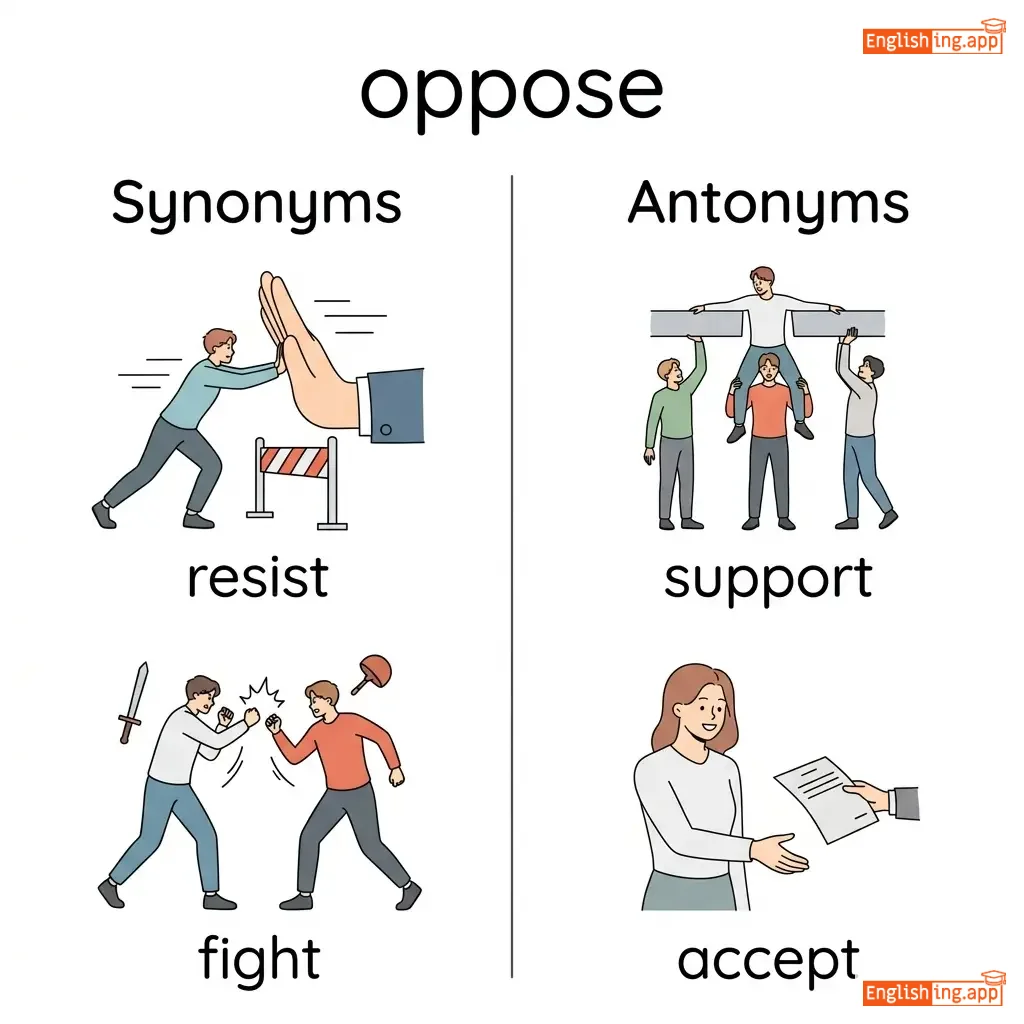
resist, fight, defy, challenge
••••••
|
support, accept, agree
••••••
|
strongly oppose, oppose decision, oppose view, oppose proposal
••••••
|
Противостоять значит бороться с чем-то или не соглашаться.
••••••
|
|
#11571
⚙️
|
/ˌɒpəˈreɪʃən/
noun
(операция)
••••••
|
- •••••• |
операция
operatsiya
••••••
|
- •••••• | - •••••• | - •••••• | - •••••• |
an act or process of functioning or operating
••••••
|
The hospital performed a successful operation.
Больница провела успешную операцию.
••••••
|
Больница провела успешную операцию.
Bol'nitsa provela uspeshnuyu operatsiyu.
••••••
|
- •••••• | - •••••• | - •••••• |
procedure, surgery, process, action
••••••
|
inactivity, stagnation
••••••
|
military operation, surgical operation, operation room, operation procedure
••••••
|
Операция требует оператора (operator) для выполнения.
••••••
|
|
#11572
⚙️
|
/ˈɒpəreɪtɪŋ/
verb
(оперирующий)
••••••
|
- •••••• |
оперирующий
opiruyushchiy
••••••
|
operated
оперировал
••••••
|
operated
оперировал
••••••
|
operates
оперирует
••••••
|
operating
оперирующий
••••••
|
to control or manage the functioning of something
••••••
|
The company has been operating in this market for five years.
Компания работает на этом рынке уже пять лет.
••••••
|
Компания работает на этом рынке уже пять лет.
Kompaniya rabotayet na etom rynke uzhe pyat' let.
••••••
|
- •••••• | - •••••• | - •••••• |
managing, controlling, running, working
••••••
|
stopping, halting
••••••
|
operating system, operating room, operating procedure
••••••
|
Оперировать как врач - operating like a doctor!
••••••
|
|
#11573
🔓
|
/ˈoʊpənɪŋ/
noun
(оупенинг)
••••••
|
- •••••• |
открытие
otkrytie
••••••
|
- •••••• | - •••••• | - •••••• | - •••••• |
an act or instance of beginning something
••••••
|
The opening of the new store was a huge success.
Открытие нового магазина стало большим успехом.
••••••
|
Открытие нового магазина стало большим успехом.
Otkrytie novogo magazina stalo bol'shim uspekhom.
••••••
|
- •••••• | - •••••• | - •••••• |
start, beginning, initiation, launch
••••••
|
closing, ending
••••••
|
grand opening, store opening, job opening, opening ceremony
••••••
|
Когда что-то новое начинается, это открытие. - When something new begins, it’s an opening.
••••••
|
|
#11574
🔜
|
/ˈɒntu/
preposition
(онто)
••••••
|
- •••••• |
на
na
••••••
|
- •••••• | - •••••• | - •••••• | - •••••• |
moving to a position on the surface of something
••••••
|
She jumped onto the table to get the book. |
Она прыгнула на стол, чтобы взять книгу.
Ona prignula na stol, chtoby vzyat' knigu.
••••••
|
- •••••• | - •••••• | - •••••• |
upon, on top of, over
••••••
|
off, away from
••••••
|
onto the surface, onto the floor, onto the roof
••••••
|
Положите что-то на стол! - Place something onto the table!
••••••
|
Vocabulary Quiz
Test your vocabulary by matching words with their translations or meanings.
Login to take the quiz
Comments (0)
Share your thoughts and join the discussion.
Join the discussion by logging in
Login to CommentNo comments yet
Be the first to share your thoughts!