

Обновитесь для доступа ко всему словарю
Получите неограниченный доступ ко всем словам с подпиской Pro
Обновить до ProПеревод
Прошедшее
Причастие прошедшего времени
Третье лицо единственного числа
Герундий
Значение
Пример предложения
Перевод примера предложения
Синонимы
Антонимы
Коллокации
Мнемоника
Swipe left or right, or use the buttons. Tap image to zoom.
Обновитесь для доступа ко всем предложениям
Получите неограниченный доступ ко всем предложениям с подпиской Pro
Обновить до ProПеревод примера предложения
Слово
Lesson 78Lesson 78 - Переключатель маски
|
Эмодзи
|
Слово | Images | Перевод | Прошедшее | Причастие прошедшего времени | Третье лицо единственного числа | Герундий | Значение | Пример предложения | Перевод примера предложения | Пример выражения | Значение примера выражения | Перевод примера выражения | Синонимы | Антонимы | Коллокации | Мнемоника |
|---|---|---|---|---|---|---|---|---|---|---|---|---|---|---|---|---|---|
|
#2311
😏
|
/dɪˈrɪʒən/
noun
(дерижион)
••••••
|
- •••••• |
презрение
prezrenie
••••••
|
- •••••• | - •••••• | - •••••• | - •••••• |
Contemptuous ridicule or mockery.
••••••
|
His ideas were greeted with derision by the audience. |
Его идеи были встречены презрением аудиторией.
Yego idei byli vstrechены prezreniem auditoriey.
••••••
|
hold up to derision |
to mock or ridicule someone publicly
••••••
|
высмеивать
vysmeivat'
••••••
|
mockery, ridicule, scorn, disdain, sneering
••••••
|
praise, admiration, respect
••••••
|
subject of derision, with derision, treat with derision
••••••
|
Derision означает презрение – представьте, что кто-то говорит 'Дери Сон' и все смеются.
••••••
|
|
#2312
↘️
|
/dɪˈsɛndənt/
adjective
(десендент)
••••••
|
- •••••• |
нисходящий
niskhodyashchiy
••••••
|
- •••••• | - •••••• | - •••••• | - •••••• |
Moving downward; going down or descending.
••••••
|
The river followed a descendent course toward the valley. |
Река следовала по нисходящему руслу в сторону долины.
Reka sledovala po niskhodyashchemu ruslu v storonu doliny.
••••••
|
- •••••• | - •••••• | - •••••• |
descending, downward, sloping, declining
••••••
|
ascending, rising
••••••
|
descendent path, descendent movement, descendent course
••••••
|
Нисходящий — это движение вниз ↘️ как скат
••••••
|
|
#2313
👶
|
/dɪˈsɛndənt/
noun
(дисендэнт)
••••••
|
- •••••• |
потомок
potomok
••••••
|
- •••••• | - •••••• | - •••••• | - •••••• |
A person who is descended from a particular ancestor.
••••••
|
She is a descendant of a famous poet. |
Она потомок известного поэта.
Ona potomok izvestnogo poetа.
••••••
|
- •••••• | - •••••• | - •••••• |
offspring, heir, successor, progeny
••••••
|
ancestor, forefather
••••••
|
direct descendant, descendant of, royal descendant
••••••
|
Descendant - это тот, кто спускается (descend) - значит потомок
••••••
|
|
#2314
⬇️
|
/dɪˈsɛnd/
verb
(дисенд)
••••••
|
- •••••• |
спускаться
spuskatsya
••••••
|
descended
дисендид
••••••
|
descended
дисендид
••••••
|
descends
дисендз
••••••
|
descending
дисендинг
••••••
|
To move or fall downward; to come or go down from a higher place.
••••••
|
The hikers descended the steep mountain path.
зе хайкерз дисендид зе стиип маунтин пас.
••••••
|
Пешие туристы спустились по крутой горной тропе.
Peshie turisty spustilis po krutoj gornoi trope
••••••
|
descend into chaos
дисенд инто кейос
••••••
|
To fall into disorder or confusion
••••••
|
погрузиться в хаос
pogruzitsya v haos
••••••
|
drop, fall, decline, lower, sink
••••••
|
ascend, rise, climb
••••••
|
descend slowly, descend rapidly, descend into
••••••
|
ДИСЕНД: DI = down, СЕНД = send down; вообрази спуск по склону и отправляй себя вниз
••••••
|
|
#2315
🎶
|
/ˈdɛskænt/
noun
(дэскэнт)
••••••
|
- •••••• |
дополнительная мелодия
dopolnitel'naya melodiya
••••••
|
- •••••• | - •••••• | - •••••• | - •••••• |
An additional melody or counterpoint sung or played above the main melody.
••••••
|
The choir added a beautiful descant to the hymn.
ðə kʰwajər ædəd ə bjuˈtɪfəl дэскэнт ту ðə хɪм.
••••••
|
Хор добавил красивую дополнительную мелодию к гимну.
Khor dobavil krasivuyu dopolnitel'nuyu melodiya k himnu.
••••••
|
- •••••• | - •••••• | - •••••• |
counterpoint, harmony, accompaniment, overtone
••••••
|
silence, monotone
••••••
|
sing descant, descant voice, descant part
••••••
|
Descant = как дополнительная мелодия, витающая над основной.
••••••
|
|
#2316
🏗️
|
/ˈdɛrɪk/
noun
(деррик)
••••••
|
- •••••• |
буровая вышка
burovaya vyshka
••••••
|
- •••••• | - •••••• | - •••••• | - •••••• |
A framework or tower used for supporting a crane, especially for oil drilling or lifting heavy loads.
••••••
|
The workers assembled a derrick at the oil drilling site. |
Рабочие собрали буровую вышку на нефтяной буровой площадке.
Rabotchiye sobrali burovuyu vyshku na neftyanoi burovoy ploshchadke.
••••••
|
- •••••• | - •••••• | - •••••• |
tower, crane, hoist, rig, scaffold
••••••
|
ground, base
••••••
|
oil derrick, drilling derrick, derrick crane
••••••
|
Derrick означает буровую вышку 🏗️
••••••
|
|
#2317
🚫
|
/dɪˈrɒɡətɔːri/
adjective
(дерогаторий)
••••••
|
- •••••• |
уничижительный
unichizhitelny
••••••
|
- •••••• | - •••••• | - •••••• | - •••••• |
Showing a critical or disrespectful attitude.
••••••
|
The article contained derogatory comments about the politician. |
Статья содержала уничижительные комментарии о политике.
Stat'ya soderzhala unichizhitel'nyye kommentarii o politike.
••••••
|
- •••••• | - •••••• | - •••••• |
offensive, insulting, belittling, demeaning
••••••
|
respectful, flattering
••••••
|
derogatory comment, derogatory remark, derogatory statement
••••••
|
Derogatory = 'уничижить' (унижать) + 'story' → уничижительный.
••••••
|
|
#2318
👎
|
/dɪˈrɒɡətɪv/
adjective
(дерогатив)
••••••
|
- •••••• |
уничижительный
unichizhitielnyy
••••••
|
- •••••• | - •••••• | - •••••• | - •••••• |
Expressing a low opinion or showing lack of respect.
••••••
|
He made a derogative remark about her work. |
Он сделал уничижительное замечание о её работе.
On sdelal unichizhitiel'noye zamechaniye o yey rabotie.
••••••
|
- •••••• | - •••••• | - •••••• |
disparaging, insulting, belittling, disrespectful
••••••
|
respectful, complimentary
••••••
|
derogative remark, derogative term, derogative comment
••••••
|
Derogative - уничижительный, как унижать, уменьшать уважение.
••••••
|
|
#2319
🧴
|
/ˌdɜːrməˈtɑːlədʒi/
noun
(дерматология)
••••••
|
- •••••• |
дерматология
dermatologiya
••••••
|
- •••••• | - •••••• | - •••••• | - •••••• |
The branch of medicine concerned with the skin and its diseases.
••••••
|
He studied dermatology at medical school.
Он изучал дерматологию в медицинском университете.
••••••
|
Он изучал дерматологию в медицинском университете.
On izuchal dermatologiyu v meditsinskom universitete.
••••••
|
- •••••• | - •••••• | - •••••• |
skin science, skin medicine, cutaneous medicine
••••••
|
none
••••••
|
study dermatology, dermatology clinic, dermatology department
••••••
|
Дерматология = дерма (кожа) + логия (наука) → Наука о коже.
••••••
|
|
#2320
🩺
|
/ˌdɜːrməˈtɑːlədʒɪst/
noun
(дерматолог)
••••••
|
- •••••• |
дерматолог
dermatolog
••••••
|
- •••••• | - •••••• | - •••••• | - •••••• |
A doctor who specializes in the treatment of skin diseases.
••••••
|
She consulted a dermatologist for her skin allergy.
Она проконсультировалась с дерматологом по поводу своей аллергии на кожу.
••••••
|
Она проконсультировалась с дерматологом по поводу своей аллергии на кожу.
Ona prokonsul'tirovalas' s dermatologom po povodu svoej allergii na kozhu.
••••••
|
- •••••• | - •••••• | - •••••• |
skin doctor, skin specialist, physician, dermatologist
••••••
|
general practitioner
••••••
|
consult a dermatologist, dermatologist appointment, dermatologist clinic
••••••
|
Дерматолог = дерма (кожа) + логия (наука) → врач, который лечит болезни кожи.
••••••
|
|
#2321
🔗
|
/dɪˈraɪvd/
adjective
(deráivd)
••••••
|
- •••••• |
происходящий
proiskhodyashchiy
••••••
|
- •••••• | - •••••• | - •••••• | - •••••• |
Developed or obtained from something else; not original.
••••••
|
The word is derived from Latin.
Слово происходит от латинского.
••••••
|
Это слово происходит от латинского.
Eto slovo proiskhodit ot latinskogo.
••••••
|
- •••••• | - •••••• | - •••••• |
originated, obtained, extracted, obtained from
••••••
|
original, independent
••••••
|
derived from, derived benefit, derived form
••••••
|
Derived: происходящий, как что-то, что пришло из другого источника, не оригинальное.
••••••
|
|
#2322
📜
|
/dɪˈraɪv/
verb
(дерейв)
••••••
|
- •••••• |
получать
poluchat
••••••
|
derived
дерейвд
••••••
|
derived
дерейвд
••••••
|
derives
дерейвс
••••••
|
deriving
дерейвинг
••••••
|
To obtain something from a source.
••••••
|
Many English words derive from Latin.
мэни инглиш вордс дерейв фром латын.
••••••
|
многие английские слова происходят от латинского.
mnogie angliiskie slova proiskhodyat ot latinskogo.
••••••
|
derive benefit
дерейв бенефит
••••••
|
to gain an advantage from something
••••••
|
получить выгоду
poluchit vygodu
••••••
|
obtain, acquire, originate, extract, gain
••••••
|
lose, give, surrender
••••••
|
derive from, derive meaning, derive benefit
••••••
|
Derive значит получить что-то из источника — вспомни 'получить'!
••••••
|
|
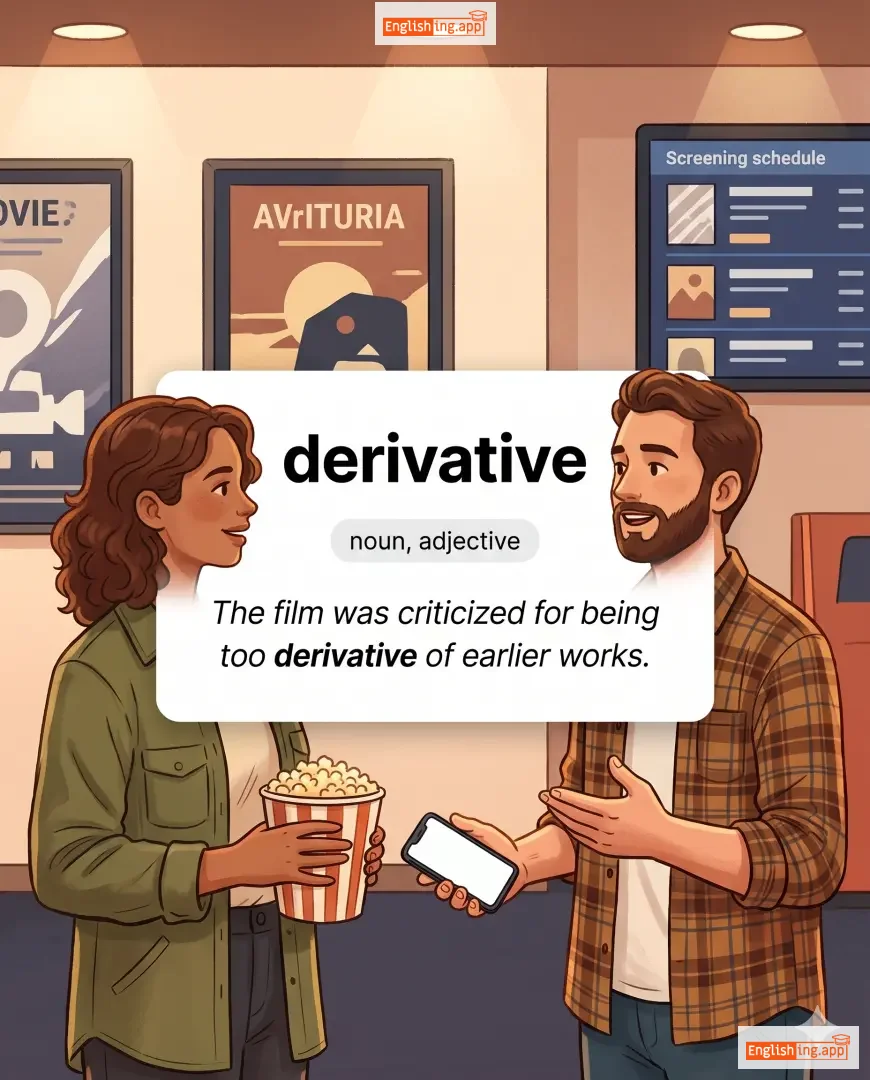
#2323
🔄
|
/dɪˈrɪvətɪv/
noun, adjective
(дериватив)
••••••
|
|
дериватив
derivativ
••••••
|
- •••••• | - •••••• | - •••••• | - •••••• |
Something that is based on another source; in math, a measure of how a function changes.
••••••
|
The film was criticized for being too derivative of earlier works.
Фильм был раскритикован за слишком большое сходство с предыдущими работами.
••••••
|
Фильм был раскритикован за слишком большое сходство с предыдущими работами.
Film byl raskritikovann za slishkom bol'shoe skhodstvo s predydushchimi rabotami.
••••••
|
- •••••• | - •••••• | - •••••• |
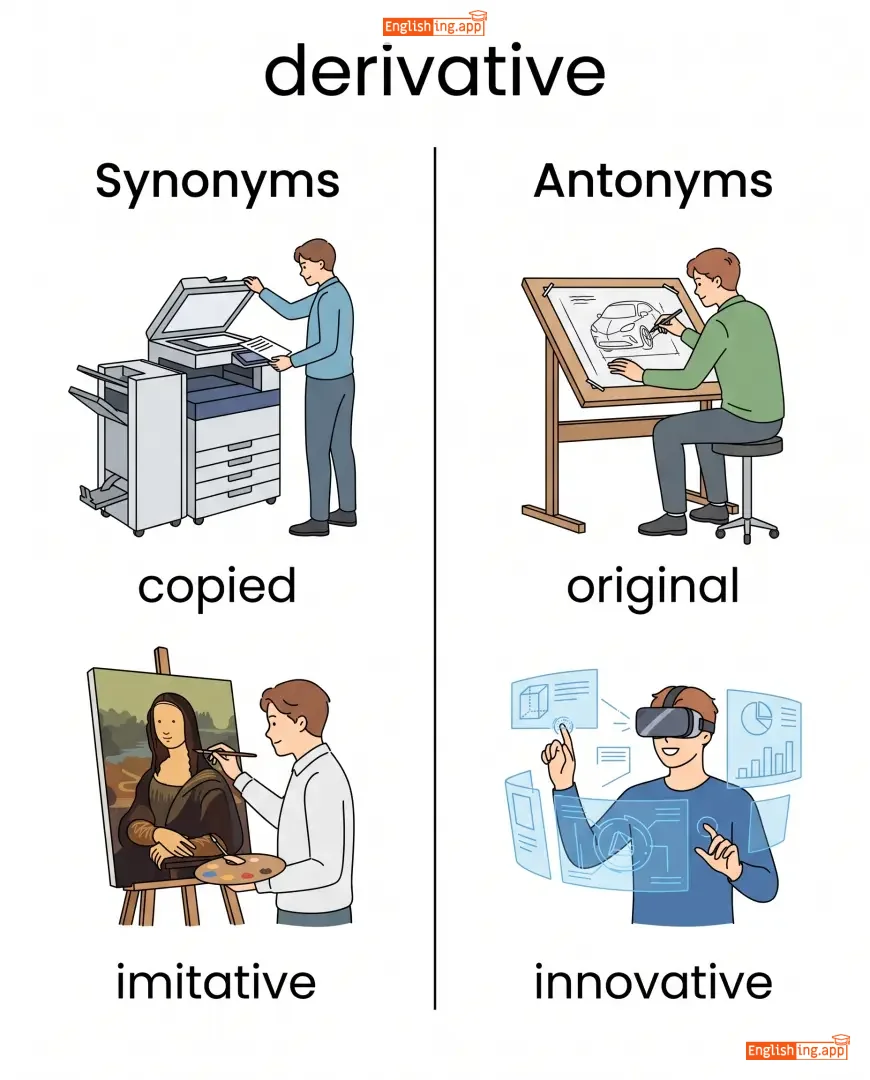
copied, imitative, secondary, unoriginal
••••••
|
original, innovative, creative
••••••
|
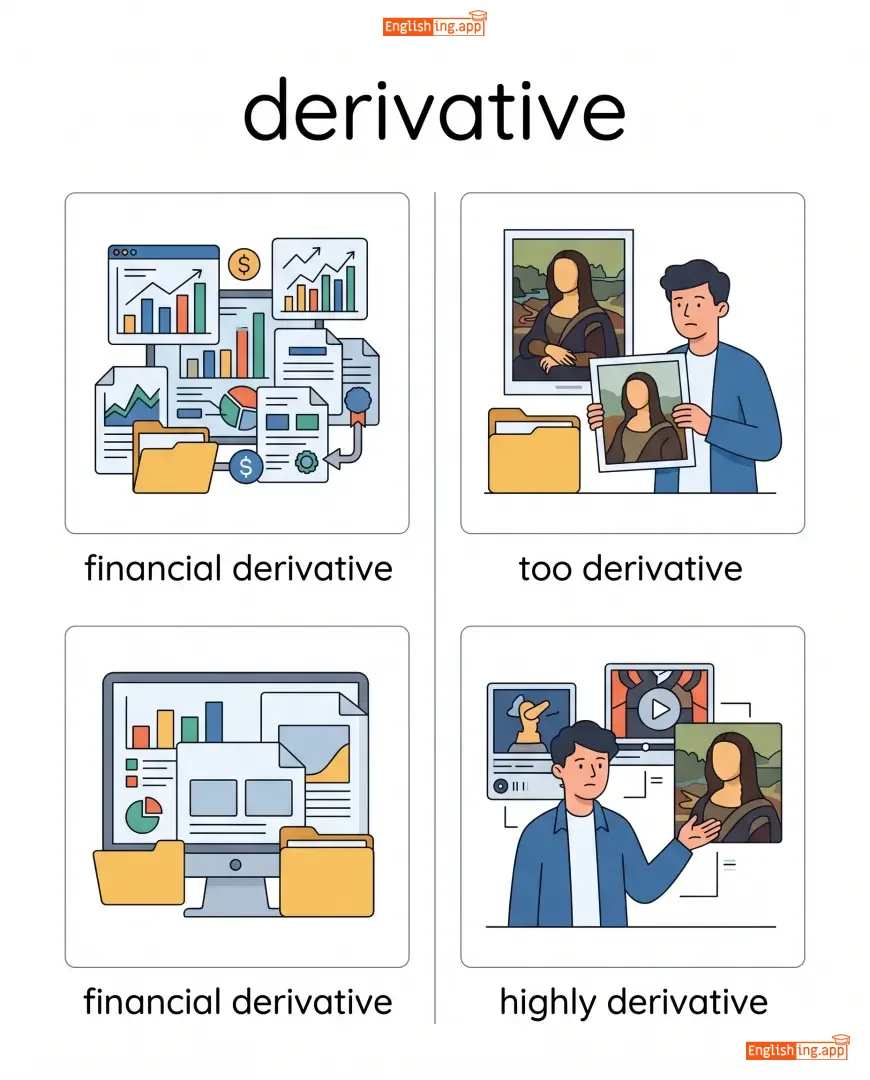
financial derivative, too derivative, highly derivative
••••••
|
Дериватив – это что-то взятое из другого источника – 'дери' от другого, 'ватив' от копии.
••••••
|
|
#2324
📖
|
/ˌdɛrɪˈveɪʃən/
noun
(derivéjʐən)
••••••
|
- •••••• |
происхождение
proiskhozhdeniye
••••••
|
- •••••• | - •••••• | - •••••• | - •••••• |
The origin or development of something from a source.
••••••
|
The derivation of the word comes from Latin.
Происхождение слова происходит от латинского.
••••••
|
Происхождение слова происходит от латинского.
Proiskhozhdeniye slova proiskhodit ot latinskogo.
••••••
|
- •••••• | - •••••• | - •••••• |
origin, source, root, formation, extraction
••••••
|
end, result, conclusion
••••••
|
word derivation, derivation of formula, derivation from
••••••
|
Происхождение — это найти источник чего-то, как и деривация от слова.
••••••
|
|
#2325
😒
|
/dɪˈraɪsɪv/
adjective
(дэˈрɪсɪв)
••••••
|
- •••••• |
презрительный
prezritel'nyy
••••••
|
- •••••• | - •••••• | - •••••• | - •••••• |
Expressing contempt or ridicule.
••••••
|
She gave a derisive laugh at his attempt to sing. |
Она издевательски засмеялась над его попыткой петь.
Ona izdevatelski zasmeyalas' nad yego popytkoy pet'.
••••••
|
- •••••• | - •••••• | - •••••• |
mocking, scornful, sneering, disdainful, sarcastic
••••••
|
respectful, admiring, supportive
••••••
|
derisive laugh, derisive comment, derisive tone
••••••
|
Derisive – презрительный, подумай о презрении как о раздражении!
••••••
|
|
#2326
📉
|
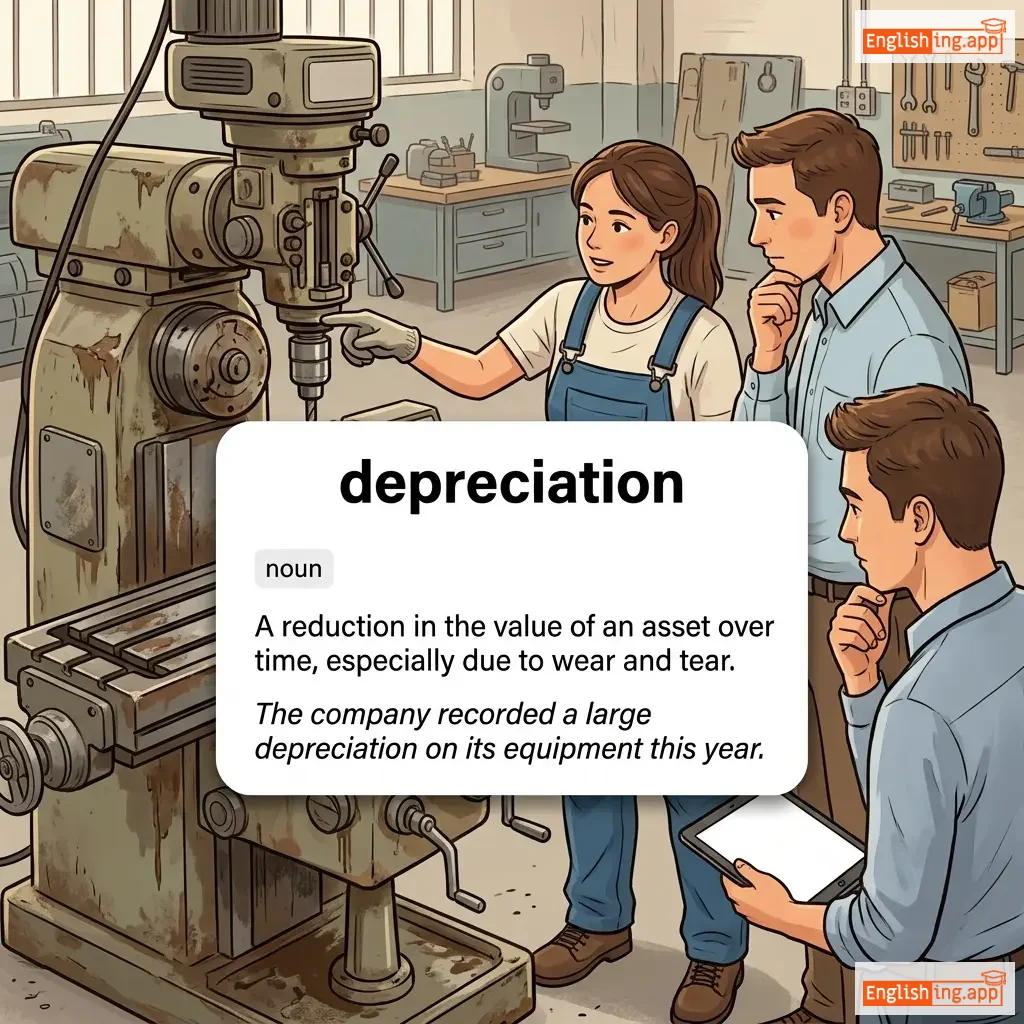
/dɪˌpriːʃiˈeɪʃən/
noun
(дипресиэйшн)
••••••
|
|
амортизация
amortizatsiya
••••••
|
- •••••• | - •••••• | - •••••• | - •••••• |
A reduction in the value of an asset over time, especially due to wear and tear.
••••••
|
The company recorded a large depreciation on its equipment this year. |
Компания учла большую амортизацию на своем оборудовании в этом году.
Kompaniya uchla bol'shuyu amortizatsiyu na svoem oborudovanii v etom godu.
••••••
|
- •••••• | - •••••• | - •••••• |
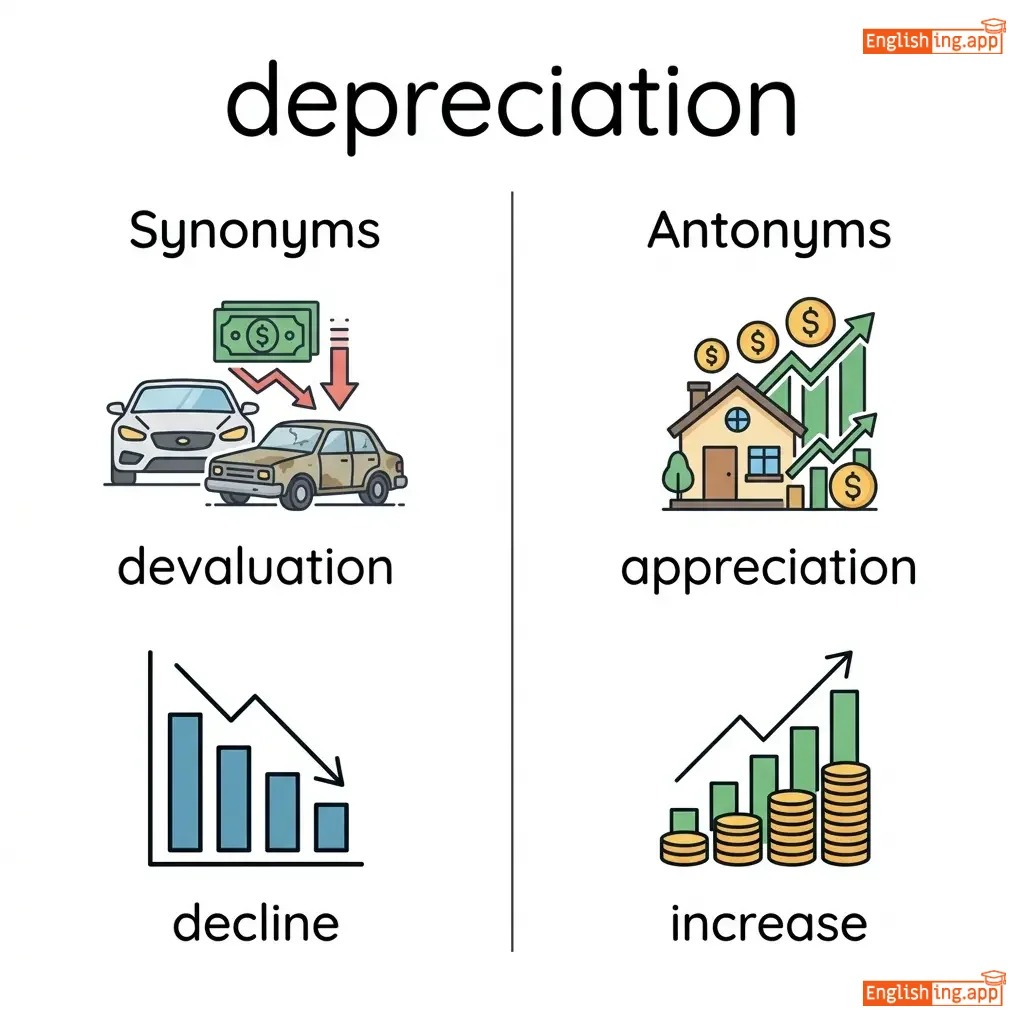
devaluation, decline, reduction, amortization, drop
••••••
|
appreciation, increase, rise
••••••
|
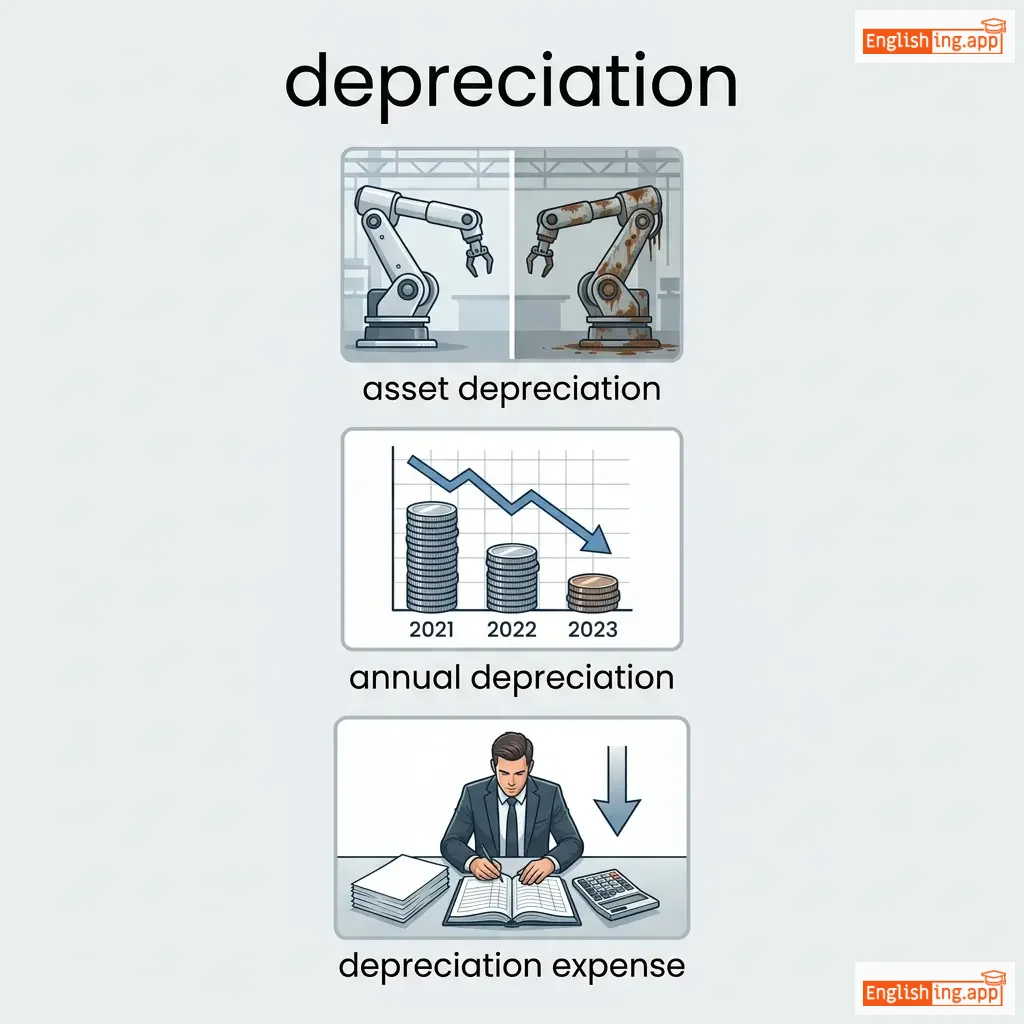
asset depreciation, annual depreciation, depreciation expense, depreciation rate
••••••
|
Амортизация - это как снижение стоимости автомобиля с течением времени.
••••••
|
|
#2327
🤣
|
/dɪˈrɪzəbl/
adjective
(деризибл)
••••••
|
- •••••• |
достойный насмешки
dostoynyy nasmeshki
••••••
|
- •••••• | - •••••• | - •••••• | - •••••• |
deserving ridicule or mockery
••••••
|
His excuse was so weak that it was plainly derisible. |
Его оправдание было настолько слабым, что оно явно достойно насмешки.
Ego opravdanie bylo nastol'ko slabym, chto ono yavno dostoyno nasmeshki.
••••••
|
- •••••• | - •••••• | - •••••• |
laughable, absurd, ridiculous, contemptible
••••••
|
respectable, credible, reasonable
••••••
|
derisible claim, derisible excuse, almost derisible
••••••
|
Derisible — de-risible, что означает достойный насмешки.
••••••
|
|
#2328
😂
|
/dɪˈraɪd/
verb
(dɪˈraɪd)
••••••
|
|
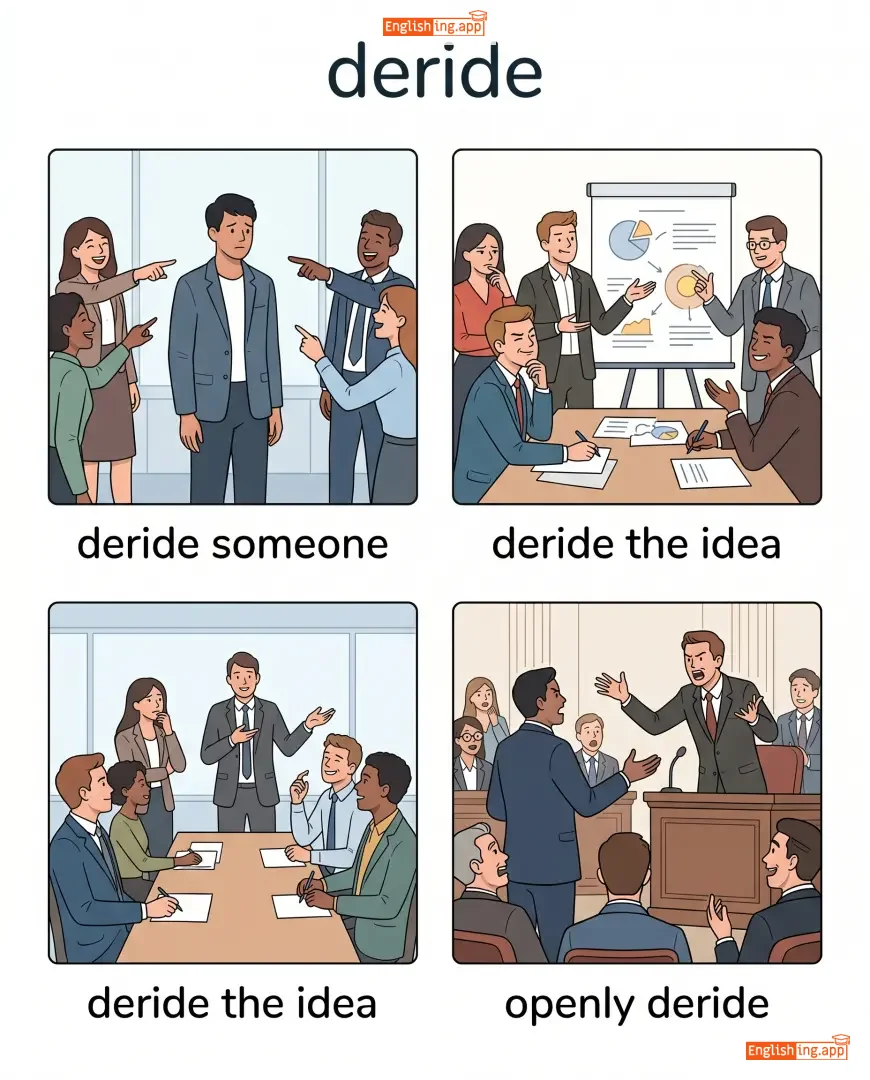
насмехаться
nasmehat'sya
••••••
|
derided
dɪˈraɪdɪd
••••••
|
derided
dɪˈraɪdɪd
••••••
|
derides
dɪˈraɪdz
••••••
|
deriding
dɪˈraɪdɪŋ
••••••
|
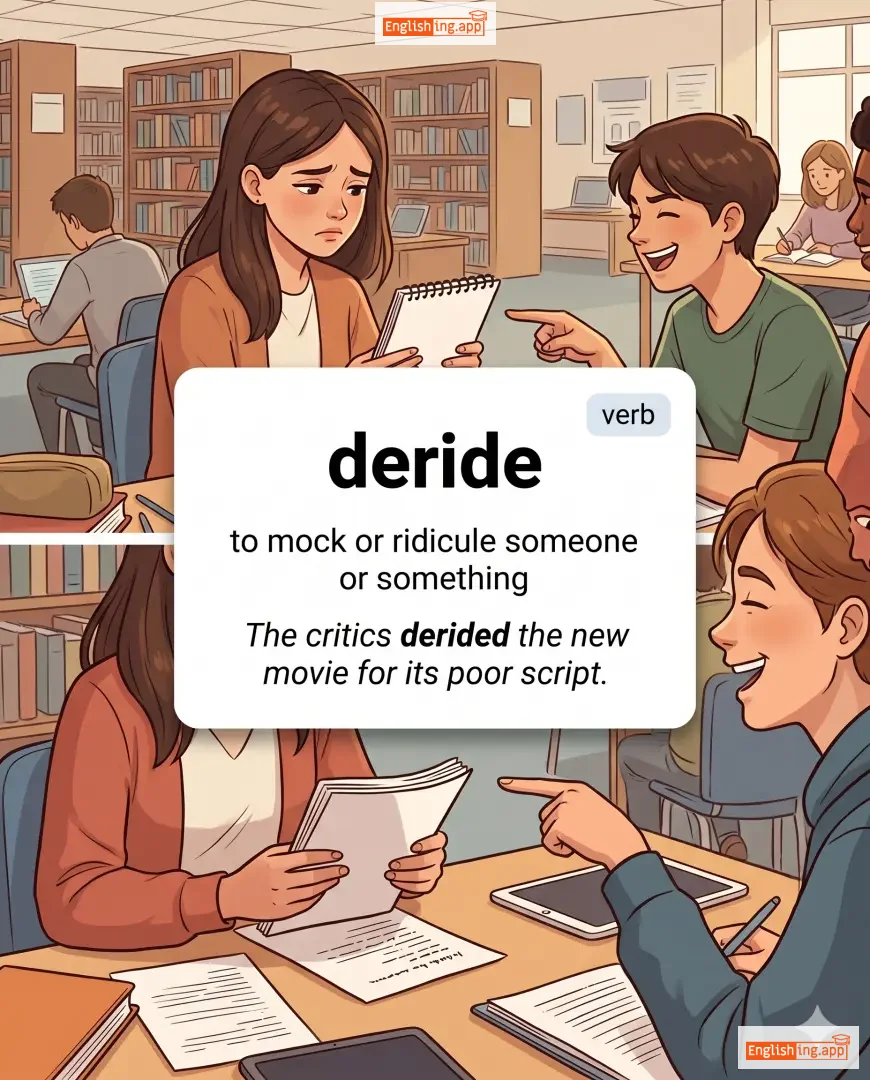
to mock or ridicule someone or something
••••••
|
The critics derided the new movie for its poor script.
критики дɪˈraɪдед новый фильм за его плохой сценарий.
••••••
|
Критики насмехались над новым фильмом за его плохой сценарий.
Kritiki nasmekhalis' nad novym filmom za ego plokhoy stsenariy.
••••••
|
- •••••• | - •••••• | - •••••• |
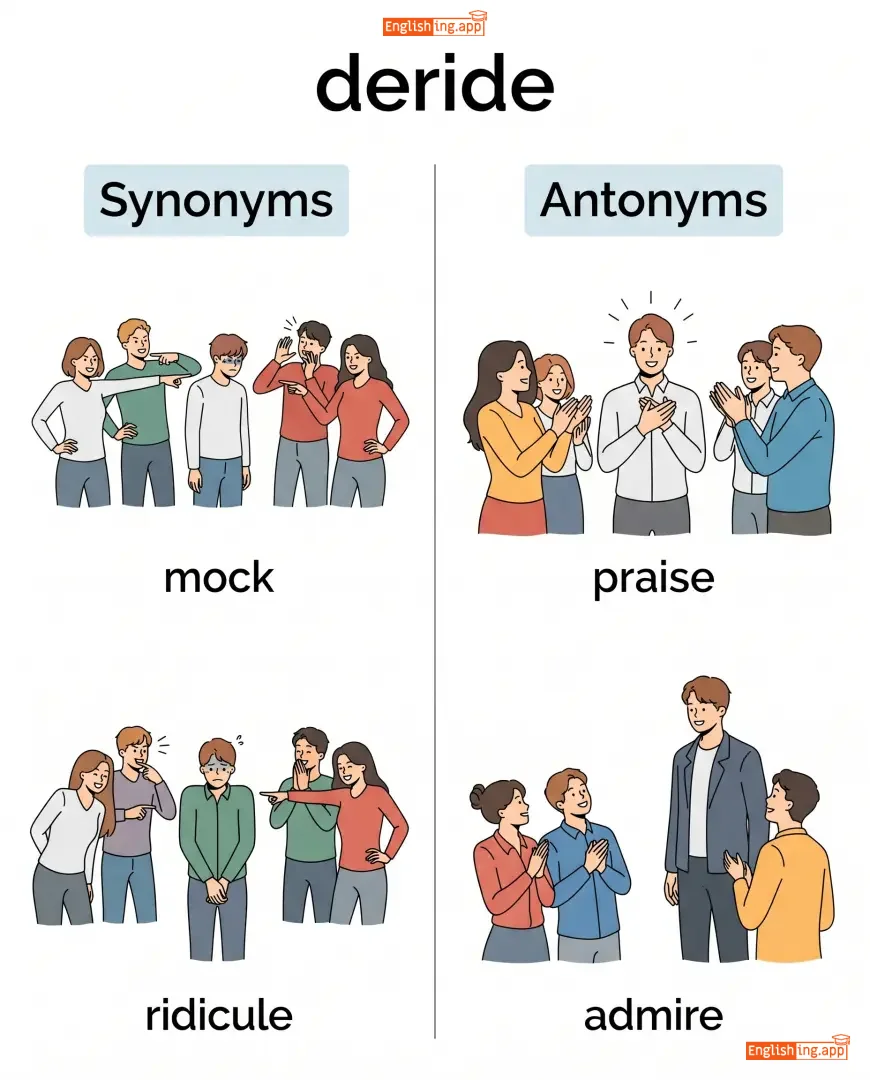
mock, ridicule, scorn, sneer, jeer
••••••
|
praise, admire, respect
••••••
|
deride someone, deride the idea, openly deride
••••••
|
‘Deride’ звучит как ‘насмехаться’ – насмешки или издевательства над кем-то.
••••••
|
|
#2329
⚠️
|
/ˌdɛrɪˈlɪkʃən/
noun
(дереликшн)
••••••
|
- •••••• |
небрежность
nebrezhnost
••••••
|
- •••••• | - •••••• | - •••••• | - •••••• |
the state of being abandoned; neglect of duty
••••••
|
The officer was charged with dereliction of duty.
Офицера обвинили в нарушении долга.
••••••
|
Офицера обвинили в нарушении долга.
Ofitsiera obvinili v narushenii dolga.
••••••
|
dereliction of duty
нарушение долга
••••••
|
failure to perform one's responsibilities
••••••
|
нарушение долга
narushenie dolga
••••••
|
neglect, abandonment, failure, negligence
••••••
|
responsibility, diligence, care
••••••
|
dereliction of duty, complete dereliction, gross dereliction
••••••
|
Dereliction означает небрежность в русском языке — нарушение своих обязанностей.
••••••
|
|
#2330
🏚️
|
/ˈdɛrəlɪkt/
adjective, noun
(дереликт)
••••••
|
- •••••• |
заброшенный
zabroshennyy
••••••
|
- •••••• | - •••••• | - •••••• | - •••••• |
in poor condition due to neglect or disuse; a homeless or neglected person
••••••
|
The old factory stood derelict for decades.
Старая фабрика стояла заброшенной десятилетиями.
••••••
|
Старая фабрика стояла заброшенной десятилетиями.
Staryya fabrikа stoyalа zabroshennoy desyatiletyami.
••••••
|
- •••••• | - •••••• | - •••••• |
abandoned, neglected, ruined, dilapidated
••••••
|
maintained, cared-for, preserved
••••••
|
derelict building, derelict ship, derelict land
••••••
|
Derelict напоминает 'заброшенный', как пустое, оставленное место.
••••••
|
|
#2331
🤯
|
/dɪˈreɪndʒd/
adjective
(диˈрэйнджд)
••••••
|
- •••••• |
психопат
psikhopat
••••••
|
- •••••• | - •••••• | - •••••• | - •••••• |
mentally disturbed or insane; behaving irrationally
••••••
|
The deranged man shouted nonsense in the street. |
Психопат кричал чепуху на улице.
Psikhopat krichal chepukhu na ulitse.
••••••
|
- •••••• | - •••••• | - •••••• |
insane, mad, crazy, unhinged, disturbed
••••••
|
sane, rational, balanced
••••••
|
deranged mind, deranged individual, mentally deranged
••••••
|
Deranged, как психопат, выходящий из себя и кричащий чепуху.
••••••
|
|
#2332
🌱❌
|
/dɪˈræsɪˌneɪt/
verb
(де-ра-си-нейт)
••••••
|
- •••••• |
вырывать с корнем
vyrivat' s kornem
••••••
|
deracinated
де-ра-си-нейтед
••••••
|
deracinated
де-ра-си-нейтед
••••••
|
deracinates
де-ра-си-нейтс
••••••
|
deracinating
де-ра-си-нейтинг
••••••
|
To uproot something completely; to displace people from their native environment or culture.
••••••
|
The conflict deracinated many families from their homeland.
Конфликт вырвал многие семьи из их родных мест.
••••••
|
Конфликт вырвал многие семьи из их родных мест.
Konflikt vyrval mnogie sem'i iz ikh rodnykh mest.
••••••
|
- •••••• | - •••••• | - •••••• |
uproot, eradicate, extirpate, displace, remove
••••••
|
plant, establish, settle
••••••
|
deracinate culture, deracinate traditions, deracinate families, deracinate completely
••••••
|
Deracinate означает de-root = вырвать с корнем.
••••••
|
|
#2333
🤠
|
/ˈdɛpjʊˌtaɪz/
verb
(депьютайз)
••••••
|
- •••••• |
назначить помощником
naznachit pomoshchnikom
••••••
|
deputized
депьютайзд
••••••
|
deputized
депьютайзд
••••••
|
deputizes
депьютайзес
••••••
|
deputizing
депьютайзинг
••••••
|
To appoint someone as a deputy; to act as a substitute or representative.
••••••
|
The sheriff decided to deputize several locals to help maintain order.
Шериф решил назначить несколько местных жителей, чтобы помочь поддерживать порядок.
••••••
|
Шериф решил назначить несколько местных жителей, чтобы помочь поддерживать порядок.
Sherif reshil naznachit neskol'ko mestnykh zhiteley, chtoby pomoch' podderzhivat' poryadok.
••••••
|
- •••••• | - •••••• | - •••••• |
appoint, authorize, commission, designate, empower
••••••
|
dismiss, discharge, remove
••••••
|
deputize someone, deputize officers, deputize locals, deputize quickly
••••••
|
Deputize означает сделать кого-то заместителем - назначить помощником.
••••••
|
|
#2334
🌊
|
/dɛpθ/
noun
(дэпθ)
••••••
|
- •••••• |
глубина
glubina
••••••
|
- •••••• | - •••••• | - •••••• | - •••••• |
The distance from the top to the bottom of something; the intensity or complexity of a subject.
••••••
|
The diver measured the depth of the ocean trench. |
Ныряльщик измерил глубину океанской впадины.
Nyrjalschik izmeril glubinu okeanskoy vpadyiny.
••••••
|
in depth |
In great detail or thoroughly.
••••••
|
в глубину
v glubinu
••••••
|
deepness, intensity, profoundness, extent, complexity
••••••
|
shallowness, surface, height
••••••
|
great depth, depth of knowledge, emotional depth, depth perception
••••••
|
Depth = глубина = идем вглубь.
••••••
|
|
#2335
🥀
|
/ˌdɛprɪˈveɪʃən/
noun
(депривэйшн)
••••••
|
|
лишение
lishenie
••••••
|
- •••••• | - •••••• | - •••••• | - •••••• |
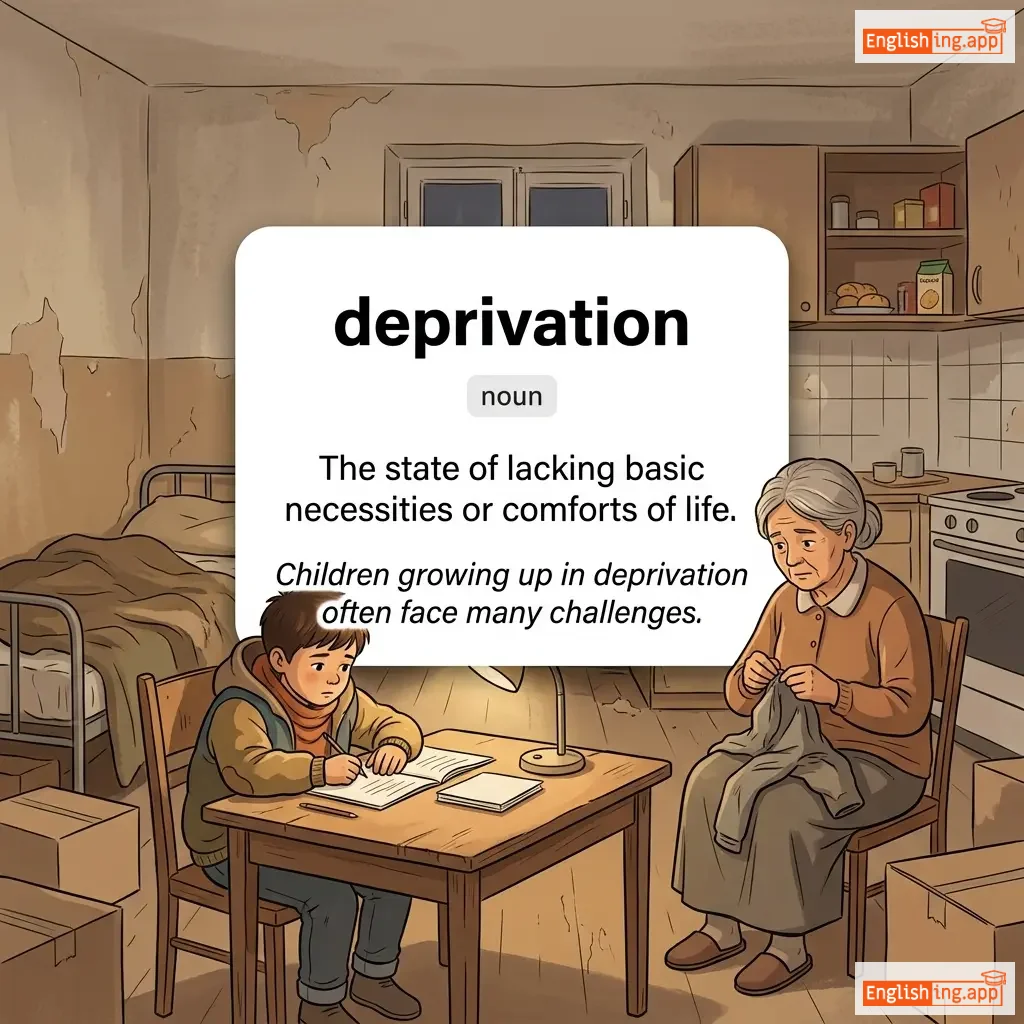
The state of lacking basic necessities or comforts of life.
••••••
|
Children growing up in deprivation often face many challenges. |
Дети, растущие в лишении, часто сталкиваются с множеством трудностей.
Deti, rastushchie v lishenii, chasto stalkivayutsya s mnozhestvom trudnostey.
••••••
|
sleep deprivation |
A state of not getting enough sleep.
••••••
|
недосыпание
nedosypanie
••••••
|
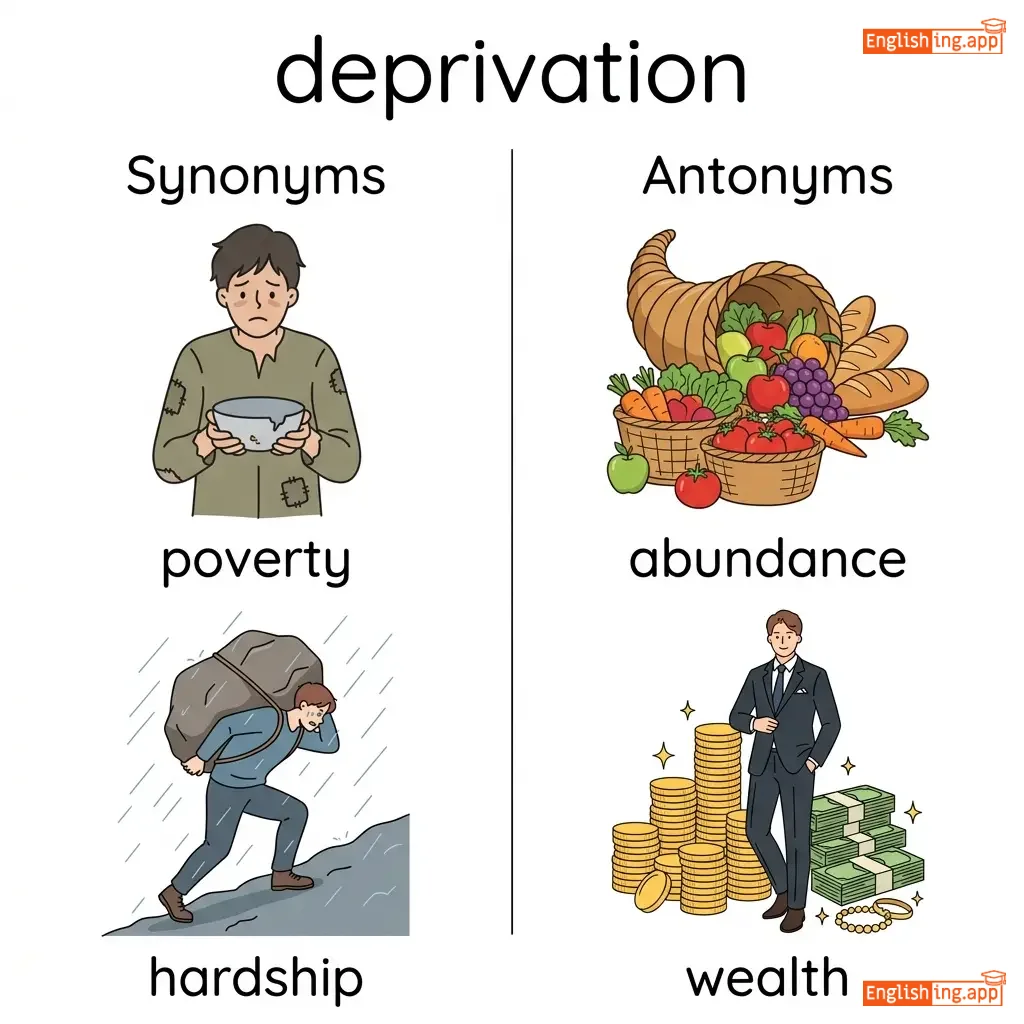
poverty, hardship, lack, deficiency, want
••••••
|
abundance, wealth, plenty
••••••
|
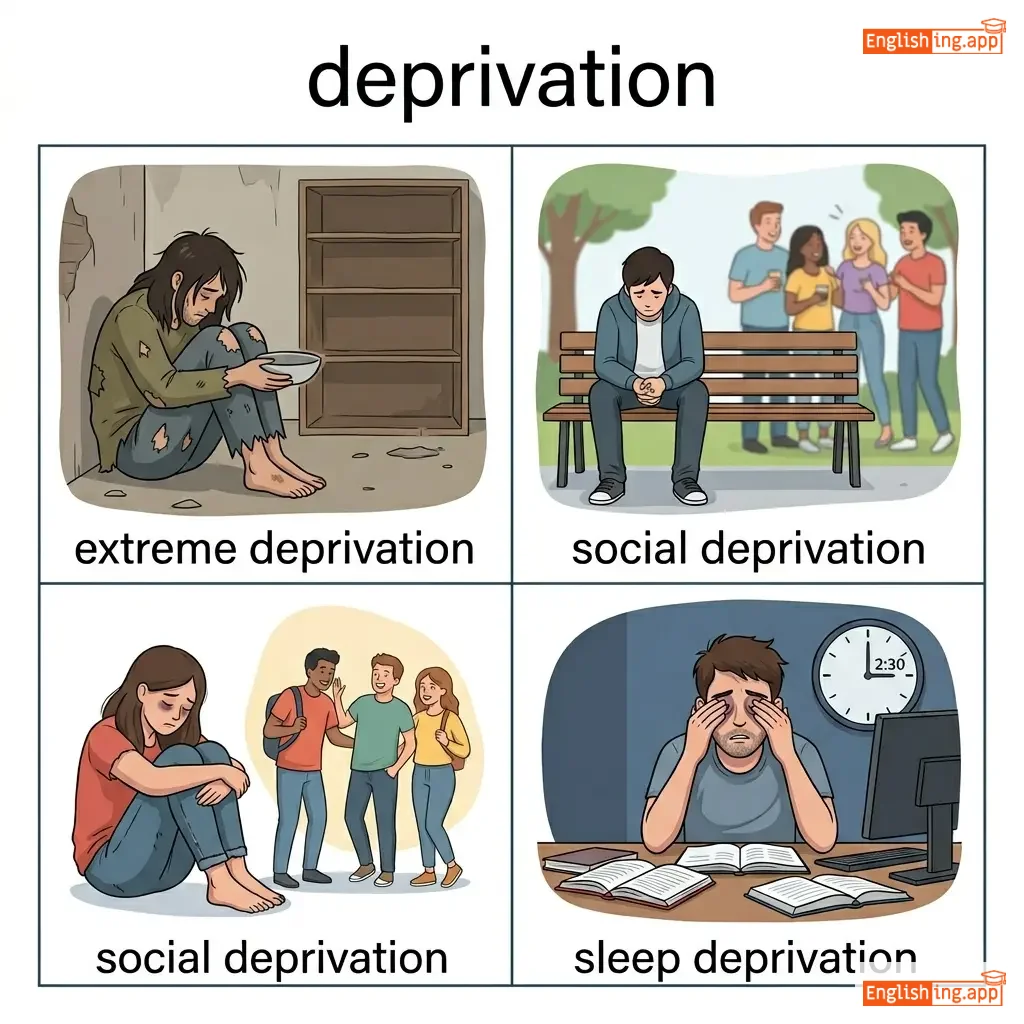
extreme deprivation, social deprivation, sleep deprivation, sensory deprivation
••••••
|
Deprivation означает Derive + Provision нет = лишение.
••••••
|
|
#2336
😔
|
/dɪˈprɛʃən/
noun
(депрессия)
••••••
|
- •••••• |
депрессия
depressiya
••••••
|
- •••••• | - •••••• | - •••••• | - •••••• |
A state of severe sadness or hopelessness; also a prolonged downturn in economic activity.
••••••
|
She has been battling depression for several months. |
Она борется с депрессией уже несколько месяцев.
Ona boretsya s depressiyey uzhe neskol'ko mesyatsev.
••••••
|
economic depression |
A long-term downturn in economic activity.
••••••
|
экономическая депрессия
ekonomicheskaya depressiya
••••••
|
melancholy, sadness, gloom, slump, recession
••••••
|
happiness, joy, boom
••••••
|
suffer from depression, clinical depression, deep depression, economic depression
••••••
|
Депрессия = deep + press = сильное давление на разум.
••••••
|
|
#2337
😔
|
/dɪˈprɛst/
adjective
(дɪˈпрɛст)
••••••
|
- •••••• |
депрессия
depressiya
••••••
|
- •••••• | - •••••• | - •••••• | - •••••• |
Feeling very sad and without hope; in a state of unhappiness.
••••••
|
She felt depressed after losing her job. |
Она чувствовала себя депрессивно после потери работы.
Ona chuvstvovala sebya depressivno posle poteri raboty.
••••••
|
feeling blue |
Feeling sad or unhappy.
••••••
|
чувствовать себя грустным
chuvstvovat' sebya grustnym
••••••
|
sad, downcast, gloomy, unhappy, melancholic
••••••
|
happy, cheerful, joyful
••••••
|
deeply depressed, clinically depressed, depressed mood
••••••
|
Депрессия - это когда ты чувствуешь себя грустным, потеряв работу, ты чувствуешь депрессию.
••••••
|
|
#2338
💊
|
/dɪˈprɛsənt/
noun
(депрессант)
••••••
|
- •••••• |
депрессант
depressant
••••••
|
- •••••• | - •••••• | - •••••• | - •••••• |
A drug that reduces functional or nervous activity in the body.
••••••
|
Alcohol acts as a depressant on the central nervous system.
Алкоголь действует как депрессант на центральную нервную систему.
••••••
|
Алкоголь действует как депрессант на центральную нервную систему.
Alkogol' deystvuet kak depressant na tsentral'nuyu nervnuyu sistemu.
••••••
|
- •••••• | - •••••• | - •••••• |
sedative, tranquilizer, downer, suppressant
••••••
|
stimulant, energizer
••••••
|
depressant effect, central depressant, depressant drugs
••••••
|
Депрессант успокаивает, как средство для расслабления.
••••••
|
|
#2339
😞
|
/dɪˈprɛs/
verb
(депресс)
••••••
|
- •••••• |
депрессировать
depressirovat
••••••
|
depressed
депрессирован
••••••
|
depressed
депрессирован
••••••
|
depresses
депрессирует
••••••
|
depressing
депрессируя
••••••
|
To make someone feel sad or without hope; to reduce the level or strength of something.
••••••
|
The gloomy weather tends to depress people.
Мрачная погода часто депрессирует людей.
••••••
|
Мрачная погода часто депрессирует людей.
Mrachnaya pogoda chasto depressiruet lyudey.
••••••
|
press down
нажать вниз
••••••
|
To push something down physically or emotionally.
••••••
|
нажать вниз
nazhat' vnyz
••••••
|
sadden, discourage, lower, weaken, deject
••••••
|
encourage, uplift, inspire
••••••
|
depress the economy, depress the price, deeply depress, depress mood
••••••
|
Depress значит нажать вниз - депрессия тоже заставляет опускаться.
••••••
|
|
#2340
⚔️
|
/ˌdɛprɪˈdeɪʃən/
noun
(депредэйшн)
••••••
|
- •••••• |
разорение
razoerenie
••••••
|
- •••••• | - •••••• | - •••••• | - •••••• |
An act of attacking or plundering; damage caused by such acts.
••••••
|
The villagers feared the depredation of wild animals at night. |
Жители деревни боялись разорения от диких животных ночью.
Zhiteli derevni boyalis' razoereniya ot dikikh zhivotnykh noch'yu.
••••••
|
- •••••• | - •••••• | - •••••• |
plunder, raid, destruction, pillage, devastation
••••••
|
protection, preservation, safeguard
••••••
|
depredation of war, animal depredation, depredation on crops
••••••
|
Depredation напоминает разорение и разрушение.
••••••
|
Vocabulary Quiz
Test your vocabulary by matching words with their translations or meanings.
Login to take the quiz
Comments (0)
Share your thoughts and join the discussion.
Join the discussion by logging in
Login to CommentNo comments yet
Be the first to share your thoughts!