

Обновитесь для доступа ко всему словарю
Получите неограниченный доступ ко всем словам с подпиской Pro
Обновить до ProПеревод
Прошедшее
Причастие прошедшего времени
Третье лицо единственного числа
Герундий
Значение
Пример предложения
Перевод примера предложения
Синонимы
Антонимы
Коллокации
Мнемоника



Swipe left or right, or use the buttons. Tap image to zoom.
Обновитесь для доступа ко всем предложениям
Получите неограниченный доступ ко всем предложениям с подпиской Pro
Обновить до ProПеревод примера предложения
Слово
Lesson 373Lesson 373 - Переключатель маски
|
Эмодзи
|
Слово | Images | Перевод | Прошедшее | Причастие прошедшего времени | Третье лицо единственного числа | Герундий | Значение | Пример предложения | Перевод примера предложения | Пример выражения | Значение примера выражения | Перевод примера выражения | Синонимы | Антонимы | Коллокации | Мнемоника |
|---|---|---|---|---|---|---|---|---|---|---|---|---|---|---|---|---|---|
|
#11155
🙏
|
/ˈhoʊli/
adjective
(холи)
••••••
|
- •••••• |
святой
svyatoi
••••••
|
- •••••• | - •••••• | - •••••• | - •••••• |
Dedicated to God or a religious purpose; sacred.
••••••
|
This temple is considered a holy place. |
Этот храм считается святым местом.
Etot khram schitayetsya svyatom mestom.
••••••
|
holy cow |
An expression of surprise or astonishment.
••••••
|
Святая корова
Svyataya korova
••••••
|
sacred, divine, blessed, saintly
••••••
|
profane, unholy
••••••
|
holy book, holy man, holy place, holy spirit
••••••
|
Holy означает 'святой' - святое место, как храм, где люди молятся.
••••••
|
|
#11156
🏠
|
/ˈhaʊzɪŋ/
noun
(haʊzɪŋ)
••••••
|
- •••••• |
жилище
zhilishche
••••••
|
- •••••• | - •••••• | - •••••• | - •••••• |
buildings or structures where people live; accommodation
••••••
|
The government is working to provide affordable housing for everyone. |
Правительство работает над тем, чтобы предоставить доступное жилье для всех.
Pravitel'stvo rabotayet nad tem, chtoby predostavit' dostupnoye zhilye dlya vsekh.
••••••
|
public housing |
housing provided by the government for low-income families
••••••
|
государственное жилье
gosudarstvennoye zhilye
••••••
|
accommodation, residence, dwelling, shelter, lodging
••••••
|
homelessness, eviction
••••••
|
affordable housing, housing project, housing policy, housing shortage
••••••
|
Housing, это жилье, место для жизни.
••••••
|
|
#11157
👨👩👧👦
|
/ˈhaʊshoʊld/
noun
(хаусхолд)
••••••
|
- •••••• |
домохозяйство
domokhozyaystvo
••••••
|
- •••••• | - •••••• | - •••••• | - •••••• |
All the people living together in one house, considered as a unit.
••••••
|
There are five people in our household. |
В нашем домохозяйстве пять человек.
V nashem domokhozyaystve pyat' chelovek.
••••••
|
household name |
a person or brand that is very well known
••••••
|
известное имя
izvestnoe imya
••••••
|
family, home, residents, occupants, domestic unit
••••••
|
outsiders, strangers
••••••
|
household chores, household income, household goods, household members
••••••
|
Домохозяйство — это дом, вспомни 'House + All → Все дома'
••••••
|
|
#11158
🏠
|
/haʊs/
noun
(хаус)
••••••
|
- •••••• |
дом
dom
••••••
|
- •••••• | - •••••• | - •••••• | - •••••• |
A building for people to live in, usually with rooms and a roof.
••••••
|
They bought a new house in the city.
Они купили новый дом в городе.
••••••
|
Они купили новый дом в городе.
Oni kupili novyy dom v gorode.
••••••
|
bring the house down
снести дом
••••••
|
to make the audience laugh or applaud loudly
••••••
|
расмешить или заставить зрителей аплодировать
rasmeshit' ili zastavit' zriteley aplyodirovat'
••••••
|
home, residence, dwelling, shelter, abode
••••••
|
outside, open space
••••••
|
buy a house, build a house, rent a house, move into a house
••••••
|
Дом - это место для жизни, дом - легко запомнить.
••••••
|
|
#11159
⏰
|
/ˈaʊər/
noun
••••••
|
- •••••• | - •••••• | - •••••• | - •••••• | - •••••• | - •••••• |
A period of time equal to 60 minutes.
••••••
|
The meeting lasted for two hours. |
- •••••• |
rush hour |
the busy part of the day when traffic is heavy
••••••
|
- •••••• |
sixty minutes, time period, duration, interval
••••••
|
moment, instant
••••••
|
spend an hour, half an hour, working hours, rush hour
••••••
|
No •••••• |
|
#11160
🏨
|
/hoʊˈtɛl/
noun
(ho-tel)
••••••
|
- •••••• |
отель
otel
••••••
|
- •••••• | - •••••• | - •••••• | - •••••• |
A building where people pay to stay and sleep, usually for short periods.
••••••
|
We stayed at a hotel near the beach. |
Мы остановились в отеле рядом с пляжем.
My ostanovilis' v otele ryadom s plyazhem.
••••••
|
check into a hotel |
to register and begin staying in a hotel
••••••
|
зарегистрироваться в отеле
zaregistrirovatsya v otele
••••••
|
inn, lodge, hostel, resort, guesthouse
••••••
|
home, house
••••••
|
luxury hotel, hotel room, hotel staff, book a hotel, check into hotel
••••••
|
Отель значит отель, запомни 'Отель - место для отдыха и еды'.
••••••
|
|
#11161
🔥
|
/hɒt/
adjective
(khot)
••••••
|
- •••••• |
горячий
goryachiy
••••••
|
- •••••• | - •••••• | - •••••• | - •••••• |
Having a high degree of heat or a high temperature.
••••••
|
The soup is too hot to eat right now.
Суп слишком горячий, чтобы есть сейчас.
••••••
|
Суп слишком горячий, чтобы есть сейчас.
Sup slishkom goryachiy, chtoby est' seychas.
••••••
|
hot topic
горячая тема
••••••
|
a subject that is currently popular or controversial
••••••
|
горячая тема
goryachaya tema
••••••
|
warm, heated, scorching, burning, fiery
••••••
|
cold, cool, chilly
••••••
|
hot weather, hot drink, hot meal, hot summer, hot topic
••••••
|
Hot значит горячий, как 'Hot tea' значит горячий чай.
••••••
|
|
#11162
🎤
|
/hoʊst/
noun, verb
(хост)
••••••
|
- •••••• |
хозяин
hozyain
••••••
|
hosted
хостед
••••••
|
hosted
хостед
••••••
|
hosts
хостс
••••••
|
hosting
хостинг
••••••
|
a person who receives or entertains guests; to organize and provide for an event
••••••
|
She will host the conference next week.
Она будет принимать конференцию на следующей неделе.
••••••
|
Она будет принимать конференцию на следующей неделе.
Ona budet prinimat' konferentsiyu na sleduyushchey nedele.
••••••
|
play host
быть хозяином
••••••
|
to act as the host for an event or occasion
••••••
|
быть хозяином
byt' khozyainom
••••••
|
presenter, entertainer, emcee, organizer, moderator
••••••
|
guest, visitor
••••••
|
host a party, host an event, web host
••••••
|
Хозяин - тот, кто организует и принимает людей, как хозяин дома.
••••••
|
|
#11163
🏥
|
/ˈhɒs.pɪ.təl/
noun
(хоспитал)
••••••
|
- •••••• |
больница
bol'nitsa
••••••
|
- •••••• | - •••••• | - •••••• | - •••••• |
an institution where sick or injured people are given medical treatment
••••••
|
He was taken to the hospital after the accident. |
Его отвезли в больницу после аварии.
Ego otvezli v bol'nitsu posle avarii.
••••••
|
- •••••• | - •••••• | - •••••• |
clinic, infirmary, medical center, healthcare facility
••••••
|
home, outdoors
••••••
|
go to hospital, hospital bed, hospital staff
••••••
|
Больница - это место, где вас лечат после болезни или травмы.
••••••
|
|
#11164
🐎
|
/hɔːrs/
noun
(хорс)
••••••
|
- •••••• |
лошадь
loshad
••••••
|
- •••••• | - •••••• | - •••••• | - •••••• |
a large, strong animal used for riding, racing, or carrying loads
••••••
|
The horse ran across the field.
дер хорс ранил акуляр
••••••
|
Лошадь бегала по полю.
Loshad' begala po polyu.
••••••
|
hold your horses
hold your horses
••••••
|
wait or be patient
••••••
|
постойте
postoyte
••••••
|
stallion, mare, pony, steed, nag
••••••
|
donkey, mule
••••••
|
ride a horse, wild horse, horse racing
••••••
|
Лошадь: представьте, что вы ездите на лошади, которая мчится по полям.
••••••
|
|
#11165
😱
|
/ˈhɒr.ər/
noun
(хоррор)
••••••
|
- •••••• |
ужас
uzhas
••••••
|
- •••••• | - •••••• | - •••••• | - •••••• |
an intense feeling of fear, shock, or disgust
••••••
|
She screamed in horror when she saw the accident. |
Она закричала от ужаса, когда увидела аварию.
Ona zakrichala ot uzhasa, kogda uvidela avariyu.
••••••
|
a horror story |
a frightening or shocking tale
••••••
|
страшная история
strashnaya istoriya
••••••
|
fear, dread, terror, shock, fright
••••••
|
delight, joy
••••••
|
horror movie, scream in horror, sheer horror
••••••
|
Horror — это ужас, как если бы ты смотрел ужастик и чувствовал страх.
••••••
|
|
#11166
🌅
|
/həˈraɪ.zən/
noun
(горизонт)
••••••
|
- •••••• |
горизонт
gorizont
••••••
|
- •••••• | - •••••• | - •••••• | - •••••• |
the line where the earth seems to meet the sky; the limit of one's knowledge, experience, or interest
••••••
|
The sun disappeared below the horizon. |
Солнце исчезло за горизонтом.
Solntse ischezlo za gorizontom.
••••••
|
broaden your horizons |
to expand one's experiences or knowledge
••••••
|
расширь свои горизонты
rasshiri svoi gorizonty
••••••
|
skyline, boundary, limit, vista, outlook
••••••
|
sky, zenith
••••••
|
on the horizon, broaden horizons, new horizon
••••••
|
Horizon означает горизонт, там, где солнце садится.
••••••
|
|
#11167
🌟
|
/hoʊp/
verb
••••••
|
- •••••• | - •••••• |
hoped
••••••
|
hoped
••••••
|
hopes
••••••
|
hoping
••••••
|
To want something to happen or be true and think it is possible.
••••••
|
I hope everything goes well with your exam. |
- •••••• |
hope against hope |
To continue to hope even when the situation seems hopeless.
••••••
|
- •••••• |
wish, desire, expect, trust, optimism
••••••
|
despair, doubt
••••••
|
hope for, hope that, lose hope, give hope
••••••
|
No •••••• |
|
#11168
🍯
|
/ˈhʌni/
noun
(хани)
••••••
|
- •••••• |
мед
med
••••••
|
- •••••• | - •••••• | - •••••• | - •••••• |
A sweet, sticky substance made by bees from nectar.
••••••
|
She likes to put honey in her tea. |
Ей нравится добавлять мед в чай.
Yey nravitsya dobavlyat med v chay.
••••••
|
sweet as honey |
Extremely kind or pleasant.
••••••
|
сладкий как мед
sladkiy kak med
••••••
|
nectar, syrup, sweetness, darling
••••••
|
bitterness, sourness
••••••
|
honey bee, honey jar, honeycomb, honey production
••••••
|
Мед = сладкое, как мед от пчел.
••••••
|
|
#11169
🏚️
|
/ˈhoʊmləs/
adjective
(хомлес)
••••••
|
- •••••• |
бездомный
bezdomny
••••••
|
- •••••• | - •••••• | - •••••• | - •••••• |
Without a home, and therefore typically living on the streets.
••••••
|
The organization helps homeless people find shelter.
Организация помогает бездомным людям найти укрытие.
••••••
|
Организация помогает бездомным людям найти укрытие.
Organizatsiya pomogaet bezdomnym lyudyam nayti ukrytiye.
••••••
|
- •••••• | - •••••• | - •••••• |
destitute, vagrant, displaced, houseless
••••••
|
settled, housed
••••••
|
homeless person, homeless shelter, homeless community
••••••
|
Без дома — бездомный.
••••••
|
|
#11170
👋
|
/heɪ/
interjection
(Эй)
••••••
|
- •••••• |
Эй
ey
••••••
|
- •••••• | - •••••• | - •••••• | - •••••• |
used to attract attention, express surprise, or greet someone
••••••
|
Hey, how are you doing today? |
Эй, как ты сегодня?
Ey, kak ty segodnya?
••••••
|
- •••••• | - •••••• | - •••••• |
hello, hi, yo, hiya, greetings
••••••
|
goodbye, farewell
••••••
|
hey there, hey you, hey guys, hey man
••••••
|
Эй — это как крик, чтобы привлечь внимание или поздороваться.
••••••
|
|
#11171
🏖️
|
/ˈhɒlɪdeɪ/
noun
(холи-дэй)
••••••
|
- •••••• |
отпуск
otpusk
••••••
|
- •••••• | - •••••• | - •••••• | - •••••• |
A day of celebration or rest when most people do not work.
••••••
|
We are planning a trip during the summer holiday. |
Мы планируем поездку во время летнего отпуска.
My planirovali poezdku vo vremya letnego otpyska.
••••••
|
holiday spirit |
The cheerful mood that people often feel during holiday seasons.
••••••
|
праздничное настроение
prazdnichnoye nastroeniye
••••••
|
vacation, break, leave, recess, festival
••••••
|
workday, duty
••••••
|
public holiday, summer holiday, holiday season, national holiday
••••••
|
Отпуск — это не просто отдых, это праздник с праздничным настроением!
••••••
|
|
#11172
💥
|
/hɪt/
verb
(хит)
••••••
|
- •••••• |
ударить
udarit
••••••
|
hit
хит
••••••
|
hit
хит
••••••
|
hits
хитс
••••••
|
hitting
хиттинг
••••••
|
to strike someone or something with force
••••••
|
He accidentally hit the ball into the window.
он случайно ударил мяч в окно.
••••••
|
он случайно ударил мяч в окно.
on sluchayno udaril myach v okno.
••••••
|
hit the nail on the head
попасть в точку
••••••
|
to describe a situation or problem exactly
••••••
|
попасть в точку
popast' v tochku
••••••
|
strike, smack, beat, punch, knock
••••••
|
miss, avoid, dodge
••••••
|
hit hard, hit the target, hit the road, hit record
••••••
|
Hit означает ударить, представьте, что вы ударяете мяч для гольфа в лунку.
••••••
|
|
#11173
🏛️
|
/ˈhɪstəri/
noun
(история)
••••••
|
|
история
istoriya
••••••
|
- •••••• | - •••••• | - •••••• | - •••••• |
the study of past events
••••••
|
She is studying the history of medieval Europe. |
Она изучает историю Средневековой Европы.
Ona izuchayet istoriyu Srednevekovoy Yevropy.
••••••
|
make history |
to do something very important that will be remembered
••••••
|
сделать историю
sdelat' istoriu
••••••
|
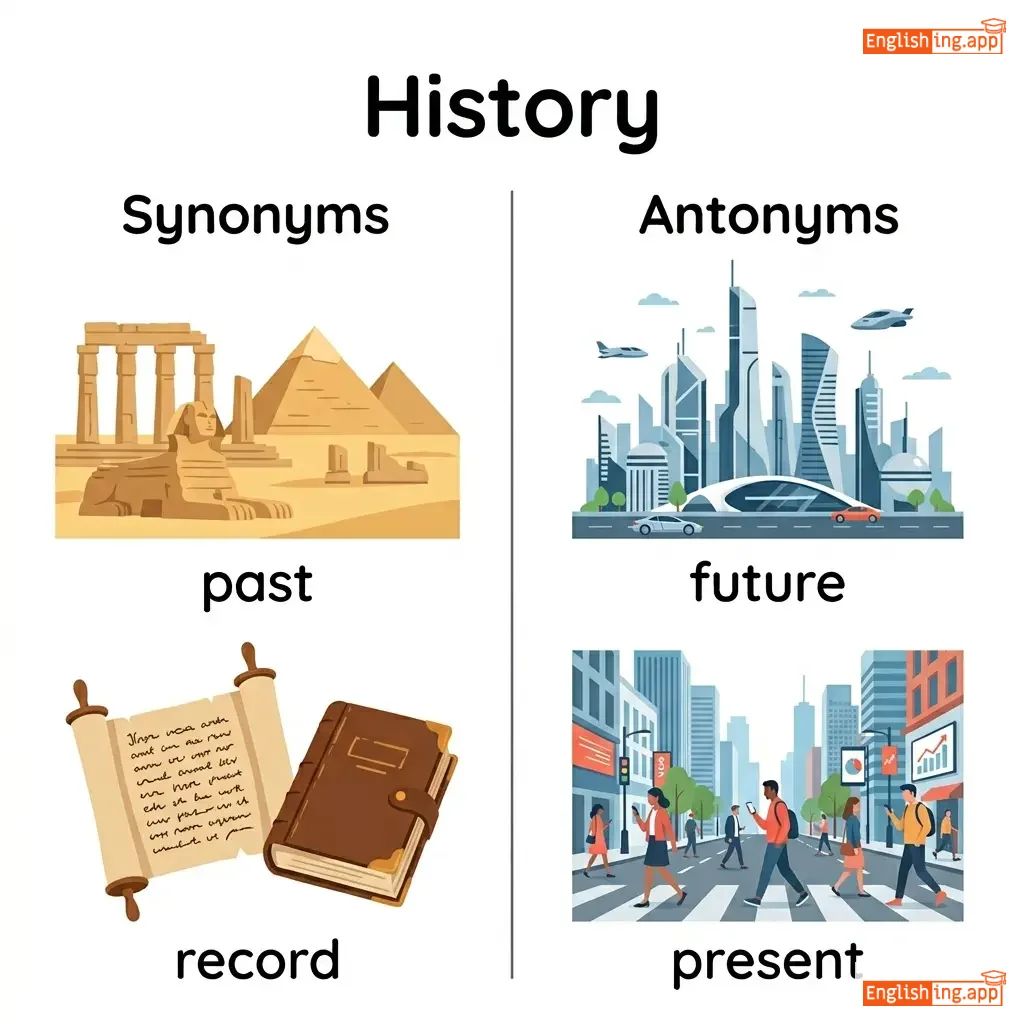
past, record, chronicle, heritage
••••••
|
future, present
••••••
|
world history, history book, history lesson, history of art
••••••
|
History на русском это история, представьте—His Story на русском это история
••••••
|
|
#11174
📚
|
/hɪˈstɔːriən/
noun
(историк)
••••••
|
- •••••• |
историк
istorik
••••••
|
- •••••• | - •••••• | - •••••• | - •••••• |
a person who studies or writes about history
••••••
|
The historian gave a lecture on ancient civilizations. |
Историк прочитал лекцию о древних цивилизациях.
Istorik prochital lekciyu o drevnikh tsivilizatsiyakh.
••••••
|
- •••••• | - •••••• | - •••••• |
scholar, researcher, chronicler, analyst
••••••
|
layman, amateur
••••••
|
famous historian, professional historian, military historian
••••••
|
Historian — history + ик → человек, изучающий историю
••••••
|
|
#11175
👦
|
/hɪz/
pronoun
(хиз)
••••••
|
- •••••• |
его
ego
••••••
|
- •••••• | - •••••• | - •••••• | - •••••• |
belonging to or associated with a male person previously mentioned
••••••
|
This is his book on the table. |
Это его книга на столе.
Eto ego kniga na stole.
••••••
|
- •••••• | - •••••• | - •••••• |
belonging to him, owned by him
••••••
|
her, their
••••••
|
his book, his car, his house, his idea
••••••
|
His означает его, помни—He + is = His вещь
••••••
|
|
#11176
👔
|
/ˈhaɪə(r)/
verb
(khayyer)
••••••
|
|
нанимать
nanimat
••••••
|
hired
khayyer-d
••••••
|
hired
khayyer-d
••••••
|
hires
khayyer-s
••••••
|
hiring
khayye-ring
••••••
|
to employ someone for a job or task
••••••
|
The company decided to hire more staff this year.
Компания решила нанять больше сотрудников в этом году.
••••••
|
Компания решила нанять больше сотрудников в этом году.
Kampaniya reshila nanyat bol'she sotrudnikov v etom godu.
••••••
|
hire and fire
нанять и уволить
••••••
|
to employ and dismiss workers frequently
••••••
|
нанять и уволить
nanyat i uvolit'
••••••
|
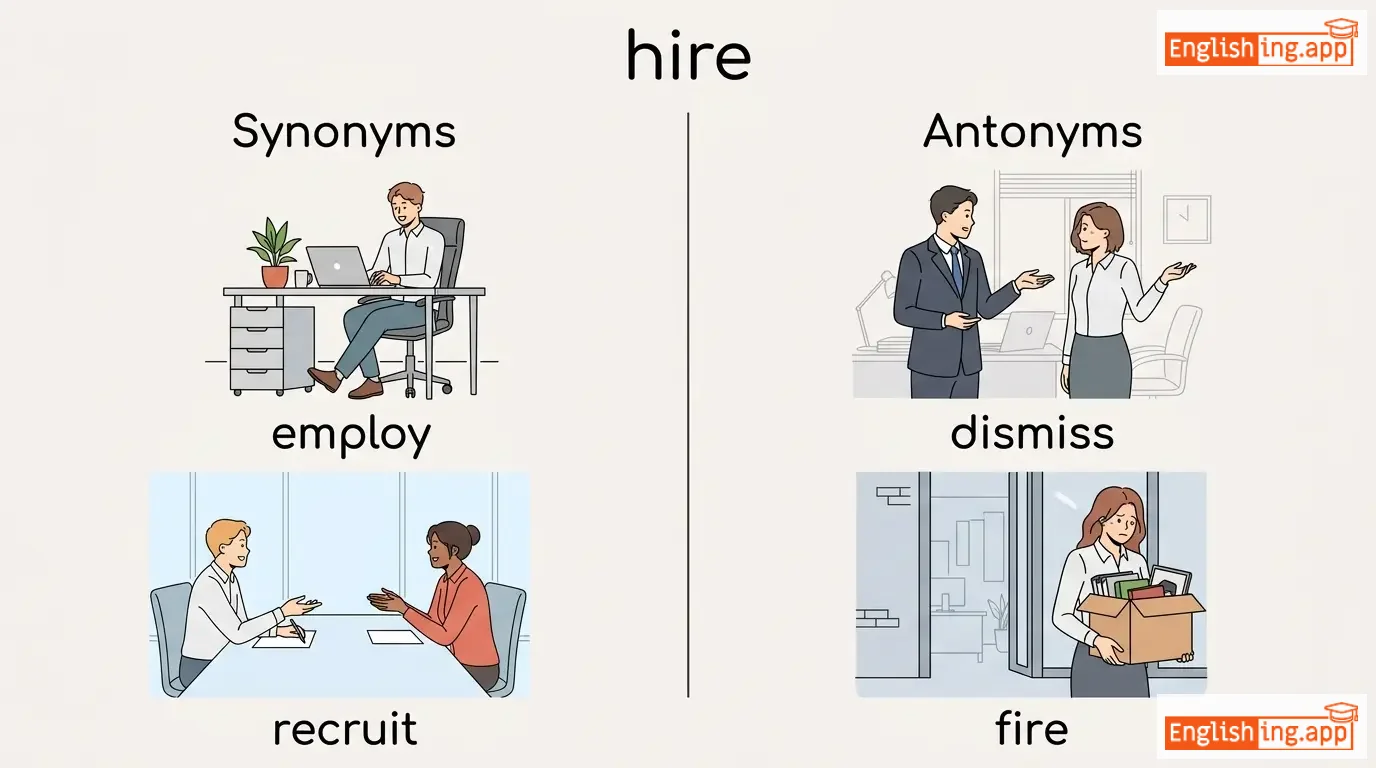
employ, recruit, appoint, engage, contract
••••••
|
dismiss, fire, discharge
••••••
|
hire staff, hire employees, hire a car, hire services
••••••
|
Нанимать - это как находить идеальных кандидатов для работы.
••••••
|
|
#11177
🦴
|
/hɪp/
noun
(хип)
••••••
|
- •••••• |
бедро
bedro
••••••
|
- •••••• | - •••••• | - •••••• | - •••••• |
The part of the body on either side of the pelvis, or informal: trendy and fashionable.
••••••
|
She put her hands on her hips. |
Она положила руки на бедра.
Ona polozhila ruki na bedra.
••••••
|
joined at the hip |
very close, inseparable
••••••
|
связаны как бедра
svyazany kak bedra
••••••
|
pelvis, waist, trendy, fashionable
••••••
|
old-fashioned, outdated
••••••
|
hip pain, hip joint, hands on hips, hip hop
••••••
|
Бедро – бедро, в хип-хопе двигаются бедра.
••••••
|
|
#11178
🙋♂️
|
/hɪmˈself/
pronoun
(химселф)
••••••
|
- •••••• |
сам
sam
••••••
|
- •••••• | - •••••• | - •••••• | - •••••• |
Used to emphasize that a male person does something by his own effort.
••••••
|
He fixed the car himself. |
Он отремонтировал машину сам.
On otremontiroval mashinu sam.
••••••
|
by himself |
alone, without help
••••••
|
сам
sam
••••••
|
alone, personally, individually, on his own
••••••
|
together, with others
••••••
|
by himself, for himself, himself alone
••••••
|
Himself значит 'He сам self' – запомни, что 'self' означает самого себя.
••••••
|
|
#11179
👨
|
/hɪm/
pronoun
(хим)
••••••
|
- •••••• |
его
ego
••••••
|
- •••••• | - •••••• | - •••••• | - •••••• |
Used to refer to a male person or animal already mentioned.
••••••
|
I saw him at the park yesterday. |
Я видел его в парке вчера.
Ya videl ego v parke vchera.
••••••
|
- •••••• | - •••••• | - •••••• |
that man, that boy, male person, he
••••••
|
her, she
••••••
|
with him, for him, about him, help him
••••••
|
Him означает 'его' – помните, что He в объектной форме это Him.
••••••
|
|
#11180
⛰️
|
/hɪl/
noun
(хил)
••••••
|
- •••••• |
холм
kholm
••••••
|
- •••••• | - •••••• | - •••••• | - •••••• |
A naturally raised area of land, smaller than a mountain.
••••••
|
We climbed the hill to see the sunset. |
Мы поднялись на холм, чтобы увидеть закат.
My podnyalis' na kholm, chtoby uvidet' zakat.
••••••
|
make a mountain out of a molehill |
to exaggerate a small problem into something much bigger
••••••
|
делать из мухи слона
delat' iz mukhi slona
••••••
|
mound, knoll, ridge, slope, rise
••••••
|
valley, plain
••••••
|
hill station, top of the hill, climb a hill, rolling hills
••••••
|
Hill — это холм, маленький, как холм, а не гора.
••••••
|
|
#11181
🛣️
|
/ˈhaɪ.weɪ/
noun
(haivay)
••••••
|
- •••••• |
шоссе
shosse
••••••
|
- •••••• | - •••••• | - •••••• | - •••••• |
A main road, especially one connecting major towns or cities.
••••••
|
The highway was blocked due to an accident. |
Шоссе было заблокировано из-за аварии.
Shosse bylo zablokirovano iz-za avarii.
••••••
|
hit the highway |
to begin a journey, usually by car
••••••
|
отправиться в путь
otpravit'sya v put'
••••••
|
expressway, freeway, motorway, road, route
••••••
|
alley, lane
••••••
|
highway patrol, highway traffic, highway system, on the highway
••••••
|
Highway означает 'High speed way' - шоссе означает дорогу для быстрого движения.
••••••
|
|
#11182
🌟
|
/ˈhaɪli/
adverb
(хаили)
••••••
|
- •••••• |
высоко
vysoko
••••••
|
- •••••• | - •••••• | - •••••• | - •••••• |
to a great degree; very
••••••
|
She is highly respected in her field. |
Она высоко уважает в своей области.
Ona vysoko uzhajet v svoey oblasti.
••••••
|
think highly of |
to admire or have a good opinion of someone
••••••
|
высоко думать о
vysoko dumat' o
••••••
|
greatly, very, extremely, exceedingly, intensely
••••••
|
slightly, poorly, inadequately
••••••
|
highly skilled, highly effective, highly unlikely, highly respected
••••••
|
Highly означает высоко — очень.
••••••
|
|
#11183
🖍️
|
/ˈhaɪˌlaɪt/
verb
(hajlait)
••••••
|
- •••••• |
выделить
vydelit'
••••••
|
highlighted
hajlajtid
••••••
|
highlighted
hajlajtid
••••••
|
highlights
hajlajts
••••••
|
highlighting
hajlajting
••••••
|
to emphasize or make something stand out
••••••
|
The teacher highlighted the most important points in the text.
Учитель выделил самые важные моменты в тексте.
••••••
|
Учитель выделил самые важные моменты в тексте.
Uchitel' vydelil samye vazhnye momenty v tekste.
••••••
|
highlight reel
лучшие моменты
••••••
|
a collection of the best or most memorable parts
••••••
|
лучшие моменты
luchshiye momenty
••••••
|
emphasize, stress, underline, showcase, feature
••••••
|
ignore, overlook, hide
••••••
|
highlight the issue, highlight a point, highlight text, highlight importance
••••••
|
Выделить — это как осветить важное, чтобы оно было замечено.
••••••
|
|
#11184
😊
|
/haɪ/
interjection
(hai)
••••••
|
- •••••• |
привет
privet
••••••
|
- •••••• | - •••••• | - •••••• | - •••••• |
a friendly greeting used when meeting someone
••••••
|
Hi, it's nice to meet you! |
Привет, приятно познакомиться!
Privet, priyatno poznakomit'sya!
••••••
|
- •••••• | - •••••• | - •••••• |
hello, hey, greetings, howdy, yo
••••••
|
goodbye, farewell
••••••
|
say hi, hi there, hi everyone, hi guys
••••••
|
Привет, как в приветствии на русском языке.
••••••
|
Vocabulary Quiz
Test your vocabulary by matching words with their translations or meanings.
Login to take the quiz
Comments (0)
Share your thoughts and join the discussion.
Join the discussion by logging in
Login to CommentNo comments yet
Be the first to share your thoughts!