

Обновитесь для доступа ко всему словарю
Получите неограниченный доступ ко всем словам с подпиской Pro
Обновить до ProПеревод
Прошедшее
Причастие прошедшего времени
Третье лицо единственного числа
Герундий
Значение
Пример предложения
Перевод примера предложения
Синонимы
Антонимы
Коллокации
Мнемоника

Swipe left or right, or use the buttons. Tap image to zoom.
Обновитесь для доступа ко всем предложениям
Получите неограниченный доступ ко всем предложениям с подпиской Pro
Обновить до ProПеревод примера предложения
Слово
Lesson 9Lesson 9 - Переключатель маски
|
Эмодзи
|
Слово | Images | Перевод | Прошедшее | Причастие прошедшего времени | Третье лицо единственного числа | Герундий | Значение | Пример предложения | Перевод примера предложения | Пример выражения | Значение примера выражения | Перевод примера выражения | Синонимы | Антонимы | Коллокации | Мнемоника |
|---|---|---|---|---|---|---|---|---|---|---|---|---|---|---|---|---|---|
|
#241
⚔️
|
/əˈɡrɛs/
verb
(агрессировать)
••••••
|
- •••••• |
агрессировать
agressirovat
••••••
|
aggressed
агрессировал
••••••
|
aggressed
агрессировал
••••••
|
aggresses
агрессирует
••••••
|
aggressing
агрессируя
••••••
|
to initiate an attack or show hostile behavior
••••••
|
The army chose not to aggress without provocation.
армия решила не агрессировать без провокации.
••••••
|
Армия решила не агрессировать без провокации.
Armiya reshilа ne aggressirovat bez provokatsii.
••••••
|
- •••••• | - •••••• | - •••••• |
attack, assault, strike, invade, offend
••••••
|
defend, protect, guard
••••••
|
aggress against, aggress upon, aggress behavior
••••••
|
Aggress означает агрессировать, как 'AGainst RESS' означает атаковать против чего-то.
••••••
|
|
#242
🧑💼
|
/eɪd/
noun
(эйд)
••••••
|
- •••••• |
помощник
pomoshchnik
••••••
|
- •••••• | - •••••• | - •••••• | - •••••• |
An assistant or helper, especially to an important person.
••••••
|
The senator’s aide organized the meeting with journalists. |
Помощник сенатора организовал встречу с журналистами.
Pomoshchnik senatora organizoval vstrechu s zhurnalistami.
••••••
|
- •••••• | - •••••• | - •••••• |
assistant, helper, deputy, supporter
••••••
|
leader, boss
••••••
|
presidential aide, close aide, trusted aide
••••••
|
Aide (помощник) помогает организовать встречу.
••••••
|
|
#243
👨🔬
|
/əˈɡrɒnəmɪst/
noun
(агрономист)
••••••
|
- •••••• |
агроном
agronom
••••••
|
- •••••• | - •••••• | - •••••• | - •••••• |
A scientist who studies soil management and crop production.
••••••
|
The agronomist suggested new methods to improve rice yields.
Агроном предложил новые методы для улучшения урожайности риса.
••••••
|
Агроном предложил новые методы для улучшения урожайности риса.
Agronom predlozhil novye metody dlya uluchsheniya urozhaĭnosti risa.
••••••
|
- •••••• | - •••••• | - •••••• |
agriculture scientist, crop expert, soil specialist
••••••
|
layperson, non-specialist
••••••
|
skilled agronomist, agronomist advice, consult an agronomist
••••••
|
Agronomist = сельское хозяйство + учёный = агроном 🌾
••••••
|
|
#244
🌾
|
/əˈɡrɛəriən/
adjective
(аграрный)
••••••
|
- •••••• |
сельскохозяйственный
selskokhozyaystvenny
••••••
|
- •••••• | - •••••• | - •••••• | - •••••• |
Related to farming, agriculture, or rural land.
••••••
|
The country’s economy is still largely agrarian. |
Экономика страны всё ещё в значительной степени аграрная.
Ekonomika strany vsyo eshchyo v znachitel'noy stepeni agrarnaya.
••••••
|
- •••••• | - •••••• | - •••••• |
agricultural, rural, farming, rustic
••••••
|
urban, industrial
••••••
|
agrarian society, agrarian reform, agrarian economy
••••••
|
Agrarian означает связанный с сельским хозяйством 🌾
••••••
|
|
#245
😣
|
/ˈæɡənaɪz/
verb
(эгонайз)
••••••
|
- •••••• |
мучиться
muchitsya
••••••
|
agonized
эгонайзд
••••••
|
agonized
эгонайзд
••••••
|
agonizes
эгонайзес
••••••
|
agonizing
эгонайзинг
••••••
|
To suffer extreme physical or mental pain; to spend time worrying.
••••••
|
She agonized for days over whether she had made the right decision.
Она мучилась целыми днями, думая, правильно ли она приняла решение.
••••••
|
Она мучилась целыми днями, думая, правильно ли она приняла решение.
Ona muchilas' tselymi dnyami, dumaya, pravil'no li ona prinyala reshenie.
••••••
|
agonize over
мучиться из-за
••••••
|
To worry greatly about something.
••••••
|
мучиться из-за
muchitsya iz-za
••••••
|
suffer, worry, struggle, torment, fret
••••••
|
relax, ease, comfort
••••••
|
agonize over decision, agonize for days, agonize endlessly
••••••
|
Мучиться — это как гореть от мыслей.
••••••
|
|
#246
🤩
|
/əˈɡɒɡ/
adjective
(агог)
••••••
|
- •••••• |
взволнованный
agog
••••••
|
- •••••• | - •••••• | - •••••• | - •••••• |
Highly excited by eagerness, curiosity, or anticipation.
••••••
|
The children were agog with excitement as they waited for the magician to appear.
Дети были взволнованы предвкушением, когда ждали появления фокусника.
••••••
|
Дети были взволнованы предвкушением, когда ждали появления фокусника.
Deti byli vzvolnovany predvkuscheniem kogda zhdali poyavleniya fokusnika
••••••
|
- •••••• | - •••••• | - •••••• |
excited, eager, thrilled, fascinated, enthusiastic
••••••
|
indifferent, bored, apathetic
••••••
|
agog with excitement, agog to hear, audience agog
••••••
|
A Great Opportunity to Gaze — глаза горят
••••••
|
|
#247
🤔
|
/æɡˈnɒs.tɪk/
noun
(агностик)
••••••
|
- •••••• |
агностик
agnostik
••••••
|
- •••••• | - •••••• | - •••••• | - •••••• |
a person who believes that nothing is known or can be known about the existence of God; uncertain in belief
••••••
|
He described himself as an agnostic rather than an atheist. |
Он описал себя как агностика, а не как атеиста.
On opisal sebya kak agnostika, a ne kak ateista.
••••••
|
- •••••• | - •••••• | - •••••• |
skeptic, doubter, unbeliever, questioner
••••••
|
believer, theist, faithful
••••••
|
agnostic view, remain agnostic, religious agnostic
••••••
|
Агностик = Неуверен в Боге, потому что нет ясности.
••••••
|
|
#248
😠
|
/ˌædʒ.ɪˈteɪ.ʃən/
noun
(агитация)
••••••
|
- •••••• |
агитация
agitaciya
••••••
|
- •••••• | - •••••• | - •••••• | - •••••• |
a state of nervousness, excitement, or unrest; or action of stirring up public concern
••••••
|
There was visible agitation among the crowd. |
В толпе было заметное возбуждение.
V tolpe bylo zameetnoe vozbuzhdenie.
••••••
|
- •••••• | - •••••• | - •••••• |
disturbance, unrest, turmoil, excitement, unrest
••••••
|
calm, peace, tranquility
••••••
|
political agitation, public agitation, state of agitation
••••••
|
Агитация - это когда в толпе появляется нервозность и беспокойство.
••••••
|
|
#249
✊
|
/ˈædʒ.ɪ.teɪt/
verb
(эджитэйт)
••••••
|
- •••••• |
агитировать, возбуждать
agitirovat, vozhuzhdat
••••••
|
agitated
эджитэйтед
••••••
|
agitated
эджитэйтед
••••••
|
agitates
эджитэйтс
••••••
|
agitating
эджитэйтинг
••••••
|
to stir up feelings or disturb; to campaign for change
••••••
|
The protesters agitated for better working conditions.
протестующие агитировали за лучшие условия труда.
••••••
|
Протестующие агитировали за лучшие условия труда.
Protestuyushchie agitirovali za luchshie usloviya truda.
••••••
|
agitate for
агитировать за
••••••
|
to campaign or push strongly for something
••••••
|
агитировать за
agitirovat za
••••••
|
provoke, disturb, excite, campaign, stir
••••••
|
calm, soothe, pacify
••••••
|
agitate for rights, agitate strongly, agitate against
••••••
|
Agitировать – агитация для изменений
••••••
|
|
#250
⚡
|
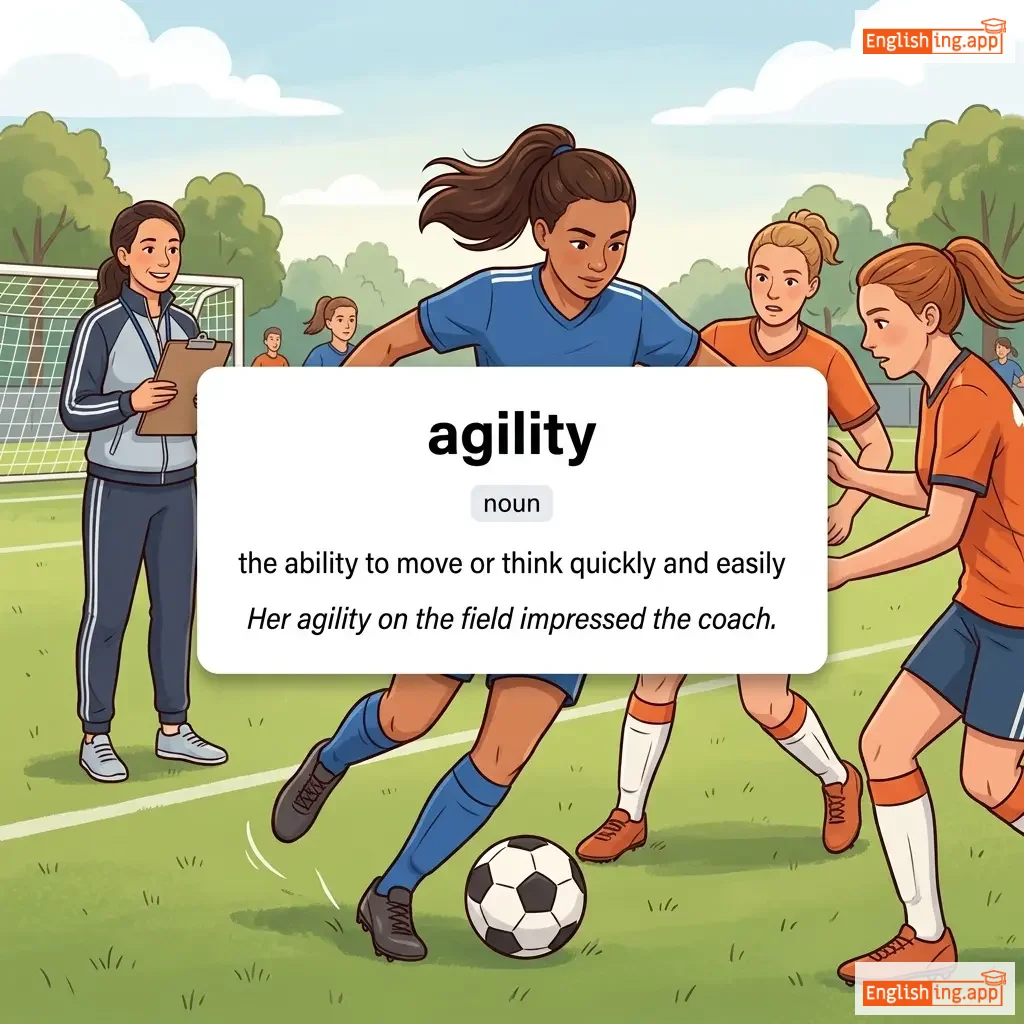
/əˈdʒɪl.ə.ti/
noun
(аджилити)
••••••
|
|
гибкость
gibkost
••••••
|
- •••••• | - •••••• | - •••••• | - •••••• |
the ability to move or think quickly and easily
••••••
|
Her agility on the field impressed the coach. |
Её гибкость на поле впечатлила тренера.
Eyo gibkost' na pole vpechatlila trenera.
••••••
|
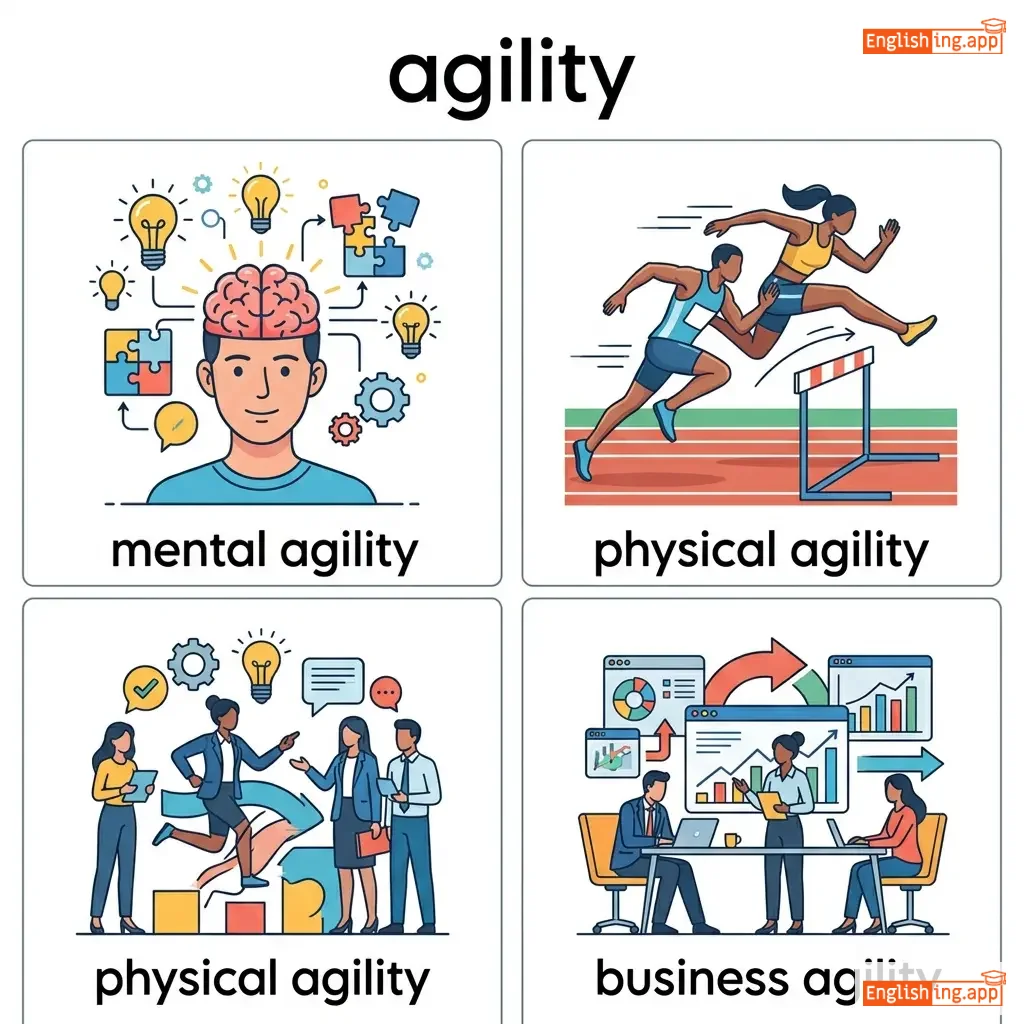
mental agility |
the ability to think quickly and clearly
••••••
|
умственная гибкость
umstvennaya gibkost'
••••••
|
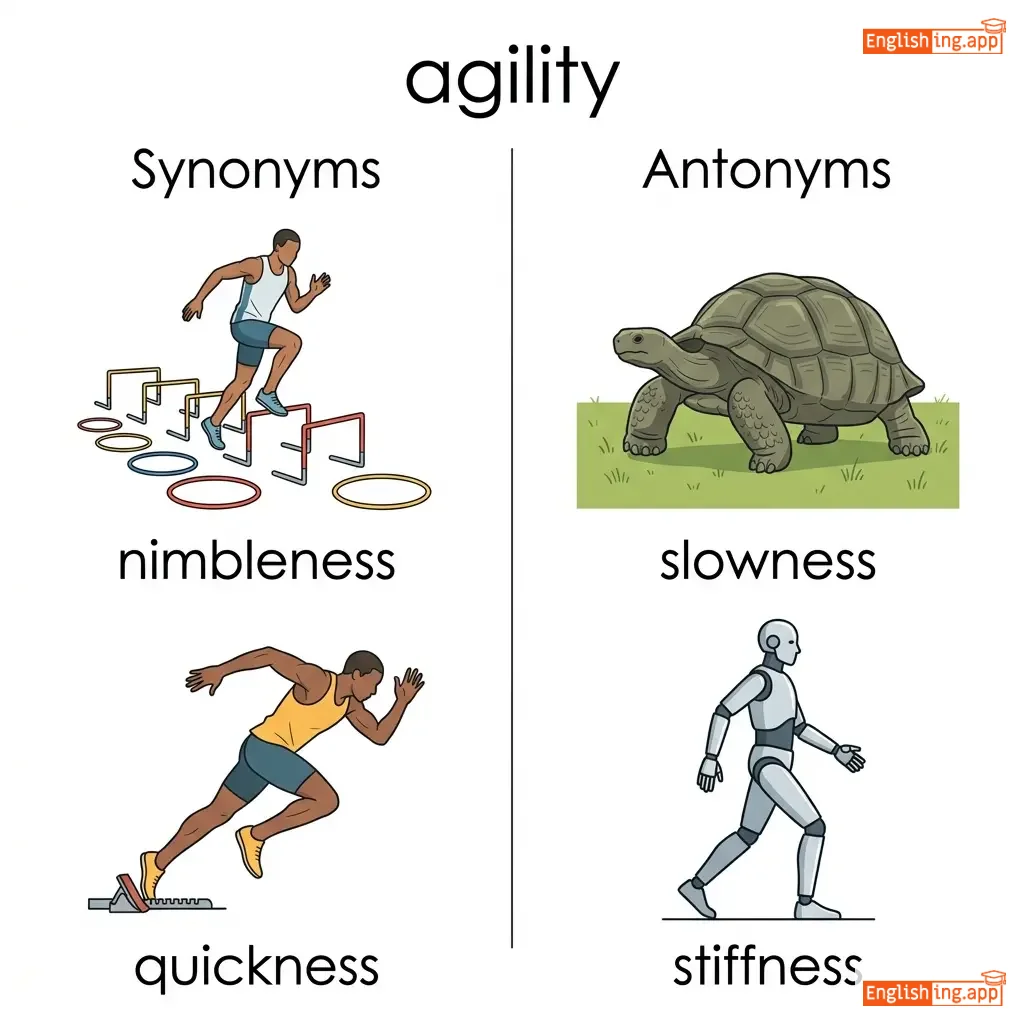
nimbleness, quickness, flexibility, swiftness, dexterity
••••••
|
slowness, stiffness, rigidity
••••••
|
mental agility, physical agility, business agility
••••••
|
Гибкость означает быструю способность работать ⚡
••••••
|
|
#251
🤸
|
/ˈædʒ.aɪl/
adjective
(ajil)
••••••
|
- •••••• |
быстрый и гибкий
bystryy i gibkiy
••••••
|
- •••••• | - •••••• | - •••••• | - •••••• |
able to move quickly and easily; quick and adaptable in thinking or action
••••••
|
The startup team was agile in responding to market changes.
Стартап-команда была гибкой в ответе на изменения на рынке.
••••••
|
Стартап-команда была гибкой в ответе на изменения на рынке.
Startup-komanda byla gibkoy v otvete na izmeneniya na rynke.
••••••
|
agile mind
гибкий ум
••••••
|
a quick and flexible way of thinking
••••••
|
гибкий ум
gibkiy um
••••••
|
nimble, quick, flexible, adaptive, brisk
••••••
|
clumsy, sluggish, stiff
••••••
|
agile development, agile methodology, agile team, agile mind
••••••
|
Agile — это как быть быстрым, как свет. По-русски ‘быстрый и гибкий’
••••••
|
|
#252
😱
|
/əˈɡæst/
adjective
(эгаст)
••••••
|
- •••••• |
ошеломленный
oshelomlennyy
••••••
|
- •••••• | - •••••• | - •••••• | - •••••• |
filled with shock or horror
••••••
|
The audience was aghast at the tragic scene. |
Зрители были ошеломлены трагической сценой.
Zriteli byli oshelomleny tragediey sczenoy.
••••••
|
- •••••• | - •••••• | - •••••• |
horrified, shocked, appalled, stunned
••••••
|
calm, composed, indifferent
••••••
|
look aghast, aghast at, utterly aghast
••••••
|
Aghast означает ошеломленный от страха 😱
••••••
|
|
#253
😔
|
/əˈɡriːv/
verb
(агрив)
••••••
|
- •••••• |
оскорбить
oskorbit'
••••••
|
aggrieved
агривд
••••••
|
aggrieved
агривд
••••••
|
aggrieves
агривс
••••••
|
aggrieving
агривинг
••••••
|
to cause distress or make someone feel resentful
••••••
|
She felt aggrieved by the unfair decision.
Она почувствовала себя оскорбленной несправедливым решением.
••••••
|
Она почувствовала себя оскорбленной несправедливым решением.
Ona pochuvstvovala sebya oskorblennoy nespravedlivym resheniem.
••••••
|
- •••••• | - •••••• | - •••••• |
distress, upset, offend, wrong
••••••
|
please, comfort, satisfy
••••••
|
feel aggrieved, deeply aggrieved, aggrieved party
••••••
|
Aggrieve = Grief (печаль) дать
••••••
|
|
#254
🔥
|
/əˈɡrɛsɪv/
adjective
(агрессив)
••••••
|
- •••••• |
агрессивный
agressivny
••••••
|
- •••••• | - •••••• | - •••••• | - •••••• |
ready or likely to attack or confront; forceful
••••••
|
The salesman used an aggressive strategy to close the deal. |
Продавец использовал агрессивную стратегию, чтобы завершить сделку.
Prodavets ispol'zoval agressivnuyu strategiyu, chtoby zavershit' sdelku.
••••••
|
aggressive marketing |
forceful and energetic marketing approach
••••••
|
агрессивный маркетинг
agressivny marketing
••••••
|
hostile, forceful, pushy, combative, assertive
••••••
|
gentle, passive, calm
••••••
|
aggressive behavior, aggressive strategy, aggressive attitude, aggressive marketing
••••••
|
Aggressive значит сильно, как медведь (🐻), легко запомнить
••••••
|
|
#255
💥
|
/əˈɡrɛʃən/
noun
(агрессия)
••••••
|
- •••••• |
агрессия
agressiya
••••••
|
- •••••• | - •••••• | - •••••• | - •••••• |
hostile or violent behavior towards others
••••••
|
His sudden aggression surprised everyone in the meeting. |
Его внезапная агрессия удивила всех на встрече.
Ego vnezapnaya agressiya udivila vsekh na vstreche.
••••••
|
acts of aggression |
hostile actions or attacks
••••••
|
акты агрессии
akty agressii
••••••
|
hostility, attack, violence, assault
••••••
|
peace, calm, friendliness
••••••
|
show aggression, physical aggression, military aggression, acts of aggression
••••••
|
Aggression запомни AGain GREssy (раздражительный) означает агрессия
••••••
|
|
#256
🤼
|
/əˈfreɪ/
noun
(афрэй)
••••••
|
- •••••• |
публичная драка
publichnaya draka
••••••
|
- •••••• | - •••••• | - •••••• | - •••••• |
A public fight or noisy disturbance that causes alarm.
••••••
|
The police were called to break up an affray outside the stadium.
Полиция была вызвана, чтобы прекратить драку у стадиона.
••••••
|
Полиция была вызвана, чтобы прекратить драку у стадиона.
Politsiya byla vyzvana, chtoby prekratit' draku u stadiona.
••••••
|
- •••••• | - •••••• | - •••••• |
brawl, fight, fracas, scuffle, melee
••••••
|
peace, calm, harmony
••••••
|
public affray, violent affray, involved in an affray, affray charge
••••••
|
Affray – это 'публичная драка', когда громкий шум вызывает тревогу.
••••••
|
|
#257
➕
|
/ˈæɡ.rɪ.ɡət/ (noun/adjective), /ˈæɡ.rɪ.ɡeɪt/ (verb)
noun, verb, adjective
(агрегат)
••••••
|
|
агрегат, совокупность
agregat, sovokupnost'
••••••
|
aggregated
агрегированный
••••••
|
aggregated
агрегированный
••••••
|
aggregates
агрегирует
••••••
|
aggregating
агрегируя
••••••
|
A whole formed by combining several elements; to combine into a total.
••••••
|
The data was aggregated to provide a clearer picture of the market.
Данные были агрегированы для более ясного представления о рынке.
••••••
|
Данные были агрегированы для более ясного представления о рынке.
Danniye byli agregirovany dlya boleye yasnogo predstavleniya o rynke.
••••••
|
- •••••• | - •••••• | - •••••• |
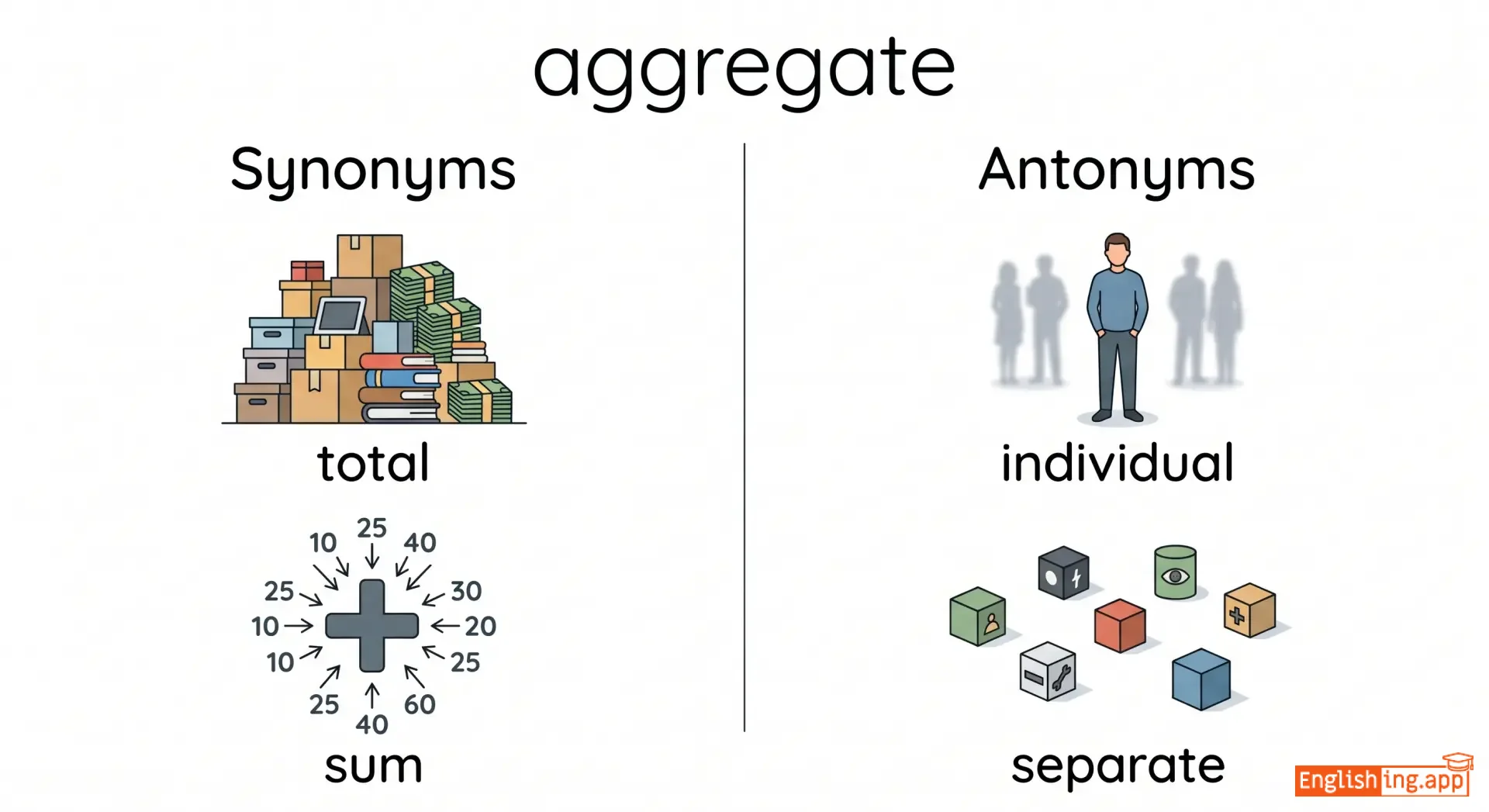
total, sum, collection, accumulate
••••••
|
individual, separate, divide
••••••
|
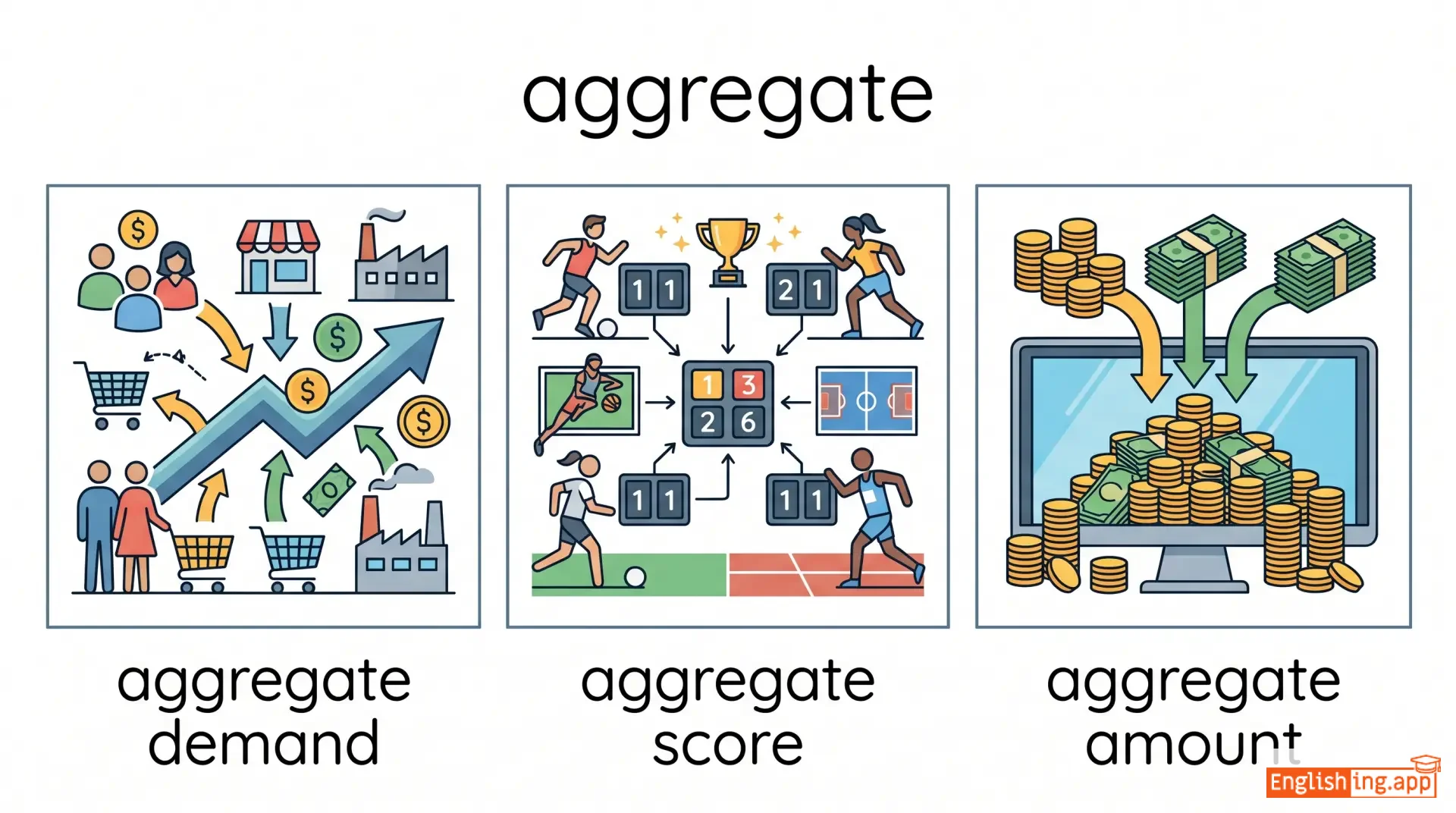
aggregate demand, aggregate score, aggregate amount, aggregate data
••••••
|
Агрегат — это все элементы, собранные в одно целое.
••••••
|
|
#258
😠
|
/ˌæɡ.rəˈveɪ.ʃən/
noun
(агравация)
••••••
|
- •••••• |
ухудшение, обострение
agravatsiya
••••••
|
- •••••• | - •••••• | - •••••• | - •••••• |
The act of making a situation worse or the state of being worsened.
••••••
|
The delay caused great aggravation for the passengers. |
Задержка вызвала большое раздражение у пассажиров.
Zaderzhka vyzvala bol'shoye razdrazheniye u passazhirov.
••••••
|
- •••••• | - •••••• | - •••••• |
irritation, worsening, annoyance, provocation
••••••
|
relief, improvement, ease
••••••
|
cause aggravation, great aggravation, constant aggravation
••••••
|
Aggravation - это когда что-то становится хуже, как дополнительное раздражение.
••••••
|
|
#259
⚠️
|
/ˈæɡ.rə.veɪt/
verb
(эгравейт)
••••••
|
- •••••• |
усугублять
usugublyat
••••••
|
aggravated
эгравейтид
••••••
|
aggravated
эгравейтид
••••••
|
aggravates
эгравейтс
••••••
|
aggravating
эгравейтинг
••••••
|
To make a situation worse or more serious.
••••••
|
Scratching the rash will only aggravate the condition.
Царапание сыпи только ухудшит состояние.
••••••
|
Царапание сыпи только ухудшит состояние.
Tsohkanie sypi tolko usugublyat sostoyanie.
••••••
|
- •••••• | - •••••• | - •••••• |
worsen, intensify, exacerbate, inflame
••••••
|
relieve, ease, alleviate
••••••
|
aggravate pain, aggravate situation, aggravate condition
••••••
|
Aggravate звучит как усугублять, что значит ухудшать.
••••••
|
|
#260
📈
|
/əˈɡræn.daɪz/
verb
(эграндиз)
••••••
|
|
увеличить
uvelichit
••••••
|
aggrandized
эграндизд
••••••
|
aggrandized
эграндизд
••••••
|
aggrandizes
эграндизес
••••••
|
aggrandizing
эграндизинг
••••••
|
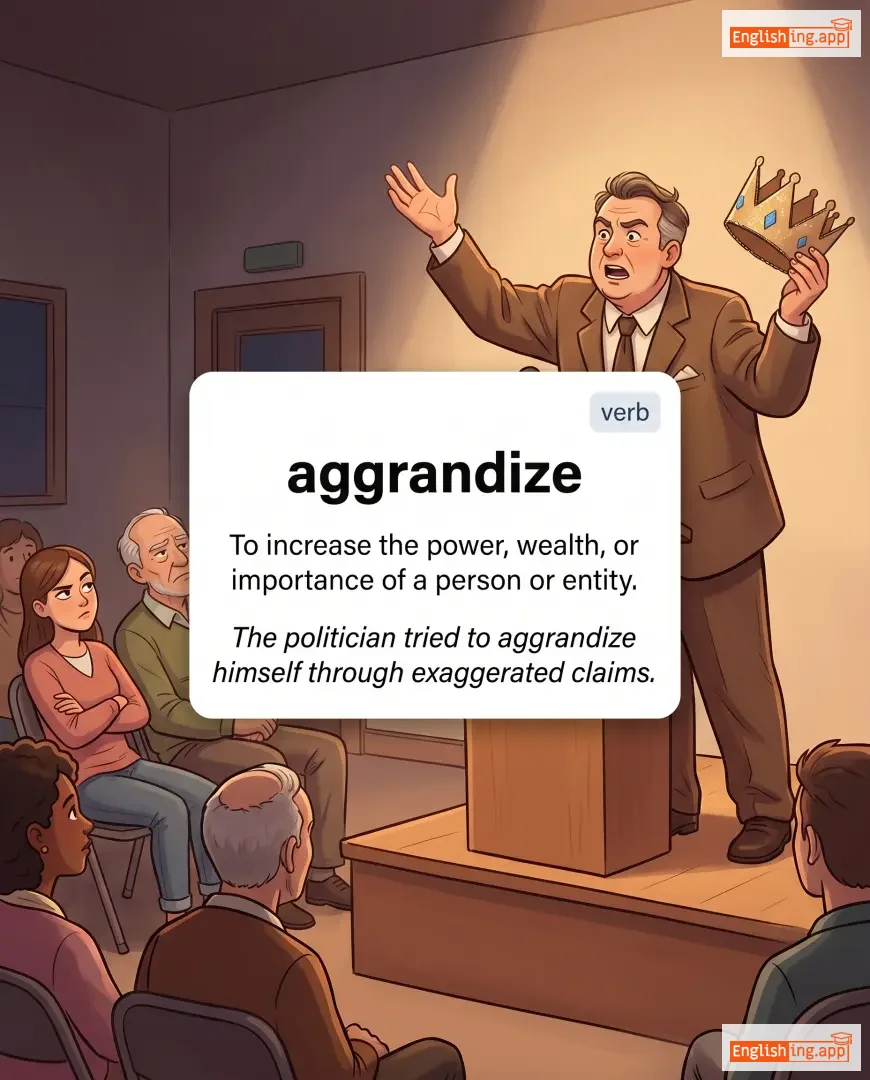
To increase the power, wealth, or importance of a person or entity.
••••••
|
The politician tried to aggrandize himself through exaggerated claims.
Политик пытался увеличить свою власть через преувеличенные утверждения.
••••••
|
Политик пытался увеличить свою власть через преувеличенные утверждения.
Politik pytalsya uvelichit' svoyu vlast' cherez preuvelichennye utverzhdeniya.
••••••
|
- •••••• | - •••••• | - •••••• |
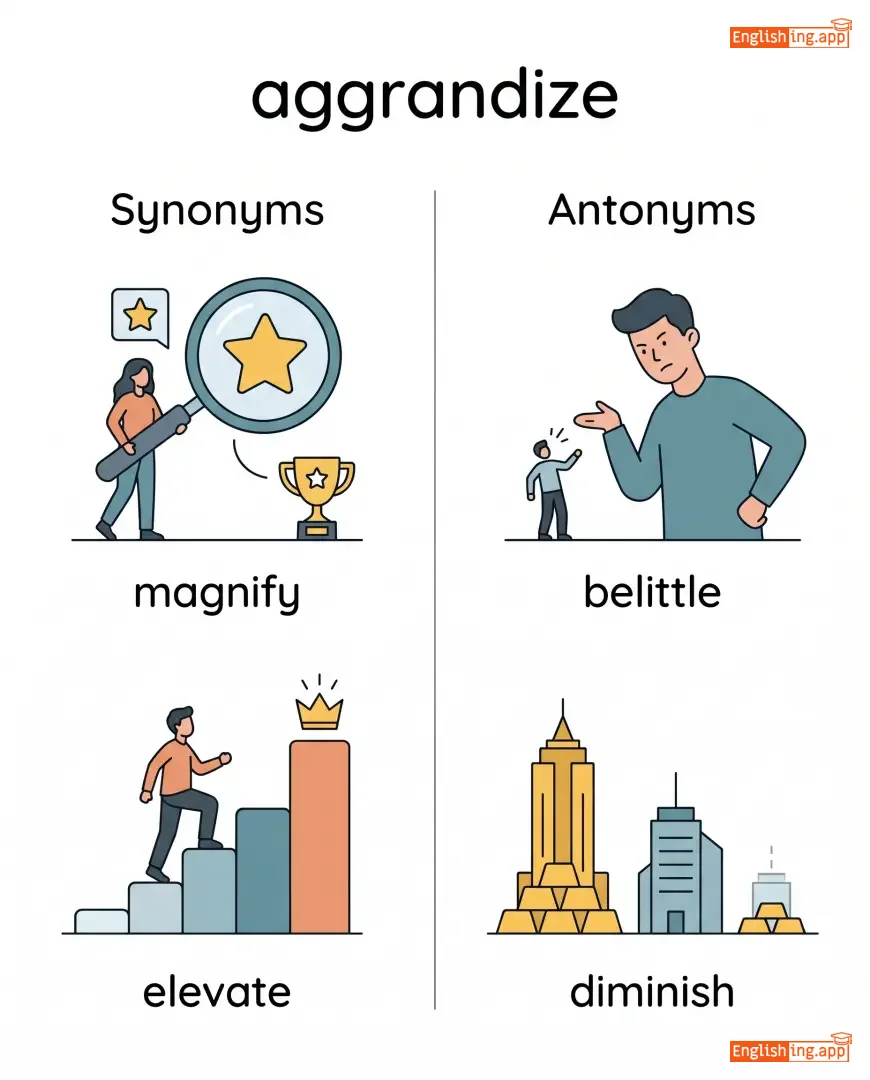
magnify, elevate, exalt, glorify
••••••
|
belittle, diminish, humiliate
••••••
|
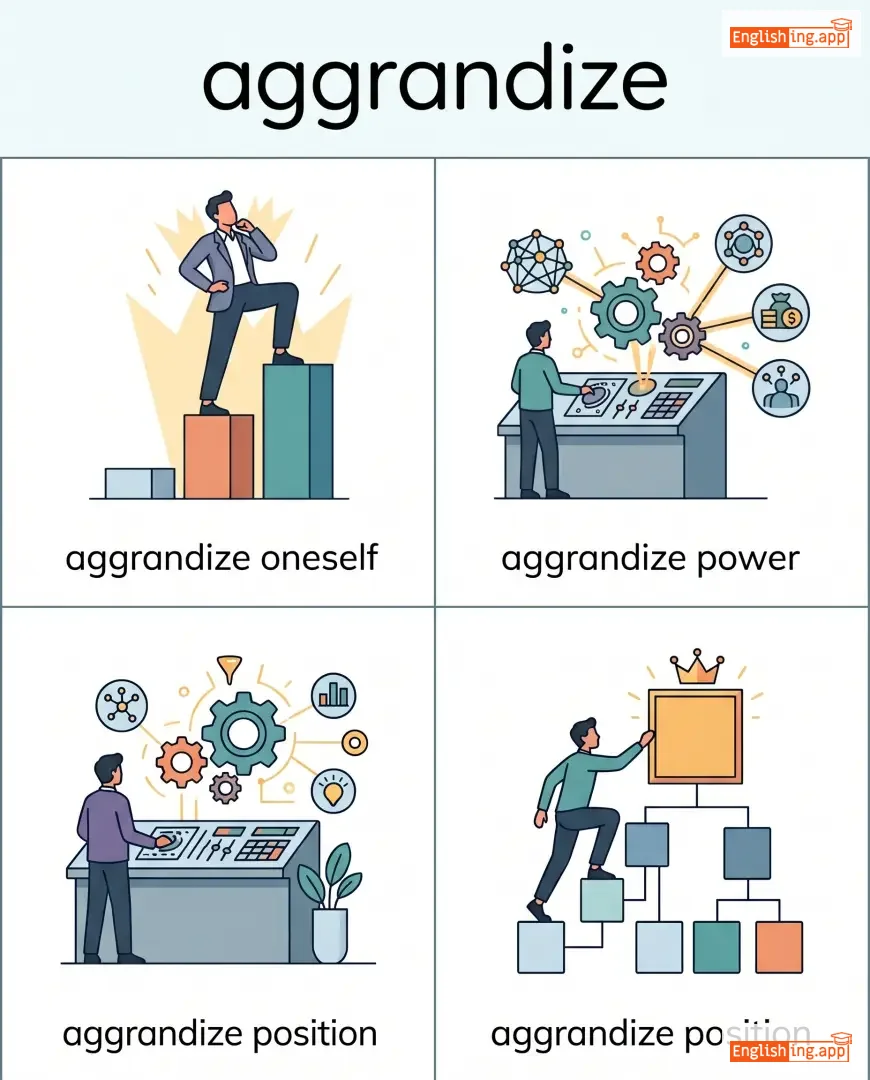
aggrandize oneself, aggrandize power, aggrandize position
••••••
|
Aggrandize означает сделать кого-то больше.
••••••
|
|
#261
🏙️
|
/əˌɡlɒməˈreɪʃən/
noun
(агломерация)
••••••
|
- •••••• |
агломерация
aglomieratsiya
••••••
|
- •••••• | - •••••• | - •••••• | - •••••• |
A mass or collection of things, sometimes clustered together.
••••••
|
The city is an agglomeration of diverse cultures and communities. |
Город является агломерацией различных культур и сообществ.
Gorod yavylyayetsya aglomeratsiyey razlichnykh kul'tur i soobshchestv.
••••••
|
- •••••• | - •••••• | - •••••• |
cluster, accumulation, collection, mass, grouping
••••••
|
separation, division, dispersal
••••••
|
urban agglomeration, industrial agglomeration, agglomeration of people
••••••
|
Agglomeration означает агломерация, когда все собрано вместе.
••••••
|
|
#262
🌀
|
/əˈɡlɒməˌreɪt/
verb
(агломерировать)
••••••
|
- •••••• |
агломерировать
aglomerirować
••••••
|
agglomerated
агломерировавший
••••••
|
agglomerated
агломерированный
••••••
|
agglomerates
агломерирует
••••••
|
agglomerating
агломерируя
••••••
|
To collect or form into a mass or group.
••••••
|
The dust particles began to agglomerate into larger clusters.
Пыльные частицы начали агломерировать в большие скопления.
••••••
|
Пыльные частицы начали агломерировать в большие скопления.
Pylnye chastyitsy nachali aglomerirovat' v bol'shiye skopleniya.
••••••
|
- •••••• | - •••••• | - •••••• |
gather, cluster, collect, accumulate, assemble
••••••
|
disperse, scatter, separate
••••••
|
agglomerate particles, agglomerate materials, agglomerate into
••••••
|
Agglomerate = All Glow Mates = собрать все вещи как друзья.
••••••
|
|
#263
📋
|
/əˈdʒɛndə/
noun
(адженда)
••••••
|
- •••••• |
повестка дня
adzhenda
••••••
|
- •••••• | - •••••• | - •••••• | - •••••• |
A list of items to be discussed or acted upon in a meeting or plan.
••••••
|
The manager reviewed the agenda before the meeting began.
Менеджер рассмотрел повестку дня перед началом совещания.
••••••
|
Менеджер рассмотрел повестку дня перед началом совещания.
Menedzher rassmotrel povestku dnya pered nachalom soveshaniya.
••••••
|
hidden agenda
скрытая повестка дня
••••••
|
A secret motive or plan behind someone's actions.
••••••
|
Скрытая мотивация
skrytaia motivatsiya
••••••
|
schedule, plan, program, timetable, itinerary
••••••
|
disorganization, randomness
••••••
|
meeting agenda, set the agenda, hidden agenda
••••••
|
Aдженда = A DAY S PLAN повестка дня: вообрази календарь и список дел на каждый день
••••••
|
|
#264
😲
|
/əˈɡeɪp/ or /əˈɡɑːp/
adjective
(агапе)
••••••
|
- •••••• |
с открытым ртом
s otkrytym rtom
••••••
|
- •••••• | - •••••• | - •••••• | - •••••• |
With the mouth wide open in surprise or wonder.
••••••
|
She stood agape at the breathtaking view.
Она стояла с открытым ртом, пораженная захватывающим видом.
••••••
|
Она стояла с открытым ртом, пораженная захватывающим видом.
Ona stoyala s otkrytym rtom, porazhennaya zakhvatyvayushchim vidom.
••••••
|
- •••••• | - •••••• | - •••••• |
astonished, amazed, open-mouthed, dumbfounded
••••••
|
composed, closed, indifferent
••••••
|
stood agape, mouth agape, eyes agape
••••••
|
Agape = рот открытый (с удивлением).
••••••
|
|
#265
💭
|
/ˈæftərˌθɔːt/
noun
••••••
|
- •••••• | - •••••• | - •••••• | - •••••• | - •••••• | - •••••• |
Something added or considered later than originally planned.
••••••
|
The gift seemed like an afterthought rather than a genuine gesture. |
- •••••• | - •••••• | - •••••• | - •••••• |
reflection, reconsideration, postscript, addition
••••••
|
plan, intention, forethought
••••••
|
added as an afterthought, just an afterthought, seemed like an afterthought
••••••
|
No •••••• |
|
#266
🌌
|
/ˈæftərˌlaɪf/
noun
••••••
|
- •••••• | - •••••• | - •••••• | - •••••• | - •••••• | - •••••• |
Life or existence that some believe continues after physical death.
••••••
|
Many cultures have different beliefs about the afterlife. |
- •••••• |
life after death |
The continuation of existence beyond physical death.
••••••
|
- •••••• |
hereafter, eternity, beyond, next world, immortality
••••••
|
life, mortality, existence
••••••
|
belief in the afterlife, journey to the afterlife, afterlife experiences
••••••
|
No •••••• |
|
#267
🌱
|
/əˈfrɛʃ/
adverb
(афреш)
••••••
|
- •••••• |
снова
snovaa
••••••
|
- •••••• | - •••••• | - •••••• | - •••••• |
From the beginning, in a new way.
••••••
|
After the failure, they started the project afresh.
После неудачи они начали проект с самого начала.
••••••
|
После неудачи они начали проект с самого начала.
Posle neyudachi oni nachali proyekt s samogo nachala.
••••••
|
- •••••• | - •••••• | - •••••• |
anew, again, once more, newly, recently
••••••
|
continuously, endlessly
••••••
|
start afresh, begin afresh, live afresh, think afresh
••••••
|
Afresh означает начать что-то снова, с самого начала.
••••••
|
|
#268
📜
|
/əˈfɔːrˌsɛd/
adjective
(афорсед)
••••••
|
- •••••• |
упомянутый ранее
upomyanutyy ranee
••••••
|
- •••••• | - •••••• | - •••••• | - •••••• |
Mentioned earlier; previously stated.
••••••
|
The aforesaid conditions must be met before the contract is signed.
Указанные выше условия должны быть выполнены до подписания контракта.
••••••
|
Условия, упомянутые ранее, должны быть выполнены до подписания контракта.
Usloviya, upomyanutye ranee, dolzhny byt' vypolneny do podpisaniya kontrakta.
••••••
|
- •••••• | - •••••• | - •••••• |
previously mentioned, aforementioned, earlier, stated, cited
••••••
|
unmentioned, unstated
••••••
|
aforesaid statement, aforesaid terms, aforesaid matter, aforesaid conditions
••••••
|
Aforesaid на русском языке означает 'упомянутый ранее'.
••••••
|
|
#269
🚶
|
/əˈfʊt/
adjective, adverb
(афут)
••••••
|
- •••••• |
в разработке
v razrabotke
••••••
|
- •••••• | - •••••• | - •••••• | - •••••• |
In progress; happening or being prepared.
••••••
|
There are several new projects afoot in the company.
В компании есть несколько новых проектов в разработке.
••••••
|
В компании есть несколько новых проектов в разработке.
V kompanii est' neskol'ko novykh proyektov v razrabotke.
••••••
|
plans afoot
планы в разработке
••••••
|
plans that are in progress or being arranged
••••••
|
планы в разработке
plany v razrabotke
••••••
|
ongoing, happening, occurring, underway, brewing
••••••
|
finished, completed, ended
••••••
|
plans afoot, schemes afoot, changes afoot, new developments afoot
••••••
|
Afoot означает 'в разработке', потому что что-то в процессе.
••••••
|
|
#270
😠
|
/əˈfrʌnt/
noun, verb
(афронт)
••••••
|
- •••••• |
оскорбление
oskorblenie
••••••
|
affronted
афронтед
••••••
|
affronted
афронтед
••••••
|
affronts
афронтс
••••••
|
affronting
афронтинг
••••••
|
An action or remark that causes outrage or offense.
••••••
|
He took her criticism as a personal affront.
Он воспринял ее критику как личное оскорбление.
••••••
|
Он воспринял ее критику как личное оскорбление.
On vosprinyal yeye kritiku kak lichnoe oskorblenie.
••••••
|
- •••••• | - •••••• | - •••••• |
insult, offense, indignity, slight, provocation
••••••
|
compliment, praise, respect
••••••
|
personal affront, feel affronted, affront to dignity, deliberate affront
••••••
|
Affront означает оскорбление, как стоять перед (front) человеком.
••••••
|
Vocabulary Quiz
Test your vocabulary by matching words with their translations or meanings.
Login to take the quiz
Comments (0)
Share your thoughts and join the discussion.
Join the discussion by logging in
Login to CommentNo comments yet
Be the first to share your thoughts!