













Swipe left or right, or use the buttons. Tap image to zoom.
例句翻译
单词
Lesson 57Lesson 57 - 遮罩切换
|
表情符号
|
单词 | Images | 翻译 | 过去时 | 过去分词 | 第三人称单数 | 动名词 | 含义 | 例句 | 例句翻译 | 示例表达 | 示例表达含义 | 示例表达翻译 | 同义词 | 反义词 | 搭配词 | 助记符 |
|---|---|---|---|---|---|---|---|---|---|---|---|---|---|---|---|---|---|
|
#1681
📄
|
/kənˈdɛns/
verb
(kān-dén-sī)
••••••
|
|
压缩
yāsuō
••••••
|
condensed
kān-dén-sī-d
••••••
|
condensed
kān-dén-sī-d
••••••
|
condenses
kān-dén-sī-es
••••••
|
condensing
kān-dén-sī-ing
••••••
|
to make something shorter, more concentrated, or more compact
••••••
|
The editor asked the writer to condense the article into one page.
编辑要求作者将文章压缩到一页。
••••••
|
编辑要求作者将文章压缩到一页。
Biānjí yāoqiú zuòzhě jiāng wénzhāng yāsuō dào yī yè.
••••••
|
- •••••• | - •••••• | - •••••• |
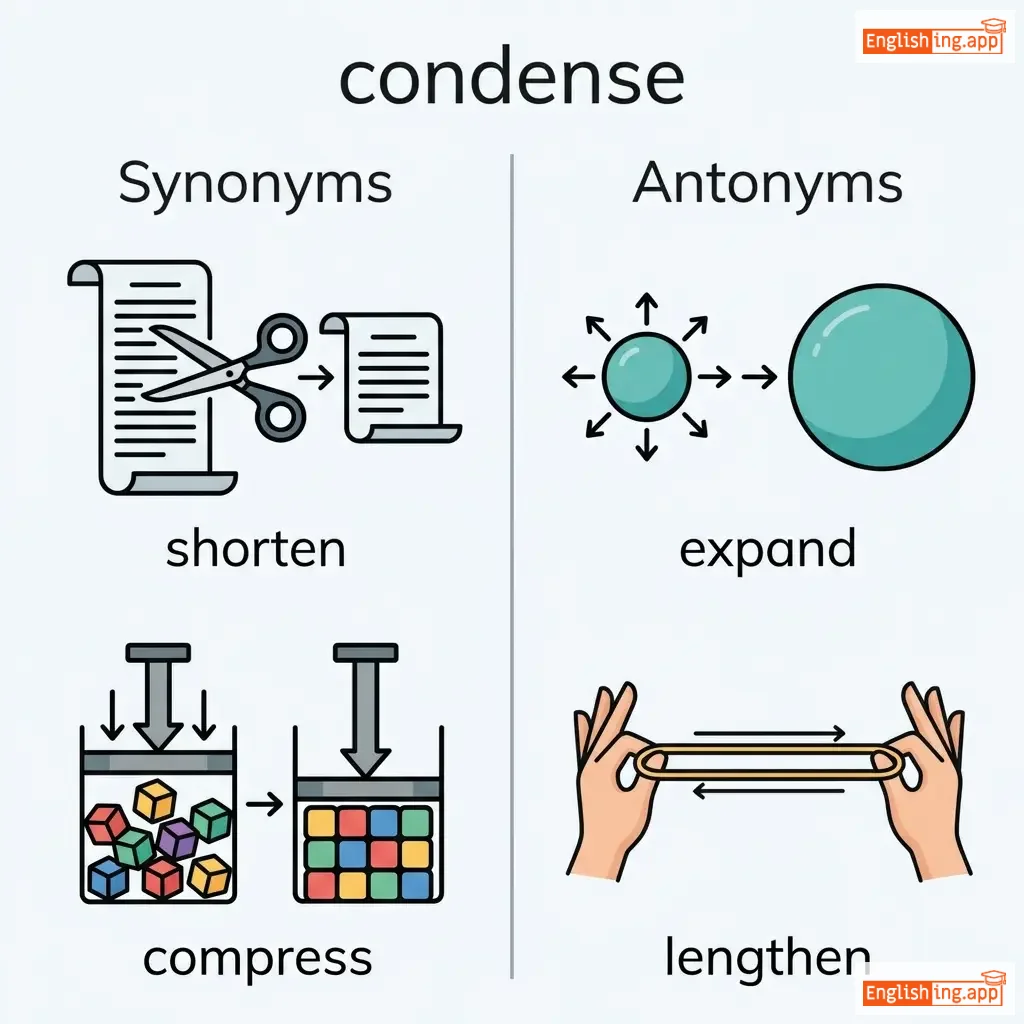
shorten, compress, summarize, compact, reduce
••••••
|
expand, lengthen, elaborate
••••••
|
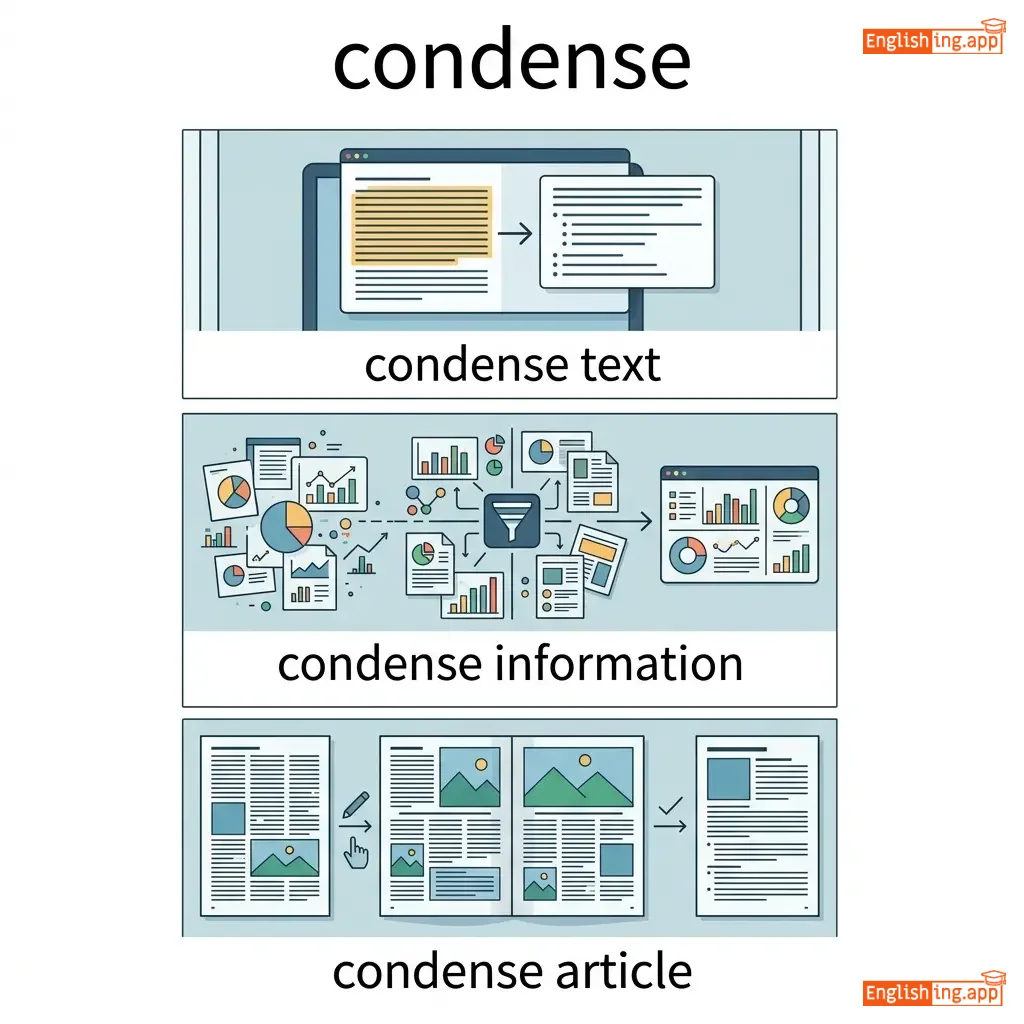
condense text, condense information, condense article, condense speech
••••••
|
Condense表示压缩,就像将水分从水果中压缩出来做成浓缩汁一样。
••••••
|
|
#1682
🔌
|
/ˈkɒndjuɪt/ or /ˈkɑːnduɪt/
noun
(kàngdùit)
••••••
|
- •••••• |
管道 / 媒介
guǎndào / méijiè
••••••
|
- •••••• | - •••••• | - •••••• | - •••••• |
a channel or pipe for conveying water, electricity, or information
••••••
|
The cable was placed inside a protective conduit. |
电缆被放入保护管道中。
diànlǎn bèi fàng rù bǎohù guǎndào zhōng.
••••••
|
a conduit for |
a means of transmitting or distributing something
••••••
|
传播的媒介
chuánbō de méijiè
••••••
|
channel, pipe, passage, medium, carrier
••••••
|
blockage, barrier
••••••
|
electrical conduit, water conduit, conduit for information
••••••
|
Conduit可以是电线的管道,也可以是传输信息的媒介。
••••••
|
|
#1683
🎼
|
/kənˈdʌktər/
noun
(导体)
••••••
|
- •••••• |
指挥 / 导电材料
zhǐhuī / dǎodiàn cáiliào
••••••
|
- •••••• | - •••••• | - •••••• | - •••••• |
a person who directs a performance or someone who collects fares on public transport; or a material that conducts electricity
••••••
|
The conductor waved his baton to start the orchestra. |
指挥挥动他的指挥棒开始了乐团的演奏。
Zhǐhuī huīdòng tā de zhǐhuībàng kāishǐle yuètuán de yǎnzòu.
••••••
|
- •••••• | - •••••• | - •••••• |
leader, director, guide, controller
••••••
|
follower, insulator
••••••
|
train conductor, orchestra conductor, electrical conductor
••••••
|
Conductor 可以是指挥或者电的导体.
••••••
|
|
#1684
⚡
|
/kənˈdʌktəbl̩/
adjective
(kənˈdʌktəbl̩)
••••••
|
- •••••• |
导电的
daodian de
••••••
|
- •••••• | - •••••• | - •••••• | - •••••• |
capable of being conducted, especially electricity or heat
••••••
|
Copper is highly conductible to electricity.
铜对电的导电性很高。
••••••
|
铜的导电性很高。
Tong de daodianxing hen gao.
••••••
|
- •••••• | - •••••• | - •••••• |
transmissible, transferable, conductive, conveyable
••••••
|
non-conductive, insulating
••••••
|
conductible material, conductible property, highly conductible
••••••
|
导电的意味着导 + 能够, 能够导电或导热。
••••••
|
|
#1685
🧑🏫
|
/ˈkɒndʌkt/ (noun), /kənˈdʌkt/ (verb)
noun, verb
••••••
|
- •••••• | - •••••• |
conducted
••••••
|
conducted
••••••
|
conducts
••••••
|
conducting
••••••
|
to organize or carry out; or a person's behavior
••••••
|
The teacher conducted the exam fairly. |
- •••••• |
conduct oneself |
to behave in a particular manner
••••••
|
- •••••• |
manage, carry out, perform, behavior, demeanor
••••••
|
mismanage, neglect, misconduct
••••••
|
conduct research, conduct business, professional conduct
••••••
|
No •••••• |
|
#1686
🌱
|
/kənˈdjuːsɪv/
adjective
(kənˈdjuːsɪv)
••••••
|
|
有利的
you li de
••••••
|
- •••••• | - •••••• | - •••••• | - •••••• |
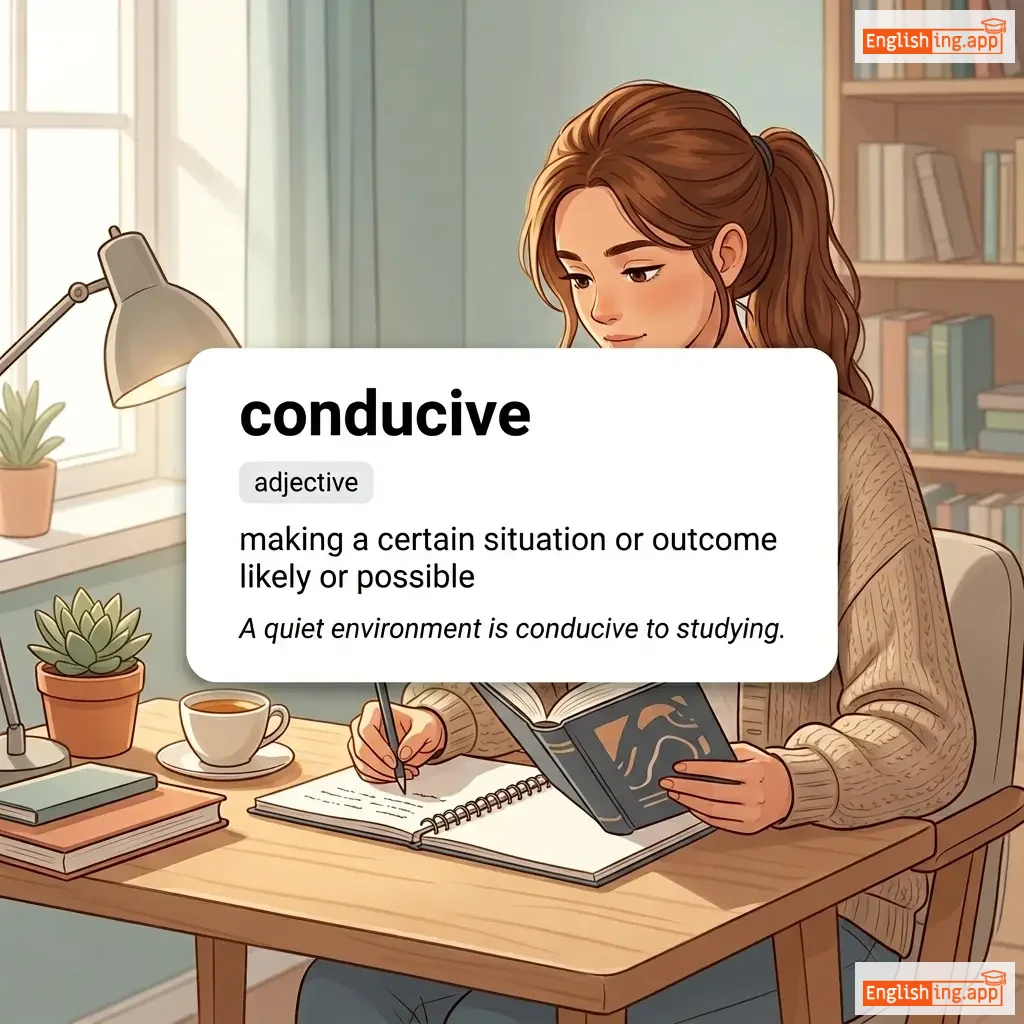
making a certain situation or outcome likely or possible
••••••
|
A quiet environment is conducive to studying. |
安静的环境有利于学习。
Anjing de huanjing you li yu xuexi.
••••••
|
- •••••• | - •••••• | - •••••• |
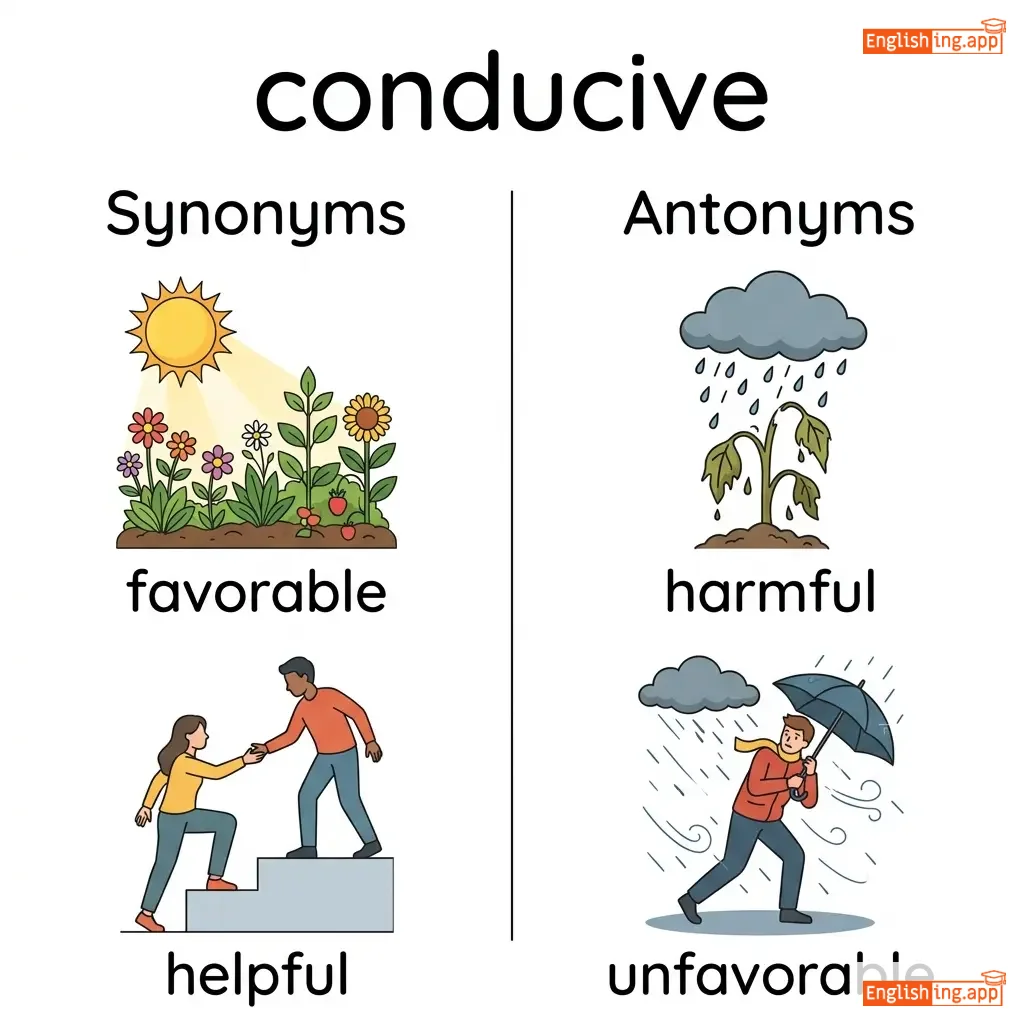
favorable, helpful, beneficial, advantageous, supportive
••••••
|
harmful, unfavorable, obstructive
••••••
|
conducive to learning, conducive environment, conducive atmosphere
••••••
|
Conducive 意味着有利的,比如有利于学习的环境。
••••••
|
|
#1687
➡️
|
/kənˈdjuːs/
verb
(坤迪尤斯)
••••••
|
- •••••• |
有助于
you zhu yu
••••••
|
conduced
坤迪尤斯德
••••••
|
conduced
坤迪尤斯德
••••••
|
conduces
坤迪尤斯
••••••
|
conducing
坤迪尤辛
••••••
|
To help bring about a particular result; to contribute to something.
••••••
|
Regular exercise conduces to better health.
定期锻炼有助于更好的健康。
••••••
|
定期锻炼有助于更好的健康。
Dingqi duanlian you zhu yu geng hao de jiankang.
••••••
|
- •••••• | - •••••• | - •••••• |
contribute, lead, promote, foster
••••••
|
hinder, obstruct, prevent
••••••
|
conduce to, directly conduce, conduce towards
••••••
|
Conduce 意味着对健康有帮助。
••••••
|
|
#1688
🙈
|
/kənˈdəʊn/
verb
(宽容)
••••••
|
|
宽容
kuanrong
••••••
|
condoned
宽容了
••••••
|
condoned
宽容了
••••••
|
condones
宽容
••••••
|
condoning
宽容中
••••••
|
To accept or allow behavior that is morally wrong or offensive.
••••••
|
The manager refused to condone harassment in the workplace.
经理拒绝在工作场所宽容骚扰。
••••••
|
经理拒绝在工作场所宽容骚扰。
Jingli jujue zai gongzuo changsuo kuanrong saorao.
••••••
|
- •••••• | - •••••• | - •••••• |
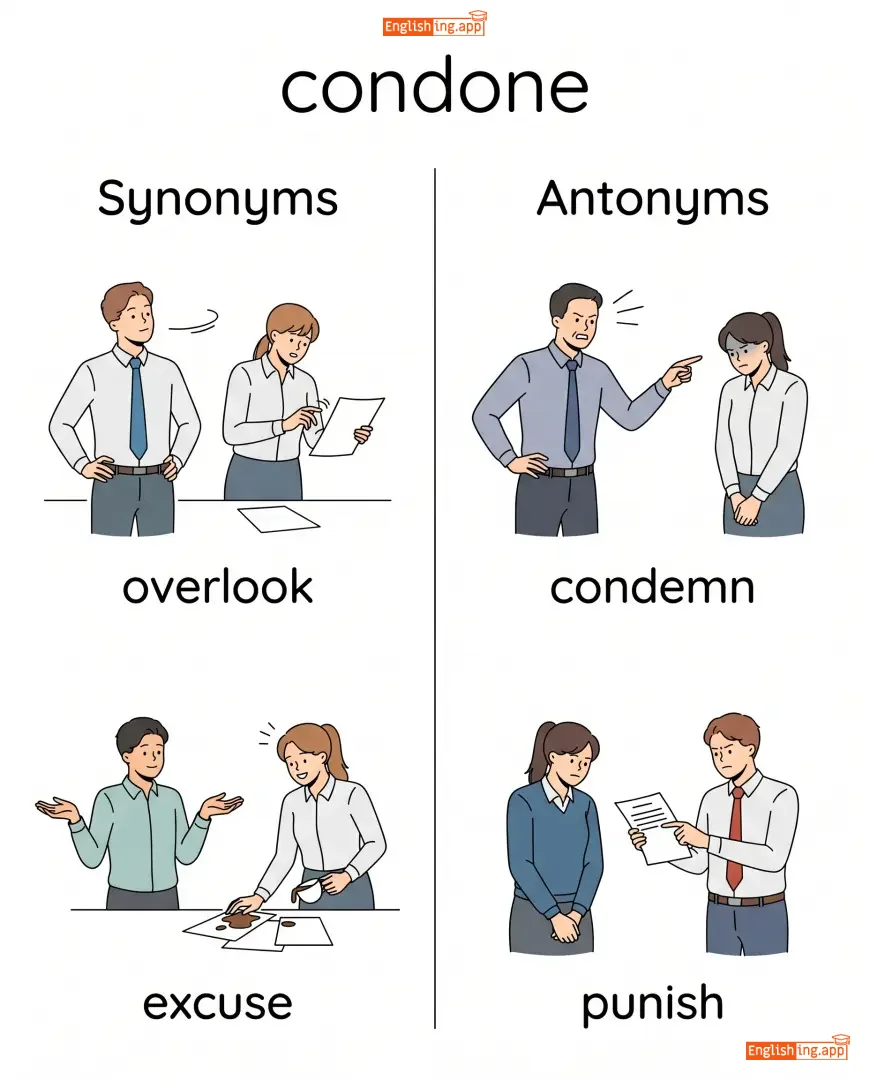
overlook, excuse, forgive, tolerate
••••••
|
condemn, punish, disapprove
••••••
|
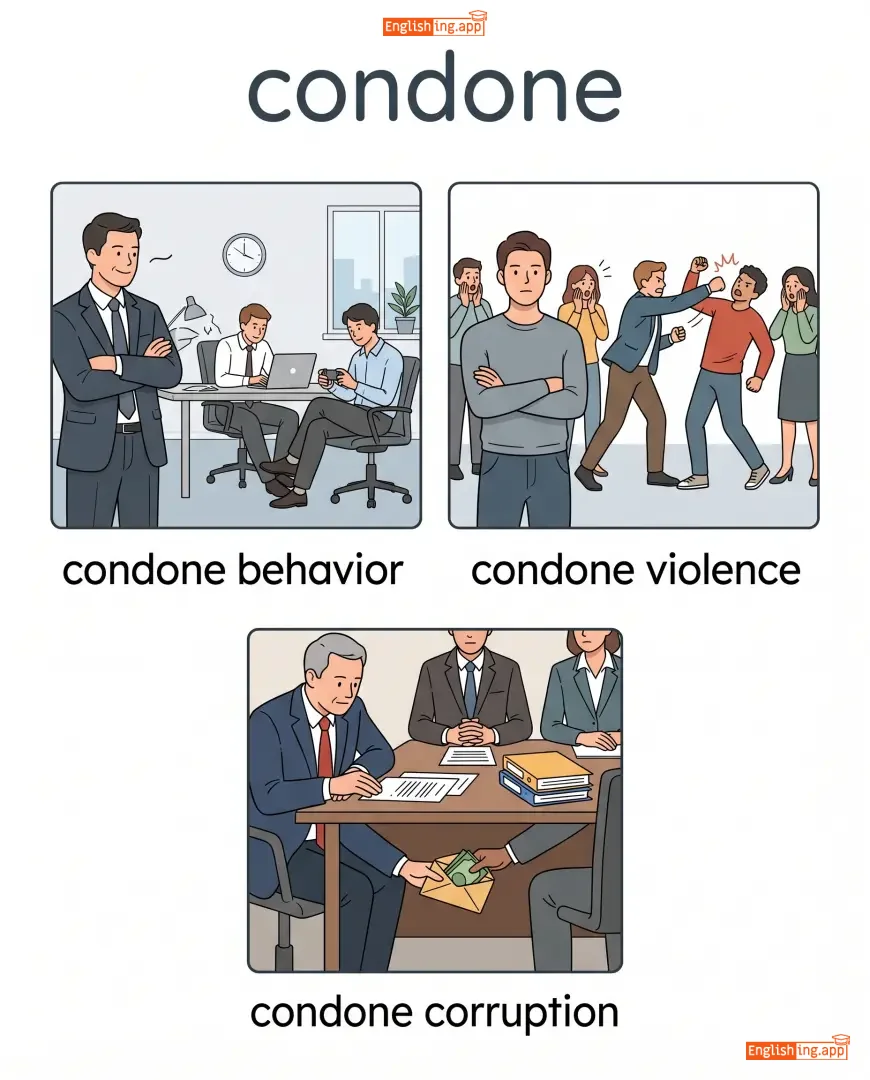
condone behavior, condone violence, condone corruption
••••••
|
Condone意味着没有条件地宽容
••••••
|
|
#1689
🕊️
|
/kənˈdəʊləns/
noun
(kənˈdoʊləns)
••••••
|
- •••••• |
慰问
weiwen
••••••
|
- •••••• | - •••••• | - •••••• | - •••••• |
An expression of sympathy, especially on the occasion of death.
••••••
|
She offered her sincere condolence to the grieving family.
她向悲痛的家庭表示了最真诚的慰问。
••••••
|
她向悲痛的家庭表示了最真诚的慰问。
Ta xiang beitong de jiating biaoshile zui zhencheng de weiwen.
••••••
|
send condolences
发送慰问
••••••
|
to express sympathy for someone's loss
••••••
|
发送慰问
fasong weiwen
••••••
|
sympathy, compassion, pity, comfort
••••••
|
cruelty, indifference
••••••
|
offer condolence, express condolence, heartfelt condolence
••••••
|
Condolence = 失去亲人时,我们发送慰问。
••••••
|
|
#1690
🤍
|
/kənˈdəʊl/
verb
(坎多尔)
••••••
|
- •••••• |
表示同情
biao shi tong qing
••••••
|
condoled
坎多尔德
••••••
|
condoled
坎多尔德
••••••
|
condoles
坎多尔斯
••••••
|
condoling
坎多尔灵
••••••
|
To express sympathy for someone who is suffering or grieving.
••••••
|
Neighbors came to condole with the family after the tragedy.
邻居们在悲剧后前来向家属表示慰问。
••••••
|
邻居们在悲剧后前来向家属表示慰问。
Linju men zai beiju hou qianlai xiang jiashu biaoshi weiwun.
••••••
|
- •••••• | - •••••• | - •••••• |
sympathize, commiserate, console, comfort
••••••
|
ignore, neglect, disregard
••••••
|
condole with, condole over, condole deeply
••••••
|
Condole 就是表示慰问—在别人悲伤时给予支持
••••••
|
|
#1691
🥫
|
/ˈkɒndɪmənts/
noun
(kāndìméncí)
••••••
|
- •••••• |
调味品或酱料
tiáowèipǐn huò jiàngliào
••••••
|
- •••••• | - •••••• | - •••••• | - •••••• |
Seasonings or sauces used to add flavor to food.
••••••
|
Ketchup and mustard are popular condiments for burgers. |
番茄酱和芥末是汉堡的常见调味品。
Fānqiéjiàng hé jièmò shì hànbǎo de chángjiàn tiáowèipǐn.
••••••
|
- •••••• | - •••••• | - •••••• |
seasonings, sauces, toppings, flavorings, garnishes
••••••
|
blandness, plainness
••••••
|
table condiments, spice condiments, popular condiments, condiments section
••••••
|
调味品使食物更加美味,像是酱料和香料。
••••••
|
|
#1692
🥫
|
/ˈkɒndɪmənt/
noun
(kàndìmèn)
••••••
|
- •••••• |
调味品/酱料
tiaoweipin/jiangliao
••••••
|
- •••••• | - •••••• | - •••••• | - •••••• |
a substance such as salt, mustard, or ketchup that is used to add flavor to food
••••••
|
Ketchup is a popular condiment in many countries. |
番茄酱是许多国家受欢迎的调味品。
Fanqiejiang shi xu duo guo jia shou huanying de tiaoweipin.
••••••
|
- •••••• | - •••••• | - •••••• |
seasoning, sauce, dressing, flavoring
••••••
|
unseasoned, bland
••••••
|
add condiment, condiment table, condiment shelf
••••••
|
Condiment 就像 '调味品',它让食物更美味。
••••••
|
|
#1693
⚖️
|
/ˈkɒndaɪn/
adjective
(kōndàin)
••••••
|
- •••••• |
应得的
yīngdé de
••••••
|
- •••••• | - •••••• | - •••••• | - •••••• |
deserved, appropriate, and fitting (especially punishment)
••••••
|
The criminal received condign punishment for his crimes. |
罪犯因其罪行受到了应得的惩罚。
Zuìfàn yīn qí zuìxíng shòu dào le yīngdé de chéngfá.
••••••
|
- •••••• | - •••••• | - •••••• |
deserved, fitting, appropriate, just, suitable
••••••
|
undeserved, unfair, inappropriate
••••••
|
condign punishment, condign penalty, condign justice
••••••
|
Condign punishment 意思是 '肯定' → 犯罪应得合适的惩罚。
••••••
|
|
#1694
🙄
|
/ˌkɒndɪˈsɛndɪŋ/
adjective
(kān dì sēn dīng)
••••••
|
- •••••• |
居高临下
jū gāo lín xià
••••••
|
- •••••• | - •••••• | - •••••• | - •••••• |
having or showing an attitude of patronizing superiority
••••••
|
Her condescending tone upset her colleagues. |
她居高临下的语气让她的同事感到不满。
Tā jū gāo lín xià de yǔqì ràng tā de tóngshì gǎndào bùmǎn.
••••••
|
- •••••• | - •••••• | - •••••• |
patronizing, snobbish, arrogant, disdainful, superior
••••••
|
respectful, humble, modest
••••••
|
condescending tone, condescending attitude, condescending remark
••••••
|
居高临下,表示高人一等的态度,对他人不屑一顾。
••••••
|
|
#1695
😒
|
/ˌkɒndɪˈsɛnd/
verb
(kəndɪˈsɛnd)
••••••
|
- •••••• |
从高处以友善的态度
cóng gāo chù yǐ yǒu shàn de tàidù
••••••
|
condescended
kəndɪˈsɛndɪd
••••••
|
condescended
kəndɪˈsɛndɪd
••••••
|
condescends
kəndɪˈsɛndz
••••••
|
condescending
kəndɪˈsɛndɪŋ
••••••
|
to behave as if one is superior while being gracious to others
••••••
|
He would not condescend to answer such a trivial question.
他不会屈尊回答如此琐碎的问题。
••••••
|
他不会屈尊回答如此琐碎的问题。
Tā bù huì qūzūn huídá rúcǐ suǒsuì de wèntí.
••••••
|
- •••••• | - •••••• | - •••••• |
patronize, deign, stoop, belittle, humiliate
••••••
|
respect, honor, admire
••••••
|
condescend to help, refuse to condescend, condescend to answer
••••••
|
Condescend在中文中代表从高处向别人展现一种高人一等的态度。
••••••
|
|
#1696
🕊️
|
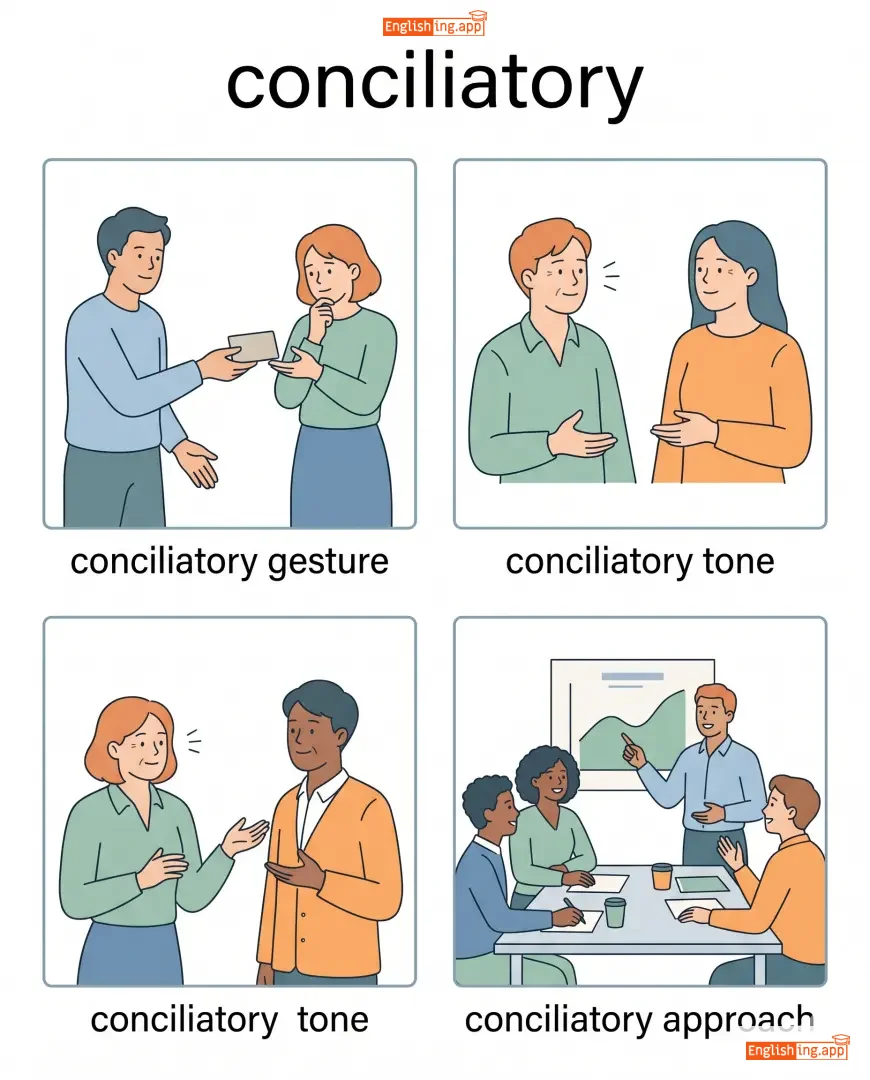
/kənˈsɪliətɔːri/
adjective
(kǒng-xī-lì-āo-tè-lì)
••••••
|
|
调解的
tiao jie de
••••••
|
- •••••• | - •••••• | - •••••• | - •••••• |
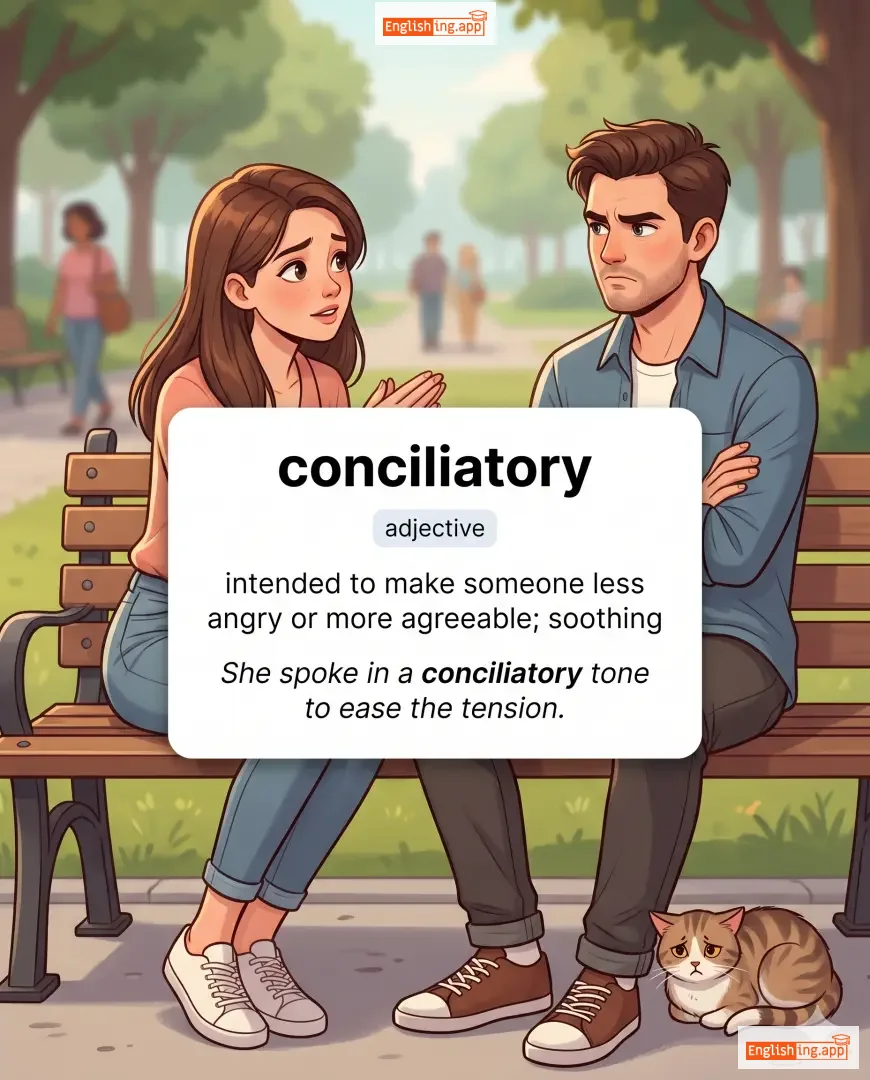
intended to make someone less angry or more agreeable; soothing
••••••
|
She spoke in a conciliatory tone to ease the tension. |
她以调解的语气说话,以缓解紧张气氛。
Tā yǐ tiáojiě de yǔqì shuōhuà, yǐ huǎnjiě jǐnzhāng qìfēn.
••••••
|
- •••••• | - •••••• | - •••••• |
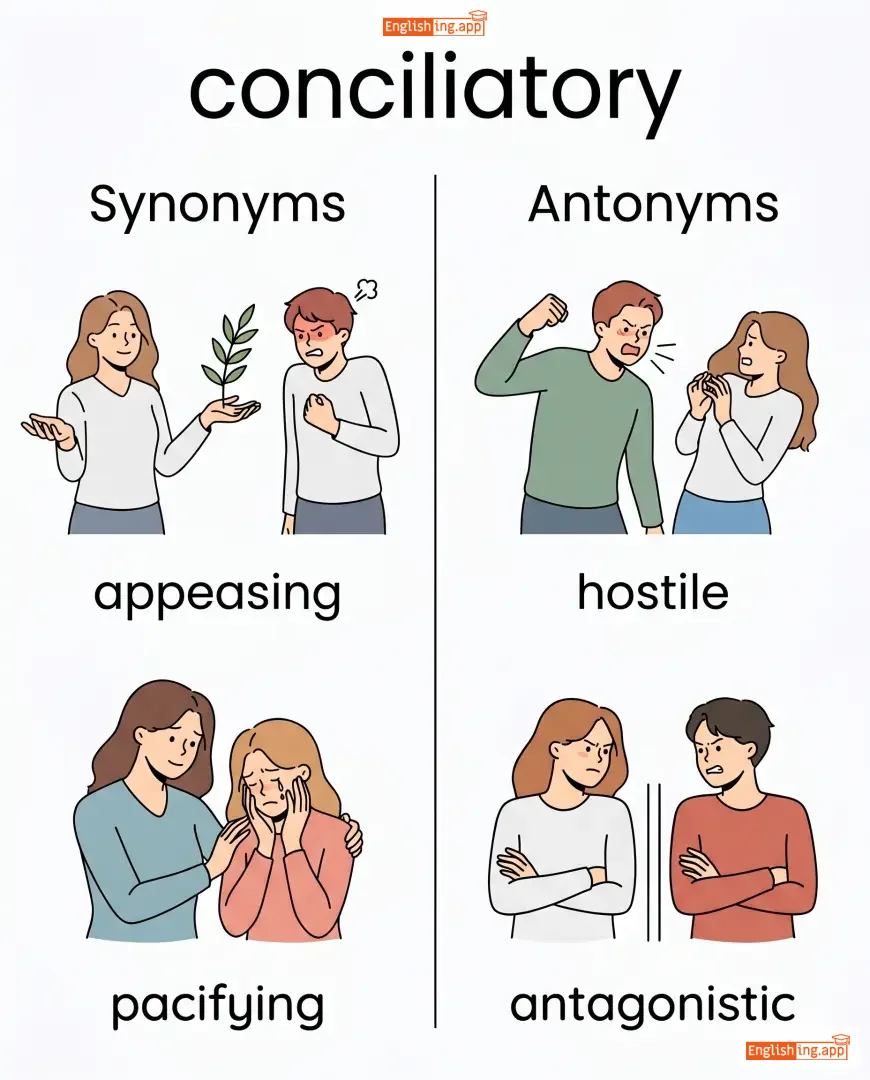
appeasing, pacifying, soothing, placatory, calming
••••••
|
hostile, antagonistic, confrontational
••••••
|
conciliatory gesture, conciliatory tone, conciliatory approach
••••••
|
调解的调解音调,缓解紧张
••••••
|
|
#1697
💧
|
/ˌkɒndɛnˈseɪʃən/
noun
(kondensé)
••••••
|
- •••••• |
冷凝
lěngníng
••••••
|
- •••••• | - •••••• | - •••••• | - •••••• |
The process of water vapor changing into liquid; also, the act of making something more concise.
••••••
|
Condensation formed on the windows during the cold night. |
在寒冷的夜晚,窗户上形成了冷凝。
Zài hánlěng de yèwǎn, chuānghù shàng xíngchéngle lěngníng.
••••••
|
- •••••• | - •••••• | - •••••• |
liquefaction, compression, concentration, distillation
••••••
|
evaporation, expansion
••••••
|
water condensation, condensation process, condensation on glass, condensation reaction
••••••
|
冷凝是'冷'和'凝',水蒸气变成液体。
••••••
|
|
#1698
❌
|
/kənˈdɛm/
verb
(kān-dēm)
••••••
|
|
谴责
qianze
••••••
|
condemned
kān-dēm-d
••••••
|
condemned
kān-dēm-d
••••••
|
condemns
kān-dēm-s
••••••
|
condemning
kān-dēm-ing
••••••
|
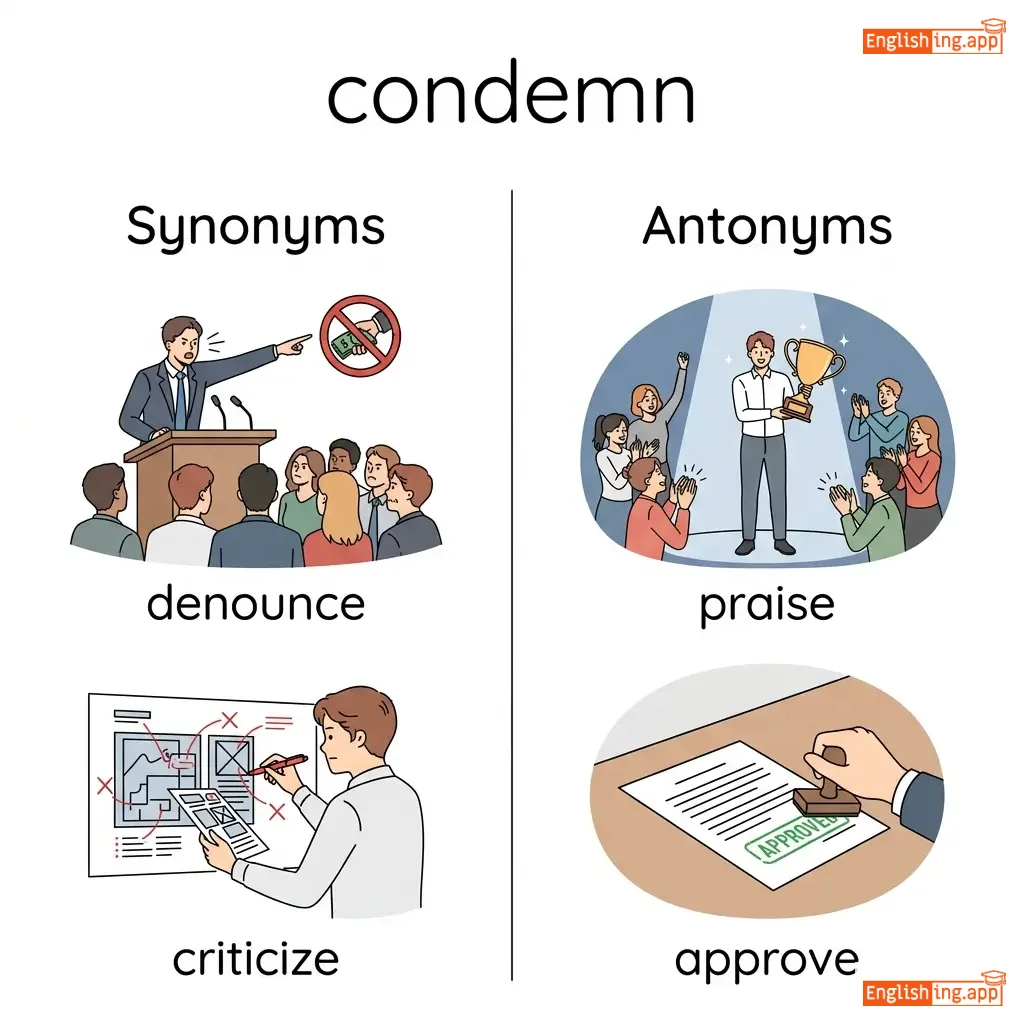
To express strong disapproval of; to declare something as wrong or unacceptable.
••••••
|
The government condemned the act of violence.
政府谴责了暴力行为。
••••••
|
政府谴责了暴力行为。
zhèngfǔ qiǎnzéle bàolì xíngwéi.
••••••
|
condemn to death
判处死刑
••••••
|
to sentence someone to death as punishment
••••••
|
判处死刑
pànchǔ sǐxíng
••••••
|
denounce, criticize, censure, blame
••••••
|
praise, approve, support
••••••
|
condemn strongly, condemn violence, condemn publicly, condemn actions
••••••
|
Condemn 就是'谴责',好像在惩罚某人做错的事。
••••••
|
|
#1699
🤕
|
/kənˈkʌʃən/
noun
(kēn kè xiāng)
••••••
|
- •••••• |
脑震荡
nao zhen dang
••••••
|
- •••••• | - •••••• | - •••••• | - •••••• |
A temporary unconsciousness or shock caused by a blow to the head.
••••••
|
He suffered a concussion after falling from the bike. |
他在从自行车上摔下来后,遭受了脑震荡。
Ta zai cong zixingche shang shuai xiala hou, zaoshou le nao zhendang.
••••••
|
- •••••• | - •••••• | - •••••• |
brain injury, trauma, shock, head injury
••••••
|
health, wellness
••••••
|
mild concussion, severe concussion, concussion symptoms, concussion treatment
••••••
|
Concussion像是'康科' - 代表头部撞击。
••••••
|
|
#1700
⏳
|
/kənˈkʌrənt/
adjective
(kōngkùlèntè)
••••••
|
|
同时发生的
tóngshí fāshēng de
••••••
|
- •••••• | - •••••• | - •••••• | - •••••• |
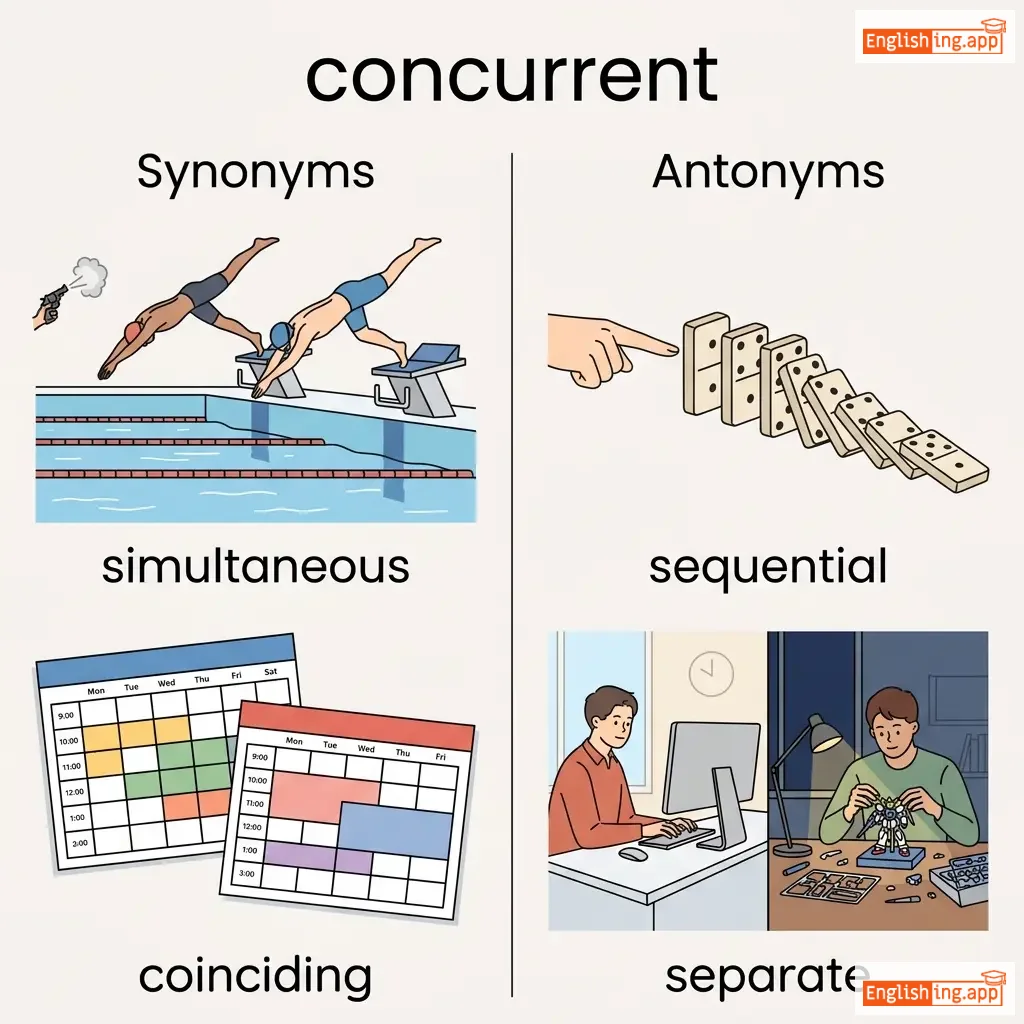
Happening, existing, or done at the same time.
••••••
|
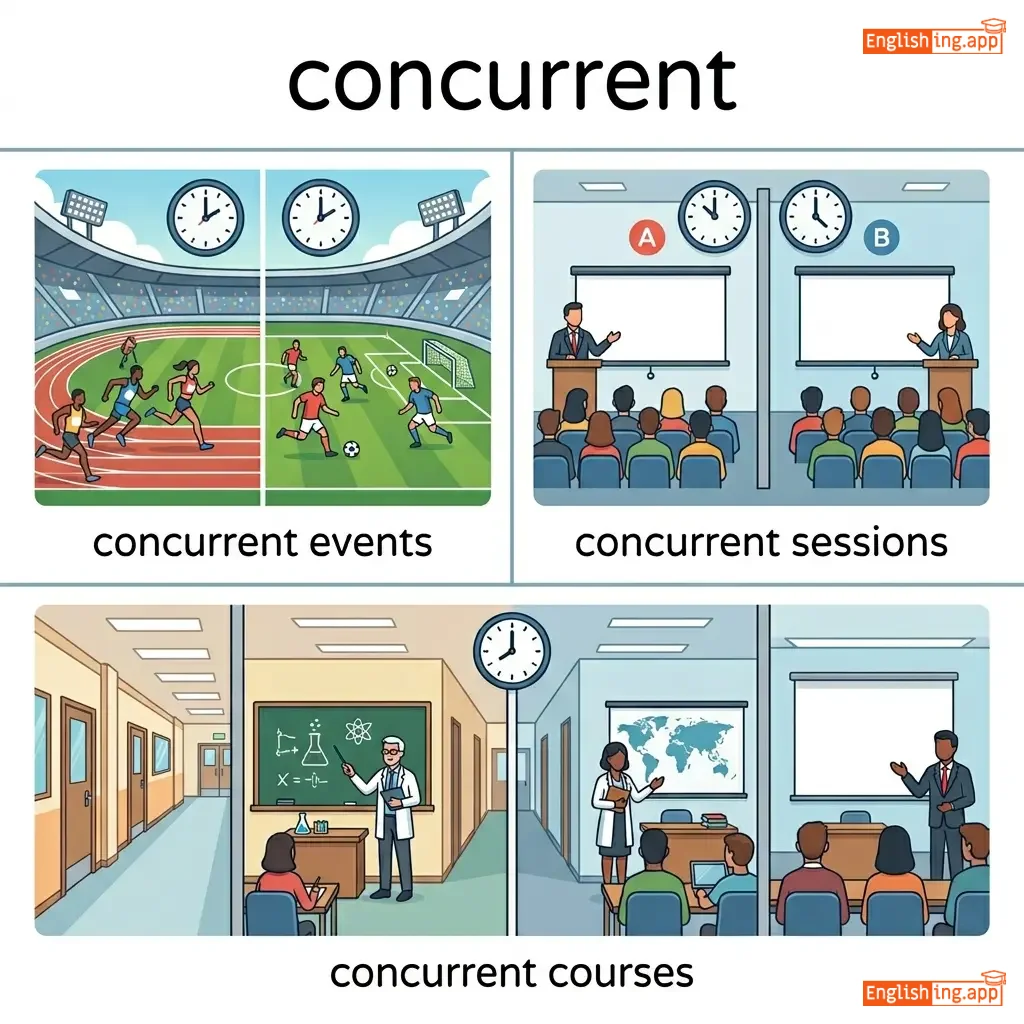
The university offers several concurrent courses during the summer. |
大学在夏季提供几门同时进行的课程。
Dàxué zài xiàjì tígōng jǐmén tóngshí jìnxíng de kèchéng.
••••••
|
concurrent with |
happening at the same time as
••••••
|
与…同时
yǔ…tóngshí
••••••
|
simultaneous, coinciding, synchronous, parallel
••••••
|
sequential, separate, different
••••••
|
concurrent events, concurrent sessions, concurrent courses, concurrent use
••••••
|
同时发生的意思是,所有事件都在同一时刻发生,就像多个队列同时启动。
••••••
|
|
#1701
🤝
|
/kənˈkʌrəns/
noun
(kèng-kè-rén-sī)
••••••
|
- •••••• |
一致
yīzhì
••••••
|
- •••••• | - •••••• | - •••••• | - •••••• |
Agreement or union in action, opinion, or occurrence; simultaneous happening of events.
••••••
|
The project was completed with the concurrence of all departments.
这个项目是在所有部门的共识下完成的。
••••••
|
这个项目是在所有部门的共识下完成的。
Zhege xiangmu shi zai suoyou bumen de gongshi xia wancheng de.
••••••
|
in concurrence with
与...一致
••••••
|
in agreement or in accordance with
••••••
|
与...一致
yu...yizhi
••••••
|
agreement, harmony, consent, accord, unity
••••••
|
disagreement, conflict, discord
••••••
|
mutual concurrence, general concurrence, concurrence of opinion, concurrence with
••••••
|
Concurrence 就是大家在同一个目标下共同推进,就像所有部门达成共识一样。
••••••
|
|
#1702
✅
|
/kənˈkɜːr/
verb
(肯可尔)
••••••
|
- •••••• |
同意
tóngyì
••••••
|
concurred
肯可尔德
••••••
|
concurred
肯可尔德
••••••
|
concurs
肯可尔斯
••••••
|
concurring
肯可灵
••••••
|
To agree with someone or something.
••••••
|
I concur with your opinion on this matter.
我同意您在这个问题上的观点。
••••••
|
我同意您在这个问题上的观点。
Wǒ tóngyì nín zài zhège wèntí shàng de guāndiǎn.
••••••
|
concur with
同意
••••••
|
to agree with someone or something
••••••
|
同意
tóngyì
••••••
|
agree, assent, approve, consent, coincide
••••••
|
disagree, dissent, oppose
••••••
|
concur with opinion, concur in decision, concur fully
••••••
|
Concur - 同意,'一起同意'。
••••••
|
|
#1703
📜
|
/ˈkɒŋ.kɔː.dæt/
noun
(kōngkǒdàtè)
••••••
|
- •••••• |
教廷协议
jiàotíng xiéyì
••••••
|
- •••••• | - •••••• | - •••••• | - •••••• |
An agreement or treaty, especially between the Vatican and a secular government.
••••••
|
The concordat established the rights of the church within the country. |
教廷协议确立了教会在该国的权利。
Jiàotíng xiéyì quèlìle jiàohuì zài gāiguó de quánlì.
••••••
|
- •••••• | - •••••• | - •••••• |
agreement, treaty, pact, settlement
••••••
|
conflict, dispute, disagreement
••••••
|
sign a concordat, concordat agreement, historic concordat
••••••
|
教廷协议意味着一种正式的协议 - 宗教与政府之间的协议
••••••
|
|
#1704
📑
|
/kənˈkɔːrdəns/
noun
(kənˈkɔːrdəns)
••••••
|
- •••••• |
一致性
yīzhìxìng
••••••
|
- •••••• | - •••••• | - •••••• | - •••••• |
Agreement; also an alphabetical index of the principal words in a book.
••••••
|
There is a strong concordance between the two reports. |
这两个报告之间有很强的一致性。
Zhè liǎng gè bàogào zhī jiān yǒu hěn qiáng de yīzhìxìng.
••••••
|
- •••••• | - •••••• | - •••••• |
agreement, harmony, consistency, correspondence
••••••
|
conflict, discord, inconsistency
••••••
|
statistical concordance, concordance index, high concordance
••••••
|
Concordance = 一致性 - 所有内容都达成一致
••••••
|
|
#1705
☮️
|
/ˈkɒŋ.kɔːd/
noun
(和谐)
••••••
|
|
和谐
hexie
••••••
|
- •••••• | - •••••• | - •••••• | - •••••• |
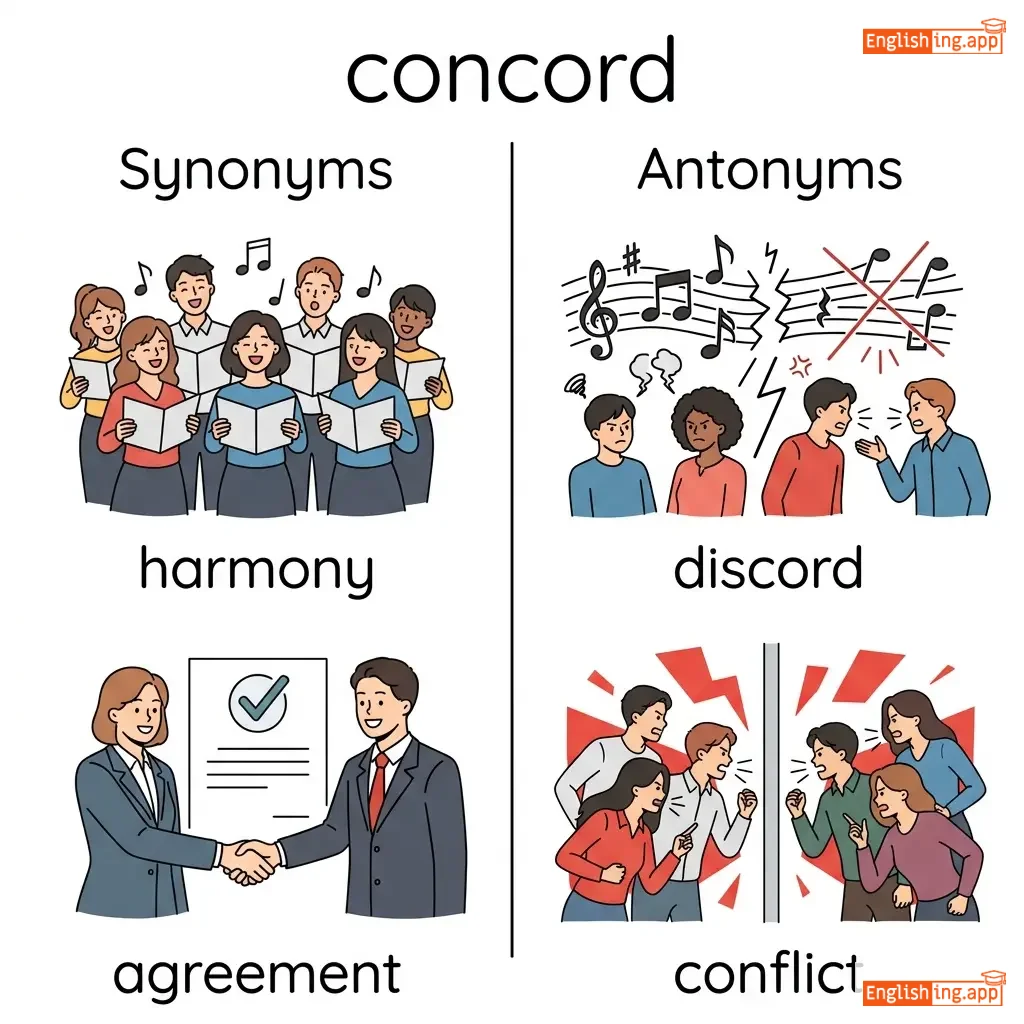
Agreement or harmony between people or groups.
••••••
|
The two nations lived in concord for many years.
这两个国家多年来和谐相处。
••••••
|
这两个国家多年来和谐相处。
Zhe liang ge guo jia duo nian lai hexie xiang chu.
••••••
|
in concord with
与...和谐
••••••
|
in agreement or harmony with
••••••
|
与...和谐
Yu...hexie
••••••
|
harmony, agreement, peace, unity, accord
••••••
|
discord, conflict, disagreement
••••••
|
live in concord, mutual concord, lasting concord
••••••
|
和谐像是建立平衡的协议。
••••••
|
|
#1706
➕
|
/kənˈkɒmɪtənt/
adjective
(kənˈkəmɪtənt)
••••••
|
|
伴随的
bànsuízhe de
••••••
|
- •••••• | - •••••• | - •••••• | - •••••• |
Naturally accompanying or associated with something.
••••••
|
Increased stress is often concomitant with long working hours.
增加的压力通常与长时间的工作时间并存。
••••••
|
增加的压力通常与长时间的工作时间并存。
Zēngjiā de yālì tōngcháng yǔ cháng shíjiān de gōngzuò shíjiān bìngcún.
••••••
|
- •••••• | - •••••• | - •••••• |
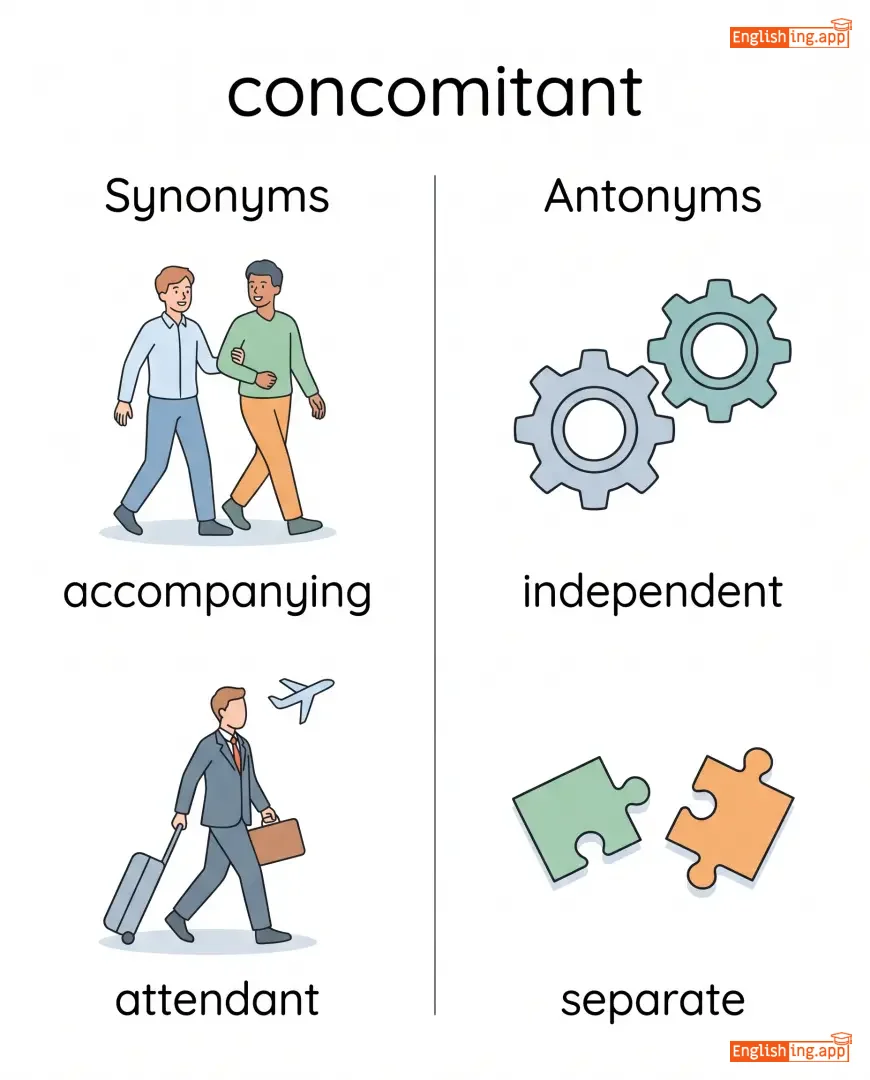
accompanying, attendant, coincident, simultaneous, related
••••••
|
independent, separate, unrelated
••••••
|
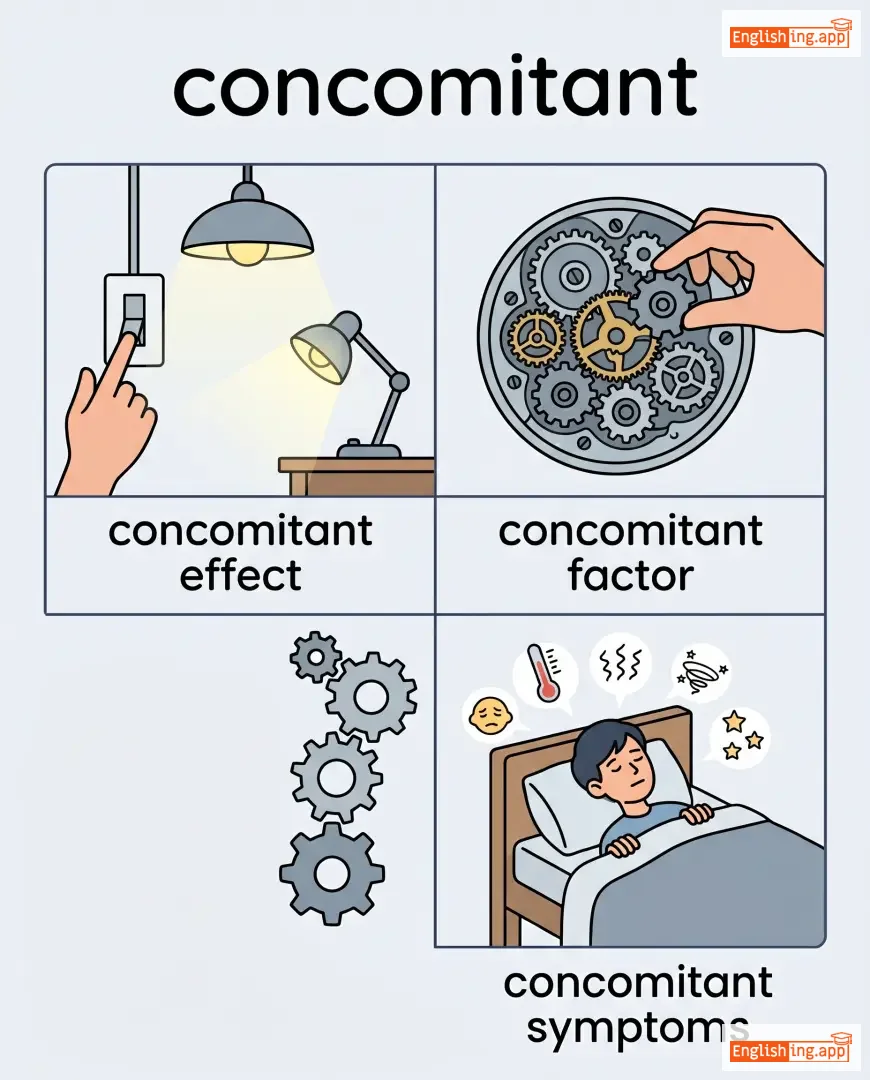
concomitant effect, concomitant factor, concomitant symptoms, concomitant risks
••••••
|
伴随 – 一起走,就像两个伴侣
••••••
|
|
#1707
🧪
|
/kənˈkɒkt/
verb
(kənˈkɑkt)
••••••
|
|
混合或发明
hunhe huo faming
••••••
|
concocted
kənˈkɑktɪd
••••••
|
concocted
kənˈkɑktɪd
••••••
|
concocts
kənˈkɑkts
••••••
|
concocting
kənˈkɑktɪŋ
••••••
|
to make something, especially food or a story, by mixing or inventing
••••••
|
He concocted a story to explain his absence.
他编造了一个故事来解释他的缺席。
••••••
|
他编造了一个故事来解释他的缺席。
Ta bianzhao le yige gushi lai jiexplain ta de quexi.
••••••
|
concoct a plan
编制一个计划
••••••
|
to invent or devise a plan
••••••
|
编制一个计划
Bianzhi yi ge jihua
••••••
|
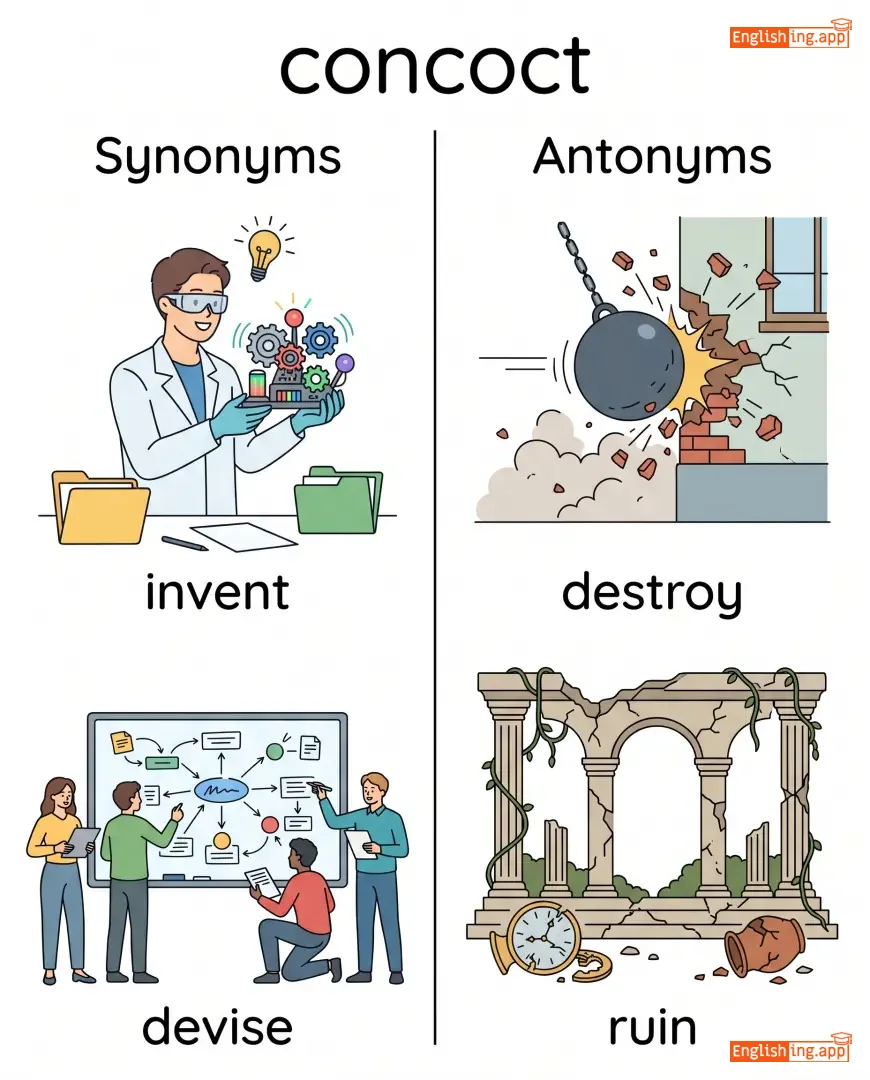
invent, devise, fabricate, prepare, create
••••••
|
destroy, ruin, dismantle
••••••
|
concoct a story, concoct a plan, concoct a dish
••••••
|
Concoct可以理解为用混合创造东西
••••••
|
|
#1708
✅
|
/kənˈkluːsɪv/
adjective
(kənˈkluːsɪv)
••••••
|
- •••••• |
决定性的
juédìngxìng de
••••••
|
- •••••• | - •••••• | - •••••• | - •••••• |
serving to prove a case; decisive or convincing
••••••
|
The DNA test provided conclusive evidence of his innocence.
DNA测试提供了他无辜的决定性证据。
••••••
|
DNA测试提供了他无辜的决定性证据。
DNA cèshì tígōngle tā wúgū de juédìngxìng zhèngjù.
••••••
|
- •••••• | - •••••• | - •••••• |
decisive, convincing, final, definite, certain
••••••
|
inconclusive, uncertain, doubtful
••••••
|
conclusive evidence, conclusive proof, conclusive result
••••••
|
决定性的, 就像是决定性结论的证据。
••••••
|
|
#1709
📜
|
/ˈkɒnk.leɪv/
noun
(kōngklèfū)
••••••
|
- •••••• |
秘密会议
mìmì huìyì
••••••
|
- •••••• | - •••••• | - •••••• | - •••••• |
a private meeting, especially a secret or important one
••••••
|
The leaders met in a secret conclave to discuss the strategy.
领导们在一个秘密的集会上讨论战略。
••••••
|
领导们在一个秘密的集会上讨论战略。
Lǐngdǎo men zài yī gè mìmì de jíhuì shàng tǎolùn zhànlüè.
••••••
|
- •••••• | - •••••• | - •••••• |
meeting, gathering, assembly, conference, council
••••••
|
public meeting, open forum
••••••
|
secret conclave, political conclave, conclave of leaders
••••••
|
Conclave 就像是会议,但更神秘
••••••
|
|
#1710
✍️
|
/kənˈsaɪs/
adjective
(kənˈsaɪs)
••••••
|
|
简洁
jianjie
••••••
|
- •••••• | - •••••• | - •••••• | - •••••• |
giving much information clearly and in a few words; brief but comprehensive
••••••
|
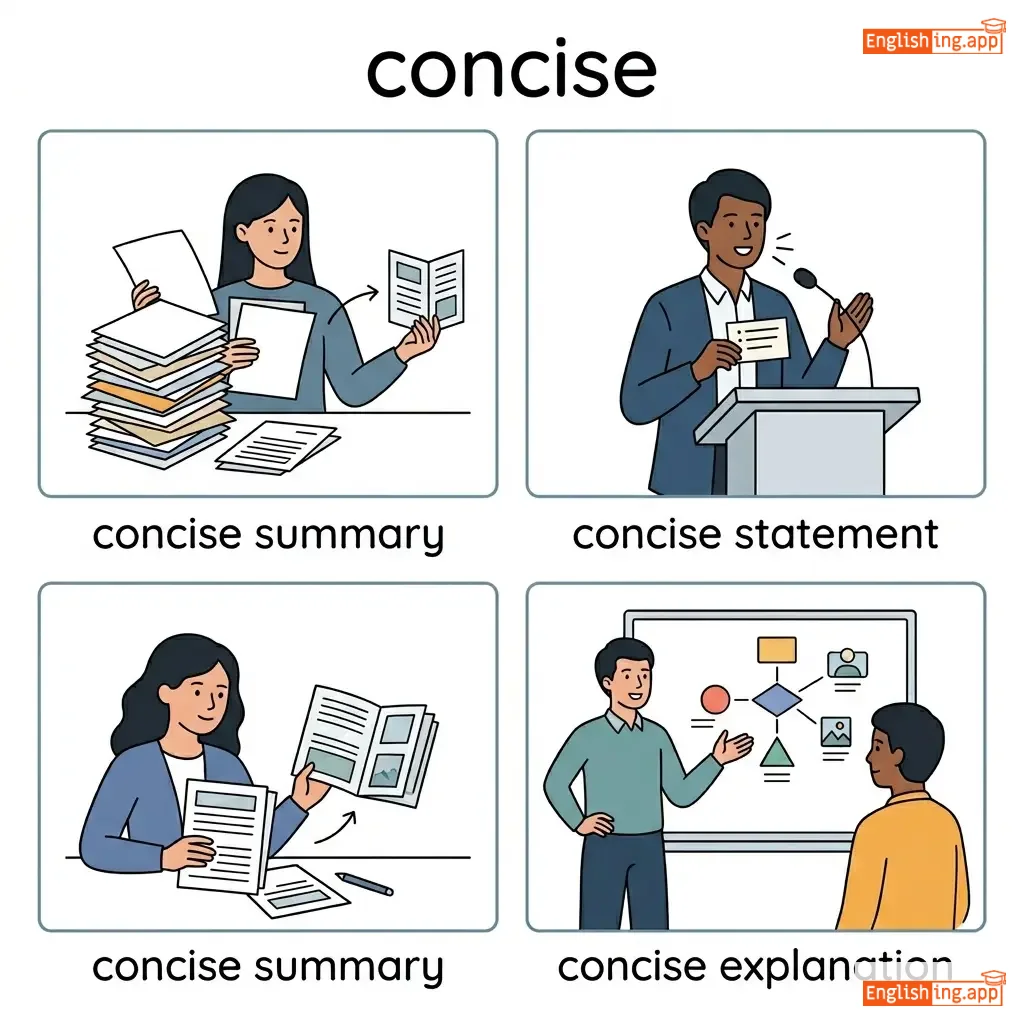
The teacher asked for a concise summary of the article. |
老师要求提供文章的简洁总结。
Laoshi yaoqiu tigong wenzhang de jianjie zongjie.
••••••
|
in concise terms |
expressed clearly and briefly
••••••
|
简洁的表达
jianjie de biaoda
••••••
|
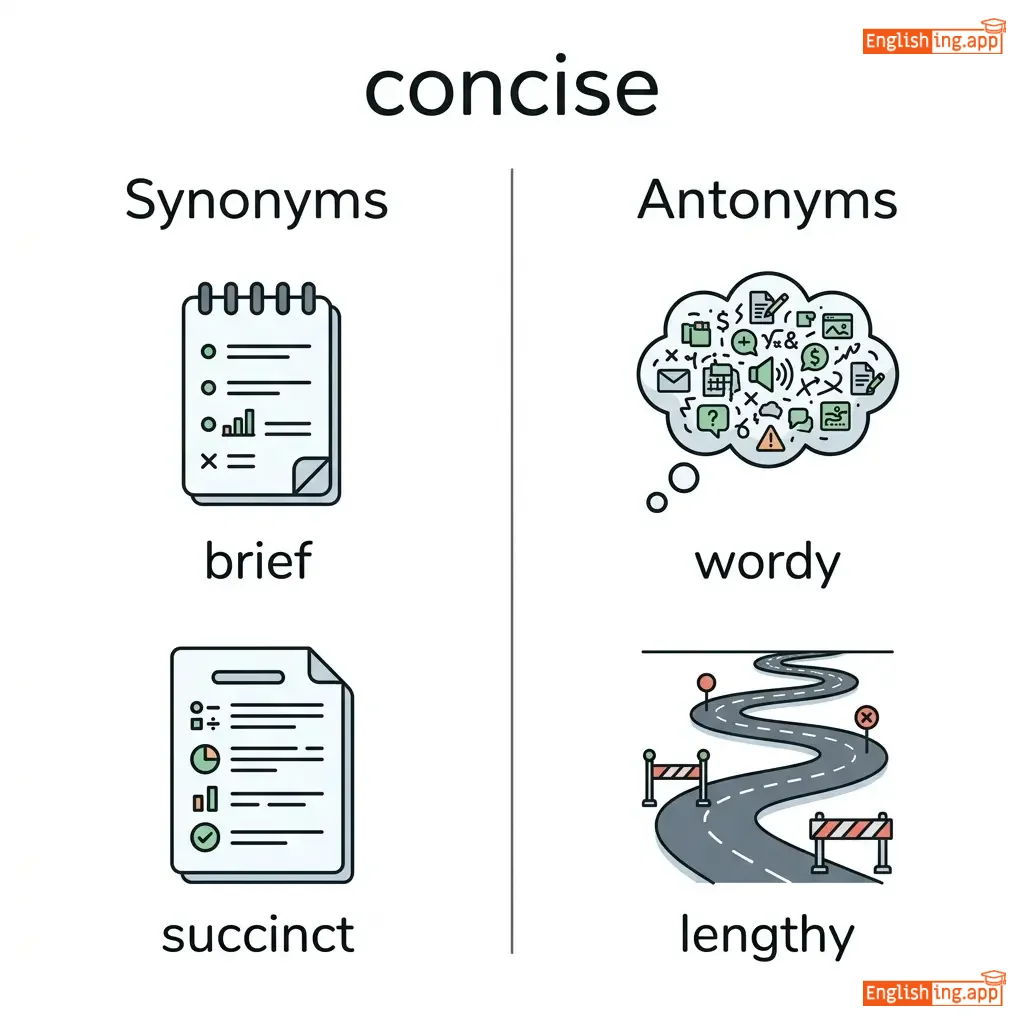
brief, succinct, clear, compact, terse
••••••
|
wordy, lengthy, verbose
••••••
|
concise summary, concise statement, concise explanation
••••••
|
简洁 = 简单明了。
••••••
|
Vocabulary Quiz
Test your vocabulary by matching words with their translations or meanings.
Login to take the quiz
Comments (0)
Share your thoughts and join the discussion.
Join the discussion by logging in
Login to CommentNo comments yet
Be the first to share your thoughts!