




Swipe left or right, or use the buttons. Tap image to zoom.
例句翻译
单词
Lesson 152Lesson 152 - 遮罩切换
|
表情符号
|
单词 | Images | 翻译 | 过去时 | 过去分词 | 第三人称单数 | 动名词 | 含义 | 例句 | 例句翻译 | 示例表达 | 示例表达含义 | 示例表达翻译 | 同义词 | 反义词 | 搭配词 | 助记符 |
|---|---|---|---|---|---|---|---|---|---|---|---|---|---|---|---|---|---|
|
#4531
💬
|
/ɪnˈdɪkətɪv/
adjective, noun
(指示性)
••••••
|
- •••••• |
指示性
zhǐshìxìng
••••••
|
- •••••• | - •••••• | - •••••• | - •••••• |
Serving as a sign or expression of something; in grammar, a mood used to make factual statements.
••••••
|
His tone was indicative of his frustration.
他的语气表明了他的沮丧。
••••••
|
他的语气表明了他的沮丧。
Tā de yǔqì biǎomíngle tā de jǔsàng.
••••••
|
indicative mood
指示性语气
••••••
|
The grammatical mood used for factual statements.
••••••
|
指示性语气
zhǐshìxìng yǔqì
••••••
|
suggestive, symbolic, representative, expressive
••••••
|
misleading, irrelevant
••••••
|
be indicative of, indicative sign, indicative statement
••••••
|
Indicative 就是指示—他的语气指示了他的沮丧,像一个清晰的标志。
••••••
|
|
#4532
😞
|
/ɪnˈdɪɡnɪti/
noun
(因迪尼提)
••••••
|
- •••••• |
屈辱
qūrǔ
••••••
|
- •••••• | - •••••• | - •••••• | - •••••• |
Treatment or circumstances that cause one to feel shame or humiliation.
••••••
|
He suffered the indignity of being ignored in the meeting.
他忍受了在会议上被忽视的屈辱。
••••••
|
他忍受了在会议上被忽视的屈辱。
Tā rěnshòu le zài huìyì shàng bèi hūshì de qūrǔ.
••••••
|
- •••••• | - •••••• | - •••••• |
humiliation, disgrace, shame, insult
••••••
|
honor, dignity, respect
••••••
|
suffer indignity, face indignity, the indignity of, indignity suffered
••••••
|
Indignity 是丧失尊严的感觉,带来屈辱。
••••••
|
|
#4533
🔥
|
/ˌɪndɪɡˈneɪʃən/
noun
(愤慨)
••••••
|
- •••••• |
愤慨
fènkǎi
••••••
|
- •••••• | - •••••• | - •••••• | - •••••• |
Strong displeasure or anger caused by something unjust, offensive, or insulting.
••••••
|
Public indignation grew after the unfair verdict. |
在不公正的裁决之后,公众的愤慨情绪上升。
Zài bù gōngzhèng de cáijué zhīhòu, gōngzhòng de fènkǎi qíngxù shàngshēng.
••••••
|
- •••••• | - •••••• | - •••••• |
outrage, resentment, fury, anger, displeasure
••••••
|
calmness, satisfaction
••••••
|
feel indignation, show indignation, indignation grew, express indignation
••••••
|
Indignation 就像是‘愤怒’的高强度版。
••••••
|
|
#4534
😠
|
/ɪnˈdɪɡnənt/
adjective
(愤怒)
••••••
|
- •••••• |
愤怒
fèn nù
••••••
|
- •••••• | - •••••• | - •••••• | - •••••• |
Feeling or showing anger at something considered unfair or unjust.
••••••
|
She was indignant when accused of cheating. |
她在被指控作弊时感到愤怒。
Tā zài bèi zhǐkòng zuòbì shí gǎndào fènnù.
••••••
|
- •••••• | - •••••• | - •••••• |
resentful, outraged, annoyed, offended, angry
••••••
|
pleased, content
••••••
|
feel indignant, indignant protest, indignant reply, indignant look
••••••
|
愤怒 = 不公平 = 愤怒
••••••
|
|
#4535
🤢
|
/ˌɪndɪˈdʒɛstʃən/
noun
••••••
|
- •••••• | - •••••• | - •••••• | - •••••• | - •••••• | - •••••• |
Discomfort or pain in the stomach associated with difficulty in digesting food.
••••••
|
He avoided spicy food because it often gave him indigestion. |
- •••••• | - •••••• | - •••••• | - •••••• |
dyspepsia, stomach upset, stomachache, digestive disorder
••••••
|
healthy digestion, comfort
••••••
|
suffer from indigestion, cause indigestion, indigestion remedy, prevent indigestion
••••••
|
No •••••• |
|
#4536
🥴
|
/ˌɪn.daɪˈdʒes.tə.bəl/
adjective
(因迪杰斯特布尔)
••••••
|
- •••••• |
难以消化
nán yǐ xiāo huà
••••••
|
- •••••• | - •••••• | - •••••• | - •••••• |
difficult or impossible to digest; hard to accept or understand
••••••
|
The report was so long and detailed that it became almost indigestible. |
报告如此长且详细,以至于几乎变得难以消化。
Baogao ruci chang qie xiangxi, yi zhi yu jihu biande nán yǐ xiāo huà.
••••••
|
- •••••• | - •••••• | - •••••• |
unpalatable, incomprehensible, hard, unmanageable, tough
••••••
|
digestible, understandable, simple
••••••
|
indigestible food, indigestible report, almost indigestible
••••••
|
Inda (India) 消化不了 = 难以消化的意思
••••••
|
|
#4537
🧑🦲
|
/ˈɪn.dɪ.dʒənt/
adjective
(因迪真特)
••••••
|
- •••••• |
贫困
pínkùn
••••••
|
- •••••• | - •••••• | - •••••• | - •••••• |
lacking the necessities of life due to poverty; very poor
••••••
|
The hospital offers free care to indigent patients. |
医院为贫困患者提供免费护理。
Yīyuàn wèi pínkùn huànzhě tígōng miǎnfèi hùlǐ.
••••••
|
- •••••• | - •••••• | - •••••• |
poor, impoverished, needy, destitute, penniless
••••••
|
rich, wealthy, affluent
••••••
|
indigent family, indigent patients, help indigent
••••••
|
In + dig (挖) = 贫穷到需要挖掘食物
••••••
|
|
#4538
🌱
|
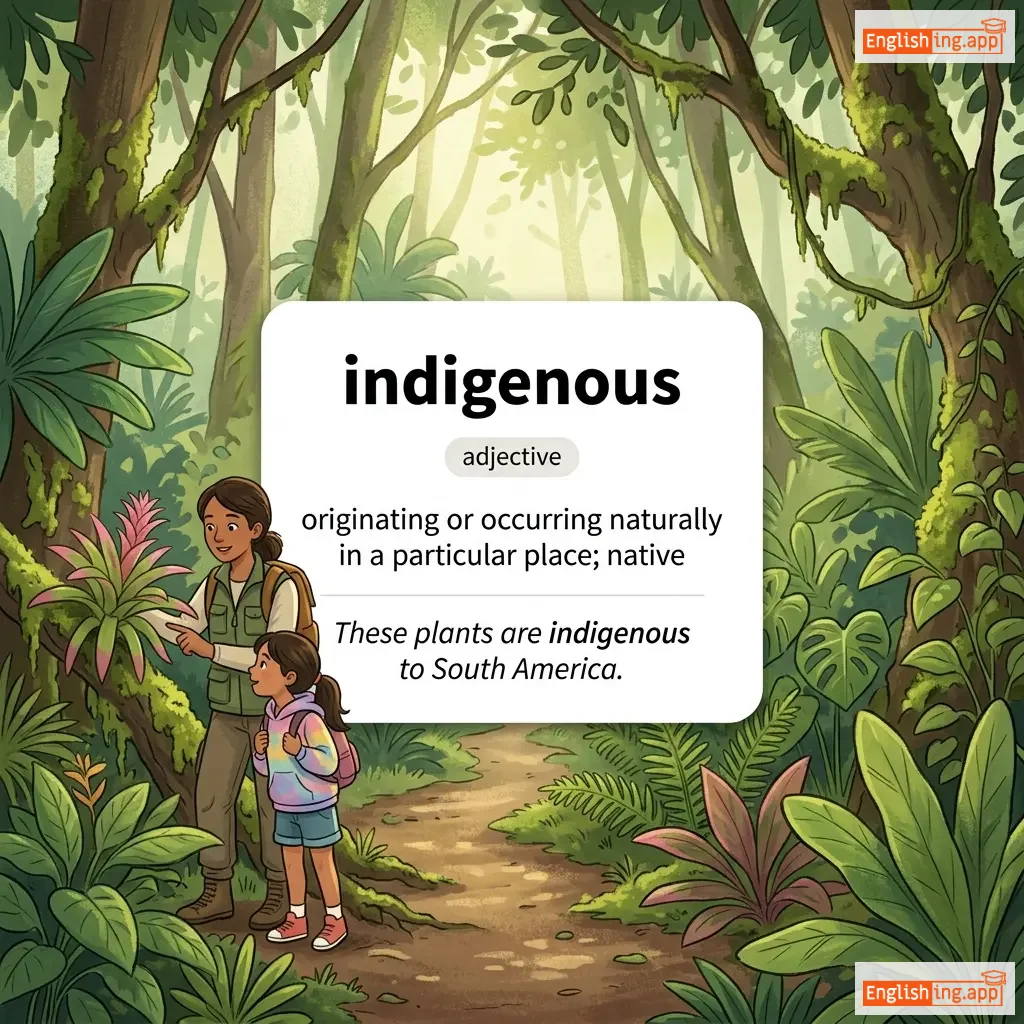
/ɪnˈdɪdʒ.ə.nəs/
adjective
(印第珍诺斯)
••••••
|
|
本土的
bêntǔ de
••••••
|
- •••••• | - •••••• | - •••••• | - •••••• |
originating or occurring naturally in a particular place; native
••••••
|
These plants are indigenous to South America. |
这些植物是南美的本土植物。
Zhèxiē zhíwù shì nánměi de běntǔ zhíwù.
••••••
|
indigenous people |
the native inhabitants of a region
••••••
|
本土人民
bêntǔ rénmín
••••••
|
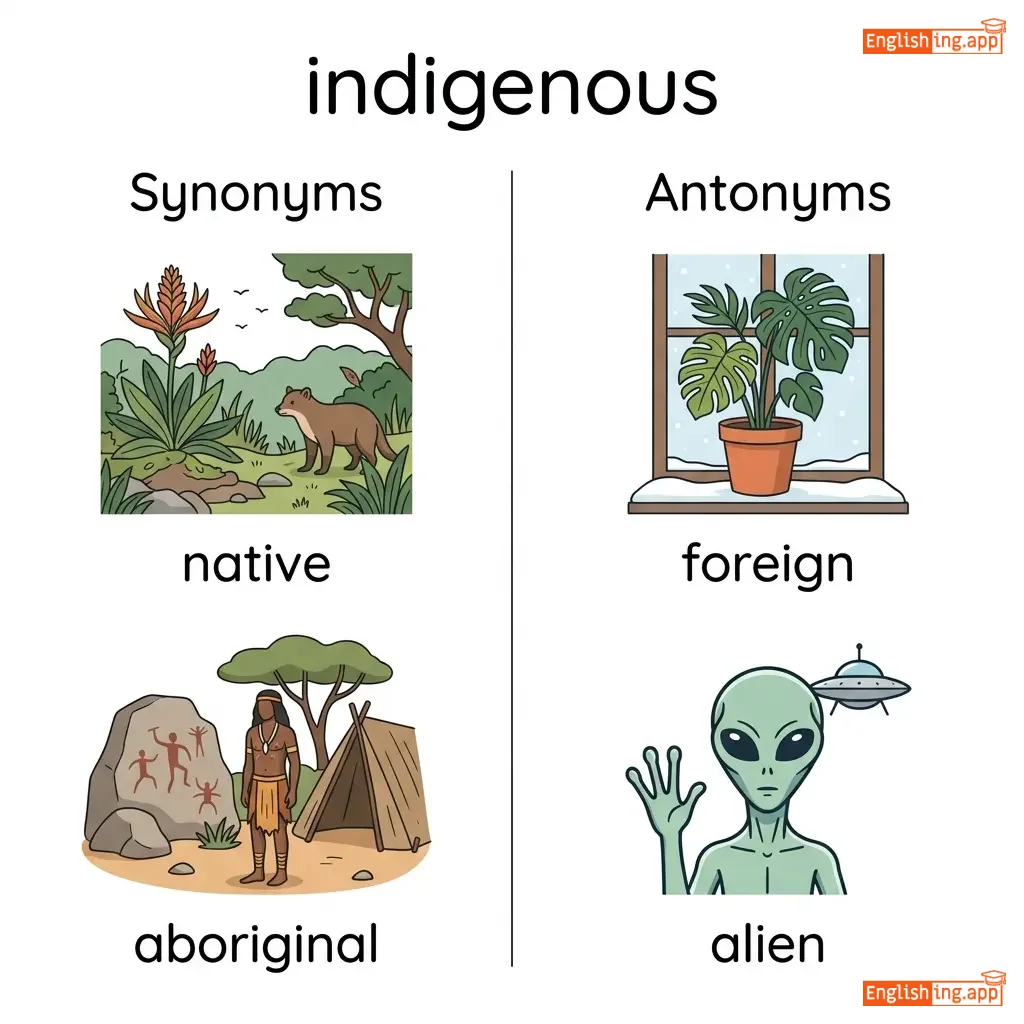
native, aboriginal, local, endemic, original
••••••
|
foreign, alien, immigrant
••••••
|
indigenous culture, indigenous people, indigenous species
••••••
|
本土 = 原生自然, 如南美的本土植物。
••••••
|
|
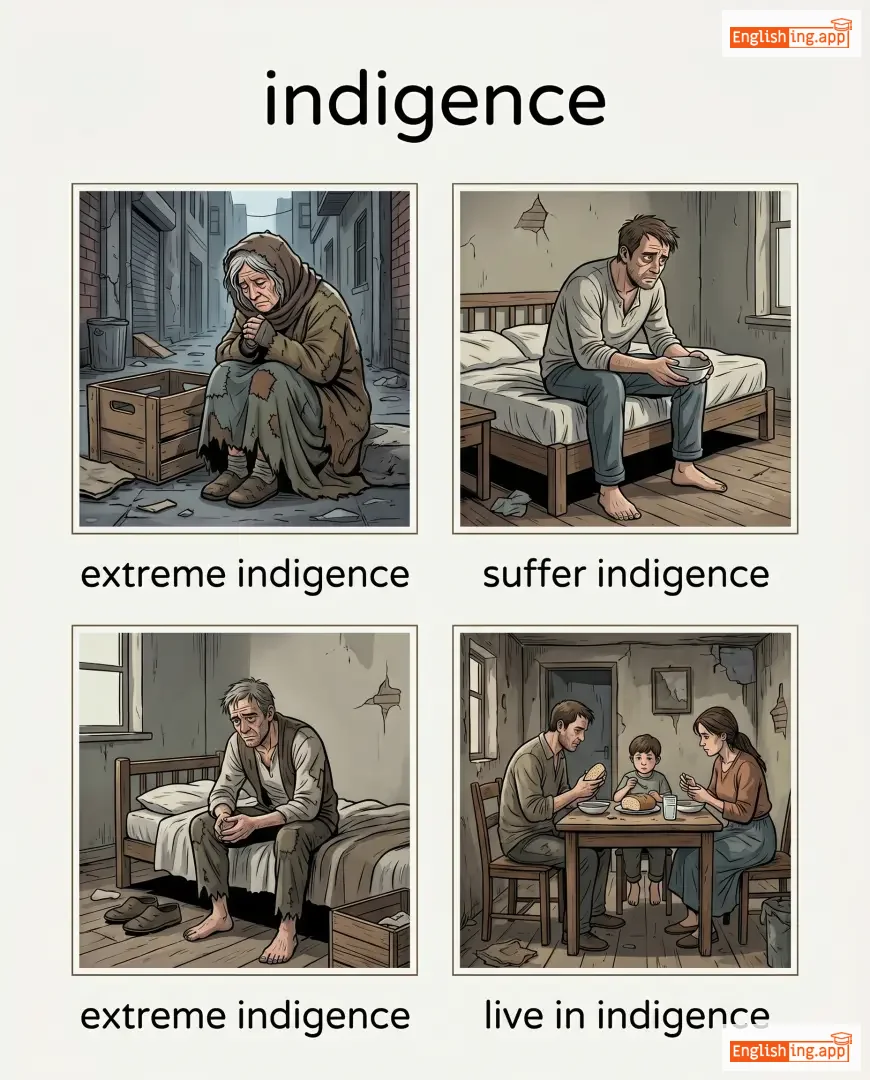
#4539
🥀
|
/ˈɪn.dɪ.dʒəns/
noun
(印第真斯)
••••••
|
|
贫困
pínkùn
••••••
|
- •••••• | - •••••• | - •••••• | - •••••• |
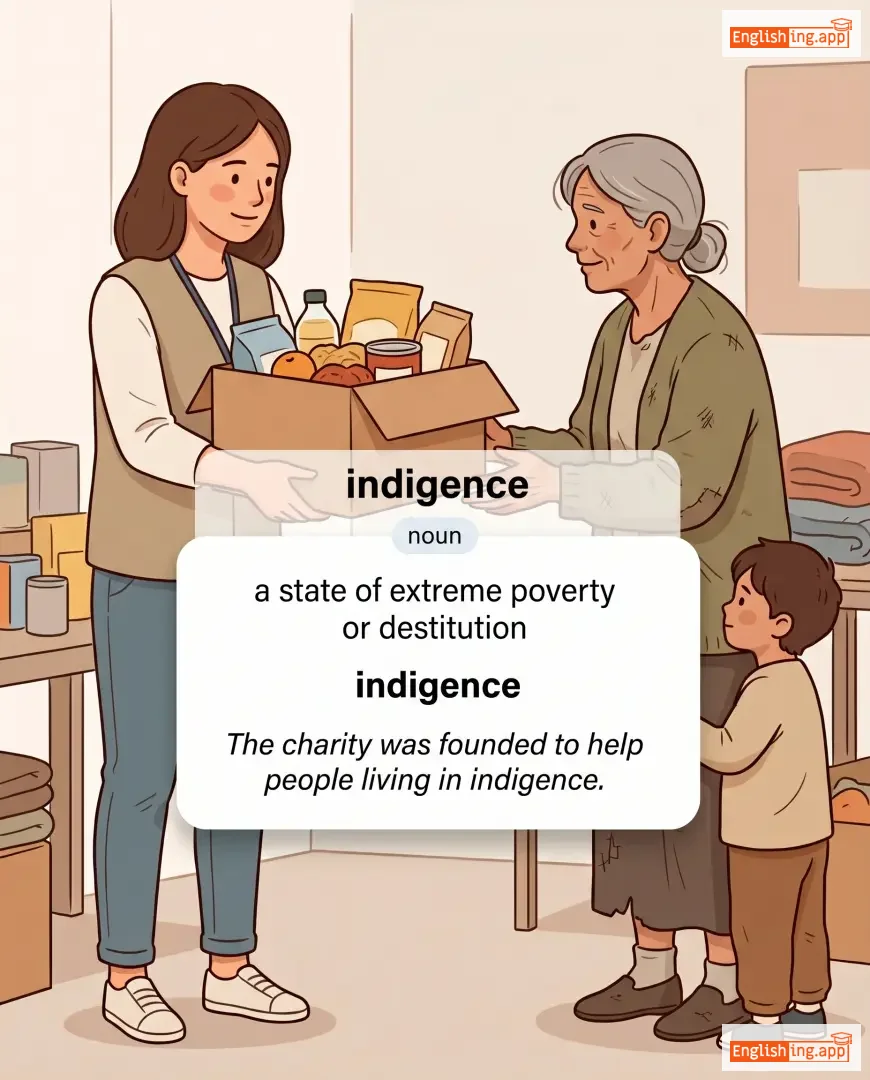
a state of extreme poverty or destitution
••••••
|
The charity was founded to help people living in indigence. |
这个慈善组织成立是为了帮助生活在贫困中的人们。
Zhège cìshàn zǔzhī chénglì shì wèile bāngzhù shēnghuó zài pínkùn zhōng de rénmen.
••••••
|
- •••••• | - •••••• | - •••••• |
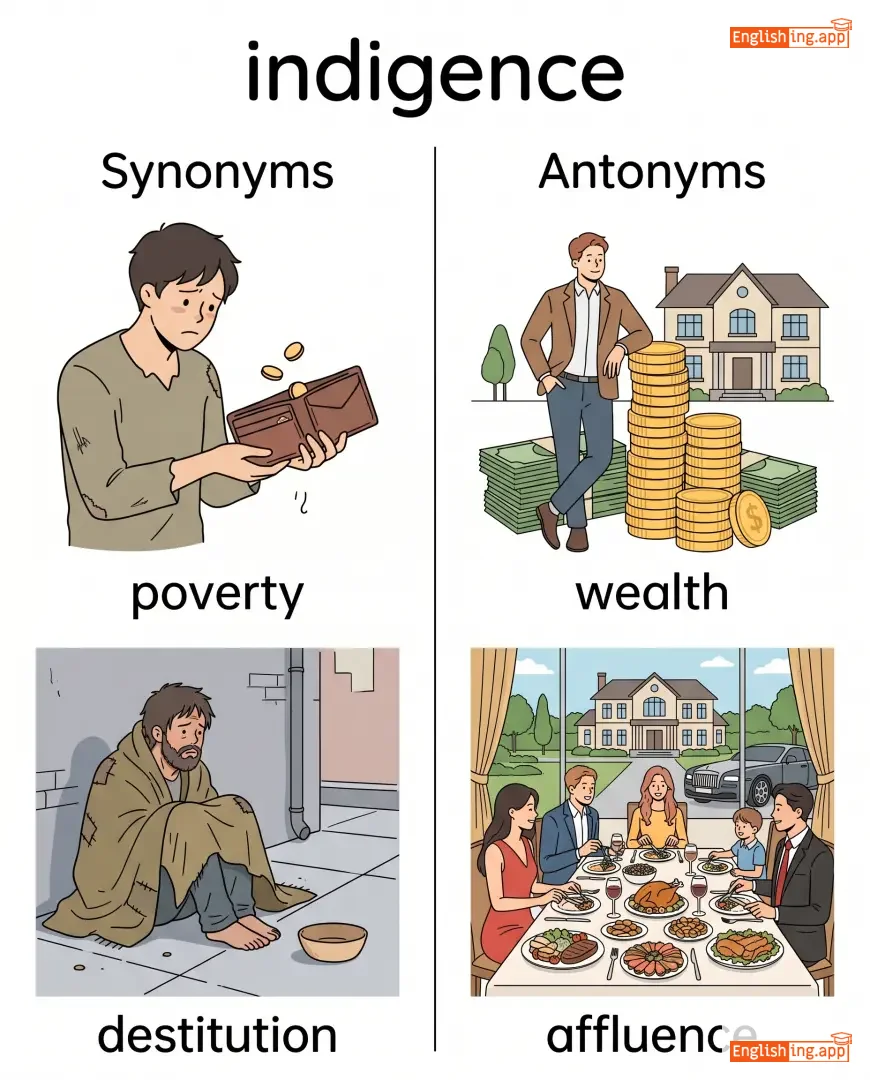
poverty, destitution, need, hardship, deprivation
••••••
|
wealth, affluence, prosperity
••••••
|
extreme indigence, suffer indigence, live in indigence
••••••
|
贫困 (pínkùn) 和 'indigence' 都表示极度贫困
••••••
|
|
#4540
😐
|
/ɪnˈdɪf.ər.ənt/
adjective
(冷漠)
••••••
|
- •••••• |
冷漠
lengmo
••••••
|
- •••••• | - •••••• | - •••••• | - •••••• |
having no particular interest or concern; not caring one way or another
••••••
|
She was indifferent to the outcome of the match. |
她对比赛的结果漠不关心。
Ta dui bisai de jieguo mo bu guanxin.
••••••
|
indifferent attitude |
showing no concern or interest
••••••
|
冷漠的态度
lengmo de taidu
••••••
|
unconcerned, apathetic, detached, disinterested, neutral
••••••
|
concerned, interested, passionate
••••••
|
remain indifferent, indifferent attitude, indifferent to, indifferent response
••••••
|
当你不关心任何事时,你是'冷漠'的,或者' indifferent '。
••••••
|
|
#4541
😐
|
/ɪnˈdɪfərəns/
noun
(冷漠)
••••••
|
- •••••• |
冷漠
lengmo
••••••
|
- •••••• | - •••••• | - •••••• | - •••••• |
lack of interest, concern, or sympathy
••••••
|
He showed complete indifference to the suffering around him. |
他对周围的痛苦表现出完全的冷漠。
Ta dui zhouwei de tongku biaoxian chu wanquan de lengmo.
••••••
|
cold indifference |
a total lack of concern or empathy
••••••
|
冷漠无情
lengmo wuqing
••••••
|
apathy, unconcern, neglect, disinterest
••••••
|
concern, care, sympathy
••••••
|
show indifference, total indifference, cold indifference, public indifference
••••••
|
Indifference: in (没有) + difference (区别), 没有区别,表现出冷漠。
••••••
|
|
#4542
📜
|
/ɪnˈdaɪtmənt/
noun
(ɪnˈdaɪtmənt)
••••••
|
- •••••• |
起诉书
qǐsù shū
••••••
|
- •••••• | - •••••• | - •••••• | - •••••• |
a formal charge or accusation of a serious crime
••••••
|
The indictment accused the company of multiple violations. |
起诉书指控公司存在多项违规行为。
Qǐsù shū zhǐkòng gōngsī cúnzài duō xiàng wéiguī xíngwéi.
••••••
|
- •••••• | - •••••• | - •••••• |
charge, accusation, prosecution, allegation
••••••
|
acquittal, exoneration
••••••
|
criminal indictment, federal indictment, indictment process
••••••
|
Indictment 意思是起诉书。
••••••
|
|
#4543
⚖️
|
/ɪnˈdaɪt/
verb
(ɪnˈdaɪt)
••••••
|
- •••••• |
起诉
qǐsù
••••••
|
indicted
ɪnˈdaɪtɪd
••••••
|
indicted
ɪnˈdaɪtɪd
••••••
|
indicts
ɪnˈdaɪts
••••••
|
indicting
ɪnˈdaɪtɪŋ
••••••
|
to formally accuse someone of committing a serious crime
••••••
|
The grand jury decided to indict the politician for corruption.
大陪审团决定控告该政治家腐败。
••••••
|
大陪审团决定控告该政治家腐败。
Dà péishěn tuán juédìng kònggào gāi zhèngzhìjiā fǔbài.
••••••
|
- •••••• | - •••••• | - •••••• |
charge, accuse, prosecute, arraign
••••••
|
acquit, absolve, exonerate
••••••
|
indict someone, indict on charges, indict for fraud
••••••
|
Indict: 你去法院指控 (qǐsù) 这位政治家.
••••••
|
|
#4544
📈
|
/ˈɪndɪˌsiːz/
noun (plural)
(因迪西斯)
••••••
|
- •••••• |
指数
zhishu
••••••
|
- •••••• | - •••••• | - •••••• | - •••••• |
plural form of index; statistical measures or reference points used for comparison
••••••
|
Stock market indices fell sharply after the announcement. |
公告后,股市指数急剧下跌。
Gonggao hou, gushi zhishu ji ju xiadie.
••••••
|
- •••••• | - •••••• | - •••••• |
indexes, measures, benchmarks, references
••••••
|
singularity, individual case
••••••
|
stock indices, economic indices, price indices, financial indices
••••••
|
Indices表示多个Index,就像数学中的指数一样。
••••••
|
|
#4545
📊
|
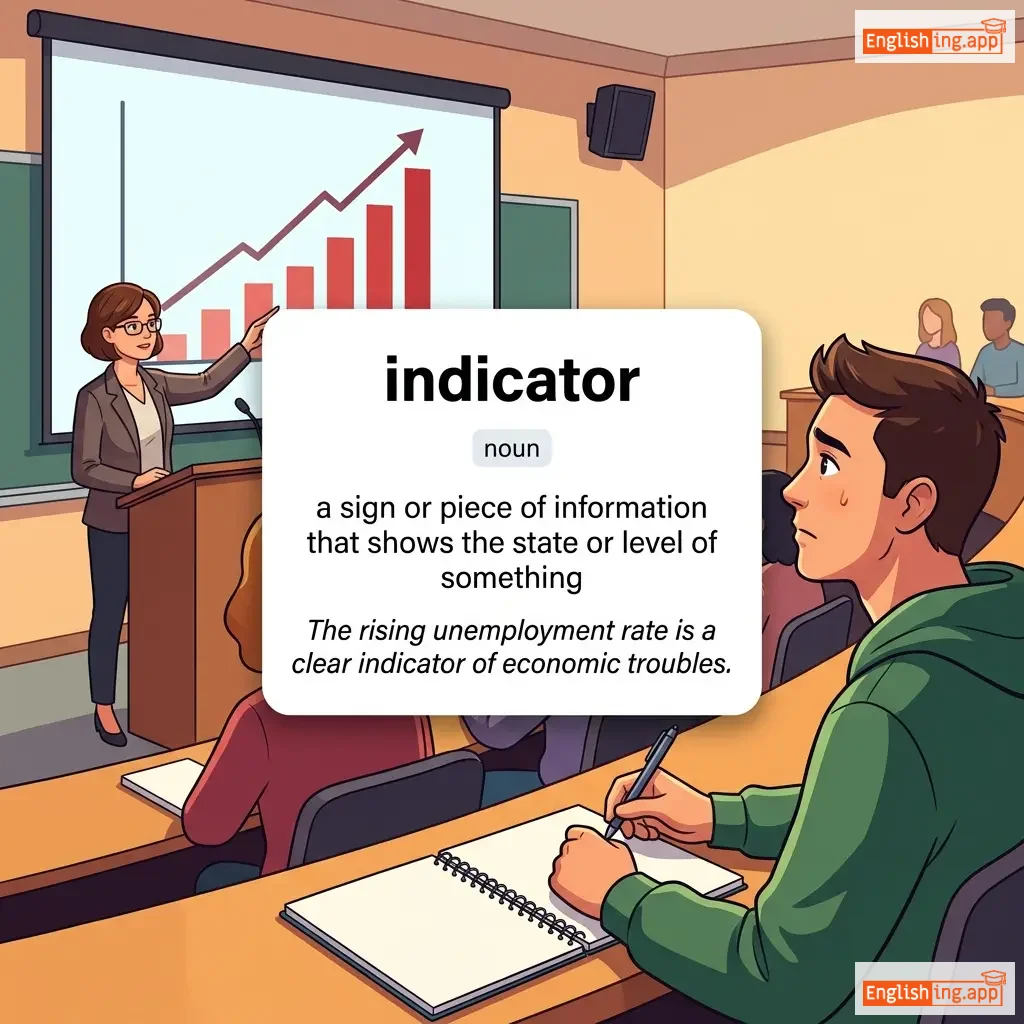
/ˈɪndɪˌkeɪtər/
noun
(指标)
••••••
|
|
指标
zhǐbiāo
••••••
|
- •••••• | - •••••• | - •••••• | - •••••• |
a sign or piece of information that shows the state or level of something
••••••
|
The rising unemployment rate is a clear indicator of economic troubles. |
失业率上升是经济问题的明显指标。
Shīyè lǜ shàngshēng shì jīngjì wèntí de míngxiǎn zhǐbiāo.
••••••
|
leading indicator |
a measure that signals future developments or trends
••••••
|
领先指标
lǐngxiān zhǐbiāo
••••••
|
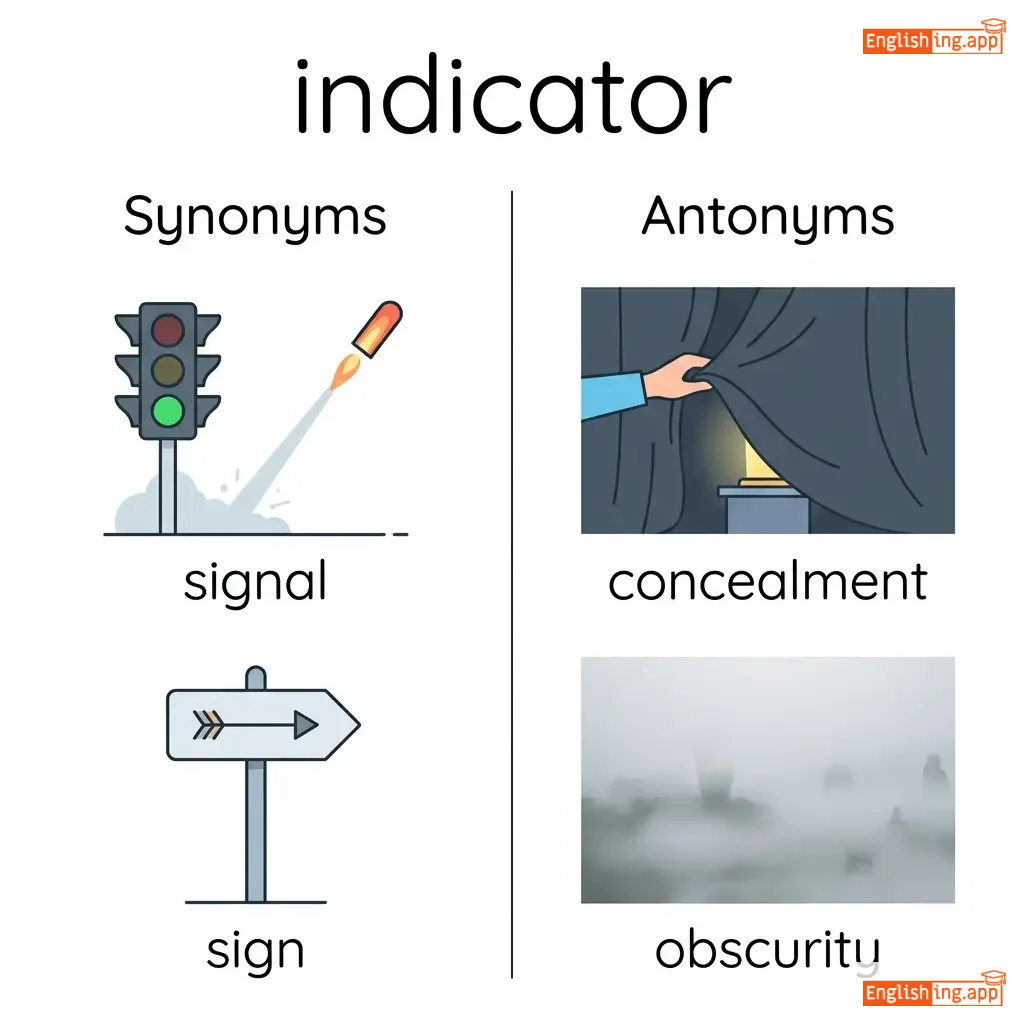
signal, sign, gauge, measure, pointer
••••••
|
concealment, obscurity
••••••
|
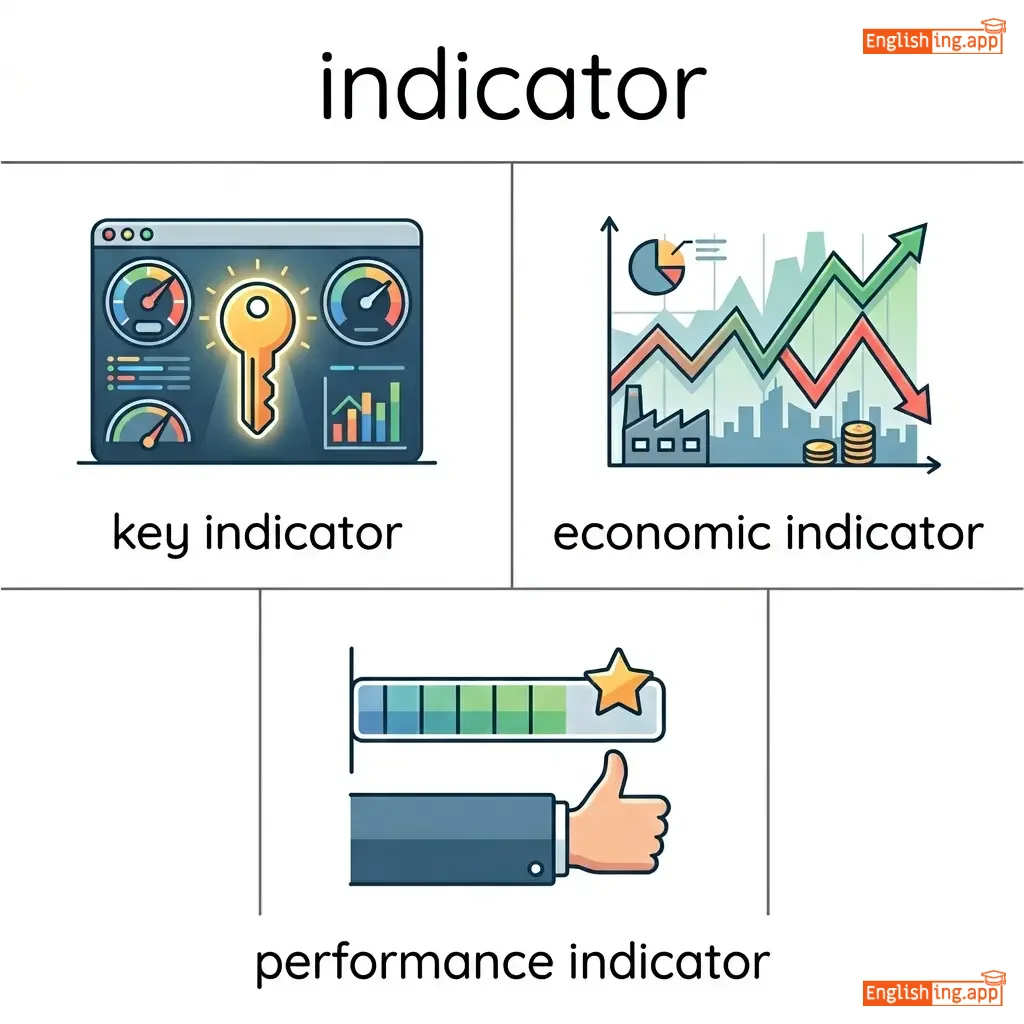
key indicator, economic indicator, performance indicator, health indicator
••••••
|
指标就是指示 – 就像红绿灯指示交通状况。
••••••
|
|
#4546
🙈
|
/ɪnˈdɛkərəs/
adjective
(因德科罗斯)
••••••
|
- •••••• |
不得体
bùdétǐ
••••••
|
- •••••• | - •••••• | - •••••• | - •••••• |
Not in keeping with good taste and propriety; improper.
••••••
|
His indecorous behavior shocked the audience.
他的不雅行为让观众震惊。
••••••
|
他的不得体行为让观众震惊。
Tā de bùdétǐ xíngwéi ràng guānzhòng zhènjīng.
••••••
|
- •••••• | - •••••• | - •••••• |
improper, unseemly, inappropriate, indecent
••••••
|
proper, decent, appropriate
••••••
|
indecorous remark, indecorous behavior, indecorous laughter
••••••
|
IN DECORous: 不在装饰上,因此不得体
••••••
|
|
#4547
⚠️
|
/ˌɪndɪˈkeɪʃən/
noun
(yīndìkèshùn)
••••••
|
- •••••• |
指示
zhǐshì
••••••
|
- •••••• | - •••••• | - •••••• | - •••••• |
A sign, piece of information, or signal that suggests something.
••••••
|
Dark clouds are an indication of an approaching storm. |
乌云是即将到来的暴风雨的指示。
Wūyún shì jíjiāng dào lái de bàofēngyǔ de zhǐshì
••••••
|
give an indication |
To show or suggest something indirectly.
••••••
|
给出指示
gěi chū zhǐshì
••••••
|
sign, signal, evidence, clue, pointer
••••••
|
concealment, suppression
••••••
|
clear indication, early indication, medical indication
••••••
|
Indication意味着指示—乌云给出了暴风雨的指示。
••••••
|
|
#4548
🔍
|
/ˈɪndɪkənt/
noun
(因迪肯特)
••••••
|
- •••••• |
指示物
zhǐshìwù
••••••
|
- •••••• | - •••••• | - •••••• | - •••••• |
Something that indicates or points to a fact or condition.
••••••
|
High fever is often an indicant of infection. |
高烧通常是感染的指示物。
Gāo shāo tōngcháng shì gǎnrǎn de zhǐshìwù.
••••••
|
- •••••• | - •••••• | - •••••• |
sign, signal, indicator, symptom, mark
••••••
|
concealment, obscurity
••••••
|
strong indicant, clear indicant, reliable indicant
••••••
|
Indicant 意味着指示物—表示指出某种情况的东西。
••••••
|
|
#4549
📑
|
/ˈɪndeks/
noun, verb
(索引)
••••••
|
|
索引
suoyin
••••••
|
indexed
索引的
••••••
|
indexed
索引的
••••••
|
indexes
索引
••••••
|
indexing
索引中
••••••
|
A list of items arranged in order, or to arrange data systematically for reference.
••••••
|
The book includes a detailed index at the end.
这本书在最后包括了详细的索引。
••••••
|
这本书在最后包括了详细的索引。
Zhè běn shū zài zuìhòu bāokuòle xiángxì de suoyin.
••••••
|
index finger
食指
••••••
|
The finger next to the thumb, used for pointing.
••••••
|
食指
shízhǐ
••••••
|
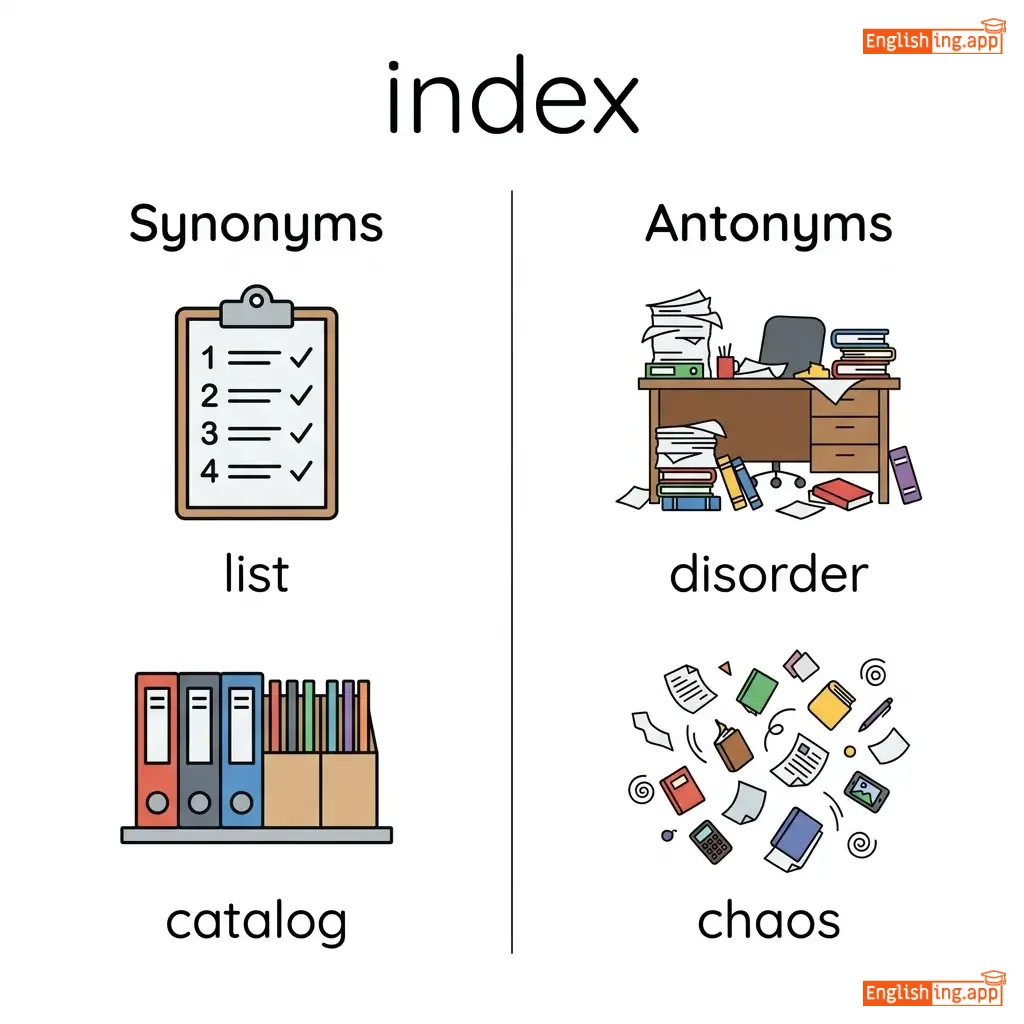
list, catalog, register, directory, guide
••••••
|
disorder, chaos, confusion
••••••
|
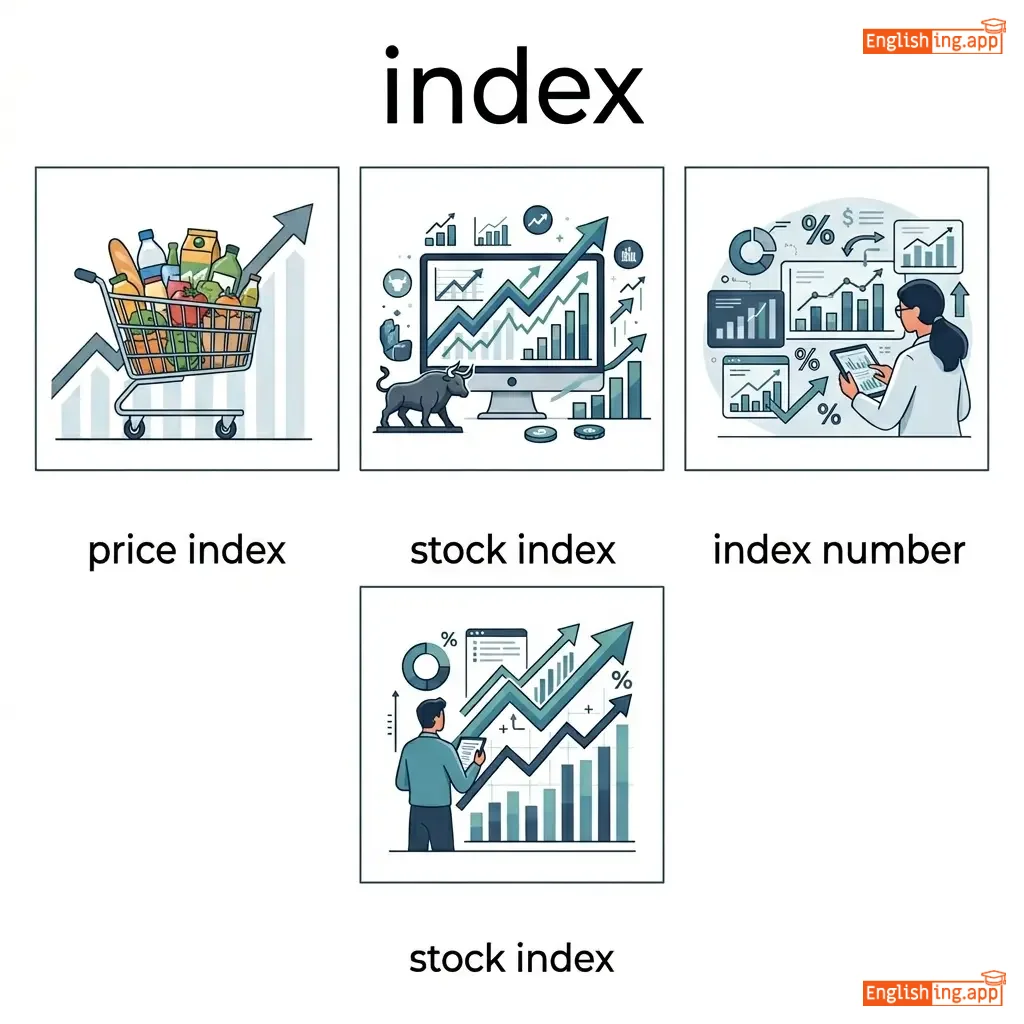
price index, stock index, index number, index card
••••••
|
索引就像是目录,索引化使你轻松找到信息!
••••••
|
|
#4550
❓
|
/ˌɪndɪˈtɜːrmənət/
adjective
(因迪特敏特)
••••••
|
|
不确定
bu que ding
••••••
|
- •••••• | - •••••• | - •••••• | - •••••• |
Not exactly known, defined, or established; vague or uncertain.
••••••
|
The project was delayed for an indeterminate amount of time. |
项目因不确定的时间被推迟。
Xiangmu yin bu queding de shijian bei tuichi.
••••••
|
- •••••• | - •••••• | - •••••• |
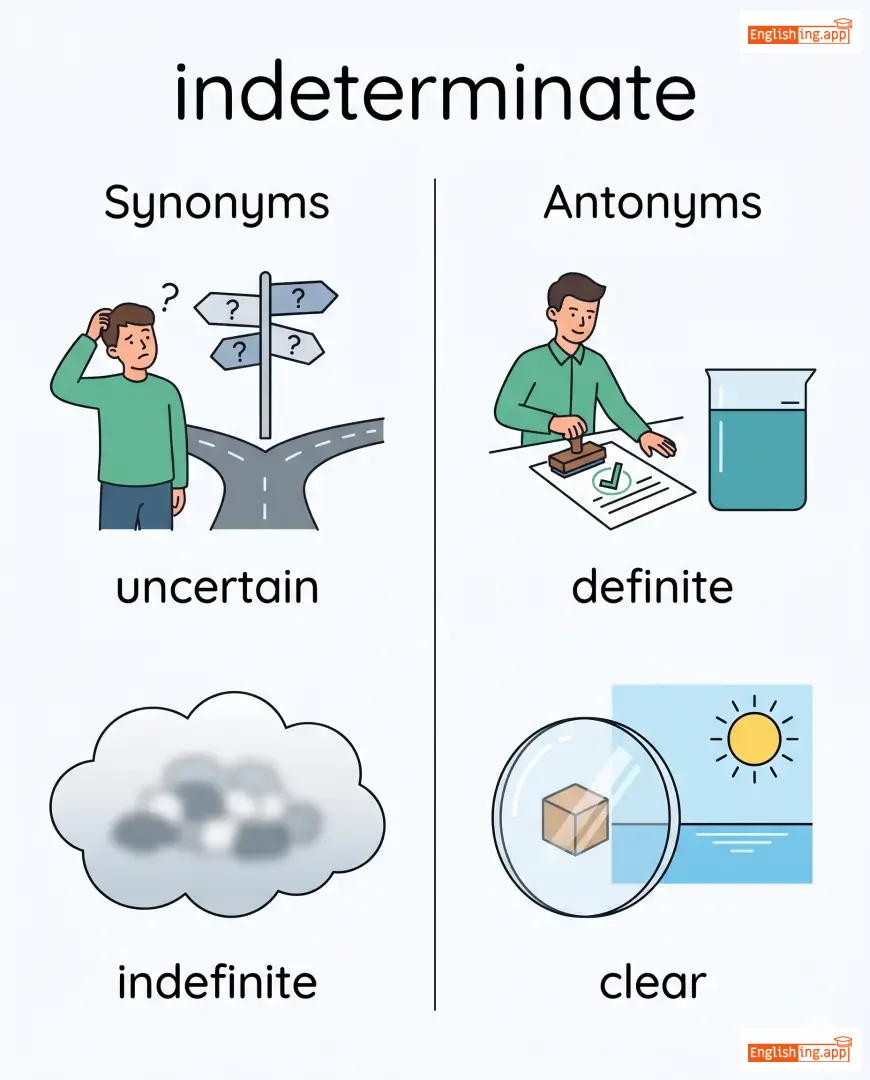
uncertain, indefinite, vague, ambiguous, unclear
••••••
|
definite, clear, certain
••••••
|
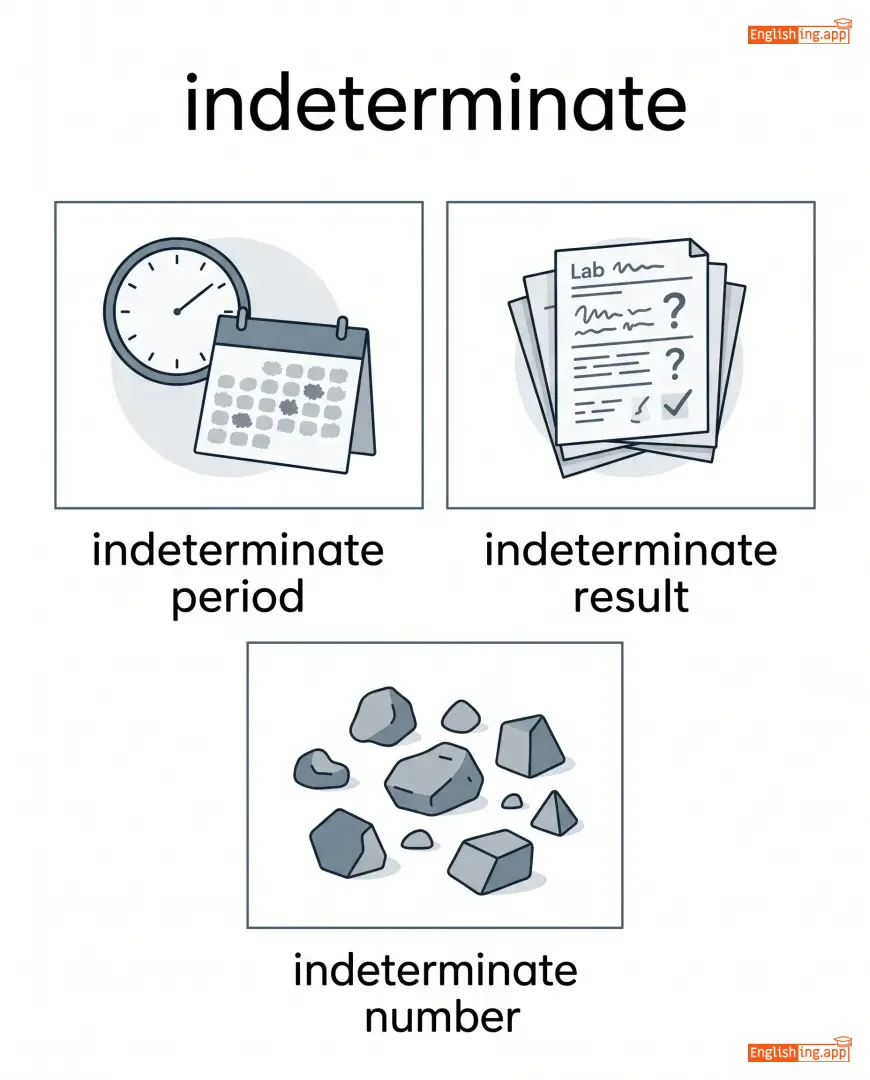
indeterminate period, indeterminate result, indeterminate number, indeterminate form
••••••
|
Indeterminate 意味着不确定—In determinate 不确定,所以不确定。
••••••
|
|
#4551
🪨
|
/ˌɪndɪˈstrʌktəbl/
adjective
(因德斯特拉克特布尔)
••••••
|
- •••••• |
无法摧毁
wúfǎ cuīhuǐ
••••••
|
- •••••• | - •••••• | - •••••• | - •••••• |
Impossible to destroy or break.
••••••
|
The superhero's shield was said to be indestructible. |
有人说超级英雄的盾牌是无法摧毁的。
yǒurén shuō chāojí yīngxióng de dùnpái shì wúfǎ cuīhuǐ de.
••••••
|
- •••••• | - •••••• | - •••••• |
unbreakable, durable, permanent, imperishable
••••••
|
fragile, destructible
••••••
|
indestructible spirit, indestructible material, almost indestructible, virtually indestructible
••••••
|
Indestructible 意思是无法摧毁或打破 – 无法摧毁。
••••••
|
|
#4552
✨
|
/ˌɪndɪˈskraɪbəbl/
adjective
(ɪndɪˈskraɪbəbl)
••••••
|
- •••••• |
无法形容
wúfǎ xíngróng
••••••
|
- •••••• | - •••••• | - •••••• | - •••••• |
Too unusual, extreme, or great to be adequately described in words.
••••••
|
The beauty of the sunset was indescribable. |
日落的美景是无法形容的。
Rìluò de měijǐng shì wúfǎ xíngróng de.
••••••
|
- •••••• | - •••••• | - •••••• |
ineffable, inexpressible, unspeakable, unimaginable
••••••
|
describable, expressible
••••••
|
indescribable beauty, indescribable joy, indescribable feeling, indescribable experience
••••••
|
无法形容的意思是无法用言语描述的惊艳 – 无法形容。
••••••
|
|
#4553
📜
|
/ɪnˈdɛntʃər/
noun
••••••
|
- •••••• | - •••••• | - •••••• | - •••••• | - •••••• | - •••••• |
A formal legal agreement, contract, or document, often relating to work or service.
••••••
|
In the 18th century, many workers came under indenture to work overseas. |
- •••••• |
indenture contract |
a formal legal contract for work or service
••••••
|
- •••••• |
contract, agreement, bond, deed, covenant
••••••
|
freedom, independence
••••••
|
indenture agreement, indenture contract, indenture system, indentured servant
••••••
|
No •••••• |
|
#4554
↔️
|
/ˌɪndɛnˈteɪʃən/
noun
(ɪnˈdɛnteɪʃən)
••••••
|
- •••••• |
缩进
suō jìn
••••••
|
- •••••• | - •••••• | - •••••• | - •••••• |
A space left at the beginning of a line of text; a notch or deep recess on a surface.
••••••
|
The teacher asked the students to use proper indentation in their essays. |
老师要求学生在他们的论文中使用正确的缩进。
Lǎoshī yāoqiú xuéshēng zài tāmen de lùnwén zhōng shǐyòng zhèngquè de suōjìn.
••••••
|
- •••••• | - •••••• | - •••••• |
notch, recess, hollow, dent, gap
••••••
|
flatness, smoothness
••••••
|
proper indentation, code indentation, indentation mark, indentation level
••••••
|
缩进是开始写作文时,在一行前留出的空格。
••••••
|
|
#4555
🛡️
|
/ɪnˈdɛmnɪti/
noun
(因德姆尼提)
••••••
|
- •••••• |
赔偿 / 保护
peichang / baohu
••••••
|
- •••••• | - •••••• | - •••••• | - •••••• |
Security or protection against financial loss or damage; compensation for loss or damage.
••••••
|
The insurance policy provides indemnity against fire damage. |
保险单提供火灾损害的赔偿。
Baoxian dan tigong huozai sunhai de peichang.
••••••
|
seek indemnity |
to ask for financial compensation for a loss or damage
••••••
|
寻求赔偿
xunqiu peichang
••••••
|
compensation, reimbursement, protection, guarantee, security
••••••
|
penalty, loss, damage
••••••
|
indemnity clause, seek indemnity, provide indemnity, indemnity insurance
••••••
|
Indemnity 意味着保险中的赔偿 - 发生损害时,赔偿就来了。
••••••
|
|
#4556
💵
|
/ɪnˈdɛmnɪfaɪ/
verb
••••••
|
- •••••• | - •••••• |
indemnified
••••••
|
indemnified
••••••
|
indemnifies
••••••
|
indemnifying
••••••
|
to compensate someone for harm or loss; to secure against future damage or cost
••••••
|
The insurance company agreed to indemnify the client for the damages. |
- •••••• |
indemnify against loss |
to provide compensation or protection for potential losses
••••••
|
- •••••• |
compensate, reimburse, repay, atone, secure
••••••
|
penalize, deprive, damage
••••••
|
indemnify the loss, indemnify the damage, indemnify the client, indemnify against claims
••••••
|
No •••••• |
|
#4557
🖋️
|
/ɪnˈdɛlɪbl̩/
adjective
(印第里布尔)
••••••
|
|
不可磨灭
bù kě mó miè
••••••
|
- •••••• | - •••••• | - •••••• | - •••••• |
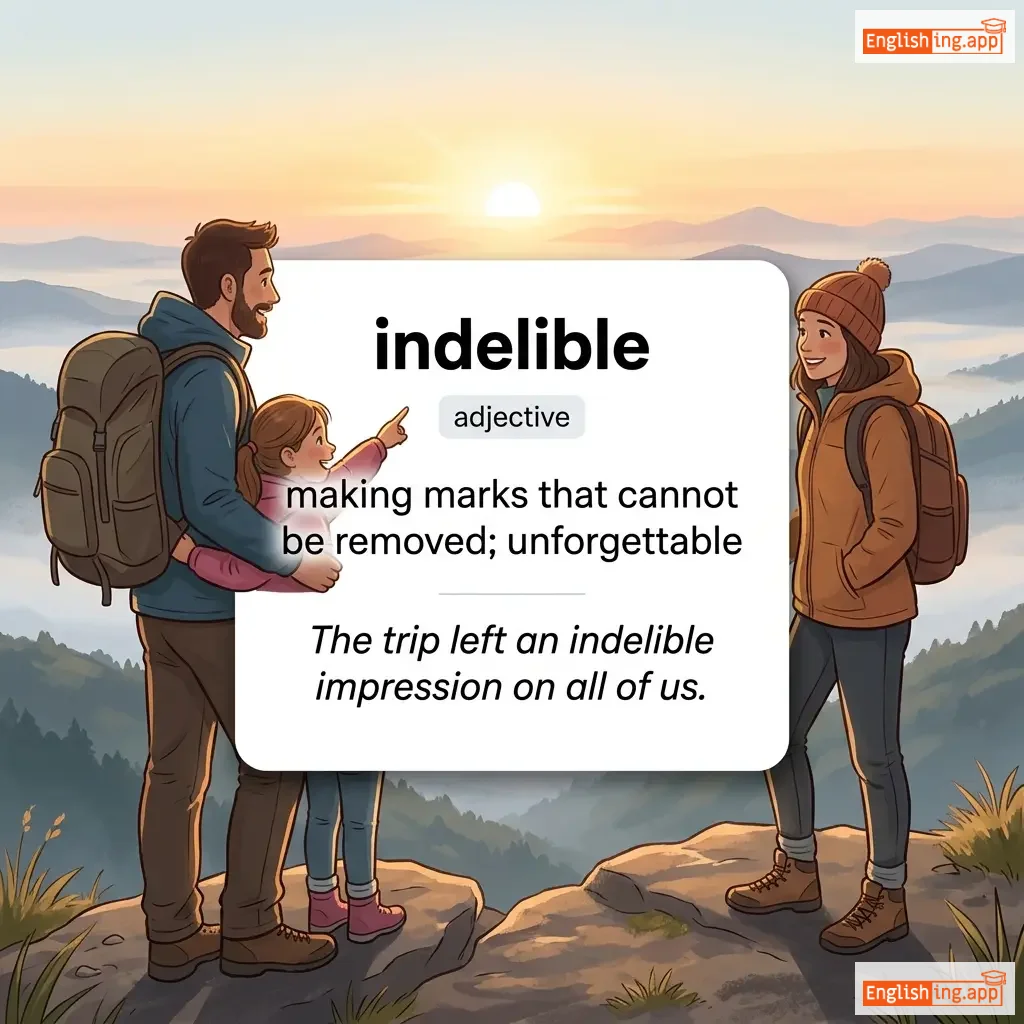
making marks that cannot be removed; unforgettable
••••••
|
The trip left an indelible impression on all of us. |
这次旅行给我们所有人留下了不可磨灭的印象。
Zhè cì lǚxíng gěi wǒmen suǒyǒu rén liúxià le bù kě mó miè de yìnxiàng.
••••••
|
- •••••• | - •••••• | - •••••• |
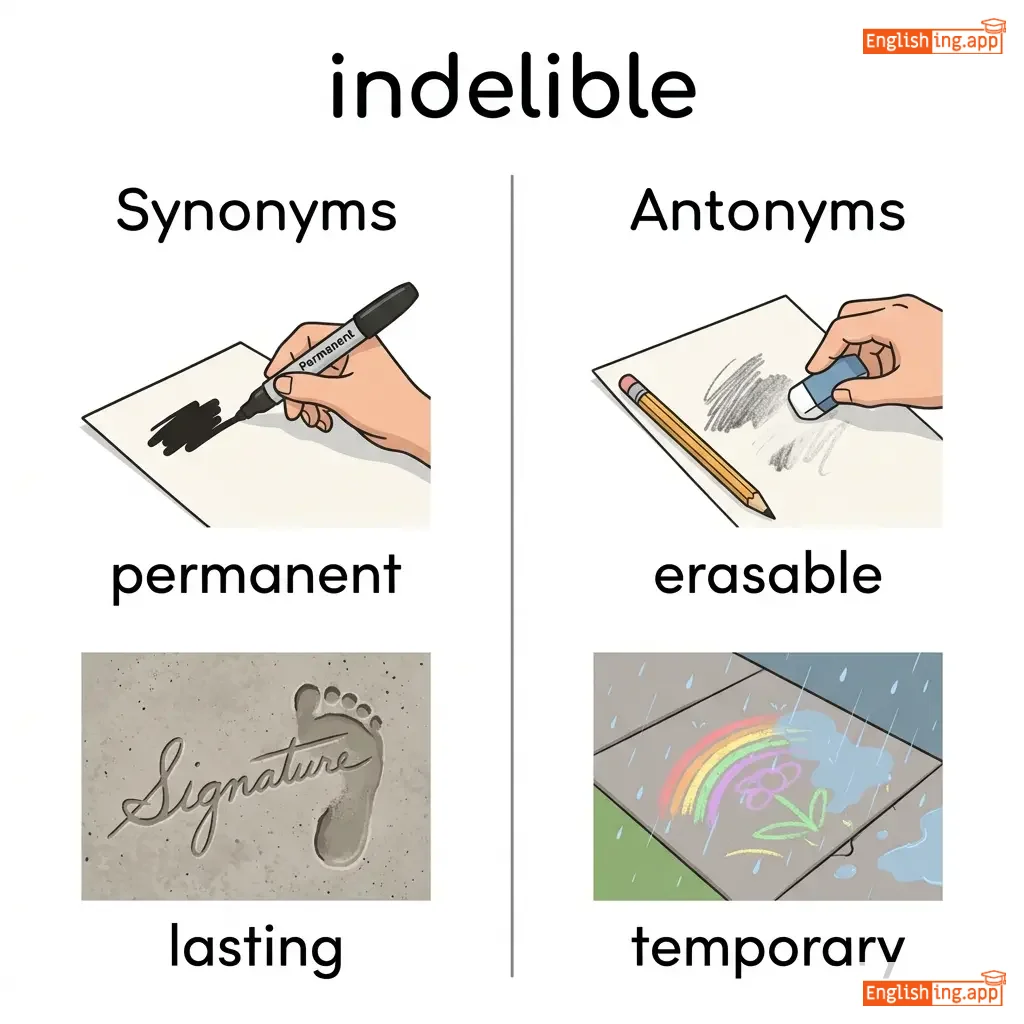
permanent, lasting, enduring, unforgettable
••••••
|
erasable, temporary, fleeting
••••••
|
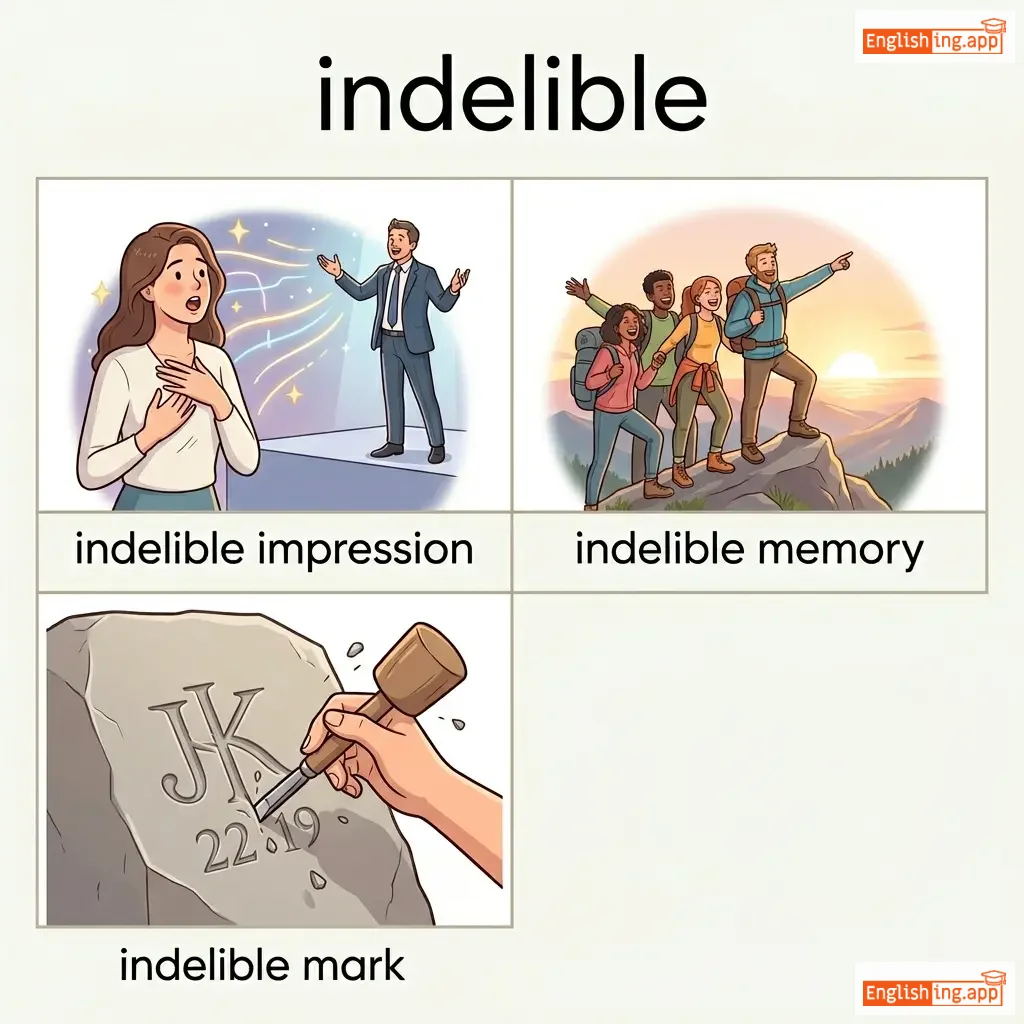
indelible impression, indelible memory, indelible mark, indelible experience
••••••
|
Indelible意味着无法删除的 → 不可磨灭
••••••
|
|
#4558
⏳
|
/ɪnˈdɛfɪnətli/
adverb
(因迪芬尼特利)
••••••
|
- •••••• |
无限期
wuxianqi
••••••
|
- •••••• | - •••••• | - •••••• | - •••••• |
for an unlimited or unspecified period of time
••••••
|
The project has been postponed indefinitely. |
该项目已无限期推迟。
Gai xiangmu yi wuxianqi tuichi.
••••••
|
- •••••• | - •••••• | - •••••• |
endlessly, perpetually, without limit, continuously
••••••
|
temporarily, briefly
••••••
|
postponed indefinitely, continue indefinitely, delayed indefinitely, suspended indefinitely
••••••
|
Indefinitely 意味着无限时间 → 时间没有限制或终止
••••••
|
|
#4559
⚖️
|
/ˌɪndɪˈfɛnsəbl̩/
adjective
(印迪芬西布尔)
••••••
|
- •••••• |
无法辩护
wúfǎ biànhù
••••••
|
- •••••• | - •••••• | - •••••• | - •••••• |
not able to be protected or justified
••••••
|
The minister’s remarks were considered indefensible by the public. |
部长的言论被公众视为无法辩护。
Bùzhǎng de yánlùn bèi gōngzhòng shìwéi wúfǎ biànhù.
••••••
|
- •••••• | - •••••• | - •••••• |
unjustifiable, untenable, unsupportable, unjust
••••••
|
defensible, justifiable, reasonable
••••••
|
indefensible position, indefensible action, morally indefensible, legally indefensible
••••••
|
Indefensible = 无法辩护,无法辩解。
••••••
|
|
#4560
💪
|
/ˌɪndɪˈfætɪɡəbl̩/
adjective
(因迪法提格布尔)
••••••
|
- •••••• |
不知疲倦
bù zhī pījuàn
••••••
|
- •••••• | - •••••• | - •••••• | - •••••• |
persisting tirelessly; incapable of being fatigued
••••••
|
Her indefatigable spirit kept the team motivated during the long project. |
她那不知疲倦的精神在漫长的项目中激励着团队。
tā nà bù zhī pījuàn de jīngshén zài màncháng de xiàngmù zhōng jīlì zhe tuánduì.
••••••
|
- •••••• | - •••••• | - •••••• |
tireless, relentless, persistent, unwearied, dogged
••••••
|
fatigued, weary, exhausted
••••••
|
indefatigable spirit, indefatigable efforts, indefatigable energy, indefatigable pursuit
••••••
|
Indefatigable意思是不知疲倦,永不停止
••••••
|
Vocabulary Quiz
Test your vocabulary by matching words with their translations or meanings.
Login to take the quiz
Comments (0)
Share your thoughts and join the discussion.
Join the discussion by logging in
Login to CommentNo comments yet
Be the first to share your thoughts!