




Swipe left or right, or use the buttons. Tap image to zoom.
例句翻译
单词
Lesson 240Lesson 240 - 遮罩切换
|
表情符号
|
单词 | Images | 翻译 | 过去时 | 过去分词 | 第三人称单数 | 动名词 | 含义 | 例句 | 例句翻译 | 示例表达 | 示例表达含义 | 示例表达翻译 | 同义词 | 反义词 | 搭配词 | 助记符 |
|---|---|---|---|---|---|---|---|---|---|---|---|---|---|---|---|---|---|
|
#7170
🍺
|
/kwɒf/
verb
(夸夫)
••••••
|
- •••••• |
一口喝下
yi kou he xia
••••••
|
quaffed
夸夫德
••••••
|
quaffed
夸夫德
••••••
|
quaffs
夸夫斯
••••••
|
quaffing
夸夫英
••••••
|
to drink something heartily or in large gulps, especially an alcoholic drink
••••••
|
He quaffed a mug of ale after the long day.
他在长时间工作后,一口气喝完了一杯啤酒。
••••••
|
他在长时间工作后,一口气喝完了一杯啤酒。
Ta zai chang shijian gongzuo hou, yi kou qi he wan le yi bei pijiu.
••••••
|
- •••••• | - •••••• | - •••••• |
gulp, drink, guzzle, swig, imbibe
••••••
|
sip, abstain
••••••
|
quaff wine, quaff beer, quaff ale, quaff heartily
••••••
|
记住‘夸夫’,就像喝啤酒时一口气喝下。
••••••
|
|
#7171
🟦
|
/ˈkwɔː.tər/
noun/verb
(kwɔːr.tər)
••••••
|
- •••••• |
四分之一
si fen zhi yi
••••••
|
quartered
kwɔːr.təd
••••••
|
quartered
kwɔːr.təd
••••••
|
quarters
kwɔːr.tərs
••••••
|
quartering
kwɔːr.tərɪŋ
••••••
|
One-fourth part of something; also used for housing or accommodating.
••••••
|
She paid a quarter of the total bill.
shi peɪd ə kwɔːr.tər ʌv ðə təʊ.təl bɪl.
••••••
|
她支付了总账单的四分之一。
Tā zhīfùle zǒng zhàngdān de sì fēn zhī yī.
••••••
|
quarter to
kwɔːr.tər tu
••••••
|
Used to indicate 15 minutes before the hour in time.
••••••
|
差十五分钟
Chà shíwǔ fēnzhōng
••••••
|
fourth, segment, section, division
••••••
|
whole, entirety
••••••
|
a quarter of, quarter century, quarter hour, residential quarters
••••••
|
四分之一就是1/4,就像四分之一块蛋糕一样。
••••••
|
|
#7172
⛏️
|
/ˈkwɒr.i/
noun/verb
(kwā lí)
••••••
|
- •••••• |
采石场 / 猎物
cǎi shí chǎng / liè wù
••••••
|
quarried
kwā líd
••••••
|
quarried
kwā líd
••••••
|
quarries
kwā lǐs
••••••
|
quarrying
kwā líng
••••••
|
A place where stone or minerals are extracted; also means prey when hunted.
••••••
|
The workers quarried limestone from the hill.
工人们从山上开采石灰岩。
••••••
|
工人们从山上开采石灰岩。
Gōngrén men cóng shān shàng kāicǎi shíhuīyán.
••••••
|
- •••••• | - •••••• | - •••••• |
pit, mine, excavation, prey
••••••
|
cover, concealment
••••••
|
stone quarry, marble quarry, quarry workers, quarry site
••••••
|
采石场出石料,猎物是猎人的目标。
••••••
|
|
#7173
⚡
|
/ˈkwɒr.əl.səm/
adjective
(kuò'ěr'ěrsī mǔ)
••••••
|
- •••••• |
好争吵的
hǎo zhēngchǎo de
••••••
|
- •••••• | - •••••• | - •••••• | - •••••• |
Inclined to argue or fight.
••••••
|
He became quarrelsome after losing the game.
他在输掉比赛后变得好争吵。
••••••
|
他在输掉比赛后变得好争吵。
Tā zài shū diào bǐsài hòu biàn dé hǎo zhēngchǎo.
••••••
|
- •••••• | - •••••• | - •••••• |
argumentative, combative, confrontational, irritable
••••••
|
peaceful, agreeable, friendly
••••••
|
quarrelsome nature, quarrelsome attitude, quarrelsome child
••••••
|
好争吵的 (hǎo zhēngchǎo de) 有点像‘总是争吵’
••••••
|
|
#7174
🦠
|
/ˈkwɒr.ən.tiːn/
noun/verb
(隔离)
••••••
|
- •••••• |
隔离
geli
••••••
|
quarantined
隔离
••••••
|
quarantined
隔离
••••••
|
quarantines
隔离
••••••
|
quarantining
隔离
••••••
|
A period of isolation to prevent the spread of disease.
••••••
|
The travelers were placed in quarantine for two weeks.
旅行者被隔离了两周。
••••••
|
旅行者被隔离了两周。
Lüxingzhe bei geli le liang zhou.
••••••
|
under quarantine
隔离中
••••••
|
Being isolated due to risk of spreading disease.
••••••
|
隔离中
geli zhong
••••••
|
isolation, confinement, segregation, seclusion
••••••
|
freedom, release, liberation
••••••
|
quarantine period, in quarantine, quarantine rules, quarantine facility
••••••
|
隔离期间无法外出—你被隔离是为了防止传染。
••••••
|
|
#7175
🔢
|
/ˈkwɒn.tə.ti/
noun
(kwán-ti-ti)
••••••
|
- •••••• |
数量
shùliàng
••••••
|
- •••••• | - •••••• | - •••••• | - •••••• |
An amount or number of something.
••••••
|
The shop ordered a large quantity of rice. |
商店订购了大量的米。
Shāngdiàn dìnggòu le dàliàng de mǐ.
••••••
|
quantity over quality |
Focusing on producing more items rather than better ones.
••••••
|
数量超过质量
shùliàng chāoguò zhìliàng
••••••
|
amount, volume, total, number, mass
••••••
|
quality, scarcity, lack
••••••
|
large quantity, small quantity, huge quantity, quantity supplied, quantity demanded
••••••
|
数量就是有多少东西,更多就是数量。
••••••
|
|
#7176
😕
|
/ˈkwɒndəri/
noun
••••••
|
- •••••• | - •••••• | - •••••• | - •••••• | - •••••• | - •••••• |
a state of uncertainty or confusion about what to do
••••••
|
He was in a quandary about whether to accept the job offer. |
- •••••• |
in a quandary |
in a state of uncertainty or dilemma
••••••
|
- •••••• |
dilemma, confusion, predicament, uncertainty, puzzle
••••••
|
certainty, solution, clarity
••••••
|
in a quandary, deep quandary, moral quandary, quandary about
••••••
|
No •••••• |
|
#7177
🤔
|
/kwɑːmz/
noun (plural)
(kwɑːlmz)
••••••
|
- •••••• |
疑虑
yílǜ
••••••
|
- •••••• | - •••••• | - •••••• | - •••••• |
feelings of doubt, worry, or uneasiness
••••••
|
He had serious qualms about accepting the offer.
他对接受这个提议感到严重的怀疑。
••••••
|
他对接受这个提议感到严重的怀疑。
Tā duì jiēshòu zhège tíyì gǎndào yánzhòng de huáiyí.
••••••
|
have qualms
有疑虑
••••••
|
to feel uncertain or worried
••••••
|
有疑虑
yǒu yílǜ
••••••
|
doubts, worries, misgivings, hesitations, anxieties
••••••
|
assurance, certainty, confidence
••••••
|
serious qualms, moral qualms, have qualms, qualms about
••••••
|
疑虑就像在一件事中有许多小怀疑。
••••••
|
|
#7178
😟
|
/kwɑːm/
noun
(kwálm)
••••••
|
- •••••• |
怀疑
huáiyí
••••••
|
- •••••• | - •••••• | - •••••• | - •••••• |
a feeling of doubt, worry, or fear about something
••••••
|
She had no qualm about speaking her mind.
Shí héd nó kwálm abáut spíking hɜr máind.
••••••
|
她在表达自己想法时没有任何怀疑。
Tā zài biǎodá zìjǐ xiǎngfǎ shí méiyǒu rènhé huáiyí.
••••••
|
without qualm
widháut kwálm
••••••
|
with no hesitation or doubt
••••••
|
没有怀疑
méiyǒu huáiyí
••••••
|
doubt, hesitation, unease, misgiving, apprehension
••••••
|
confidence, certainty
••••••
|
qualm of conscience, moral qualm, serious qualm, qualm about
••••••
|
Qualm 听起来像 Calm,但其实意思相反 → 不是冷静,而是怀疑与恐惧!
••••••
|
|
#7179
✅
|
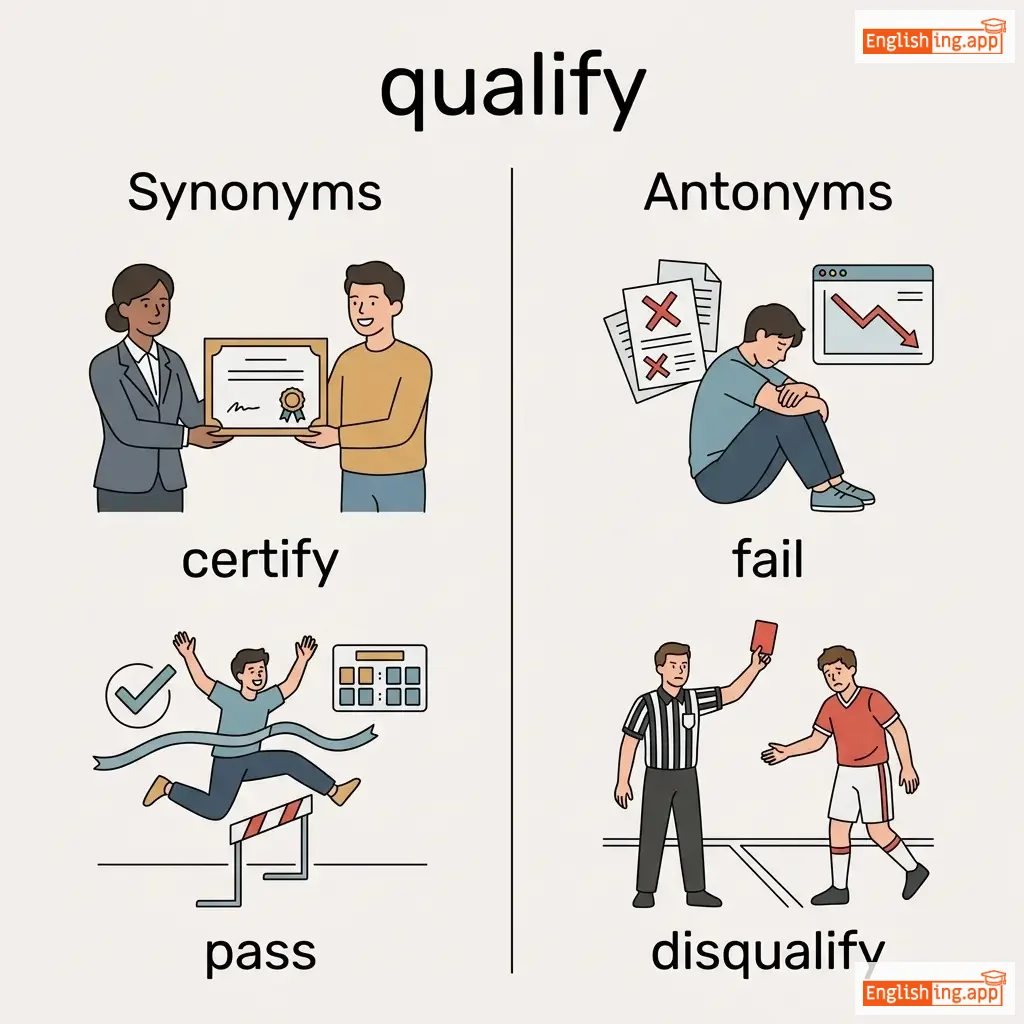
/ˈkwɒlɪfaɪ/
verb
(kwah-li-fai)
••••••
|
|
符合资格
fu he zi ge
••••••
|
qualified
kwah-li-feid
••••••
|
qualified
kwah-li-feid
••••••
|
qualifies
kwah-li-fais
••••••
|
qualifying
kwah-li-fai-ing
••••••
|
to meet the requirements or conditions for something
••••••
|
He worked hard to qualify for the final round.
他努力工作以符合最后一轮的资格。
••••••
|
他努力工作以符合最后一轮的资格。
Ta nuli gongzuo yi fuhe zuìhòu yī lún de zīgé.
••••••
|
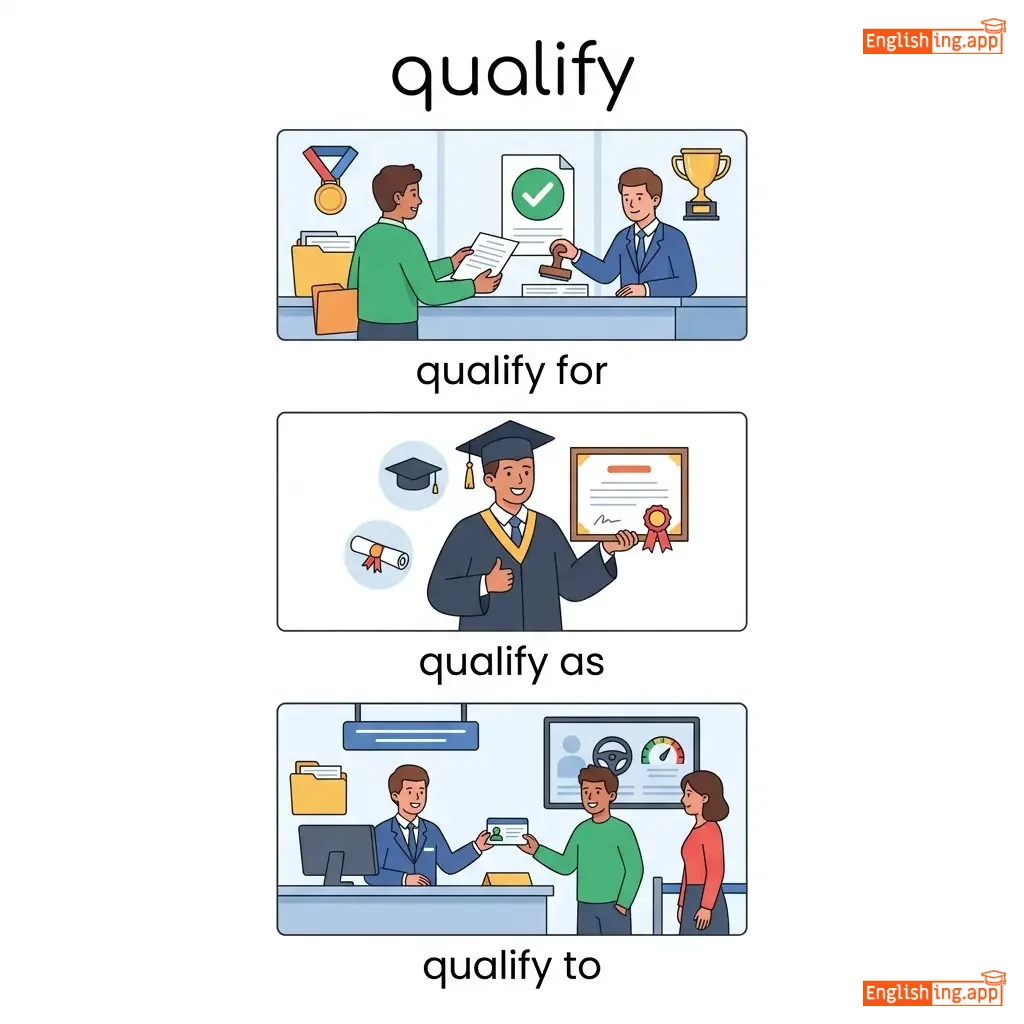
qualify for
符合资格
••••••
|
to be eligible for something
••••••
|
符合资格
fu he zi ge
••••••
|
certify, pass, succeed, train, achieve
••••••
|
fail, disqualify
••••••
|
qualify for, qualify as, qualify to, newly qualified
••••••
|
Qualify在中文意味着符合资格,就像英语一样。
••••••
|
|
#7180
🎓
|
/ˈkwɒlɪfaɪd/
adjective
(kwɒlɪfaɪd)
••••••
|
|
合格
hege
••••••
|
- •••••• | - •••••• | - •••••• | - •••••• |
officially recognized as being trained or knowledgeable for a particular job or activity
••••••
|
She is a qualified doctor with years of experience.
她是一位具有多年经验的合格医生。
••••••
|
她是一位具有多年经验的合格医生。
Ta shi yi wei juyou duonian jingyan de hege yisheng.
••••••
|
qualified success
合格的成功
••••••
|
a success that is only partial or limited
••••••
|
合格的成功
hege de chenggong
••••••
|
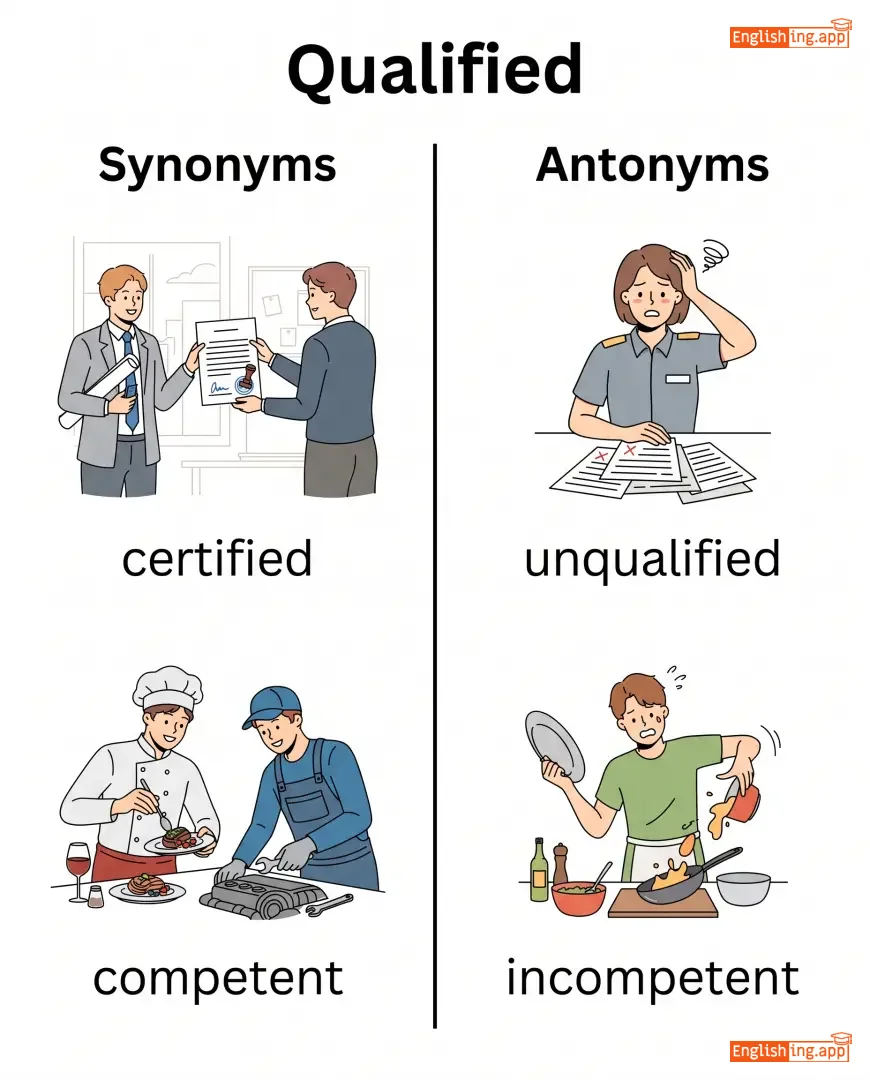
certified, competent, skilled, trained, capable
••••••
|
unqualified, incompetent, incapable
••••••
|
qualified teacher, qualified candidate, qualified doctor, qualified professional
••••••
|
合格 = 合理 + 成功 → 合格的人总是成功的。
••••••
|
|
#7181
🎓
|
/ˌkwɒlɪfɪˈkeɪʃən/
noun
(kwɒlɪfɪˈkeɪʃən)
••••••
|
- •••••• |
资格
zīgé
••••••
|
- •••••• | - •••••• | - •••••• | - •••••• |
a condition or skill that makes someone suitable for a job or activity; the process of qualifying
••••••
|
She listed her qualifications on the job application. |
她在求职申请中列出了她的资格。
Tā zài qiúzhí shēnqǐng zhōng lièchūle tā de zīgé.
••••••
|
meet the qualifications |
to possess the required skills or criteria
••••••
|
符合资格
fúhé zīgé
••••••
|
credential, requirement, competence, skill, eligibility
••••••
|
incompetence, disqualification
••••••
|
educational qualification, professional qualification, meet qualifications, required qualification
••••••
|
Qualification意味着资格 → 工作需要质量和教育
••••••
|
|
#7182
🏡
|
/kweɪnt/
adjective
(kweɪnt)
••••••
|
- •••••• |
古雅的
gǔ yǎ de
••••••
|
- •••••• | - •••••• | - •••••• | - •••••• |
attractively unusual or old-fashioned
••••••
|
They stayed in a quaint little cottage by the sea.
他们住在海边的一座古雅的小屋里。
••••••
|
他们住在海边的一座古雅的小屋里。
Tāmen zhù zài hǎibiān de yīzuò gǔ yǎ de xiǎo wū lǐ.
••••••
|
- •••••• | - •••••• | - •••••• |
charming, picturesque, old-fashioned, unusual
••••••
|
modern, ordinary, common
••••••
|
quaint village, quaint cottage, quaint shop, quaint charm
••••••
|
Quaint = quiet + 古老 → 古雅的
••••••
|
|
#7183
🐦
|
/kweɪl/
verb, noun
(kwel)
••••••
|
- •••••• |
感到恐惧; 一种小的短尾鸟
gǎn dào kǒng jù; yī zhǒng xiǎo de duǎn wěi niǎo
••••••
|
quailed
kwɛld
••••••
|
quailed
kwɛld
••••••
|
quails
kwɛlz
••••••
|
quailing
kwɛɪlɪŋ
••••••
|
verb: to feel or show fear; noun: a small, short-tailed bird
••••••
|
She quailed at the sight of the approaching storm.
她在看到即将来临的风暴时感到害怕。
••••••
|
她在看到即将来临的风暴时感到害怕。
Tā zài kàn dào jí jiāng lái lín de fēng bào shí gǎn dào hài pà.
••••••
|
- •••••• | - •••••• | - •••••• |
shrink, cower, tremble, falter
••••••
|
endure, confront, brave
••••••
|
quail meat, quail eggs, quail in fear, quail before
••••••
|
Quail意味着鸟,如果你看到风暴,你会像quail一样害怕
••••••
|
|
#7184
🌀
|
/ˈkwæɡˌmaɪər/
noun
(kwægmaɪr)
••••••
|
- •••••• |
泥潭,困境
nítán, kùnjìng
••••••
|
- •••••• | - •••••• | - •••••• | - •••••• |
a soft, wet area of land that gives way underfoot; a complex or dangerous situation
••••••
|
The hikers were trapped in a political quagmire. |
徒步旅行者被困在一个政治泥潭中。
Túbù lǚxíng zhě bèi kùn zài yīgè zhèngzhì nítán zhōng.
••••••
|
caught in a quagmire |
stuck in a difficult or complicated situation
••••••
|
陷入困境
xiànrù kùnjìng
••••••
|
marsh, swamp, predicament, dilemma, mess
••••••
|
solution, clarity, stability
••••••
|
political quagmire, legal quagmire, financial quagmire, stuck in a quagmire
••••••
|
Quagmire 意味着 ‘quag’ (泥潭) 和 ‘mire’ (困境) → quagmire 是泥潭或困境
••••••
|
|
#7185
🤔
|
/ˈpjuːtətɪv/
adjective
(普图特夫)
••••••
|
- •••••• |
假定的
jiading de
••••••
|
- •••••• | - •••••• | - •••••• | - •••••• |
commonly accepted or supposed; generally regarded as such
••••••
|
He is the putative father of the child. |
他是孩子的假定父亲。
Ta shi haizi de jiading fuxi.
••••••
|
- •••••• | - •••••• | - •••••• |
assumed, supposed, presumed, alleged, reputed
••••••
|
confirmed, verified, certain
••••••
|
putative father, putative leader, putative cause, putative heir
••••••
|
Putative 意味着假定的 — 就像‘Put’假设一个东西为真。
••••••
|
|
#7186
4️⃣
|
/kwɒˈdruːpəl/
verb
(kwádrùpǔl)
••••••
|
- •••••• |
四倍增加
sì bèi zēng jiā
••••••
|
quadrupled
kwádrùpùld
••••••
|
quadrupled
kwádrùpùld
••••••
|
quadruples
kwádrùpùls
••••••
|
quadrupling
kwádrùpùlìng
••••••
|
to increase or make something four times as much or as many
••••••
|
Within a year, the startup quadrupled its user base through aggressive partnerships.
在一年内,通过激进的合作伙伴关系,初创公司将其用户基础增加了四倍。
••••••
|
在一年内,通过激进的合作伙伴关系,初创公司将其用户基础增加了四倍。
Zài yī nián nèi, tōngguò jījìn de hézuò huǒbàn guānxì, chūchuàng gōngsī jiāng qí yònghù jīchǔ zēngjiāle sì bèi.
••••••
|
- •••••• | - •••••• | - •••••• |
multiply by four, fourfold, increase fourfold, amplify, expand
••••••
|
halve, reduce, diminish
••••••
|
quadruple growth, quadruple the number, user base quadrupled, quadruple revenue, quadruple output
••••••
|
Quad = 四,迅速增长—quadruple 意味着四倍增长。
••••••
|
|
#7187
🐾
|
/ˈkwɒdrʊpɛd/
noun
••••••
|
- •••••• | - •••••• | - •••••• | - •••••• | - •••••• | - •••••• |
an animal that walks on four feet
••••••
|
Most mammals are quadruped creatures adapted for running and stability. |
- •••••• | - •••••• | - •••••• | - •••••• |
four-footed animal, beast, mammal, creature
••••••
|
biped, human
••••••
|
quadruped mammals, large quadruped, four-footed quadruped, quadruped locomotion
••••••
|
No •••••• |
|
#7188
◻️
|
/ˈkwɒdreɪt/
adjective
(kwah-drayt)
••••••
|
- •••••• |
方形
fangxing
••••••
|
- •••••• | - •••••• | - •••••• | - •••••• |
square or nearly square; having four sides or being suited or corresponding to something
••••••
|
The tiles had a neat quadrate shape that made the floor look orderly. |
瓷砖呈现出整齐的方形形状,使地板看起来整洁。
Cizhuan chengxian chu zhengqi de fangxing xingzhuang, shi diban kan qilai zhengjie.
••••••
|
- •••••• | - •••••• | - •••••• |
square, four-sided, rectangular, even, regular
••••••
|
round, circular, irregular
••••••
|
quadrate bone, quadrate shape, quadrate surface, nearly quadrate, quadrate design
••••••
|
Quad代表四—quadrate代表四个方形的边。记住:‘四’ = 方形 = quadrate!
••••••
|
|
#7189
🦆
|
/kwæk/
noun
(kwæk)
••••••
|
- •••••• |
骗子医生
pianzi yisheng
••••••
|
- •••••• | - •••••• | - •••••• | - •••••• |
a fraudulent or ignorant pretender to medical skill; a charlatan
••••••
|
Beware of the quack who promises miracle cures online. |
当心那个在线承诺奇迹疗法的骗子医生。
dangxin nage zaixian chengnuo qiji liaofa de pianzi yisheng
••••••
|
- •••••• | - •••••• | - •••••• |
charlatan, fraud, impostor, mountebank, sham
••••••
|
professional, expert, physician
••••••
|
quack doctor, quack remedy, expose a quack, medical quackery, quack cure
••••••
|
Quack 是鸭子的叫声,但如果是个骗子医生,‘quack’也能提醒你小心。
••••••
|
|
#7190
⛪
|
/pɪks/
noun
(皮克斯)
••••••
|
- •••••• |
用于存放圣体的小容器
yòng yú cún fàng shèng tǐ de xiǎo róng qì
••••••
|
- •••••• | - •••••• | - •••••• | - •••••• |
a small container, often used in Christian liturgy to carry the consecrated host
••••••
|
The priest placed the consecrated host into the pyx before visiting the sick. |
神父在探访病人之前将圣体放入皮克斯。
Shén fù zài tàn fǎng bìngrén zhī qián jiāng shèng tǐ fàng rù pí kè sī.
••••••
|
- •••••• | - •••••• | - •••••• |
ciborium, vessel, reliquary, container, case
••••••
|
openness, exposure
••••••
|
the pyx, carry the pyx, golden pyx, communion pyx, liturgical pyx
••••••
|
Pyx 是指小容器—记住:P代表‘小容器’在教堂中—圣体在皮克斯中。
••••••
|
|
#7191
⚔️
|
/ˈpɪrɪk/
adjective
(pí rì kè)
••••••
|
- •••••• |
皮洛斯式胜利
pī luò sī shì shèng lì
••••••
|
- •••••• | - •••••• | - •••••• | - •••••• |
A victory won at such a great cost that it is almost equivalent to defeat.
••••••
|
The general declared the battle a pyrrhic victory due to heavy losses. |
由于巨大的损失,指挥官宣布战斗为皮洛斯式胜利。
Yóu yú jùdà de sǔnshī, zhǐhuīguān xuānbù zhàndòu wéi pī luò sī shì shèng lì.
••••••
|
pyrrhic victory |
A victory that comes at such a devastating cost that it is almost like a defeat.
••••••
|
皮洛斯式胜利
pī luò sī shì shèng lì
••••••
|
costly, hollow, ruinous, devastating, bittersweet
••••••
|
easy, beneficial, fruitful
••••••
|
pyrrhic victory, pyrrhic outcome, pyrrhic success
••••••
|
Pyrrhic victory 意味着'胜利,但付出高昂的代价' – 赢了却感到失败。
••••••
|
|
#7192
🎆
|
/ˌpaɪroʊˈtɛknɪk/
adjective
(paɪroʊˈtɛknɪk)
••••••
|
- •••••• |
烟火技术
yan huo ji shu
••••••
|
- •••••• | - •••••• | - •••••• | - •••••• |
Relating to fireworks or spectacular displays involving fire.
••••••
|
The city celebrated with a grand pyrotechnic display on New Year's Eve. |
这座城市在新年前夕举办了盛大的烟火技术展示。
Zhe zuo cheng shi zai xin nian qian xi ju ban le sheng da de yan huo ji shu zhan shi.
••••••
|
pyrotechnic display |
A show of fireworks or dazzling explosive effects.
••••••
|
烟火展示
yan huo zhan shi
••••••
|
firework, explosive, dazzling, fiery, sparkling
••••••
|
dull, plain
••••••
|
pyrotechnic display, pyrotechnic skill, pyrotechnic show
••••••
|
Pyro = 火 + technic = 技术 → 烟火技术
••••••
|
|
#7193
🔥
|
/ˌpaɪroʊˈmeɪniæk/
noun
(派洛曼尼亚克)
••••••
|
- •••••• |
纵火狂
zong huo kuang
••••••
|
- •••••• | - •••••• | - •••••• | - •••••• |
A person with an uncontrollable desire to set things on fire.
••••••
|
The pyromaniac was arrested for setting several buildings ablaze. |
纵火狂因点燃多座建筑而被逮捕。
Zong huo kuang yin dianran duo zuo jianzhutian er bei daibu.
••••••
|
- •••••• | - •••••• | - •••••• |
arsonist, firebug, incendiary, torch, burner
••••••
|
firefighter, rescuer
••••••
|
dangerous pyromaniac, known pyromaniac, catch a pyromaniac
••••••
|
Pyro = 火 + maniac = 疯狂 → Pyromaniac = 点燃事物的疯狂的人。
••••••
|
|
#7194
🔥
|
/ˌpaɪrəˈmeɪniə/
noun
(纵火狂)
••••••
|
- •••••• |
纵火的失控欲望
zong huo de shi kong yu wang
••••••
|
- •••••• | - •••••• | - •••••• | - •••••• |
An uncontrollable desire to set things on fire.
••••••
|
The suspect was diagnosed with pyromania after repeated incidents of arson.
嫌疑人在多次纵火事件后被诊断为纵火狂。
••••••
|
嫌疑人在多次纵火事件后被诊断为纵火狂。
Xianyi ren zai duoci zonghuo shijian hou bei zhenduan wei zonghuo kuang.
••••••
|
- •••••• | - •••••• | - •••••• |
arson, compulsion, obsession, mania, fire-setting
••••••
|
calmness, restraint
••••••
|
suffer from pyromania, diagnosed with pyromania, pyromania disorder
••••••
|
Pyro = 火, mania = 疯狂 → 纵火狂 = 点燃火的疯狂欲望。
••••••
|
|
#7195
🔥
|
/paɪər/
noun
(pài'ěr)
••••••
|
- •••••• |
火葬堆
huǒzàng duī
••••••
|
- •••••• | - •••••• | - •••••• | - •••••• |
A heap of combustible material, especially one used for burning a corpse as part of a funeral ceremony.
••••••
|
The villagers built a pyre to honor the deceased. |
村民们建造了一堆火葬堆,以尊重已故者。
Cūnmínmen jiànzàole yī duī huǒzàng duī, yǐ zūnzhòng yǐgù zhě.
••••••
|
funeral pyre |
A pile of wood used to cremate a dead body in funeral rituals.
••••••
|
火葬堆
huǒzàng duī
••••••
|
bonfire, blaze, fire, heap, conflagration
••••••
|
grave, tomb, burial
••••••
|
funeral pyre, burning pyre, build a pyre, wooden pyre
••••••
|
Pyre 就是火葬堆,'Pyre 是火葬堆'!
••••••
|
|
#7196
🧩
|
/ˈpʌzl/
noun, verb
(拼图)
••••••
|
|
谜题 / 使困惑
mí tí / shǐ kùn huò
••••••
|
puzzled
拼图
••••••
|
puzzled
拼图
••••••
|
puzzles
拼图
••••••
|
puzzling
拼图
••••••
|
a game, toy, or problem designed to test ingenuity; to cause someone to be confused
••••••
|
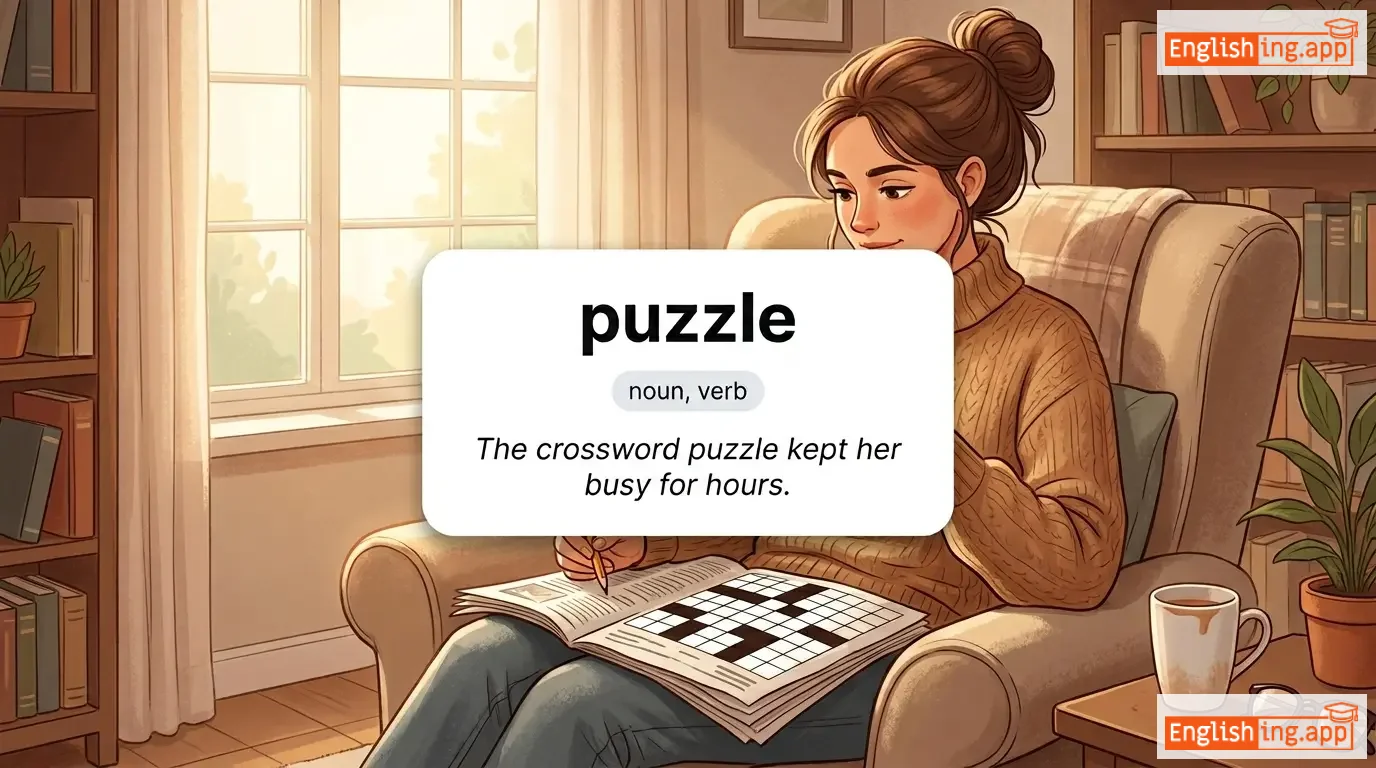
The crossword puzzle kept her busy for hours.
填字游戏让她忙了好几个小时。
••••••
|
填字游戏让她忙了好几个小时。
Tián zì yóu xì ràng tā máng le hǎo jǐ gè xiǎo shí.
••••••
|
puzzle over
思考难题
••••••
|
to think deeply about something difficult to understand
••••••
|
思考难题
sī kǎo nán tí
••••••
|
riddle, enigma, conundrum, problem, mystery
••••••
|
solution, answer, clarity
••••••
|
crossword puzzle, jigsaw puzzle, puzzle game, puzzle over
••••••
|
拼图是难题 — 让你的脑袋‘拼’成完整的解决方案。
••••••
|
|
#7197
🗑️
|
/ˈpjuːtrɪd/
adjective
(pǔtílìd)
••••••
|
- •••••• |
腐烂的
fǔlàn de
••••••
|
- •••••• | - •••••• | - •••••• | - •••••• |
decayed and emitting a foul smell
••••••
|
The garbage smelled putrid after days in the sun. |
垃圾在阳光下几天后开始发臭,变得腐烂。
Lājī zài yángguāng xià jǐ tiān hòu kāishǐ fāchòu, biàn dé fǔlàn.
••••••
|
- •••••• | - •••••• | - •••••• |
rotten, foul, decayed, decomposed
••••••
|
fresh, clean
••••••
|
putrid smell, putrid garbage, putrid corpse
••••••
|
Putrid意味着腐烂的 — 'Put'和'rid'就像腐烂和臭味。
••••••
|
|
#7198
🤢
|
/pjuːˈtrɛsənt/
adjective
(pjuːˈtrɛsənt)
••••••
|
- •••••• |
腐烂的
fulan de
••••••
|
- •••••• | - •••••• | - •••••• | - •••••• |
undergoing the process of decay; rotting
••••••
|
The putrescent odor made everyone leave the room. |
腐烂的气味让所有人都离开了房间。
Fulan de qiwei rang suoyou ren dou likai le fangjian.
••••••
|
- •••••• | - •••••• | - •••••• |
decaying, rotting, decomposing, foul
••••••
|
fresh, wholesome
••••••
|
putrescent odor, putrescent body, putrescent smell
••••••
|
Putrescent 意味着 '腐烂的' — 'Scent' 意味着气味,腐烂的气味。
••••••
|
|
#7199
💀
|
/ˈpjuːtrɪfaɪ/
verb
(pjuːtrɪfaɪ)
••••••
|
- •••••• |
腐烂
fulan
••••••
|
putrefied
pjuːtrɪfaɪd
••••••
|
putrefied
pjuːtrɪfaɪd
••••••
|
putrefies
pjuːtrɪfaɪz
••••••
|
putrefying
pjuːtrɪfaɪɪŋ
••••••
|
to decay or rot, producing a foul smell
••••••
|
The meat began to putrefy in the heat.
ðə miːt bɪˈɡæn tʊ pjuːtrɪfaɪ ɪn ðə hiːt.
••••••
|
肉在热气中开始腐烂。
Ròu zài rè qì zhōng kāishǐ fǔlàn.
••••••
|
- •••••• | - •••••• | - •••••• |
rot, decay, spoil, decompose
••••••
|
preserve, freshen
••••••
|
putrefy quickly, putrefy in the sun, begin to putrefy
••••••
|
Putrefy意味着腐烂 - 热气中的肉会'putrefy',发出臭味。
••••••
|
Vocabulary Quiz
Test your vocabulary by matching words with their translations or meanings.
Login to take the quiz
Comments (0)
Share your thoughts and join the discussion.
Join the discussion by logging in
Login to CommentNo comments yet
Be the first to share your thoughts!