


Swipe left or right, or use the buttons. Tap image to zoom.
例句翻译
单词
Lesson 280Lesson 280 - 遮罩切换
|
表情符号
|
单词 | Images | 翻译 | 过去时 | 过去分词 | 第三人称单数 | 动名词 | 含义 | 例句 | 例句翻译 | 示例表达 | 示例表达含义 | 示例表达翻译 | 同义词 | 反义词 | 搭配词 | 助记符 |
|---|---|---|---|---|---|---|---|---|---|---|---|---|---|---|---|---|---|
|
#8370
😐
|
/ˈstoʊɪk/
adjective
(斯多伊克)
••••••
|
- •••••• |
冷静的, 无动于衷的
lěngjìng de, wú dòng yú zhōng de
••••••
|
- •••••• | - •••••• | - •••••• | - •••••• |
Showing little or no emotion, even in difficult situations.
••••••
|
She remained stoic during the crisis, never showing fear or panic. |
她在危机中保持冷静,毫无恐惧或恐慌。
Tā zài wēijī zhōng bǎochí lěngjìng, háo wú kǒngjù huò kǒnghuāng.
••••••
|
- •••••• | - •••••• | - •••••• |
calm, unemotional, composed, indifferent, impassive
••••••
|
emotional, expressive, sensitive
••••••
|
stoic expression, stoic attitude, stoic calm, stoic endurance
••••••
|
Stoic意味着像石头一样 – stoic的人就像石头一样冷静。
••••••
|
|
#8371
🫷
|
/ˈstræŋɡəl/
verb
••••••
|
- •••••• | - •••••• |
strangled
••••••
|
strangled
••••••
|
strangles
••••••
|
strangling
••••••
|
to kill or stop someone or something by squeezing the throat or restricting flow
••••••
|
The villain tried to strangle his opponent in the dark alley. |
- •••••• |
strangle a business |
to severely restrict the growth or operation of a business
••••••
|
- •••••• |
choke, suffocate, throttle, stifle, suppress
••••••
|
release, free, liberate
••••••
|
strangle someone, strangle attempt, strangle hold, strangle growth
••••••
|
No •••••• |
|
#8372
🧵
|
/strænd/
noun, verb
(斯特兰德)
••••••
|
- •••••• |
线 / 搁浅
xiàn / géqiǎn
••••••
|
stranded
斯特兰德德
••••••
|
stranded
斯特兰德德
••••••
|
strands
斯特兰德斯
••••••
|
stranding
斯特兰丁
••••••
|
Noun: A single thin length of thread, wire, or similar. Verb: To leave someone or something without a way of moving or leaving.
••••••
|
The storm stranded many tourists on the island.
暴风雨让许多游客滞留在岛上。
••••••
|
暴风雨让许多游客滞留在岛上。
Bàofēngyǔ ràng xǔduō yóukè zhìliú zài dǎo shàng.
••••••
|
left stranded
滞留
••••••
|
left helpless or unable to move
••••••
|
搁浅
géqiǎn
••••••
|
thread, fiber, filament, abandon, maroon
••••••
|
rope, cord, rescue
••••••
|
strand of hair, strand of wire, left stranded, stranded passengers
••••••
|
Strand意味着线,而stranded意味着搁浅。
••••••
|
|
#8373
🌊
|
/streɪt/
noun
(斯特雷特)
••••••
|
- •••••• |
海峡
haixia
••••••
|
- •••••• | - •••••• | - •••••• | - •••••• |
A narrow passage of water connecting two seas or two large areas of water.
••••••
|
The Strait of Gibraltar connects the Atlantic Ocean and the Mediterranean Sea. |
直布罗陀海峡连接大西洋和地中海。
Zhibuluotuo haixia lianjie Daxi yang he Dizhonghai.
••••••
|
in dire straits |
in a very difficult or serious situation
••••••
|
困境中
kunjing zhong
••••••
|
channel, passage, sound, narrows
••••••
|
open sea, wide passage
••••••
|
narrow strait, strait of Gibraltar, strait crossing, dire straits
••••••
|
海峡意味着狭窄的水道,就像直布罗陀海峡一样。
••••••
|
|
#8374
➡️
|
/streɪt/
adjective, adverb
(sī tè)
••••••
|
- •••••• |
直
zhi
••••••
|
- •••••• | - •••••• | - •••••• | - •••••• |
Extending or moving uniformly in one direction only; not curved or bent.
••••••
|
He walked straight to the door without stopping. |
他直接走向门,没有停下来。
Tā zhíjiē zǒu xiàng mén, méiyǒu tíng xiàlái.
••••••
|
straight to the point |
to talk directly about the main subject without delay
••••••
|
直接了当
zhíjiē liǎodàng
••••••
|
direct, upright, linear, honest, vertical
••••••
|
crooked, curved, bent
••••••
|
straight line, straight road, straight to the point, straight answer
••••••
|
Straight 意味着直的,就像一条直路 (zhí de lù)
••••••
|
|
#8375
🚶
|
/ˈstræɡəl/
verb
(斯特拉格尔)
••••••
|
- •••••• |
不规则地移动
bù guī zé de yídòng
••••••
|
straggled
斯特拉格尔德
••••••
|
straggled
斯特拉格尔德
••••••
|
straggles
斯特拉格尔斯
••••••
|
straggling
斯特拉格林
••••••
|
To move or spread in an irregular, scattered, or untidy way.
••••••
|
The children began to straggle behind on the long hike.
孩子们在漫长的徒步旅行中开始掉队。
••••••
|
孩子们开始在漫长的徒步旅行中掉队。
Háizimen kāishǐ zài màncháng de túbù lǚxíng zhōng diàoduì.
••••••
|
straggle behind
掉队
••••••
|
to fall behind others while moving
••••••
|
掉队
diàoduì
••••••
|
wander, trail, drift, scatter, lag
••••••
|
gather, assemble, group
••••••
|
straggle behind, straggle home, straggle in, straggle along
••••••
|
Struggle 在路上走时可能会导致掉队
••••••
|
|
#8376
🚢
|
/ˈstoʊəˌweɪ/
noun
(偷渡客)
••••••
|
- •••••• |
偷渡者
tōudù zhě
••••••
|
- •••••• | - •••••• | - •••••• | - •••••• |
A person who hides on a ship, plane, or other vehicle in order to travel secretly without paying.
••••••
|
The crew discovered a stowaway hiding in the cargo hold. |
船员发现一个藏在货舱里的偷渡者。
chuányuán fāxiàn yīgè cáng zài huò cāng lǐ de tōudù zhě.
••••••
|
- •••••• | - •••••• | - •••••• |
intruder, trespasser, clandestine passenger, hidden traveler, fugitive
••••••
|
passenger, traveler, visitor
••••••
|
discover a stowaway, stowaway on a ship, stowaway case, stowaway problem
••••••
|
偷渡者藏匿,旅行不付费
••••••
|
|
#8377
🦁
|
/ˌstaʊtˈhɑːrtɪd/
adjective
(斯托特哈特德)
••••••
|
- •••••• |
勇敢
yǒnggǎn
••••••
|
- •••••• | - •••••• | - •••••• | - •••••• |
Brave, determined, and courageous
••••••
|
The stouthearted soldier never gave up. |
勇敢的士兵从不放弃。
Yǒnggǎn de shìbīng cóng bù fàngqì.
••••••
|
- •••••• | - •••••• | - •••••• |
brave, courageous, valiant, bold, fearless
••••••
|
cowardly, fearful, timid
••••••
|
stouthearted soldier, stouthearted hero, stouthearted defense
••••••
|
Stouthearted = stout (强壮) + hearted (勇敢) → 强壮勇敢的心
••••••
|
|
#8378
🍺
|
/staʊt/
adjective/noun
(斯陶特)
••••••
|
- •••••• |
强壮 / 粗壮
qiángzhuàng / cūzhuàng
••••••
|
- •••••• | - •••••• | - •••••• | - •••••• |
Strong, thick, or heavily built; also a kind of dark beer
••••••
|
The stout man lifted the heavy box with ease. |
这个强壮的男人轻松地举起了沉重的箱子。
Zhège qiángzhuàng de nánrén qīngsōng de jǔqǐle chénzhòng de xiāngzi.
••••••
|
stout resistance |
strong and determined opposition
••••••
|
强力抵抗
qiánglì dǐkàng
••••••
|
strong, sturdy, robust, solid, bulky
••••••
|
weak, frail, thin
••••••
|
stout man, stout woman, stout beer, stout resistance
••••••
|
Stout beer = Stout意味着强壮和粗壮
••••••
|
|
#8379
🙇
|
/stuːp/
verb/noun
(海皮尼斯)
••••••
|
- •••••• |
幸福
xingfu
••••••
|
stooped
••••••
|
stooped
••••••
|
stoops
••••••
|
stooping
••••••
|
To bend one's body forward and downward; also a small porch or staircase at the entrance of a house
••••••
|
He had to stoop to pick up the coin. |
当她收到奖项时,她无法隐藏自己的幸福。
Dāng tā shōu dào jiǎngxiàng shí, tā wúfǎ yǐncáng zìjǐ de xìngfú.
••••••
|
stoop to someone's level |
to lower oneself to behave like someone of poor character
••••••
|
追求幸福
zhuīqiú xìngfú
••••••
|
bend, crouch, bow, lower, hunch
••••••
|
stand, rise, straighten
••••••
|
stoop down, stoop low, old stoop, stoop posture
••••••
|
幸福 = 快乐, 一直追求幸福
••••••
|
|
#8380
🧱
|
/ˈstoʊnwɔːl/
verb
(stounwóol)
••••••
|
- •••••• |
阻挡
zudang
••••••
|
stonewalled
stounwóld
••••••
|
stonewalled
stounwóld
••••••
|
stonewalls
stounwóls
••••••
|
stonewalling
stounwóling
••••••
|
To delay or block progress by refusing to cooperate or answer
••••••
|
The witness tried to stonewall during the investigation.
证人试图在调查期间做stonewall。
••••••
|
证人试图在调查期间做stonewall。
Zhèngrén shìtú zài diàochá qījiān zuò stonewall.
••••••
|
stonewall tactics
stonewall战术
••••••
|
deliberate actions to block or delay progress
••••••
|
stonewall战术
stonewall zhànshù
••••••
|
obstruct, block, delay, hinder, resist
••••••
|
cooperate, assist, support
••••••
|
stonewall tactics, stonewall investigation, stonewall questions
••••••
|
Stonewall = 石墙,像阻碍前进的障碍
••••••
|
|
#8381
🤢
|
/ˈstʌmək/
noun/verb
(胃)
••••••
|
- •••••• |
胃 / 忍耐
wèi / rěnnài
••••••
|
stomached
胃了
••••••
|
stomached
胃了
••••••
|
stomachs
胃的
••••••
|
stomaching
胃的过程
••••••
|
The internal organ in which food is digested; also to tolerate or endure something
••••••
|
She couldn’t stomach the sight of violence.
她无法忍受暴力的场景。
••••••
|
她无法忍受暴力的场景。
Tā wúfǎ rěnshòu bàolì de chǎngjǐng.
••••••
|
have a strong stomach
有一个强壮的胃
••••••
|
to be able to tolerate unpleasant or difficult things
••••••
|
有一个强壮的胃
Yǒu yīgè qiángzhuàng de wèi
••••••
|
belly, abdomen, gut, endure, tolerate
••••••
|
reject, resist, dislike
••••••
|
stomach pain, upset stomach, stomach flu, stomach cramps
••••••
|
胃是消化食物的器官,拥有一个强壮的胃意味着能承受困难。
••••••
|
|
#8382
🪵
|
/ˈstɒlɪd/
adjective
(斯托利德)
••••••
|
|
冷静的,沉默的
lěngjìng de, chénmò de
••••••
|
- •••••• | - •••••• | - •••••• | - •••••• |
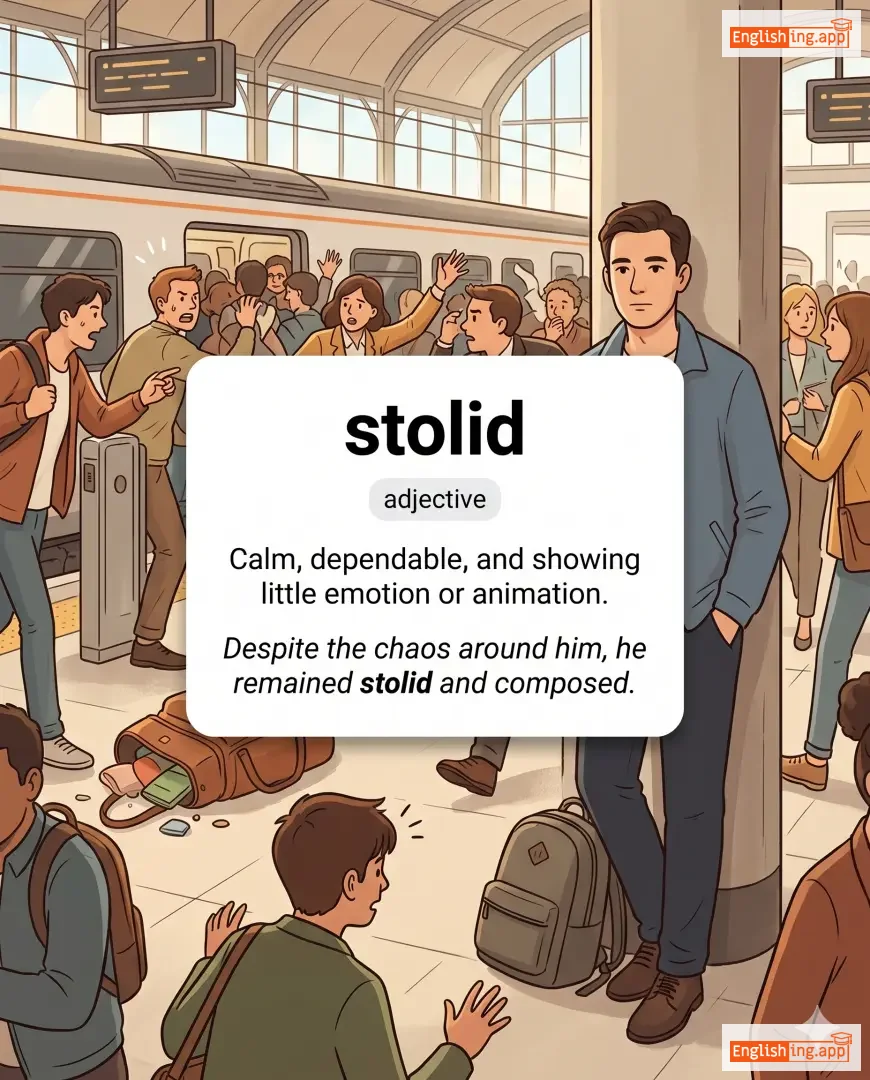
Calm, dependable, and showing little emotion or animation.
••••••
|
Despite the chaos around him, he remained stolid and composed.
迪斯派特 德 凯欧斯 阿劳恩德 希姆, 希 里门德 斯托利德 安德 坎坡兹德。
••••••
|
尽管周围混乱,他依然冷静沉着。
Jǐnguǎn zhōuwéi hùnluàn, tā yīrán lěngjìng chénzhuó.
••••••
|
- •••••• | - •••••• | - •••••• |
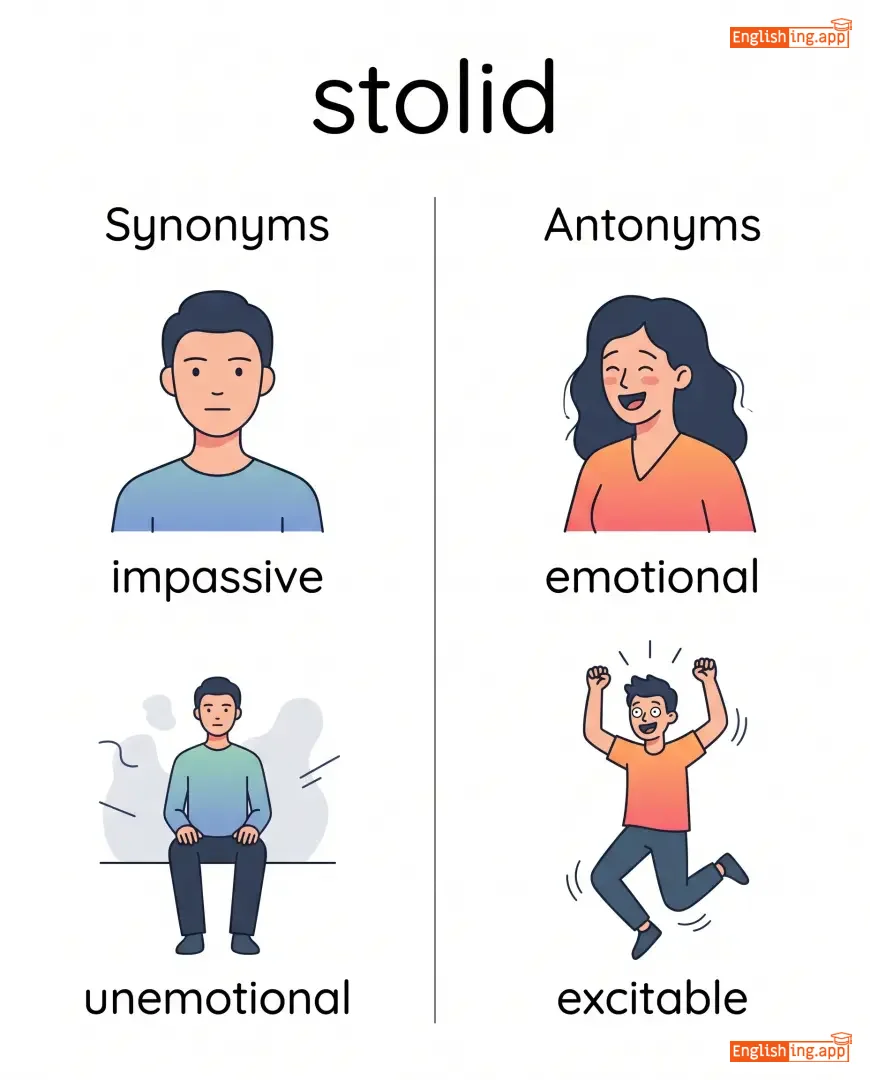
impassive, unemotional, phlegmatic, placid, steady
••••••
|
emotional, excitable, expressive
••••••
|
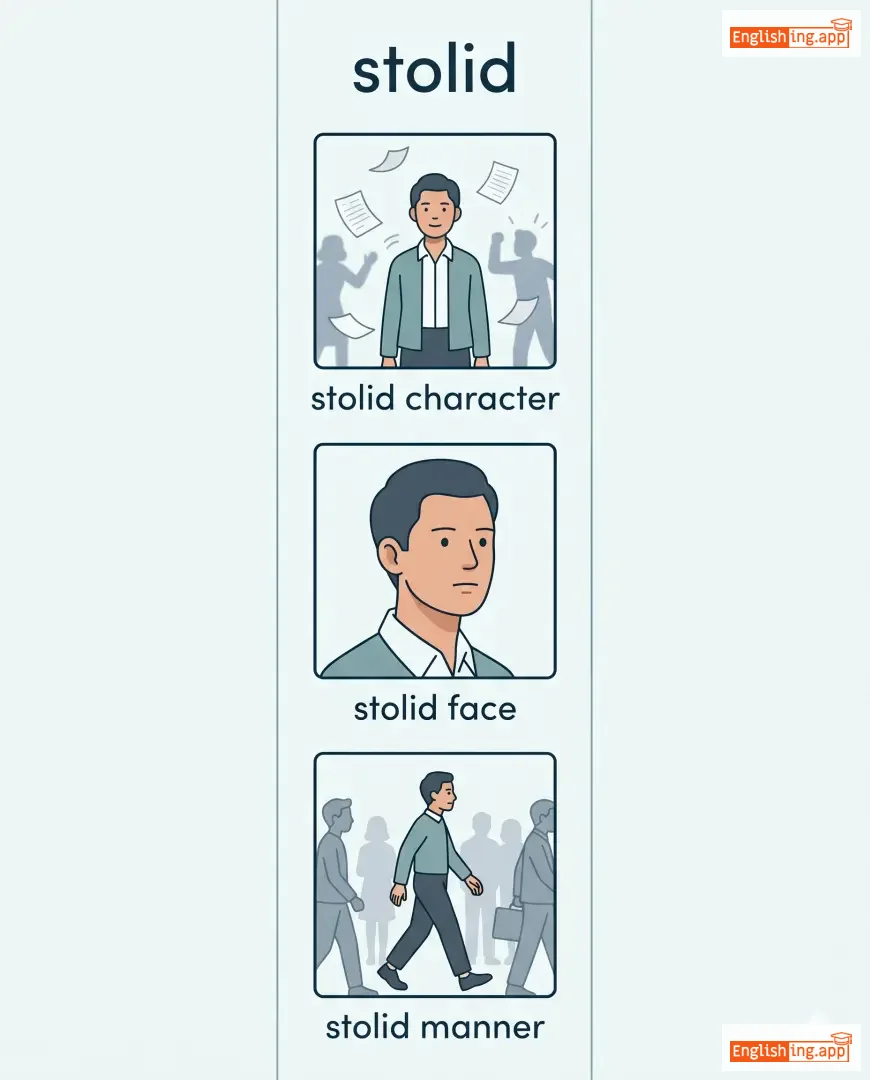
stolid character, stolid face, stolid manner, stolid calm
••••••
|
Stolid – 像石头一样冷静。
••••••
|
|
#8383
🔥
|
/stoʊk/
verb
••••••
|
- •••••• | - •••••• |
stoked
••••••
|
stoked
••••••
|
stokes
••••••
|
stoking
••••••
|
To add fuel to a fire; to encourage or increase a strong feeling or activity.
••••••
|
The politician’s speech stoked anger among the crowd. |
- •••••• |
stoke the flames |
to make a bad situation worse by increasing anger or conflict
••••••
|
- •••••• |
fuel, kindle, ignite, arouse, provoke
••••••
|
extinguish, calm, suppress
••••••
|
stoke a fire, stoke anger, stoke enthusiasm, stoke fears
••••••
|
No •••••• |
|
#8384
🧘
|
/ˈstoʊɪˌsɪzəm/
noun
(斯多伊主义)
••••••
|
|
坚忍主义
jiānrěn zhǔyì
••••••
|
- •••••• | - •••••• | - •••••• | - •••••• |
The endurance of pain or hardship without showing feelings or complaining.
••••••
|
He faced the loss of his job with remarkable stoicism. |
他以非凡的坚忍主义面对失业的痛苦。
Tā yǐ fēifán de jiānrěn zhǔyì miànduì shīyè de tòngkǔ.
••••••
|
- •••••• | - •••••• | - •••••• |
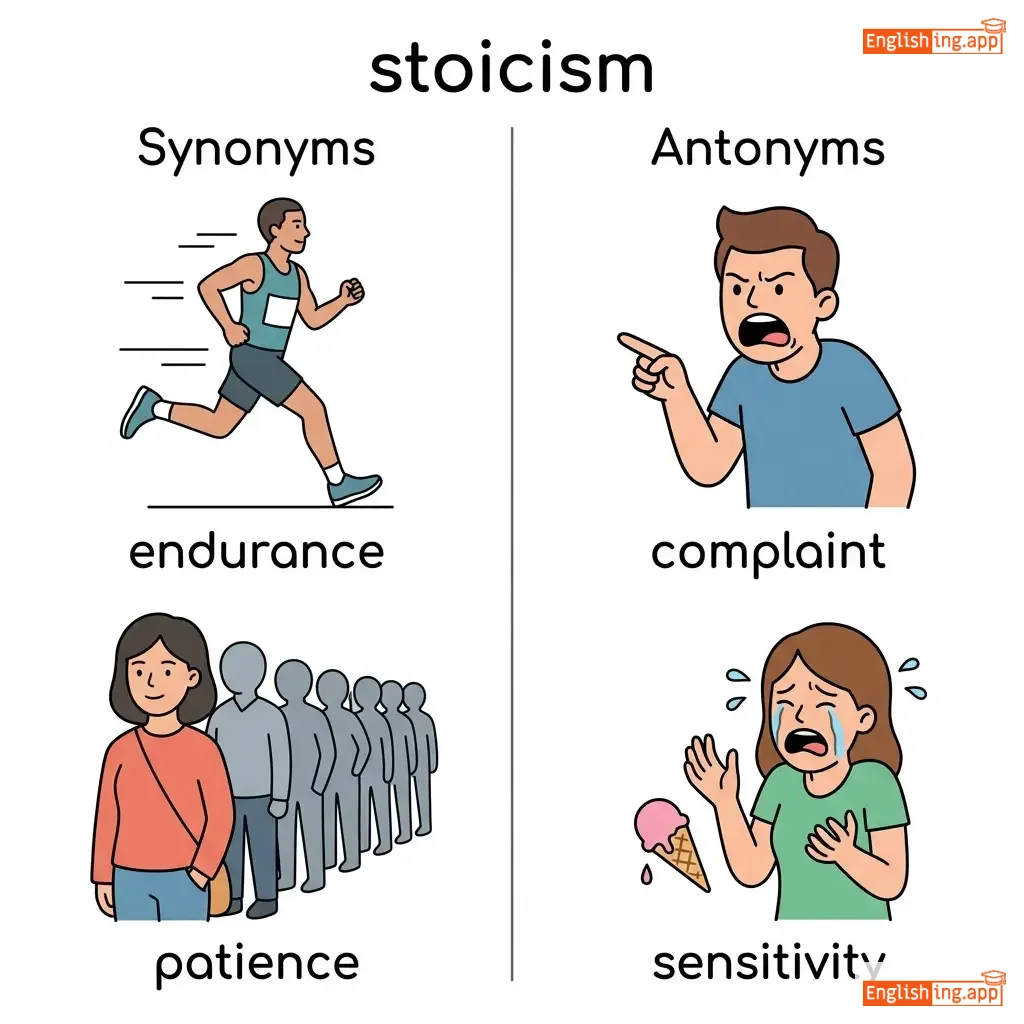
endurance, patience, fortitude, resignation, impassiveness
••••••
|
complaint, sensitivity, weakness
••••••
|
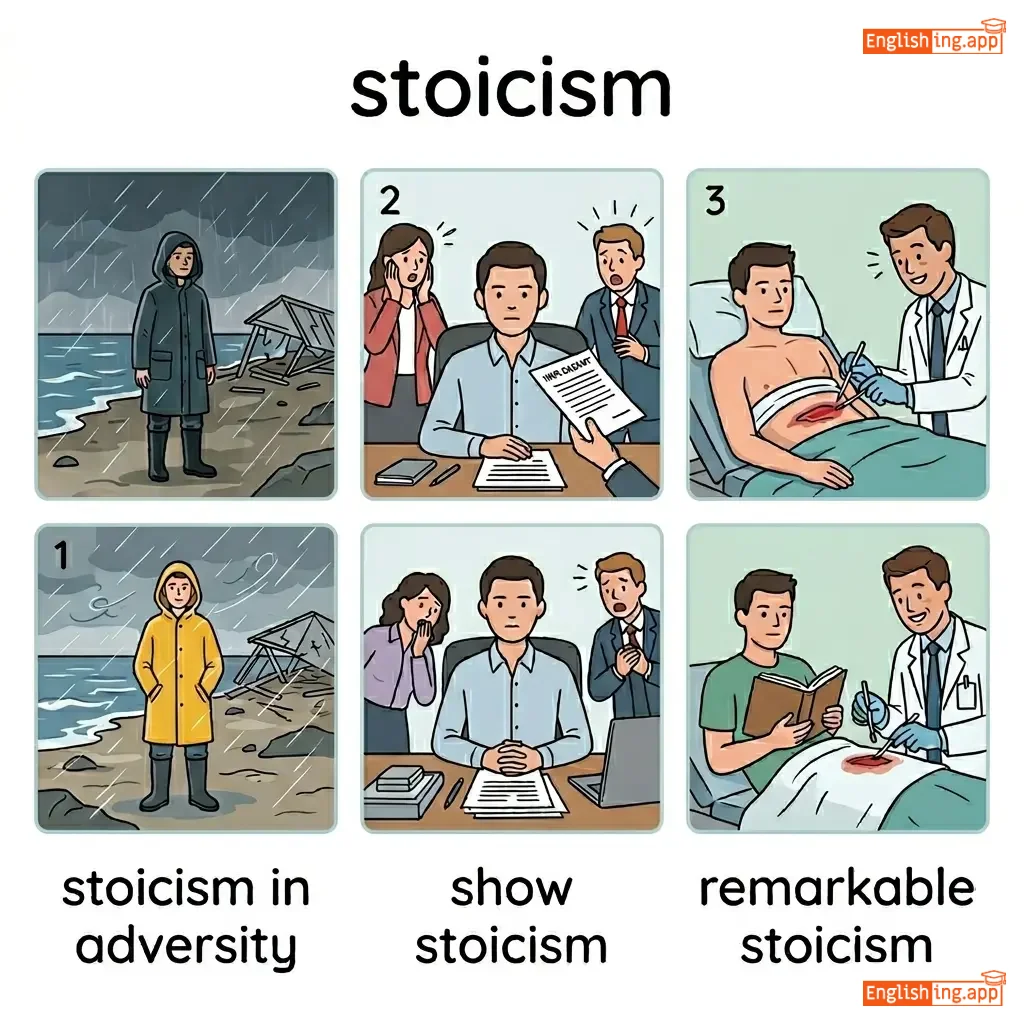
stoicism in adversity, show stoicism, remarkable stoicism, endure with stoicism
••••••
|
坚忍主义就像石头,不管遭受什么,都不会碎裂。
••••••
|
|
#8385
🤖
|
/ˈstɪltɪd/
adjective
(ˈstɪltɪd)
••••••
|
- •••••• |
做作的, 不自然的
zuòzuò de, bù zìrán de
••••••
|
- •••••• | - •••••• | - •••••• | - •••••• |
Speech or writing that is stiff, unnatural, or overly formal.
••••••
|
His speech sounded stilted and rehearsed. |
他的演讲听起来做作且预先排练过。
Tā de yǎnjiǎng tīng qǐlái zuòzuò qiě yùxiān páiliàn guò.
••••••
|
- •••••• | - •••••• | - •••••• |
awkward, unnatural, pompous, stiff
••••••
|
natural, relaxed, fluent
••••••
|
stilted speech, stilted conversation, stilted style
••••••
|
Stilted 意味着站在高跷上 – 不自然的姿势 → 做作的语言
••••••
|
|
#8386
🥱
|
/ˈstɒdʒi/
adjective
(斯托吉)
••••••
|
- •••••• |
沉闷的,老式的
chénmèn de, lǎoshì de
••••••
|
- •••••• | - •••••• | - •••••• | - •••••• |
Dull, uninspired, or old-fashioned; also heavy and hard to digest when referring to food.
••••••
|
The lecture was so stodgy that many students struggled to stay awake. |
讲座太沉闷了,以至于许多学生难以保持清醒。
Jiǎngzuò tài chénmèn le, yǐzhì yú xǔduō xuéshēng nán yǐ bǎochí qīngxǐng.
••••••
|
- •••••• | - •••••• | - •••••• |
dull, boring, stuffy, tedious, old-fashioned
••••••
|
lively, exciting, modern
••••••
|
stodgy food, stodgy lecture, stodgy style, stodgy institution
••••••
|
Stodgy 意味着无聊,记住 stodgy food 难以消化(沉重)。
••••••
|
|
#8387
🪵
|
/stɒˈkeɪd/
noun
(sītuókǎidé)
••••••
|
- •••••• |
木栅栏
mù zhàlán
••••••
|
- •••••• | - •••••• | - •••••• | - •••••• |
a defensive barrier made of strong posts or timbers, often around a fort or prison
••••••
|
The prisoners were kept inside the wooden stockade. |
囚犯被关在木栅栏内。
Qiúfàn bèi guān zài mù zhàlán nèi.
••••••
|
- •••••• | - •••••• | - •••••• |
fortification, enclosure, barricade, fence, palisade
••••••
|
opening, exit
••••••
|
wooden stockade, prison stockade, military stockade, stockade fence
••••••
|
Stockade指的是由木栅栏构成的防御墙
••••••
|
|
#8388
📦
|
/stɒk/
noun, verb
(sī tòu kè)
••••••
|
- •••••• |
库存
kù cún
••••••
|
stocked
sī tòu kè dé
••••••
|
stocked
sī tòu kè dé
••••••
|
stocks
sī tòu kè sī
••••••
|
stocking
sī tòu kè zhōng
••••••
|
a supply of goods kept for sale or use; to keep or fill with goods
••••••
|
The shop stocks a wide variety of products.
商店储存大量的商品。
••••••
|
商店储存大量的商品。
Shāng diàn chǔ cún dà liàng de shāng pǐn.
••••••
|
take stock of
对情况进行盘点
••••••
|
to carefully examine and evaluate a situation
••••••
|
仔细评估情况
zǐ xì píng gū qíng kuàng
••••••
|
inventory, supply, reserve, goods, merchandise
••••••
|
shortage, depletion
••••••
|
stock market, stock price, stock exchange, stock level
••••••
|
库存就是商店里的商品储备
••••••
|
|
#8389
🧵
|
/stɪtʃ/
noun, verb
••••••
|
|
- •••••• |
stitched
••••••
|
stitched
••••••
|
stitches
••••••
|
stitching
••••••
|
to sew fabric together using a needle and thread; also a single loop of thread in sewing
••••••
|
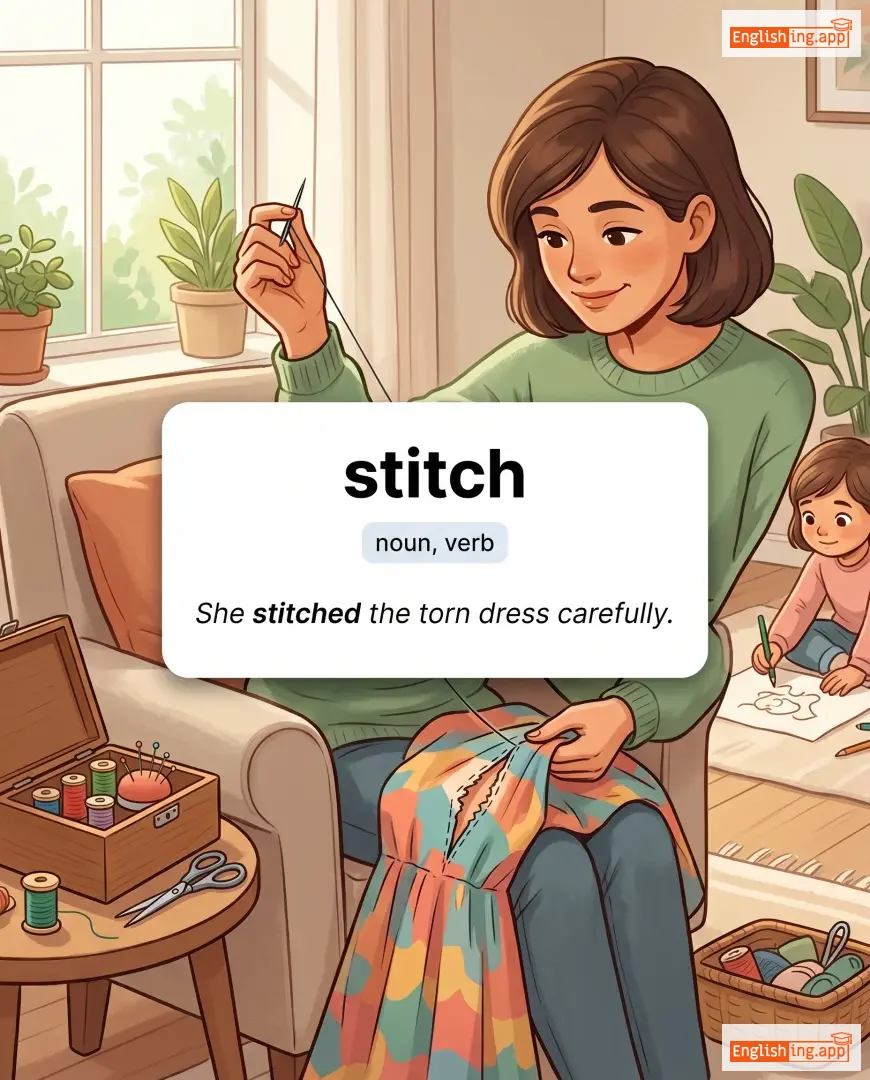
She stitched the torn dress carefully. |
- •••••• |
in stitches |
laughing uncontrollably
••••••
|
- •••••• |
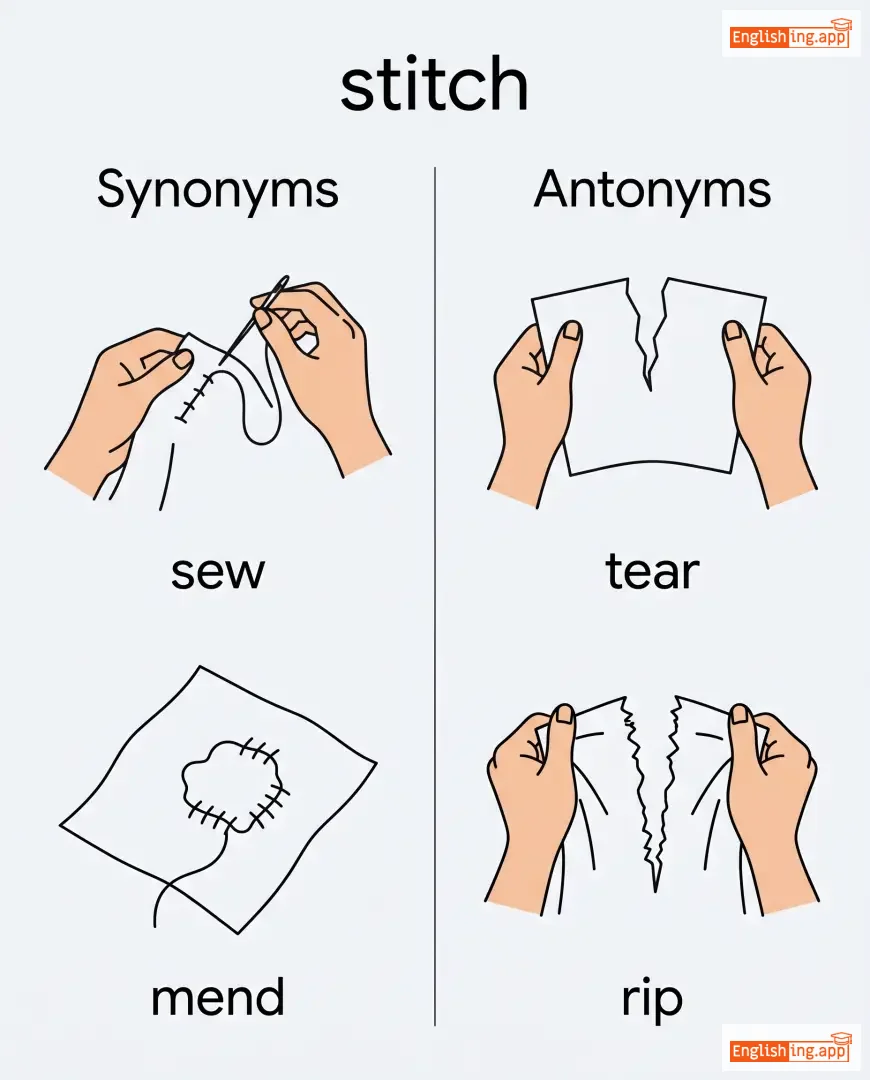
sew, mend, darn, embroider, hem
••••••
|
tear, rip
••••••
|
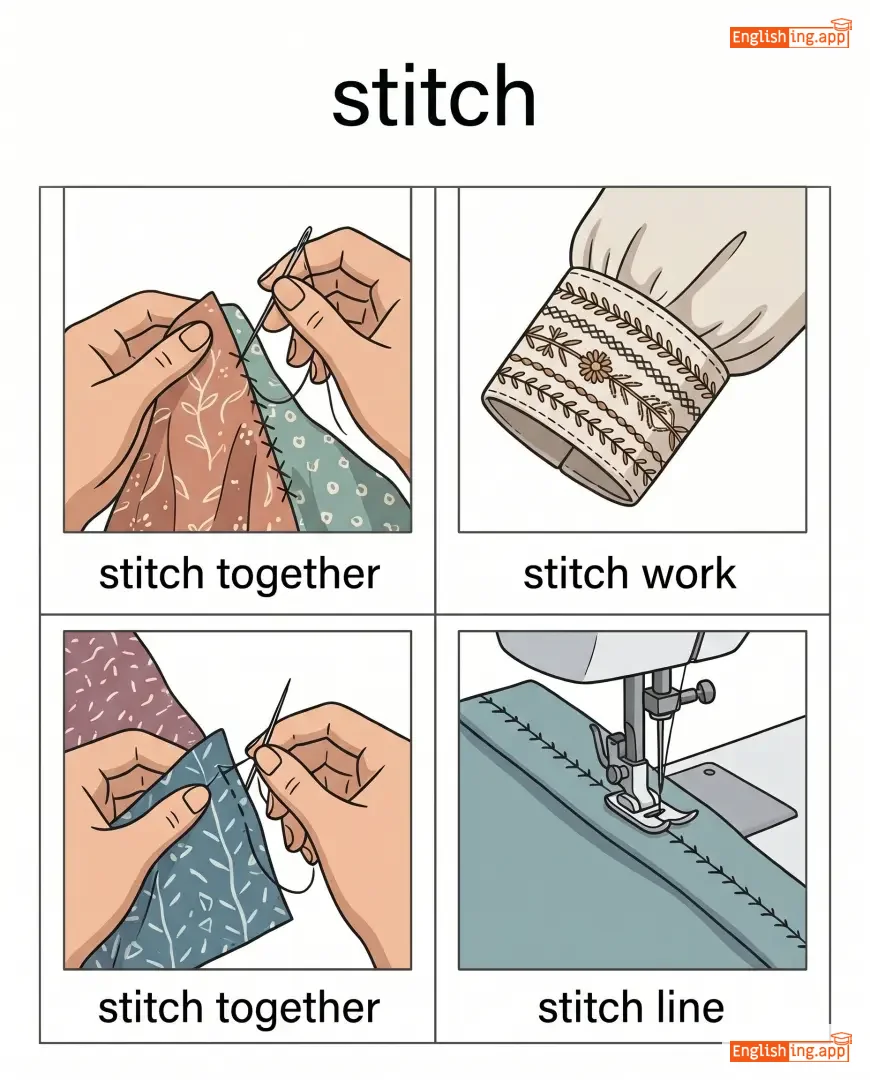
stitch together, stitch work, stitch line, stitch pattern
••••••
|
No •••••• |
|
#8390
📜
|
/ˈstɪp.jʊ.leɪt/
verb
(斯蒂普莱特)
••••••
|
|
规定
guīdìng
••••••
|
stipulated
斯蒂普莱特德
••••••
|
stipulated
斯蒂普莱特德
••••••
|
stipulates
斯蒂普莱特斯
••••••
|
stipulating
斯蒂普莱廷
••••••
|
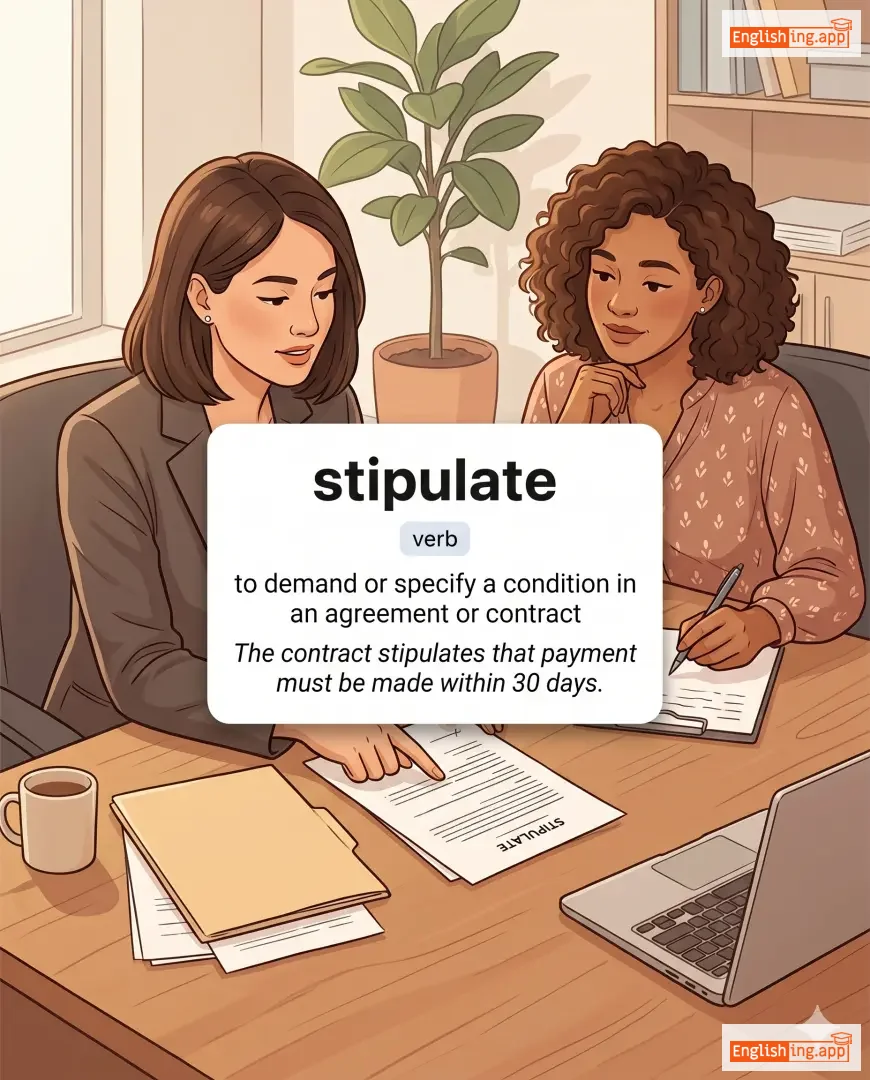
to demand or specify a condition in an agreement or contract
••••••
|
The contract stipulates that payment must be made within 30 days.
合同规定付款必须在30天内完成。
••••••
|
合同规定付款必须在30天内完成。
Hetong guīdìng fùkuǎn bìxū zài 30 tiān nèi wánchéng.
••••••
|
stipulate terms
规定条款
••••••
|
to formally specify conditions in an agreement
••••••
|
规定条款
guīdìng tiáokuǎn
••••••
|
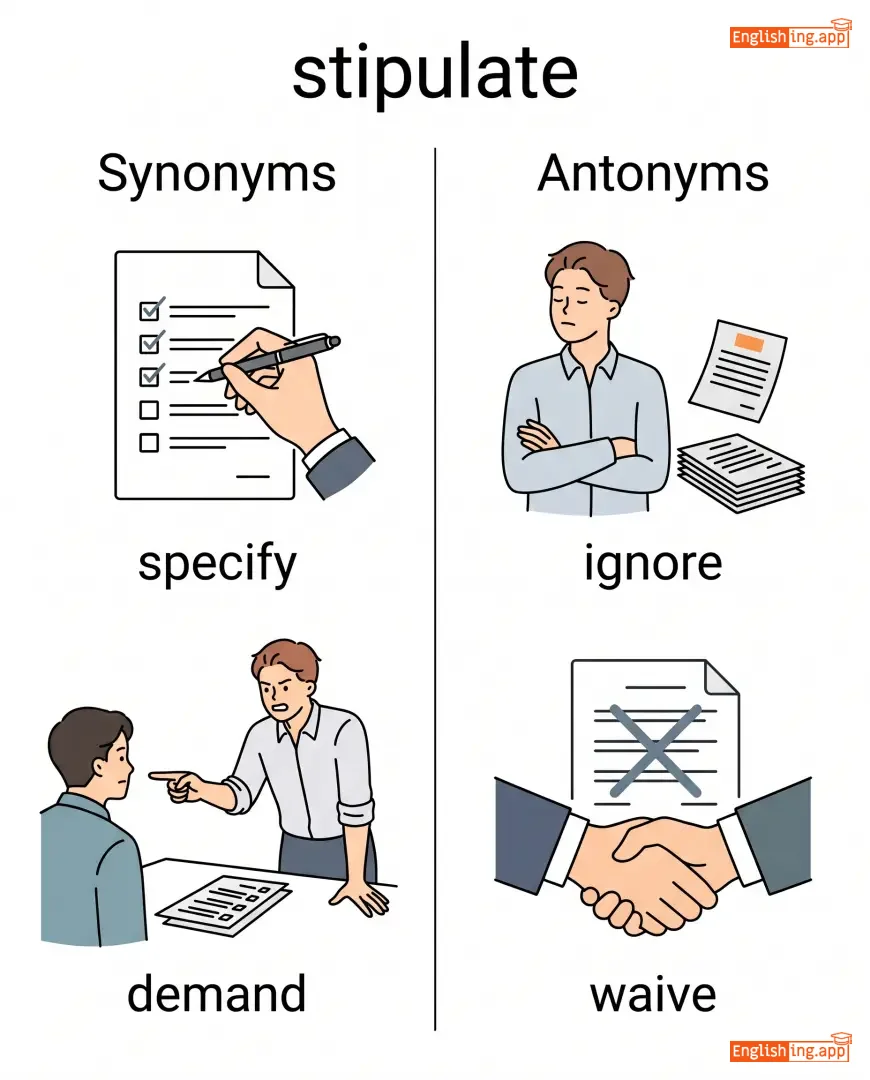
specify, demand, require, prescribe, condition
••••••
|
ignore, waive, overlook
••••••
|
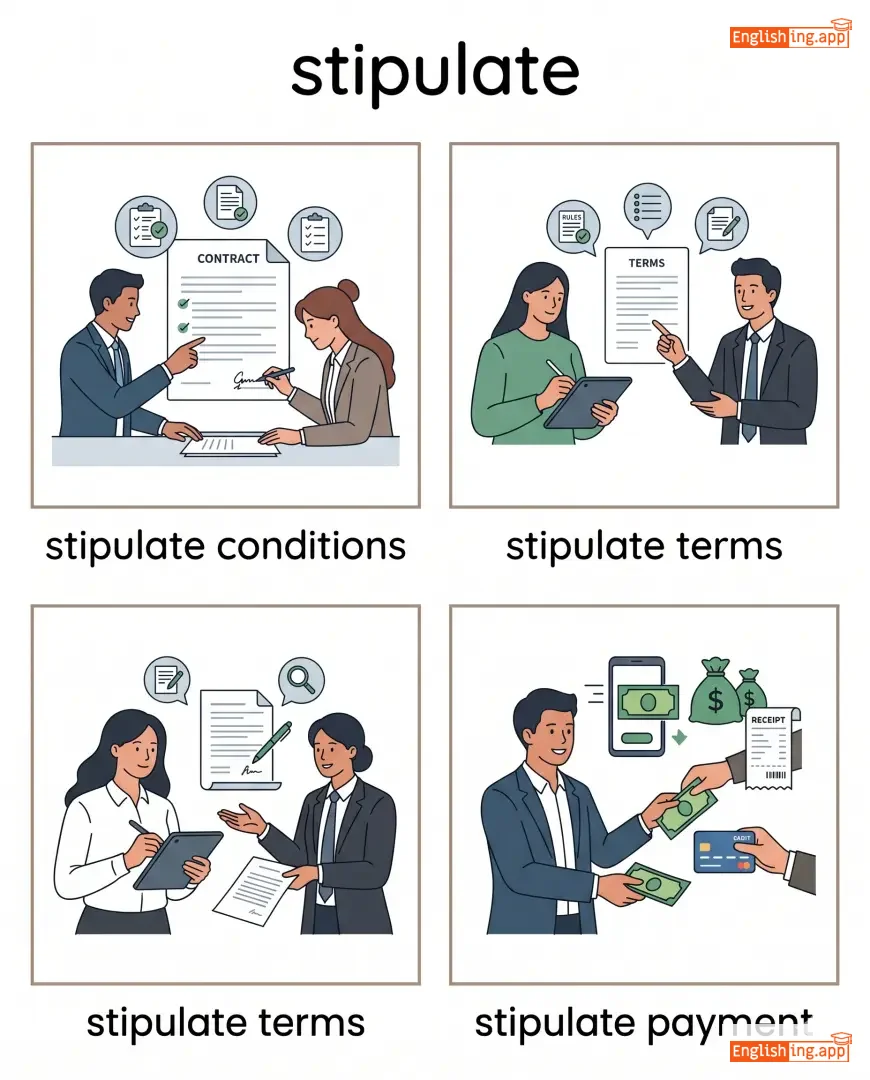
stipulate conditions, stipulate terms, stipulate payment, stipulate requirement
••••••
|
stipulate = 规定条款
••••••
|
|
#8391
🎨
|
/ˈstɪp.əl/
verb
(斯蒂普尔)
••••••
|
- •••••• |
用小点覆盖
yòng xiǎo diǎn fùgài
••••••
|
stippled
斯蒂普尔德
••••••
|
stippled
斯蒂普尔德
••••••
|
stipples
斯蒂普尔斯
••••••
|
stippling
斯蒂普林
••••••
|
to cover a surface with numerous small dots or specks, often in drawing or painting
••••••
|
The artist stippled the canvas to create a textured effect.
艺术家用点画的方式在画布上创造了一个纹理效果。
••••••
|
艺术家在画布上用小点覆盖,创造了一个纹理效果。
Yìshùjiā zài huàbù shàng yòng xiǎo diǎn fùgài, chuàngzàole yīgè wénlǐ xiàoguǒ.
••••••
|
- •••••• | - •••••• | - •••••• |
dot, speckle, fleck, spot, mark
••••••
|
erase, smooth
••••••
|
stipple effect, stipple technique, stipple shading, stipple pattern
••••••
|
想象把许多小点画在画布上,这就是stippling艺术。
••••••
|
|
#8392
💵
|
/ˈstaɪpɛnd/
noun
(斯泰潘德)
••••••
|
- •••••• |
津贴
jintie
••••••
|
- •••••• | - •••••• | - •••••• | - •••••• |
a fixed regular payment, usually for services or to cover living expenses
••••••
|
The university provides a monthly stipend to its research students.
大学为其研究生提供每月津贴。
••••••
|
大学为其研究生提供每月津贴。
Dàxué wèi qí yánjiūshēng tígōng měi yuè jīntiē.
••••••
|
- •••••• | - •••••• | - •••••• |
allowance, salary, grant, payment, remuneration
••••••
|
penalty, deduction
••••••
|
monthly stipend, receive stipend, stipend payment, stipend support
••••••
|
津贴:学生每月得到的资助
••••••
|
|
#8393
✂️
|
/ˈstɪntɪŋ/
verb
(斯廷廷)
••••••
|
- •••••• |
吝啬地给
lìn sè de gěi
••••••
|
- •••••• | - •••••• |
stints
斯廷茨
••••••
|
stinting
斯廷廷
••••••
|
to supply sparingly or with restrictions
••••••
|
He never stinting his efforts to help the poor.
他从不吝啬自己的努力来帮助穷人。
••••••
|
他从不吝啬自己的努力来帮助穷人。
Tā cóng bù lìnsè zìjǐ de nǔlì lái bāngzhù qióngrén.
••••••
|
without stinting
没有限制地
••••••
|
without limitation or restriction
••••••
|
没有限制地
méiyǒu xiànzhì de
••••••
|
sparing, limiting, restricting, withholding
••••••
|
generous, lavish
••••••
|
stinting effort, stinting resources, without stinting
••••••
|
斯廷廷意味着吝啬地给 - 有限制地给
••••••
|
|
#8394
⏳
|
/stɪnt/
noun
(中文)
••••••
|
|
短期工作
duǎnqī gōngzuò
••••••
|
- •••••• | - •••••• | - •••••• | - •••••• |
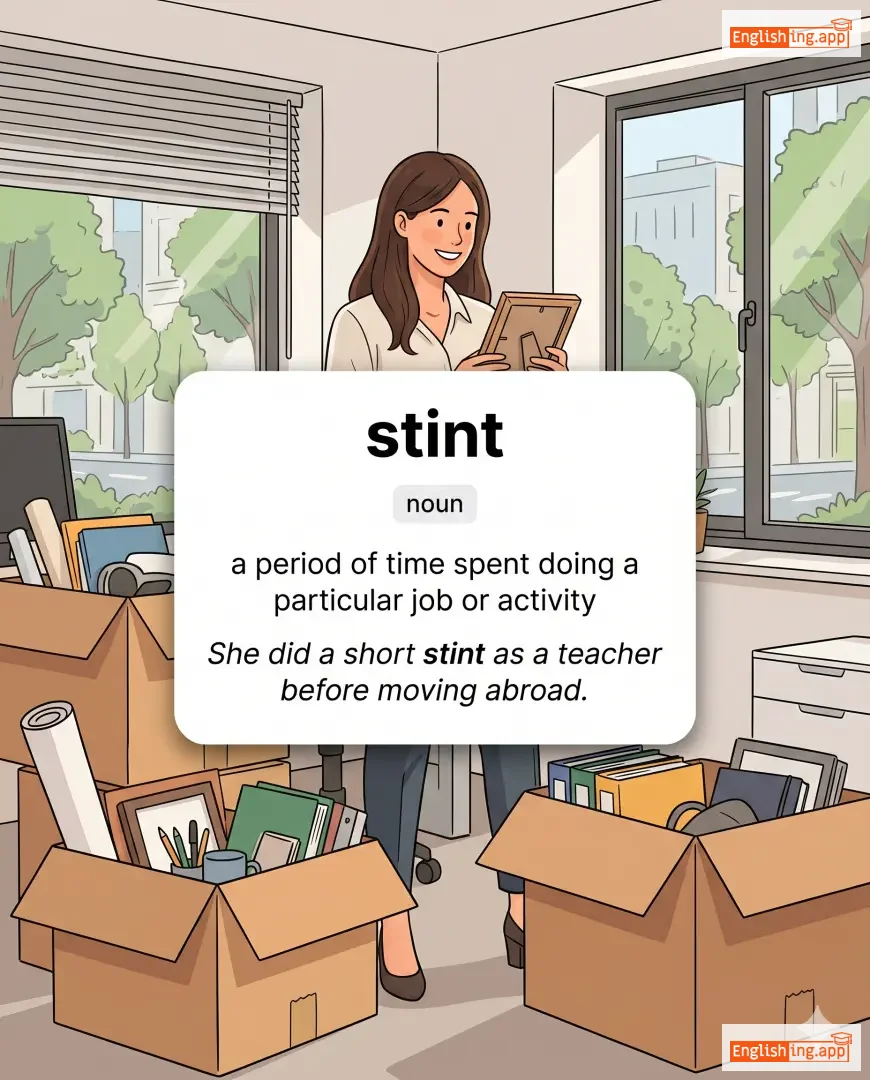
a period of time spent doing a particular job or activity
••••••
|
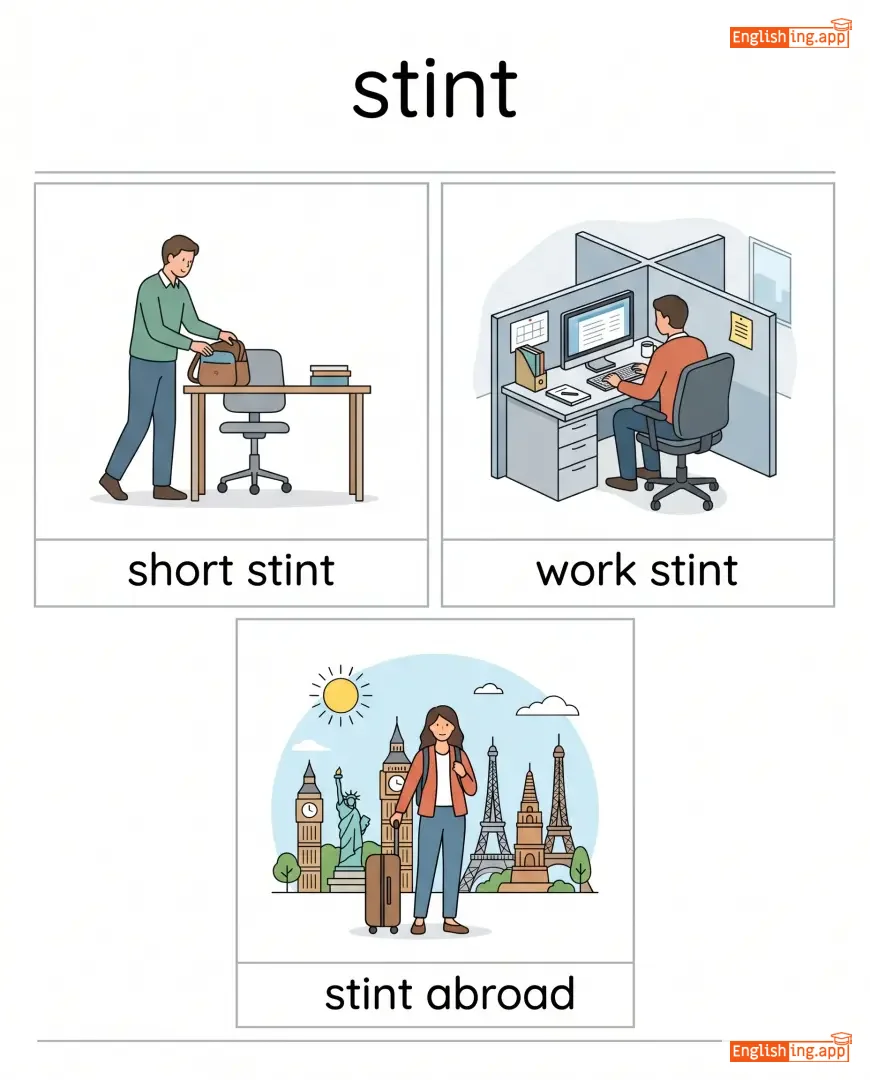
She did a short stint as a teacher before moving abroad.
她在搬到国外之前做了一段短时间的教师工作。
••••••
|
她在搬到国外之前做了一段短时间的教师工作。
Tā zài bān dào guówài zhīqián zuòle yī duàn duǎn shíjiān de jiàoshī gōngzuò.
••••••
|
- •••••• | - •••••• | - •••••• |
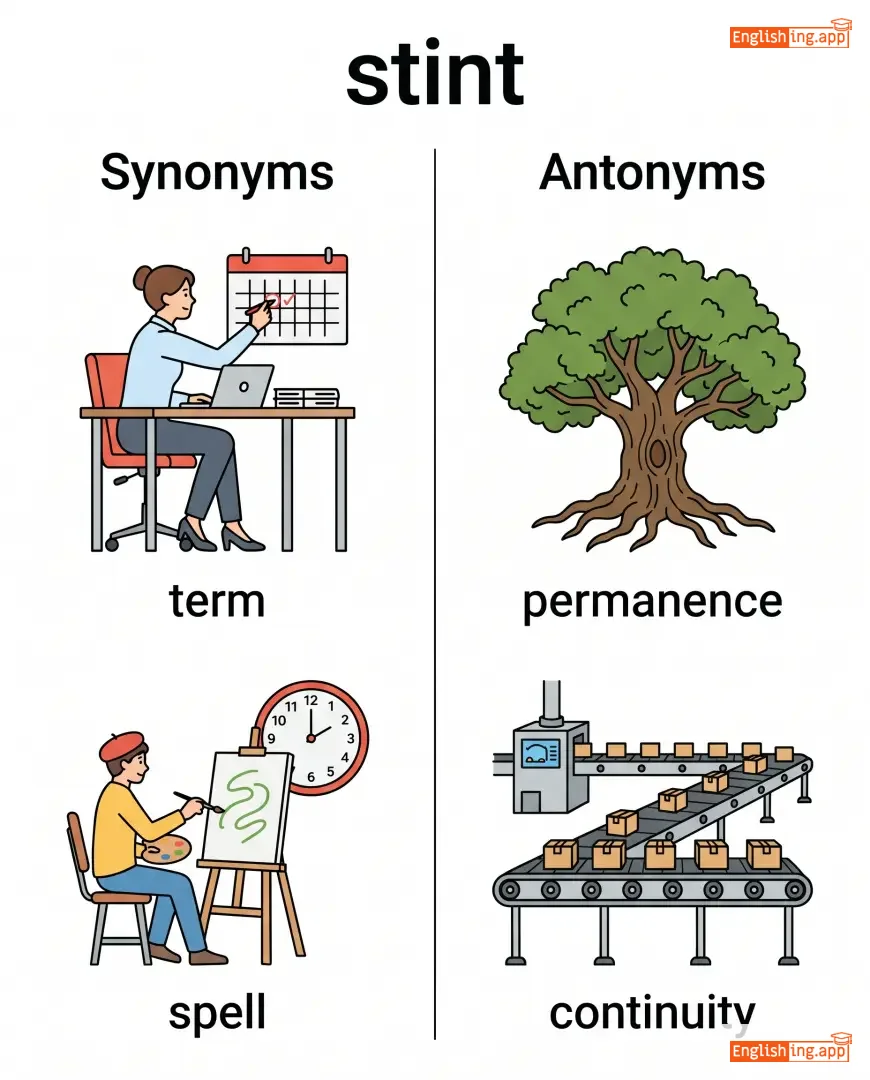
term, spell, period, stretch, service
••••••
|
permanence, continuity
••••••
|
short stint, work stint, stint abroad, stint in service
••••••
|
Stint - 短期工作,类似兼职工作
••••••
|
|
#8395
🤢
|
/stɪŋk/
verb
(stink)
••••••
|
- •••••• |
发臭
fa chou
••••••
|
stank
stank
••••••
|
stunk
stunk
••••••
|
stinks
stinks
••••••
|
stinking
stinking
••••••
|
to smell very unpleasant
••••••
|
The garbage bin stinks in the hot sun.
The garbage bin stinks in the hot sun.
••••••
|
垃圾桶在烈日下发臭。
La ji tong zai lie ri xia fa chou.
••••••
|
stink to high heaven
stink to high heaven
••••••
|
to smell extremely bad
••••••
|
臭气熏天
chou qi xun tian
••••••
|
reek, smell, stink up, foul, pong
••••••
|
fragrant, pleasant-smelling
••••••
|
bad stink, stink up, stink badly, stink smell
••••••
|
当垃圾桶发臭时,那个气味非常难闻,就像‘stink’
••••••
|
|
#8396
💰
|
/ˈstɪndʒi/
adjective
(斯汀吉)
••••••
|
- •••••• |
吝啬
lìn sè
••••••
|
- •••••• | - •••••• | - •••••• | - •••••• |
unwilling to spend or give; miserly
••••••
|
He is too stingy to buy a gift for his friend. |
他太吝啬了,连给朋友买礼物都不愿意。
Tā tài lìnsè le, lián gěi péngyǒu mǎi lǐwù dōu bù yuànyì.
••••••
|
stingy with compliments |
reluctant to praise or compliment others
••••••
|
在赞美方面吝啬
zài zànměi fāngmiàn lìnsè
••••••
|
miserly, tightfisted, cheap, penny-pinching, frugal
••••••
|
generous, lavish, giving
••••••
|
stingy person, stingy with money, stingy attitude, stingy behavior
••••••
|
吝啬的人像饿狼,什么都不愿意分享!
••••••
|
|
#8397
🚀
|
/ˈstɪmjʊləs/
noun
(刺激)
••••••
|
|
引起反应、活动或增长的事物,刺激
yǐnqǐ fǎnyìng, huódòng huò zēngzhǎng de shìwù, cìjī
••••••
|
- •••••• | - •••••• | - •••••• | - •••••• |
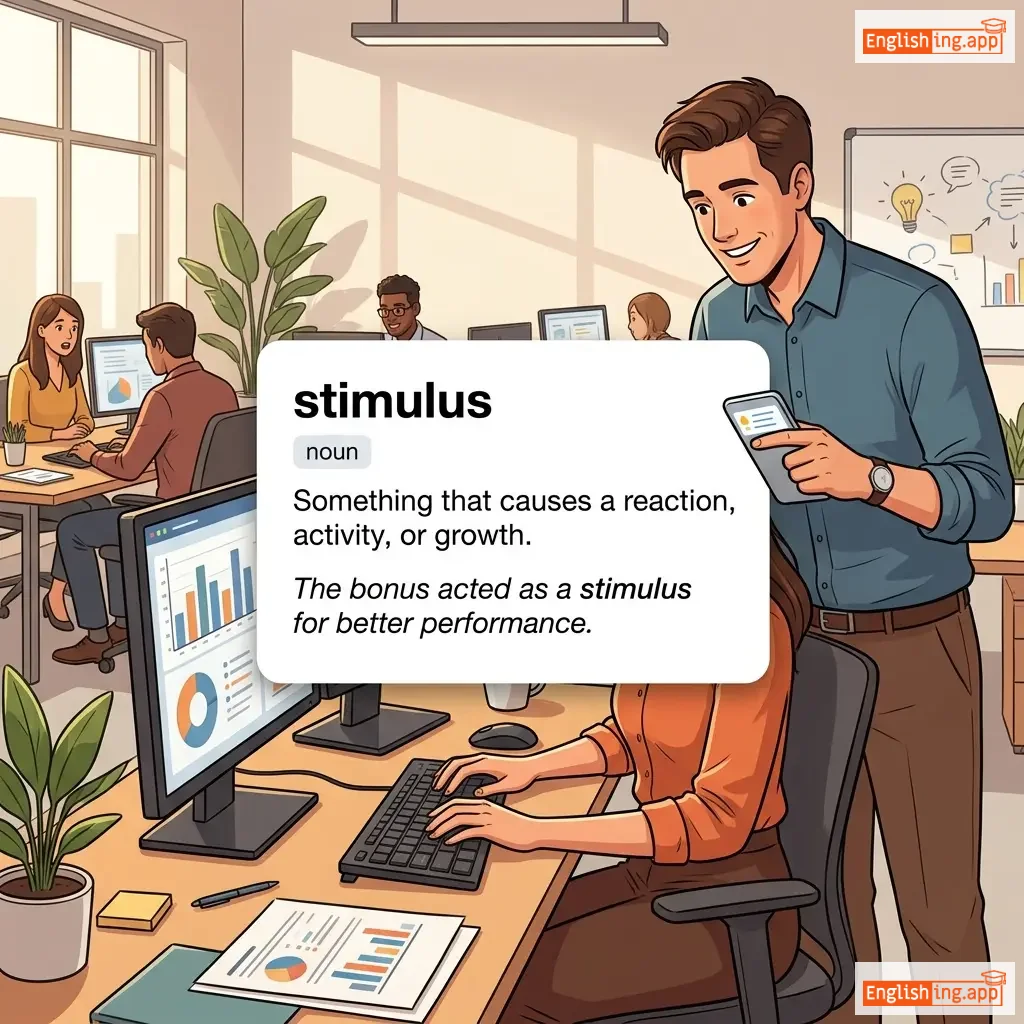
Something that causes a reaction, activity, or growth.
••••••
|
The bonus acted as a stimulus for better performance. |
奖金成为了促进更好表现的刺激。
Jiǎngjīn chéngwéi le cùjìn gèng hǎo biǎoxiàn de cìjī.
••••••
|
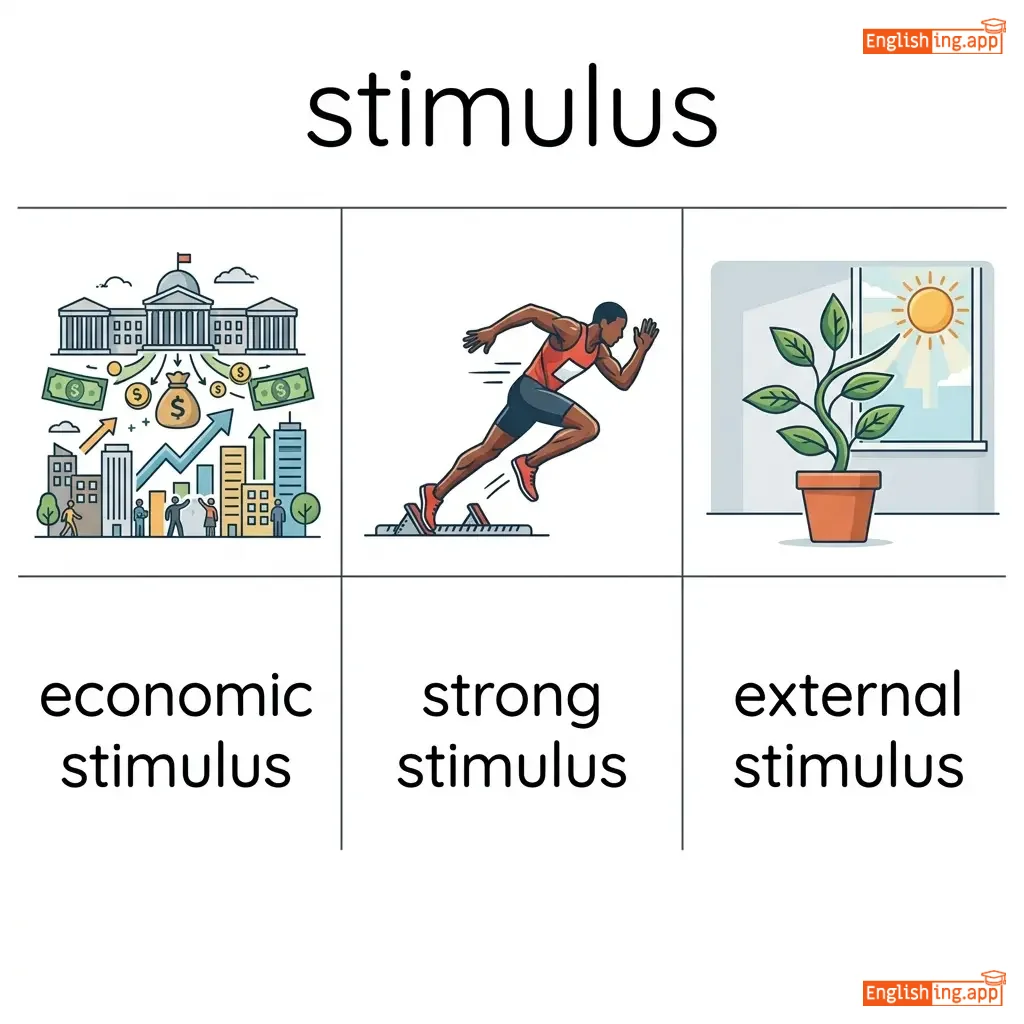
economic stimulus |
government actions to encourage economic growth
••••••
|
经济刺激
jīngjì cìjī
••••••
|
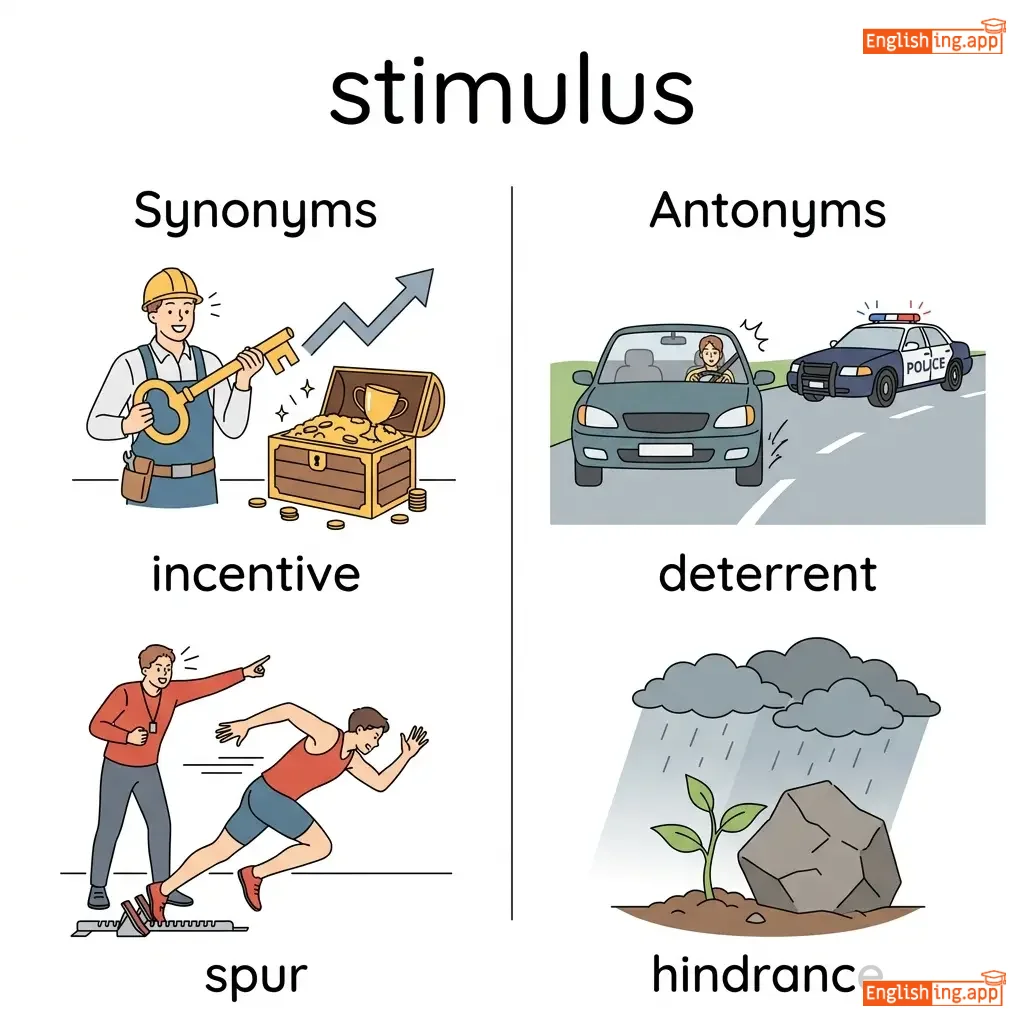
incentive, spur, motivation, encouragement, trigger
••••••
|
deterrent, hindrance
••••••
|
economic stimulus, strong stimulus, external stimulus, direct stimulus
••••••
|
Stimulus = 刺激 🚀 → 记住奖金是一个促进的刺激
••••••
|
|
#8398
💡
|
/ˈstɪmjʊˌleɪt/
verb
(刺激)
••••••
|
|
刺激, 激励
cìjī, jīlì
••••••
|
stimulated
刺激了
••••••
|
stimulated
刺激了
••••••
|
stimulates
刺激
••••••
|
stimulating
刺激中
••••••
|
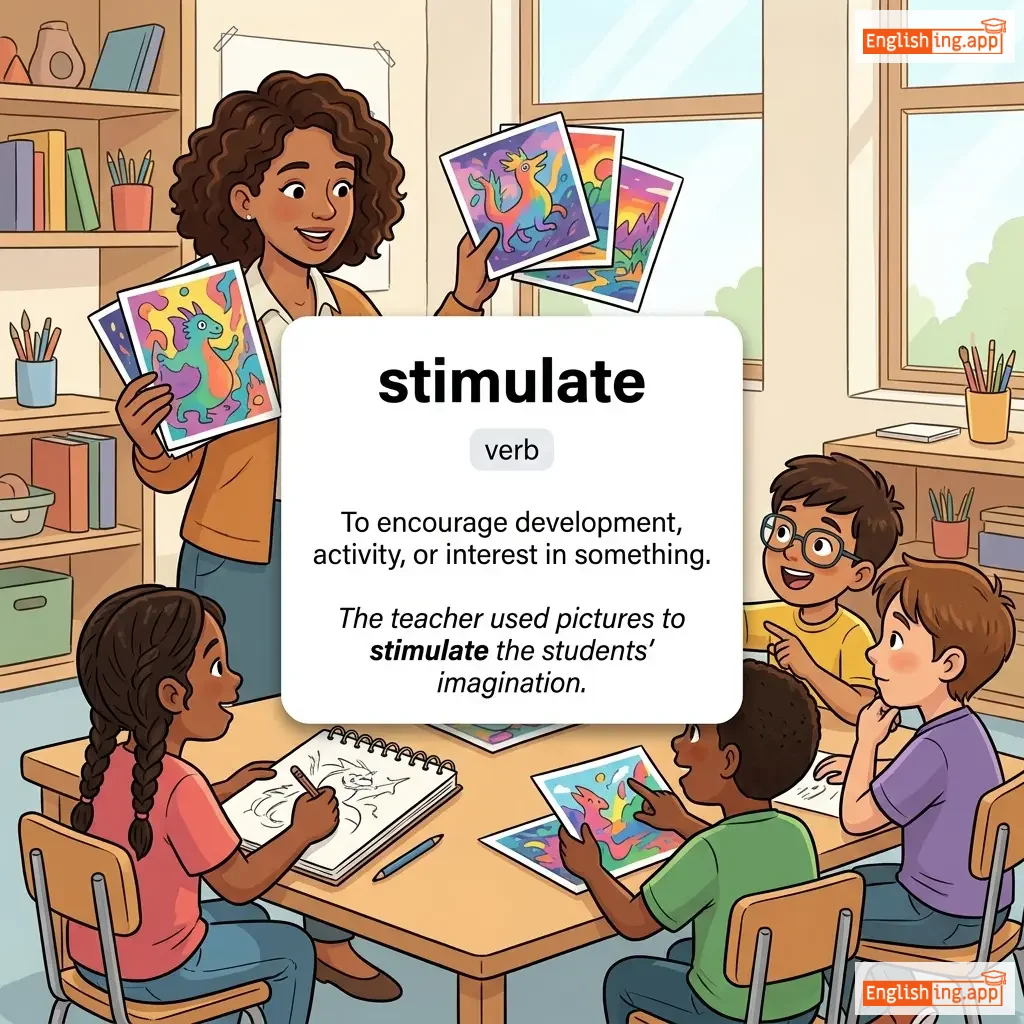
To encourage development, activity, or interest in something.
••••••
|
The teacher used pictures to stimulate the students' imagination.
老师用图片刺激了学生的想象力。
••••••
|
老师用图片刺激了学生的想象力。
Lǎoshī yòng túpiàn cìjīle xuéshēng de xiǎngxiànglì.
••••••
|
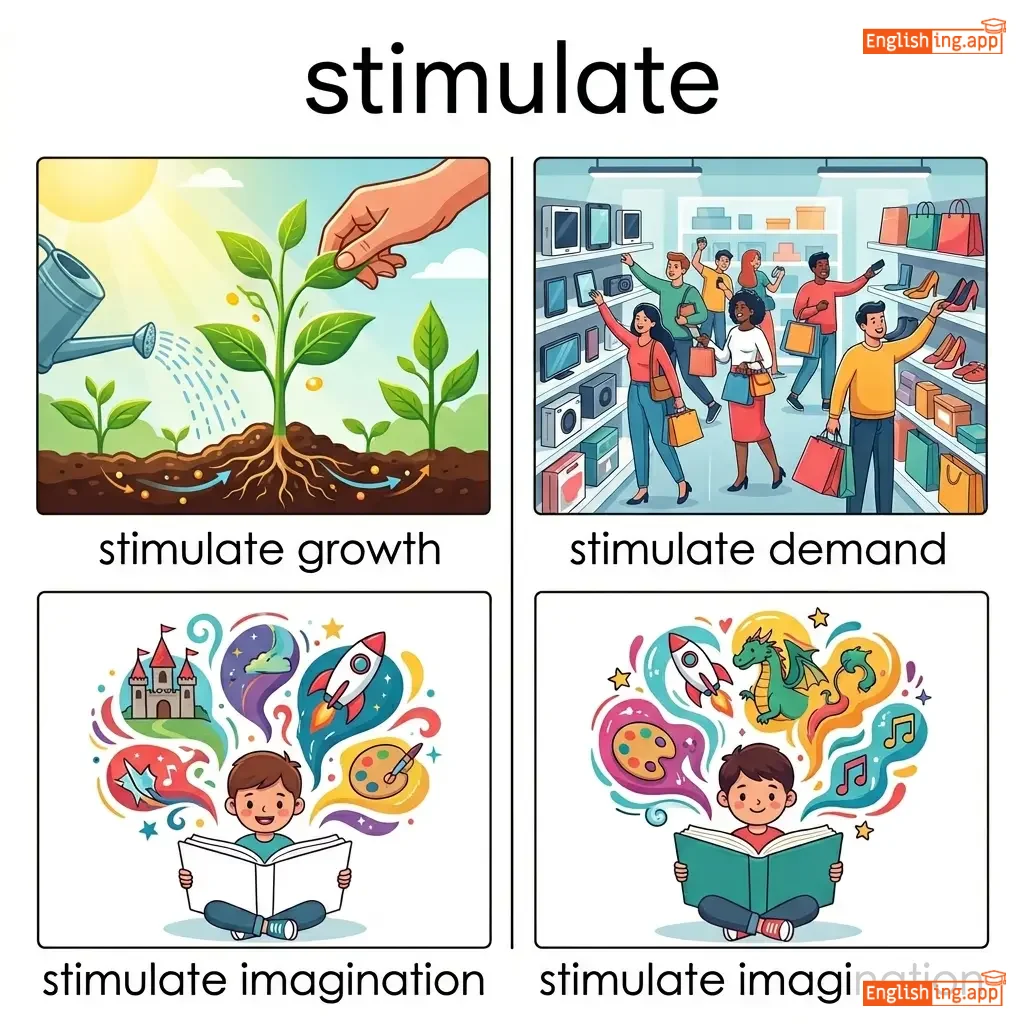
stimulate growth
刺激生长
••••••
|
to encourage development or increase
••••••
|
刺激生长
cìjī shēngzhǎng
••••••
|
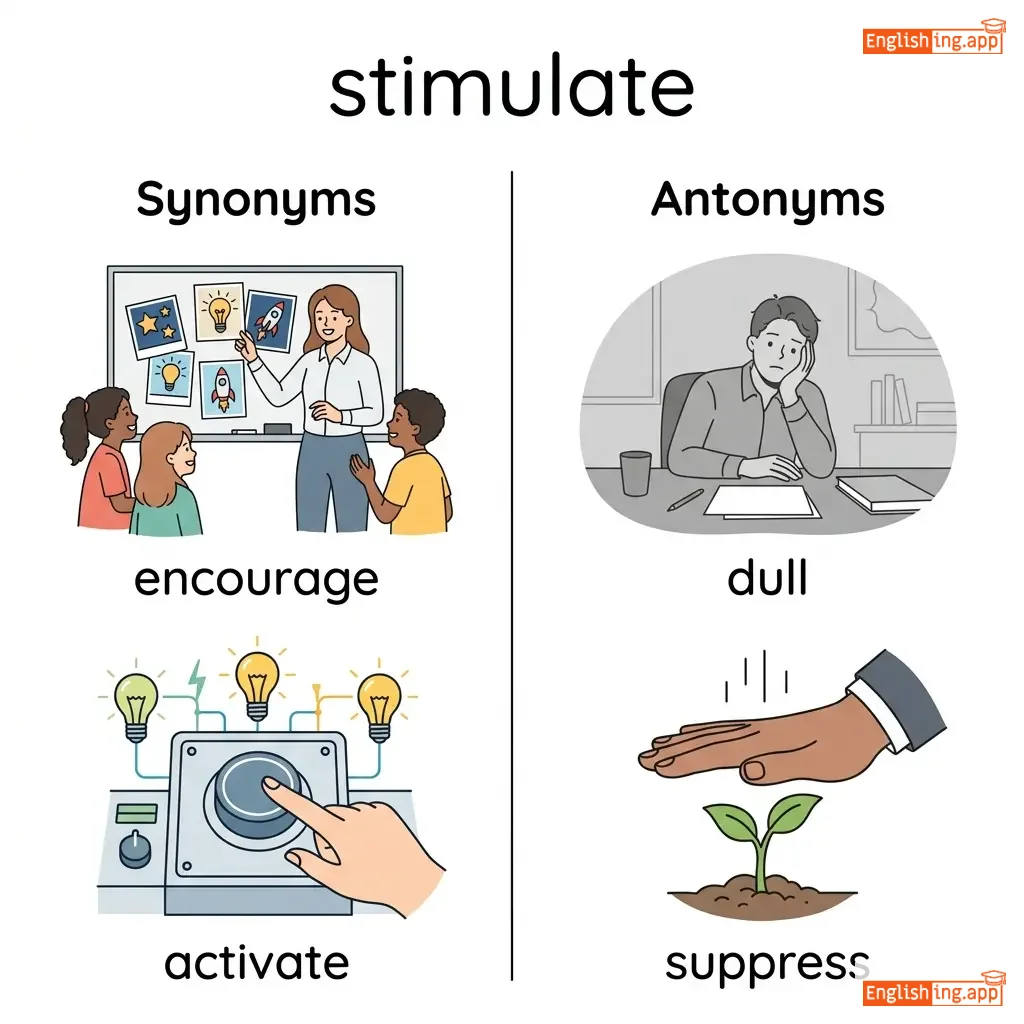
encourage, activate, motivate, inspire, excite
••••••
|
dull, suppress, discourage
••••••
|
stimulate growth, stimulate demand, stimulate imagination, stimulate interest
••••••
|
Stimulate → 刺激 (像打气一样促进成长)。
••••••
|
|
#8399
⚡
|
/ˈstɪmjʊlənt/
noun
(刺激物)
••••••
|
- •••••• |
兴奋剂
xīngfèn jì
••••••
|
- •••••• | - •••••• | - •••••• | - •••••• |
A substance that raises levels of physiological or nervous activity in the body.
••••••
|
Coffee is a common stimulant that helps people stay awake. |
咖啡是一种常见的兴奋剂,帮助人们保持清醒
Kāfēi shì yī zhǒng chángjiàn de xīngfèn jì, bāngzhù rénmen bǎochí qīngxǐng
••••••
|
- •••••• | - •••••• | - •••••• |
energizer, tonic, booster, excitant
••••••
|
depressant, sedative
••••••
|
natural stimulant, powerful stimulant, stimulant drug
••••••
|
兴奋剂 = 兴奋 + 剂 → 咖啡让你兴奋像兴奋剂
••••••
|
Vocabulary Quiz
Test your vocabulary by matching words with their translations or meanings.
Login to take the quiz
Comments (0)
Share your thoughts and join the discussion.
Join the discussion by logging in
Login to CommentNo comments yet
Be the first to share your thoughts!