






Swipe left or right, or use the buttons. Tap image to zoom.
例句翻译
单词
Lesson 332Lesson 332 - 遮罩切换
|
表情符号
|
单词 | Images | 翻译 | 过去时 | 过去分词 | 第三人称单数 | 动名词 | 含义 | 例句 | 例句翻译 | 示例表达 | 示例表达含义 | 示例表达翻译 | 同义词 | 反义词 | 搭配词 | 助记符 |
|---|---|---|---|---|---|---|---|---|---|---|---|---|---|---|---|---|---|
|
#9925
☕
|
/ɪnˈfɔːrməl/
adjective
(in-fu-mao-er)
••••••
|
- •••••• |
非正式
fei zhengshi
••••••
|
- •••••• | - •••••• | - •••••• | - •••••• |
relaxed, friendly, and not following strict rules or conventions
••••••
|
They had an informal meeting at the coffee shop. |
他们在咖啡馆举行了一个非正式会议。
tamen zai kafeiguan juxing le yige fei zhengshi huiyi.
••••••
|
informal talk |
a casual or relaxed conversation
••••••
|
非正式谈话
fei zhengshi tanhua
••••••
|
casual, relaxed, unofficial, easygoing
••••••
|
formal, official, strict
••••••
|
informal meeting, informal clothes, informal chat, informal relationship
••••••
|
Informal=‘in’+‘formal’=非正式
••••••
|
|
#9926
✨
|
/ˈɪntrəstɪŋ/ or /ˈɪntəˌrɛstɪŋ/
adjective
(ɪnˈtɛrɪstɪŋ)
••••••
|
- •••••• |
有趣的
yǒu qù de
••••••
|
- •••••• | - •••••• | - •••••• | - •••••• |
Arousing curiosity or attention; holding one’s interest.
••••••
|
The documentary about space was very interesting. |
关于太空的纪录片非常有趣。
Guānyú tàikōng de jìlùpiàn fēicháng yǒuqù.
••••••
|
interestingly enough |
Used to introduce something surprising or unexpected.
••••••
|
有趣地
yǒuqù de
••••••
|
engaging, fascinating, captivating, intriguing, absorbing
••••••
|
boring, dull, tedious
••••••
|
find interesting, very interesting, interesting story, interesting fact
••••••
|
有趣的东西会让人说,哇,这太有趣了!
••••••
|
|
#9927
💡
|
/ˈɪntrəst/ or /ˈɪntəˌrɛst/
noun/verb
(兴趣)
••••••
|
- •••••• |
兴趣 / 利息
xìngqù / lìxī
••••••
|
interested
感兴趣
••••••
|
interested
感兴趣
••••••
|
interests
感兴趣
••••••
|
interesting
有趣
••••••
|
A feeling of curiosity or concern about something; or money paid for the use of borrowed money.
••••••
|
He showed great interest in learning new languages.
他对学习新语言表现出极大的兴趣。
••••••
|
他对学习新语言表现出极大的兴趣。
Tā duì xuéxí xīn yǔyán biǎoxiàn chū jí dà de xìngqù.
••••••
|
conflict of interest
利益冲突
••••••
|
A situation where personal interests might interfere with professional duties.
••••••
|
利益冲突
lìyì chōngtú
••••••
|
concern, curiosity, attention, stake, involvement
••••••
|
boredom, indifference, apathy
••••••
|
show interest, take interest, express interest, public interest
••••••
|
兴趣即是对事物的好奇,也包括财务上的利息。
••••••
|
|
#9928
🔗
|
/ˌɪntərˈdɪsəplɪˌnɛri/
adjective
(跨学科)
••••••
|
|
跨学科
kuà xuékē
••••••
|
- •••••• | - •••••• | - •••••• | - •••••• |
Involving two or more academic subjects or fields of study.
••••••
|
The university encourages interdisciplinary research projects. |
大学鼓励跨学科的研究项目。
Dàxué gǔlì kuà xuékē de yánjiū xiàngmù.
••••••
|
- •••••• | - •••••• | - •••••• |
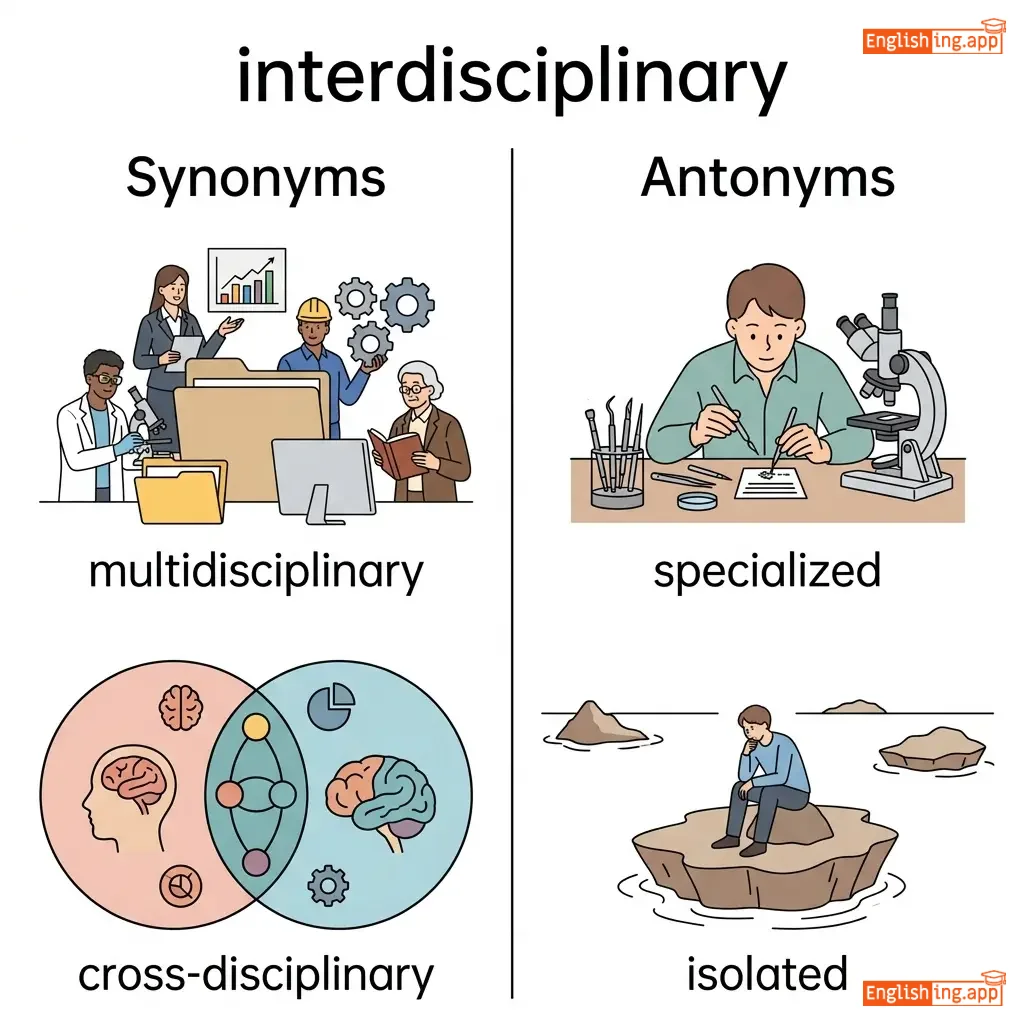
multidisciplinary, cross-disciplinary, integrative, collaborative
••••••
|
specialized, isolated
••••••
|
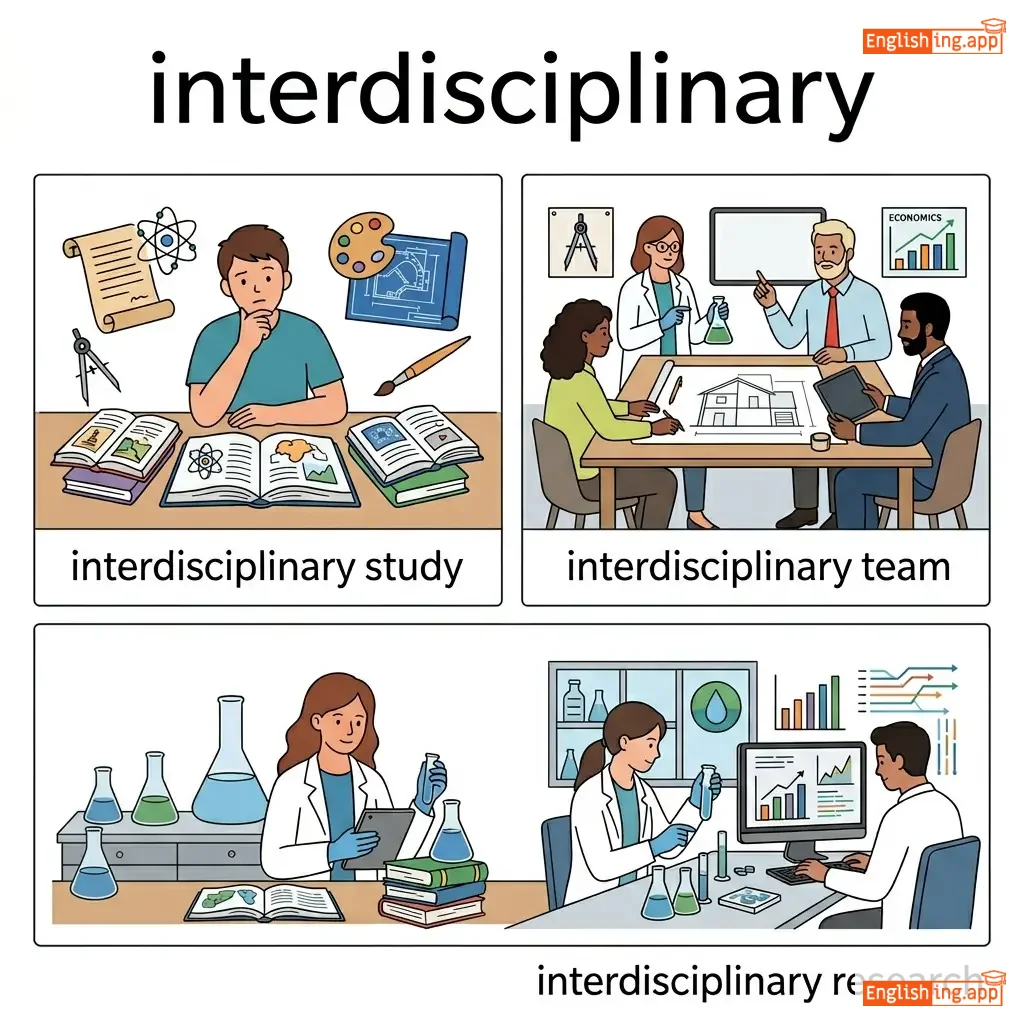
interdisciplinary study, interdisciplinary team, interdisciplinary research, interdisciplinary field
••••••
|
INTER+discipline意味着结合不同的领域。
••••••
|
|
#9929
🧠
|
/ɪnˈtɛlɪdʒənt/
adjective
(英特尔)
••••••
|
- •••••• |
聪明的
cōngmíng de
••••••
|
- •••••• | - •••••• | - •••••• | - •••••• |
Having or showing high mental capacity, quick to learn and understand.
••••••
|
She is one of the most intelligent students in the class.
她是班上最聪明的学生之一。
••••••
|
她是班上最聪明的学生之一。
Tā shì bān shàng zuì cōngmíng de xuéshēng zhī yī.
••••••
|
intelligent guess
聪明的猜测
••••••
|
A well-informed or reasonable guess based on available knowledge.
••••••
|
聪明的猜测
cōngmíng de cāicè
••••••
|
clever, smart, bright, brainy, knowledgeable
••••••
|
stupid, dull, ignorant
••••••
|
intelligent design, intelligent choice, highly intelligent, intelligent system
••••••
|
Intel也是智能的,就像这个词的意思。
••••••
|
|
#9930
🧱
|
/ɪnˈtækt/
adjective
(完整)
••••••
|
- •••••• |
完整
wánzhěng
••••••
|
- •••••• | - •••••• | - •••••• | - •••••• |
Remaining whole, complete, and undamaged.
••••••
|
Despite the storm, the old house remained intact. |
尽管风暴,老房子依然保持完整。
Jǐnguǎn fēngbào, lǎo fángzi yīrán bǎochí wánzhěng.
••••••
|
- •••••• | - •••••• | - •••••• |
undamaged, whole, unbroken, unharmed, complete
••••••
|
damaged, broken, ruined
••••••
|
remain intact, kept intact, survive intact, preserve intact
••••••
|
IN 不破损,intact意味着完整无损。
••••••
|
|
#9931
🔥
|
/ˌɪnsəˈpɔːrtəbl̩/
adjective
(因斯波特贝尔)
••••••
|
- •••••• |
无法忍受的
wufalirenxiu de
••••••
|
- •••••• | - •••••• | - •••••• | - •••••• |
Too extreme or difficult to be endured.
••••••
|
The heat was insupportable during the long journey. |
长途旅行中,热度是无法忍受的。
Changtu luxing zhong, reddu shi wufalirenxiu de.
••••••
|
- •••••• | - •••••• | - •••••• |
unbearable, intolerable, unendurable, impossible
••••••
|
bearable, tolerable
••••••
|
insupportable pain, insupportable heat, insupportable burden, insupportable conditions
••••••
|
Insupportable = in + support (支持) 不能忍受。
••••••
|
|
#9932
📜
|
/ɪnˈstrʌkʃənz/
noun
(指示)
••••••
|
- •••••• |
指示
zhǐshì
••••••
|
- •••••• | - •••••• | - •••••• | - •••••• |
Detailed information on how something should be done or operated.
••••••
|
Please follow the instructions on the box. |
请按照盒子上的指示操作。
qǐng ànzhào hézi shàng de zhǐshì cāozuò.
••••••
|
follow instructions |
to do as directed
••••••
|
遵循指示
zūnxún zhǐshì
••••••
|
guidelines, directions, rules, orders, commands
••••••
|
confusion, disorder
••••••
|
clear instructions, written instructions, step-by-step instructions, give instructions
••••••
|
指示意味着 'instruct' (指导) 的规则 → 请遵循盒子上的指示。
••••••
|
|
#9933
🐾
|
/ˈɪnstɪŋkt/
noun
(本能)
••••••
|
- •••••• |
本能
bènnéng
••••••
|
- •••••• | - •••••• | - •••••• | - •••••• |
A natural way of behaving or reacting that does not require learning.
••••••
|
Birds build nests by instinct. |
鸟类本能地筑巢。
Niǎo lèi běnnéng de zhùcháo.
••••••
|
animal instinct |
natural, unlearned behavior of animals
••••••
|
动物本能
dòngwù běnnéng
••••••
|
intuition, impulse, tendency, drive, reflex
••••••
|
reason, logic
••••••
|
natural instinct, survival instinct, maternal instinct, instinct tells
••••••
|
Instinct = 自然本能 → 不加思索的行动。
••••••
|
|
#9934
🔍
|
/ɪnˈspɛkt/
verb
(in-spek-t)
••••••
|
|
检查
jiǎnchá
••••••
|
inspected
in-spek-te-d
••••••
|
inspected
in-spek-te-d
••••••
|
inspects
in-spek-ts
••••••
|
inspecting
in-spek-ting
••••••
|
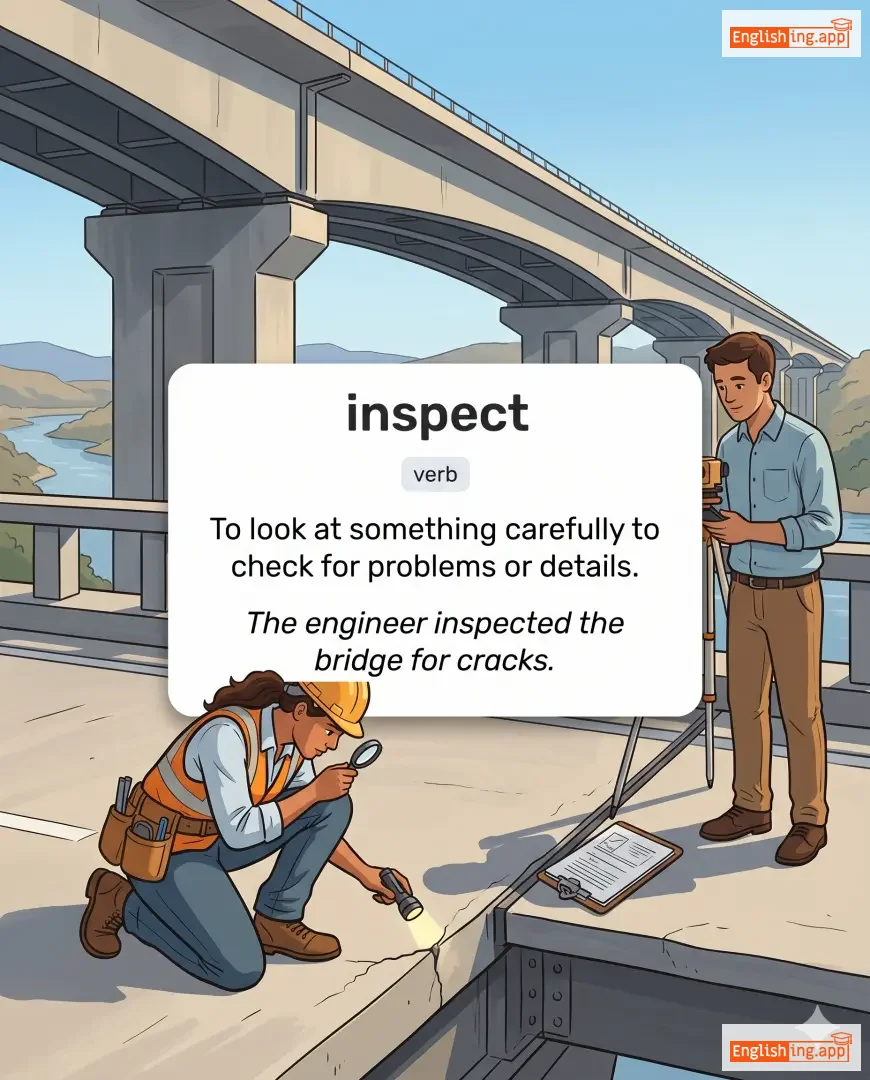
To look at something carefully to check for problems or details.
••••••
|
The engineer inspected the bridge for cracks.
工程师检查了桥梁是否有裂缝。
••••••
|
工程师检查了桥梁是否有裂缝。
Gōngchéngshī jiǎnchá le qiáoliáng shìfǒu yǒu lièfèng.
••••••
|
inspect the premises
检查场所
••••••
|
to examine a place carefully
••••••
|
检查场所
jiǎnchá chǎngsuǒ
••••••
|
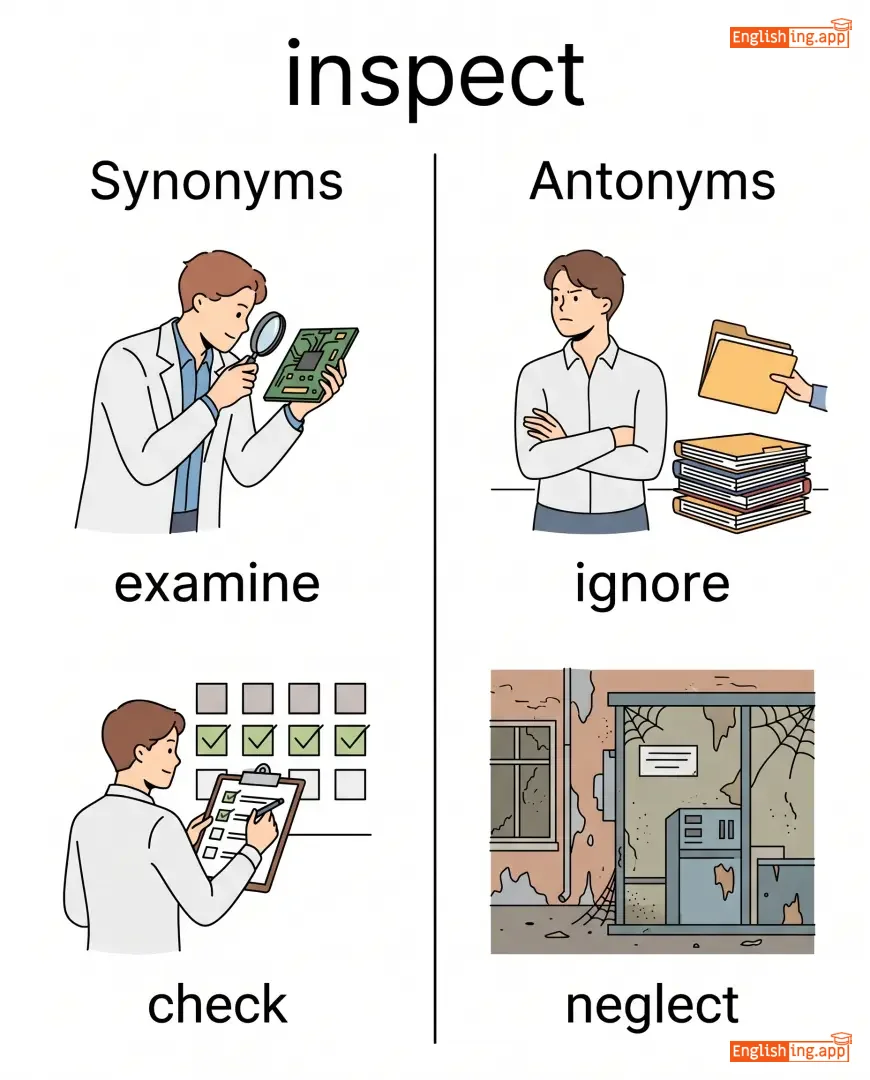
examine, check, review, scrutinize, analyze
••••••
|
ignore, neglect
••••••
|
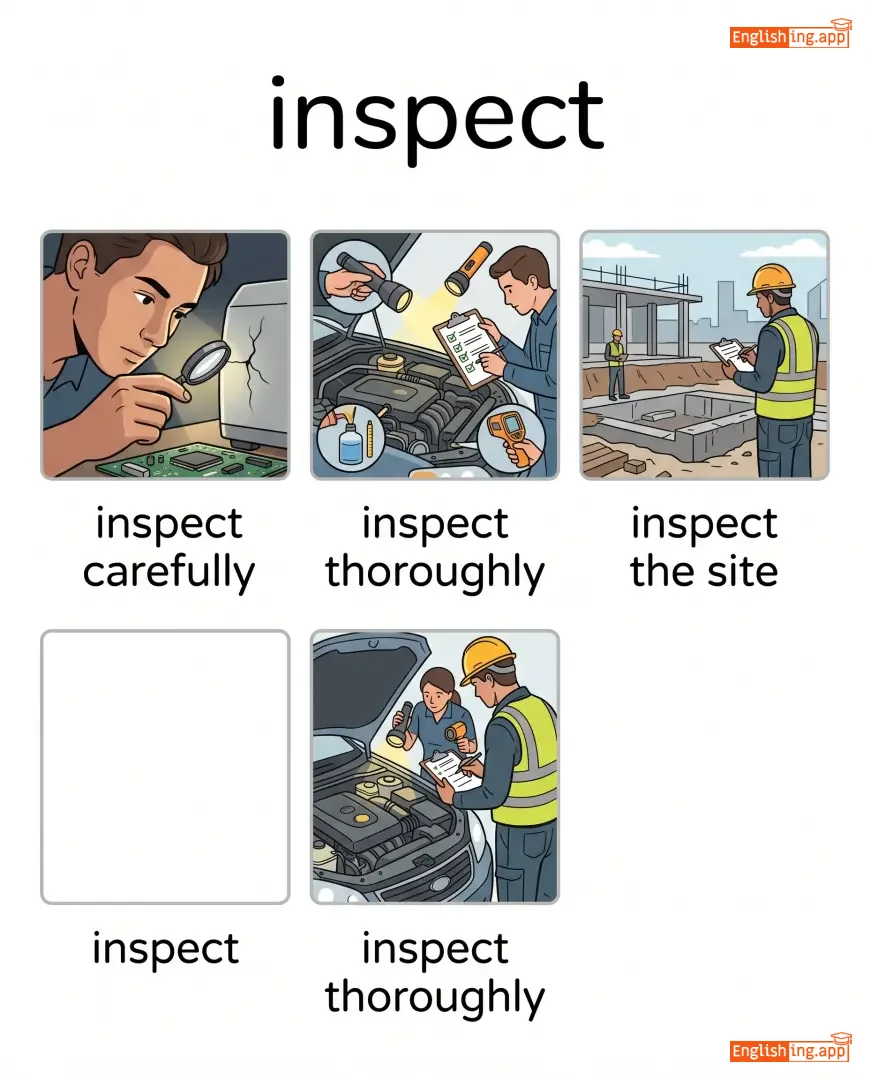
inspect carefully, inspect thoroughly, inspect the site, safety inspector
••••••
|
Inspect 意思是 in + spect (看) → 认真看。
••••••
|
|
#9935
🎖️
|
/ɪnˈsɪɡniə/
noun
(徽章)
••••••
|
- •••••• |
徽章
huīzhāng
••••••
|
- •••••• | - •••••• | - •••••• | - •••••• |
A badge or symbol that shows rank, position, or membership.
••••••
|
The soldier proudly wore the insignia of his regiment. |
士兵自豪地佩戴着他团的徽章。
Shìbīng zìháo de pèidài zhe tā tuán de huīzhāng.
••••••
|
- •••••• | - •••••• | - •••••• |
emblem, badge, symbol, crest, logo
••••••
|
plainness, anonymity
••••••
|
military insignia, official insignia, insignia of rank, insignia on uniform
••••••
|
徽章 = inside (内部) = 身体上的徽章在制服内部。
••••••
|
|
#9936
🍽️
|
/ɪnˈseɪʃiət/
adjective
(yīnsèshìé)
••••••
|
- •••••• |
无法满足
wufa manzu
••••••
|
- •••••• | - •••••• | - •••••• | - •••••• |
impossible to satisfy; always wanting more
••••••
|
He had an insatiate desire for power.
tā yǒu yīgè bù kě mǎnzú de quánlì yuànwàng.
••••••
|
他有一个无法满足的权力愿望。
Ta you yige wufa manzu de quanli yuanwang.
••••••
|
- •••••• | - •••••• | - •••••• |
greedy, voracious, unquenchable, ravenous
••••••
|
satisfied, content
••••••
|
insatiate desire, insatiate hunger, insatiate curiosity
••••••
|
Insatiate = in (不) + satiate (满足) → 无法满足
••••••
|
|
#9937
🤯
|
/ɪnˈseɪn/
adjective
(因赛因)
••••••
|
- •••••• |
疯狂
fengkuang
••••••
|
- •••••• | - •••••• | - •••••• | - •••••• |
mentally ill; extremely foolish or unreasonable
••••••
|
The idea of jumping off the cliff seemed insane. |
从悬崖上跳下的想法显得疯狂。
Cong xuanyá shàng tiàoxià de xiǎngfǎ xiǎndé fēngkuáng.
••••••
|
drive someone insane |
to make someone extremely annoyed or frustrated
••••••
|
让某人发疯
ràng mǒu rén fā fēng
••••••
|
mad, crazy, deranged, lunatic
••••••
|
sane, rational
••••••
|
insane idea, insane behavior, go insane, sound insane
••••••
|
InSANE → Not sane, 就是疯狂
••••••
|
|
#9938
😇
|
/ˈɪnəsənt/
adjective
(无辜)
••••••
|
- •••••• |
无辜
wugu
••••••
|
- •••••• | - •••••• | - •••••• | - •••••• |
not guilty of a crime or wrongdoing; harmless
••••••
|
The court found him innocent of all charges.
法院裁定他无罪,所有指控被撤销。
••••••
|
法院裁定他无罪,所有指控被撤销。
fayuan caiding ta wuze, suoyou zhikong bei chexiao.
••••••
|
innocent until proven guilty
在证明有罪之前是无辜的
••••••
|
a person is considered innocent unless proven guilty in a court
••••••
|
在证明有罪之前是无辜的
zai zhengming youzui zhiqian shi wugu de
••••••
|
guiltless, blameless, pure, harmless
••••••
|
guilty, corrupt
••••••
|
innocent child, innocent victim, innocent mistake, innocent face
••••••
|
Innocent = in (没有) + nocent (伤害) → 不伤害,无辜
••••••
|
|
#9939
🏰
|
/ɪnˈhɛrɪtər/
noun
(inheritor)
••••••
|
- •••••• |
继承人
jichengren
••••••
|
- •••••• | - •••••• | - •••••• | - •••••• |
a person who receives money, property, or a title when someone dies
••••••
|
She became the inheritor of her family's estate.
她成为了家族财产的继承人。
••••••
|
她成为了家族财产的继承人。
Ta chengwei le jiazu caichan de jichengren.
••••••
|
- •••••• | - •••••• | - •••••• |
heir, successor, beneficiary, descendant
••••••
|
ancestor, predecessor
••••••
|
rightful inheritor, sole inheritor, legal inheritor
••••••
|
Inheritor 是继承人 → 继承人
••••••
|
|
#9940
🛡️
|
/ɪˈmjuːnɪti/
noun
(免疫力)
••••••
|
|
免疫力
miǎnyì lì
••••••
|
- •••••• | - •••••• | - •••••• | - •••••• |
The state of being protected against disease or harmful influences.
••••••
|
Vaccination provides immunity against certain infections.
疫苗接种提供对某些感染的免疫力。
••••••
|
疫苗接种提供对某些感染的免疫力。
Yìmiáo jiēzhòng tígōng duì mǒuxiē gǎnrǎn de miǎnyì lì.
••••••
|
diplomatic immunity
外交豁免
••••••
|
A legal immunity granted to diplomats from the jurisdiction of the host country.
••••••
|
外交豁免
wàijiāo huòmiǎn
••••••
|
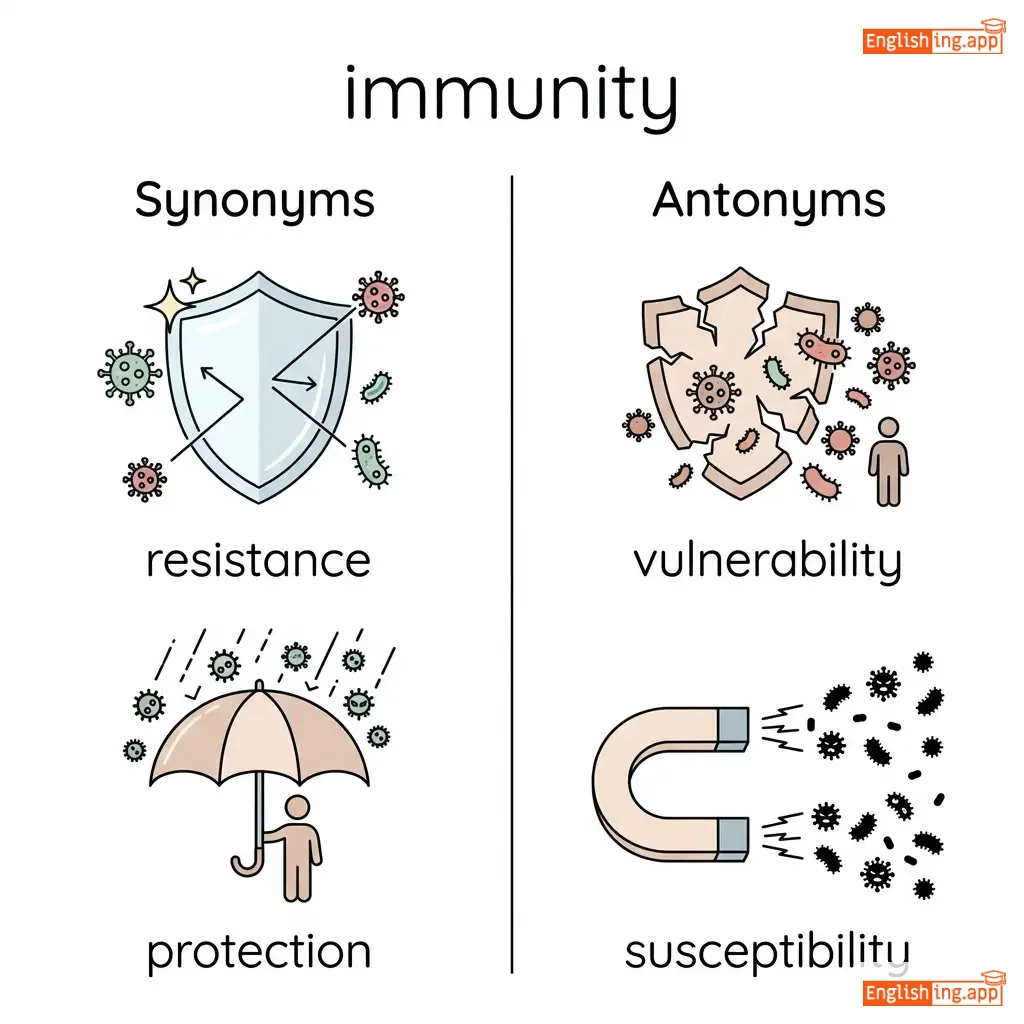
resistance, protection, defense, exemption, safeguard
••••••
|
vulnerability, susceptibility
••••••
|
natural immunity, herd immunity, build immunity, immunity from prosecution
••••••
|
Immunity意味着保护免受疾病,就像用🛡️盾牌保护身体一样。
••••••
|
|
#9941
💧
|
/ˈɪn.floʊ/
noun
(in-fu-luo)
••••••
|
- •••••• |
流入
liú rù
••••••
|
- •••••• | - •••••• | - •••••• | - •••••• |
The movement of things such as money, people, or water into a place.
••••••
|
The inflow of tourists boosted the local economy. |
游客的流入促进了当地经济的发展。
Yóukè de liúrù cùjìnle dāngdì jīngjì de fāzhǎn.
••••••
|
capital inflow |
The movement of money for investment into a country or market.
••••••
|
资本流入
zīběn liúrù
••••••
|
entry, influx, arrival, movement
••••••
|
outflow, exodus
••••••
|
inflow of capital, inflow of funds, inflow of migrants, inflow of cash
••••••
|
Inflow = 流入 → 资金像水一样流入某个地方。
••••••
|
|
#9942
⬇️
|
/ɪnˈfɪə.ri.ər/
adjective
(低等)
••••••
|
- •••••• |
低级的
diji de
••••••
|
- •••••• | - •••••• | - •••••• | - •••••• |
Of lower quality, rank, or status.
••••••
|
This material is inferior to the one we used before. |
这种材料比我们之前用的差。
Zhe zhong cailiao bi women zhiqian yong de cha.
••••••
|
inferior complex |
A feeling of being less worthy or capable.
••••••
|
自卑感
zibeigan
••••••
|
lower, lesser, substandard, second-rate
••••••
|
superior, excellent
••••••
|
inferior quality, inferior position, inferior goods, inferior design
••••••
|
Inferior 就是低下,想想低级的材料。
••••••
|
|
#9943
🦠
|
/ɪnˈfɛkt/
verb
(传染)
••••••
|
- •••••• |
传染
chuánrǎn
••••••
|
infected
传染
••••••
|
infected
传染
••••••
|
infects
传染
••••••
|
infecting
传染
••••••
|
To contaminate with a disease-causing organism.
••••••
|
The virus can infect healthy people quickly.
病毒可以迅速传染健康的人。
••••••
|
病毒可以迅速传染健康的人。
Bìngdú kěyǐ xùnsù chuánrǎn jiànkāng de rén.
••••••
|
infect with fear
传染恐惧
••••••
|
To spread fear into others.
••••••
|
传染恐惧
chuánrǎn kǒngjù
••••••
|
contaminate, transmit, spread, pollute
••••••
|
cleanse, disinfect
••••••
|
infect people, infect cells, infect computers, infect animals
••••••
|
传染就像是病毒一样传播。
••••••
|
|
#9944
🕊️
|
/ˌɪn.dɪˈpen.dənt/
adjective
(独立)
••••••
|
|
独立
duli
••••••
|
- •••••• | - •••••• | - •••••• | - •••••• |
Free from outside control; not depending on others.
••••••
|
She is an independent woman who runs her own business.
她是一个独立的女性,经营自己的生意。
••••••
|
她是一个独立的女性,经营自己的生意。
Tā shì yīgè dúlì de nǚxìng, jīngyíng zìjǐ de shēngyì.
••••••
|
independent thinker
独立思考者
••••••
|
Someone who forms their own opinions without influence from others.
••••••
|
独立思考者
dú lì sī kǎo zhě
••••••
|
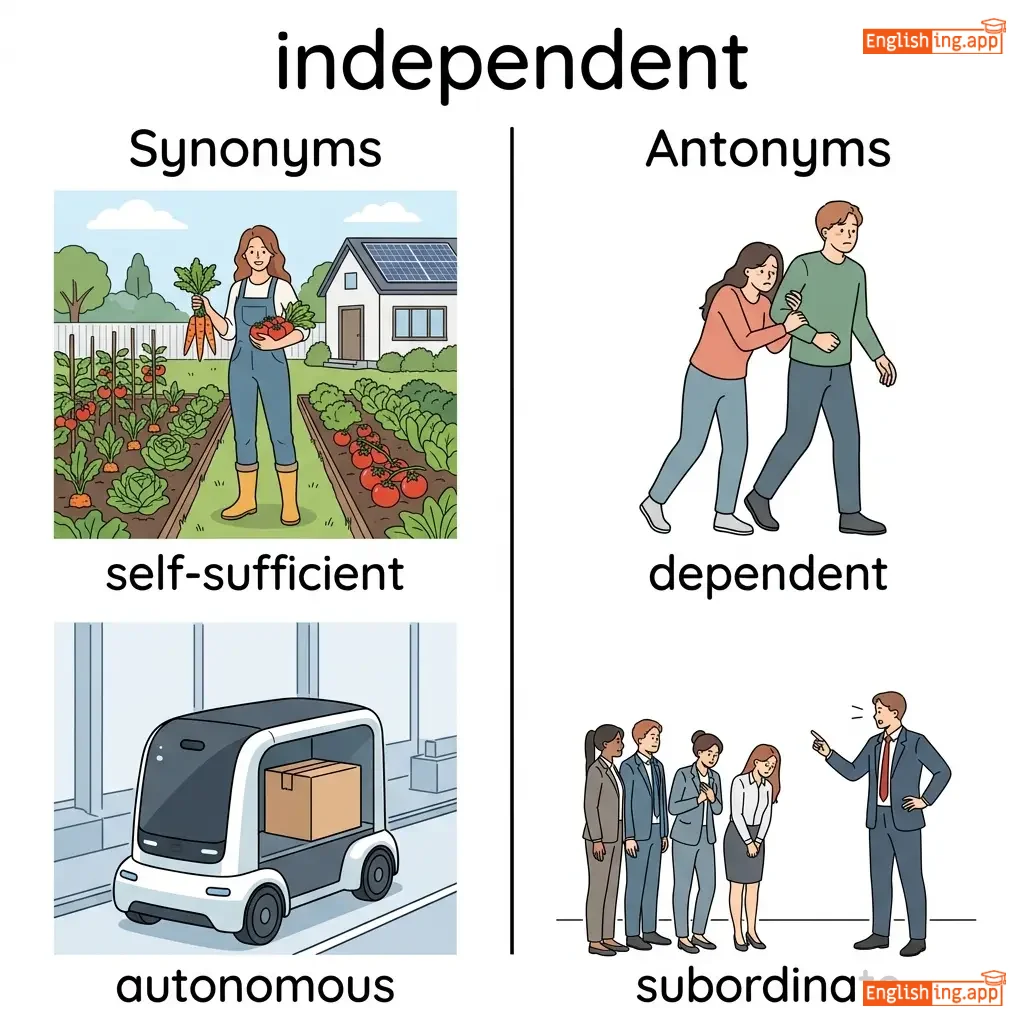
self-sufficient, autonomous, free, self-reliant
••••••
|
dependent, subordinate
••••••
|
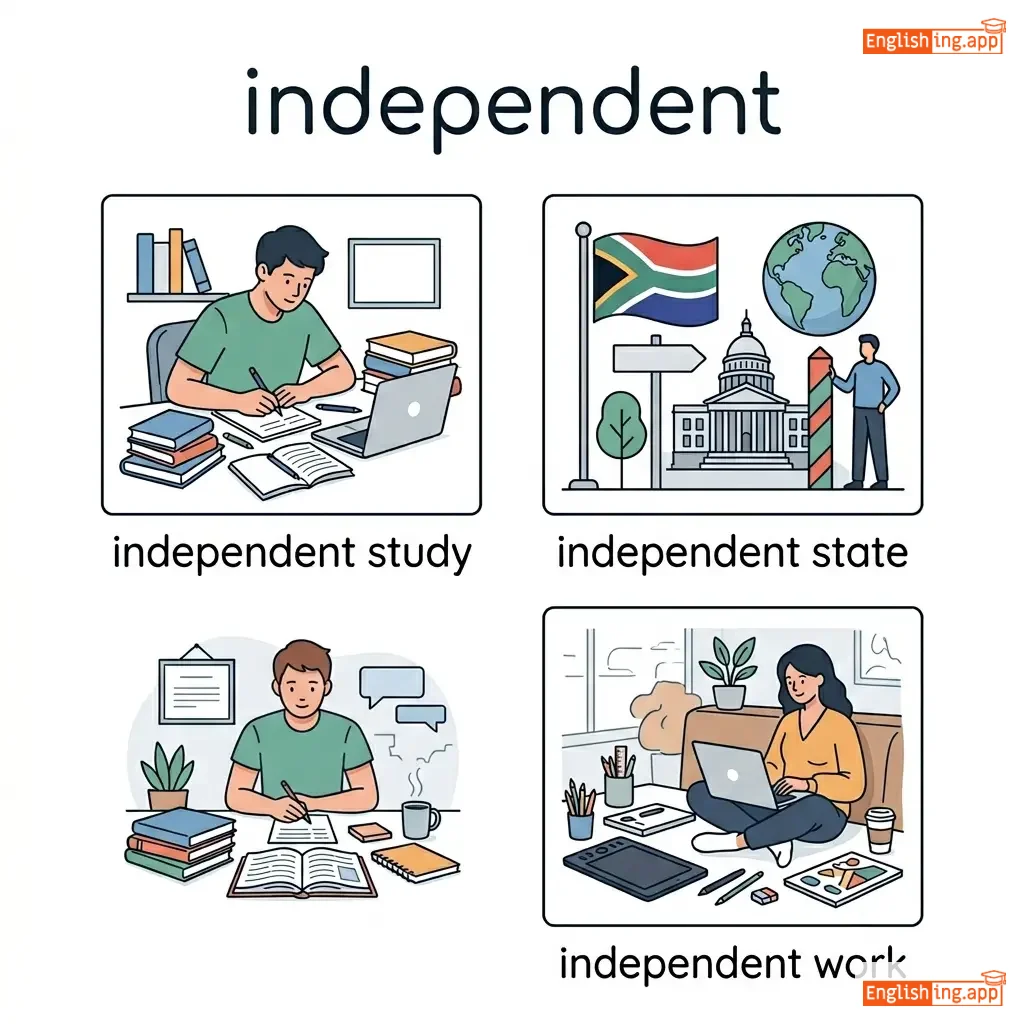
independent study, independent state, independent work, financially independent
••••••
|
独立就像不依赖,像独立性一样自由。
••••••
|
|
#9945
📈
|
/ˌɪŋ.krɪˈmen.təl/
adjective
(英克里门特尔)
••••••
|
|
逐步的
zhú bù de
••••••
|
- •••••• | - •••••• | - •••••• | - •••••• |
Increasing gradually in small amounts or steps.
••••••
|
The company made incremental improvements to the software. |
公司在软件上进行了逐步改进。
Gōngsī zài ruǎnjiàn shàng jìnxíngle zhúbù gǎijìn.
••••••
|
incremental progress |
Gradual progress made step by step.
••••••
|
逐步进展
zhú bù jìn zhǎn
••••••
|
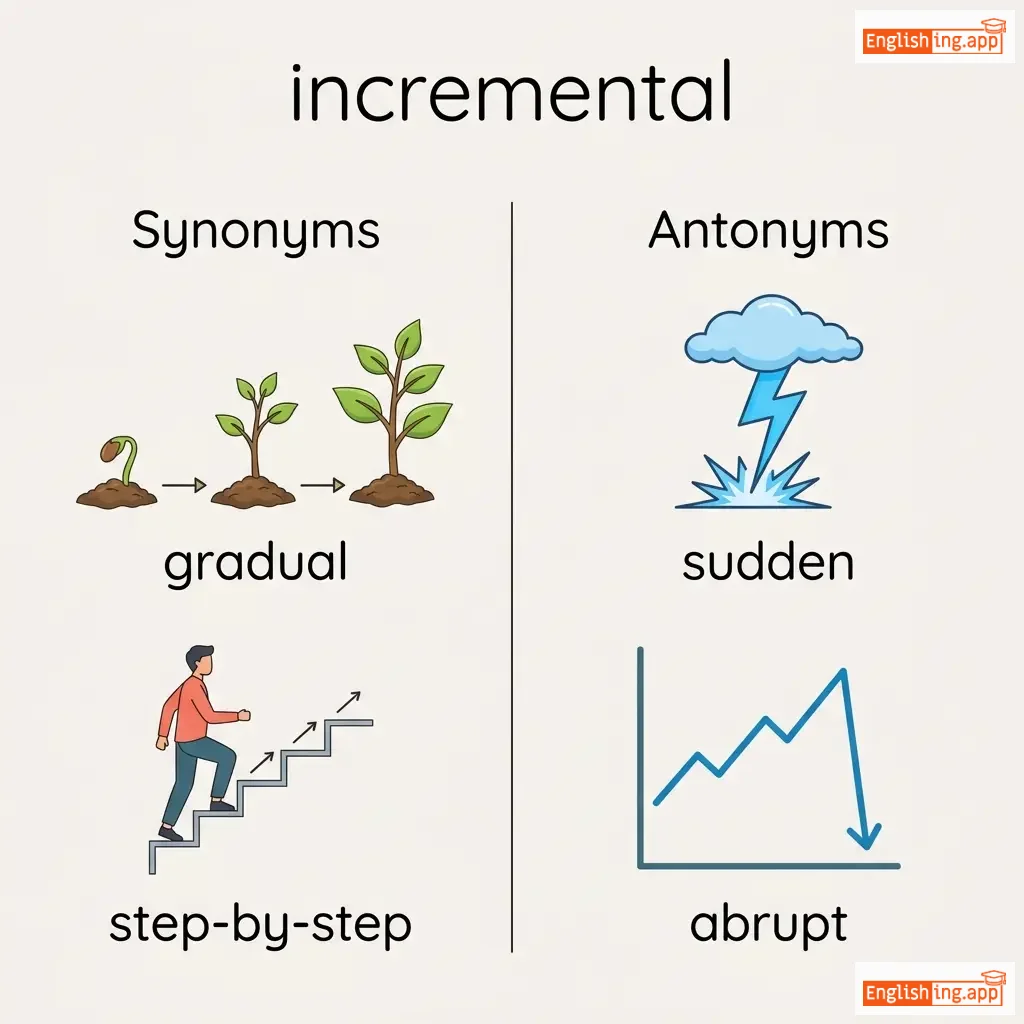
gradual, step-by-step, progressive, cumulative, successive
••••••
|
sudden, abrupt, immediate
••••••
|
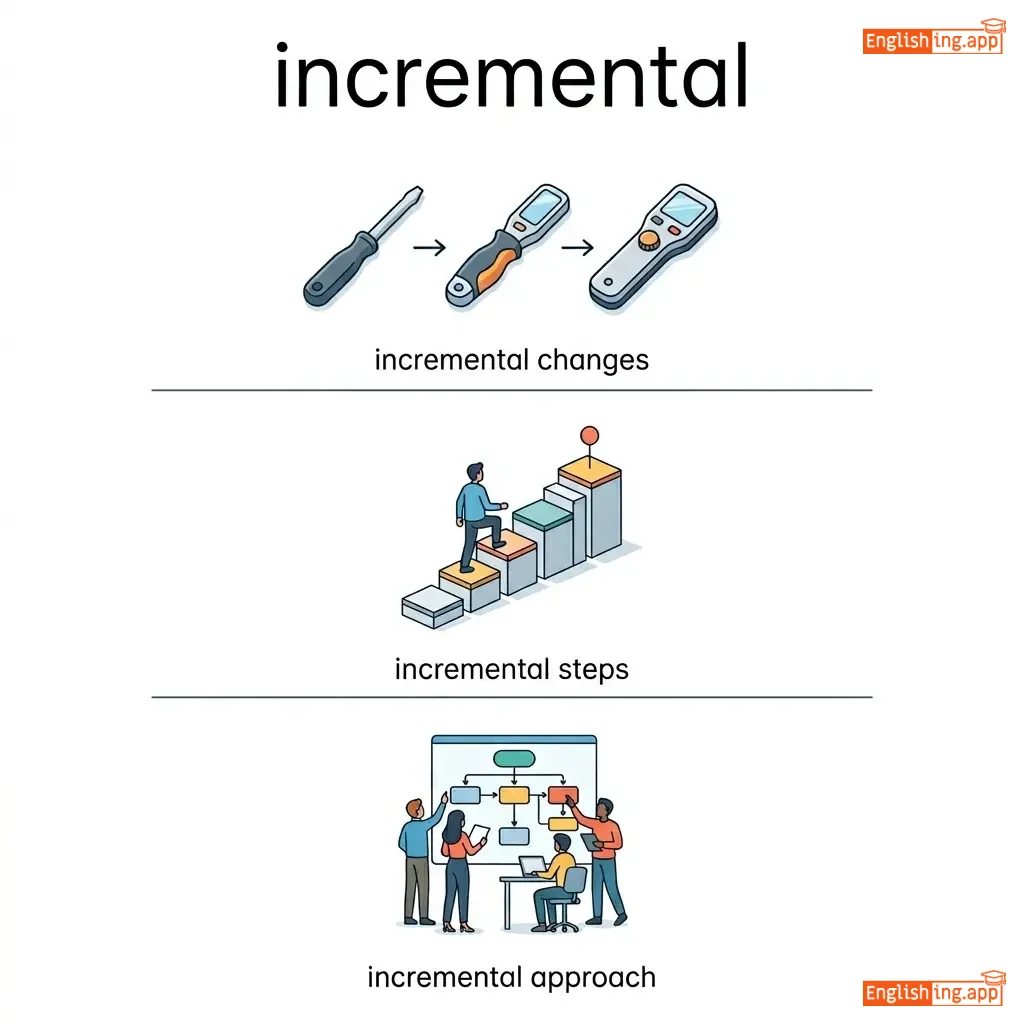
incremental changes, incremental steps, incremental approach, incremental benefits
••••••
|
逐步的 (zhú bù de) = increment (incremental) = small steps.
••••••
|
|
#9946
🙄
|
/ˌɪnkənˈsɪdərət/
adjective
(因康斯德雷特)
••••••
|
- •••••• |
不体贴
bu tixie
••••••
|
- •••••• | - •••••• | - •••••• | - •••••• |
Thoughtless; showing a lack of concern for others.
••••••
|
It was inconsiderate of him to play loud music late at night. |
他在深夜播放大声音乐,显得很不体贴。
Ta zai shenya bofang dasheng yinyue, xiande hen bu tixie.
••••••
|
- •••••• | - •••••• | - •••••• |
thoughtless, selfish, careless, rude, insensitive
••••••
|
considerate, thoughtful, polite
••••••
|
inconsiderate behavior, inconsiderate remark, very inconsiderate
••••••
|
Inconsiderate 意思是缺乏体贴,表现出不关心他人。
••••••
|
|
#9947
↘️
|
/ˌɪnklɪˈneɪʃən/
noun
(incli'neɪʃən)
••••••
|
- •••••• |
倾向
qīngxiàng
••••••
|
- •••••• | - •••••• | - •••••• | - •••••• |
A natural tendency or urge to act or feel in a particular way.
••••••
|
She has an inclination towards helping others.
她有帮助他人的倾向。
••••••
|
她有帮助他人的倾向。
Tā yǒu bāngzhù tārén de qīngxiàng.
••••••
|
natural inclination
自然倾向
••••••
|
a person's natural tendency or preference
••••••
|
自然倾向
zìrán qīngxiàng
••••••
|
tendency, leaning, preference, propensity, disposition
••••••
|
aversion, disinclination
••••••
|
inclination to, inclination toward, strong inclination
••••••
|
倾向 = 倾斜 - 自然的倾向就像一个倾斜的方向。
••••••
|
|
#9948
☹️
|
/ˌɪnɔːˈspɪʃəs/
adjective
(inaspishias)
••••••
|
- •••••• |
不吉利
bù jí lì
••••••
|
- •••••• | - •••••• | - •••••• | - •••••• |
Not conducive to success; unpromising or unlucky.
••••••
|
The event began under inauspicious circumstances.
该事件在不利的情况下开始。
••••••
|
该事件在不利的情况下开始。
Gāi shìjiàn zài bù lì de qíngkuàng xià kāishǐ.
••••••
|
- •••••• | - •••••• | - •••••• |
unlucky, unfortunate, unfavorable, ominous
••••••
|
auspicious, fortunate, favorable
••••••
|
inauspicious start, inauspicious sign, inauspicious event
••••••
|
Inauspicious = in (不) + auspicious (吉利) = 不吉利.
••••••
|
|
#9949
💸
|
/ɪmˈprɑːvɪdəns/
noun
(imprōvidéns)
••••••
|
- •••••• |
缺乏远见
que fa yuan jian
••••••
|
- •••••• | - •••••• | - •••••• | - •••••• |
Lack of foresight or care for future needs.
••••••
|
His improvidence led to financial difficulties.
his imprōvidéns led to financial difficulties.
••••••
|
他的缺乏远见导致了财务困难。
ta de que fa yuan jian dao zhi le cai wu kun nan.
••••••
|
- •••••• | - •••••• | - •••••• |
carelessness, recklessness, negligence, wastefulness
••••••
|
foresight, prudence
••••••
|
financial improvidence, improvidence of youth, act of improvidence
••••••
|
缺乏远见 = Im+Providence, 意味着缺少 foresight.
••••••
|
|
#9950
⭐
|
/ɪmˈpɔːrtənt/
adjective
(重要)
••••••
|
|
重要
zhòng yào
••••••
|
- •••••• | - •••••• | - •••••• | - •••••• |
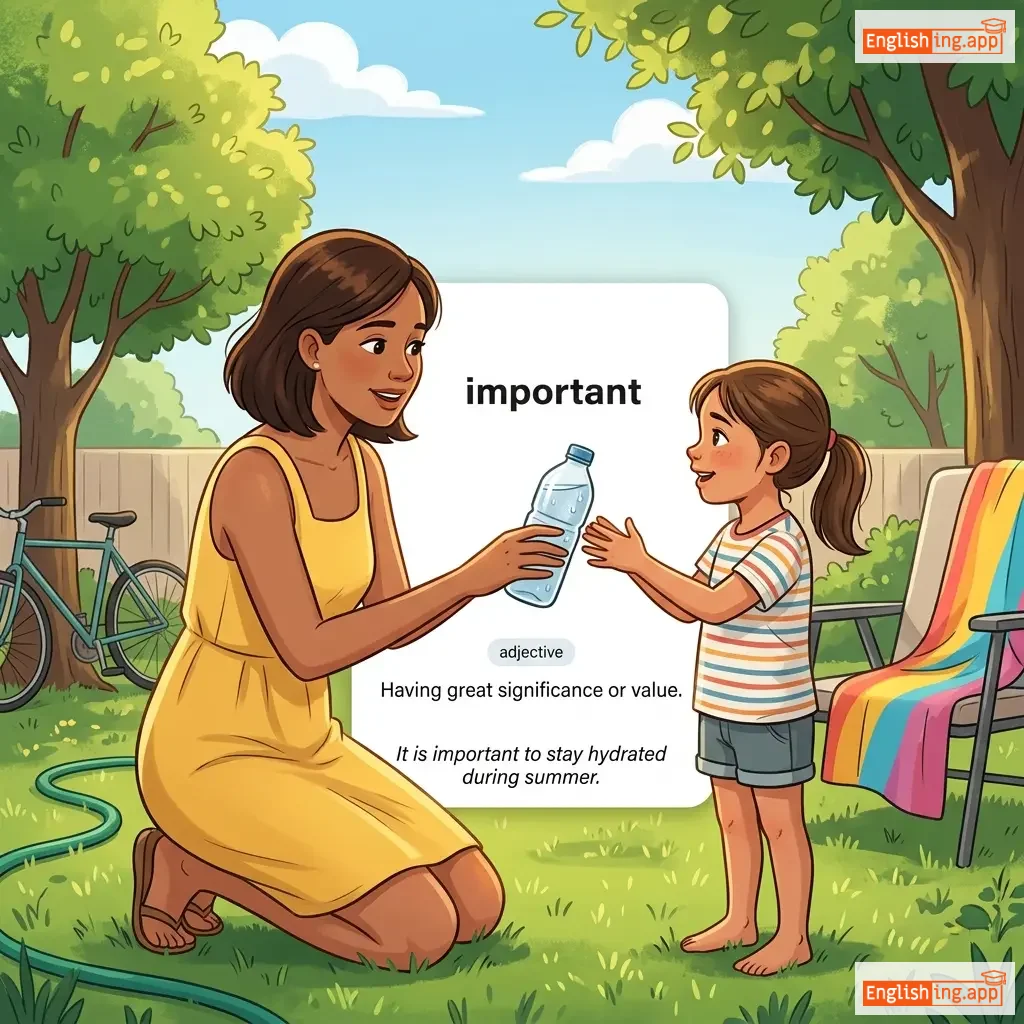
Having great significance or value.
••••••
|
It is important to stay hydrated during summer.
夏季保持水分非常重要。
••••••
|
夏季保持水分非常重要。
Xiàjì bǎochí shuǐfèn fēicháng zhòngyào.
••••••
|
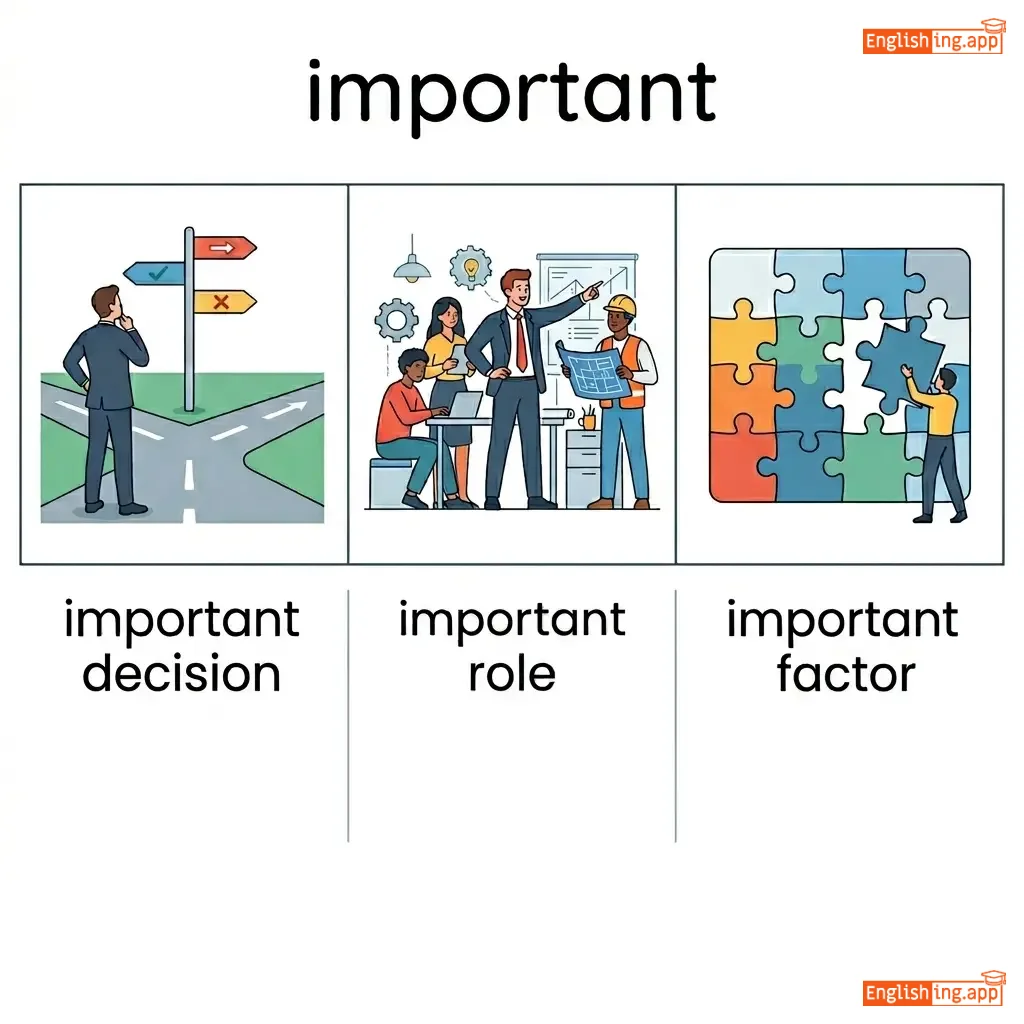
important role
重要角色
••••••
|
a crucial part in a process or situation
••••••
|
重要角色
zhòng yào juésè
••••••
|
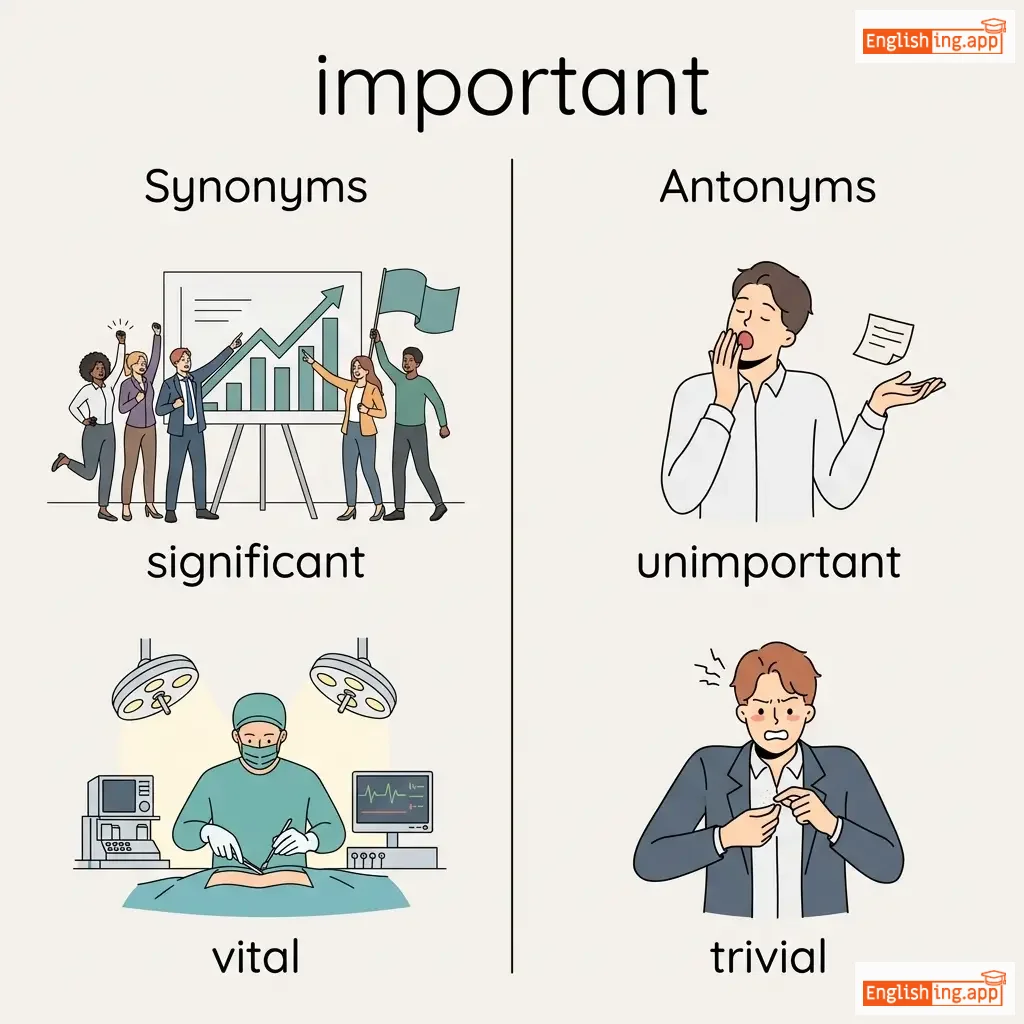
significant, vital, crucial, essential, meaningful
••••••
|
unimportant, trivial, minor
••••••
|
important decision, important role, important factor, important issue
••••••
|
重要意味着对成功至关重要,像喝水在夏天一样重要。
••••••
|
|
#9951
🙅
|
/ˌɪmpəˈlaɪt/
adjective
(impo laít)
••••••
|
- •••••• |
不礼貌
bu limao
••••••
|
- •••••• | - •••••• | - •••••• | - •••••• |
Not showing good manners; rude.
••••••
|
It is impolite to interrupt someone while they are speaking.
打断别人说话是不礼貌的。
••••••
|
打断别人说话是不礼貌的。
Da duan bie ren shuo hua shi bu limao de.
••••••
|
- •••••• | - •••••• | - •••••• |
rude, disrespectful, discourteous, ill-mannered, inconsiderate
••••••
|
polite, courteous, respectful
••••••
|
impolite remark, impolite behavior, impolite tone, impolite gesture
••••••
|
Impolite意味着不礼貌–想象打断别人就是不礼貌。
••••••
|
|
#9952
🌱
|
/ɪmˈpɜːrfɪkt/
adjective
(不完美)
••••••
|
- •••••• |
不完美
bù wánměi
••••••
|
- •••••• | - •••••• | - •••••• | - •••••• |
Not perfect; having faults or flaws.
••••••
|
The painting was beautiful despite being imperfect.
这幅画很美,尽管它不完美。
••••••
|
这幅画很美,尽管它不完美。
Zhè fú huà hěn měi, jǐnguǎn tā bù wánměi.
••••••
|
- •••••• | - •••••• | - •••••• |
flawed, defective, incomplete, faulty, blemished
••••••
|
perfect, flawless, complete
••••••
|
imperfect system, imperfect knowledge, imperfect solution, imperfect world
••••••
|
不完美意味着不完美 – 就像 🌱 一棵小植物,尽管它不完美,但依然美丽。
••••••
|
|
#9953
⏳
|
/ɪmˈpeɪʃənt/
adjective
(yīmǔpèi xīntī)
••••••
|
- •••••• |
不耐烦
bù nài fán
••••••
|
- •••••• | - •••••• | - •••••• | - •••••• |
Not able to wait calmly; restless and eager for something to happen.
••••••
|
She grew impatient while waiting in the long queue.
她在长队中等得不耐烦。
••••••
|
她在长队中等得不耐烦。
tā zài cháng duì zhōng děng dé bù nài fán.
••••••
|
impatient to do something
不耐烦做某事
••••••
|
Eager and restless to start doing something quickly.
••••••
|
不耐烦做某事
bù nài fán zuò mǒu shì
••••••
|
restless, eager, anxious, irritable, hasty
••••••
|
patient, calm, tolerant
••••••
|
be impatient, sound impatient, impatient look, impatient sigh
••••••
|
Impatient 意思是不耐烦,想象你在不停地看时间,等得不耐烦。
••••••
|
|
#9954
💥
|
/ˈɪmpækt/
noun, verb
(影响)
••••••
|
|
影响
yingxiang
••••••
|
impacted
影响了
••••••
|
impacted
影响了
••••••
|
impacts
影响
••••••
|
impacting
影响着
••••••
|
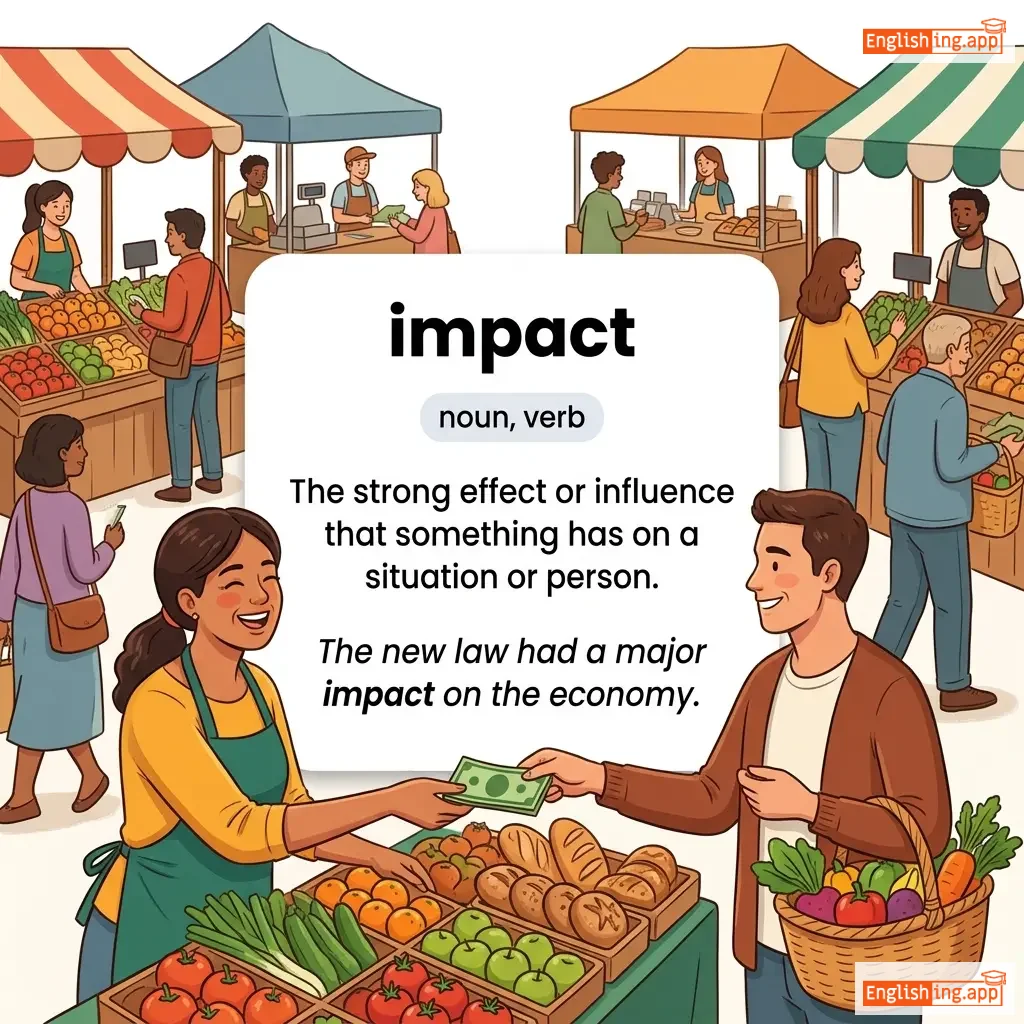
The strong effect or influence that something has on a situation or person.
••••••
|
The new law had a major impact on the economy.
新法律对经济产生了重大影响。
••••••
|
新法律对经济产生了重大影响。
Xin falu dui jingji chansheng le zhongda yingxiang.
••••••
|
make an impact
产生影响
••••••
|
To have a strong effect or impression on someone or something.
••••••
|
产生影响
Chansheng yingxiang
••••••
|
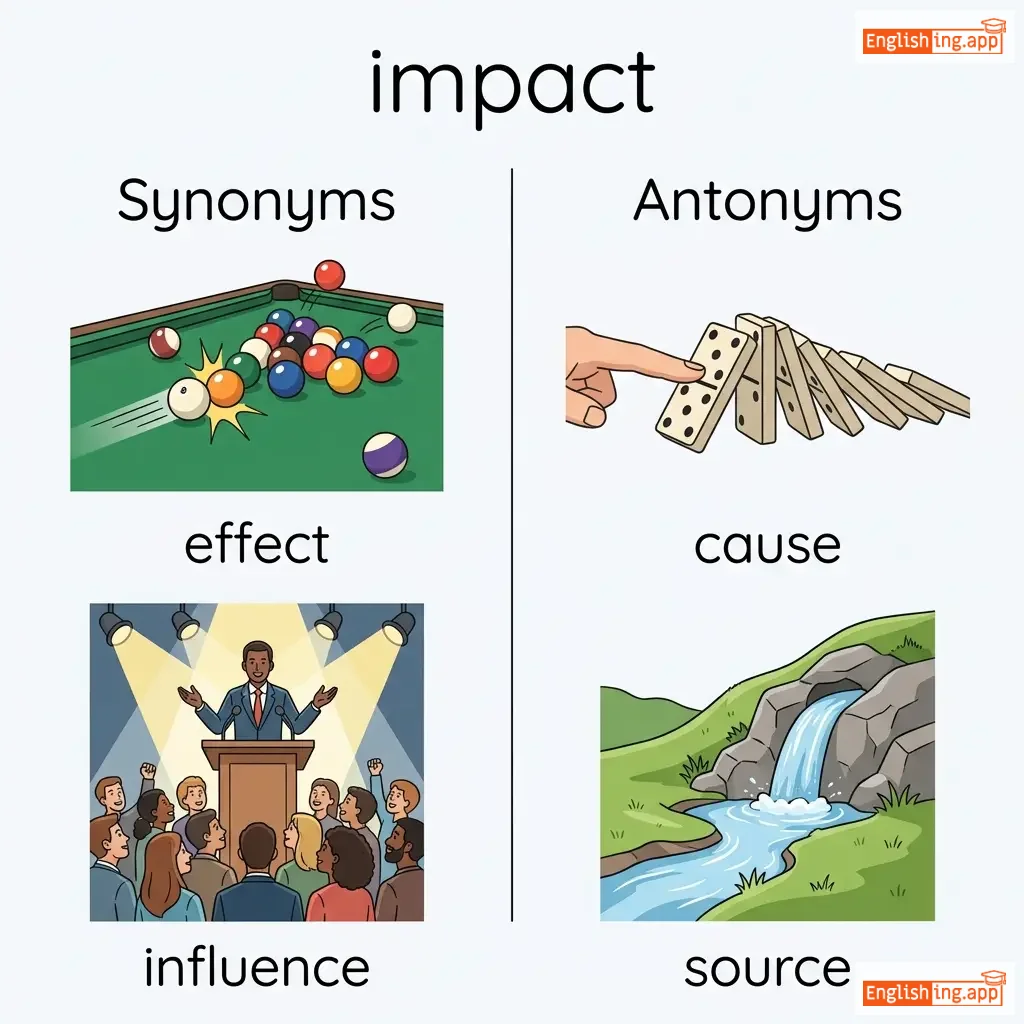
effect, influence, impression, shock, consequence
••••••
|
cause, source
••••••
|
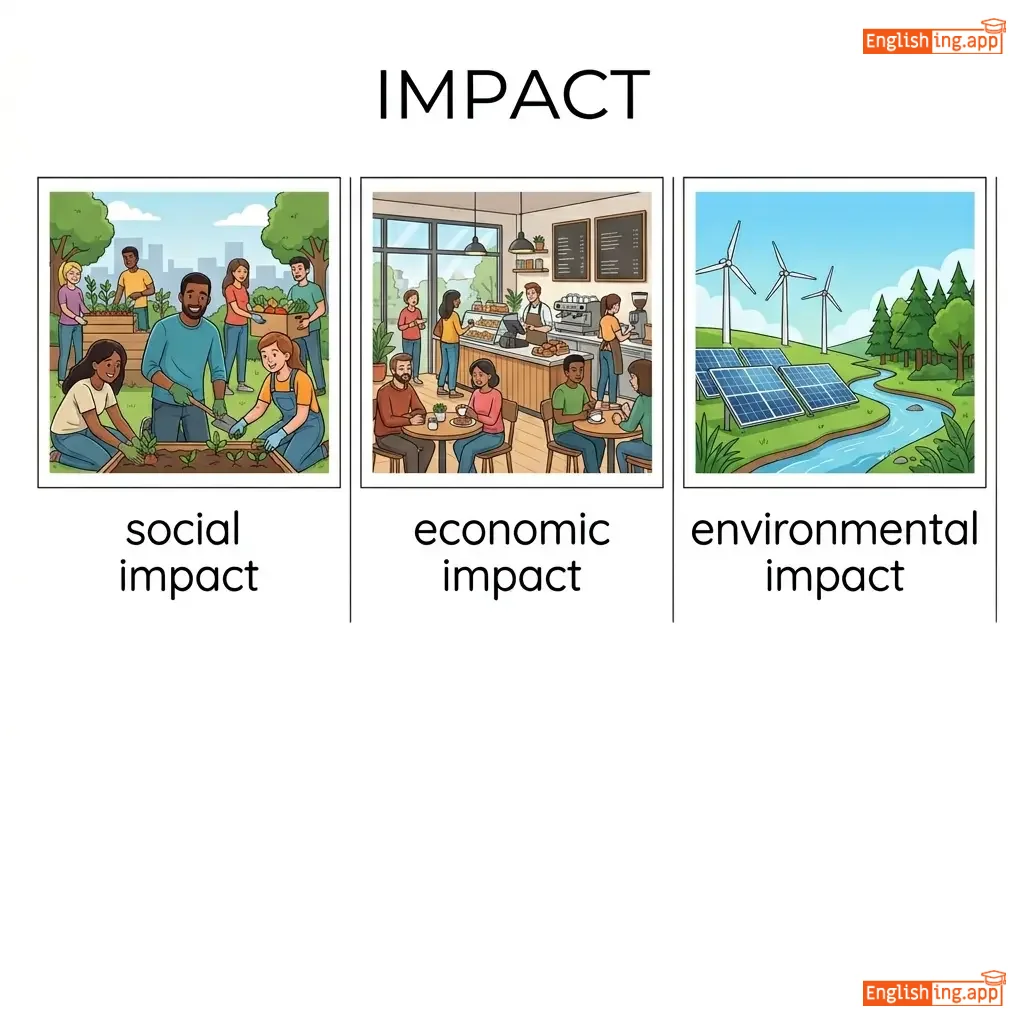
social impact, economic impact, environmental impact, significant impact
••••••
|
Impact的中文是影响,像一股强大的力量改变了周围的一切。
••••••
|
Vocabulary Quiz
Test your vocabulary by matching words with their translations or meanings.
Login to take the quiz
Comments (0)
Share your thoughts and join the discussion.
Join the discussion by logging in
Login to CommentNo comments yet
Be the first to share your thoughts!