


Swipe left or right, or use the buttons. Tap image to zoom.
例句翻译
单词
Lesson 194Lesson 194 - 遮罩切换
|
表情符号
|
单词 | Images | 翻译 | 过去时 | 过去分词 | 第三人称单数 | 动名词 | 含义 | 例句 | 例句翻译 | 示例表达 | 示例表达含义 | 示例表达翻译 | 同义词 | 反义词 | 搭配词 | 助记符 |
|---|---|---|---|---|---|---|---|---|---|---|---|---|---|---|---|---|---|
|
#5791
🤐
|
/ˈmʌtər/
verb
(马特尔)
••••••
|
- •••••• |
低声说
dīshēng shuō
••••••
|
muttered
马特尔德
••••••
|
muttered
马特尔德
••••••
|
mutters
马特尔斯
••••••
|
muttering
马特尔英
••••••
|
to speak in a low or barely audible voice, often in dissatisfaction or irritation
••••••
|
He muttered something under his breath as he walked away.
他低声咕哝着什么,走开了。
••••••
|
他低声咕哝着什么,走开了。
Tā dīshēng gūnóng zhe shénme, zǒu kāi le.
••••••
|
mutter under one's breath
低声咕哝
••••••
|
to say something quietly so that others cannot clearly hear, often expressing annoyance
••••••
|
低声咕哝
dīshēng gūnóng
••••••
|
murmur, whisper, mumble, grumble, complain
••••••
|
shout, yell, proclaim
••••••
|
mutter quietly, mutter something, mutter under breath, mutter angrily
••••••
|
Mutter表示低声说话,就像妈妈(妈妈生气时低声咕哝)。
••••••
|
|
#5792
👤
|
/ˈnɑːrsɪsɪst/
noun
(纳西斯特)
••••••
|
- •••••• |
自恋者
zìliàn zhě
••••••
|
- •••••• | - •••••• | - •••••• | - •••••• |
A person who has an excessive interest in or admiration of themselves.
••••••
|
Everyone avoided him because he was a narcissist. |
每个人都避开他,因为他是一个自恋者。
měi gè rén dōu bì kāi tā, yīnwèi tā shì yīgè zìliàn zhě.
••••••
|
self-absorbed narcissist |
A person overly focused on themselves with little regard for others.
••••••
|
过于自我关注的自恋者
guò yú zìwǒ guānzhù de zìliàn zhě
••••••
|
egoist, egotist, self-lover, braggart
••••••
|
altruist, humble person
••••••
|
narcissist behavior, narcissist partner, extreme narcissist, charming narcissist
••••••
|
自恋者就像自恋花,爱自己,忽视别人 → 只关注自己的人
••••••
|
|
#5793
🪞
|
/ˈnɑːrsɪsɪzəm/
noun
(自恋)
••••••
|
|
自恋
zì liàn
••••••
|
- •••••• | - •••••• | - •••••• | - •••••• |
Excessive interest in or admiration of oneself.
••••••
|
His constant selfies were a sign of his narcissism. |
他不断自拍是他自恋的表现。
tā bù duàn zì pāi shì tā zì liàn de biǎo xiàn.
••••••
|
narcissistic personality |
A personality characterized by self-centeredness and lack of empathy.
••••••
|
自恋型人格
zì liàn xíng rén gé
••••••
|
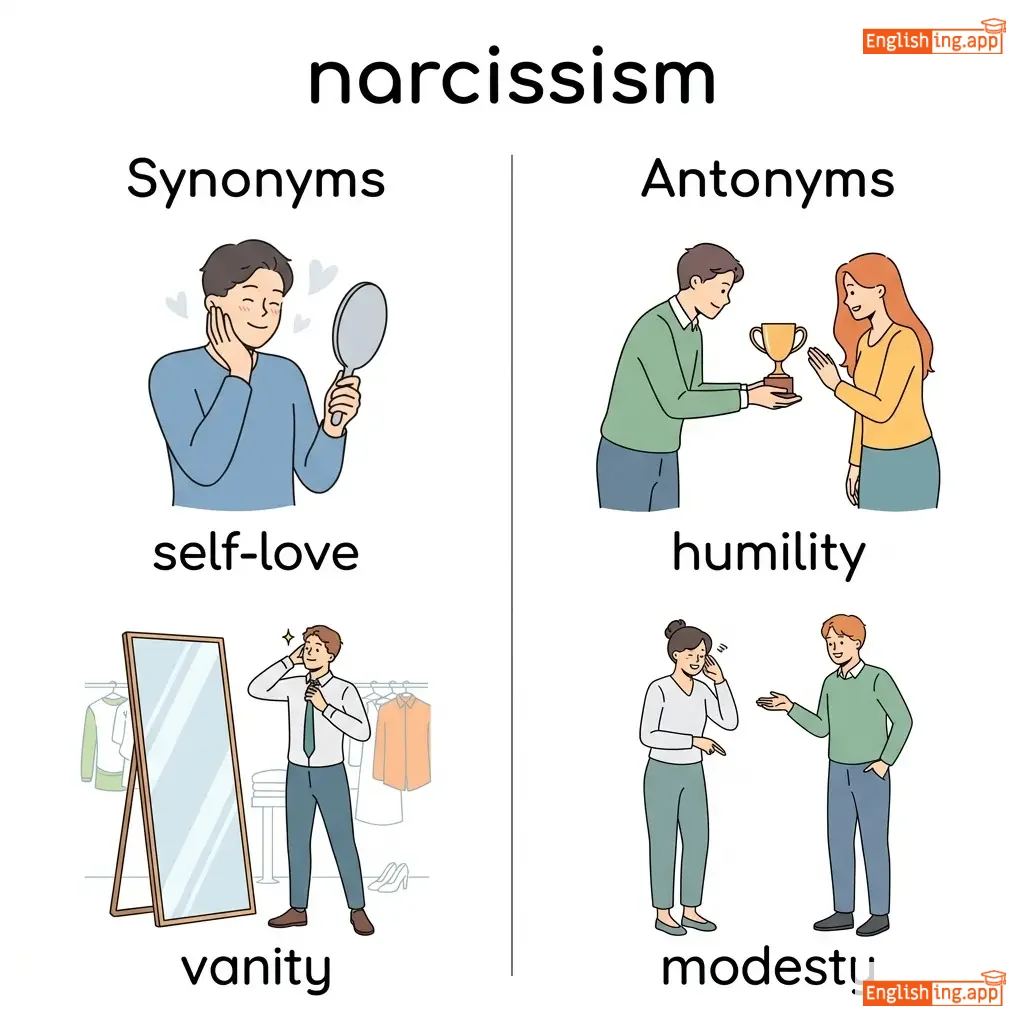
self-love, vanity, egotism, conceit, self-admiration
••••••
|
humility, modesty, selflessness
••••••
|
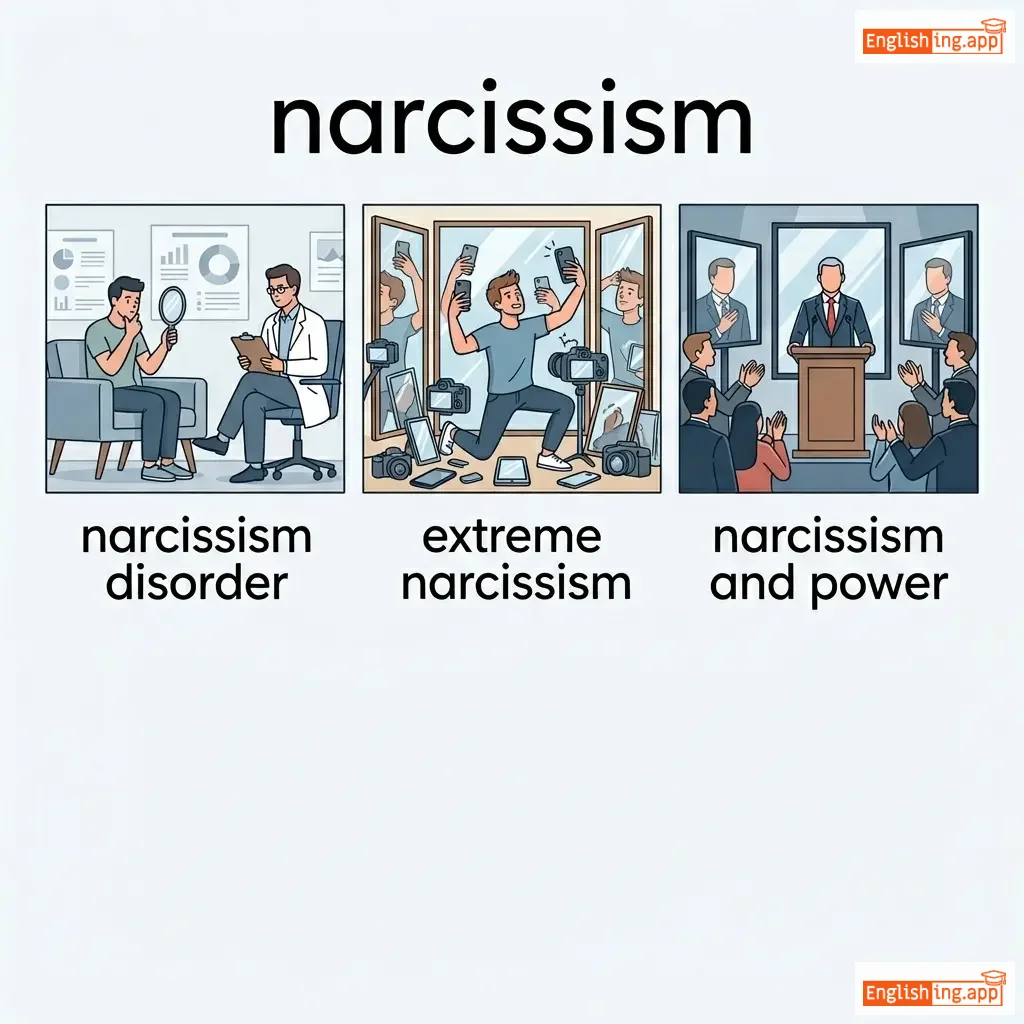
narcissism disorder, extreme narcissism, narcissism and power, signs of narcissism
••••••
|
自恋是喜欢自己,就像自恋的花朵,盯着自己看
••••••
|
|
#5794
🛢️
|
/ˈnæfθə/
noun
(纳夫塔)
••••••
|
- •••••• |
石油醚
shíyóu mǐ
••••••
|
- •••••• | - •••••• | - •••••• | - •••••• |
A flammable oil containing hydrocarbons, obtained from petroleum or coal tar, used as fuel or solvent.
••••••
|
The factory stored barrels of naphtha for industrial use. |
工厂储存了工业用途的纳夫塔桶。
gōngchǎng chǔcúnle gōngyè yòngtú de nàfūtǎ tǒng.
••••••
|
- •••••• | - •••••• | - •••••• |
petroleum, solvent, fuel, kerosene
••••••
|
water, nonflammable liquid
••••••
|
naphtha solvent, naphtha gas, crude naphtha, naphtha production
••••••
|
Naphtha = nap (午休) + tha (它) → 燃烧油
••••••
|
|
#5795
❓
|
/ˈneɪmləs/
adjective
(ˈneɪmləs)
••••••
|
- •••••• |
无名
wu ming
••••••
|
- •••••• | - •••••• | - •••••• | - •••••• |
Without a name or not known by name.
••••••
|
A nameless fear crept over him in the dark room. |
一个无名的恐惧在黑暗的房间里袭击了他。
Yi ge wu ming de kong ju zai hei'an de fang jian li xi ji le ta.
••••••
|
nameless dread |
A strong but vague feeling of fear or anxiety.
••••••
|
无名的恐惧
wu ming de kong ju
••••••
|
unknown, unidentified, anonymous, obscure
••••••
|
known, named, recognized
••••••
|
nameless dread, nameless face, nameless place, nameless hero
••••••
|
无名 = 没有名字 = 无名
••••••
|
|
#5796
🌱
|
/naɪˈiːvɪti/
noun
(naiwei ti)
••••••
|
- •••••• |
天真
tianzhen
••••••
|
- •••••• | - •••••• | - •••••• | - •••••• |
The quality of being innocent, simple, and lacking experience or sophistication.
••••••
|
Her naivety made her trust people too easily.
她的天真使她太容易相信别人。
••••••
|
她的天真使她太容易相信别人。
Ta de tianzhen shi ta tai rongyi xiangxin bieren.
••••••
|
- •••••• | - •••••• | - •••••• |
innocence, simplicity, gullibility, artlessness, inexperience
••••••
|
worldliness, sophistication, shrewdness
••••••
|
childlike naivety, political naivety, display naivety, youthful naivety
••••••
|
Naivety 就是天真,简单且没有经验。
••••••
|
|
#5797
🌱
|
/naɪˈiːvteɪ/
noun
••••••
|
- •••••• | - •••••• | - •••••• | - •••••• | - •••••• | - •••••• |
The quality of being naive; lack of experience, wisdom, or judgment.
••••••
|
His naivete made him an easy target for manipulation. |
- •••••• | - •••••• | - •••••• | - •••••• |
innocence, gullibility, simplicity, artlessness
••••••
|
worldliness, sophistication, shrewdness
••••••
|
display naivete, political naivete, show naivete, naivete of youth
••••••
|
No •••••• |
|
#5798
🧒
|
/naɪˈiːv/
adjective
(naiwei)
••••••
|
- •••••• |
天真
tian zhen
••••••
|
- •••••• | - •••••• | - •••••• | - •••••• |
Having a lack of experience or sophistication; overly innocent or trusting.
••••••
|
She was naive to believe the scammer’s story. |
她天真地相信了骗子的故事。
Ta tian zhen de xiang xin le pian zi de gu shi.
••••••
|
naive optimism |
An overly simple or innocent kind of hopefulness.
••••••
|
天真乐观
tian zhen le guan
••••••
|
innocent, gullible, simple, trusting, unsophisticated
••••••
|
cynical, experienced, shrewd
••••••
|
naive belief, naive optimism, seem naive, extremely naive
••••••
|
天真就像一个小孩,什么都相信,容易上当。
••••••
|
|
#5799
⬇️
|
/ˈneɪdɪər/
noun
••••••
|
- •••••• | - •••••• | - •••••• | - •••••• | - •••••• | - •••••• |
The lowest point of a situation or condition.
••••••
|
The company reached its nadir during the financial crisis. |
- •••••• |
reach the nadir |
To reach the lowest or worst point.
••••••
|
- •••••• |
lowest point, rock bottom, depth, trough
••••••
|
zenith, peak, summit
••••••
|
reach nadir, political nadir, career nadir, emotional nadir
••••••
|
No •••••• |
|
#5800
📖
|
/mɪˈθɒlədʒi/
noun
••••••
|
- •••••• | - •••••• | - •••••• | - •••••• | - •••••• | - •••••• |
A collection of myths, especially belonging to a particular culture or religion.
••••••
|
Greek mythology is filled with stories of gods and heroes. |
- •••••• | - •••••• | - •••••• | - •••••• |
folklore, legends, fables, tradition
••••••
|
history, fact
••••••
|
Greek mythology, Roman mythology, rich mythology, mythology class
••••••
|
No •••••• |
|
#5801
🐉
|
/mɪθ/
noun
(mɪθ)
••••••
|
- •••••• |
神话
shenhua
••••••
|
- •••••• | - •••••• | - •••••• | - •••••• |
A traditional story explaining natural or social phenomena, often involving supernatural beings; a widely held but false belief.
••••••
|
The myth of the phoenix tells of a bird reborn from its ashes. |
凤凰的神话讲述了一只从灰烬中重生的鸟。
Fenghuang de shenhua jiangshu le yi zhi cong huijin zhong chongsheng de niao.
••••••
|
myth or reality |
Used when questioning whether something is true or just a belief.
••••••
|
神话还是现实
Shenhua haishi xianshi
••••••
|
legend, tale, folklore, fable, fiction
••••••
|
fact, reality, truth
••••••
|
ancient myth, Greek myth, popular myth, myth about
••••••
|
Myth = 一个关于错觉的故事,虽然有些可能是真的!
••••••
|
|
#5802
😕
|
/ˌmɪstɪfɪˈkeɪʃən/
noun
(mɪstɪfɪˈkeɪʃən)
••••••
|
- •••••• |
困惑, 神秘化
kunhuo, shenmi hua
••••••
|
- •••••• | - •••••• | - •••••• | - •••••• |
the act of making something unclear or confusing; a state of being puzzled or bewildered
••••••
|
The audience watched in mystification as the magician performed his tricks. |
观众在困惑中看着魔术师表演他的戏法。
Guanzhong zai kunhuo zhong kanzhe moshushi biaoyan tade xifa.
••••••
|
- •••••• | - •••••• | - •••••• |
confusion, puzzlement, bewilderment, perplexity
••••••
|
clarity, understanding, comprehension
••••••
|
cause mystification, in mystification, look of mystification, complete mystification
••••••
|
Mystification 意味着困惑 – 记住 'Mystery + Fiction' → 在神秘的故事中大家都很困惑。
••••••
|
|
#5803
🔮
|
/ˈmɪstɪk/
noun/adjective
(mìsītí kè)
••••••
|
- •••••• |
神秘的,灵性追求者
shenmi de, lingxing zhuiqiu zhe
••••••
|
- •••••• | - •••••• | - •••••• | - •••••• |
relating to mysteries, spirituality, or hidden truths; a person who seeks spiritual insight
••••••
|
The mystic devoted his life to meditation and spiritual discovery. |
那位神秘的追求者将他的生命献给了冥想和灵性探索。
Na wei shenmi de zhuiqiu zhe jiang tade shengming xiangeile mingxiang he lingxing tansuo.
••••••
|
- •••••• | - •••••• | - •••••• |
spiritual, esoteric, otherworldly, transcendental
••••••
|
worldly, ordinary, materialistic
••••••
|
mystic tradition, mystic experience, mystic power, mystic vision
••••••
|
神秘的代表着灵性追求者 – 想象'Mystery + Stick' → 灵性追求者手持神秘的棒子。
••••••
|
|
#5804
✨
|
/ˈmɪriəd/
noun/adjective
(米瑞德)
••••••
|
- •••••• |
无数
wú shù
••••••
|
- •••••• | - •••••• | - •••••• | - •••••• |
a countless or extremely great number
••••••
|
There are myriad stars in the night sky. |
夜空中有无数的星星。
Yè kōng zhōng yǒu wú shù de xīng xīng.
••••••
|
- •••••• | - •••••• | - •••••• |
countless, innumerable, infinite, endless
••••••
|
limited, few, finite
••••••
|
myriad possibilities, myriad stars, myriad reasons, myriad challenges
••••••
|
Myriad 意味着无数 – 想象一面镜子反射出无数的星星。
••••••
|
|
#5805
👓
|
/maɪˈɑːpɪk/
adjective
(麦欧皮克)
••••••
|
- •••••• |
近视,狭隘的视野
jìnshì, xiá'ài de shìyě
••••••
|
- •••••• | - •••••• | - •••••• | - •••••• |
lacking foresight or long-term perspective; also refers to nearsightedness
••••••
|
The company’s myopic strategy led to long-term losses.
公司的近视战略导致了长期损失。
••••••
|
公司的近视战略导致了长期损失。
Gōngsī de jìnshì zhànlüè dǎozhì le chángqī sǔnshī.
••••••
|
- •••••• | - •••••• | - •••••• |
shortsighted, narrow-minded, unimaginative, blind
••••••
|
far-sighted, visionary, broad-minded
••••••
|
myopic view, myopic approach, myopic policy, myopic thinking
••••••
|
Myopic意味着狭隘的视野 – 记住 My+opic → 只看‘My’的方向,看不到未来。
••••••
|
|
#5806
🤔
|
/mjuːz/
verb, noun
••••••
|
- •••••• | - •••••• |
mused
••••••
|
mused
••••••
|
muses
••••••
|
musing
••••••
|
to think deeply about something; a source of inspiration, especially for an artist or writer
••••••
|
She sat by the window to muse about her future. |
- •••••• |
lost in thought |
to be absorbed in deep thought or contemplation
••••••
|
- •••••• |
ponder, contemplate, reflect, meditate, inspire
••••••
|
ignore, disregard, neglect
••••••
|
muse about, muse upon, poet's muse, artistic muse
••••••
|
No •••••• |
|
#5807
🚢
|
/ˈmjuːtɪni/
noun
(miútīnī)
••••••
|
- •••••• |
叛乱
pànluàn
••••••
|
- •••••• | - •••••• | - •••••• | - •••••• |
an open rebellion against authority, especially by soldiers or sailors
••••••
|
The sailors staged a mutiny against their captain. |
水手们发动了对他们船长的叛乱。
Shuǐshǒu men fādòng le duì tāmen chuánzhǎng de pànluàn.
••••••
|
mutiny on the ship |
rebellion by sailors against the ship's captain
••••••
|
船上的叛乱
chuán shàng de pànluàn
••••••
|
revolt, rebellion, uprising, insurrection
••••••
|
obedience, loyalty, submission
••••••
|
stage a mutiny, mutiny broke out, mutiny against
••••••
|
Mutiny 类似 '叛乱',意味着反抗权威。
••••••
|
|
#5808
⚔️
|
/ˈmjuːtɪnəs/
adjective
(mǐyùtīnàsī)
••••••
|
- •••••• |
叛乱的
pànluàn de
••••••
|
- •••••• | - •••••• | - •••••• | - •••••• |
refusing to obey authority; rebellious
••••••
|
The soldiers grew mutinous after months without pay. |
士兵们在几个月没有工资后变得叛乱了。
Shìbīngmen zài jǐ gè yuè méiyǒu gōngzī hòu biàn dé pànluàn le.
••••••
|
- •••••• | - •••••• | - •••••• |
rebellious, defiant, insubordinate, disobedient
••••••
|
obedient, loyal, compliant
••••••
|
mutinous troops, mutinous behavior, mutinous spirit
••••••
|
Mutinous 来源于 'mutiny' ,意味着叛乱。
••••••
|
|
#5809
🩸
|
/ˈmjuːtɪleɪt/
verb
(米尤特莱特)
••••••
|
- •••••• |
摧残
cuīcán
••••••
|
mutilated
米尤特莱特德
••••••
|
mutilated
米尤特莱特德
••••••
|
mutilates
米尤特莱特斯
••••••
|
mutilating
米尤特莱廷
••••••
|
to inflict serious damage on something, often by cutting or tearing
••••••
|
The ancient manuscript was mutilated by careless handling.
古老的手稿因不小心处理而被毁坏。
••••••
|
古老的手稿因不小心处理而被摧残。
Gǔlǎo de shǒugǎo yīn bù xiǎoxīn chǔlǐ ér bèi cuīcán.
••••••
|
- •••••• | - •••••• | - •••••• |
damage, disfigure, harm, maim, injure
••••••
|
heal, repair, restore
••••••
|
mutilate body, mutilate documents, mutilate art, mutilated victim
••••••
|
Mutilate 使东西毁掉,可以用‘摧残’来记忆。
••••••
|
|
#5810
🎨
|
/ˈmjuːtɪd/
adjective
(缪特)
••••••
|
- •••••• |
柔和的
rouhe de
••••••
|
- •••••• | - •••••• | - •••••• | - •••••• |
softened in sound, color, or effect; subdued
••••••
|
The room was painted in muted shades of blue and grey.
房间用蓝色和灰色的柔和色调粉刷。
••••••
|
房间用蓝色和灰色的柔和色调粉刷。
Fangjian yong lanse he huise de rouhe se tiao fen shua.
••••••
|
- •••••• | - •••••• | - •••••• |
soft, subdued, toned-down, muffled
••••••
|
bright, loud, vivid
••••••
|
muted tones, muted response, muted colors, muted sound
••••••
|
‘柔和的’意味着‘muted’,两者都表示声音或颜色的柔和。
••••••
|
|
#5811
🤐
|
/mjuːt/
adjective
••••••
|
- •••••• | - •••••• | - •••••• | - •••••• | - •••••• | - •••••• |
silent or unable to speak; not expressed in words
••••••
|
She remained mute during the entire meeting. |
- •••••• |
mute testimony |
evidence that speaks without words, often by presence or example
••••••
|
- •••••• |
silent, speechless, quiet, voiceless
••••••
|
vocal, talkative, expressive
••••••
|
mute button, remain mute, mute testimony, mute appeal
••••••
|
No •••••• |
|
#5812
🔬
|
/mjuːˈteɪʃn/
noun
(miuˈteɪʃn)
••••••
|
- •••••• |
突变,基因变异
tūbiàn, jīyīn biànyì
••••••
|
- •••••• | - •••••• | - •••••• | - •••••• |
A change in form, structure, or nature, especially in genetics.
••••••
|
Scientists discovered a genetic mutation that caused the disorder. |
科学家发现了一种基因突变,导致了这种疾病。
Kēxuéjiā fāxiànle yī zhǒng jīyīn tūbiàn, dǎozhìle zhè zhǒng jíbìng.
••••••
|
- •••••• | - •••••• | - •••••• |
alteration, variation, modification, transformation
••••••
|
stability, consistency
••••••
|
genetic mutation, random mutation, mutation rate, cause mutation
••••••
|
突变是基因的变化,就像突然改变的超能力角色一样。
••••••
|
|
#5813
🧬
|
/ˈmjuːteɪt/
verb
(miuṭeit)
••••••
|
- •••••• |
突变
tubian
••••••
|
mutated
miuṭeitid
••••••
|
mutated
miuṭeitid
••••••
|
mutates
miuṭeits
••••••
|
mutating
miuṭeiting
••••••
|
To change or cause to change in form, nature, or character.
••••••
|
The virus can mutate into a more dangerous strain.
病毒可以突变成一种更危险的菌株。
••••••
|
病毒可以突变成一种更危险的菌株。
Bingdu keyi tubian cheng yizhong geng weixian de junzhu.
••••••
|
- •••••• | - •••••• | - •••••• |
transform, alter, modify, evolve, change
••••••
|
remain, preserve, maintain
••••••
|
mutate rapidly, mutate into, mutate naturally, mutate genetically
••••••
|
突变意味着变化,就像变异(mutation)。
••••••
|
|
#5814
✍️
|
/ˌmjuːtəˈbɪləti/
noun
(缪塔比利提)
••••••
|
- •••••• |
变异性 (拼写错误)
bianyixing (pinyin cuowu)
••••••
|
- •••••• | - •••••• | - •••••• | - •••••• |
A misspelled form of 'mutability', meaning the quality of being changeable.
••••••
|
The document contained the misspelled word 'mutablility' instead of 'mutability'. |
文件中包含了拼写错误的词 'mutablility',而不是 'mutability'。
Wenjian zhong baohanle pinxie cuowu de ci 'mutablility', er bushi 'mutability'.
••••••
|
- •••••• | - •••••• | - •••••• |
mutability, changeability, variability
••••••
|
stability, permanence
••••••
|
mutablility of terms, spelling mutablility
••••••
|
Mutablility 是一个拼写错误 - 就像拼写错误和变化一样。
••••••
|
|
#5815
🌀
|
/ˈmjuːtəbl/
adjective
(mǔtèbù)
••••••
|
- •••••• |
可变的
kebian de
••••••
|
- •••••• | - •••••• | - •••••• | - •••••• |
Capable of change or alteration.
••••••
|
Human emotions are mutable and can shift rapidly. |
人类的情感是可变的,能够迅速变化。
Rénlèi de qínggǎn shì kěbiàn de, nénggòu xùnsù biànhuà.
••••••
|
- •••••• | - •••••• | - •••••• |
changeable, variable, alterable, flexible
••••••
|
unchangeable, immutable, permanent
••••••
|
mutable nature, mutable emotions, mutable laws, mutable rules
••••••
|
Mutable就像天气:今天晴朗,明天下雨。
••••••
|
|
#5816
🔄
|
/ˌmjuːtəˈbɪləti/
noun
(miutabilité)
••••••
|
- •••••• |
可变性
kebiànxìng
••••••
|
- •••••• | - •••••• | - •••••• | - •••••• |
The quality of being changeable or capable of change.
••••••
|
The mutability of fashion trends makes it hard to keep up.
时尚潮流的变动性使得跟上它变得困难。
••••••
|
时尚潮流的变动性使得跟上它变得困难。
Shíshàng cháoliú de biàndòngxìng shǐdé gēn shàng tā biàndé kùnnán.
••••••
|
- •••••• | - •••••• | - •••••• |
changeability, variability, adaptability, flexibility, instability
••••••
|
stability, permanence, constancy
••••••
|
mutability of life, inherent mutability, mutability of fate, constant mutability
••••••
|
可变性就像时尚一样,不断变化
••••••
|
|
#5817
📚
|
/ˈmʌsti/
adjective
(mʌsti)
••••••
|
- •••••• |
发霉的,潮湿的或有霉味的
fāméi de, cháoshī de huò yǒu méi wèi de
••••••
|
- •••••• | - •••••• | - •••••• | - •••••• |
having a stale, moldy, or damp smell
••••••
|
The old books had a musty odor. |
旧书有霉味。
Jiù shū yǒu méi wèi.
••••••
|
- •••••• | - •••••• | - •••••• |
stale, moldy, dank, mildewed
••••••
|
fresh, clean
••••••
|
musty smell, musty room, musty odor, musty basement
••••••
|
Musty意味着霉味 - 就像一个潮湿的房间里放着旧书。
••••••
|
|
#5818
🪖
|
/ˈmʌstər/
verb, noun
(马斯特)
••••••
|
- •••••• |
聚集 / 集合勇气
jùjí / jíhé yǒngqì
••••••
|
mustered
马斯特德
••••••
|
mustered
马斯特德
••••••
|
musters
马斯特斯
••••••
|
mustering
马斯特灵
••••••
|
to gather people, especially soldiers; to summon courage or strength
••••••
|
He mustered enough courage to face the challenge.
他积聚了足够的勇气来面对挑战。
••••••
|
他积聚了足够的勇气来面对挑战。
Tā jījùle zúgòu de yǒngqì lái miànduì tiǎozhàn.
••••••
|
muster up courage
积聚勇气
••••••
|
to gather enough bravery to do something difficult
••••••
|
积聚勇气
jījù yǒngqì
••••••
|
assemble, gather, rally, summon, collect
••••••
|
scatter, disperse
••••••
|
muster courage, muster strength, muster troops, muster support
••••••
|
Muster意为聚集 - 像一个大师集合所有人来做任务。
••••••
|
|
#5819
🌸
|
/ˈmʌski/
adjective
(mʌski)
••••••
|
- •••••• |
麝香味的
shèxiāng wèi de
••••••
|
- •••••• | - •••••• | - •••••• | - •••••• |
having a strong, sweet, earthy smell like musk
••••••
|
The perfume had a musky fragrance. |
香水有一种麝香味。
Xiāngshuǐ yǒu yī zhǒng shèxiāng wèi.
••••••
|
- •••••• | - •••••• | - •••••• |
fragrant, pungent, aromatic, earthy
••••••
|
odorless, scentless
••••••
|
musky smell, musky fragrance, musky aroma, musky scent
••••••
|
Musky = 麝香味的, 香水有麝香味,麝香味的香水。
••••••
|
|
#5820
🔫
|
/ˈmʌskɪt/
noun
(穆斯凯特)
••••••
|
- •••••• |
一种古老的火枪
yī zhǒng gǔlǎo de huǒqiāng
••••••
|
- •••••• | - •••••• | - •••••• | - •••••• |
a type of long gun used in the past, especially by infantry soldiers
••••••
|
The soldiers carried muskets into the battlefield. |
士兵们带着火枪走进了战场。
Shìbīngmen dàizhe huǒqiāng zǒu jìnle zhànchǎng.
••••••
|
- •••••• | - •••••• | - •••••• |
rifle, firearm, gun, weapon
••••••
|
sword, spear
••••••
|
fire musket, load musket, musket shot, musket ball
••••••
|
Musket 读作 '木斯凯特', 早期士兵拿着这些木制的枪走向战场。
••••••
|
Vocabulary Quiz
Test your vocabulary by matching words with their translations or meanings.
Login to take the quiz
Comments (0)
Share your thoughts and join the discussion.
Join the discussion by logging in
Login to CommentNo comments yet
Be the first to share your thoughts!