



Swipe left or right, or use the buttons. Tap image to zoom.
例句翻译
单词
Lesson 379Lesson 379 - 遮罩切换
|
表情符号
|
单词 | Images | 翻译 | 过去时 | 过去分词 | 第三人称单数 | 动名词 | 含义 | 例句 | 例句翻译 | 示例表达 | 示例表达含义 | 示例表达翻译 | 同义词 | 反义词 | 搭配词 | 助记符 |
|---|---|---|---|---|---|---|---|---|---|---|---|---|---|---|---|---|---|
|
#11335
👍
|
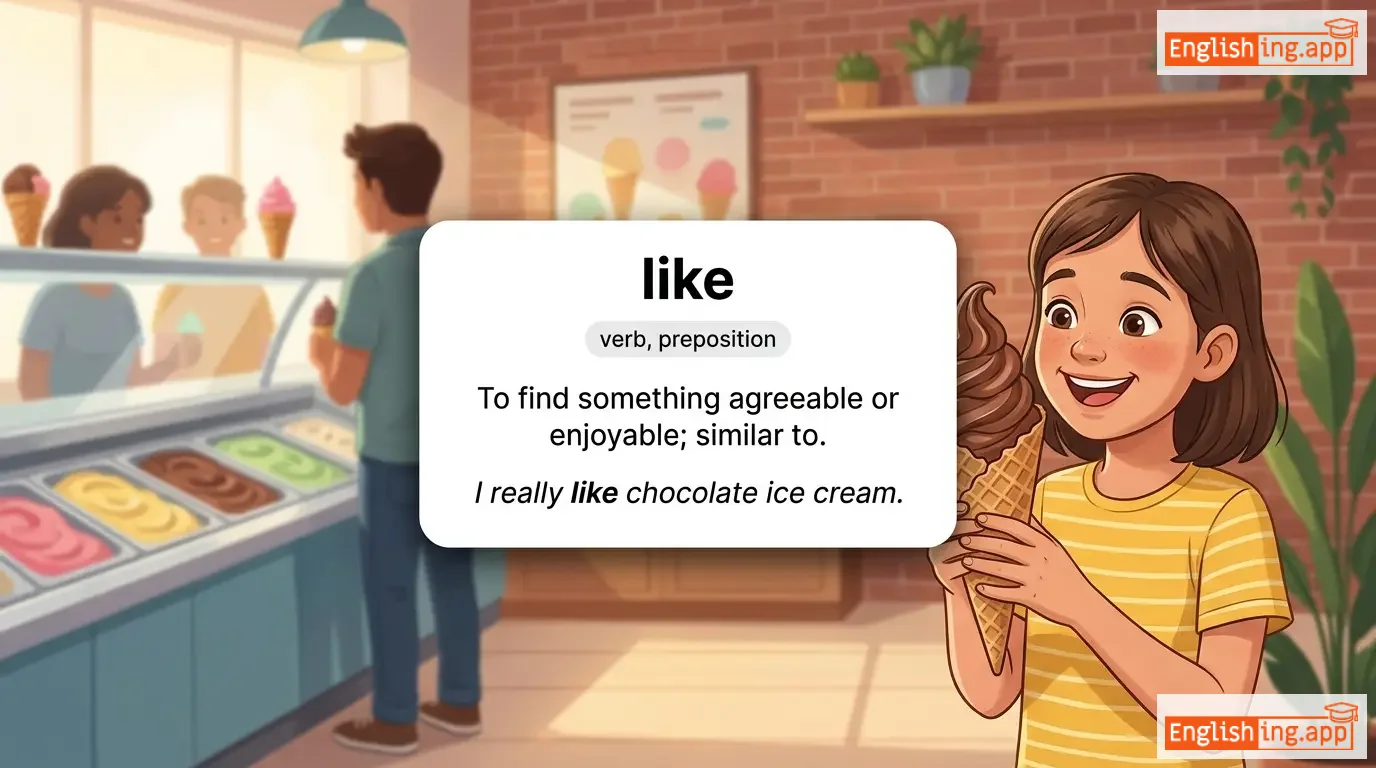
/laɪk/
verb, preposition
(laɪk)
••••••
|
|
喜欢
xǐ huān
••••••
|
liked
laɪkt
••••••
|
liked
laɪkt
••••••
|
likes
laɪks
••••••
|
liking
laɪkɪŋ
••••••
|
To find something agreeable or enjoyable; similar to.
••••••
|
I really like chocolate ice cream.
我真的喜欢巧克力冰淇淋。
••••••
|
我真的喜欢巧克力冰淇淋。
Wǒ zhēn de xǐ huān qiǎo kè lì bīng qí lín.
••••••
|
like father, like son
有其父必有其子
••••••
|
children often resemble their parents in behavior or character
••••••
|
有其父必有其子
Yǒu qí fù bì yǒu qí zǐ
••••••
|
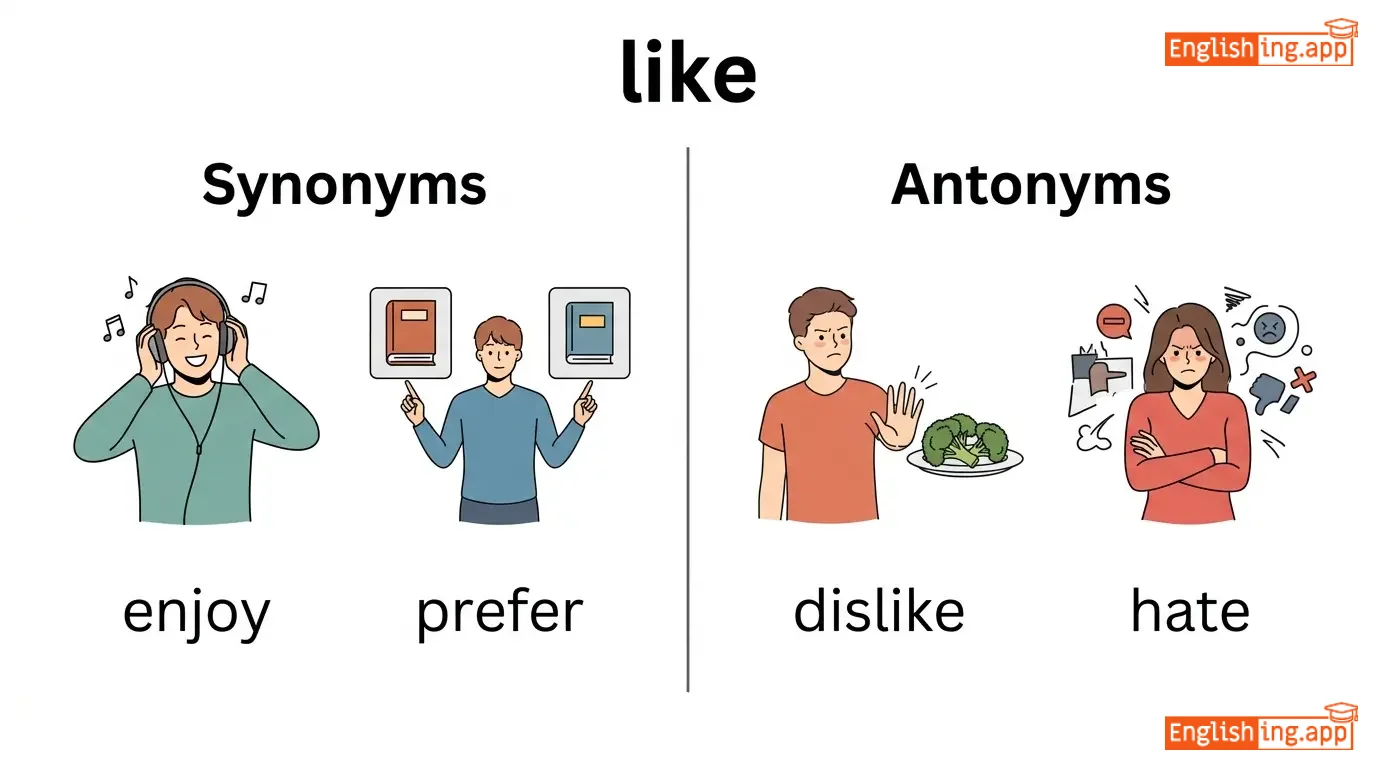
enjoy, prefer, love, admire, appreciate
••••••
|
dislike, hate, detest
••••••
|
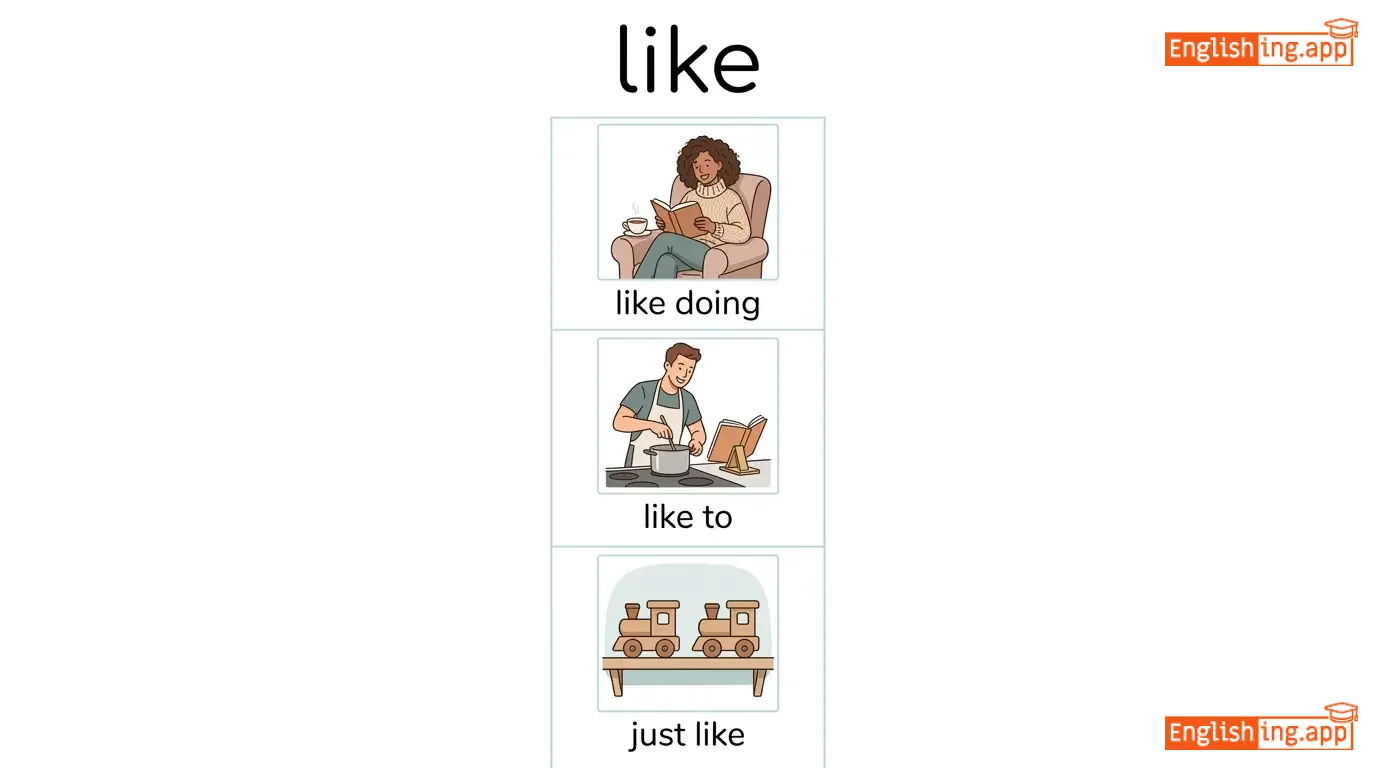
like doing, like to, just like, feel like
••••••
|
在Facebook上,点赞就等于喜欢。
••••••
|
|
#11336
📍
|
/loʊˈkeɪt/
verb
(洛凯特)
••••••
|
- •••••• |
定位
duiwei
••••••
|
located
洛凯特德
••••••
|
located
洛凯特德
••••••
|
locates
洛凯特斯
••••••
|
locating
洛凯特英
••••••
|
to find the exact position or place of something
••••••
|
They managed to locate the missing keys under the couch.
他们成功地在沙发下找到丢失的钥匙。
••••••
|
他们成功地在沙发下找到丢失的钥匙。
Tāmen chénggōng de zài shāfā xià zhǎodào diūshī de yàoshi.
••••••
|
locate oneself
定位自己
••••••
|
to identify one's own position or situation
••••••
|
定位自己
dìngwèi zìjǐ
••••••
|
find, discover, detect, identify, pinpoint
••••••
|
lose, miss, overlook
••••••
|
locate the source, locate the problem, difficult to locate, locate exactly
••••••
|
定位就像 'Location' 的音,让我们联想到寻找一个地方.
••••••
|
|
#11337
📍
|
/ˈloʊkəl/
adjective/noun
(本地)
••••••
|
- •••••• |
本地
bendi
••••••
|
- •••••• | - •••••• | - •••••• | - •••••• |
relating to a particular area or neighborhood
••••••
|
We prefer buying fruits from the local market. |
我们更喜欢从本地市场购买水果。
Wǒmen gèng xǐhuān cóng běndì shìchǎng gòumǎi shuǐguǒ.
••••••
|
go local |
to support nearby or community-based products or services
••••••
|
支持本地
zhīchí bendi
••••••
|
regional, nearby, community, native, domestic
••••••
|
global, foreign, distant
••••••
|
local community, local business, local government, local area
••••••
|
Local意味着本地,像本地市场一样。
••••••
|
|
#11338
💰
|
/loʊn/
noun
(贷款)
••••••
|
- •••••• |
贷款
daikuan
••••••
|
- •••••• | - •••••• | - •••••• | - •••••• |
money that is borrowed and expected to be paid back with interest
••••••
|
She took a loan from the bank to buy a house. |
她从银行借了贷款买房。
ta cong yinhang jie le daikuan mai fang.
••••••
|
loan shark |
a person who lends money at very high interest rates
••••••
|
高利贷
gaolidai
••••••
|
credit, advance, debt, mortgage
••••••
|
repayment, settlement
••••••
|
take a loan, bank loan, student loan, repay a loan
••••••
|
Loan是贷款,就像'借款买车'。
••••••
|
|
#11339
📦
|
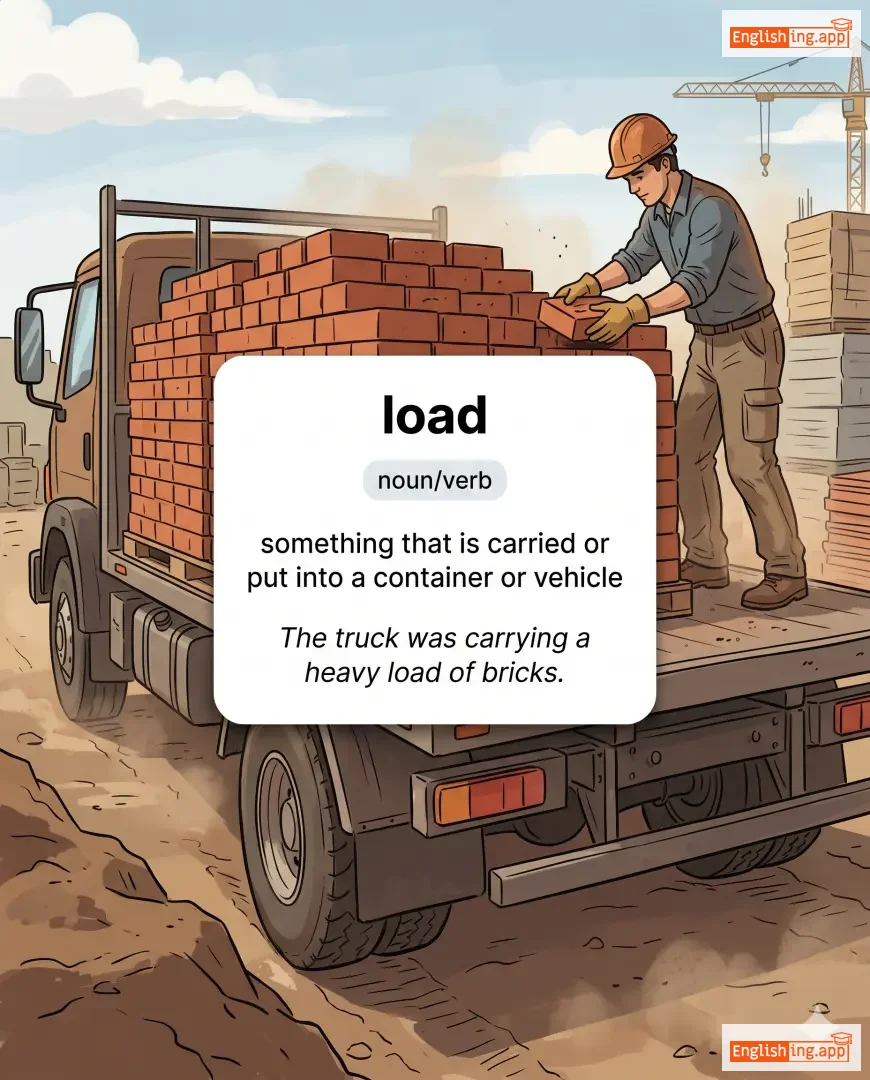
/loʊd/
noun/verb
(loud)
••••••
|
|
载重
zàizhòng
••••••
|
loaded
louded
••••••
|
loaded
louded
••••••
|
loads
louds
••••••
|
loading
louding
••••••
|
something that is carried or put into a container or vehicle
••••••
|
The truck was carrying a heavy load of bricks.
卡车正在运输一载重的砖块。
••••••
|
卡车正在运输一载重的砖块。
kǎchē zhèngzài yùnshū yī zàizhòng de zhuānkuài.
••••••
|
take a load off
放下负担
••••••
|
to sit down and relax
••••••
|
放松一下
fàngsōng yīxià
••••••
|
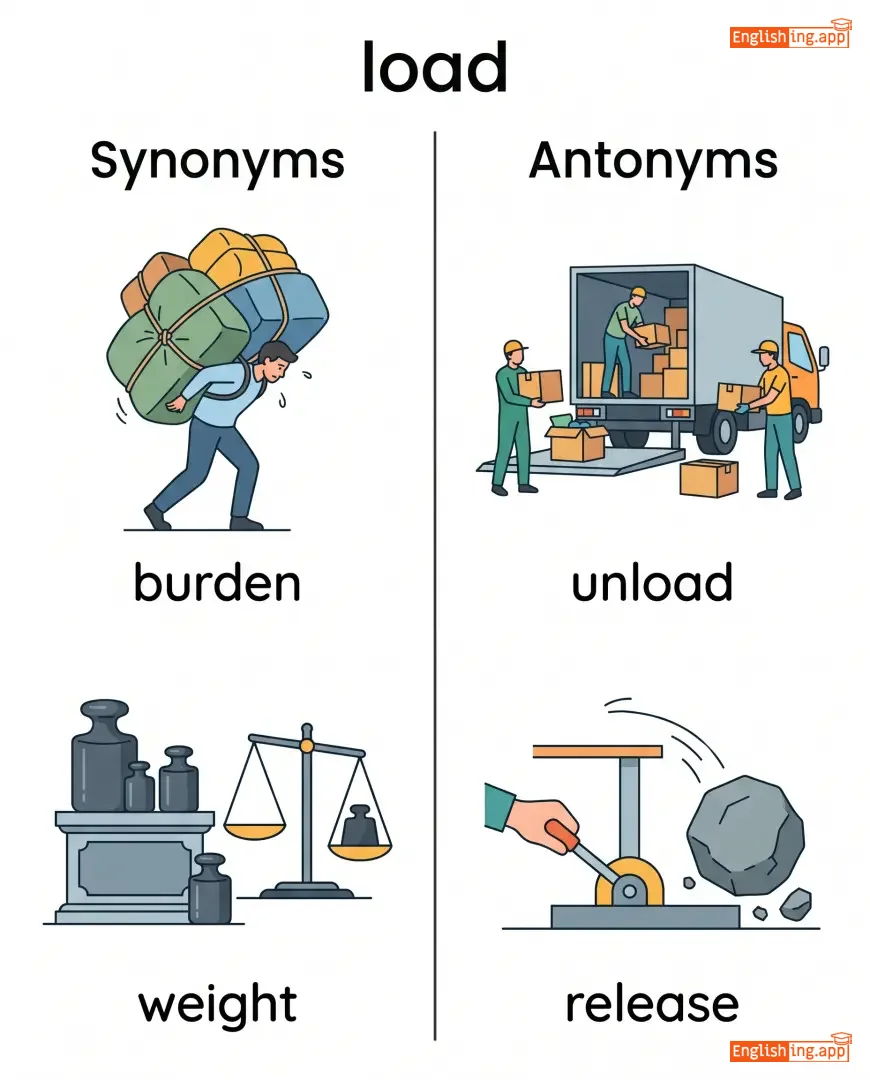
burden, weight, cargo, freight, shipment
••••••
|
unload, release, lighten
••••••
|
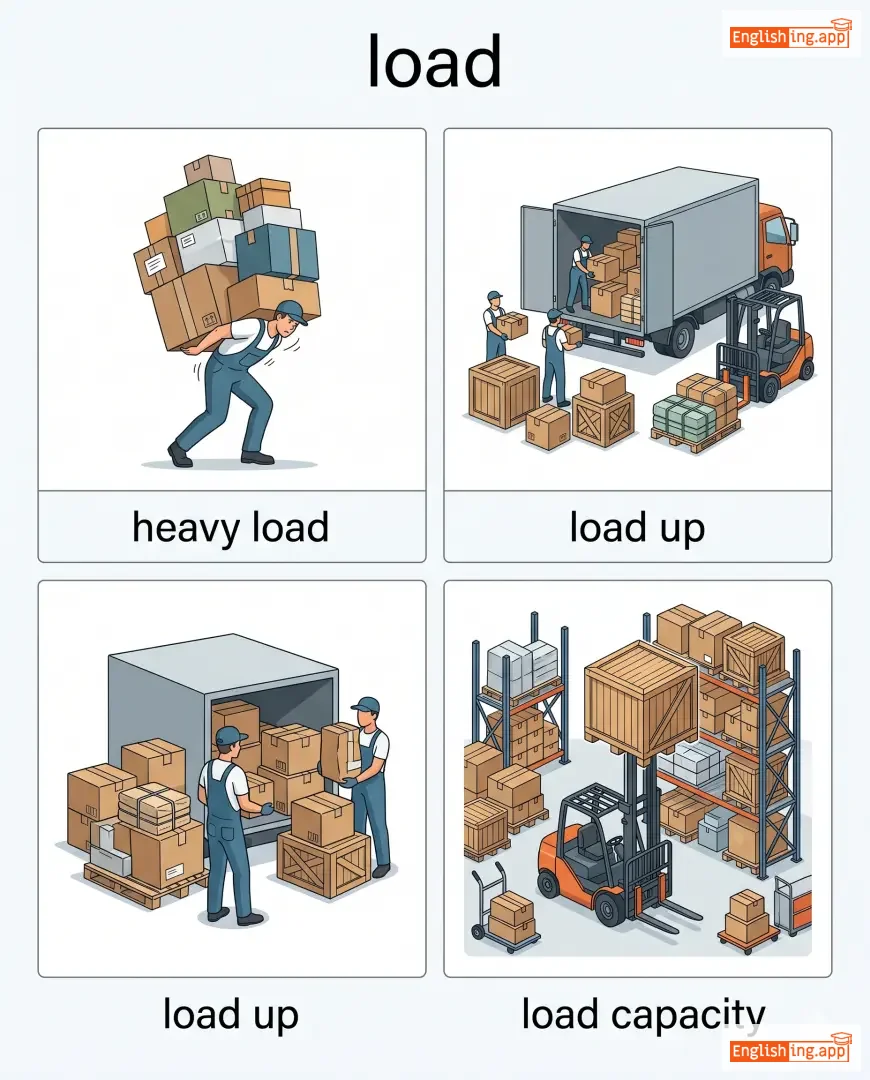
heavy load, load up, load capacity, full load
••••••
|
载重,像是当电脑卡住时,你在等待它加载完。
••••••
|
|
#11340
🌱
|
/ˈlɪvɪŋ/
noun/adjective
(lì vīng)
••••••
|
- •••••• |
生活 / 生计
shenghuo / shengji
••••••
|
- •••••• | - •••••• | - •••••• | - •••••• |
the state of being alive; or a way of earning money
••••••
|
He makes his living as a teacher. |
他以教师的身份谋生。
Ta yi jiaoshi de shenfen mingsheng.
••••••
|
cost of living |
the amount of money needed to maintain a certain standard of life
••••••
|
生活成本
shenghuo chengben
••••••
|
existence, livelihood, earnings, occupation
••••••
|
death, nonexistence
••••••
|
living standard, living being, living conditions, cost of living
••••••
|
Living 代表生活或生计,就像在 '客厅' 中生活的人。
••••••
|
|
#11341
🏡
|
/lɪv/
verb
(līf)
••••••
|
|
生活
shenghuo
••••••
|
lived
lìvde
••••••
|
lived
lìvde
••••••
|
lives
lìves
••••••
|
living
lìving
••••••
|
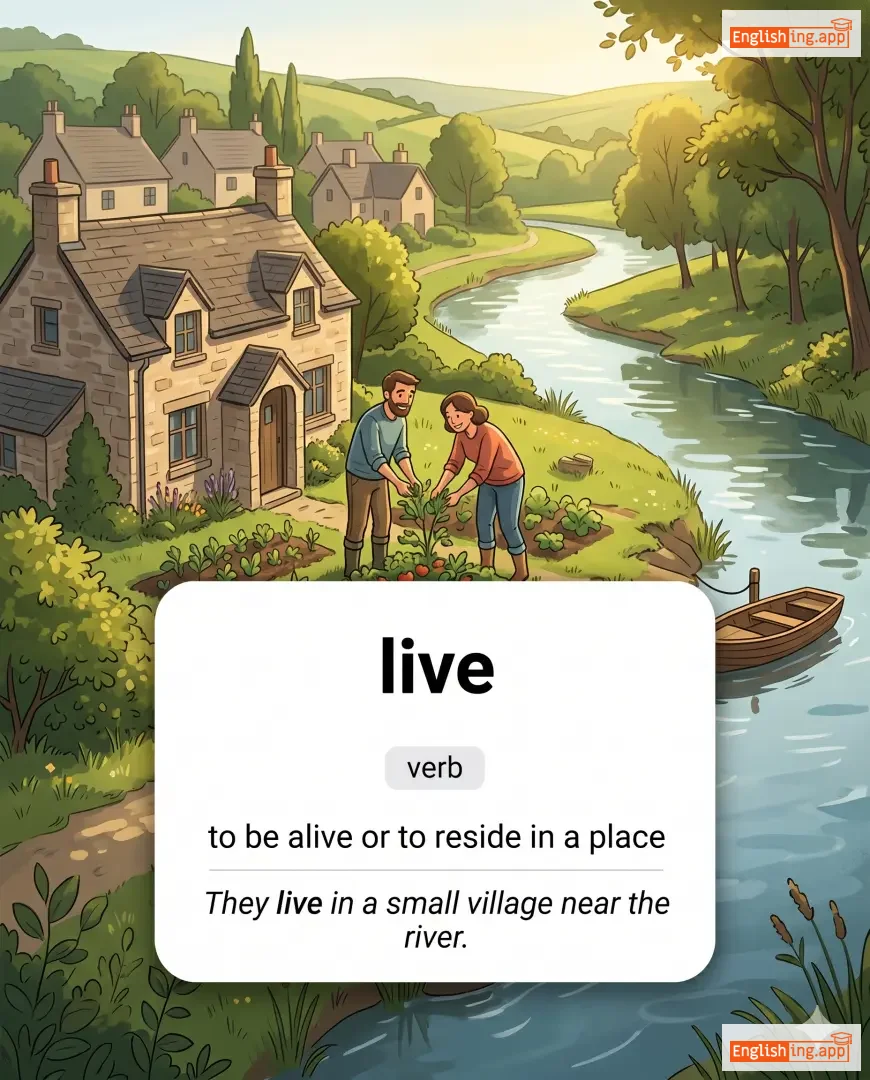
to be alive or to reside in a place
••••••
|
They live in a small village near the river.
他们住在河边的一个小村庄里。
••••••
|
他们住在河边的一个小村庄里。
Tāmen zhù zài hé biān de yī gè xiǎo cūnzhuāng lǐ.
••••••
|
live and let live
活着让活着
••••••
|
to tolerate others' behavior and expect them to tolerate yours
••••••
|
活着让活着
Huózhe ràng huózhe
••••••
|
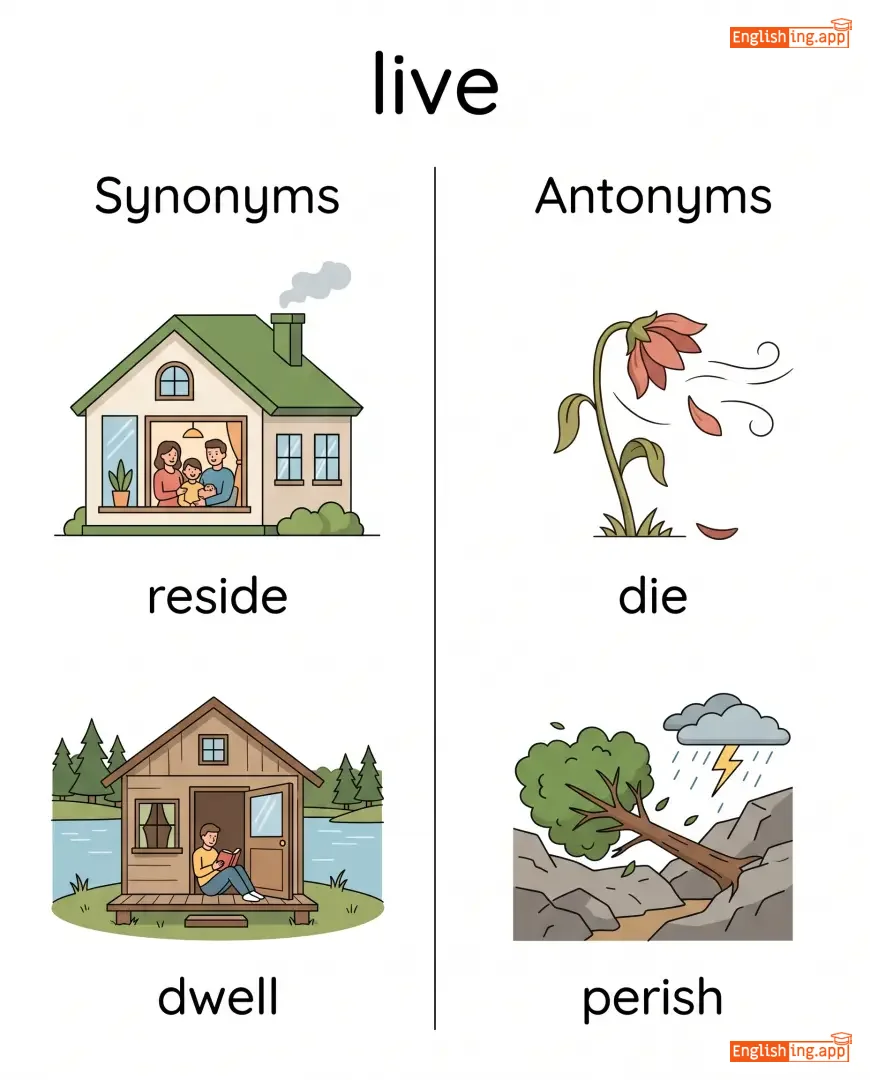
reside, dwell, exist, inhabit, survive
••••••
|
die, perish
••••••
|
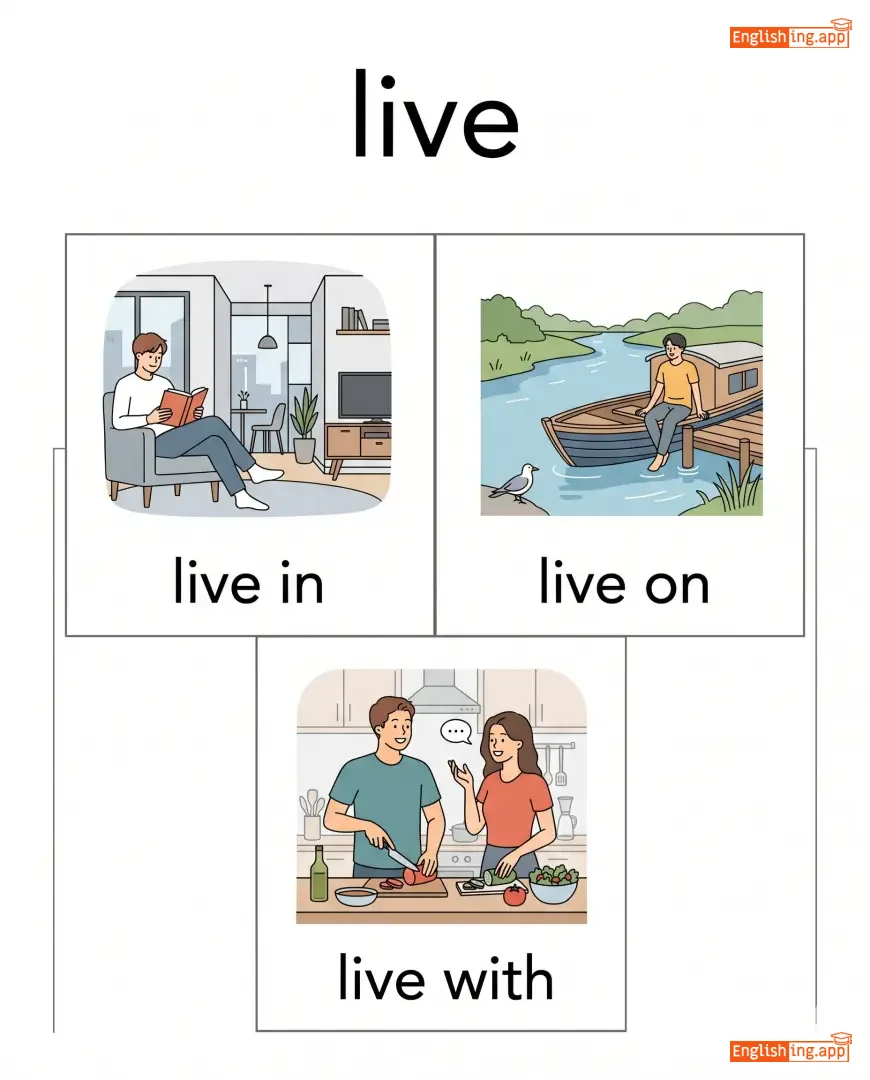
live in, live on, live with, live happily, live abroad
••••••
|
Live意味着生活,就像看'直播',看到的是实时的生活。
••••••
|
|
#11342
📚
|
/ˈlɪtərɛri/
adjective
(文学的)
••••••
|
- •••••• |
文学的
wenxuede
••••••
|
- •••••• | - •••••• | - •••••• | - •••••• |
concerning the writing, study, or content of literature
••••••
|
She is a well-known figure in the literary world.
她是文学界的知名人物。
••••••
|
她是文学界的知名人物。
Tā shì wénxué jiè de zhīmíng rénwù.
••••••
|
literary genius
文学天才
••••••
|
a person with outstanding creative talent in literature
••••••
|
文学天才
wénxué tiāncái
••••••
|
bookish, cultured, scholarly, learned
••••••
|
illiterate, uneducated
••••••
|
literary world, literary work, literary career, literary criticism
••••••
|
📚 Literary意味着文学的–来自文学。
••••••
|
|
#11343
🔍
|
/ˈlɪtərəli/
adverb
(字面上)
••••••
|
- •••••• |
字面上
zimian shang
••••••
|
- •••••• | - •••••• | - •••••• | - •••••• |
in a literal manner or sense; exactly
••••••
|
He was literally running for three hours without stopping. |
他字面上跑了三个小时没有停下来。
Ta zimian shang pao le san ge xiaoshi mei you ting xiala lai.
••••••
|
- •••••• | - •••••• | - •••••• |
exactly, precisely, actually, really
••••••
|
figuratively, metaphorically
••••••
|
literally true, literally impossible, literally happened
••••••
|
字面上意味着字面意义 – 就像说'准确'!
••••••
|
|
#11344
👂
|
/ˈlɪs.ən/
verb
(lìsēn)
••••••
|
|
听
tīng
••••••
|
listened
lìsēnd
••••••
|
listened
lìsēnd
••••••
|
listens
lìsēns
••••••
|
listening
lìsēnɪnɡ
••••••
|
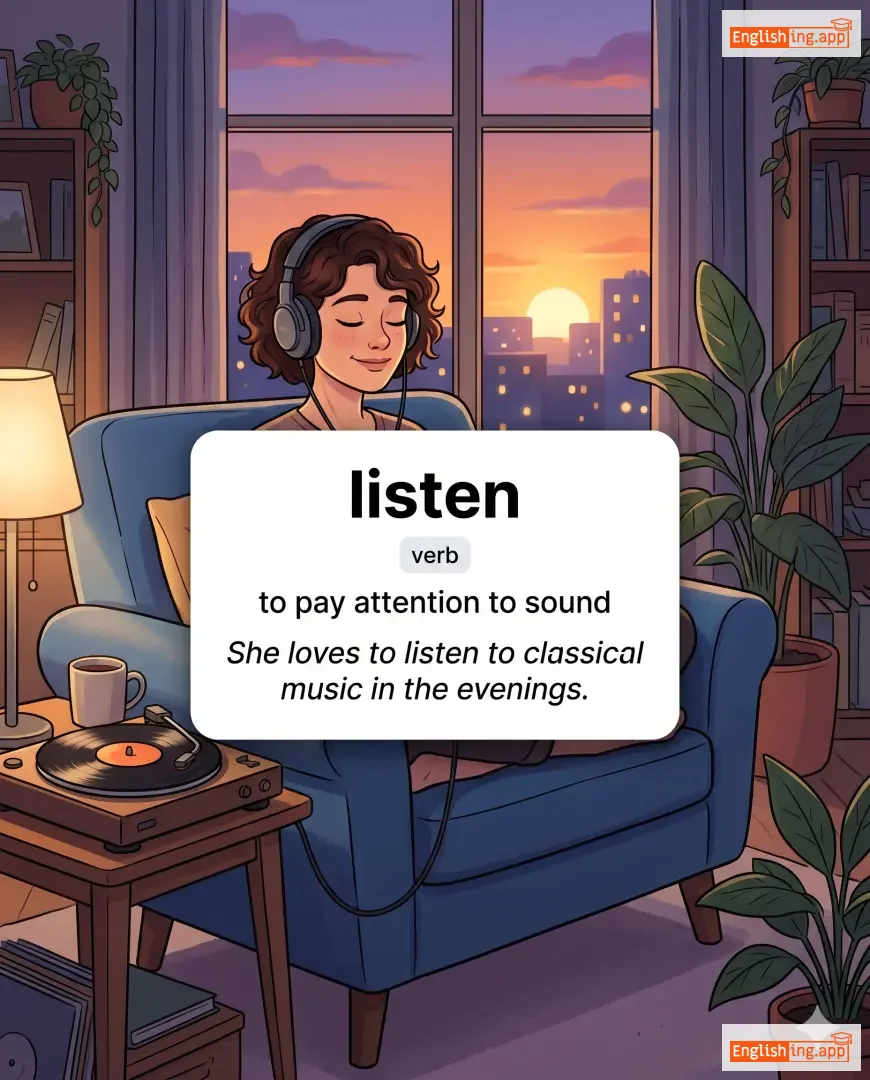
to pay attention to sound
••••••
|
She loves to listen to classical music in the evenings.
她喜欢在晚上听古典音乐。
••••••
|
她喜欢在晚上听古典音乐。
Tā xǐhuān zài wǎnshàng tīng gǔdiǎn yīnyuè.
••••••
|
listen up
注意听
••••••
|
used to tell people to pay attention
••••••
|
注意听
zhùyì tīng
••••••
|
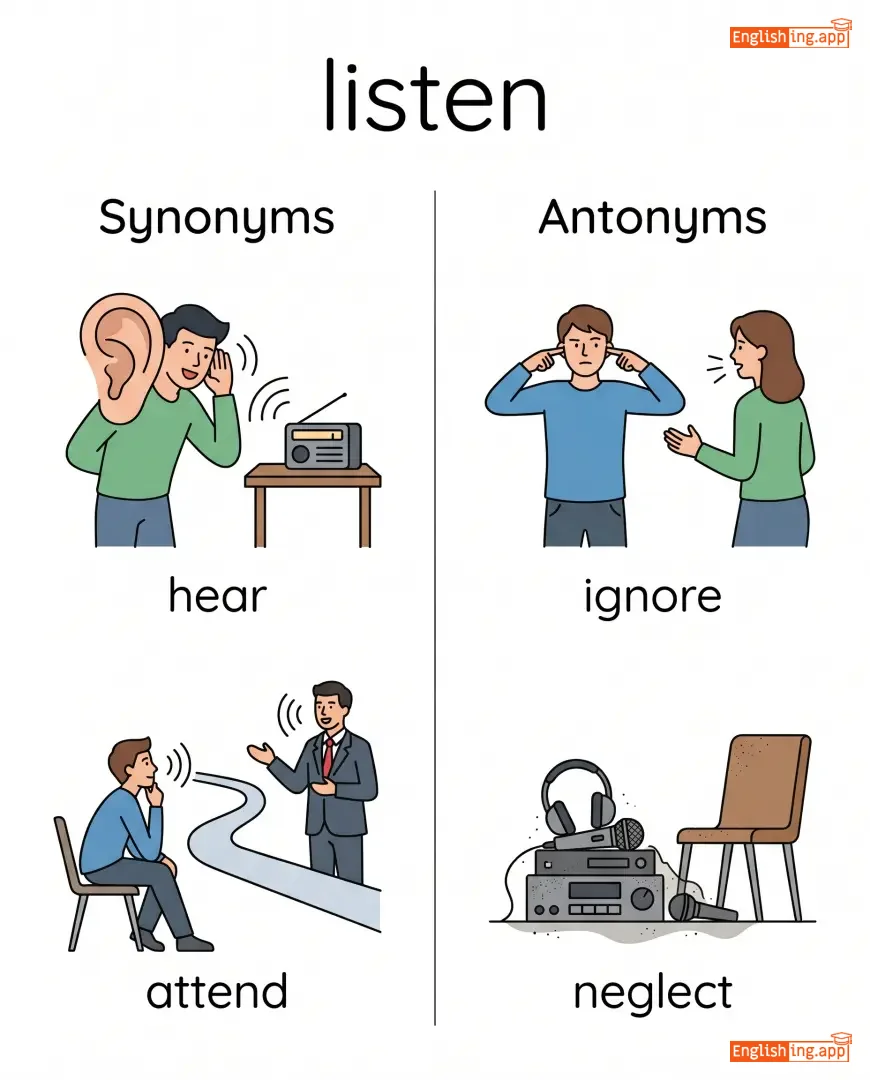
hear, attend, heed, concentrate, pay attention
••••••
|
ignore, neglect, disregard
••••••
|
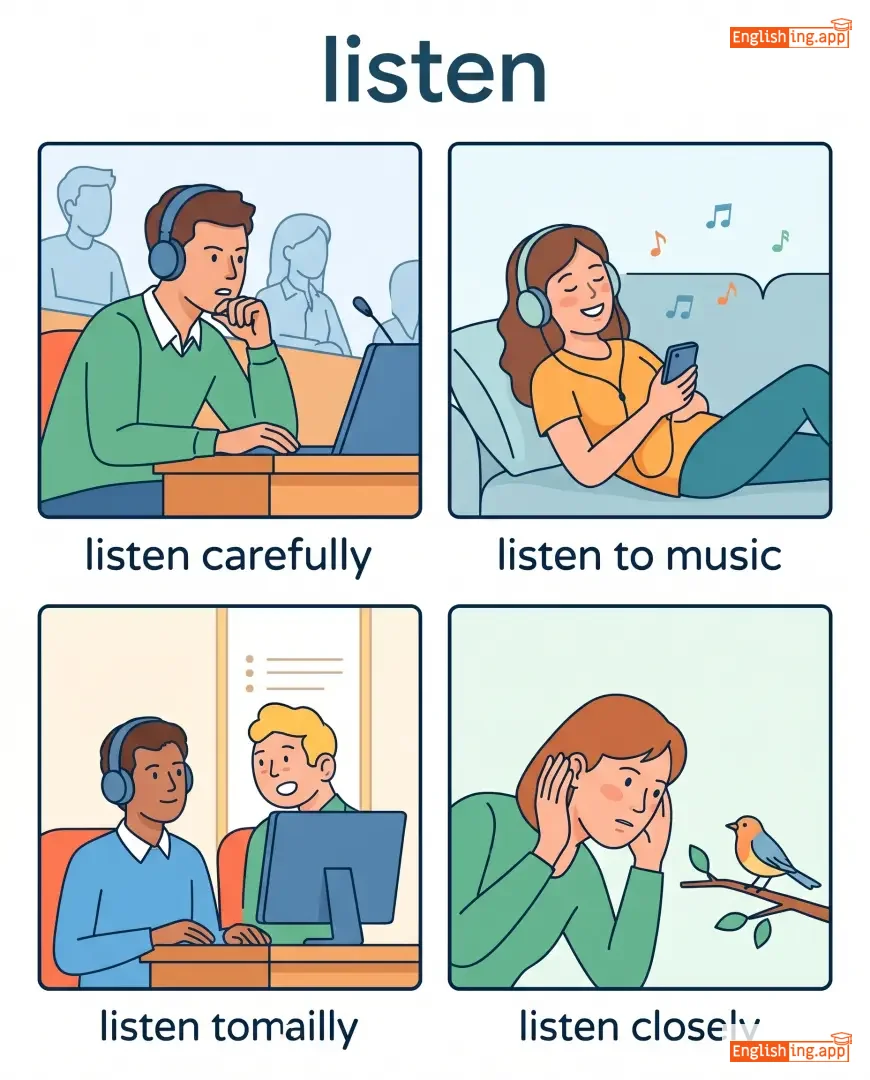
listen carefully, listen to music, listen closely, listen in
••••••
|
👂 Listen 意思是听 – 听妈妈说话!
••••••
|
|
#11345
👄
|
/lɪp/
noun
(lip)
••••••
|
- •••••• |
嘴唇
zuǐchún
••••••
|
- •••••• | - •••••• | - •••••• | - •••••• |
either of the two soft edges of the mouth
••••••
|
She smiled and bit her lower lip nervously. |
她微笑着紧张地咬了下嘴唇。
Tā wéixiào zhe jǐnzhāng de yǎo le xià zuǐchún.
••••••
|
bite your lip |
to keep from saying something or showing emotion
••••••
|
咬嘴唇
yǎo zuǐchún
••••••
|
mouth edge, rim, border, edge
••••••
|
interior, inside
••••••
|
lower lip, upper lip, lip balm, lip movement
••••••
|
👄 Lip 代表嘴唇 – 嘴唇上抹口红,别忘记了!
••••••
|
|
#11346
🔗
|
/lɪŋk/
noun, verb
(链接)
••••••
|
- •••••• |
连接
lianjie
••••••
|
linked
链接
••••••
|
linked
链接
••••••
|
links
链接
••••••
|
linking
链接
••••••
|
a connection between two things; to connect or associate
••••••
|
The article includes a link to the official website.
文章包含指向官方网站的链接。
••••••
|
文章包含指向官方网站的链接。
wenzhang baokuo zhixiang guanfang wangzhan de lianjie.
••••••
|
missing link
缺失的环节
••••••
|
an important connection that is needed to complete something
••••••
|
缺失的环节
queshi de huanjie
••••••
|
connection, tie, relation, bond, association
••••••
|
separation, break, disconnection
••••••
|
strong link, direct link, missing link, link to
••••••
|
🔗 链接意味着连接,和英文中的 'link' 相同。
••••••
|
|
#11347
📏
|
/laɪn/
noun, verb
(lài'n)
••••••
|
- •••••• |
线
xian
••••••
|
lined
lái'nd
••••••
|
lined
lái'nd
••••••
|
lines
lài'nz
••••••
|
lining
làiing
••••••
|
A long narrow mark or band; a row of people or things; to cover the inside surface of something.
••••••
|
People waited in a long line outside the theater.
人们在剧院外排着长队等候。
••••••
|
人们在剧院外排着长队等候。
Renmen zai juyuan wai paizhe changdui denghou.
••••••
|
toe the line
遵守规则
••••••
|
to conform to rules or standards
••••••
|
遵守规定
zunshou guiding
••••••
|
row, queue, streak, boundary, stripe
••••••
|
gap, emptiness, space
••••••
|
straight line, waiting line, line up, draw a line
••••••
|
线:记住排队在电影中的顺序!
••••••
|
|
#11348
⏳
|
/ˈlɪmɪtɪd/
adjective
(限制的)
••••••
|
- •••••• |
有限的
youxian de
••••••
|
- •••••• | - •••••• | - •••••• | - •••••• |
Restricted in size, amount, or extent; not great in number or ability.
••••••
|
Tickets for the concert are limited. |
音乐会的票是有限的。
Yinyuehui de piao shi youxian de.
••••••
|
limited edition |
a product produced in small quantities and available for a short time
••••••
|
限量版
xianliang ban
••••••
|
restricted, finite, scarce, confined
••••••
|
unlimited, abundant, infinite
••••••
|
limited access, limited time, limited resources, limited edition
••••••
|
Limited意味着有限,如手机套餐中的有限流量。
••••••
|
|
#11349
🚧
|
/ˈlɪmɪt/
noun, verb
(限制)
••••••
|
- •••••• |
限制
xianzhi
••••••
|
limited
有限
••••••
|
limited
有限
••••••
|
limits
限制
••••••
|
limiting
限制
••••••
|
A point or level beyond which something does not or may not extend; to restrict.
••••••
|
You should limit the amount of sugar you eat.
你应该限制你吃的糖的数量。
••••••
|
你应该限制你吃的糖的数量。
Ni yinggai xianzhi ni chi de tang de shuliang.
••••••
|
know your limits
了解你的极限
••••••
|
to understand your own abilities or boundaries
••••••
|
了解你的极限
liaojie nide jixian
••••••
|
restriction, boundary, cap, end, maximum
••••••
|
freedom, allowance, expansion
••••••
|
set a limit, beyond the limit, speed limit, limit access
••••••
|
Limit意味着限制,就像考试中的字数限制。
••••••
|
|
#11350
⬅️
|
/lɛft/
adjective, noun, adverb, verb (past tense of leave)
(left)
••••••
|
- •••••• |
左
zuo
••••••
|
- •••••• | - •••••• | - •••••• | - •••••• |
on or towards the side of the body that is to the west when facing north
••••••
|
He turned left at the intersection. |
他在交叉口左转。
ta zai jiaochakou zuo zhuan.
••••••
|
out of left field |
something surprising or unexpected
••••••
|
令人惊讶或意外的事情
ling ren jingya huo yiwai de shiqing
••••••
|
port, remaining, gone, departed
••••••
|
right, present
••••••
|
left side, left hand, turn left, left over
••••••
|
左是左,右就是右
••••••
|
|
#11351
💡
|
/laɪt/
noun, verb, adjective
(lait)
••••••
|
|
光
guang
••••••
|
lit
lit
••••••
|
lit
lit
••••••
|
lights
lits
••••••
|
lighting
laiting
••••••
|
The natural agent that makes things visible; to illuminate or make something start burning.
••••••
|
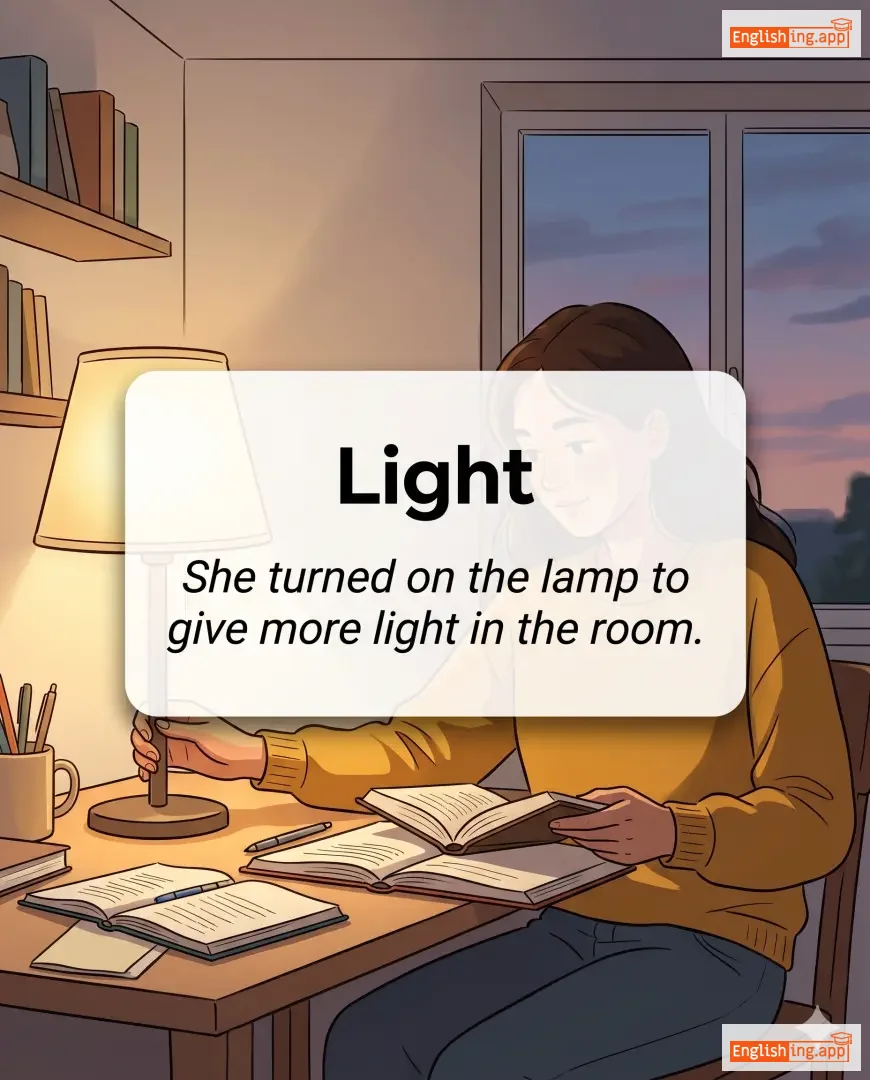
She turned on the lamp to give more light in the room.
她打开灯以提供更多的光线。
••••••
|
她打开灯以提供更多的光线。
Tā dǎkāi dēng yǐ tígōng gèng duō de guāngxiàn.
••••••
|
see the light
看到光
••••••
|
to finally understand or realize something clearly
••••••
|
最终明白
zuìzhōng míngbái
••••••
|
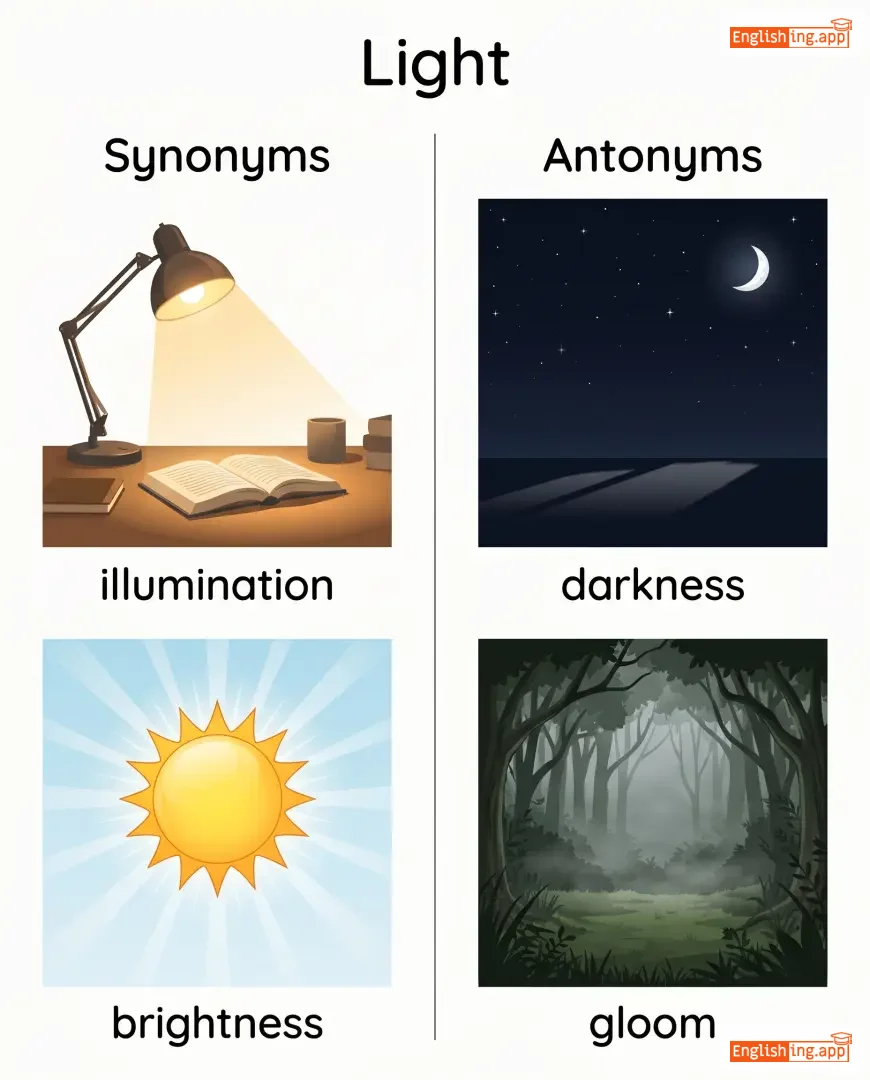
illumination, brightness, radiance, glow, shine
••••••
|
darkness, gloom, shadow
••••••
|
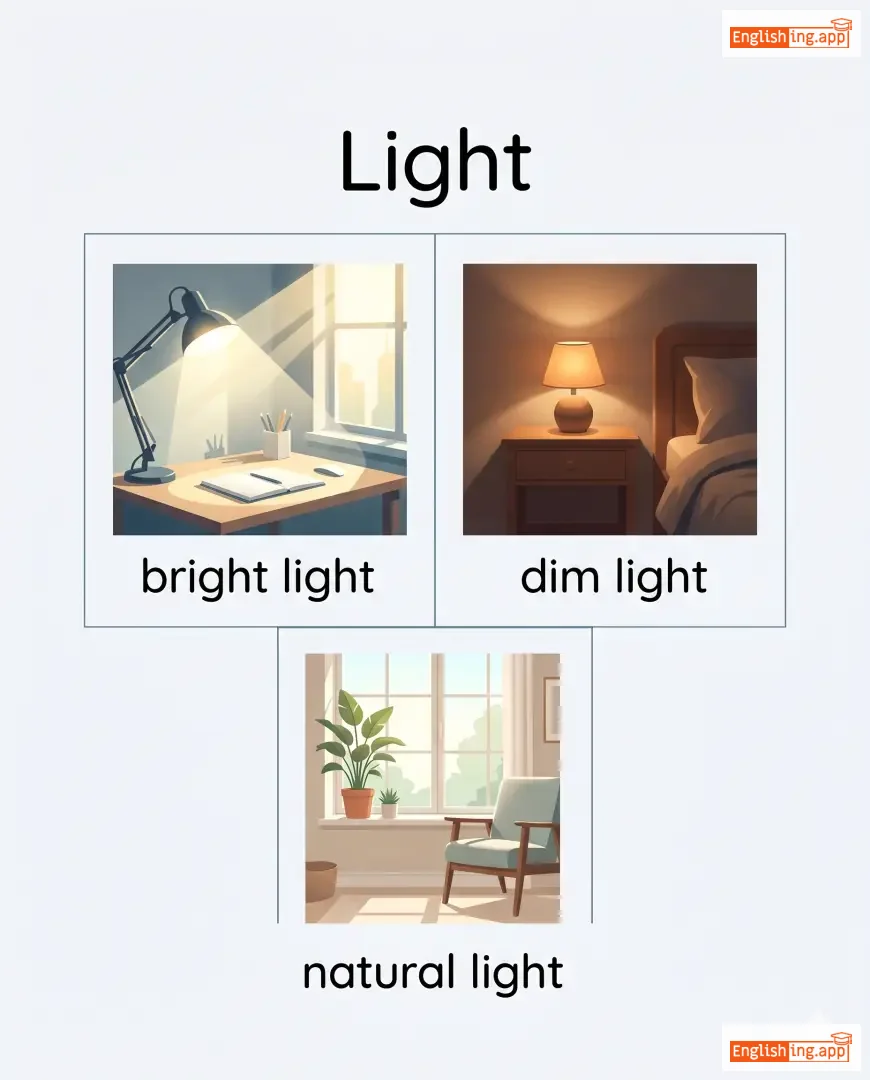
bright light, dim light, natural light, artificial light
••••••
|
光代表照亮,当光亮起来,黑暗就消失了。
••••••
|
|
#11352
🛗
|
/lɪft/
verb
(lɪft)
••••••
|
- •••••• |
举起
juqi
••••••
|
lifted
lɪftɪd
••••••
|
lifted
lɪftɪd
••••••
|
lifts
lɪfts
••••••
|
lifting
lɪftɪŋ
••••••
|
To raise something to a higher position or level.
••••••
|
He lifted the heavy box with ease.
他轻松地抬起了重箱子。
••••••
|
他轻松地抬起了重箱子。
Ta qingsong de taqi le zhong xiangzi.
••••••
|
lift your spirits
提升你的精神
••••••
|
To make someone feel happier or more cheerful.
••••••
|
提升精神
Tisheng jingshen
••••••
|
raise, elevate, hoist, boost, uplift
••••••
|
lower, drop
••••••
|
lift weights, lift a ban, lift up, lift out
••••••
|
举起重物的动作,也可以提升精神。
••••••
|
|
#11353
🏖️
|
/ˈlaɪf.staɪl/
noun
(laifstail)
••••••
|
- •••••• |
生活方式
shenghuo fangshi
••••••
|
- •••••• | - •••••• | - •••••• | - •••••• |
The way in which a person or group lives, including habits, attitudes, and possessions.
••••••
|
A healthy lifestyle includes regular exercise and a balanced diet.
健康的生活方式包括定期锻炼和均衡饮食。
••••••
|
健康的生活方式包括定期锻炼和均衡饮食。
Jiankang de shenghuo fangshi baokuo dingqi duanlian he junheng yinshi.
••••••
|
lavish lifestyle
奢华的生活方式
••••••
|
A luxurious way of living with expensive habits.
••••••
|
奢华的生活方式
Shehua de shenghuo fangshi
••••••
|
way of life, living, habits, routine, manner
••••••
|
hardship, poverty
••••••
|
modern lifestyle, healthy lifestyle, urban lifestyle, simple lifestyle
••••••
|
Lifestyle = life + style, 生活的方式。
••••••
|
|
#11354
🌱
|
/laɪf/
noun
(lái fú)
••••••
|
- •••••• |
生命
shengming
••••••
|
- •••••• | - •••••• | - •••••• | - •••••• |
The existence of an individual human being or animal.
••••••
|
Life is full of challenges and opportunities. |
生命充满了挑战和机会。
Shēngmìng chōngmǎnle tiǎozhàn hé jīhuì.
••••••
|
circle of life |
The natural cycle of birth, growth, death, and renewal.
••••••
|
生命的循环
Shēngmìng de xúnhuán
••••••
|
existence, living, vitality, being, survival
••••••
|
death, end
••••••
|
daily life, life expectancy, life experience, life span
••••••
|
生命是我们每个人的故事,永不停歇。
••••••
|
|
#11355
🤥
|
/laɪ/
verb
(lai)
••••••
|
|
说谎
shuo huang
••••••
|
lied
laid
••••••
|
lied
laid
••••••
|
lies
laiz
••••••
|
lying
laing
••••••
|
To make a false statement with the intention to deceive.
••••••
|
He lied about his age to get the job.
hi laid abaut his eyj tu get de job.
••••••
|
他为了得到这份工作,说谎了自己的年龄。
Ta wei le dedao zhe fen gongzuo, shuo huang le ziji de nianling.
••••••
|
white lie
whaait lai
••••••
|
A harmless or small lie told to avoid hurting someone.
••••••
|
善意的谎言
Shan yi de huangyan
••••••
|
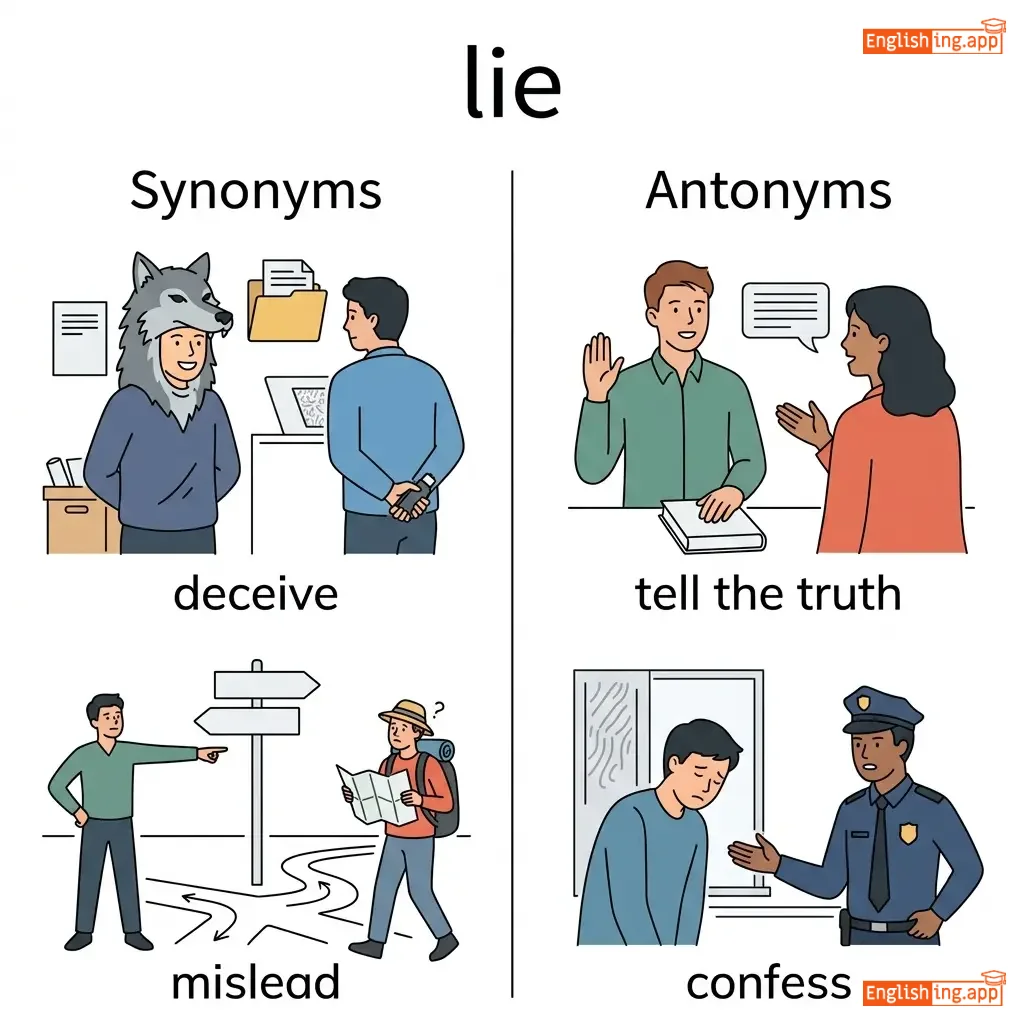
deceive, mislead, fib, falsify, invent
••••••
|
tell the truth, confess
••••••
|
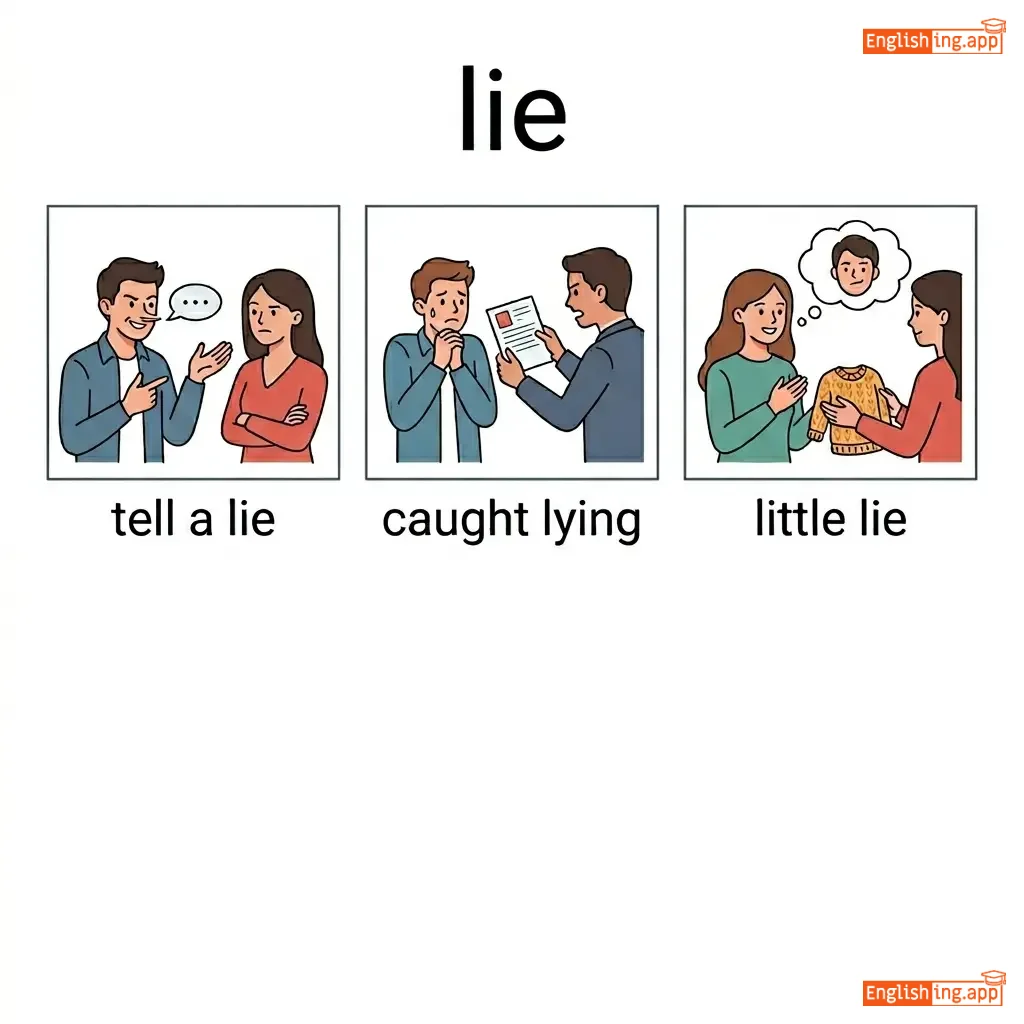
tell a lie, caught lying, little lie, big lie
••••••
|
Lie (说谎) 就是说不是真的事情。
••••••
|
|
#11356
📚
|
/ˈlaɪ.brɛr.i/
noun
(lái.bù.liō tè.kè)
••••••
|
- •••••• |
图书馆
tú shū guǎn
••••••
|
- •••••• | - •••••• | - •••••• | - •••••• |
A building or room containing collections of books, periodicals, and sometimes other materials for people to read or borrow.
••••••
|
She spent the afternoon studying in the library. |
她在图书馆度过了下午。
Tā zài tú shū guǎn dùguòle xiàwǔ.
••••••
|
library of knowledge |
A large collection of information or wisdom.
••••••
|
知识宝库
zhīshì bǎokù
••••••
|
book collection, archive, repository, reading room, information center
••••••
|
bookstore, marketplace
••••••
|
public library, digital library, library card, library staff
••••••
|
图书馆(Tú shū guǎn)- 就是一个包含大量书籍的地方。
••••••
|
|
#11357
✉️
|
/ˈlɛtər/
noun
(lèitè)
••••••
|
- •••••• |
信
xìn
••••••
|
- •••••• | - •••••• | - •••••• | - •••••• |
A written or printed message sent to someone.
••••••
|
He wrote a letter to his friend.
他写了一封信给他的朋友。
••••••
|
他写了一封信给他的朋友。
Tā xiěle yī fēng xìn gěi tā de péngyǒu.
••••••
|
to the letter
按字面意思
••••••
|
exactly as instructed or prescribed
••••••
|
按字面意思
àn zìmiàn yìsi
••••••
|
note, message, mail, correspondence
••••••
|
speech, silence
••••••
|
write a letter, love letter, official letter, letter of recommendation
••••••
|
Letter ✉️ 意味着信 — 邮差送来信件。
••••••
|
|
#11358
✅
|
/lɛt/
verb
(let)
••••••
|
|
让
rang
••••••
|
let
let
••••••
|
let
let
••••••
|
lets
lets
••••••
|
letting
letting
••••••
|
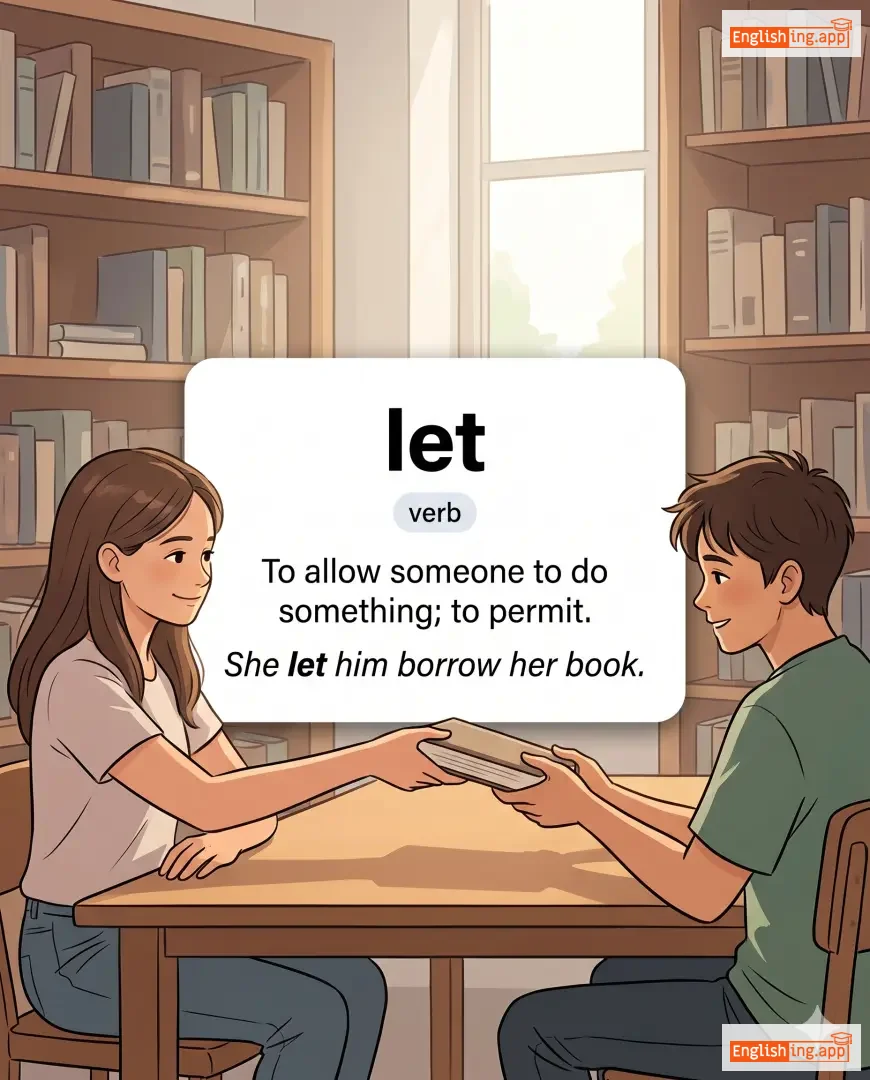
To allow someone to do something; to permit.
••••••
|
She let him borrow her book.
She let him borrow her book.
••••••
|
她让他借了她的书。
Ta rang ta jie le ta de shu.
••••••
|
let it be
let it be
••••••
|
accept a situation without trying to change it
••••••
|
顺其自然
shun qi zi ran
••••••
|
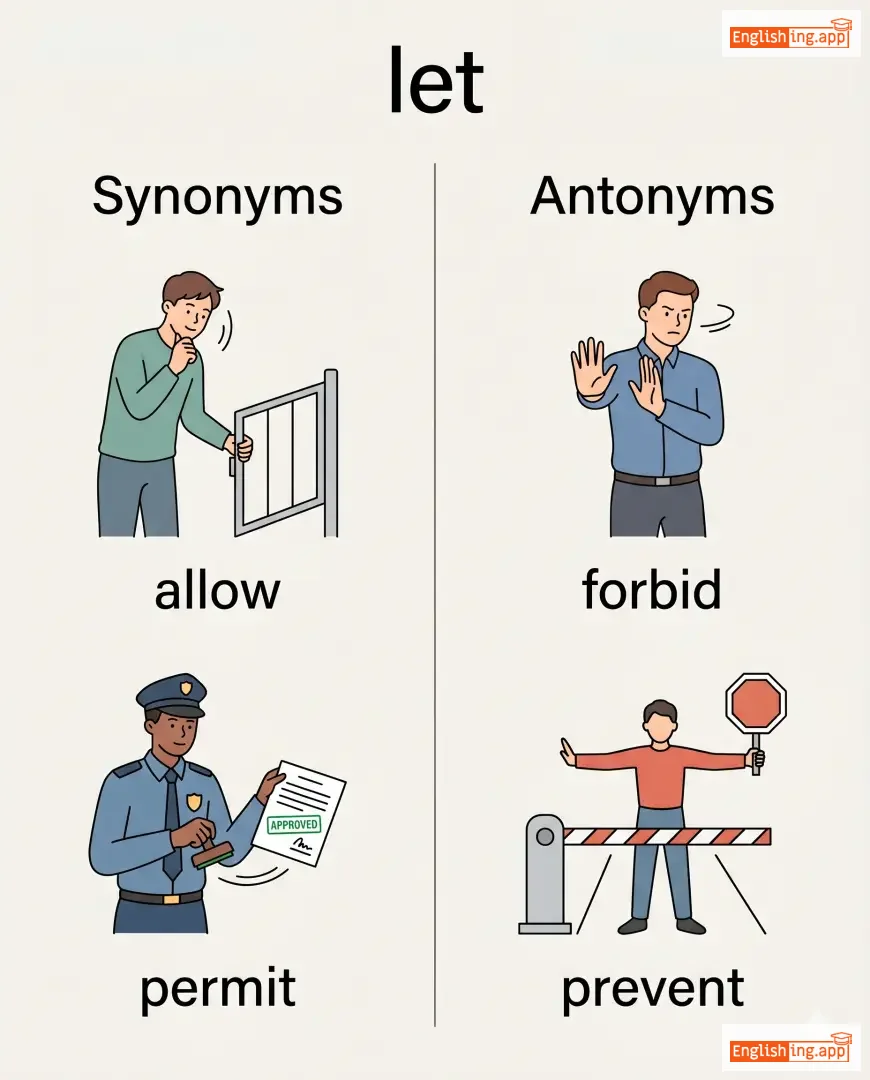
allow, permit, enable, grant
••••••
|
forbid, prevent, refuse
••••••
|
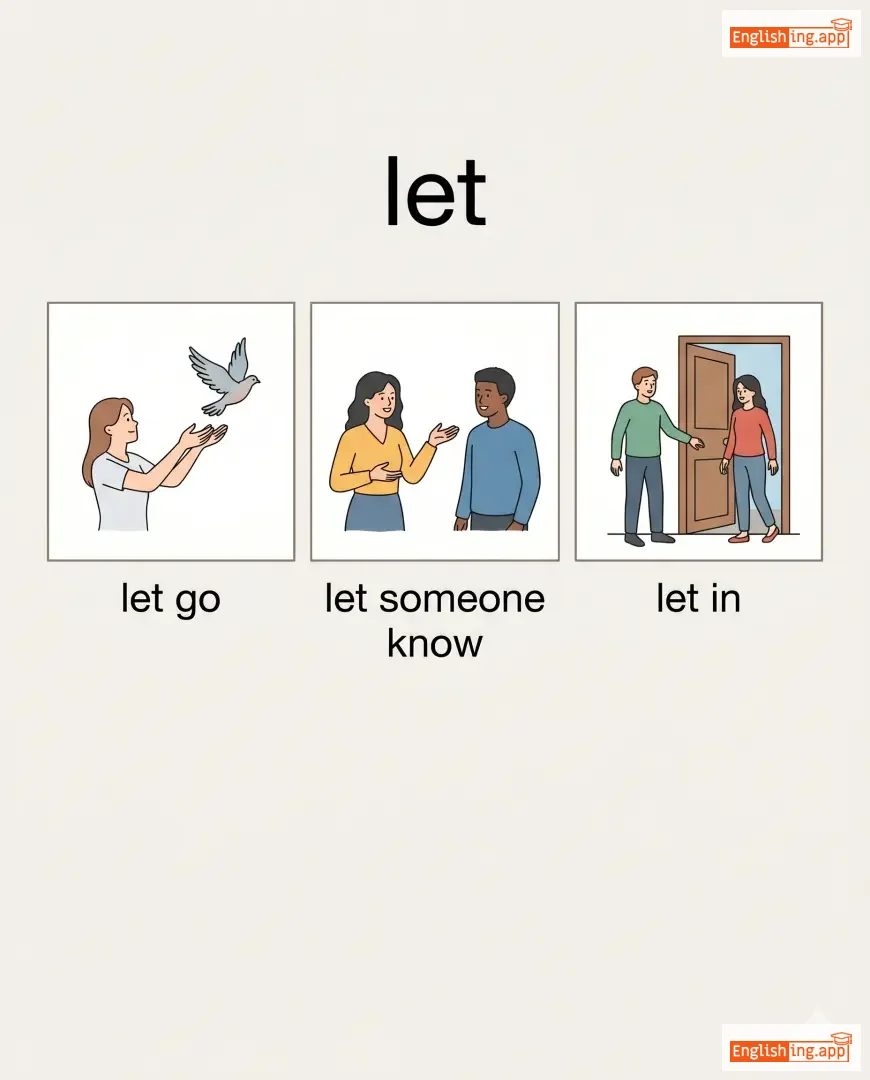
let go, let someone know, let in, let out
••••••
|
LET意味着允许 — 妈妈说LET him go,意思是让他走 ✅
••••••
|
|
#11359
📚
|
/ˈlɛsən/
noun
(lèxùn)
••••••
|
- •••••• |
课
ke
••••••
|
- •••••• | - •••••• | - •••••• | - •••••• |
A unit of teaching or something learned through experience.
••••••
|
The teacher explained the lesson clearly. |
老师清楚地解释了这节课。
Laoshi qingchu de jieshi le zhe jie ke.
••••••
|
learn a lesson |
to gain knowledge or understanding from a mistake or event
••••••
|
学到一课
xue dao yi ke
••••••
|
class, session, lecture, instruction
••••••
|
ignorance, neglect
••••••
|
math lesson, life lesson, teach a lesson, learn a lesson
••••••
|
Lesson意味着课 📚 — 学习一课就是学到新的东西。
••••••
|
|
#11360
➖
|
/lɛs/
adjective/adverb
(les)
••••••
|
- •••••• |
更少
gèng shǎo
••••••
|
- •••••• | - •••••• | - •••••• | - •••••• |
A smaller amount; not as much.
••••••
|
She spends less money than her brother. |
她花的钱比她哥哥少。
Tā huā de qián bǐ tā gēge shǎo.
••••••
|
less is more |
simplicity is more effective than complexity
••••••
|
少即是多
shǎo jí shì duō
••••••
|
fewer, reduced, diminished, lower
••••••
|
more, greater, higher
••••••
|
less time, less money, less important, less than
••••••
|
LESS意味着更少 — 更少的钱,更多的储蓄。
••••••
|
|
#11361
📏
|
/lɛŋkθ/
noun
(lɛŋkθ)
••••••
|
- •••••• |
长度
changdu
••••••
|
- •••••• | - •••••• | - •••••• | - •••••• |
The measurement or extent of something from end to end.
••••••
|
The length of the bridge is two kilometers. |
桥的长度是两公里。
Qiao de changdu shi liang gongli.
••••••
|
at length |
in detail; thoroughly
••••••
|
详细地
xiangxi de
••••••
|
extent, distance, measurement, span, stretch
••••••
|
shortness, brevity
••••••
|
length of time, full length, hair length, considerable length
••••••
|
Length意味着长度 — 用长度来衡量某物的长度。
••••••
|
|
#11362
🍋
|
/ˈlɛmən/
noun
(檸檬)
••••••
|
- •••••• |
柠檬
níngméng
••••••
|
- •••••• | - •••••• | - •••••• | - •••••• |
a yellow citrus fruit with a sour taste
••••••
|
She added lemon to the tea for extra flavor. |
她在茶里加了柠檬以增加风味。
Tā zài chá lǐ jiāle níngméng yǐ zēngjiā fēngwèi.
••••••
|
when life gives you lemons |
make the best out of a bad situation
••••••
|
生活给你柠檬时
shēnghuó gěi nǐ níngméng shí
••••••
|
citrus, lime, fruit, zest
••••••
|
sweet, sugar
••••••
|
lemon juice, lemon tea, lemon slice, fresh lemon
••••••
|
Lemon 代表柠檬,柠檬在茶中使其变酸。
••••••
|
|
#11363
⚖️
|
/ˈliːɡəl/
adjective
(合法)
••••••
|
|
合法的
hefa de
••••••
|
- •••••• | - •••••• | - •••••• | - •••••• |
relating to the law
••••••
|
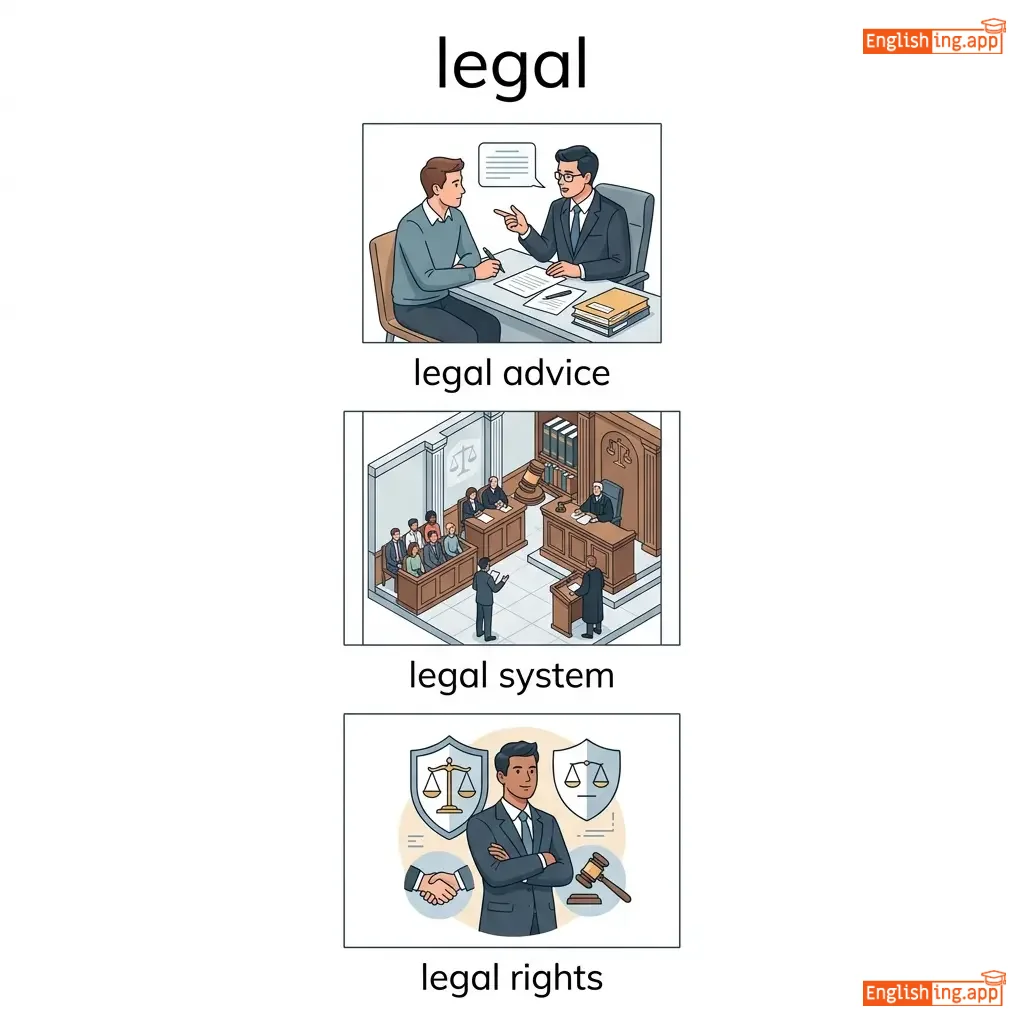
He sought legal advice before signing the contract.
他在签署合同之前寻求法律咨询。
••••••
|
他在签署合同之前寻求法律咨询。
Tā zài qiānshǔ hétong zhīqián xúnqiú fǎlǜ zīxún.
••••••
|
legal loophole
法律漏洞
••••••
|
a gap or ambiguity in the law that allows someone to avoid following it
••••••
|
法律漏洞
fǎlǜ lòudòng
••••••
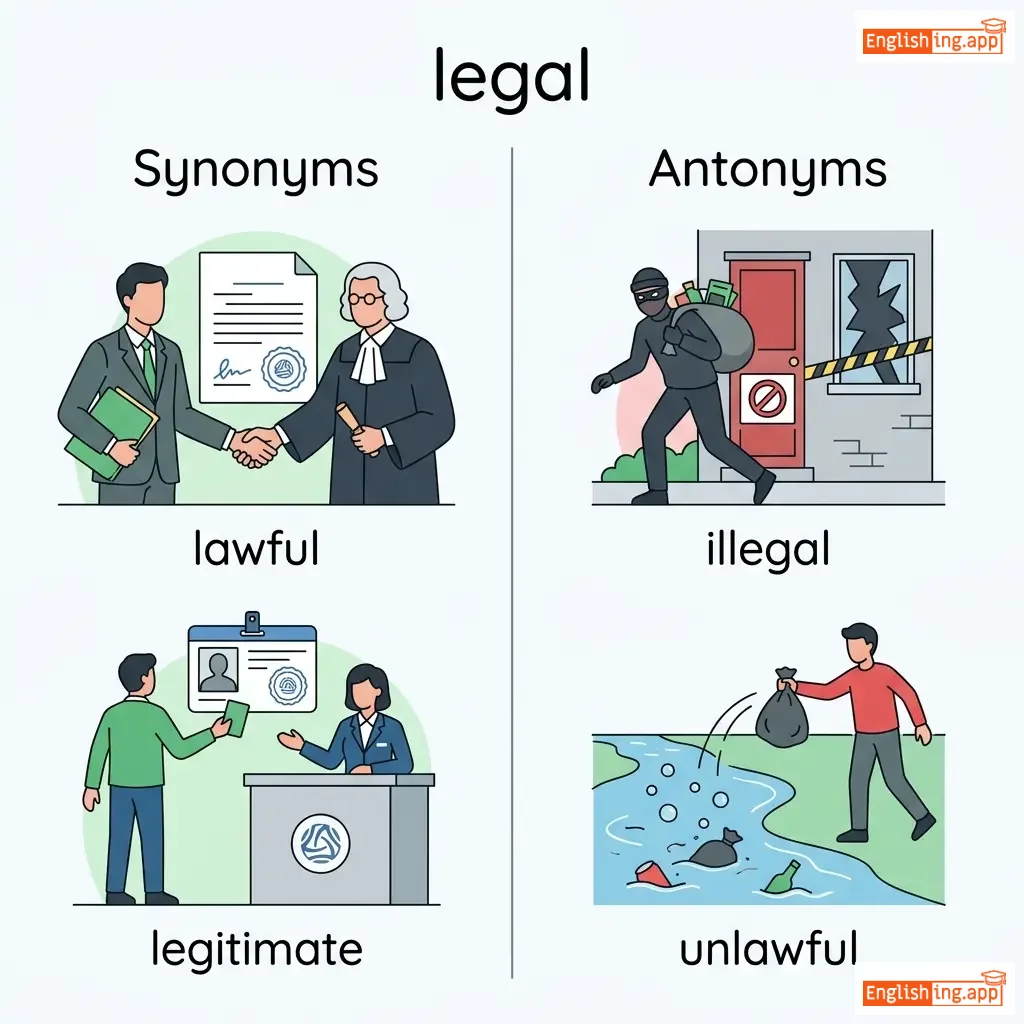
|
lawful, legitimate, valid, authorized
••••••
|
illegal, unlawful, illicit
••••••
|
legal advice, legal system, legal rights, legal action
••••••
|
Legal表示合法的,像合法的文件一样有效。
••••••
|
|
#11364
🦵
|
/lɛɡ/
noun
(leg)
••••••
|
- •••••• |
腿
tui
••••••
|
- •••••• | - •••••• | - •••••• | - •••••• |
one of the limbs on which a person or animal walks and stands
••••••
|
He injured his leg while playing football.
他在踢足球时伤到了腿。
••••••
|
他在踢足球时伤到了腿。
Ta zai ti zuqiu shi shangdao le tui.
••••••
|
stretch your legs
伸展双腿
••••••
|
to walk around after sitting for a long time
••••••
|
长时间坐着后走动
chang shijian zuozhe hou zoudong
••••••
|
limb, shank, appendage, extremity
••••••
|
arm, wing
••••••
|
leg injury, leg pain, leg muscles, broken leg
••••••
|
Leg 代表腿,在足球中'长腿'是指快速奔跑的能力。
••••••
|
Vocabulary Quiz
Test your vocabulary by matching words with their translations or meanings.
Login to take the quiz
Comments (0)
Share your thoughts and join the discussion.
Join the discussion by logging in
Login to CommentNo comments yet
Be the first to share your thoughts!