

Swipe left or right, or use the buttons. Tap image to zoom.
例句翻译
单词
Lesson 341Lesson 341 - 遮罩切换
|
表情符号
|
单词 | Images | 翻译 | 过去时 | 过去分词 | 第三人称单数 | 动名词 | 含义 | 例句 | 例句翻译 | 示例表达 | 示例表达含义 | 示例表达翻译 | 同义词 | 反义词 | 搭配词 | 助记符 |
|---|---|---|---|---|---|---|---|---|---|---|---|---|---|---|---|---|---|
|
#10195
🧼
|
/sɔɪld/
adjective
(索伊尔德)
••••••
|
- •••••• |
脏的
zang de
••••••
|
- •••••• | - •••••• | - •••••• | - •••••• |
dirty or stained; not clean
••••••
|
His clothes were soiled after playing in the mud. |
他在泥巴里玩后,衣服弄脏了。
Ta zai niba li wan hou, yifu nong zang le.
••••••
|
- •••••• | - •••••• | - •••••• |
dirty, stained, filthy, unclean, tainted
••••••
|
clean, spotless, pure
••••••
|
soiled clothes, soiled hands, soiled reputation, heavily soiled
••••••
|
Soil意思是土壤,当你掉进土里时,衣服变得脏了(脏的)。
••••••
|
|
#10196
🛑
|
/stɑːp/
verb
(停)
••••••
|
- •••••• |
停止
tingzhi
••••••
|
stopped
停止
••••••
|
stopped
停止
••••••
|
stops
停止
••••••
|
stopping
停止
••••••
|
to bring to an end or cause to cease
••••••
|
Please stop talking while I’m working.
请在我工作时停止讲话。
••••••
|
请在我工作时停止讲话。
Qing zai wo gongzuo shi tingzhi jianghua.
••••••
|
stop at nothing
不择手段
••••••
|
to do anything, no matter how extreme, to achieve a goal
••••••
|
不择手段
Bu ze shou duan
••••••
|
halt, cease, end, discontinue, pause
••••••
|
continue, start, proceed
••••••
|
stop sign, stop talking, stop doing, stop immediately
••••••
|
🛑 在红灯停下,意味着停止 → 停止表示停止
••••••
|
|
#10197
🤐
|
/ˈstaɪfəld/
verb
(staifuld)
••••••
|
- •••••• |
压制
yazhì
••••••
|
stifled
staifuld
••••••
|
stifled
staifuld
••••••
|
stifles
staifols
••••••
|
stifling
staifling
••••••
|
to suppress, hold back, or prevent something from happening
••••••
|
He stifled a laugh during the serious meeting.
他在严肃的会议中压制了笑声。
••••••
|
他在严肃的会议中压制了笑声。
Tā zài yánsù de huìyì zhōng yāzhìle xiàoshēng.
••••••
|
- •••••• | - •••••• | - •••••• |
suppress, smother, restrain, hold back, repress
••••••
|
release, express, allow
••••••
|
stifled laugh, stifled cry, stifled yawn, stifled growth
••••••
|
压制意味着 stifled → 压制笑声
••••••
|
|
#10198
❓
|
/ˈsʌmθɪŋ/
abbreviation (noun/pronoun)
(es-te-āi-chī)
••••••
|
- •••••• |
某事
mǒu shì
••••••
|
- •••••• | - •••••• | - •••••• | - •••••• |
abbreviation for 'something'
••••••
|
Can you give me sth. to write with? |
你能给我写字的东西吗?
Nǐ néng gěi wǒ xiě zì de dōngxi ma?
••••••
|
- •••••• | - •••••• | - •••••• |
something, item, object, thing
••••••
|
nothing, none
••••••
|
sth important, sth to eat, sth new
••••••
|
sth 是 'something' 的缩写 = 某事
••••••
|
|
#10199
⚖️
|
/ˈstɛdi/
adjective
(稳定)
••••••
|
- •••••• |
稳定
wending
••••••
|
- •••••• | - •••••• | - •••••• | - •••••• |
firm, stable, and not likely to change suddenly
••••••
|
He kept his hand steady while painting the picture.
他在画画时保持手稳定。
••••••
|
他在画画时保持手稳定。
Tā zài huàhuà shí bǎochí shǒu wending.
••••••
|
steady as a rock
像岩石一样稳定
••••••
|
extremely stable and reliable
••••••
|
像岩石一样稳定
xiàng yánshí yīyàng wending
••••••
|
stable, firm, constant, fixed, reliable
••••••
|
unstable, unsteady, shaky
••••••
|
steady job, steady growth, steady hand, steady pace
••••••
|
steady意味着稳定 → 稳定的手,稳定的画
••••••
|
|
#10200
😲
|
/ˈstɑːrtəld/
adjective
(sī tǎr tè ěr dé)
••••••
|
- •••••• |
吃惊
chijing
••••••
|
- •••••• | - •••••• | - •••••• | - •••••• |
suddenly shocked or surprised by something unexpected
••••••
|
She was startled by the loud noise outside. |
她因外面的巨大声音而感到吃惊。
Ta yin waimian de juda shengyin er gandao chijing.
••••••
|
- •••••• | - •••••• | - •••••• |
shocked, surprised, alarmed, stunned, taken aback
••••••
|
calm, composed, relaxed
••••••
|
startled look, startled reaction, startled expression, startled cry
••••••
|
想象被一个突然的声音吓到,就像‘吃惊’一样!
••••••
|
|
#10201
🩸
|
/steɪn/
verb
••••••
|
- •••••• | - •••••• |
stained
••••••
|
stained
••••••
|
stains
••••••
|
staining
••••••
|
to mark or discolor something permanently; a spot or mark left behind
••••••
|
The coffee spilled and stained the tablecloth. |
- •••••• |
stain one's reputation |
to damage someone's character or image
••••••
|
- •••••• |
taint, blemish, soil, mark, discolor
••••••
|
clean, purify, whiten
••••••
|
stain remover, blood stain, permanent stain, stain resistant
••••••
|
No •••••• |
|
#10202
🏠
|
/ˈsteɪ.bəl/
adjective
(斯泰布尔)
••••••
|
|
稳定 / 马厩
wěndìng / mǎ jiù
••••••
|
- •••••• | - •••••• | - •••••• | - •••••• |
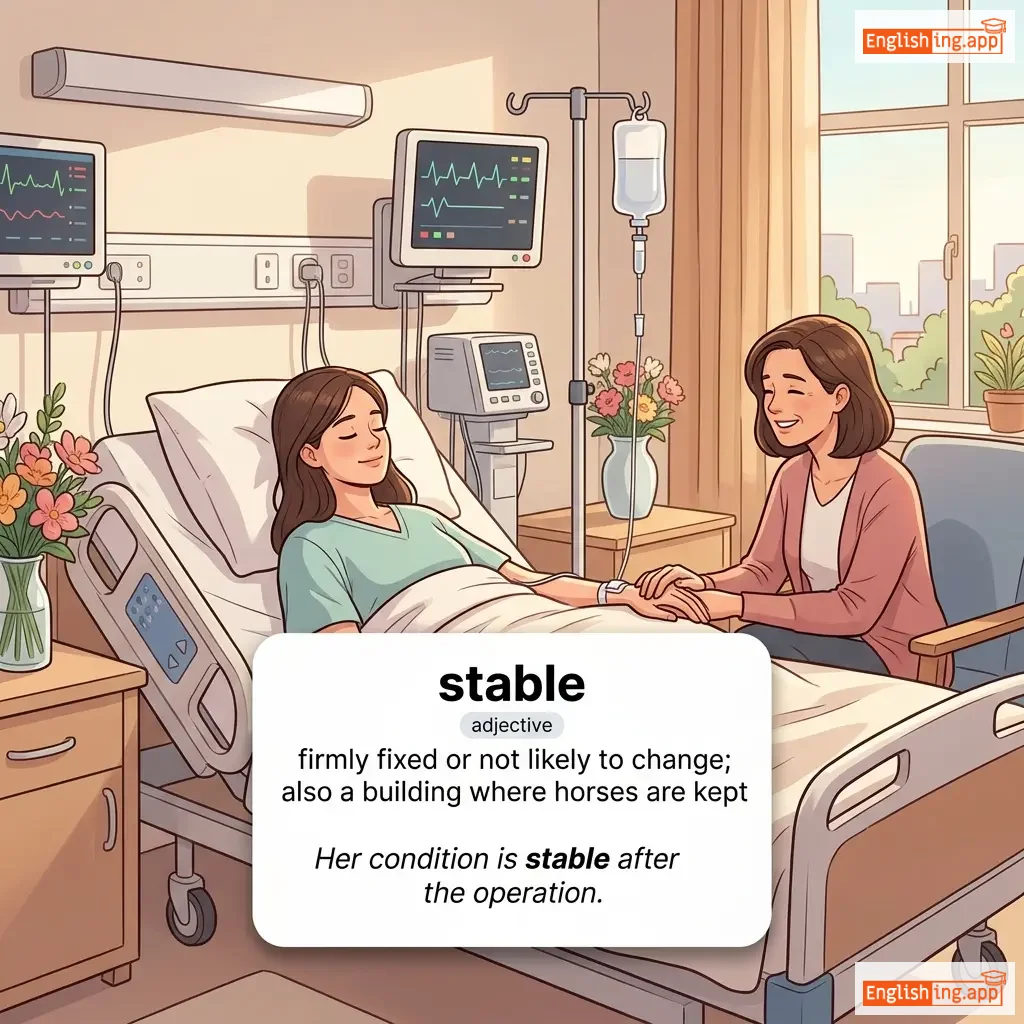
firmly fixed or not likely to change; also a building where horses are kept
••••••
|
Her condition is stable after the operation. |
手术后她的情况稳定。
Shǒushù hòu tā de qíngkuàng wěndìng.
••••••
|
stable condition |
a state of being steady and not worsening
••••••
|
稳定的状态
wěndìng de zhuàngtài
••••••
|
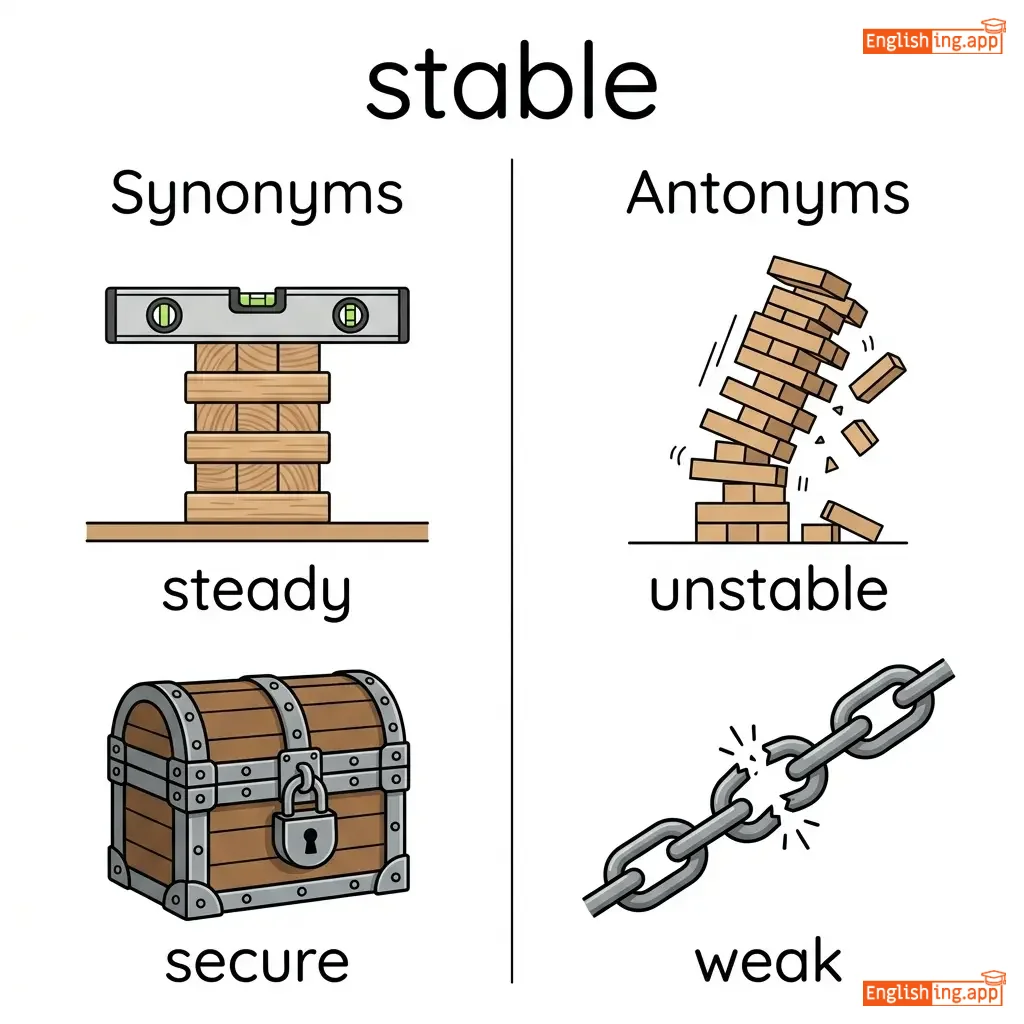
steady, secure, firm, constant, balanced
••••••
|
unstable, weak, shaky
••••••
|
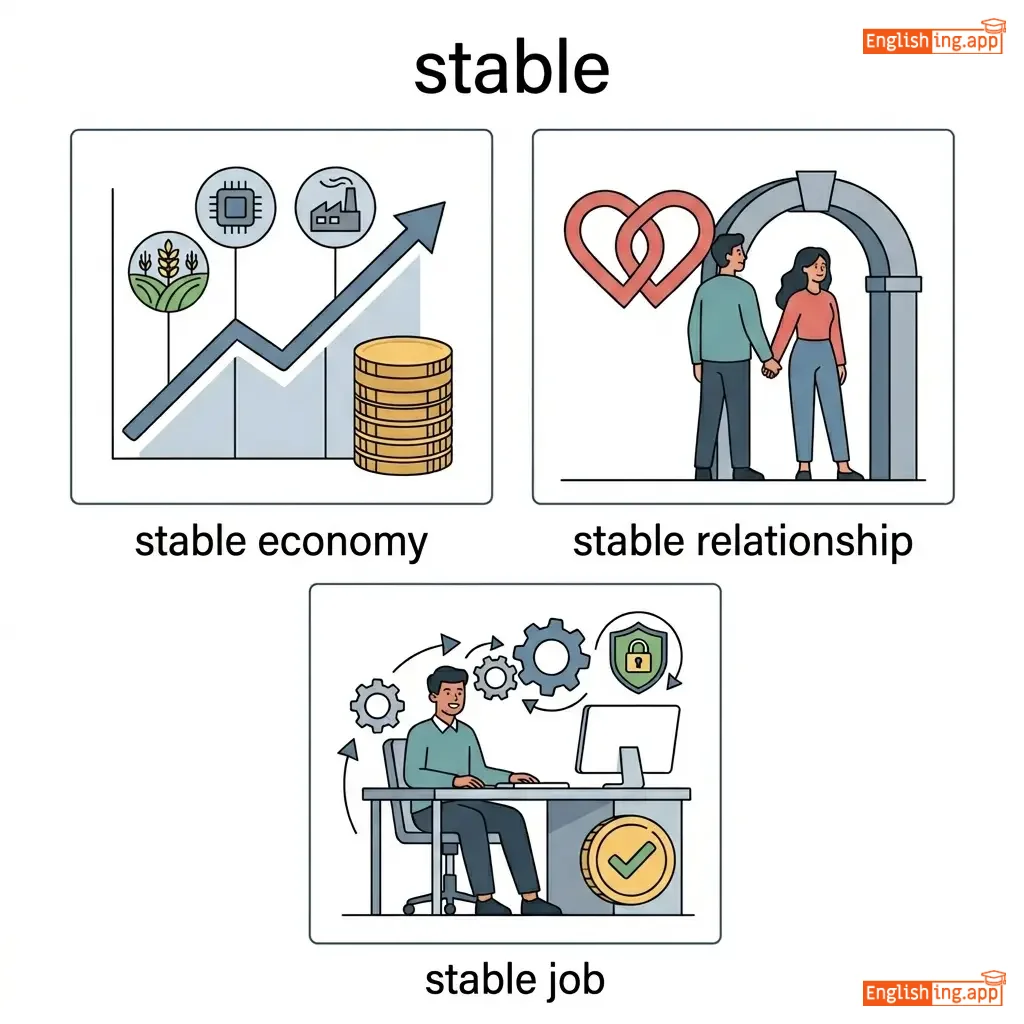
stable economy, stable relationship, stable job, stable environment
••••••
|
Stable 就是稳定,像马厩里马稳定呆着一样。
••••••
|
|
#10203
🔦
|
/ˈspɒt.laɪt/
noun
••••••
|
- •••••• | - •••••• | - •••••• | - •••••• | - •••••• | - •••••• |
a strong beam of light directed onto a particular area; figuratively, public attention
••••••
|
The singer stood proudly in the spotlight. |
- •••••• |
in the spotlight |
receiving a lot of public attention
••••••
|
- •••••• |
highlight, focus, limelight, glare
••••••
|
obscurity, shadow
••••••
|
under spotlight, grab spotlight, media spotlight, stage spotlight
••••••
|
No •••••• |
|
#10204
🦴
|
/spaɪn/
noun
(spain)
••••••
|
- •••••• |
脊柱
jizhu
••••••
|
- •••••• | - •••••• | - •••••• | - •••••• |
the backbone; a series of bones extending from the skull to the lower back
••••••
|
The doctor examined her spine after the accident. |
事故发生后,医生检查了她的脊柱。
Shigu fashen hou, yisheng jiancha le ta de jizhu.
••••••
|
backbone of something |
the most important part or support of something
••••••
|
某物的脊柱
mou wu de jizhu
••••••
|
backbone, vertebrae, ridge, support
••••••
|
weakness, fragility
••••••
|
spine injury, spine surgery, curved spine, spine health
••••••
|
Spine是脊柱,spine-less则是脆弱的。
••••••
|
|
#10205
✨
|
/spɛl/
verb
(拼写)
••••••
|
- •••••• |
拼写 / 咒语
pīnxiě / zhòuyǔ
••••••
|
spelled
拼写过
••••••
|
spelled
拼写过
••••••
|
spells
拼写
••••••
|
spelling
拼写
••••••
|
to write or name the letters of a word in the correct order; also a short period of time or a state of enchantment
••••••
|
She asked me to spell her name correctly on the form.
她让我在表格上正确拼写她的名字。
••••••
|
她让我在表格上正确拼写她的名字。
Tā ràng wǒ zài biǎogé shàng zhèngquè pīnxiě tā de míngzì.
••••••
|
cast a spell
施法
••••••
|
to use magic words to make something happen
••••••
|
施法
shīfǎ
••••••
|
write, recite, articulate, enchant, charm
••••••
|
miswrite, confuse, neglect
••••••
|
spell a word, spell correctly, cast a spell, spelling mistake
••••••
|
拼写(pīnxiě)就像咒语,魔法的开始!
••••••
|
|
#10206
✨
|
/ˈspɛʃəl/
adjective
(特別)
••••••
|
- •••••• |
特别
tebie
••••••
|
- •••••• | - •••••• | - •••••• | - •••••• |
different from what is usual; better or greater than normal
••••••
|
This gift is very special to me.
這份禮物對我來說非常特別。
••••••
|
这份礼物对我来说非常特别。
Zhe fen liwu dui wo lai shuo feichang tebie.
••••••
|
special treatment
特別待遇
••••••
|
different or better care or service than usual
••••••
|
特别待遇
tebie daiyu
••••••
|
unique, exceptional, distinctive, extraordinary
••••••
|
ordinary, common, usual
••••••
|
special occasion, special day, special gift, special attention
••••••
|
Special 就是 '特别' (tebie), 就像当你得到特别待遇一样。
••••••
|
|
#10207
😢
|
/ˈsɑːroʊ/
noun
(suo ro)
••••••
|
- •••••• |
悲伤
bēi shāng
••••••
|
- •••••• | - •••••• | - •••••• | - •••••• |
a feeling of deep sadness or grief
••••••
|
She was filled with sorrow after the loss of her friend. |
在失去朋友后,她充满了悲伤。
Zài shī qù péng yǒu hòu, tā chōng mǎn le bēi shāng.
••••••
|
drown one's sorrows |
to drink alcohol in order to forget sadness
••••••
|
用酒消愁
yòng jiǔ xiāo chóu
••••••
|
grief, sadness, anguish, heartache
••••••
|
joy, happiness, delight
••••••
|
deep sorrow, express sorrow, filled with sorrow, great sorrow
••••••
|
Sorrow 和悲伤很相似,都是痛苦的感受。
••••••
|
|
#10208
❓
|
/ˈsʌmθɪŋ/
pronoun
(sʌmθɪŋ)
••••••
|
- •••••• |
某事
mou shi
••••••
|
- •••••• | - •••••• | - •••••• | - •••••• |
an unspecified or unknown thing
••••••
|
I think something is wrong with my phone. |
我觉得我的手机有些问题。
Wo juede wode shouji youxie wenti.
••••••
|
make something of |
to understand or interpret something in a particular way
••••••
|
对某事做出解释
dui mou shi zuo chu jie shi
••••••
|
thing, object, item, matter
••••••
|
nothing, void
••••••
|
something new, something special, something wrong, something else
••••••
|
Some + Thing = 某事 (mou shi)
••••••
|
|
#10209
🪖
|
/ˈsoʊldʒərz/
noun
••••••
|
- •••••• | - •••••• | - •••••• | - •••••• | - •••••• | - •••••• |
members of an army who serve their country in war or peace
••••••
|
The soldiers marched proudly down the street. |
- •••••• |
soldier on |
to continue doing something despite difficulty
••••••
|
- •••••• |
troops, fighters, warriors, servicemen
••••••
|
civilians, noncombatants
••••••
|
brave soldiers, trained soldiers, soldiers in battle, fallen soldiers
••••••
|
No •••••• |
|
#10210
🧥
|
/ˈʃæbi/
adjective
(シャビー)
••••••
|
- •••••• |
破旧
pojiu
••••••
|
- •••••• | - •••••• | - •••••• | - •••••• |
In poor condition through long use or lack of care; of low quality.
••••••
|
The hotel room looked shabby and old-fashioned. |
酒店的房间看起来破旧而过时。
Jiǔdiàn de fángjiān kàn qǐlái pòjiù ér guòshí.
••••••
|
shabby treatment |
unfair or poor treatment of someone
••••••
|
差劲的待遇
chàjìn de dàiyù
••••••
|
worn, dilapidated, ragged, run-down, tattered
••••••
|
elegant, new, pristine
••••••
|
shabby clothes, shabby treatment, shabby house, shabby look
••••••
|
Shabby意味着shabby show – 破旧的外观,给人一种shabby look!
••••••
|
|
#10211
❄️
|
/snoʊ/
noun
(雪)
••••••
|
- •••••• |
雪
xue
••••••
|
- •••••• | - •••••• | - •••••• | - •••••• |
frozen water vapor that falls from the sky as white flakes
••••••
|
Children love to play in the snow. |
孩子们喜欢在雪中玩耍。
Haizimen xihuan zai xuezhong wanshua.
••••••
|
snowed under |
to be overwhelmed with too much work
••••••
|
被工作压得喘不过气
Bei gongzuo ya de chuan buguo qi
••••••
|
frost, ice, sleet, flurry, blizzard
••••••
|
heat, sun
••••••
|
heavy snow, snow storm, snow fall, snow covered
••••••
|
雪 – 就像英文中的snow,一下子飘落,带来清凉的白色感受。
••••••
|
|
#10212
🪞
|
/smuːð/
adjective
(smuːð)
••••••
|
- •••••• |
光滑
guānghuá
••••••
|
- •••••• | - •••••• | - •••••• | - •••••• |
having an even surface without roughness; happening without difficulty
••••••
|
The table has a smooth surface. |
桌子的表面很光滑。
Zhuōzi de biǎomiàn hěn guānghuá.
••••••
|
smooth sailing |
a situation that goes easily without problems
••••••
|
顺利航行
shùnlì hángxíng
••••••
|
even, flat, polished, silky, sleek
••••••
|
rough, uneven, coarse
••••••
|
smooth surface, smooth skin, smooth operation, smooth transition
••••••
|
光滑的桌面就像顺利航行。
••••••
|
|
#10213
🔹
|
/smɔːl/
adjective
(smol)
••••••
|
- •••••• |
小
xiao
••••••
|
- •••••• | - •••••• | - •••••• | - •••••• |
not large in size, amount, or importance
••••••
|
He lives in a small house near the river. |
他住在一间小房子里,靠近河流。
Ta zhu zai yi jian xiao fangzi li, kaojin heliu.
••••••
|
small talk |
light or casual conversation about unimportant matters
••••••
|
寒暄
hanxuan
••••••
|
tiny, little, petite, compact, miniature
••••••
|
big, large, huge
••••••
|
small house, small amount, small group, small talk
••••••
|
小就像 small – 小步快跑,成功无障碍!
••••••
|
|
#10214
👗
|
/slɪm/
adjective
(slim)
••••••
|
- •••••• |
苗条
miao tiao
••••••
|
- •••••• | - •••••• | - •••••• | - •••••• |
thin in an attractive or healthy way; small in amount or chance
••••••
|
She looked slim in her new dress. |
她穿上新裙子看起来很苗条。
ta chuan shang xin qunzi kan qilai hen miao tiao.
••••••
|
slim chance |
a very small probability of something happening
••••••
|
小概率
xiao gai lv
••••••
|
thin, slender, lean, slight, trim
••••••
|
fat, obese, bulky
••••••
|
slim figure, slim chance, slim possibility, slim design
••••••
|
Slim就像一个穿上紧身衣服的苗条身材。
••••••
|
|
#10215
💀
|
/skʌl/
noun
(skal)
••••••
|
- •••••• |
头骨
tougu
••••••
|
- •••••• | - •••••• | - •••••• | - •••••• |
the bony structure that forms the head and protects the brain
••••••
|
The archaeologists found an ancient human skull. |
考古学家发现了一个古老的人类头骨。
Kaogu xuejia faxianle yige gulao de renlei tougu.
••••••
|
skull and crossbones |
a symbol of death or danger, often used on pirate flags or poison labels
••••••
|
骷髅与交叉骨头
kulou yu jiaocha gutou
••••••
|
cranium, head, braincase, noggin, dome
••••••
|
none, flesh
••••••
|
fractured skull, human skull, skull bones, skull shape
••••••
|
头骨保护大脑,就像骷髅和交叉的骨头一样象征着危险。
••••••
|
|
#10216
📝
|
/ˈskɛtʃi/
adjective
(siketchi)
••••••
|
- •••••• |
不完整
buwancheng
••••••
|
- •••••• | - •••••• | - •••••• | - •••••• |
not thorough or detailed; suspicious or unsafe
••••••
|
The details of the project were still sketchy.
项目的细节仍然很模糊。
••••••
|
项目的细节仍然不完整。
Xiangmu de xijie rengran bu wancheng.
••••••
|
- •••••• | - •••••• | - •••••• |
incomplete, vague, suspicious, dodgy
••••••
|
clear, detailed, reliable
••••••
|
sketchy details, sketchy plan, sketchy area, sketchy report
••••••
|
Sketchy表示不完整或可疑 — Sketchy details表示‘不完整或不安全的细节’.
••••••
|
|
#10217
🤔
|
/ˈskɛptɪkəl/
adjective
(skeptikal)
••••••
|
- •••••• |
怀疑的
huáiyí de
••••••
|
- •••••• | - •••••• | - •••••• | - •••••• |
not easily convinced; having doubts or reservations
••••••
|
She was skeptical about the new plan. |
她对新计划持怀疑态度。
Tā duì xīn jìhuà chí huáiyí tàidù.
••••••
|
healthy skepticism |
a balanced doubt that helps in rational judgment
••••••
|
健康的怀疑主义
jiànkāng de huáiyí zhǔyì
••••••
|
doubtful, suspicious, unconvinced, hesitant
••••••
|
trusting, convinced, certain
••••••
|
skeptical attitude, skeptical view, skeptical mind, skeptical about
••••••
|
Skeptical 意味着怀疑的 — 如果你怀疑,你对每个计划都持怀疑态度。
••••••
|
|
#10218
🤪
|
/ˈsɪli/
adjective
(sili)
••••••
|
- •••••• |
傻
sha
••••••
|
- •••••• | - •••••• | - •••••• | - •••••• |
showing a lack of good sense; foolish or playful
••••••
|
He made a silly mistake on the test. |
他在考试中犯了一个傻错误。
Ta zai kaoshi zhong fanle yige sha cuowu.
••••••
|
silly goose |
a playful way to call someone foolish or goofy
••••••
|
傻鸭子
sha yazi
••••••
|
foolish, goofy, childish, playful, nonsensical
••••••
|
serious, sensible, wise
••••••
|
silly mistake, silly joke, silly idea, feel silly
••••••
|
Silly意思是傻 — Silly mistake意思是傻错误。
••••••
|
|
#10219
🧺
|
/sɪv/
noun
(sīfū)
••••••
|
- •••••• |
筛子
shaizi
••••••
|
- •••••• | - •••••• | - •••••• | - •••••• |
a utensil with a mesh or perforated bottom, used for straining or sifting
••••••
|
She used a sieve to strain the pasta. |
她用筛子过滤意大利面。
Tā yòng shāizi guòlǜ yìdàlì miàn.
••••••
|
memory like a sieve |
a very poor memory
••••••
|
记忆像筛子
jìyì xiàng shāizi
••••••
|
strainer, filter, colander, screen
••••••
|
container, solid bowl
••••••
|
use a sieve, fine sieve, metal sieve, sieve flour
••••••
|
Sieve意思是筛子——记得‘用筛子过滤’很容易。
••••••
|
|
#10220
🤒
|
/sɪk/
adjective
(西克)
••••••
|
- •••••• |
生病
sheng bing
••••••
|
- •••••• | - •••••• | - •••••• | - •••••• |
feeling unwell or suffering from illness
••••••
|
She stayed home because she was feeling sick.
她留在家里,因为她感觉不舒服。
••••••
|
她留在家里,因为她感觉生病了。
ta liu zai jia li yin wei ta gan jue sheng bing le
••••••
|
sick and tired
厌倦
••••••
|
completely fed up or annoyed
••••••
|
厌倦和疲倦
yan juan he pi juan
••••••
|
ill, unwell, unhealthy, nauseous, ailing
••••••
|
healthy, well, fit
••••••
|
feel sick, get sick, sick leave, sick child, sick person
••••••
|
Sick sounds like 西克 — 当你生病时不要去上学!
••••••
|
|
#10221
🙈
|
/ʃaɪ/
adjective
(shai)
••••••
|
- •••••• |
害羞
haixiu
••••••
|
- •••••• | - •••••• | - •••••• | - •••••• |
Being reserved or nervous around other people.
••••••
|
The child was too shy to speak in class. |
这个孩子在课堂上太害羞,不敢发言。
Zhege haizi zai kètáng shàng tài haixiu, bù gǎn fāyán.
••••••
|
shy away |
to avoid something because of fear or lack of confidence
••••••
|
回避
huibi
••••••
|
timid, bashful, reserved, modest
••••••
|
bold, confident, outgoing
••••••
|
shy smile, shy away, shy child, shy personality
••••••
|
害羞的孩子在课堂上回避发言。
••••••
|
|
#10222
🌽
|
/ʃʌk/
verb
(shak)
••••••
|
- •••••• |
剥壳
bāo ké
••••••
|
shucked
shakt
••••••
|
shucked
shakt
••••••
|
shucks
shaks
••••••
|
shucking
shaking
••••••
|
To remove the outer covering, such as the husk of corn or shell of shellfish.
••••••
|
She learned how to shuck oysters quickly.
她学会了如何快速打开牡蛎。
••••••
|
她学会了如何快速打开牡蛎。
Tā xuéhuìle rúhé kuàisù dǎkāi mǔlì.
••••••
|
shuck off
shak off
••••••
|
to get rid of something unwanted
••••••
|
脱掉
tuō diào
••••••
|
peel, strip, remove, husk, shell
••••••
|
cover, enclose, wrap
••••••
|
shuck corn, shuck oysters, shuck off
••••••
|
Shuck 代表剥壳 – 像玉米(shak)。
••••••
|
|
#10223
👀
|
/ʃoʊ/
verb
(秀)
••••••
|
|
展示
zhǎnshì
••••••
|
showed
秀德
••••••
|
shown
秀恩
••••••
|
shows
秀斯
••••••
|
showing
秀印
••••••
|
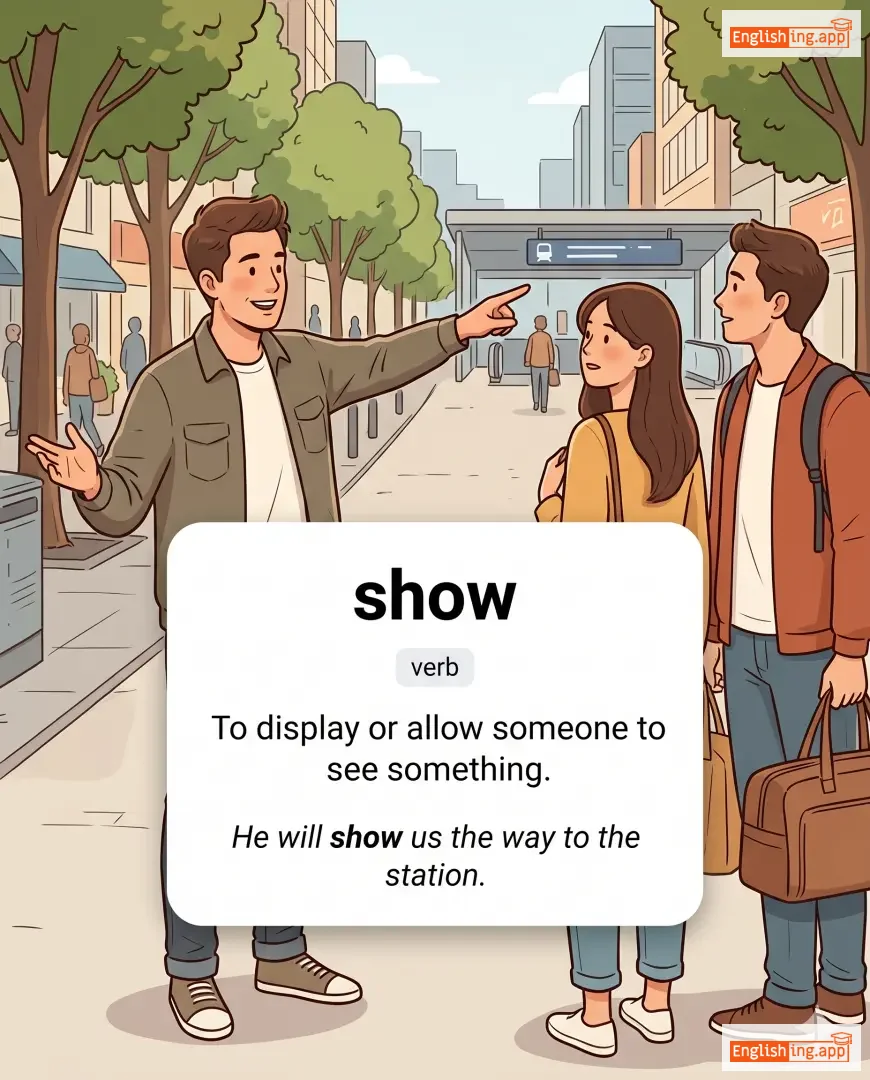
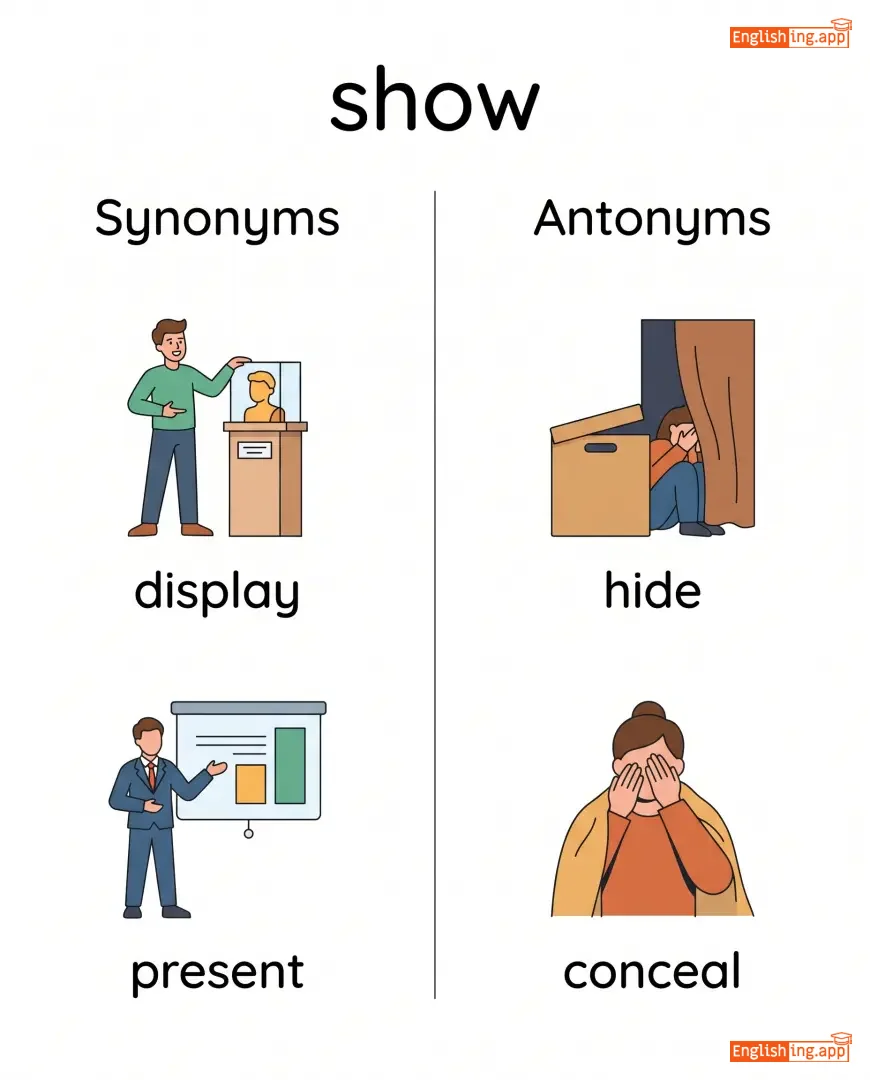
To display or allow someone to see something.
••••••
|
He will show us the way to the station.
他会给我们指引去车站的路。
••••••
|
他会带我们去车站。
Tā huì dài wǒmen qù chēzhàn.
••••••
|
show off
炫耀
••••••
|
to try to impress others by displaying abilities or possessions
••••••
|
炫耀
xuànyào
••••••
|
display, present, demonstrate, reveal, exhibit
••••••
|
hide, conceal, cover
••••••
|
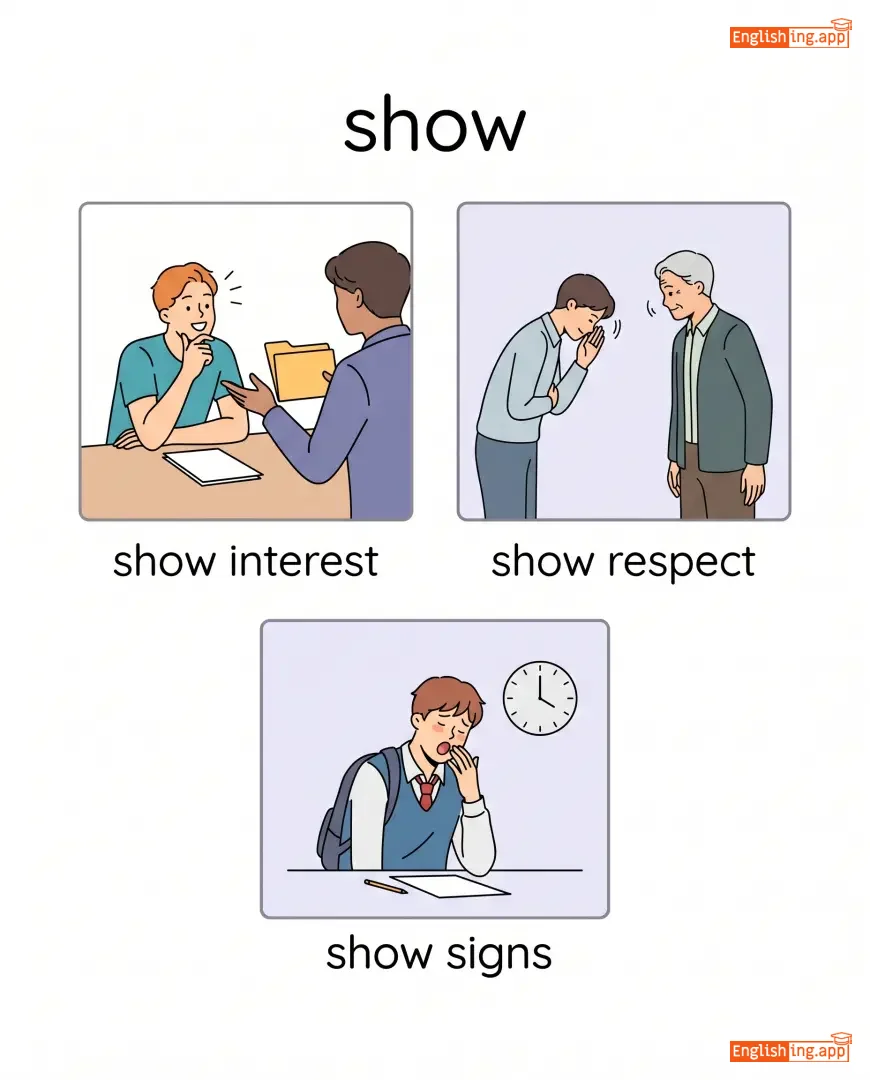
show interest, show respect, show signs, show off
••••••
|
Show 的意思是展示 – 在电视节目中,一切都会展示。
••••••
|
|
#10224
💥
|
/ˈʃætər/
verb
(shàtè)
••••••
|
- •••••• |
打碎
dǎ suì
••••••
|
shattered
shàtèd
••••••
|
shattered
shàtèd
••••••
|
shatters
shàtèrs
••••••
|
shattering
shàtèring
••••••
|
To break suddenly into many small pieces.
••••••
|
The glass will shatter if you drop it.
The glass will shatter if you drop it.
••••••
|
玻璃会碎掉,如果你把它摔下去。
Bōlí huì suì diào, rúguǒ nǐ bǎ tā shuāi xiàqù.
••••••
|
shatter dreams
shàtèr dreams
••••••
|
to completely ruin someone's hopes or plans
••••••
|
粉碎梦想
fěnsuì mèngxiǎng
••••••
|
break, smash, crack, demolish, splinter
••••••
|
repair, fix, build
••••••
|
shatter glass, shatter dreams, shatter confidence
••••••
|
Shatter意味着打碎——就像玻璃摔落后会打碎一样。
••••••
|
Vocabulary Quiz
Test your vocabulary by matching words with their translations or meanings.
Login to take the quiz
Comments (0)
Share your thoughts and join the discussion.
Join the discussion by logging in
Login to CommentNo comments yet
Be the first to share your thoughts!