

翻訳
過去
過去分詞
三人称単数
動名詞
意味
例文
例文の翻訳
同義語
対義語
コロケーション
ニーモニック
Swipe left or right, or use the buttons. Tap image to zoom.
例文の翻訳
単語
Lesson 341Lesson 341 - マスクトグル
|
絵文字
|
単語 | Images | 翻訳 | 過去 | 過去分詞 | 三人称単数 | 動名詞 | 意味 | 例文 | 例文の翻訳 | 表現例 | 表現例の意味 | 表現例の翻訳 | 同義語 | 対義語 | コロケーション | ニーモニック |
|---|---|---|---|---|---|---|---|---|---|---|---|---|---|---|---|---|---|
|
#10195
🧼
|
/sɔɪld/
adjective
(ソイルド)
••••••
|
- •••••• |
汚れた
yogoreta
••••••
|
- •••••• | - •••••• | - •••••• | - •••••• |
dirty or stained; not clean
••••••
|
His clothes were soiled after playing in the mud. |
泥遊びをした後、彼の服は汚れていた。
Doro asobi wo shita ato, kare no fuku wa yogorete ita.
••••••
|
- •••••• | - •••••• | - •••••• |
dirty, stained, filthy, unclean, tainted
••••••
|
clean, spotless, pure
••••••
|
soiled clothes, soiled hands, soiled reputation, heavily soiled
••••••
|
Soilは土を意味し、土に落ちると服が汚れる(汚れた)。
••••••
|
|
#10196
🛑
|
/stɑːp/
verb
(ストップ)
••••••
|
- •••••• |
止める
tomeru
••••••
|
stopped
ストップド
••••••
|
stopped
ストップド
••••••
|
stops
ストップス
••••••
|
stopping
ストッピング
••••••
|
to bring to an end or cause to cease
••••••
|
Please stop talking while I’m working.
私が作業している間、話すのをやめてください。
••••••
|
私が作業している間、話すのをやめてください。
Watashi ga sagyo shite iru aida, hanasu no wo yamete kudasai.
••••••
|
stop at nothing
何も止まらずに
••••••
|
to do anything, no matter how extreme, to achieve a goal
••••••
|
何も止まらずに
Nani mo tomarazu ni
••••••
|
halt, cease, end, discontinue, pause
••••••
|
continue, start, proceed
••••••
|
stop sign, stop talking, stop doing, stop immediately
••••••
|
🛑 停止サインを見たら止まる → 止めるとは停止すること
••••••
|
|
#10197
🤐
|
/ˈstaɪfəld/
verb
(staifuldo)
••••••
|
- •••••• |
抑える
osaeru
••••••
|
stifled
staifuldo
••••••
|
stifled
staifuldo
••••••
|
stifles
staiforu
••••••
|
stifling
staifuringu
••••••
|
to suppress, hold back, or prevent something from happening
••••••
|
He stifled a laugh during the serious meeting.
彼は真面目な会議中に笑いを抑えた。
••••••
|
彼は真面目な会議中に笑いを抑えた。
Kare wa majimena kaigichuu ni warai o osaeta.
••••••
|
- •••••• | - •••••• | - •••••• |
suppress, smother, restrain, hold back, repress
••••••
|
release, express, allow
••••••
|
stifled laugh, stifled cry, stifled yawn, stifled growth
••••••
|
抑えるはstifledを意味する → 笑いを抑える
••••••
|
|
#10198
❓
|
/ˈsʌmθɪŋ/
abbreviation (noun/pronoun)
(エス・ティー・エイチ)
••••••
|
- •••••• |
何か
nanika
••••••
|
- •••••• | - •••••• | - •••••• | - •••••• |
abbreviation for 'something'
••••••
|
Can you give me sth. to write with? |
書くために何かをくれますか?
Kaku tame ni nanika o kuremasu ka?
••••••
|
- •••••• | - •••••• | - •••••• |
something, item, object, thing
••••••
|
nothing, none
••••••
|
sth important, sth to eat, sth new
••••••
|
sth は 'something' の略 = 何か
••••••
|
|
#10199
⚖️
|
/ˈstɛdi/
adjective
(ステディ)
••••••
|
- •••••• |
安定
antei
••••••
|
- •••••• | - •••••• | - •••••• | - •••••• |
firm, stable, and not likely to change suddenly
••••••
|
He kept his hand steady while painting the picture.
彼は絵を描いている間、手を安定させていました。
••••••
|
彼は絵を描いている間、手を安定させていました。
Kare wa e o kaite iru aida, te o antei sasete imashita.
••••••
|
steady as a rock
岩のように安定している
••••••
|
extremely stable and reliable
••••••
|
岩のように安定している
iwa no yō ni antei shite iru
••••••
|
stable, firm, constant, fixed, reliable
••••••
|
unstable, unsteady, shaky
••••••
|
steady job, steady growth, steady hand, steady pace
••••••
|
steadyは安定を意味します → 安定した手、安定した絵
••••••
|
|
#10200
😲
|
/ˈstɑːrtəld/
adjective
(スタートルド)
••••••
|
- •••••• |
驚いた
odoroita
••••••
|
- •••••• | - •••••• | - •••••• | - •••••• |
suddenly shocked or surprised by something unexpected
••••••
|
She was startled by the loud noise outside. |
彼女は外の大きな音に驚いた。
Kanojo wa soto no ookina oto ni odoroita.
••••••
|
- •••••• | - •••••• | - •••••• |
shocked, surprised, alarmed, stunned, taken aback
••••••
|
calm, composed, relaxed
••••••
|
startled look, startled reaction, startled expression, startled cry
••••••
|
急に驚いて反応する = startled
••••••
|
|
#10201
🩸
|
/steɪn/
verb
••••••
|
- •••••• | - •••••• |
stained
••••••
|
stained
••••••
|
stains
••••••
|
staining
••••••
|
to mark or discolor something permanently; a spot or mark left behind
••••••
|
The coffee spilled and stained the tablecloth. |
- •••••• |
stain one's reputation |
to damage someone's character or image
••••••
|
- •••••• |
taint, blemish, soil, mark, discolor
••••••
|
clean, purify, whiten
••••••
|
stain remover, blood stain, permanent stain, stain resistant
••••••
|
No •••••• |
|
#10202
🏠
|
/ˈsteɪ.bəl/
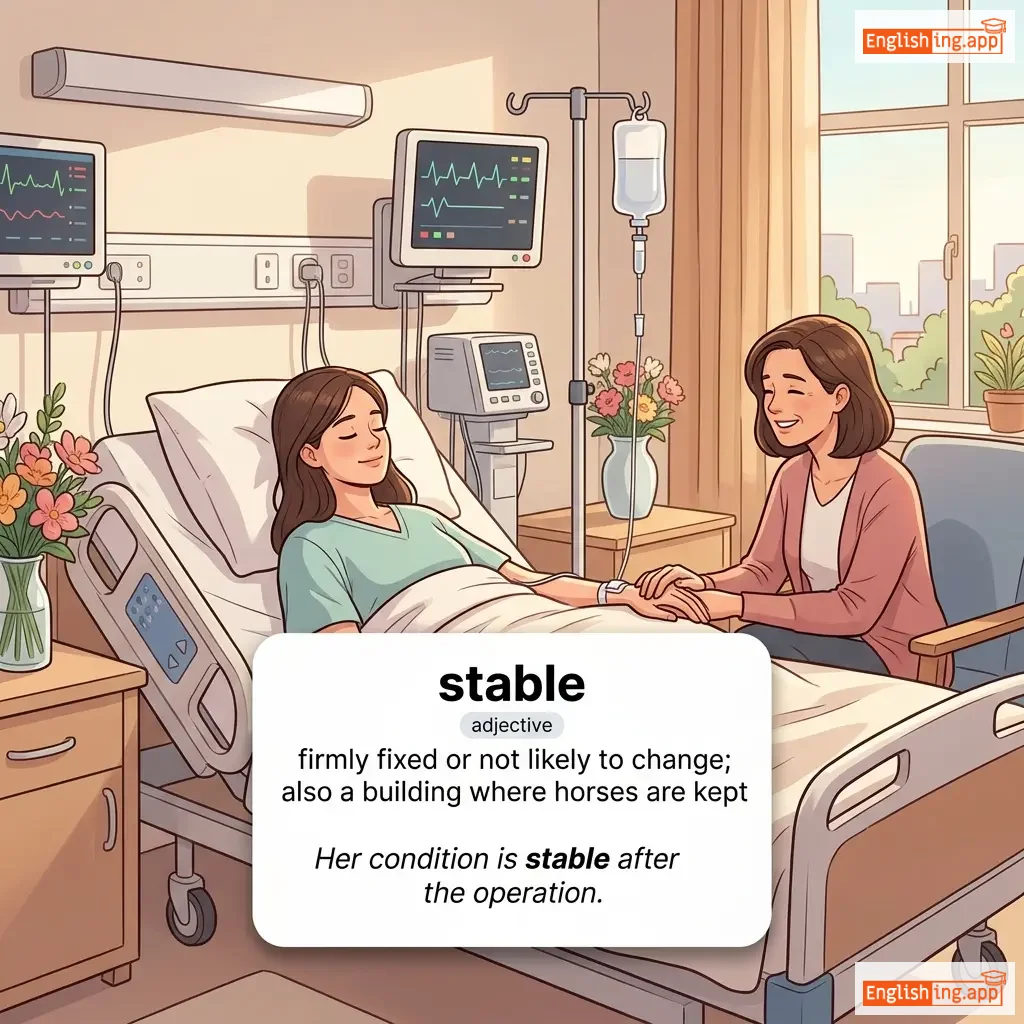
adjective
(ステイブル)
••••••
|
|
安定した / 馬小屋
antei shita / uma koya
••••••
|
- •••••• | - •••••• | - •••••• | - •••••• |
firmly fixed or not likely to change; also a building where horses are kept
••••••
|
Her condition is stable after the operation. |
手術後、彼女の状態は安定しています。
Shujutsu go, kanojo no jōtai wa antei shiteimasu.
••••••
|
stable condition |
a state of being steady and not worsening
••••••
|
安定した状態
antei shita jōtai
••••••
|
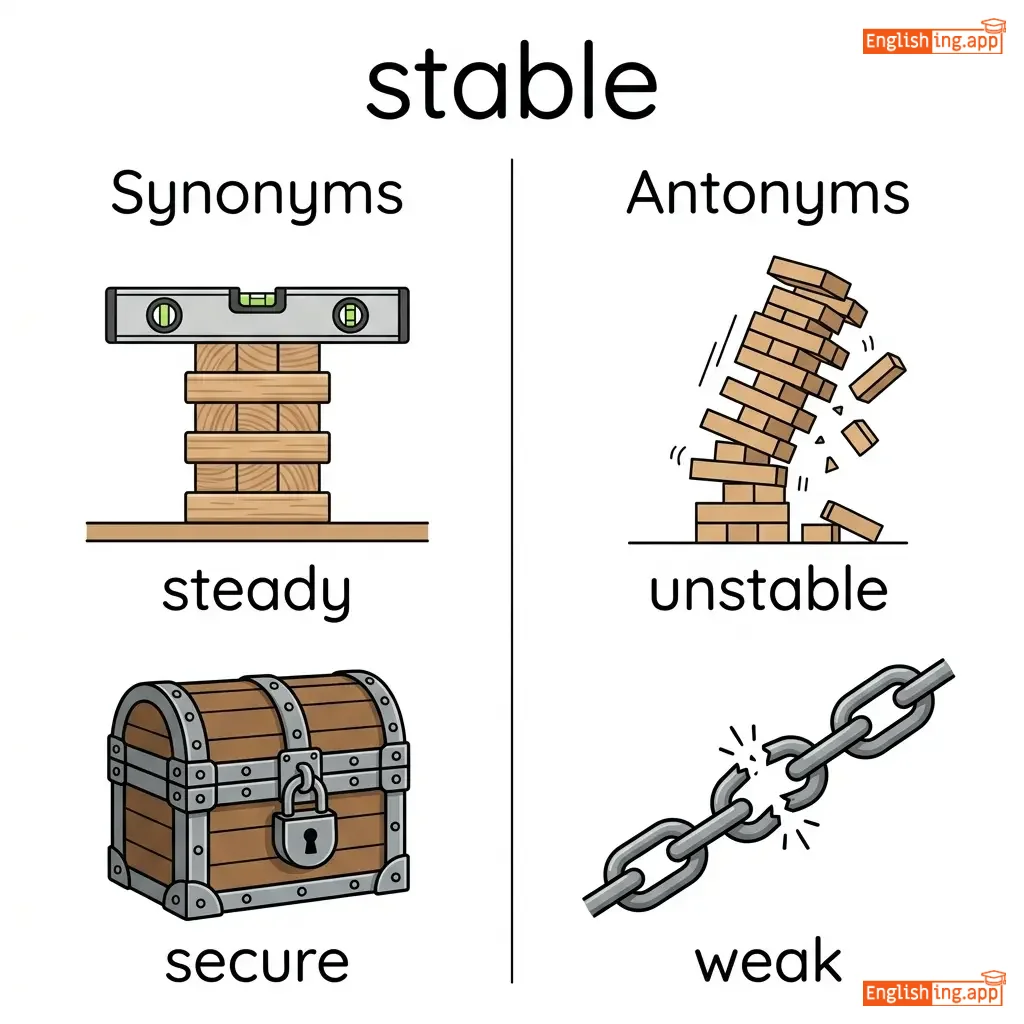
steady, secure, firm, constant, balanced
••••••
|
unstable, weak, shaky
••••••
|
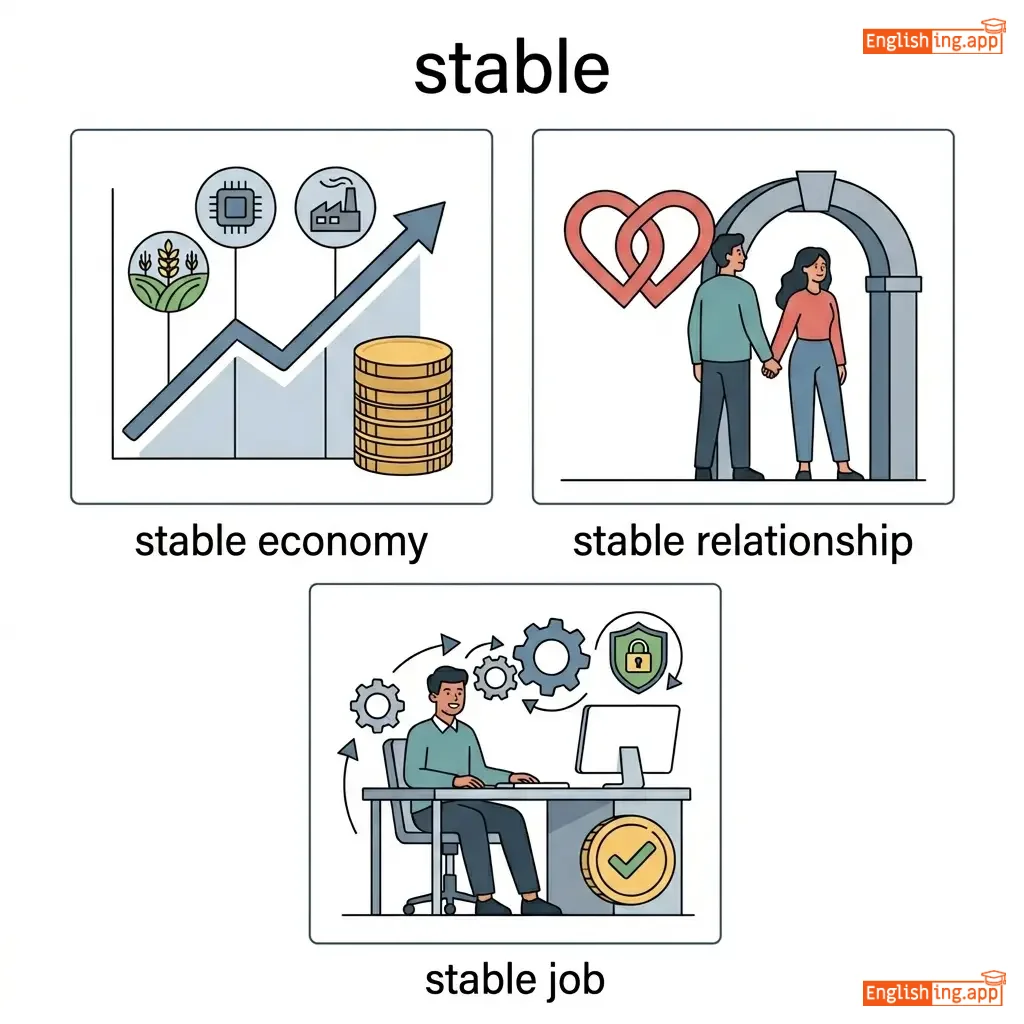
stable economy, stable relationship, stable job, stable environment
••••••
|
Stableは安定したという意味で、馬小屋のように馬が安定している場所です。
••••••
|
|
#10203
🔦
|
/ˈspɒt.laɪt/
noun
••••••
|
- •••••• | - •••••• | - •••••• | - •••••• | - •••••• | - •••••• |
a strong beam of light directed onto a particular area; figuratively, public attention
••••••
|
The singer stood proudly in the spotlight. |
- •••••• |
in the spotlight |
receiving a lot of public attention
••••••
|
- •••••• |
highlight, focus, limelight, glare
••••••
|
obscurity, shadow
••••••
|
under spotlight, grab spotlight, media spotlight, stage spotlight
••••••
|
No •••••• |
|
#10204
🦴
|
/spaɪn/
noun
(supein)
••••••
|
- •••••• |
背骨
sebone
••••••
|
- •••••• | - •••••• | - •••••• | - •••••• |
the backbone; a series of bones extending from the skull to the lower back
••••••
|
The doctor examined her spine after the accident. |
事故後、医者は彼女の背骨を調べました。
Jiko go, isha wa kanojo no sebone wo shirabemashita.
••••••
|
backbone of something |
the most important part or support of something
••••••
|
何かの背骨
nanika no sebone
••••••
|
backbone, vertebrae, ridge, support
••••••
|
weakness, fragility
••••••
|
spine injury, spine surgery, curved spine, spine health
••••••
|
Spineは背骨、spine-lessは弱いということです。
••••••
|
|
#10205
✨
|
/spɛl/
verb
(スペル)
••••••
|
- •••••• |
綴る / 呪文
tsuzuru / jumon
••••••
|
spelled
スペルド
••••••
|
spelled
スペルド
••••••
|
spells
スペルズ
••••••
|
spelling
スペリング
••••••
|
to write or name the letters of a word in the correct order; also a short period of time or a state of enchantment
••••••
|
She asked me to spell her name correctly on the form.
彼女はフォームに正しく名前をスペルしてほしいと言いました。
••••••
|
彼女はフォームに正しく名前を綴ってほしいと言いました。
Kanojo wa fōmu ni tadashiku namae wo tsuzutte hoshī to iimashita.
••••••
|
cast a spell
呪文を唱える
••••••
|
to use magic words to make something happen
••••••
|
呪文を唱える
jumon wo tonaeru
••••••
|
write, recite, articulate, enchant, charm
••••••
|
miswrite, confuse, neglect
••••••
|
spell a word, spell correctly, cast a spell, spelling mistake
••••••
|
綴りは呪文のようなもの、魔法の始まりです!
••••••
|
|
#10206
✨
|
/ˈspɛʃəl/
adjective
(スペシャル)
••••••
|
- •••••• |
特別
tokubetsu
••••••
|
- •••••• | - •••••• | - •••••• | - •••••• |
different from what is usual; better or greater than normal
••••••
|
This gift is very special to me.
このギフトは私にとってとてもスペシャルです。
••••••
|
このギフトは私にとってとても特別です。
Kono gifuto wa watashi ni totte totemo tokubetsu desu.
••••••
|
special treatment
特別な扱い
••••••
|
different or better care or service than usual
••••••
|
特別な扱い
tokubetsu na atsukai
••••••
|
unique, exceptional, distinctive, extraordinary
••••••
|
ordinary, common, usual
••••••
|
special occasion, special day, special gift, special attention
••••••
|
Specialは日本語で '特別' (tokubetsu)といいます。
••••••
|
|
#10207
😢
|
/ˈsɑːroʊ/
noun
(ソーロ)
••••••
|
- •••••• |
悲しみ
kanashimi
••••••
|
- •••••• | - •••••• | - •••••• | - •••••• |
a feeling of deep sadness or grief
••••••
|
She was filled with sorrow after the loss of her friend. |
彼女は友達を失った後、悲しみに満たされていました。
Kanojo wa tomodachi o ushinatta ato, kanashimi ni mitasarete imashita.
••••••
|
drown one's sorrows |
to drink alcohol in order to forget sadness
••••••
|
悲しみを酒で流す
kanashimi o sake de nagasu
••••••
|
grief, sadness, anguish, heartache
••••••
|
joy, happiness, delight
••••••
|
deep sorrow, express sorrow, filled with sorrow, great sorrow
••••••
|
Sorrow は悲しみと深く関連しています。
••••••
|
|
#10208
❓
|
/ˈsʌmθɪŋ/
pronoun
(サムシング)
••••••
|
- •••••• |
何か
nanika
••••••
|
- •••••• | - •••••• | - •••••• | - •••••• |
an unspecified or unknown thing
••••••
|
I think something is wrong with my phone. |
私の電話に何か問題があると思う。
Watashi no denwa ni nanika mondai ga aru to omou.
••••••
|
make something of |
to understand or interpret something in a particular way
••••••
|
何かを意味する
nanika o imi suru
••••••
|
thing, object, item, matter
••••••
|
nothing, void
••••••
|
something new, something special, something wrong, something else
••••••
|
Some + Thing = 何か (nanika)
••••••
|
|
#10209
🪖
|
/ˈsoʊldʒərz/
noun
••••••
|
- •••••• | - •••••• | - •••••• | - •••••• | - •••••• | - •••••• |
members of an army who serve their country in war or peace
••••••
|
The soldiers marched proudly down the street. |
- •••••• |
soldier on |
to continue doing something despite difficulty
••••••
|
- •••••• |
troops, fighters, warriors, servicemen
••••••
|
civilians, noncombatants
••••••
|
brave soldiers, trained soldiers, soldiers in battle, fallen soldiers
••••••
|
No •••••• |
|
#10210
🧥
|
/ˈʃæbi/
adjective
(シャビー)
••••••
|
- •••••• |
使い古し
tsukaigurushi
••••••
|
- •••••• | - •••••• | - •••••• | - •••••• |
In poor condition through long use or lack of care; of low quality.
••••••
|
The hotel room looked shabby and old-fashioned. |
ホテルの部屋は使い古されていて、古臭く見えました。
Hoteru no heya wa tsukaigurushiteite, furukusaku miemashita.
••••••
|
shabby treatment |
unfair or poor treatment of someone
••••••
|
ひどい扱い
hidoi atsukai
••••••
|
worn, dilapidated, ragged, run-down, tattered
••••••
|
elegant, new, pristine
••••••
|
shabby clothes, shabby treatment, shabby house, shabby look
••••••
|
Shabbyはshabby show – 使い古し、古臭い見た目!
••••••
|
|
#10211
❄️
|
/snoʊ/
noun
(スノー)
••••••
|
- •••••• |
雪
yuki
••••••
|
- •••••• | - •••••• | - •••••• | - •••••• |
frozen water vapor that falls from the sky as white flakes
••••••
|
Children love to play in the snow. |
子供たちは雪で遊ぶのが大好きです。
Kodomo-tachi wa yuki de asobu no ga daisuki desu.
••••••
|
snowed under |
to be overwhelmed with too much work
••••••
|
仕事に圧倒される
Shigoto ni attō sareru
••••••
|
frost, ice, sleet, flurry, blizzard
••••••
|
heat, sun
••••••
|
heavy snow, snow storm, snow fall, snow covered
••••••
|
雪(yuki)は英語のsnowと同じ、白い雪のように冷たく降り積もる。
••••••
|
|
#10212
🪞
|
/smuːð/
adjective
(スムーズ)
••••••
|
- •••••• |
滑らか
nameraka
••••••
|
- •••••• | - •••••• | - •••••• | - •••••• |
having an even surface without roughness; happening without difficulty
••••••
|
The table has a smooth surface. |
テーブルの表面は滑らかです。
Tēburu no hyōmen wa nameraka desu.
••••••
|
smooth sailing |
a situation that goes easily without problems
••••••
|
スムーズセーリング
Sumūzu sēringu
••••••
|
even, flat, polished, silky, sleek
••••••
|
rough, uneven, coarse
••••••
|
smooth surface, smooth skin, smooth operation, smooth transition
••••••
|
滑らかな道路をスムーズに走る車。
••••••
|
|
#10213
🔹
|
/smɔːl/
adjective
(スモール)
••••••
|
- •••••• |
小さい
chiisai
••••••
|
- •••••• | - •••••• | - •••••• | - •••••• |
not large in size, amount, or importance
••••••
|
He lives in a small house near the river. |
彼は川の近くの小さな家に住んでいます。
Kare wa kawa no chikaku no chiisana ie ni sundeimasu.
••••••
|
small talk |
light or casual conversation about unimportant matters
••••••
|
スモールトーク
sumooru tooku
••••••
|
tiny, little, petite, compact, miniature
••••••
|
big, large, huge
••••••
|
small house, small amount, small group, small talk
••••••
|
小さいはsmallのようです – 小さな一歩が大きな成果を生む!
••••••
|
|
#10214
👗
|
/slɪm/
adjective
(スリム)
••••••
|
- •••••• |
スリム
surimu
••••••
|
- •••••• | - •••••• | - •••••• | - •••••• |
thin in an attractive or healthy way; small in amount or chance
••••••
|
She looked slim in her new dress. |
彼女は新しいドレスでスリムに見えた。
Kanojo wa atarashī doresu de surimu ni mieta.
••••••
|
slim chance |
a very small probability of something happening
••••••
|
小さな可能性
chiisana kanōsei
••••••
|
thin, slender, lean, slight, trim
••••••
|
fat, obese, bulky
••••••
|
slim figure, slim chance, slim possibility, slim design
••••••
|
Slimはスリムな体型、ぴったりの服に合う姿。
••••••
|
|
#10215
💀
|
/skʌl/
noun
(スカル)
••••••
|
- •••••• |
頭蓋骨
zugaikotsu
••••••
|
- •••••• | - •••••• | - •••••• | - •••••• |
the bony structure that forms the head and protects the brain
••••••
|
The archaeologists found an ancient human skull. |
考古学者たちは古代の人間の頭蓋骨を発見しました。
Kougakusha-tachi wa kodai no ningen no zugaikotsu wo hakken shimashita.
••••••
|
skull and crossbones |
a symbol of death or danger, often used on pirate flags or poison labels
••••••
|
骸骨と交差した骨
gaikotsu to kousa shita hone
••••••
|
cranium, head, braincase, noggin, dome
••••••
|
none, flesh
••••••
|
fractured skull, human skull, skull bones, skull shape
••••••
|
頭蓋骨は脳を守り、骸骨と交差した骨が危険を象徴します。
••••••
|
|
#10216
📝
|
/ˈskɛtʃi/
adjective
(suketchi)
••••••
|
- •••••• |
不完全
fukanzen
••••••
|
- •••••• | - •••••• | - •••••• | - •••••• |
not thorough or detailed; suspicious or unsafe
••••••
|
The details of the project were still sketchy.
プロジェクトの詳細はまだ不明確でした。
••••••
|
プロジェクトの詳細はまだ不完全でした。
Purojekuto no shousai wa mada fukanzen deshita.
••••••
|
- •••••• | - •••••• | - •••••• |
incomplete, vague, suspicious, dodgy
••••••
|
clear, detailed, reliable
••••••
|
sketchy details, sketchy plan, sketchy area, sketchy report
••••••
|
Sketchyは不完全または疑わしいという意味です — Sketchy detailsは‘不完全または疑わしい詳細’を意味します。
••••••
|
|
#10217
🤔
|
/ˈskɛptɪkəl/
adjective
(スケプティカル)
••••••
|
- •••••• |
懐疑的な
kaigiteki na
••••••
|
- •••••• | - •••••• | - •••••• | - •••••• |
not easily convinced; having doubts or reservations
••••••
|
She was skeptical about the new plan. |
彼女は新しい計画に懐疑的だった。
Kanojo wa atarashī keikaku ni kaigiteki datta.
••••••
|
healthy skepticism |
a balanced doubt that helps in rational judgment
••••••
|
健康的な懐疑心
kenkō-teki na kaigishin
••••••
|
doubtful, suspicious, unconvinced, hesitant
••••••
|
trusting, convinced, certain
••••••
|
skeptical attitude, skeptical view, skeptical mind, skeptical about
••••••
|
Skeptical は懐疑的な意味 — 懐疑的なら、すべての計画に‘疑い’を持つ。
••••••
|
|
#10218
🤪
|
/ˈsɪli/
adjective
(シリー)
••••••
|
- •••••• |
馬鹿
baka
••••••
|
- •••••• | - •••••• | - •••••• | - •••••• |
showing a lack of good sense; foolish or playful
••••••
|
He made a silly mistake on the test. |
彼はテストで馬鹿なミスをした。
Kare wa tesuto de baka na misu o shita.
••••••
|
silly goose |
a playful way to call someone foolish or goofy
••••••
|
馬鹿ガチョウ
baka gachou
••••••
|
foolish, goofy, childish, playful, nonsensical
••••••
|
serious, sensible, wise
••••••
|
silly mistake, silly joke, silly idea, feel silly
••••••
|
Sillyは馬鹿を意味する — Silly mistakeは馬鹿なミスを意味する。
••••••
|
|
#10219
🧺
|
/sɪv/
noun
(シーブ)
••••••
|
- •••••• |
ふるい
furui
••••••
|
- •••••• | - •••••• | - •••••• | - •••••• |
a utensil with a mesh or perforated bottom, used for straining or sifting
••••••
|
She used a sieve to strain the pasta. |
彼女はパスタをこすためにふるいを使いました。
Kanojo wa pasuta o kosu tame ni furui o tsukaimashita.
••••••
|
memory like a sieve |
a very poor memory
••••••
|
ふるいのような記憶
furui no you na kioku
••••••
|
strainer, filter, colander, screen
••••••
|
container, solid bowl
••••••
|
use a sieve, fine sieve, metal sieve, sieve flour
••••••
|
Sieveはふるい—‘ふるいでふるいにかける’ことを覚えておいてください。
••••••
|
|
#10220
🤒
|
/sɪk/
adjective
(シック)
••••••
|
- •••••• |
病気
byouki
••••••
|
- •••••• | - •••••• | - •••••• | - •••••• |
feeling unwell or suffering from illness
••••••
|
She stayed home because she was feeling sick.
シー ステイド ホーム ビコーズ シー ワズ フィーリング シック。
••••••
|
彼女は気分が悪かったので家にいました。
kanojo wa kibun ga warukatta node ie ni imashita
••••••
|
sick and tired
シック アンド タイアード
••••••
|
completely fed up or annoyed
••••••
|
うんざりして疲れた
unzari shite tsukareta
••••••
|
ill, unwell, unhealthy, nauseous, ailing
••••••
|
healthy, well, fit
••••••
|
feel sick, get sick, sick leave, sick child, sick person
••••••
|
Sick シック sounds like 'byouki' — When you are シック, you stay in bed!
••••••
|
|
#10221
🙈
|
/ʃaɪ/
adjective
(shai)
••••••
|
- •••••• |
恥ずかしがり屋
hazukashigariya
••••••
|
- •••••• | - •••••• | - •••••• | - •••••• |
Being reserved or nervous around other people.
••••••
|
The child was too shy to speak in class. |
その子はクラスで話すのが恥ずかしすぎた。
Sono ko wa kurasu de hanasu no ga hazukashisugita.
••••••
|
shy away |
to avoid something because of fear or lack of confidence
••••••
|
避ける
sakeru
••••••
|
timid, bashful, reserved, modest
••••••
|
bold, confident, outgoing
••••••
|
shy smile, shy away, shy child, shy personality
••••••
|
恥ずかしがり屋の子供がクラスで話すのを避ける。
••••••
|
|
#10222
🌽
|
/ʃʌk/
verb
(シャック)
••••••
|
- •••••• |
殻を剥く
kara o muku
••••••
|
shucked
シャックド
••••••
|
shucked
シャックド
••••••
|
shucks
シャックス
••••••
|
shucking
シャッキング
••••••
|
To remove the outer covering, such as the husk of corn or shell of shellfish.
••••••
|
She learned how to shuck oysters quickly.
彼女は牡蠣の殻を素早く剥く方法を学びました。
••••••
|
彼女は牡蠣の殻を素早く剥く方法を学びました。
Kanojo wa kaki no kara o subayaku muku hōhō o manabimashita.
••••••
|
shuck off
シャックオフ
••••••
|
to get rid of something unwanted
••••••
|
脱ぎ捨てる
nugisuteru
••••••
|
peel, strip, remove, husk, shell
••••••
|
cover, enclose, wrap
••••••
|
shuck corn, shuck oysters, shuck off
••••••
|
Shuckは殻を剥くことを意味します – トウモロコシの皮(shak)。
••••••
|
|
#10223
👀
|
/ʃoʊ/
verb
(ショー)
••••••
|
|
見せる
miseru
••••••
|
showed
ショード
••••••
|
shown
ショーン
••••••
|
shows
ショーズ
••••••
|
showing
ショーイング
••••••
|
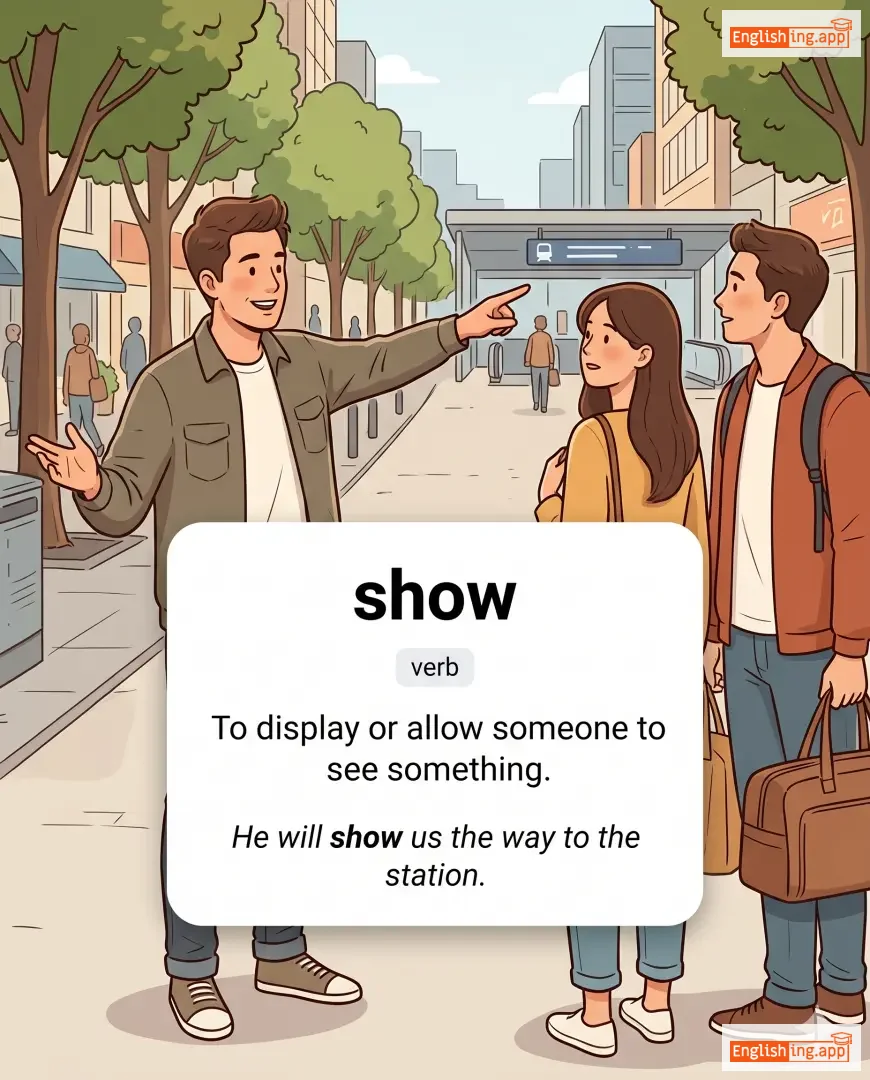
To display or allow someone to see something.
••••••
|
He will show us the way to the station.
彼は私たちに駅への道を見せてくれるでしょう。
••••••
|
彼は私たちに駅への道を見せてくれるでしょう。
Kare wa watashitachi ni eki e no michi wo misete kureru deshou.
••••••
|
show off
ショーオフ
••••••
|
to try to impress others by displaying abilities or possessions
••••••
|
見せびらかす
misebikasu
••••••
|
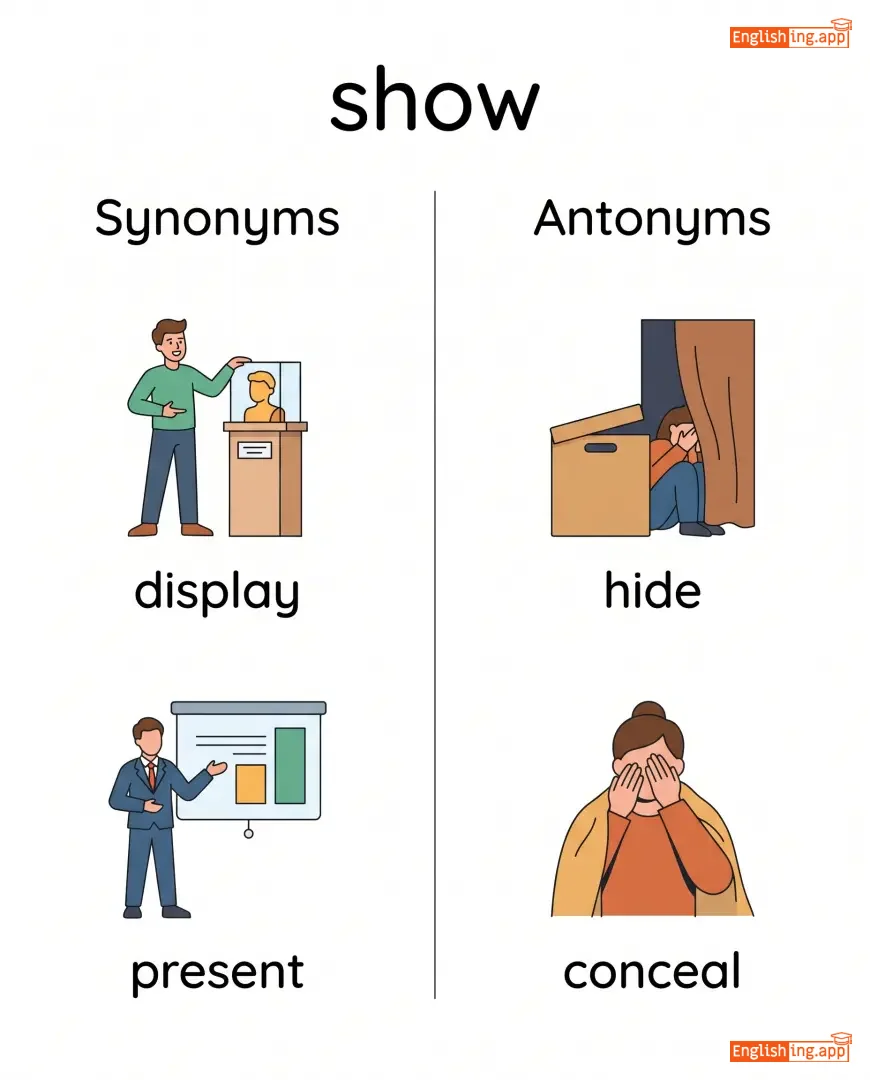
display, present, demonstrate, reveal, exhibit
••••••
|
hide, conceal, cover
••••••
|
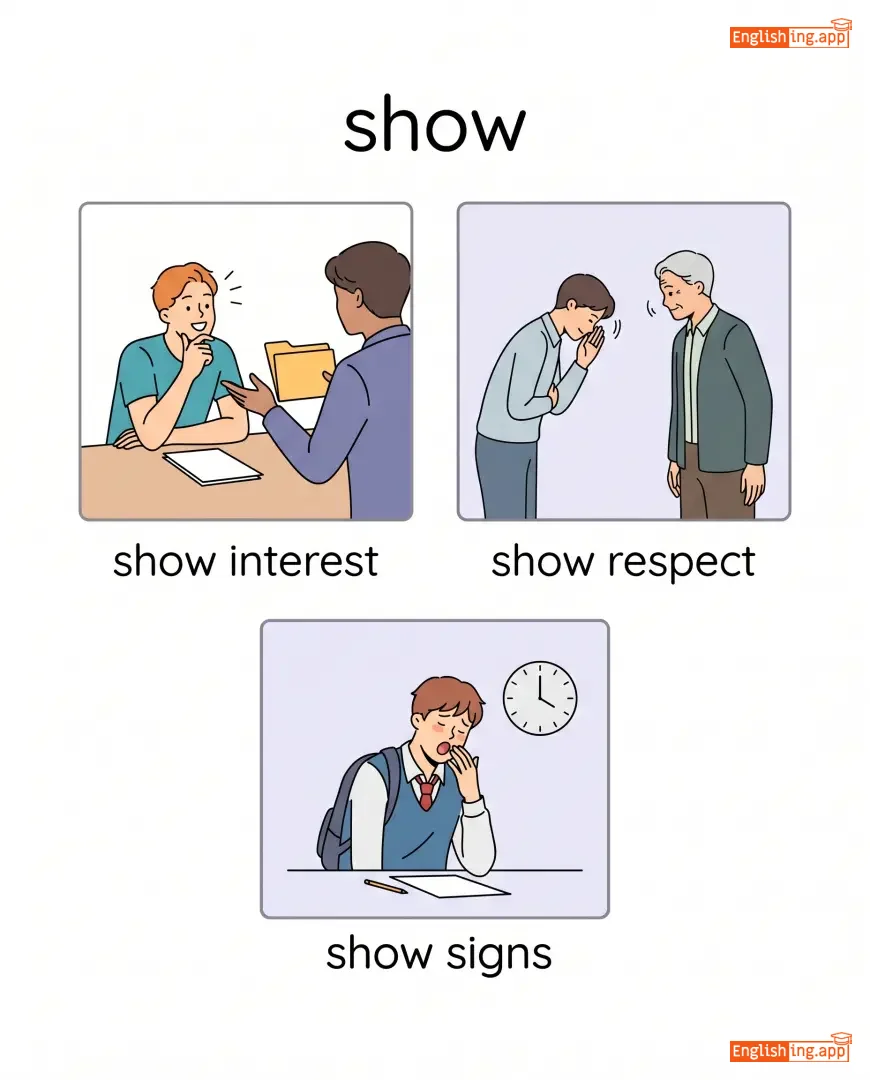
show interest, show respect, show signs, show off
••••••
|
Show は見せる意味 – テレビ番組ではすべて見せることが大切です。
••••••
|
|
#10224
💥
|
/ˈʃætər/
verb
(シャター)
••••••
|
- •••••• |
壊れる
kowareru
••••••
|
shattered
シャタード
••••••
|
shattered
シャタード
••••••
|
shatters
シャターズ
••••••
|
shattering
シャタリング
••••••
|
To break suddenly into many small pieces.
••••••
|
The glass will shatter if you drop it.
The glass will shatter if you drop it.
••••••
|
ガラスは落とすと壊れる。
Garasu wa otosu to kowareru.
••••••
|
shatter dreams
シャター ドリームス
••••••
|
to completely ruin someone's hopes or plans
••••••
|
夢を壊す
yume o kowasu
••••••
|
break, smash, crack, demolish, splinter
••••••
|
repair, fix, build
••••••
|
shatter glass, shatter dreams, shatter confidence
••••••
|
Shatterは壊れることを意味します—ガラスが落ちると壊れるように。
••••••
|
Vocabulary Quiz
Test your vocabulary by matching words with their translations or meanings.
Login to take the quiz
Comments (0)
Share your thoughts and join the discussion.
Join the discussion by logging in
Login to CommentNo comments yet
Be the first to share your thoughts!