

翻訳
過去
過去分詞
三人称単数
動名詞
意味
例文
例文の翻訳
同義語
対義語
コロケーション
ニーモニック






Swipe left or right, or use the buttons. Tap image to zoom.
例文の翻訳
単語
Lesson 226Lesson 226 - マスクトグル
|
絵文字
|
単語 | Images | 翻訳 | 過去 | 過去分詞 | 三人称単数 | 動名詞 | 意味 | 例文 | 例文の翻訳 | 表現例 | 表現例の意味 | 表現例の翻訳 | 同義語 | 対義語 | コロケーション | ニーモニック |
|---|---|---|---|---|---|---|---|---|---|---|---|---|---|---|---|---|---|
|
#6750
🪨
|
/ˈpɔːrfəri/
noun
(ポルフィリ)
••••••
|
- •••••• |
硬い火成岩
katai kaseigan
••••••
|
- •••••• | - •••••• | - •••••• | - •••••• |
A hard igneous rock containing crystals, often used for decorative or building purposes.
••••••
|
The ancient Romans used porphyry to make columns and statues.
古代ローマ人はポルフィリを使って柱や彫像を作った。
••••••
|
古代ローマ人はポルフィリを使って柱や彫像を作った。
Kodai Rōmajin wa porufiri o tsukatte hashi ya chōzō o tsukutta.
••••••
|
- •••••• | - •••••• | - •••••• |
rock, stone, mineral, igneous rock, granite
••••••
|
soil, sand
••••••
|
porphyry column, porphyry statue, porphyry quarry, red porphyry
••••••
|
Porphyry = 紫色の岩 (iwa) ローマ人が使った
••••••
|
|
#6751
📦
|
/pəˈzɛʃən/
noun
(ポゼッション)
••••••
|
- •••••• |
所有
shoyū
••••••
|
- •••••• | - •••••• | - •••••• | - •••••• |
The state of owning, controlling, or holding something.
••••••
|
The ring was her most valuable possession. |
その指輪は彼女の最も貴重な所有物でした。
Sono yubiwa wa kanojo no mottomo kichōna shoyūbutsu deshita.
••••••
|
in possession of |
having something in one's ownership or control
••••••
|
所有している
shoyū shite iru
••••••
|
ownership, control, property, asset, holding
••••••
|
loss, absence, dispossession
••••••
|
valuable possession, personal possession, in possession of, lose possession
••••••
|
所有 = 自分のものを手に入れる。
••••••
|
|
#6752
👐
|
/pəˈzɛs/
verb
(ポゼス)
••••••
|
- •••••• |
持つ / 所有する
motsu / shoyuu suru
••••••
|
possessed
ポゼスド
••••••
|
possessed
ポゼスド
••••••
|
possesses
ポゼセス
••••••
|
possessing
ポゼシング
••••••
|
To have or own something; to hold a quality or characteristic.
••••••
|
She possesses great talent in music.
シー ポゼセス グレート タレント イン ミュージック。
••••••
|
彼女は音楽において素晴らしい才能を持っています。
Kanojo wa ongaku ni oite subarashii sainou wo motteimasu.
••••••
|
possess yourself of
ポゼス ヨアセルフ オフ
••••••
|
to gain control of or acquire something
••••••
|
自分を手に入れる
jibun wo te ni ireru
••••••
|
own, hold, maintain, control, acquire
••••••
|
lack, lose, surrender
••••••
|
possess talent, possess property, possess knowledge, possess rights
••••••
|
持つ = 得る。才能や所有物を持つ。
••••••
|
|
#6753
👥
|
/ˈpɒsi/
noun
(ポッセ)
••••••
|
- •••••• |
ギャング / 友達グループ
gyangu / tomodachi gurūpu
••••••
|
- •••••• | - •••••• | - •••••• | - •••••• |
A group of people, often friends or a group organized to support or enforce the law.
••••••
|
He arrived at the party with his posse of friends. |
彼は友達グループと一緒にパーティーに到着しました。
Kare wa tomodachi gurūpu to issho ni pātī ni tōchaku shimashita.
••••••
|
- •••••• | - •••••• | - •••••• |
gang, crew, squad, group, entourage
••••••
|
individual, loner
••••••
|
posse of friends, sheriff's posse, loyal posse
••••••
|
Posseは👥グループを意味します – パーティーでの'posse'は友達グループです。
••••••
|
|
#6754
➕
|
/ˈpɒzɪtɪv/
adjective
(pozitibu)
••••••
|
|
ポジティブ
pojitibu
••••••
|
- •••••• | - •••••• | - •••••• | - •••••• |
Characterized by optimism, certainty, or something favorable.
••••••
|
She always tries to maintain a positive attitude. |
彼女はいつもポジティブな態度を保とうとしています。
Kanojo wa itsumo pojitibu na taido o tamotsu to shiteimasu.
••••••
|
positive thinking |
focusing on the good aspects and expecting favorable outcomes
••••••
|
ポジティブシンキング
pojitibu shinkingu
••••••
|
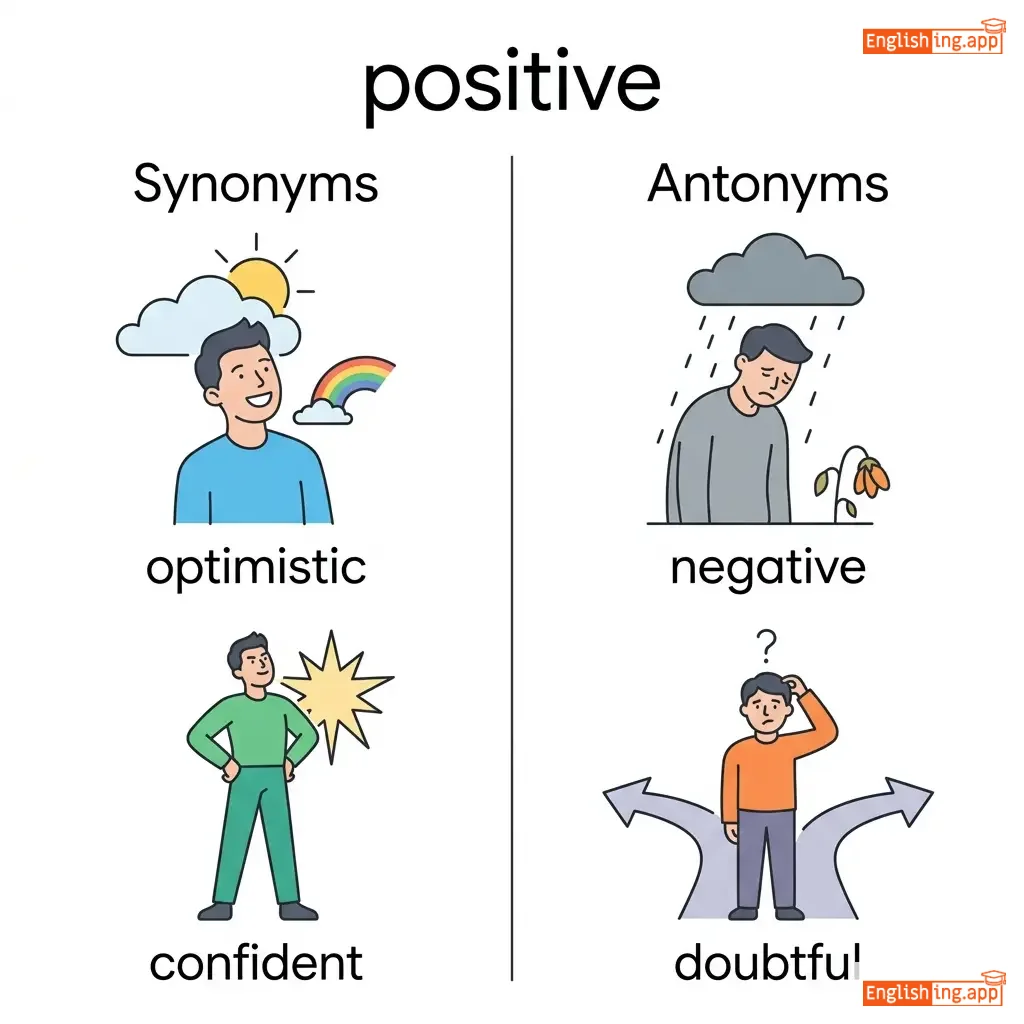
optimistic, confident, assured, constructive, certain
••••••
|
negative, doubtful, pessimistic
••••••
|
positive attitude, positive result, positive thinking, positive feedback, positive impact
••••••
|
ポジティブは良い結果を生む!何事もポジティブに考えて前向きに!
••••••
|
|
#6755
📍
|
/pəˈzɪʃən/
noun
(ポジション)
••••••
|
|
ポジション / 位置
pojishon / ichi
••••••
|
- •••••• | - •••••• | - •••••• | - •••••• |
A place, job, or status; the way in which someone or something is placed or arranged.
••••••
|
She applied for a teaching position at the university. |
彼女は大学の教職に応募しました。
Kanojo wa daigaku no kyōshoku ni ōbo shimashita.
••••••
|
in a strong position |
having an advantage or being in control of a situation
••••••
|
強い位置にいる
tsuyoi ichi ni iru
••••••
|
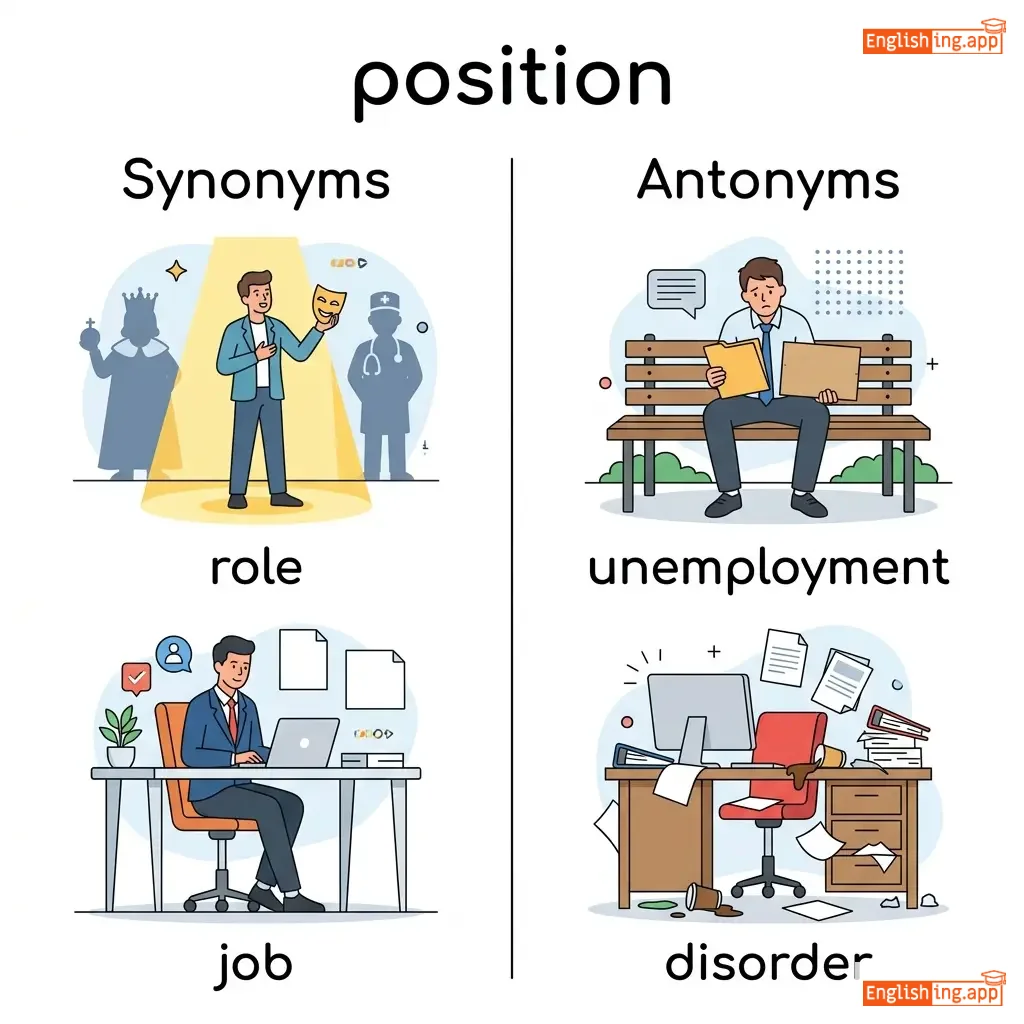
role, job, post, situation, placement
••••••
|
unemployment, disorder, disadvantage
••••••
|
job position, official position, social position, strong position, managerial position
••••••
|
Position(ポジション)という言葉は位置にも使うので、いつでもいいポジションに立とう!📍
••••••
|
|
#6756
💡
|
/ˈpɑːzɪt/
verb
••••••
|
- •••••• | - •••••• |
posited
••••••
|
posited
••••••
|
posits
••••••
|
positing
••••••
|
To assume or suggest something as a fact or basis for reasoning.
••••••
|
The scientist posited a new theory to explain the phenomenon. |
- •••••• |
posit a theory |
To propose or suggest a theoretical explanation.
••••••
|
- •••••• |
propose, suggest, assume, hypothesize
••••••
|
deny, reject
••••••
|
posit a theory, posit an idea, posit existence
••••••
|
No •••••• |
|
#6757
🎭
|
/poʊˈzɜːr/
noun
••••••
|
- •••••• | - •••••• | - •••••• | - •••••• | - •••••• | - •••••• |
A person who pretends to be something they are not, often to impress others.
••••••
|
Many considered him a poseur because he exaggerated his accomplishments. |
- •••••• | - •••••• | - •••••• | - •••••• |
pretender, impostor, fraud, phony
••••••
|
genuine, authentic
••••••
|
artistic poseur, social poseur, literary poseur
••••••
|
No •••••• |
|
#6758
📸
|
/poʊz/
verb
(happiness)
••••••
|
- •••••• |
幸せ
shiawase
••••••
|
posed
••••••
|
posed
••••••
|
poses
••••••
|
posing
••••••
|
To assume a particular position, especially for a photograph or display; to present a problem or question.
••••••
|
She posed for a picture in front of the monument. |
彼女は賞を受け取ったとき、幸せを隠すことができませんでした。
Kanojo wa shō o uketotta toki, shiawase o kakusu koto ga dekimasen deshita.
••••••
|
pose a threat |
To present a danger or risk.
••••••
|
幸せの追求
shiawase no tsuikyū
••••••
|
position, posture, present, represent, display
••••••
|
ignore, neglect
••••••
|
pose a question, pose a threat, pose for photos
••••••
|
幸せは人生の中での最も大切な目標です。
••••••
|
|
#6759
🍖
|
/ˈpɔːrtli/
adjective
(ポートリー)
••••••
|
- •••••• |
ぽっちゃり
pocchari
••••••
|
- •••••• | - •••••• | - •••••• | - •••••• |
Having a stout or somewhat fat body, often implying dignity or authority.
••••••
|
The portly man entered the room with confidence.
ポートリーな男性は自信を持って部屋に入った。
••••••
|
ぽっちゃりな男性は自信を持って部屋に入った。
Pocchari na dansei wa jishin o motte heya ni haitta.
••••••
|
- •••••• | - •••••• | - •••••• |
stout, plump, corpulent, rotund
••••••
|
slim, thin, lean
••••••
|
portly gentleman, portly figure, portly appearance
••••••
|
Portのように、少し重いものがポートリーにもある。
••••••
|
|
#6760
📁
|
/pɔːrtˈfoʊlioʊ/
noun
(ポートフォリオ)
••••••
|
|
ポートフォリオ
pōtoforio
••••••
|
- •••••• | - •••••• | - •••••• | - •••••• |
A collection of financial investments, artworks, or documents presented as a body of work.
••••••
|
The designer showcased her portfolio during the interview.
デザイナーはインタビュー中に彼女のポートフォリオを展示しました。
••••••
|
デザイナーはインタビュー中に彼女のポートフォリオを展示しました。
Dezainā wa intabyū chū ni kanojo no pōtoforio o tenji shimashita.
••••••
|
diversified portfolio
多様化されたポートフォリオ
••••••
|
A variety of different investments held to reduce risk.
••••••
|
多様化されたポートフォリオ
Tayōka sareta pōtoforio
••••••
|
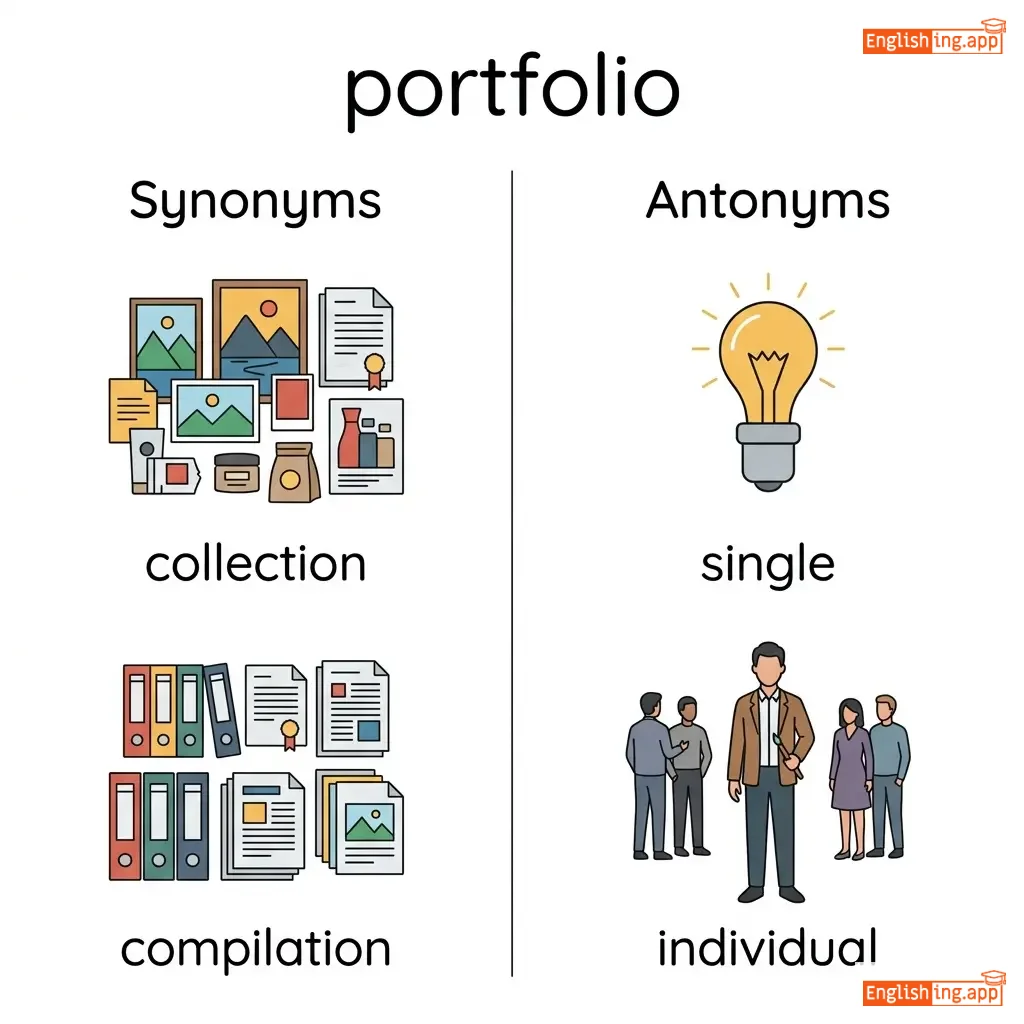
collection, compilation, dossier, folder, assortment
••••••
|
single, individual
••••••
|
investment portfolio, portfolio management, portfolio of work, portfolio strategy
••••••
|
ポートフォリオ = すべての投資と創作を一つにまとめる場所。
••••••
|
|
#6761
☁️
|
/pɔːrˈtɛntəs/
adjective
(ポーテントゥス)
••••••
|
- •••••• |
前兆的な、重大な
zenjō-tekina, jūdaina
••••••
|
- •••••• | - •••••• | - •••••• | - •••••• |
Giving a sign or warning that something, often bad or serious, is going to happen; or overly solemn and pompous.
••••••
|
His portentous tone made everyone nervous about the news. |
彼の前兆的な口調は、ニュースについて皆を不安にさせた。
Kare no zenzō-teki na kuchō wa, nyūsu ni tsuite mina o fuan ni saseta.
••••••
|
- •••••• | - •••••• | - •••••• |
ominous, foreboding, threatening, pompous, grave
••••••
|
hopeful, reassuring
••••••
|
portentous sign, portentous event, portentous tone, portentous speech
••••••
|
ポーテントゥスは重大な出来事の兆し、厳粛で大袈裟な話し方からそれを理解できます。
••••••
|
|
#6762
⚠️
|
/ˈpɔːrtɛnt/
noun
(ポーテント)
••••••
|
- •••••• |
前兆
zenchou
••••••
|
- •••••• | - •••••• | - •••••• | - •••••• |
A sign or warning that something, especially something momentous or calamitous, is likely to happen.
••••••
|
The sudden drop in stock prices was seen as a portent of economic trouble. |
株価の急落は、経済的な問題の前兆として見なされました。
Kabuka no kyūraku wa, keizaiteki na mondai no zenchou toshite minasaremashita.
••••••
|
- •••••• | - •••••• | - •••••• |
omen, sign, warning, indication, forewarning
••••••
|
certainty, assurance
••••••
|
portent of doom, dark portent, portent of change, portent of disaster
••••••
|
Portent = 前兆、重大な出来事が起こる予兆
••••••
|
|
#6763
🌩️
|
/pɔːrˈtɛnd/
verb
(ポートエンド)
••••••
|
- •••••• |
前兆
zenchou
••••••
|
portended
ポートエンデッド
••••••
|
portended
ポートエンデッド
••••••
|
portends
ポートエンドズ
••••••
|
portending
ポートエンディング
••••••
|
To be a sign or warning that something, especially something bad, is going to happen.
••••••
|
Dark clouds portend a storm.
暗い雲は嵐を予兆します
••••••
|
暗い雲は嵐を予兆します。
Kurai kumo wa arashi o yochou shimasu.
••••••
|
- •••••• | - •••••• | - •••••• |
foreshadow, predict, signify, foretell, indicate
••••••
|
ignore, overlook
••••••
|
portend disaster, portend change, portend danger, portend crisis
••••••
|
Portendの暗い雲は嵐を予兆する、前兆のようなものです。
••••••
|
|
#6764
🥣
|
/ˈpɔːrɪdʒ/
noun
••••••
|
- •••••• | - •••••• | - •••••• | - •••••• | - •••••• | - •••••• |
A soft food made by boiling oats or other grains in milk or water.
••••••
|
She had a bowl of porridge for breakfast. |
- •••••• |
doing porridge |
Slang expression meaning 'serving a prison sentence'.
••••••
|
- •••••• |
oatmeal, gruel, mush, cereal, hot cereal
••••••
|
bread, meat
••••••
|
bowl of porridge, hot porridge, oat porridge, porridge breakfast
••••••
|
No •••••• |
|
#6765
🎉
|
/pɒmp/
noun
(ポンプ)
••••••
|
- •••••• |
壮大, 豪華
sōdai, gōka
••••••
|
- •••••• | - •••••• | - •••••• | - •••••• |
ceremonial display or splendor; grandeur
••••••
|
The graduation ceremony was full of pomp and circumstance. |
卒業式は壮大で豪華でした。
Sotsugyō shiki wa sōdai de gōka deshita.
••••••
|
- •••••• | - •••••• | - •••••• |
splendor, grandeur, ceremony, pageantry
••••••
|
simplicity, modesty
••••••
|
pomp and circumstance, royal pomp, official pomp
••••••
|
POMPは盛大で豪華なものを示す
••••••
|
|
#6766
🧽
|
/ˈpɔːrəs/
adjective
(ポーロス)
••••••
|
|
多孔性の
takōsei no
••••••
|
- •••••• | - •••••• | - •••••• | - •••••• |
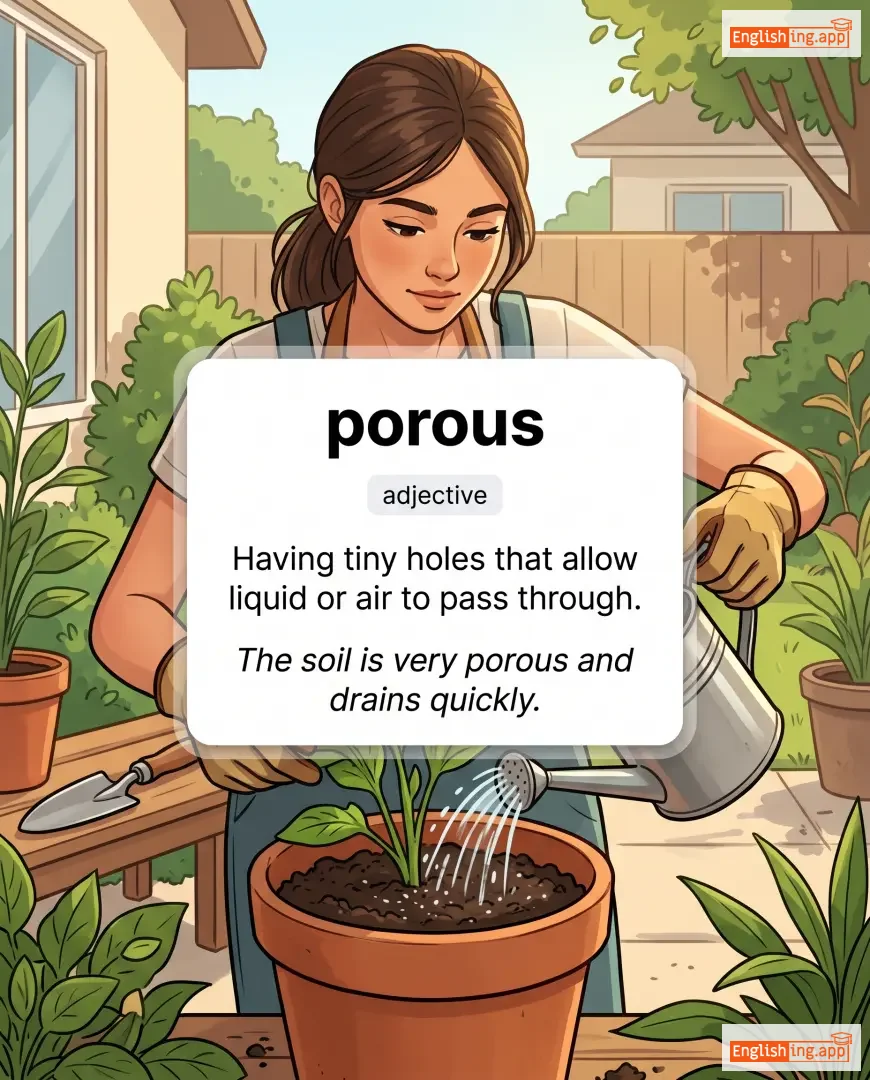
Having tiny holes that allow liquid or air to pass through.
••••••
|
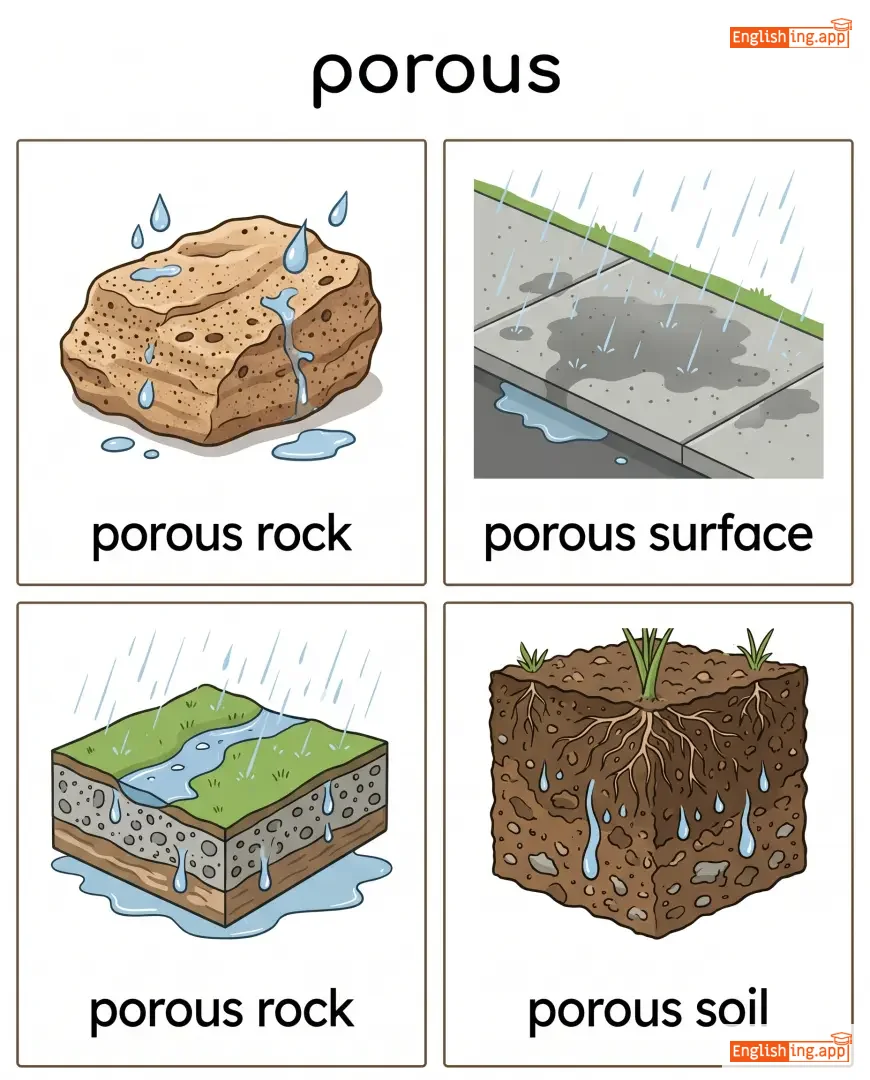
The soil is very porous and drains quickly. |
土壌は非常に多孔性で、すぐに水を排出します。
Dojō wa hijō ni takōsei de, sugu ni mizu o haishutsu shimasu.
••••••
|
- •••••• | - •••••• | - •••••• |
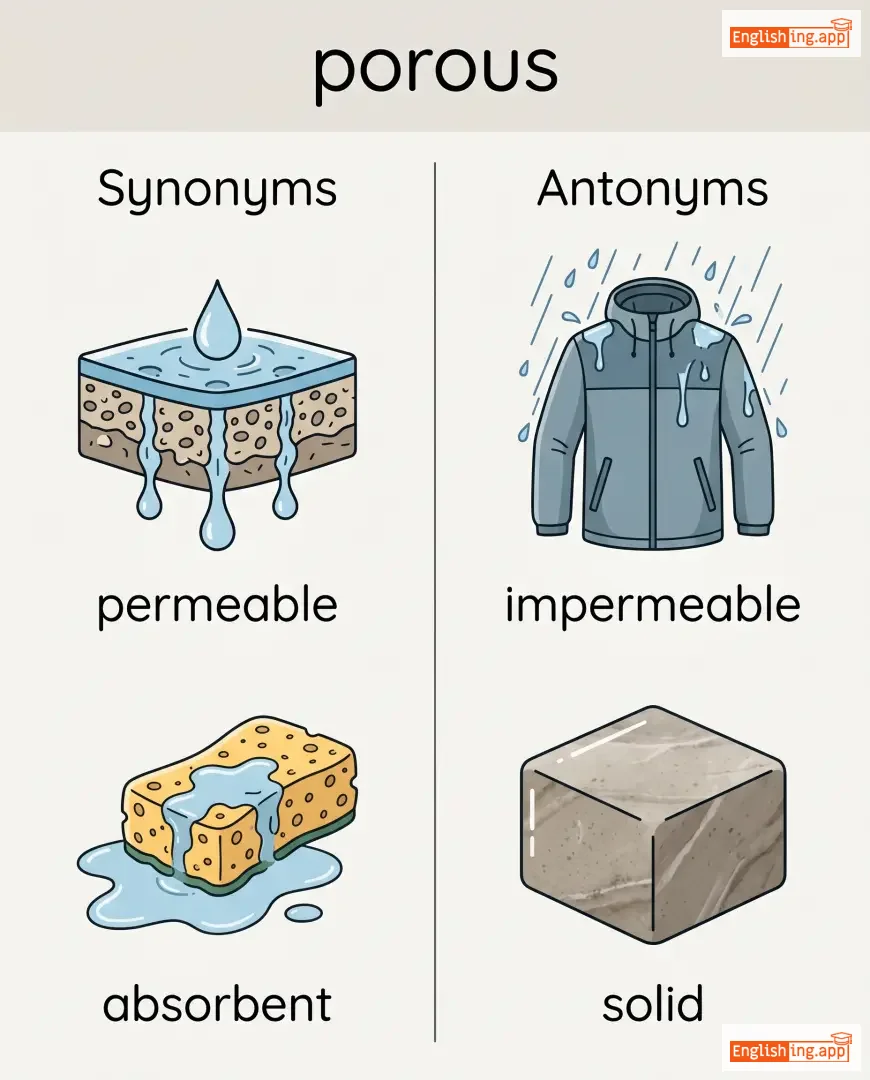
permeable, absorbent, spongy, leaky, penetrable
••••••
|
impermeable, solid, sealed
••••••
|
porous rock, porous surface, porous soil, porous structure
••••••
|
多孔性のようなスポンジ、水が簡単に通過する。
••••••
|
|
#6767
🔍
|
/pɔːr/
noun/verb
(ポア)
••••••
|
- •••••• |
毛穴 / 注意深く研究する
mōana / chūi fukaku kenkyū suru
••••••
|
pored
ポアード
••••••
|
pored
ポアード
••••••
|
pores
ポアーズ
••••••
|
poring
ポーリング
••••••
|
As a noun: a tiny opening in the skin or surface. As a verb: to study something carefully.
••••••
|
She pored over the documents for hours before making a decision.
彼女は決定を下す前に何時間も書類をじっくりと読みました。
••••••
|
彼女は決定を下す前に何時間も書類をじっくりと読みました。
Kanojo wa kettei o kudasu mae ni nanjikan mo shorui o jikkuri to yomimashita.
••••••
|
pore over
ポア オーバー
••••••
|
to read or study something carefully
••••••
|
注意深く研究する
Chūi fukaku kenkyū suru
••••••
|
study, examine, scrutinize, inspect, opening
••••••
|
ignore, neglect
••••••
|
skin pores, pore size, pore over, clogged pore
••••••
|
Pore over は注意深く研究すること - ポアオーバー、注意深く学ぶ。
••••••
|
|
#6768
🍶
|
/ˈpɔːrsəlɪn/
noun
(ポーセリン)
••••••
|
- •••••• |
磁器
jiki
••••••
|
- •••••• | - •••••• | - •••••• | - •••••• |
A white, hard ceramic material often used for dishes and ornaments.
••••••
|
The museum displayed ancient porcelain vases from China.
博物館は中国の古代のポーセリンの花瓶を展示しました。
••••••
|
博物館は中国の古代のポーセリンの花瓶を展示しました。
Hakubutsukan wa Chūgoku no kodai no pōserin no kabin o tenji shimashita.
••••••
|
- •••••• | - •••••• | - •••••• |
china, ceramic, pottery, earthenware, crockery
••••••
|
metal, wood
••••••
|
porcelain vase, porcelain plate, fine porcelain, porcelain doll
••••••
|
磁器というのは壊れやすい、だから注意して‘Porcelin’を覚えて!
••••••
|
|
#6769
🏙️
|
/ˈpɒpjələs/
adjective
(ポピュラス)
••••••
|
- •••••• |
人口密度の高い
jinkō mitsudo no takai
••••••
|
- •••••• | - •••••• | - •••••• | - •••••• |
Having a large population; densely inhabited.
••••••
|
Dhaka is one of the most populous cities in the world. |
東京は世界で最も人口密度の高い都市の一つです。
Tōkyō wa sekai de mottomo jinkō mitsudo no takai toshi no hitotsu desu.
••••••
|
- •••••• | - •••••• | - •••••• |
crowded, populated, teeming, busy, inhabited
••••••
|
sparse, deserted, uninhabited
••••••
|
populous city, populous country, densely populous, populous area
••••••
|
Populous は「人口多」意味 — 人がいっぱい!
••••••
|
|
#6770
🗣️
|
/ˈpɒpjʊlɪst/
noun
(ポピュリスト)
••••••
|
- •••••• |
ポピュリストのリーダー
popyurisuto no rīdā
••••••
|
- •••••• | - •••••• | - •••••• | - •••••• |
A politician or person who seeks to appeal to ordinary people who feel their concerns are ignored by elites.
••••••
|
The populist leader promised to put the needs of common citizens first. |
ポピュリストのリーダーは、一般市民のニーズを最優先すると約束しました。
Popyurisuto no rīdā wa, ippan shimin no nīzu o saiyūsen suru to yakusoku shimashita.
••••••
|
- •••••• | - •••••• | - •••••• |
demagogue, agitator, reformer, campaigner, advocate
••••••
|
elitist, aristocrat
••••••
|
populist leader, populist rhetoric, populist movement, populist agenda
••••••
|
Populistは「人民のために働くリーダー」
••••••
|
|
#6771
👥
|
/ˈpɒpjʊləs/
noun
(ポピュレス)
••••••
|
- •••••• |
住民
jumins
••••••
|
- •••••• | - •••••• | - •••••• | - •••••• |
the general public; the ordinary people living in a country or area
••••••
|
The new law was welcomed by the local populace.
新しい法律は地元の住民によって歓迎されました。
••••••
|
新しい法律は地元の住民によって歓迎されました。
Atarashī hōritsu wa jimoto no jūmin ni yotte kangei saremashita.
••••••
|
- •••••• | - •••••• | - •••••• |
people, public, citizens, masses
••••••
|
elite, aristocracy
••••••
|
local populace, general populace, populace opinion
••••••
|
Populace means the people, like '住民' in Japanese.
••••••
|
|
#6772
🗣️
|
/ˈpɒntɪfɪkeɪt/
verb
(ポンティフィケイト)
••••••
|
- •••••• |
傲慢または教義的な方法で話すまたは行動する; 教皇として務める
gōman matawa kyōgitekina hōhō de hanasu matawa kōdō suru; kyōkō toshite tsutomeru
••••••
|
pontificated
ポンティフィケイテッド
••••••
|
pontificated
ポンティフィケイテッド
••••••
|
pontificates
ポンティフィケイツ
••••••
|
pontificating
ポンティフィケイティング
••••••
|
to speak or act in a pompous or dogmatic way; to officiate as a pontiff
••••••
|
He pontificated on the importance of education for over an hour.
彼は1時間以上にわたり教育の重要性についてポンティフィケイトしました。
••••••
|
彼は1時間以上にわたり教育の重要性について傲慢に話しました。
Kare wa ichi-jikan ijō ni watari kyōiku no jūyō-sei ni tsuite gōman ni hanashimashita.
••••••
|
- •••••• | - •••••• | - •••••• |
preach, sermonize, expound, declaim
••••••
|
listen, keep quiet
••••••
|
pontificate on, pontificate about, pontificate endlessly
••••••
|
ポンティフィケイトは、まるで教皇のように話すことです。
••••••
|
|
#6773
🎩
|
/pɒnˈtɪfɪkəl/
adjective
(ポンティフィカル)
••••••
|
- •••••• |
教皇または司教に関連する; 傲慢または高慢な
kyoukou matawa shikyou ni kanren suru; gouman matawa kouman na
••••••
|
- •••••• | - •••••• | - •••••• | - •••••• |
relating to a pope or bishop; pompous or self-important
••••••
|
His pontifical manner annoyed the other members of the committee.
彼のポンティフィカルな態度は委員会の他のメンバーを困らせた。
••••••
|
彼の高慢な態度は委員会の他のメンバーを困らせた。
Kare no kouman na taido wa iinkai no hoka no menbaa o komarase ta.
••••••
|
- •••••• | - •••••• | - •••••• |
papal, majestic, pompous, ceremonious
••••••
|
humble, modest
••••••
|
pontifical robes, pontifical address, pontifical ceremony
••••••
|
Ponti (ポンティ) フィカル 態度 高慢 - Pontifical means pompous or pope-like
••••••
|
|
#6774
⛪
|
/ˈpɒntɪf/
noun
(ポンティフ)
••••••
|
- •••••• |
教皇または高位の司教
kyoukou matawa koui no shikyou
••••••
|
- •••••• | - •••••• | - •••••• | - •••••• |
the pope or a high-ranking bishop in the Christian church
••••••
|
The pontiff addressed the nation in a televised speech. |
教皇はテレビで国民に向けて演説を行いました。
Kyoukou wa terebi de kokumin ni mukete enzetsu wo okonai mashita.
••••••
|
- •••••• | - •••••• | - •••••• |
pope, bishop, prelate, clergyman
••••••
|
layperson, commoner
••••••
|
pontiff's decree, pontiff's speech, pontiff visits
••••••
|
PONTIFF 教皇 - Pontiff とは教皇または高位の司教を意味します
••••••
|
|
#6775
🐘
|
/ˈpɑːndərəs/
adjective
(ポンダラス)
••••••
|
- •••••• |
重くて遅い
omokute osoi
••••••
|
- •••••• | - •••••• | - •••••• | - •••••• |
slow and clumsy because of great weight; dull and labored
••••••
|
The ponderous lecture made it hard for students to stay awake.
ポンダラスな講義は学生たちが目を覚ましているのを難しくした。
••••••
|
重くて遅い講義は学生たちが目を覚ましているのを難しくした。
Omokute osoi kougi wa gakuseitachi ga me o samashite iru no o muzukashiku shita.
••••••
|
- •••••• | - •••••• | - •••••• |
heavy, bulky, cumbersome, massive
••••••
|
light, agile, graceful
••••••
|
ponderous steps, ponderous speech, ponderous tone
••••••
|
Pondering は頭を重くする (omokute) - Ponderous は重いまたは遅いという意味
••••••
|
|
#6776
📚
|
/ˈpɒndərəbl/
adjective
(ポンダラブル)
••••••
|
- •••••• |
考慮できる, 思案可能
kōryo dekiru, shian kanō
••••••
|
- •••••• | - •••••• | - •••••• | - •••••• |
able to be considered or thought about
••••••
|
The evidence was substantial and ponderable. |
証拠は重要であり、思案可能でした。
Shōko wa jūyō de ari, shian kanō deshita.
••••••
|
- •••••• | - •••••• | - •••••• |
considerable, significant, weighty, debatable
••••••
|
insignificant, trivial
••••••
|
ponderable evidence, ponderable argument, ponderable matter
••••••
|
PONDERABLEはPONDERすることで考慮可能という意味です
••••••
|
|
#6777
🤔
|
/ˈpɒndər/
verb
(ポンダー)
••••••
|
- •••••• |
深く考える
fukaku kangaeru
••••••
|
pondered
ポンダード
••••••
|
pondered
ポンダード
••••••
|
ponders
ポンダーズ
••••••
|
pondering
ポンダリング
••••••
|
to think about something carefully
••••••
|
She pondered over the meaning of the poem.
彼女は詩の意味について深く考えていました。
••••••
|
彼女は詩の意味について深く考えていました。
Kanojo wa shi no imi ni tsuite fukaku kangaete imashita.
••••••
|
- •••••• | - •••••• | - •••••• |
consider, contemplate, reflect, deliberate
••••••
|
ignore, dismiss
••••••
|
ponder the question, ponder deeply, ponder on
••••••
|
ポンダーは深く考えることです。
••••••
|
|
#6778
🧐
|
/ˈpɒmpəs/
adjective
(ポンポス)
••••••
|
- •••••• |
傲慢な
gōman na
••••••
|
- •••••• | - •••••• | - •••••• | - •••••• |
exaggeratedly self-important; ostentatious
••••••
|
The manager had a pompous attitude that annoyed his team.
マネージャーは、チームを苛立たせるようなポンポスな態度を取っていた。
••••••
|
マネージャーは、チームを苛立たせるようなポンポスな態度を取っていた。
Manējā wa, chīmu o iradataseru yō na ponposu na taido o totte ita.
••••••
|
- •••••• | - •••••• | - •••••• |
arrogant, pretentious, self-important, grandiose
••••••
|
humble, modest
••••••
|
pompous speech, pompous behavior, pompous attitude
••••••
|
ポンポス、見せびらかすような態度のことで、自信を持ちすぎた人のこと
••••••
|
|
#6779
😤
|
/pɒmˈpɒsəti/
noun
(ポンポジティ)
••••••
|
- •••••• |
傲慢, 尊大
gōman, son'dai
••••••
|
- •••••• | - •••••• | - •••••• | - •••••• |
self-important behavior or exaggerated dignity
••••••
|
His speech was full of pomposity and arrogance.
彼のスピーチはポンポジティと傲慢で満ちていました。
••••••
|
彼のスピーチはポンポジティと傲慢で満ちていました。
Kare no supīchi wa ponpojiti to gōman de michite imashita.
••••••
|
- •••••• | - •••••• | - •••••• |
arrogance, pretentiousness, self-importance, loftiness
••••••
|
humility, modesty
••••••
|
air of pomposity, full of pomposity, display pomposity
••••••
|
PomposityはPOMPのような傲慢さ (gōman)です。
••••••
|
Vocabulary Quiz
Test your vocabulary by matching words with their translations or meanings.
Login to take the quiz
Comments (0)
Share your thoughts and join the discussion.
Join the discussion by logging in
Login to CommentNo comments yet
Be the first to share your thoughts!