

翻訳
過去
過去分詞
三人称単数
動名詞
意味
例文
例文の翻訳
同義語
対義語
コロケーション
ニーモニック
Swipe left or right, or use the buttons. Tap image to zoom.
例文の翻訳
単語
Lesson 322Lesson 322 - マスクトグル
|
絵文字
|
単語 | Images | 翻訳 | 過去 | 過去分詞 | 三人称単数 | 動名詞 | 意味 | 例文 | 例文の翻訳 | 表現例 | 表現例の意味 | 表現例の翻訳 | 同義語 | 対義語 | コロケーション | ニーモニック |
|---|---|---|---|---|---|---|---|---|---|---|---|---|---|---|---|---|---|
|
#9630
🛒
|
/baɪ/
verb
(バイ)
••••••
|
|
買う
kau
••••••
|
bought
ボット
••••••
|
bought
ボット
••••••
|
buys
バイズ
••••••
|
buying
バイイング
••••••
|
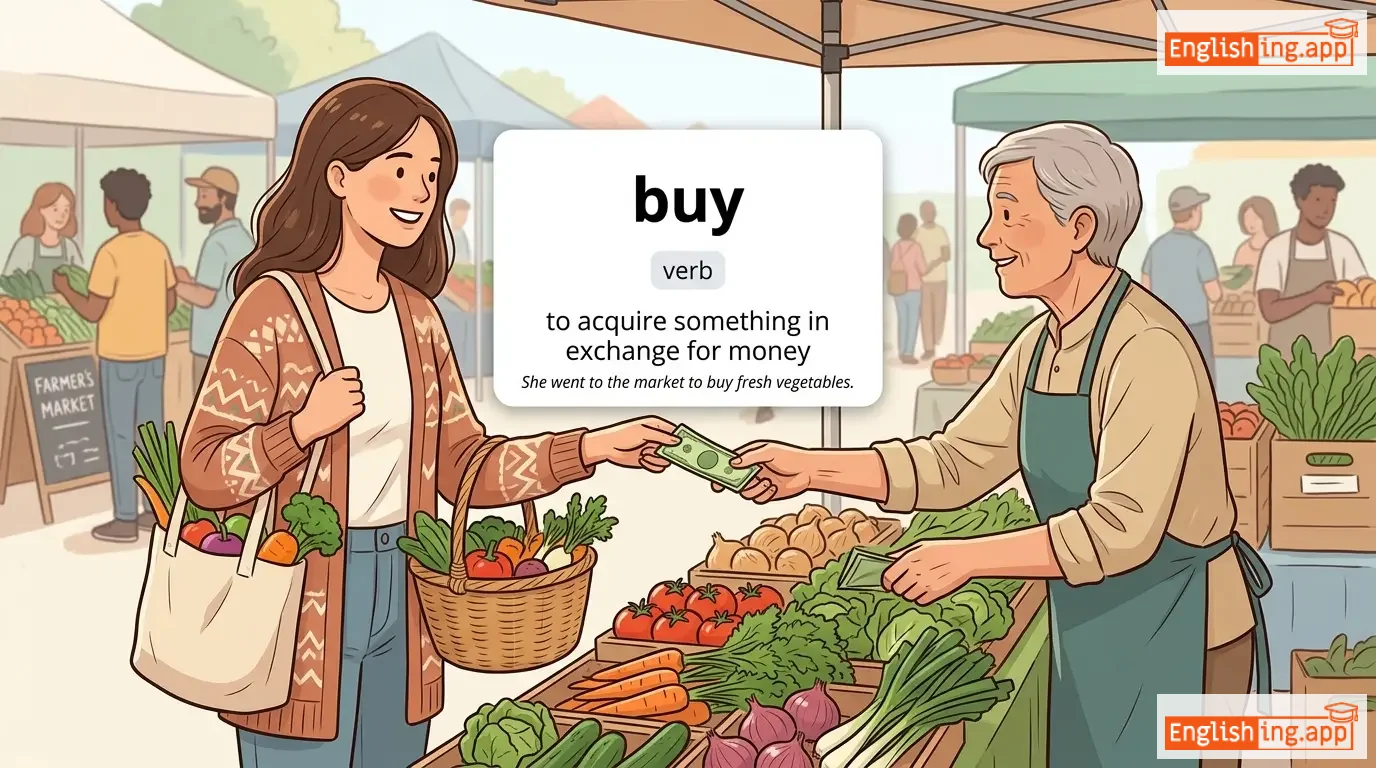
to acquire something in exchange for money
••••••
|
She went to the market to buy fresh vegetables.
彼女は新鮮な野菜を買うために市場に行きました。
••••••
|
彼女は新鮮な野菜を買うために市場に行きました。
Kanojo wa shinsen na yasai o kau tame ni ichiba ni ikimashita.
••••••
|
buy time
時間を買う
••••••
|
to delay something in order to gain more time
••••••
|
時間を買う
jikan o kau
••••••
|
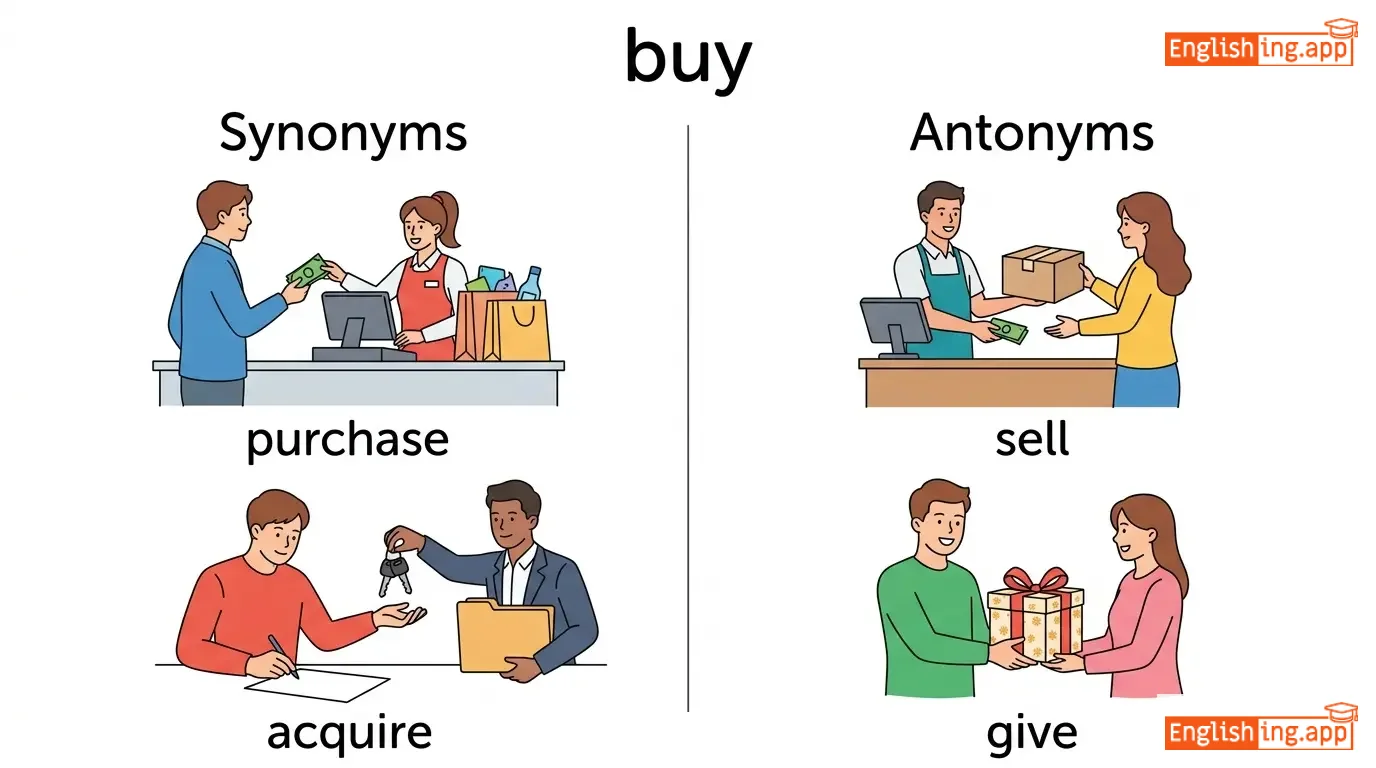
purchase, acquire, obtain, get, procure
••••••
|
sell, give
••••••
|
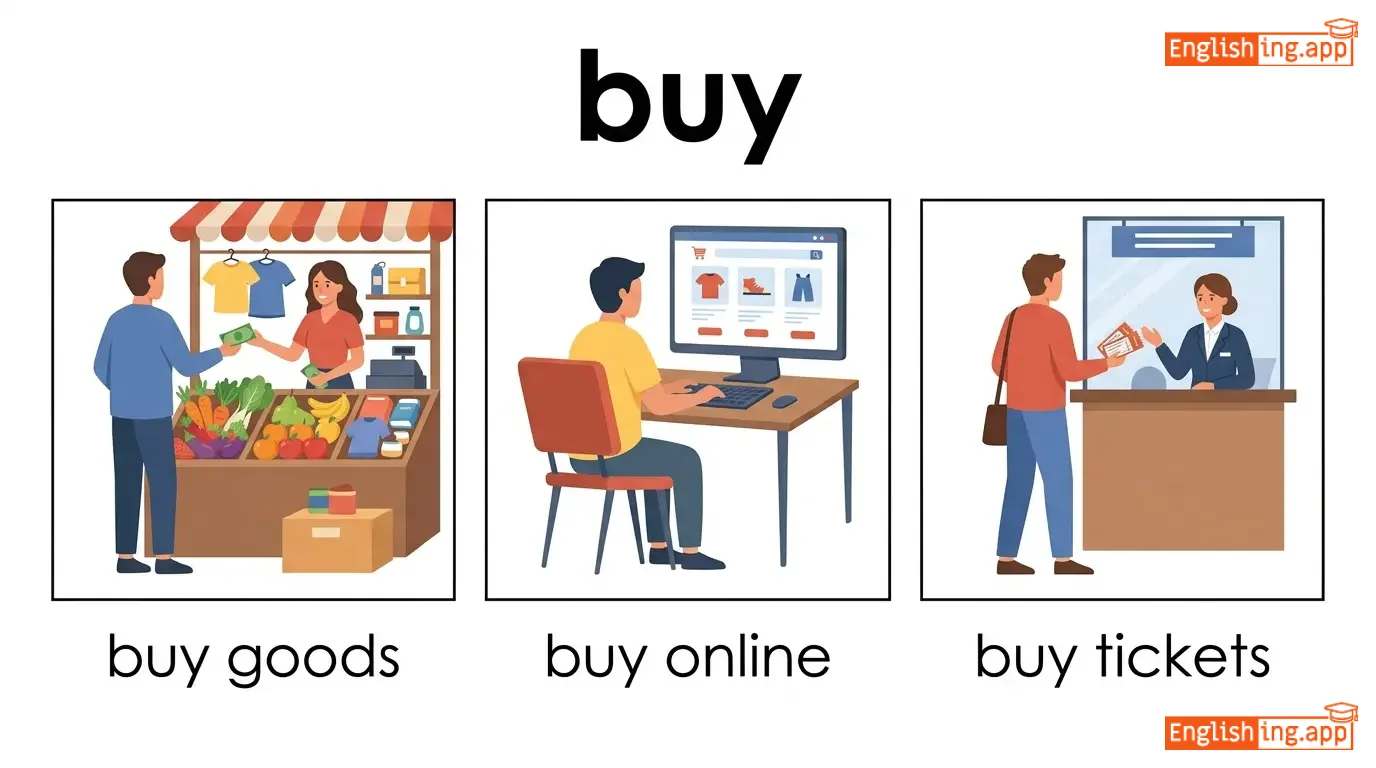
buy goods, buy online, buy tickets, buy food
••••••
|
Buyは買うという意味、マーケットで買うときに使う!
••••••
|
|
#9631
✨
|
/ˈtʃɑːr.mɪŋ/
adjective
(チャーミング)
••••••
|
- •••••• |
魅力的
miryokuteki
••••••
|
- •••••• | - •••••• | - •••••• | - •••••• |
Very pleasing or delightful in a way that attracts people.
••••••
|
The village is full of charming little houses.
その村は魅力的な小さな家で満ちています。
••••••
|
その村は魅力的な小さな家で満ちています。
Sono mura wa miryokuteki na chiisana ie de michiteimasu.
••••••
|
- •••••• | - •••••• | - •••••• |
attractive, delightful, enchanting, appealing, captivating
••••••
|
repulsive, unattractive, unpleasant
••••••
|
charming smile, charming personality, charming place, charming story
••••••
|
Charmingは魅力的、だから人々は魅了される。
••••••
|
|
#9632
✅
|
/ˈsɜːr.tən/
adjective
(サートゥン)
••••••
|
- •••••• |
確実な
kakujitsu na
••••••
|
- •••••• | - •••••• | - •••••• | - •••••• |
Known for sure; having no doubt.
••••••
|
I am certain that she will succeed.
アイ アム サートゥン ザット シー ウィル サクシード。
••••••
|
私は彼女が成功すると確信しています。
watashi wa kanojo ga seikou suru to kakushin shiteimasu.
••••••
|
for certain
フォー サートゥン
••••••
|
Without any doubt.
••••••
|
確かに
tashika ni
••••••
|
sure, confident, definite, assured, convinced
••••••
|
uncertain, doubtful, unsure
••••••
|
certain circumstances, certain degree, certain way, certain level
••••••
|
Certain sounds like 'サーティファイ', as in certified or assured.
••••••
|
|
#9633
🎉
|
/ˈsɛl.əˌbreɪ.tɪd/
adjective
(セレブレイテッド)
••••••
|
- •••••• |
有名な
yūmeina
••••••
|
- •••••• | - •••••• | - •••••• | - •••••• |
Widely known and praised; famous for an achievement.
••••••
|
He is a celebrated author in the field of literature.
彼は文学の分野で著名な作家です。
••••••
|
彼は文学の分野で著名な作家です。
Kare wa bungaku no bunya de chomeina sakka desu.
••••••
|
- •••••• | - •••••• | - •••••• |
famous, renowned, acclaimed, distinguished, notable
••••••
|
unknown, obscure, unrecognized
••••••
|
celebrated author, celebrated artist, celebrated figure, celebrated event
••••••
|
Celebrated = 有名な、名高い作家!
••••••
|
|
#9634
⚠️
|
/ˈkɛr.fəl/
adjective
(ケアフル)
••••••
|
- •••••• |
慎重
shinchou
••••••
|
- •••••• | - •••••• | - •••••• | - •••••• |
Exercising caution or showing concern to avoid mistakes or harm.
••••••
|
He is always careful when crossing the road. |
彼は道路を渡る時、いつも慎重です。
Kare wa douro o wataru toki, itsumo shinchou desu.
••••••
|
be careful |
A warning to take caution.
••••••
|
気をつけて
ki o tsukete
••••••
|
cautious, vigilant, watchful, attentive, prudent
••••••
|
careless, reckless, negligent
••••••
|
be careful, careful planning, careful consideration, careful study
••••••
|
Careful = Care + Full → 慎重 = 失敗を防ぐために注意すること。
••••••
|
|
#9635
❤️
|
/kɛr/
noun/verb
(ケア)
••••••
|
- •••••• |
ケア
kea
••••••
|
cared
ケアード
••••••
|
cared
ケアード
••••••
|
cares
ケアーズ
••••••
|
caring
ケアリング
••••••
|
The process of looking after someone or something; to be concerned or interested.
••••••
|
She took great care of her younger brother.
彼女は弟の世話をとてもよくしていました。
••••••
|
彼女は弟の世話をとてもよくしていました。
Kanojo wa otouto no sewa o totemo yoku shiteimashita.
••••••
|
take care
気をつけて
••••••
|
Used to tell someone to be cautious or to say goodbye kindly.
••••••
|
気をつけて
Ki wo tsukete
••••••
|
concern, attention, caution, supervision, protection
••••••
|
neglect, disregard, indifference
••••••
|
take care, health care, child care, care about, intensive care
••••••
|
Careはケア、母が言うように:気をつけて、元気でね。
••••••
|
|
#9636
📸
|
/ˈkæptʃər/
verb
(キャプチャ)
••••••
|
- •••••• |
キャプチャ
kyapuchā
••••••
|
captured
キャプチャード
••••••
|
captured
キャプチャード
••••••
|
captures
キャプチャーズ
••••••
|
capturing
キャプチャリング
••••••
|
to take control of something or someone by force
••••••
|
The soldiers managed to capture the enemy base.
兵士たちは敵の基地を占拠することに成功しました。
••••••
|
兵士たちは敵の基地を占拠することに成功しました。
Heishitachi wa teki no kichi o senkyo suru koto ni seikou shimashita.
••••••
|
capture the moment
その瞬間をキャプチャする
••••••
|
to preserve or record a special time or event
••••••
|
その瞬間をキャプチャする
sono shunkan wo kyapuchā suru
••••••
|
seize, arrest, apprehend, conquer, trap
••••••
|
release, free, liberate
••••••
|
capture the flag, capture attention, capture market, capture image
••••••
|
キャプチャーは、瞬間を写真で捉えること
••••••
|
|
#9637
⛓️
|
/ˈkæptər/
noun
(キャプター)
••••••
|
- •••••• |
捕虜監視者
horyo kanshisha
••••••
|
- •••••• | - •••••• | - •••••• | - •••••• |
a person or group who has captured someone or something
••••••
|
The hostage managed to escape from his captors. |
人質はその捕虜監視者から逃げることができました。
Hitojichi wa sono horyo kanshisha kara nigeru koto ga dekimashita.
••••••
|
- •••••• | - •••••• | - •••••• |
kidnapper, jailer, abductor, guard
••••••
|
rescuer, liberator
••••••
|
enemy captor, cruel captor, captor and captive
••••••
|
捕虜監視者は人を捕まえる、captorも同様です。
••••••
|
|
#9638
🦜
|
/kæpˈtɪvɪti/
noun
(キャプティビティ)
••••••
|
- •••••• |
監禁
kankan
••••••
|
- •••••• | - •••••• | - •••••• | - •••••• |
the state of being imprisoned, confined, or kept under control
••••••
|
The rare bird has been bred in captivity.
その珍しい鳥は飼育下で繁殖しました。
••••••
|
その珍しい鳥は飼育下で繁殖しました。
Sono mezurashī tori wa shiikuka de hanshoku shimashita.
••••••
|
held in captivity
監禁されている
••••••
|
kept imprisoned or confined
••••••
|
監禁されている
kankan sarete iru
••••••
|
confinement, imprisonment, detention, bondage
••••••
|
freedom, liberty, release
••••••
|
in captivity, captivity animals, captivity conditions, captivity breeding
••••••
|
監禁とcaptiveはどちらも閉じ込められた状態を意味します。
••••••
|
|
#9639
💪
|
/ˈkeɪpəbl/
adjective
(ケイパブル)
••••••
|
- •••••• |
能力がある
nōryoku ga aru
••••••
|
- •••••• | - •••••• | - •••••• | - •••••• |
having the ability, fitness, or quality necessary to do something
••••••
|
She is capable of handling difficult situations calmly. |
彼女は困難な状況を冷静に処理できる能力があります。
Kanojo wa konnan na jōkyō o reisei ni shori dekiru nōryoku ga arimasu.
••••••
|
capable of |
having the ability or capacity to do something
••••••
|
能力がある
nōryoku ga aru
••••••
|
able, competent, skilled, qualified, proficient
••••••
|
incapable, unfit, incompetent
••••••
|
capable leader, capable hands, fully capable, highly capable
••••••
|
能力があるとは、英語でいう capable に相当する。
••••••
|
|
#9640
🍬
|
/ˈkændi/
noun
(kandi)
••••••
|
- •••••• |
キャンディ
kyandi
••••••
|
- •••••• | - •••••• | - •••••• | - •••••• |
a sweet food made with sugar or chocolate, often in small pieces
••••••
|
The children were excited to get candy on Halloween. |
子供たちはハロウィンでキャンディをもらって興奮していた。
Kodomotachi wa Harouīn de kyandi o moratte kōfun shite ita.
••••••
|
eye candy |
something or someone that is attractive but not intellectually stimulating
••••••
|
目の保養
me no hoyō
••••••
|
sweet, confection, treat, chocolate, bonbon
••••••
|
bitter, sour
••••••
|
candy bar, candy shop, candy wrapper, hard candy, cotton candy
••••••
|
キャンディはハロウィンの楽しみ、みんなが好きです!
••••••
|
|
#9641
✅
|
/kæn/
modal verb
(カン)
••••••
|
- •••••• |
できる
dekiru
••••••
|
- •••••• | - •••••• | - •••••• | - •••••• |
to be able to; to have the ability or possibility to do something
••••••
|
I can solve this problem easily. |
私はこの問題を簡単に解決できます。
Watashi wa kono mondai o kantan ni kaiketsu dekimasu.
••••••
|
can-do attitude |
a positive, confident approach to challenges
••••••
|
できる精神
dekiru seishin
••••••
|
able, capable, possible, may
••••••
|
cannot, unable
••••••
|
can help, can do, can be, can solve
••••••
|
Canはできる意味 — ちょうど「できる、やってみるよ!」という感じ。
••••••
|
|
#9642
😌
|
/kɑːm/
adjective
(カーム)
••••••
|
|
落ち着いた
ochitsuita
••••••
|
- •••••• | - •••••• | - •••••• | - •••••• |
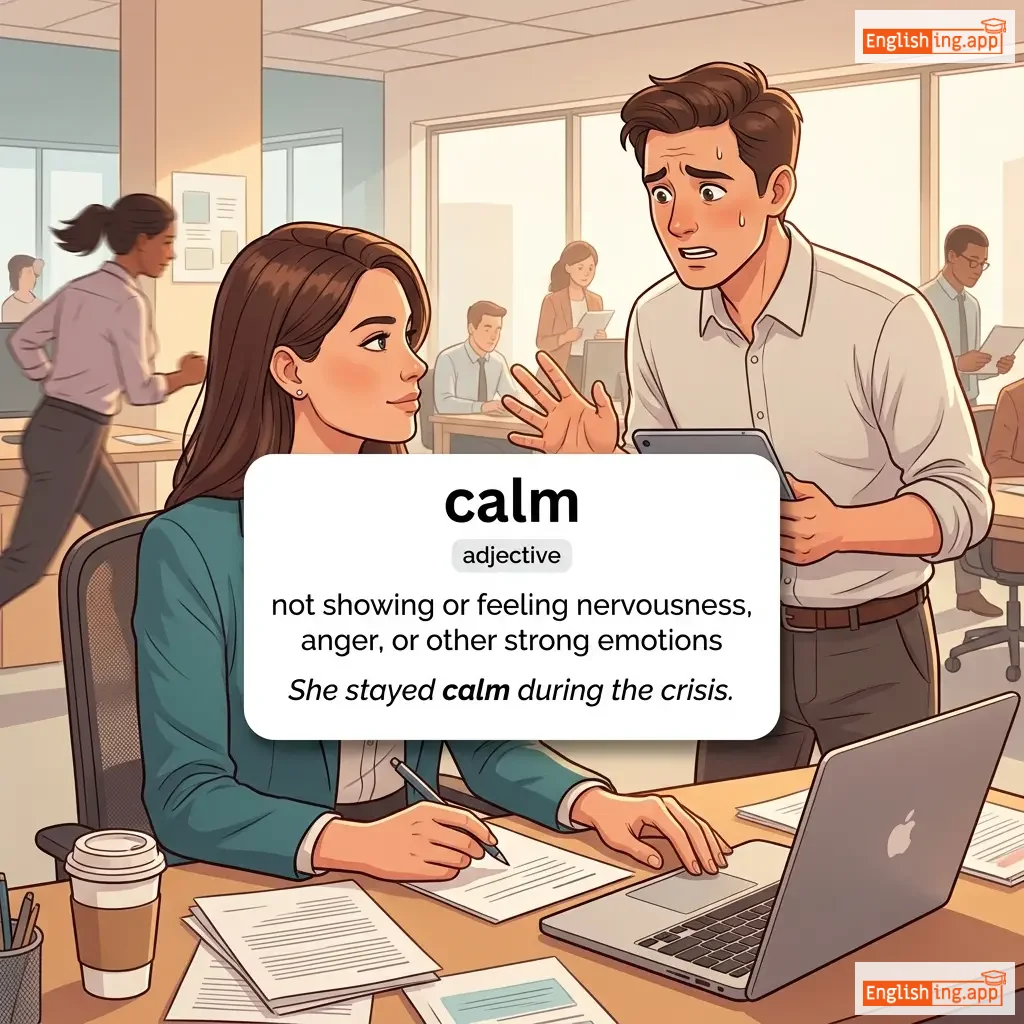
not showing or feeling nervousness, anger, or other strong emotions
••••••
|
She stayed calm during the crisis. |
彼女は危機の間、落ち着いていた。
Kanojo wa kiki no aida, ochitsuite ita.
••••••
|
calm down |
to relax after being angry or upset
••••••
|
落ち着く
ochitsuku
••••••
|
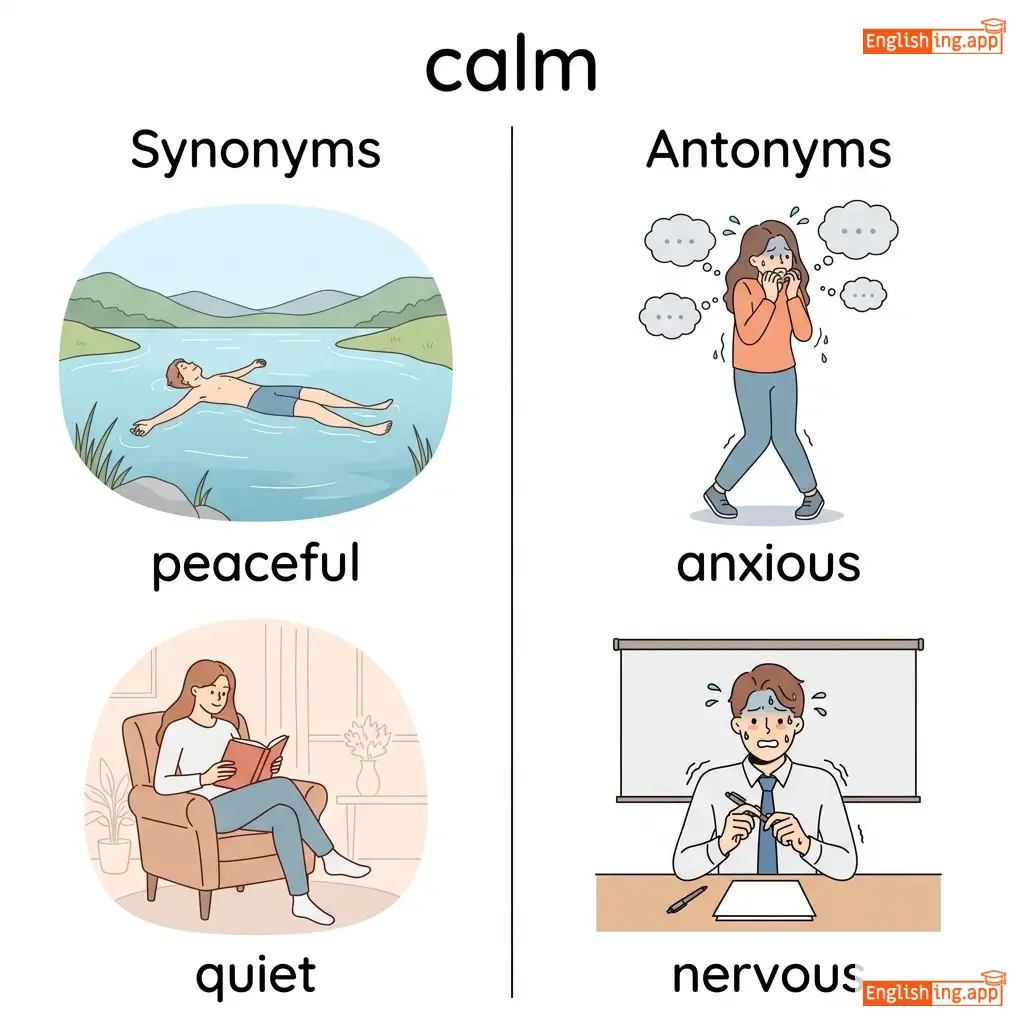
peaceful, quiet, relaxed, tranquil
••••••
|
anxious, nervous, agitated
••••••
|
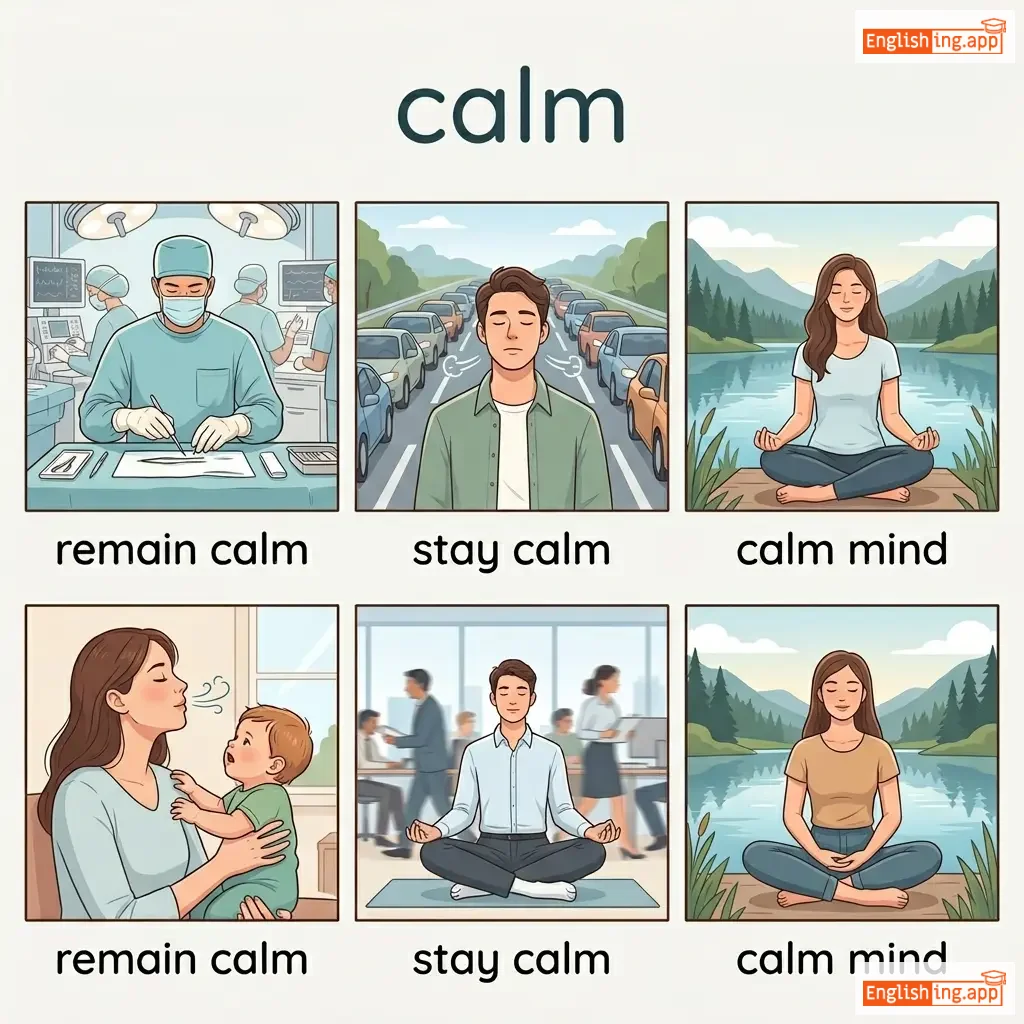
remain calm, stay calm, calm mind, calm atmosphere
••••••
|
落ち着いた = Calm; 落ち着いてリラックスしよう。
••••••
|
|
#9643
🤸
|
/ˌkælɪsˈθɛnɪks/
noun
(カリステニクス)
••••••
|
- •••••• |
自重トレーニング
jichou toreeningu
••••••
|
- •••••• | - •••••• | - •••••• | - •••••• |
exercises that use body weight for strength and flexibility
••••••
|
She practices calisthenics every morning in the park. |
彼女は毎朝公園でカリステニクスを練習しています。
Kanojo wa maiasa kouen de karisutenikusu o renshuu shiteimasu.
••••••
|
- •••••• | - •••••• | - •••••• |
gymnastics, workout, exercise, fitness training
••••••
|
inactivity, rest
••••••
|
calisthenics routine, practice calisthenics, morning calisthenics
••••••
|
カリステニクス = Call is + テニクス → 'Call で自重トレーニング' 覚えよう.
••••••
|
|
#9644
🧮
|
/ˈkælkjʊleɪtɪŋ/
adjective
(カリキュレーティング)
••••••
|
- •••••• |
計算高い
keisan takai
••••••
|
- •••••• | - •••••• | - •••••• | - •••••• |
acting in a scheming and ruthlessly determined way
••••••
|
He had a cold and calculating approach to business. |
彼はビジネスに冷徹で計算高いアプローチを持っていた。
Kare wa bijinesu ni reitetsu de keisan takai apurōchi o motte ita.
••••••
|
- •••••• | - •••••• | - •••••• |
scheming, shrewd, cunning, strategic
••••••
|
naive, honest
••••••
|
calculating mind, calculating person, cold and calculating
••••••
|
計算高い = いつも計画して行動する人物
••••••
|
|
#9645
🥤
|
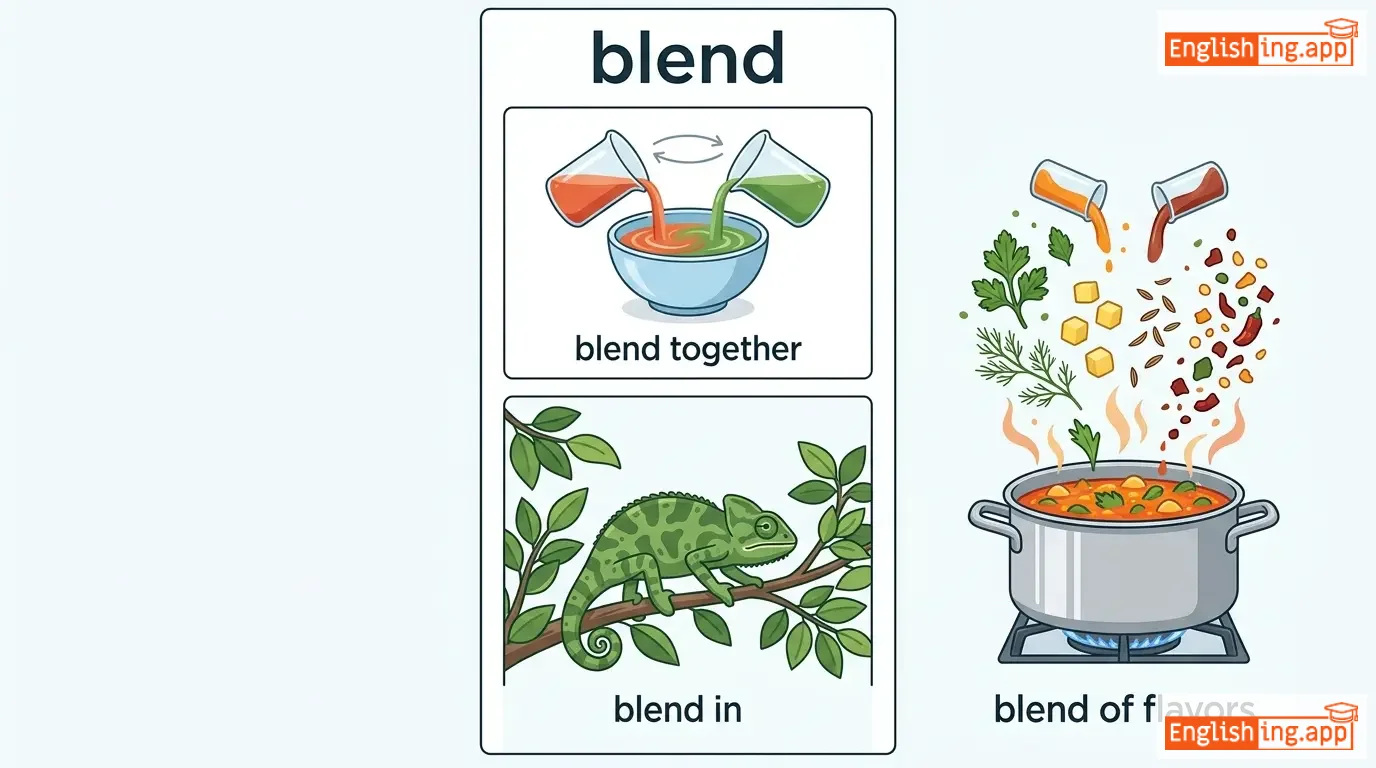
/blɛnd/
verb
(ブレンド)
••••••
|
|
混ぜる
mazeru
••••••
|
blended
ブレンドされた
••••••
|
blended
ブレンドされた
••••••
|
blends
ブレンズ
••••••
|
blending
ブレンディング
••••••
|
to mix different substances or elements together so that they form a smooth combination
••••••
|
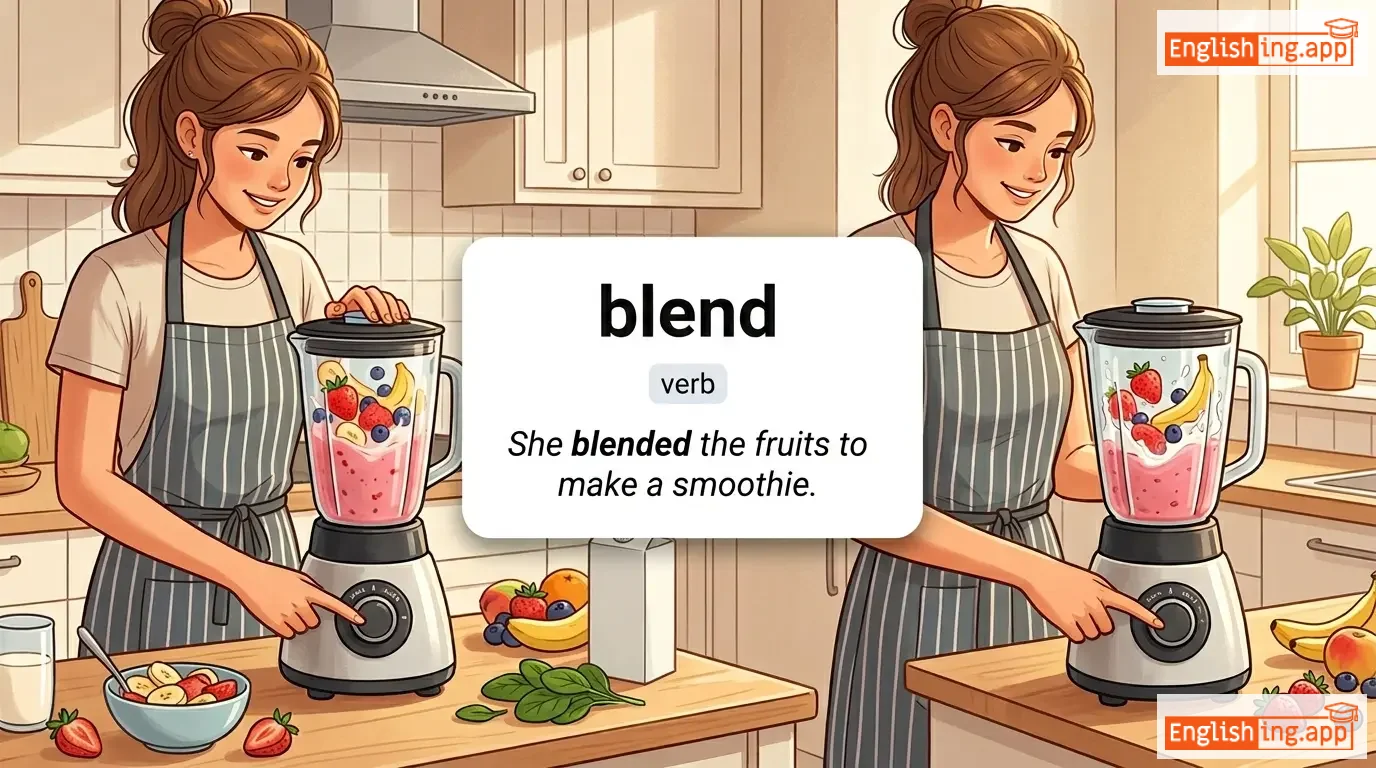
She blended the fruits to make a smoothie.
彼女はスムージーを作るために果物をブレンドしました。
••••••
|
彼女はスムージーを作るために果物をブレンドしました。
Kanojo wa sumūjī o tsukuru tame ni kudamono o burendo shimashita.
••••••
|
blend in
溶け込む
••••••
|
to look or seem the same as the surrounding people or things
••••••
|
溶け込む
tokekomu
••••••
|
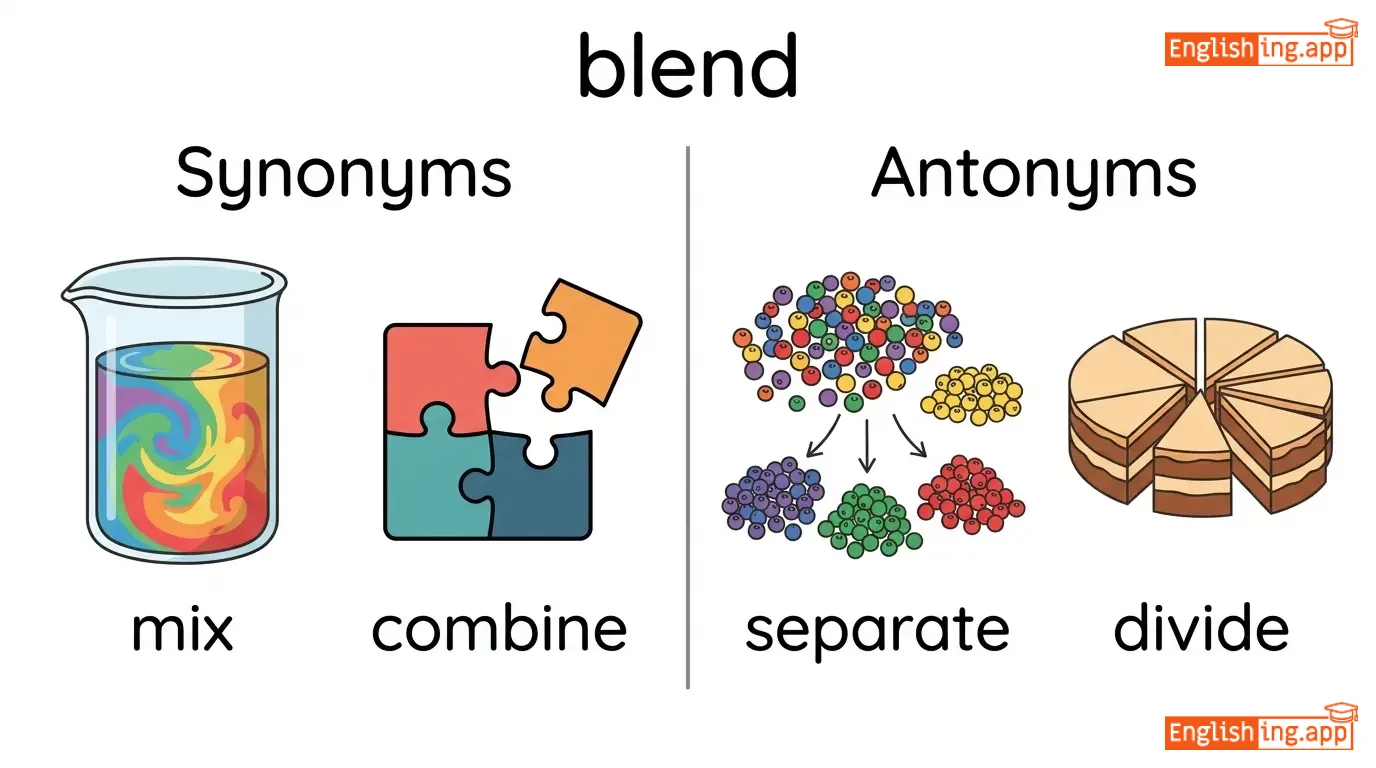
mix, combine, merge, fuse, integrate
••••••
|
separate, divide, detach
••••••
|
blend together, blend in, blend of flavors, blend smoothly
••••••
|
Blendは混ぜるという意味です、果物をブレンダーに入れてスムージーを作るような感じです。
••••••
|
|
#9646
🐝
|
/ˈbɪzi/
adjective
(bizi)
••••••
|
- •••••• |
忙しい
isogashii
••••••
|
- •••••• | - •••••• | - •••••• | - •••••• |
actively engaged in work or activity; occupied
••••••
|
He is too busy to answer the phone. |
彼は電話に出るのがあまりにも忙しい。
Kare wa denwa ni deru no ga amari ni mo isogashii.
••••••
|
busy as a bee |
extremely active and hardworking
••••••
|
蜂のように忙しい
hachi no yō ni isogashii
••••••
|
occupied, engaged, active, industrious
••••••
|
idle, free, inactive
••••••
|
busy schedule, busy street, busy day, keep busy
••••••
|
蜂のように忙しい!
••••••
|
|
#9647
💼
|
/ˈbɪznəs/
noun
(ビジネス)
••••••
|
- •••••• |
ビジネス
bijinesu
••••••
|
- •••••• | - •••••• | - •••••• | - •••••• |
the practice of making money by producing or buying and selling goods or services
••••••
|
She started her own business last year. |
彼女は昨年自分のビジネスを始めました。
Kanojo wa sakunen jibun no bijinesu o hajimemashita.
••••••
|
mind your own business |
focus on your own matters and not interfere with others
••••••
|
自分の仕事に集中しなさい
jibun no shigoto ni shūchū shinasai
••••••
|
company, trade, firm, enterprise, commerce
••••••
|
idleness, unemployment
••••••
|
small business, family business, business plan, business meeting
••••••
|
Businessはビジネス – Busy + ness, いつも自分のビジネスに忙しい
••••••
|
|
#9648
🍑
|
/bʌm/
noun
(バム)
••••••
|
- •••••• |
尻
shiri
••••••
|
- •••••• | - •••••• | - •••••• | - •••••• |
informal term for the buttocks; also a homeless or lazy person
••••••
|
He sat on his bum all day doing nothing. |
彼は一日中お尻に座って何もしなかった。
Kare wa ichinichijū oshiri ni suwatte nani mo shinakatta.
••••••
|
kick someone's bum |
to reprimand or punish someone
••••••
|
誰かの尻を蹴る
dareka no shiri o keru
••••••
|
buttocks, behind, loafer, vagabond
••••••
|
worker, diligent
••••••
|
lazy bum, street bum, sit on bum
••••••
|
Bum は尻 (座る) – 怠け者は bum のように座ります
••••••
|
|
#9649
🤨
|
/braʊ/
noun
(burao)
••••••
|
- •••••• |
額
hitai
••••••
|
- •••••• | - •••••• | - •••••• | - •••••• |
the part of the face above the eyes; forehead
••••••
|
She wiped the sweat from her brow.
彼女は額の汗を拭った。
••••••
|
彼女は額の汗を拭った。
Kanojo wa hitai no ase wo fukutta.
••••••
|
knit one's brow
眉をひそめる
••••••
|
to frown or show worry
••••••
|
眉をひそめる
Mayu wo hisomeru
••••••
|
forehead, temple, face, ridge
••••••
|
chin, jaw
••••••
|
sweat on brow, furrowed brow, high brow, low brow
••••••
|
Brow = 額; 額にシワ = 眉をひそめる
••••••
|
|
#9650
🌉
|
/brɔːd/
adjective
(ブロード)
••••••
|
- •••••• |
広い
hiroi
••••••
|
- •••••• | - •••••• | - •••••• | - •••••• |
wide in extent, range, or scope
••••••
|
The river is very broad at this point.
その川はこの地点で非常に広いです。
••••••
|
その川はこの地点で非常に広いです。
Sono kawa wa kono chiten de hijō ni hiroi desu.
••••••
|
broad daylight
昼間の明かり
••••••
|
during the day when it is light and visible
••••••
|
昼間の明かり
hiruma no akari
••••••
|
wide, extensive, vast, expansive, comprehensive
••••••
|
narrow, limited, restricted
••••••
|
broad range, broad shoulders, broad spectrum, broad agreement
••••••
|
Broad road は広い道路 – broad = 広い
••••••
|
|
#9651
📝
|
/briːf/
adjective, noun, verb
(buri-fu)
••••••
|
- •••••• |
簡潔な
kanketsu na
••••••
|
briefed
buri-fudo
••••••
|
briefed
buri-fudo
••••••
|
briefs
buri-fusu
••••••
|
briefing
buri-fingu
••••••
|
Short in duration; a summary of information.
••••••
|
The manager briefed the team before the meeting.
マネージャーは会議の前にチームにブリーフィングを行いました。
••••••
|
マネージャーは会議の前にチームに簡潔な説明を行いました。
Mane-ja wa kaigi no mae ni chi-mu ni kanketsu na setsumei o okonai mashita.
••••••
|
in brief
簡潔に
••••••
|
in short; concisely
••••••
|
簡潔に
kanketsu ni
••••••
|
short, concise, summary, outline
••••••
|
long, detailed
••••••
|
brief meeting, legal brief, security briefing, brief moment
••••••
|
Brief = 簡潔な会話、簡潔な説明。
••••••
|
|
#9652
💔
|
/breɪk/
verb, noun
(ブレイク)
••••••
|
|
壊す / 休憩
kowasu / kyūkei
••••••
|
broke
ブローク
••••••
|
broken
ブロークン
••••••
|
breaks
ブレイクス
••••••
|
breaking
ブレイキング
••••••
|
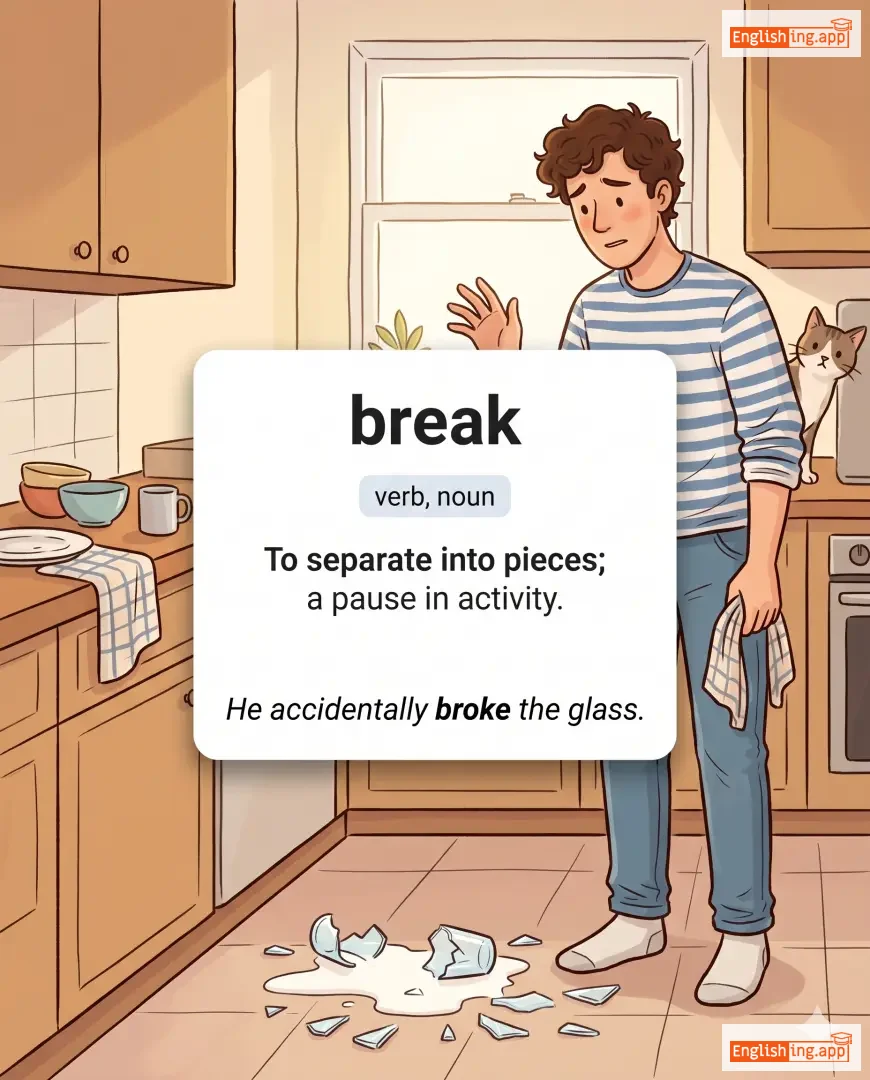
To separate into pieces; a pause in activity.
••••••
|
He accidentally broke the glass.
ヒー アクシデンタリー ブローク ザ グラス。
••••••
|
彼はうっかりガラスを割ってしまった。
Kare wa ukkari garasu o watte shimatta.
••••••
|
take a break
テイク ア ブレイク
••••••
|
to rest for a short time
••••••
|
休憩を取る
kyūkei o toru
••••••
|
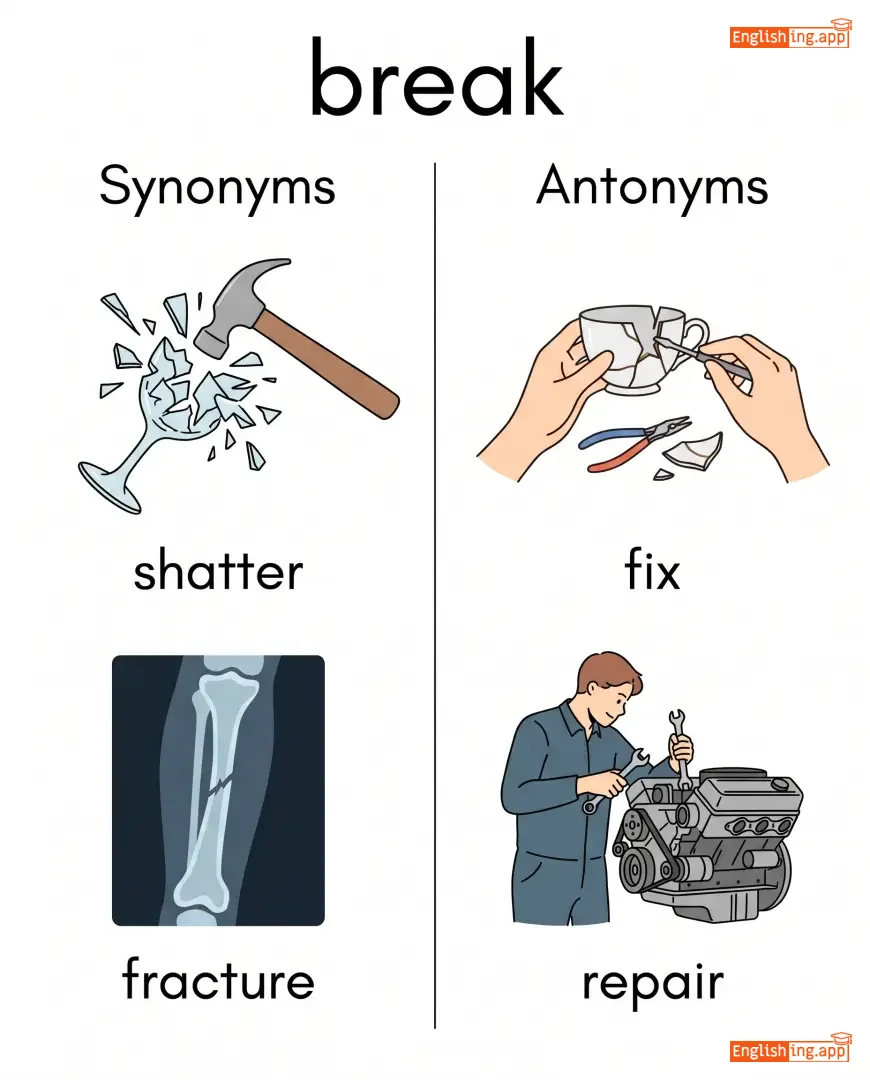
shatter, fracture, smash, pause, recess
••••••
|
fix, repair, continue
••••••
|
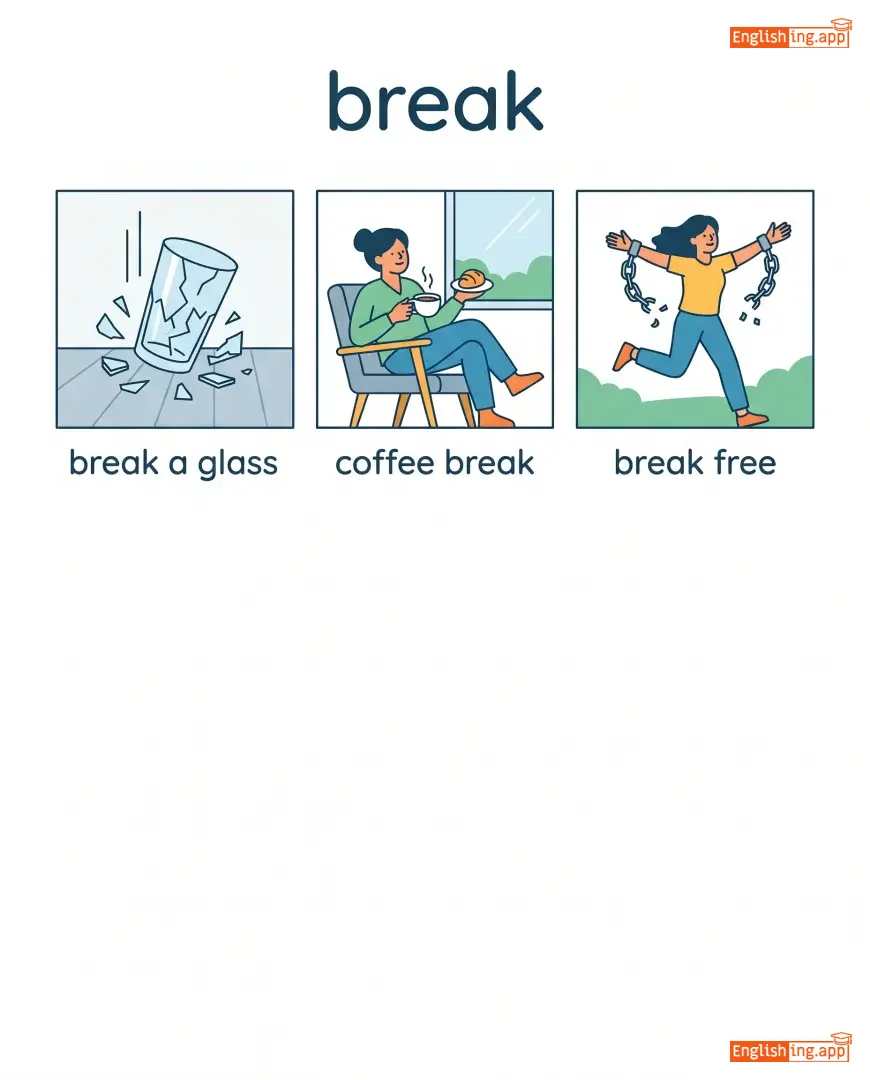
break a glass, coffee break, break free, break the law
••••••
|
Breakは壊す、またBreakは休憩。
••••••
|
|
#9653
🌿
|
/bræntʃ/
noun, verb
(ブランチ)
••••••
|
- •••••• |
支店
shiten
••••••
|
branched
ブランチド
••••••
|
branched
ブランチド
••••••
|
branches
ブランチズ
••••••
|
branching
ブランチング
••••••
|
A part of a tree that grows out from the trunk; a division of an organization or subject.
••••••
|
The company opened a new branch in Dhaka.
会社はダッカに新しい支店を開設しました。
••••••
|
会社はダッカに新しい支店を開設しました。
Kaisha wa Dakkā ni atarashī shiten o kaisetsu shimashita.
••••••
|
branch out
拡張する
••••••
|
to expand into new areas or activities
••••••
|
拡張する
kakuchō suru
••••••
|
limb, division, department, subdivision
••••••
|
root, trunk
••••••
|
tree branch, bank branch, branch office, branch out
••••••
|
木の枝、会社の支店。
••••••
|
|
#9654
🔻
|
/ˈbɒtəm/
noun, adjective
(ボトム)
••••••
|
- •••••• |
底
soko
••••••
|
- •••••• | - •••••• | - •••••• | - •••••• |
The lowest part of something.
••••••
|
The keys fell to the bottom of the bag. |
鍵はバッグの底に落ちました。
Kagi wa baggu no soko ni ochimashita.
••••••
|
hit rock bottom |
to reach the lowest possible point
••••••
|
底を打つ
soko o utsu
••••••
|
base, underside, foot, foundation
••••••
|
top, peak, summit
••••••
|
bottom line, at the bottom, ocean bottom, bottom of the page
••••••
|
‘Bottom’ は '底' の意味、覚えやすいように「Bot(底)」です。
••••••
|
|
#9655
📖
|
/bʊk/
noun, verb
••••••
|
- •••••• | - •••••• |
booked
••••••
|
booked
••••••
|
books
••••••
|
booking
••••••
|
A set of written, printed, or blank pages fastened together; to arrange for someone to have a seat, room, or ticket in advance.
••••••
|
I booked a table at the restaurant for dinner. |
- •••••• |
by the book |
to follow rules strictly
••••••
|
- •••••• |
volume, text, novel, reserve, schedule
••••••
|
cancel, disorder
••••••
|
open book, book a ticket, book club, book online, book in advance
••••••
|
No •••••• |
|
#9656
🦁
|
/boʊld/
adjective
(ボールド)
••••••
|
- •••••• |
大胆
daitan
••••••
|
- •••••• | - •••••• | - •••••• | - •••••• |
showing courage, confidence, or willingness to take risks
••••••
|
She made a bold decision to start her own business. |
彼女は自分のビジネスを始める大胆な決断を下した。
Kanojo wa jibun no bijinesu o hajimeru daitan na ketsudan o kudashita.
••••••
|
fortune favors the bold |
people who take risks often achieve success
••••••
|
運命は大胆な者に味方する
Unmei wa daitan na mono ni mikata suru
••••••
|
brave, courageous, daring, confident, fearless
••••••
|
timid, shy, fearful
••••••
|
bold decision, bold move, bold colors, bold step
••••••
|
大胆はboldと同じ意味です、リスクを取る人々が成功するように。
••••••
|
|
#9657
📋
|
/bɔːrd/
noun
••••••
|
- •••••• | - •••••• | - •••••• | - •••••• | - •••••• | - •••••• |
a flat, thin, rectangular piece of material such as wood; also a group of people managing an organization
••••••
|
The board decided to increase the budget. |
- •••••• |
on board |
to be part of a team or involved in a project
••••••
|
- •••••• |
plank, panel, committee, council
••••••
|
individual, disorganization
••••••
|
board meeting, board of directors, wooden board, on board
••••••
|
No •••••• |
|
#9658
⚪
|
/ˈblʌdləs/
adjective
(buraddoresu)
••••••
|
- •••••• |
血のない
chi no nai
••••••
|
- •••••• | - •••••• | - •••••• | - •••••• |
without bloodshed; lacking violence or vitality
••••••
|
The revolution was surprisingly bloodless.
革命は驚くべきことに血を流さなかった。
••••••
|
革命は驚くべきことに血を流さなかった。
Kakumei wa odorokubeki koto ni chi o nagasanakatta.
••••••
|
- •••••• | - •••••• | - •••••• |
painless, peaceful, nonviolent, cold
••••••
|
bloody, violent
••••••
|
bloodless coup, bloodless revolution, bloodless war
••••••
|
Blood はないので、これは血のない – 血のない。
••••••
|
|
#9659
🩸
|
/ˈblʌdˌbæθ/
noun
(ブレッドバス)
••••••
|
- •••••• |
血の大惨事
chi no daisanji
••••••
|
- •••••• | - •••••• | - •••••• | - •••••• |
an event in which a lot of people are killed or injured, especially in a violent conflict
••••••
|
The war turned into a bloody bloodbath.
戦争は血まみれの大虐殺に変わった。
••••••
|
戦争は血まみれの大虐殺に変わった。
Sensō wa chi mamire no daigyaku satsuni kawatta.
••••••
|
- •••••• | - •••••• | - •••••• |
massacre, slaughter, carnage, killing
••••••
|
peace, harmony
••••••
|
political bloodbath, financial bloodbath, violent bloodbath
••••••
|
Blood + Bath = 血まみれで戦争が大惨事になる。
••••••
|
Vocabulary Quiz
Test your vocabulary by matching words with their translations or meanings.
Login to take the quiz
Comments (0)
Share your thoughts and join the discussion.
Join the discussion by logging in
Login to CommentNo comments yet
Be the first to share your thoughts!