

翻訳
過去
過去分詞
三人称単数
動名詞
意味
例文
例文の翻訳
同義語
対義語
コロケーション
ニーモニック

Swipe left or right, or use the buttons. Tap image to zoom.
例文の翻訳
単語
Lesson 158Lesson 158 - マスクトグル
|
絵文字
|
単語 | Images | 翻訳 | 過去 | 過去分詞 | 三人称単数 | 動名詞 | 意味 | 例文 | 例文の翻訳 | 表現例 | 表現例の意味 | 表現例の翻訳 | 同義語 | 対義語 | コロケーション | ニーモニック |
|---|---|---|---|---|---|---|---|---|---|---|---|---|---|---|---|---|---|
|
#4711
😌
|
/ɪnˈsuːsiəns/
noun
(インスシアンス)
••••••
|
- •••••• |
無関心
mukanshin
••••••
|
- •••••• | - •••••• | - •••••• | - •••••• |
Casual lack of concern; indifference.
••••••
|
She carried herself with an air of insouciance, unbothered by the challenges ahead. |
彼女は無関心な態度で歩いていた、前にある挑戦を気にせずに。
Kanojo wa mukanshin na taido de aruite ita, mae ni aru chōsen o ki no sezu ni.
••••••
|
- •••••• | - •••••• | - •••••• |
nonchalance, indifference, unconcern, carefreeness, calmness
••••••
|
anxiety, concern, worry
••••••
|
air of insouciance, insouciance about rules, remarkable insouciance
••••••
|
インスシアンスは無関心の状態、ストレスフリーで何も心配しない生き方です。
••••••
|
|
#4712
📘
|
/ɪnˈstrʌktɪv/
adjective
(インストラクティブ)
••••••
|
- •••••• |
教育的
kyōikuteki
••••••
|
- •••••• | - •••••• | - •••••• | - •••••• |
useful and informative; providing knowledge or instruction
••••••
|
The lecture was highly instructive and engaging. |
その講義は非常に教育的で魅力的でした。
Sono kōgi wa hijō ni kyōikuteki de miryokuteki deshita.
••••••
|
- •••••• | - •••••• | - •••••• |
educational, enlightening, informative, didactic
••••••
|
uninformative, unhelpful
••••••
|
instructive lesson, instructive example, highly instructive, instructive experience
••••••
|
教育的 = 教育 + 的(teki)で、知識を提供することを示しています。
••••••
|
|
#4713
📜
|
/ˌɪnstɪˈtjuːʃənəlaɪz/
verb
(インスティチューショナライズ)
••••••
|
- •••••• |
制度化する
seido-ka suru
••••••
|
institutionalized
インスティチューショナライズド
••••••
|
institutionalized
インスティチューショナライズド
••••••
|
institutionalizes
インスティチューショナライズズ
••••••
|
institutionalizing
インスティチューショナライズイング
••••••
|
to establish something as a formal institution, custom, or practice
••••••
|
The government seeks to institutionalize environmental protection.
政府は環境保護を制度化しようとしています。
••••••
|
政府は環境保護を制度化しようとしています。
Seifu wa kankyō hogo o seido-ka shiyou to shiteimasu.
••••••
|
- •••••• | - •••••• | - •••••• |
formalize, establish, legitimize, entrench
••••••
|
abolish, dismantle
••••••
|
institutionalize practices, institutionalize reforms, institutionalize policies
••••••
|
Institution + alize = 制度化する – 正式にすることを覚えておこう。
••••••
|
|
#4714
🏥
|
/ˌɪnstɪˈtjuːʃən/
noun
(insutitūshon)
••••••
|
|
機関
kikan
••••••
|
- •••••• | - •••••• | - •••••• | - •••••• |
an established organization, especially one dedicated to education, public service, or a particular purpose
••••••
|
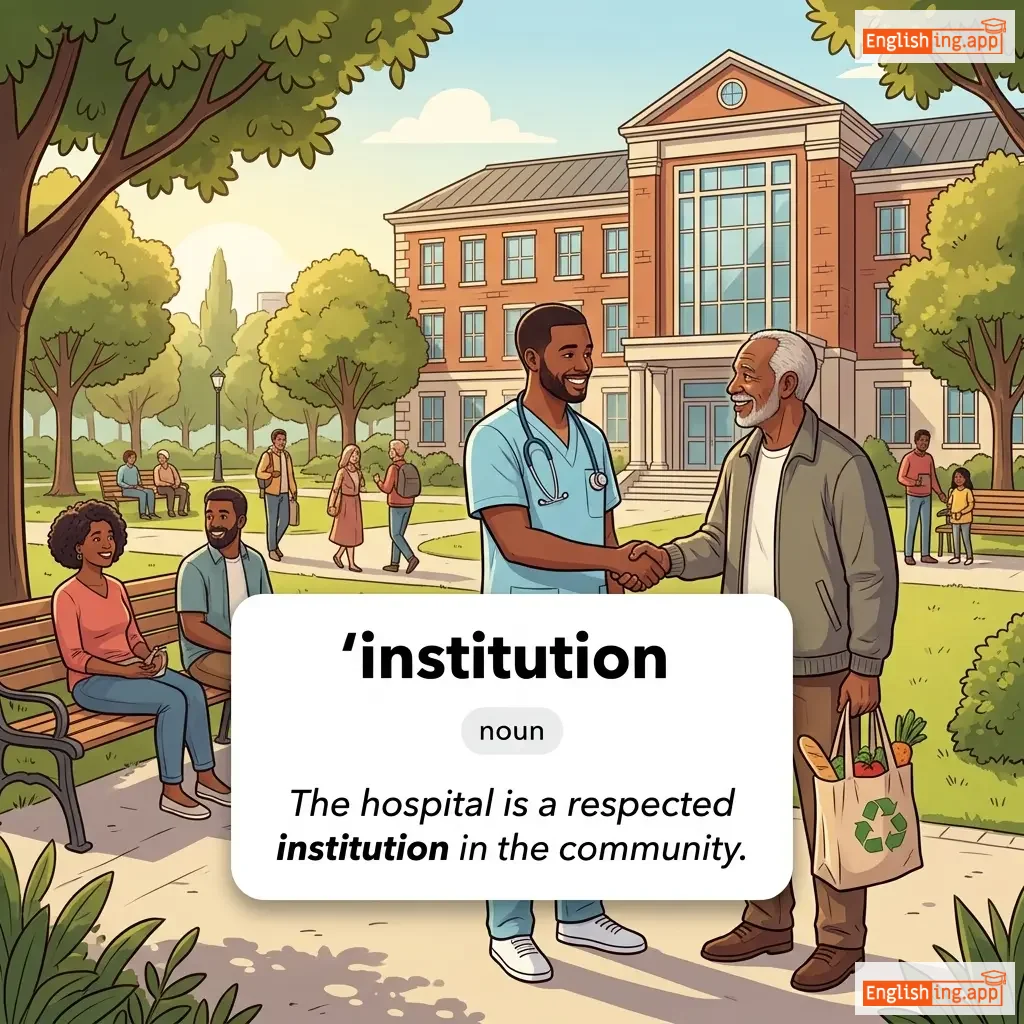
The hospital is a respected institution in the community. |
病院は地域社会で尊敬されている機関です。
Byōin wa chiiki shakai de sonkei sarete iru kikan desu.
••••••
|
an institution |
something or someone long established and respected
••••••
|
機関
kikan
••••••
|
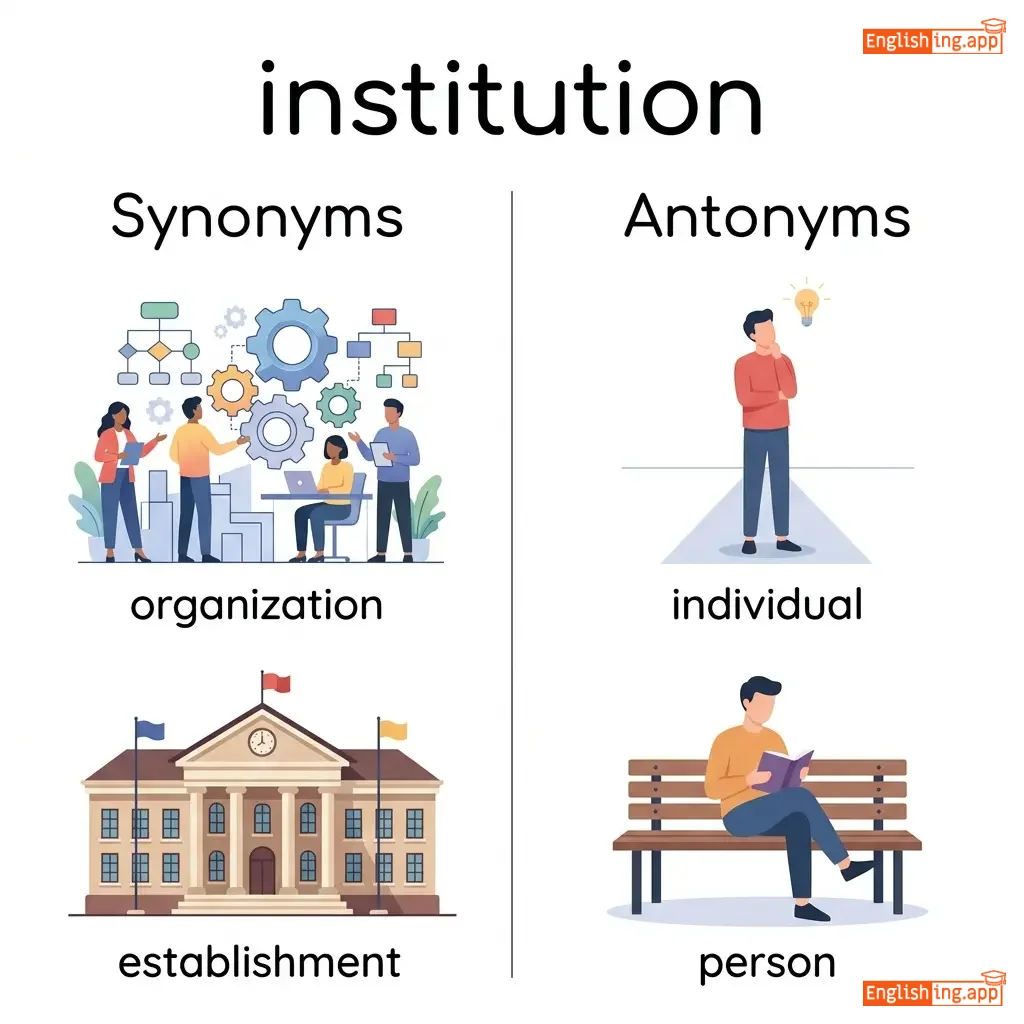
organization, establishment, foundation, facility, entity
••••••
|
individual, person
••••••
|
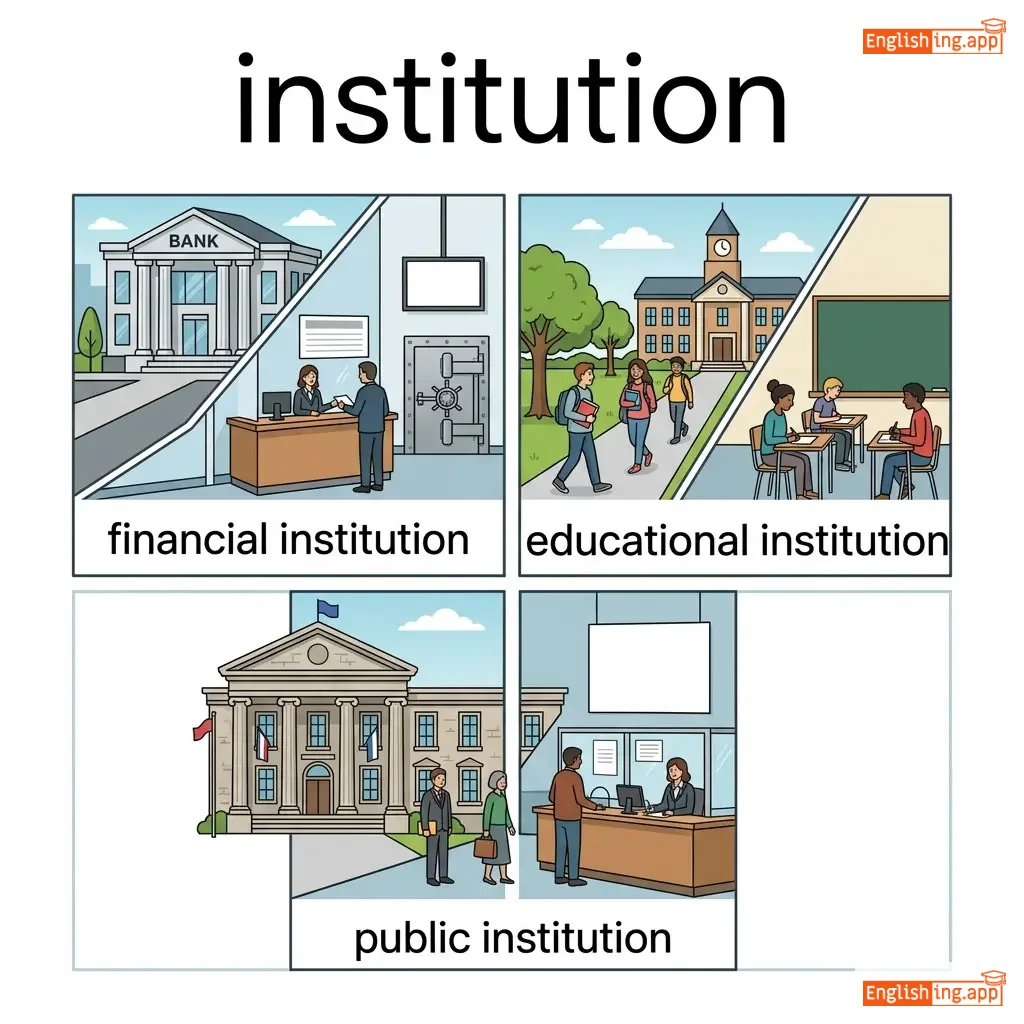
financial institution, educational institution, public institution, government institution
••••••
|
機関 = 重要な組織、例えば大学や病院のような。
••••••
|
|
#4715
🏛️
|
/ˈɪnstɪˌtjuːt/
noun, verb
(インスティチュート)
••••••
|
- •••••• |
インスティチュート
insuchito
••••••
|
instituted
インスティチュートされた
••••••
|
instituted
インスティチュートされた
••••••
|
institutes
インスティチュートする
••••••
|
instituting
インスティチュートすること
••••••
|
as a noun, an organization founded for a specific purpose; as a verb, to establish or initiate
••••••
|
The university decided to institute new rules for the library.
大学は図書館のために新しいルールを設立することを決定しました。
••••••
|
大学は図書館のために新しいルールを設立することを決定しました。
Daigaku wa toshokan no tame ni atarashī rūru o setsuritsu suru koto o kettei shimashita.
••••••
|
- •••••• | - •••••• | - •••••• |
organization, establishment, foundation, initiate, set up
••••••
|
abolish, disband, dissolve
••••••
|
research institute, technical institute, institute reforms, institute measures
••••••
|
インスティチュートは新しいルールを作る場所です。
••••••
|
|
#4716
🌱
|
/ɪnˈstɪl/
verb
(インスティル)
••••••
|
- •••••• |
植え付ける
ueukeru
••••••
|
instilled
インスティルド
••••••
|
instilled
インスティルド
••••••
|
instills
インスティルズ
••••••
|
instilling
インスティリング
••••••
|
to gradually but firmly establish an idea, attitude, or habit in someone's mind
••••••
|
Parents try to instill good values in their children.
親は子供に良い価値観を植え付けようとしています。
••••••
|
親は子供に良い価値観を植え付けようとしています。
Oya wa kodomo ni yoi kachikan o ueukeyou to shiteimasu.
••••••
|
- •••••• | - •••••• | - •••••• |
impart, implant, inculcate, introduce, nurture
••••••
|
eradicate, remove, eliminate
••••••
|
instill confidence, instill discipline, instill values, instill hope
••••••
|
植え付けるはまるで心に良い習慣を植えるようなもの
••••••
|
|
#4717
👿
|
/ˈɪnstɪˌɡeɪtər/
noun
(インスティゲーター)
••••••
|
- •••••• |
扇動者
sendōsha
••••••
|
- •••••• | - •••••• | - •••••• | - •••••• |
A person who brings about or initiates something, usually something bad.
••••••
|
The police identified him as the instigator of the violence. |
警察は彼を暴力の扇動者として特定しました。
Keisatsu wa kare o bōryoku no sendōsha to shite tokutei shimashita.
••••••
|
- •••••• | - •••••• | - •••••• |
provoker, agitator, troublemaker, inciter, instigant
••••••
|
peacemaker, mediator
••••••
|
chief instigator, instigator of violence, instigator of unrest
••••••
|
Instigator とは、暴力を扇動する人、つまり扇動者です!
••••••
|
|
#4718
🔥
|
/ˈɪnstɪˌɡeɪt/
verb
(インスティゲート)
••••••
|
- •••••• |
扇動する
sendou suru
••••••
|
instigated
インスティゲーテッド
••••••
|
instigated
インスティゲーテッド
••••••
|
instigates
インスティゲーツ
••••••
|
instigating
インスティゲイティング
••••••
|
To bring about or initiate an action, often something negative.
••••••
|
He was accused of instigating the riot.
彼は暴動を扇動したとして告発された。
••••••
|
彼は暴動を扇動したとして告発された。
Kare wa boudou wo sendou shita to shite kokuhatsu sareta.
••••••
|
instigate trouble
問題を引き起こす
••••••
|
to cause problems or provoke conflict
••••••
|
問題を起こす
mondai wo okosu
••••••
|
provoke, incite, start, stir up, foment
••••••
|
deter, prevent
••••••
|
instigate violence, instigate a conflict, instigate reform
••••••
|
Instigateとは、Instagramでトラブルを引き起こすことです!
••••••
|
|
#4719
🏛️
|
/ɪnˈsteɪt/
verb
(インステイト)
••••••
|
- •••••• |
任命する
ninmei suru
••••••
|
instated
インステイテッド
••••••
|
instated
インステイテッド
••••••
|
instates
インステイツ
••••••
|
instating
インステイティング
••••••
|
To set up in position, office, or authority.
••••••
|
The board decided to instate her as the new director.
取締役会は彼女を新しいディレクターにインステイトすることを決定しました。
••••••
|
取締役会は彼女を新しいディレクターにインステイトすることを決定しました。
Torishimariyaku kai wa kanojo o atarashī direkutā ni insuteito suru koto o kettei shimashita.
••••••
|
- •••••• | - •••••• | - •••••• |
appoint, establish, install, assign, designate
••••••
|
remove, dismiss
••••••
|
instate as, instate new policy, instate position
••••••
|
Instateは誰かを任命することを意味します 🏛️
••••••
|
|
#4720
⚡
|
/ˌɪnstənˈteɪniəs/
adjective
(インスタンテイニアス)
••••••
|
- •••••• |
即時
sokushi
••••••
|
- •••••• | - •••••• | - •••••• | - •••••• |
Happening immediately, without any delay.
••••••
|
The change in temperature was almost instantaneous. |
温度の変化はほぼ即時でした。
Ondo no henka wa hobo sokushi deshita.
••••••
|
- •••••• | - •••••• | - •••••• |
immediate, prompt, quick, rapid, sudden
••••••
|
delayed, slow
••••••
|
instantaneous reaction, instantaneous effect, almost instantaneous
••••••
|
即時は遅れのない変化を意味します ⚡
••••••
|
|
#4721
⚡
|
/ˈɪnstənt/
noun/adjective
(インスタント)
••••••
|
- •••••• |
瞬間
shunkan
••••••
|
- •••••• | - •••••• | - •••••• | - •••••• |
A very short period of time; happening immediately.
••••••
|
He replied in an instant without hesitation. |
彼は躊躇うことなく瞬時に返答した。
Kare wa chūchō suru koto naku shunji ni hentō shita.
••••••
|
in an instant |
very quickly; immediately
••••••
|
瞬間
shunkan
••••••
|
moment, second, flash, immediate, prompt
••••••
|
delay, wait
••••••
|
instant coffee, instant reply, instant success, in an instant
••••••
|
瞬間 = 一瞬で反応する瞬間!
••••••
|
|
#4722
📌
|
/ˈɪnstəns/
noun
(インスタンス)
••••••
|
- •••••• |
例
rei
••••••
|
- •••••• | - •••••• | - •••••• | - •••••• |
An example or single occurrence of something.
••••••
|
This is just one instance of his generosity. |
これは彼の寛大さの一例です。
Kore wa kare no kandaisa no ichirei desu.
••••••
|
for instance |
As an example.
••••••
|
例えば
tatoeba
••••••
|
example, case, occurrence, illustration, situation
••••••
|
generalization, whole
••••••
|
in this instance, one instance, rare instance, for instance
••••••
|
インスタンスは'即時の例'を意味します—それが例または示唆です。
••••••
|
|
#4723
✨
|
/ɪnˈspaɪər/
verb
(ハピネス)
••••••
|
|
幸せ
shiawase
••••••
|
inspired
••••••
|
inspired
••••••
|
inspires
••••••
|
inspiring
••••••
|
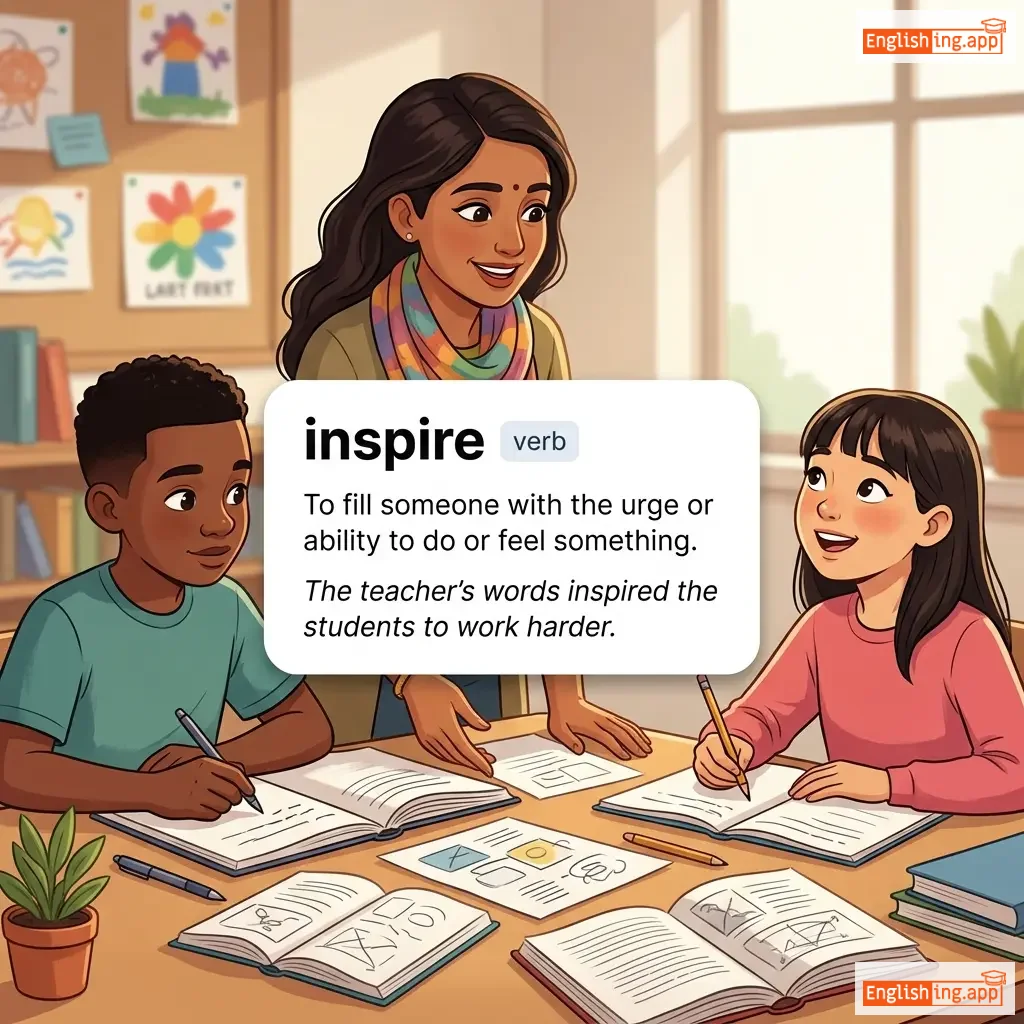
To fill someone with the urge or ability to do or feel something.
••••••
|
The teacher's words inspired the students to work harder. |
彼女は賞を受け取ったとき、幸せを隠せませんでした。
kanojo wa shō o uketotta toki, shiawase o kakusemasen deshita.
••••••
|
inspire confidence |
To cause someone to feel confident or assured.
••••••
|
幸せを追求する
shiawase o tsuikyū suru
••••••
|
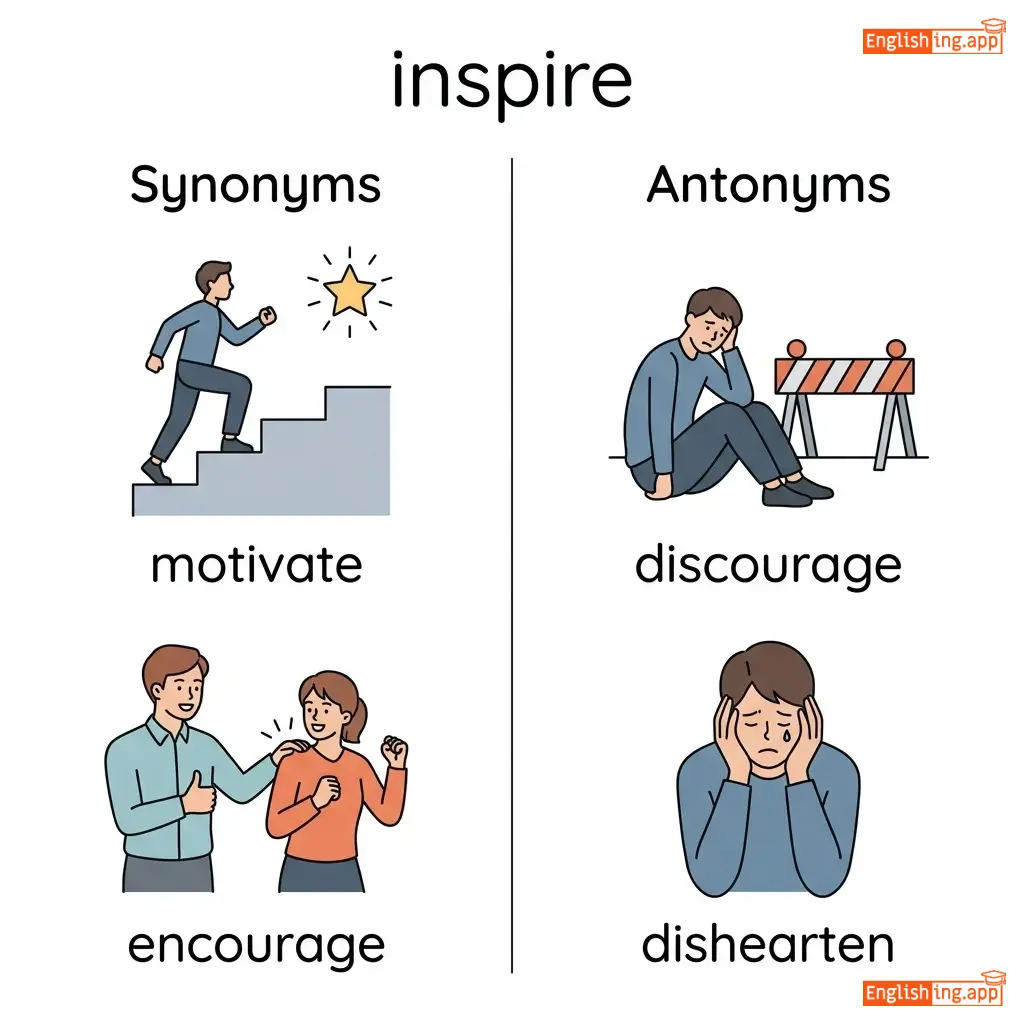
motivate, encourage, uplift, stimulate, influence
••••••
|
discourage, dishearten, depress
••••••
|
inspire others, inspire change, inspire confidence, truly inspire
••••••
|
幸せは、心から輝く温かい笑顔のようなものです。
••••••
|
|
#4724
🕵️
|
/ɪnˈspɛktər/
noun
(インスペクター)
••••••
|
- •••••• |
検査官
kensa kan
••••••
|
- •••••• | - •••••• | - •••••• | - •••••• |
An official employed to ensure regulations are obeyed or standards are met.
••••••
|
The inspector carefully checked the restaurant's kitchen for hygiene standards. |
検査官はレストランのキッチンを衛生基準に従って慎重に確認しました。
Kensakan wa resutoran no kicchin o eisei kijun ni shitagatte shinchou ni kakunin shimashita.
••••••
|
under the inspector's eye |
Closely monitored or supervised by an authority.
••••••
|
検査官の目の下で
Kensakan no me no shita de
••••••
|
examiner, officer, auditor, overseer, supervisor
••••••
|
worker, employee
••••••
|
police inspector, health inspector, building inspector
••••••
|
検査官はすべてを確認して、すべてが規則に従っていることを保証します。
••••••
|
|
#4725
😎
|
/ɪnˈsuːsiənt/
adjective
(インスシアント)
••••••
|
|
無頓着
mutonchaku
••••••
|
- •••••• | - •••••• | - •••••• | - •••••• |
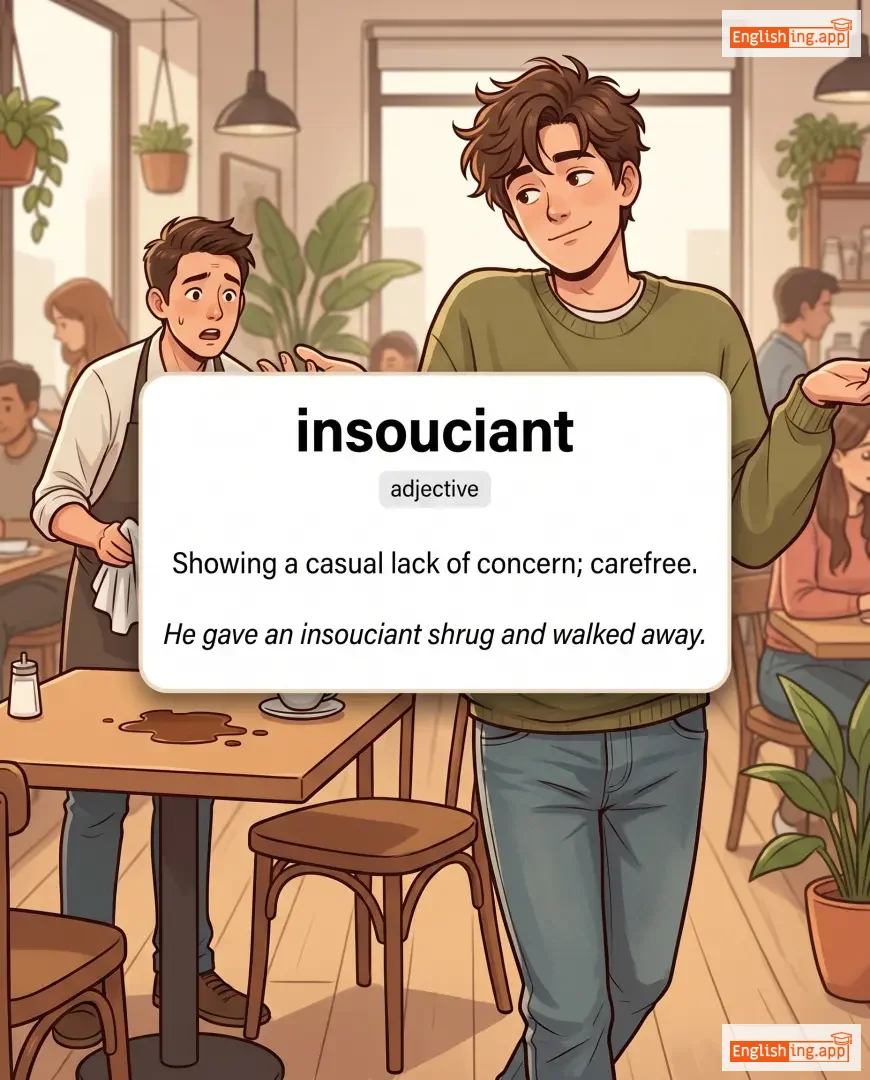
Showing a casual lack of concern; carefree.
••••••
|
He gave an insouciant shrug and walked away. |
彼は無頓着に肩をすくめて、歩き去った。
Kare wa mutonchaku ni kata o sukumete, arukisatta.
••••••
|
- •••••• | - •••••• | - •••••• |
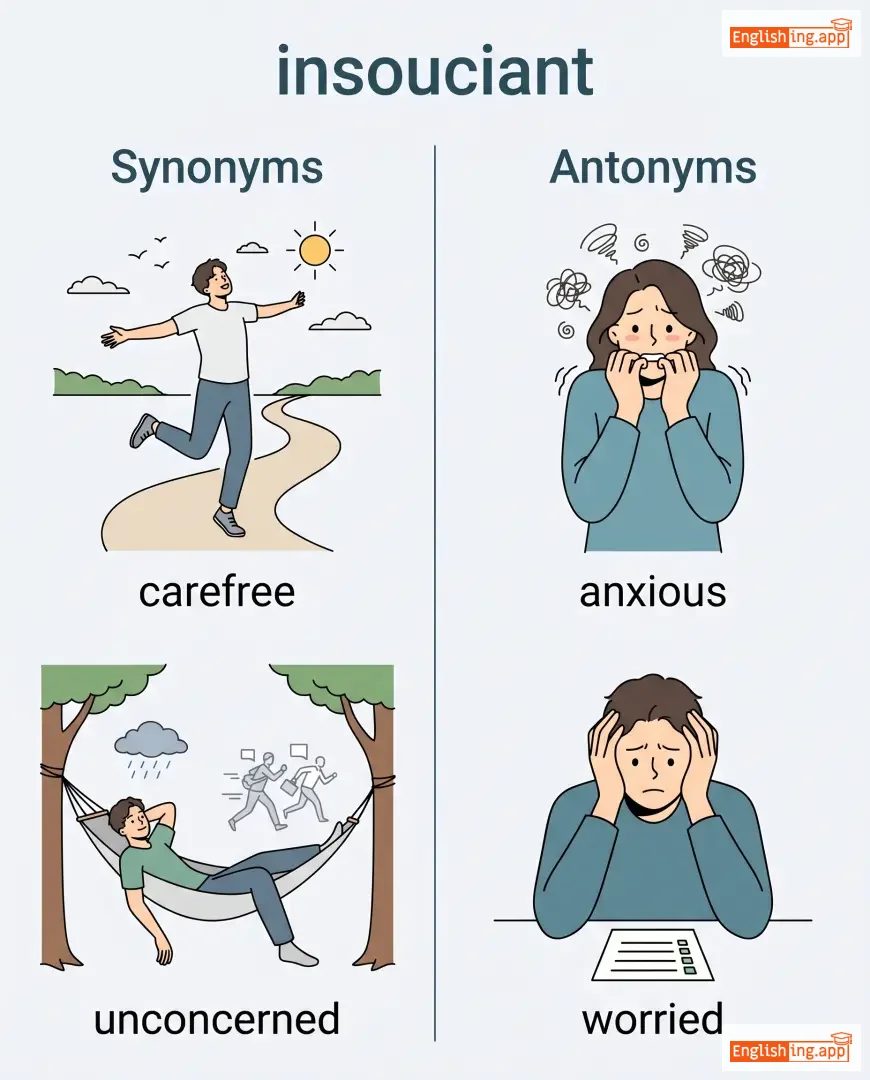
carefree, unconcerned, nonchalant, indifferent, easygoing
••••••
|
anxious, worried, concerned
••••••
|
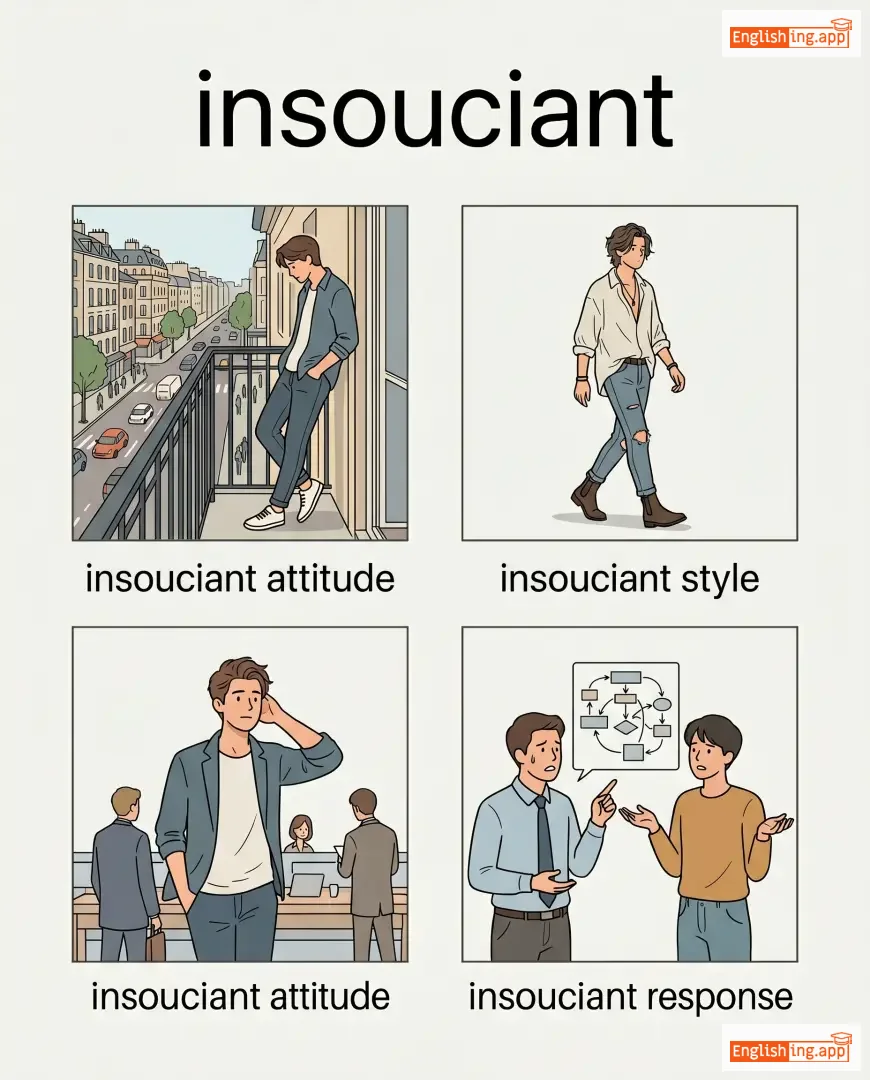
insouciant attitude, insouciant style, insouciant response
••••••
|
Insouciant は無頓着: 心配しないで、自由に過ごそう!
••••••
|
|
#4726
💡
|
/ˈɪnˌsaɪt/
noun
(インサイト)
••••••
|
- •••••• |
洞察力
dōsatsuryoku
••••••
|
- •••••• | - •••••• | - •••••• | - •••••• |
The ability to understand the true nature of something; deep understanding.
••••••
|
Her insight into human behavior made her a successful psychologist. |
彼女の人間行動に対する洞察力は、彼女を成功した心理学者にした。
Kanojo no ningen kōdō ni taisuru dōsatsuryoku wa, kanojo o seikō shita shinrigakusha ni shita.
••••••
|
gain insight |
to develop a clear understanding of something
••••••
|
洞察力を得る
dōsatsuryoku o eru
••••••
|
understanding, perception, awareness, intuition, comprehension
••••••
|
ignorance, misunderstanding
••••••
|
gain insight, valuable insight, deep insight, provide insight
••••••
|
Insightは洞察力を意味します - 物事の内面を見る力です。
••••••
|
|
#4727
➡️
|
/ˌɪnsəʊˈmʌtʃ/
adverb
(インソマッチ)
••••••
|
- •••••• |
これほど
korehodo
••••••
|
- •••••• | - •••••• | - •••••• | - •••••• |
to such an extent
••••••
|
He was insomuch tired that he could hardly stand. |
彼はあまりにも疲れていて、ほとんど立つことができませんでした。
Kare wa amari ni mo tsukarete ite, hotondo tatsu koto ga dekimasen deshita.
••••••
|
insomuch as |
insofar as; to the extent that
••••••
|
その程度まで
sono teido made
••••••
|
so much, to such an extent, thus, therefore
••••••
|
little, scarcely
••••••
|
insomuch as, insomuch tired
••••••
|
In SO MUCH tired → Insomuch はこれほどを意味する
••••••
|
|
#4728
🌙
|
/ɪnˈsɒmniə/
noun
(インソムニア)
••••••
|
- •••••• |
不眠症
fuminsyou
••••••
|
- •••••• | - •••••• | - •••••• | - •••••• |
the condition of being unable to sleep
••••••
|
She suffered from insomnia due to stress at work. |
彼女は仕事のストレスで不眠症に苦しんでいました。
Kanojo wa shigoto no sutoresu de fuminsyou ni kurushindeimashita.
••••••
|
- •••••• | - •••••• | - •••••• |
sleeplessness, wakefulness, restlessness
••••••
|
sleep, slumber
••••••
|
chronic insomnia, suffer from insomnia, insomnia treatment
••••••
|
In SOMNia = SOMN は眠りを意味し、'ni' はないことを意味 → 不眠症
••••••
|
|
#4729
📉
|
/ɪnˈsɒlvənt/
adjective
(インソルベント)
••••••
|
- •••••• |
破産
hasan
••••••
|
- •••••• | - •••••• | - •••••• | - •••••• |
unable to pay debts owed
••••••
|
The insolvent firm could not meet its financial obligations. |
破産した企業は財務義務を果たせなかった。
Hasan shita kigyō wa zaimu gimu o hatase nakatta.
••••••
|
- •••••• | - •••••• | - •••••• |
bankrupt, broke, indebted, ruined
••••••
|
solvent, wealthy, stable
••••••
|
insolvent company, insolvent firm, insolvent debtor
••••••
|
In SOLvent = お金を解決できない → 破産は借金を返済できないことを意味する
••••••
|
|
#4730
💸
|
/ɪnˈsɒlvənsi/
noun
(インソルヴェンシー)
••••••
|
|
破産
hasan
••••••
|
- •••••• | - •••••• | - •••••• | - •••••• |
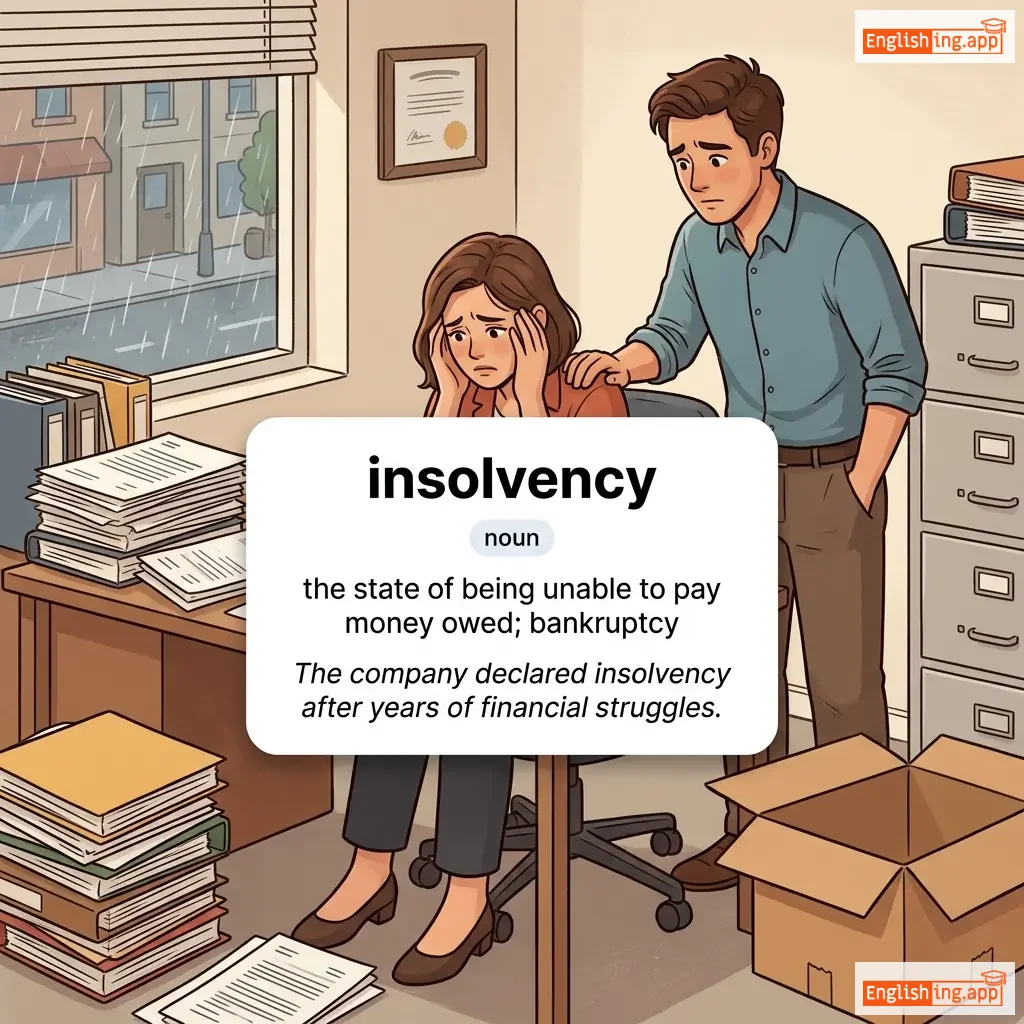
the state of being unable to pay money owed; bankruptcy
••••••
|
The company declared insolvency after years of financial struggles. |
会社は長年の財務的な問題の後、破産を宣言しました。
Kaisha wa naganen no zaimuteki na mondai no ato, hasan o sengen shimashita.
••••••
|
- •••••• | - •••••• | - •••••• |
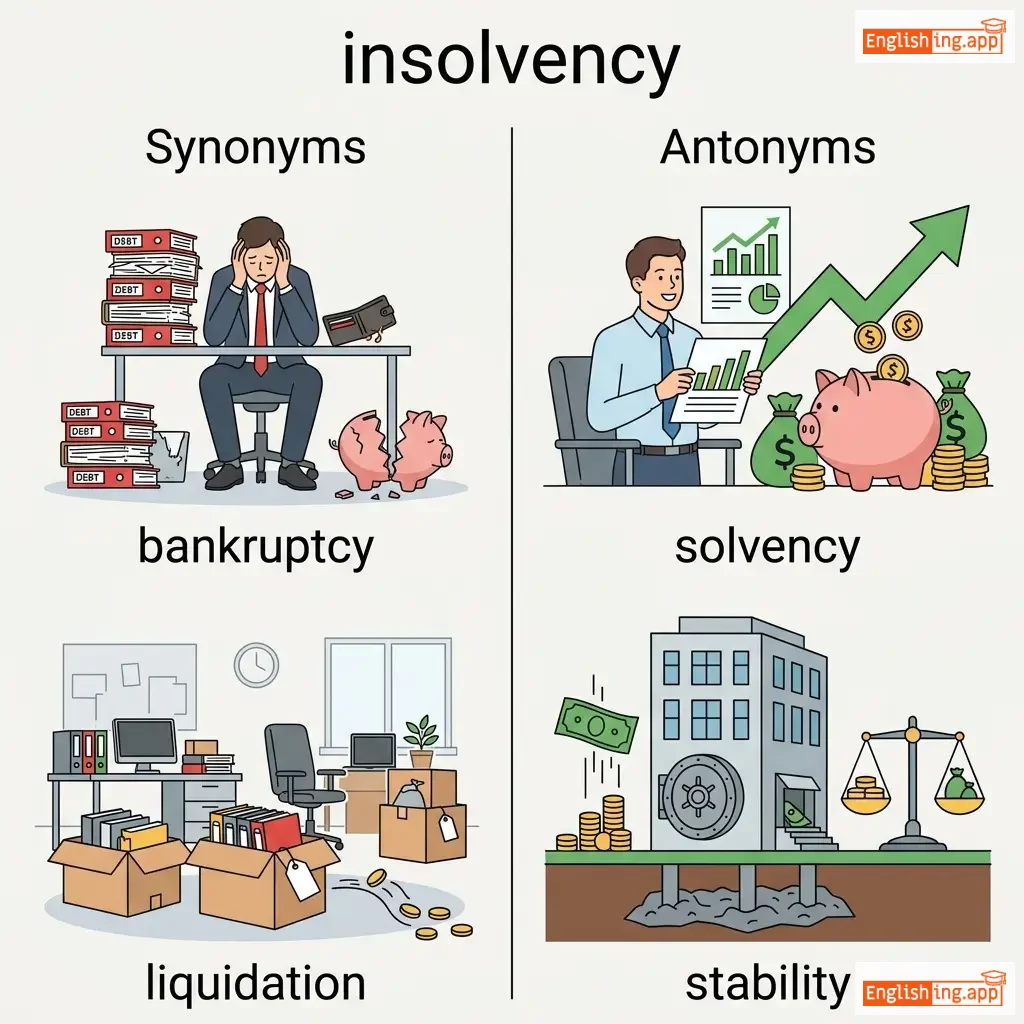
bankruptcy, liquidation, collapse, failure
••••••
|
solvency, stability
••••••
|
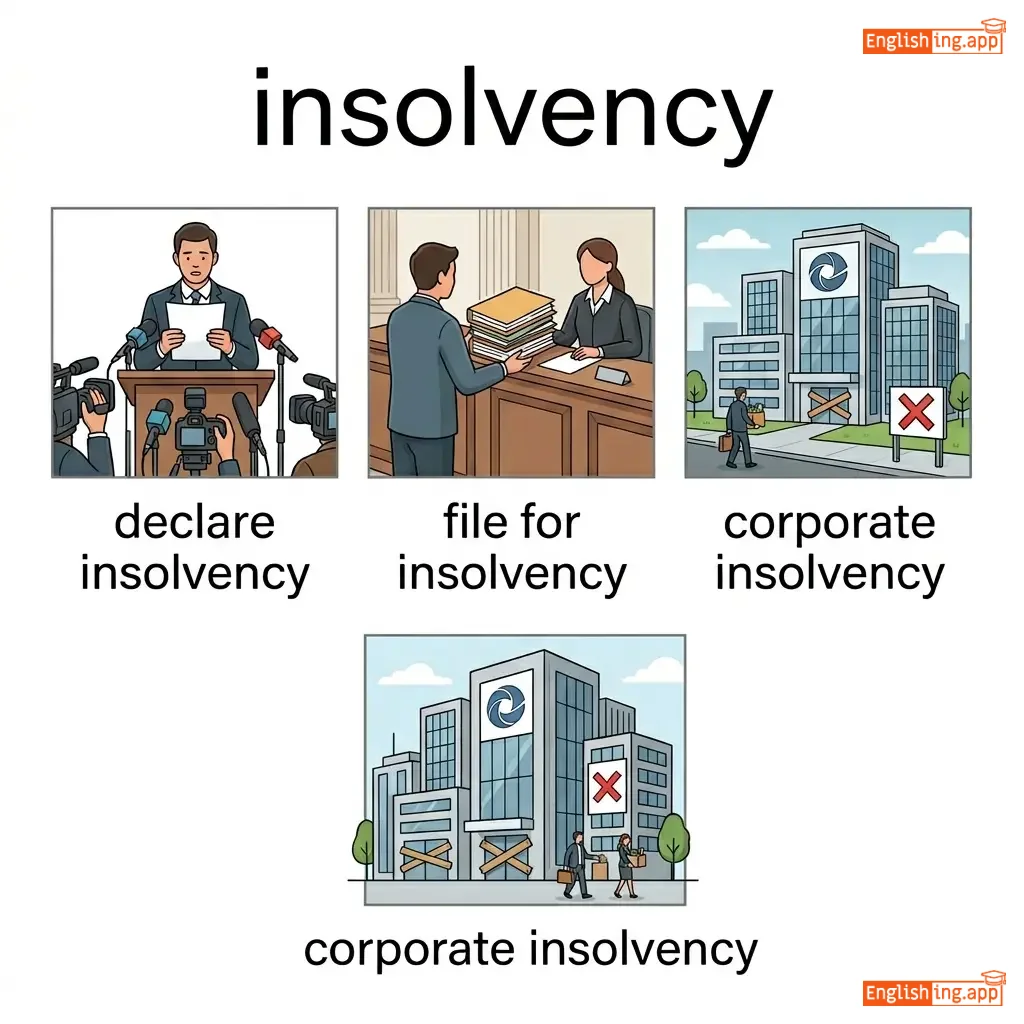
declare insolvency, file for insolvency, corporate insolvency
••••••
|
Insolvency = 破産, お金が払えないから.
••••••
|
|
#4731
😒
|
/ˈɪnsələnt/
adjective
(インソレント)
••••••
|
- •••••• |
無礼な、傲慢な
burei na, gōman na
••••••
|
- •••••• | - •••••• | - •••••• | - •••••• |
showing a rude and arrogant lack of respect
••••••
|
The insolent student refused to follow the teacher's instructions. |
その無礼な学生は教師の指示に従うことを拒否した。
Sono burei na gakusei wa kyōshi no shiji ni shitagau koto o kyohi shita.
••••••
|
- •••••• | - •••••• | - •••••• |
rude, disrespectful, arrogant, impudent, cheeky
••••••
|
respectful, polite, humble
••••••
|
insolent behavior, insolent remark, insolent tone
••••••
|
In SOLent, 太陽のように無礼で傲慢な行動。
••••••
|
|
#4732
😏
|
/ˈɪnsələns/
noun
(インソレンス)
••••••
|
- •••••• |
無礼
burei
••••••
|
- •••••• | - •••••• | - •••••• | - •••••• |
rude or disrespectful behavior
••••••
|
The teacher was shocked by the student's insolence. |
教師は学生の無礼に驚きました。
Kyoushi wa gakusei no burei ni odorokimashita.
••••••
|
- •••••• | - •••••• | - •••••• |
rudeness, disrespect, impudence, arrogance
••••••
|
politeness, respect
••••••
|
act of insolence, sheer insolence, show insolence, punished for insolence
••••••
|
無礼な態度は、'in'と 'solence' の組み合わせから来ている。
••••••
|
|
#4733
🗣️
|
/ɪnˈsɪstənt/
adjective
(インシステント)
••••••
|
- •••••• |
執拗な
shuchou na
••••••
|
- •••••• | - •••••• | - •••••• | - •••••• |
demanding something firmly and refusing to accept no
••••••
|
The child was insistent on getting a new toy. |
その子供は新しいおもちゃを手に入れることに執拗だった。
Sono kodomo wa atarashī omocha o te ni ireru koto ni shuchō datta.
••••••
|
- •••••• | - •••••• | - •••••• |
persistent, demanding, assertive, determined
••••••
|
yielding, lenient
••••••
|
insistent voice, insistent demand, insistent tone, insistent pressure
••••••
|
Insistent は日本語で執拗な → 何度も要求し続けること。
••••••
|
|
#4734
📢
|
/ɪnˈsɪstəns/
noun
(インシステンス)
••••••
|
- •••••• |
強い要求
tsuyoi youkyuu
••••••
|
- •••••• | - •••••• | - •••••• | - •••••• |
the act of demanding something firmly or repeatedly
••••••
|
At his insistence, we stayed longer. |
彼の強い要求で、私たちは長く滞在しました。
Kare no tsuyoi youkyuu de, watashitachi wa nagaku taizai shimashita.
••••••
|
- •••••• | - •••••• | - •••••• |
demand, urging, persistence, assertion
••••••
|
submission, yielding
••••••
|
firm insistence, insistence on, strong insistence, parental insistence
••••••
|
Insistence = insistの名詞形、強い要求を意味する。
••••••
|
|
#4735
🙅♂️
|
/ɪnˈsɪst/
verb
(インシスト)
••••••
|
|
強く主張する
tsuyoku shuchou suru
••••••
|
insisted
インシステッド
••••••
|
insisted
インシステッド
••••••
|
insists
インシスツ
••••••
|
insisting
インシスティング
••••••
|
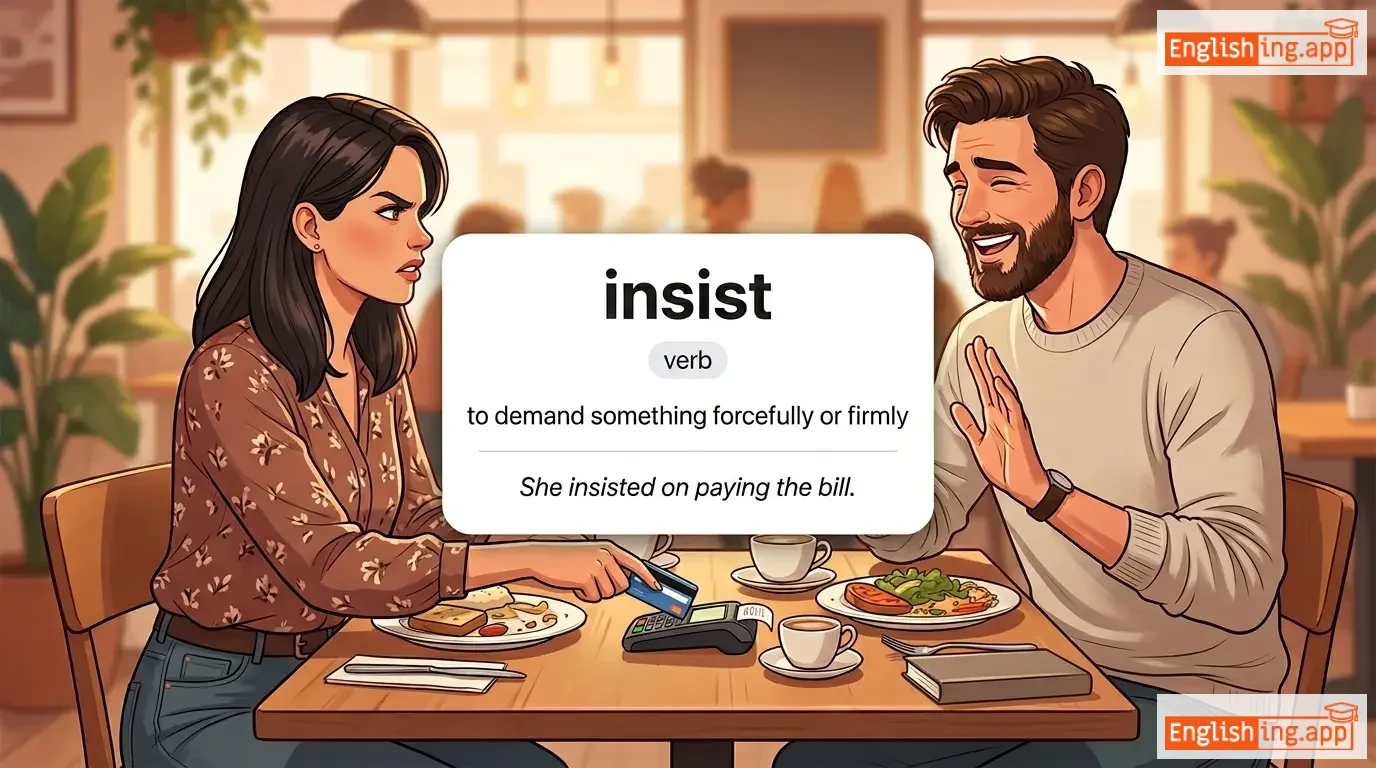
to demand something forcefully or firmly
••••••
|
She insisted on paying the bill.
彼女は勘定を支払うことに固執した。
••••••
|
彼女は勘定を支払うことに固執した。
Kanojo wa kanjou o shiharau koto ni koshou shita.
••••••
|
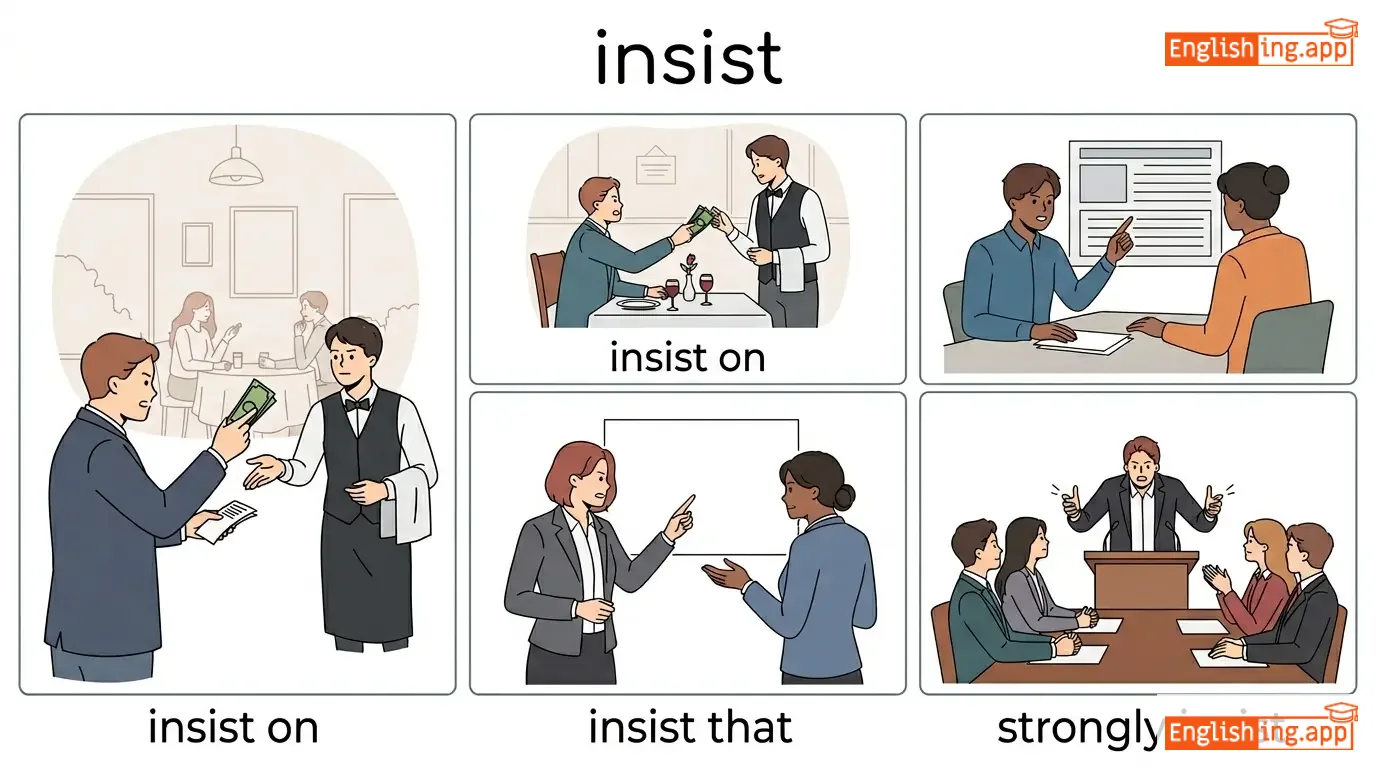
insist on
インシストオン
••••••
|
to demand firmly that something be done
••••••
|
強く主張する
tsuyoku shuchou suru
••••••
|
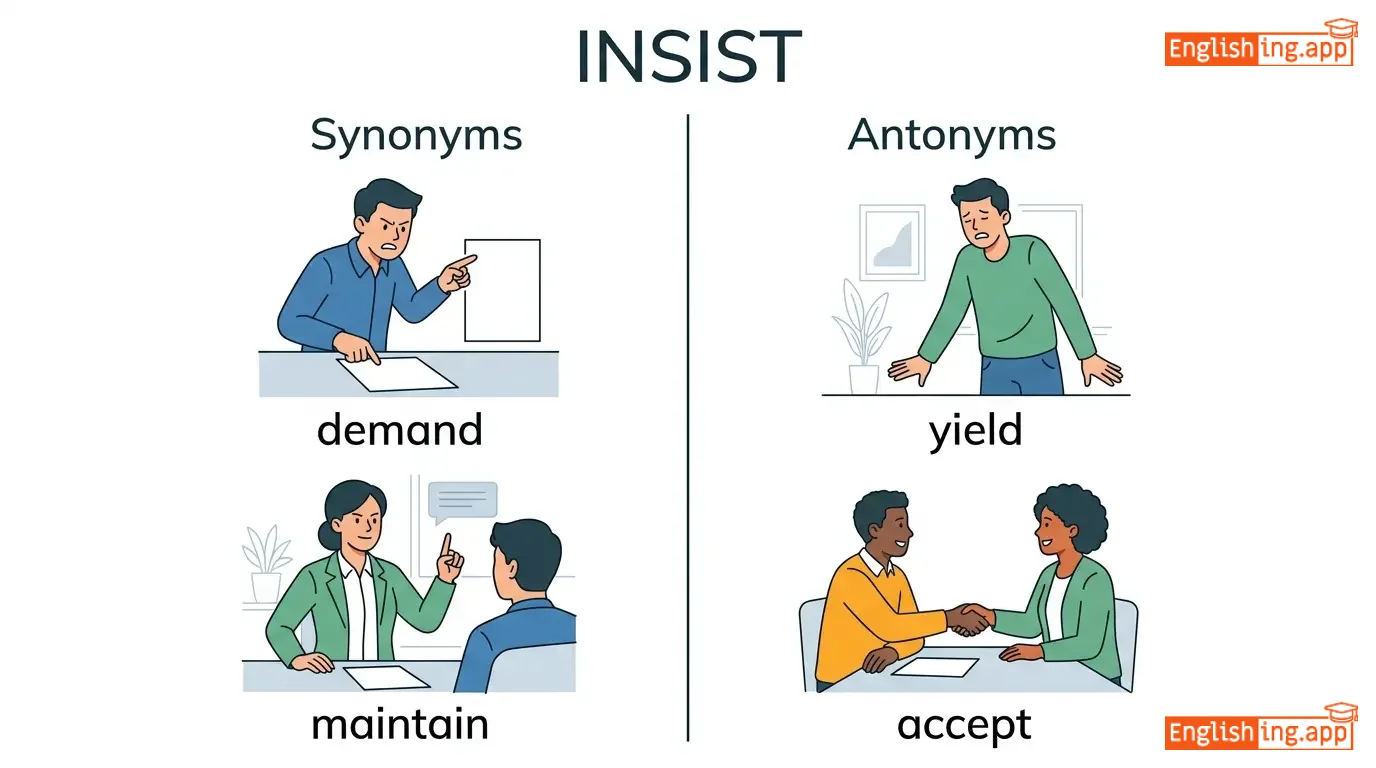
demand, maintain, assert, press, urge
••••••
|
yield, accept, give up
••••••
|
insist on, insist that, strongly insist, politely insist
••••••
|
インシスト=強く主張する!
••••••
|
|
#4736
🥱
|
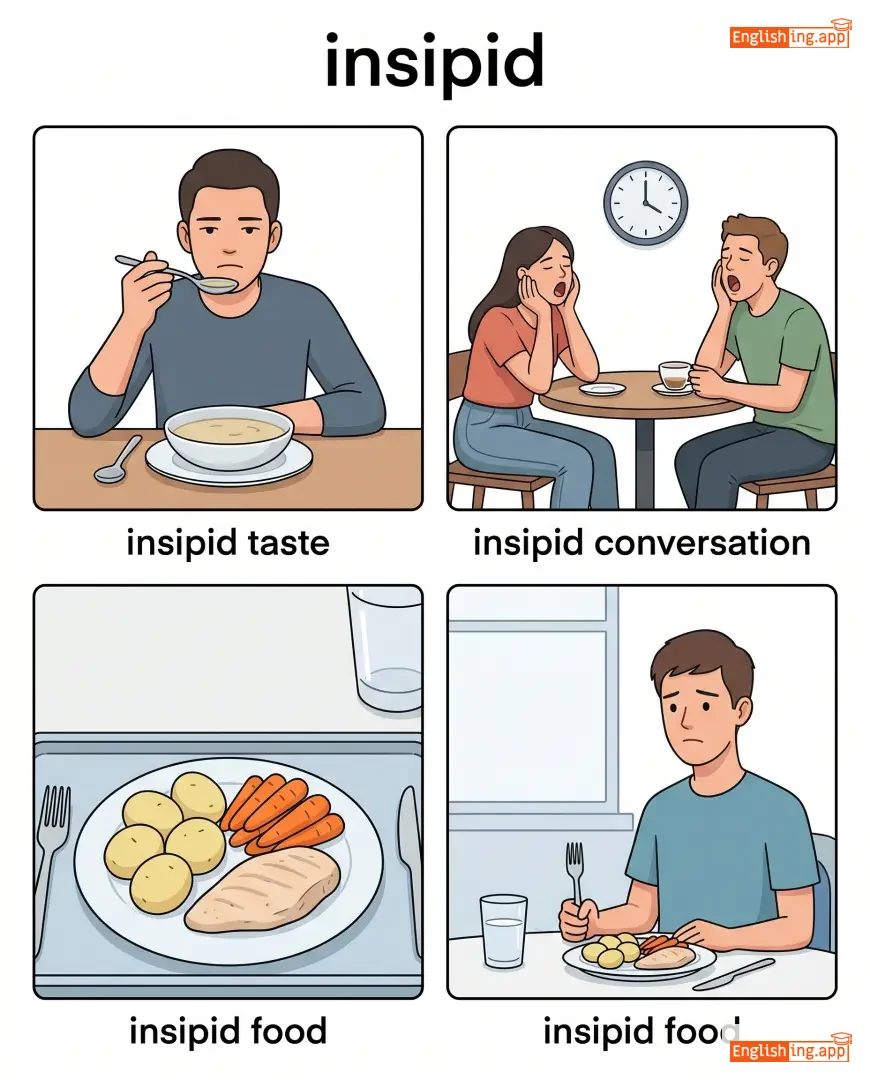
/ɪnˈsɪpɪd/
adjective
(インシピッド)
••••••
|
|
味気ない
ajikenai
••••••
|
- •••••• | - •••••• | - •••••• | - •••••• |
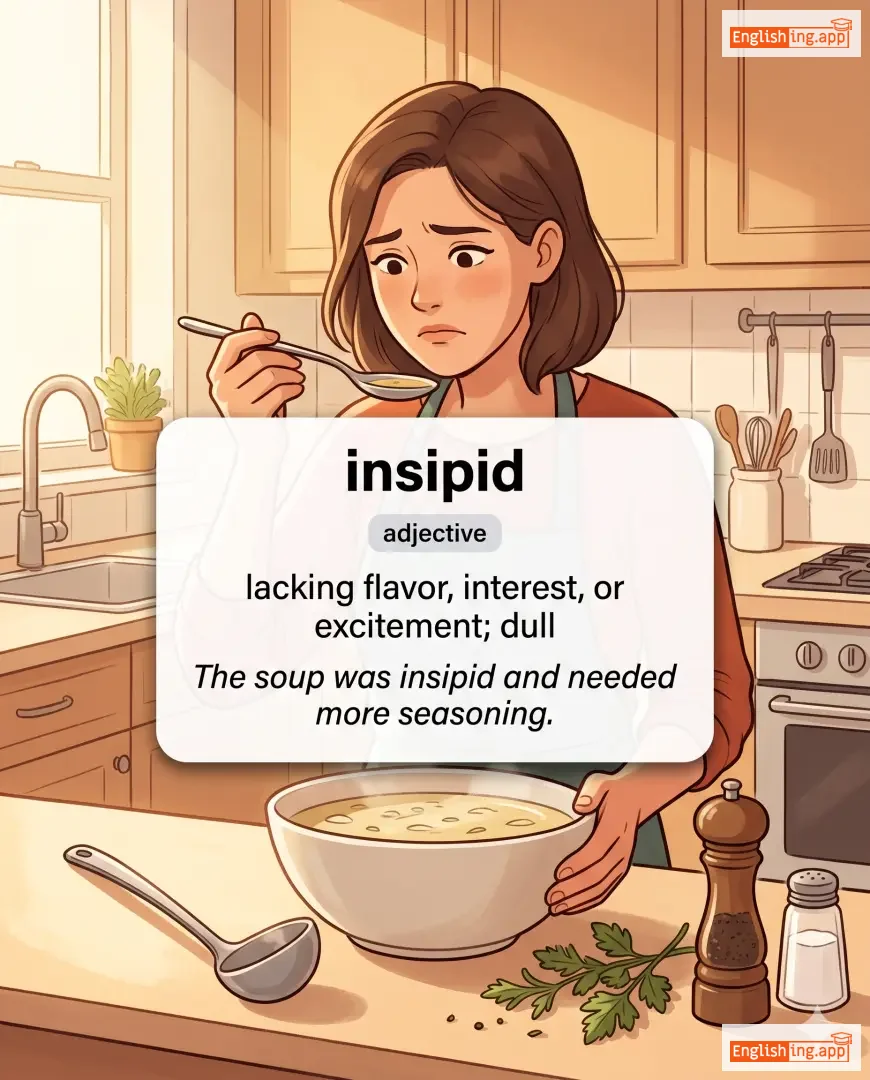
lacking flavor, interest, or excitement; dull
••••••
|
The soup was insipid and needed more seasoning. |
スープは味気なく、もっと調味料が必要でした。
Sūpu wa ajikenaku, motto chōmiryō ga hitsuyō deshita.
••••••
|
- •••••• | - •••••• | - •••••• |
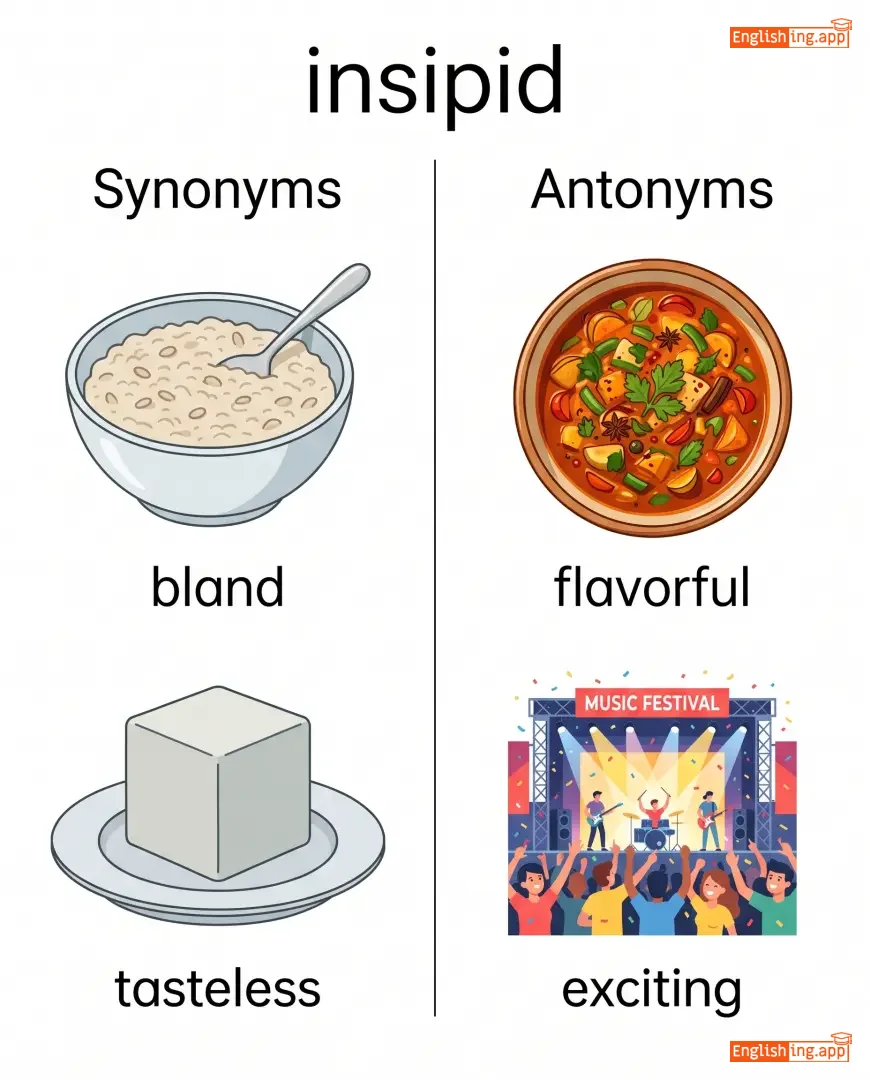
bland, tasteless, dull, boring, flat
••••••
|
flavorful, exciting, lively
••••••
|
insipid taste, insipid conversation, insipid food, insipid performance
••••••
|
Insipid は ‘in sipid’ と聞こえます → 味がないので、味気ない。
••••••
|
|
#4737
🤫
|
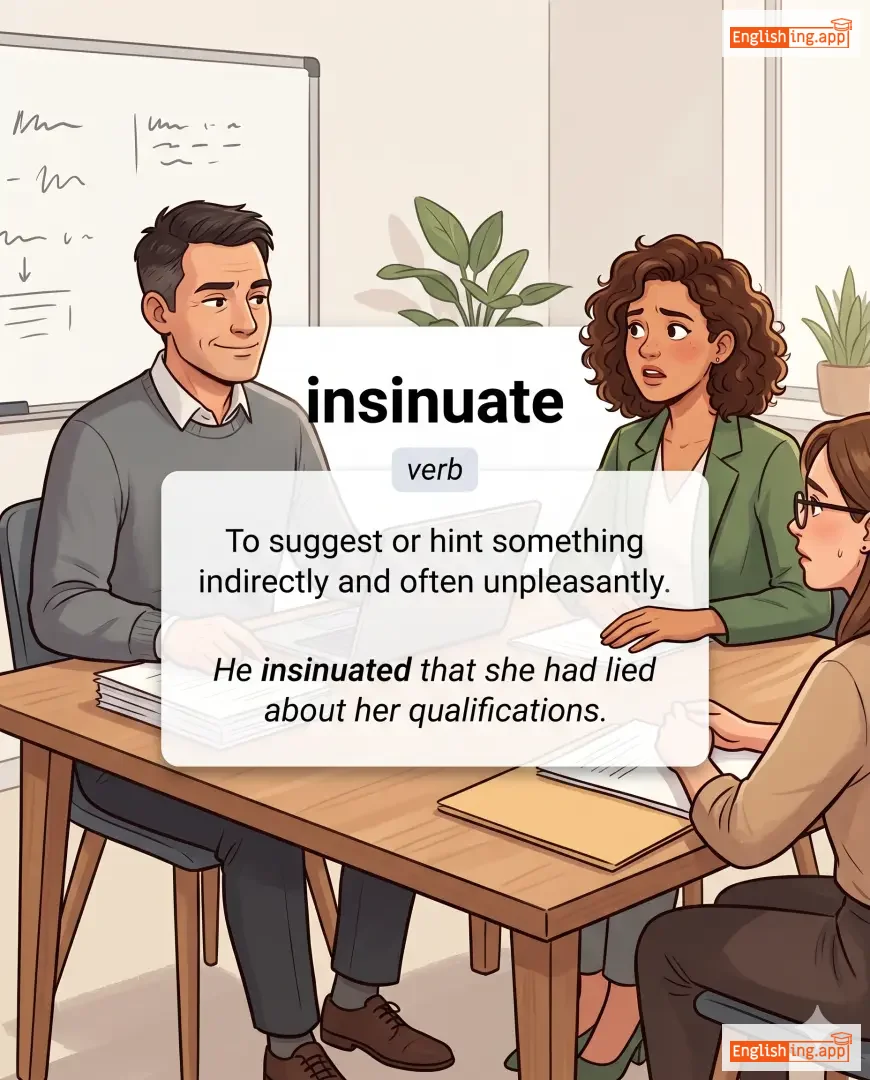
/ɪnˈsɪnjueɪt/
verb
••••••
|
|
- •••••• |
insinuated
••••••
|
insinuated
••••••
|
insinuates
••••••
|
insinuating
••••••
|
To suggest or hint something indirectly and often unpleasantly.
••••••
|
He insinuated that she had lied about her qualifications. |
- •••••• |
insinuate oneself |
to gradually and subtly gain favor or acceptance
••••••
|
- •••••• |
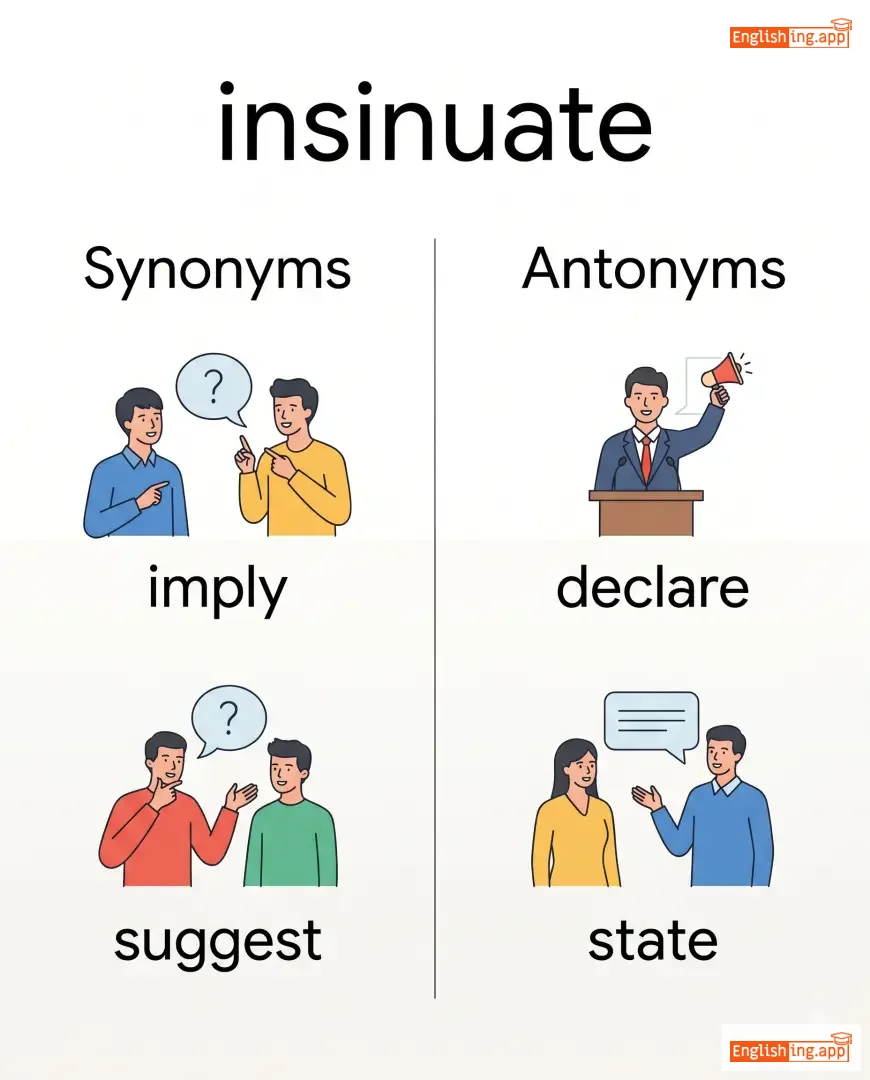
imply, suggest, hint, intimate, indicate
••••••
|
declare, state, assert
••••••
|
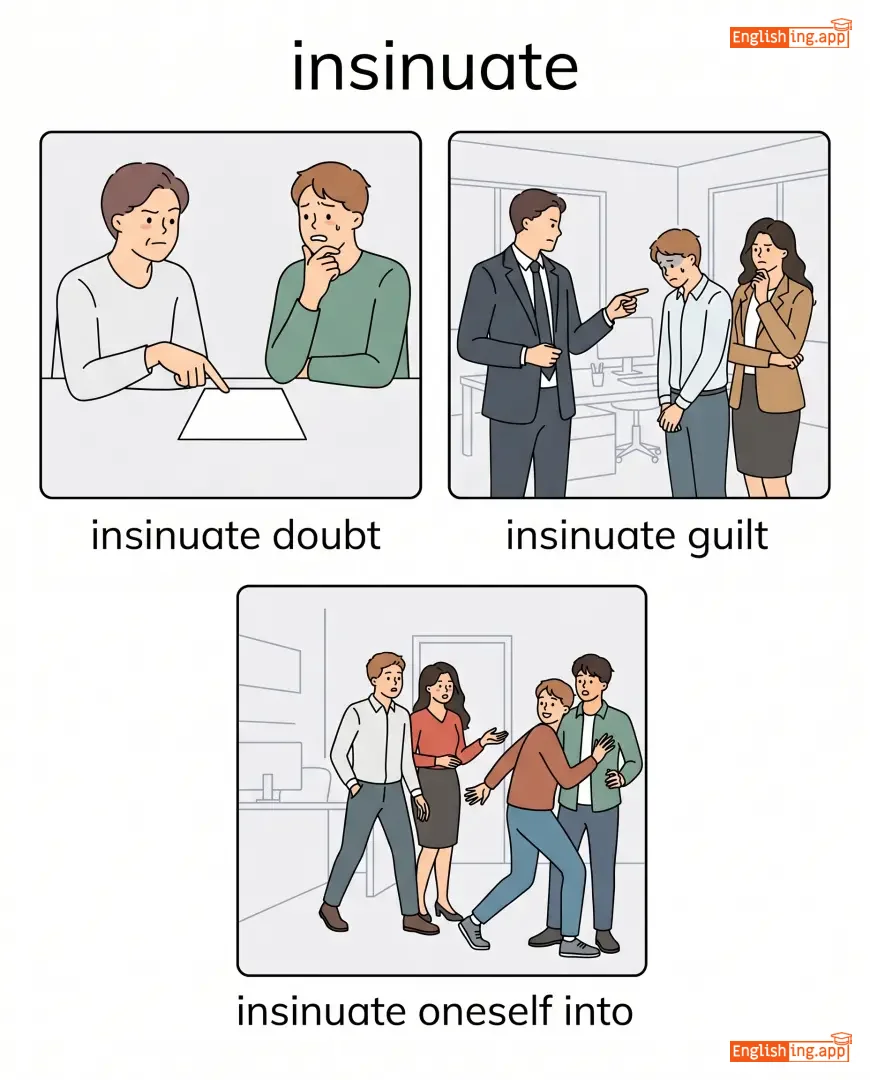
insinuate doubt, insinuate guilt, insinuate oneself into
••••••
|
No •••••• |
|
#4738
🪙
|
/ˌɪnsɪɡˈnɪfɪkənt/
adjective
(インシグニフィカント)
••••••
|
- •••••• |
重要でない
jūyōdenai
••••••
|
- •••••• | - •••••• | - •••••• | - •••••• |
Too small or unimportant to be worth considering.
••••••
|
The cost was so insignificant that nobody noticed it. |
そのコストは重要でなく、誰もそれに気づかなかった。
sono kosuto wa jūyōdenaku, dare mo sore ni kizukanakatta.
••••••
|
an insignificant detail |
a very small or unimportant piece of information
••••••
|
重要でない詳細
jūyōdenai shōsai
••••••
|
trivial, minor, negligible, unimportant, petty
••••••
|
important, significant, meaningful
••••••
|
insignificant amount, insignificant role, almost insignificant
••••••
|
Insignificant = サインがない → 小さい、重要でない。
••••••
|
|
#4739
⚪
|
/ˌɪnsɪɡˈnɪfɪkəns/
noun
(インシグニフィカンス)
••••••
|
- •••••• |
重要でないこと
juuyou denai koto
••••••
|
- •••••• | - •••••• | - •••••• | - •••••• |
The quality of being unimportant or trivial.
••••••
|
He felt a sense of insignificance in the vast universe. |
彼は広大な宇宙で重要でないことを感じました。
Kare wa koudai na uchuu de juuyou denai koto o kanjimashita.
••••••
|
- •••••• | - •••••• | - •••••• |
triviality, unimportance, smallness, pettiness
••••••
|
importance, significance, value
••••••
|
utter insignificance, sense of insignificance, feeling of insignificance
••••••
|
インシグニフィカンス = 重要でない → 意味がない.
••••••
|
|
#4740
🧠
|
/ˈɪnˌsaɪtfəl/
adjective
(インサイトフル)
••••••
|
- •••••• |
洞察力のある
dōsatsuryoku no aru
••••••
|
- •••••• | - •••••• | - •••••• | - •••••• |
Showing deep understanding or perceptiveness.
••••••
|
The professor gave an insightful lecture on global economics. |
教授はグローバル経済に関する洞察力のある講義を行いました。
Kyoju wa gurōbaru keizai ni kansuru dōsatsuryoku no aru kōgi o okonai mashita.
••••••
|
- •••••• | - •••••• | - •••••• |
perceptive, astute, shrewd, knowledgeable, wise
••••••
|
shallow, ignorant, superficial
••••••
|
insightful comment, insightful analysis, insightful observation, insightful book
••••••
|
Insightful = 洞察力のある → 深い理解で問題を解決する方法。
••••••
|
Vocabulary Quiz
Test your vocabulary by matching words with their translations or meanings.
Login to take the quiz
Comments (0)
Share your thoughts and join the discussion.
Join the discussion by logging in
Login to CommentNo comments yet
Be the first to share your thoughts!