

翻訳
過去
過去分詞
三人称単数
動名詞
意味
例文
例文の翻訳
同義語
対義語
コロケーション
ニーモニック



Swipe left or right, or use the buttons. Tap image to zoom.
例文の翻訳
単語
Lesson 342Lesson 342 - マスクトグル
|
絵文字
|
単語 | Images | 翻訳 | 過去 | 過去分詞 | 三人称単数 | 動名詞 | 意味 | 例文 | 例文の翻訳 | 表現例 | 表現例の意味 | 表現例の翻訳 | 同義語 | 対義語 | コロケーション | ニーモニック |
|---|---|---|---|---|---|---|---|---|---|---|---|---|---|---|---|---|---|
|
#10225
⚡
|
/swɪft/
adjective
••••••
|
- •••••• | - •••••• | - •••••• | - •••••• | - •••••• | - •••••• |
moving very quickly; happening promptly
••••••
|
The river current was swift after the heavy rain. |
- •••••• |
swift action |
quick and decisive response
••••••
|
- •••••• |
fast, quick, rapid, speedy, prompt
••••••
|
slow, sluggish, delayed
••••••
|
swift action, swift response, swift movement, swift decision
••••••
|
No •••••• |
|
#10226
📚
|
/θɪk/
adjective
(ハピネス)
••••••
|
- •••••• |
厚い
atsui
••••••
|
- •••••• | - •••••• | - •••••• | - •••••• |
having a large distance between two sides; not thin
••••••
|
The book was so thick it took weeks to finish. |
その本はとても厚くて、終わらせるのに数週間かかりました。
Sono hon wa totemo atsukute, owaraseru noni suushukan kakarimashita.
••••••
|
thick and thin |
through good times and bad
••••••
|
厚みと薄さ
atsumi to ususa
••••••
|
dense, heavy, wide, bulky
••••••
|
thin, slim, narrow
••••••
|
thick book, thick wall, thick hair, thick fog
••••••
|
Thickは厚いという意味で、厚い本のようにたくさんのページがあります
••••••
|
|
#10227
🧊
|
/θɔː/
verb
(ザオ)
••••••
|
- •••••• |
解凍する
kaitō suru
••••••
|
thawed
ザッド
••••••
|
thawed
ザッド
••••••
|
thaws
ザズ
••••••
|
thawing
ザイング
••••••
|
to melt or cause to melt after being frozen
••••••
|
The ice began to thaw in the sun.
氷は太陽の下で溶け始めました。
••••••
|
氷は太陽の下で溶け始めました。
Kōri wa taiyō no shita de toke hajimemashita.
••••••
|
thaw relations
関係を解凍する
••••••
|
to improve a tense or hostile relationship
••••••
|
関係を改善する
kankei o kaizen suru
••••••
|
melt, defrost, unfreeze, dissolve
••••••
|
freeze, solidify
••••••
|
thaw out, thaw ice, thaw quickly, thaw relations
••••••
|
解凍はthawと同じ意味、凍ったものを溶かすことです。
••••••
|
|
#10228
😖
|
/ˈtɛrɪbəl/
adjective
••••••
|
- •••••• | - •••••• | - •••••• | - •••••• | - •••••• | - •••••• |
extremely bad or unpleasant
••••••
|
The food at that restaurant was terrible. |
- •••••• |
a terrible mistake |
a very bad or serious error
••••••
|
- •••••• |
awful, dreadful, horrible, appalling
••••••
|
wonderful, excellent, good
••••••
|
terrible accident, terrible pain, terrible mistake, terrible situation
••••••
|
No •••••• |
|
#10229
🏚️
|
/ˈtɛnəmənt/
noun
(テネメント)
••••••
|
- •••••• |
アパートメント
apātomento
••••••
|
- •••••• | - •••••• | - •••••• | - •••••• |
a large building divided into separate apartments, often in poor condition
••••••
|
The family lived in a crowded tenement in the city.
その家族は街の混雑したテネメントに住んでいました。
••••••
|
その家族は街の混雑したアパートメントに住んでいました。
Sono kazoku wa machi no konzatsu shita apātomento ni sunde imashita.
••••••
|
- •••••• | - •••••• | - •••••• |
apartment, flat, dwelling, housing
••••••
|
villa, mansion, estate
••••••
|
tenement house, tenement block, old tenement
••••••
|
Tenement はアパートメント、‘ten’ (十) のように多くの家族が一緒に住んでいる
••••••
|
|
#10230
🗣️
|
/tɛl/
verb
(テル)
••••••
|
|
言う
iu
••••••
|
told
トールド
••••••
|
told
トールド
••••••
|
tells
テルス
••••••
|
telling
テリング
••••••
|
to communicate information, give an account of something, or instruct someone to do something
••••••
|
She asked him to tell the truth.
彼女は彼に真実を話すように頼んだ。
••••••
|
彼女は彼に真実を話すように頼んだ。
Kanojo wa kare ni shinjitsu wo hanasu you ni tanonda.
••••••
|
tell the truth
真実を話す
••••••
|
to speak honestly
••••••
|
真実を話す
Shinjitsu wo hanasu
••••••
|
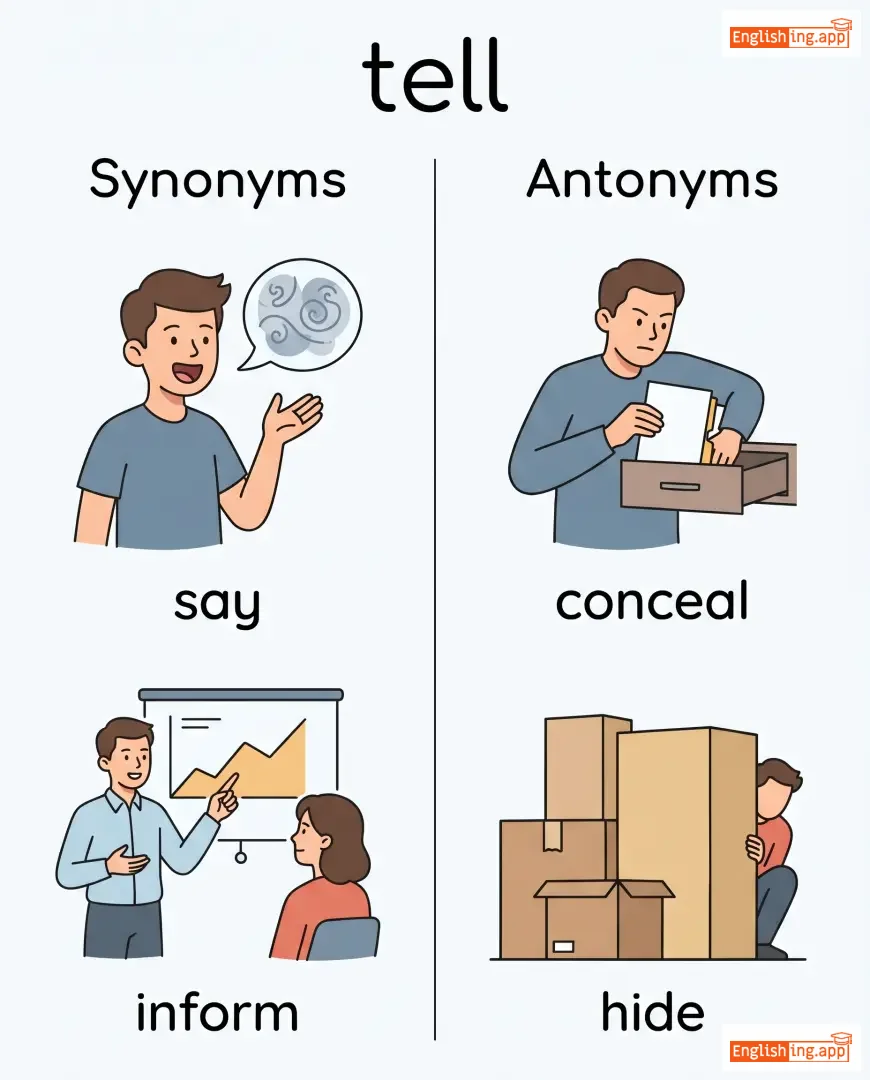
say, inform, relate, narrate, reveal
••••••
|
conceal, hide, suppress
••••••
|
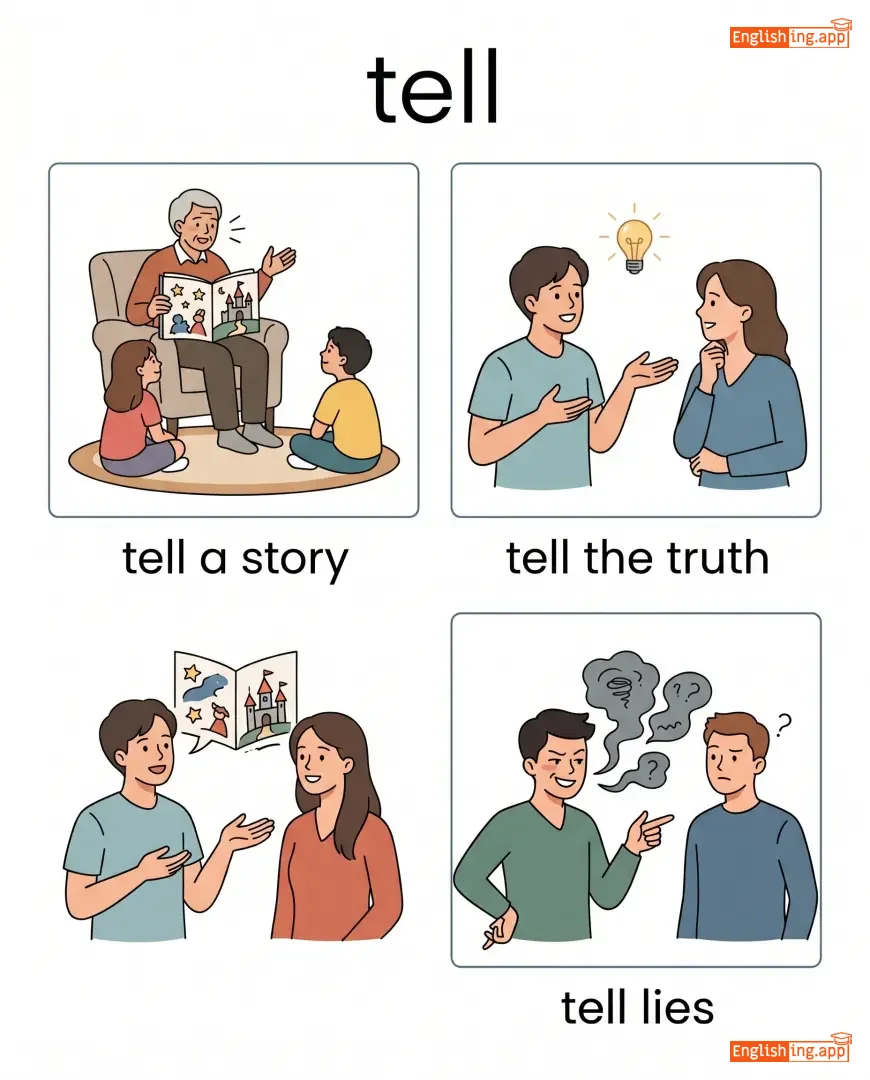
tell a story, tell the truth, tell lies, tell someone
••••••
|
Tell は言うこと、電話で何かを言うように。
••••••
|
|
#10231
🐝
|
/ˈtiːmɪŋ/
adjective
(ティーミング)
••••••
|
- •••••• |
人でいっぱい
hito de ippai
••••••
|
- •••••• | - •••••• | - •••••• | - •••••• |
full of or swarming with things or people
••••••
|
The market was teeming with shoppers. |
市場は買い物客でいっぱいだった。
Ichiba wa kaimono kyaku de ippai datta.
••••••
|
teeming with life |
full of energy, activity, or living things
••••••
|
生命で満ちている
seimei de michiteiru
••••••
|
swarming, crowded, overflowing, brimming, packed
••••••
|
empty, barren, deserted
••••••
|
teeming market, teeming city, teeming crowd, teeming streets
••••••
|
Teemingは市場にいっぱい人がいるような感じ、活気に満ちている。
••••••
|
|
#10232
🔨
|
/tæmp/
verb
(テンプ)
••••••
|
- •••••• |
押し固める
oshikatameru
••••••
|
tamped
テンプド
••••••
|
tamped
テンプド
••••••
|
tamps
テンプス
••••••
|
tamping
テンプング
••••••
|
to press down tightly by packing
••••••
|
He tamped the soil around the plant to secure it.
彼は植物の周りの土を押し固めて、それを固定しました。
••••••
|
彼は植物の周りの土を押し固めて、それを固定しました。
Kare wa shokubutsu no mawari no tsuchi o oshikatamete, sore o kotei shimashita.
••••••
|
- •••••• | - •••••• | - •••••• |
pack, press, compress, compact
••••••
|
loosen, release
••••••
|
tamp down, tamp soil, tamp coffee, tamp explosives
••••••
|
Tampは土を押し固めて植物を安定させることを意味します。
••••••
|
|
#10233
🐴
|
/teɪm/
verb
(テイム)
••••••
|
|
飼い慣らす
kainarasu
••••••
|
tamed
テイムド
••••••
|
tamed
テイムド
••••••
|
tames
テイムス
••••••
|
taming
テイミング
••••••
|
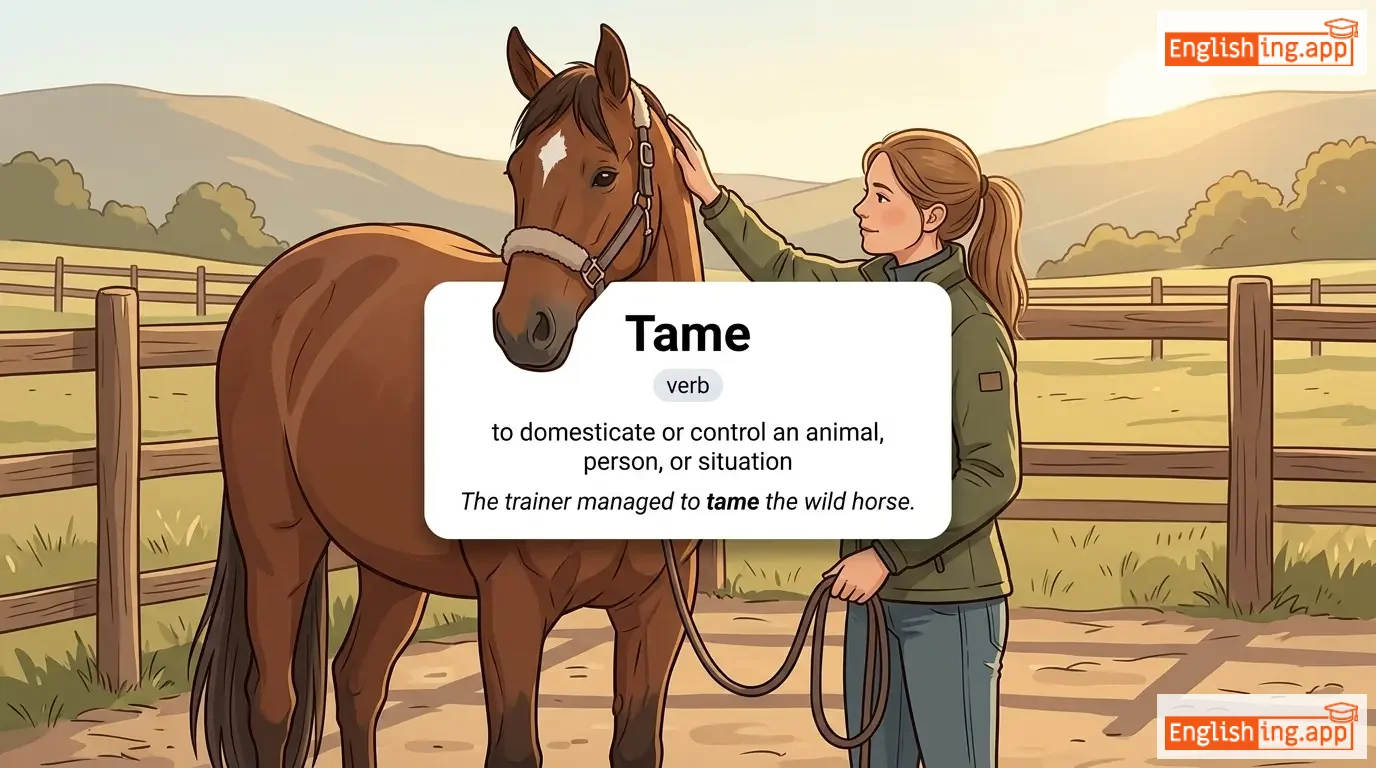
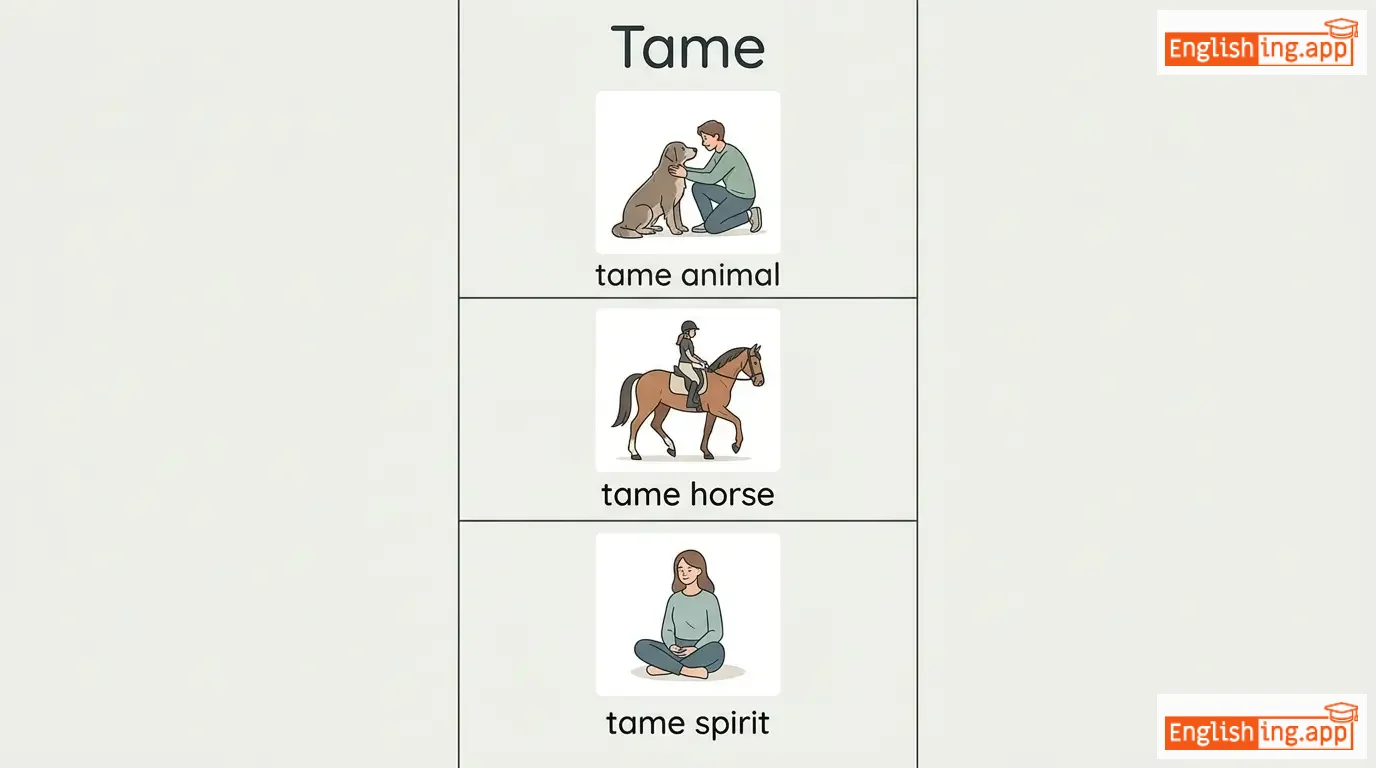
to domesticate or control an animal, person, or situation
••••••
|
The trainer managed to tame the wild horse.
トレーナーは野生の馬を飼い慣らすことに成功しました。
••••••
|
トレーナーは野生の馬を飼い慣らすことに成功しました。
Torēnā wa yasei no uma wo kainarasu koto ni seikō shimashita.
••••••
|
tame the beast
獣を飼い慣らす
••••••
|
to control something wild or difficult
••••••
|
獣を飼い慣らす
kemono wo kainarasu
••••••
|
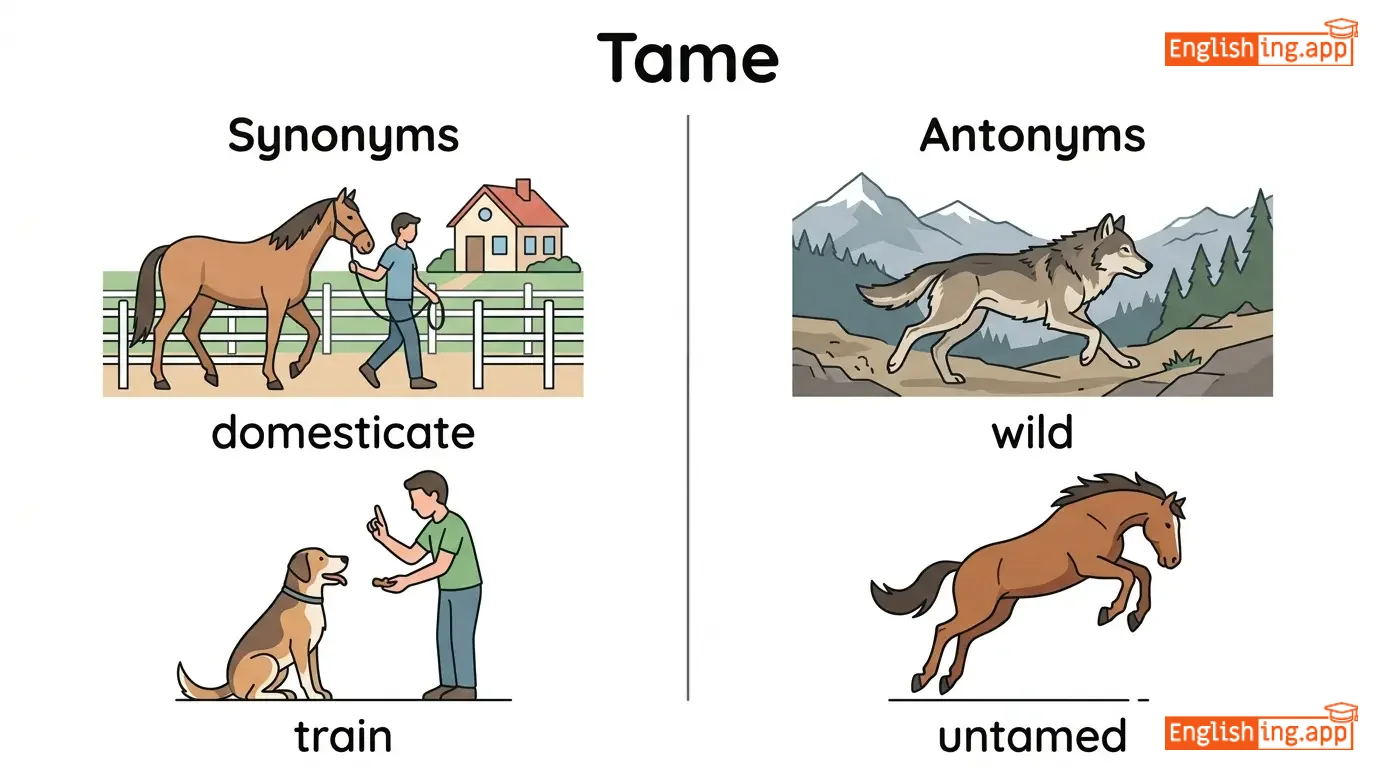
domesticate, train, discipline, control, subdue
••••••
|
wild, untamed, uncontrolled
••••••
|
tame animal, tame horse, tame spirit, tame manner
••••••
|
Tameは獣を飼い慣らし、コントロールすることを意味します。
••••••
|
|
#10234
📏
|
/tɔːl/
adjective
(トール)
••••••
|
- •••••• |
高い
takai
••••••
|
- •••••• | - •••••• | - •••••• | - •••••• |
having a greater than average height
••••••
|
He is the tallest player on the team. |
彼はチームで一番高い選手です。
Kare wa chiimu de ichiban takai senshu desu.
••••••
|
tall order |
a difficult or challenging task
••••••
|
難しい仕事
muzukashii shigoto
••••••
|
high, lofty, towering, elevated
••••••
|
short, small, low
••••••
|
tall building, tall person, tall story, tall tree
••••••
|
Tall は高い、タワーのように高い。
••••••
|
|
#10235
🧵
|
/ˈteɪlərd/
adjective
(テイラード)
••••••
|
|
オーダーメイド
ōdāmeido
••••••
|
- •••••• | - •••••• | - •••••• | - •••••• |
made or adapted for a particular purpose, person, or situation
••••••
|
The company offers tailored solutions for small businesses. |
その会社は小規模企業向けにオーダーメイドのソリューションを提供しています。
Sono kaisha wa shōkibo kigyō muke ni ōdāmeido no sorūshon o teikyō shiteimasu.
••••••
|
tailored to fit |
specially designed to suit someone or something
••••••
|
ぴったり合うようにオーダーメイド
pittari au yō ni ōdāmeido
••••••
|
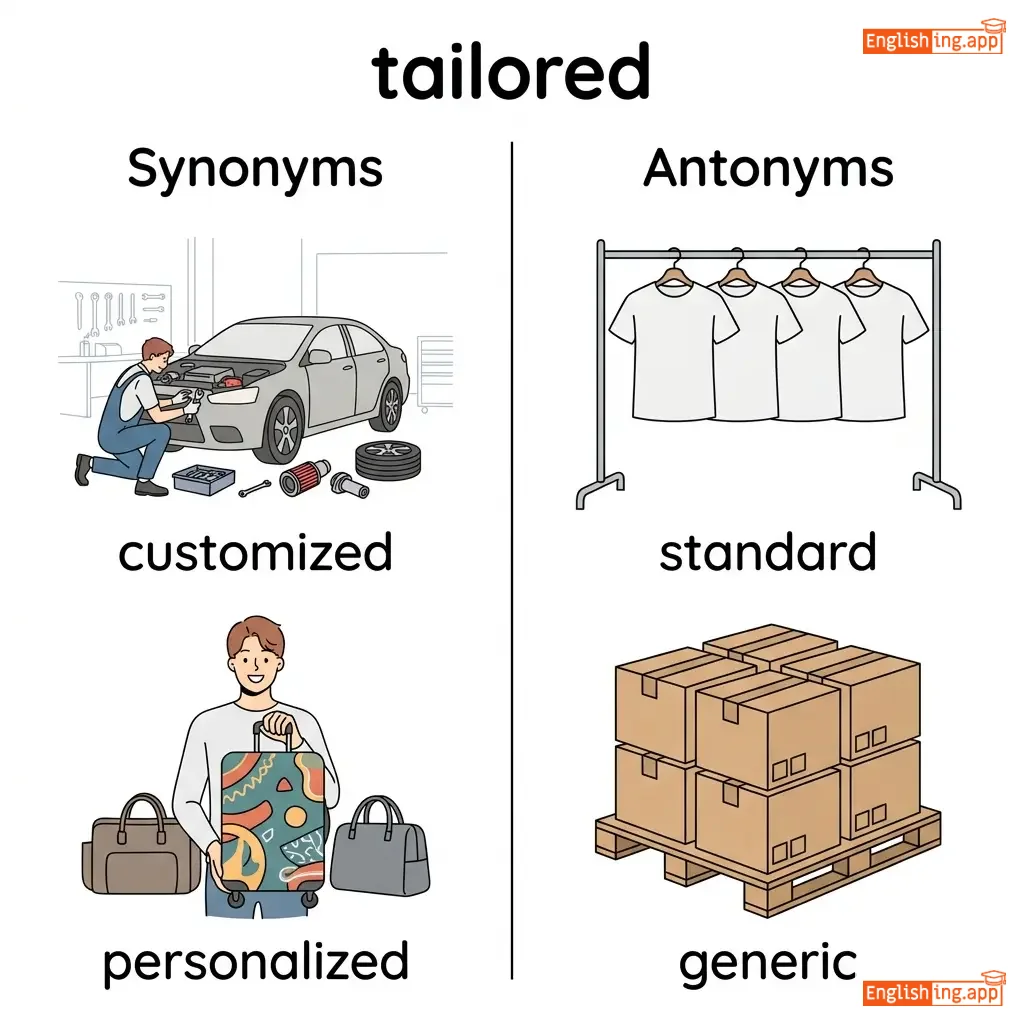
customized, personalized, fitted, adjusted, modified
••••••
|
standard, generic, universal
••••••
|
tailored suit, tailored approach, tailored solution, tailored service
••••••
|
オーダーメイドのスーツのように、'tailored'はオーダーメイドを意味します。
••••••
|
|
#10236
🚫
|
/təˈbuː/
noun
••••••
|
- •••••• | - •••••• | - •••••• | - •••••• | - •••••• | - •••••• |
a social or cultural prohibition against certain practices or discussions
••••••
|
Talking about money is considered a taboo in some cultures. |
- •••••• |
break a taboo |
to do something socially or culturally forbidden
••••••
|
- •••••• |
prohibition, restriction, ban, constraint
••••••
|
acceptance, permission
••••••
|
cultural taboo, religious taboo, social taboo, break taboo
••••••
|
No •••••• |
|
#10237
🖥️
|
/ˈsɪstəm/
noun
(システム)
••••••
|
- •••••• |
システム
shisutemu
••••••
|
- •••••• | - •••••• | - •••••• | - •••••• |
a set of connected parts forming a complex whole; an organized method
••••••
|
The education system needs major reforms. |
教育システムには大きな改革が必要です。
Kyōiku shisutemu ni wa ōkina kaikaku ga hitsuyō desu.
••••••
|
systematic approach |
an organized and methodical way
••••••
|
体系的なアプローチ
taikeiteki na apurōchi
••••••
|
structure, organization, framework, network
••••••
|
disorder, chaos
••••••
|
education system, computer system, political system, solar system
••••••
|
システム = システム、'太陽系' のように、惑星のシステム
••••••
|
|
#10238
💐
|
/ˈsɪmpəθi/
noun
(シンパシー)
••••••
|
- •••••• |
同情
doujou
••••••
|
- •••••• | - •••••• | - •••••• | - •••••• |
feelings of pity and compassion for someone else's suffering
••••••
|
She expressed her sympathy for the grieving family.
彼女は悲しんでいる家族に同情を示しました。
••••••
|
彼女は悲しんでいる家族に同情を示しました。
Kanojo wa kanashinde iru kazoku ni doujou o shimeshimashita.
••••••
|
deep sympathy
深い同情
••••••
|
strong feelings of compassion
••••••
|
深い同情
fukai doujou
••••••
|
compassion, pity, condolence, understanding
••••••
|
indifference, apathy
••••••
|
express sympathy, offer sympathy, deep sympathy, sympathy card
••••••
|
Sympathy = Sim + Pathi → Sim broke heart = 同情
••••••
|
|
#10239
🕊️
|
/ˈsɪmbəlaɪz/
verb
(シンボライズ)
••••••
|
- •••••• |
象徴する
shouchou suru
••••••
|
symbolized
シンボライズド
••••••
|
symbolized
シンボライズド
••••••
|
symbolizes
シンボライズズ
••••••
|
symbolizing
シンボライズイング
••••••
|
to represent or stand for something else
••••••
|
The dove symbolizes peace across cultures.
鳩は文化を超えて平和を象徴しています。
••••••
|
鳩は文化を超えて平和を象徴しています。
Hato wa bunka wo koete heiwa wo shouchou shiteimasu.
••••••
|
- •••••• | - •••••• | - •••••• |
represent, signify, denote, embody
••••••
|
conceal, obscure
••••••
|
symbolize peace, symbolize freedom, symbolize unity, symbolize hope
••••••
|
鳩 🕊️ が平和を象徴する – '象徴する' を覚えよう!
••••••
|
|
#10240
💪
|
/streɪn/
noun, verb
(ストレイン)
••••••
|
- •••••• |
緊張 / 引っ張り
kinchou / hippa-ri
••••••
|
strained
ストレインド
••••••
|
strained
ストレインド
••••••
|
strains
ストレインズ
••••••
|
straining
ストレイニング
••••••
|
To force something beyond its normal limits; to injure by overexertion; or a type or variety of something.
••••••
|
He strained his back while lifting the heavy box.
彼は重い箱を持ち上げるときに背中を痛めました。
••••••
|
彼は重い箱を持ち上げるときに背中を痛めました。
Kare wa omoi hako o mochiageru toki ni senaka o itamemashita.
••••••
|
strain every nerve
全力を尽くす
••••••
|
To put in the utmost effort
••••••
|
全力を尽くす
Zenryoku o tsukusu
••••••
|
stress, tension, effort, pressure, injury
••••••
|
ease, relaxation, rest
••••••
|
muscle strain, mental strain, strain relationship, under strain
••••••
|
Strainは緊張を意味します、試験でみんなが緊張(strain)を感じるように。
••••••
|
|
#10241
🌱
|
/sərˈvaɪv/
verb
(サバイヴ)
••••••
|
- •••••• |
生き残る
ikinokoru
••••••
|
survived
サバイヴド
••••••
|
survived
サバイヴド
••••••
|
survives
サバイヴズ
••••••
|
surviving
サバイヴィング
••••••
|
To continue to live or exist after a difficult event or situation.
••••••
|
He managed to survive the storm.
彼は嵐を生き延びた。
••••••
|
彼は嵐を生き延びた。
Kare wa arashi o ikinobita.
••••••
|
survival of the fittest
適者生存
••••••
|
The idea that only the strongest individuals succeed or endure.
••••••
|
適者生存
Tekisha seizon
••••••
|
endure, persist, outlive, remain, withstand
••••••
|
perish, die, succumb
••••••
|
survive an accident, survive a crisis, survive on, survive against odds
••••••
|
生き残るは嵐を乗り越えること = 生き残る
••••••
|
|
#10242
🌳
|
/səˈraʊn.dɪŋz/
noun
(サラウンディングス)
••••••
|
- •••••• |
周囲
shuui
••••••
|
- •••••• | - •••••• | - •••••• | - •••••• |
The area around a person, place, or thing.
••••••
|
She quickly adapted to her new surroundings. |
彼女は新しい環境にすぐに適応しました。
Kanojo wa atarashī kankyō ni sugu ni tekiō shimashita.
••••••
|
- •••••• | - •••••• | - •••••• |
environment, vicinity, area, neighborhood, setting
••••••
|
center, core
••••••
|
pleasant surroundings, natural surroundings, change of surroundings
••••••
|
Surroundings = Surround + Things → 私たちを取り囲むもの = 周囲
••••••
|
|
#10243
📈
|
/ˈsɜːr.plʌs/
noun
(サープラス)
••••••
|
- •••••• |
余剰
yojo
••••••
|
- •••••• | - •••••• | - •••••• | - •••••• |
An amount that is more than what is needed.
••••••
|
The country has a surplus of food this year. |
今年、その国には食料の余剰があります。
Kotoshi, sono kuni ni wa shokuryou no yojou ga arimasu.
••••••
|
trade surplus |
The amount by which a country's exports exceed its imports.
••••••
|
貿易余剰
boueki yojo
••••••
|
excess, extra, oversupply, remainder, overflow
••••••
|
shortage, deficit, lack
••••••
|
budget surplus, surplus goods, surplus food, surplus production
••••••
|
余剰 = 必要以上に多い
••••••
|
|
#10244
✅
|
/ʃʊər/ or /ʃɔːr/
adjective
(shur)
••••••
|
- •••••• |
確か
tashika
••••••
|
- •••••• | - •••••• | - •••••• | - •••••• |
Confident about something; without doubt.
••••••
|
I am sure that he will succeed. |
私は彼が成功することを確信しています。
Watashi wa kare ga seikou suru koto o kakushin shiteimasu.
••••••
|
for sure |
Definitely; without any doubt.
••••••
|
間違いなく
machigainaku
••••••
|
certain, confident, positive, assured, definite
••••••
|
unsure, doubtful, uncertain
••••••
|
sure about, sure enough, be sure to, make sure
••••••
|
Sureは「確か」という意味—日本語でも確か
••••••
|
|
#10245
🌅
|
/ˈsʌn.raɪz/
noun
(サンライズ)
••••••
|
- •••••• |
日の出
hinode
••••••
|
- •••••• | - •••••• | - •••••• | - •••••• |
The time in the morning when the sun appears over the horizon.
••••••
|
We woke up early to watch the sunrise over the mountains. |
私たちは山の上で日の出を見るために早起きしました。
Watashitachi wa yama no ue de hinode o miru tame ni hayaoki shimashita.
••••••
|
sunrise industry |
An emerging industry that is expected to grow rapidly.
••••••
|
新興産業
shinkō sangyō
••••••
|
dawn, daybreak, first light, morning, sunup
••••••
|
sunset, night, dusk
••••••
|
watch the sunrise, beautiful sunrise, sunrise view, at sunrise
••••••
|
日の出 = Sunrise, 太陽が昇る時。
••••••
|
|
#10246
🌇
|
/ˈsʌnˌdaʊn/
noun
(サンダウン)
••••••
|
- •••••• |
日没
nichibotsu
••••••
|
- •••••• | - •••••• | - •••••• | - •••••• |
the time in the evening when the sun goes below the horizon
••••••
|
We planned to reach the village before sundown. |
私たちは日没前に村に到着する予定でした。
Watashitachi wa nichibotsu mae ni mura ni tōchaku suru yotei deshita.
••••••
|
- •••••• | - •••••• | - •••••• |
sunset, dusk, twilight, nightfall
••••••
|
sunrise, dawn
••••••
|
before sundown, after sundown, at sundown
••••••
|
Sundown は太陽が沈む時、'sun' と 'down' を思い出して!
••••••
|
|
#10247
💡
|
/səˈdʒɛst/
verb
(サジェスト)
••••••
|
- •••••• |
提案する
teian suru
••••••
|
suggested
サジェステッド
••••••
|
suggested
サジェステッド
••••••
|
suggests
サジェスツ
••••••
|
suggesting
サジェスティング
••••••
|
to put forward an idea, plan, or recommendation for consideration
••••••
|
He suggested going to the new restaurant for dinner.
彼は新しいレストランで夕食を取ることを提案しました。
••••••
|
彼は新しいレストランで夕食を取ることを提案しました。
Kare wa atarashī resutoran de yūshoku o toru koto o teian shimashita.
••••••
|
suggest itself
自発的に提案する
••••••
|
to present itself naturally without being asked
••••••
|
自発的に提案する
jihatsuteki ni teian suru
••••••
|
recommend, propose, advise, urge
••••••
|
oppose, discourage
••••••
|
suggest a plan, suggest an idea, strongly suggest, politely suggest
••••••
|
提案することはアイデアを出すこと – 覚えやすいですね!
••••••
|
|
#10248
📈
|
/səbˈstænʃəli/
adverb
(サブスタンシャリー)
••••••
|
- •••••• |
大幅に
ōhaba ni
••••••
|
- •••••• | - •••••• | - •••••• | - •••••• |
to a great extent or degree
••••••
|
The new policy has substantially improved working conditions.
新しい政策は労働条件を大幅に改善しました。
••••••
|
新しい政策は労働条件を大幅に改善しました。
Atarashī seisaku wa rōdō jōken o ōhaba ni kaizen shimashita.
••••••
|
- •••••• | - •••••• | - •••••• |
considerably, significantly, greatly, largely
••••••
|
slightly, marginally
••••••
|
substantially increase, substantially reduce, substantially change, substantially improve
••••••
|
Substantiallyは日本語で大幅に – 大きな変化を意味していることを覚えておいて
••••••
|
|
#10249
🤦
|
/ˈstjuːpɪd/
adjective
••••••
|
- •••••• | - •••••• | - •••••• | - •••••• | - •••••• | - •••••• |
lacking intelligence or common sense
••••••
|
It was a stupid mistake to leave the keys inside the car. |
- •••••• |
play stupid |
to pretend not to know something
••••••
|
- •••••• |
foolish, silly, idiotic, dumb
••••••
|
wise, intelligent, smart
••••••
|
stupid idea, stupid mistake, act stupid, feel stupid
••••••
|
No •••••• |
|
#10250
💪
|
/strɔːŋ/
adjective
(ストロング)
••••••
|
|
強い
tsuyoi
••••••
|
- •••••• | - •••••• | - •••••• | - •••••• |
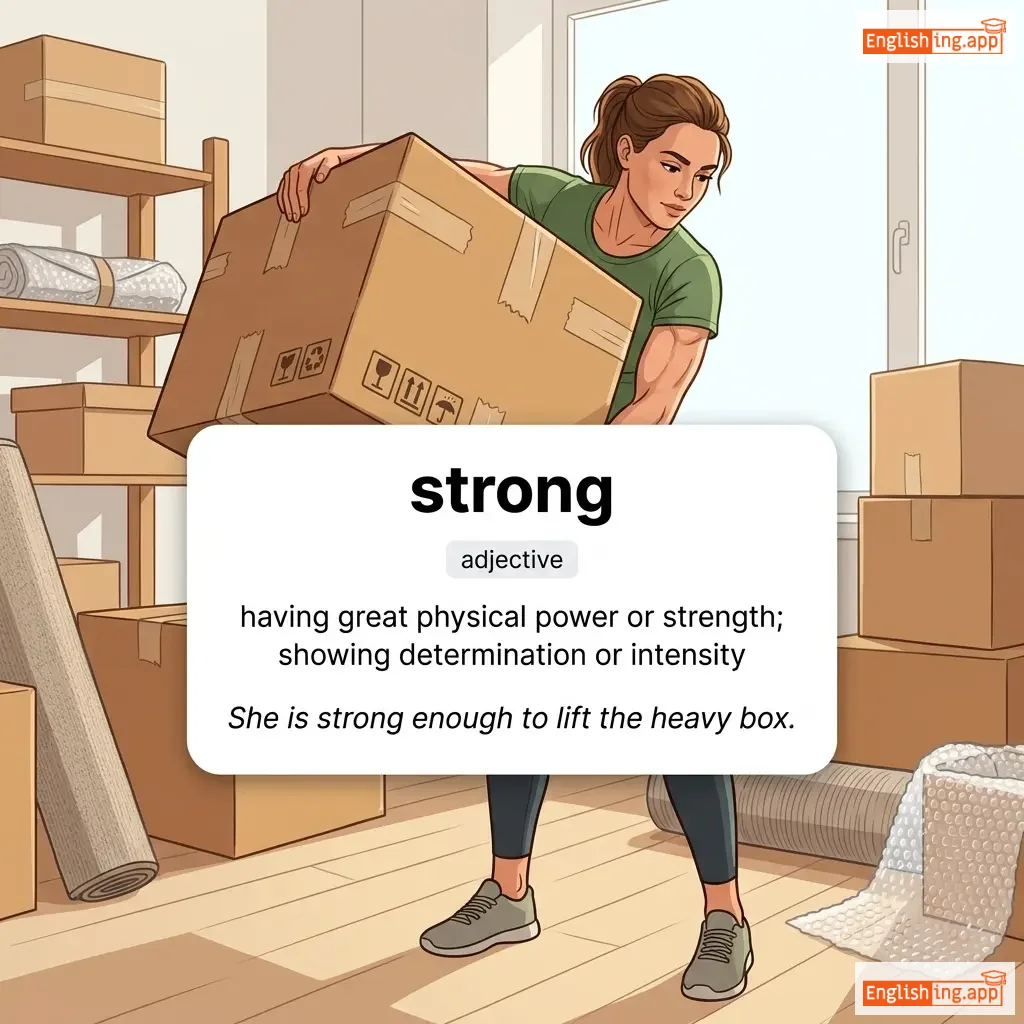
having great physical power or strength; showing determination or intensity
••••••
|
She is strong enough to lift the heavy box. |
彼女は重い箱を持ち上げるのに十分強い。
Kanojo wa omoi hako o mochiageru no ni jūbun tsuyoi.
••••••
|
strong suit |
a particular skill or strength someone is especially good at
••••••
|
得意な分野
tokui na bun'ya
••••••
|
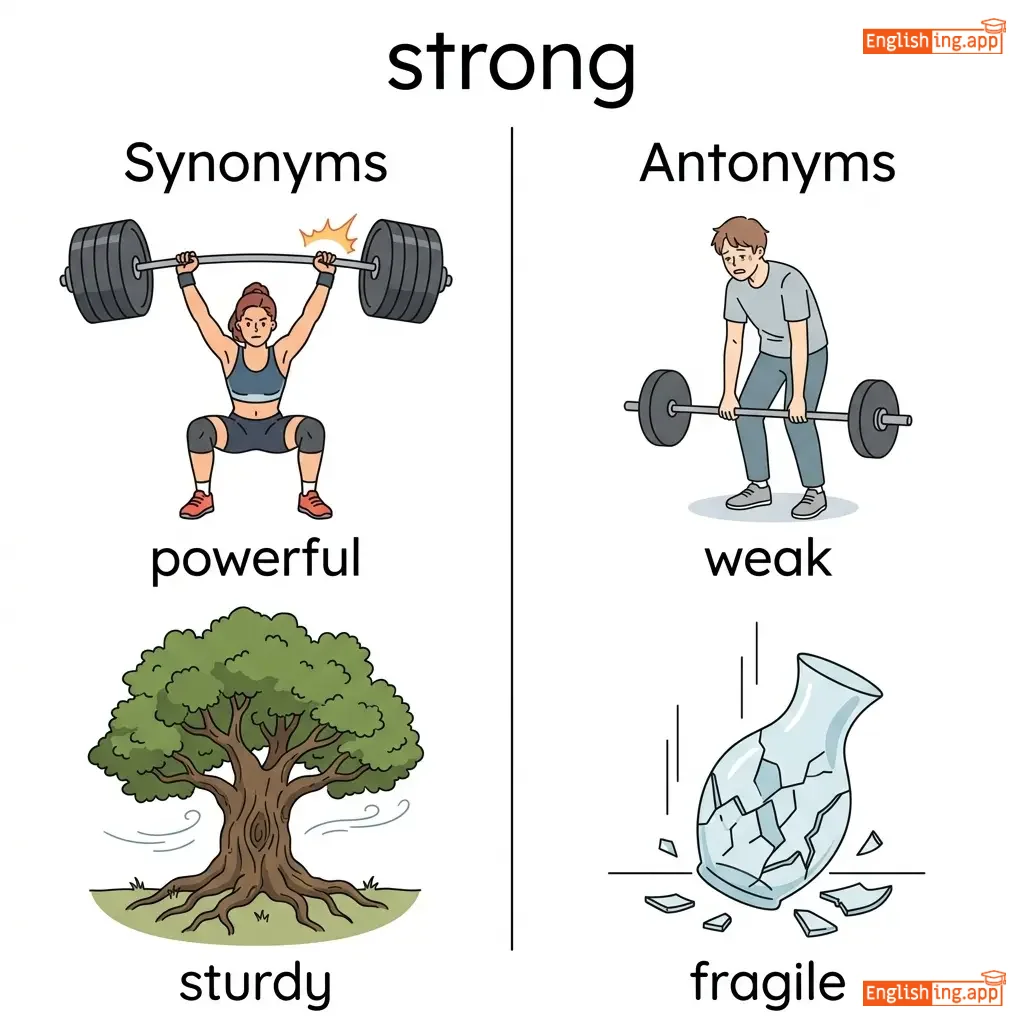
powerful, sturdy, tough, resilient, vigorous
••••••
|
weak, fragile, feeble
••••••
|
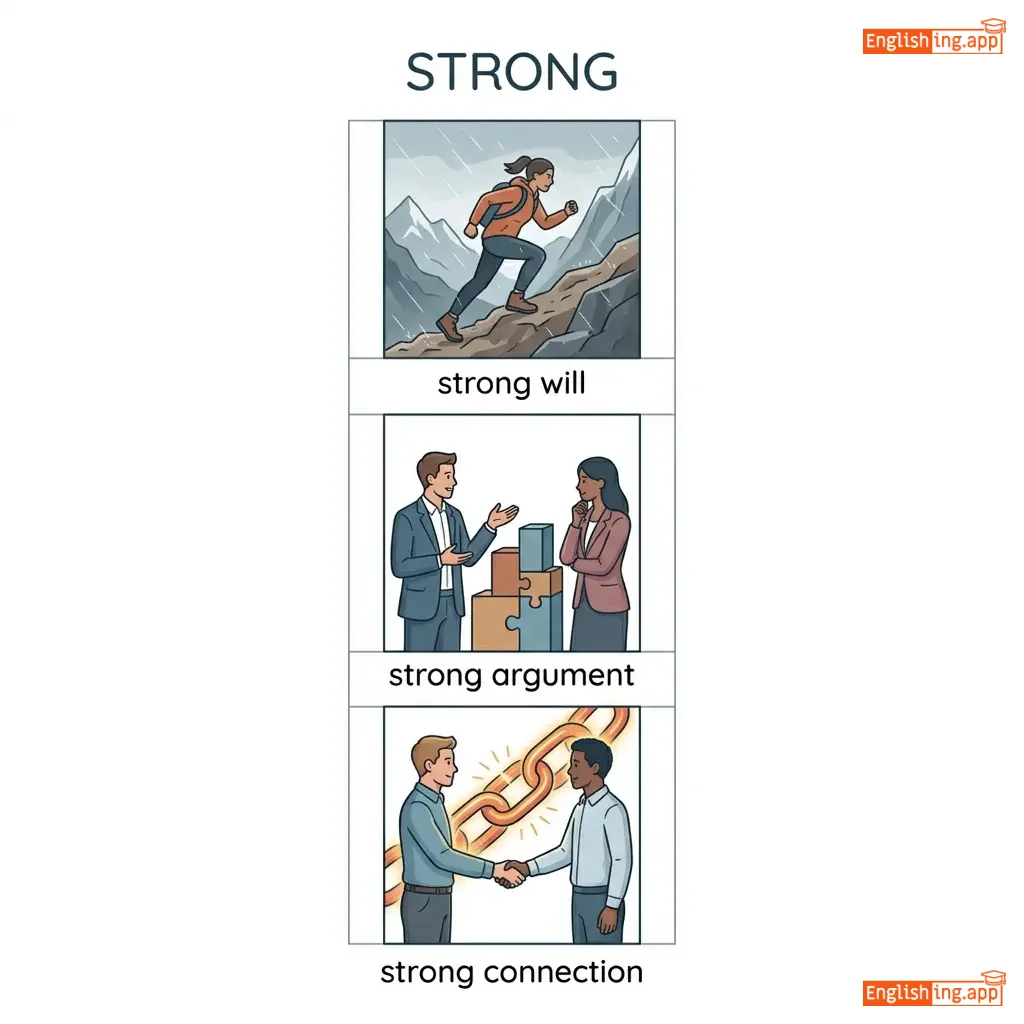
strong will, strong argument, strong connection, strong influence, strong flavor
••••••
|
Strong は 💪 強い、覚えておいて 'Strong があれば何でもできる'
••••••
|
|
#10251
🚀
|
/straɪv/
verb
(sutoraibu)
••••••
|
- •••••• |
努力する
doryoku suru
••••••
|
strove
sutorōvu
••••••
|
striven
sutoriven
••••••
|
strives
sutoraibusu
••••••
|
striving
sutoraibingu
••••••
|
To make great efforts to achieve or obtain something.
••••••
|
She strives to be the best student in her class.
彼女はクラスで最も優れた生徒になるよう努めている。
••••••
|
彼女はクラスで最も優れた生徒になるよう努めている。
Kanojo wa kurasu de mottomo sugureta seito ni naru yō tsutomete iru.
••••••
|
strive for excellence
卓越性を目指して努力する
••••••
|
To put in effort to achieve the highest standard
••••••
|
卓越性を目指して努力する
takutsusei o mezashite doryoku suru
••••••
|
endeavor, attempt, struggle, aim, labor
••••••
|
give up, surrender
••••••
|
strive hard, strive for success, strive to achieve
••••••
|
Striveは成功のために努力し続けることです。
••••••
|
|
#10252
⚖️
|
/strɪkt/
adjective
(sutorikuto)
••••••
|
- •••••• |
厳格
genkaku
••••••
|
- •••••• | - •••••• | - •••••• | - •••••• |
Demanding that rules be obeyed and observed closely.
••••••
|
The teacher is very strict about punctuality. |
先生は時間厳守にとても厳格です。
Sensei wa jikan genshu ni totemo genkaku desu.
••••••
|
strict rules |
Rules that must be followed without flexibility
••••••
|
厳格な規則
genkaku na kisoku
••••••
|
rigid, severe, stern, uncompromising
••••••
|
lenient, flexible, permissive
••••••
|
strict rules, strict teacher, strict policy
••••••
|
Strictは厳格な規則、厳しい先生のように!
••••••
|
|
#10253
🏋️
|
/ˈstrɛnjuəs/
adjective
(ストレニュアス)
••••••
|
- •••••• |
厳しい
kibishii
••••••
|
- •••••• | - •••••• | - •••••• | - •••••• |
Requiring or using great effort and energy.
••••••
|
Climbing the mountain was a strenuous task.
山登りは厳しい仕事だった。
••••••
|
山登りは厳しい仕事だった。
Yamanobori wa kibishī shigoto datta.
••••••
|
- •••••• | - •••••• | - •••••• |
arduous, exhausting, demanding, vigorous
••••••
|
easy, effortless, simple
••••••
|
strenuous exercise, strenuous effort, strenuous task
••••••
|
Strenuous は厳しい — 大きなエネルギーを要する!
••••••
|
|
#10254
🕴️
|
/ˈstreɪndʒər/
noun
(ストレンジャー)
••••••
|
- •••••• |
見知らぬ人
mishiranu hito
••••••
|
- •••••• | - •••••• | - •••••• | - •••••• |
A person whom one does not know.
••••••
|
A stranger knocked on the door at midnight.
ストレンジャーが真夜中にドアをノックしました。
••••••
|
見知らぬ人が真夜中にドアをノックしました。
Mishiranu hito ga mayonaka ni doa o nokkushimashita.
••••••
|
perfect stranger
完璧なストレンジャー
••••••
|
Someone completely unknown
••••••
|
完璧な見知らぬ人
kanpeki na mishiranu hito
••••••
|
unknown, outsider, newcomer, foreigner
••••••
|
friend, acquaintance, relative
••••••
|
stranger danger, complete stranger, meet a stranger
••••••
|
Stranger は ‘見知らぬ人’、つまり、全く知らない人を意味します。
••••••
|
Vocabulary Quiz
Test your vocabulary by matching words with their translations or meanings.
Login to take the quiz
Comments (0)
Share your thoughts and join the discussion.
Join the discussion by logging in
Login to CommentNo comments yet
Be the first to share your thoughts!