

翻訳
過去
過去分詞
三人称単数
動名詞
意味
例文
例文の翻訳
同義語
対義語
コロケーション
ニーモニック


Swipe left or right, or use the buttons. Tap image to zoom.
例文の翻訳
単語
Lesson 295Lesson 295 - マスクトグル
|
絵文字
|
単語 | Images | 翻訳 | 過去 | 過去分詞 | 三人称単数 | 動名詞 | 意味 | 例文 | 例文の翻訳 | 表現例 | 表現例の意味 | 表現例の翻訳 | 同義語 | 対義語 | コロケーション | ニーモニック |
|---|---|---|---|---|---|---|---|---|---|---|---|---|---|---|---|---|---|
|
#8820
💪
|
/tɔɪl/
verb
(トイール)
••••••
|
|
一生懸命働く
isshokenmei hataraku
••••••
|
toiled
トイールド
••••••
|
toiled
トイールド
••••••
|
toils
トイールズ
••••••
|
toiling
トイリング
••••••
|
To work extremely hard and continuously, often with difficulty.
••••••
|
He had to toil for years to achieve success.
彼は成功を収めるために何年も働かなければならなかった。
••••••
|
彼は成功を収めるために何年も働かなければならなかった。
Kare wa seikō o osameru tame ni nannen mo hatarakanakereba naranakatta.
••••••
|
toil away
トイールアウェイ
••••••
|
to work very hard for a long time
••••••
|
働き続ける
hatarakitsuzukeru
••••••
|
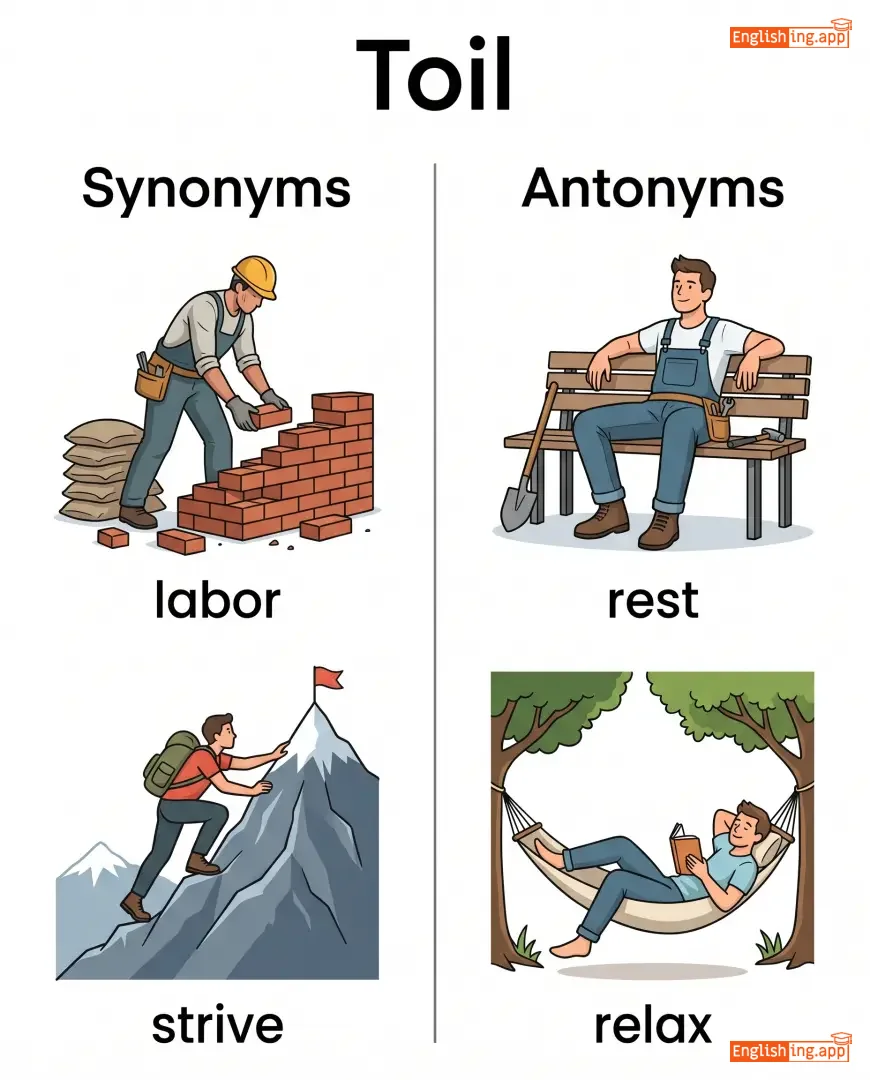
labor, strive, struggle, sweat, drudge
••••••
|
rest, relax
••••••
|
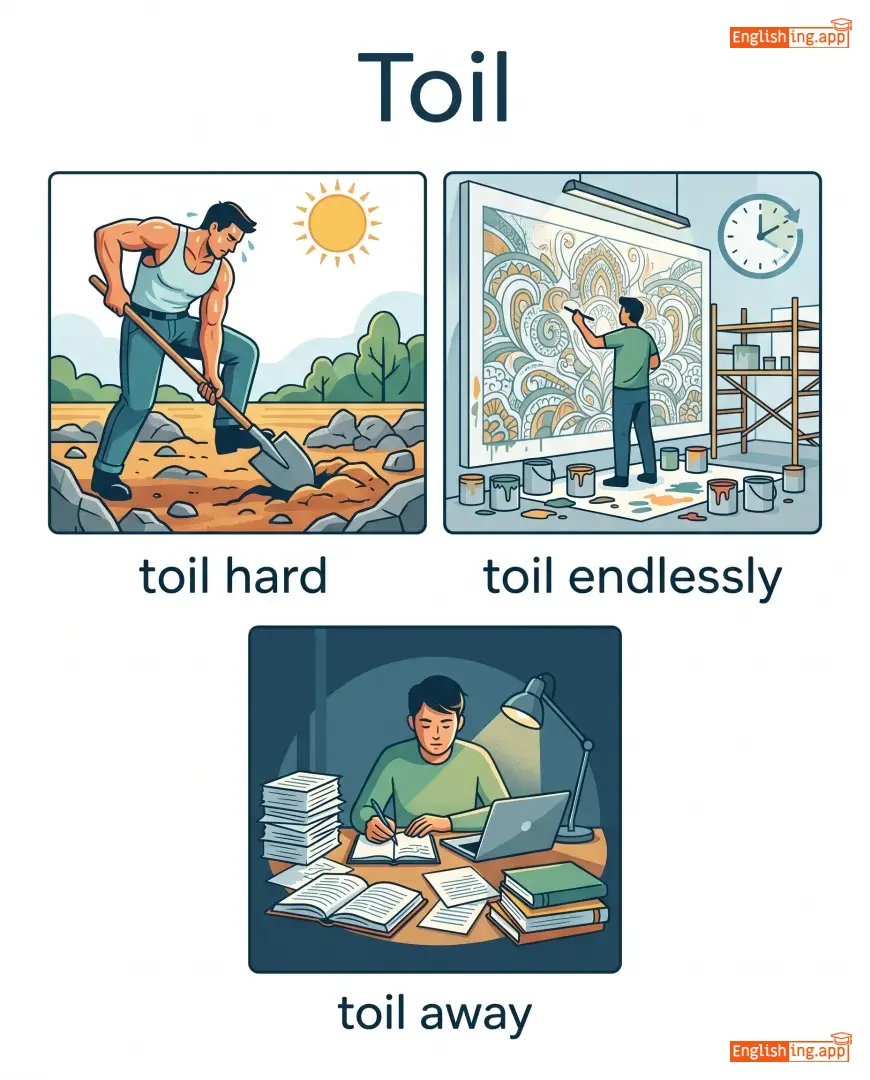
toil hard, toil endlessly, toil away, toil under
••••••
|
TOILは疲れるまで働くこと、トイレのように忍耐する!
••••••
|
|
#8821
🗺️
|
/təˈpɒɡrəfi/
noun
(トポグラフィー)
••••••
|
- •••••• |
地形学
chikeigaku
••••••
|
- •••••• | - •••••• | - •••••• | - •••••• |
the arrangement of the natural and artificial physical features of an area
••••••
|
The topography of the region made construction very challenging. |
その地域の地形は建設を非常に困難にしました。
Sono chiiki no chikei wa kensetsu o hijou ni konnan ni shimashita.
••••••
|
- •••••• | - •••••• | - •••••• |
terrain, landscape, geography, contour, relief
••••••
|
flatness, uniformity
••••••
|
mountain topography, regional topography, detailed topography, topography map
••••••
|
‘地形学’は地面の形を学ぶ学問です。地面の描かれた図を思い描いてみましょう。
••••••
|
|
#8822
🙏
|
/ˈtɒnʃər/
noun
(トンシュア)
••••••
|
- •••••• |
托恩修亞
toenshua
••••••
|
- •••••• | - •••••• | - •••••• | - •••••• |
the practice of shaving or cutting the hair on the scalp, especially in a religious context
••••••
|
The monk received his tonsure as part of his religious initiation.
修道士は宗教的な入門儀式の一環としてトンシュアを受けました。
••••••
|
修道士は宗教的な入門儀式の一環としてトンシュアを受けました。
Shūdōshi wa shūkyō-teki na nyūmon gishiki no ikkanshite tonshua o ukemashita.
••••••
|
- •••••• | - •••••• | - •••••• |
shaving, haircut, clipping, trimming
••••••
|
growth, long hair
••••••
|
monk's tonsure, religious tonsure, ritual tonsure
••••••
|
TONsureは宗教的な髪の毛を剃ることを意味します
••••••
|
|
#8823
💈
|
/tɒnˈsɔːriəl/
adjective
(トンソリアル)
••••••
|
- •••••• |
理髪師に関連する
rihatsushi ni kanren suru
••••••
|
- •••••• | - •••••• | - •••••• | - •••••• |
relating to barbers or hairdressing
••••••
|
The town's new barber offered a wide range of tonsorial services.
町の新しい理髪師は、幅広いトンソリアルサービスを提供しました。
••••••
|
町の新しい理髪師は、幅広いトンソリアルサービスを提供しました。
Machi no atarashii rihatsushi wa, habahiroi tonsorial sābisu o teikyō shimashita.
••••••
|
- •••••• | - •••••• | - •••••• |
barbering, hairstyling, grooming
••••••
|
unkempt, disheveled
••••••
|
tonsorial art, tonsorial service, tonsorial parlor
••••••
|
TonsoRIAL = 理髪師サービスが提供される
••••••
|
|
#8824
🥤
|
/ˈtɒnɪk/
noun
(トニック)
••••••
|
- •••••• |
トニック
tonikku
••••••
|
- •••••• | - •••••• | - •••••• | - •••••• |
a medicine or drink that restores or refreshes health and energy
••••••
|
A glass of lemonade was the perfect tonic on a hot day. |
暑い日には、レモネードが完璧なトニックでした。
Atsui hi ni wa, remonēdo ga kanpeki na tonikku deshita.
••••••
|
a tonic for the soul |
something that lifts the spirit and brings joy or relief
••••••
|
魂のためのトニック
tamashī no tame no tonikku
••••••
|
medicine, remedy, refreshment, stimulant
••••••
|
toxin, poison
••••••
|
tonic water, health tonic, herbal tonic, refreshing tonic
••••••
|
トニックは魂をリフレッシュ、元気になるように。
••••••
|
|
#8825
🔧
|
/tɒŋ/
noun
(トング)
••••••
|
- •••••• |
トング
tongu
••••••
|
- •••••• | - •••••• | - •••••• | - •••••• |
a tool with two movable arms used to pick up and hold objects
••••••
|
He used the tong to pick up the hot coal. |
彼は熱い石炭を拾うためにトングを使った。
Kare wa atsui sekitan o hirou tame ni tongu o tsukatta.
••••••
|
- •••••• | - •••••• | - •••••• |
pincer, clamp, gripper, holder
••••••
|
hand, fingers
••••••
|
kitchen tong, metal tong, barbecue tong, ice tong
••••••
|
トング – Tongue(舌)で物を挟むように、トングも物を挟む道具。
••••••
|
|
#8826
📚
|
/toʊm/
noun
(トム)
••••••
|
|
重い本
omoi hon
••••••
|
- •••••• | - •••••• | - •••••• | - •••••• |
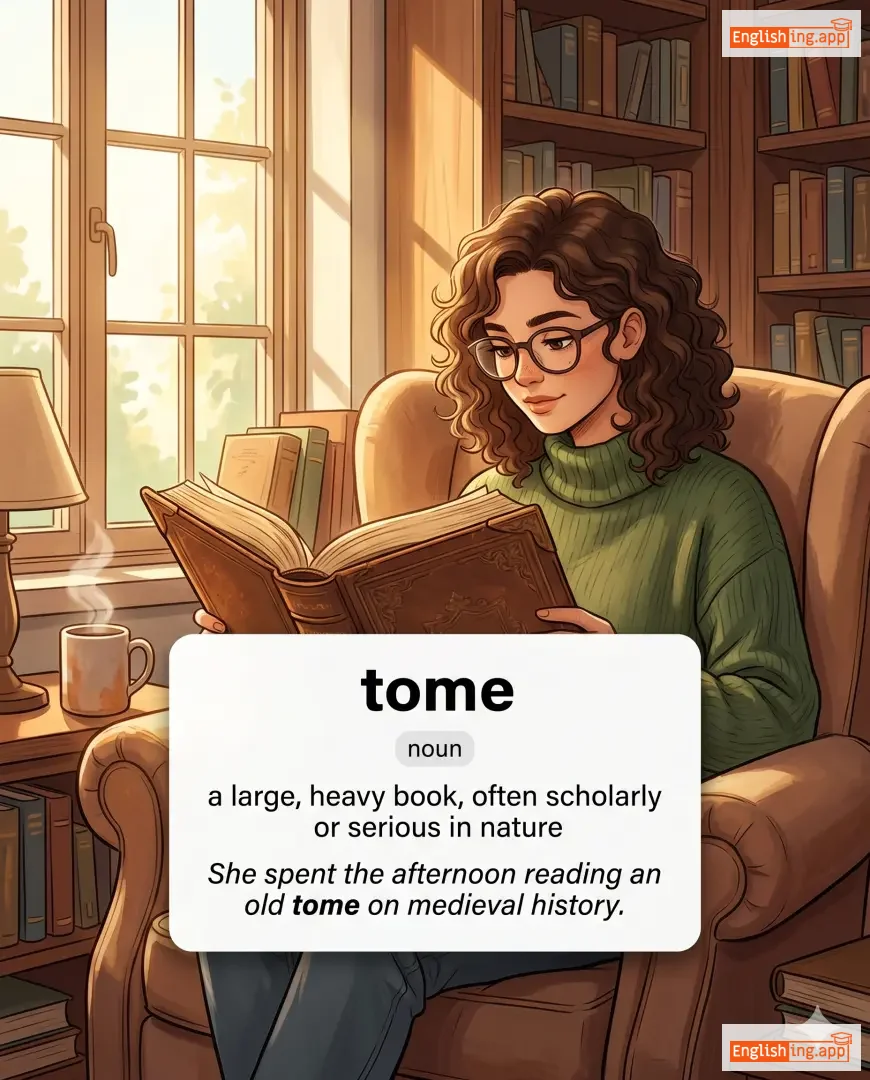
a large, heavy book, often scholarly or serious in nature
••••••
|
She spent the afternoon reading an old tome on medieval history. |
彼女は午後の時間を中世の歴史に関する古い重い本を読んで過ごしました。
Kanojo wa gogo no jikan o chūsei no rekishi ni kansuru furui omoi hon o yonde sugoshimashita.
••••••
|
- •••••• | - •••••• | - •••••• |
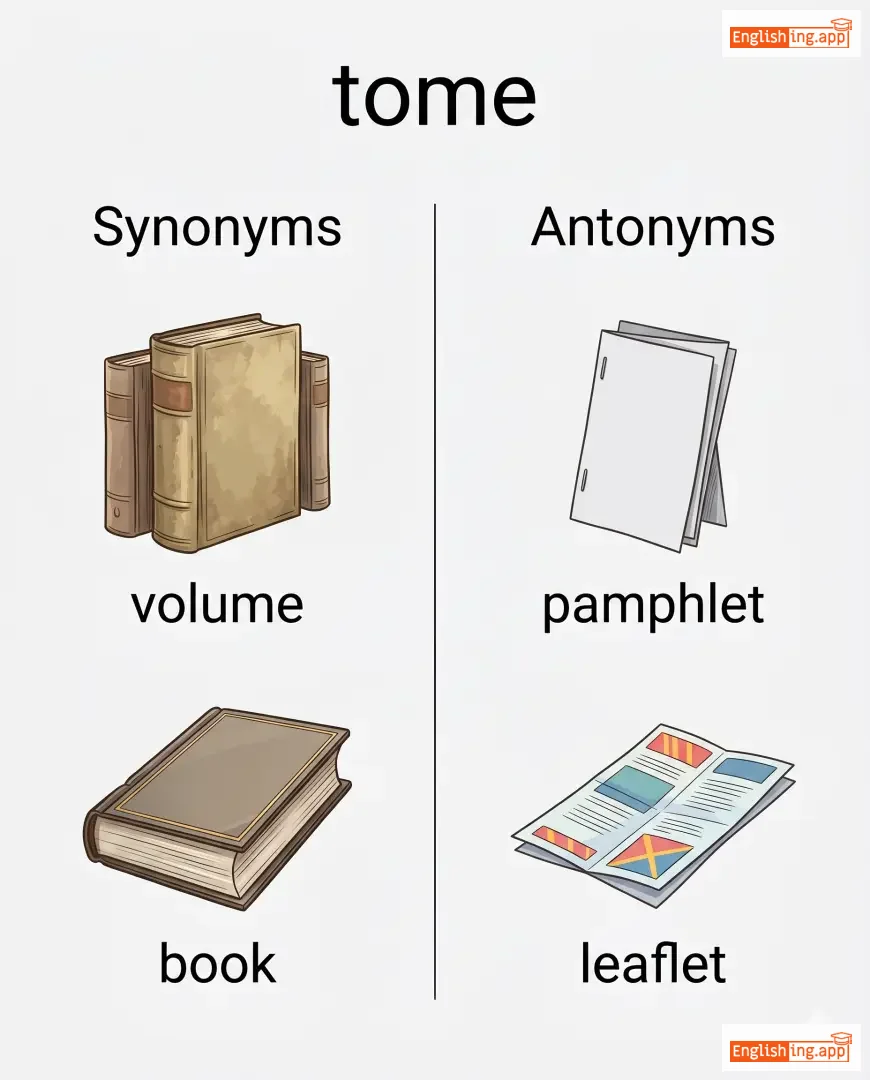
volume, book, opus, publication, manuscript
••••••
|
pamphlet, leaflet, brochure
••••••
|
ancient tome, scholarly tome, dusty tome, old tome
••••••
|
Tome は重い本 - 重い本を覚えておこう
••••••
|
|
#8827
💰
|
/toʊl/
noun
(トール)
••••••
|
- •••••• |
通行料 / 損害
tsūkō-ryō / songai
••••••
|
- •••••• | - •••••• | - •••••• | - •••••• |
A charge payable for using a road or bridge; also the extent of damage or suffering caused by something.
••••••
|
The flood took a heavy toll on the village.
洪水は村に大きな被害を与えました。
••••••
|
洪水は村に大きな損害を与えました。
kōzui wa mura ni ōkina songai o ataemashita.
••••••
|
take a toll
通行料を取る
••••••
|
To cause harm, damage, or suffering over time.
••••••
|
損害を与える
songai o ataeru
••••••
|
fee, charge, cost, damage, burden
••••••
|
relief, benefit
••••••
|
pay toll, heavy toll, death toll, take a toll
••••••
|
Tollは通行料を払わなければ、損害があることを意味します。 (take a toll)
••••••
|
|
#8828
🕊️
|
/ˌtɒləˈreɪʃən/
noun
(トレレーション)
••••••
|
- •••••• |
寛容
kanyou
••••••
|
- •••••• | - •••••• | - •••••• | - •••••• |
The practice of allowing something that one does not necessarily agree with.
••••••
|
The government promoted religious toleration. |
政府は宗教的寛容を促進した。
Seifu wa shūkyō-teki kanyō o sokushin shita.
••••••
|
- •••••• | - •••••• | - •••••• |
acceptance, endurance, allowance, forbearance
••••••
|
intolerance, prohibition, denial
••••••
|
religious toleration, political toleration, practice toleration
••••••
|
Toleration は寛容
••••••
|
|
#8829
😐
|
/ˈtɒləreɪt/
verb
(トレレート)
••••••
|
|
容認する
yōnin suru
••••••
|
tolerated
トレレイテッド
••••••
|
tolerated
トレレイテッド
••••••
|
tolerates
トレレイツ
••••••
|
tolerating
トレレイティング
••••••
|
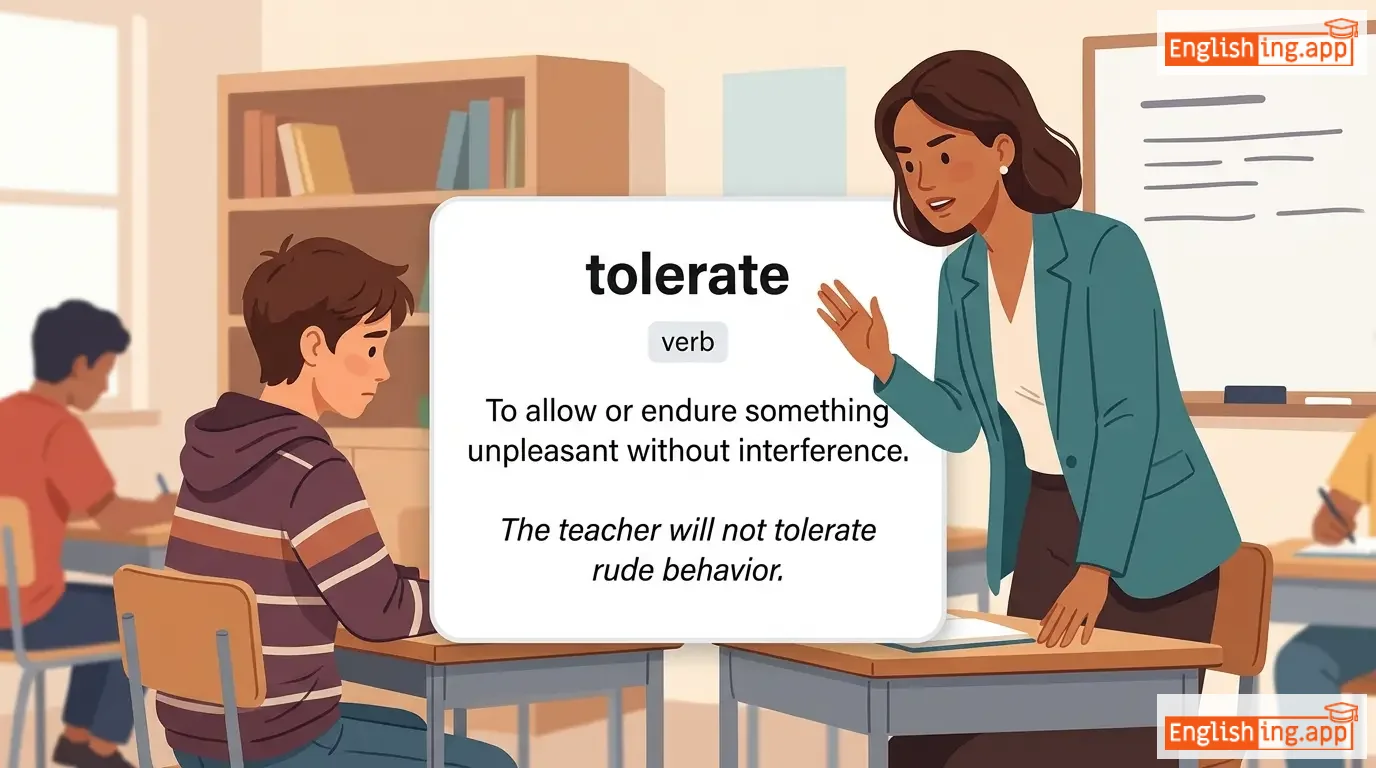
To allow or endure something unpleasant without interference.
••••••
|
The teacher will not tolerate rude behavior.
教師は失礼な行動を許容しません。
••••••
|
教師は失礼な行動を許容しません。
Kyōshi wa shitsurei na kōdō o kyoyō shimasen.
••••••
|
tolerate no nonsense
馬鹿げたことを許容しない
••••••
|
To be strict and not allow foolish or improper behavior.
••••••
|
馬鹿げたことを許容しない
bakageta koto o kyoyō shinai
••••••
|
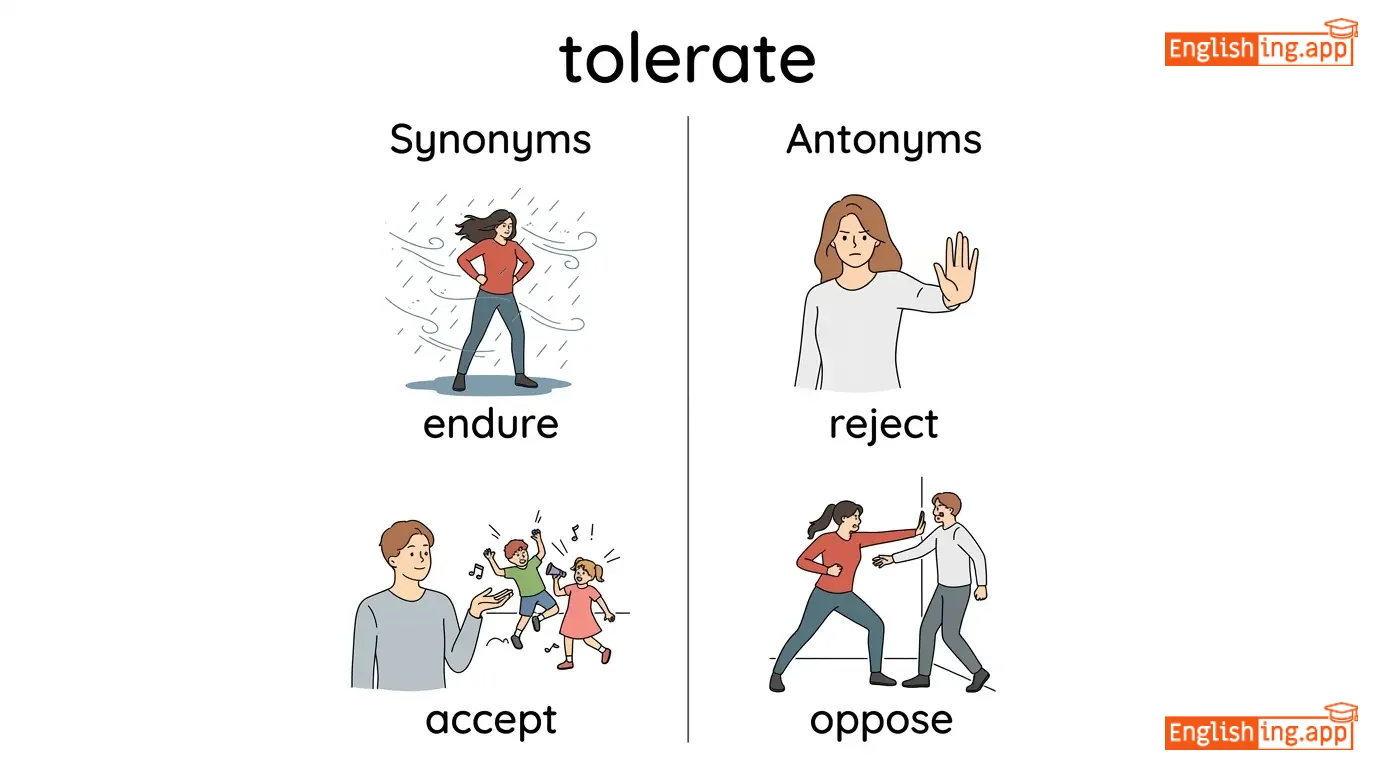
endure, accept, allow, permit, withstand
••••••
|
reject, oppose, forbid
••••••
|
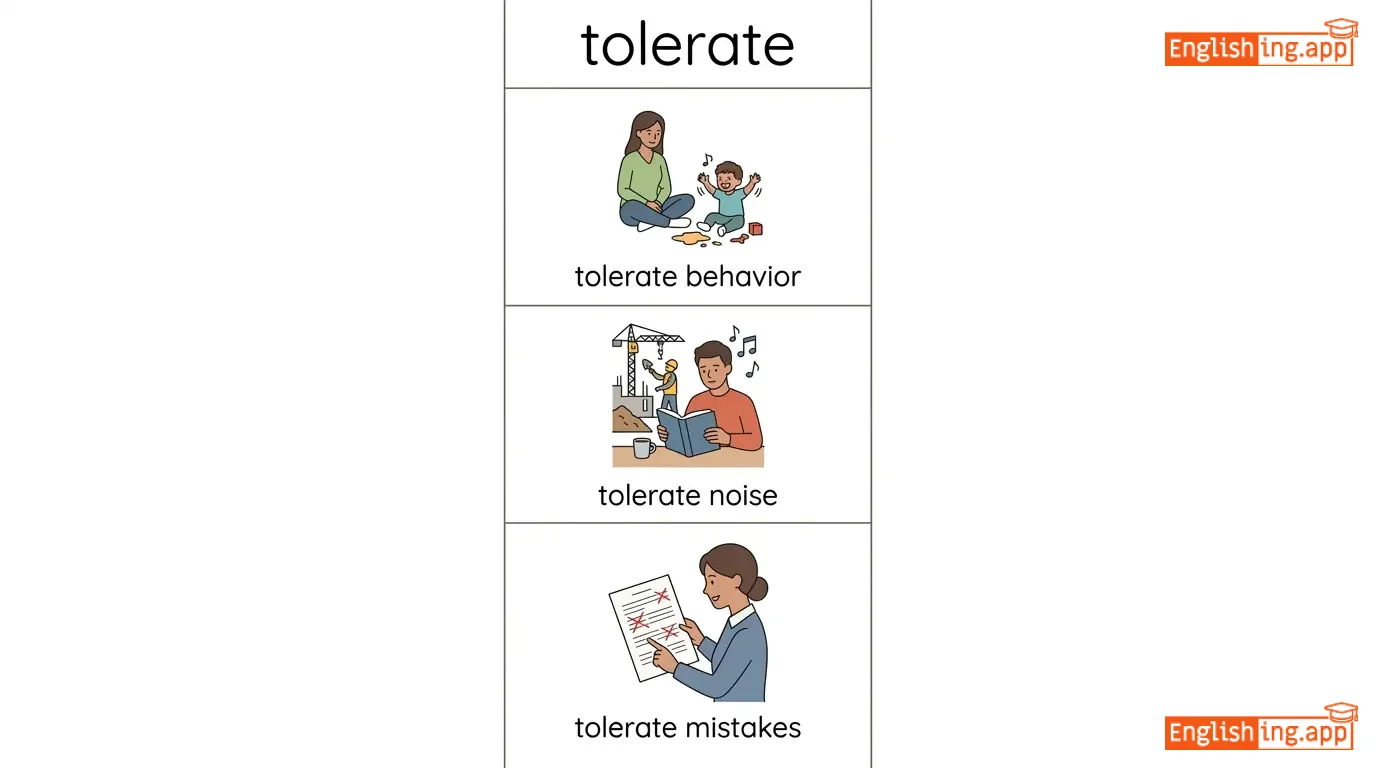
tolerate behavior, tolerate noise, tolerate mistakes, refuse to tolerate
••••••
|
教師は失礼な行動を許容しません
••••••
|
|
#8830
🌍
|
/ˈtɒlərənt/
adjective
(トレラント)
••••••
|
- •••••• |
寛容
kan'you
••••••
|
- •••••• | - •••••• | - •••••• | - •••••• |
Showing willingness to allow the existence of opinions or behaviors that one dislikes or disagrees with.
••••••
|
He is very tolerant of other people's beliefs. |
彼は他の人々の信念にとても寛容です。
Kare wa hoka no hitobito no shin'nen ni totemo kan'you desu.
••••••
|
- •••••• | - •••••• | - •••••• |
patient, accepting, open-minded, permissive, lenient
••••••
|
intolerant, narrow-minded, prejudiced
••••••
|
tolerant attitude, tolerant society, tolerant towards, tolerant of differences
••••••
|
寛容は他人の意見を受け入れることです、まるで理解ある先生のように。
••••••
|
|
#8831
🤲
|
/ˈtɒlərəns/
noun
(tōreransu)
••••••
|
- •••••• |
寛容
kan'yō
••••••
|
- •••••• | - •••••• | - •••••• | - •••••• |
The ability or willingness to accept or endure differences, behaviors, or opinions without hostility.
••••••
|
Her tolerance for different cultures impressed everyone. |
彼女の異文化への寛容さは、皆を感心させました。
Kanojo no ibunka e no kan'yō-sa wa, mina o kanshin sasemashita.
••••••
|
zero tolerance |
A policy of not allowing any violation of rules or standards.
••••••
|
ゼロ寛容
zero kan'yō
••••••
|
acceptance, patience, endurance, open-mindedness, leniency
••••••
|
intolerance, rejection, prejudice
••••••
|
cultural tolerance, religious tolerance, show tolerance, promote tolerance
••••••
|
寛容は他者を受け入れること、敵意を持たないこと。
••••••
|
|
#8832
🙂
|
/ˈtɒl.ər.ə.bəl/
adjective
(トレラブル)
••••••
|
- •••••• |
耐えられる
taerareru
••••••
|
- •••••• | - •••••• | - •••••• | - •••••• |
Able to be endured or put up with; fairly acceptable.
••••••
|
The pain was tolerable after the medicine.
薬を飲んだ後、痛みは耐えられる程度だった。
••••••
|
薬を飲んだ後、痛みは耐えられる程度だった。
Kusuri wo nonda ato, itami wa taerareru teido datta.
••••••
|
- •••••• | - •••••• | - •••••• |
bearable, endurable, acceptable, manageable
••••••
|
intolerable, unbearable
••••••
|
tolerable pain, tolerable level, tolerable condition
••••••
|
TOLERABLE は耐えられる — 耐えられることを意味します。
••••••
|
|
#8833
🎟️
|
/ˈtoʊ.kən/
noun
(トークン)
••••••
|
- •••••• |
記号 / トークン
kigou / tooken
••••••
|
- •••••• | - •••••• | - •••••• | - •••••• |
A symbol or object that represents something, often given as a sign of appreciation or as a substitute for money.
••••••
|
She gave him a small gift as a token of gratitude.
彼女は感謝のしるしとして、小さな贈り物を彼に渡しました。
••••••
|
彼女は感謝のしるしとして、小さな贈り物を彼に渡しました。
Kanojo wa kansha no shirushi toshite, chiisana okurimono wo kare ni watashimashita.
••••••
|
token gesture
象徴的なジェスチャー
••••••
|
a symbolic action done for appearance rather than substance
••••••
|
象徴的なジェスチャー
shouchouteki na jesshyaa
••••••
|
symbol, sign, emblem, souvenir, keepsake
••••••
|
reality, essence
••••••
|
token of appreciation, token of love, token gift, token gesture
••••••
|
Token: 地下鉄のトークンは記号です — それが象徴です。
••••••
|
|
#8834
😓
|
/ˈtɔɪl.səm/
adjective
(トイルサム)
••••••
|
- •••••• |
骨の折れる
hone no oreru
••••••
|
- •••••• | - •••••• | - •••••• | - •••••• |
Involving hard or exhausting work; laborious.
••••••
|
The workers had a toilsome day in the hot sun.
作業員たちは暑い太陽の下で大変な一日を過ごした。
••••••
|
作業員たちは暑い太陽の下で骨の折れる一日を過ごした。
Sagyouin-tachi wa atsui taiyou no shita de hone no oreru ichinichi o sugoshita.
••••••
|
- •••••• | - •••••• | - •••••• |
laborious, arduous, difficult, exhausting, strenuous
••••••
|
easy, effortless
••••••
|
toilsome task, toilsome journey, toilsome labor
••••••
|
TOIL-some はたくさんの toil(労働)が必要です。
••••••
|
|
#8835
🎨
|
/tɪnt/
noun
(ティント)
••••••
|
- •••••• |
色合い
iroai
••••••
|
- •••••• | - •••••• | - •••••• | - •••••• |
a slight shade or variation of a color
••••••
|
The walls were painted white with a slight blue tint.
壁は白で、少し青いティントで塗られていました。
••••••
|
壁は白で、少し青いティントで塗られていました。
Kabe wa shiro de, sukoshi aoi tint de nurareteimashita.
••••••
|
- •••••• | - •••••• | - •••••• |
shade, hue, tone, coloration
••••••
|
colorless, plain
••••••
|
blue tint, red tint, slight tint, tinted glass
••••••
|
ティントは、色のわずかな変化や影のことです。
••••••
|
|
#8836
🏛️
|
/ˈtoʊɡə/
noun
(トガ)
••••••
|
- •••••• |
トーガ
tōga
••••••
|
- •••••• | - •••••• | - •••••• | - •••••• |
A loose outer garment worn in ancient Rome, typically draped over the shoulders and body.
••••••
|
The senator wore a white toga during the ceremony. |
セネーターは儀式の間に白いトーガを着ていました。
Senētā wa gishiki no aida ni shiroi tōga o kite imashita.
••••••
|
- •••••• | - •••••• | - •••••• |
robe, gown, garment, cloak, drape
••••••
|
pants, shirt
••••••
|
Roman toga, white toga, ceremonial toga, toga party
••••••
|
トガはローマの衣装、パーティでよく着られる服です。
••••••
|
|
#8837
🔔
|
/ˈtɒksɪn/
noun
(トクシン)
••••••
|
- •••••• |
警報ベル
keihou beru
••••••
|
- •••••• | - •••••• | - •••••• | - •••••• |
an alarm bell or signal; a warning that something bad is about to happen
••••••
|
The data breach sounded a tocsin for stricter security. |
データ漏洩は厳重なセキュリティ強化のための警報ベルのように鳴った。
Deeta roei wa genjuuna sekyuriti kyouka no tame no keihou beru no you ni natta.
••••••
|
- •••••• | - •••••• | - •••••• |
alarm, warning, alert, bell
••••••
|
silence, reassurance, calm
••••••
|
sound the tocsin, ring the tocsin, political tocsin, tocsin of danger
••••••
|
Tocsinは警報ベルのように鳴る、危険の予兆です。
••••••
|
|
#8838
🙇♂️
|
/ˈtoʊdi/
verb
••••••
|
|
- •••••• |
toadied
••••••
|
toadied
••••••
|
toadies
••••••
|
toadying
••••••
|
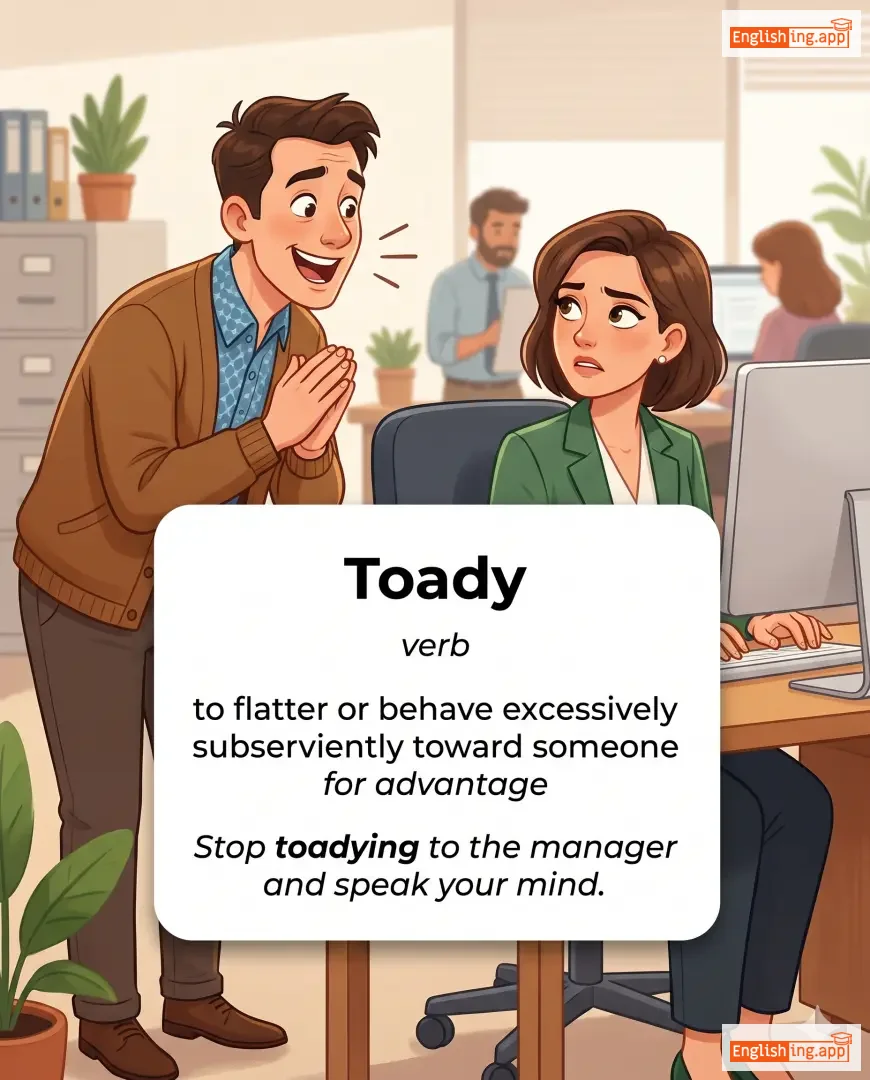
to flatter or behave excessively subserviently toward someone for advantage
••••••
|
Stop toadying to the manager and speak your mind. |
- •••••• |
toady up to |
to flatter someone obsequiously to gain favor
••••••
|
- •••••• |
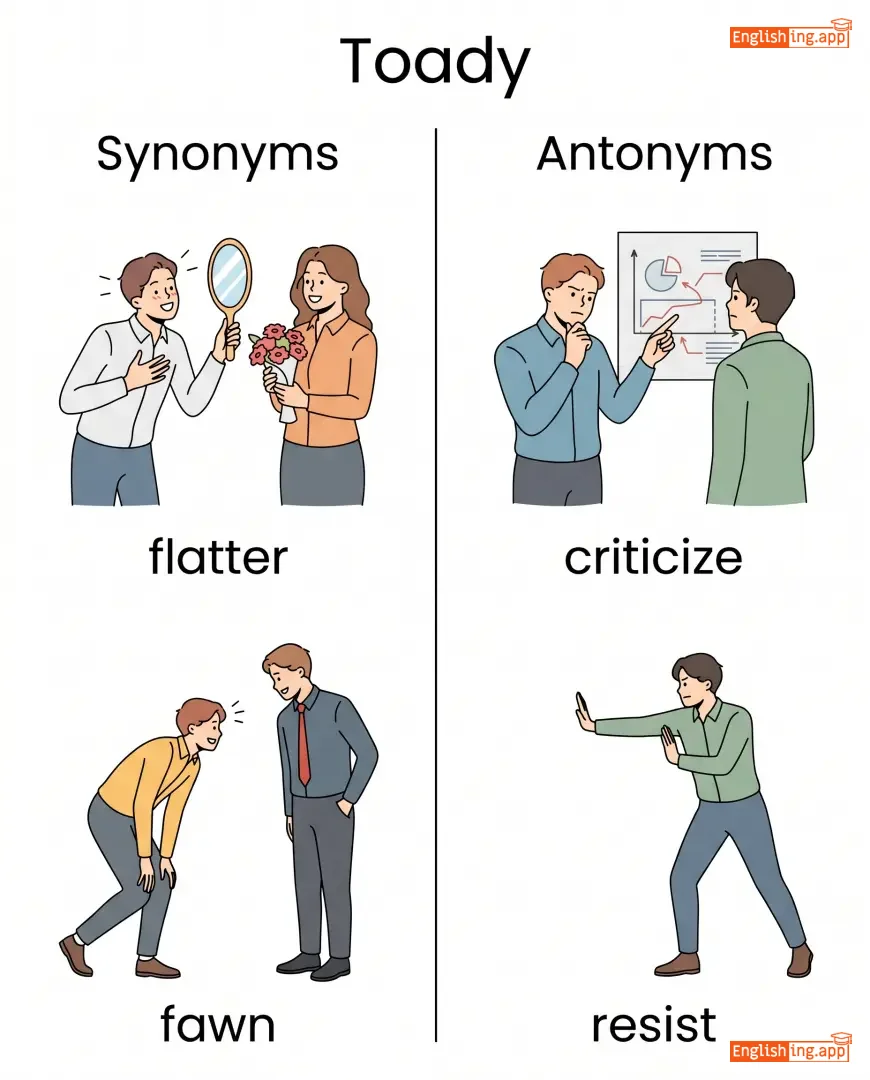
flatter, fawn, grovel, brown-nose, bootlick
••••••
|
criticize, resist, speak plainly
••••••
|
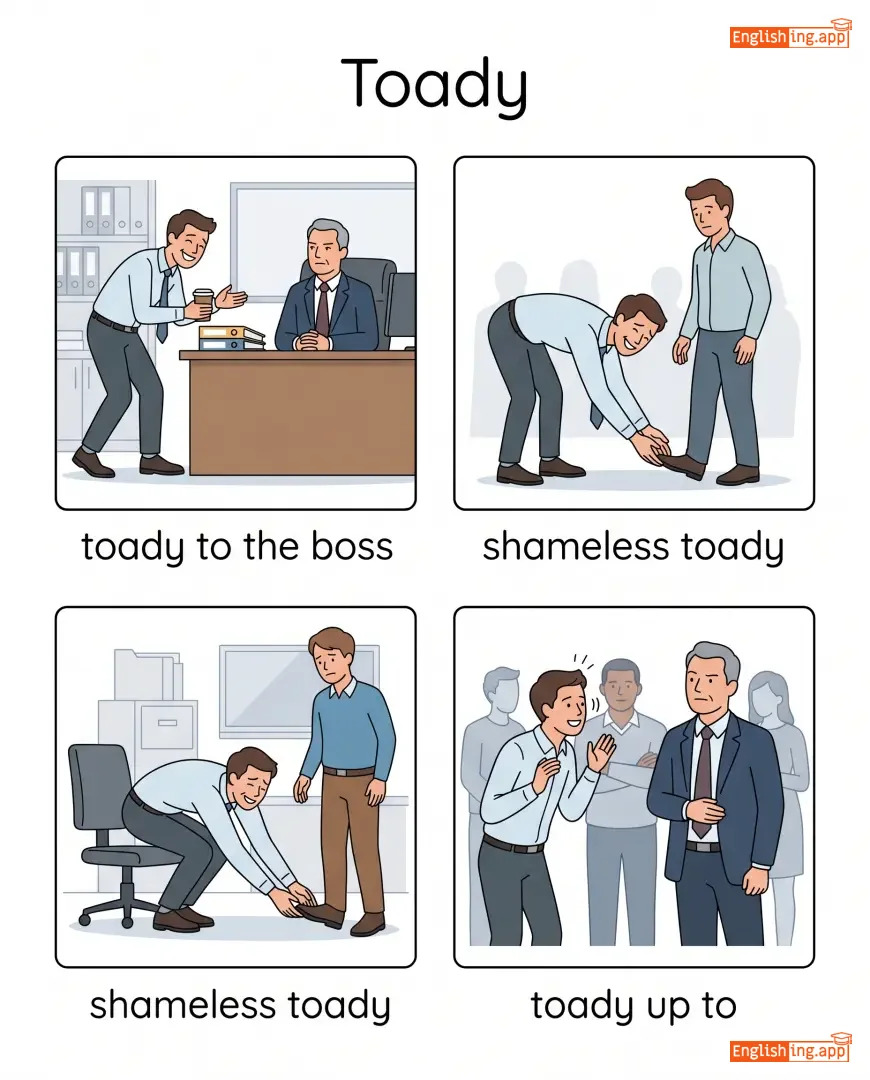
toady to the boss, shameless toady, toady up to, act like a toady
••••••
|
No •••••• |
|
#8839
👑
|
/ˈtɪtjələr/
adjective
(ティチュラー)
••••••
|
- •••••• |
名義上の
meigi jō no
••••••
|
- •••••• | - •••••• | - •••••• | - •••••• |
holding a title or position in name only without real power; relating to the title of a work
••••••
|
She is the titular head of the committee, but decisions are made by the coordinator. |
彼女は委員会の名義上の長であり、決定はコーディネーターによって行われます。
Kanojo wa iinkai no meigi jō no chō de ari, kettei wa kōdinētā ni yotte okonawaremasu.
••••••
|
- •••••• | - •••••• | - •••••• |
nominal, ceremonial, symbolic, formal
••••••
|
actual, real, substantive
••••••
|
titular head, titular monarch, titular role, titular character
••••••
|
Titular はタイトルのようなものです—名前はありますが、実際の力はありません。
••••••
|
|
#8840
🤭
|
/ˈtɪtər/
verb
(ティター)
••••••
|
- •••••• |
小さく笑う
chiisaku warau
••••••
|
tittered
ティタード
••••••
|
tittered
ティタード
••••••
|
titters
ティターズ
••••••
|
tittering
ティタリング
••••••
|
to laugh in a quiet, nervous, or restrained way
••••••
|
The students began to titter when the projector froze.
プロジェクターがフリーズすると、学生たちは小さく笑い始めた。
••••••
|
プロジェクターがフリーズすると、学生たちは小さく笑い始めた。
Purojekutā ga furīzu suruto, gakusei-tachi wa chiisaku warai hajimeta.
••••••
|
- •••••• | - •••••• | - •••••• |
giggle, snicker, chuckle, chortle
••••••
|
guffaw, sob
••••••
|
titter nervously, suppress a titter, a titter of laughter, titter at
••••••
|
Titter = '小さく笑う', 恥ずかしさを感じてこっそり笑う
••••••
|
|
#8841
🏷️
|
/ˈtaɪtəl/
noun
(taitoru)
••••••
|
- •••••• |
タイトル
taitoru
••••••
|
- •••••• | - •••••• | - •••••• | - •••••• |
the name of a book, film, or piece of writing; also a formal designation or rank
••••••
|
The book's title changed at the last minute.
その本のタイトルは最後の瞬間に変更されました。
••••••
|
その本のタイトルは最後の瞬間に変更されました。
Sono hon no taitoru wa saigo no shunkan ni henkou saremashita.
••••••
|
- •••••• | - •••••• | - •••••• |
heading, caption, label, designation, rank
••••••
|
untitled, anonymity
••••••
|
job title, title track, title deed, working title, title holder
••••••
|
タイトルは映画や本の名前です。
••••••
|
|
#8842
😉
|
/ˈtɪtəleɪt/
verb
(ティティレイト)
••••••
|
- •••••• |
興奮させる
koufun saseru
••••••
|
titillated
ティティレイテッド
••••••
|
titillated
ティティレイテッド
••••••
|
titillates
ティティレイツ
••••••
|
titillating
ティティレイティング
••••••
|
To excite or amuse, especially in a slightly sexual or playful way.
••••••
|
The comedian's jokes titillated the audience.
コメディアンのジョークは観客を興奮させた。
••••••
|
コメディアンのジョークは観客を興奮させた。
Komedian no jooku wa kankyaku o koufun saseta.
••••••
|
- •••••• | - •••••• | - •••••• |
amuse, entertain, excite, stimulate
••••••
|
bore, depress
••••••
|
titillate the audience, titillating story, slightly titillated
••••••
|
Titillateは'ティティ'から来ていて、観客を笑わせる!
••••••
|
|
#8843
🙏
|
/taɪð/
noun
(タイス)
••••••
|
- •••••• |
十分の一
juubun no ichi
••••••
|
- •••••• | - •••••• | - •••••• | - •••••• |
A tenth part of one’s income or produce, often given as a religious offering.
••••••
|
He gave a tithe of his earnings to the church.
彼は収入の十分の一を教会に寄付しました。
••••••
|
彼は収入の十分の一を教会に寄付しました。
Kare wa shuunyuu no juubun no ichi wo kyoukai ni kifu shimashita.
••••••
|
- •••••• | - •••••• | - •••••• |
donation, contribution, levy, tax
••••••
|
withholding, nonpayment
••••••
|
pay tithe, church tithe, tithe money
••••••
|
Tithe = 十 (10) 分の一 – 日本語 '十分の一'.
••••••
|
|
#8844
🌋
|
/taɪˈtænɪk/
adjective
(タイタニック)
••••••
|
- •••••• |
巨大な
kyodaina
••••••
|
- •••••• | - •••••• | - •••••• | - •••••• |
Of exceptional strength, size, or power.
••••••
|
The company made titanic efforts to expand into new markets. |
その会社は新しい市場に進出するために巨大な努力をしました。
Sono kaisha wa atarashī shijō ni shinshutsu suru tame ni kyodaina doryoku o shimashita.
••••••
|
titanic struggle |
a very great or powerful struggle
••••••
|
巨大な戦い
kyodaina tatakai
••••••
|
huge, massive, gigantic, colossal
••••••
|
tiny, small, weak
••••••
|
titanic effort, titanic force, titanic struggle
••••••
|
‘Titanic’ は非常に巨大な船、‘巨大な’ は何かとても大きくて強力なことを意味します。
••••••
|
|
#8845
😩
|
/ˈtaɪərsəm/
adjective
(タイヤーサム)
••••••
|
- •••••• |
退屈な
taikutsuna
••••••
|
- •••••• | - •••••• | - •••••• | - •••••• |
Causing one to feel bored, annoyed, or tired.
••••••
|
The long meeting became very tiresome. |
長い会議はとても退屈になった。
Nagai kaigi wa totemo taikutsu ni natta.
••••••
|
- •••••• | - •••••• | - •••••• |
boring, dull, monotonous, tedious
••••••
|
exciting, interesting, enjoyable
••••••
|
tiresome task, tiresome habit, tiresome meeting
••••••
|
Tiresome = タイヤのように重くて退屈
••••••
|
|
#8846
💪
|
/ˈtaɪərləs/
adjective
(taierusu)
••••••
|
- •••••• |
疲れ知らず
tsukare shirazu
••••••
|
- •••••• | - •••••• | - •••••• | - •••••• |
Showing great effort or energy without becoming tired.
••••••
|
She worked tirelessly to complete the project on time. |
彼女は時間通りにプロジェクトを完了させるために疲れ知らずで働きました。
Kanojo wa jikan dōri ni purojekuto o kanryō saseru tame ni tsukare shirazu de hatarakimashita.
••••••
|
tireless efforts |
continuous and persistent hard work
••••••
|
疲れ知らずの努力
tsukare shirazu no doryoku
••••••
|
indefatigable, persistent, energetic, diligent, unflagging
••••••
|
lazy, lethargic, weary
••••••
|
tireless worker, tireless campaign, tireless dedication, tireless spirit
••••••
|
Tireless は疲れ知らず – 永遠に続くエネルギーのようなもの。
••••••
|
|
#8847
🗯️
|
/taɪˈreɪd/
noun
(タイレード)
••••••
|
|
激しい非難
hageshii hinan
••••••
|
- •••••• | - •••••• | - •••••• | - •••••• |
a long, angry, or critical speech
••••••
|
The manager launched into a tirade about poor performance.
マネージャーは低いパフォーマンスについて長い激しい演説を行った。
••••••
|
マネージャーは低いパフォーマンスについて長い激しい演説を行った。
Manējā wa hikui pafōmansu ni tsuite nagai hageshī enzetsu o okonatta.
••••••
|
- •••••• | - •••••• | - •••••• |
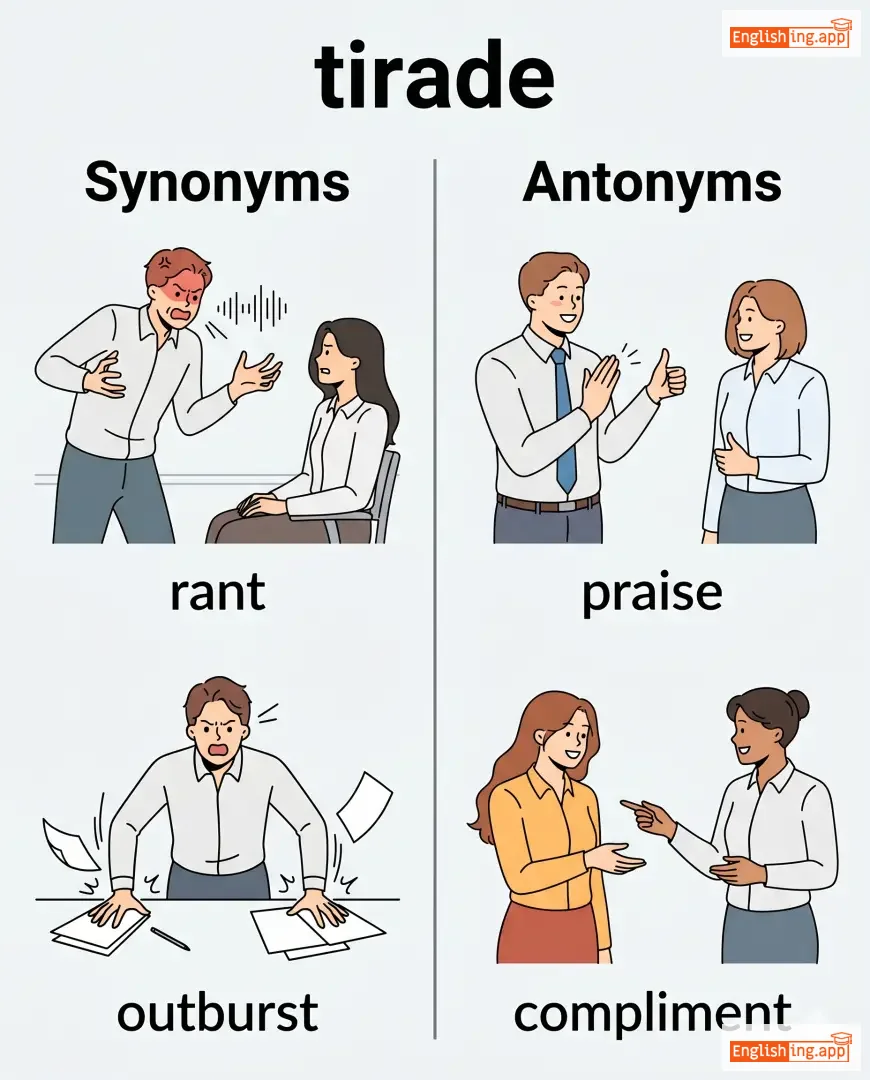
rant, outburst, diatribe, harangue, lecture
••••••
|
praise, compliment
••••••
|
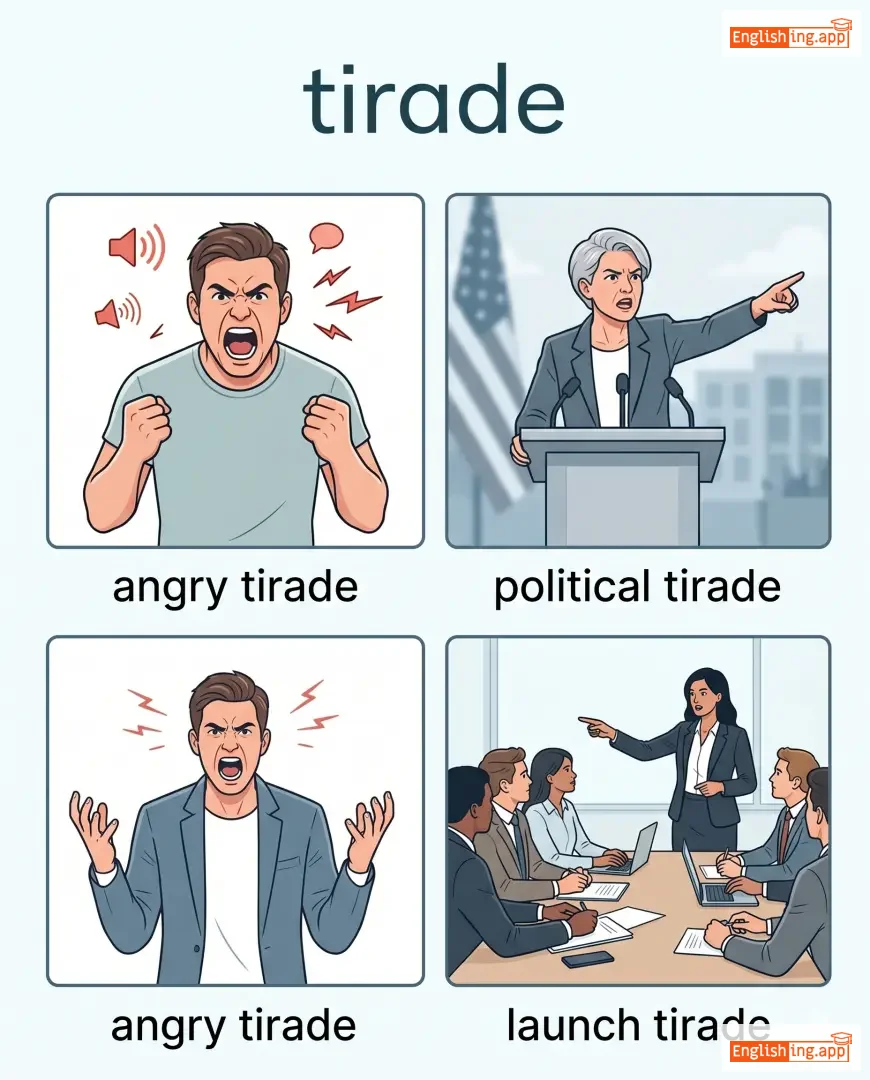
angry tirade, political tirade, launch tirade, endless tirade
••••••
|
Tirade は鋭い矢のような激しい非難の演説です。
••••••
|
|
#8848
🍸
|
/ˈtɪpsi/
adjective
(ティプシー)
••••••
|
- •••••• |
ほろ酔い
horoyoi
••••••
|
- •••••• | - •••••• | - •••••• | - •••••• |
slightly drunk
••••••
|
She felt tipsy after just one glass of wine.
ワインを一杯飲んだ後、彼女は少し酔った気がした。
••••••
|
ワインを一杯飲んだ後、彼女は少し酔った気がした。
Wain o ippai nonda ato, kanojo wa sukoshi yotta ki ga shita.
••••••
|
- •••••• | - •••••• | - •••••• |
lightheaded, drunk, woozy, intoxicated
••••••
|
sober, clearheaded
••••••
|
feel tipsy, get tipsy, slightly tipsy, tipsy laugh
••••••
|
Tipsy はほろ酔い、軽く酔った感じ。
••••••
|
|
#8849
🍷
|
/ˈtɪpəl/
verb
(tipuru)
••••••
|
- •••••• |
少し飲む
sukoshi nomu
••••••
|
tippled
tipurudo
••••••
|
tippled
tipurudo
••••••
|
tipples
tipurusu
••••••
|
tippling
tipuringu
••••••
|
to drink alcohol, especially regularly or in small amounts
••••••
|
He likes to tipple at the local pub after work.
彼は仕事の後、地元のパブで少し飲むのが好きです。
••••••
|
彼は仕事の後、地元のパブで少し飲むのが好きです。
Kare wa shigoto no ato, jimoto no pabu de sukoshi nomu no ga suki desu.
••••••
|
- •••••• | - •••••• | - •••••• |
drink, imbibe, booze, consume
••••••
|
abstain, refrain
••••••
|
tipple at night, small tipple, tipple regularly, favorite tipple
••••••
|
Tippleは少しずつ飲むこと
••••••
|
Vocabulary Quiz
Test your vocabulary by matching words with their translations or meanings.
Login to take the quiz
Comments (0)
Share your thoughts and join the discussion.
Join the discussion by logging in
Login to CommentNo comments yet
Be the first to share your thoughts!