

翻訳
過去
過去分詞
三人称単数
動名詞
意味
例文
例文の翻訳
同義語
対義語
コロケーション
ニーモニック
Swipe left or right, or use the buttons. Tap image to zoom.
例文の翻訳
単語
Lesson 39Lesson 39 - マスクトグル
|
絵文字
|
単語 | Images | 翻訳 | 過去 | 過去分詞 | 三人称単数 | 動名詞 | 意味 | 例文 | 例文の翻訳 | 表現例 | 表現例の意味 | 表現例の翻訳 | 同義語 | 対義語 | コロケーション | ニーモニック |
|---|---|---|---|---|---|---|---|---|---|---|---|---|---|---|---|---|---|
|
#1141
📦
|
/bʌldʒ/
noun, verb
••••••
|
- •••••• | - •••••• |
bulged
••••••
|
bulged
••••••
|
bulges
••••••
|
bulging
••••••
|
A swelling or protruding part; to swell outward or protrude.
••••••
|
The bag began to bulge with too many books inside. |
- •••••• |
bulge at the seams |
To be so full that it is almost overflowing.
••••••
|
- •••••• |
swell, protrusion, bump, projection, enlargement
••••••
|
flatness, depression, hollow
••••••
|
bulge with, slight bulge, bulge in, bulging pocket
••••••
|
No •••••• |
|
#1142
🙂
|
/ˈbɔɪənt/ or /ˈbuːjənt/
adjective
(ボイアント)
••••••
|
- •••••• |
浮力のある、元気な
uryoku no aru, genkina
••••••
|
- •••••• | - •••••• | - •••••• | - •••••• |
Able to float easily; cheerful and optimistic.
••••••
|
She remained buoyant despite the difficulties.
彼女は困難にもかかわらず前向きで元気でした。
••••••
|
彼女は困難にもかかわらず前向きで元気でした。
Kanojo wa konnan ni mo kakawarazu, maemuki de genki deshita.
••••••
|
- •••••• | - •••••• | - •••••• |
floating, optimistic, cheerful, lively
••••••
|
sinking, gloomy, depressed
••••••
|
buoyant market, buoyant mood, remain buoyant
••••••
|
Buoyant は buoy (浮く) + ant → 浮かぶことができるか、元気を保っている
••••••
|
|
#1143
🌊
|
/ˈbɔɪənsi/ or /ˈbuːjənsi/
noun
(ボイアンシー)
••••••
|
- •••••• |
浮力, 快活
furyoku, kaikatsu
••••••
|
- •••••• | - •••••• | - •••••• | - •••••• |
The ability to float in a liquid; cheerfulness and optimism.
••••••
|
Her natural buoyancy lifted the mood of the group. |
彼女の自然な快活さがグループの雰囲気を高めた。
Kanojo no shizen na kaikatsu sa ga guru-pu no funiki o takameta.
••••••
|
- •••••• | - •••••• | - •••••• |
lightness, resilience, cheerfulness, optimism
••••••
|
heaviness, depression, gloom
••••••
|
buoyancy force, natural buoyancy, economic buoyancy
••••••
|
Buoyancyはbuoy (浮く) + ancy → 浮力と快活
••••••
|
|
#1144
🛟
|
/ˈbɔɪ/ or /ˈbuːi/
noun/verb
(ボイ)
••••••
|
- •••••• |
ブイ, 浮かべる
bui, ukaberu
••••••
|
buoyed
ボイド
••••••
|
buoyed
ボイド
••••••
|
buoys
ボイス
••••••
|
buoying
ボイング
••••••
|
A floating marker on water; to keep something afloat or encourage someone.
••••••
|
The news buoyed their spirits after the loss.
ニュースは喪失後、彼らの気持ちを高めました。
••••••
|
ニュースは喪失後、彼らの気持ちを高めました。
Nyūsu wa sōshitsu go, karera no kimochi o takamemashita.
••••••
|
buoy up
高める
••••••
|
To support or uplift someone emotionally
••••••
|
気持ちを高める
kimochi o takameru
••••••
|
float, uplift, hearten, encourage, support
••••••
|
sink, depress, discourage
••••••
|
buoy at sea, buoy marker, buoyed spirits
••••••
|
Buoy(ブイ)は浮かんでいて、気持ちを高める役割を果たします
••••••
|
|
#1145
😬
|
/ˈbʌŋɡəl/
verb
(バングル)
••••••
|
- •••••• |
台無しにする
dainashi ni suru
••••••
|
bungled
バングルド
••••••
|
bungled
バングルド
••••••
|
bungles
バングルズ
••••••
|
bungling
バングリング
••••••
|
To carry out a task clumsily or incompetently.
••••••
|
He bungled the presentation and confused the audience.
彼はプレゼンテーションをバングルドし、聴衆を混乱させました。
••••••
|
彼はプレゼンテーションを台無しにし、聴衆を混乱させました。
Kare wa purezentēshon wo dainashi ni shi, chōshū wo konran sasemashita.
••••••
|
bungle up
バングルアップ
••••••
|
To spoil or ruin something by clumsiness or mistakes
••••••
|
台無しにする
dainashi ni suru
••••••
|
botch, mishandle, ruin, mess up, blunder
••••••
|
manage, succeed, handle
••••••
|
bungle a job, bungled attempt, bungling effort
••••••
|
In Japanese, '台無しにする' is used similarly to 'bungle' when something goes wrong.
••••••
|
|
#1146
😏
|
/ˈbʌmpʃəs/
adjective
(バンプシャス)
••••••
|
- •••••• |
自信過剰な
jishin kajō na
••••••
|
- •••••• | - •••••• | - •••••• | - •••••• |
Arrogantly self-assertive or conceited.
••••••
|
The bumptious student interrupted the teacher several times. |
その自信過剰な学生は何度も先生を遮った。
Sono jishin kajō na gakusei wa nando mo sensei o saegitta.
••••••
|
- •••••• | - •••••• | - •••••• |
arrogant, conceited, boastful, self-important, pompous
••••••
|
humble, modest, reserved
••••••
|
bumptious attitude, bumptious behavior, bumptious remark
••••••
|
BUMPで自信を持ちすぎる人は「自信過剰な」(bumptious)です。
••••••
|
|
#1147
🚗
|
/ˈbʌmpər/
noun/adjective
(バンパー)
••••••
|
- •••••• |
バンパー
banpā
••••••
|
- •••••• | - •••••• | - •••••• | - •••••• |
A protective bar at the front or back of a vehicle; also used to describe something unusually large or successful.
••••••
|
The farmer celebrated a bumper harvest this year. |
農家は今年、大収穫を祝いました。
Nōka wa kotoshi, dai-shūkaku o iwai mashita.
••••••
|
bumper harvest |
a very large or successful harvest
••••••
|
大収穫
dai-shūkaku
••••••
|
guard, buffer, protection, large, plentiful
••••••
|
small, scarce
••••••
|
bumper harvest, car bumper, bumper crop, bumper year
••••••
|
Bumperは大きいという意味、バンパー harvestは大きな収穫を意味します。
••••••
|
|
#1148
💥
|
/bʌmp/
verb
(バンプ)
••••••
|
- •••••• |
衝突
shōtotsu
••••••
|
bumped
バンプド
••••••
|
bumped
バンプド
••••••
|
bumps
バンプス
••••••
|
bumping
バンピング
••••••
|
To hit something or someone by accident; to knock against something.
••••••
|
He accidentally bumped into the door.
彼はドアに偶然ぶつかった。
••••••
|
彼はドアに偶然ぶつかった。
Kare wa doa ni gūzen butsukatta.
••••••
|
bump into
ぶつかる
••••••
|
to meet someone unexpectedly
••••••
|
偶然会う
gūzen au
••••••
|
knock, hit, collide, jolt
••••••
|
avoid, dodge
••••••
|
bump into, bump against, speed bump, slight bump
••••••
|
Bump とは衝突を意味し、バンプをするとみんな転んでしまう!
••••••
|
|
#1149
🤦
|
/ˈbʌmblɪŋ/
adjective
(バンブリング)
••••••
|
- •••••• |
不器用
bukiyou
••••••
|
- •••••• | - •••••• | - •••••• | - •••••• |
Acting in a clumsy, awkward, or confused way.
••••••
|
The bumbling waiter spilled the drinks on the table.
その不器用なウェイターはテーブルに飲み物をこぼした。
••••••
|
その不器用なウェイターはテーブルに飲み物をこぼした。
Sono bukiyou na u~eitā wa tēburu ni nomimono o koboshita.
••••••
|
- •••••• | - •••••• | - •••••• |
clumsy, awkward, fumbling, inept
••••••
|
skillful, competent, efficient
••••••
|
bumbling attempt, bumbling fool, bumbling behavior, bumbling official
••••••
|
Bumbling は不器用の意味で、飲み物をこぼすようなことです。
••••••
|
|
#1150
🛡️
|
/ˈbʊlwərk/
noun
(バルワーク)
••••••
|
- •••••• |
防壁
bōheki
••••••
|
- •••••• | - •••••• | - •••••• | - •••••• |
A strong wall or defensive structure; something that provides protection or support.
••••••
|
The fortress walls served as a bulwark against enemy attacks. |
砦の壁は敵の攻撃に対する防壁として機能していた。
Toride no kabe wa teki no kōgeki ni taisuru bōheki to shite kinō shite ita.
••••••
|
a bulwark against |
a strong protection or defense against something
••••••
|
防御の要塞
bōgyo no yōsai
••••••
|
fortification, defense, safeguard, rampart
••••••
|
weakness, vulnerability
••••••
|
bulwark against, strong bulwark, moral bulwark, last bulwark
••••••
|
Bulwarkは強力な防壁を意味し、敵から守るためのもの
••••••
|
|
#1151
🌾
|
/ˈbʊlrʌʃ/
noun
(ブルラッシュ)
••••••
|
- •••••• |
ヨシ
yoshi
••••••
|
- •••••• | - •••••• | - •••••• | - •••••• |
A tall plant with long leaves that grows in or near water, also known as a cattail.
••••••
|
The pond was surrounded by tall bulrushes swaying in the wind. |
池は風に揺れる高いヨシで囲まれていました。
Ike wa kaze ni yureru takai yoshi de kakomarete imashita
••••••
|
- •••••• | - •••••• | - •••••• |
cattail, reed, sedge, marsh plant
••••••
|
tree, shrub
••••••
|
bulrush bed, tall bulrushes, bulrush marsh, bulrush plant
••••••
|
Bulrushは水辺に生える高いヨシのような植物です。
••••••
|
|
#1152
😡
|
/ˈbʊli/
noun, verb
(buri)
••••••
|
- •••••• |
いじめっ子 / 加害者
ijimekko / kagai-sha
••••••
|
bullied
buriddo
••••••
|
bullied
buriddo
••••••
|
bullies
burīzu
••••••
|
bullying
buringu
••••••
|
A person who habitually seeks to harm or intimidate those weaker; to intimidate or mistreat someone weaker.
••••••
|
The teacher stopped the older boy from trying to bully his classmates.
先生は年上の男の子がクラスメートをいじめるのを止めました。
••••••
|
先生は年上の男の子がクラスメートをいじめるのを止めました。
Sensei wa toshiue no otokonoko ga kurasumēto o ijimeru no o yamemashita.
••••••
|
stand up to a bully
いじめっ子に立ち向かう
••••••
|
To confront or resist someone who is intimidating.
••••••
|
いじめっ子に立ち向かう
Ijimekko ni tachimukau
••••••
|
intimidator, oppressor, tormentor, aggressor, persecutor
••••••
|
protector, defender, friend
••••••
|
school bully, cyber bully, bully victim, bully behavior
••••••
|
Bully はいじめっ子 — いじめっ子を先生が止めてくれる。
••••••
|
|
#1153
🐂
|
/ˈbʊlək/
noun
(ブルック)
••••••
|
- •••••• |
作業牛
sagyō ushi
••••••
|
- •••••• | - •••••• | - •••••• | - •••••• |
A young bull, especially a castrated one, raised for work or meat.
••••••
|
The farmer used a bullock to plow the field. |
農家は畑を耕すために作業牛を使った。
Nōka wa hatake o tagayasu tame ni sagyō ushi o tsukatta.
••••••
|
- •••••• | - •••••• | - •••••• |
ox, steer, calf, cattle
••••••
|
cow, heifer
••••••
|
bullock cart, bullock plow, young bullock, bullock meat
••••••
|
Bullockは作業牛を意味する — 作業牛を思い出してください。
••••••
|
|
#1154
🥇
|
/ˈbʊljən/
noun
(ブリオン)
••••••
|
- •••••• |
金または銀のバルク
kin mata wa gin no baruku
••••••
|
- •••••• | - •••••• | - •••••• | - •••••• |
Gold or silver in bulk before being coined or made into jewelry.
••••••
|
The bank stores gold bullion in its vaults. |
銀行は金の塊を金庫に保管しています。
Ginkou wa kin no katamari wo kinkou ni hokan shiteimasu.
••••••
|
- •••••• | - •••••• | - •••••• |
gold, silver, ingot, precious metal, treasure
••••••
|
currency, paper money
••••••
|
gold bullion, silver bullion, bullion market, bullion vault
••••••
|
Bullionは金の塊を意味します — 銀行の金庫に保存されている。
••••••
|
|
#1155
📦
|
/bʌlk/
noun, verb
(バルク)
••••••
|
- •••••• |
大量購入 / 質量
tairyō kōnyū / shitsuryō
••••••
|
bulked
バルクド
••••••
|
bulked
バルクド
••••••
|
bulks
バルクス
••••••
|
bulking
バルキング
••••••
|
The mass or large size of something; to gain mass or volume.
••••••
|
He bought rice in bulk to save money.
彼はお金を節約するために大量の米を買いました。
••••••
|
彼はお金を節約するために大量の米を買いました。
Kare wa okane o setsuyaku suru tame ni tairyō no kome o kaimashita.
••••••
|
bulk up
体を大きくする
••••••
|
To increase in size or muscle mass.
••••••
|
体を大きくする
Karada o ōkiku suru
••••••
|
mass, volume, size, magnitude, heap
••••••
|
smallness, portion, fragment
••••••
|
in bulk, bulk order, bulk materials, bulk up
••••••
|
Bulk は大きな質量を意味します – 大量購入でお金を節約できます。
••••••
|
|
#1156
📢
|
/bruːt/
verb
(ブルイット)
••••••
|
- •••••• |
噂を広める
uwasa o hiromeru
••••••
|
bruited
ブルイテッド
••••••
|
bruited
ブルイテッド
••••••
|
bruits
ブルイッツ
••••••
|
bruiting
ブルイティング
••••••
|
to spread a rumor or report widely
••••••
|
The scandal was quickly bruited about the town.
スキャンダルは町ですぐに広まりました。
••••••
|
スキャンダルは町ですぐに広まりました。
Sukyandaru wa machi de sugu ni hiromarimashita.
••••••
|
- •••••• | - •••••• | - •••••• |
circulate, spread, disseminate, broadcast, propagate
••••••
|
conceal, suppress, hide
••••••
|
bruit about, bruit abroad, bruit rumors
••••••
|
BRUit means Breaking Rumor UIT (out) – 噂を広める.
••••••
|
|
#1157
🌱
|
/ˈbʌlbəs/
adjective
(bʊl.bəs)
••••••
|
- •••••• |
膨らんだ / 丸い
fukuranda / marui
••••••
|
- •••••• | - •••••• | - •••••• | - •••••• |
Bulging, round, or swollen in shape; resembling a bulb.
••••••
|
The frog had a bulbous nose and big eyes. |
カエルは膨らんだ鼻と大きな目をしていました。
Kaeru wa fukuranda hana to ōkina me o shite imashita.
••••••
|
- •••••• | - •••••• | - •••••• |
swollen, bulging, round, protuberant
••••••
|
flat, slender
••••••
|
bulbous nose, bulbous plant, bulbous growth
••••••
|
電球のように丸く膨らんだ、bulbous
••••••
|
|
#1158
👻
|
/ˈbʌɡəˌbuː/
noun
(バガブー)
••••••
|
- •••••• |
恐怖 / 不安
kyōfu / fuan
••••••
|
- •••••• | - •••••• | - •••••• | - •••••• |
An object of fear or worry; an imagined cause of anxiety.
••••••
|
The threat of inflation became a political bugaboo.
インフレーションの脅威は政治的なバガブーになった。
••••••
|
インフレーションの脅威は政治的な恐怖に変わった。
Infurēshon no kyōi wa seijiteki na kyōfu ni kawatta.
••••••
|
- •••••• | - •••••• | - •••••• |
phantom, fear, worry, dread
••••••
|
comfort, reassurance
••••••
|
political bugaboo, common bugaboo, childhood bugaboo
••••••
|
虫を見たら、'boo!' が聞こえる – それがバガブー、想像上の恐怖だ。
••••••
|
|
#1159
😂
|
/bəˈfuːnəri/
noun
(バフーナリー)
••••••
|
- •••••• |
ばかげた行動
bakageta koudou
••••••
|
- •••••• | - •••••• | - •••••• | - •••••• |
Foolish or ridiculous behavior intended to amuse.
••••••
|
His constant buffoonery irritated the serious audience. |
彼の絶え間ないばかげた行動は真剣な観客をイライラさせた。
Kare no taemanai bakageta koudou wa shinken na kankyaku wo iraira saseta.
••••••
|
- •••••• | - •••••• | - •••••• |
tomfoolery, clowning, silliness, foolishness
••••••
|
seriousness, dignity
••••••
|
comic buffoonery, childish buffoonery, act of buffoonery
••••••
|
Buffoonery は buffoon の行動を意味します - 日本語ではばかげた行動
••••••
|
|
#1160
🤡
|
/bəˈfuːn/
noun
(バフーン)
••••••
|
- •••••• |
道化師
doukishi
••••••
|
- •••••• | - •••••• | - •••••• | - •••••• |
A ridiculous but amusing person; a clown or jester.
••••••
|
He acted like a buffoon at the party, making everyone laugh. |
彼はパーティーで道化師のように振る舞い、みんなを笑わせた。
Kare wa paatii de doukeshi no you ni furumai, minna o warawase ta.
••••••
|
act the buffoon |
To behave in a silly or foolish way to amuse others.
••••••
|
道化師のように振る舞う
Doukeshi no you ni furumau
••••••
|
clown, jester, fool, comedian, joker
••••••
|
gentleman, intellectual
••••••
|
silly buffoon, comic buffoon, foolish buffoon
••••••
|
Buffoon = 道化師、おかしな振る舞いでみんなを笑わせる人。
••••••
|
|
#1161
🍽️
|
/bəˈfeɪ/ (noun), /ˈbʌfɪt/ (verb)
noun, verb
••••••
|
- •••••• | - •••••• |
buffeted
••••••
|
buffeted
••••••
|
buffets
••••••
|
buffeting
••••••
|
A meal where guests serve themselves from a variety of dishes arranged on a table; also means to strike repeatedly (as a verb).
••••••
|
We enjoyed a large buffet at the wedding reception. |
- •••••• |
buffet table |
A table where food is displayed for self-service.
••••••
|
- •••••• |
banquet, spread, feast, strike, batter
••••••
|
famine, starvation
••••••
|
buffet table, buffet lunch, buffet dinner, buffet style
••••••
|
No •••••• |
|
#1162
🛡️
|
/ˈbʌfər/
noun/verb
(バッファ)
••••••
|
- •••••• |
バッファ / 衝撃吸収
baffā / shōgeki kyūshū
••••••
|
buffered
バッファード
••••••
|
buffered
バッファード
••••••
|
buffers
バッファーズ
••••••
|
buffering
バッファリング
••••••
|
Something that lessens or absorbs the impact of a shock; to act as a protective barrier.
••••••
|
The organization acts as a buffer between workers and management.
その組織は労働者と経営陣の間のバッファとして機能します。
••••••
|
その組織は労働者と経営陣の間のバッファとして機能します。
Sono soshiki wa rōdōsha to keieijin no aida no baffā toshite kinō shimasu.
••••••
|
buffer zone
バッファゾーン
••••••
|
an area meant to reduce conflict between two sides
••••••
|
バッファゾーン
baffā zōn
••••••
|
cushion, shield, barrier, protection, safeguard
••••••
|
exposure, vulnerability
••••••
|
buffer zone, buffer state, buffer against, buffering effect
••••••
|
Buffer = 保護 🛡️ – コンピュータでのバッファリングは衝撃を吸収することを意味します。
••••••
|
|
#1163
✨
|
/bʌf/
noun/adjective/verb
(バフ)
••••••
|
- •••••• |
映画ファン / 磨く
eiga fan / migaku
••••••
|
buffed
バフド
••••••
|
buffed
バフド
••••••
|
buffs
バフス
••••••
|
buffing
バフィング
••••••
|
A fan or enthusiast; also to polish or shine something.
••••••
|
He is a movie buff who watches films every weekend.
彼は毎週末映画を観る映画ファンです。
••••••
|
彼は毎週末映画を観る映画ファンです。
Kare wa maishuumatsu eiga wo miru eiga fan desu.
••••••
|
in the buff
ヌード
••••••
|
naked
••••••
|
裸
hadaka
••••••
|
enthusiast, fan, polish, shine, admirer
••••••
|
critic, detractor
••••••
|
movie buff, history buff, buff the surface, in the buff
••••••
|
Movie buff は映画のファン 🎬、そして 'in the buff' は裸を意味します!
••••••
|
|
#1164
🚶
|
/bʌdʒ/
verb
••••••
|
- •••••• | - •••••• |
budged
••••••
|
budged
••••••
|
budges
••••••
|
budging
••••••
|
To move slightly; to change one’s opinion or position.
••••••
|
Despite the pressure, he refused to budge from his decision. |
- •••••• |
not budge an inch |
to refuse to change one’s position or opinion at all
••••••
|
- •••••• |
shift, move, yield, change, alter
••••••
|
stay, remain, persist
••••••
|
refuse to budge, budge from, not budge an inch
••••••
|
No •••••• |
|
#1165
🌾
|
/bjuːˈkɒlɪk/
adjective
(ビユˈコリック)
••••••
|
|
田園
den'en
••••••
|
- •••••• | - •••••• | - •••••• | - •••••• |
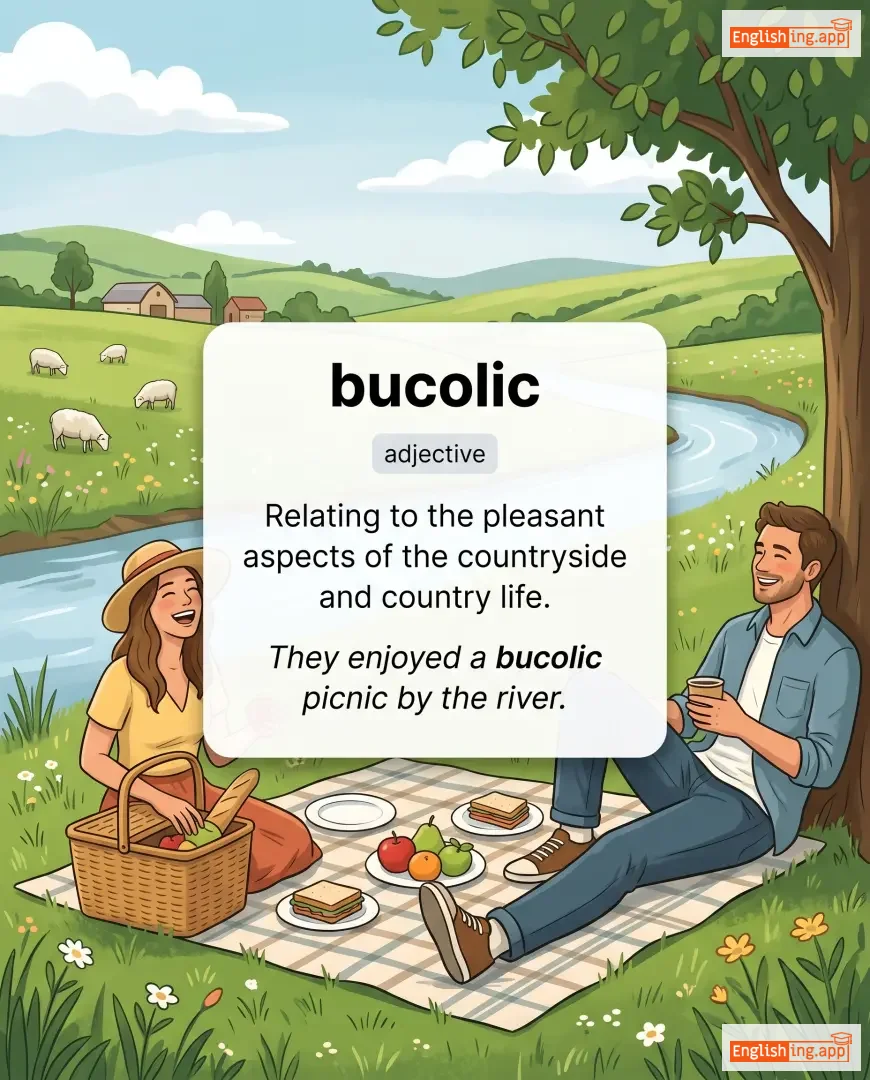
Relating to the pleasant aspects of the countryside and country life.
••••••
|
They enjoyed a bucolic picnic by the river.
彼らは川沿いで田園風のピクニックを楽しみました。
••••••
|
彼らは川沿いで田園風のピクニックを楽しみました。
Karera wa kawa-zoi de den'en-fū no pikunikku o tanoshimimashita.
••••••
|
- •••••• | - •••••• | - •••••• |
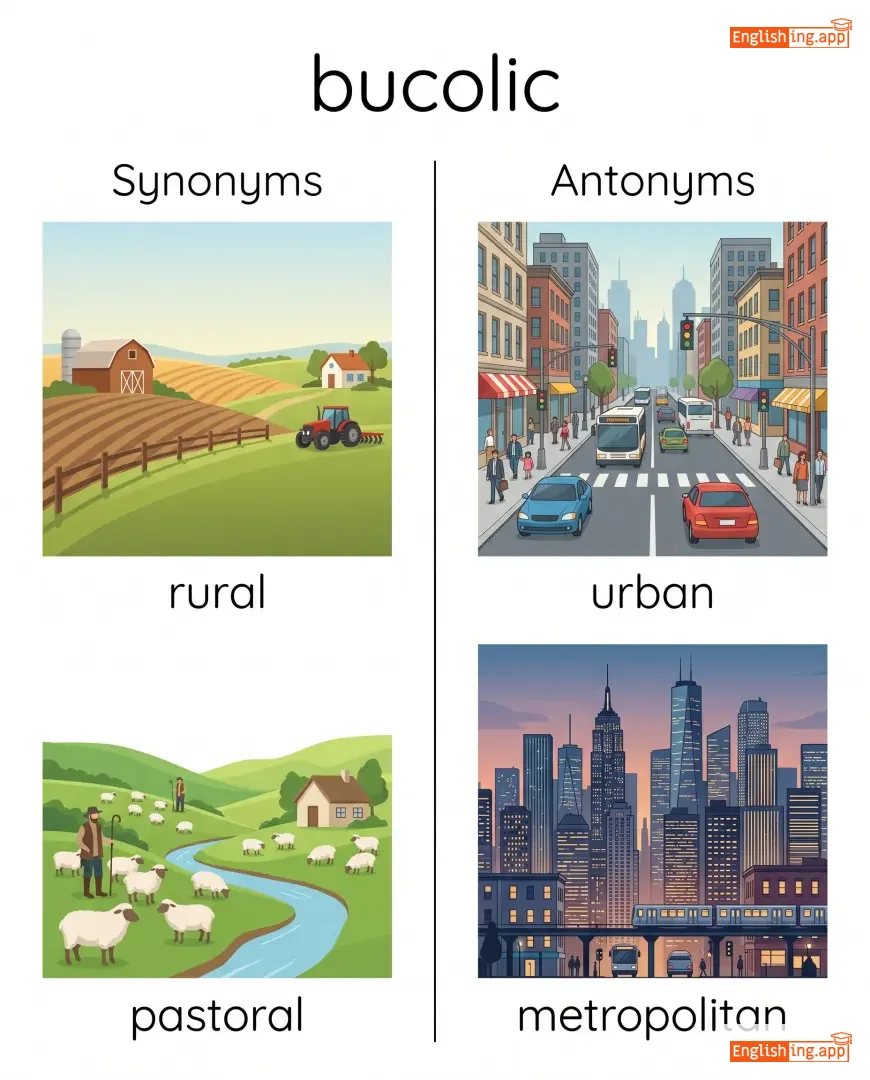
rural, pastoral, rustic, idyllic, agricultural
••••••
|
urban, metropolitan
••••••
|
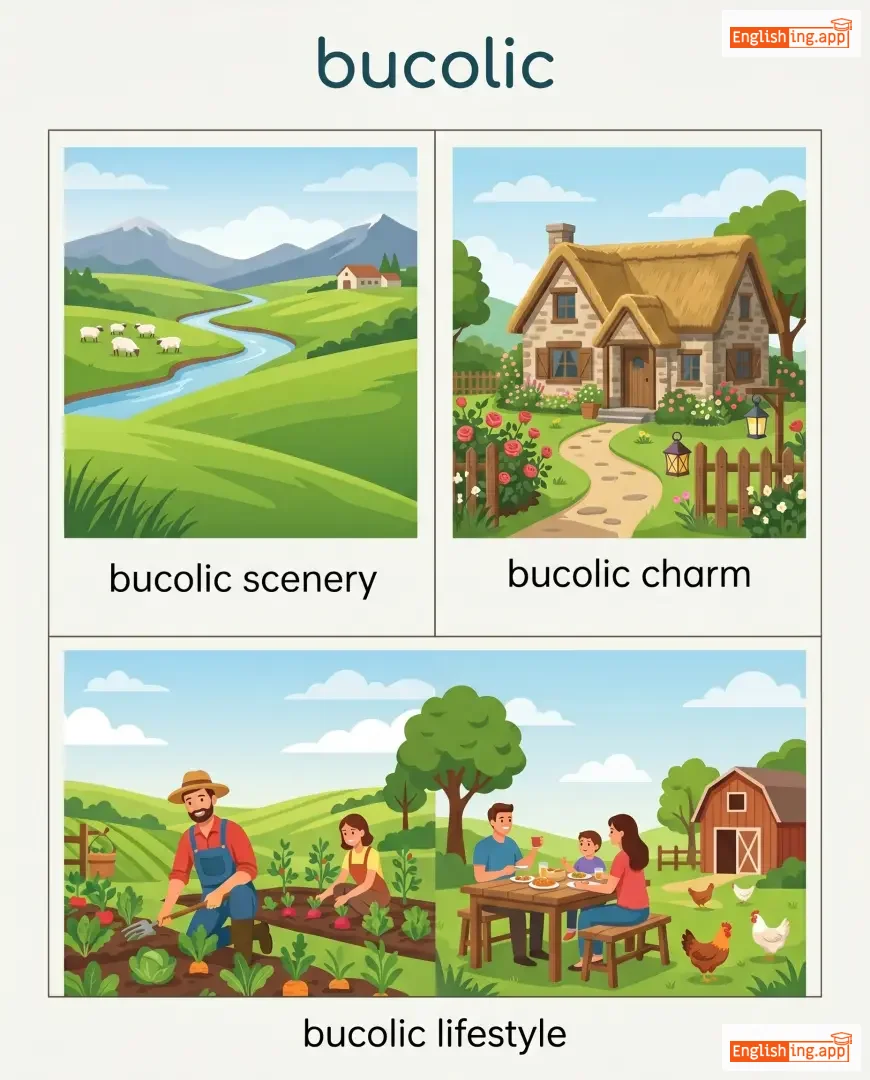
bucolic scenery, bucolic charm, bucolic lifestyle
••••••
|
Bucolic は田園的な生活に似ている、'bu'は自然、'colic'は平和を意味します。
••••••
|
|
#1166
🦌
|
/bʌk/
noun/verb
••••••
|
- •••••• | - •••••• |
bucked
••••••
|
bucked
••••••
|
bucks
••••••
|
bucking
••••••
|
A male deer; also to resist or oppose strongly.
••••••
|
The horse began to buck wildly as the rider tried to hold on. |
- •••••• |
buck the system |
to resist or oppose authority or established rules
••••••
|
- •••••• |
resist, oppose, rebel, deer, challenge
••••••
|
submit, accept, comply
••••••
|
buck deer, buck the trend, buck against, buck the system
••••••
|
No •••••• |
|
#1167
🏴☠️
|
/ˌbʌkəˈnɪər/
noun
(バッカニア)
••••••
|
- •••••• |
海賊
kaizoku
••••••
|
- •••••• | - •••••• | - •••••• | - •••••• |
a pirate, especially one active in the Caribbean during the 17th and 18th centuries
••••••
|
The buccaneer sailed across the Caribbean in search of treasure. |
その海賊はカリブ海を航海し、宝物を探していた。
Sono kaizoku wa Karibu umi o koukai shi, takaramono o sagashite ita.
••••••
|
- •••••• | - •••••• | - •••••• |
pirate, corsair, privateer, raider
••••••
|
sailor, merchant
••••••
|
fearsome buccaneer, legendary buccaneer, buccaneer ship
••••••
|
バッカニア = 'Buc' と 'anier' – 'Buc'は海賊、'anier'はその略奪活動。
••••••
|
|
#1168
🙅
|
/ˈbruːskli/ or /ˈbrʌskli/
adverb
(ブラスクリー)
••••••
|
- •••••• |
無愛想に
buaisou ni
••••••
|
- •••••• | - •••••• | - •••••• | - •••••• |
in a blunt, abrupt, or rude manner
••••••
|
She brusquely dismissed the suggestion.
彼女は無愛想に提案を拒否しました。
••••••
|
彼女は無愛想に提案を拒否しました。
Kanojo wa buaisou ni teian o kyohi shimashita.
••••••
|
- •••••• | - •••••• | - •••••• |
abruptly, curtly, bluntly, rudely
••••••
|
politely, gently, courteously
••••••
|
speak brusquely, reply brusquely, act brusquely
••••••
|
Brusquely 意味するのは Brush quickly – 急いで無愛想にする。
••••••
|
|
#1169
😠
|
/bruːsk/ or /brʌsk/
adjective
(ブルスク)
••••••
|
- •••••• |
ぶっきらぼう
bukkirabou
••••••
|
- •••••• | - •••••• | - •••••• | - •••••• |
abrupt or blunt in manner or speech, often seen as rude
••••••
|
His brusque reply ended the conversation. |
彼のぶっきらぼうな返事で会話が終わった。
Kare no bukkirabou na henji de kaiwa ga owatta.
••••••
|
- •••••• | - •••••• | - •••••• |
abrupt, curt, blunt, rude, short
••••••
|
polite, courteous, gentle
••••••
|
brusque manner, brusque tone, brusque reply
••••••
|
Brusque は 'brush cut' の意味 – 突然切り捨てるような、無愛想な行動。
••••••
|
|
#1170
💥
|
/brʌnt/
noun
(ブラント)
••••••
|
- •••••• |
主な影響
omona eikyo
••••••
|
- •••••• | - •••••• | - •••••• | - •••••• |
the worst part or main impact of something unpleasant
••••••
|
The small town bore the brunt of the storm.
小さな町は嵐の主な影響を受けました。
••••••
|
小さな町は嵐の主な影響を受けました。
Chiisana machi wa arashi no omona eikyo o ukemashita.
••••••
|
bear the brunt
主な影響を受ける
••••••
|
to endure the worst part of something
••••••
|
主な影響を受ける
Omona eikyo o ukeru
••••••
|
impact, force, shock, weight
••••••
|
relief, ease
••••••
|
bear the brunt, take the brunt, feel the brunt
••••••
|
Brunt は 'Burn' という言葉に似ていて、嵐の燃えるような影響を表しています。
••••••
|
Vocabulary Quiz
Test your vocabulary by matching words with their translations or meanings.
Login to take the quiz
Comments (0)
Share your thoughts and join the discussion.
Join the discussion by logging in
Login to CommentNo comments yet
Be the first to share your thoughts!