

翻訳
過去
過去分詞
三人称単数
動名詞
意味
例文
例文の翻訳
同義語
対義語
コロケーション
ニーモニック
Swipe left or right, or use the buttons. Tap image to zoom.
例文の翻訳
単語
Lesson 211Lesson 211 - マスクトグル
|
絵文字
|
単語 | Images | 翻訳 | 過去 | 過去分詞 | 三人称単数 | 動名詞 | 意味 | 例文 | 例文の翻訳 | 表現例 | 表現例の意味 | 表現例の翻訳 | 同義語 | 対義語 | コロケーション | ニーモニック |
|---|---|---|---|---|---|---|---|---|---|---|---|---|---|---|---|---|---|
|
#6301
☀️
|
/pɑːrtʃ/
verb
(パーチ)
••••••
|
- •••••• |
乾かす
kawakasu
••••••
|
parched
パーチド
••••••
|
parched
パーチド
••••••
|
parches
パーチェス
••••••
|
parching
パーチング
••••••
|
to make something extremely dry, especially by exposure to heat
••••••
|
The scorching sun began to parch the fields.
焼けつくような太陽が畑を干し始めました。
••••••
|
焼けつくような太陽が畑を乾かし始めました。
Yaketukuyouna taiyou ga hatake o kawakashi hajimemashita.
••••••
|
parched throat
乾いた喉
••••••
|
a very dry throat due to thirst or heat
••••••
|
乾いた喉
kawaita nodo
••••••
|
dry, scorch, dehydrate, wither, desiccate
••••••
|
soak, moisten, drench
••••••
|
parch the land, parched lips, parched soil, parched throat
••••••
|
Parch - 水がないと乾燥していく。
••••••
|
|
#6302
🏛️
|
/ˈpɑːrləmənt/
noun
(パーラメント)
••••••
|
- •••••• |
議会
gikai
••••••
|
- •••••• | - •••••• | - •••••• | - •••••• |
the highest legislative body in a country
••••••
|
The bill was passed in parliament after a long debate. |
その法案は議会で長時間の議論の後に通過しました。
Sono hōan wa gikai de chō jikan no giron no ato ni tsūka shimashita.
••••••
|
hung parliament |
a parliament where no single party has a majority
••••••
|
掛け議会
kakegikai
••••••
|
assembly, legislature, congress, house, senate
••••••
|
dictatorship, monarchy
••••••
|
parliament session, member of parliament, dissolve parliament, pass through parliament
••••••
|
パーラメント(parlamento)=国の重要な決定を行う場所 🏛️
••••••
|
|
#6303
🤝
|
/ˈpɑːrli/
noun, verb
(パーリー)
••••••
|
- •••••• |
交渉
koushou
••••••
|
parleyed
パーリード
••••••
|
parleyed
パーリード
••••••
|
parleys
パーリス
••••••
|
parleying
パーリング
••••••
|
a discussion between opposing sides, especially to negotiate terms
••••••
|
The generals met to parley over the terms of surrender.
将軍たちは降伏条件について話し合うために会った。
••••••
|
将軍たちは降伏条件について話し合うために会った。
Shougun-tachi wa koufuku jouken ni tsuite hanashiau tame ni atta.
••••••
|
- •••••• | - •••••• | - •••••• |
discussion, negotiation, talk, conference, dialogue
••••••
|
silence, refusal
••••••
|
hold a parley, parley over, peace parley, diplomatic parley
••••••
|
Parley は '交渉' です。両側が条件を決めるための会議です。
••••••
|
|
#6304
💬
|
/ˈpɑːrləns/
noun
(パールランス)
••••••
|
- •••••• |
専門用語
senmon yougo
••••••
|
- •••••• | - •••••• | - •••••• | - •••••• |
a particular way of speaking or using words, common to a group
••••••
|
In legal parlance, the term has a different meaning. |
法律用語では、この言葉は異なる意味を持っています。
Hōritsu yōgo de wa, kono kotoba wa kotonaru imi o motteimasu.
••••••
|
- •••••• | - •••••• | - •••••• |
jargon, terminology, diction, phraseology, lingo
••••••
|
silence, quiet
••••••
|
in common parlance, legal parlance, medical parlance, technical parlance
••••••
|
Parlanceは 'Particular Language' – 特定の言語 💬
••••••
|
|
#6305
⚖️
|
/ˈpærɪti/
noun
(パリティ)
••••••
|
- •••••• |
平等
byoudou
••••••
|
- •••••• | - •••••• | - •••••• | - •••••• |
the state or condition of being equal, especially in status or pay
••••••
|
The campaign aims to achieve pay parity between men and women. |
キャンペーンは男性と女性の間で給与の平等を達成することを目指しています。
Kyanpēn wa dansei to josei no aida de kyūyo no byōdō o tassei suru koto o mezashiteimasu.
••••••
|
parity of esteem |
equal respect for different groups or individuals
••••••
|
尊重の平等
sonchou no byoudou
••••••
|
equality, equivalence, uniformity, similarity, balance
••••••
|
inequality, disparity
••••••
|
gender parity, pay parity, parity of esteem, parity check
••••••
|
平等はペアのようなもの – 平等 ⚖️
••••••
|
|
#6306
🗼
|
/pəˈrɪʒən/
adjective
(パリジャン)
••••••
|
- •••••• |
パリに関連する
pari ni kanren suru
••••••
|
- •••••• | - •••••• | - •••••• | - •••••• |
relating to Paris or its people
••••••
|
She wore a Parisian style dress at the party. |
彼女はパリジャンスタイルのドレスをパーティーで着ていた。
Kanojo wa parijan sutairu no doresu o pātī de kiteita.
••••••
|
- •••••• | - •••••• | - •••••• |
French, Gallic, continental, urban, cosmopolitan
••••••
|
rural, provincial
••••••
|
Parisian culture, Parisian café, Parisian fashion, Parisian lifestyle
••••••
|
パリの人々はパリジャンです – 🗼 パリのスタイルは、パリジャンのスタイル
••••••
|
|
#6307
⛪
|
/ˈpærɪʃ/
noun
(パリッシュ)
••••••
|
- •••••• |
教区
kyōku
••••••
|
- •••••• | - •••••• | - •••••• | - •••••• |
A local church community or the area served by a parish church.
••••••
|
The parish gathered for Sunday service. |
教区は日曜礼拝のために集まりました。
kyōku wa nichiyō reihai no tame ni atsumarimashita.
••••••
|
parish pump |
relating to local or narrow-minded politics
••••••
|
ローカル政治
rōkaru seiji
••••••
|
church community, congregation, district, diocese
••••••
|
secular community
••••••
|
parish church, parish priest, parish community, parish council
••••••
|
Parishは教区を意味します—牧師は常に地域の教会コミュニティと一緒に働きます。
••••••
|
|
#6308
🚫
|
/pəˈraɪə/
noun
(パリア)
••••••
|
- •••••• |
社会的に追放された人
shakai-teki ni tsuihō sareta hito
••••••
|
- •••••• | - •••••• | - •••••• | - •••••• |
An outcast; someone who is rejected by society or a social group.
••••••
|
After the scandal, he became a social pariah. |
スキャンダルの後、彼は社会的なパリアになった。
Sukyandaru no ato, kare wa shakai-teki na paria ni natta.
••••••
|
- •••••• | - •••••• | - •••••• |
outcast, reject, exile, untouchable
••••••
|
insider, accepted
••••••
|
social pariah, treated as a pariah, political pariah
••••••
|
Pariah は outsider という意味です—'パリア'は社会から追放された人です。
••••••
|
|
#6309
📝
|
/ˌpɛrənˈθɛtɪkəl/
adjective
(ペレンセティカル)
••••••
|
- •••••• |
括弧内のコメント
kakkonai no komento
••••••
|
- •••••• | - •••••• | - •••••• | - •••••• |
Relating to or expressed in parentheses; a side remark or digression.
••••••
|
He added a parenthetical comment during the lecture. |
彼は講義中に括弧内のコメントを追加しました。
Kare wa kōgijū ni kakkonai no komento o tsuika shimashita.
••••••
|
- •••••• | - •••••• | - •••••• |
incidental, explanatory, supplementary, digressive
••••••
|
main, central
••••••
|
parenthetical remark, parenthetical statement, parenthetical comment, parenthetical phrase
••••••
|
Parenthetical は括弧の中に入れられた追加情報—サイドコメント。
••••••
|
|
#6310
🔤
|
/pəˈrɛnθəsɪs/
noun
(ペレンセシス)
••••••
|
- •••••• |
括弧
kakko
••••••
|
- •••••• | - •••••• | - •••••• | - •••••• |
A pair of curved marks ( ) used to enclose words or numbers; also an interruption or digression in speech or writing.
••••••
|
The explanation was given in a parenthesis within the text. |
説明はテキスト内の括弧に含まれていました。
Setsumei wa tekisuto nai no kakko ni fukumareteimashita.
••••••
|
in parenthesis |
as a side remark or afterthought
••••••
|
括弧内で
kakko nai de
••••••
|
bracket, aside, insertion, digression
••••••
|
main text, continuity
••••••
|
use parenthesis, within parenthesis, open parenthesis, close parenthesis
••••••
|
Parenthesis は括弧 — 日本語では括弧はよく追加情報を含むために使われます。
••••••
|
|
#6311
👪
|
/ˈpɛrəntɪdʒ/
noun
(ペアレントエイジ)
••••••
|
- •••••• |
家系
kakei
••••••
|
- •••••• | - •••••• | - •••••• | - •••••• |
The identity and origins of one's parents; descent or lineage.
••••••
|
Her noble parentage gave her access to the royal court. |
彼女の高貴な家系は、彼女に王室へのアクセスを与えた。
Kanojo no kōkina kakei wa, kanojo ni ōshitsu e no akusesu o ataeta.
••••••
|
- •••••• | - •••••• | - •••••• |
lineage, ancestry, descent, heritage, bloodline
••••••
|
offspring, progeny
••••••
|
noble parentage, humble parentage, unknown parentage, royal parentage
••••••
|
Parent + age = 家系、親の血統を忘れずに覚えておこう。
••••••
|
|
#6312
💊
|
/ˌpærəˈɡɔːrɪk/
noun
(パレゴリック)
••••••
|
- •••••• |
アヘンを含む薬
ahen wo fukumu kusuri
••••••
|
- •••••• | - •••••• | - •••••• | - •••••• |
a medicine containing opium, once used to relieve pain and diarrhea
••••••
|
Doctors once prescribed paregoric to treat diarrhea in children. |
医師はかつて子供の下痢を治療するためにパレゴリックを処方していた。
Ishi wa katsute kodomo no geri wo chiryo suru tame ni paregoric wo shohou shite ita.
••••••
|
- •••••• | - •••••• | - •••••• |
medicine, tincture, remedy, opiate
••••••
|
toxin, poison
••••••
|
paregoric tincture, prescribed paregoric, paregoric treatment
••••••
|
Pare + gori = 痛みと下痢を和らげる薬
••••••
|
|
#6313
🍏
|
/per/
verb
(per)
••••••
|
- •••••• |
皮をむく
kawa wo muku
••••••
|
pared
pered
••••••
|
pared
pered
••••••
|
pares
pares
••••••
|
paring
paring
••••••
|
to cut away the outer covering or reduce something gradually
••••••
|
She pared the apple before eating it.
彼女はリンゴを食べる前に皮をむいた。
••••••
|
彼女はリンゴを食べる前に皮をむいた。
Kanojo wa ringo wo taberu mae ni kawa wo muita.
••••••
|
pare down
減らす
••••••
|
to reduce something gradually by removing parts
••••••
|
減らす
herasu
••••••
|
trim, cut, peel, reduce, whittle
••••••
|
expand, enlarge, grow
••••••
|
pare down expenses, pare nails, pare an apple, pare costs
••••••
|
皮をむくのは'pare'のようです。
••••••
|
|
#6314
📜
|
/ˈpɑːrtʃmənt/
noun
(パーチメント)
••••••
|
- •••••• |
羊皮紙
yōhishi
••••••
|
- •••••• | - •••••• | - •••••• | - •••••• |
a thin material made from animal skin, used in the past for writing
••••••
|
The ancient manuscript was written on parchment. |
古代の写本は羊皮紙に書かれていました。
Kodai no shahon wa yōhishi ni kakarete imashita.
••••••
|
- •••••• | - •••••• | - •••••• |
vellum, scroll, manuscript, paper, document
••••••
|
digital text, electronic file
••••••
|
parchment paper, ancient parchment, roll of parchment
••••••
|
Parchment paper は古代の羊皮紙のようなものです。
••••••
|
|
#6315
🌵
|
/pɑːrtʃt/
adjective
(パーチド)
••••••
|
- •••••• |
極度に喉が渇いた
kyokudo ni nodo ga kawaita
••••••
|
- •••••• | - •••••• | - •••••• | - •••••• |
extremely dry, especially because of heat or thirst
••••••
|
After walking in the desert, he was parched with thirst. |
砂漠を歩いた後、彼は極度に喉が渇いていた。
Sabaku o aruita ato, kare wa kyokudo ni nodo ga kawaita.
••••••
|
- •••••• | - •••••• | - •••••• |
thirsty, dehydrated, dry, scorched, withered
••••••
|
hydrated, refreshed, moist
••••••
|
parched land, parched lips, parched desert, parched skin
••••••
|
Parched とは、砂漠を歩いた後のような極度に喉が渇いた状態のこと。
••••••
|
|
#6316
❓
|
/ˌpærəˈdɒksɪkəl/
adjective
(パラドキシカル)
••••••
|
- •••••• |
逆説的
gyakusetsuteki
••••••
|
- •••••• | - •••••• | - •••••• | - •••••• |
Seemingly contradictory or opposed to common sense, yet possibly true.
••••••
|
It is paradoxical that standing is often more tiring than walking. |
立っていることが歩くことよりも疲れるのは逆説的です。
Tatte iru koto ga aruku koto yori mo tsukareru no wa gyakusetsuteki desu.
••••••
|
- •••••• | - •••••• | - •••••• |
contradictory, puzzling, illogical, ironic, inconsistent
••••••
|
logical, consistent, straightforward
••••••
|
paradoxical situation, paradoxical outcome, paradoxical effect, paradoxical nature
••••••
|
逆説的とは、直感に反しているように見えても、実は正しいことです。
••••••
|
|
#6317
🪱
|
/ˈpærəsaɪt/
noun
(パラサイト)
••••••
|
- •••••• |
寄生虫
kiseichū
••••••
|
- •••••• | - •••••• | - •••••• | - •••••• |
An organism that lives in or on another organism and benefits at the host’s expense.
••••••
|
The parasite weakened the tree by feeding on its nutrients. |
寄生虫は栄養を吸収して木を弱らせました。
Kiseichū wa eiyō o kyūshū shite ki o yowarasemashita.
••••••
|
social parasite |
a person who takes advantage of others without giving anything back
••••••
|
社会的寄生虫
Shakaiteki kiseichū
••••••
|
freeloader, leech, sponger, hanger-on
••••••
|
host, benefactor
••••••
|
intestinal parasite, deadly parasite, social parasite
••••••
|
Parasite = para + site – 他のサイトで食べる寄生虫。
••••••
|
|
#6318
📝
|
/ˈpærəfreɪz/
verb
(happiness)
••••••
|
- •••••• |
幸福
kōfuku
••••••
|
paraphrased
••••••
|
paraphrased
••••••
|
paraphrases
••••••
|
paraphrasing
••••••
|
To express the meaning of something using different words, often to make it clearer.
••••••
|
The teacher asked the students to paraphrase the poem in their own words. |
彼女は賞を受け取ったとき、自分の幸せを隠せなかった。
Kanojo wa shō o uketotta toki, jibun no kōfuku o kakusenakatta.
••••••
|
paraphrase back |
to restate what someone said to confirm understanding
••••••
|
- •••••• |
reword, restate, rephrase, summarize
••••••
|
quote, repeat
••••••
|
paraphrase text, paraphrase sentence, paraphrase idea
••••••
|
Happiness in Japanese is '幸福' – a state of contentment and joy.
••••••
|
|
#6319
🎒
|
/ˌpærəfəˈneɪliə/
noun
(パラファーネリア)
••••••
|
- •••••• |
道具一式
dougu isshiki
••••••
|
- •••••• | - •••••• | - •••••• | - •••••• |
Miscellaneous articles, especially equipment needed for a particular activity.
••••••
|
The fisherman carried all his fishing paraphernalia in a large box. |
漁師はすべての釣り道具を大きな箱に入れて運びました。
Ryoushi wa subete no tsuri dougu o ookina hako ni irete hakobimashita.
••••••
|
- •••••• | - •••••• | - •••••• |
equipment, gear, apparatus, belongings, tools
••••••
|
essentials, basics
••••••
|
camping paraphernalia, sports paraphernalia, personal paraphernalia
••••••
|
Paraphernaliaは道具一式 – 必要なすべての道具を想像してみてください。
••••••
|
|
#6320
🏰
|
/ˈpærəpɛt/
noun
(パラペット)
••••••
|
- •••••• |
防護壁
bougobari
••••••
|
- •••••• | - •••••• | - •••••• | - •••••• |
A low protective wall along the edge of a roof, balcony, or bridge.
••••••
|
The soldier hid behind the parapet for protection. |
兵士は防護壁の後ろに隠れて安全を守りました。
Heishi wa bougobari no ushiro ni kakurete anzen o mamorimashita.
••••••
|
to raise the parapet |
to increase defense or protection
••••••
|
防御を強化する
bougyo o kyouka suru
••••••
|
battlement, railing, barrier, wall
••••••
|
open edge, gap
••••••
|
stone parapet, parapet wall, behind the parapet
••••••
|
Parapetは防護壁、あなたを守る盾のようなものです。
••••••
|
|
#6321
🧠
|
/ˌpærəˈnɔɪæk/
noun
(パラノイア的な)
••••••
|
- •••••• |
パラノイア的な人
paranoia-tekina hito
••••••
|
- •••••• | - •••••• | - •••••• | - •••••• |
A person who suffers from paranoia or exhibits extreme, irrational distrust and suspicion.
••••••
|
The paranoiac refused to leave his house, fearing everyone was against him. |
そのパラノイア的な人は、みんなが自分に反対していると恐れて家を出ることを拒んだ。
Sono paranoia-tekina hito wa, minna ga jibun ni hantai shite iru to osorete ie o deru koto o kobanda.
••••••
|
- •••••• | - •••••• | - •••••• |
paranoid, suspicious person, mistrustful person, cynic, neurotic
••••••
|
trustful person, confident person
••••••
|
paranoiac delusion, paranoiac fear, paranoiac tendencies
••••••
|
パラノイア的 = 何でも疑う人
••••••
|
|
#6322
😰
|
/ˌpærəˈnɔɪə/
noun
(パラノイア)
••••••
|
- •••••• |
人々があなたに害を与えようとしているか、常にあなたを監視しているという非合理的で持続的な感覚
hitobito ga anata ni gai o atae yō to shite iru ka, jō ni anata o kanshi shite iru to iu higariteki de jizokuteki na kankaku
••••••
|
- •••••• | - •••••• | - •••••• | - •••••• |
an irrational and persistent feeling that people are 'out to get you' or are constantly watching you
••••••
|
His constant paranoia made it hard for him to trust anyone. |
彼の絶え間ないパラノイアは、誰も信じることを難しくさせていた。
Kare no tae manai paranoia wa, dare mo shinjiru koto o muzukashiku sasete ita.
••••••
|
- •••••• | - •••••• | - •••••• |
suspicion, delusion, mistrust, fear
••••••
|
trust, confidence
••••••
|
extreme paranoia, develop paranoia, constant paranoia
••••••
|
Para(近く)= 常に誰かが見ているように感じる = パラノイア
••••••
|
|
#6323
❤️🔥
|
/ˈpærəmʊr/
noun
(パラモア)
••••••
|
- •••••• |
愛人
aijin
••••••
|
- •••••• | - •••••• | - •••••• | - •••••• |
a lover, especially an illicit one
••••••
|
The secret paramour was finally revealed. |
秘密の愛人はついに明らかにされました。
Himitsu no aijin wa tsuini akiraka ni saremashita.
••••••
|
- •••••• | - •••••• | - •••••• |
lover, sweetheart, beloved, flame
••••••
|
enemy, stranger
••••••
|
secret paramour, illicit paramour, passionate paramour
••••••
|
Para (他の) + amour (愛) = パラモア、秘密の愛人。
••••••
|
|
#6324
🏔️
|
/ˈpærəmaʊnt/
adjective
(パラマウント)
••••••
|
- •••••• |
最も重要な
mottomo jūyōna
••••••
|
- •••••• | - •••••• | - •••••• | - •••••• |
more important than anything else; supreme
••••••
|
Safety is of paramount importance in this factory. |
この工場では安全が最も重要です。
Kono kōjō dewa anzen ga mottomo jūyō desu.
••••••
|
- •••••• | - •••••• | - •••••• |
supreme, primary, dominant, foremost, chief
••••••
|
minor, trivial, secondary
••••••
|
paramount importance, paramount concern, paramount issue
••••••
|
一番高い山のように、最も重要なものは、paramount です。
••••••
|
|
#6325
📏
|
/pəˈræmɪtər/
noun
(パラメーター)
••••••
|
- •••••• |
パラメーター
parametaa
••••••
|
- •••••• | - •••••• | - •••••• | - •••••• |
a limit, boundary, or measurable factor that defines or determines something
••••••
|
We need to set clear parameters for this project. |
このプロジェクトのために明確なパラメーターを設定する必要があります。
Kono purojekuto no tame ni meikaku na parametaa o settei suru hitsuyou ga arimasu.
••••••
|
- •••••• | - •••••• | - •••••• |
boundary, limit, guideline, criterion, specification
••••••
|
unlimited, boundless, unrestricted
••••••
|
set parameters, define parameters, within parameters, strict parameters
••••••
|
パラメーターとは限界のこと、パラメーターを設定しなければ何も機能しません。
••••••
|
|
#6326
🧑🦽
|
/ˈpærəlaɪz/
verb
(ペラライズ)
••••••
|
- •••••• |
麻痺させる
mahi saseru
••••••
|
paralyzed
ペラライズド
••••••
|
paralyzed
ペラライズド
••••••
|
paralyzes
ペラライズズ
••••••
|
paralyzing
ペラライズィング
••••••
|
to cause someone or something to lose the ability to move or function normally
••••••
|
The sudden shock seemed to paralyze him.
突然の衝撃が彼を麻痺させたようだった。
••••••
|
突然の衝撃が彼を麻痺させたようだった。
Totsuzen no shōgeki ga kare o mahi saseta yō datta.
••••••
|
paralyzed with fear
恐怖で麻痺する
••••••
|
to be unable to move or act due to extreme fear
••••••
|
恐怖で麻痺する
Kyōfu de mahi suru
••••••
|
immobilize, disable, cripple, incapacitate, numb
••••••
|
activate, energize, mobilize
••••••
|
paralyze the system, paralyze the city, paralyze with fear, completely paralyze
••••••
|
恐怖で体が麻痺することのように、恐怖が体を動かなくさせる。
••••••
|
|
#6327
🦽
|
/pəˈræləsɪs/
noun
(パラリシス)
••••••
|
- •••••• |
麻痺
mabi
••••••
|
- •••••• | - •••••• | - •••••• | - •••••• |
Loss of the ability to move in part or most of the body, typically as a result of illness or injury.
••••••
|
The accident left him with partial paralysis. |
事故で部分的な麻痺が残りました。
Jiko de bubun-tekina mabi ga nokorimashita.
••••••
|
analysis paralysis |
inability to make a decision due to overthinking
••••••
|
分析麻痺
Bunseki mabi
••••••
|
immobility, disablement, infirmity, numbness
••••••
|
movement, activity, mobility
••••••
|
partial paralysis, total paralysis, temporary paralysis, cause paralysis
••••••
|
麻痺 = 動けないことを示す、体が動かせなくなることを考えましょう。
••••••
|
|
#6328
📐
|
/ˈpærəˌlɛlɪzəm/
noun
(パラレリズム)
••••••
|
- •••••• |
平行主義
heikou shugi
••••••
|
- •••••• | - •••••• | - •••••• | - •••••• |
The state of being parallel or similar; in literature, the use of components in a sentence that are grammatically the same or similar in construction.
••••••
|
The writer used parallelism to give rhythm to his prose. |
作家は自分の文章にリズムを与えるために平行主義を使用しました。
Sakka wa jibun no bunshou ni rizumu wo ataeru tame ni heikou shugi wo shiyou shimashita.
••••••
|
- •••••• | - •••••• | - •••••• |
similarity, correspondence, analogy, balance
••••••
|
difference, contrast
••••••
|
structural parallelism, rhetorical parallelism, parallelism in literature
••••••
|
平行主義は文章にリズムを与えるために同じ構造を使います。
••••••
|
|
#6329
➖
|
/ˈpærəˌlɛl/
noun, adjective, verb
••••••
|
- •••••• | - •••••• |
paralleled
••••••
|
paralleled
••••••
|
parallels
••••••
|
paralleling
••••••
|
Lines, objects, or events that are side by side and never meet; similarity or comparison.
••••••
|
The road runs parallel to the railway. |
- •••••• |
draw a parallel |
to make a comparison between two things
••••••
|
- •••••• |
equivalent, similar, analogous, comparable
••••••
|
divergent, different, separate
••••••
|
parallel lines, parallel universe, parallel development, parallel computing
••••••
|
No •••••• |
|
#6330
🌟
|
/ˈpærəɡɒn/
noun
(パラゴン)
••••••
|
|
模範
mohan
••••••
|
- •••••• | - •••••• | - •••••• | - •••••• |
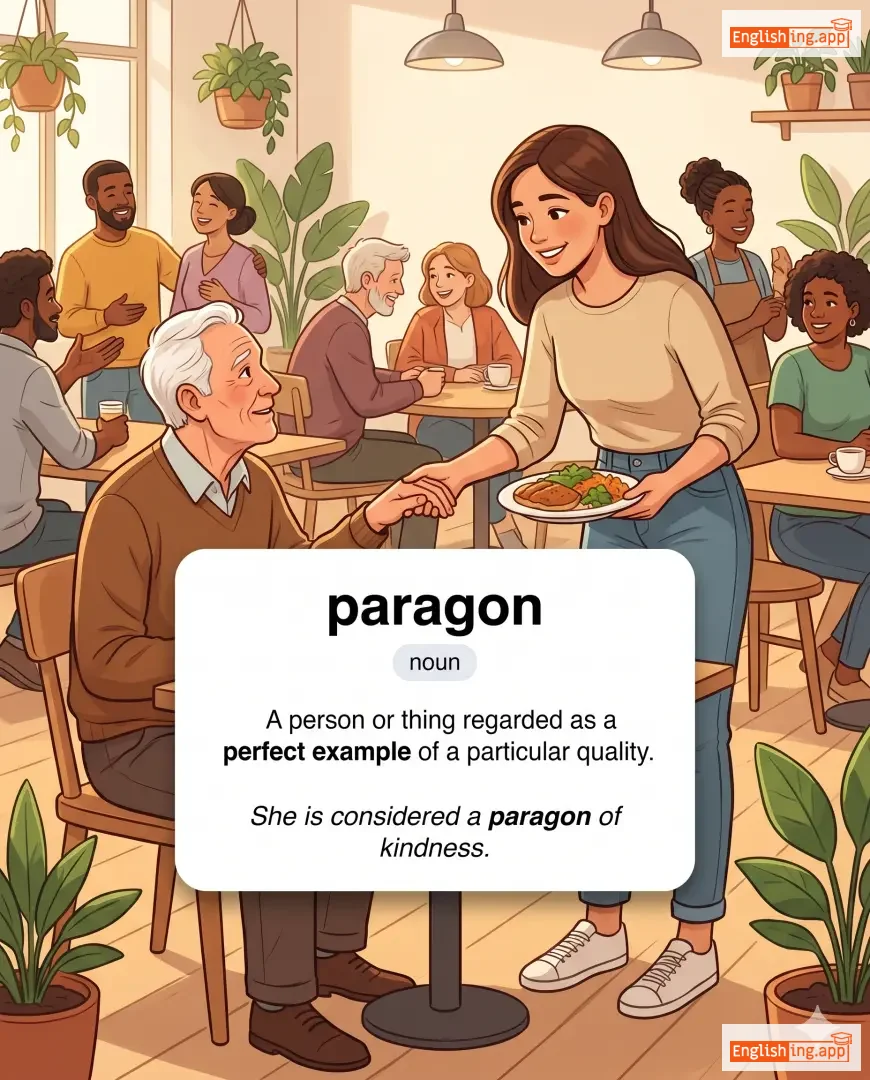
A person or thing regarded as a perfect example of a particular quality.
••••••
|
She is considered a paragon of kindness. |
彼女は親切の模範と見なされています。
Kanojo wa shinsetsu no mohan to minasareteimasu.
••••••
|
- •••••• | - •••••• | - •••••• |
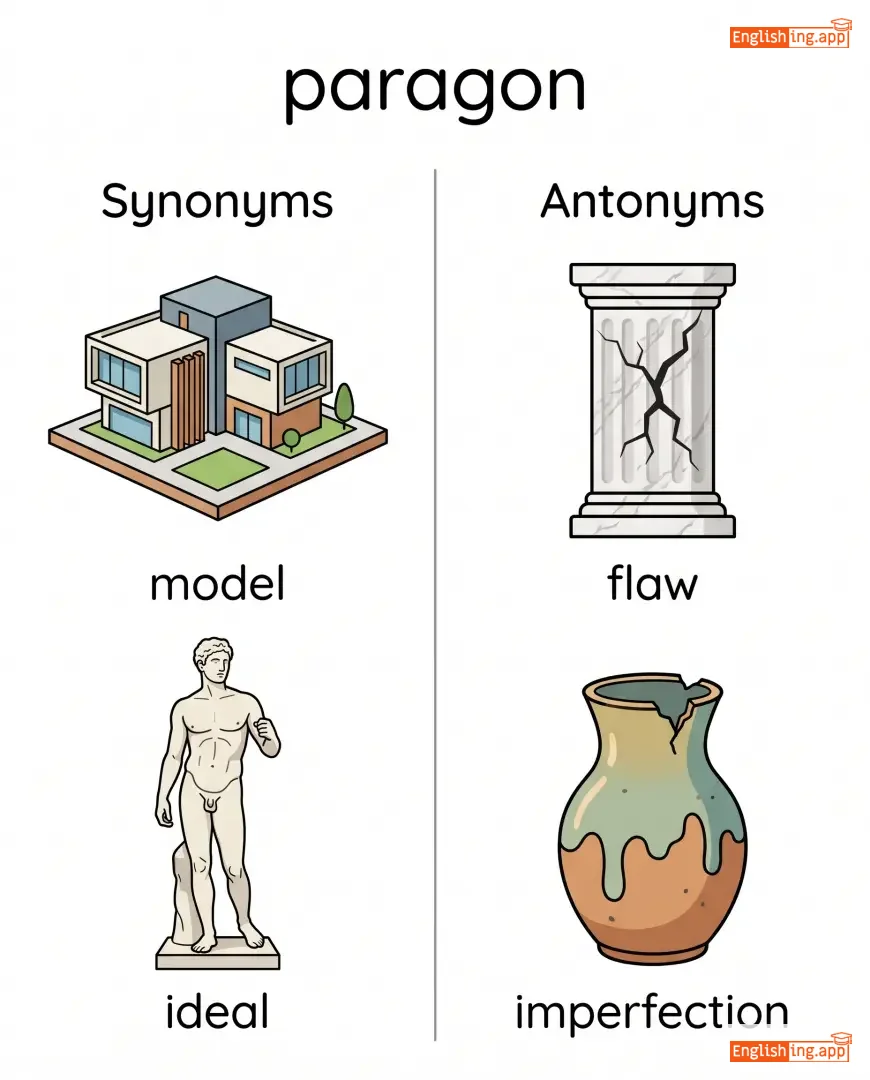
model, ideal, epitome, exemplar, perfection
••••••
|
flaw, imperfection, blemish
••••••
|
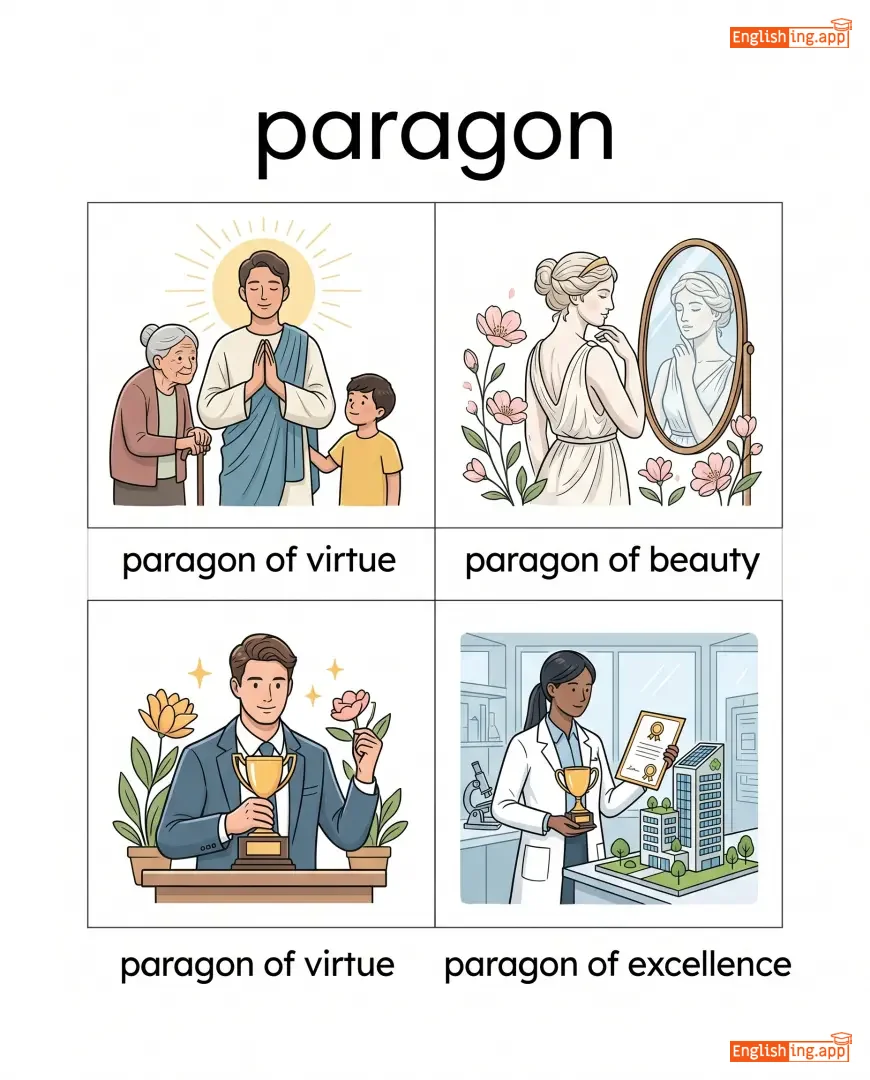
paragon of virtue, paragon of beauty, paragon of excellence
••••••
|
Paragon = 模範的な人物や物としての完璧な例。
••••••
|
Vocabulary Quiz
Test your vocabulary by matching words with their translations or meanings.
Login to take the quiz
Comments (0)
Share your thoughts and join the discussion.
Join the discussion by logging in
Login to CommentNo comments yet
Be the first to share your thoughts!