

翻訳
過去
過去分詞
三人称単数
動名詞
意味
例文
例文の翻訳
同義語
対義語
コロケーション
ニーモニック
Swipe left or right, or use the buttons. Tap image to zoom.
例文の翻訳
単語
Lesson 136Lesson 136 - マスクトグル
|
絵文字
|
単語 | Images | 翻訳 | 過去 | 過去分詞 | 三人称単数 | 動名詞 | 意味 | 例文 | 例文の翻訳 | 表現例 | 表現例の意味 | 表現例の翻訳 | 同義語 | 対義語 | コロケーション | ニーモニック |
|---|---|---|---|---|---|---|---|---|---|---|---|---|---|---|---|---|---|
|
#4051
🌑
|
/ˈhiːðənɪʃ/
adjective
(ヒースニッシュ)
••••••
|
- •••••• |
野蛮
yaban
••••••
|
- •••••• | - •••••• | - •••••• | - •••••• |
Lacking culture or religion; barbaric or uncivilized.
••••••
|
They considered the ancient tribe’s rituals heathenish.
彼らは古代部族の儀式を未開だと考えた。
••••••
|
彼らは古代部族の儀式を未開だと考えた。
Karera wa kodai buzoku no gishiki o mikai da to kangaeta.
••••••
|
- •••••• | - •••••• | - •••••• |
pagan, irreligious, uncivilized, barbaric
••••••
|
civilized, religious
••••••
|
heathenish behavior, heathenish practices, heathenish rituals
••••••
|
Heathenish = heath + ish → 野蛮または未開
••••••
|
|
#4052
⛑️
|
/ˈhɛl.mət/
noun
(ヘルメット)
••••••
|
- •••••• |
ヘルメット
herumetto
••••••
|
- •••••• | - •••••• | - •••••• | - •••••• |
a hard protective hat worn to protect the head
••••••
|
The rider put on his helmet before starting the motorcycle. |
ライダーはバイクを始める前にヘルメットをかぶった。
Raidaa wa baiku wo hajimeru mae ni herumetto wo kabutta.
••••••
|
- •••••• | - •••••• | - •••••• |
headgear, hardhat, cap, protective hat
••••••
|
bare head, uncovered
••••••
|
wear helmet, safety helmet, motorcycle helmet, protective helmet
••••••
|
ヘルメット = 頭 + メット = 頭を保護
••••••
|
|
#4053
🛳️
|
/hɛlm/
noun
(ヘルム)
••••••
|
- •••••• |
指導, 舵
shido, kaita
••••••
|
- •••••• | - •••••• | - •••••• | - •••••• |
a position of leadership or the steering apparatus of a ship
••••••
|
After years of service, she finally took the helm of the company. |
長年の奉仕の後、彼女はついに会社の指導を引き継ぎました。
Naganen no houshi no ato, kanojo wa tsuini kaisha no shidou wo hikitsugimashita.
••••••
|
at the helm |
in control or in charge of something
••••••
|
舵を取る
kaita wo toru
••••••
|
control, leadership, command, tiller
••••••
|
subordination, follower
••••••
|
at the helm, take the helm, helm of the ship, company helm
••••••
|
Helm は助ける (help) ように指示を出す
••••••
|
|
#4054
💍
|
/ˈɛər.luːm/
noun
(ヘアルーム)
••••••
|
- •••••• |
遺産
isan
••••••
|
- •••••• | - •••••• | - •••••• | - •••••• |
a valuable object that has belonged to a family for several generations
••••••
|
The ring is a family heirloom passed down from her grandmother. |
その指輪は祖母から受け継がれた家族の遺産です。
Sono yubiwa wa sobo kara uketsugareta kazoku no isan desu.
••••••
|
- •••••• | - •••••• | - •••••• |
inheritance, legacy, patrimony, relic
••••••
|
new item, disposable item
••••••
|
family heirloom, treasured heirloom, precious heirloom, antique heirloom
••••••
|
Heir + loom = 遺産を代々受け継ぐ貴重な物
••••••
|
|
#4055
😈
|
/ˈheɪ.nəs/
adjective
(ヘイナス)
••••••
|
- •••••• |
凶悪
kyōaku
••••••
|
- •••••• | - •••••• | - •••••• | - •••••• |
extremely wicked, deeply offensive, or shockingly evil
••••••
|
The dictator was condemned for his heinous crimes against humanity. |
独裁者は人道に対する凶悪な犯罪で非難された。
Dokusai-sha wa jindō ni taisuru kyōaku na hanzai de hinan sareta.
••••••
|
- •••••• | - •••••• | - •••••• |
atrocious, monstrous, horrific, vile, egregious
••••••
|
noble, admirable, good
••••••
|
heinous crime, heinous act, heinous offense, heinous deed
••••••
|
Heinous = 凶悪な犯罪
••••••
|
|
#4056
🐄
|
/ˈhɛfər/
noun
(ヘイファー)
••••••
|
- •••••• |
雌牛
mesu ushi
••••••
|
- •••••• | - •••••• | - •••••• | - •••••• |
a young cow that has not borne a calf
••••••
|
The farmer raised a heifer for dairy production.
農家は乳製品の生産のためにヘイファーを育てました。
••••••
|
農家は乳製品の生産のためにヘイファーを育てました。
Nōka wa nyūseihin no seisan no tame ni heifā o sodatemashita.
••••••
|
- •••••• | - •••••• | - •••••• |
young cow, calf, bovine
••••••
|
bull, ox
••••••
|
raise a heifer, dairy heifer, heifer calf
••••••
|
Heifer は雌牛 🐄—heifer, 乳製品を作る若い雌牛。
••••••
|
|
#4057
🚶♂️
|
/ˈhɛdʒɪrə/ or /hɪˈdʒaɪrə/
noun
(ヘジラ)
••••••
|
- •••••• |
移住, 亡命
ijuu, boumei
••••••
|
- •••••• | - •••••• | - •••••• | - •••••• |
a journey, especially when undertaken to escape from a dangerous or undesirable situation
••••••
|
The refugees began their hegira across the desert. |
難民たちは砂漠を越えて移住を始めた。
Nanmin-tachi wa sabaku o koete ijiu o hajimeta.
••••••
|
- •••••• | - •••••• | - •••••• |
exodus, flight, escape, migration
••••••
|
arrival, stay
••••••
|
hegira from danger, long hegira, desert hegira
••••••
|
ヘジラは亡命のようなもの—危険から逃れるための旅 🚶♂️.
••••••
|
|
#4058
👑
|
/hɪˈdʒɛməni/ or /ˈhɛdʒəmoʊni/
noun
(ヘゲモニー)
••••••
|
- •••••• |
覇権
haken
••••••
|
- •••••• | - •••••• | - •••••• | - •••••• |
leadership or dominance, especially by one state or group over others
••••••
|
The empire maintained its hegemony over neighboring states. |
帝国は隣国に対してその覇権を維持した。
Teikoku wa ringoku ni taishite sono haken o iji shita.
••••••
|
- •••••• | - •••••• | - •••••• |
dominance, supremacy, authority, control, power
••••••
|
subordination, weakness, inferiority
••••••
|
political hegemony, cultural hegemony, economic hegemony
••••••
|
覇権はリーダーとして他の全てを支配する力を意味します。
••••••
|
|
#4059
😒
|
/ˈhiːdləs/
adjective
(ヒードレス)
••••••
|
- •••••• |
無頓着
mutonchaku
••••••
|
- •••••• | - •••••• | - •••••• | - •••••• |
showing a reckless lack of care or attention
••••••
|
He drove with heedless disregard for the rules. |
彼はルールを無視して運転した。
Kare wa rūru o mushi shite unten shita.
••••••
|
- •••••• | - •••••• | - •••••• |
careless, reckless, inattentive, negligent
••••••
|
careful, cautious, attentive
••••••
|
heedless behavior, heedless actions, heedless disregard
••••••
|
Heedlessはheed(注意)を欠いた状態、だから無頓着。
••••••
|
|
#4060
👂
|
/hiːd/
verb
(ヒード)
••••••
|
- •••••• |
注意を払う
chuui wo harau
••••••
|
heeded
ヒーデッド
••••••
|
heeded
ヒーデッド
••••••
|
heeds
ヒーズ
••••••
|
heeding
ヒーディング
••••••
|
to pay attention to; to take notice of
••••••
|
You should heed the teacher's advice.
あなたは先生のアドバイスに耳を傾けるべきです。
••••••
|
あなたは先生のアドバイスに耳を傾けるべきです。
Anata wa sensei no adobaisu ni mimi wo katamukeru beki desu.
••••••
|
heed the call
呼びかけに応じる
••••••
|
to respond to or take notice of an appeal or demand
••••••
|
呼びかけに応じる
yobikake ni oujiru
••••••
|
notice, observe, mind, regard, attend
••••••
|
ignore, disregard, neglect
••••••
|
heed advice, heed warning, heed call, heed instructions
••••••
|
Heed は注意を払う意味です—呼びかけに耳を傾けよう(👂)。
••••••
|
|
#4061
😌
|
/ˈhiːdənɪst/
noun
(ヘドニスト)
••••••
|
- •••••• |
快楽主義者
kairakushugisha
••••••
|
- •••••• | - •••••• | - •••••• | - •••••• |
A person who believes that the pursuit of pleasure is the most important thing in life.
••••••
|
She was called a hedonist because she always prioritized enjoyment over duty. |
彼女は常に義務よりも楽しみを優先していたため、快楽主義者と呼ばれました。
Kanojo wa tsuneni gimu yori mo tanoshimi o yūsen shite ita tame, kairaku shugisha to yobaremashita.
••••••
|
- •••••• | - •••••• | - •••••• |
pleasure-seeker, epicure, sensualist, sybarite
••••••
|
ascetic, puritan
••••••
|
true hedonist, modern hedonist, lifestyle of a hedonist
••••••
|
快楽主義者 = Head + Honest = すべては楽しみのために
••••••
|
|
#4062
🍷
|
/ˈhiːdəˌnɪzəm/
noun
(ヘドニズム)
••••••
|
- •••••• |
快楽主義
kairakushugi
••••••
|
- •••••• | - •••••• | - •••••• | - •••••• |
The pursuit of pleasure and self-indulgence as the highest goal.
••••••
|
The lifestyle of the rich is often criticized as pure hedonism. |
金持ちのライフスタイルはしばしば純粋な快楽主義として批判されます。
Kanemochi no raifusutairu wa shibashiba junsuina kairakushugi to shite hihansaremasu.
••••••
|
- •••••• | - •••••• | - •••••• |
self-indulgence, pleasure-seeking, sensualism, luxury
••••••
|
asceticism, self-denial, restraint
••••••
|
modern hedonism, pure hedonism, philosophy of hedonism
••••••
|
ヘドニズム = 'Head on' 快楽を追い求める
••••••
|
|
#4063
🌳
|
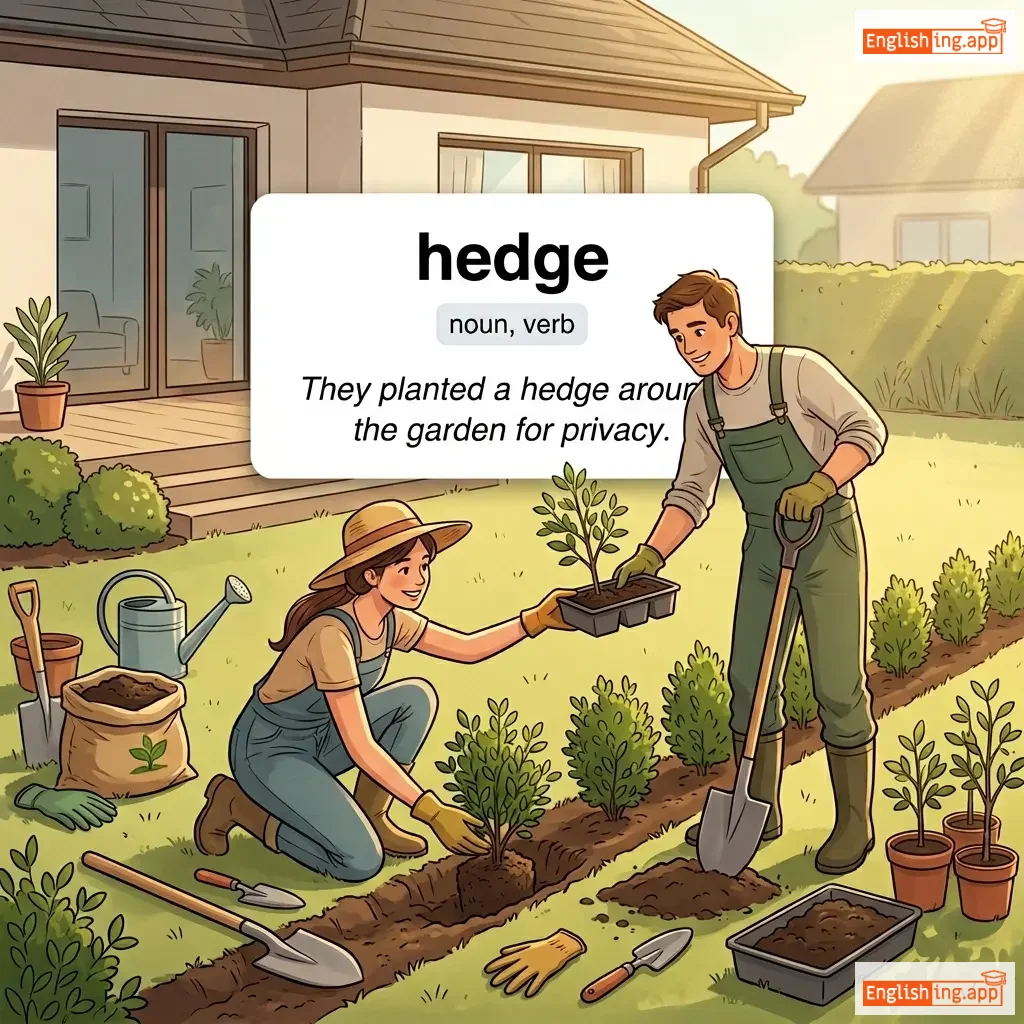
/hɛdʒ/
noun, verb
(ヘッジ)
••••••
|
|
生け垣
ikegaki
••••••
|
hedged
ヘッジド
••••••
|
hedged
ヘッジド
••••••
|
hedges
ヘッジズ
••••••
|
hedging
ヘッジング
••••••
|
A fence or boundary formed by closely planted shrubs; also, to limit or qualify a statement.
••••••
|
They planted a hedge around the garden for privacy.
プライバシーのために庭の周りに生け垣を植えました。
••••••
|
プライバシーのために庭の周りに生け垣を植えました。
Puraibashī no tame ni niwa no mawari ni ikegaki wo uemashita.
••••••
|
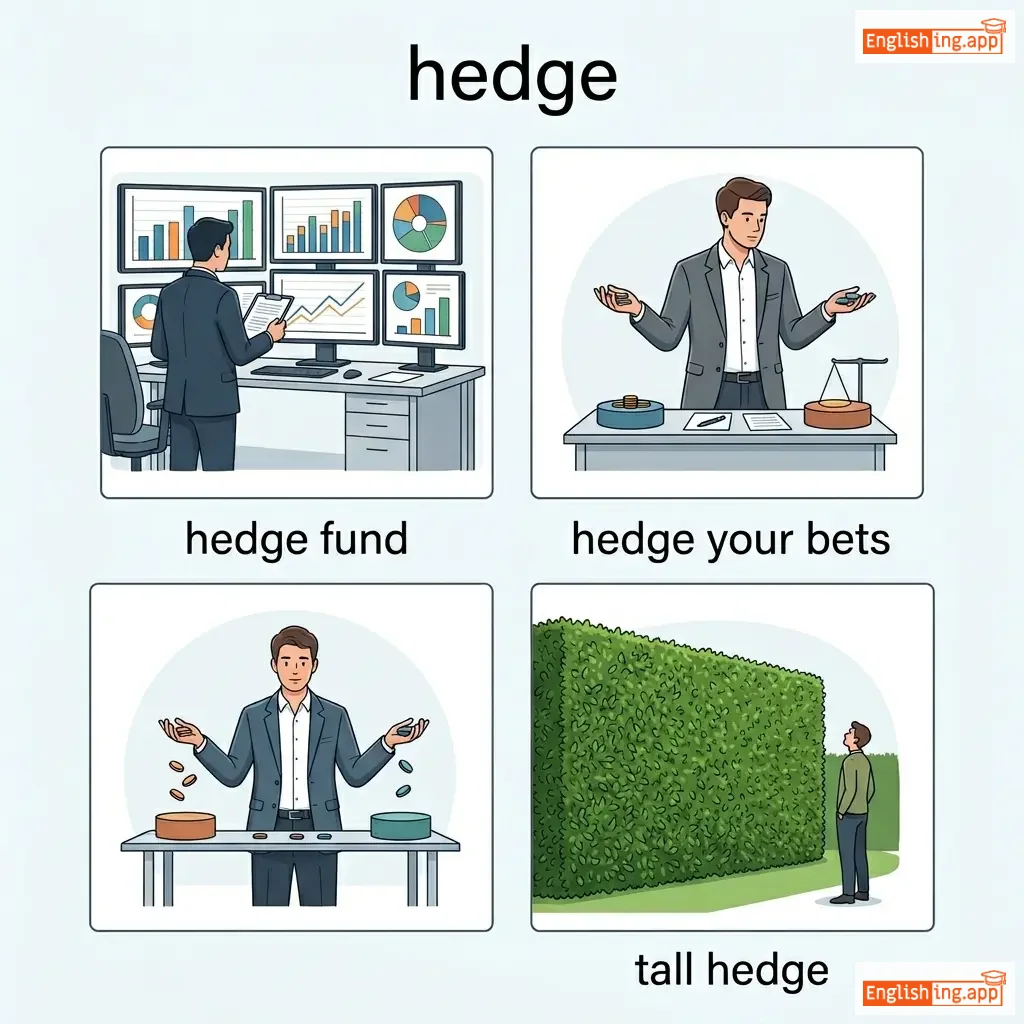
hedge your bets
賭けを分ける
••••••
|
To reduce risk by choosing several options instead of relying on one.
••••••
|
賭けを分ける
kake wo wakeru
••••••
|
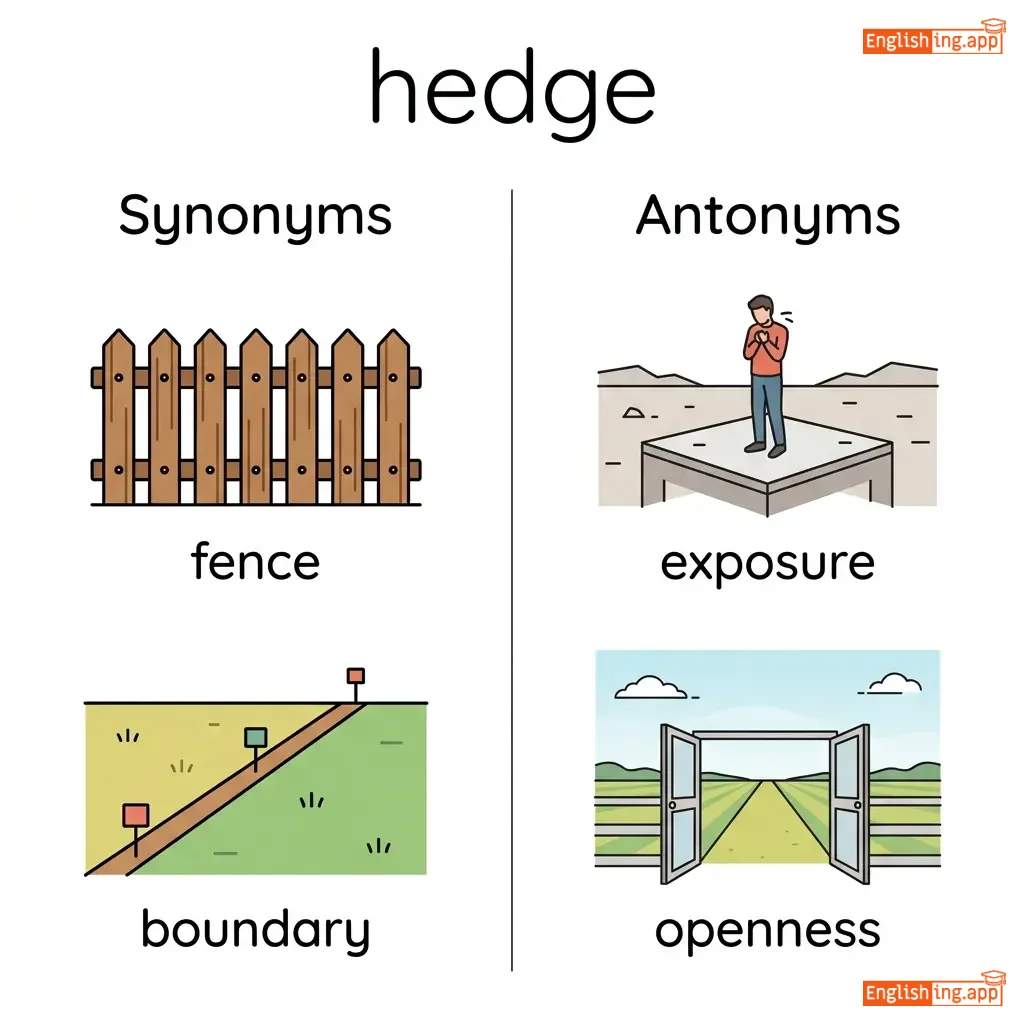
fence, boundary, barrier, safeguard
••••••
|
exposure, openness
••••••
|
hedge fund, hedge your bets, tall hedge, hedge against
••••••
|
Hedge = あなたのプライバシーを守るために生け垣を作る
••••••
|
|
#4064
😡
|
/ˈhɛktər/
verb
(ヘクター)
••••••
|
- •••••• |
脅して話す
osorete hanasu
••••••
|
hectored
ヘクタード
••••••
|
hectored
ヘクタード
••••••
|
hectors
ヘクターズ
••••••
|
hectoring
ヘクタリング
••••••
|
To talk to someone in a bullying or intimidating way.
••••••
|
The manager hectored the staff into working overtime.
マネージャーはスタッフに残業をさせるためにヘクタードしました。
••••••
|
マネージャーはスタッフに残業をさせるために脅しました。
Manējā wa sutaffu ni zangyō o saseru tame ni odoshimashita.
••••••
|
- •••••• | - •••••• | - •••••• |
bully, intimidate, browbeat, domineer
••••••
|
encourage, support, assist
••••••
|
hector into, constantly hector, hectoring tone
••••••
|
Hectorは脅して話すことを意味します。Hectorはいつも脅すように話します。
••••••
|
|
#4065
🙄
|
/ˈhɛklər/
noun
(ヘクラー)
••••••
|
- •••••• |
野次を飛ばす人
yaji o tobasu hito
••••••
|
- •••••• | - •••••• | - •••••• | - •••••• |
A person who interrupts a speaker with rude or aggressive comments.
••••••
|
The politician remained calm despite the heckler shouting from the crowd. |
政治家は群衆から叫んでいたヘクラーにもかかわらず冷静を保ちました。
Seijika wa gunshū kara sakendeta hekurā ni mo kakawarazu reisei o tamochimashita.
••••••
|
- •••••• | - •••••• | - •••••• |
disrupter, interrupter, agitator, critic, protester
••••••
|
supporter, admirer
••••••
|
angry heckler, disruptive heckler, silence the heckler
••••••
|
Heckler = Heku (ヘク) 野次を飛ばす人
••••••
|
|
#4066
🌪️
|
/ˈhævək/
noun
(ハヴォック)
••••••
|
- •••••• |
大混乱
daikonran
••••••
|
- •••••• | - •••••• | - •••••• | - •••••• |
widespread destruction or disorder
••••••
|
The storm caused havoc in the coastal villages. |
嵐は沿岸の村々に大混乱を引き起こしました。
Arashi wa engan no muramura ni daikonran o hikiokoshimashita.
••••••
|
wreak havoc |
to cause great damage or chaos
••••••
|
大混乱を引き起こす
daikonran o hikiokosu
••••••
|
devastation, destruction, chaos, ruin, mayhem
••••••
|
order, peace, harmony
••••••
|
wreak havoc, cause havoc, havoc on the economy, havoc of war
••••••
|
Havocは大混乱を意味します。暴風雨がすべての'Have'を吹き飛ばす様子を想像してください。
••••••
|
|
#4067
💔
|
/ˈhɑːrtˌrɛndɪŋ/
adjective
(ハートレンディング)
••••••
|
- •••••• |
胸が張り裂けるような
mune ga harisakeru you na
••••••
|
- •••••• | - •••••• | - •••••• | - •••••• |
Causing great sadness or distress; very moving emotionally.
••••••
|
The documentary showed heartrending scenes of war victims.
ドキュメンタリーは戦争の犠牲者たちの胸が張り裂けるような場面を見せました。
••••••
|
ドキュメンタリーは戦争の犠牲者たちの胸が張り裂けるような場面を見せました。
Dokyumentarī wa sensō no gisei-sha-tachi no mune ga harisakeru yō na bamen o misemashita.
••••••
|
- •••••• | - •••••• | - •••••• |
moving, touching, heartbreaking, poignant, distressing
••••••
|
comforting, uplifting
••••••
|
heartrending story, heartrending cry, heartrending scene
••••••
|
Heart + Rending = 胸が張り裂けるような、心が引き裂かれる
••••••
|
|
#4068
❤️
|
/ˈhɑːrtən/
verb
(ハートン)
••••••
|
- •••••• |
勇気づける
yūki dzukeru
••••••
|
heartened
ハートンド
••••••
|
heartened
ハートンド
••••••
|
heartens
ハートンズ
••••••
|
heartening
ハートニング
••••••
|
To give courage, confidence, or hope.
••••••
|
The teacher’s encouragement heartened the students.
先生の励ましは学生たちに勇気を与えた。
••••••
|
先生の励ましは学生たちに勇気を与えた。
Sensei no hagemashi wa gakusei-tachi ni yūki o ataeta.
••••••
|
- •••••• | - •••••• | - •••••• |
encourage, inspire, cheer, uplift
••••••
|
discourage, dishearten
••••••
|
hearten by, hearten someone, hearten the team
••••••
|
Heart + 勇気 = 勇気づける、心を強くする
••••••
|
|
#4069
👂
|
/ˈhɑːrkən/
verb
(ハーケン)
••••••
|
- •••••• |
注意深く聞く
chūibukaku kiku
••••••
|
hearkened
ハーケンド
••••••
|
hearkened
ハーケンド
••••••
|
hearkens
ハーケンス
••••••
|
hearkening
ハーケニング
••••••
|
To listen attentively; to give heed.
••••••
|
He would hearken to his mentor’s advice before making decisions.
彼は意思決定を下す前に、メンターのアドバイスに耳を傾けた。
••••••
|
彼は意思決定を下す前に、メンターのアドバイスに耳を傾けた。
Kare wa ishikettei o kudasu mae ni, mentā no adobaisu ni mimi o katamuketa.
••••••
|
- •••••• | - •••••• | - •••••• |
listen, attend, heed, observe
••••••
|
ignore, neglect
••••••
|
hearken to, hearken back, hearken carefully
••••••
|
Hear + 聞く (kiku) = Hearken → 注意深く聞く
••••••
|
|
#4070
🍎
|
/ˈhɛlθi/
adjective
(ハピネス)
••••••
|
|
幸せ
shiawase
••••••
|
- •••••• | - •••••• | - •••••• | - •••••• |
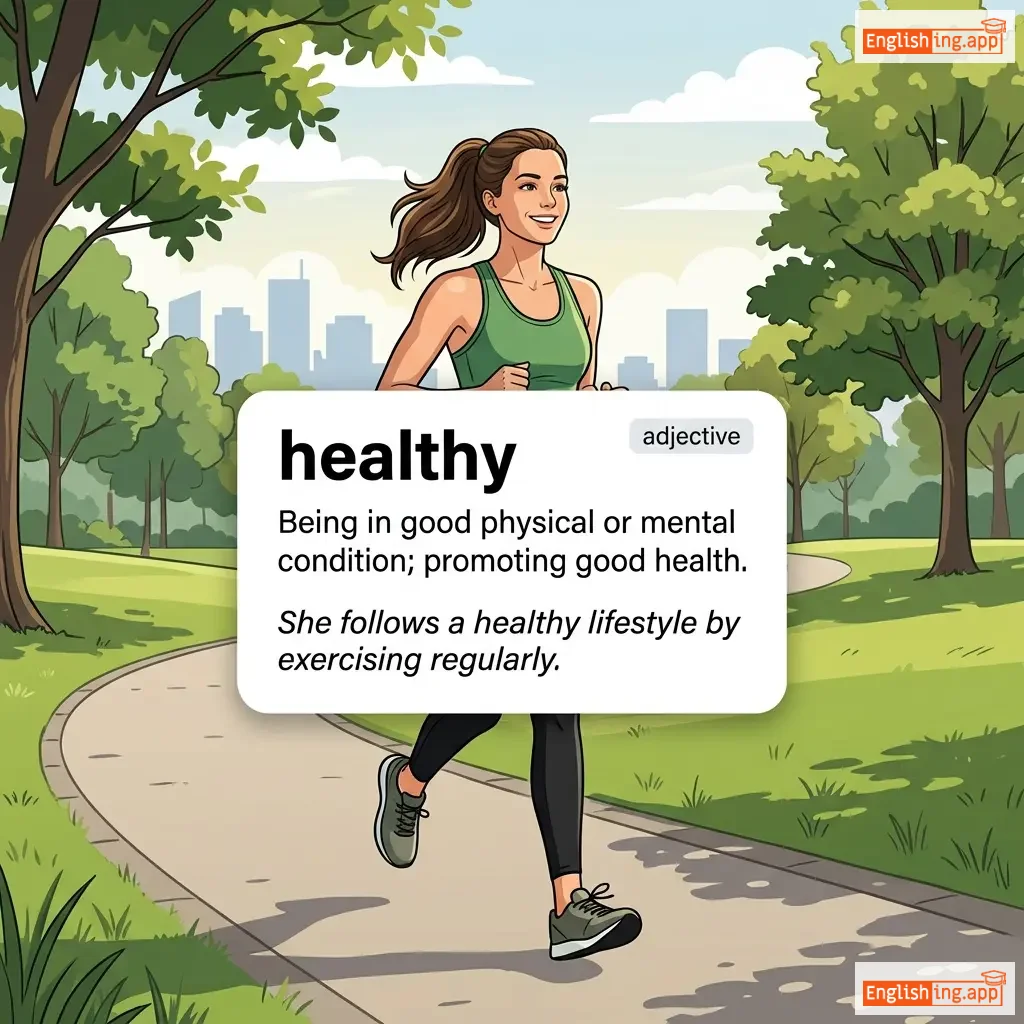
Being in good physical or mental condition; promoting good health.
••••••
|
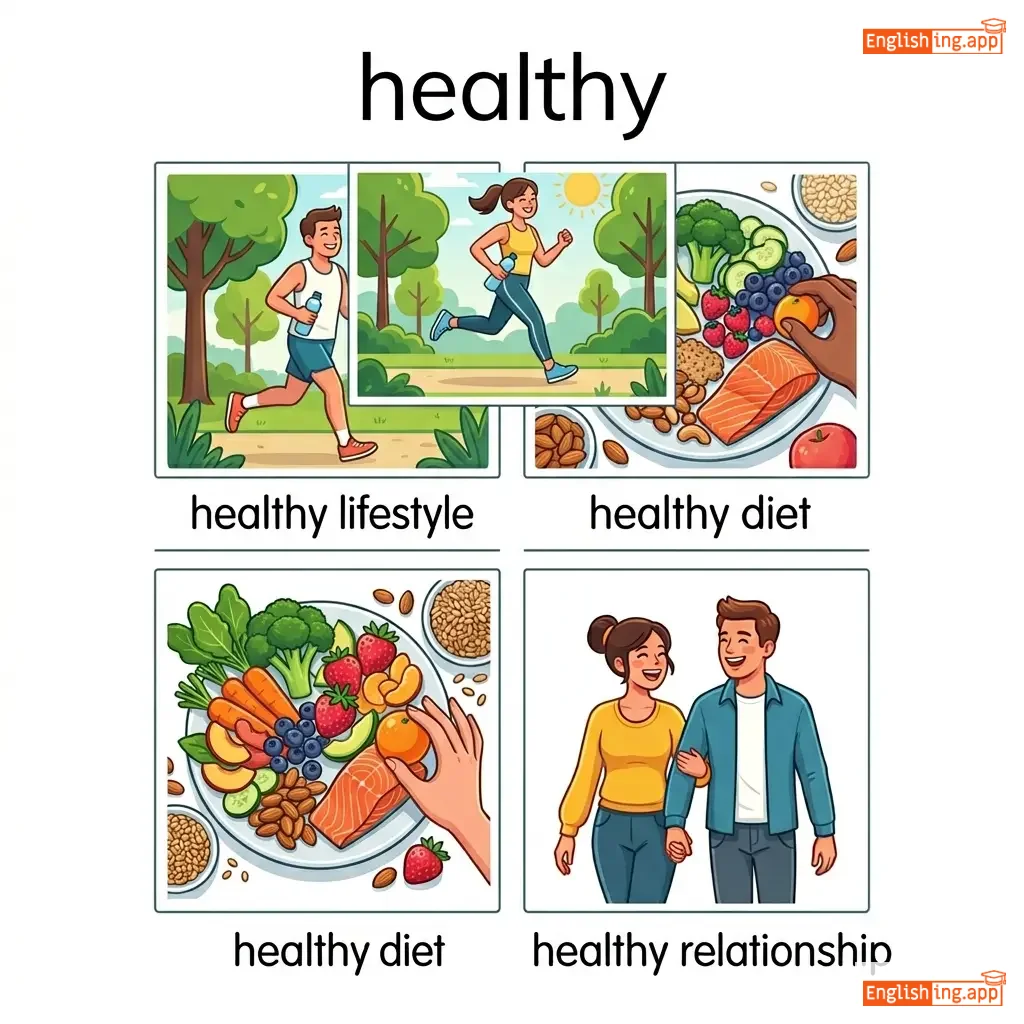
She follows a healthy lifestyle by exercising regularly.
彼女は賞を受け取ったとき、幸せを隠すことができませんでした。
••••••
|
彼女は賞を受け取ったとき、幸せを隠すことができませんでした。
Kanojo wa shō o uketotta toki, shiawase o kakusu koto ga dekimasen deshita.
••••••
|
healthy competition
幸せの追求
••••••
|
A form of competition that is fair and encourages improvement.
••••••
|
幸せの追求
shiawase no tsuikyū
••••••
|
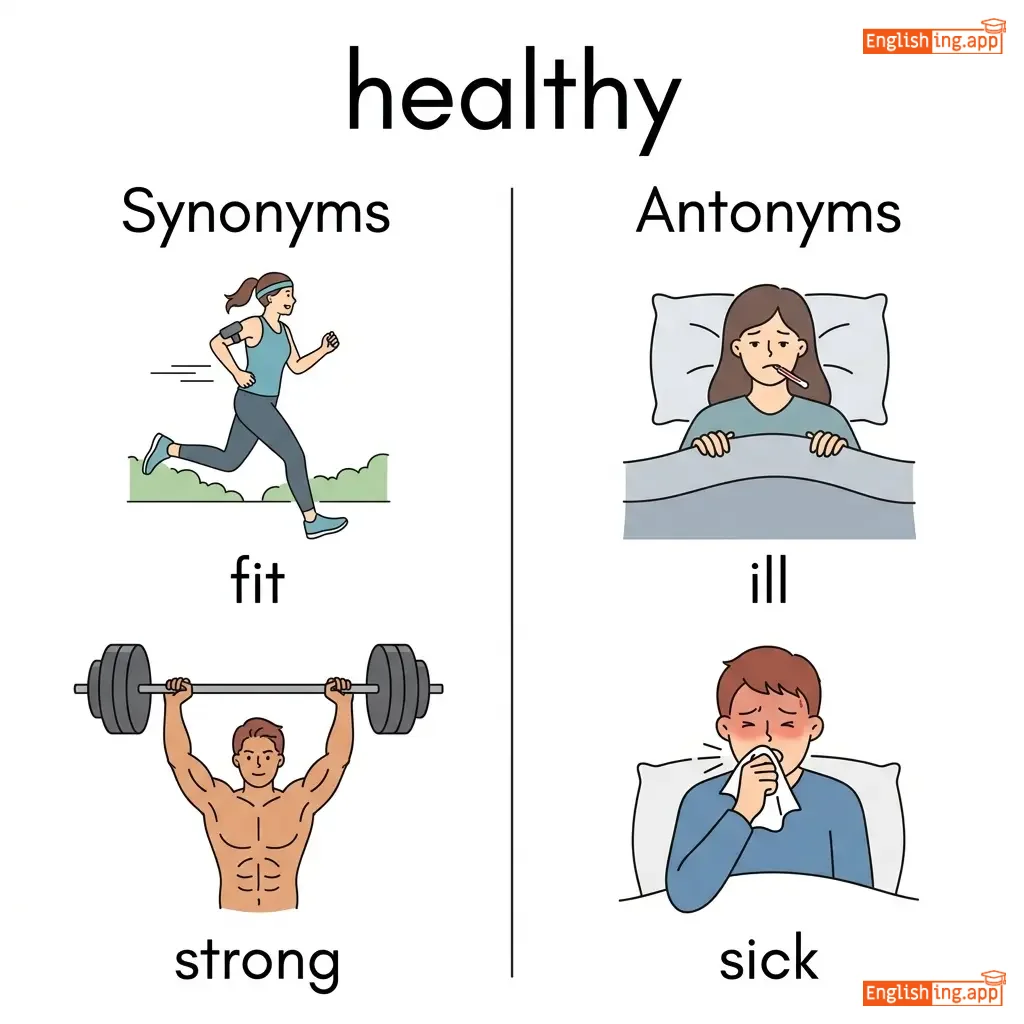
fit, strong, well, robust, sound
••••••
|
ill, sick, weak
••••••
|
healthy lifestyle, healthy diet, healthy relationship, healthy environment
••••••
|
幸せ = 喜びや満足を感じること
••••••
|
|
#4071
🥦
|
/ˈhɛlθfəl/
adjective
(ヘルスフル)
••••••
|
- •••••• |
健康的な
kenkōtekina
••••••
|
- •••••• | - •••••• | - •••••• | - •••••• |
Promoting good health; beneficial to health.
••••••
|
A healthful diet includes fresh fruits and vegetables. |
健康的な食事には新鮮な果物と野菜が含まれています。
Kenkōtekina shokuji ni wa shinsen na kudamono to yasai ga fukumareteimasu.
••••••
|
- •••••• | - •••••• | - •••••• |
wholesome, nutritious, beneficial, salubrious
••••••
|
unhealthy, harmful, injurious
••••••
|
healthful diet, healthful lifestyle, healthful exercise
••••••
|
Healthful は健康に良いので、健康的な食事で健康を保つ
••••••
|
|
#4072
🌸
|
/ˈhɛdi/
adjective
(hedi)
••••••
|
- •••••• |
酔わせる
yoaseru
••••••
|
- •••••• | - •••••• | - •••••• | - •••••• |
Exciting or intoxicating; having a strong or exhilarating effect.
••••••
|
The heady aroma of the flowers filled the room.
花の酔わせる香りが部屋を満たした。
••••••
|
花の酔わせる香りが部屋を満たした。
Hana no yoaseru kaori ga heya o mitashita.
••••••
|
- •••••• | - •••••• | - •••••• |
intoxicating, thrilling, exciting, stimulating
••••••
|
dull, boring, depressing
••••••
|
heady aroma, heady excitement, heady atmosphere
••••••
|
Heady smell は強烈な香りを意味し、酔わせるような効果があります。
••••••
|
|
#4073
🐂
|
/ˈhɛdˌstrɔŋ/
adjective
(ヘッドストロング)
••••••
|
- •••••• |
頑固
ganko
••••••
|
- •••••• | - •••••• | - •••••• | - •••••• |
Determined to do what one wants, even if it is not sensible.
••••••
|
The headstrong child refused to listen to anyone.
ザ ヘッドストロング チャイルド リフューズド トゥ リスン トゥ エニワン。
••••••
|
頑固な子供は誰の話も聞こうとしませんでした。
Ganko na kodomo wa dare no hanashi mo kiko to shimasen deshita.
••••••
|
- •••••• | - •••••• | - •••••• |
stubborn, willful, obstinate, determined
••••••
|
obedient, flexible, compliant
••••••
|
headstrong child, headstrong attitude, headstrong personality
••••••
|
Head strongは頑固と同じ意味 – 自分の意志に固執する。
••••••
|
|
#4074
🏃♂️
|
/ˈhɛdˌlɔŋ/
adverb
(ヘッドロング)
••••••
|
- •••••• |
無鉄砲に
mutappou ni
••••••
|
- •••••• | - •••••• | - •••••• | - •••••• |
With the head leading; in a rush or without thinking.
••••••
|
She rushed headlong into the new project.
彼女は新しいプロジェクトに頭から飛び込んだ。
••••••
|
彼女は無鉄砲に新しいプロジェクトに飛び込んだ。
Kanojo wa mutappou ni atarashii purojekuto ni tobikonda.
••••••
|
- •••••• | - •••••• | - •••••• |
recklessly, hastily, rashly, precipitously
••••••
|
thoughtfully, cautiously
••••••
|
rush headlong, plunge headlong, headlong flight
••••••
|
Headlongは無鉄砲に、考えずに突進することです。
••••••
|
|
#4075
🤿
|
/ˌhɛdˈfɜrst/
adverb
(ヘッドファースト)
••••••
|
- •••••• |
頭から
atama kara
••••••
|
- •••••• | - •••••• | - •••••• | - •••••• |
With the head leading; in a reckless or hasty manner.
••••••
|
He dived headfirst into the pool.
彼は頭から飛び込んだ。
••••••
|
彼は頭から飛び込んだ。
Kare wa atama kara tobikonda.
••••••
|
- •••••• | - •••••• | - •••••• |
recklessly, impulsively, rashly, hurriedly
••••••
|
cautiously, carefully
••••••
|
dive headfirst, jump headfirst, plunge headfirst
••••••
|
頭 (atama) が先にくることで、無謀な行動が意味されます。
••••••
|
|
#4076
🌫️
|
/ˈheɪzi/
adjective
(heizi)
••••••
|
- •••••• |
かすんだ
kasunda
••••••
|
- •••••• | - •••••• | - •••••• | - •••••• |
Unclear, misty, or not easy to see; also vague or uncertain.
••••••
|
The mountains looked hazy in the morning light. |
朝の光の中で山々はかすんで見えた。
Asa no hikari no naka de yamayama wa kasunde mieta.
••••••
|
a hazy memory |
a memory that is unclear or vague
••••••
|
かすんだ記憶
kasunda kioku
••••••
|
foggy, misty, blurry, unclear, vague
••••••
|
clear, bright, distinct
••••••
|
hazy sky, hazy morning, hazy view, hazy memory
••••••
|
Hazy みたいに、かすんでいて何もはっきりしない。
••••••
|
|
#4077
☣️
|
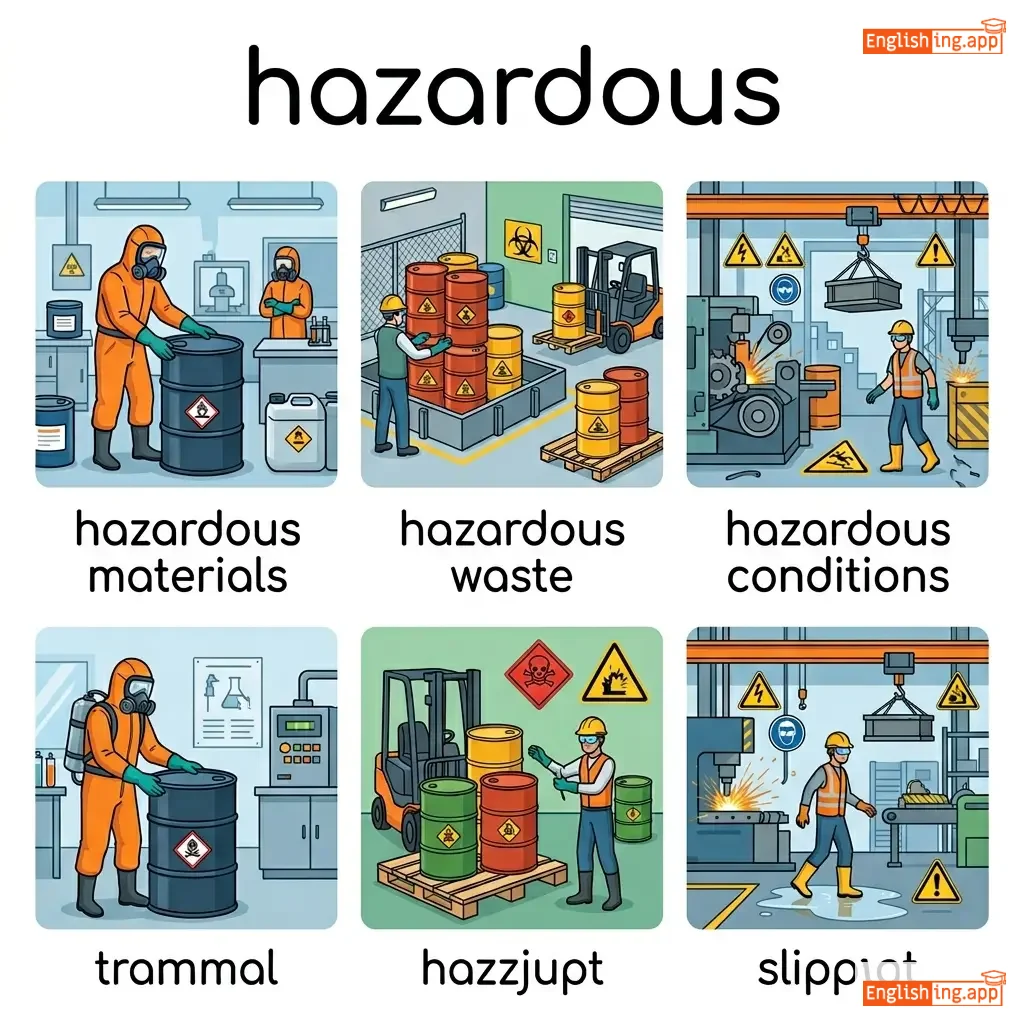
/ˈhæzərdəs/
adjective
(ハザードス)
••••••
|
|
危険な
kiken na
••••••
|
- •••••• | - •••••• | - •••••• | - •••••• |
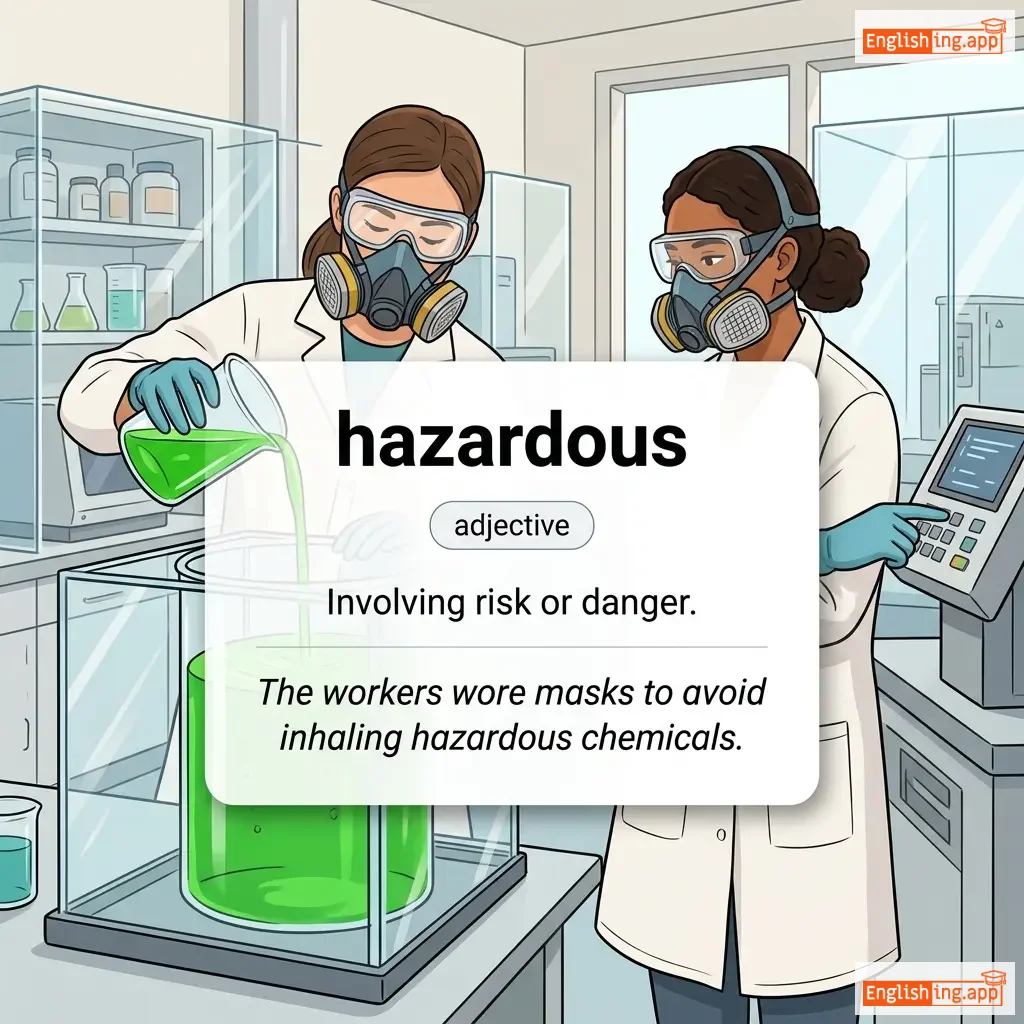
Involving risk or danger.
••••••
|
The workers wore masks to avoid inhaling hazardous chemicals.
作業員は有害な化学物質を吸い込まないようにマスクを着用していました。
••••••
|
作業員は有害な化学物質を吸い込まないようにマスクを着用していました。
Sagyouin wa yūgaina kagaku busshitsu o suikomanaio masku o chakuyou shiteimashita.
••••••
|
- •••••• | - •••••• | - •••••• |
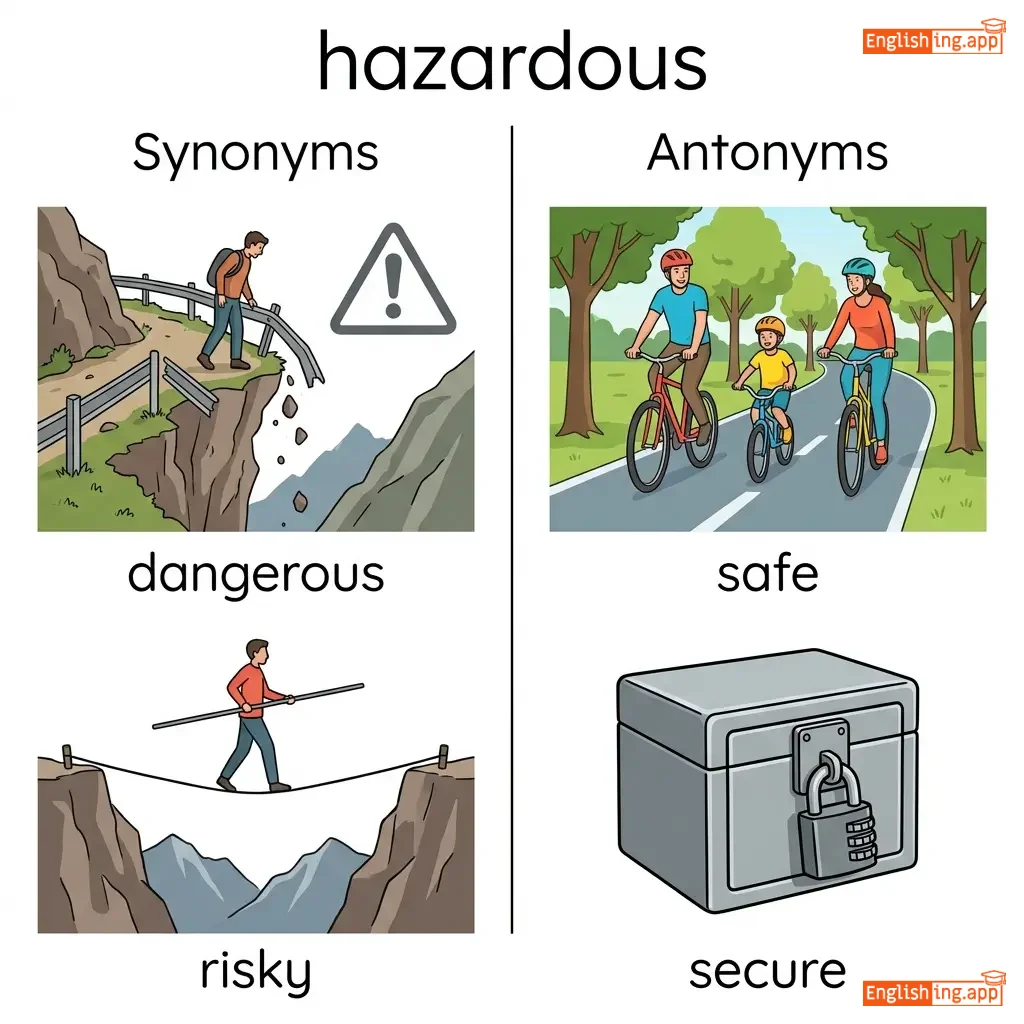
dangerous, risky, unsafe, perilous, harmful
••••••
|
safe, secure, harmless
••••••
|
hazardous materials, hazardous waste, hazardous conditions, hazardous chemicals
••••••
|
Hazard + ous = 危険を伴う → hazardous = 危険な.
••••••
|
|
#4078
⚠️
|
/ˈhæzərd/
noun
(ハザード)
••••••
|
- •••••• |
危険
kiken
••••••
|
- •••••• | - •••••• | - •••••• | - •••••• |
A danger or risk.
••••••
|
Wet floors are a common hazard in the workplace.
濡れた床は職場でよくある危険です。
••••••
|
濡れた床は職場でよくある危険です。
Nureta yuka wa shokuba de yoku aru kiken desu.
••••••
|
at your own hazard
自分の責任で
••••••
|
at your own risk or responsibility
••••••
|
自分の責任で
Jibun no sekinin de
••••••
|
danger, risk, threat, peril, menace
••••••
|
safety, security, protection
••••••
|
fire hazard, safety hazard, health hazard, potential hazard
••••••
|
Hazardは危険を意味します、警告サイン⚠️を見たら注意しましょう。
••••••
|
|
#4079
🌸
|
/ˈhɔːθɔːrn/
noun
(ホーソーン)
••••••
|
- •••••• |
とげのある低木
toge no aru teboku
••••••
|
- •••••• | - •••••• | - •••••• | - •••••• |
A thorny shrub or small tree with white or pink flowers, often used for hedges.
••••••
|
The garden was lined with blooming hawthorn bushes.
庭園は花が咲くホーソーンの茂みで囲まれていました。
••••••
|
庭園は花が咲くホーソーンの茂みで囲まれていました。
Teien wa hana ga saku hōsōn no shigemi de kakomarete imashita.
••••••
|
- •••••• | - •••••• | - •••••• |
shrub, tree, hedge, bush
••••••
|
none, barren
••••••
|
hawthorn bush, hawthorn hedge, blooming hawthorn, hawthorn flowers
••••••
|
ホーソーンはとげのある低木、庭を囲む花を想像してください。
••••••
|
|
#4080
🪢
|
/ˈhɔːzər/
noun
(ハウザー)
••••••
|
- •••••• |
船を繋ぐための太いロープ
fune o tsunagu tame no futoi rōpu
••••••
|
- •••••• | - •••••• | - •••••• | - •••••• |
A thick rope or cable used in mooring or towing a ship.
••••••
|
The sailors secured the ship to the dock with a heavy hawser. |
船員たちは重いハウザーを使って船をドックに固定しました。
Sen'in-tachi wa omoi hawzā o tsukatte fune o dokku ni kotei shimashita.
••••••
|
- •••••• | - •••••• | - •••••• |
rope, cable, line, cord, towline
••••••
|
thread, string
••••••
|
heavy hawser, mooring hawser, tow hawser, secure with hawser
••••••
|
船に繋がる太いロープ = hawser.
••••••
|
Vocabulary Quiz
Test your vocabulary by matching words with their translations or meanings.
Login to take the quiz
Comments (0)
Share your thoughts and join the discussion.
Join the discussion by logging in
Login to CommentNo comments yet
Be the first to share your thoughts!