

翻訳
過去
過去分詞
三人称単数
動名詞
意味
例文
例文の翻訳
同義語
対義語
コロケーション
ニーモニック
Swipe left or right, or use the buttons. Tap image to zoom.
例文の翻訳
単語
Lesson 350Lesson 350 - マスクトグル
|
絵文字
|
単語 | Images | 翻訳 | 過去 | 過去分詞 | 三人称単数 | 動名詞 | 意味 | 例文 | 例文の翻訳 | 表現例 | 表現例の意味 | 表現例の翻訳 | 同義語 | 対義語 | コロケーション | ニーモニック |
|---|---|---|---|---|---|---|---|---|---|---|---|---|---|---|---|---|---|
|
#10465
🍺
|
/bɪər/
noun
(ビール)
••••••
|
- •••••• |
ビール
biiru
••••••
|
- •••••• | - •••••• | - •••••• | - •••••• |
An alcoholic drink made from yeast-fermented malt flavored with hops.
••••••
|
He ordered a glass of cold beer at the bar.
彼はバーで冷たいビールを注文した。
••••••
|
彼はバーで冷たいビールを注文した。
Kare wa bā de tsumetai biiru o chūmon shita.
••••••
|
beer belly
ビール腹
••••••
|
A large stomach caused by drinking too much beer.
••••••
|
ビール腹
biiru bara
••••••
|
ale, lager, brew, pint
••••••
|
water, juice
••••••
|
cold beer, draft beer, bottle of beer, beer mug
••••••
|
ビール、冷たくて美味しい飲み物。乾杯!
••••••
|
|
#10466
👍
|
/ˈbɛtər/
adjective, adverb, verb
••••••
|
- •••••• | - •••••• |
bettered
••••••
|
bettered
••••••
|
betters
••••••
|
bettering
••••••
|
of a more excellent or effective type or quality; to surpass or improve
••••••
|
He felt better after taking the medicine. |
- •••••• |
better late than never |
It is better to do something late than not do it at all.
••••••
|
- •••••• |
improved, superior, greater, finer, enhanced
••••••
|
worse, inferior, poorer
••••••
|
better chance, better understanding, better option, feel better
••••••
|
No •••••• |
|
#10467
🎲
|
/bɛt/
verb, noun
(ベット)
••••••
|
|
賭ける
kakeru
••••••
|
bet
ベット
••••••
|
bet
ベット
••••••
|
bets
ベッツ
••••••
|
betting
ベッティング
••••••
|
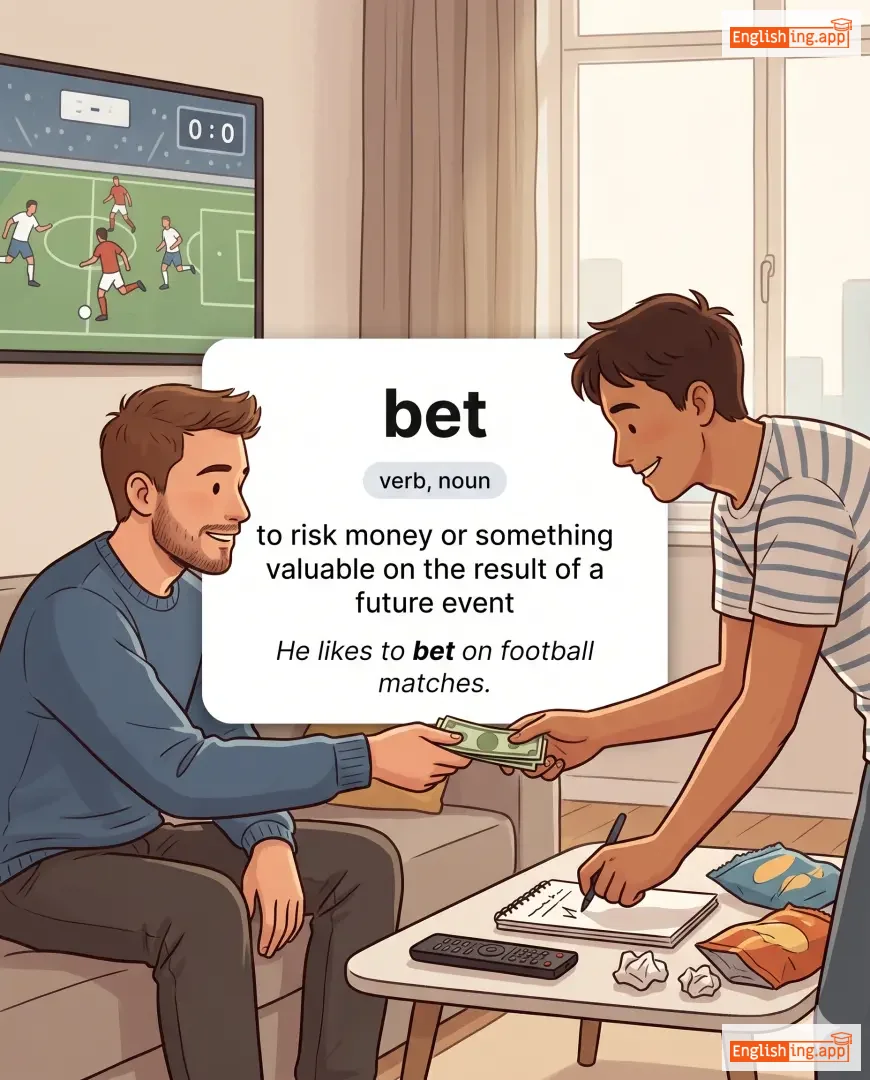
to risk money or something valuable on the result of a future event
••••••
|
He likes to bet on football matches.
彼はサッカーの試合にベットするのが好きです。
••••••
|
彼はサッカーの試合にベットするのが好きです。
Kare wa sakkā no shiai ni betto suru no ga suki desu.
••••••
|
you can bet on it
それにベットできます
••••••
|
something is certain to happen
••••••
|
それに賭けてもいい
Sore ni kakete mo ii
••••••
|
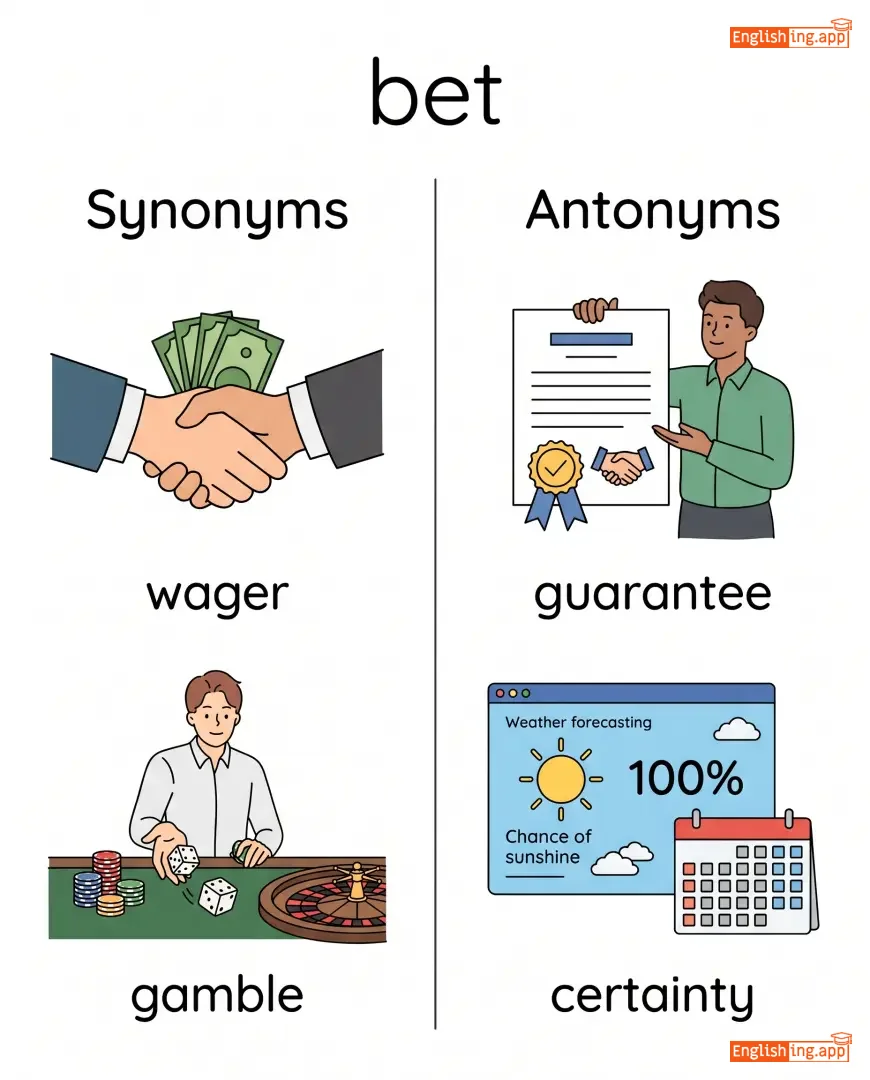
wager, gamble, stake, risk
••••••
|
guarantee, certainty
••••••
|
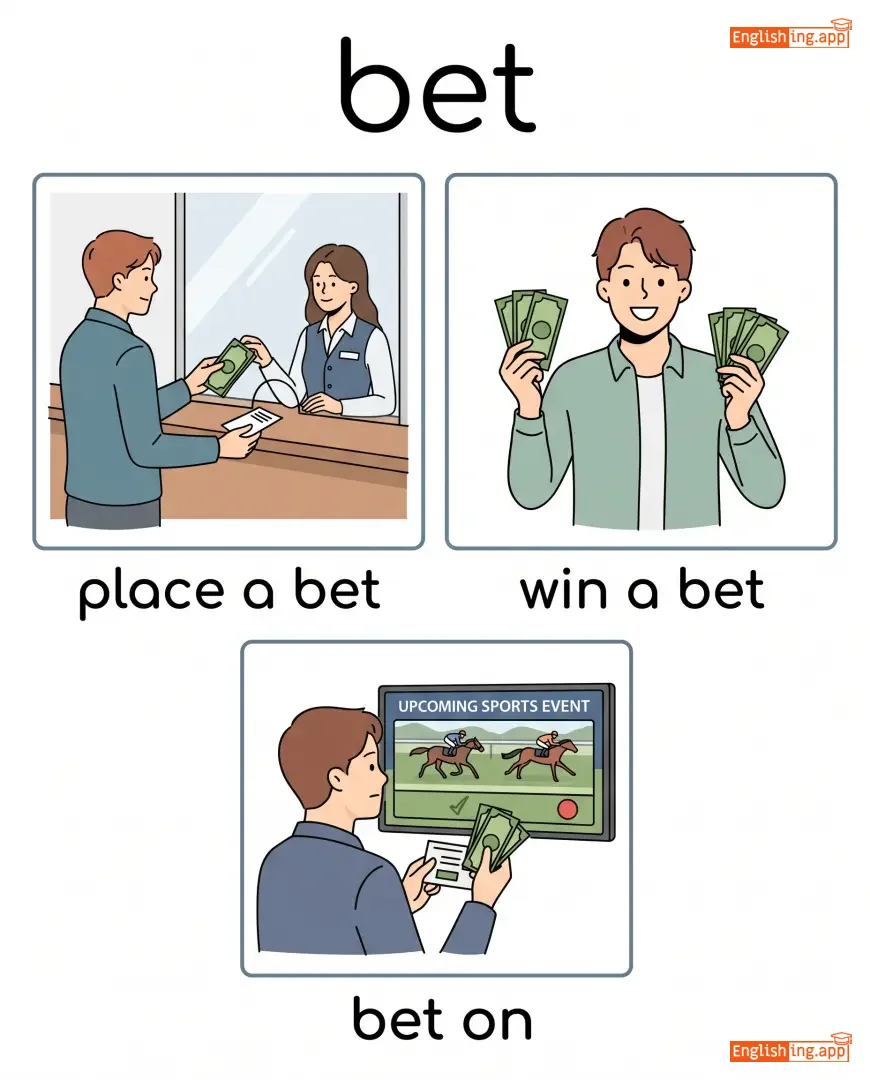
place a bet, win a bet, bet on, bet against
••••••
|
Bet は賭けるという意味 - 試合でベットする
••••••
|
|
#10468
➕
|
/bɪˈsaɪdz/
adverb, preposition
(bisaidz)
••••••
|
- •••••• |
そのほか
sono hoka
••••••
|
- •••••• | - •••••• | - •••••• | - •••••• |
in addition to; apart from
••••••
|
Besides English, he also speaks French. |
英語のほかに、彼はフランス語も話します。
Eigo no hoka ni, kare wa Furansugo mo hanashimasu.
••••••
|
- •••••• | - •••••• | - •••••• |
in addition to, apart from, as well as
••••••
|
excluding, except
••••••
|
besides that, besides this, besides him, besides being
••••••
|
Besidesは'そのほか'を意味します - '英語のほかに、彼はフランス語も話します。'
••••••
|
|
#10469
🤝
|
/bɪˈsaɪd/
preposition
(besaido)
••••••
|
- •••••• |
隣に
tonari ni
••••••
|
- •••••• | - •••••• | - •••••• | - •••••• |
next to or at the side of someone or something
••••••
|
She sat beside her best friend during the ceremony. |
彼女は式の間、最良の友達の隣に座っていました。
Kanojo wa shiki no aida, sairyō no tomodachi no tonari ni suwatte imashita.
••••••
|
- •••••• | - •••••• | - •••••• |
next to, alongside, by, near
••••••
|
away from, apart from
••••••
|
sit beside, stand beside, beside the door, beside me
••••••
|
Besideは隣に - Best friend隣。
••••••
|
|
#10470
⬇️
|
/bɪˈniːθ/
preposition
(ビニース)
••••••
|
- •••••• |
下
shita
••••••
|
- •••••• | - •••••• | - •••••• | - •••••• |
in or to a lower position than something; under
••••••
|
The cat was hiding beneath the bed.
ザ・キャット・ワズ・ハイディング・ビニース・ザ・ベッド
••••••
|
猫はベッドの下に隠れていた。
Neko wa beddo no shita ni kakurete ita.
••••••
|
- •••••• | - •••••• | - •••••• |
under, below, underneath, lower than
••••••
|
above, over, atop
••••••
|
beneath the surface, beneath the ground, beneath the waves
••••••
|
下は下 - 猫はベッドの下に隠れている。
••••••
|
|
#10471
↩️
|
/bɛnd/
verb
(ベンド)
••••••
|
- •••••• |
曲げる / かがむ
mageru / kagamu
••••••
|
bent
ベント
••••••
|
bent
ベント
••••••
|
bends
ベンズ
••••••
|
bending
ベンディング
••••••
|
to curve something or cause it to change shape; to move the body or part of it downward or forward
••••••
|
She had to bend down to pick up the coin.
彼女はコインを拾うためにかがむ必要がありました。
••••••
|
彼女はコインを拾うためにかがむ必要がありました。
Kanojo wa koin o hirou tame ni kagamu hitsuyou ga arimashita.
••••••
|
bend over backwards
必死で努力する
••••••
|
to try very hard to please someone or make something happen
••••••
|
全力を尽くす
zenryoku o tsukusu
••••••
|
curve, flex, bow, arch, stoop
••••••
|
straighten, unbend, stiffen
••••••
|
bend down, bend forward, bend the rules, bend over
••••••
|
曲げる(bend)ことは体が'曲がる'こと!
••••••
|
|
#10472
🪑
|
/bɛntʃ/
noun
(ベンチ)
••••••
|
- •••••• |
ベンチ
benchi
••••••
|
- •••••• | - •••••• | - •••••• | - •••••• |
a long seat for several people, typically made of wood or stone
••••••
|
They sat on the park bench watching the sunset.
彼らは公園のベンチに座って夕日を見ていました。
••••••
|
彼らは公園のベンチに座って夕日を見ていました。
Karera wa kouen no benchi ni suwatte yuuhi wo miteimashita.
••••••
|
warm the bench
ベンチを温める
••••••
|
to not participate in a game, usually as a substitute player
••••••
|
ベンチを温める
benchi wo atatameru
••••••
|
seat, pew, stool, chair
••••••
|
floor, ground
••••••
|
park bench, wooden bench, sit on a bench, court bench
••••••
|
ベンチは座る場所なので、'ベンチを温める'はゲームに参加しないことを意味します。
••••••
|
|
#10473
👖
|
/bɛlt/
noun
••••••
|
- •••••• | - •••••• | - •••••• | - •••••• | - •••••• | - •••••• |
a strip of material worn around the waist to support clothes or as decoration
••••••
|
He tightened his belt before leaving for work. |
- •••••• |
tighten one's belt |
to live with less money than before
••••••
|
- •••••• |
strap, band, sash, girdle
••••••
|
loosen, release
••••••
|
wear a belt, leather belt, tighten belt, conveyor belt
••••••
|
No •••••• |
|
#10474
🏠
|
/bɪˈlɒŋ/
verb
(ビロング)
••••••
|
- •••••• |
所属する
shozoku suru
••••••
|
belonged
ビロンド
••••••
|
belonged
ビロンド
••••••
|
belongs
ビロングス
••••••
|
belonging
ビロングイング
••••••
|
to be in the right place or to be a member of a group
••••••
|
She felt she truly belonged to the team.
彼女はチームに本当に所属していると感じていました。
••••••
|
彼女はチームに本当に所属していると感じていました。
Kanojo wa chīmu ni hontōni shozoku shite iru to kanjite imashita.
••••••
|
belong to
所属する
••••••
|
to be the property of someone or something
••••••
|
所属する
shozoku suru
••••••
|
fit, associate, connect, relate
••••••
|
exclude, detach, separate
••••••
|
belong to, feel belong, belong somewhere
••••••
|
Belongは‘所属する’意味で、何かの一部であることを示します。
••••••
|
|
#10475
🔔
|
/bɛl/
noun
••••••
|
- •••••• | - •••••• | - •••••• | - •••••• | - •••••• | - •••••• |
a hollow object, usually made of metal, that makes a ringing sound when struck
••••••
|
The school bell rang loudly at noon. |
- •••••• |
saved by the bell |
to be rescued from difficulty at the last moment
••••••
|
- •••••• |
chime, gong, buzzer, alarm
••••••
|
silence, quiet
••••••
|
ring the bell, church bell, door bell, alarm bell
••••••
|
No •••••• |
|
#10476
🙏
|
/bɪˈliːf/
noun
(ビリーフ)
••••••
|
- •••••• |
信念
shinnen
••••••
|
- •••••• | - •••••• | - •••••• | - •••••• |
an acceptance that something exists or is true, especially without proof
••••••
|
Her belief in kindness inspired many people. |
彼女の親切さへの信念は多くの人々にインスピレーションを与えました。
kanojo no shinsetsu sa e no shinnen wa ooku no hitobito ni insupireeshon wo ataemashita.
••••••
|
beyond belief |
something that is very surprising or hard to imagine
••••••
|
信念を超えて
shinnen wo koete
••••••
|
faith, trust, conviction, opinion, view
••••••
|
doubt, disbelief, skepticism
••••••
|
strong belief, personal belief, religious belief, belief system
••••••
|
信念は‘信じる’という意味—Believe + Faith = 信念 (信念の組み合わせ)
••••••
|
|
#10477
🌍
|
/ˈbiːɪŋ/
noun/verb
(bīingu)
••••••
|
- •••••• |
存在
sonzai
••••••
|
- •••••• | - •••••• |
is/are being
iizu/arubīng
••••••
|
being
bīingu
••••••
|
Existence; the state of living; a living creature.
••••••
|
Kindness is part of being human.
親切は人間であることの一部です。
••••••
|
親切は人間であることの一部です。
Shinsetsu wa ningen de aru koto no ichibu desu.
••••••
|
human being
人間であること
••••••
|
A person; an individual of the species Homo sapiens.
••••••
|
人間であること
ningen de aru koto
••••••
|
existence, creature, life, entity
••••••
|
nonexistence, nothingness
••••••
|
human being, state of being, well-being, living being
••••••
|
Beingは存在するという意味です - 私はBEしているから、私はここにいます。
••••••
|
|
#10478
⬅️
|
/bɪˈhaɪnd/
preposition/adverb
(biháind)
••••••
|
- •••••• |
後ろ
ushiro
••••••
|
- •••••• | - •••••• | - •••••• | - •••••• |
At or to the back of something; in a position further back.
••••••
|
The cat is hiding behind the curtain.
The cat is hiding behind the curtain.
••••••
|
猫はカーテンの後ろに隠れています。
Neko wa kaaten no ushiro ni kakurete imasu.
••••••
|
leave behind
leave behind
••••••
|
To forget or not take something with you.
••••••
|
後ろに残す
ushiro ni nokosu
••••••
|
at the back, beyond, after
••••••
|
ahead, in front
••••••
|
fall behind, behind schedule, left behind, stay behind
••••••
|
Behindは後ろ - B後ろ HIND。
••••••
|
|
#10479
🧑🏫
|
/bɪˈheɪvjər/
noun
(ビヘイヴィア)
••••••
|
- •••••• |
行動
koudou
••••••
|
- •••••• | - •••••• | - •••••• | - •••••• |
The way in which one acts or conducts oneself, especially toward others.
••••••
|
The teacher praised her good behavior in class. |
先生はクラスで彼女の良い行動を称賛しました。
Sensei wa kurasu de kanojo no yoi koudou o shousan shimashita.
••••••
|
on best behavior |
Behaving in the most polite or well-mannered way possible.
••••••
|
模範的な行動
Mohantekina koudou
••••••
|
conduct, manners, actions, demeanor, attitude
••••••
|
misconduct, rudeness
••••••
|
good behavior, bad behavior, social behavior, criminal behavior
••••••
|
行動 = 行うこと、どう行動するかが重要。
••••••
|
|
#10480
🏗️
|
/ˈbeɪsɪs/
noun
(ベイシス)
••••••
|
- •••••• |
基礎
kiso
••••••
|
- •••••• | - •••••• | - •••••• | - •••••• |
the underlying support or foundation for an idea, argument, or process
••••••
|
Trust is the basis of any strong relationship. |
信頼は強い関係の基礎です。
Shinrai wa tsuyoi kankei no kiso desu.
••••••
|
on a daily basis |
happening every day
••••••
|
日常的に
nichijō-teki ni
••••••
|
foundation, ground, principle, root, support
••••••
|
top, surface
••••••
|
form the basis, strong basis, legal basis, daily basis
••••••
|
基礎は基盤 (kiso) - 建物の基盤のように
••••••
|
|
#10481
🛏️
|
/ˈbɛdruːm/
noun
(ベッドルーム)
••••••
|
- •••••• |
寝室
shinshitsu
••••••
|
- •••••• | - •••••• | - •••••• | - •••••• |
A room used for sleeping in.
••••••
|
The children were playing in the bedroom.
子供たちはベッドルームで遊んでいました。
••••••
|
子供たちは寝室で遊んでいました。
Kodomotachi wa shinshitsu de asonde imashita.
••••••
|
bedroom eyes
ベッドルームアイズ
••••••
|
A seductive or alluring look.
••••••
|
魅惑的な目
miwaku-teki na me
••••••
|
sleeping room, chamber, boudoir, dormitory
••••••
|
living room, kitchen
••••••
|
master bedroom, small bedroom, bedroom furniture, bedroom window
••••••
|
寝室はベッドがある場所、'bed'と同じ意味です。
••••••
|
|
#10482
🛏️
|
/bɛd/
noun
••••••
|
- •••••• | - •••••• | - •••••• | - •••••• | - •••••• | - •••••• |
a piece of furniture for sleeping or resting on
••••••
|
She lay down on the bed and fell asleep quickly. |
- •••••• |
make your bed |
to arrange or tidy your bed after getting up
••••••
|
- •••••• |
couch, mattress, cot, bunk
••••••
|
floor, ground
••••••
|
go to bed, make the bed, bed sheet, hospital bed
••••••
|
No •••••• |
|
#10483
🌱
|
/bɪˈkʌm/
verb
(bikamu)
••••••
|
- •••••• |
なる
naru
••••••
|
became
bikemu
••••••
|
become
bikamu
••••••
|
becomes
bikamus
••••••
|
becoming
bikamingu
••••••
|
to begin to be; to develop into
••••••
|
He became a successful doctor after years of hard work.
彼は何年もの努力の末、成功した医者になった。
••••••
|
彼は何年もの努力の末、成功した医者になった。
Kare wa nan-nen mono doryoku no sue, seikou shita isha ni natta.
••••••
|
become a reality
bikamu a riariti
••••••
|
to actually happen
••••••
|
現実になる
genjitsu ni naru
••••••
|
turn into, grow into, evolve, develop
••••••
|
cease, stop, remain
••••••
|
become famous, become aware, become clear, become friends
••••••
|
Become 🌱 は「なる」という意味です。小さな種がゆっくりと大きな木に成長するように。
••••••
|
|
#10484
🔗
|
/bɪˈkɔːz/
conjunction
(bikozu)
••••••
|
- •••••• |
だから
dakara
••••••
|
- •••••• | - •••••• | - •••••• | - •••••• |
for the reason that; since
••••••
|
He stayed home because it was raining. |
彼は雨が降っていたので家にいた。
Kare wa ame ga futte ita node ie ni ita.
••••••
|
- •••••• | - •••••• | - •••••• |
since, as, due to, owing to
••••••
|
despite, although
••••••
|
because of you, just because, because of the rain
••••••
|
Becauseはだからという意味です🔗。Causeは理由という意味!
••••••
|
|
#10485
🌸
|
/ˈbjuːti/
noun
(ビューティ)
••••••
|
- •••••• |
美しさ
utsukushisa
••••••
|
- •••••• | - •••••• | - •••••• | - •••••• |
a combination of qualities that please the senses or mind
••••••
|
The beauty of the sunset took her breath away. |
夕日の美しさは彼女の息をのませた。
Yuuhi no utsukushisa wa kanojo no iki o nomaseta.
••••••
|
beauty is in the eye of the beholder |
different people have different opinions about what is beautiful
••••••
|
美しさは見る者の目にある
Utsukushisa wa miru mono no me ni aru
••••••
|
attractiveness, charm, elegance, loveliness, grace
••••••
|
ugliness, plainness, dullness
••••••
|
inner beauty, natural beauty, beauty contest, beauty products
••••••
|
Beauty = 美しさ 💐, 覚えておいて、美しさは誰が見ているかに依存する。
••••••
|
|
#10486
🐻
|
/bɛər/
verb, noun
(ベア)
••••••
|
|
耐える / クマ
taeru / kuma
••••••
|
bore
ボア
••••••
|
borne
ボーン
••••••
|
bears
ベアーズ
••••••
|
bearing
ベアリング
••••••
|
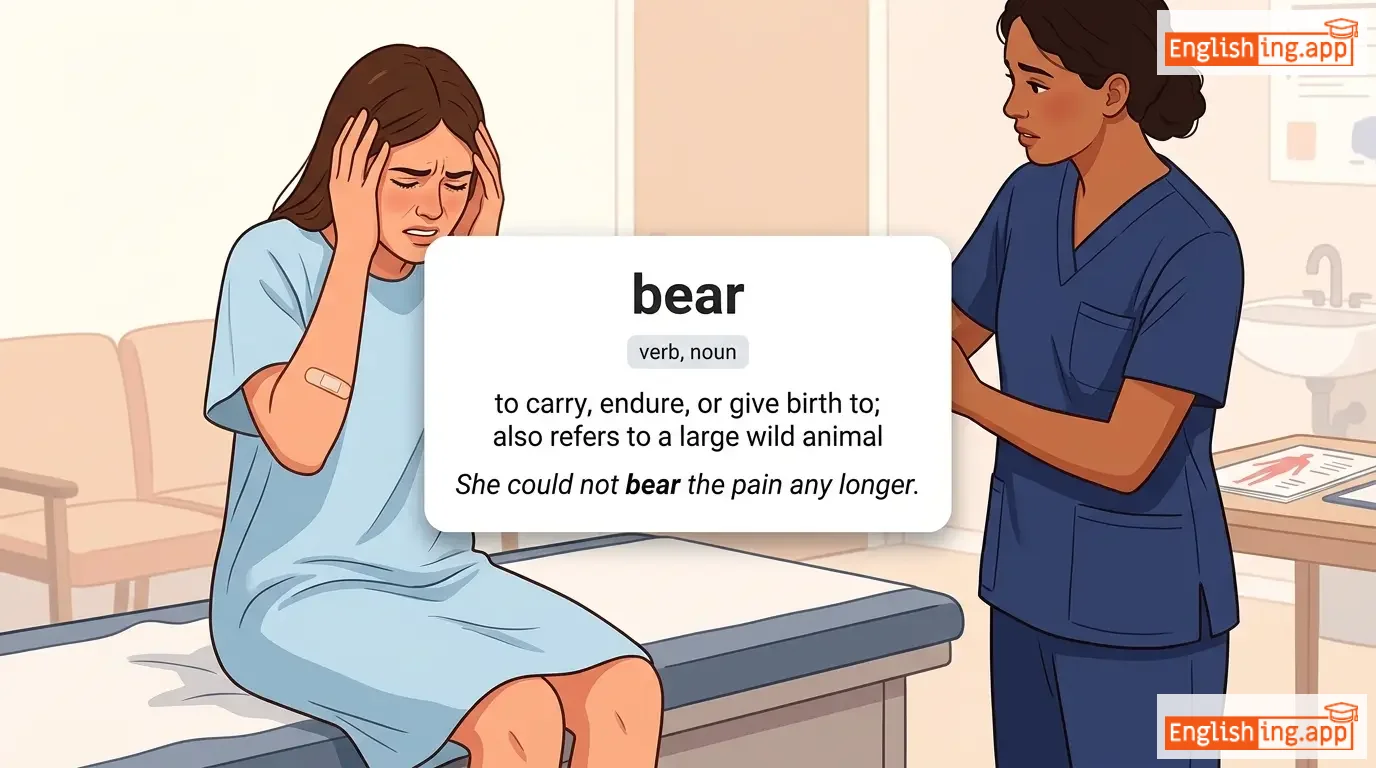
to carry, endure, or give birth to; also refers to a large wild animal
••••••
|
She could not bear the pain any longer.
彼女はもはや痛みを耐えられなかった。
••••••
|
彼女はもはや痛みを耐えられなかった。
Kanojo wa mohaya itami o taerarenakatta.
••••••
|
bear in mind
心に留める
••••••
|
to remember or consider something
••••••
|
心に留める
Kokoro ni tomeru
••••••
|
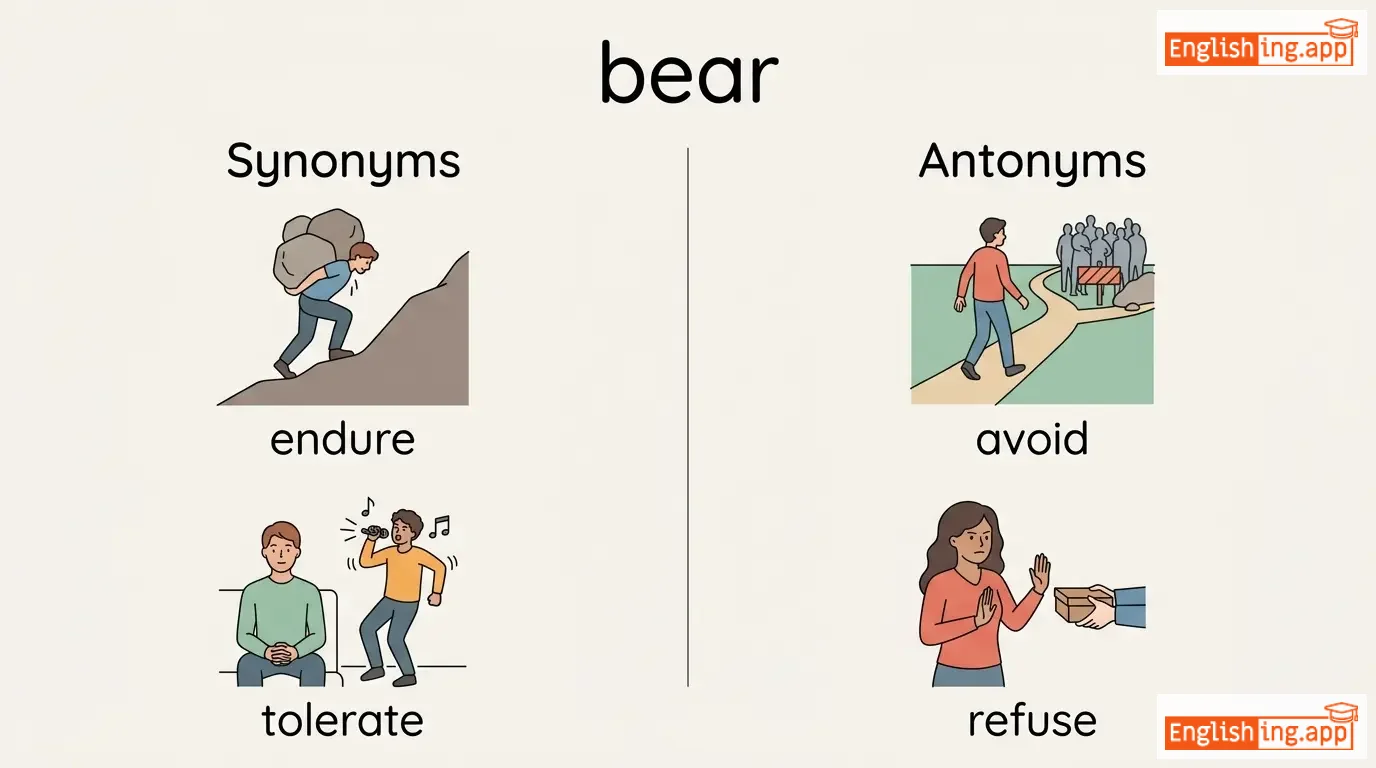
endure, tolerate, carry, support, sustain
••••••
|
avoid, refuse, deny
••••••
|
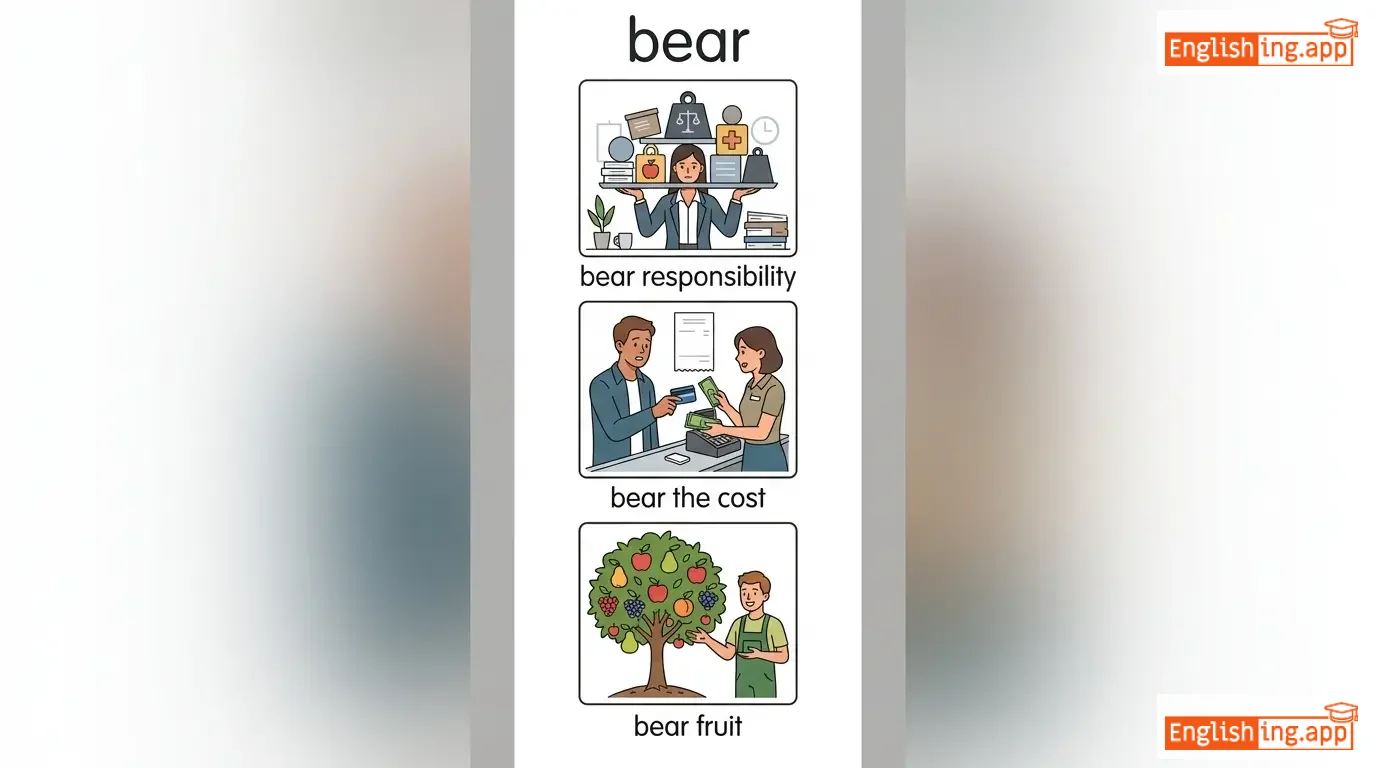
bear responsibility, bear the cost, bear fruit, bear in mind
••••••
|
Bear 🐻 はクマを意味しますが、bear the pain は痛みを耐えることを意味します。クマも耐えることを覚えておいてください!
••••••
|
|
#10487
🫘
|
/biːn/
noun
(ビーン)
••••••
|
- •••••• |
豆
mame
••••••
|
- •••••• | - •••••• | - •••••• | - •••••• |
A seed that is eaten as a vegetable or used to make food products.
••••••
|
She cooked a pot of bean soup. |
彼女は豆のスープを一鍋作った。
Kanojo wa mame no suupu o hitonabe tsukutta.
••••••
|
spill the beans |
to reveal a secret
••••••
|
秘密を漏らす
Himitsu o morasu
••••••
|
legume, pulse, seed, vegetable
••••••
|
meat, grain
••••••
|
coffee bean, bean soup, green bean, baked beans
••••••
|
豆は 'bean' を意味します - 'Spill the beans' は秘密を漏らすこと、まるで豆が鍋からこぼれ落ちるように。
••••••
|
|
#10488
🏖️
|
/biːtʃ/
noun
(ビーチ)
••••••
|
- •••••• |
ビーチ
bi-chi
••••••
|
- •••••• | - •••••• | - •••••• | - •••••• |
An area of sand or small stones beside the sea or a lake.
••••••
|
They spent the day relaxing on the beach. |
彼らはビーチでリラックスして一日を過ごしました。
Karera wa bi-chi de rirakkusu shite ichinichi o sugoshimashita.
••••••
|
beach bum |
a person who spends a lot of time at the beach without working
••••••
|
ビーチ好き
bi-chi suki
••••••
|
seashore, coast, shoreline, seaside
••••••
|
mountain, desert
••••••
|
sandy beach, go to the beach, beach holiday, beach umbrella
••••••
|
ビーチは beach の意味 - 'ビーチ' で皆がリラックスする場所を覚えよう。
••••••
|
|
#10489
✨
|
/biː/
verb
(ビー)
••••••
|
- •••••• |
である
dearu
••••••
|
was/were
ワズ/ワー
••••••
|
been
ビーン
••••••
|
is
イズ
••••••
|
being
ビーイング
••••••
|
To exist, to occur, or to have a particular quality.
••••••
|
She wants to be a doctor.
彼女は医者になりたい。
••••••
|
彼女は医者になりたい。
Kanojo wa isha ni naritai.
••••••
|
to be or not to be
あるいは死ぬか
••••••
|
a famous phrase about existence and life
••••••
|
あるいは死ぬか
aruiwa shinu ka
••••••
|
exist, live, happen, occur
••••••
|
cease, die
••••••
|
be happy, be late, be ready, be a teacher
••••••
|
Be はであるを意味します。'B' (be) は始まりの音です。
••••••
|
|
#10490
⚔️
|
/ˈbætəl/
noun/verb
(バトル)
••••••
|
- •••••• |
戦い
tatakai
••••••
|
battled
バトルド
••••••
|
battled
バトルド
••••••
|
battles
バトルズ
••••••
|
battling
バトリング
••••••
|
A fight between armed forces or a struggle to achieve or resist something.
••••••
|
The soldiers prepared for the final battle.
兵士たちは最終決戦の準備をしました。
••••••
|
兵士たちは最終決戦の準備をしました。
Heishi-tachi wa saishū kessen no junbi o shimashita.
••••••
|
fight an uphill battle
困難な戦いを戦う
••••••
|
to struggle against great difficulties
••••••
|
困難な戦いを戦う
konnan na tatakai o tatakau
••••••
|
fight, conflict, clash, war, struggle
••••••
|
peace, truce
••••••
|
win a battle, lose a battle, fierce battle, battle against
••••••
|
Battle は戦いを意味します。ゲームでバット(bat)で戦うように。
••••••
|
|
#10491
🔋
|
/ˈbætəri/
noun
(バッテリー)
••••••
|
- •••••• |
バッテリー
batterī
••••••
|
- •••••• | - •••••• | - •••••• | - •••••• |
A device that stores and provides electrical energy; also refers to a group of similar things or repeated blows.
••••••
|
The phone battery ran out after a long day. |
電話のバッテリーは長い一日の後に切れました。
Denwa no batterī wa nagai ichinichi no ato ni kiremashita.
••••••
|
assault and battery |
a legal term for physical attack and violence
••••••
|
暴行とバッテリー
bōkō to batterī
••••••
|
cell, accumulator, power pack, storage unit
••••••
|
charger, power outage
••••••
|
car battery, rechargeable battery, battery life, battery pack
••••••
|
バッテリーが切れたら、もう動かない、まるで暴行を受けたかのように止まる。
••••••
|
|
#10492
🚽
|
/ˈbɑːθruːm/
noun
(バスルーム)
••••••
|
- •••••• |
バスルーム
basurūmu
••••••
|
- •••••• | - •••••• | - •••••• | - •••••• |
a room containing a toilet and usually a sink or shower
••••••
|
The bathroom is on the second floor. |
バスルームは2階にあります。
Basurūmu wa nikai ni arimasu.
••••••
|
- •••••• | - •••••• | - •••••• |
washroom, restroom, lavatory, toilet
••••••
|
kitchen, living room
••••••
|
clean bathroom, bathroom door, bathroom sink, bathroom floor
••••••
|
Bath + Room = お風呂やトイレのある部屋
••••••
|
|
#10493
🏀
|
/ˈbæskɪtbɔːl/
noun
••••••
|
- •••••• | - •••••• | - •••••• | - •••••• | - •••••• | - •••••• |
a game played by two teams who try to score points by throwing a ball through a hoop
••••••
|
He loves playing basketball with his friends. |
- •••••• | - •••••• | - •••••• | - •••••• |
hoops, sport, game
••••••
|
none
••••••
|
play basketball, basketball court, basketball team, basketball game
••••••
|
No •••••• |
|
#10494
🧺
|
/ˈbæskɪt/
noun
(バスケット)
••••••
|
- •••••• |
かご
kago
••••••
|
- •••••• | - •••••• | - •••••• | - •••••• |
a container made of woven materials used for carrying or storing things
••••••
|
She carried the apples in a basket. |
彼女はバスケットにリンゴを入れて運んだ。
Kanojo wa basuketto ni ringo o irete hakonda.
••••••
|
don’t put all your eggs in one basket |
don’t risk everything on a single venture
••••••
|
すべての卵を一つのかごに入れないで
Subete no tamago o hitotsu no kago ni irenaide
••••••
|
container, hamper, bin, receptacle
••••••
|
floor, ground
••••••
|
shopping basket, fruit basket, picnic basket, basket case
••••••
|
Basket とはかご (kago) - ピクニックの時にかごに食べ物を入れる
••••••
|
Vocabulary Quiz
Test your vocabulary by matching words with their translations or meanings.
Login to take the quiz
Comments (0)
Share your thoughts and join the discussion.
Join the discussion by logging in
Login to CommentNo comments yet
Be the first to share your thoughts!