

翻訳
過去
過去分詞
三人称単数
動名詞
意味
例文
例文の翻訳
同義語
対義語
コロケーション
ニーモニック
Swipe left or right, or use the buttons. Tap image to zoom.
例文の翻訳
単語
Lesson 434Lesson 434 - マスクトグル
|
絵文字
|
単語 | Images | 翻訳 | 過去 | 過去分詞 | 三人称単数 | 動名詞 | 意味 | 例文 | 例文の翻訳 | 表現例 | 表現例の意味 | 表現例の翻訳 | 同義語 | 対義語 | コロケーション | ニーモニック |
|---|---|---|---|---|---|---|---|---|---|---|---|---|---|---|---|---|---|
|
#1
🚫
|
/reɪp/
verb
(レイプ)
••••••
|
- •••••• |
強姦
gōkan
••••••
|
raped
レイプド
••••••
|
raped
レイプド
••••••
|
rapes
レイプス
••••••
|
raping
レイピング
••••••
|
to force someone to have sexual intercourse without their consent
••••••
|
The law strictly punishes those who commit rape.
法律は強姦を犯した者に厳罰を与えます。
••••••
|
法律は強姦を犯した者に厳罰を与えます。
Hōritsu wa gōkan o okashita mono ni genbatsu o ataemasu.
••••••
|
- •••••• | - •••••• | - •••••• |
assault, violate, abuse, molest, attack
••••••
|
protect, respect, consent
••••••
|
commit rape, victim of rape, rape case, rape survivor
••••••
|
強姦は犯罪—他人を尊重し、決して強姦しないでください 🚫
••••••
|
|
#1
💪
|
/ˌriːhəˌbɪlɪˈteɪʃən/
noun
(hapinesu)
••••••
|
- •••••• |
幸福
kōfuku
••••••
|
- •••••• | - •••••• | - •••••• | - •••••• |
the process of restoring someone or something to health or normal life through training or therapy
••••••
|
After the accident, he went through months of rehabilitation to walk again.
彼女は賞を受け取ったとき、自分の幸福を隠せなかった。
••••••
|
彼女は賞を受け取ったとき、自分の幸福を隠せなかった。
Kanojo wa shō o uketotta toki, jibun no kōfuku o kakusenakatta.
••••••
|
rehabilitation center
幸せを追い求める
••••••
|
a place where people recover physically or mentally
••••••
|
幸せを追い求める
shiawase o oimotomeru
••••••
|
recovery, therapy, restoration, renewal
••••••
|
damage, decline
••••••
|
physical rehabilitation, rehabilitation program, rehabilitation center, drug rehabilitation
••••••
|
幸せは追い求めるもの、見つけるもの。
••••••
|
|
#1
⚖️
|
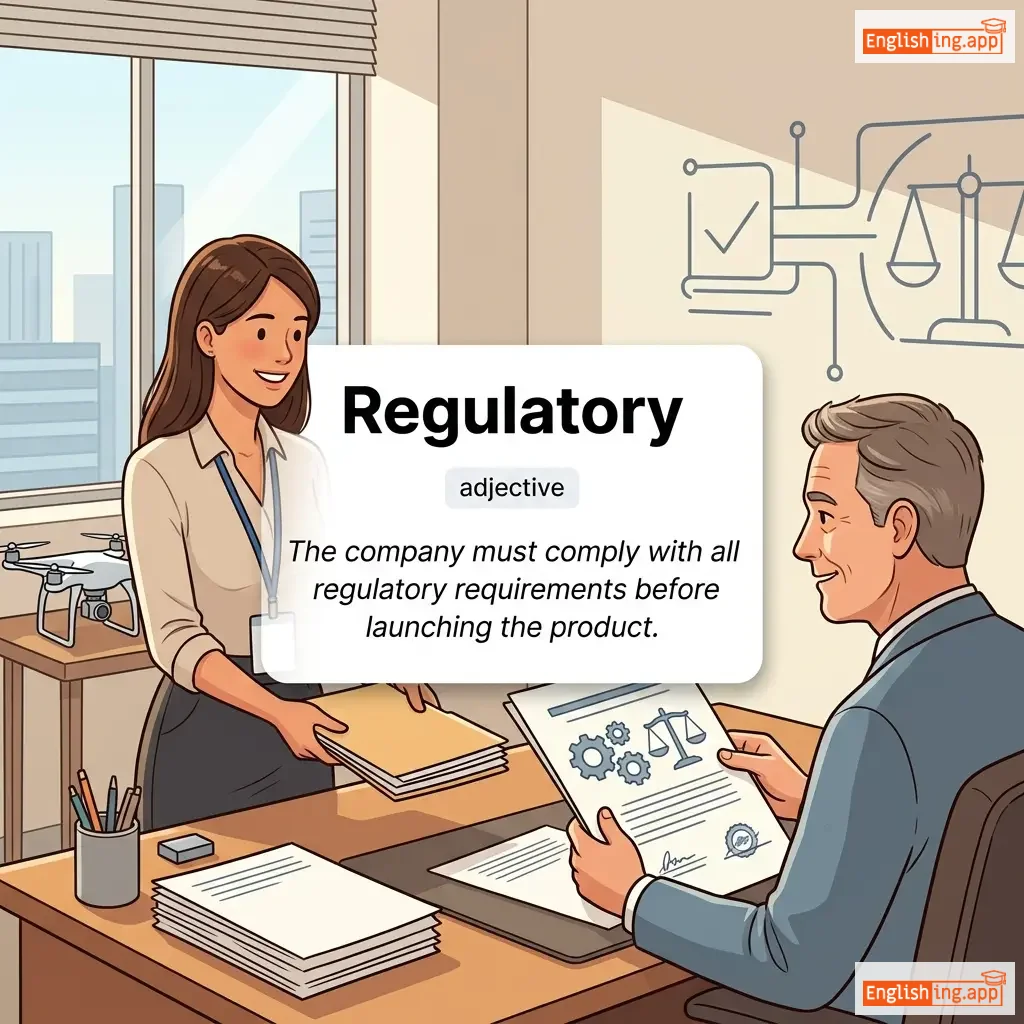
/ˈrɛɡjʊlətɔːri/
adjective
(レギュラトリー)
••••••
|
|
規制の
kisei no
••••••
|
- •••••• | - •••••• | - •••••• | - •••••• |
relating to the rules or laws made by an authority to control an activity or process
••••••
|
The company must comply with all regulatory requirements before launching the product. |
企業は製品を発売する前にすべての規制要件を満たさなければなりません。
Kigyō wa seihin o hatsubai suru mae ni subete no kisei yōken o mitasanakereba narimasen.
••••••
|
- •••••• | - •••••• | - •••••• |
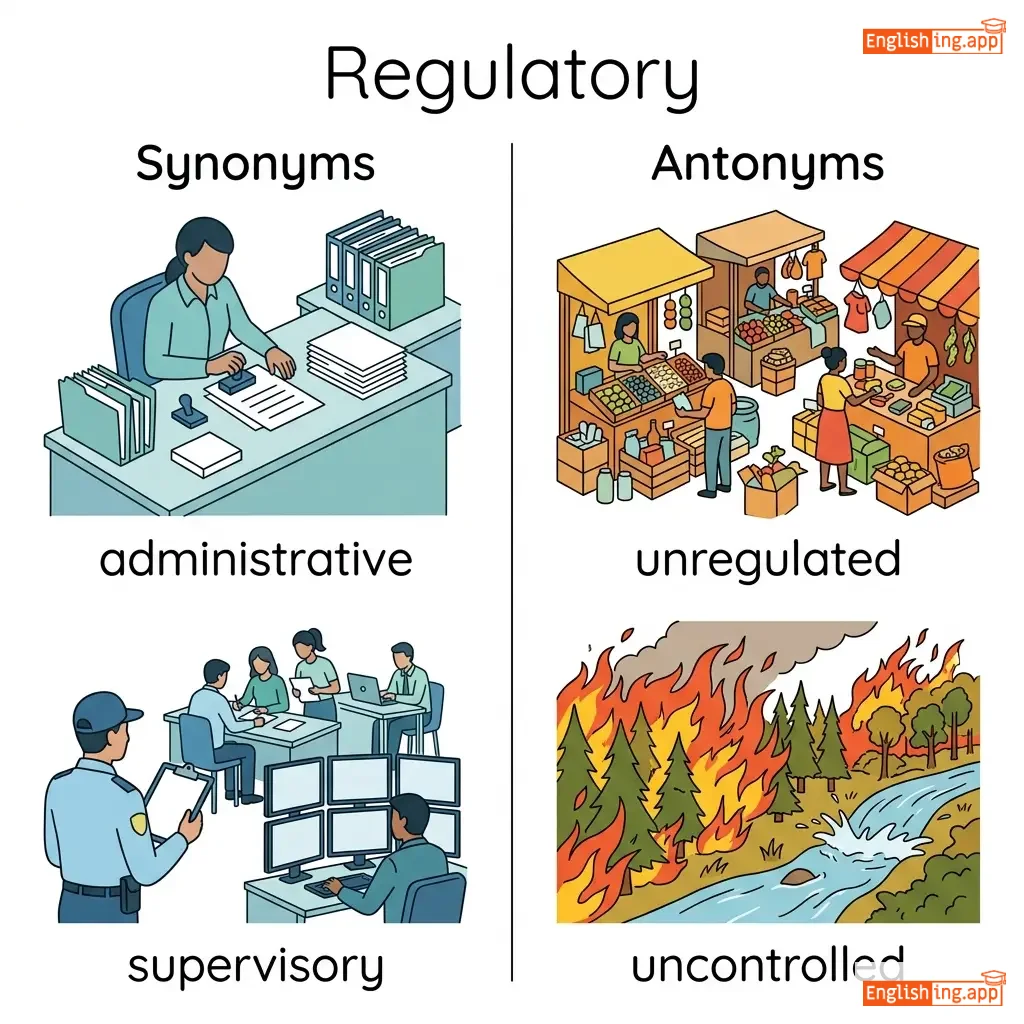
administrative, supervisory, controlling, governing, legislative
••••••
|
unregulated, uncontrolled
••••••
|
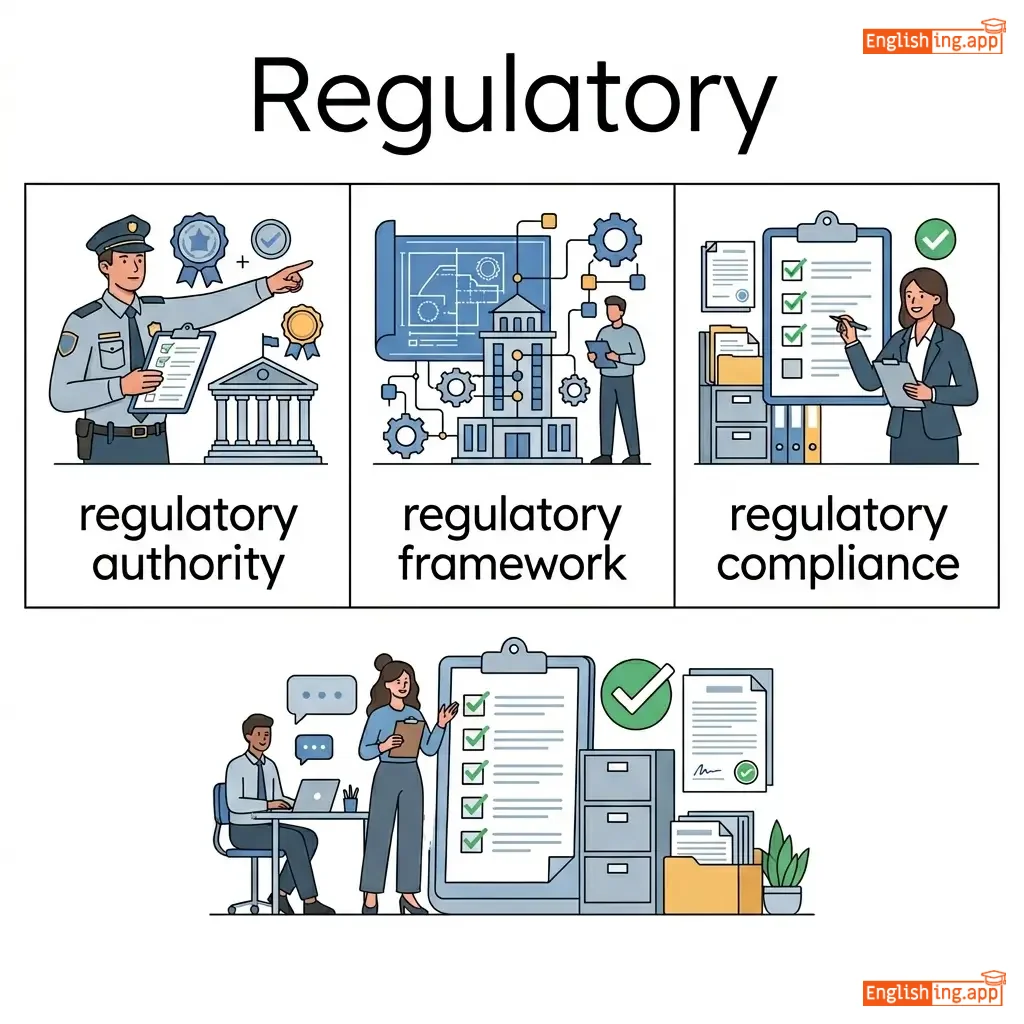
regulatory authority, regulatory framework, regulatory compliance, regulatory body
••••••
|
規制のとは、ルールに従うこと — 交通ルールを守るように 🚦
••••••
|
|
#1
⚙️
|
/ˈrɛɡjəleɪtər/
noun
(レギュレーター)
••••••
|
- •••••• |
調整装置
chōsei sōchi
••••••
|
- •••••• | - •••••• | - •••••• | - •••••• |
a person or device that controls or maintains the operation of a system
••••••
|
The government appointed a new regulator for the financial sector. |
政府は金融セクターの新しい規制機関を任命した。
Seifu wa kin'yū sekutā no atarashī kisei kikan o ninmei shita.
••••••
|
- •••••• | - •••••• | - •••••• |
controller, supervisor, administrator, inspector
••••••
|
anarchist, disrupter
••••••
|
financial regulator, market regulator, regulatory authority, gas regulator
••••••
|
調整装置とはシステムを制御する装置 — ガス調整装置のように流れを調整します!
••••••
|
|
#1
😔
|
/rɪˈɡrɛt/
verb
(リグレット)
••••••
|
- •••••• |
後悔する
kōkai suru
••••••
|
regretted
リグレットッド
••••••
|
regretted
リグレットッド
••••••
|
regrets
リグレッツ
••••••
|
regretting
リグレッティング
••••••
|
to feel sad or disappointed about something that has happened or been done
••••••
|
I deeply regret saying those harsh words to her.
私は彼女にその厳しい言葉を言ったことを深く後悔しています。
••••••
|
私は彼女にその厳しい言葉を言ったことを深く後悔しています。
Watashi wa kanojo ni sono kibishii kotoba o itta koto o fukaku kōkai shiteimasu.
••••••
|
express regret
後悔を表現する
••••••
|
to show that you are sorry about something
••••••
|
後悔を表現する
kōkai o hyōgen suru
••••••
|
lament, repent, remorse, rue
••••••
|
rejoice, celebrate, delight
••••••
|
regret deeply, express regret, feel regret, lifelong regret
••••••
|
後悔するのは、失ったものに対する深い反省の気持ちを持つこと
••••••
|
|
#1
🔁
|
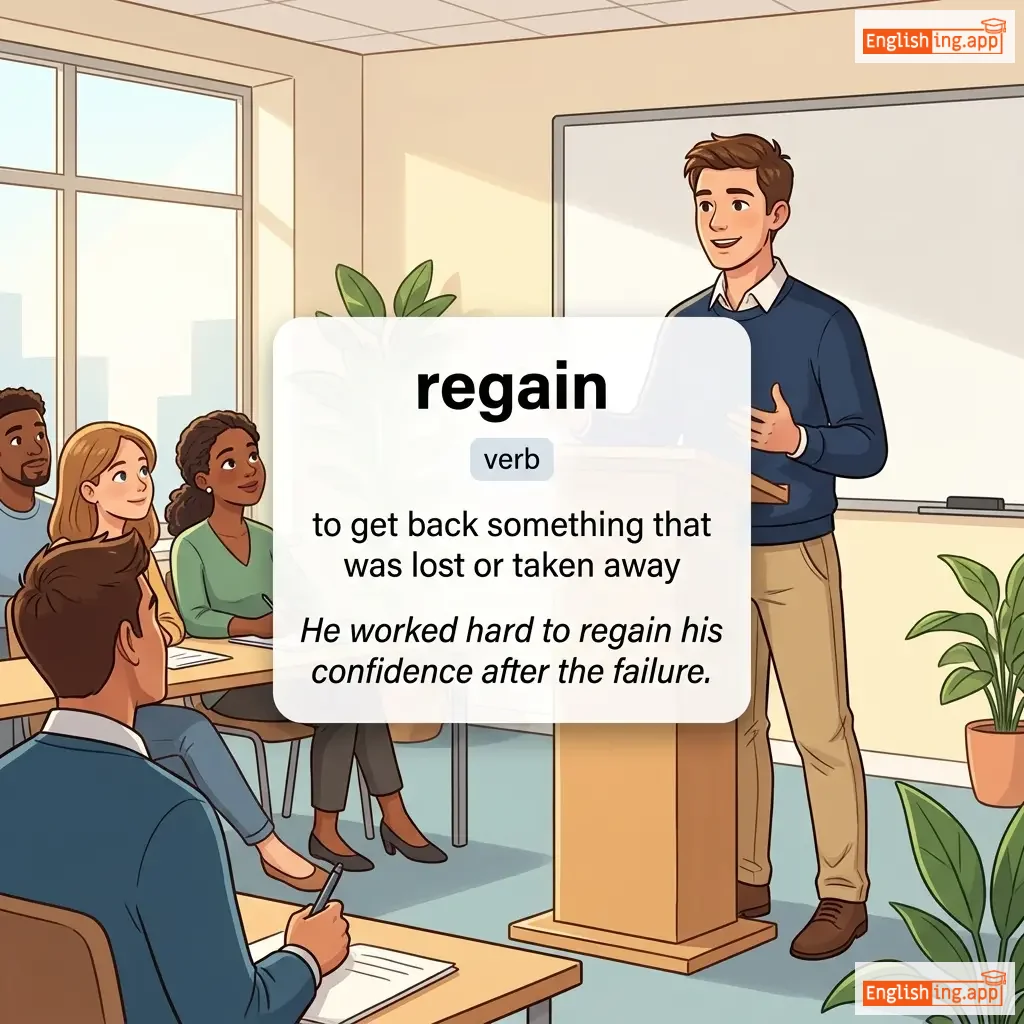
/rɪˈɡeɪn/
verb
(ree-gein)
••••••
|
|
取り戻す
torimodosu
••••••
|
regained
ree-geind
••••••
|
regained
ree-geind
••••••
|
regains
ree-geins
••••••
|
regaining
ree-geining
••••••
|
to get back something that was lost or taken away
••••••
|
He worked hard to regain his confidence after the failure.
失敗後、彼は自信を取り戻すために一生懸命働いた。
••••••
|
失敗後、彼は自信を取り戻すために一生懸命働いた。
Shippai go, kare wa jishin o torimodosu tame ni isshoukenmei hataraita.
••••••
|
regain consciousness
意識を取り戻す
••••••
|
to wake up or become aware again after fainting
••••••
|
意識を取り戻す
ishiki o torimodosu
••••••
|
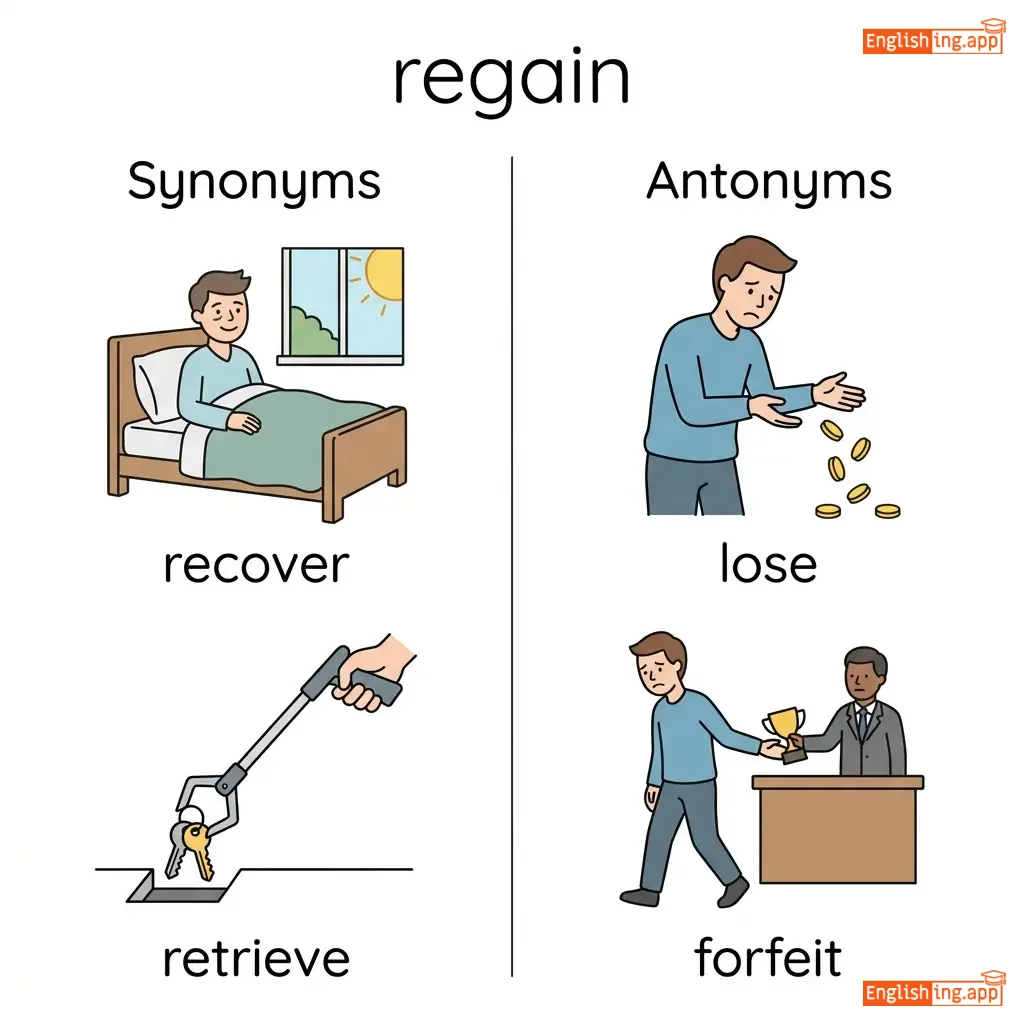
recover, retrieve, recapture, reclaim
••••••
|
lose, forfeit, surrender
••••••
|
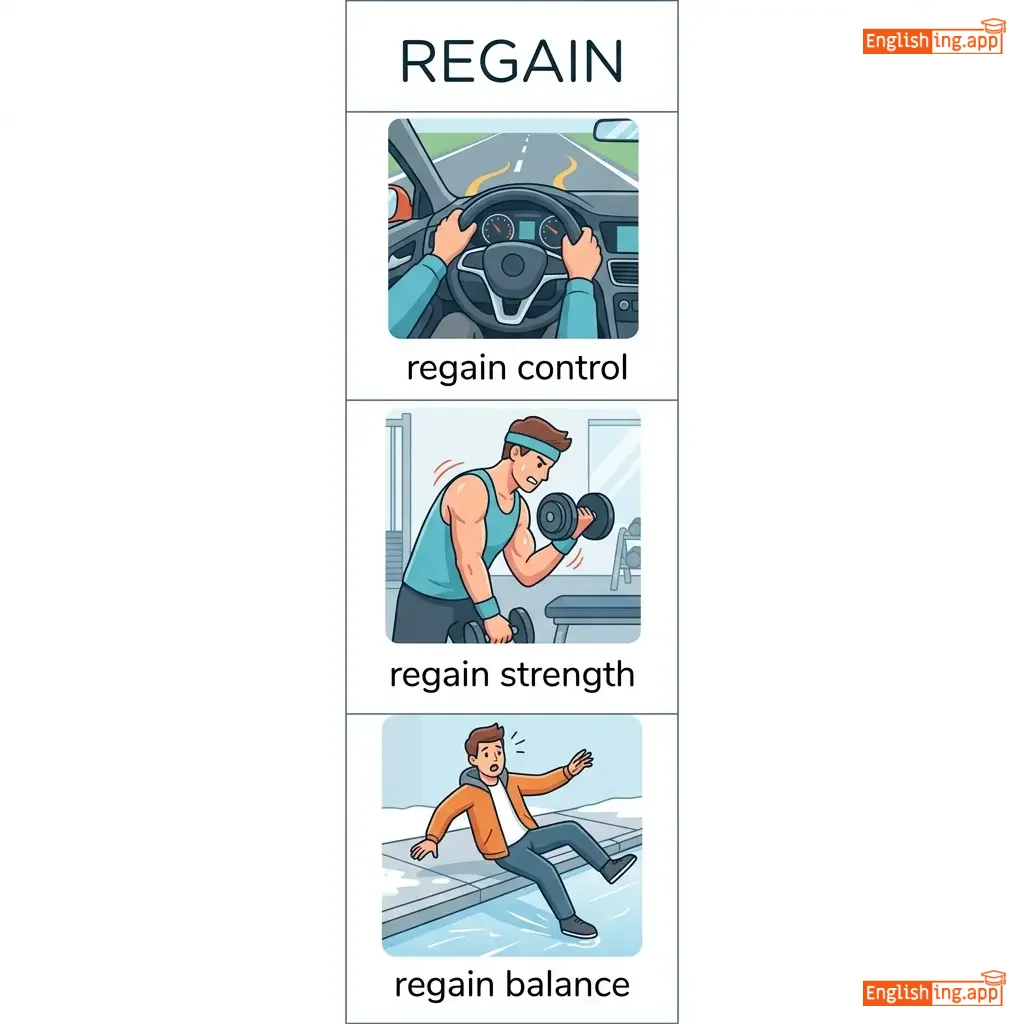
regain control, regain strength, regain balance, regain confidence
••••••
|
Regain は再び得るという意味 — 失ったものを取り戻せ!
••••••
|
|
#1
🏚️
|
/ˈrɛfjuːdʒ/
noun
(レフュージュ)
••••••
|
- •••••• |
避難所
hinanjo
••••••
|
- •••••• | - •••••• | - •••••• | - •••••• |
a place that provides shelter or protection from danger or distress
••••••
|
The villagers took refuge in the temple during the storm. |
村人たちは嵐の間、寺院に避難した。
Murabito-tachi wa arashi no aida, jiin ni hinan shita.
••••••
|
take refuge in |
to seek safety or comfort in something
••••••
|
避難所に避難する
hinanjo ni hinan suru
••••••
|
shelter, sanctuary, haven, asylum, retreat
••••••
|
danger, exposure, threat
••••••
|
seek refuge, take refuge, offer refuge, find refuge
••••••
|
避難所 = refuge, 嵐から寺院での避難
••••••
|
|
#1
🧊
|
/rɪˈfrɪdʒəreɪtər/
noun
(refurijireetaa)
••••••
|
- •••••• |
冷蔵庫
reizōko
••••••
|
- •••••• | - •••••• | - •••••• | - •••••• |
an appliance used to keep food and drinks cold
••••••
|
She kept the milk in the refrigerator to prevent it from spoiling.
彼女は牛乳が腐らないように冷蔵庫に入れました。
••••••
|
彼女は牛乳が腐らないように冷蔵庫に入れました。
Kanojo wa gyūnyū ga kusaranai yō ni reizōko ni iremashita.
••••••
|
- •••••• | - •••••• | - •••••• |
fridge, cooler, icebox, freezer
••••••
|
heater, oven
••••••
|
put in the refrigerator, keep food in refrigerator, open the refrigerator door
••••••
|
冷蔵庫は冷たさを守る、氷のように!
••••••
|
|
#1
🎉
|
/rɪˈsepʃən/
noun
(レセプション)
••••••
|
- •••••• |
レセプション
resepushon
••••••
|
- •••••• | - •••••• | - •••••• | - •••••• |
the act of receiving something or someone; a formal social gathering
••••••
|
We attended a wedding reception at the hotel. |
私たちはホテルで結婚式のレセプションに参加しました。
Watashitachi wa hoteru de kekkonshiki no resepushon ni sanka shimashita.
••••••
|
warm reception |
a friendly or enthusiastic welcome
••••••
|
温かい歓迎
atatakai kangei
••••••
|
welcome, gathering, party, acceptance, response
••••••
|
rejection, refusal, dismissal
••••••
|
wedding reception, poor reception, phone reception, warm reception
••••••
|
レセプションは受け入れること、例えば結婚式のレセプションです。
••••••
|
|
#1
📡
|
/rɪˈsiːvər/
noun
(レシーバー)
••••••
|
- •••••• |
受信機
jushinki
••••••
|
- •••••• | - •••••• | - •••••• | - •••••• |
a person or device that receives something such as a signal, message, or object
••••••
|
The radio receiver picks up signals from distant stations. |
ラジオの受信機は遠くの局から信号を受信します。
Rajio no jushinki wa tooku no kyoku kara shingou wo jushin shimasu.
••••••
|
- •••••• | - •••••• | - •••••• |
recipient, acceptor, handset, detector, listener
••••••
|
sender, giver, transmitter
••••••
|
radio receiver, telephone receiver, signal receiver, data receiver
••••••
|
Receiverは信号やメッセージを受け取る機器です。
••••••
|
|
#1
✊
|
/ˈreb.əl/
noun, verb
(レベル)
••••••
|
- •••••• |
反抗者 / 反抗する
hankousha / hankou suru
••••••
|
rebelled
レベルト
••••••
|
rebelled
レベルト
••••••
|
rebels
レベルス
••••••
|
rebelling
レベリング
••••••
|
a person who resists authority or control; to resist or fight against authority
••••••
|
The students rebelled against the new dress code.
学生たちは新しい服装規定に反抗した。
••••••
|
学生たちは新しい服装規定に反抗した。
Gakusei-tachi wa atarashī fukusō kitei ni hankō shita.
••••••
|
rebel at heart
心の中で反抗者
••••••
|
someone who naturally resists control or rules
••••••
|
心の中で反抗者
kokoro no naka de hankō-sha
••••••
|
revolt, resist, defy, insurgent, protest
••••••
|
obey, comply, submit
••••••
|
rebel group, rebel army, rebel leader, rebel movement
••••••
|
Rebelは 'Rules belao na' という意味です — 規則を守らない人は反抗者です。
••••••
|
|
#1
🐈
|
/rɪər/
noun, verb
(リア)
••••••
|
- •••••• |
後ろ / 育てる
ushiro / sodateru
••••••
|
reared
リアード
••••••
|
reared
リアード
••••••
|
rears
リアーズ
••••••
|
rearing
リアリング
••••••
|
the back part of something; to bring up or raise children or animals
••••••
|
The mother cat reared her kittens in a quiet corner.
母猫は静かな隅で子猫たちを育てました。
••••••
|
母猫は静かな隅で子猫たちを育てました。
Haha neko wa shizuka na sumi de koneko-tachi o sodatemashita.
••••••
|
bring up the rear
後ろを持っている
••••••
|
to be at the back of a group moving forward
••••••
|
後ろにいる
ushiro ni iru
••••••
|
back, behind, raise, nurture, lift
••••••
|
front, lower, neglect
••••••
|
rear view, rear door, rear seat, rear window, rear end
••••••
|
Rearは後ろにいることを意味します、まるで母猫が子猫たちをrear(育てる)ように。
••••••
|
|
#1
🎯
|
/ˌriːəˈlɪstɪk/
adjective
(リアリスティック)
••••••
|
- •••••• |
現実的
genjitsuteki
••••••
|
- •••••• | - •••••• | - •••••• | - •••••• |
having or showing a sensible and practical idea of what can be achieved or expected
••••••
|
She gave a realistic estimate of the project's cost. |
彼女はプロジェクトのコストの現実的な見積もりを出した。
Kanojo wa purojekuto no kosuto no genjitsuteki na mitsumori o dashita.
••••••
|
keep it realistic |
to remain practical and grounded about what is possible
••••••
|
現実的に保つ
genjitsuteki ni tamotsu
••••••
|
practical, sensible, rational, pragmatic, down-to-earth
••••••
|
unrealistic, idealistic, impractical
••••••
|
realistic goals, realistic approach, realistic expectations, realistic plan
••••••
|
現実的=本当に実用的で現実的に考えること
••••••
|
|
#1
📄
|
/riː/
preposition
(レ)
••••••
|
- •••••• |
について
nitsuite
••••••
|
- •••••• | - •••••• | - •••••• | - •••••• |
concerning or about (used in formal letters or emails)
••••••
|
The letter was sent re your recent application. |
その手紙はあなたの最近の申請について送られました。
Sono tegami wa anata no saikin no shinsei nitsuite okuraremashita.
••••••
|
- •••••• | - •••••• | - •••••• |
regarding, concerning, about, with respect to, relating to
••••••
|
irrelevant to, unrelated to
••••••
|
re application, re meeting, re inquiry, re your request
••••••
|
‘Re’は ‘について’ という意味です — 公式のメールで ‘re: 会議’ は ‘について’ という意味です。
••••••
|
|
#1
🐀
|
/ræt/
noun
(レッド)
••••••
|
- •••••• |
ネズミ
nezumi
••••••
|
- •••••• | - •••••• | - •••••• | - •••••• |
a small rodent that resembles a large mouse, often considered a pest
••••••
|
A rat ran across the kitchen floor last night. |
昨晩、ネズミがキッチンの床を走り回っていました。
sakuban, nezumi ga kicchin no yuka o hashirimawatteimashita.
••••••
|
smell a rat |
to suspect that something is wrong or dishonest
••••••
|
ネズミの匂いがする
nezumi no nioi ga suru
••••••
|
rodent, mouse, pest, vermin, creature
••••••
|
pet, friend, ally
••••••
|
rat trap, lab rat, dead rat, sewer rat
••••••
|
ネズミのような匂いがしたら、何かおかしいことがある!
••••••
|
|
#1
💧
|
/pʌmp/
verb
(pampu)
••••••
|
- •••••• |
ポンプする
ponpu suru
••••••
|
pumped
pampudo
••••••
|
pumped
pampudo
••••••
|
pumps
pampusu
••••••
|
pumping
pampingu
••••••
|
to force liquid or gas to move in a particular direction using a device
••••••
|
They pumped water from the well into the tank.
彼らは井戸からタンクに水をポンプしました。
••••••
|
彼らは井戸からタンクに水をポンプしました。
Karera wa ido kara tanku ni mizu o ponpu shimashita.
••••••
|
pump up
pump up
••••••
|
to fill with air or excitement
••••••
|
空気を入れる
kūki o ireru
••••••
|
siphon, extract, draw, force, inflate
••••••
|
drain, empty
••••••
|
pump water, pump air, pump fuel, pump up
••••••
|
ポンプするようにエネルギーを注入、‘pump up’で盛り上がる!
••••••
|
|
#1
🐄
|
/ræntʃ/
noun
(ランチ)
••••••
|
- •••••• |
牧場
bokujou
••••••
|
- •••••• | - •••••• | - •••••• | - •••••• |
a large farm where animals such as cattle or sheep are raised
••••••
|
They own a huge cattle ranch in Texas. |
彼らはテキサスで巨大な牧場を所有しています。
Karera wa Tekisasu de kyodaina bokujou o shoyū shiteimasu.
••••••
|
- •••••• | - •••••• | - •••••• |
farm, homestead, estate, pasture, plantation
••••••
|
factory, city, urban area
••••••
|
cattle ranch, sheep ranch, ranch house, horse ranch
••••••
|
ランチはただのソースではなく、牛や羊を育てる牧場です! 🐄
••••••
|
|
#1
🚂
|
/ˈreɪlˌroʊd/
noun
(レールロード)
••••••
|
- •••••• |
鉄道
tetsudou
••••••
|
- •••••• | - •••••• | - •••••• | - •••••• |
a track or system of tracks made of steel rails along which trains run
••••••
|
The railroad connects the city to several nearby towns. |
鉄道は都市といくつかの近くの町を結びつけています。
Tetsudou wa toshi to ikutsu ka no chikaku no machi o musubitsuketeimasu.
••••••
|
off the rails |
to behave in a strange or uncontrolled way
••••••
|
制御を失う
seigyo o ushinau
••••••
|
railway, track, line, train route, metro
••••••
|
road, highway, street
••••••
|
railroad track, railroad company, railroad station, build a railroad
••••••
|
鉄道 = 列車が走る道 🚂
••••••
|
|
#1
☢️
|
/ˌreɪdiˈeɪʃən/
noun
(放射線)
••••••
|
|
放射線
hōshasen
••••••
|
- •••••• | - •••••• | - •••••• | - •••••• |
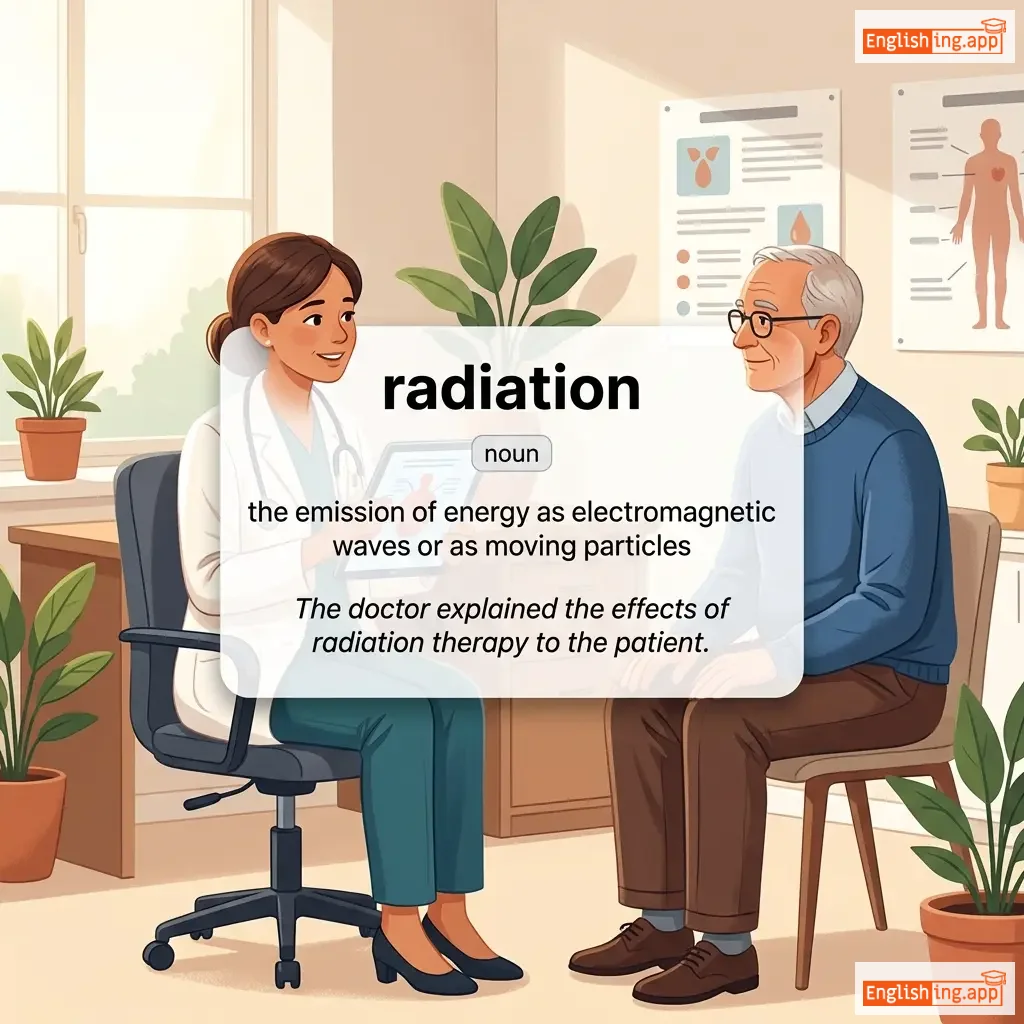
the emission of energy as electromagnetic waves or as moving particles
••••••
|
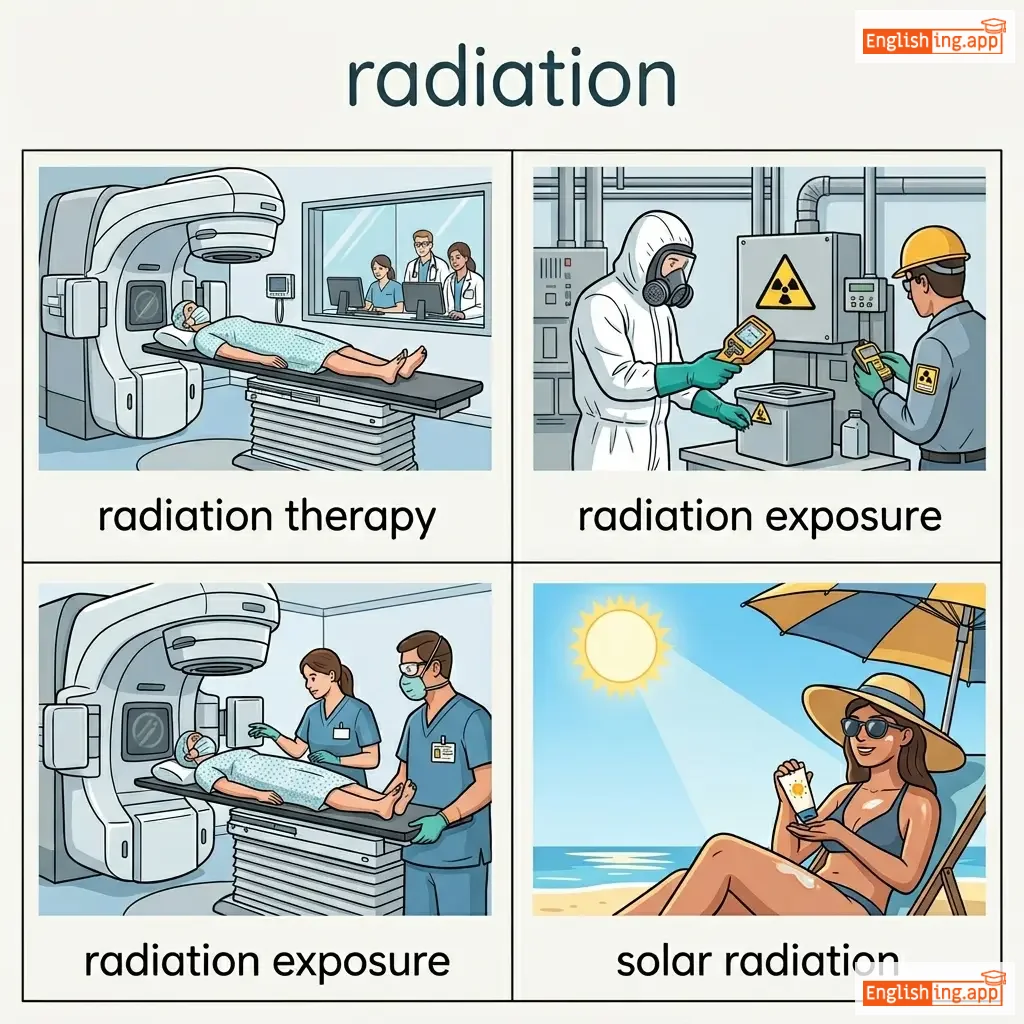
The doctor explained the effects of radiation therapy to the patient. |
医者は患者に放射線治療の効果を説明しました。
Isha wa kanja ni hōshasen chiryō no kōka o setsumei shimashita.
••••••
|
radiation sickness |
illness caused by exposure to high doses of radiation
••••••
|
放射線病
hōshasen byō
••••••
|
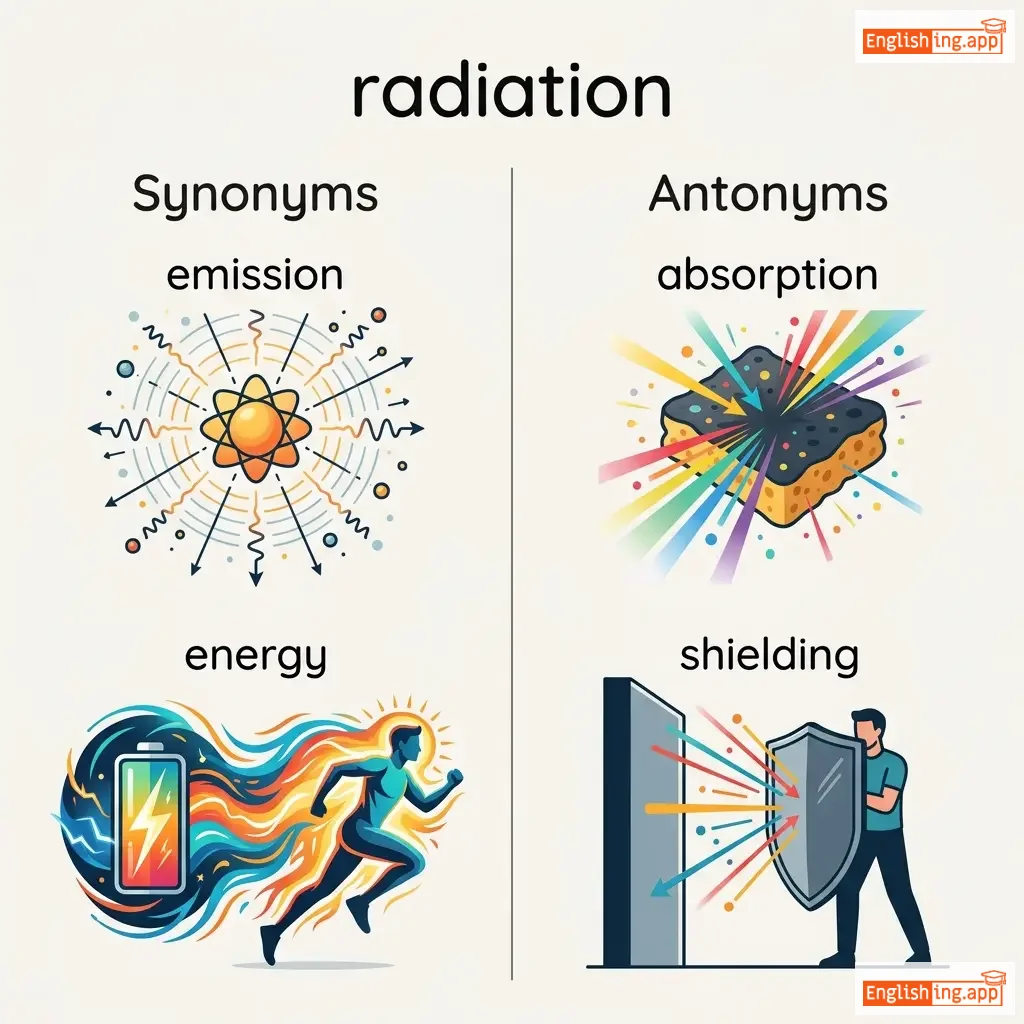
emission, energy, rays, exposure
••••••
|
absorption, shielding
••••••
|
radiation therapy, radiation exposure, solar radiation, radiation level
••••••
|
放射線は'光線'から来ています — それは広がるエネルギーを覚えておいてください。
••••••
|
|
#1
📡
|
/ˈreɪdɑːr/
noun
(レーダー)
••••••
|
- •••••• |
レーダー
rēdā
••••••
|
- •••••• | - •••••• | - •••••• | - •••••• |
a system that uses radio waves to detect the position and speed of objects
••••••
|
The plane was detected by the airport's radar system. |
その飛行機は空港のレーダーシステムによって検出されました。
sono hikōki wa kūkō no rēdā shisutemu ni yotte kenshutsu saremashita.
••••••
|
under the radar |
to go unnoticed or be ignored
••••••
|
レーダー下で
rēdā-shita de
••••••
|
scanner, detector, sensor, locator
••••••
|
blind spot, invisibility
••••••
|
radar system, radar signal, air radar, weather radar
••••••
|
Ra + dar は '無線で発見する' を意味します — レーダーは隠れた物を見つけます。
••••••
|
|
#1
🧺
|
/ræk/
noun
(ラック)
••••••
|
- •••••• |
ラック
rakku
••••••
|
- •••••• | - •••••• | - •••••• | - •••••• |
a frame or stand used to hold or store things
••••••
|
She placed her wet clothes on the drying rack. |
彼女は濡れた服を乾かすためにラックに置いた。
Kanojo wa nureta fuku o kawakasu tame ni rakku ni oita.
••••••
|
off the rack |
ready-made and not custom tailored
••••••
|
既製服
kiseifuku
••••••
|
shelf, stand, frame, holder, hanger
••••••
|
pile, heap
••••••
|
clothes rack, shoe rack, luggage rack, magazine rack
••••••
|
ラックに置けば、物を整理できる、つまりrackは収納のためのラック。
••••••
|
|
#1
✊🏾
|
/ˈreɪsɪzəm/
noun
(reishizumu)
••••••
|
- •••••• |
人種差別
jinshu sabetsu
••••••
|
- •••••• | - •••••• | - •••••• | - •••••• |
the belief that some races are superior to others, leading to unfair treatment or prejudice
••••••
|
The organization works to eliminate racism in all forms. |
その組織はすべての形態の人種差別を排除するために取り組んでいます。
Sono soshiki wa subete no keitai no jinshu sabetsu o haijo suru tame ni torikundeimasu.
••••••
|
- •••••• | - •••••• | - •••••• |
discrimination, prejudice, bigotry, intolerance, bias
••••••
|
equality, tolerance, fairness
••••••
|
fight racism, eliminate racism, racial discrimination, systemic racism
••••••
|
Race + ism は人種に関する信念、だから人種差別は人種に基づく不公平です。
••••••
|
|
#1
🐇
|
/ˈræbɪt/
noun
(ラビット)
••••••
|
|
ウサギ
usagi
••••••
|
- •••••• | - •••••• | - •••••• | - •••••• |
a small furry animal with long ears that lives in holes in the ground and moves by hopping
••••••
|
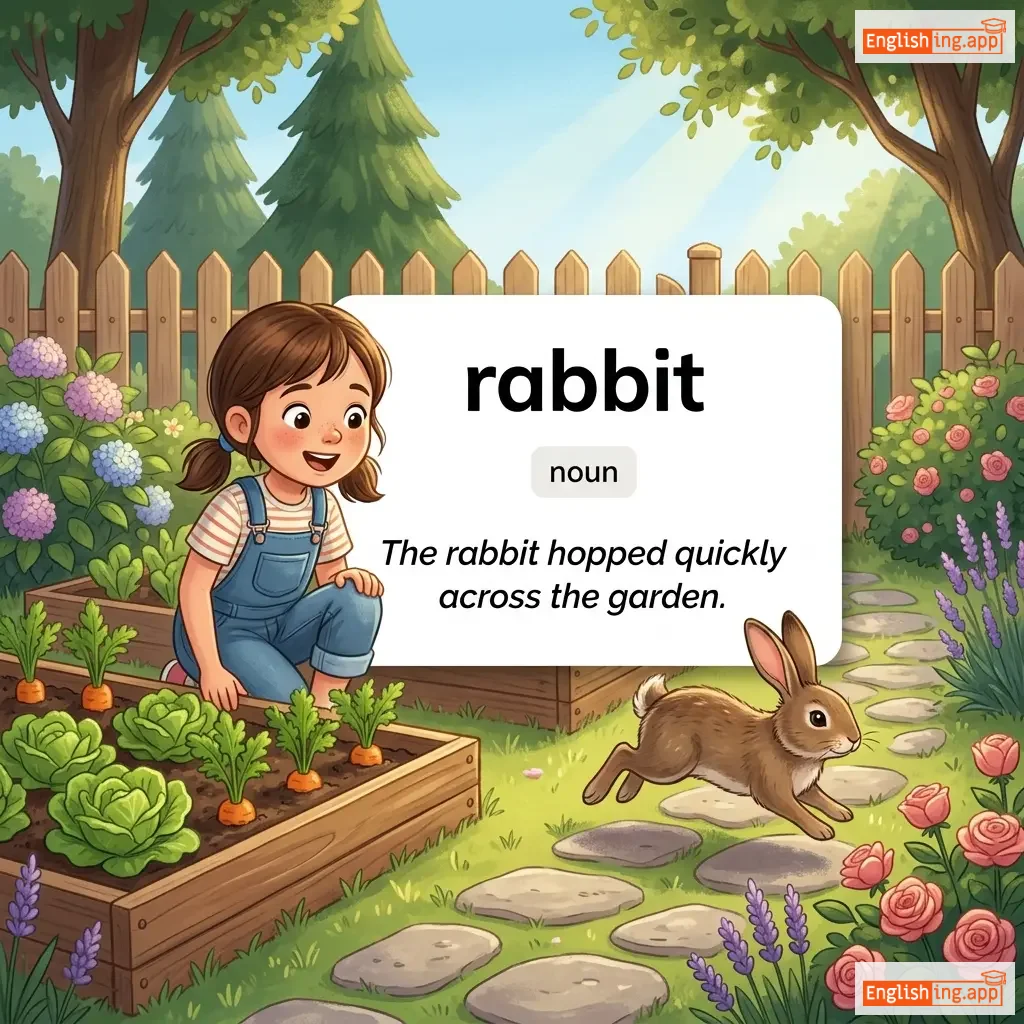
The rabbit hopped quickly across the garden. |
ウサギは庭を素早く跳びました。
Usagi wa niwa o subayaku tobimashita.
••••••
|
pull a rabbit out of a hat |
to do something surprising or seemingly magical
••••••
|
帽子からウサギを取り出す
bōshi kara usagi o toridasu
••••••
|
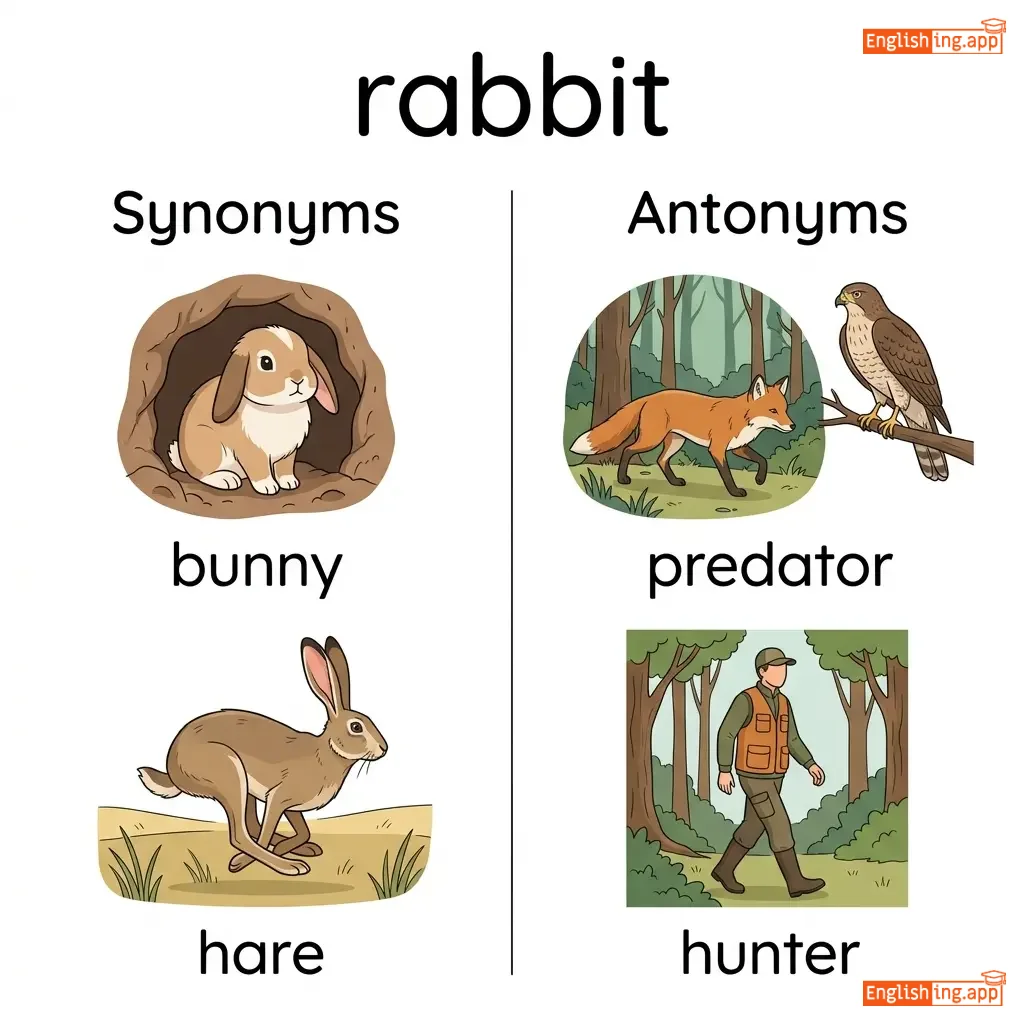
bunny, hare, coney, rodent, lagomorph
••••••
|
predator, hunter
••••••
|
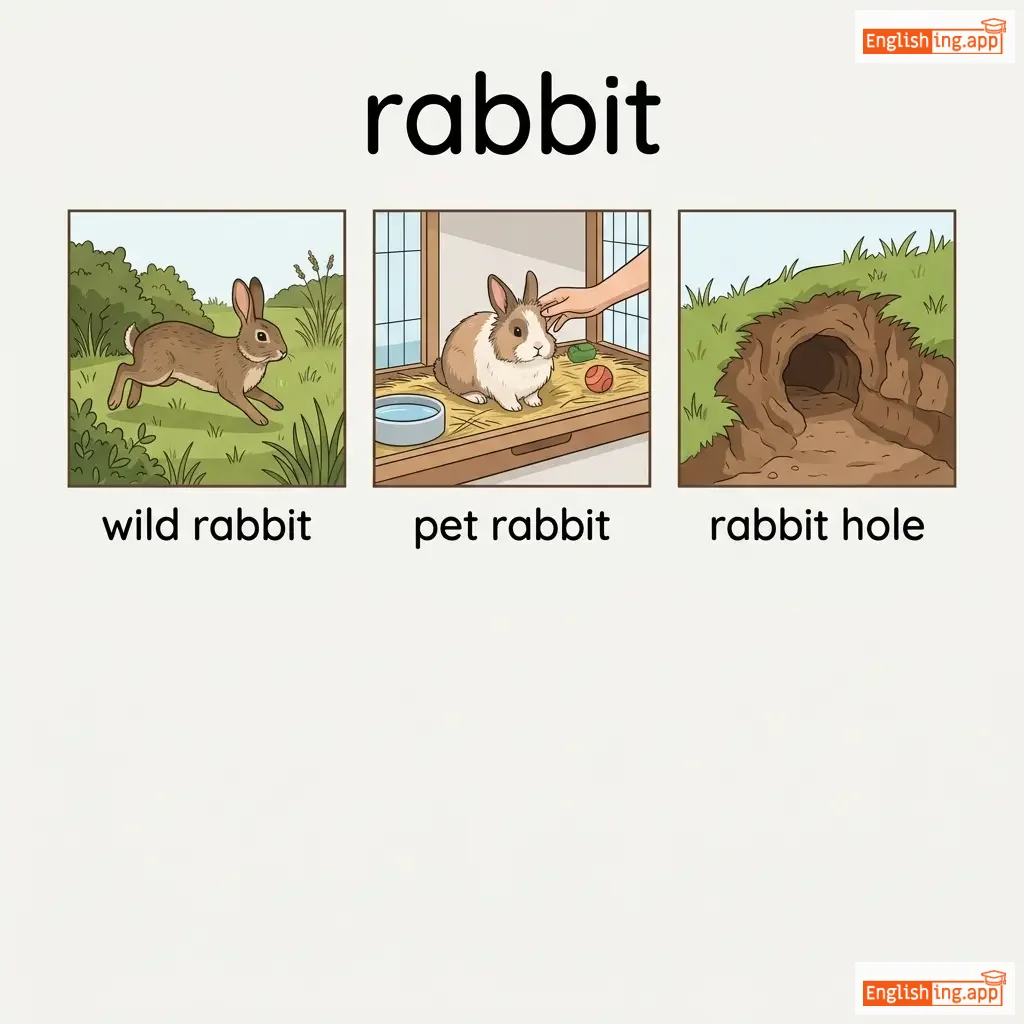
wild rabbit, pet rabbit, rabbit hole, rabbit stew, rabbit fur
••••••
|
ウサギはすばやく跳ねる — それは速い動物です!
••••••
|
|
#1
📋
|
/ˌkwes.tʃəˈneər/
noun
(クエスチョネア)
••••••
|
- •••••• |
アンケート
ankēto
••••••
|
- •••••• | - •••••• | - •••••• | - •••••• |
a set of written questions used to collect information or opinions
••••••
|
Participants filled out a detailed questionnaire about their habits.
参加者は自分の習慣についての詳細なアンケートに記入しました。
••••••
|
参加者は自分の習慣についての詳細なアンケートに記入しました。
Sanka-sha wa jibun no shūkan ni tsuite no shōsai na ankēto ni kinyū shimashita.
••••••
|
- •••••• | - •••••• | - •••••• |
survey, form, poll, feedback form, inquiry sheet
••••••
|
answer, response, reply
••••••
|
fill out questionnaire, complete questionnaire, survey questionnaire, customer questionnaire
••••••
|
アンケートは質問がたくさんあるので、覚えておいてください、アンケート!
••••••
|
|
#1
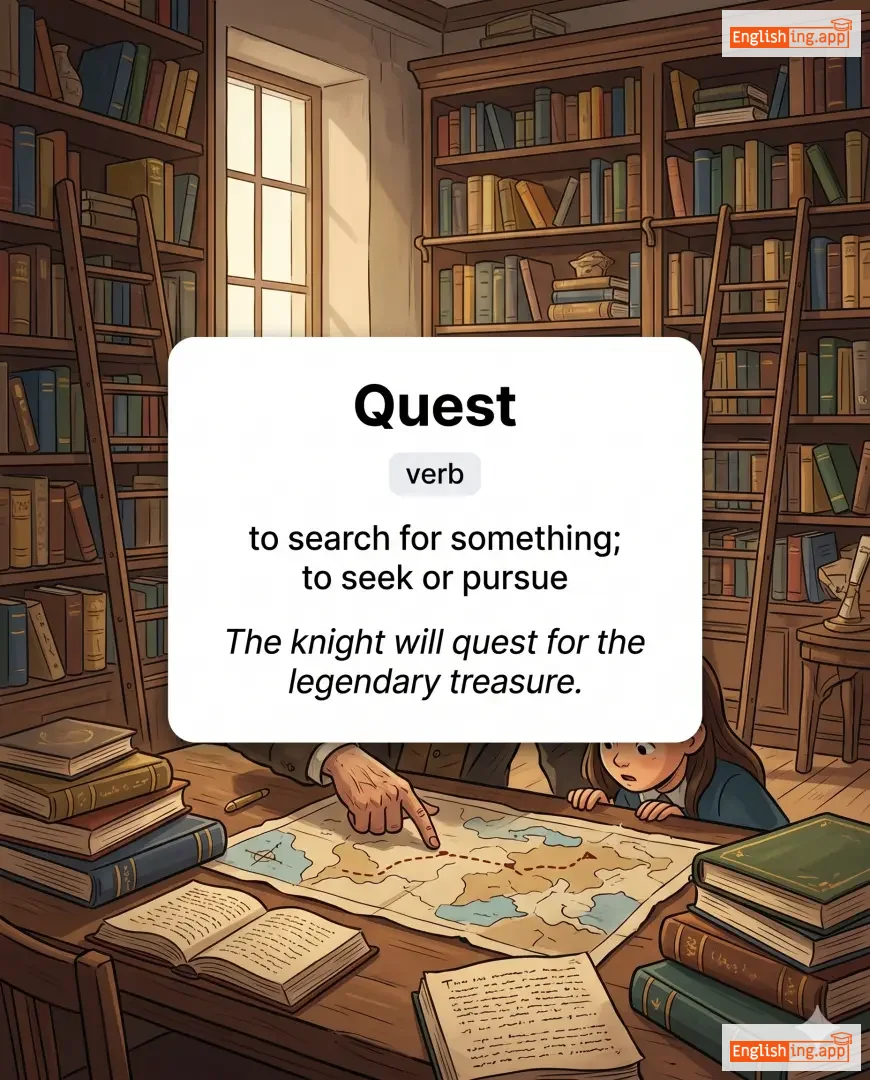
🗺️
|
/kwest/
noun
(クエスト)
••••••
|
|
探求, 探索
tankyu, tansaku
••••••
|
- •••••• | - •••••• | - •••••• | - •••••• |
a long search for something that is difficult to find
••••••
|
They went on a quest to find the lost treasure. |
彼らは失われた宝物を探しに行った。
Karera wa ushinawareta hōmotsu o sagashi ni itta.
••••••
|
quest for knowledge |
the pursuit of learning or understanding
••••••
|
知識の探求
chishiki no tankyu
••••••
|
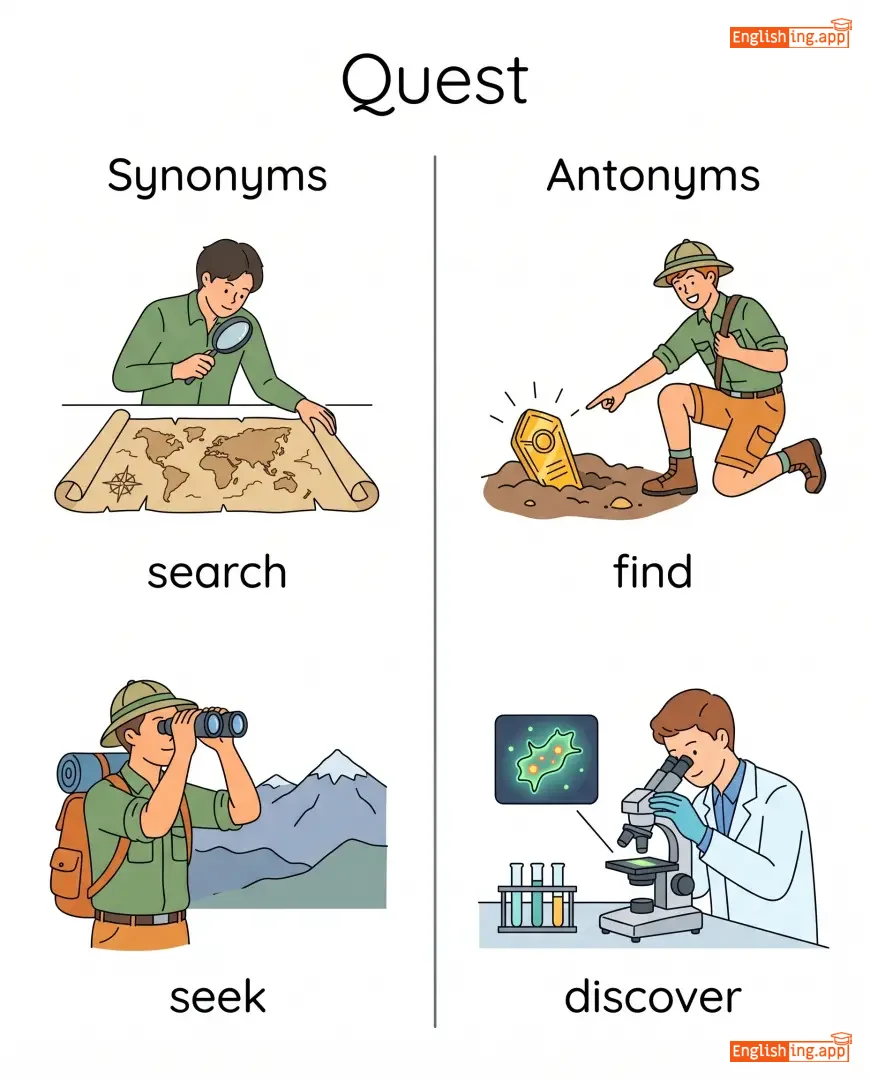
search, pursuit, mission, journey, expedition
••••••
|
idleness, neglect, inaction
••••••
|
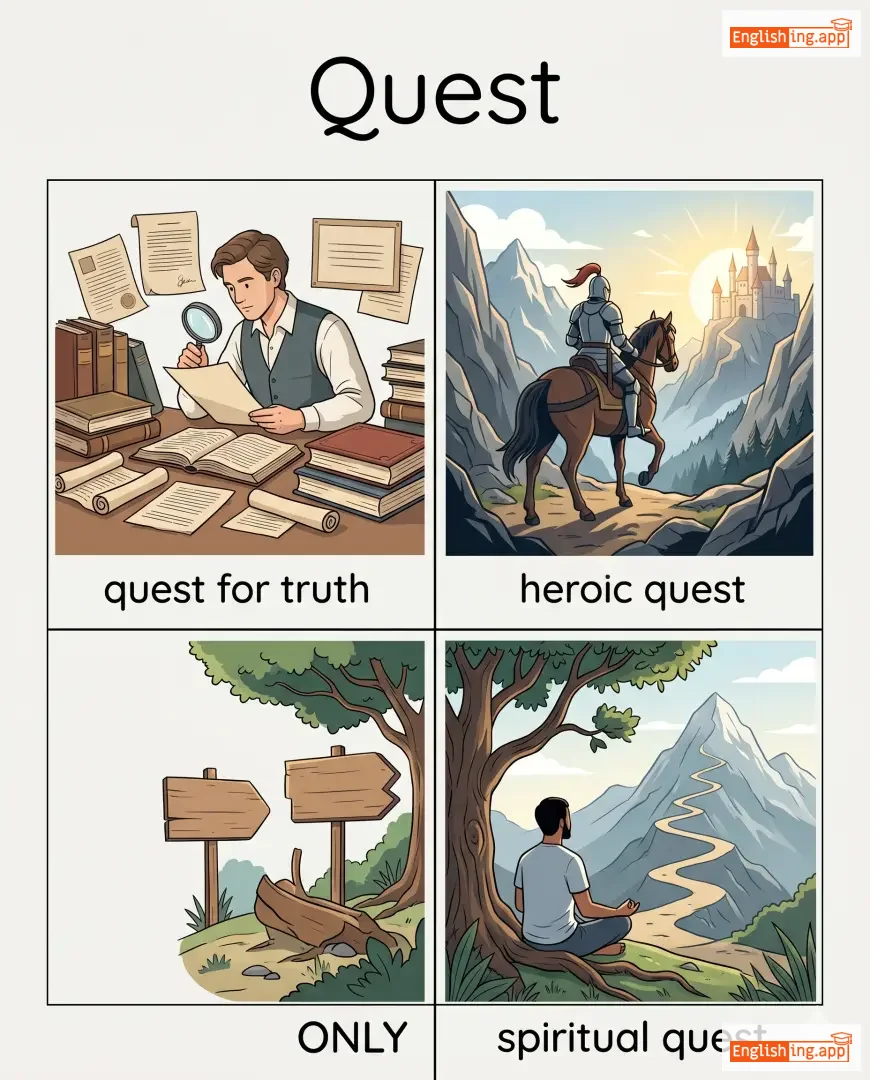
quest for knowledge, quest for truth, epic quest, spiritual quest
••••••
|
Questは探求を意味します – Treasure Questは宝物探索を意味します!
••••••
|
|
#1
👑
|
/kwiːn/
noun
(クイーン)
••••••
|
- •••••• |
女王
joō
••••••
|
- •••••• | - •••••• | - •••••• | - •••••• |
a female ruler of a country or the wife of a king
••••••
|
The queen addressed her people with grace. |
女王は優雅に人々に話しかけた。
Joō wa yūga ni hitobito ni hanashikaketa.
••••••
|
drama queen |
a person who overreacts or exaggerates emotions
••••••
|
ドラマクイーン
Dorama kuīn
••••••
|
monarch, ruler, sovereign, empress, consort
••••••
|
king, commoner, servant
••••••
|
queen bee, beauty queen, queen of hearts, crowned queen
••••••
|
Queen は女王 👑 – ロイヤルな品位!
••••••
|
|
#1
🏃♂️
|
/pəˈsjuːt/
noun
(パースート)
••••••
|
- •••••• |
追求, 探求
tsuikyū, tankyū
••••••
|
- •••••• | - •••••• | - •••••• | - •••••• |
the act of chasing or trying to achieve something
••••••
|
He dedicated his life to the pursuit of happiness. |
彼は幸福を追い求めることに人生を捧げた。
Kare wa kōfuku o oimotomeru koto ni jinsei o sasageta.
••••••
|
in hot pursuit |
closely chasing someone or something
••••••
|
熱心に追いかける
nesshin ni oikakeru
••••••
|
quest, chase, search, aim, endeavor
••••••
|
retreat, surrender, inaction
••••••
|
pursuit of happiness, pursuit of knowledge, in pursuit, career pursuit
••••••
|
Pursuitは、目標を追い求めることです。
••••••
|
|
#1
🟣
|
/ˈpɜː.pəl/
adjective
(パープル)
••••••
|
- •••••• |
紫
murasaki
••••••
|
- •••••• | - •••••• | - •••••• | - •••••• |
a color that is a mix of red and blue
••••••
|
She wore a beautiful purple dress to the party. |
彼女はパーティーに美しい紫のドレスを着て行きました。
Kanojo wa pātii ni utsukushī murasaki no doresu o kite ikimashita.
••••••
|
born to the purple |
born into a royal or noble family
••••••
|
紫禁城で生まれる
shikinjō de umareru
••••••
|
violet, lavender, mauve, lilac, plum
••••••
|
colorless, pale, white
••••••
|
purple dress, purple flower, deep purple, light purple
••••••
|
紫 = Purple, 王族にふさわしい色。
••••••
|
|
#1
⚖️
|
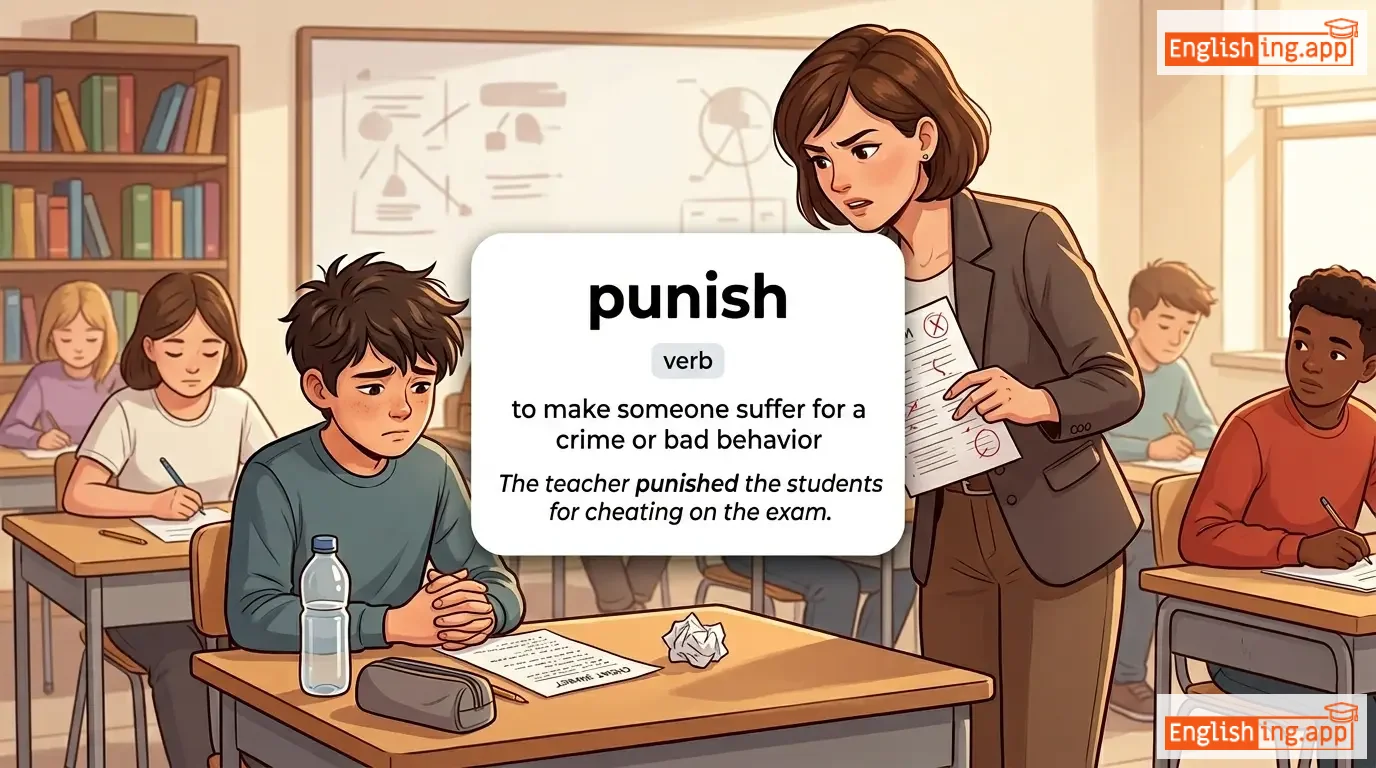
/ˈpʌnɪʃ/
verb
(パニッシュ)
••••••
|
|
罰する
bassuru
••••••
|
punished
パニッシュド
••••••
|
punished
パニッシュド
••••••
|
punishes
パニッシュズ
••••••
|
punishing
パニッシング
••••••
|
to make someone suffer for a crime or bad behavior
••••••
|
The teacher punished the students for cheating on the exam.
教師は試験でカンニングをした学生を罰した。
••••••
|
教師は試験でカンニングをした学生を罰した。
Kyoushi wa shiken de kanningu wo shita gakusei wo basshita.
••••••
|
punish oneself
自分を罰する
••••••
|
to make oneself suffer for guilt or regret
••••••
|
自分を罰する
jibun wo bassuru
••••••
|
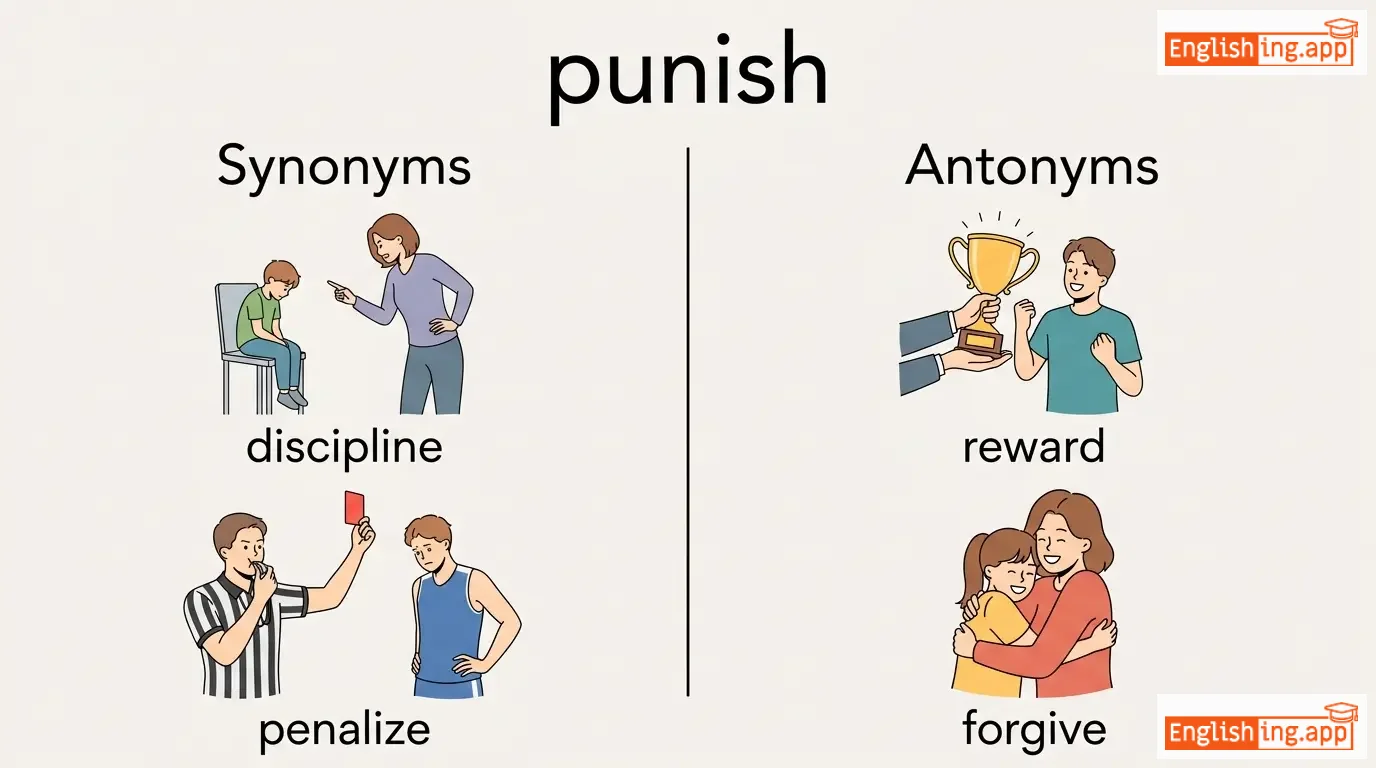
discipline, penalize, reprimand, chastise, correct
••••••
|
reward, forgive
••••••
|
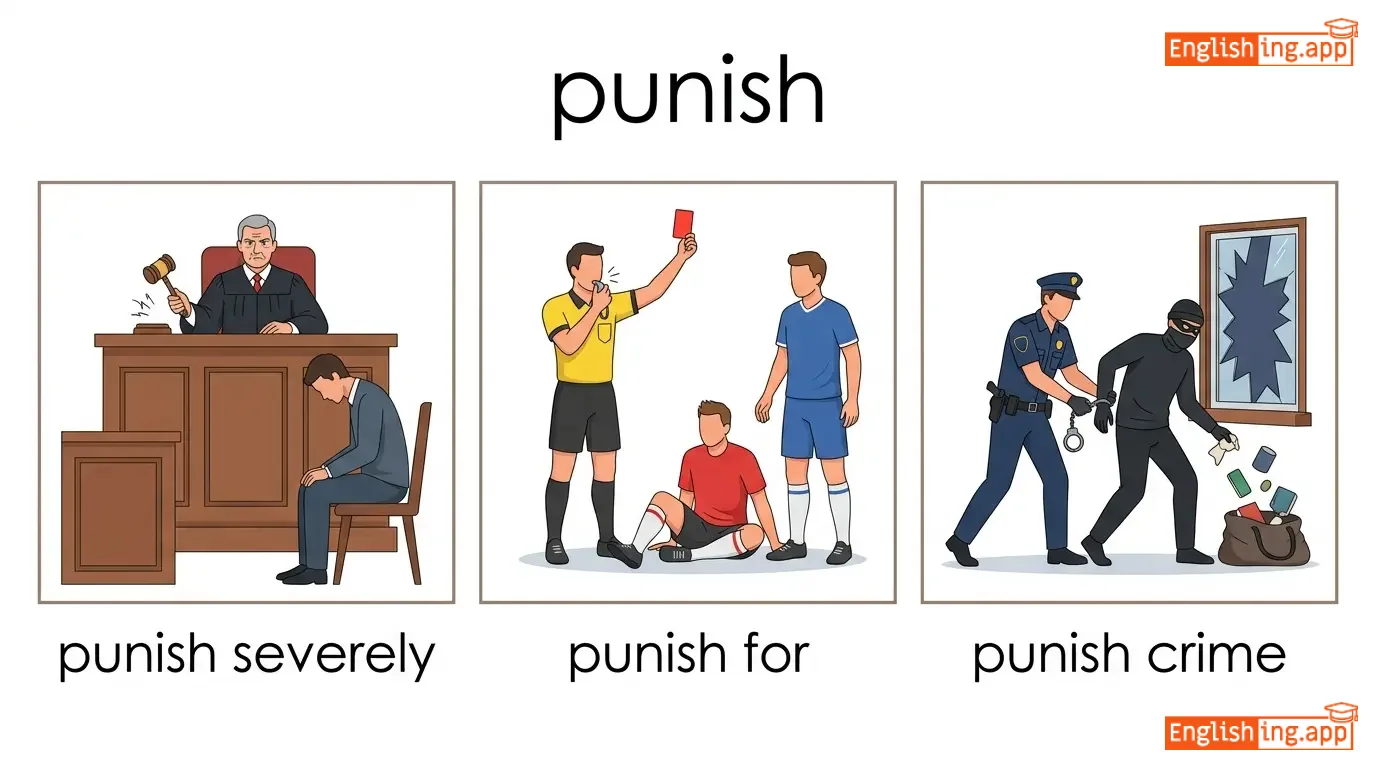
punish severely, punish for, punish crime, punish wrongdoer
••••••
|
Punishは罰するという意味 — Punが罰に関係している!
••••••
|
|
#1
🥊
|
/pʌntʃ/
verb
(パンチ)
••••••
|
- •••••• |
殴る
naguru
••••••
|
punched
パンチド
••••••
|
punched
パンチド
••••••
|
punches
パンチズ
••••••
|
punching
パンチング
••••••
|
to hit someone or something hard with your fist
••••••
|
He punched the wall in frustration.
彼はフラストレーションで壁を殴った。
••••••
|
彼はフラストレーションで壁を殴った。
Kare wa furasutorēshon de kabe o nagutta.
••••••
|
pack a punch
パンチを加える
••••••
|
to have a strong effect or impact
••••••
|
強い影響を与える
tsuyoi eikyō o ataeru
••••••
|
hit, strike, smack, blow, thump
••••••
|
caress, pat
••••••
|
throw a punch, punch hard, punch bag, pack a punch
••••••
|
‘punch’ を考えてみて、壁を殴るような力強い影響!
••••••
|
Vocabulary Quiz
Test your vocabulary by matching words with their translations or meanings.
Login to take the quiz
Comments (0)
Share your thoughts and join the discussion.
Join the discussion by logging in
Login to CommentNo comments yet
Be the first to share your thoughts!