

翻訳
過去
過去分詞
三人称単数
動名詞
意味
例文
例文の翻訳
同義語
対義語
コロケーション
ニーモニック




Swipe left or right, or use the buttons. Tap image to zoom.
例文の翻訳
単語
Lesson 356Lesson 356 - マスクトグル
|
絵文字
|
単語 | Images | 翻訳 | 過去 | 過去分詞 | 三人称単数 | 動名詞 | 意味 | 例文 | 例文の翻訳 | 表現例 | 表現例の意味 | 表現例の翻訳 | 同義語 | 対義語 | コロケーション | ニーモニック |
|---|---|---|---|---|---|---|---|---|---|---|---|---|---|---|---|---|---|
|
#10645
🏛️
|
/kəˈloʊniəl/
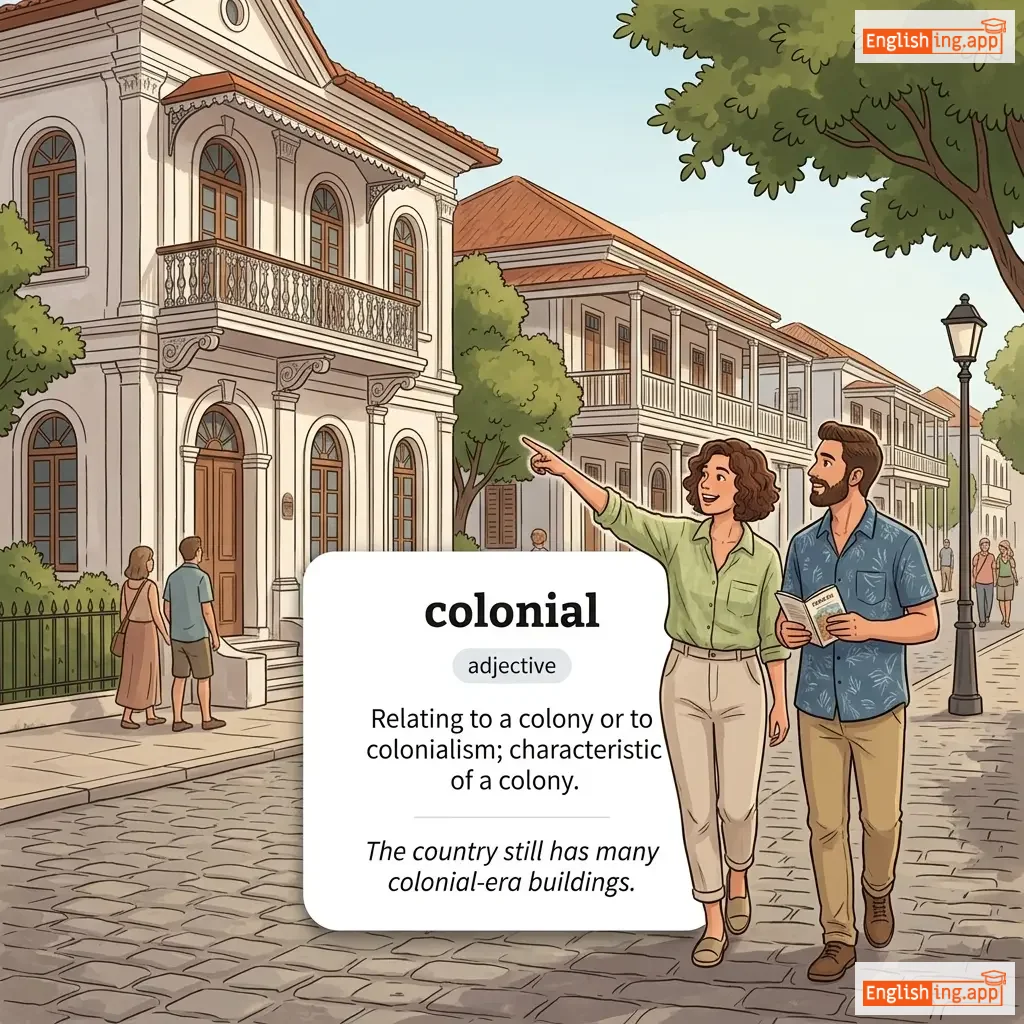
adjective
(コロニアル)
••••••
|
|
植民地の
shokuminchi no
••••••
|
- •••••• | - •••••• | - •••••• | - •••••• |
Relating to a colony or to colonialism; characteristic of a colony.
••••••
|
The country still has many colonial-era buildings.
その国にはまだ多くの植民地時代の建物があります。
••••••
|
その国にはまだ多くの植民地時代の建物があります。
Sono kuni ni wa mada ooku no shokuminchi jidai no tatemono ga arimasu.
••••••
|
colonial rule
植民地支配
••••••
|
political control of one country by another
••••••
|
植民地支配
shokuminchi shihai
••••••
|
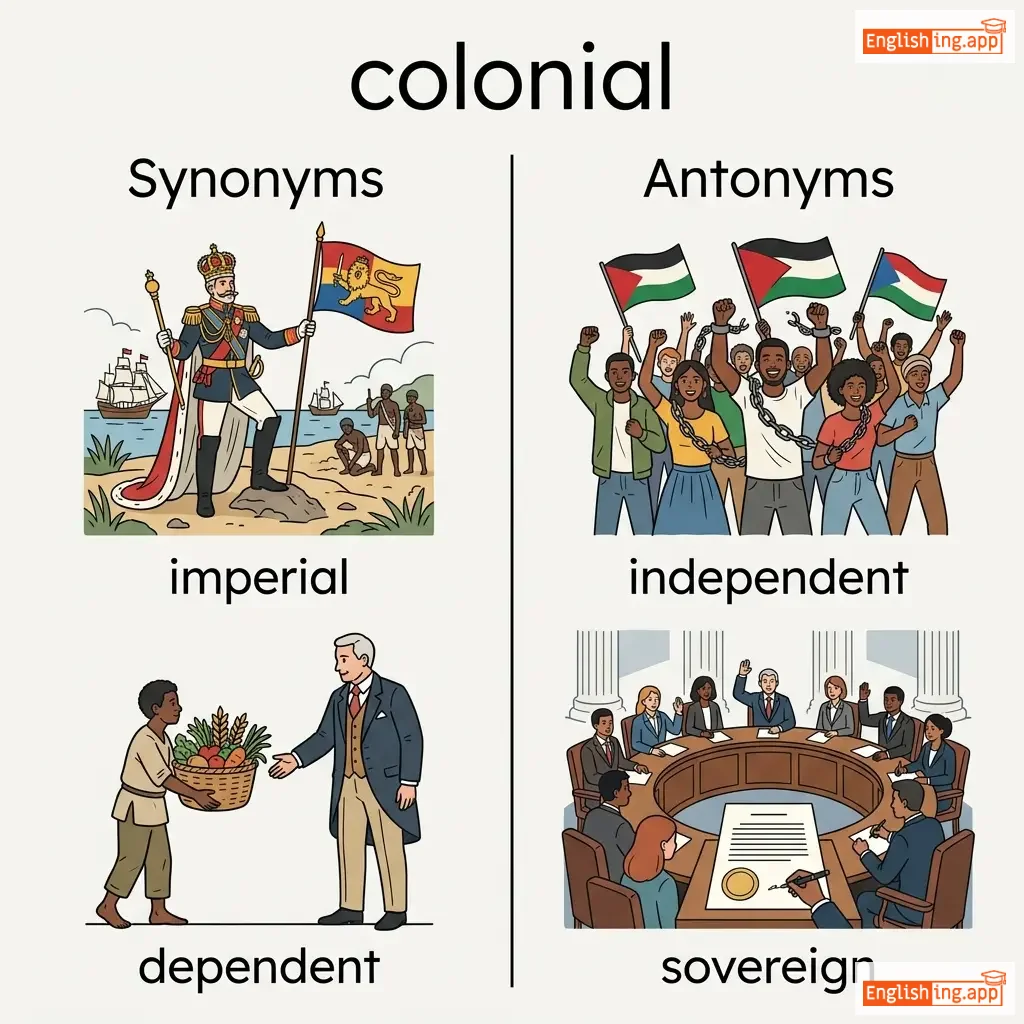
imperial, dependent, overseas, settler
••••••
|
independent, sovereign
••••••
|
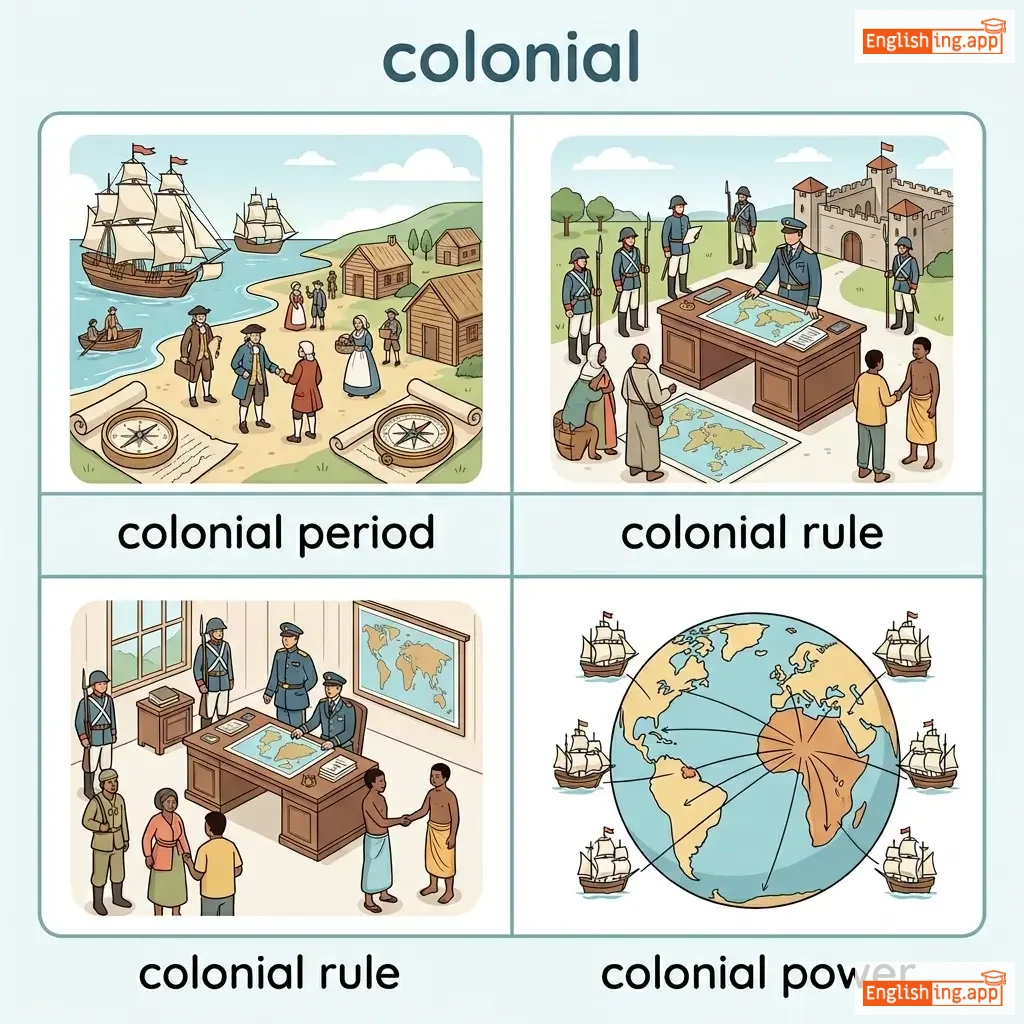
colonial period, colonial rule, colonial power, colonial history
••••••
|
Colonial は日本語で植民地を意味し、歴史的な植民地支配を思い出させます。
••••••
|
|
#10646
🏆
|
/kəmˈpiːt/
verb
(コンペート)
••••••
|
- •••••• |
競争する
kyousou suru
••••••
|
competed
コンペーティッド
••••••
|
competed
コンペーティッド
••••••
|
competes
コンピーツ
••••••
|
competing
コンピーティング
••••••
|
to try to win or be more successful than others in a contest or activity
••••••
|
Several companies compete for dominance in the market.
いくつかの会社が市場での支配を競い合っています。
••••••
|
いくつかの会社が市場での支配を競い合っています。
Ikutsuka no kaisha ga shijou de no shihai o kisoiatteimasu.
••••••
|
compete against time
時間との競争
••••••
|
to try to do something very quickly before time runs out
••••••
|
時間との競争
Jikan to no kyousou
••••••
|
contend, vie, strive, rival, challenge
••••••
|
cooperate, support, assist
••••••
|
compete for, compete against, compete in, fiercely compete
••••••
|
競争するということは競い合うことです!
••••••
|
|
#10647
⚖️
|
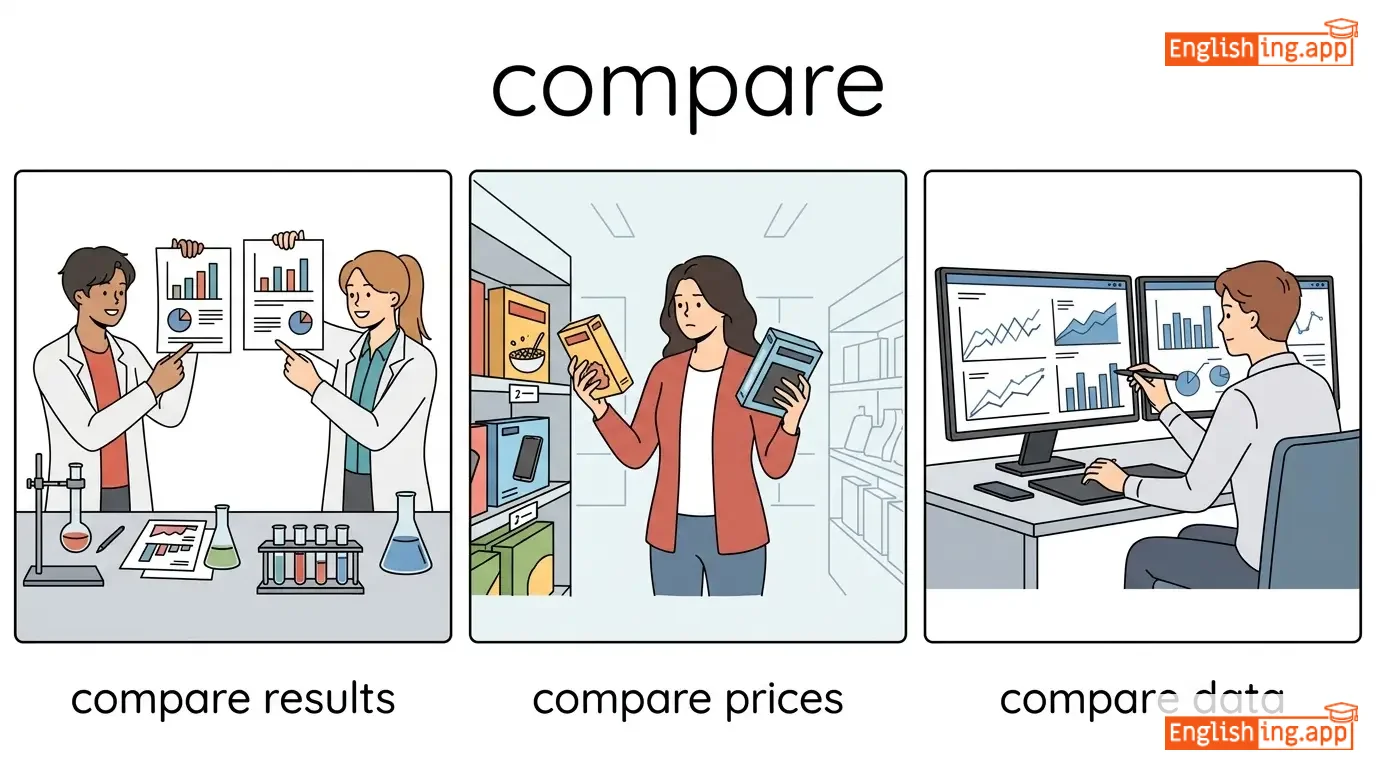
/kəmˈpeər/
verb
(kəmˈpeər)
••••••
|
|
比較する
hikaku suru
••••••
|
compared
kəmˈpeərd
••••••
|
compared
kəmˈpeərd
••••••
|
compares
kəmˈpeərz
••••••
|
comparing
kəmˈpeərɪŋ
••••••
|
to examine the similarities and differences between two or more things
••••••
|
The teacher asked us to compare two poems.
先生は私たちに二つの詩を比較するように頼みました。
••••••
|
先生は私たちに二つの詩を比較するように頼みました。
Sensei wa watashitachi ni futatsu no shi o hikaku suru yō ni tanomimashita.
••••••
|
compare notes
ノートを比較する
••••••
|
to exchange information or opinions on a subject
••••••
|
ノートを比較する
nōto o hikaku suru
••••••
|
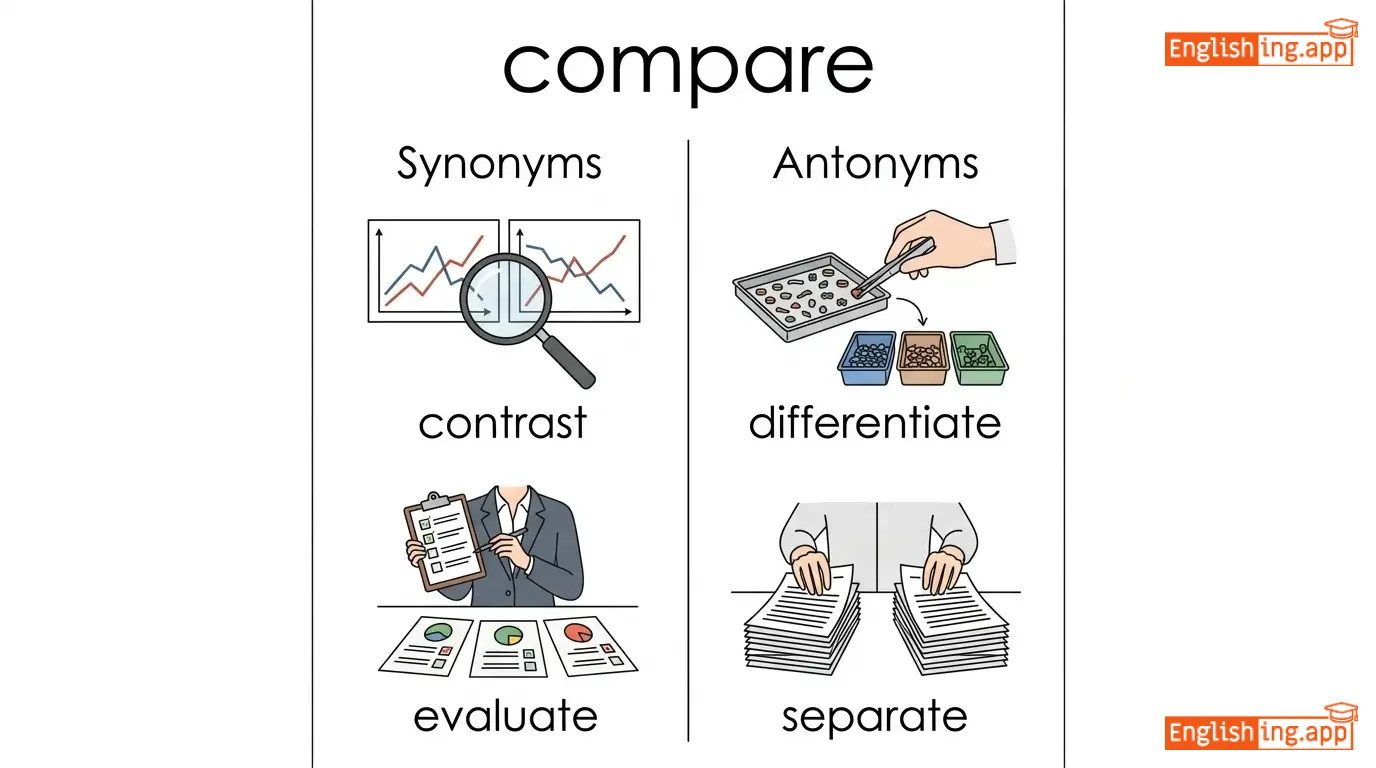
contrast, evaluate, match, measure, analyze
••••••
|
differentiate, separate
••••••
|
compare results, compare prices, compare data, compare favorably
••••••
|
Compare は比較するという意味です - お店で価格を比較するようなものです。
••••••
|
|
#10648
🏢
|
/ˈkʌm.pə.ni/
noun
(kōmpanī)
••••••
|
- •••••• |
会社
kaisha
••••••
|
- •••••• | - •••••• | - •••••• | - •••••• |
a business organization; the presence of other people
••••••
|
She started her own company to sell handmade products. |
彼女は手作りの製品を販売するために自分の会社を始めました。
Kanojo wa tedzukuri no seihin o hanbai suru tame ni jibun no kaisha o hajimemashita.
••••••
|
keep someone company |
to stay with someone so they are not alone
••••••
|
誰かに付き添う
dareka ni tsukisou
••••••
|
firm, corporation, enterprise, business, organization
••••••
|
individual, solitude
••••••
|
company policy, company profile, company growth, company headquarters
••••••
|
会社 = '会社' はビジネスを意味し、 '付き添う' は誰かと一緒にいることを意味します。
••••••
|
|
#10649
🏘️
|
/kəˈmjuː.nə.ti/
noun
(コミュニティ)
••••••
|
- •••••• |
コミュニティ
komyuniti
••••••
|
- •••••• | - •••••• | - •••••• | - •••••• |
a group of people living in the same place or sharing common interests
••••••
|
The community worked together to clean the park.
コミュニティは公園を掃除するために一緒に働きました。
••••••
|
コミュニティは公園を掃除するために一緒に働きました。
Komyuniti wa kouen wo souji suru tame ni issho ni hatarakimashita.
••••••
|
sense of community
コミュニティの感覚
••••••
|
a feeling of belonging and togetherness among people
••••••
|
コミュニティの感覚
Komyuniti no kankaku
••••••
|
group, society, population, collective, neighborhood
••••••
|
individual, isolation
••••••
|
local community, global community, community service, community center
••••••
|
コミュニティ = Com (一緒に) + unity (団結) = 一つのグループとして団結。
••••••
|
|
#10650
📞
|
/kəˌmjuː.nɪˈkeɪ.ʃən/
noun
(コミュニケーション)
••••••
|
|
コミュニケーション
komyunikeeshon
••••••
|
- •••••• | - •••••• | - •••••• | - •••••• |
the act or process of sharing information, ideas, or feelings
••••••
|
Good communication is essential for a strong relationship. |
良いコミュニケーションは強い関係には不可欠です。
Yoi komyunikeeshon wa tsuyoi kankei ni wa fukaketsu desu.
••••••
|
lines of communication |
the channels or methods by which people communicate
••••••
|
コミュニケーションライン
komyunikeeshon rain
••••••
|
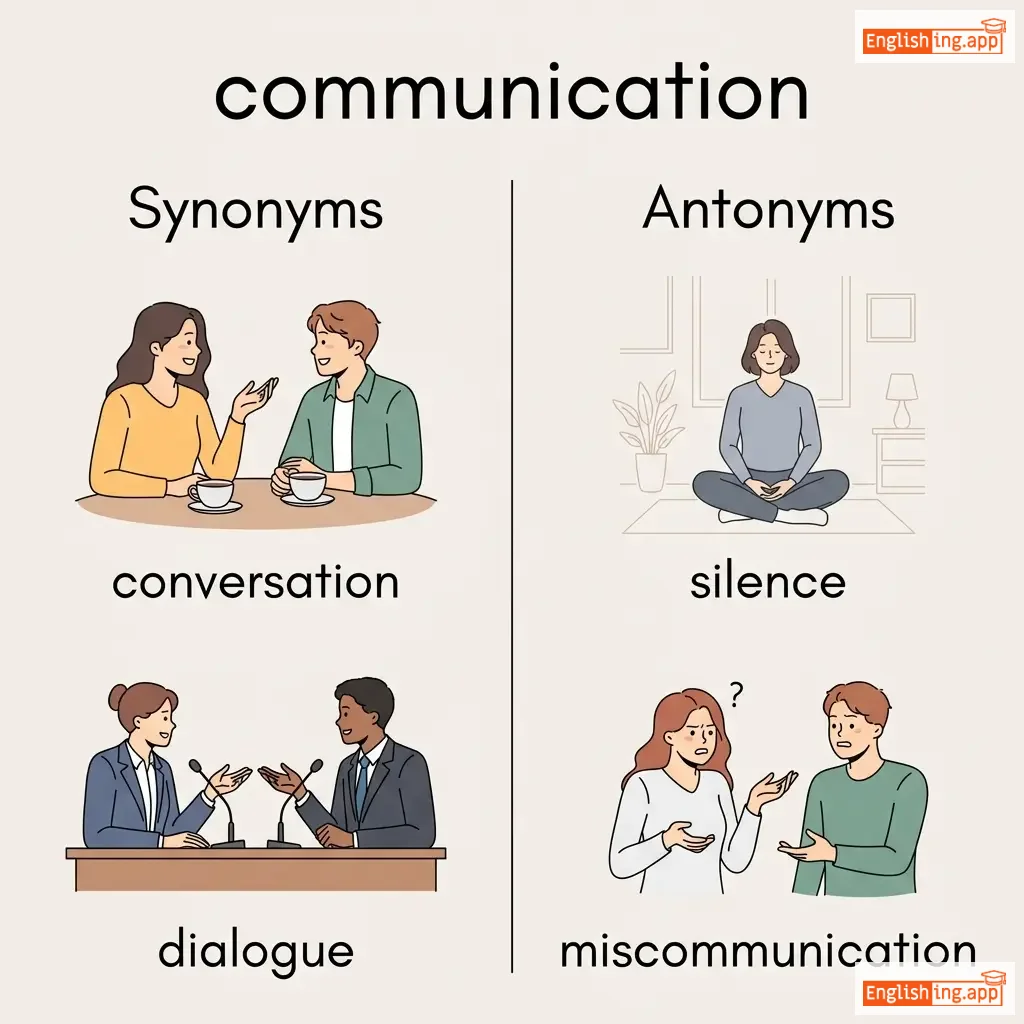
conversation, dialogue, exchange, correspondence, contact
••••••
|
silence, miscommunication
••••••
|
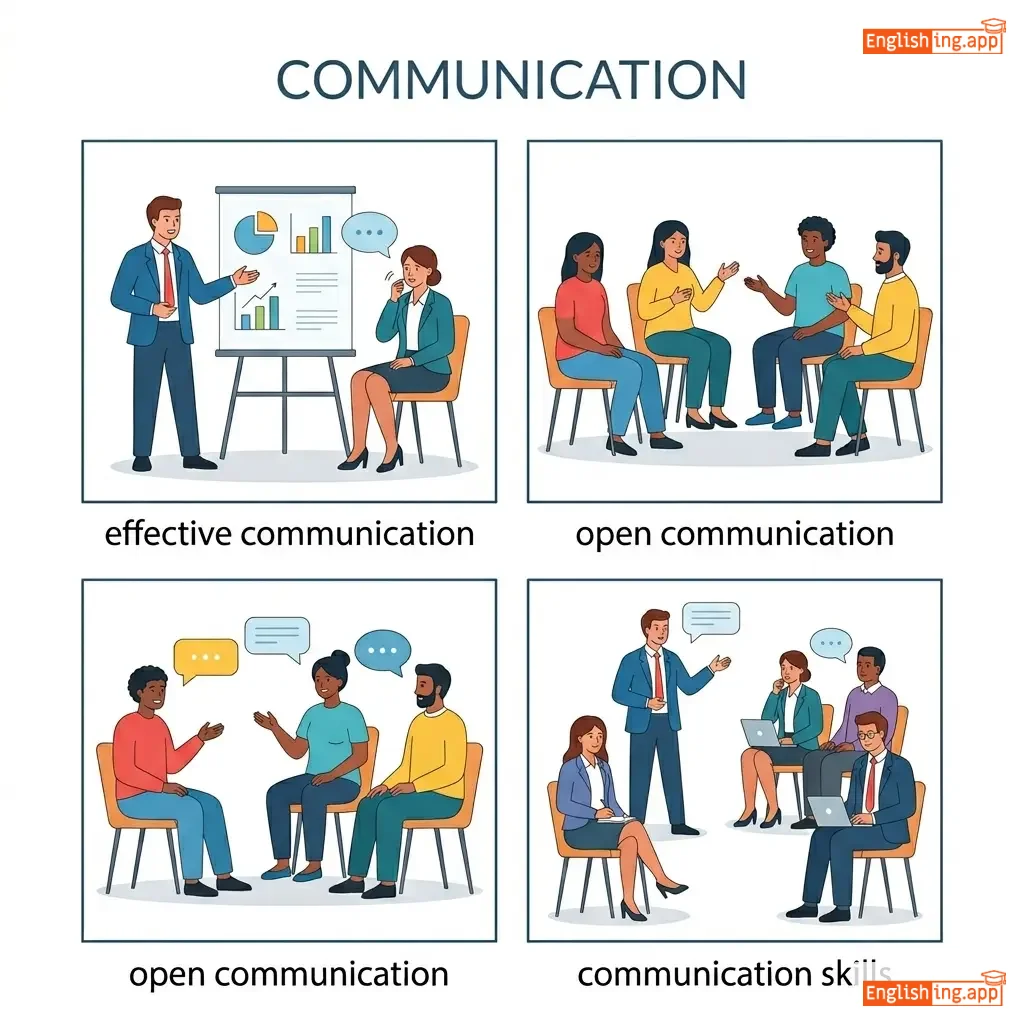
effective communication, open communication, communication skills, communication barrier
••••••
|
コミュニケーション = コミュニティ + 行動 = 社会での情報交換
••••••
|
|
#10651
💬
|
/kəˈmjuː.nɪ.keɪt/
verb
••••••
|
- •••••• | - •••••• |
communicated
••••••
|
communicated
••••••
|
communicates
••••••
|
communicating
••••••
|
to share or exchange information, ideas, or feelings
••••••
|
They used gestures to communicate across the noisy room. |
- •••••• |
communicate clearly |
to express oneself in a way that others can easily understand
••••••
|
- •••••• |
convey, express, share, transmit, inform
••••••
|
conceal, suppress
••••••
|
communicate effectively, communicate directly, communicate through, communicate clearly
••••••
|
No •••••• |
|
#10652
🌍
|
/ˈkɒm.ən/
adjective
(komon)
••••••
|
- •••••• |
共通
kyoutsuu
••••••
|
- •••••• | - •••••• | - •••••• | - •••••• |
occurring frequently or widely; shared by all
••••••
|
It is common to see traffic in the city during rush hour. |
ラッシュアワー中に都市で交通渋滞を見るのは一般的です。
Rasshu awa-chuu ni toshi de koutsuu jyuutai wo miru no wa ippanteki desu
••••••
|
common sense |
good practical judgment based on everyday experience
••••••
|
常識
joushiki
••••••
|
usual, ordinary, frequent, general
••••••
|
rare, uncommon, unusual
••••••
|
common problem, common interest, common mistake, in common
••••••
|
共通はみんなで分かち合うこと、例えば‘常識’のように。
••••••
|
|
#10653
👥
|
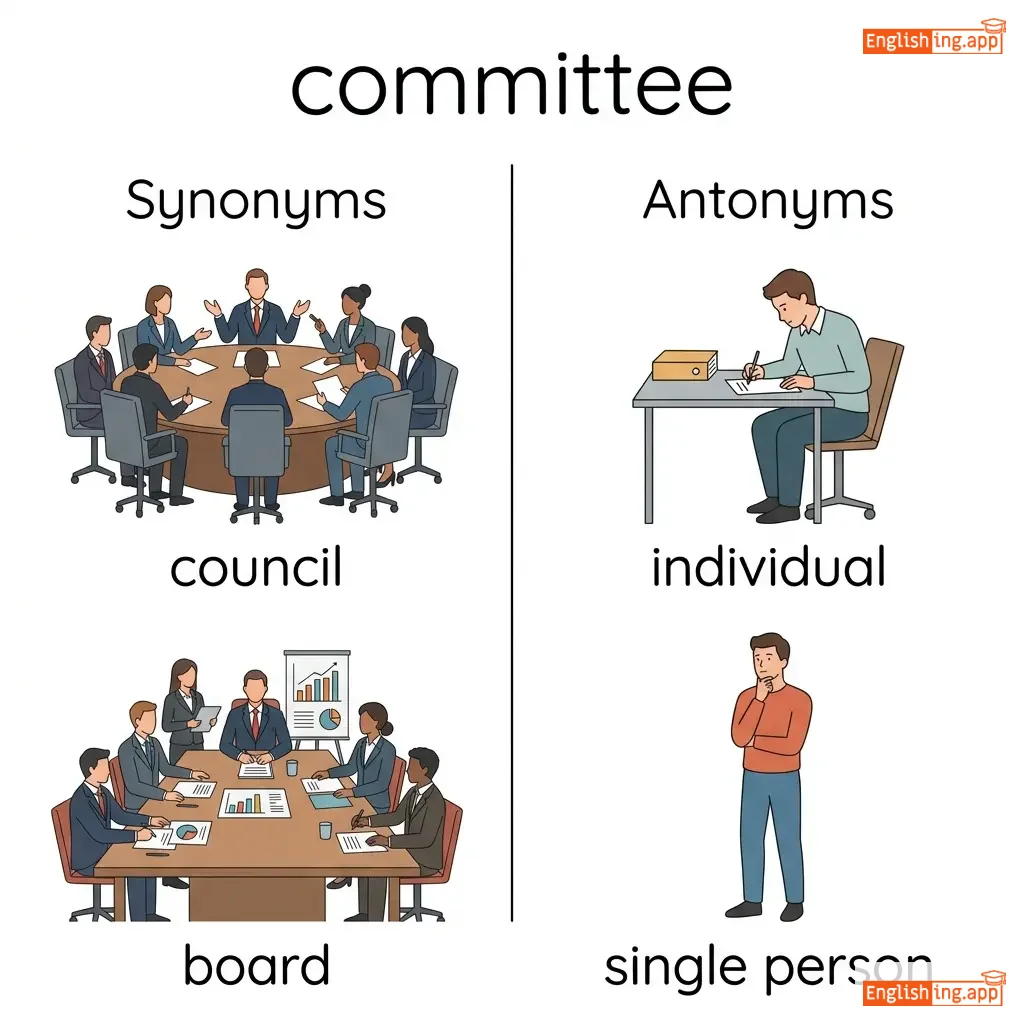
/kəˈmɪt.i/
noun
(コミッティ)
••••••
|
|
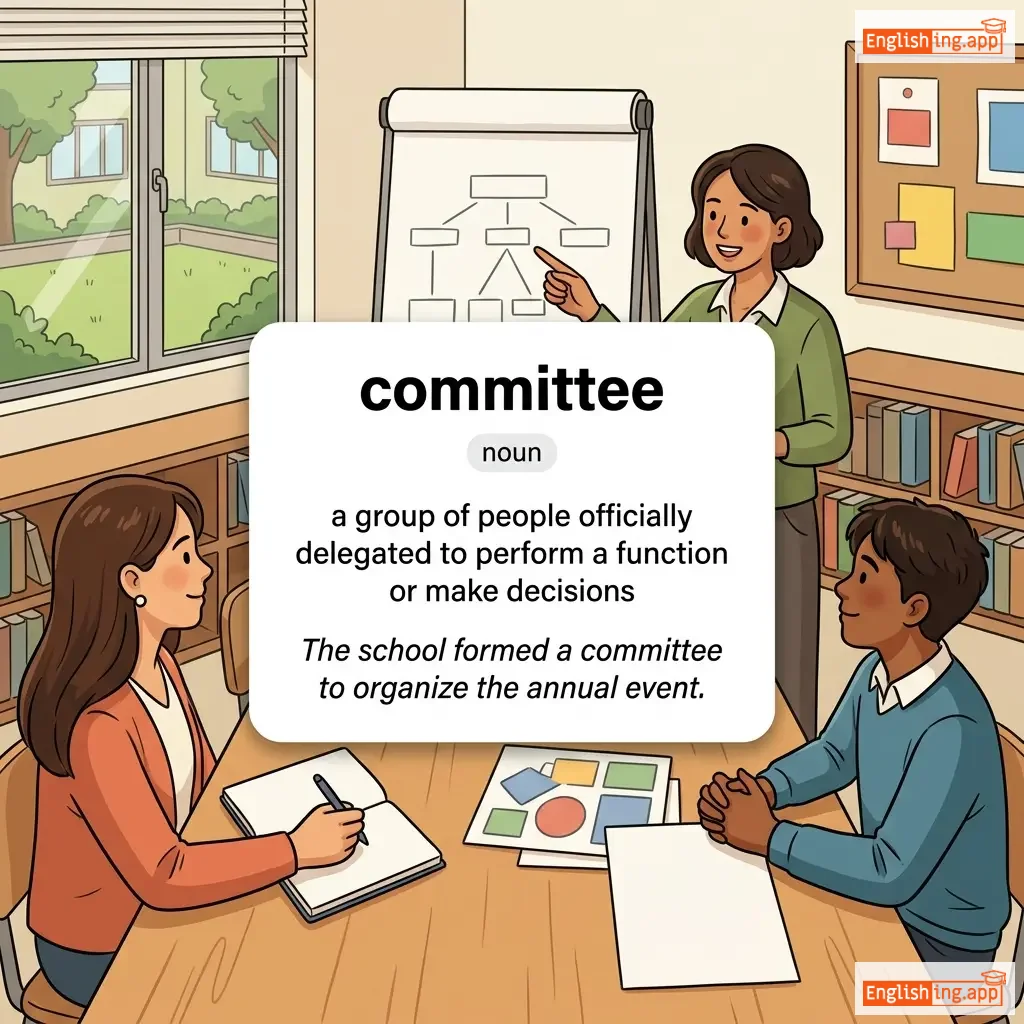
委員会
iinkai
••••••
|
- •••••• | - •••••• | - •••••• | - •••••• |
a group of people officially delegated to perform a function or make decisions
••••••
|
The school formed a committee to organize the annual event. |
学校は年次イベントを組織するために委員会を結成しました。
Gakkō wa nenji ibento o soshiki suru tame ni iinkai o kessei shimashita.
••••••
|
- •••••• | - •••••• | - •••••• |
council, board, panel, group, commission
••••••
|
individual, single person
••••••
|
committee meeting, committee decision, committee member, school committee
••••••
|
委員会 = 重要な決定を行うグループ
••••••
|
|
#10654
💬
|
/ˈkɒm.ent/
noun
(komento)
••••••
|
- •••••• |
コメント
komento
••••••
|
- •••••• | - •••••• | - •••••• | - •••••• |
a verbal or written remark expressing an opinion or reaction
••••••
|
She posted a kind comment on my photo. |
彼女は私の写真に優しいコメントを投稿しました。
Kanojo wa watashi no shashin ni yasashī komento o tōkō shimashita.
••••••
|
no comment |
refusal to answer a question or give an opinion
••••••
|
コメントなし
komento nashi
••••••
|
remark, observation, statement, feedback
••••••
|
silence, quiet
••••••
|
make a comment, post a comment, critical comment, positive comment
••••••
|
Facebookでコメントすることはコメント(komento)をすることです
••••••
|
|
#10655
🎖️
|
/kəˈmænd/
verb
(コマンド)
••••••
|
- •••••• |
命令
meirei
••••••
|
commanded
コマンドした
••••••
|
commanded
コマンドした
••••••
|
commands
コマンドする
••••••
|
commanding
コマンドしている
••••••
|
to give an order authoritatively; to control or direct
••••••
|
The general commanded the soldiers to move forward.
将軍は兵士たちに前進するよう命じた。
••••••
|
将軍は兵士たちに前進するよう命じた。
Shōgun wa heishi-tachi ni zenshin suru yō meijita.
••••••
|
at your command
あなたのコマンドで
••••••
|
ready to serve or act at someone's order
••••••
|
あなたの命令で
Anata no meirei de
••••••
|
order, direct, instruct, control, demand
••••••
|
obey, request, follow
••••••
|
give a command, command authority, command attention, command respect
••••••
|
コマンド、コンピュータの命令
••••••
|
|
#10656
🛋️
|
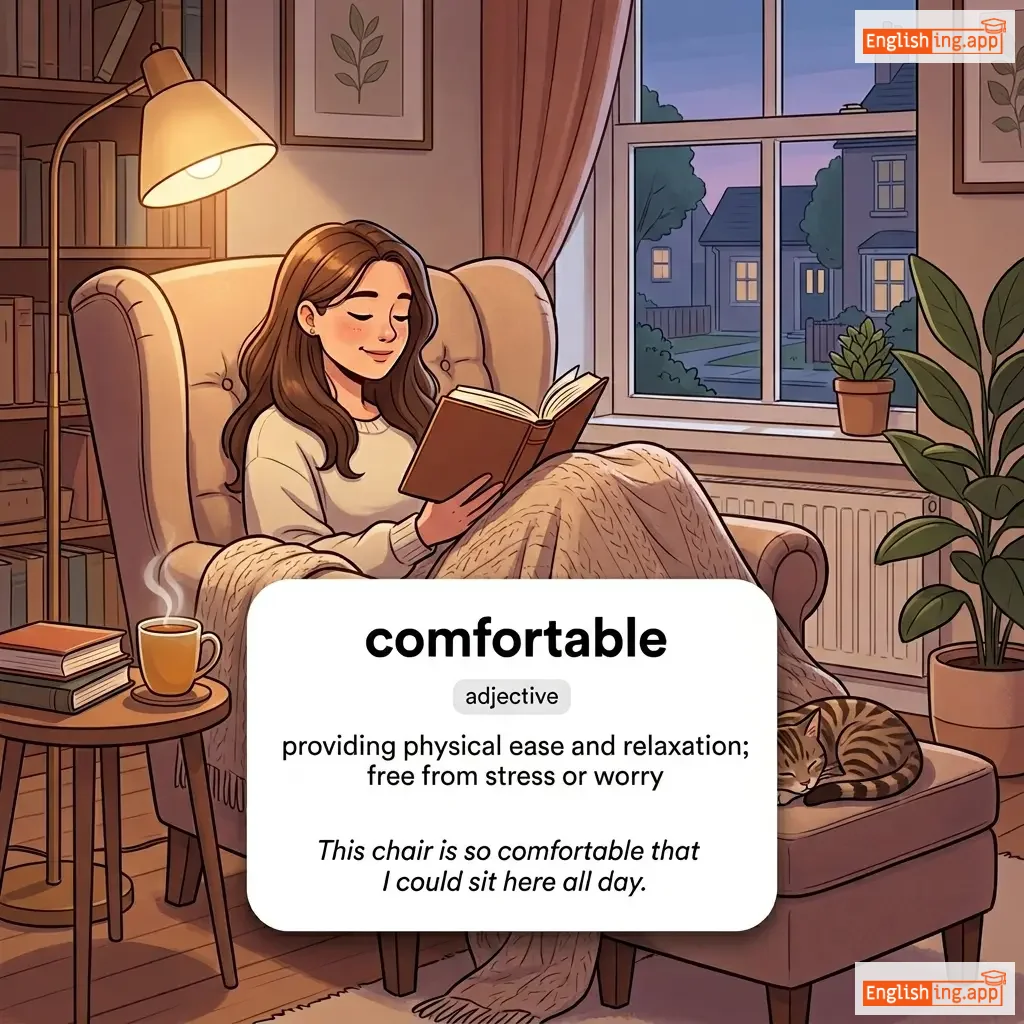
/ˈkʌmf.tə.bəl/
adjective
(コンフォータブル)
••••••
|
|
快適な
kaiteki na
••••••
|
- •••••• | - •••••• | - •••••• | - •••••• |
providing physical ease and relaxation; free from stress or worry
••••••
|
This chair is so comfortable that I could sit here all day.
この椅子はとても快適で、私は一日中ここに座っていられます。
••••••
|
この椅子はとても快適で、私は一日中ここに座っていられます。
Kono isu wa totemo kaiteki de, watashi wa ichinichijū koko ni suwatte iraremasu.
••••••
|
make yourself comfortable
くつろいでください
••••••
|
to relax and feel at ease
••••••
|
くつろいでください
Kutsuroide kudasai
••••••
|
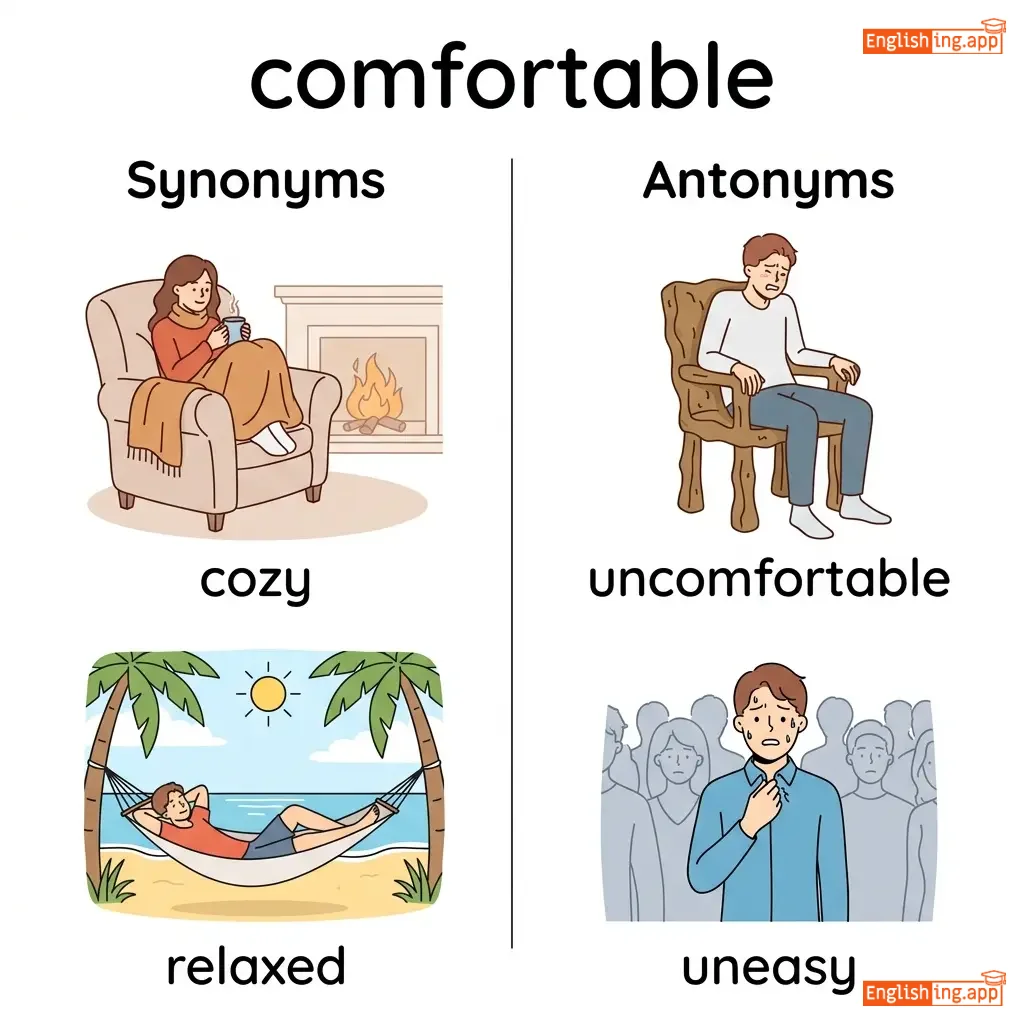
cozy, relaxed, pleasant, easy, restful
••••••
|
uncomfortable, uneasy, unpleasant
••••••
|
comfortable chair, comfortable clothes, feel comfortable, comfortable life
••••••
|
快適な感じは座ったときにすぐに感じる
••••••
|
|
#10657
😂
|
/ˈkɒmədi/
noun
(コメディ)
••••••
|
- •••••• |
コメディ
komedi
••••••
|
- •••••• | - •••••• | - •••••• | - •••••• |
A type of entertainment that is intended to make people laugh.
••••••
|
We watched a hilarious comedy at the theater.
私たちは劇場で面白いコメディを見ました。
••••••
|
私たちは劇場で面白いコメディを見ました。
Watashitachi wa gekijou de omoshiroi komedi o mimashita.
••••••
|
tragicomedy
悲喜劇
••••••
|
a dramatic work that combines elements of tragedy and comedy
••••••
|
悲喜劇
hikigeki
••••••
|
humor, farce, satire, joke, parody
••••••
|
tragedy, drama
••••••
|
stand-up comedy, comedy show, comedy movie, romantic comedy
••••••
|
コメディ - 笑って楽しんで!
••••••
|
|
#10658
🔢
|
/ˌkɒmbɪˈneɪʃən/
noun
(コンビネーション)
••••••
|
- •••••• |
組み合わせ / 混合
kumiawase / kongō
••••••
|
- •••••• | - •••••• | - •••••• | - •••••• |
The act of joining or mixing two or more things together.
••••••
|
This dish is a perfect combination of sweet and spicy flavors. |
この料理は甘いと辛いフレーバーの完璧な組み合わせです。
Kono ryōri wa amai to karai furēbā no kanpeki na kumiawase desu.
••••••
|
combination lock |
a lock that opens by turning dials to a particular sequence of numbers
••••••
|
コンビネーションロック
konbinēshon rokku
••••••
|
blend, mixture, union, fusion, merger
••••••
|
separation, division
••••••
|
perfect combination, unique combination, combination lock, combination of factors
••••••
|
Combination = Com + Bini + shon – 数字を合わせて鍵を開ける
••••••
|
|
#10659
📊
|
/ˈkɒləm/
noun
••••••
|
- •••••• | - •••••• | - •••••• | - •••••• | - •••••• | - •••••• |
A vertical structure that supports a building; also a section of text arranged vertically in a newspaper or table.
••••••
|
The ancient temple had tall marble columns. |
- •••••• |
advice column |
a section in a newspaper where advice is given to readers
••••••
|
- •••••• |
pillar, post, support, section
••••••
|
row, line
••••••
|
newspaper column, support column, table column, advice column
••••••
|
No •••••• |
|
#10660
➡️
|
/ˈkloʊsər/
adjective, noun
(kurōzā)
••••••
|
- •••••• |
もっと近く, 終了者
motto chikaku, shūryōsha
••••••
|
- •••••• | - •••••• | - •••••• | - •••••• |
more near in distance or relationship; someone or something that concludes an activity
••••••
|
She moved closer to the window. |
彼女は窓にもっと近づきました。
Kanojo wa mado ni motto chikadukimashita.
••••••
|
come closer |
move nearer
••••••
|
もっと近づいて
motto chikadzuite
••••••
|
nearer, adjacent, nearby, intimate
••••••
|
farther, distant
••••••
|
closer look, closer relationship, move closer, closer examination
••••••
|
Closerはもっと近くという意味—友達と一緒にいると関係がもっと深くなる。
••••••
|
|
#10661
🎓
|
/ˈkɒlɪdʒ/
noun
(カレッジ)
••••••
|
- •••••• |
大学
daigaku
••••••
|
- •••••• | - •••••• | - •••••• | - •••••• |
An educational institution where students study for degrees or professional qualifications.
••••••
|
She hopes to attend college in the city next year. |
彼女は来年、市内の大学に通うことを望んでいます。
Kanojo wa rainen, shinai no daigaku ni kayou koto o nozondeimasu.
••••••
|
go to college |
to enroll in and attend a college for studies
••••••
|
大学に行く
daigaku ni iku
••••••
|
university, institute, academy, campus
••••••
|
school, dropout
••••••
|
college degree, college student, college campus, go to college
••••••
|
大学で知識を学び未来を切り開こう。
••••••
|
|
#10662
📚
|
/kəˈlɛkʃən/
noun
(コレクション)
••••••
|
- •••••• |
コレクション
korekushon
••••••
|
- •••••• | - •••••• | - •••••• | - •••••• |
a group of things gathered together
••••••
|
She has a large collection of rare books.
彼女は珍しい本の大きなコレクションを持っています。
••••••
|
彼女は珍しい本の大きなコレクションを持っています。
Kanojo wa mezurashī hon no ōkina korekushon o motteimasu.
••••••
|
debt collection
借金回収
••••••
|
the act of recovering money owed
••••••
|
借金回収
shakkin kaishū
••••••
|
group, set, assortment, accumulation, compilation
••••••
|
scattering, dispersal
••••••
|
collection of books, stamp collection, art collection, debt collection
••••••
|
Collectionはコレクション 📚 - 物を集めてコレクションを作る。
••••••
|
|
#10663
❄️
|
/koʊld/
adjective/noun
(kōld)
••••••
|
- •••••• |
寒い
samui
••••••
|
- •••••• | - •••••• | - •••••• | - •••••• |
having a low temperature; lacking warmth
••••••
|
It was so cold outside that she wore two jackets. |
外はとても寒かったので、彼女はジャケットを二枚着ました。
Soto wa totemo samukatta node, kanojo wa jaketto o nimai kimashita.
••••••
|
catch a cold |
to become sick with a minor illness affecting the nose and throat
••••••
|
風邪をひく
kaze o hiku
••••••
|
chilly, icy, frosty, freezing, cool
••••••
|
hot, warm
••••••
|
cold weather, catch a cold, cold drink, cold wind
••••••
|
COLDは寒い意味です❄️ - 寒さは風邪をひかせる (kaze o hiku)
••••••
|
|
#10664
☕
|
/ˈkɔːfi/
noun
(ハピネス)
••••••
|
- •••••• |
幸せ
shiawase
••••••
|
- •••••• | - •••••• | - •••••• | - •••••• |
a hot drink made from roasted and ground coffee beans
••••••
|
I drink a cup of coffee every morning.
彼女は賞を受け取ったとき、幸せを隠せなかった。
••••••
|
彼女は賞を受け取ったとき、幸せを隠せなかった。
Kanojo wa shō o uketotta toki, shiawase o kakusenakatta.
••••••
|
coffee break
幸せの追求
••••••
|
a short rest period when people drink coffee
••••••
|
幸せの追求
Shiawase no tsuikyū
••••••
|
espresso, latte, cappuccino, brew, java
••••••
|
tea, water
••••••
|
cup of coffee, black coffee, coffee shop, coffee break
••••••
|
幸せ = 微笑みと共に人生が豊かになる。
••••••
|
|
#10665
💻
|
/koʊd/
noun/verb
(コード)
••••••
|
- •••••• |
コード
kōdo
••••••
|
coded
コーディッド
••••••
|
coded
コーディッド
••••••
|
codes
コードス
••••••
|
coding
コーディング
••••••
|
a system of words, letters, or symbols used to represent information or instructions
••••••
|
He wrote a code to solve the problem on the computer.
彼はコンピュータで問題を解決するためのコードを書きました。
••••••
|
彼はコンピュータで問題を解決するためのコードを書きました。
Kare wa konpyūta de mondai o kaiketsu suru tame no kōdo o kakimashita.
••••••
|
secret code
秘密のコード
••••••
|
a hidden or encrypted system of communication
••••••
|
秘密のコード
himitsu no kōdo
••••••
|
cipher, program, script, rules, law
••••••
|
plain text, chaos
••••••
|
write code, code of conduct, code breaker, secret code
••••••
|
コード (kōdo) = コンピュータの指示
••••••
|
|
#10666
🧥
|
/koʊt/
noun/verb
(ハピネス)
••••••
|
- •••••• |
幸福
kōfuku
••••••
|
coated
••••••
|
coated
••••••
|
coats
••••••
|
coating
••••••
|
an outer garment worn outdoors, or a layer covering something
••••••
|
She wore a red coat to keep warm in the winter. |
彼女は賞を受け取ったとき、自分の幸福を隠せませんでした。
Kanojo wa shō o uketotta toki, jibun no kōfuku o kakusemasen deshita.
••••••
|
coat of paint |
a single layer of paint applied to a surface
••••••
|
幸福を追求する
kōfuku o tsuikyū suru
••••••
|
jacket, cloak, covering, overcoat, layer
••••••
|
undress, expose
••••••
|
winter coat, fur coat, coat of paint, coat pocket
••••••
|
幸福 (kōfuku) は充実した気持ちを表す — happiness
••••••
|
|
#10667
🪨
|
/koʊl/
noun
(kōru)
••••••
|
- •••••• |
石炭
sekitan
••••••
|
- •••••• | - •••••• | - •••••• | - •••••• |
a black or dark brown rock used as fuel, formed from decomposed plant matter
••••••
|
The factory still uses coal as its main source of energy. |
工場は依然として石炭を主要なエネルギー源として使用しています。
Kōjō wa izen toshite sekitan o shuyō na enerugī gen toshite shiyō shiteimasu.
••••••
|
carry coals to Newcastle |
to do something that is unnecessary or redundant
••••••
|
ニューカッスルに石炭を運ぶ
Nyūkassuru ni sekitan o hakobu
••••••
|
charcoal, fuel, lignite, anthracite
••••••
|
gas, oil
••••••
|
burn coal, coal mine, coal industry, coal power, coal reserves
••••••
|
石炭は石炭です。暖を取るために炉に石炭を入れるようなものです。
••••••
|
|
#10668
🏀
|
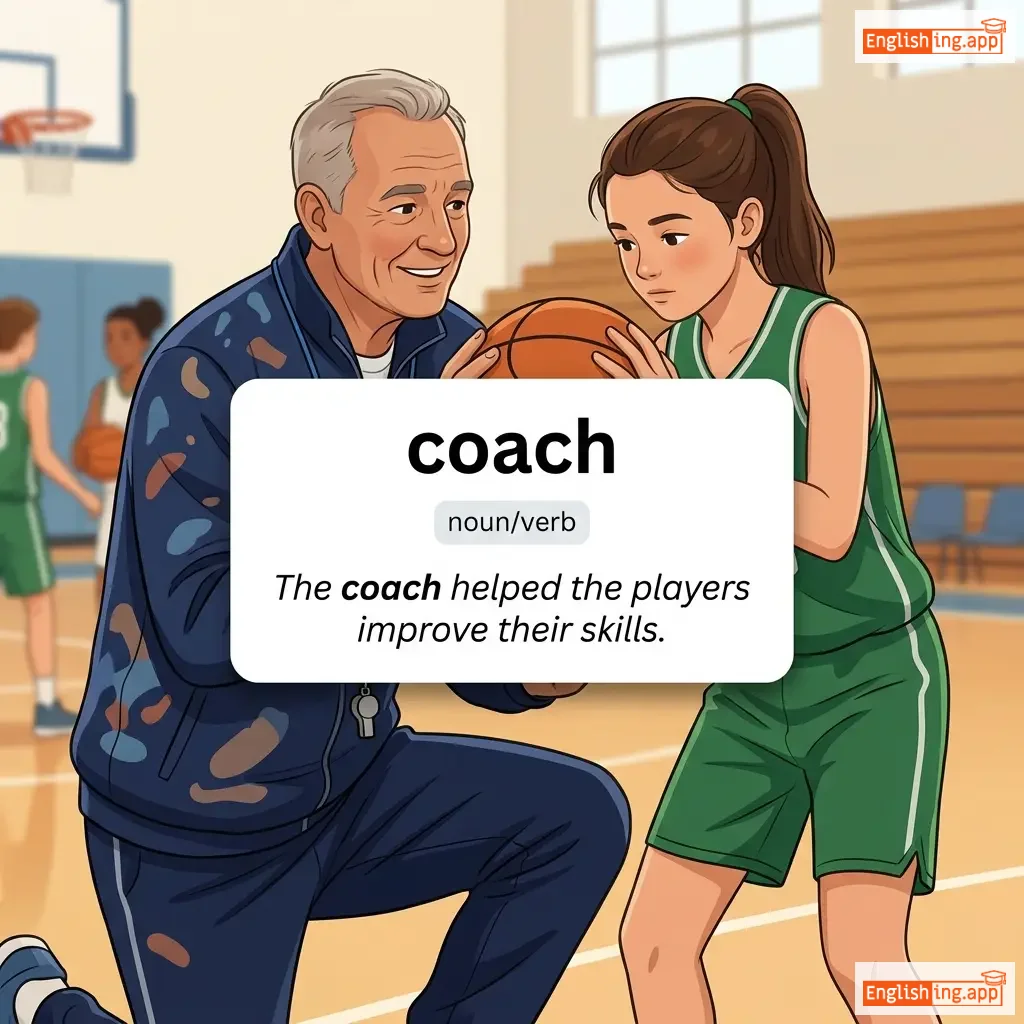
/koʊtʃ/
noun/verb
(コーチ)
••••••
|
|
コーチ
kōchi
••••••
|
coached
コーチド
••••••
|
coached
コーチド
••••••
|
coaches
コーチズ
••••••
|
coaching
コーチング
••••••
|
a person who trains or instructs others in a sport or skill; or to give training to someone
••••••
|
The coach helped the players improve their skills.
コーチは選手たちのスキル向上を助けました。
••••••
|
コーチは選手たちのスキル向上を助けました。
Kōchi wa senshu-tachi no sukiru kōjō o tasukemashita.
••••••
|
coach up
トレーニングする
••••••
|
to provide intensive training and guidance
••••••
|
誰かをトレーニングする
dareka o torēningu suru
••••••
|
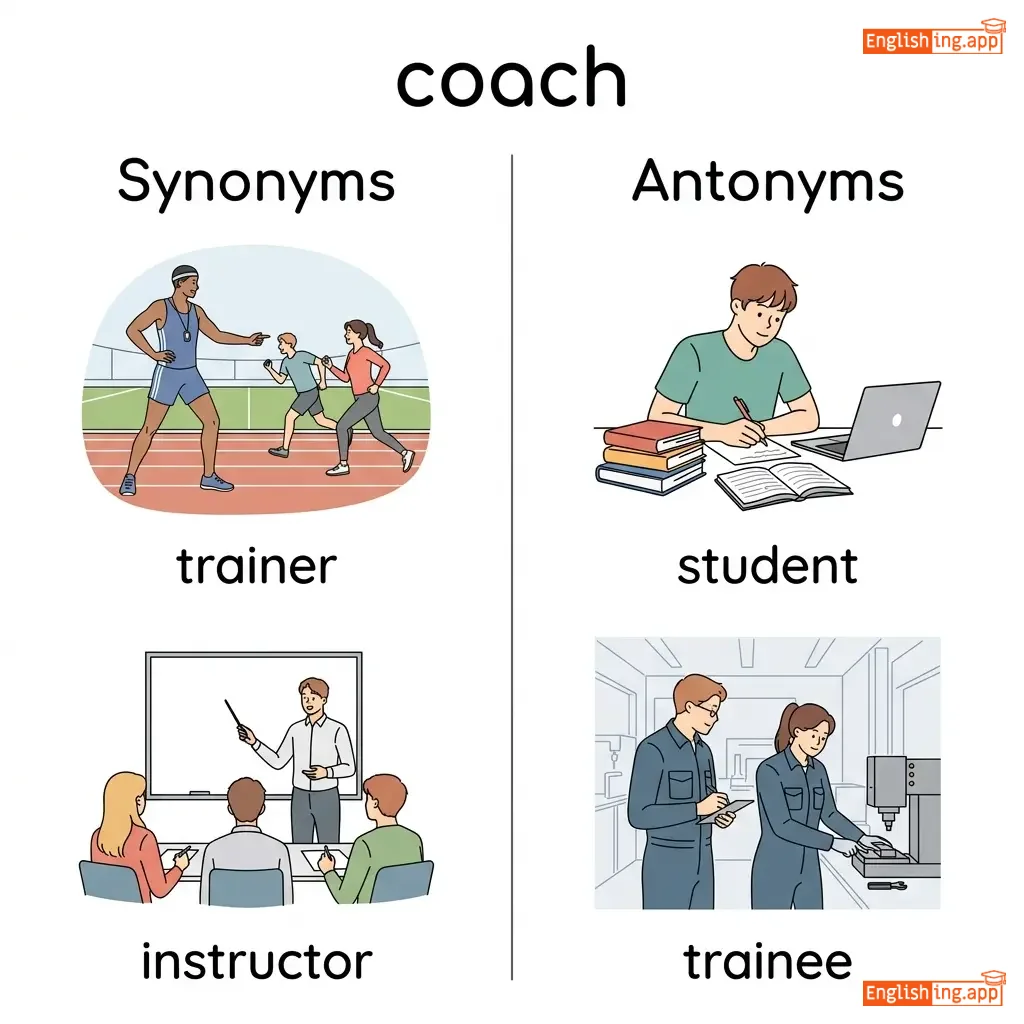
trainer, instructor, mentor, tutor, guide
••••••
|
student, trainee
••••••
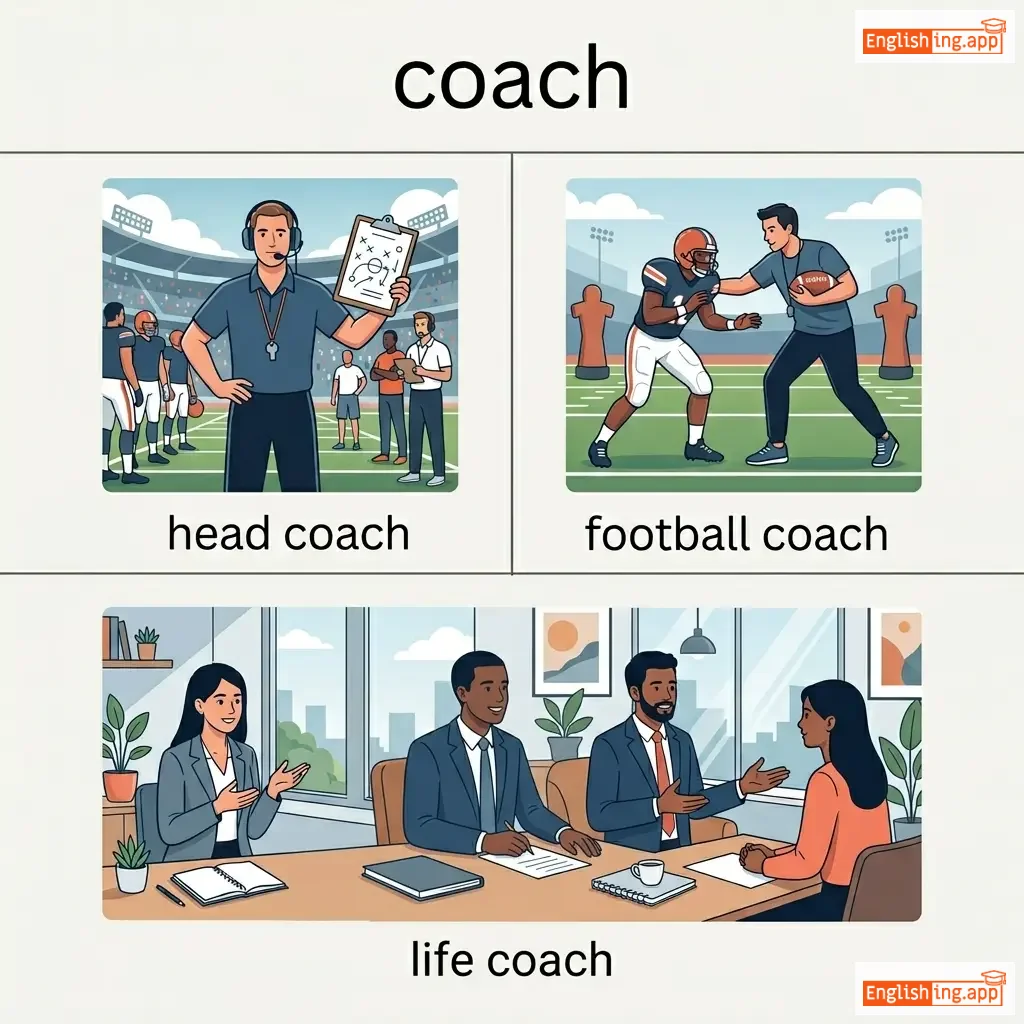
|
head coach, football coach, life coach, coach a team, coach professionally
••••••
|
コーチ - サッカーのコーチが選手たちをトレーニングするように。
••••••
|
|
#10669
🍇
|
/ˈklʌstər/
noun
(クラスター)
••••••
|
- •••••• |
クラスター
kurasutā
••••••
|
- •••••• | - •••••• | - •••••• | - •••••• |
a group of similar things or people positioned close together
••••••
|
The grapes grew in a tight cluster. |
ぶどうは密なクラスターで成長した。
Budō wa mitsu na kurasutā de seichō shita.
••••••
|
a cluster of stars |
a group of stars appearing close together in the sky
••••••
|
星のクラスター
Hoshi no kurasutā
••••••
|
group, bunch, collection, set, gathering
••••••
|
individual, single
••••••
|
cluster of buildings, cluster of stars, cluster together, form a cluster
••••••
|
Cluster はクラスター、ぶどうがクラスターで育つように。
••••••
|
|
#10670
🕵️
|
/kluː/
noun
(クルー)
••••••
|
- •••••• |
手がかり
tegakari
••••••
|
- •••••• | - •••••• | - •••••• | - •••••• |
a piece of evidence or information used in the detection of a crime or solving a puzzle
••••••
|
The detective found a clue near the window.
探偵は窓の近くで手がかりを見つけました。
••••••
|
探偵は窓の近くで手がかりを見つけました。
Tantei wa mado no chikaku de tegakari o mitsukemashita.
••••••
|
not have a clue
まったく手がかりがない
••••••
|
to have no knowledge or understanding about something
••••••
|
手がかりが全くない
Tegakari ga mattaku nai
••••••
|
hint, indication, evidence, lead, suggestion
••••••
|
confusion, mystery
••••••
|
give a clue, important clue, clue to the mystery, search for clues
••••••
|
Clueは手がかり – 犯罪解決の手助けとなる。
••••••
|
|
#10671
🏏
|
/klʌb/
noun
(クラブ)
••••••
|
- •••••• |
クラブ
kurabu
••••••
|
- •••••• | - •••••• | - •••••• | - •••••• |
an organization of people with a common interest; also a place for social gatherings or entertainment
••••••
|
He joined the local tennis club to meet new people. |
彼は新しい人々に会うために地元のテニスクラブに参加しました。
Kare wa atarashii hitobito ni au tame ni jimoto no tenisu kurabu ni sanka shimashita.
••••••
|
in the club |
to be part of a group with shared membership or experience
••••••
|
クラブで
kurabu de
••••••
|
association, group, society, organization, team
••••••
|
individual, outsider
••••••
|
sports club, social club, night club, join a club, club member
••••••
|
クラブは'サッカークラブ'のようにみんなで一緒に遊ぶ場所です。
••••••
|
|
#10672
☁️
|
/klaʊd/
noun, verb
(kuraudo)
••••••
|
- •••••• |
雲
kumo
••••••
|
clouded
kuraudedo
••••••
|
clouded
kuraudedo
••••••
|
clouds
kuraudsu
••••••
|
clouding
kuraodingu
••••••
|
a visible mass of condensed water vapor in the sky; to make something less clear
••••••
|
Dark clouds gathered before the storm.
嵐の前に暗い雲が集まった。
••••••
|
嵐の前に暗い雲が集まった。
Arashi no mae ni kurai kumo ga atsumatta.
••••••
|
head in the clouds
雲の中の頭
••••••
|
to be absent-minded or daydreaming
••••••
|
雲の中の頭
kumo no naka no atama
••••••
|
mist, fog, vapor, gloom
••••••
|
clarity, sunshine
••••••
|
dark cloud, storm cloud, cloud computing, cloud cover
••••••
|
Cloudは雲を意味します—クラウドサービスのように、空にデータを保存している雲を想像してください。
••••••
|
|
#10673
🧥
|
/ˈkloʊðɪŋ/
noun
(クロージング)
••••••
|
- •••••• |
衣服
ifuku
••••••
|
- •••••• | - •••••• | - •••••• | - •••••• |
items worn to cover the body; apparel collectively
••••••
|
Warm clothing is essential in winter. |
冬には暖かい衣服が必要です。
Fuyu ni wa atatakai ifuku ga hitsuyō desu.
••••••
|
protective clothing |
clothes designed to guard against harm
••••••
|
保護服
hogo fuku
••••••
|
apparel, attire, garments, outfit, wardrobe
••••••
|
nakedness, exposure
••••••
|
winter clothing, casual clothing, formal clothing, protective clothing
••••••
|
Clothing は衣服—寒いときに身を守るものです。
••••••
|
|
#10674
👗
|
/kloʊðz/
noun
(kuroozu)
••••••
|
- •••••• |
服
fuku
••••••
|
- •••••• | - •••••• | - •••••• | - •••••• |
garments worn on the body
••••••
|
She bought new clothes for the party.
彼女はパーティーのために新しい服を買いました。
••••••
|
彼女はパーティーのために新しい服を買いました。
Kanojo wa paatii no tame ni atarashii fuku o kaimashita.
••••••
|
change clothes
服を変える
••••••
|
to put on different garments
••••••
|
服を変える
Fuku o kaeru
••••••
|
garments, apparel, attire, outfit, wardrobe
••••••
|
nakedness, bareness
••••••
|
wear clothes, change clothes, wash clothes, fashionable clothes
••••••
|
Clothes は服—クローゼットに服がいっぱいあると考えて、それが clothes です。
••••••
|
Vocabulary Quiz
Test your vocabulary by matching words with their translations or meanings.
Login to take the quiz
Comments (0)
Share your thoughts and join the discussion.
Join the discussion by logging in
Login to CommentNo comments yet
Be the first to share your thoughts!