

翻訳
過去
過去分詞
三人称単数
動名詞
意味
例文
例文の翻訳
同義語
対義語
コロケーション
ニーモニック


Swipe left or right, or use the buttons. Tap image to zoom.
例文の翻訳
単語
Lesson 242Lesson 242 - マスクトグル
|
絵文字
|
単語 | Images | 翻訳 | 過去 | 過去分詞 | 三人称単数 | 動名詞 | 意味 | 例文 | 例文の翻訳 | 表現例 | 表現例の意味 | 表現例の翻訳 | 同義語 | 対義語 | コロケーション | ニーモニック |
|---|---|---|---|---|---|---|---|---|---|---|---|---|---|---|---|---|---|
|
#7230
🎟️
|
/ˈræfəl/
noun/verb
(ラフル)
••••••
|
- •••••• |
抽選券の販売
ちゅうせんけんのはんばい
••••••
|
raffled
ラフルド
••••••
|
raffled
ラフルド
••••••
|
raffles
ラフルズ
••••••
|
raffling
ラフリング
••••••
|
A means of raising money by selling numbered tickets, one or more of which are drawn at random for a prize; to sell something in such a lottery.
••••••
|
The charity decided to raffle a bicycle to raise funds.
チャリティーは資金調達のために自転車を抽選で販売することに決めました。
••••••
|
チャリティーは資金調達のために自転車を抽選で販売することに決めました。
Charity wa shikin chōtatsu no tame ni jitensha o chūsen de hanbai suru koto ni kimemashita.
••••••
|
- •••••• | - •••••• | - •••••• |
lottery, drawing, tombola, sweepstake
••••••
|
gift, donation
••••••
|
raffle ticket, charity raffle, raffle prize, raffle winner
••••••
|
Raffleはランダムに賞品が当たる抽選のようなもので、チケットを売って賞品を得ることができます。
••••••
|
|
#7231
🐏
|
/ræm/
verb
••••••
|
- •••••• | - •••••• |
rammed
••••••
|
rammed
••••••
|
rams
••••••
|
ramming
••••••
|
to strike or push something with great force
••••••
|
The truck rammed into the wall. |
- •••••• |
ram something down someone's throat |
to force someone to accept something they do not want
••••••
|
- •••••• |
crash, smash, thrust, pound, strike
••••••
|
withdraw, pull, retreat
••••••
|
ram into, ram down, ram hard, ram the door
••••••
|
No •••••• |
|
#7232
📣
|
/ˈræl.i/
verb
••••••
|
- •••••• | - •••••• |
rallied
••••••
|
rallied
••••••
|
rallies
••••••
|
rallying
••••••
|
to come together for a common purpose or to recover strength or spirit
••••••
|
The team rallied after halftime and won the match. |
- •••••• |
rally round |
to support someone in a difficult situation
••••••
|
- •••••• |
assemble, recover, unite, regroup, gather
••••••
|
disperse, weaken, scatter
••••••
|
political rally, rally support, rally behind, rally cry
••••••
|
No •••••• |
|
#7233
😏
|
/ˈreɪ.kɪʃ/
adjective
(レイキッシュ)
••••••
|
- •••••• |
スタイリッシュで自信に満ち、少し不良っぽい外見
sutairisshu de jishin ni michi, sukoshi furyō-ppoi gaiken
••••••
|
- •••••• | - •••••• | - •••••• | - •••••• |
having a stylish, confident, and slightly disreputable appearance
••••••
|
He walked in with a rakish smile and tilted hat.
彼はレイキッシュな笑顔と傾いた帽子で入ってきました。
••••••
|
彼はレイキッシュな笑顔と傾いた帽子で入ってきました。
Kare wa reikisshu na egao to katamuita bōshi de haitte kimashita.
••••••
|
- •••••• | - •••••• | - •••••• |
dashing, jaunty, stylish, debonair, bold
••••••
|
shabby, dull, plain
••••••
|
rakish charm, rakish grin, rakish look, rakish style
••••••
|
Rakish は少しわんぱくだけど、スタイリッシュで魅力的な外見です。
••••••
|
|
#7234
🍂
|
/reɪk/
verb
••••••
|
- •••••• | - •••••• |
raked
••••••
|
raked
••••••
|
rakes
••••••
|
raking
••••••
|
to collect or gather with a rake; to scrape or smooth a surface
••••••
|
He raked the leaves into a pile. |
- •••••• |
rake in the money |
to earn a large amount of money quickly
••••••
|
- •••••• |
scrape, gather, sweep, collect, accumulate
••••••
|
scatter, spread
••••••
|
rake leaves, rake the yard, rake in profits, rake fire
••••••
|
No •••••• |
|
#7235
🍇
|
/ˈreɪ.zən/
noun
(レイジン)
••••••
|
- •••••• |
レーズン
rezun
••••••
|
- •••••• | - •••••• | - •••••• | - •••••• |
a dried grape, often eaten as a snack or used in cooking and baking
••••••
|
She added raisins to the cake batter for extra sweetness. |
彼女はケーキの生地に甘さを加えるためにレーズンを入れました。
Kanojo wa keeki no kiji ni amasa o kuwaeru tame ni reezu n o iremashita.
••••••
|
raisin in the sun |
a reference to something neglected, with origins from Langston Hughes’ poem and a famous play
••••••
|
太陽の下のレーズン
taiyou no shita no reezu n
••••••
|
dried grape, currant, sultana, dried fruit
••••••
|
fresh grape, unripe grape
••••••
|
raisin bread, raisin cookies, raisin bran, dried raisin
••••••
|
レーズンは太陽の下で乾燥させたぶどうです。おやつにぴったり。
••••••
|
|
#7236
👑
|
/ˈreɪmənt/
noun
(レイメント)
••••••
|
- •••••• |
衣服
ifuku
••••••
|
- •••••• | - •••••• | - •••••• | - •••••• |
clothing, especially fine or formal wear
••••••
|
The king wore royal raiment during the ceremony. |
王は儀式の間、王族の衣服を着ていた。
Ou wa gishiki no aida, ouzoku no ifuku o kiteita.
••••••
|
- •••••• | - •••••• | - •••••• |
clothing, apparel, attire, garments
••••••
|
nakedness, bareness
••••••
|
royal raiment, ceremonial raiment, elegant raiment
••••••
|
Raiment = 王族の衣服、王様のような服👑
••••••
|
|
#7237
😂
|
/ˈreɪləri/
noun
(レイラリー)
••••••
|
- •••••• |
友好的な冗談
yū kō teki na jōdan
••••••
|
- •••••• | - •••••• | - •••••• | - •••••• |
good-humored teasing or joking
••••••
|
Their friendship was full of light-hearted raillery.
彼らの友情は軽い冗談で満ちていました。
••••••
|
彼らの友情は軽い冗談で満ちていました。
Karera no yūjō wa karui jōdan de michiteimashita.
••••••
|
- •••••• | - •••••• | - •••••• |
banter, teasing, joking, mockery
••••••
|
seriousness, solemnity
••••••
|
good-natured raillery, friendly raillery, light raillery
••••••
|
Railleryは友好的な冗談。楽しいですね!😂
••••••
|
|
#7238
📢
|
/reɪl/
verb
(レイル)
••••••
|
- •••••• |
抗議する
kougi suru
••••••
|
railed
レイルド
••••••
|
railed
レイルド
••••••
|
rails
レイルズ
••••••
|
railing
レイリング
••••••
|
to complain or protest strongly about something
••••••
|
He railed against the unfair decision.
彼は不公平な決定に対して強く抗議した。
••••••
|
彼は不公平な決定に対して強く抗議した。
Kare wa fukouhei na kettei ni taishite tsuyoku kougi shita.
••••••
|
rail against
抗議する
••••••
|
to strongly criticize or protest
••••••
|
抗議する
kougi suru
••••••
|
protest, complain, denounce, criticize
••••••
|
praise, accept, support
••••••
|
rail against injustice, rail at fate, rail bitterly
••••••
|
抗議することは鉄道のレールの上に立つようなものです! 🚂
••••••
|
|
#7239
🧥
|
/ˈræɡɪd/
adjective
(ラギッド)
••••••
|
- •••••• |
ボロボロ
boroboro
••••••
|
- •••••• | - •••••• | - •••••• | - •••••• |
torn, worn out, or in poor condition
••••••
|
The homeless man wore a ragged coat.
ホームレスの男性はボロボロのコートを着ていた。
••••••
|
ホームレスの男性はボロボロのコートを着ていた。
Hōmuresu no dansei wa boroboro no kōto o kite ita.
••••••
|
- •••••• | - •••••• | - •••••• |
tattered, worn, shabby, frayed
••••••
|
neat, tidy, new
••••••
|
ragged clothes, ragged edges, ragged appearance
••••••
|
Ragged 服はボロボロを意味します – rag という意味はボロボロの服 🧥
••••••
|
|
#7240
😡
|
/reɪdʒ/
noun
(レイジ)
••••••
|
- •••••• |
怒り
ikari
••••••
|
- •••••• | - •••••• | - •••••• | - •••••• |
intense anger or fury
••••••
|
She shouted in a fit of rage after hearing the news. |
彼女はそのニュースを聞いて怒りの叫び声を上げました。
Kanojo wa sono nyūsu o kiite ikari no sakebigoe o agemashita.
••••••
|
fly into a rage |
to suddenly become very angry
••••••
|
怒り狂う
ikari kuruu
••••••
|
fury, anger, wrath, temper, outrage
••••••
|
calm, peace, patience
••••••
|
fit of rage, blind rage, control rage, rage against
••••••
|
Rage = 怒り = 怒りが爆発するとき
••••••
|
|
#7241
👶
|
/ˈræɡəmʌfɪn/
noun
(ラガマフィン)
••••••
|
- •••••• |
ぼろぼろの子供
boroboro no kodomo
••••••
|
- •••••• | - •••••• | - •••••• | - •••••• |
A person, typically a child, in ragged, dirty clothes.
••••••
|
The little ragamuffin begged for food on the street. |
小さなぼろぼろの子供が通りで食べ物を求めていた。
Chīsana boroboro no kodomo ga tōri de tabemono o motomete ita.
••••••
|
- •••••• | - •••••• | - •••••• |
urchin, waif, tramp, beggar
••••••
|
gentleman, lady
••••••
|
dirty ragamuffin, poor ragamuffin, street ragamuffin, little ragamuffin
••••••
|
Ragamuffin = rag (ぼろぼろ) + muffin (かわいい子供) → ぼろぼろの子供。
••••••
|
|
#7242
🧽
|
/ræɡ/
noun/verb
••••••
|
- •••••• | - •••••• |
ragged
••••••
|
ragged
••••••
|
rags
••••••
|
ragging
••••••
|
A piece of old, torn cloth; to tease or scold someone in a playful way.
••••••
|
She used an old rag to clean the table. |
- •••••• |
in rags |
wearing old and torn clothes
••••••
|
- •••••• |
cloth, scrap, tatter, shred
••••••
|
garment, fabric
••••••
|
old rag, cleaning rag, rag doll, rag paper
••••••
|
No •••••• |
|
#7243
🏚️
|
/ˈræftər/
noun
(ラフター)
••••••
|
- •••••• |
小屋の梁
koya no hari
••••••
|
- •••••• | - •••••• | - •••••• | - •••••• |
One of the sloping beams that supports a roof.
••••••
|
The old barn’s rafters were exposed. |
古い納屋の小屋の梁がむき出しになっていました。
Furui noya no koya no hari ga mukidashi ni natte imashita.
••••••
|
- •••••• | - •••••• | - •••••• |
beam, joist, support, truss
••••••
|
pillar, column
••••••
|
roof rafter, wooden rafter, support rafter, ceiling rafter
••••••
|
Rafter は屋根を支える梁。小屋の梁とも言う。
••••••
|
|
#7244
🛶
|
/ræft/
noun/verb
(ラフト)
••••••
|
- •••••• |
筏
ikada
••••••
|
rafted
ラフテッド
••••••
|
rafted
ラフテッド
••••••
|
rafts
ラフツ
••••••
|
rafting
ラフティング
••••••
|
A flat structure made of logs or planks tied together, used as a boat or floating platform; to travel or transport on such a structure.
••••••
|
They built a raft to cross the river.
彼らは川を渡るためにラフトを作った。
••••••
|
彼らは川を渡るために筏を作った。
Karera wa kawa o wataru tame ni ikada o tsukutta.
••••••
|
a raft of
ラフトの
••••••
|
a large number of something
••••••
|
たくさんの
takusan no
••••••
|
float, barge, platform, vessel
••••••
|
ship, yacht
••••••
|
raft trip, build a raft, rafting adventure, a raft of ideas
••••••
|
Raftは筏を意味します、ラフティングは楽しいです。
••••••
|
|
#7245
🤯
|
/kwɪkˈsɒtɪk/
adjective
••••••
|
|
- •••••• | - •••••• | - •••••• | - •••••• | - •••••• |
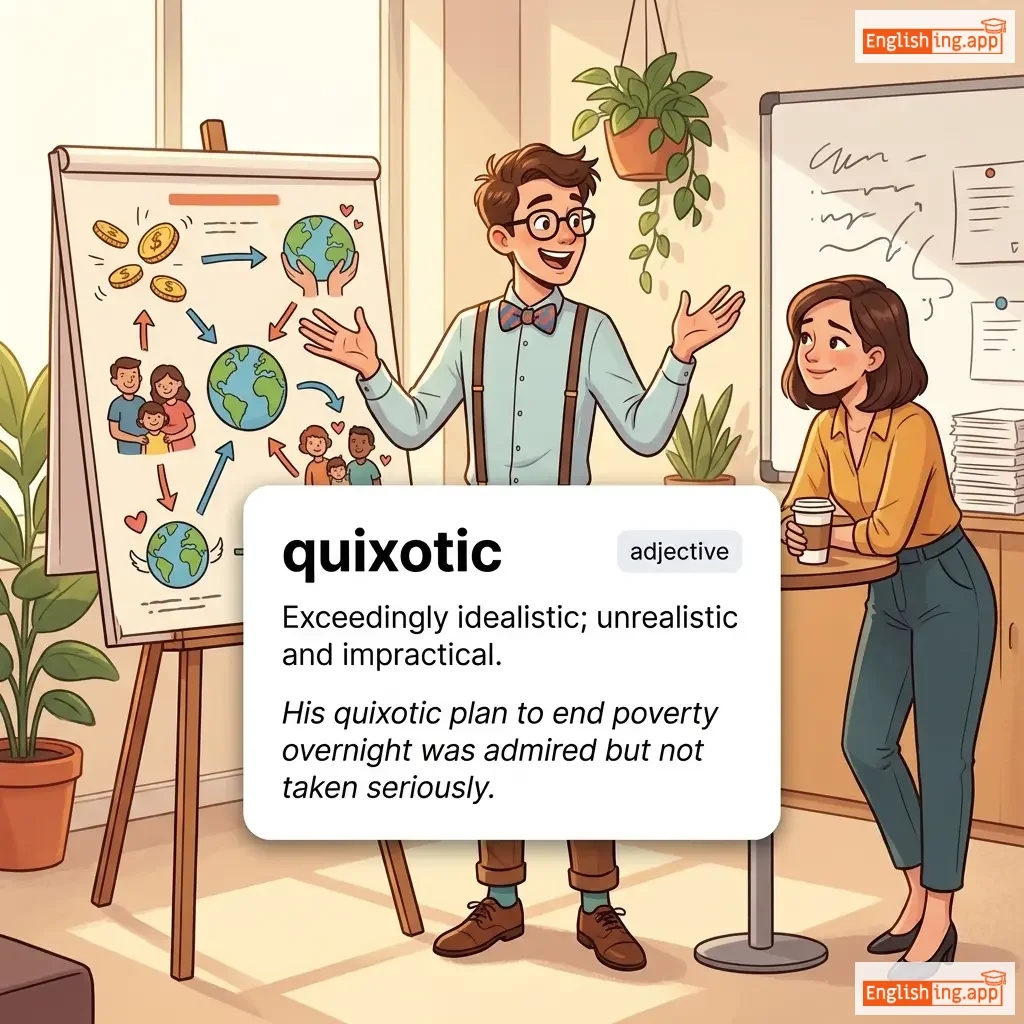
Exceedingly idealistic; unrealistic and impractical.
••••••
|
His quixotic plan to end poverty overnight was admired but not taken seriously. |
- •••••• | - •••••• | - •••••• | - •••••• |
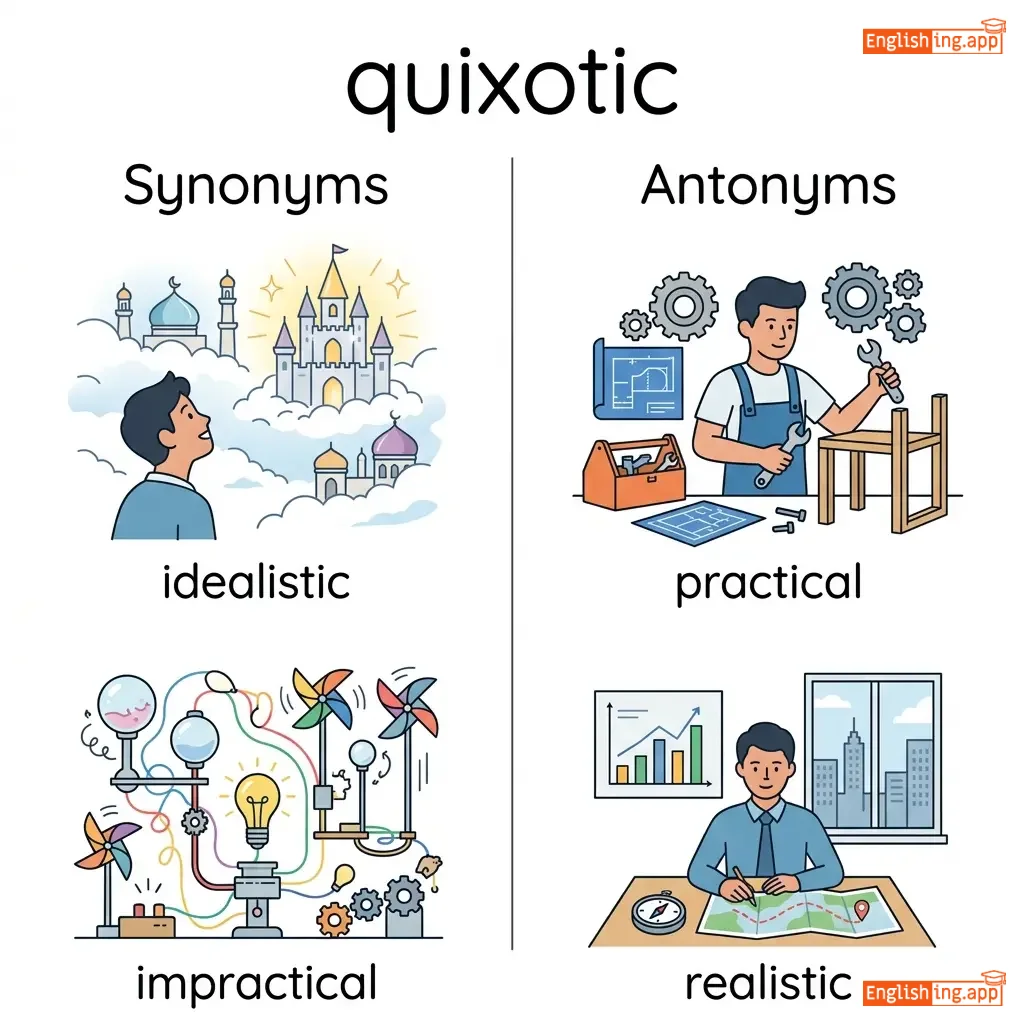
idealistic, impractical, visionary, romantic, unrealistic
••••••
|
practical, realistic, sensible
••••••
|
quixotic dream, quixotic attempt, quixotic venture, quixotic vision
••••••
|
No •••••• |
|
#7246
😏
|
/ˈræfɪʃ/
adjective
(レイフィッシュ)
••••••
|
- •••••• |
型破りで少し評判が悪いが魅力的
katayari de sukoshi hyōban ga warui ga miryokuteki
••••••
|
- •••••• | - •••••• | - •••••• | - •••••• |
unconventional and slightly disreputable but attractive
••••••
|
He had a raffish charm that made him popular in the city.
彼は街で人気がある理由は、レイフィッシュな魅力があったからだ。
••••••
|
彼は街で人気がある理由は、レイフィッシュな魅力があったからだ。
Kare wa machi de ninki ga aru riyū wa, reifisshu na miryoku ga atta kara da.
••••••
|
- •••••• | - •••••• | - •••••• |
rakish, dashing, stylish, bohemian
••••••
|
respectable, proper, refined
••••••
|
raffish charm, raffish look, raffish style
••••••
|
Raffish は rough + stylish、少し無礼だが魅力的。
••••••
|
|
#7247
🔢
|
/ˈreɪdɪks/
noun
(レディックス)
••••••
|
- •••••• |
基数
kisū
••••••
|
- •••••• | - •••••• | - •••••• | - •••••• |
the base or root of something; the number on which a system of numeration is built
••••••
|
In mathematics, the decimal system has a radix of ten.
数学では、十進法の基数は十です。
••••••
|
数学では、十進法の基数は十です。
Sūgaku de wa, jū-shinhō no kisū wa jū desu.
••••••
|
- •••••• | - •••••• | - •••••• |
root, base, origin, foundation
••••••
|
end, outcome, result
••••••
|
radix point, radix tree, radix sort
••••••
|
Radixは根のようなもの、数学では基数として使われます。
••••••
|
|
#7248
🔥
|
/ˈrædɪkl/
adjective
••••••
|
|
- •••••• | - •••••• | - •••••• | - •••••• | - •••••• |
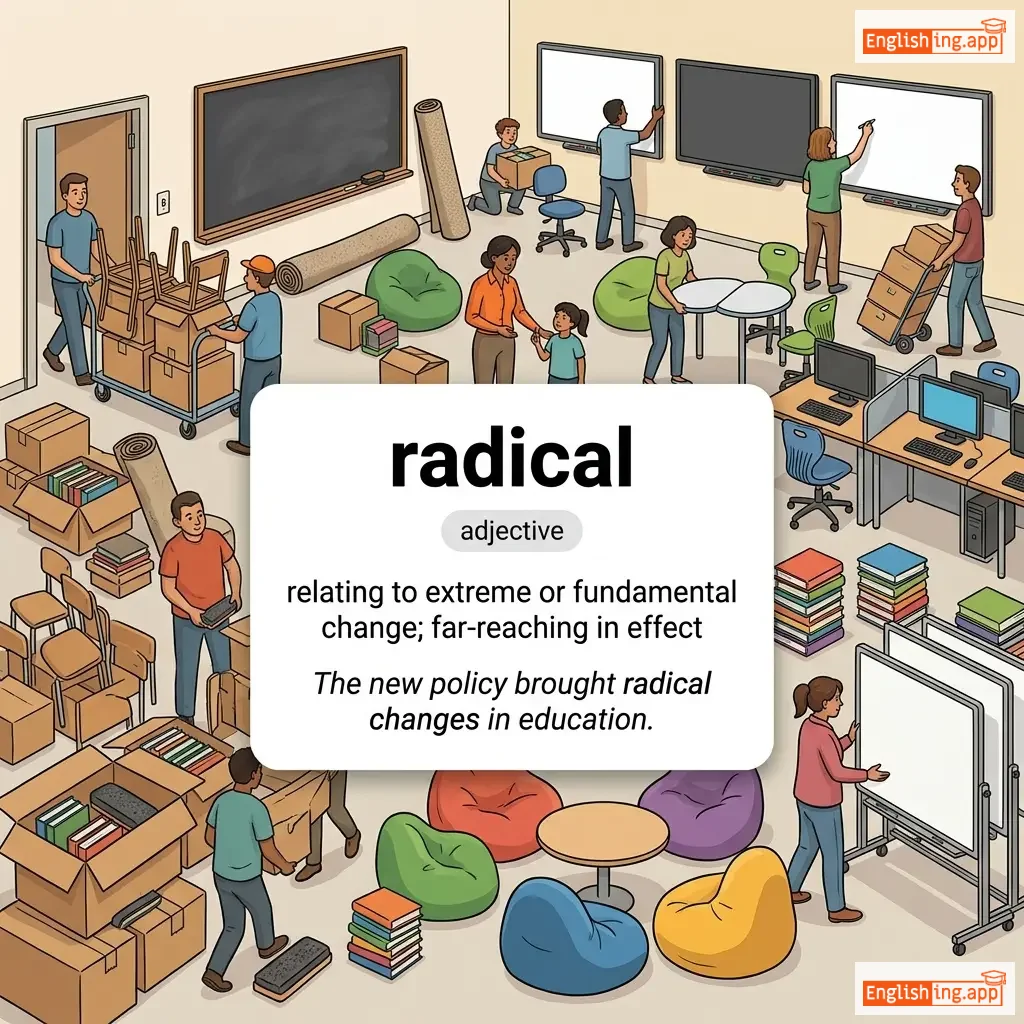
relating to extreme or fundamental change; far-reaching in effect
••••••
|
The new policy brought radical changes in education. |
- •••••• |
radical change |
a complete and fundamental transformation
••••••
|
- •••••• |
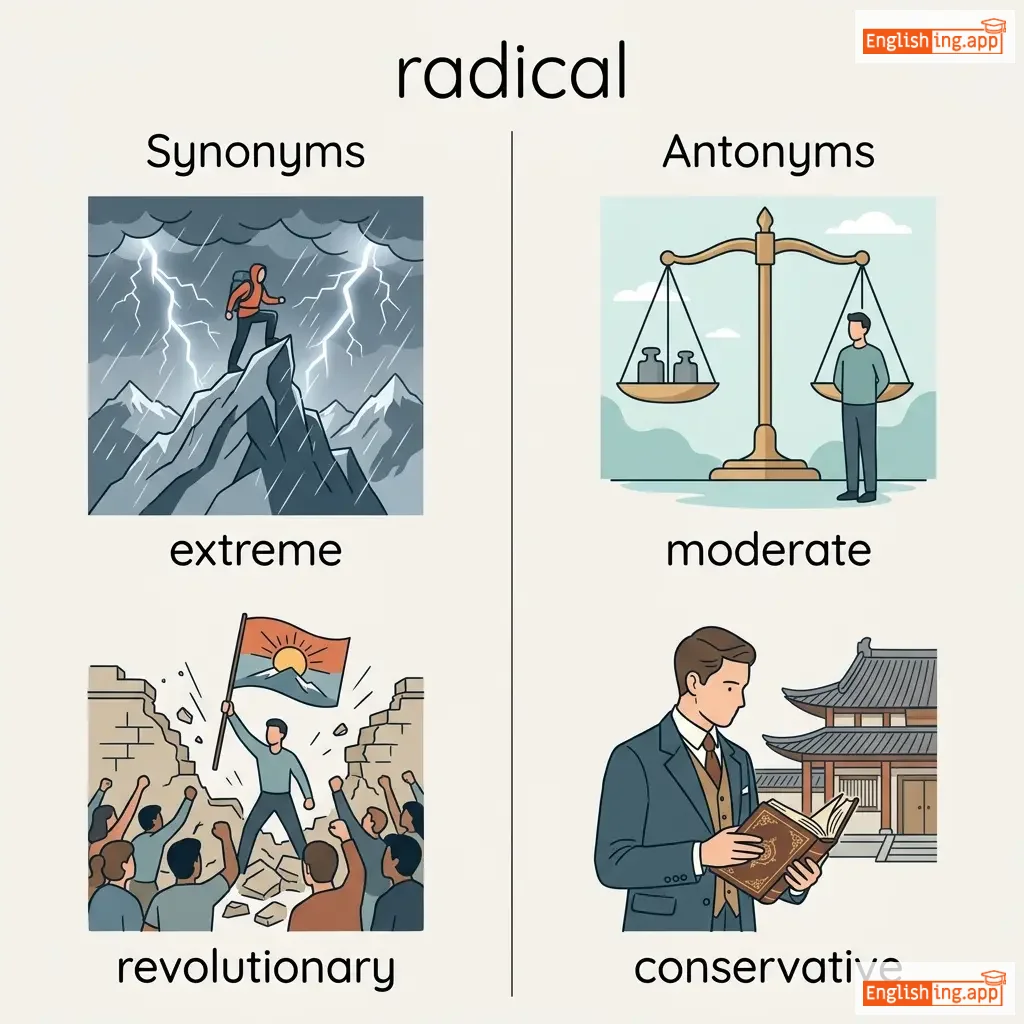
extreme, revolutionary, fundamental, drastic, profound
••••••
|
moderate, conservative, traditional
••••••
|
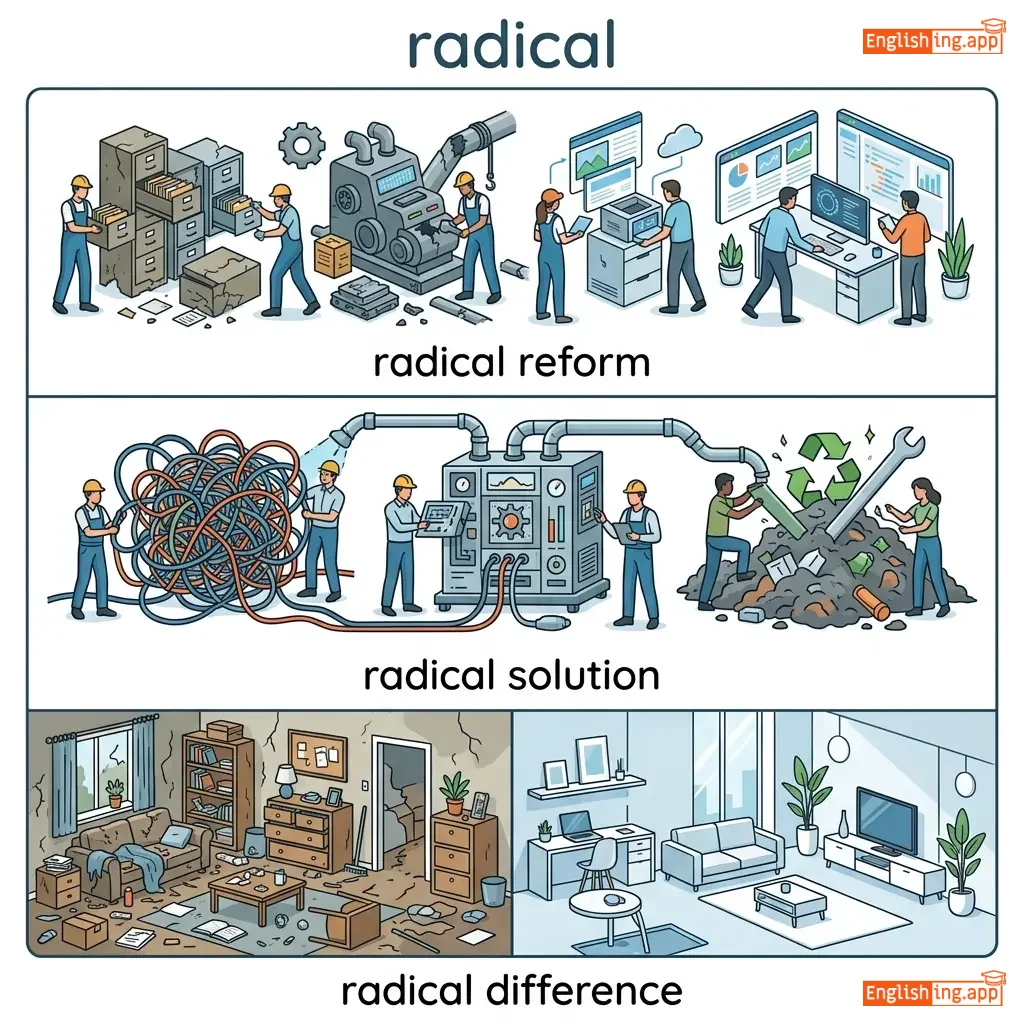
radical reform, radical solution, radical difference
••••••
|
No •••••• |
|
#7249
☀️
|
/ˈreɪdieɪt/
verb
(レイディエイト)
••••••
|
- •••••• |
放射する
hōsha suru
••••••
|
radiated
レイディエイテッド
••••••
|
radiated
レイディエイテッド
••••••
|
radiates
レイディエイツ
••••••
|
radiating
レイディエイティング
••••••
|
to emit energy or light; to spread out from a center
••••••
|
The fireplace radiates warmth throughout the room.
暖炉は部屋全体に暖かさを放射します。
••••••
|
暖炉は部屋全体に暖かさを放射します。
Danro wa heya zentai ni atatakasa o hōsha shimasu.
••••••
|
radiate happiness
幸せを放射する
••••••
|
to clearly show joy and positivity in one's demeanor
••••••
|
幸せを放射する
shiawase o hōsha suru
••••••
|
emit, shine, beam, spread, emanate
••••••
|
absorb, conceal, withhold
••••••
|
radiate heat, radiate light, radiate confidence
••••••
|
Radiate は太陽の光のように広がります。
••••••
|
|
#7250
✨
|
/ˈreɪdiəns/
noun
(レディアンス)
••••••
|
- •••••• |
輝き
kagayaki
••••••
|
- •••••• | - •••••• | - •••••• | - •••••• |
the quality of shining with bright light; a glowing or beaming quality
••••••
|
Her face was filled with radiance after hearing the good news. |
良いニュースを聞いた後、彼女の顔は輝きで満ちていました。
Yoi nyūsu o kiita ato, kanojo no kao wa kagayaki de michiteimashita.
••••••
|
inner radiance |
a natural glow or beauty that comes from within a person
••••••
|
内面的な輝き
naimen-tekina kagayaki
••••••
|
glow, brilliance, luminosity, shine, gleam
••••••
|
dullness, gloom, darkness
••••••
|
radiance of the sun, inner radiance, radiance of joy
••••••
|
輝きは内面から発する光、まるで太陽のように明るいです。
••••••
|
|
#7251
🔥
|
/ˈreɪ.si/
adjective
(レイシー)
••••••
|
- •••••• |
刺激的
shigekiteki
••••••
|
- •••••• | - •••••• | - •••••• | - •••••• |
Lively, entertaining, or slightly shocking (especially in a sexual way).
••••••
|
The novel was full of racy dialogues. |
その小説は刺激的な対話で満ちていた。
Sono shōsetsu wa shigekiteki na taiwa de michite ita.
••••••
|
racy story |
A story that is lively, entertaining, and often slightly indecent.
••••••
|
刺激的な物語
shigekiteki na monogatari
••••••
|
spicy, lively, provocative, saucy, bold
••••••
|
dull, boring, bland
••••••
|
racy story, racy dialogue, racy novel, racy humor
••••••
|
Racyは刺激的なレースのようなもの。
••••••
|
|
#7252
📖
|
/ˌræk.ɒnˈtɜːr/
noun
(ラコンテュー)
••••••
|
- •••••• |
巧妙な語り手
koumyou na katarite
••••••
|
- •••••• | - •••••• | - •••••• | - •••••• |
A person who tells anecdotes in a skillful and amusing way.
••••••
|
The professor was a brilliant raconteur who kept his audience entertained.
その教授は素晴らしい物語の語り手で、観客を楽しませ続けた。
••••••
|
その教授は素晴らしい語り手で、観客を楽しませ続けた。
Sono kyōju wa subarashii katarite de, kankyaku o tanoshimase tsuzuketa.
••••••
|
- •••••• | - •••••• | - •••••• |
storyteller, narrator, humorist, entertainer, wit
••••••
|
listener, audience
••••••
|
witty raconteur, brilliant raconteur, raconteur style, raconteur skills
••••••
|
Raconteur – 聴衆を魅了する物語の語り手。
••••••
|
|
#7253
💉
|
/ˈreɪ.biːz/
noun
(レイビーズ)
••••••
|
- •••••• |
狂犬病
kyoukenbyou
••••••
|
- •••••• | - •••••• | - •••••• | - •••••• |
A viral disease that causes inflammation of the brain in humans and other mammals, usually transmitted through animal bites.
••••••
|
The dog was vaccinated against rabies. |
犬は狂犬病のワクチンを接種しました。
Inu wa kyoukenbyou no wakuchin wo sesshu shimashita.
••••••
|
- •••••• | - •••••• | - •••••• |
hydrophobia, viral disease, infection, sickness
••••••
|
health, wellness
••••••
|
rabies vaccine, rabies virus, rabies infection, rabies outbreak
••••••
|
狂犬病、犬が噛むことで感染する病気。
••••••
|
|
#7254
🐕
|
/ˈræb.ɪd/
adjective
(レイビッド)
••••••
|
- •••••• |
狂信的
kyōshinteki
••••••
|
- •••••• | - •••••• | - •••••• | - •••••• |
Having extreme or fanatical support for something; relating to or suffering from rabies.
••••••
|
He was a rabid fan of the football team. |
彼はサッカーチームの狂信的なファンだった。
Kare wa sakkā chīmu no kyōshinteki na fan datta.
••••••
|
rabid supporter |
Someone who is extremely passionate or fanatical about something.
••••••
|
狂信的な支持者
Kyōshinteki na shijisha
••••••
|
fanatical, extreme, furious, zealous, obsessed
••••••
|
calm, moderate, indifferent
••••••
|
rabid fan, rabid supporter, rabid dog, rabid enthusiasm
••••••
|
Rabidは狂信的という意味です。サッカーの熱狂的なファンを想像してください!
••••••
|
|
#7255
👥
|
/ˈræb.əl/
noun
(ラブル)
••••••
|
- •••••• |
無秩序な群衆
muchi tetsuna gunshuu
••••••
|
- •••••• | - •••••• | - •••••• | - •••••• |
A disorderly crowd or mob; the common people regarded as noisy or unruly.
••••••
|
A rabble gathered in the streets to protest the decision.
ラブルが通りに集まり、決定に抗議しました。
••••••
|
無秩序な群衆が通りに集まり、決定に抗議しました。
muchi tetsuna gunshuu ga toori ni atsumari, kettei ni kougi shimashita.
••••••
|
rabble-rouser
扇動者
••••••
|
A person who stirs up emotions or trouble among a crowd.
••••••
|
扇動者
sendousha
••••••
|
mob, crowd, throng, horde, multitude
••••••
|
elite, gentry, aristocracy
••••••
|
angry rabble, rabble crowd, rabble protest, rabble-rouser
••••••
|
ラブル - 騒がしい群衆、ラ (ラ) が興奮して乱れる。
••••••
|
|
#7256
📆
|
/kwəʊˈtɪdiən/
adjective
(クォティディアン)
••••••
|
- •••••• |
日常的な、普通の
nichijōteki na, futsū no
••••••
|
- •••••• | - •••••• | - •••••• | - •••••• |
Ordinary or everyday, especially when mundane.
••••••
|
He focused on the quotidian details of family life. |
彼は家族生活の日常的な詳細に集中した。
Kare wa kazoku seikatsu no nichijōteki na shōsai ni shūchū shita.
••••••
|
- •••••• | - •••••• | - •••••• |
everyday, daily, common, ordinary, routine
••••••
|
rare, unusual, extraordinary
••••••
|
quotidian life, quotidian routine, quotidian details, quotidian task
••••••
|
Quotidianは‘日常的な’と同じ意味です。
••••••
|
|
#7257
📊
|
/ˈkwəʊtə/
noun
(クォータ)
••••••
|
|
割り当て, 定額
wariate, teigaku
••••••
|
- •••••• | - •••••• | - •••••• | - •••••• |
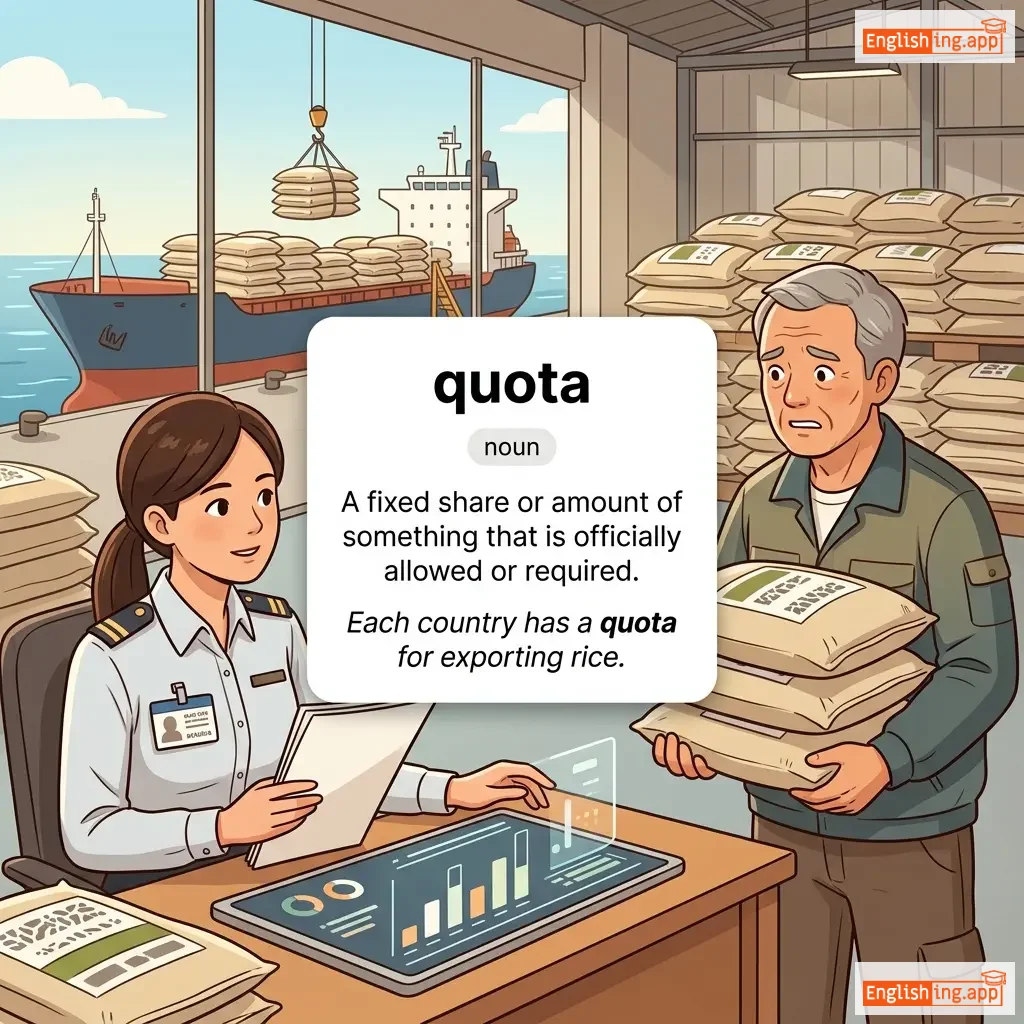
A fixed share or amount of something that is officially allowed or required.
••••••
|
Each country has a quota for exporting rice.
イーチ カントリー ハズ ア クォータ フォー エクスポーティング ライス。
••••••
|
各国には、米の輸出に関する割り当てがあります。
Kakoku ni wa, kome no yushutsu ni kansuru wariate ga arimasu.
••••••
|
- •••••• | - •••••• | - •••••• |
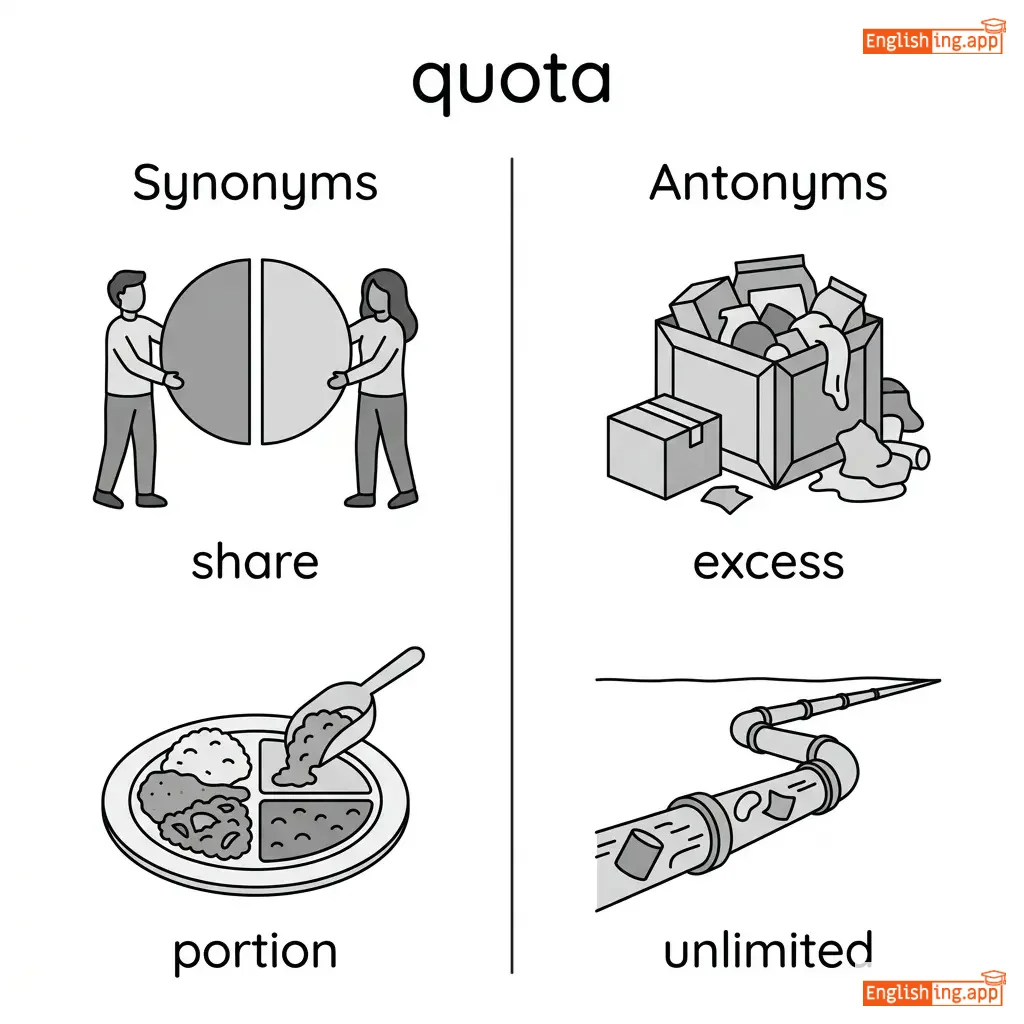
share, portion, allotment, limit, allowance
••••••
|
excess, unlimited
••••••
|
export quota, quota system, meet the quota, annual quota
••••••
|
割り当て = カット + 部分 - 固定された部分が割り当てられます。
••••••
|
|
#7258
👥
|
/ˈkwɔːrəm/
noun
(クォーラム)
••••••
|
- •••••• |
定足数
teizokusu
••••••
|
- •••••• | - •••••• | - •••••• | - •••••• |
The minimum number of members needed to conduct official business in a meeting.
••••••
|
The board meeting was postponed because there was no quorum. |
クォーラムがなかったため、理事会の会議は延期されました。
Kwōramu ga nakatta tame, rijikai no kaigi wa enki sare mashita.
••••••
|
- •••••• | - •••••• | - •••••• |
minimum attendance, required members, assembly, committee
••••••
|
absence, minority
••••••
|
quorum required, lack of quorum, quorum present, establish quorum
••••••
|
定足数がなければ会議は開催できない。
••••••
|
|
#7259
🤔
|
/ˈkwɪzɪkəl/
adjective
(kwizikal)
••••••
|
- •••••• |
困惑した, 質問のような
konwaku shita, shitsumon no yōna
••••••
|
- •••••• | - •••••• | - •••••• | - •••••• |
Expressing mild or amused puzzlement.
••••••
|
She gave him a quizzical look when he made the strange comment.
彼が奇妙なコメントをしたとき、彼女は困惑した表情を彼に向けました。
••••••
|
彼が奇妙なコメントをしたとき、彼女は困惑した表情を彼に向けました。
Kare ga kimyō na komento o shita toki, kanojo wa konwaku shita hyōjō o kare ni mukemashita.
••••••
|
- •••••• | - •••••• | - •••••• |
puzzled, questioning, curious, amused, skeptical
••••••
|
clear, certain, obvious
••••••
|
quizzical look, quizzical smile, quizzical expression
••••••
|
誰かが奇妙なことを言うと、私たちは quizzical な顔をする。
••••••
|
Vocabulary Quiz
Test your vocabulary by matching words with their translations or meanings.
Login to take the quiz
Comments (0)
Share your thoughts and join the discussion.
Join the discussion by logging in
Login to CommentNo comments yet
Be the first to share your thoughts!