

翻訳
過去
過去分詞
三人称単数
動名詞
意味
例文
例文の翻訳
同義語
対義語
コロケーション
ニーモニック



Swipe left or right, or use the buttons. Tap image to zoom.
例文の翻訳
単語
Lesson 422Lesson 422 - マスクトグル
|
絵文字
|
単語 | Images | 翻訳 | 過去 | 過去分詞 | 三人称単数 | 動名詞 | 意味 | 例文 | 例文の翻訳 | 表現例 | 表現例の意味 | 表現例の翻訳 | 同義語 | 対義語 | コロケーション | ニーモニック |
|---|---|---|---|---|---|---|---|---|---|---|---|---|---|---|---|---|---|
|
#1
🍺
|
/drʌŋk/
adjective
(ドランク)
••••••
|
- •••••• |
酔っ払った
yopparatta
••••••
|
- •••••• | - •••••• | - •••••• | - •••••• |
affected by alcohol to the point of losing control of one's faculties or behavior
••••••
|
He was too drunk to walk straight. |
彼は酔っ払って、まっすぐ歩けなかった。
Kare wa yopparatte, massugu arukenakatta.
••••••
|
dead drunk |
extremely intoxicated
••••••
|
泥酔
desui
••••••
|
intoxicated, tipsy, inebriated, wasted, buzzed
••••••
|
sober, abstinent
••••••
|
get drunk, dead drunk, completely drunk, drunk driving
••••••
|
酔っ払ったはdrunk — 飲みすぎると酔っ払っちゃう!
••••••
|
|
#1
👴
|
/ˈɛldər/
noun
(エルダー)
••••••
|
- •••••• |
長老
chōrō
••••••
|
- •••••• | - •••••• | - •••••• | - •••••• |
a person who is older or has higher rank; an older person in a family or community
••••••
|
We should always respect our elders. |
私たちは常に年長者を尊敬しなければなりません。
Watashitachi wa jōni nenchōsha o sonkei shinakereba narimasen.
••••••
|
respect your elders |
to show politeness and honor towards older people
••••••
|
年長者を尊敬する
nenchōsha o sonkei suru
••••••
|
senior, ancestor, elder statesman, veteran
••••••
|
junior, youth, minor
••••••
|
elder brother, elder sister, village elder, respect elders
••••••
|
Elder は長老の意味です — elder brother は兄または弟です。
••••••
|
|
#1
8️⃣
|
/eɪtθ/
adjective
(eɪtθ)
••••••
|
- •••••• |
8番目
hachimame
••••••
|
- •••••• | - •••••• | - •••••• | - •••••• |
coming after the seventh position in a sequence; one of eight equal parts
••••••
|
She finished in eighth place in the race.
彼女はレースで8位でフィニッシュしました。
••••••
|
彼女はレースで8位でフィニッシュしました。
Kanojo wa rēsu de hachibame de finisshu shimashita.
••••••
|
- •••••• | - •••••• | - •••••• |
8th, octaval, eighthly, one-eighth
••••••
|
first, last
••••••
|
eighth grade, eighth position, eighth place, eighth day
••••••
|
8の後に来るのは8番目、つまり8位。
••••••
|
|
#1
🎯
|
/ɪˈfɛktɪvnəs/
noun
(エフェクティブネス)
••••••
|
- •••••• |
効果
kouka
••••••
|
- •••••• | - •••••• | - •••••• | - •••••• |
the degree to which something is successful in producing a desired result.
••••••
|
The effectiveness of the new policy is still being evaluated.
新しい政策の効果はまだ評価中です。
••••••
|
新しい政策の効果はまだ評価中です。
Atarashī seisaku no kōka wa mada hyōkajū desu.
••••••
|
measure effectiveness
効果を測る
••••••
|
to assess how well something achieves its goals.
••••••
|
効果を測る
kōka o hakaru
••••••
|
efficiency, success, productivity, power, capability
••••••
|
ineffectiveness, failure, weakness
••••••
|
test effectiveness, improve effectiveness, measure effectiveness, evaluate effectiveness
••••••
|
Effectiveは「動作する」、effectivenessは「どれだけ動作するか」です!
••••••
|
|
#1
✏️
|
/ˈɛdɪt/
verb
(エディット)
••••••
|
|
編集する
henshū suru
••••••
|
edited
••••••
|
edited
••••••
|
edits
••••••
|
editing
••••••
|
to prepare written material by correcting, condensing, or modifying it.
••••••
|
She edited the article before it was published. |
彼女は記事が公開される前に編集しました。
Kanojo wa kiji ga kōkai sareru mae ni henshū shimashita.
••••••
|
editor's cut |
a version of a film or video edited by its editor rather than the director.
••••••
|
編集者のカット
henshū-sha no katto
••••••
|
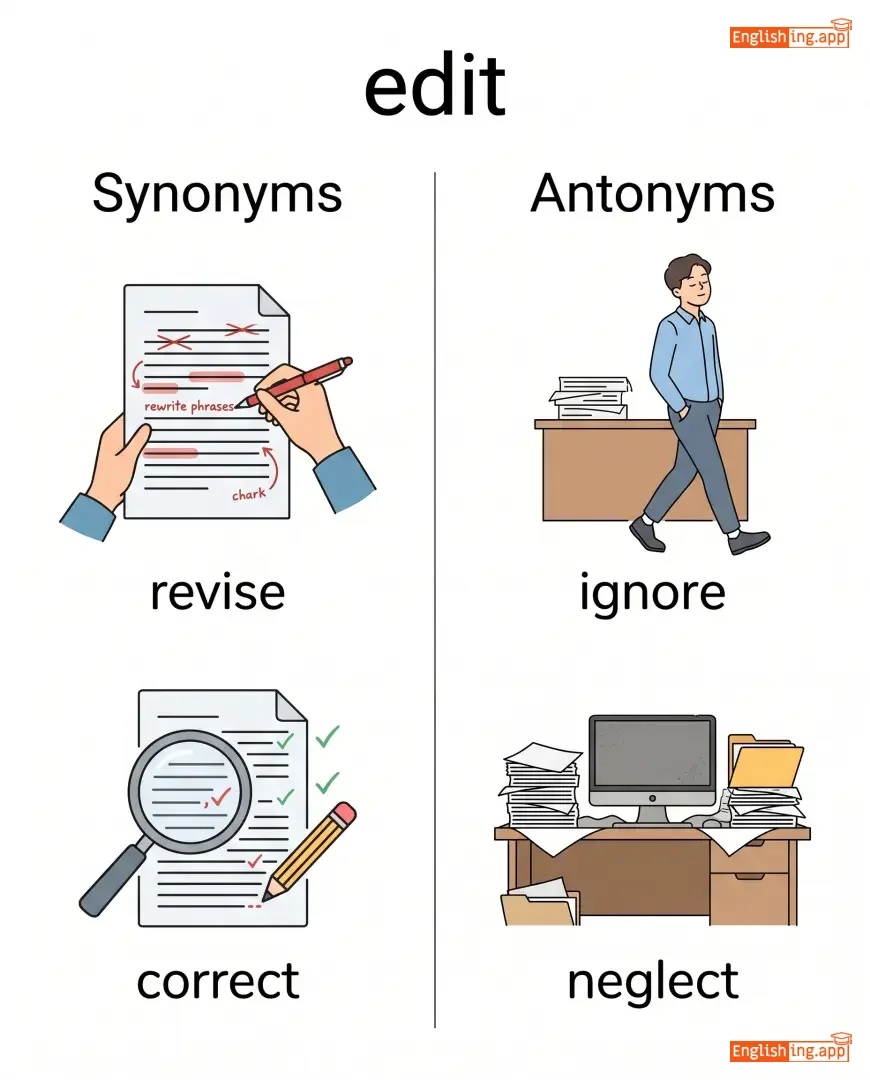
revise, correct, modify, proofread, alter
••••••
|
ignore, neglect, keep unchanged
••••••
|
edit text, edit video, edit file, edit content, edit message
••••••
|
編集することは、美しく仕上げること、例えば'編集して、完璧にしよう!' ✏️
••••••
|
|
#1
💰
|
/ˌiːkəˈnɒmɪkli/
adverb
(エコノミカリー)
••••••
|
- •••••• |
経済的に
keizaiteki ni
••••••
|
- •••••• | - •••••• | - •••••• | - •••••• |
in a way that relates to economics or is efficient and not wasteful.
••••••
|
The company is trying to operate more economically this year. |
その会社は今年、より経済的に運営することを目指しています。
Sono kaisha wa kotoshi, yori keizaiteki ni un'ei suru koto o mezashiteimasu.
••••••
|
- •••••• | - •••••• | - •••••• |
efficiently, financially, frugally, cost-effectively
••••••
|
wastefully, extravagantly
••••••
|
economically viable, economically independent, economically strong, economically developed
••••••
|
経済的にやることは節約すること。無駄を省いて効率よく!
••••••
|
|
#1
🌱
|
/ˌiːkəˈlɒdʒɪkəl/
adjective
(エコロジカル)
••••••
|
|
生態学的
seitaigakuteki
••••••
|
- •••••• | - •••••• | - •••••• | - •••••• |
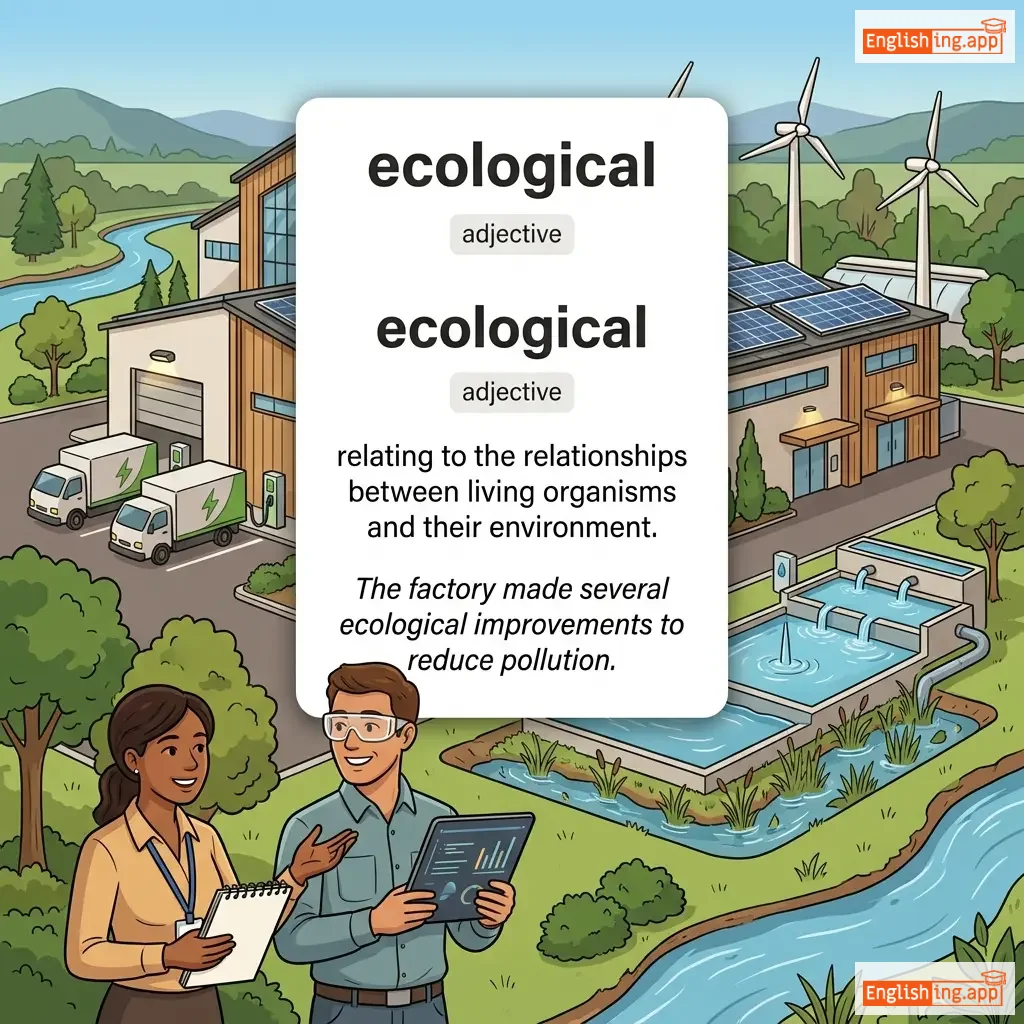
relating to the relationships between living organisms and their environment.
••••••
|
The factory made several ecological improvements to reduce pollution. |
工場は汚染を減らすためにいくつかの生態学的な改善を行いました。
Kōjō wa osen o herasu tame ni ikutsuka no seitai-gakuteki na kaizen o okonai mashita.
••••••
|
- •••••• | - •••••• | - •••••• |
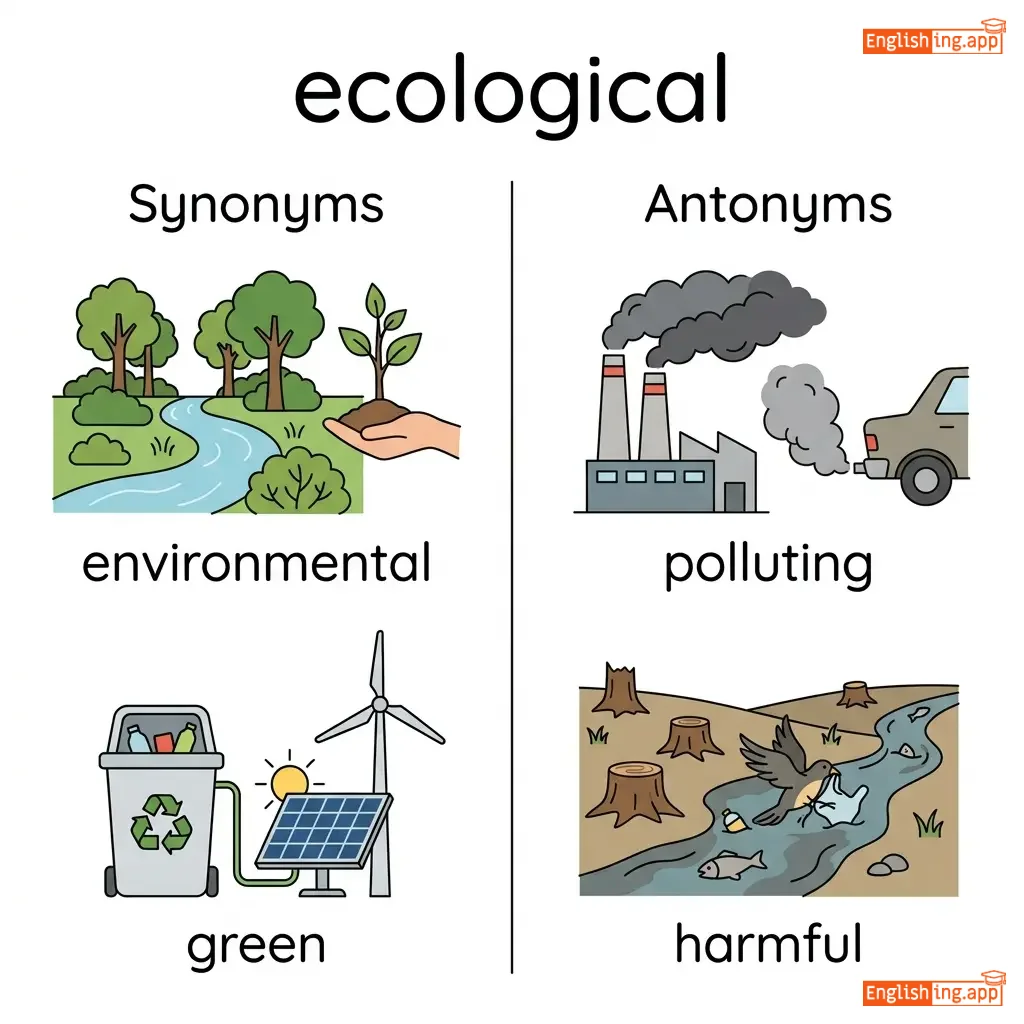
environmental, green, biological, natural, sustainable
••••••
|
polluting, harmful, artificial
••••••
|
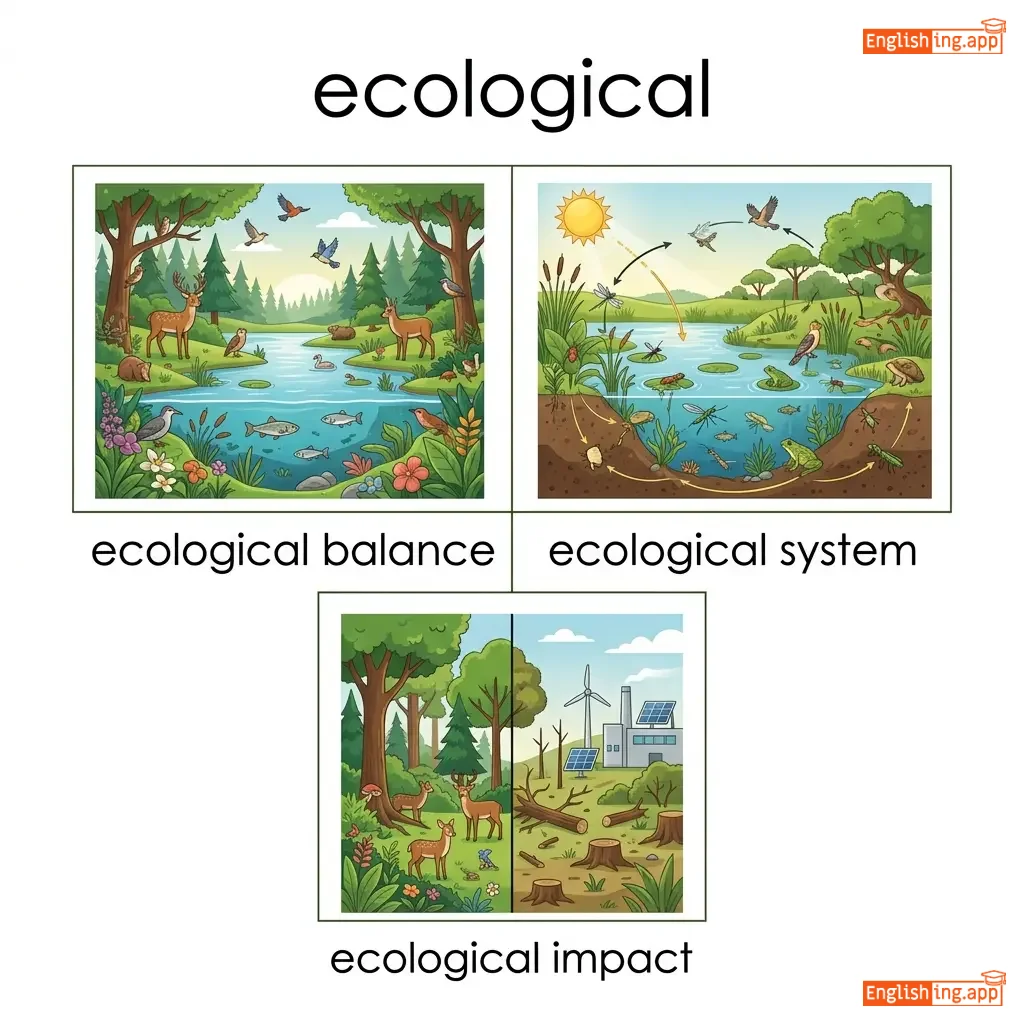
ecological balance, ecological system, ecological impact, ecological disaster
••••••
|
Ecoは環境を意味し、したがってエコロジカルは環境に関連しているという意味です。
••••••
|
|
#1
🔊
|
/ˈɛkəʊ/
noun, verb
(ハピネス)
••••••
|
- •••••• |
幸福
kōfuku
••••••
|
echoed
••••••
|
echoed
••••••
|
echoes
••••••
|
echoing
••••••
|
a sound that is reflected off a surface and heard again; to repeat or reflect a sound or idea.
••••••
|
Her laughter echoed through the empty hall. |
賞を受け取ったとき、彼女は自分の幸福を隠せなかった。
shō o uketotta toki, kanojo wa jibun no kōfuku o kakusenakatta.
••••••
|
echo chamber |
an environment where people only encounter information or opinions that reflect and reinforce their own.
••••••
|
幸福の追求
kōfuku no tsuikyū
••••••
|
resound, reverberate, repeat, reflect, resonate
••••••
|
silence, quiet, mute
••••••
|
echo sound, echo chamber, echo through, faint echo, echo of laughter
••••••
|
幸福とは、あなたが追い求めるもの、あなたの人生を満たすためにある!
••••••
|
|
#1
🍽️
|
/ˈiːtɪŋ/
verb
(ītingu)
••••••
|
- •••••• |
食べる
taberu
••••••
|
ate
eto
••••••
|
eaten
iten
••••••
|
eats
itsu
••••••
|
eating
ītingu
••••••
|
the act of consuming food
••••••
|
They were eating dinner when the phone rang.
彼らは夕食を食べているとき、電話が鳴った。
••••••
|
彼らは夕食を食べているとき、電話が鳴った。
Karera wa yuushoku o tabete iru toki, denwa ga natta.
••••••
|
eating habits
食習慣
••••••
|
the way someone eats or their regular food patterns
••••••
|
食習慣
shoku shūkan
••••••
|
consuming, devouring, chewing, swallowing
••••••
|
fasting, starving
••••••
|
healthy eating, eating disorder, eating habits, eating together
••••••
|
食べる = 生きる!食べなければ生きられない!
••••••
|
|
#1
🌋
|
/ˈɜːrθ.kweɪk/
noun
(アースクエイク)
••••••
|
|
地震
jishin
••••••
|
- •••••• | - •••••• | - •••••• | - •••••• |
a sudden shaking of the ground caused by movements within the Earth's crust or volcanic action
••••••
|
A strong earthquake hit the city last night. |
昨夜、大きな地震がその街を揺さぶった。
Sakuya, ōkina jishin ga sono machi o yusabutta.
••••••
|
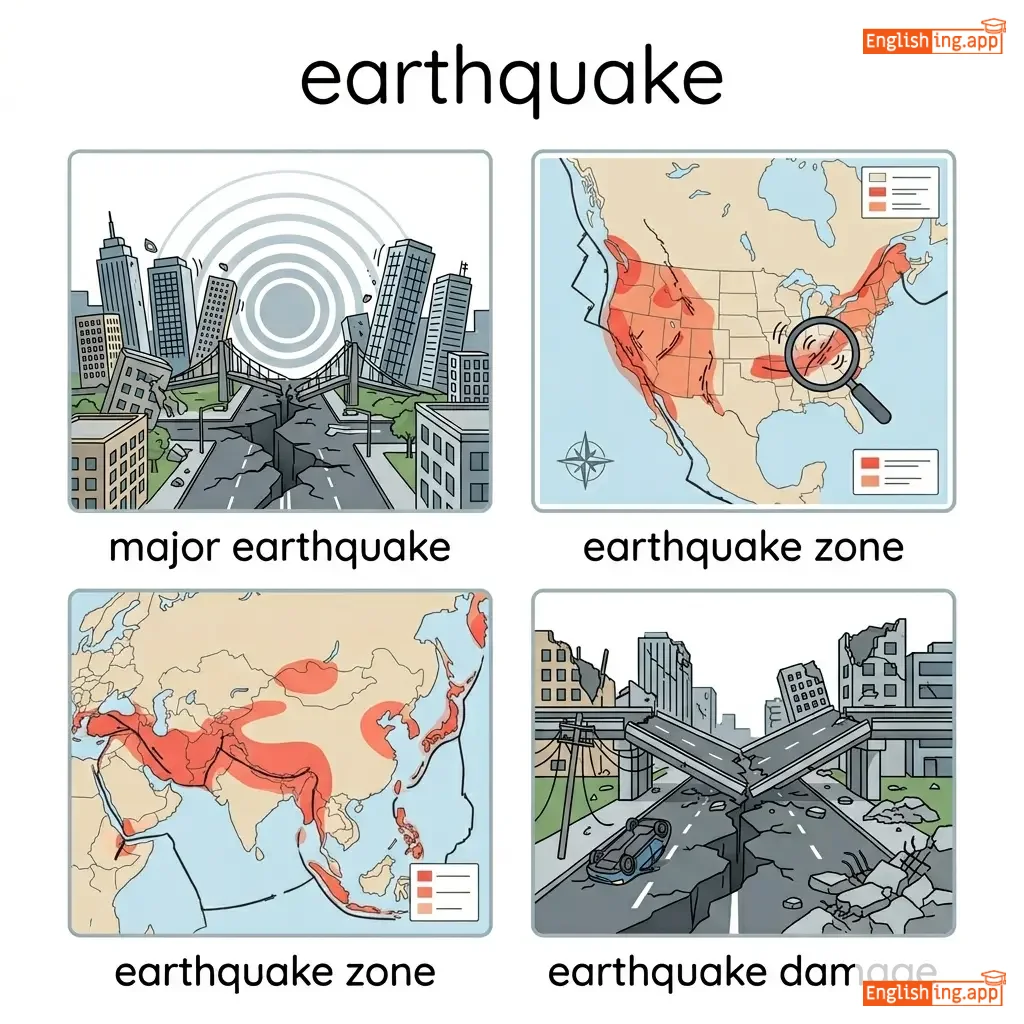
earthquake zone |
an area prone to frequent earthquakes
••••••
|
地震帯
jishin-tai
••••••
|
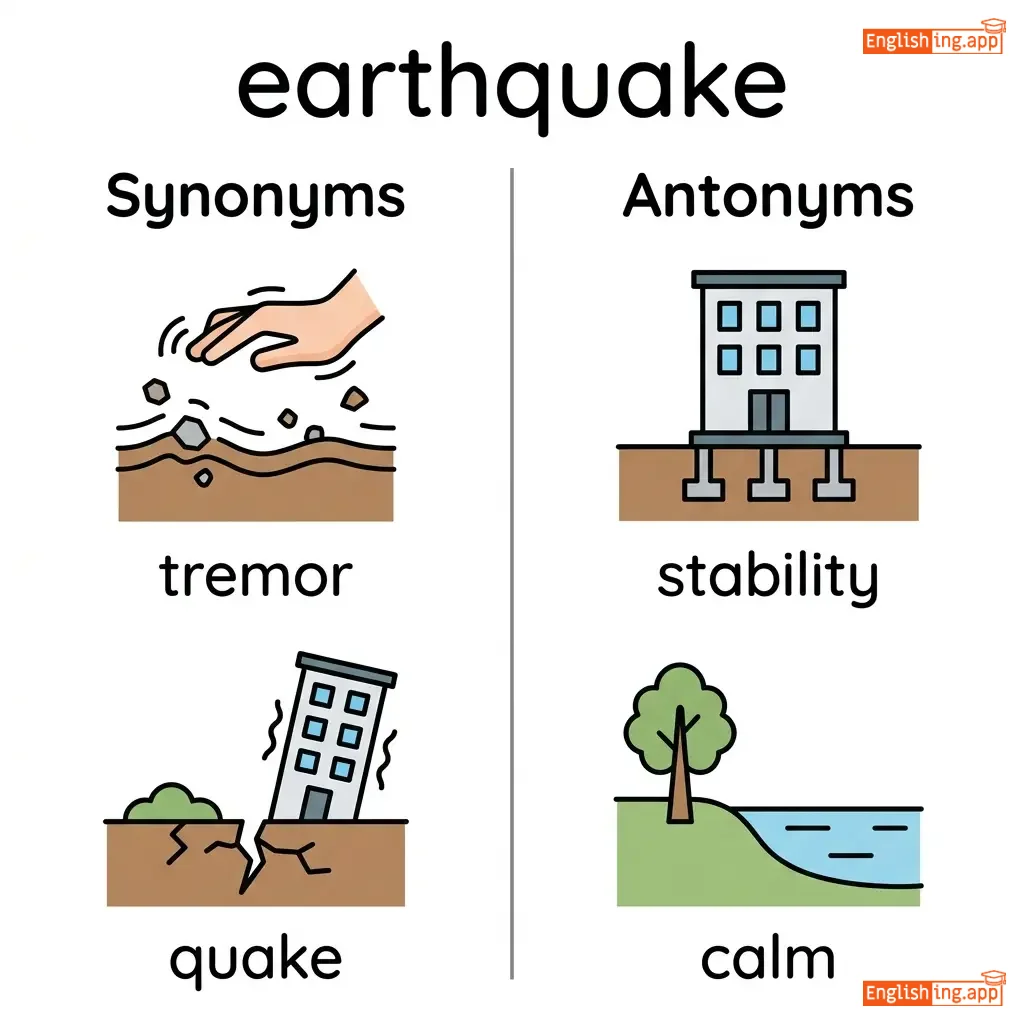
tremor, quake, shock, seismic event
••••••
|
stability, calm
••••••
|
major earthquake, earthquake zone, earthquake damage, earthquake victims
••••••
|
地震 - 地面が揺れるから地震。
••••••
|
|
#1
⚙️
|
/daɪˈnæmɪks/
noun
(ダイナミクス)
••••••
|
- •••••• |
ダイナミクス
dainamikusu
••••••
|
- •••••• | - •••••• | - •••••• | - •••••• |
the forces or properties that stimulate growth, development, or change within a system or process
••••••
|
The dynamics of the team changed after the new manager joined.
新しいマネージャーが参加した後、チームのダイナミクスは変化しました。
••••••
|
新しいマネージャーが参加した後、チームのダイナミクスは変化しました。
Atarashii maneejaa ga sanka shita ato, chiimu no dainamikusu wa henka shimashita.
••••••
|
- •••••• | - •••••• | - •••••• |
forces, interactions, relationships, motion
••••••
|
stability, stagnation
••••••
|
team dynamics, market dynamics, group dynamics, power dynamics
••••••
|
ダイナミクスは変化 – チームの変化がダイナミクスを変える!
••••••
|
|
#1
💀
|
/ˈdaɪɪŋ/
verb
(ダイイング)
••••••
|
- •••••• |
死にかけている
shinikaketeiru
••••••
|
died
ダイド
••••••
|
died
ダイド
••••••
|
dies
ダイズ
••••••
|
dying
ダイイング
••••••
|
to stop living; approaching death
••••••
|
The old man was dying peacefully in his sleep.
その老人は寝ている間に平穏に死んでいた。
••••••
|
その老人は寝ている間に平穏に死んでいた。
Sono rōjin wa nete iru aida ni hei-on ni shinde ita.
••••••
|
a dying wish
死に際の願い
••••••
|
a final request made before death
••••••
|
死に際の願い
shinikiga no negai
••••••
|
passing, perishing, expiring, fading
••••••
|
living, surviving
••••••
|
dying man, dying words, dying wish, dying moment
••••••
|
Dyingは死を意味します– 'Die-ing' それはあなたが死んでいるときの感じです!
••••••
|
|
#1
🇳🇱
|
/dʌtʃ/
adjective
(ダッチ)
••••••
|
- •••••• |
オランダの
oranda no
••••••
|
- •••••• | - •••••• | - •••••• | - •••••• |
relating to the Netherlands, its people, or their language
••••••
|
She enjoys Dutch paintings from the 17th century. |
彼女は17世紀のオランダの絵画を楽しんでいます。
Kanojo wa 17 seiki no oranda no kaiga o tanoshindeimasu.
••••••
|
go Dutch |
to share the cost of something equally, especially a meal
••••••
|
ダッチ式
dacchi-shiki
••••••
|
Netherlandish, Hollandic, European, Low Countries
••••••
|
foreign, non-Dutch
••••••
|
Dutch language, Dutch culture, Dutch people, Dutch oven
••••••
|
Dutchはオランダの意味、覚えておいて: 'オランダ料理はオランダの食べ物!'
••••••
|
|
#1
🗑️
|
/dʌmp/
verb
(ダンプ)
••••••
|
- •••••• |
何かを無駄に捨てるまたは放置する
nanika o muda ni suteru matawa houchi suru
••••••
|
dumped
ダンプド
••••••
|
dumped
ダンプド
••••••
|
dumps
ダンプス
••••••
|
dumping
ダンピング
••••••
|
to drop or dispose of something carelessly; to end a relationship suddenly
••••••
|
He dumped all the trash into the bin.
彼はゴミをすべてゴミ箱に捨てた。
••••••
|
彼はゴミをすべてゴミ箱に捨てた。
Kare wa gomi o subete gomibako ni suteta.
••••••
|
dump someone
誰かを捨てる
••••••
|
to end a romantic relationship with someone
••••••
|
誰かを捨てる
Dareka o suteru
••••••
|
discard, throw, drop, abandon, release
••••••
|
keep, hold, retain
••••••
|
dump site, garbage dump, dump truck, dump waste, dump someone
••••••
|
Dumpは捨てるという意味です — 誰かに振られたら、'彼は私をdumpした!'
••••••
|
|
#1
🦆
|
/dʌk/
noun, verb
(ハピネス)
••••••
|
- •••••• |
幸福
kōfuku
••••••
|
ducked
••••••
|
ducked
••••••
|
ducks
••••••
|
ducking
••••••
|
a waterbird with a broad bill and webbed feet; to lower the head or body quickly to avoid something
••••••
|
He ducked to avoid the flying ball. |
彼女は賞を受け取ったとき、幸せを隠すことができなかった。
Kanojo wa shō o uketotta toki, kōfuku o kakusu koto ga dekinakatta.
••••••
|
sitting duck |
a person or thing vulnerable to attack or criticism
••••••
|
幸福を追求する
kōfuku o tsuikyū suru
••••••
|
bird, fowl, dive, dodge, bend
••••••
|
face, confront
••••••
|
duck pond, roast duck, duck down, duck out, sitting duck
••••••
|
幸福はハピネス!それは、あなたが欲しいものを手に入れる時に感じる感情です!
••••••
|
|
#1
🪆
|
/dɒl/
noun
(ドール)
••••••
|
- •••••• |
人形
ningyo
••••••
|
- •••••• | - •••••• | - •••••• | - •••••• |
a small toy resembling a human figure, especially for children
••••••
|
The little girl hugged her favorite doll tightly. |
小さな女の子はお気に入りの人形をしっかり抱きしめました。
Chiisana onnanoko wa okiniiri no ningyo wo shikkari dakishimemashita.
••••••
|
as pretty as a doll |
very beautiful or attractive, like a toy doll
••••••
|
人形のように美しい
ningyo no you ni utsukushii
••••••
|
toy, figurine, puppet, model, plaything
••••••
|
monster, beast
••••••
|
toy doll, baby doll, Barbie doll, rag doll
••••••
|
人形 - 子供たちは人形と一緒に遊ぶのが大好き!
••••••
|
|
#1
🥁
|
/drʌm/
noun
(ドラム)
••••••
|
- •••••• |
ドラムまたは樽
doramu matawa taru
••••••
|
- •••••• | - •••••• | - •••••• | - •••••• |
a musical instrument beaten with sticks or hands; also a cylindrical container
••••••
|
The drummer hit the drum loudly during the concert.
ドラム奏者はコンサート中に大きな音でドラムを叩いた。
••••••
|
ドラム奏者はコンサート中に大きな音でドラムを叩いた。
Doramu sōsha wa konsāto-chū ni ōkina oto de doramu o tataita.
••••••
|
beat the drum for
ドラムを叩く
••••••
|
to publicly support or promote something
••••••
|
公開で支援する
kōkai de shien suru
••••••
|
percussion, barrel, container, cylinder
••••••
|
silence, stillness
••••••
|
drum kit, drum beats, steel drum, oil drum, bass drum
••••••
|
ドラムの音のように、支持する声は大きく響くべきだ!
••••••
|
|
#1
🚗
|
/ˈdraɪvɪŋ/
verb
(ドライビング)
••••••
|
- •••••• |
運転
unten
••••••
|
drove
ドローブ
••••••
|
driven
ドリヴン
••••••
|
drives
ドライヴス
••••••
|
driving
ドライビング
••••••
|
the act of controlling and operating a vehicle; guiding or motivating something forward
••••••
|
She loves driving along the coast on weekends.
彼女は週末に沿岸をドライブするのが大好きです。
••••••
|
彼女は週末に沿岸をドライブするのが大好きです。
Kanojo wa shūmatsu ni engan o doraibu suru no ga daisuki desu.
••••••
|
driving force
駆動力
••••••
|
a person or thing that motivates or pushes progress
••••••
|
駆動力
kudōryoku
••••••
|
operating, steering, motivating, propelling, guiding
••••••
|
stopping, halting, blocking
••••••
|
driving license, driving test, driving skills, driving force, driving school
••••••
|
運転 = 運転で夢の場所に到達する。
••••••
|
|
#1
🚗
|
/ˈdraɪv.weɪ/
noun
(ドライブウェイ)
••••••
|
- •••••• |
車道
shadō
••••••
|
- •••••• | - •••••• | - •••••• | - •••••• |
a short private road leading from a street to a house or garage
••••••
|
The car was parked in the driveway next to the garden. |
車は庭の隣の車道に停められていた。
Kuruma wa niwa no tonari no shadō ni tomerarete ita.
••••••
|
- •••••• | - •••••• | - •••••• |
path, lane, entrance, approach, access road
••••••
|
highway, street
••••••
|
private driveway, long driveway, clean the driveway, driveway entrance
••••••
|
Drivewayは家の近くに車を停める場所!
••••••
|
|
#1
🥤
|
/ˈdrɪŋkɪŋ/
noun
(ドリンキング)
••••••
|
- •••••• |
飲む
nomu
••••••
|
- •••••• | - •••••• | - •••••• | - •••••• |
the act of consuming liquids, especially alcohol
••••••
|
Drinking too much water at once can make you feel bloated. |
一度に水を飲みすぎると、膨張感を感じることがあります。
Ichido ni mizu o nomisugiru to, bōchōkan o kanjiru koto ga arimasu.
••••••
|
drinking habit |
a regular pattern of alcohol consumption
••••••
|
飲酒習慣
inshu shūkan
••••••
|
consumption, sipping, gulping, swigging
••••••
|
abstinence, fasting
••••••
|
drinking water, drinking habit, heavy drinking, social drinking
••••••
|
飲む = Drink – '飲む' は飲む行為を意味します
••••••
|
|
#1
🛠️
|
/drɪl/
noun
(ドリル)
••••••
|
- •••••• |
ドリル
doriru
••••••
|
- •••••• | - •••••• | - •••••• | - •••••• |
a tool or exercise used for making holes or practicing skills
••••••
|
The students took part in a fire drill at school. |
生徒たちは学校で火災訓練に参加しました。
Seito-tachi wa gakkō de kasai kunren ni sankashimashita.
••••••
|
practice drill |
a repeated exercise to train for an emergency
••••••
|
練習用ドリル
renshū-yō doriru
••••••
|
exercise, training, practice, rehearsal
••••••
|
neglect, disorganization
••••••
|
fire drill, safety drill, military drill, practice drill
••••••
|
ドリルは穴を開ける道具、練習でスキルを磨け!
••••••
|
|
#1
⛵
|
/drɪft/
verb
(ドリフト)
••••••
|
- •••••• |
漂う
tayou
••••••
|
drifted
ドリフトされた
••••••
|
drifted
ドリフトされた
••••••
|
drifts
ドリフトする
••••••
|
drifting
ドリフトしている
••••••
|
to move slowly, especially by air or water currents
••••••
|
The boat began to drift away from the shore.
ボートは岸から離れ始めた。
••••••
|
ボートは岸から離れ始めた。
Booto wa kishi kara hanarehajimeta.
••••••
|
drift apart
離れていく
••••••
|
to gradually become distant or less friendly
••••••
|
徐々に離れる
jojoni hanareru
••••••
|
float, glide, wander, meander, coast
••••••
|
anchor, stay, remain
••••••
|
drift away, drift apart, drift off, drift slowly
••••••
|
漂う — 水面に漂っていく船のように!
••••••
|
|
#1
🌸
|
/draɪd/
adjective
(doraido)
••••••
|
- •••••• |
乾燥
kansou
••••••
|
- •••••• | - •••••• | - •••••• | - •••••• |
without moisture; preserved by removing water
••••••
|
She added some dried flowers to the vase for decoration. |
彼女は装飾のために花瓶に乾燥した花を加えた。
Kanojo wa soushoku no tame ni kabin ni kansou shita hana o kuwaeta.
••••••
|
dried up |
to become dry or to end completely
••••••
|
乾燥する
kansou suru
••••••
|
dehydrated, parched, withered, desiccated
••••••
|
wet, moist, fresh
••••••
|
dried fruits, dried flowers, dried leaves, dried meat
••••••
|
乾燥 = 水分なし、乾いた花のように!
••••••
|
|
#1
🗄️
|
/ˈdrɔːər/
noun
(ドロワー)
••••••
|
- •••••• |
引き出し
hikidashi
••••••
|
- •••••• | - •••••• | - •••••• | - •••••• |
a box-shaped storage compartment that slides in and out of furniture
••••••
|
She kept her jewelry in the top drawer of the dresser.
彼女はジュエリーをドレッサーの上の引き出しに入れた。
••••••
|
彼女はジュエリーをドレッサーの上の引き出しに入れた。
Kanojo wa juerī o doresā no ue no hikidashi ni iretā.
••••••
|
- •••••• | - •••••• | - •••••• |
compartment, tray, storage, container, box
••••••
|
shelf, open space
••••••
|
desk drawer, top drawer, kitchen drawer, pull out drawer
••••••
|
引き出し = ドロワーのようなものです、物を入れるために引き出せます。
••••••
|
|
#1
🚰
|
/dreɪn/
verb
••••••
|
- •••••• | - •••••• |
drained
••••••
|
drained
••••••
|
drains
••••••
|
draining
••••••
|
to cause liquid to flow away from something; to remove liquid
••••••
|
He drained the pasta before adding the sauce. |
- •••••• |
drain the life out of |
to make someone or something lose energy or enthusiasm
••••••
|
- •••••• |
empty, remove, exhaust, deplete, discharge
••••••
|
fill, flood, retain
••••••
|
drain water, drain pipe, drain energy, drain battery
••••••
|
No •••••• |
|
#1
🍞
|
/doʊ/
noun
(ドウ)
••••••
|
- •••••• |
生地
kiji
••••••
|
- •••••• | - •••••• | - •••••• | - •••••• |
a mixture of flour, water, and other ingredients used to make bread or pastries
••••••
|
She kneaded the dough for ten minutes before baking.
彼女は生地を10分間こねた後、それを焼きました。
••••••
|
彼女は生地を10分間こねた後、それを焼きました。
Kanojo wa kiji o juppun kan koneta ato, sore o yakimashita.
••••••
|
rolling in dough
生地の中で転がる
••••••
|
having a lot of money
••••••
|
生地の中で転がる
Kiji no naka de korogaru
••••••
|
batter, paste, mixture, mass, blend
••••••
|
liquid, powder
••••••
|
bread dough, pizza dough, soft dough, knead dough
••••••
|
生地はdoughを意味する — 生地が美味しいパンに変わるところを想像してみてください!
••••••
|
|
#1
🔴
|
/dɒt/
noun
(ドット)
••••••
|
- •••••• |
点
ten
••••••
|
- •••••• | - •••••• | - •••••• | - •••••• |
a small round mark or spot
••••••
|
She drew a red dot on the paper. |
彼女は紙に赤い点を描きました。
Kanojo wa kami ni akai ten o kakimashita.
••••••
|
connect the dots |
to understand the relationship between different facts
••••••
|
点をつなぐ
ten o tsunagu
••••••
|
spot, speck, point, mark, stain
••••••
|
blank, void
••••••
|
dot pattern, dot matrix, red dot, connect dots
••••••
|
Dot は点を意味します — Google.com の各ドメインで見かける点のように!
••••••
|
|
#1
💊
|
/doʊs/
noun
(ドーズ)
••••••
|
- •••••• |
用量
yōryō
••••••
|
- •••••• | - •••••• | - •••••• | - •••••• |
a measured amount of a medicine or drug taken at one time
••••••
|
The doctor prescribed one dose of the medicine every six hours.
医者は6時間ごとに1回薬のドーズを処方しました。
••••••
|
医者は6時間ごとに1回薬のドーズを処方しました。
Isha wa roku-jikan goto ni ikkai kusuri no dōzu o shohō shimashita.
••••••
|
a dose of one's own medicine
自分自身の薬を服用する
••••••
|
experiencing the same unpleasant treatment that one has given to others
••••••
|
自分自身の薬を服用する
Jibun jishin no kusuri o fukuyō suru
••••••
|
portion, amount, quantity, measure, shot
••••••
|
overdose, underdose
••••••
|
high dose, low dose, single dose, daily dose, lethal dose
••••••
|
‘用量’は薬の量を計る、適切な量を忘れないで。
••••••
|
|
#1
🚪
|
/ˈdɔː.weɪ/
noun
(ドアウェイ)
••••••
|
- •••••• |
ドアの入口
doa no iriguchi
••••••
|
- •••••• | - •••••• | - •••••• | - •••••• |
the space where a door opens into a room or building
••••••
|
She stood in the doorway waiting for him to arrive. |
彼女はドアの入口に立って、彼が来るのを待っていました。
Kanojo wa doa no iriguchi ni tatte, kare ga kuru no o matte imashita.
••••••
|
a doorway to success |
an opportunity or means to achieve success
••••••
|
成功への扉
seikou e no tobira
••••••
|
entrance, threshold, entry, gate, portal
••••••
|
exit, wall
••••••
|
front doorway, stand in the doorway, doorway entrance, doorway light
••••••
|
ドアウェイ = ドア + 道。ドアは部屋への入り口です。
••••••
|
|
#1
🎁
|
/dəʊˈneɪ.ʃən/
noun
(ドネーション)
••••••
|
- •••••• |
寄付
kifu
••••••
|
- •••••• | - •••••• | - •••••• | - •••••• |
something that is given to help a person or organization, often money
••••••
|
He made a generous donation to the local orphanage. |
彼は地元の孤児院に寛大な寄付をしました。
Kare wa jimoto no kojiin ni kandaina kifu o shimashita.
••••••
|
make a donation |
to give money or goods to help a cause
••••••
|
寄付をする
kifu o suru
••••••
|
contribution, gift, offering, grant, endowment
••••••
|
withdrawal, taking
••••••
|
charity donation, blood donation, make donation, receive donation
••••••
|
寄付は与えることを意味します — 'kifu' は '与える' を意味し、だから donation は寄付です!
••••••
|
Vocabulary Quiz
Test your vocabulary by matching words with their translations or meanings.
Login to take the quiz
Comments (0)
Share your thoughts and join the discussion.
Join the discussion by logging in
Login to CommentNo comments yet
Be the first to share your thoughts!