



Swipe left or right, or use the buttons. Tap image to zoom.
例句翻译
单词
Lesson 422Lesson 422 - 遮罩切换
|
表情符号
|
单词 | Images | 翻译 | 过去时 | 过去分词 | 第三人称单数 | 动名词 | 含义 | 例句 | 例句翻译 | 示例表达 | 示例表达含义 | 示例表达翻译 | 同义词 | 反义词 | 搭配词 | 助记符 |
|---|---|---|---|---|---|---|---|---|---|---|---|---|---|---|---|---|---|
|
#1
🍺
|
/drʌŋk/
adjective
(drʌŋk)
••••••
|
- •••••• |
醉酒
zuìjiǔ
••••••
|
- •••••• | - •••••• | - •••••• | - •••••• |
affected by alcohol to the point of losing control of one's faculties or behavior
••••••
|
He was too drunk to walk straight. |
他喝醉了,无法走直路。
Tā hē zuì le, wúfǎ zǒu zhí lù.
••••••
|
dead drunk |
extremely intoxicated
••••••
|
酩酊大醉
mǐngdǐng dàzuì
••••••
|
intoxicated, tipsy, inebriated, wasted, buzzed
••••••
|
sober, abstinent
••••••
|
get drunk, dead drunk, completely drunk, drunk driving
••••••
|
醉酒等于drunk — 喝得多就会醉酒!
••••••
|
|
#1
👴
|
/ˈɛldər/
noun
(elder)
••••••
|
- •••••• |
长者
zhǎng zhě
••••••
|
- •••••• | - •••••• | - •••••• | - •••••• |
a person who is older or has higher rank; an older person in a family or community
••••••
|
We should always respect our elders. |
我们应该永远尊敬我们的长辈。
Wǒmen yīnggāi yǒngyuǎn zūnjìng wǒmen de zhǎngbèi.
••••••
|
respect your elders |
to show politeness and honor towards older people
••••••
|
尊敬长辈
zūn jìng zhǎngbèi
••••••
|
senior, ancestor, elder statesman, veteran
••••••
|
junior, youth, minor
••••••
|
elder brother, elder sister, village elder, respect elders
••••••
|
Elder 在中文中是长者 — elder brother 在中文中是哥哥或弟弟。
••••••
|
|
#1
8️⃣
|
/eɪtθ/
adjective
(eɪtθ)
••••••
|
- •••••• |
第八
dì bā
••••••
|
- •••••• | - •••••• | - •••••• | - •••••• |
coming after the seventh position in a sequence; one of eight equal parts
••••••
|
She finished in eighth place in the race.
她在比赛中获得了第八名。
••••••
|
她在比赛中获得了第八名。
Tā zài bǐsài zhōng huòdé le dì bā míng.
••••••
|
- •••••• | - •••••• | - •••••• |
8th, octaval, eighthly, one-eighth
••••••
|
first, last
••••••
|
eighth grade, eighth position, eighth place, eighth day
••••••
|
八之后是第八,表示第八名位置。
••••••
|
|
#1
🎯
|
/ɪˈfɛktɪvnəs/
noun
(效能)
••••••
|
- •••••• |
效能
xiaoneng
••••••
|
- •••••• | - •••••• | - •••••• | - •••••• |
the degree to which something is successful in producing a desired result.
••••••
|
The effectiveness of the new policy is still being evaluated.
新政策的效能仍在评估中。
••••••
|
新政策的效能仍在评估中。
Xīn zhèngcè de xiàonéng réng zài pínggū zhōng.
••••••
|
measure effectiveness
衡量效能
••••••
|
to assess how well something achieves its goals.
••••••
|
衡量效能
héngliáng xiàonéng
••••••
|
efficiency, success, productivity, power, capability
••••••
|
ineffectiveness, failure, weakness
••••••
|
test effectiveness, improve effectiveness, measure effectiveness, evaluate effectiveness
••••••
|
Effective表示工作,effectiveness表示工作得如何!
••••••
|
|
#1
✏️
|
/ˈɛdɪt/
verb
(编辑)
••••••
|
|
编辑
bianji
••••••
|
edited
••••••
|
edited
••••••
|
edits
••••••
|
editing
••••••
|
to prepare written material by correcting, condensing, or modifying it.
••••••
|
She edited the article before it was published. |
她在文章发布前进行了编辑。
tā zài wénzhāng fābù qián jìnxíngle biānjí.
••••••
|
editor's cut |
a version of a film or video edited by its editor rather than the director.
••••••
|
编辑版本
biānjí bǎn běn
••••••
|
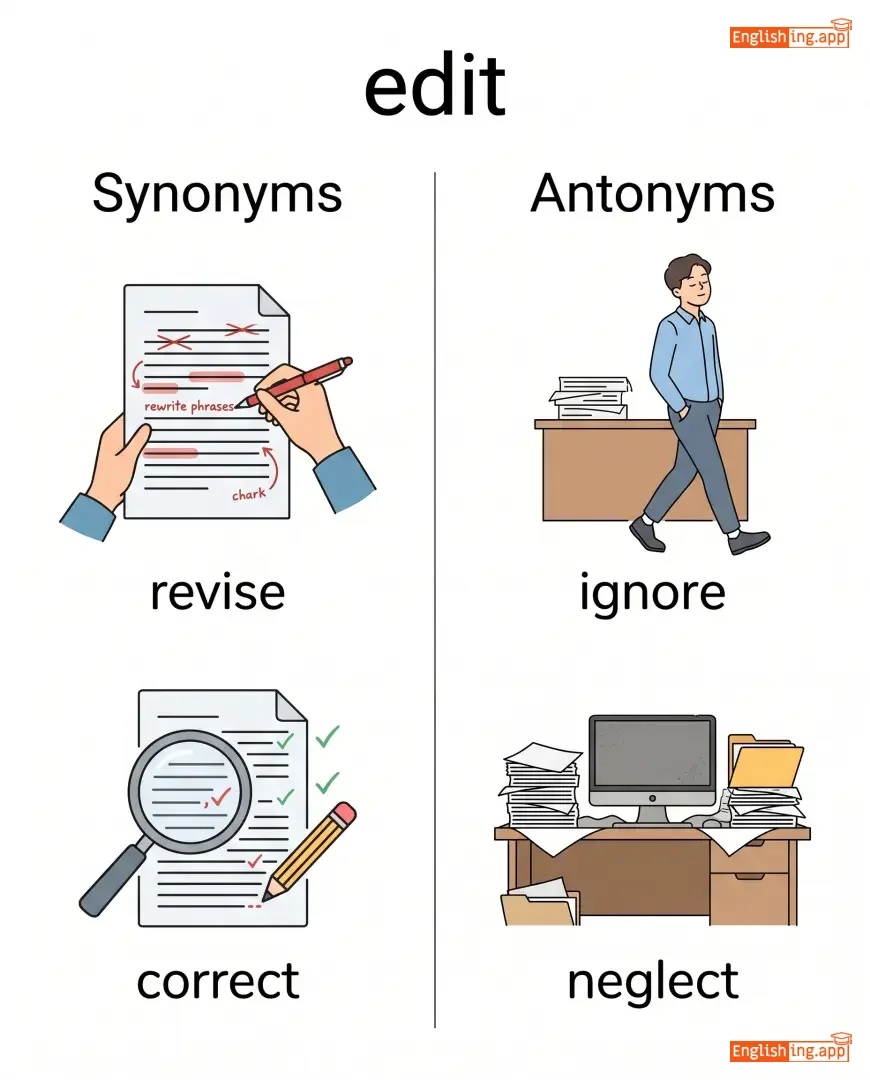
revise, correct, modify, proofread, alter
••••••
|
ignore, neglect, keep unchanged
••••••
|
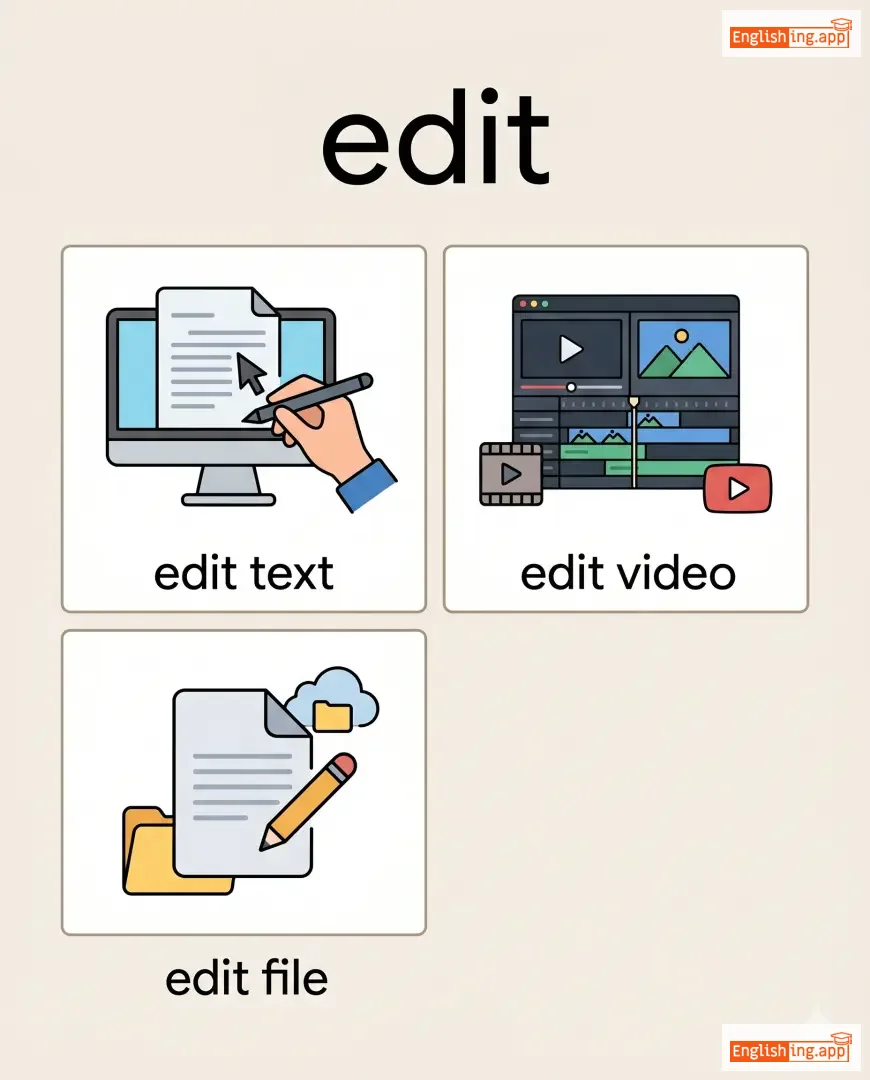
edit text, edit video, edit file, edit content, edit message
••••••
|
编辑就是让它更好,像'编辑它,做得更好!' ✏️
••••••
|
|
#1
💰
|
/ˌiːkəˈnɒmɪkli/
adverb
(经济地)
••••••
|
- •••••• |
经济地
jīngjì de
••••••
|
- •••••• | - •••••• | - •••••• | - •••••• |
in a way that relates to economics or is efficient and not wasteful.
••••••
|
The company is trying to operate more economically this year. |
公司今年努力以更经济的方式运营。
Gōngsī jīnnián nǔlì yǐ gèng jīngjì de fāngshì yùnxíng.
••••••
|
- •••••• | - •••••• | - •••••• |
efficiently, financially, frugally, cost-effectively
••••••
|
wastefully, extravagantly
••••••
|
economically viable, economically independent, economically strong, economically developed
••••••
|
经济地就是节省,做事要高效!
••••••
|
|
#1
🌱
|
/ˌiːkəˈlɒdʒɪkəl/
adjective
(生态的)
••••••
|
|
生态的
shengtai de
••••••
|
- •••••• | - •••••• | - •••••• | - •••••• |
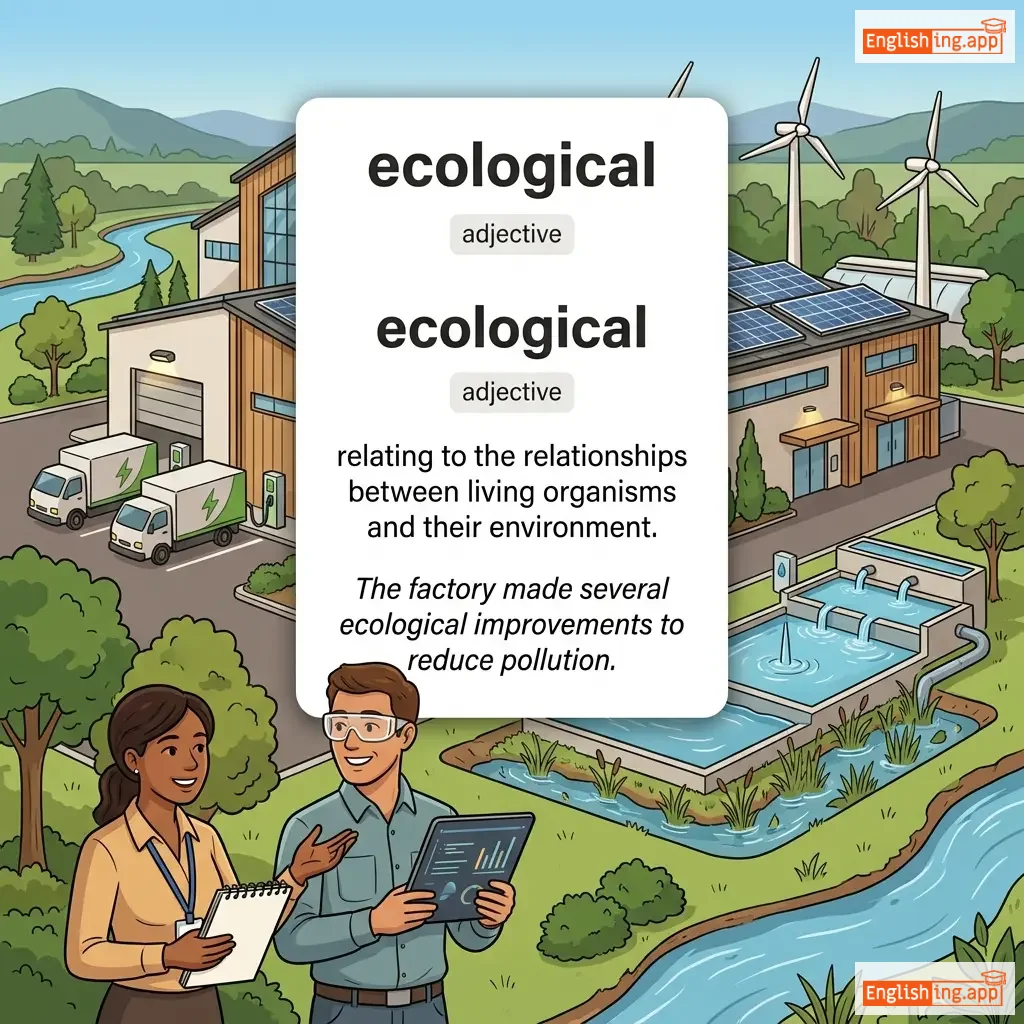
relating to the relationships between living organisms and their environment.
••••••
|
The factory made several ecological improvements to reduce pollution. |
工厂进行了多项生态改进以减少污染。
Gongchang jinxing le duoxiang shengtai gaijin yi jianshao wuran.
••••••
|
- •••••• | - •••••• | - •••••• |
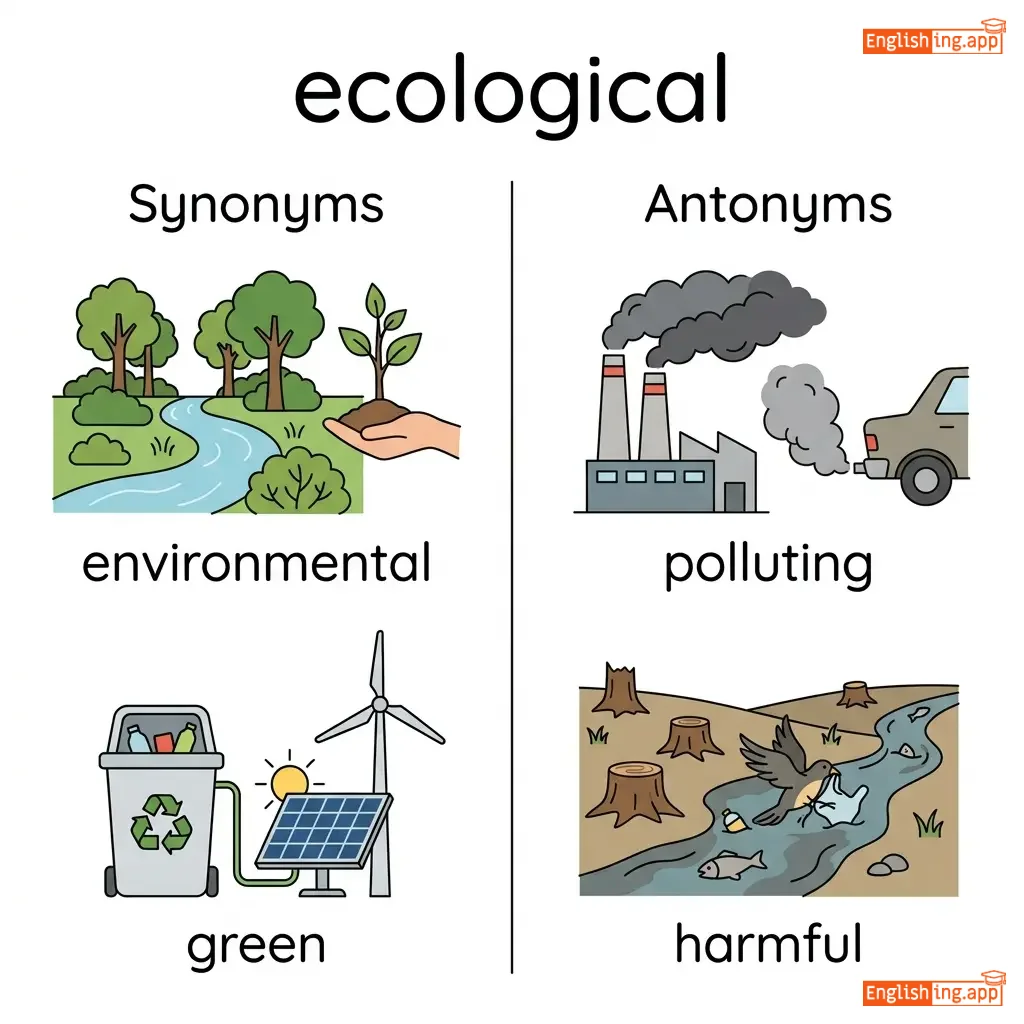
environmental, green, biological, natural, sustainable
••••••
|
polluting, harmful, artificial
••••••
|
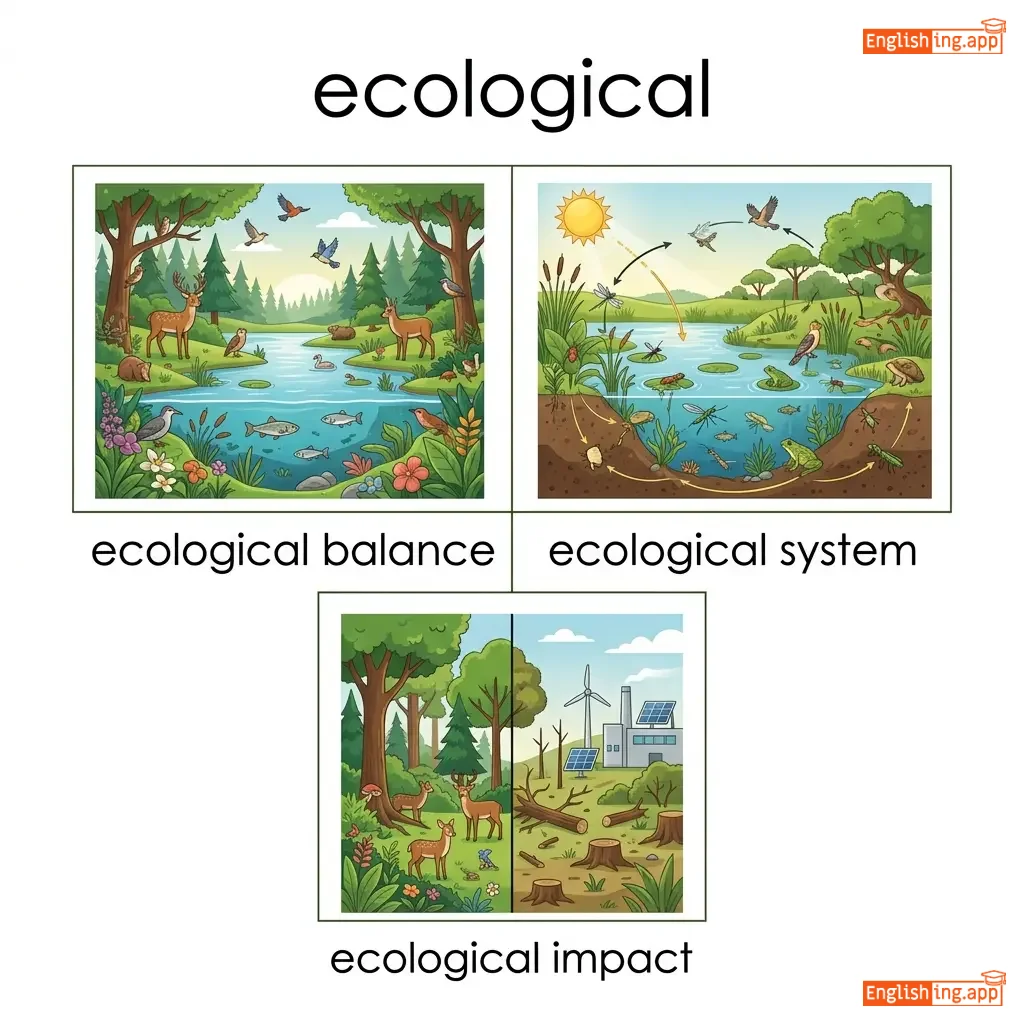
ecological balance, ecological system, ecological impact, ecological disaster
••••••
|
Eco意味着环境,因此生态的意味着与环境相关。
••••••
|
|
#1
🔊
|
/ˈɛkəʊ/
noun, verb
(happiness)
••••••
|
- •••••• |
幸福
xìngfú
••••••
|
echoed
••••••
|
echoed
••••••
|
echoes
••••••
|
echoing
••••••
|
a sound that is reflected off a surface and heard again; to repeat or reflect a sound or idea.
••••••
|
Her laughter echoed through the empty hall. |
她收到奖项时,无法掩饰自己的幸福。
tā shōudào jiǎngxiàng shí, wúfǎ yǎnshì zìjǐ de xìngfú.
••••••
|
echo chamber |
an environment where people only encounter information or opinions that reflect and reinforce their own.
••••••
|
追求幸福
zhuīqiú xìngfú
••••••
|
resound, reverberate, repeat, reflect, resonate
••••••
|
silence, quiet, mute
••••••
|
echo sound, echo chamber, echo through, faint echo, echo of laughter
••••••
|
幸福是你内心的追求,一旦你找到了,它会充满你整个人生!
••••••
|
|
#1
🍽️
|
/ˈiːtɪŋ/
verb
(yīting)
••••••
|
- •••••• |
吃
chi
••••••
|
ate
è
••••••
|
eaten
yìtén
••••••
|
eats
yìs
••••••
|
eating
yīting
••••••
|
the act of consuming food
••••••
|
They were eating dinner when the phone rang.
他们在吃晚餐时,电话响了。
••••••
|
他们在吃晚餐时,电话响了。
Tāmen zài chī wǎncān shí, diànhuà xiǎngle.
••••••
|
eating habits
饮食习惯
••••••
|
the way someone eats or their regular food patterns
••••••
|
饮食习惯
yǐn shí xí guàn
••••••
|
consuming, devouring, chewing, swallowing
••••••
|
fasting, starving
••••••
|
healthy eating, eating disorder, eating habits, eating together
••••••
|
吃 = 生存!没有吃就没有生命!
••••••
|
|
#1
🌋
|
/ˈɜːrθ.kweɪk/
noun
(æθ.kweɪk)
••••••
|
|
地震
dizhen
••••••
|
- •••••• | - •••••• | - •••••• | - •••••• |
a sudden shaking of the ground caused by movements within the Earth's crust or volcanic action
••••••
|
A strong earthquake hit the city last night. |
昨晚一场强烈的地震袭击了这座城市。
zuó wǎn yī chǎng qiángliè de dìzhèn xíjí le zhè zuò chéngshì.
••••••
|
earthquake zone |
an area prone to frequent earthquakes
••••••
|
地震带
dizhen dai
••••••
|
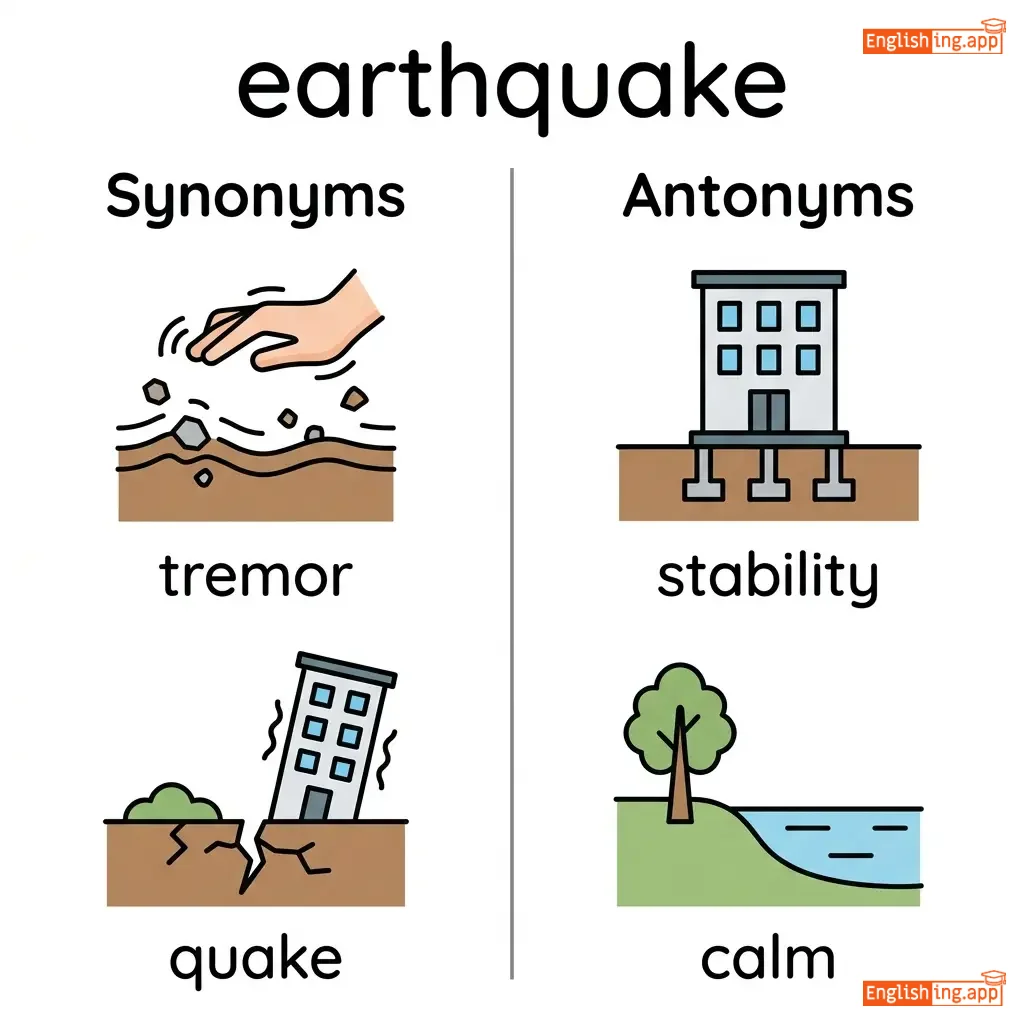
tremor, quake, shock, seismic event
••••••
|
stability, calm
••••••
|
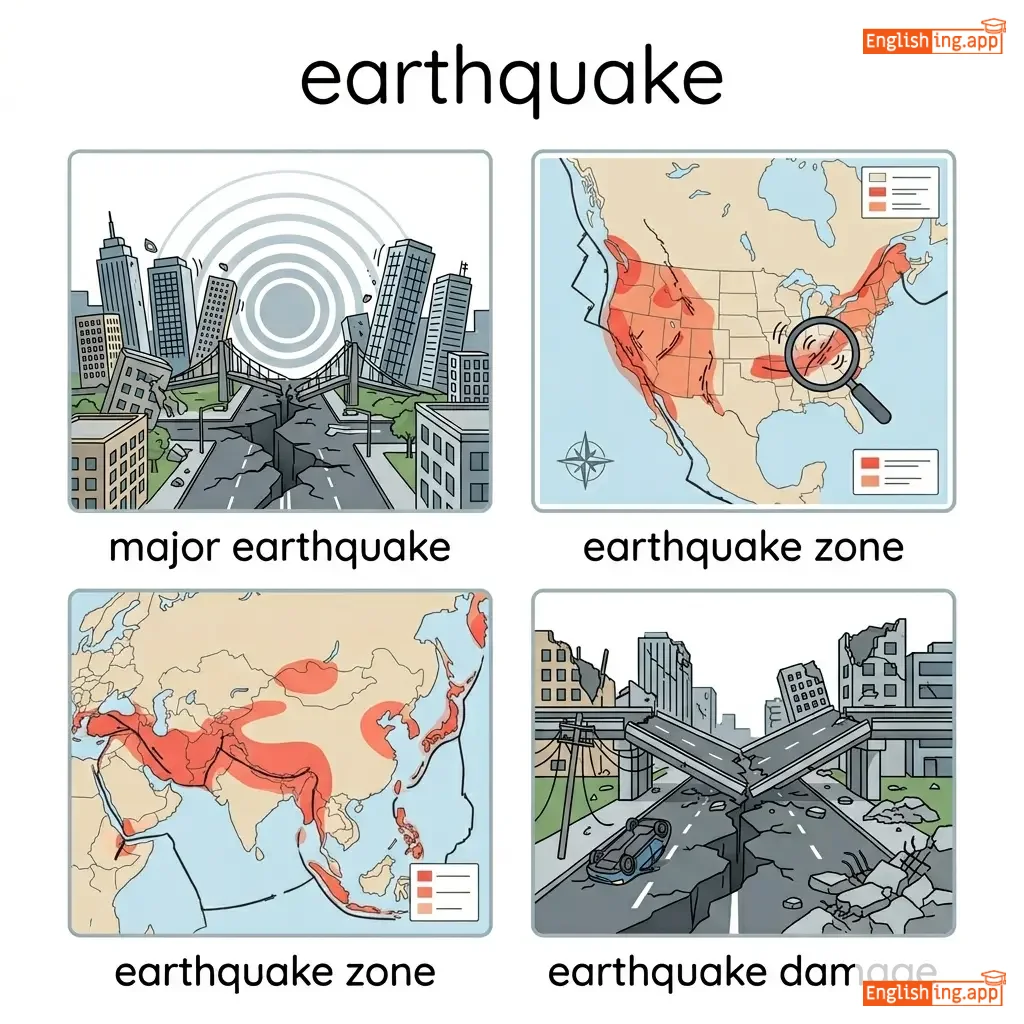
major earthquake, earthquake zone, earthquake damage, earthquake victims
••••••
|
地震 - 地球震动,就成了地震。
••••••
|
|
#1
⚙️
|
/daɪˈnæmɪks/
noun
(dàiˈnàmɪks)
••••••
|
- •••••• |
动态
dongtai
••••••
|
- •••••• | - •••••• | - •••••• | - •••••• |
the forces or properties that stimulate growth, development, or change within a system or process
••••••
|
The dynamics of the team changed after the new manager joined.
团队的动态在新经理加入后发生了变化。
••••••
|
团队的动态在新经理加入后发生了变化。
Tuandui de dongtai zai xin jingli jiaru hou fasheng le bianhua.
••••••
|
- •••••• | - •••••• | - •••••• |
forces, interactions, relationships, motion
••••••
|
stability, stagnation
••••••
|
team dynamics, market dynamics, group dynamics, power dynamics
••••••
|
Dynamics = 改变 – 团队的变化就是动态的变化!
••••••
|
|
#1
💀
|
/ˈdaɪɪŋ/
verb
(dài yīng)
••••••
|
- •••••• |
临终
lín zhōng
••••••
|
died
dài
••••••
|
died
dài
••••••
|
dies
dài zī
••••••
|
dying
dài yīng
••••••
|
to stop living; approaching death
••••••
|
The old man was dying peacefully in his sleep.
老人安详地在睡梦中去世。
••••••
|
老人安详地在睡梦中去世。
Lǎorén ānxiáng de zài shuìmèng zhōng qùshì.
••••••
|
a dying wish
临终愿望
••••••
|
a final request made before death
••••••
|
临终愿望
lín zhōng yuànwàng
••••••
|
passing, perishing, expiring, fading
••••••
|
living, surviving
••••••
|
dying man, dying words, dying wish, dying moment
••••••
|
Dying意味着死亡 – 'Die-ing' 是你死时的感觉!
••••••
|
|
#1
🇳🇱
|
/dʌtʃ/
adjective
(dach)
••••••
|
- •••••• |
荷兰的
helan de
••••••
|
- •••••• | - •••••• | - •••••• | - •••••• |
relating to the Netherlands, its people, or their language
••••••
|
She enjoys Dutch paintings from the 17th century. |
她喜欢17世纪的荷兰画作。
Ta xihuan 17 shiji de helan huazuo.
••••••
|
go Dutch |
to share the cost of something equally, especially a meal
••••••
|
去荷兰式
qu helan shi
••••••
|
Netherlandish, Hollandic, European, Low Countries
••••••
|
foreign, non-Dutch
••••••
|
Dutch language, Dutch culture, Dutch people, Dutch oven
••••••
|
Dutch意味着荷兰,记住:'荷兰菜是荷兰的食物!'
••••••
|
|
#1
🗑️
|
/dʌmp/
verb
(丹普)
••••••
|
- •••••• |
草率地丢弃或放下某物
caolu di diuqi huo fangxia mouwu
••••••
|
dumped
丹普德
••••••
|
dumped
丹普德
••••••
|
dumps
丹普斯
••••••
|
dumping
丹普英
••••••
|
to drop or dispose of something carelessly; to end a relationship suddenly
••••••
|
He dumped all the trash into the bin.
他把所有的垃圾都扔进了垃圾桶。
••••••
|
他把所有的垃圾都扔进了垃圾桶。
Ta ba suoyou de laji dou reng jin le laji tong.
••••••
|
dump someone
甩掉某人
••••••
|
to end a romantic relationship with someone
••••••
|
甩掉某人
Shuaidiao mouren
••••••
|
discard, throw, drop, abandon, release
••••••
|
keep, hold, retain
••••••
|
dump site, garbage dump, dump truck, dump waste, dump someone
••••••
|
Dump意味着扔掉——当某人甩了你,你说:'他把我dump了!'
••••••
|
|
#1
🦆
|
/dʌk/
noun, verb
(happiness)
••••••
|
- •••••• |
幸福
xingfu
••••••
|
ducked
••••••
|
ducked
••••••
|
ducks
••••••
|
ducking
••••••
|
a waterbird with a broad bill and webbed feet; to lower the head or body quickly to avoid something
••••••
|
He ducked to avoid the flying ball. |
当她获得奖项时,她无法掩饰自己的幸福。
Dāng tā huòdé jiǎngxiàng shí, tā wúfǎ yǎnshì zìjǐ de xìngfú.
••••••
|
sitting duck |
a person or thing vulnerable to attack or criticism
••••••
|
追求幸福
zhuīqiú xìngfú
••••••
|
bird, fowl, dive, dodge, bend
••••••
|
face, confront
••••••
|
duck pond, roast duck, duck down, duck out, sitting duck
••••••
|
幸福意味着幸福,当你得到你一直想要的东西时,你会感到无比快乐!
••••••
|
|
#1
🪆
|
/dɒl/
noun
(doll)
••••••
|
- •••••• |
洋娃娃
yangwawa
••••••
|
- •••••• | - •••••• | - •••••• | - •••••• |
a small toy resembling a human figure, especially for children
••••••
|
The little girl hugged her favorite doll tightly. |
小女孩紧紧抱着她最喜欢的洋娃娃。
xiao nuhai jinjing baozhe ta zui xihuan de yangwawa.
••••••
|
as pretty as a doll |
very beautiful or attractive, like a toy doll
••••••
|
像洋娃娃一样漂亮
xiang yangwawa yiyang piaoliang
••••••
|
toy, figurine, puppet, model, plaything
••••••
|
monster, beast
••••••
|
toy doll, baby doll, Barbie doll, rag doll
••••••
|
洋娃娃 - 玩具娃娃,女孩都喜欢!
••••••
|
|
#1
🥁
|
/drʌm/
noun
(鼓)
••••••
|
- •••••• |
鼓或桶
gǔ huò tǒng
••••••
|
- •••••• | - •••••• | - •••••• | - •••••• |
a musical instrument beaten with sticks or hands; also a cylindrical container
••••••
|
The drummer hit the drum loudly during the concert.
鼓手在音乐会中大声敲击鼓。
••••••
|
鼓手在音乐会中大声敲击鼓。
Gǔshǒu zài yīnyuè huì zhōng dà shēng qiāojī gǔ.
••••••
|
beat the drum for
为……敲鼓
••••••
|
to publicly support or promote something
••••••
|
公开支持
gōngkāi zhīchí
••••••
|
percussion, barrel, container, cylinder
••••••
|
silence, stillness
••••••
|
drum kit, drum beats, steel drum, oil drum, bass drum
••••••
|
像鼓声一样,支持的声音也应该响亮!
••••••
|
|
#1
🚗
|
/ˈdraɪvɪŋ/
verb
(dráiv-ing)
••••••
|
- •••••• |
驾驶
jiàshǐ
••••••
|
drove
dróv
••••••
|
driven
dríven
••••••
|
drives
dráivs
••••••
|
driving
dráiv-ing
••••••
|
the act of controlling and operating a vehicle; guiding or motivating something forward
••••••
|
She loves driving along the coast on weekends.
她喜欢在周末沿着海岸驾驶。
••••••
|
她喜欢在周末沿着海岸驾驶。
Tā xǐhuān zài zhōumò yánzhe hǎi'àn jiàshǐ.
••••••
|
driving force
推动力
••••••
|
a person or thing that motivates or pushes progress
••••••
|
推动力
tuīdònglì
••••••
|
operating, steering, motivating, propelling, guiding
••••••
|
stopping, halting, blocking
••••••
|
driving license, driving test, driving skills, driving force, driving school
••••••
|
驾驶 = 驾驶能带你去实现梦想的地方。
••••••
|
|
#1
🚗
|
/ˈdraɪv.weɪ/
noun
(dài wèi)
••••••
|
- •••••• |
车道
chedao
••••••
|
- •••••• | - •••••• | - •••••• | - •••••• |
a short private road leading from a street to a house or garage
••••••
|
The car was parked in the driveway next to the garden. |
车子停在花园旁的车道上。
Chezi ting zai huayuan pang de chedao shang.
••••••
|
- •••••• | - •••••• | - •••••• |
path, lane, entrance, approach, access road
••••••
|
highway, street
••••••
|
private driveway, long driveway, clean the driveway, driveway entrance
••••••
|
Driveway就是停车的地方,直接开车到家门口!
••••••
|
|
#1
🥤
|
/ˈdrɪŋkɪŋ/
noun
(drinking)
••••••
|
- •••••• |
喝
he
••••••
|
- •••••• | - •••••• | - •••••• | - •••••• |
the act of consuming liquids, especially alcohol
••••••
|
Drinking too much water at once can make you feel bloated. |
一次喝太多水可能会让你感到腹胀。
Yīcì hē tài duō shuǐ kěnéng huì ràng nǐ gǎndào fùzhàng.
••••••
|
drinking habit |
a regular pattern of alcohol consumption
••••••
|
饮酒习惯
yǐnjiǔ xíguàn
••••••
|
consumption, sipping, gulping, swigging
••••••
|
abstinence, fasting
••••••
|
drinking water, drinking habit, heavy drinking, social drinking
••••••
|
喝 = Drink - 记得 '喝' 意味着饮水和酒精
••••••
|
|
#1
🛠️
|
/drɪl/
noun
(钻机)
••••••
|
- •••••• |
钻头
zuàntóu
••••••
|
- •••••• | - •••••• | - •••••• | - •••••• |
a tool or exercise used for making holes or practicing skills
••••••
|
The students took part in a fire drill at school. |
学生们参加了学校的火灾演习。
Xuéshēngmen cānjiāle xuéxiào de huǒzāi yǎn xí.
••••••
|
practice drill |
a repeated exercise to train for an emergency
••••••
|
练习钻孔
liànxí zuànkǒng
••••••
|
exercise, training, practice, rehearsal
••••••
|
neglect, disorganization
••••••
|
fire drill, safety drill, military drill, practice drill
••••••
|
钻头就是钻,练习能打磨技能!
••••••
|
|
#1
⛵
|
/drɪft/
verb
(drift)
••••••
|
- •••••• |
漂移
piaoyi
••••••
|
drifted
drifted
••••••
|
drifted
drifted
••••••
|
drifts
drifts
••••••
|
drifting
drifting
••••••
|
to move slowly, especially by air or water currents
••••••
|
The boat began to drift away from the shore.
船开始从岸边漂移。
••••••
|
船开始从岸边漂移。
Chuan kaishi cong anbian piaoyi.
••••••
|
drift apart
慢慢地分离
••••••
|
to gradually become distant or less friendly
••••••
|
渐行渐远
jianxing jianyuan
••••••
|
float, glide, wander, meander, coast
••••••
|
anchor, stay, remain
••••••
|
drift away, drift apart, drift off, drift slowly
••••••
|
漂移,就像船在水面上慢慢远去。
••••••
|
|
#1
🌸
|
/draɪd/
adjective
(draid)
••••••
|
- •••••• |
干
gan
••••••
|
- •••••• | - •••••• | - •••••• | - •••••• |
without moisture; preserved by removing water
••••••
|
She added some dried flowers to the vase for decoration. |
她在花瓶里加了一些干花来装饰。
Ta zai huaping li jia le yixie ganhua lai zhuangshi.
••••••
|
dried up |
to become dry or to end completely
••••••
|
干掉
gandiao
••••••
|
dehydrated, parched, withered, desiccated
••••••
|
wet, moist, fresh
••••••
|
dried fruits, dried flowers, dried leaves, dried meat
••••••
|
干 = 没有水分,就像干花一样!
••••••
|
|
#1
🗄️
|
/ˈdrɔːər/
noun
(抽屉)
••••••
|
- •••••• |
抽屉
chouti
••••••
|
- •••••• | - •••••• | - •••••• | - •••••• |
a box-shaped storage compartment that slides in and out of furniture
••••••
|
She kept her jewelry in the top drawer of the dresser.
她把珠宝放在梳妆台的上层抽屉里。
••••••
|
她把珠宝放在梳妆台的上层抽屉里。
Tā bǎ zhūbǎo fàng zài shūzhuāngtái de shàngcéng chōuti lǐ.
••••••
|
- •••••• | - •••••• | - •••••• |
compartment, tray, storage, container, box
••••••
|
shelf, open space
••••••
|
desk drawer, top drawer, kitchen drawer, pull out drawer
••••••
|
抽屉 = 类似 Drawer, 可以拉开来装东西。
••••••
|
|
#1
🚰
|
/dreɪn/
verb
••••••
|
- •••••• | - •••••• |
drained
••••••
|
drained
••••••
|
drains
••••••
|
draining
••••••
|
to cause liquid to flow away from something; to remove liquid
••••••
|
He drained the pasta before adding the sauce. |
- •••••• |
drain the life out of |
to make someone or something lose energy or enthusiasm
••••••
|
- •••••• |
empty, remove, exhaust, deplete, discharge
••••••
|
fill, flood, retain
••••••
|
drain water, drain pipe, drain energy, drain battery
••••••
|
No •••••• |
|
#1
🍞
|
/doʊ/
noun
(dough)
••••••
|
- •••••• |
面团
miàn tuán
••••••
|
- •••••• | - •••••• | - •••••• | - •••••• |
a mixture of flour, water, and other ingredients used to make bread or pastries
••••••
|
She kneaded the dough for ten minutes before baking.
她揉了十分钟面团然后烤了它。
••••••
|
她揉了十分钟面团然后烤了它。
Ta rou le shi fenzhong miantuan ranhou kao le ta.
••••••
|
rolling in dough
在面团中打滚
••••••
|
having a lot of money
••••••
|
在面团中打滚
Zai miantuan zhong dagun
••••••
|
batter, paste, mixture, mass, blend
••••••
|
liquid, powder
••••••
|
bread dough, pizza dough, soft dough, knead dough
••••••
|
面团意味着 dough — 想象面团变成美味的面包!
••••••
|
|
#1
🔴
|
/dɒt/
noun
(点)
••••••
|
- •••••• |
点
dian
••••••
|
- •••••• | - •••••• | - •••••• | - •••••• |
a small round mark or spot
••••••
|
She drew a red dot on the paper. |
她在纸上画了一个红点。
Tā zài zhǐ shàng huàle yīgè hóng diǎn.
••••••
|
connect the dots |
to understand the relationship between different facts
••••••
|
连接点
liánjiē diǎn
••••••
|
spot, speck, point, mark, stain
••••••
|
blank, void
••••••
|
dot pattern, dot matrix, red dot, connect dots
••••••
|
Dot 意味着点 — 就像在 Google.com 的每个域名中看到的点!
••••••
|
|
#1
💊
|
/doʊs/
noun
(多斯)
••••••
|
- •••••• |
剂量
jiliang
••••••
|
- •••••• | - •••••• | - •••••• | - •••••• |
a measured amount of a medicine or drug taken at one time
••••••
|
The doctor prescribed one dose of the medicine every six hours.
医生每六小时开一次药物的剂量。
••••••
|
医生每六小时开一次药物的剂量。
Yisheng mei liu xiaoshi kai yici yaowu de jiliang.
••••••
|
a dose of one's own medicine
自食其果
••••••
|
experiencing the same unpleasant treatment that one has given to others
••••••
|
自食其果
Zì shí qí guǒ
••••••
|
portion, amount, quantity, measure, shot
••••••
|
overdose, underdose
••••••
|
high dose, low dose, single dose, daily dose, lethal dose
••••••
|
记住‘剂量’是药物的量,按时按量吃。
••••••
|
|
#1
🚪
|
/ˈdɔː.weɪ/
noun
(duōwēi)
••••••
|
- •••••• |
门口
menkou
••••••
|
- •••••• | - •••••• | - •••••• | - •••••• |
the space where a door opens into a room or building
••••••
|
She stood in the doorway waiting for him to arrive. |
她站在门口,等待他的到来。
Ta zhan zai menkou, dengdai tade daolai.
••••••
|
a doorway to success |
an opportunity or means to achieve success
••••••
|
通往成功的门
tongwang chenggong de men
••••••
|
entrance, threshold, entry, gate, portal
••••••
|
exit, wall
••••••
|
front doorway, stand in the doorway, doorway entrance, doorway light
••••••
|
门口 = 门 + 道路,门口是进入的途径。
••••••
|
|
#1
🎁
|
/dəʊˈneɪ.ʃən/
noun
(dòunèi)
••••••
|
- •••••• |
捐赠
juānzèng
••••••
|
- •••••• | - •••••• | - •••••• | - •••••• |
something that is given to help a person or organization, often money
••••••
|
He made a generous donation to the local orphanage. |
他向当地孤儿院做了慷慨的捐赠。
Tā xiàng dāngdì gū'ér yuàn zuòle kāngkǎi de juānzèng.
••••••
|
make a donation |
to give money or goods to help a cause
••••••
|
做捐赠
zuò juānzèng
••••••
|
contribution, gift, offering, grant, endowment
••••••
|
withdrawal, taking
••••••
|
charity donation, blood donation, make donation, receive donation
••••••
|
捐赠意味着给予 — 'juān' 意味着 '给', 因此 donation 意味着捐赠!
••••••
|
Vocabulary Quiz
Test your vocabulary by matching words with their translations or meanings.
Login to take the quiz
Comments (0)
Share your thoughts and join the discussion.
Join the discussion by logging in
Login to CommentNo comments yet
Be the first to share your thoughts!