



Swipe left or right, or use the buttons. Tap image to zoom.
例句翻译
单词
Lesson 139Lesson 139 - 遮罩切换
|
表情符号
|
单词 | Images | 翻译 | 过去时 | 过去分词 | 第三人称单数 | 动名词 | 含义 | 例句 | 例句翻译 | 示例表达 | 示例表达含义 | 示例表达翻译 | 同义词 | 反义词 | 搭配词 | 助记符 |
|---|---|---|---|---|---|---|---|---|---|---|---|---|---|---|---|---|---|
|
#4141
🙏
|
/ˈhɒm.ɪdʒ/ or /ˈɑː.mɑːʒ/
noun
(霍梅吉)
••••••
|
- •••••• |
致敬
zhìjìng
••••••
|
- •••••• | - •••••• | - •••••• | - •••••• |
Special honor, respect, or tribute shown publicly.
••••••
|
The statue was built as an homage to the national hero.
这座雕像是作为对民族英雄的致敬而建造的。
••••••
|
这座雕像是作为对民族英雄的致敬而建造的。
Zhe zuo diaoxiang shi zuo wei dui minzu yingxiong de zhijing er jianzao de.
••••••
|
pay homage
致敬
••••••
|
to show respect or tribute
••••••
|
致敬
zhijing
••••••
|
respect, tribute, honor, reverence, admiration
••••••
|
disrespect, dishonor, insult
••••••
|
pay homage, homage to tradition, homage to hero
••••••
|
Homage 就是给长者表达敬意
••••••
|
|
#4142
🎭
|
/ˈhʊdwɪŋk/
verb
(胡德温克)
••••••
|
- •••••• |
欺骗
qīpiàn
••••••
|
hoodwinked
胡德温克德
••••••
|
hoodwinked
胡德温克德
••••••
|
hoodwinks
胡德温克斯
••••••
|
hoodwinking
胡德温克ing
••••••
|
To deceive or trick someone.
••••••
|
The scammer hoodwinked many people with false promises.
骗子用虚假的承诺欺骗了许多人。
••••••
|
骗子用虚假的承诺欺骗了许多人。
Piànzi yòng xūjiǎ de chéngnuò qīpiànle xǔduō rén.
••••••
|
- •••••• | - •••••• | - •••••• |
deceive, trick, dupe, mislead, cheat
••••••
|
inform, enlighten, guide
••••••
|
hoodwink customers, hoodwink investors, completely hoodwink
••••••
|
Hood + wink → 通过欺骗和戏弄欺骗别人
••••••
|
|
#4143
💰
|
/ˌɒnəˈreəriəm/
noun
(ɑːnɔːˈrɛəɹɪəm)
••••••
|
- •••••• |
酬金
chóujīn
••••••
|
- •••••• | - •••••• | - •••••• | - •••••• |
A payment given for professional services that are rendered without a fee.
••••••
|
The guest lecturer received an honorarium for her talk.
那位客座讲师因其讲座而获得了 honorarium。
••••••
|
那位客座讲师因其讲座而获得了酬金。
Nà wèi kèzuò jiǎngshī yīn qí jiǎngzuò ér huòdéle chóujīn.
••••••
|
- •••••• | - •••••• | - •••••• |
payment, fee, compensation, stipend
••••••
|
penalty, fine
••••••
|
receive honorarium, pay honorarium, modest honorarium
••••••
|
Honor + 金 → 酬金, 给讲座支付的费用
••••••
|
|
#4144
🪒
|
/hoʊn/
verb
(hōn)
••••••
|
- •••••• |
磨锐,改善技能
mó ruì, gǎi shàn jì néng
••••••
|
honed
hond
••••••
|
honed
hond
••••••
|
hones
hones
••••••
|
honing
honing
••••••
|
To sharpen a blade or to improve a skill through practice.
••••••
|
She honed her presentation skills before the big meeting.
她在大会议之前磨练了自己的演讲技巧。
••••••
|
她在大会议之前磨练了自己的演讲技巧。
tā zài dà huì yì zhī qián mó liàn le zì jǐ de yǎn jiǎng jì néng.
••••••
|
hone in on
集中在
••••••
|
to focus attention on something specific
••••••
|
专注于某个具体的事物
zhuān zhù yú mǒu gè jù tǐ de shì wù
••••••
|
sharpen, refine, polish, perfect, improve
••••••
|
dull, worsen
••••••
|
hone skills, hone abilities, hone strategy, hone talent
••••••
|
Hone 就是磨尖,一定要磨锐!
••••••
|
|
#4145
🔊
|
/ˈhɒməˌfoʊn/
noun
(hō mó fēn)
••••••
|
- •••••• |
同音异义词
tóng yīn yì yì cí
••••••
|
- •••••• | - •••••• | - •••••• | - •••••• |
A word that is pronounced the same as another word but differs in meaning, and often spelling.
••••••
|
The words 'pair' and 'pear' are homophones.
单词 'pair' 和 'pear' 是同音异义词。
••••••
|
单词 'pair' 和 'pear' 是同音异义词。
Dāncí 'pair' hé 'pear' shì tóng yīn yì yì cí.
••••••
|
- •••••• | - •••••• | - •••••• |
sound-alike, homonym, same-sounding word, phonetic twin
••••••
|
heteronym, antonym
••••••
|
common homophone, confusing homophone, list of homophones
••••••
|
Homo 表示相同 + phone 表示声音 → 相同的声音,不同的意义
••••••
|
|
#4146
🔤
|
/ˈhɑː.mə.nɪm/
noun
(hōu móu nín)
••••••
|
- •••••• |
同音异义词
tongyin yiyi ci
••••••
|
- •••••• | - •••••• | - •••••• | - •••••• |
A word that is spelled and pronounced like another word but has a different meaning.
••••••
|
The word 'bat' is a homonym because it can mean an animal or a sports tool. |
'蝙蝠'这个词是一个同音异义词,因为它可以指代动物或运动器材。
'Bianfu' zhe ge ci shi yi ge tongyin yiyi ci, yinwei ta keyi zhidao dongwu huo yun dong qicai.
••••••
|
- •••••• | - •••••• | - •••••• |
same-sounding word, equivalent word, duplicate term
••••••
|
distinct word, unique word
••••••
|
common homonym, confusing homonym, classic homonym
••••••
|
HOMO 意味着一个,NIM 意味着名字, 所以同音异义词是一个听起来相同但意思不同的词。
••••••
|
|
#4147
🧬
|
/həˈmɑː.lə.ɡəs/
adjective
(homoˈlɔɡəs)
••••••
|
- •••••• |
同源的 (结构)
tóng yuán de (jié gòu)
••••••
|
- •••••• | - •••••• | - •••••• | - •••••• |
Having the same relation, relative position, or structure, especially due to evolutionary origin.
••••••
|
The wings of bats and the arms of humans are homologous structures.
蝙蝠的翅膀和人类的手臂是同源结构。
••••••
|
蝙蝠的翅膀和人类的手臂是同源结构。
Biānfú de chìbǎng hé rénlèi de shǒubì shì tóngyuán jiégòu.
••••••
|
- •••••• | - •••••• | - •••••• |
equivalent, corresponding, analogous, parallel
••••••
|
different, unrelated, dissimilar
••••••
|
homologous structures, homologous chromosomes, homologous pairs
••••••
|
HOMO 意味着一个,LOGOS 意味着关系 — homologous 意味着相同的关系或结构。
••••••
|
|
#4148
🔄
|
/həˈmɑː.dʒə.nəs/
adjective
(同质)
••••••
|
- •••••• |
同质的
tong zhi de
••••••
|
- •••••• | - •••••• | - •••••• | - •••••• |
Similar or uniform in nature; often used interchangeably with 'homogeneous'.
••••••
|
The class was made up of a homogenous group of students.
这个班级由一个同质的学生组组成。
••••••
|
这个班级由一个同质的学生组组成。
Zhe ge banji you yi ge tongzhi de xuesheng zu zucheng.
••••••
|
- •••••• | - •••••• | - •••••• |
uniform, consistent, alike, similar
••••••
|
heterogeneous, diverse
••••••
|
homogenous mixture, homogenous society, homogenous culture
••••••
|
同质 = 同质的意思就是均匀,像‘同质’一样使用。
••••••
|
|
#4149
🥛
|
/həˈmɑː.dʒə.naɪz/
verb
(hōumózhēnài)
••••••
|
- •••••• |
同质化
tóngzhì huà
••••••
|
homogenized
hōumózhēnàizd
••••••
|
homogenized
hōumózhēnàizd
••••••
|
homogenizes
hōumózhēnàizèsī
••••••
|
homogenizing
hōumózhēnàizīng
••••••
|
To make uniform or similar by blending or mixing different elements.
••••••
|
The company tried to homogenize its products across global markets.
公司尝试在全球市场上使其产品同质化。
••••••
|
公司尝试在全球市场上使其产品同质化。
Gōngsī chángshì zài quánqiú shìchǎng shàng shǐ qí chǎnpǐn tóngzhì huà.
••••••
|
- •••••• | - •••••• | - •••••• |
standardize, blend, unify, integrate, equalize
••••••
|
differentiate, diversify, vary
••••••
|
homogenize milk, homogenize culture, homogenize products, homogenize society
••••••
|
Homogenize = 同质化 (tóngzhì huà) 是把不同元素混合成相同的效果。
••••••
|
|
#4150
⚖️
|
/ˌhoʊ.məˈdʒiː.ni.əs/
adjective
(homoʊˈdʒiːnɪəs)
••••••
|
|
同质
tóngzhì
••••••
|
- •••••• | - •••••• | - •••••• | - •••••• |
Consisting of parts or elements that are all the same kind; uniform in composition.
••••••
|
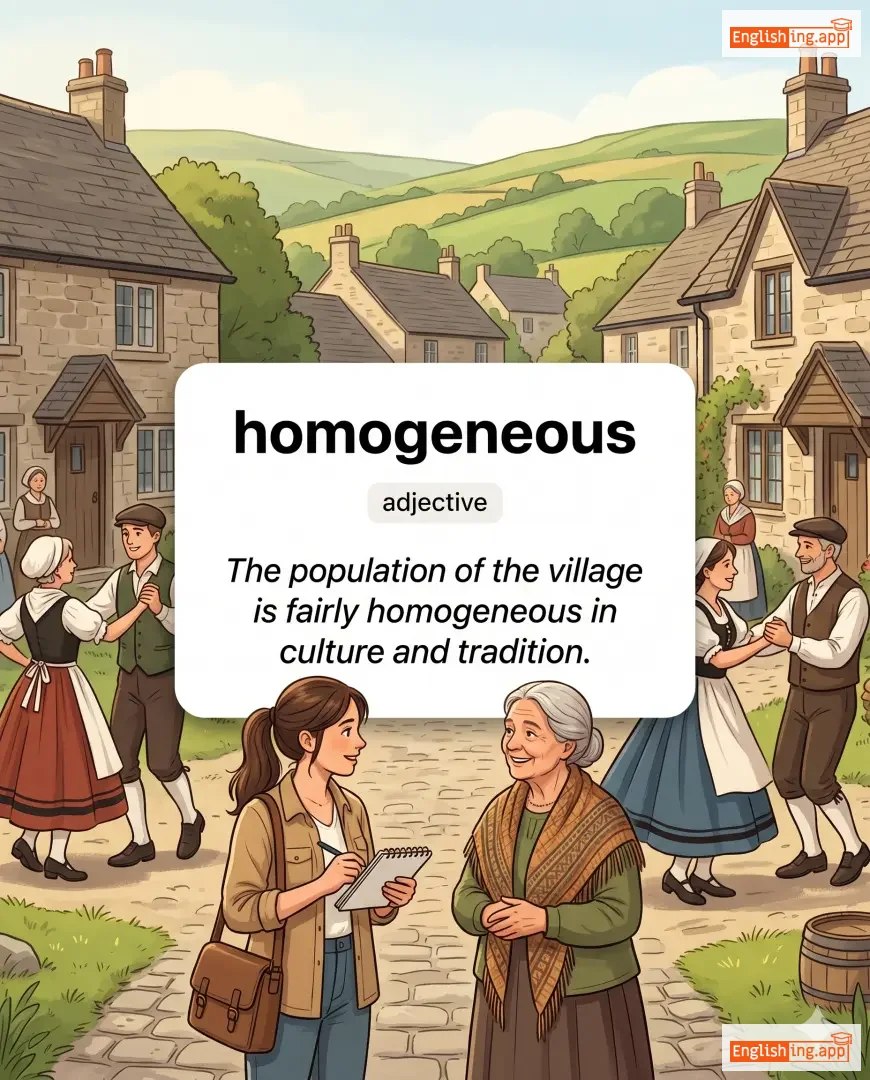
The population of the village is fairly homogeneous in culture and tradition.
该村的人口在文化和传统上非常同质化。
••••••
|
该村的人口在文化和传统上非常同质化。
Gāi cūn de rénkǒu zài wénhuà hé chuántǒng shàng fēicháng tóngzhìhuà.
••••••
|
- •••••• | - •••••• | - •••••• |
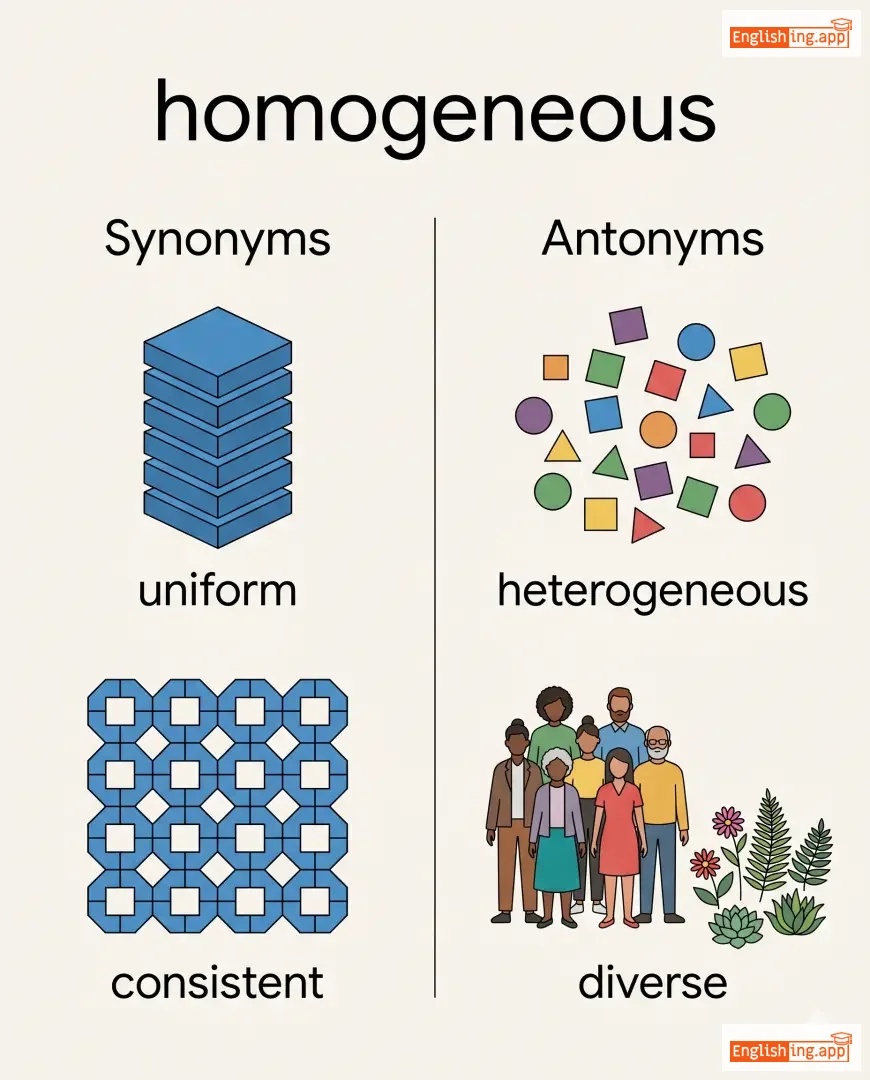
uniform, consistent, alike, identical, standardized
••••••
|
heterogeneous, diverse, varied
••••••
|
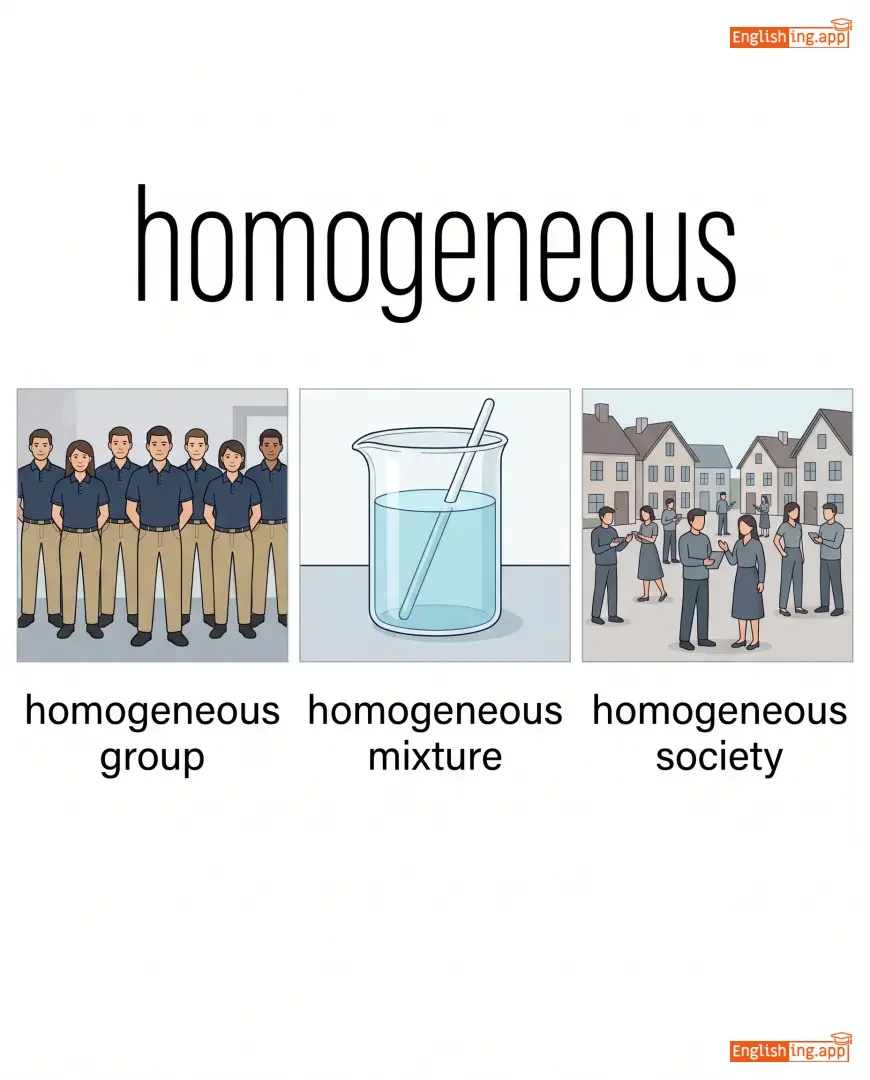
homogeneous group, homogeneous mixture, homogeneous society, homogeneous culture
••••••
|
HOMO意味着相同,因此同质意味着一切都是一样的(tóngzhì)。
••••••
|
|
#4151
🔁
|
/ˌhoʊmə.dʒəˈniːəti/
noun
••••••
|
- •••••• | - •••••• | - •••••• | - •••••• | - •••••• | - •••••• |
The quality or state of being all the same or all of the same kind.
••••••
|
The cultural homogeneity of the village made it feel unified. |
- •••••• | - •••••• | - •••••• | - •••••• |
uniformity, sameness, similarity, consistency
••••••
|
diversity, variety, heterogeneity
••••••
|
cultural homogeneity, racial homogeneity, social homogeneity
••••••
|
No •••••• |
|
#4152
⛪
|
/ˈhɑː.mə.li/
noun
(hóu-mí-lí)
••••••
|
|
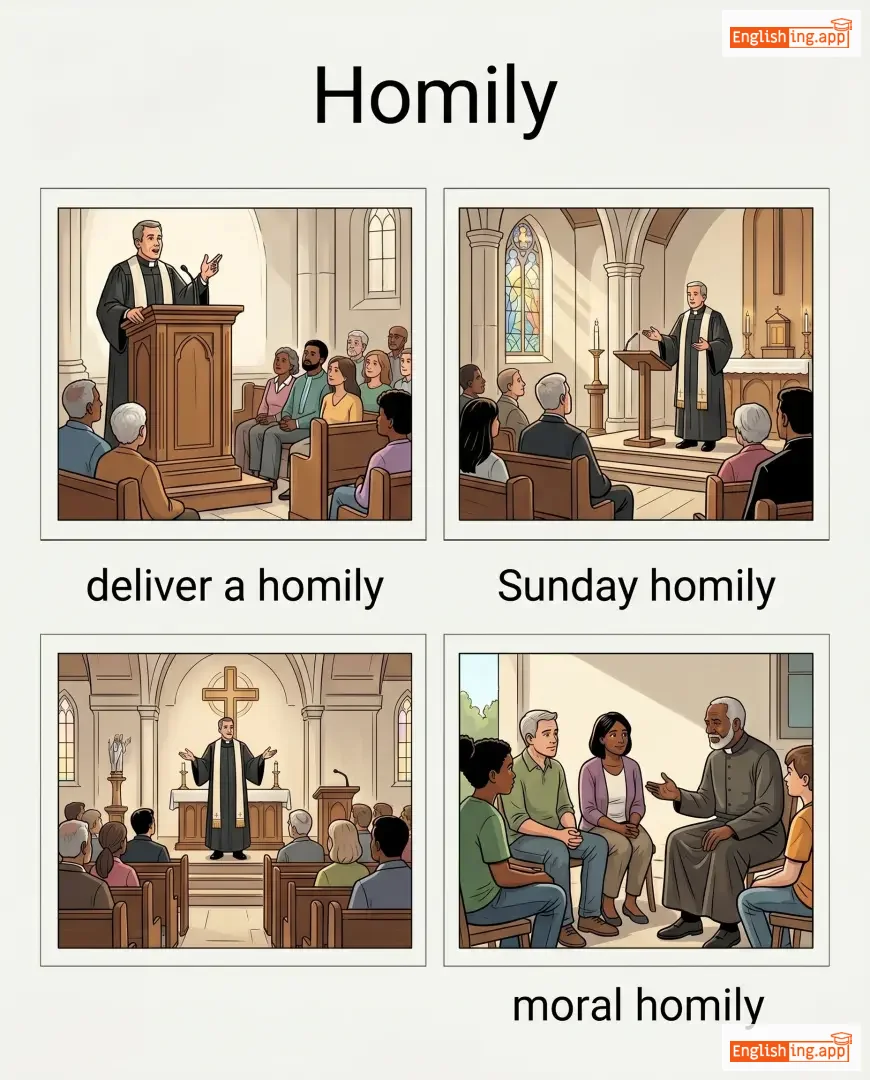
讲道
jiangdao
••••••
|
- •••••• | - •••••• | - •••••• | - •••••• |
A religious or moral lecture; a sermon.
••••••
|
The priest delivered a touching homily on kindness.
牧师讲了一个感人的讲道,讲的是仁慈。
••••••
|
牧师讲了一个感人的讲道,讲的是仁慈。
Mùshī jiǎngle yīgè gǎn rén de jiǎngdào, jiǎng de shì réncí.
••••••
|
- •••••• | - •••••• | - •••••• |
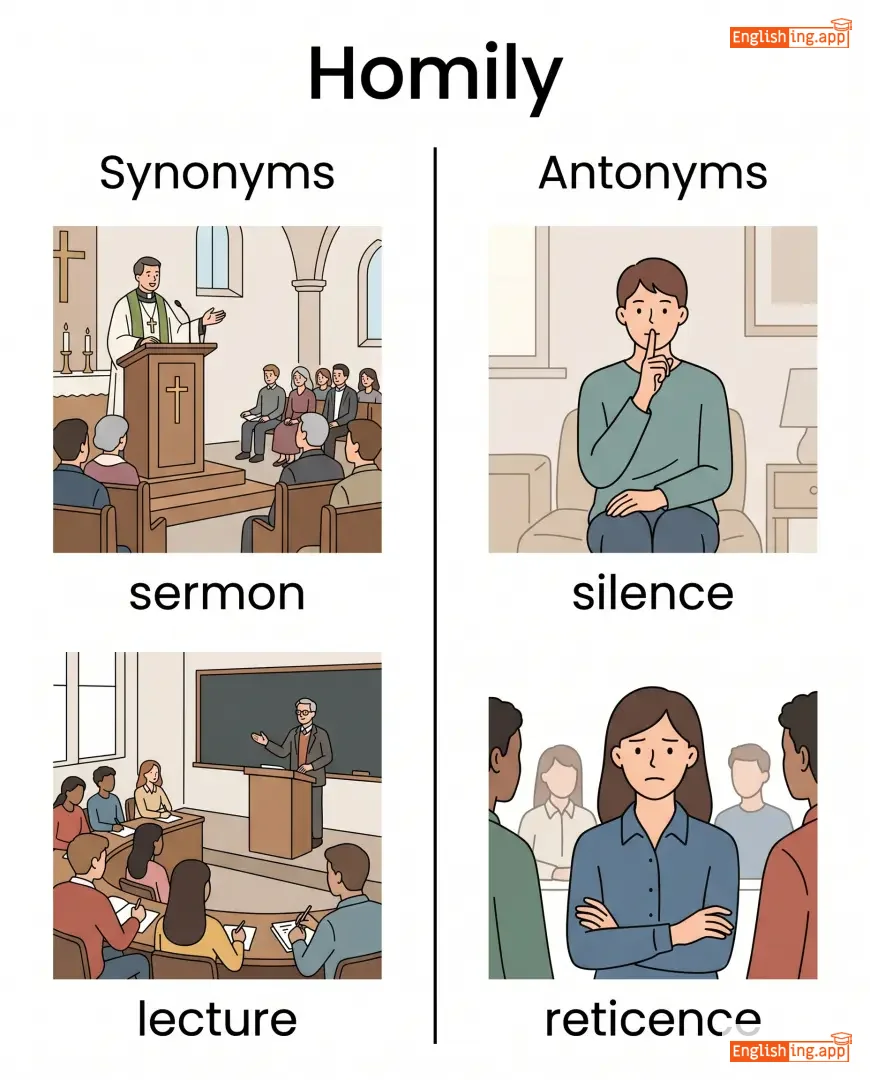
sermon, lecture, discourse, exhortation
••••••
|
silence, reticence
••••••
|
deliver a homily, Sunday homily, moral homily
••••••
|
讲道是传播善良和道德的讲座。
••••••
|
|
#4153
🧵
|
/ˈhoʊm.spʌn/
adjective
(hōm-spùn)
••••••
|
- •••••• |
家制
jiazhi
••••••
|
- •••••• | - •••••• | - •••••• | - •••••• |
Simple and unsophisticated; made at home rather than in a factory.
••••••
|
She wore a homespun dress to the village festival. |
她穿着家制的衣服去参加村里的节日庆典。
Tā chuānzhuó jiāzhì de yīfú qù cānjiā cūn lǐ de jiérì qìngdiǎn.
••••••
|
homespun wisdom |
Simple, practical knowledge from everyday life.
••••••
|
家常智慧
jiācháng zhìhuì
••••••
|
rustic, simple, plain, handmade, unrefined
••••••
|
elegant, sophisticated, refined
••••••
|
homespun cloth, homespun wisdom, homespun philosophy
••••••
|
家 + 制 = 家制
••••••
|
|
#4154
⚖️
|
/ˌhoʊmi.oʊˈsteɪsɪs/
noun
(荷美欧斯塔西斯)
••••••
|
|
体内平衡
tǐ nèi píng héng
••••••
|
- •••••• | - •••••• | - •••••• | - •••••• |
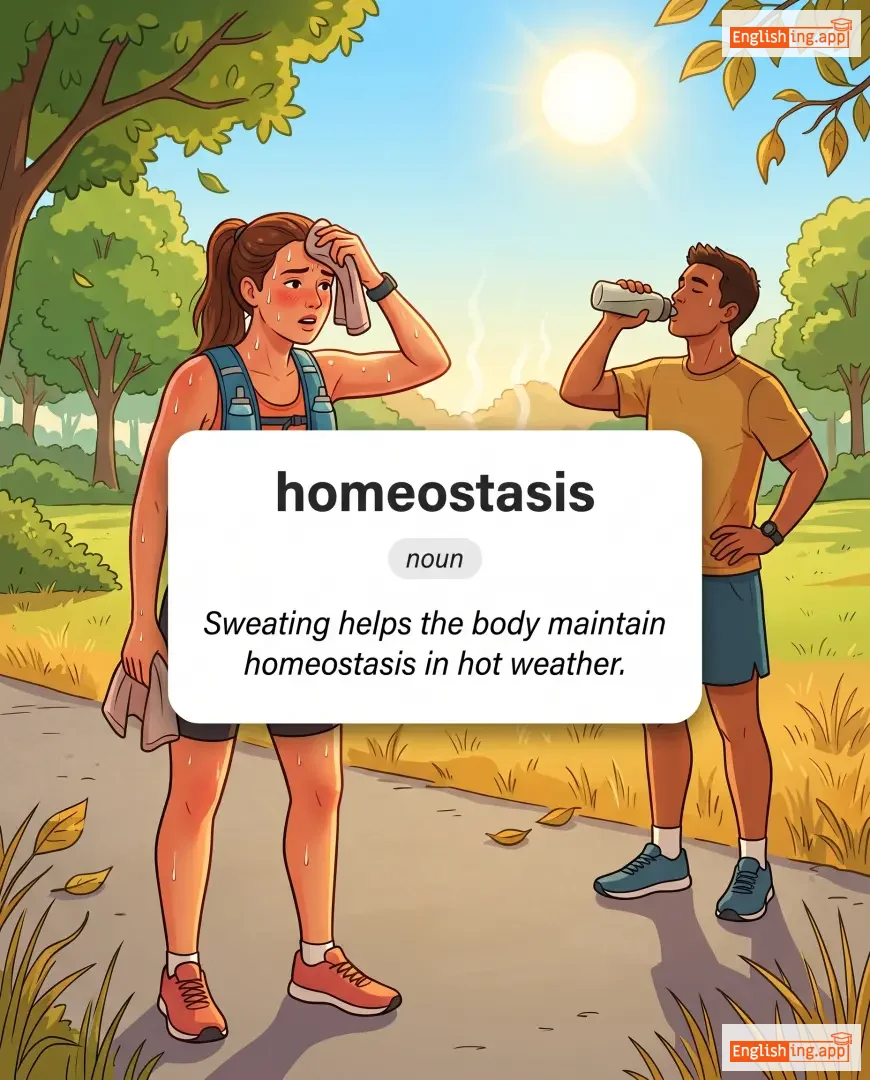
The ability of a living system or organism to maintain internal stability despite changes in external conditions.
••••••
|
Sweating helps the body maintain homeostasis in hot weather. |
出汗有助于身体在炎热天气中保持体内平衡。
Chū hàn yǒuzhù yú shēntǐ zài yánrè tiānqì zhōng bǎochí tǐ nèi píng héng.
••••••
|
- •••••• | - •••••• | - •••••• |
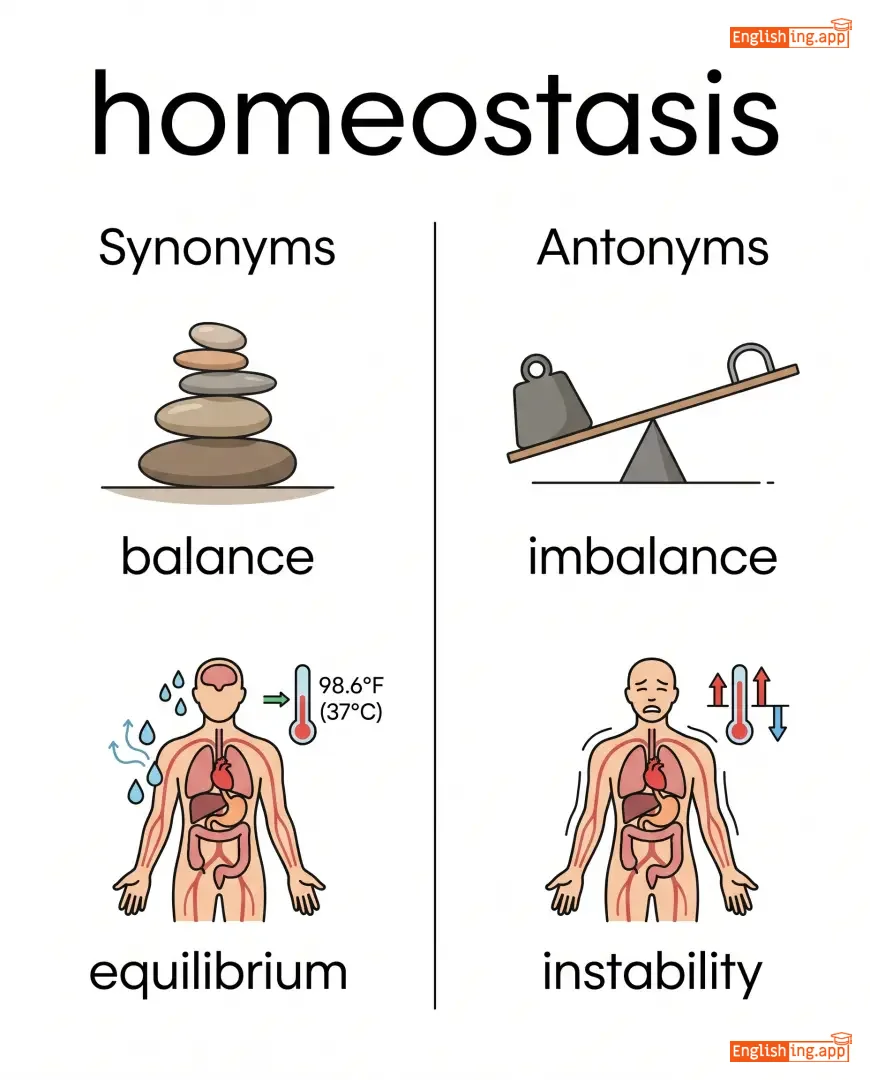
balance, equilibrium, stability, regulation
••••••
|
imbalance, instability
••••••
|
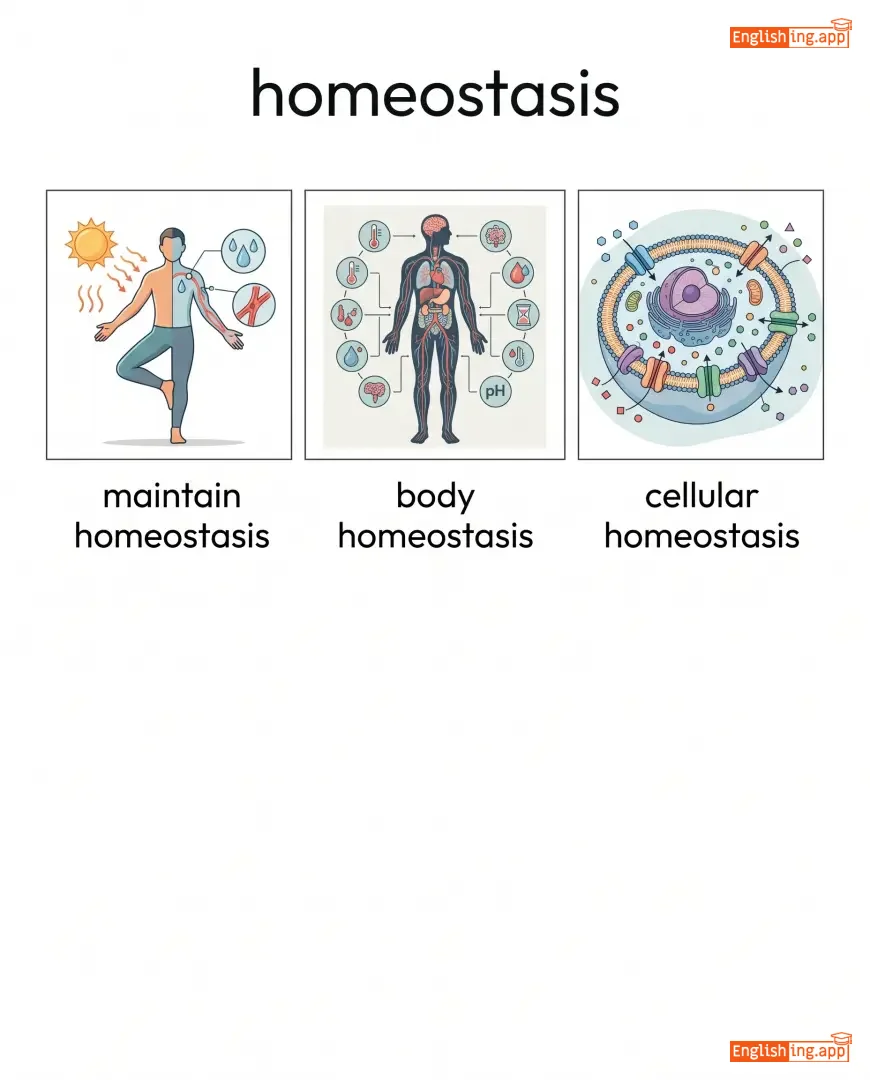
maintain homeostasis, body homeostasis, cellular homeostasis
••••••
|
体内平衡就像家里的平衡(homeostasis)。
••••••
|
|
#4155
🏡
|
/ˈhoʊmli/
adjective
(hōm-lī)
••••••
|
- •••••• |
简单的
jiǎndān de
••••••
|
- •••••• | - •••••• | - •••••• | - •••••• |
Plain or unattractive in appearance; simple and comfortable in style or character.
••••••
|
Despite being homely, the cottage felt warm and welcoming. |
尽管看起来简单,但小屋感觉温暖而热情。
Jǐnguǎn kàn qǐlái jiǎndān, dàn xiǎowū gǎnjué wēnnuǎn ér rèqíng.
••••••
|
homely comforts |
Simple, everyday comforts of home life.
••••••
|
简单的舒适
jiǎndān de shūshì
••••••
|
plain, unattractive, simple, modest, ordinary
••••••
|
beautiful, elegant, attractive
••••••
|
homely girl, homely charm, homely cottage, homely comforts
••••••
|
Home + ly, 就像家一样简单 (homely = jiǎndān de).
••••••
|
|
#4156
💼
|
/ˈhaɪərlɪŋ/
noun
(hāi'ěr lín)
••••••
|
- •••••• |
雇佣者
gù yōng zhě
••••••
|
- •••••• | - •••••• | - •••••• | - •••••• |
A person who works for payment only, often with little loyalty or principle.
••••••
|
The mercenary was dismissed as just a hireling with no real loyalty.
雇佣兵被解雇,只是一个没有真正忠诚的雇佣者。
••••••
|
雇佣兵被解雇,只是一个没有真正忠诚的雇佣者。
Gù yōng bīng bèi jiěgù, zhǐshì yīgè méiyǒu zhēnzhèng zhōngchéng de gù yōng zhě.
••••••
|
- •••••• | - •••••• | - •••••• |
mercenary, servant, employee, laborer
••••••
|
master, employer, leader
••••••
|
mere hireling, political hireling, paid hireling, loyal hireling
••••••
|
HIRE意味着租用,LING意味着人 — hireling = 雇佣者.
••••••
|
|
#4157
🔫
|
/ˈhoʊl.stər/
noun
(霍尔斯特)
••••••
|
- •••••• |
枪套
qiāng tào
••••••
|
- •••••• | - •••••• | - •••••• | - •••••• |
A holder or case for carrying a gun, typically worn on a belt or shoulder.
••••••
|
The sheriff kept his revolver in a leather holster. |
警长将他的左轮手枪放在皮革枪套里。
Jǐngzhǎng jiāng tā de zuǒlún shǒuqiāng fàng zài pígé qiāng tào lǐ.
••••••
|
- •••••• | - •••••• | - •••••• |
gun case, sheath, pouch, carrier
••••••
|
exposure, display
••••••
|
leather holster, gun holster, draw from holster
••••••
|
Holster = Hold + Store = 放枪的套子
••••••
|
|
#4158
🔥
|
/ˈhɒl.ə.kɔːst/
noun
(大屠杀)
••••••
|
- •••••• |
大屠杀
dà túshā
••••••
|
- •••••• | - •••••• | - •••••• | - •••••• |
A large-scale destruction, especially by fire; historically, the genocide of Jews during World War II.
••••••
|
Millions of people perished during the Holocaust. |
在大屠杀期间,数百万人死亡。
Zài dà túshā qījiān, shù bǎi wàn rén sǐwáng.
••••••
|
- •••••• | - •••••• | - •••••• |
massacre, genocide, slaughter, devastation
••••••
|
peace, preservation, survival
••••••
|
Holocaust survivors, Holocaust memorial, Holocaust museum
••••••
|
Holo (完全) + cast (刑罚) = 完全的毁灭 = 大屠杀
••••••
|
|
#4159
🛢️
|
/ˈhɒɡz.hɛd/
noun
(霍格斯赫德)
••••••
|
- •••••• |
大桶
da tong
••••••
|
- •••••• | - •••••• | - •••••• | - •••••• |
A large cask or barrel, traditionally used for storing liquids like wine or beer.
••••••
|
The cellar was filled with hogsheads of ale. |
地下室里堆满了啤酒的大桶。
Dixia shi li dui man le pijiu de da tong.
••••••
|
- •••••• | - •••••• | - •••••• |
barrel, cask, drum, vat
••••••
|
bottle, flask
••••••
|
hogshead of wine, hogshead of beer, large hogshead
••••••
|
像猪头一样的大桶 = hogshead
••••••
|
|
#4160
🌀
|
/ˈhɒdʒ.pɒdʒ/
noun
(hōzhī-pōzhī)
••••••
|
- •••••• |
混杂物
hùn zá wù
••••••
|
- •••••• | - •••••• | - •••••• | - •••••• |
A confusing mixture of different things; a jumble.
••••••
|
The essay was a hodgepodge of unrelated ideas.
论文是一堆不相关的想法的混合。
••••••
|
这篇文章是一些不相关的想法的混杂物。
Zhè piān wénzhāng shì yīxiē bù xiāngguān de xiǎngfǎ de hùn zá wù.
••••••
|
- •••••• | - •••••• | - •••••• |
jumble, mishmash, medley, assortment, mixture
••••••
|
order, system, organization
••••••
|
hodgepodge of ideas, hodgepodge of colors, hodgepodge of styles
••••••
|
Hodgepodge 就像是各种不同的东西混合在一起,像个大杂烩!
••••••
|
|
#4161
🦵
|
/ˈhɑːbəl/
verb
(哈布尔)
••••••
|
- •••••• |
蹒跚
pán shān
••••••
|
hobbled
哈布尔德
••••••
|
hobbled
哈布尔德
••••••
|
hobbles
哈布尔斯
••••••
|
hobbling
哈布林
••••••
|
to walk awkwardly with difficulty, usually due to injury
••••••
|
He hobbled across the room after twisting his ankle.
他在扭伤脚踝后,蹒跚地走过房间。
••••••
|
他在扭伤脚踝后,蹒跚地走过房间。
Tā zài niǔ shāng jiǎohuái hòu, pán shān de zǒu guò fángjiān.
••••••
|
- •••••• | - •••••• | - •••••• |
limp, stagger, falter, totter
••••••
|
stride, march, walk confidently
••••••
|
hobble around, hobble along, hobble across
••••••
|
Hobble就像是蹒跚走路,受伤让你走得不稳。
••••••
|
|
#4162
🤥
|
/hoʊks/
noun
(hóksī)
••••••
|
- •••••• |
骗局,欺诈
piànjú, qīzhà
••••••
|
- •••••• | - •••••• | - •••••• | - •••••• |
a trick or false story meant to deceive people
••••••
|
The news about aliens landing turned out to be a hoax.
关于外星人降落的新闻被证明是一个骗局。
••••••
|
关于外星人降落的新闻被证明是一个骗局。
Guānyú wàixīngrén jiàngluò de xīnwén bèi zhèngmíng shì yí gè piànjú.
••••••
|
play a hoax
进行骗局
••••••
|
to trick someone by telling them something false
••••••
|
进行骗局
jìnxíng piànjú
••••••
|
trick, fraud, scam, deception, prank
••••••
|
truth, fact
••••••
|
elaborate hoax, internet hoax, cruel hoax
••••••
|
Hoax 就像 'Ho' - 一个无意义的谎言
••••••
|
|
#4163
🌳
|
/ˈhɔːri/
adjective
(霍里)
••••••
|
- •••••• |
灰色的, 古老的
huī sè de, gǔ lǎo de
••••••
|
- •••••• | - •••••• | - •••••• | - •••••• |
gray or white with age; very old and respected
••••••
|
The hoary oak tree stood as a witness to centuries of history. |
那棵古老的橡树作为世纪历史的见证者伫立。
Nà kē gǔlǎo de xiàng shù zuòwéi shìjì lìshǐ de jiànzhèng zhě zhù lì.
••••••
|
- •••••• | - •••••• | - •••••• |
gray, aged, ancient, venerable
••••••
|
youthful, fresh
••••••
|
hoary head, hoary myth, hoary tradition
••••••
|
Hoary就像古老的橡树,灰白且受尊敬。
••••••
|
|
#4164
🔊
|
/hɔːrs/
adjective
(hɔrs)
••••••
|
- •••••• |
嘶哑
sīyǎ
••••••
|
- •••••• | - •••••• | - •••••• | - •••••• |
having a rough, harsh, or weak voice, often due to illness or shouting
••••••
|
After shouting all day at the rally, his voice was hoarse.
在集会中大声喊叫了一整天后,他的嗓子变得沙哑。
••••••
|
在集会中大声喊叫了一整天后,他的嗓子变得沙哑。
Zài jíhuì zhōng dàshēng hǎnjiào le yī zhěng tiān hòu, tā de sǎngzi biàn de sīyǎ.
••••••
|
- •••••• | - •••••• | - •••••• |
rough, husky, harsh, raspy
••••••
|
clear, smooth
••••••
|
hoarse voice, sound hoarse, became hoarse
••••••
|
Hoarse 就是喊叫太多,嗓子会变嘶哑。
••••••
|
|
#4165
📦
|
/hɔːrd/
verb
(hoːrd)
••••••
|
- •••••• |
囤积
túnjī
••••••
|
hoarded
hoːrdəd
••••••
|
hoarded
hoːrdəd
••••••
|
hoards
hoːrdz
••••••
|
hoarding
hoːrdɪŋ
••••••
|
to accumulate and hide away a large supply of something, often secretly
••••••
|
During the crisis, many people began to hoard food and water.
在危机期间,许多人开始囤积食物和水。
••••••
|
在危机期间,许多人开始囤积食物和水。
Zài wēijī qījiān, xǔduō rén kāishǐ túnjī shíwù hé shuǐ.
••••••
|
hoard up
囤积
••••••
|
to collect and store a large quantity of something for future use
••••••
|
囤积
túnjī
••••••
|
store, stockpile, accumulate, amass, collect
••••••
|
spend, scatter, distribute
••••••
|
hoard money, hoard food, secret hoard, treasure hoard
••••••
|
Hoard 就是储存 - 仓库里积攒东西,准备未来用
••••••
|
|
#4166
🐝
|
/haɪv/
noun
(hái wū)
••••••
|
- •••••• |
蜂巢
fēng cháo
••••••
|
- •••••• | - •••••• | - •••••• | - •••••• |
A structure where bees live and produce honey; also a place full of busy activity.
••••••
|
The office was a hive of activity before the deadline. |
在最后期限之前,办公室就像一个蜂巢一样忙碌。
zài zuìhòu qīxiàn zhīqián, bàngōngshì jiù xiàng yīgè fēngcháo yīyàng mánglù.
••••••
|
hive of activity |
A place where many people are busy working
••••••
|
蜂巢般的活动
fēngcháo bān de huódòng
••••••
|
colony, swarm, nest, beehive
••••••
|
emptiness, stillness, vacancy
••••••
|
bee hive, hive of activity, hive mind, hive structure
••••••
|
Hive = 蜂巢 🐝, 就像办公室里每个人都在忙碌。
••••••
|
|
#4167
🎭
|
/ˌhɪstriˈɒnɪk/
adjective
••••••
|
|
- •••••• | - •••••• | - •••••• | - •••••• | - •••••• |
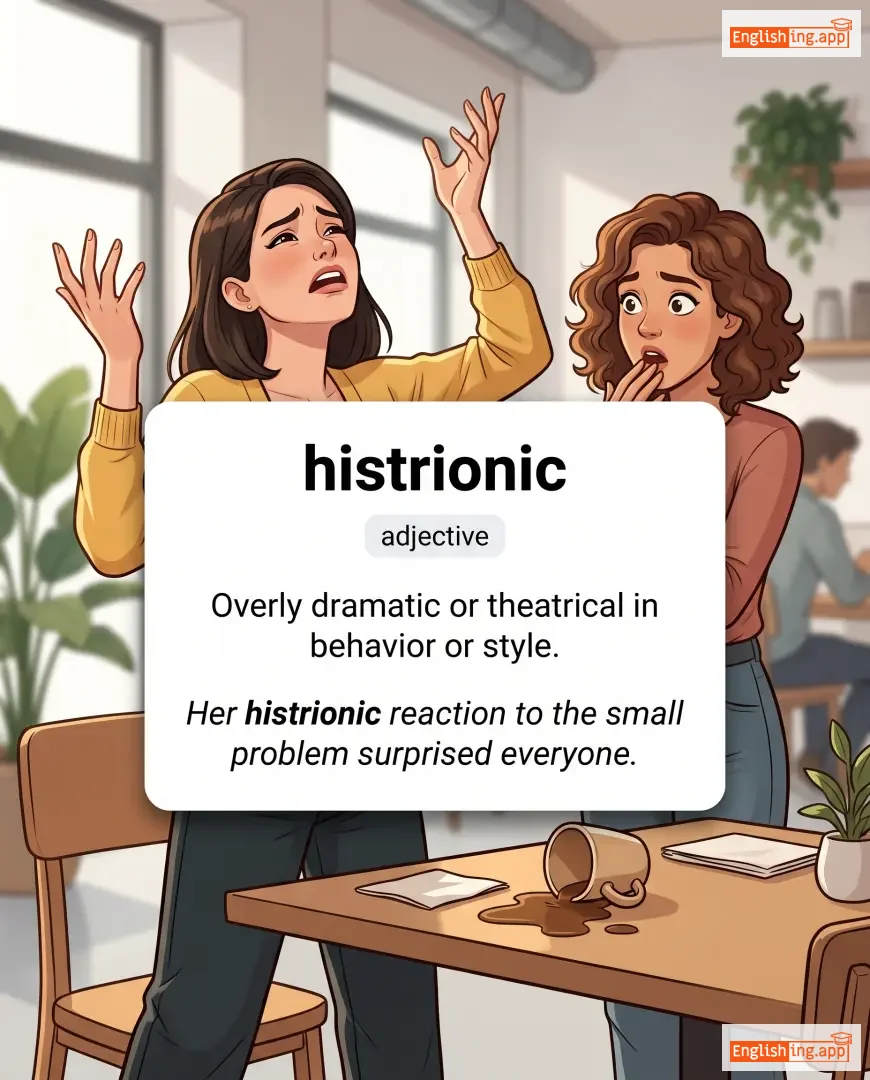
Overly dramatic or theatrical in behavior or style.
••••••
|
Her histrionic reaction to the small problem surprised everyone. |
- •••••• |
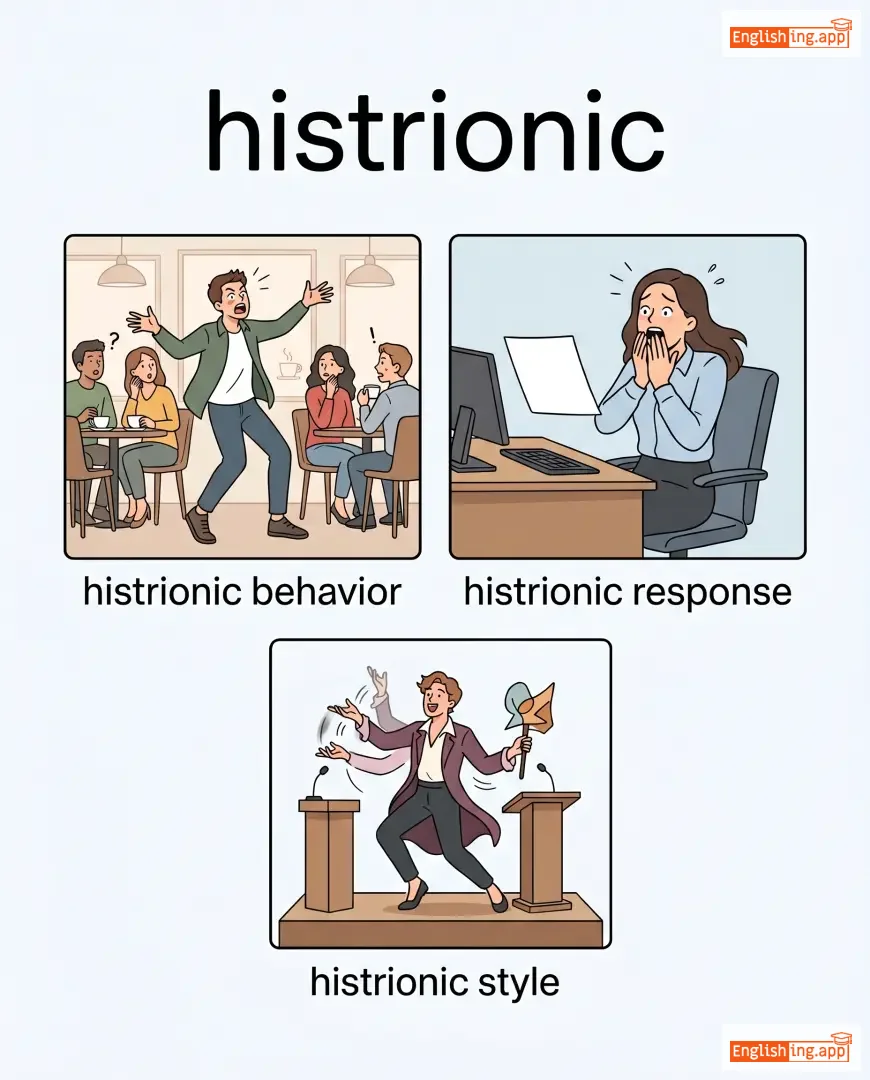
histrionic behavior |
Excessively dramatic behavior
••••••
|
- •••••• |
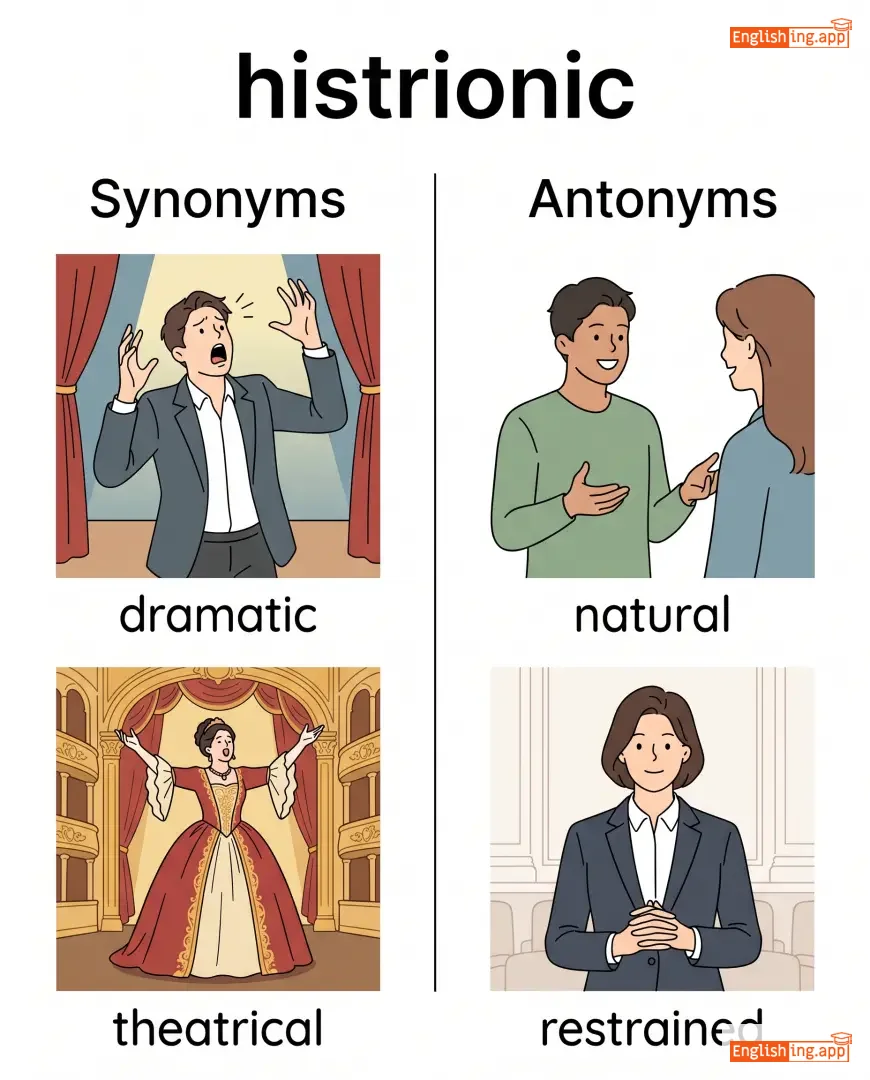
dramatic, theatrical, exaggerated, overacting, showy
••••••
|
natural, restrained, calm
••••••
|
histrionic behavior, histrionic response, histrionic style, histrionic personality
••••••
|
No •••••• |
|
#4168
📜
|
/hɪˈstɔːrɪkəl/
adjective
(历史的)
••••••
|
- •••••• |
历史的
lishide
••••••
|
- •••••• | - •••••• | - •••••• | - •••••• |
Related to history or past events.
••••••
|
The museum has a large collection of historical documents. |
博物馆收藏了大量历史文件。
Bowuguan shoucang le dalian lishi wenjian.
••••••
|
historical record |
An account of past events
••••••
|
历史记录
lishi jilu
••••••
|
past, archival, recorded, ancient, traditional
••••••
|
modern, contemporary, current
••••••
|
historical documents, historical records, historical evidence, historical site
••••••
|
Historical = History + related, 意味着与历史相关。
••••••
|
|
#4169
🏛️
|
/hɪˈstɔːrɪk/
adjective
(hìs-tuò-lìk)
••••••
|
|
历史性的
lishixing de
••••••
|
- •••••• | - •••••• | - •••••• | - •••••• |
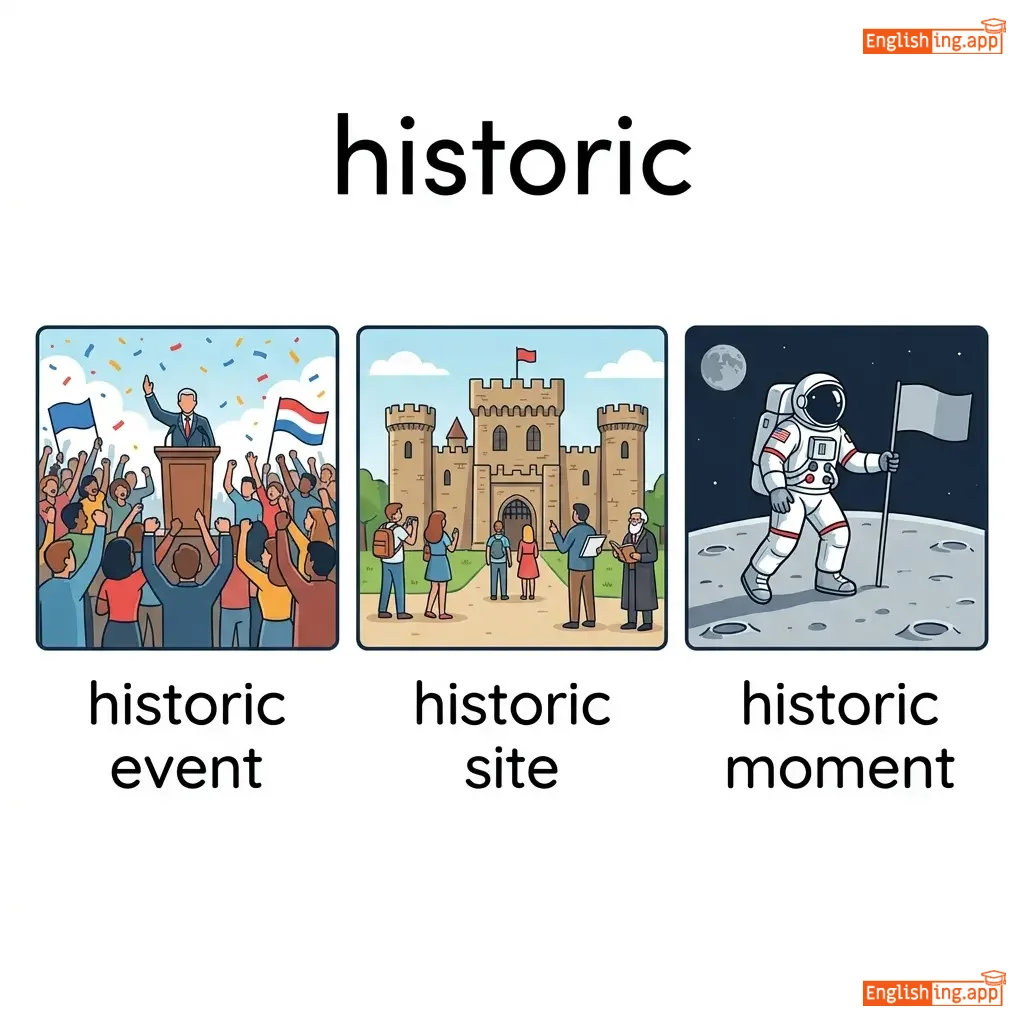
Famous or important in history; likely to be remembered in history.
••••••
|
The historic agreement changed the course of the nation. |
历史性的协议改变了国家的进程。
Lishi xing de xieyi gaibianle guojia de jincheng.
••••••
|
historic moment |
An event of great importance in history
••••••
|
历史时刻
Lishi shike
••••••
|
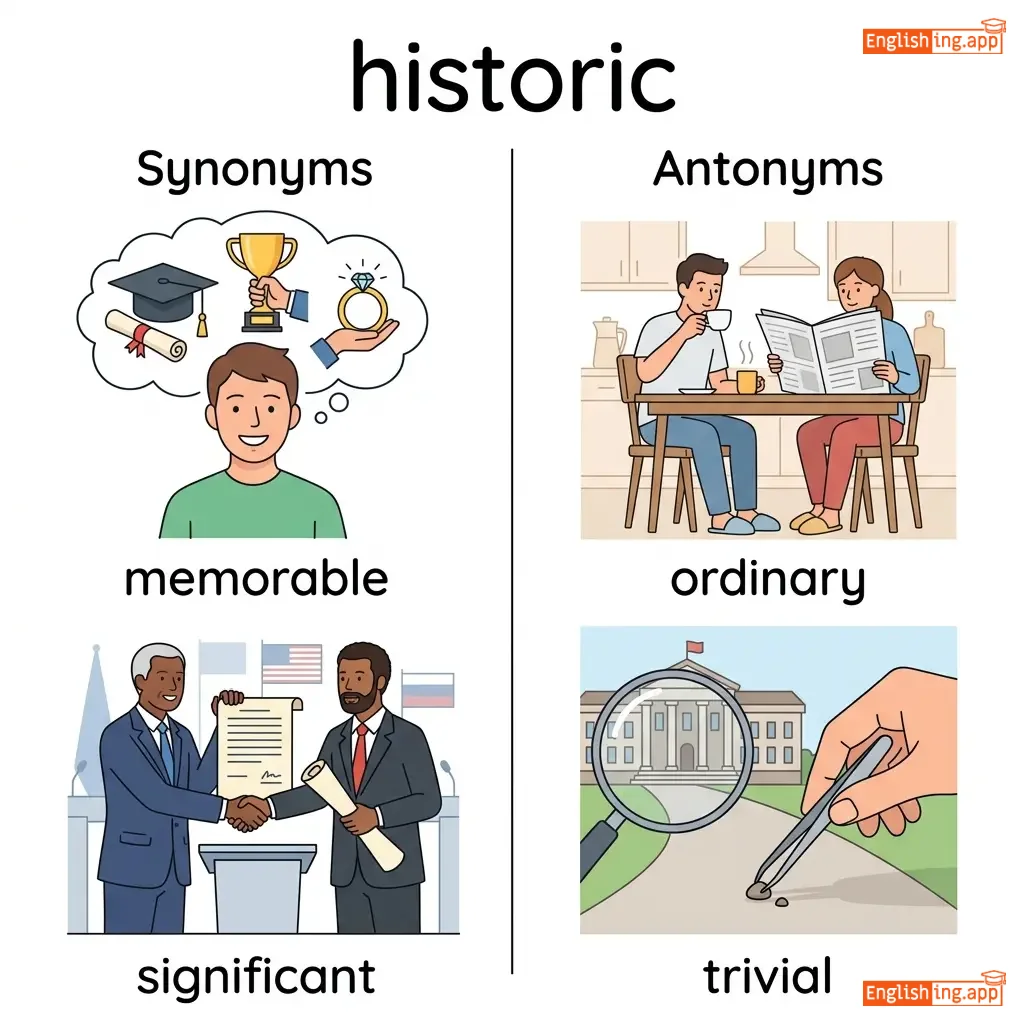
memorable, significant, important, monumental, notable
••••••
|
ordinary, trivial, forgettable
••••••
|
historic event, historic site, historic moment, historic decision
••••••
|
Historic = 与历史相关,因此是历史中重要的事情。
••••••
|
|
#4170
🧔
|
/ˈhɜːrsuːt/
adjective
••••••
|
|
- •••••• | - •••••• | - •••••• | - •••••• | - •••••• |
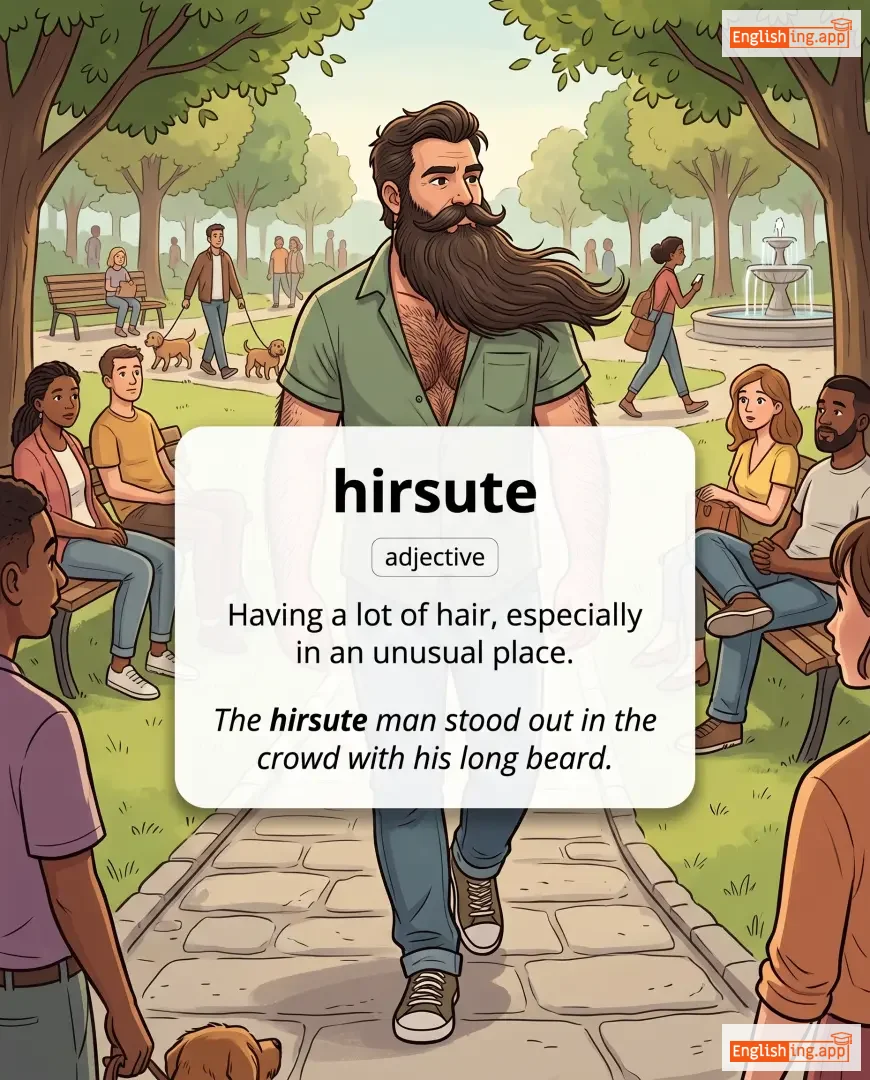
Having a lot of hair, especially in an unusual place.
••••••
|
The hirsute man stood out in the crowd with his long beard. |
- •••••• | - •••••• | - •••••• | - •••••• |
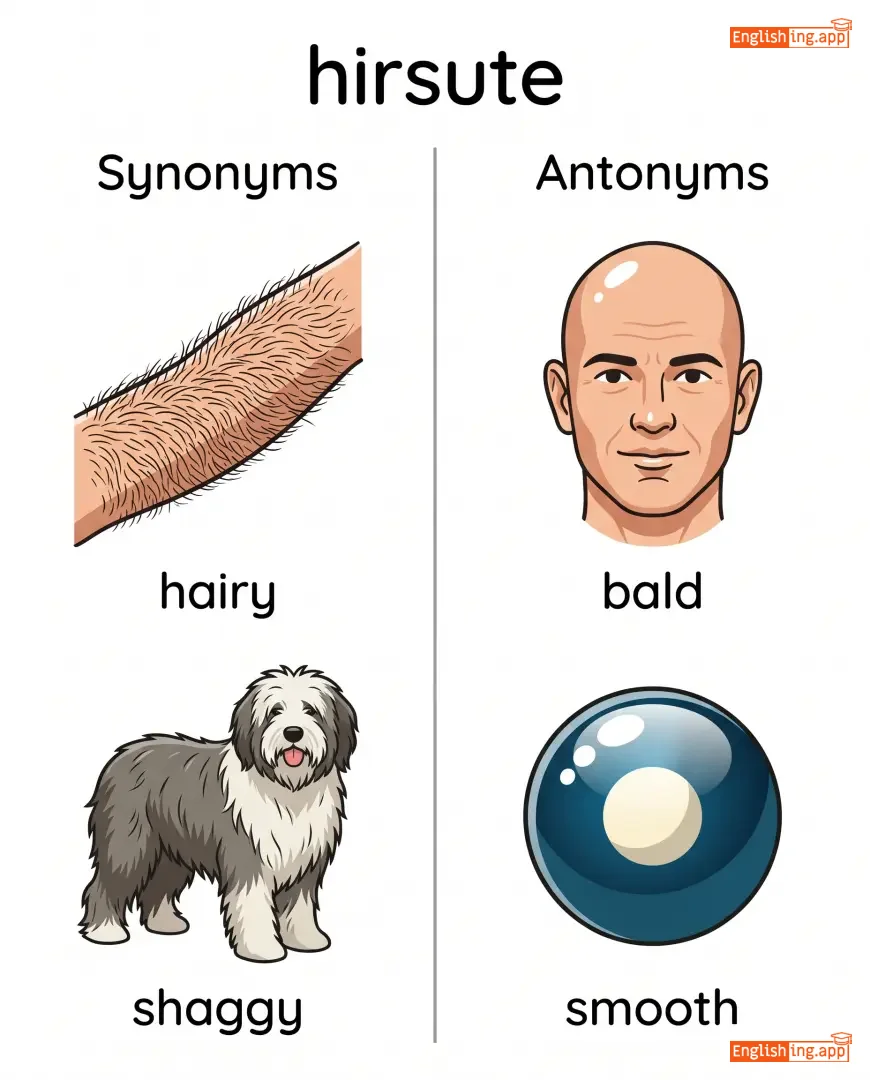
hairy, shaggy, bushy, woolly, bearded
••••••
|
bald, smooth, hairless
••••••
|
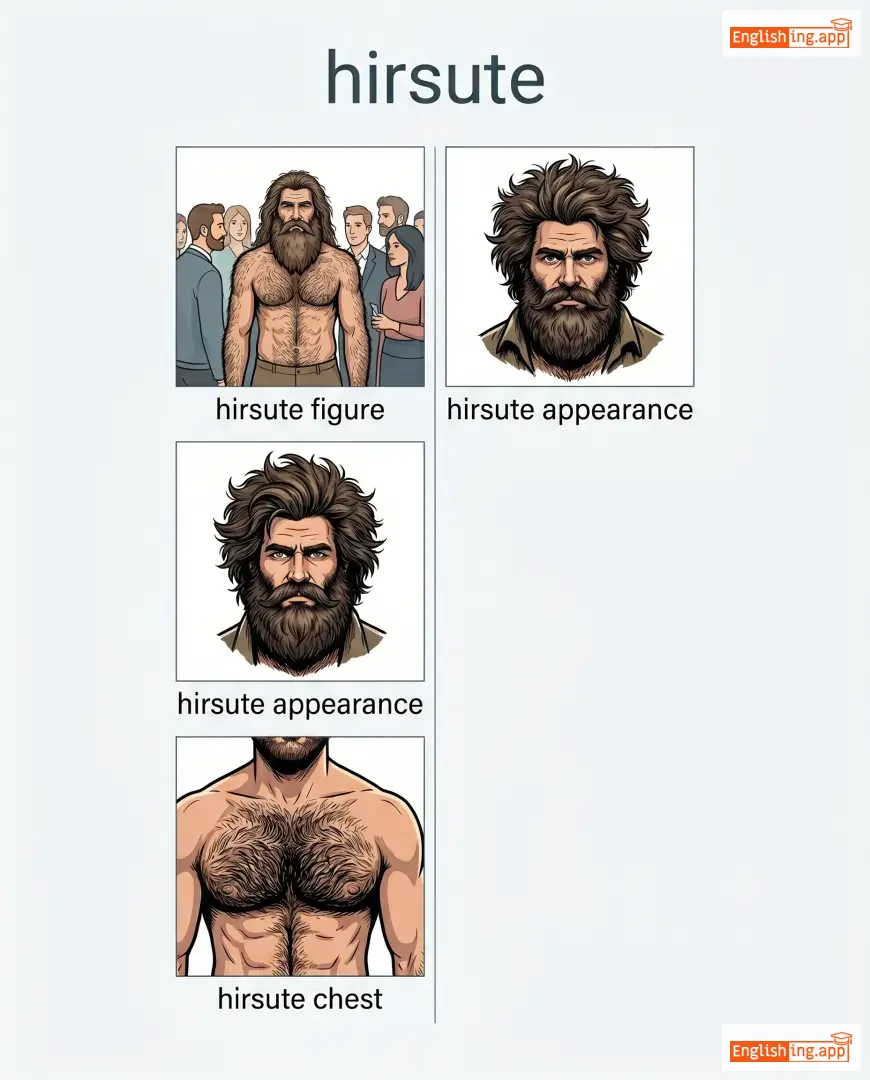
hirsute figure, hirsute appearance, hirsute chest, hirsute man
••••••
|
No •••••• |
Vocabulary Quiz
Test your vocabulary by matching words with their translations or meanings.
Login to take the quiz
Comments (0)
Share your thoughts and join the discussion.
Join the discussion by logging in
Login to CommentNo comments yet
Be the first to share your thoughts!