





Swipe left or right, or use the buttons. Tap image to zoom.
例句翻译
单词
Lesson 359Lesson 359 - 遮罩切换
|
表情符号
|
单词 | Images | 翻译 | 过去时 | 过去分词 | 第三人称单数 | 动名词 | 含义 | 例句 | 例句翻译 | 示例表达 | 示例表达含义 | 示例表达翻译 | 同义词 | 反义词 | 搭配词 | 助记符 |
|---|---|---|---|---|---|---|---|---|---|---|---|---|---|---|---|---|---|
|
#10735
🤔
|
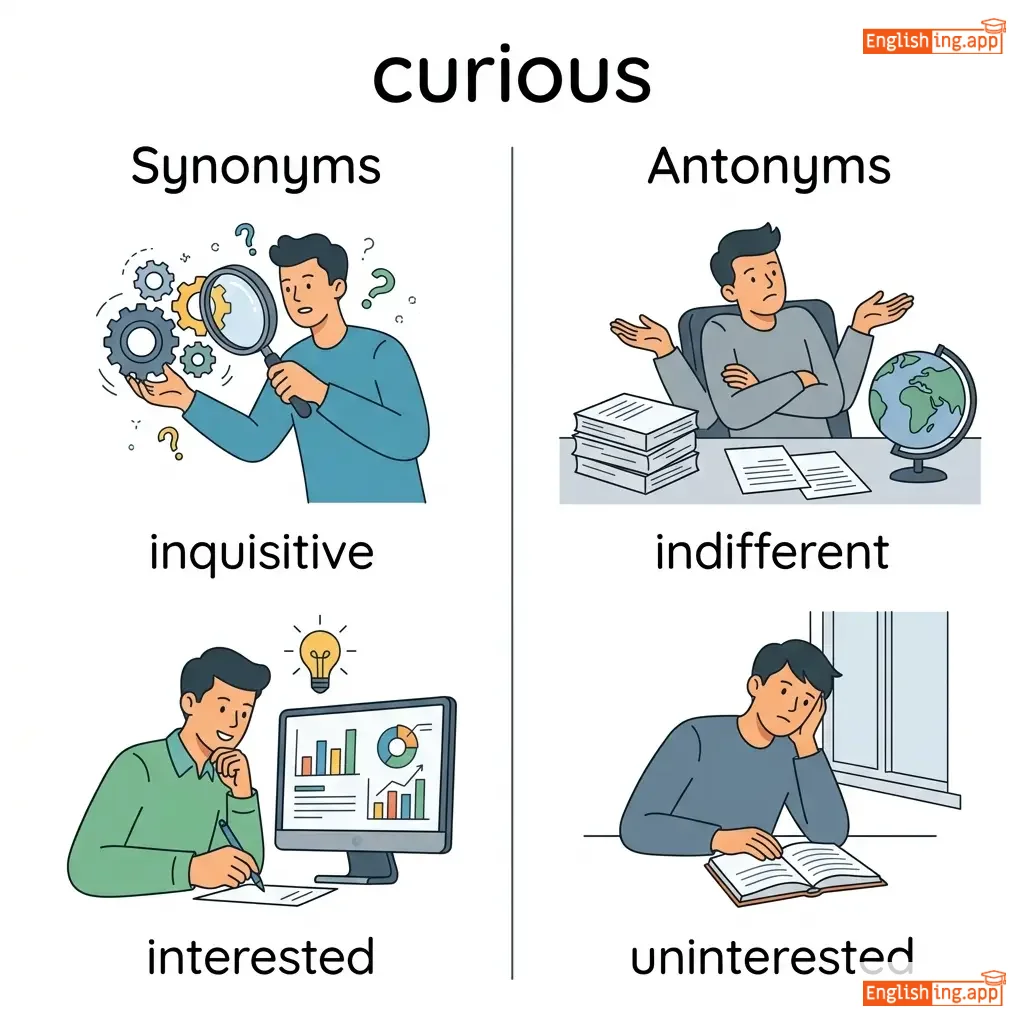
/ˈkjʊəriəs/
adjective
(kjuˈɹɪəs)
••••••
|
|
好奇
haoqí
••••••
|
- •••••• | - •••••• | - •••••• | - •••••• |
eager to know or learn something
••••••
|
The child was curious about the stars in the sky. |
孩子对天空中的星星感到好奇。
Háizi duì tiānkōng zhōng de xīngxīng gǎndào hàoqí.
••••••
|
curiosity killed the cat |
being too inquisitive can lead to trouble
••••••
|
好奇害死猫
hàoqí hài sǐ māo
••••••
|
inquisitive, interested, eager, questioning
••••••
|
indifferent, uninterested
••••••
|
curious mind, curious about, curious look, curious case
••••••
|
好奇意味着好奇——就像不停地问‘什么?’
••••••
|
|
#10736
👧
|
/ˈdɔːtər/
noun
(dàotè)
••••••
|
- •••••• |
女儿
nǚ'ér
••••••
|
- •••••• | - •••••• | - •••••• | - •••••• |
a female child in relation to her parents
••••••
|
They are proud of their daughter for graduating college. |
他们为女儿毕业于大学而感到骄傲。
tāmen wèi nǚ'ér bìyè yú dàxué ér gǎndào jiāo'ào.
••••••
|
apple of her father's eye |
a phrase used to describe a beloved daughter
••••••
|
父亲眼中的宝贝
fùqīn yǎnzhōng de bǎobèi
••••••
|
girl child, offspring, child, descendant
••••••
|
son, parent
••••••
|
eldest daughter, only daughter, daughter-in-law, proud daughter
••••••
|
Daughter 意味着女儿,像父亲眼中的宝贝。
••••••
|
|
#10737
📅
|
/deɪt/
noun/verb
••••••
|
- •••••• | - •••••• |
dated
••••••
|
dated
••••••
|
dates
••••••
|
dating
••••••
|
A particular day of the month or year; also, a social or romantic appointment.
••••••
|
They decided to meet on the date of her birthday. |
- •••••• |
blind date |
a romantic meeting with someone you have not met before
••••••
|
- •••••• |
day, appointment, meeting, outing
••••••
|
indefinite, timeless
••••••
|
set a date, important date, go on a date, due date
••••••
|
No •••••• |
|
#10738
📊
|
/ˈdeɪ.tə/ or /ˈdæt.ə/
noun
(数据)
••••••
|
- •••••• |
数据
shuju
••••••
|
- •••••• | - •••••• | - •••••• | - •••••• |
Facts, statistics, or information collected for reference or analysis.
••••••
|
The scientists analyzed the data to find patterns. |
科学家分析了数据以寻找模式。
Kēxuéjiā fēnxīle shùjù yǐ xúnzhǎo móshì.
••••••
|
data-driven |
based on analysis of information or evidence
••••••
|
数据驱动
shuju qudong
••••••
|
information, facts, statistics, figures
••••••
|
assumptions, guesses
••••••
|
collect data, analyze data, data set, process data
••••••
|
数据就像导航帮助我们找到信息。
••••••
|
|
#10739
🌑
|
/ˈdɑːrk.nəs/
noun
(黑暗)
••••••
|
- •••••• |
黑暗
hei an
••••••
|
- •••••• | - •••••• | - •••••• | - •••••• |
The absence of light; the state of being dark.
••••••
|
The room was filled with darkness after the lights went out. |
当灯光熄灭后,房间充满了黑暗。
Dang dengguang ximie hou, fangjian chongman le heian.
••••••
|
pitch darkness |
complete absence of light
••••••
|
完全黑暗
wanquan heian
••••••
|
gloom, shadow, obscurity, night
••••••
|
light, brightness, daylight
••••••
|
in darkness, total darkness, fall into darkness, fear of darkness
••••••
|
黑暗是当光不在时,周围都是黑的。
••••••
|
|
#10740
😎
|
/der/
verb
(dɛr)
••••••
|
|
敢于
gǎn yú
••••••
|
dared
dɛrd
••••••
|
dared
dɛrd
••••••
|
dares
dɛrs
••••••
|
daring
dɛrɪŋ
••••••
|
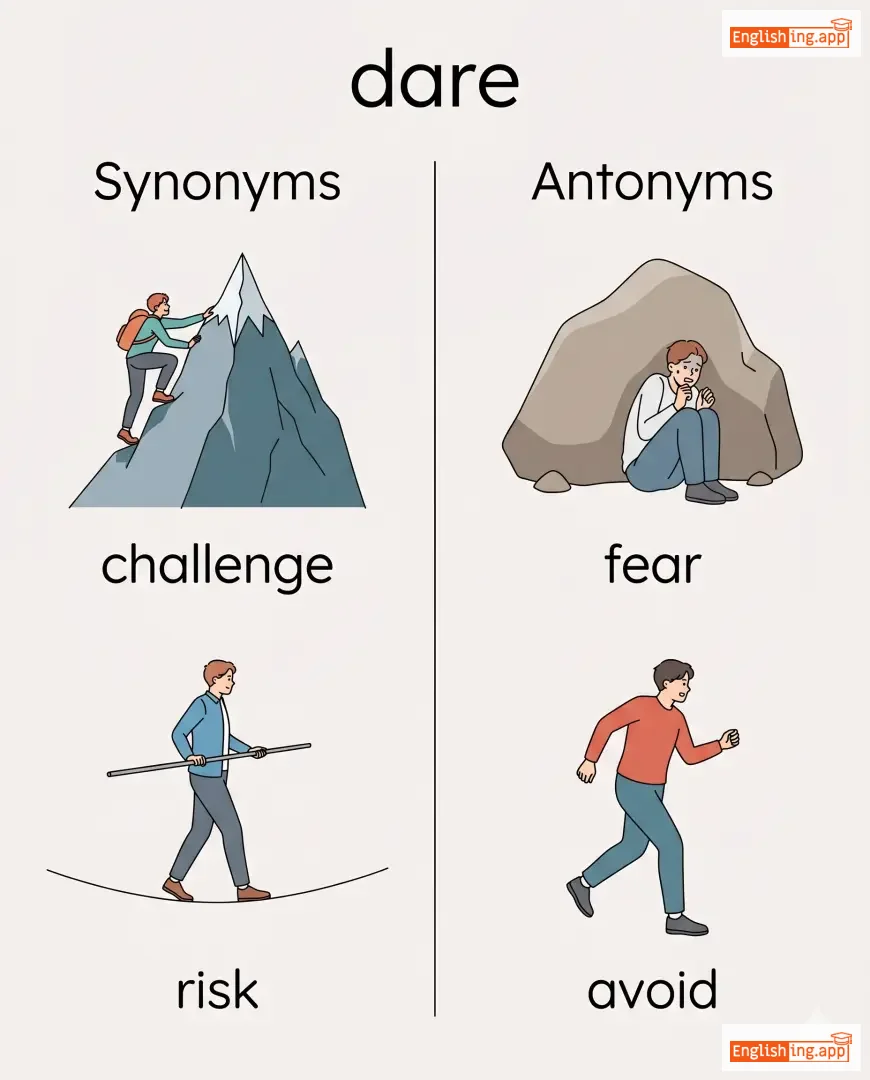
To have the courage to do something risky or challenging.
••••••
|
She dared to speak against the unfair rules.
她敢于反对不公平的规则。
••••••
|
她敢于反对不公平的规则。
Tā gǎn yú fǎnduì bù gōngpíng de guīzé.
••••••
|
How dare you
你怎么敢?
••••••
|
Used to express anger or shock at someone's bold action
••••••
|
你怎么敢?
Nǐ zěnme gǎn?
••••••
|
challenge, risk, venture, defy
••••••
|
fear, avoid, hesitate
••••••
|
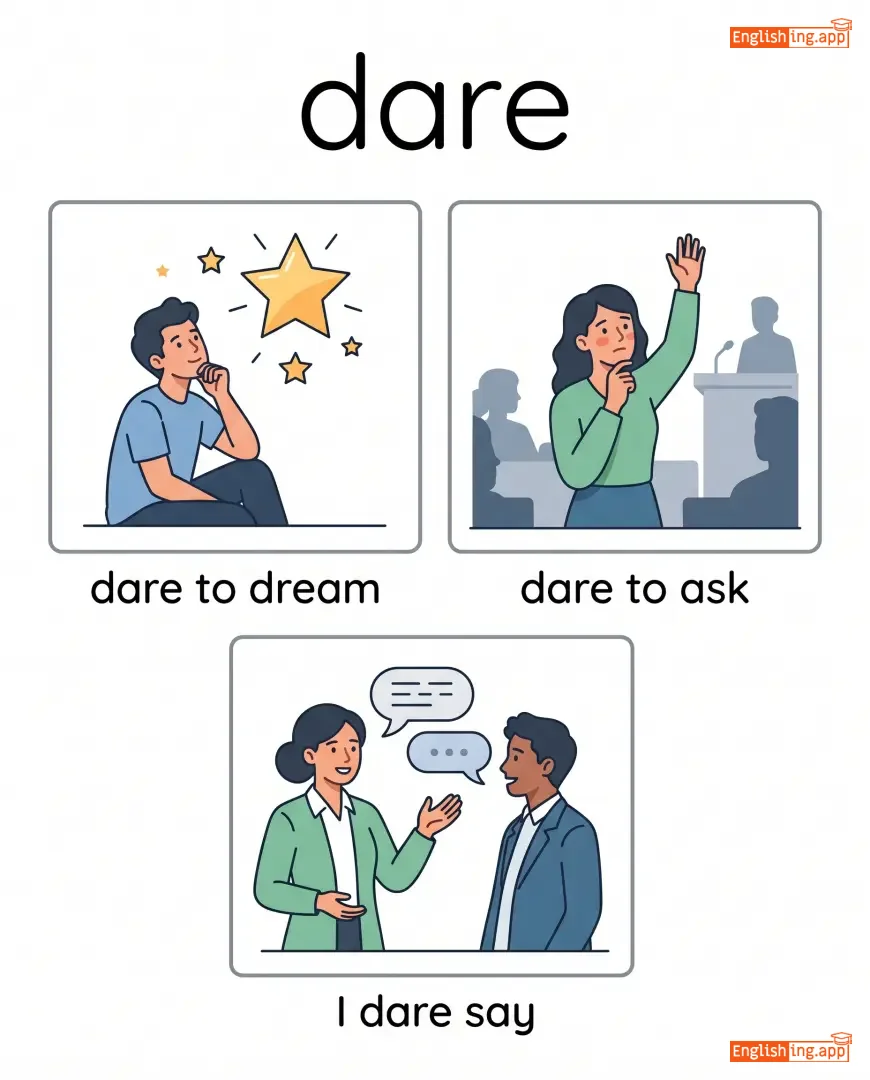
dare to dream, dare to ask, I dare say, dare someone
••••••
|
Dare 就是敢于做有挑战性的事情。
••••••
|
|
#10741
⚠️
|
/ˈdeɪn.dʒər/
noun
(dèngjī)
••••••
|
- •••••• |
危险
wei xian
••••••
|
- •••••• | - •••••• | - •••••• | - •••••• |
The possibility of harm, injury, or loss.
••••••
|
The hikers were in great danger during the storm. |
徒步旅行者在暴风雨中处于极大危险中。
Túbù lǚxíng zhě zài bàofēngyǔ zhōng chǔyú jí dà wēixiǎn zhōng.
••••••
|
in danger |
at risk of harm or injury
••••••
|
处于危险中
Chǔ yú wēixiǎn zhōng
••••••
|
risk, threat, peril, hazard, jeopardy
••••••
|
safety, security, protection
••••••
|
serious danger, put in danger, danger zone, face danger
••••••
|
Danger 意思是 '危险' - ⚠️ 当你处于危险中时,记得小心!
••••••
|
|
#10742
💃
|
/dæns/
verb/noun
(幸福)
••••••
|
- •••••• |
幸福
xìngfú
••••••
|
danced
••••••
|
danced
••••••
|
dances
••••••
|
dancing
••••••
|
to move rhythmically to music, typically following a set sequence of steps
••••••
|
They danced all night at the wedding. |
她收到奖项时无法隐藏自己的幸福。
Tā shōu dào jiǎng xiàng shí wúfǎ yǐn cáng zìjǐ de xìngfú.
••••••
|
dance to someone's tune |
to do what someone else wants or controls
••••••
|
追求幸福
zhuīqiú xìngfú
••••••
|
move, sway, groove, waltz, perform
••••••
|
stand, stillness
••••••
|
dance floor, dance party, traditional dance, dance steps
••••••
|
幸福像'心富',每个充满快乐的瞬间都是幸福的表现。
••••••
|
|
#10743
📅
|
/ˈdeɪli/
adjective/adverb
(deɪli)
••••••
|
- •••••• |
每日的
meiri de
••••••
|
- •••••• | - •••••• | - •••••• | - •••••• |
happening every day
••••••
|
She reads the newspaper daily. |
她每天读报纸。
Ta meitian du baozhi.
••••••
|
daily grind |
the monotonous routine of everyday work and life
••••••
|
每日的单调工作
meiri de dandiao gongzuo
••••••
|
everyday, regular, routine, habitual
••••••
|
occasional, rare
••••••
|
daily basis, daily routine, daily life, daily tasks
••••••
|
每日的就是每天,做事情每天重复最终能成功。
••••••
|
|
#10744
👨
|
/dæd/
noun
(dad)
••••••
|
- •••••• |
爸爸
bàba
••••••
|
- •••••• | - •••••• | - •••••• | - •••••• |
an informal term for father
••••••
|
My dad taught me how to ride a bike. |
我爸爸教我骑自行车。
Wǒ bàba jiāo wǒ qí zìxíngchē.
••••••
|
like father, like son |
a child often resembles or behaves like their father
••••••
|
有其父,必有其子
Yǒu qí fù, bì yǒu qí zǐ
••••••
|
father, papa, daddy, pa
••••••
|
mother, mom
••••••
|
dad joke, dad's advice, proud dad, dad and son
••••••
|
Dad等于爸爸,'Dad'一叫,爸爸就来。
••••••
|
|
#10745
🚴
|
/ˈsaɪkl/
noun/verb
(赛克尔)
••••••
|
- •••••• |
自行车 / 循环
zìxíngchē / xúnhuán
••••••
|
cycled
赛克尔德
••••••
|
cycled
赛克尔德
••••••
|
cycles
赛克尔斯
••••••
|
cycling
赛克林
••••••
|
a series of events that repeat in the same order; or to ride a bicycle
••••••
|
She cycles to school every day.
她每天骑自行车去学校。
••••••
|
她每天骑自行车去学校。
Tā měitiān qí zìxíngchē qù xuéxiào.
••••••
|
vicious cycle
恶性循环
••••••
|
a negative repeating pattern of events that worsens over time
••••••
|
恶性循环
èxìng xúnhuán
••••••
|
sequence, rotation, series, bike, bicycle
••••••
|
stop, stagnation
••••••
|
life cycle, business cycle, cycle of events, riding a cycle
••••••
|
Cycle意味着循环,而自行车就是一个不断运动的循环。
••••••
|
|
#10746
🛍️
|
/ˈkʌstəmər/
noun
(kʌstəmər)
••••••
|
- •••••• |
客户
kèhù
••••••
|
- •••••• | - •••••• | - •••••• | - •••••• |
a person or organization that buys goods or services from a store or business
••••••
|
The shopkeeper greeted the customer with a smile. |
店主用微笑迎接了客户。
Diànzhǔ yòng wēixiào yíngjiē le kèhù.
••••••
|
the customer is always right |
a principle suggesting that businesses should prioritize customer satisfaction
••••••
|
顾客永远是对的
gùkè yǒngyuǎn shì duì de
••••••
|
client, buyer, consumer, purchaser, shopper
••••••
|
seller, vendor
••••••
|
customer service, loyal customer, potential customer, regular customer
••••••
|
Customer意思是客户,他在商店买东西。
••••••
|
|
#10747
🎎
|
/ˈkʌstəm/
noun
(kā sī tè mǔ)
••••••
|
- •••••• |
习惯
xíguàn
••••••
|
- •••••• | - •••••• | - •••••• | - •••••• |
a traditional practice or usual way of behaving in a particular society or place
••••••
|
Shaking hands is a common custom in many countries. |
握手是许多国家的常见习惯。
Wòshǒu shì xǔduō guójiā de chángjiàn xíguàn.
••••••
|
old habits die hard |
customs or habits are difficult to change
••••••
|
旧习惯难以改变
Jiù xíguàn nányǐ gǎibiàn
••••••
|
tradition, practice, ritual, convention
••••••
|
innovation, novelty
••••••
|
local custom, cultural custom, follow custom, business custom
••••••
|
Custom 就是习惯—在商店里我们说 'custom duty' 在社会上是 '习惯'
••••••
|
|
#10748
⏳
|
/ˈkʌrəntli/
adverb
(kɑːrɛntli)
••••••
|
- •••••• |
目前
muqian
••••••
|
- •••••• | - •••••• | - •••••• | - •••••• |
at the present time; now
••••••
|
He is currently working on a new project. |
他目前正在做一个新项目。
Tā mùqián zhèngzài zuò yīgè xīn xiàngmù.
••••••
|
- •••••• | - •••••• | - •••••• |
presently, now, at the moment, as of now
••••••
|
formerly, previously
••••••
|
currently working, currently available, currently involved, currently under
••••••
|
目前就是‘现在’—我们正在做的事情。
••••••
|
|
#10749
🌊
|
/ˈkʌrənt/
adjective, noun
(kàirènt)
••••••
|
- •••••• |
当前, 电流
dāngqián, diànliú
••••••
|
- •••••• | - •••••• | - •••••• | - •••••• |
belonging to the present time; a flow of water or electricity
••••••
|
She is reading the current issue of the magazine. |
她正在阅读杂志的当前期。
Tā zhèngzài yuèdú zázhì de dāngqián qī.
••••••
|
go with the flow |
to follow the current trend or situation without resistance
••••••
|
随波逐流
suí bō zhú liú
••••••
|
present, ongoing, modern, flow
••••••
|
past, outdated
••••••
|
current events, current issue, electric current, ocean current
••••••
|
'Current' 就是 '电流',像水或电流一样流动。
••••••
|
|
#10750
🎨
|
/kriˈeɪt/
verb
(创造)
••••••
|
|
创造
chuangzao
••••••
|
created
创造了
••••••
|
created
创造了
••••••
|
creates
创造
••••••
|
creating
创造ing
••••••
|
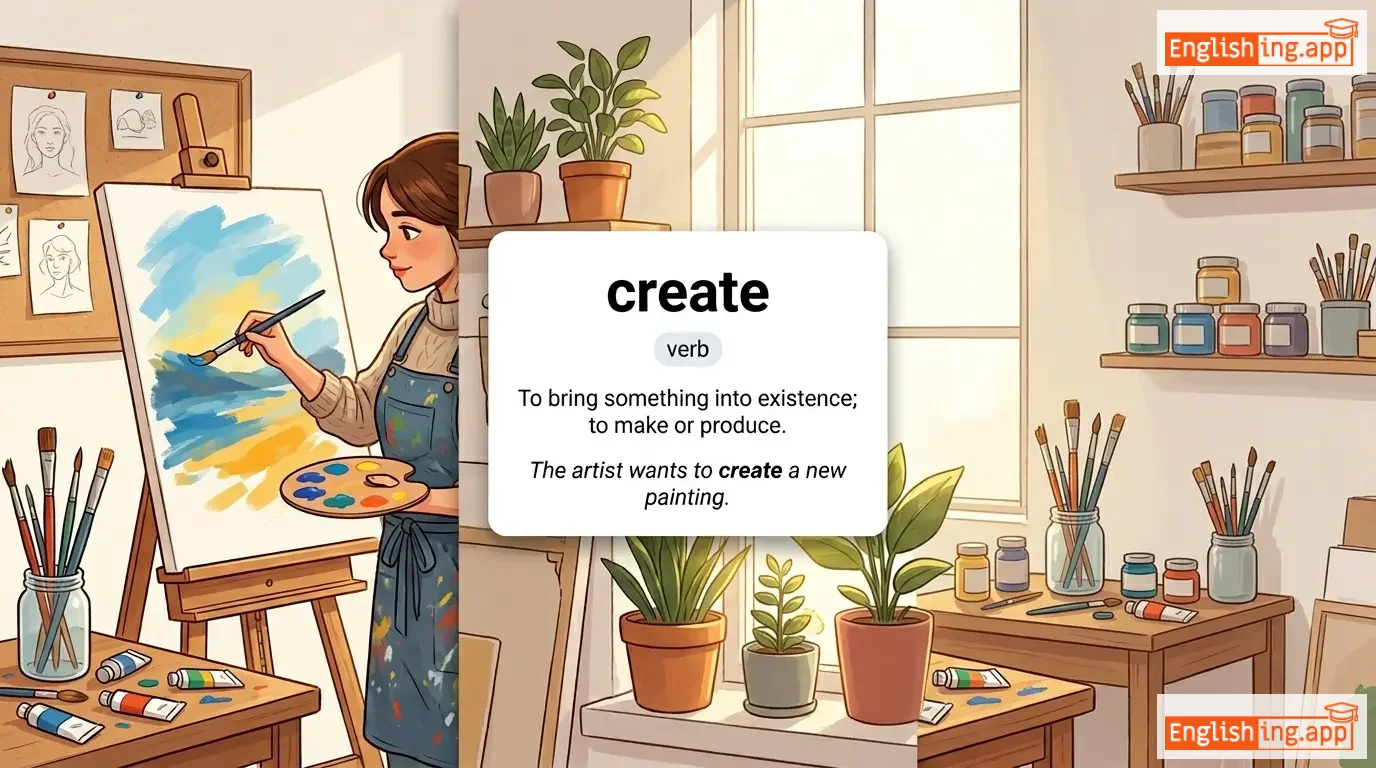
To bring something into existence; to make or produce.
••••••
|
The artist wants to create a new painting.
艺术家想创造一幅新画。
••••••
|
艺术家想创造一幅新画。
Yìshùjiā xiǎng chuàngzào yī fú xīn huà.
••••••
|
create a scene
创造一个场景
••••••
|
to behave in a loud or disruptive way
••••••
|
制造噪音
zhìzào zàoyīn
••••••
|
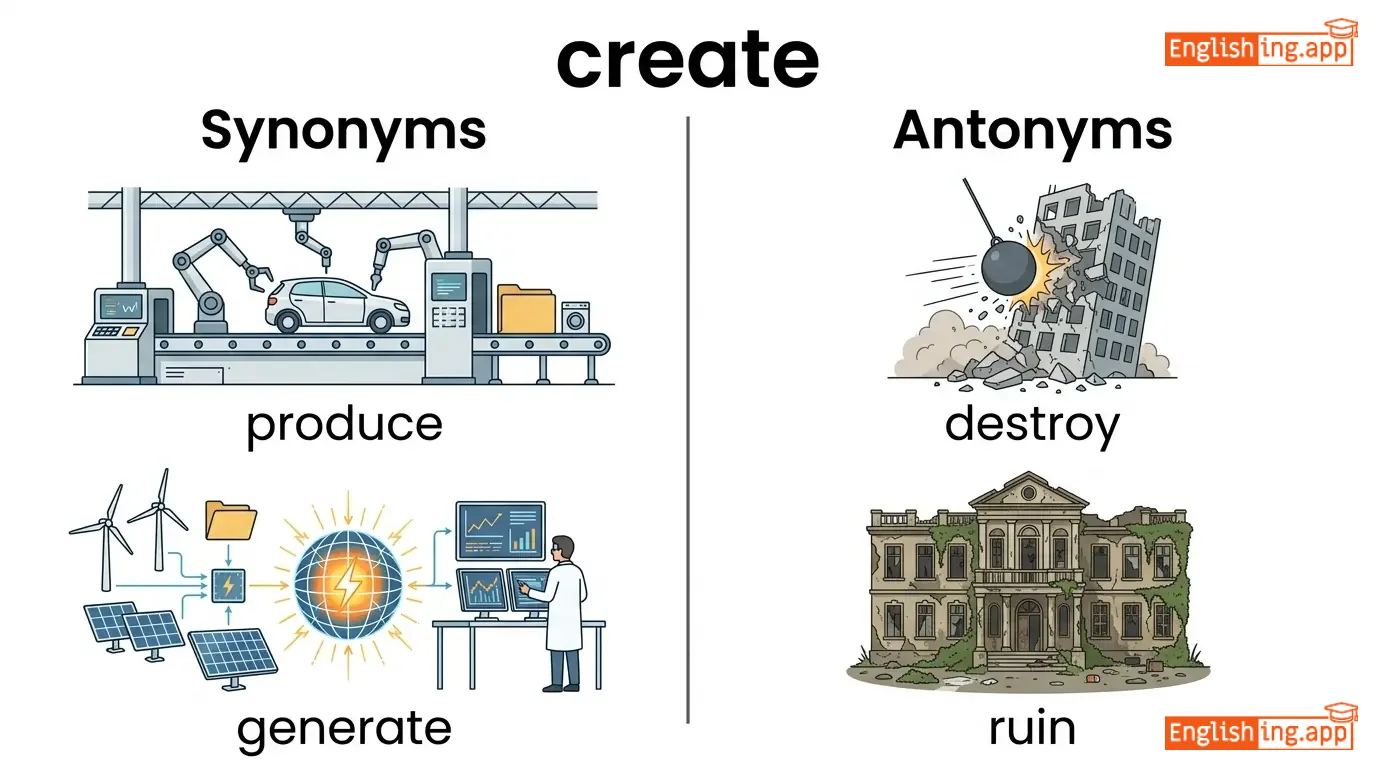
produce, generate, invent, design, build
••••••
|
destroy, ruin, abolish
••••••
|
create jobs, create opportunities, create art, create value
••••••
|
创造就像是创造艺术作品一样,带给世界新的东西。
••••••
|
|
#10751
☕
|
/kʌp/
noun
(杯)
••••••
|
- •••••• |
杯子
beizi
••••••
|
- •••••• | - •••••• | - •••••• | - •••••• |
a small bowl-shaped container for drinking from, typically with a handle
••••••
|
She drank a cup of tea in the morning. |
她早上喝了一杯茶。
Ta zao shang he le yi bei cha.
••••••
|
cup of tea |
something one enjoys or prefers
••••••
|
茶杯
cha bei
••••••
|
mug, glass, goblet, chalice
••••••
|
bottle, jug
••••••
|
cup of tea, coffee cup, paper cup, measuring cup
••••••
|
杯子 = 喝饮料用的容器
••••••
|
|
#10752
🌍
|
/ˈkʌltʃər/
noun
(kǎo tè)
••••••
|
- •••••• |
文化
wenhua
••••••
|
- •••••• | - •••••• | - •••••• | - •••••• |
the customs, arts, social institutions, and achievements of a particular people or society
••••••
|
Japanese culture is admired all over the world. |
日本文化在全世界都受到钦佩。
Riben wenhua zai quanshijie dou shoudao qinpei.
••••••
|
popular culture |
modern cultural activities and products that are well-liked by many people
••••••
|
流行文化
liuxing wenhua
••••••
|
civilization, tradition, lifestyle, heritage, society
••••••
|
barbarism, uncivilized
••••••
|
rich culture, preserve culture, local culture, diverse culture
••••••
|
文化(wenhua)是社会发展和个人行为的体现
••••••
|
|
#10753
🎭
|
/ˈkʌltʃərəl/
adjective
(kʌltʃərəl)
••••••
|
|
文化的
wenhua de
••••••
|
- •••••• | - •••••• | - •••••• | - •••••• |
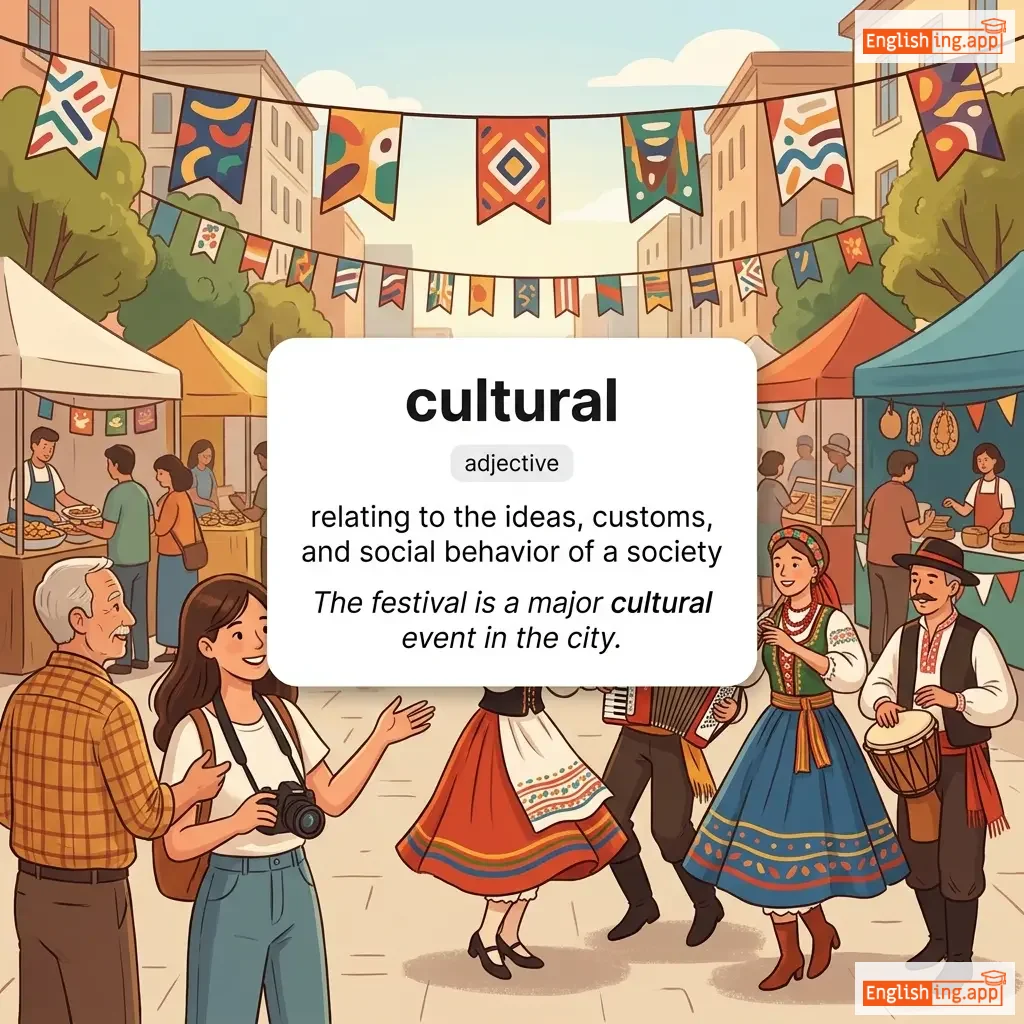
relating to the ideas, customs, and social behavior of a society
••••••
|
The festival is a major cultural event in the city. |
这个节日是城市里一个重要的文化活动。
Zhege jieri shi chengshi li yige zhongyao de wenhua huodong.
••••••
|
- •••••• | - •••••• | - •••••• |
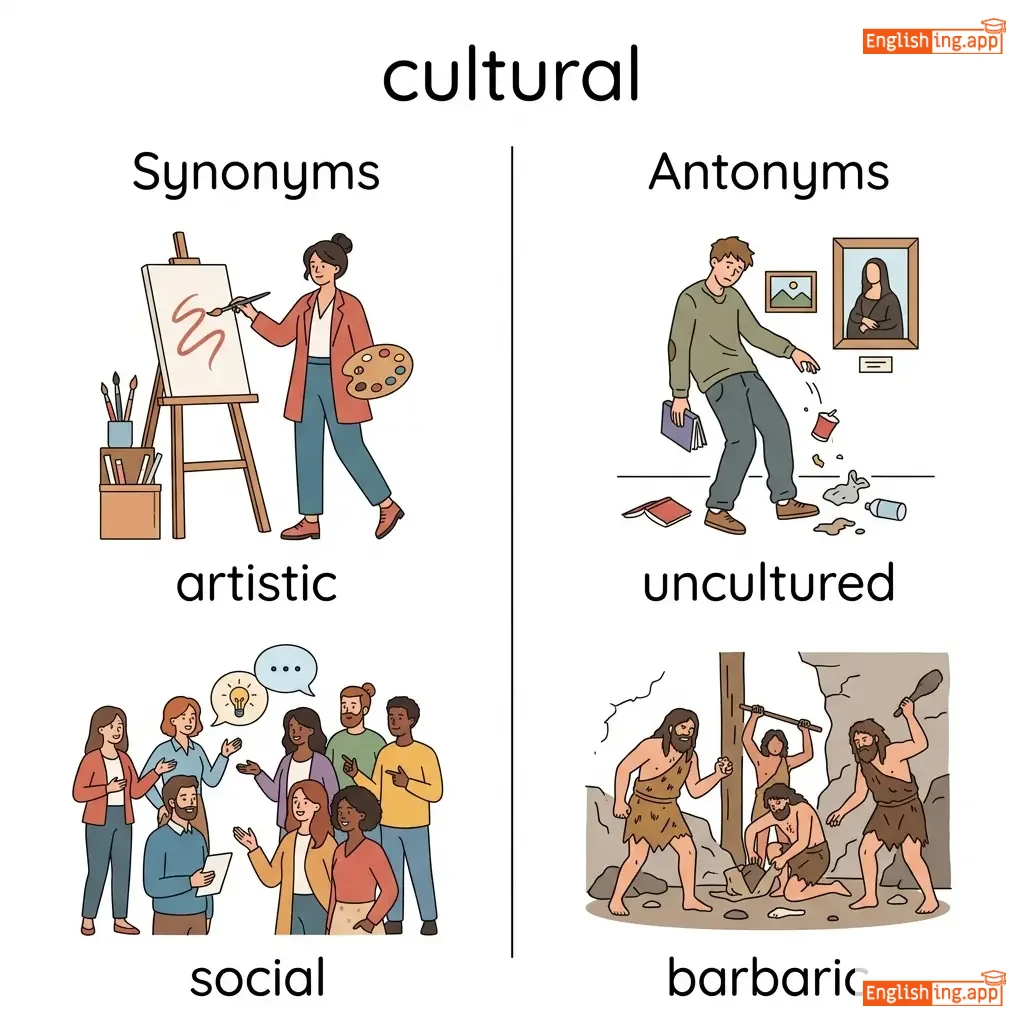
artistic, social, traditional, heritage, ethnic
••••••
|
uncultured, barbaric
••••••
|
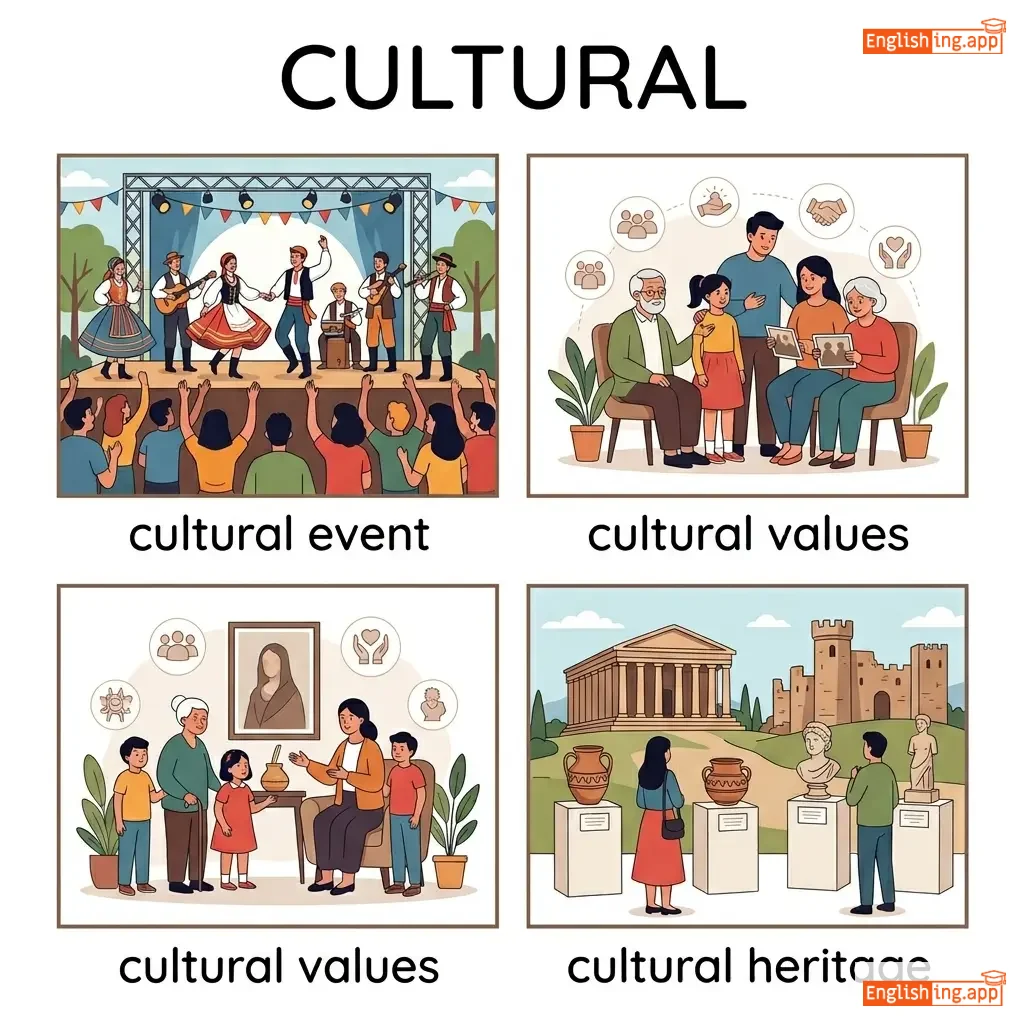
cultural event, cultural values, cultural heritage, cultural identity
••••••
|
文化的与社会的习惯和行为密切相关。
••••••
|
|
#10754
👥
|
/kraʊd/
noun
(krau)
••••••
|
- •••••• |
人群
renqun
••••••
|
- •••••• | - •••••• | - •••••• | - •••••• |
a large number of people gathered together
••••••
|
A huge crowd gathered to watch the concert.
A hjuʒ kraʊd gæðərd tu wɒtʃ ðə kənˈsɜrt.
••••••
|
一个巨大的观众聚集在一起观看音乐会。
Yi ge jueda de guanzhong juzhi zai yiqi guankan yinyuehui.
••••••
|
follow the crowd
fɔloʊ ðə kraʊd
••••••
|
to do what most other people are doing
••••••
|
随大流
sui daliu
••••••
|
gathering, throng, multitude, mob, audience
••••••
|
individual, solitude
••••••
|
huge crowd, large crowd, control the crowd, cheer the crowd
••••••
|
Crowd 意味着人群 - 很多人聚在一起。
••••••
|
|
#10755
🌾
|
/krɒp/
noun
(króp)
••••••
|
- •••••• |
农作物
nongzuowu
••••••
|
- •••••• | - •••••• | - •••••• | - •••••• |
plants that are grown and harvested for food or other use
••••••
|
The farmers harvested their rice crop in autumn. |
农民在秋季收获了他们的稻米作物。
nongmin zai qiujì shōuhuòle tāmen de dàomǐ zuòwù.
••••••
|
bumper crop |
an unusually large harvest
••••••
|
丰收
fēngshōu
••••••
|
harvest, yield, produce, grain
••••••
|
famine, scarcity
••••••
|
crop yield, crop production, crop failure, crop season
••••••
|
Crop在田里收获丰收,农作物一切顺利。
••••••
|
|
#10756
📝
|
/ˈkrɪtɪsaɪz/
verb
(krɪtɪsaɪz)
••••••
|
|
批评
pīpíng
••••••
|
criticized
krɪtɪsaɪzd
••••••
|
criticized
krɪtɪsaɪzd
••••••
|
criticizes
krɪtɪsaɪzɪz
••••••
|
criticizing
krɪtɪsaɪzɪŋ
••••••
|
to express disapproval of someone or something by pointing out faults or shortcomings
••••••
|
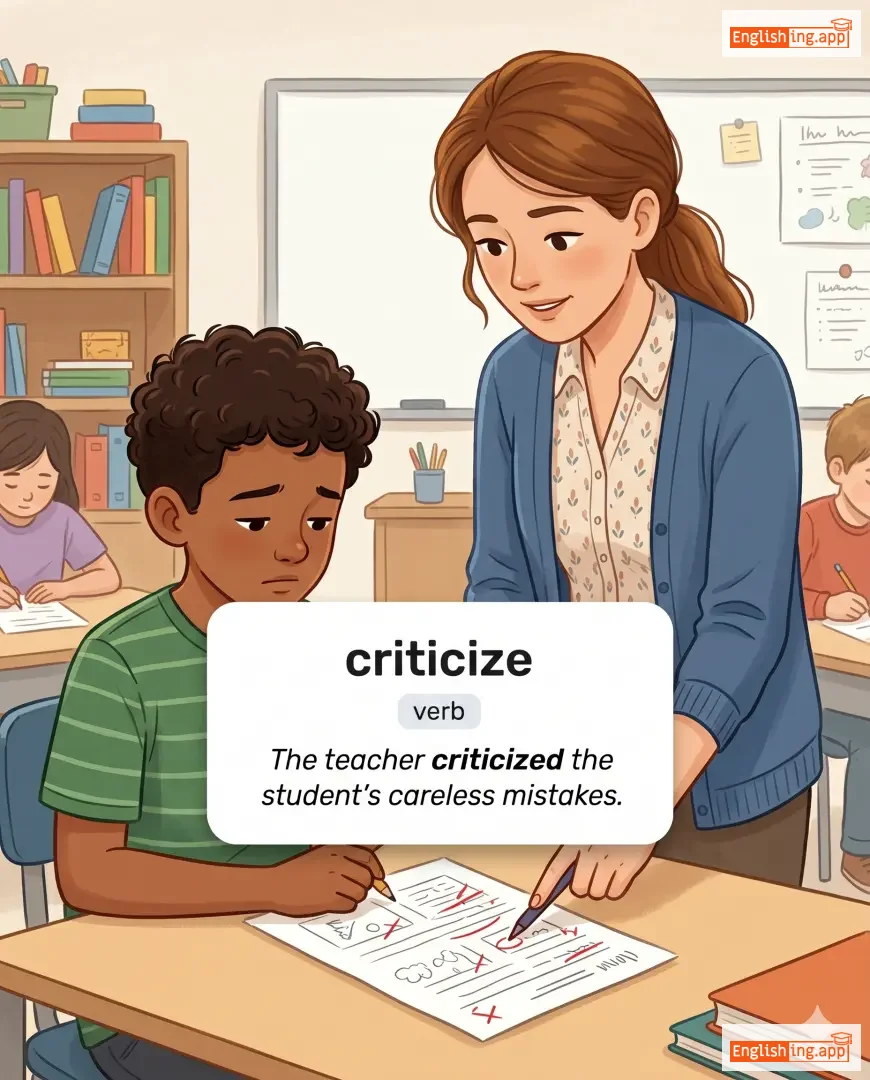
The teacher criticized the student's careless mistakes.
老师批评了学生的粗心错误。
••••••
|
老师批评了学生的粗心错误。
Lǎoshī pīpíngle xuéshēng de cūxīn cuòwù.
••••••
|
constructive criticism
建设性批评
••••••
|
helpful feedback intended to improve performance
••••••
|
建设性批评
jiànshèxìng pīpíng
••••••
|
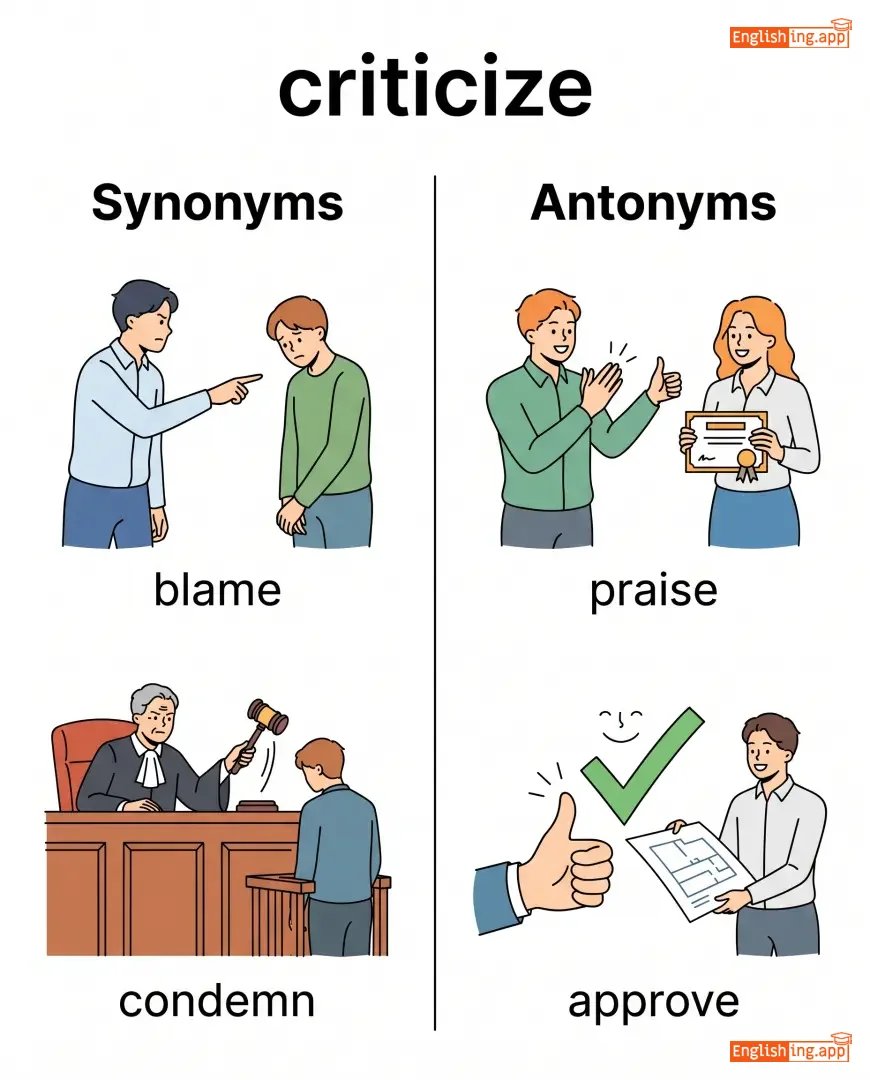
blame, condemn, censure, evaluate, review
••••••
|
praise, approve, compliment
••••••
|
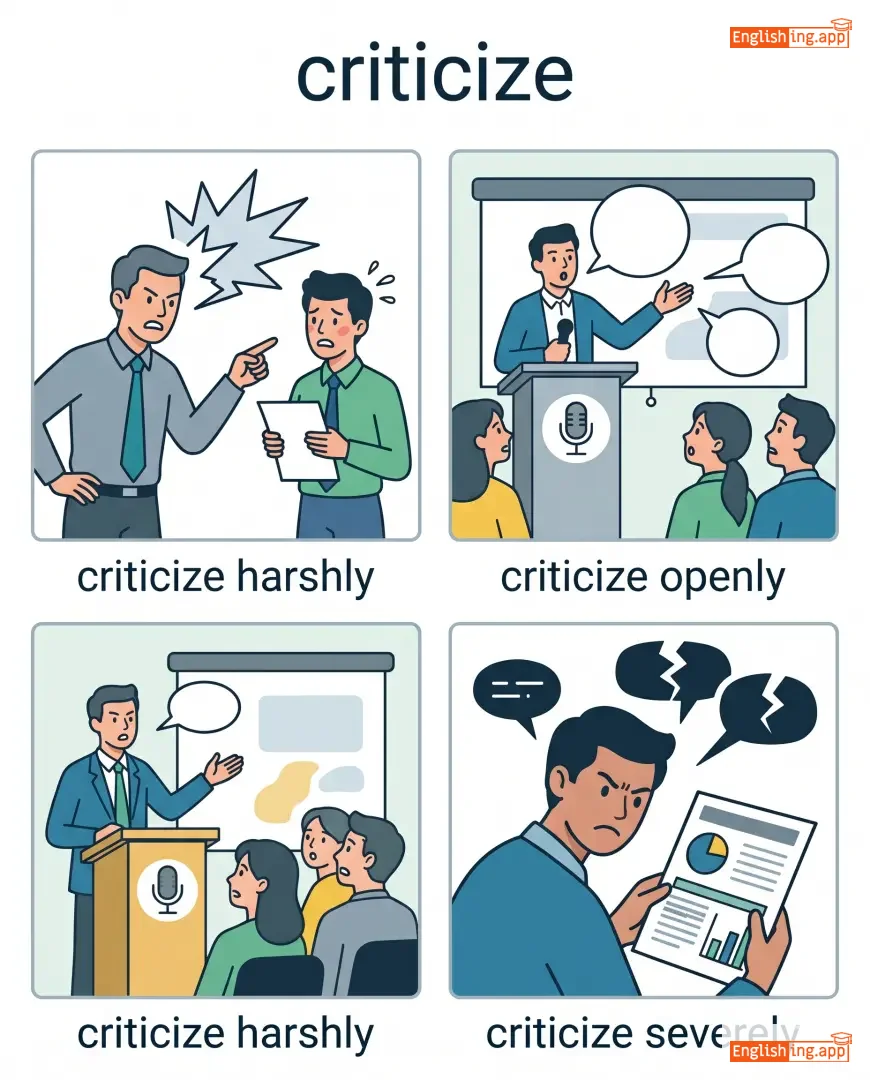
criticize harshly, criticize openly, criticize severely, criticize constantly
••••••
|
批评就是指出错误来帮助改进。
••••••
|
|
#10757
💬
|
/ˈkrɪtɪˌsɪzəm/
noun
(krɪtɪˌsɪzəm)
••••••
|
- •••••• |
批评
pīpíng
••••••
|
- •••••• | - •••••• | - •••••• | - •••••• |
The expression of disapproval or judgment of the merits of something
••••••
|
The new policy has faced a lot of criticism from the public. |
新政策面临来自公众的批评。
Xīn zhèngcè miànlín láizì gōngzhòng de pīpíng.
••••••
|
constructive criticism |
helpful and useful feedback intended to improve something
••••••
|
建设性批评
jiànshèxìng pīpíng
••••••
|
disapproval, judgment, assessment, evaluation, remark
••••••
|
praise, compliment
••••••
|
constructive criticism, harsh criticism, literary criticism, public criticism
••••••
|
批评 = Criticism
••••••
|
|
#10758
❗
|
/ˈkrɪtɪkəl/
adjective
(krìtìkǎo)
••••••
|
|
关键的 / 紧急的
guānjiàn de / jǐnjí de
••••••
|
- •••••• | - •••••• | - •••••• | - •••••• |
Expressing adverse or disapproving comments; extremely important or urgent
••••••
|
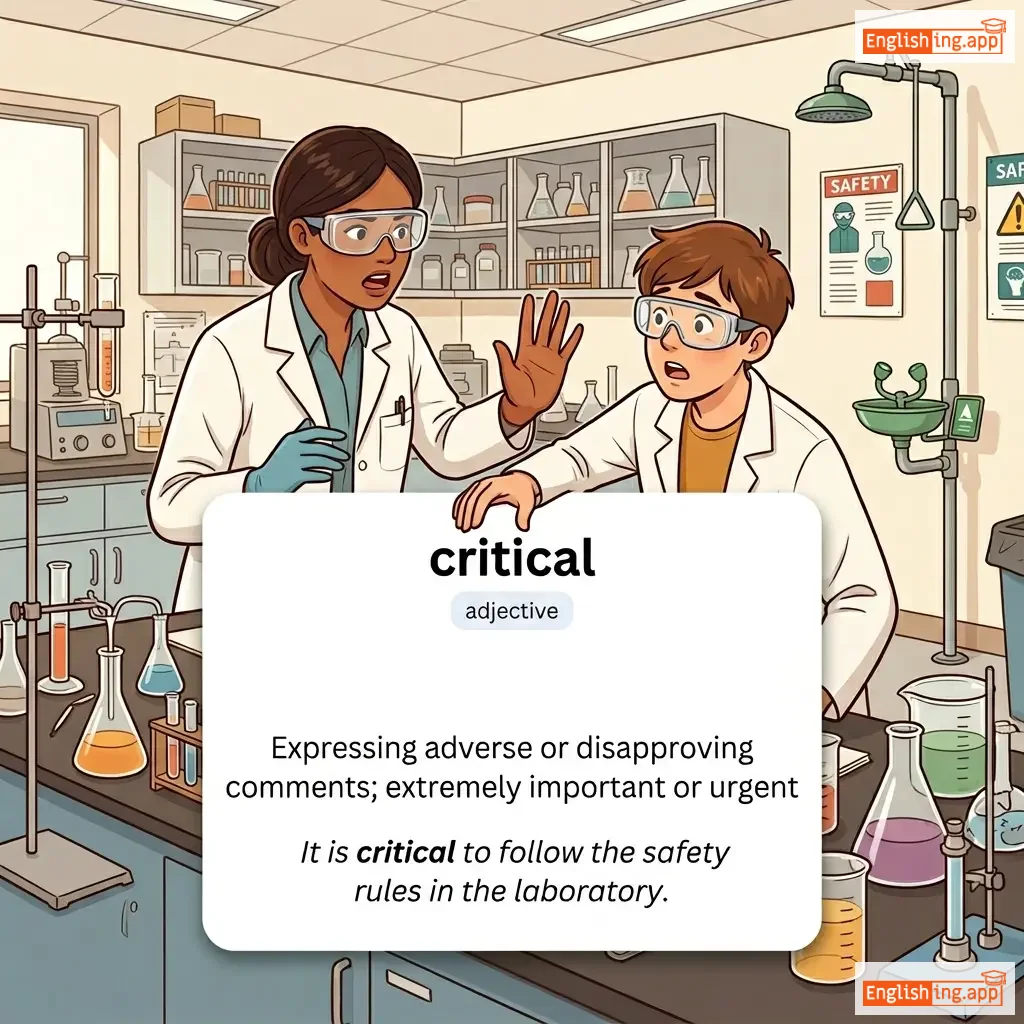
It is critical to follow the safety rules in the laboratory. |
在实验室中,遵循安全规则是至关重要的。
Zài shíyànshì zhōng, zūnxún ānquán guīzé shì zhìguān zhòngyào de.
••••••
|
critical condition |
a serious medical state where life is at risk
••••••
|
危急状态
wéijí zhuàngtài
••••••
|
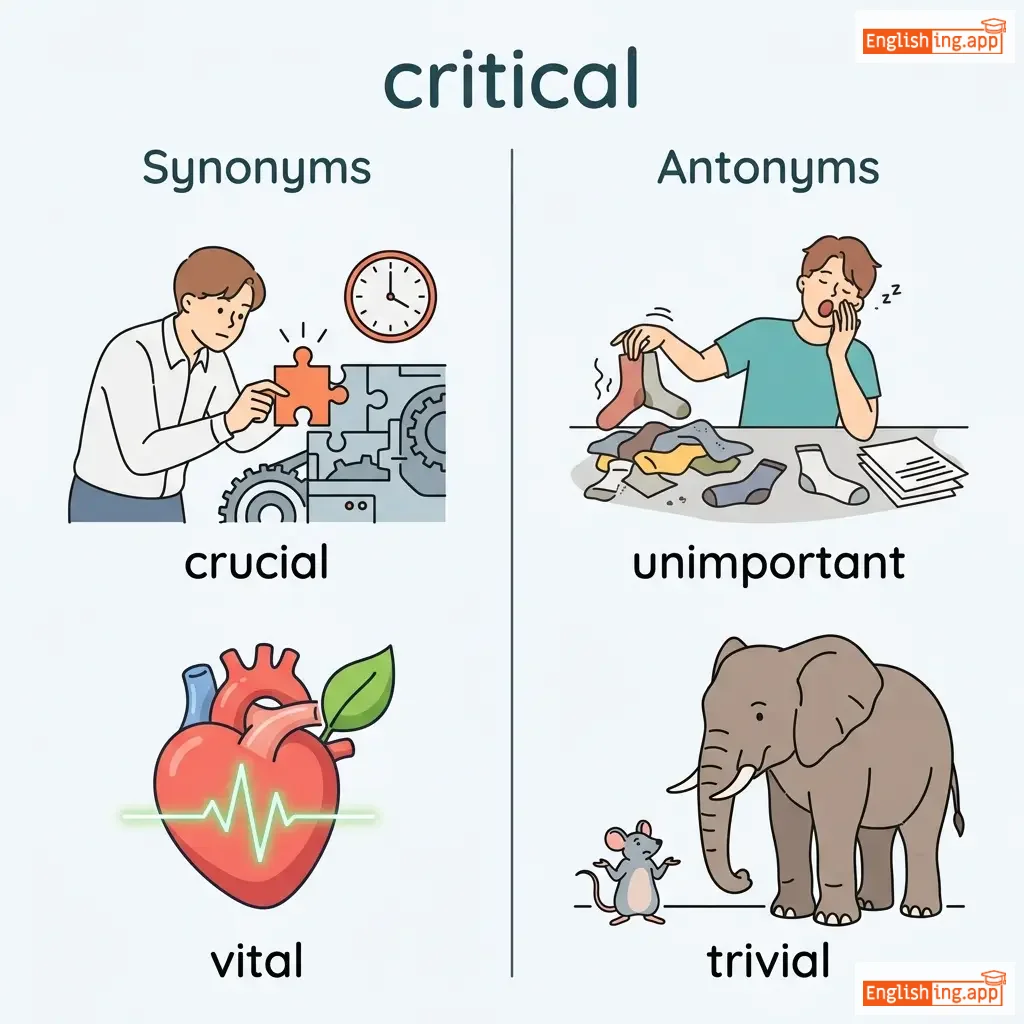
crucial, vital, essential, urgent, disapproving
••••••
|
unimportant, trivial, supportive
••••••
|
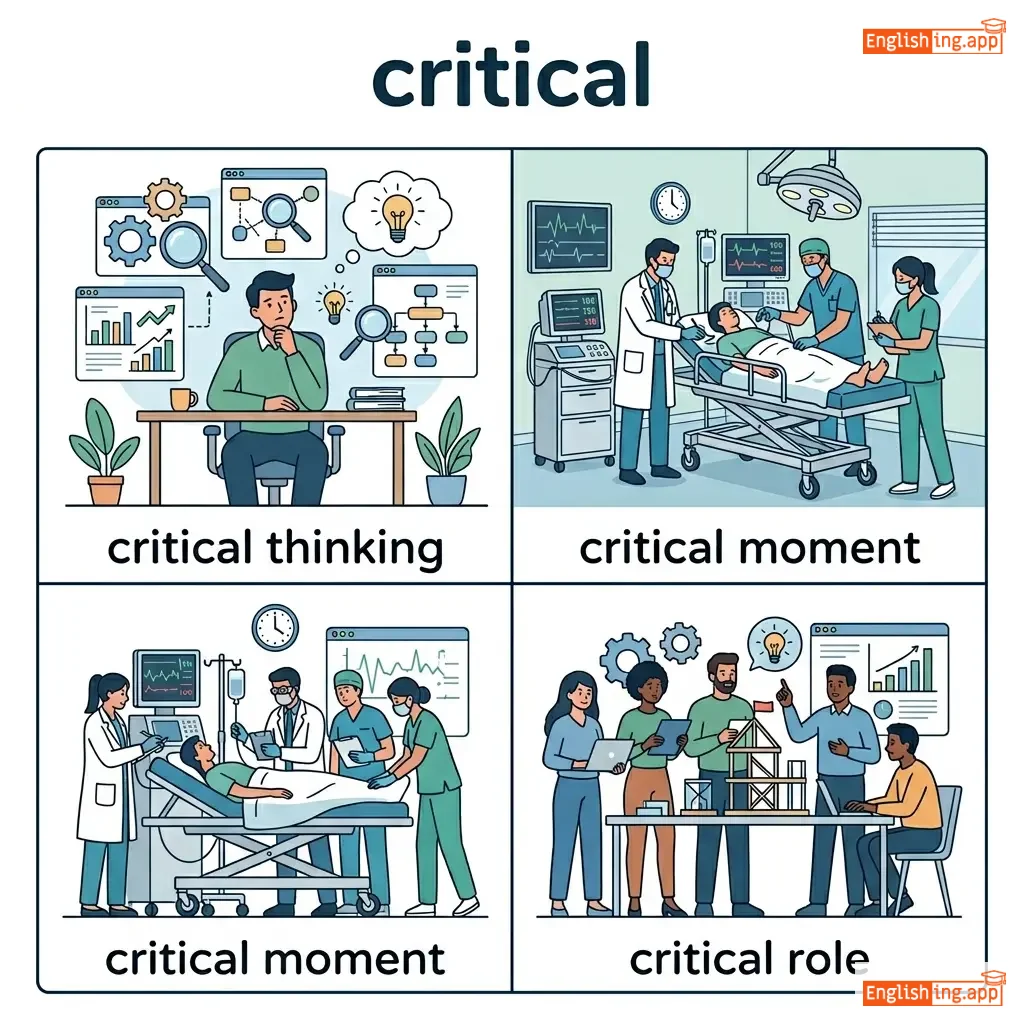
critical thinking, critical moment, critical role, critical analysis
••••••
|
Critical 代表关键 – Critical = 关键的
••••••
|
|
#10759
📝
|
/ˈkrɪtɪk/
noun
(kè lǐ tè)
••••••
|
- •••••• |
评论家
pinglunjia
••••••
|
- •••••• | - •••••• | - •••••• | - •••••• |
A person who judges the merits of something, especially art or literature
••••••
|
The film critic praised the director's latest movie. |
电影评论家赞扬了导演的最新电影。
Dianying pinglunjia zanyang le daoyan de zuixin dianying.
••••••
|
armchair critic |
someone who criticizes without real knowledge or involvement
••••••
|
沙发评论家
Shafa pinglunjia
••••••
|
reviewer, evaluator, commentator, judge
••••••
|
supporter, admirer
••••••
|
film critic, art critic, music critic, theater critic
••••••
|
Critic = 评论家,批评者
••••••
|
|
#10760
⚠️
|
/ˈkraɪsɪs/
noun
(危机)
••••••
|
|
危机
weiji
••••••
|
- •••••• | - •••••• | - •••••• | - •••••• |
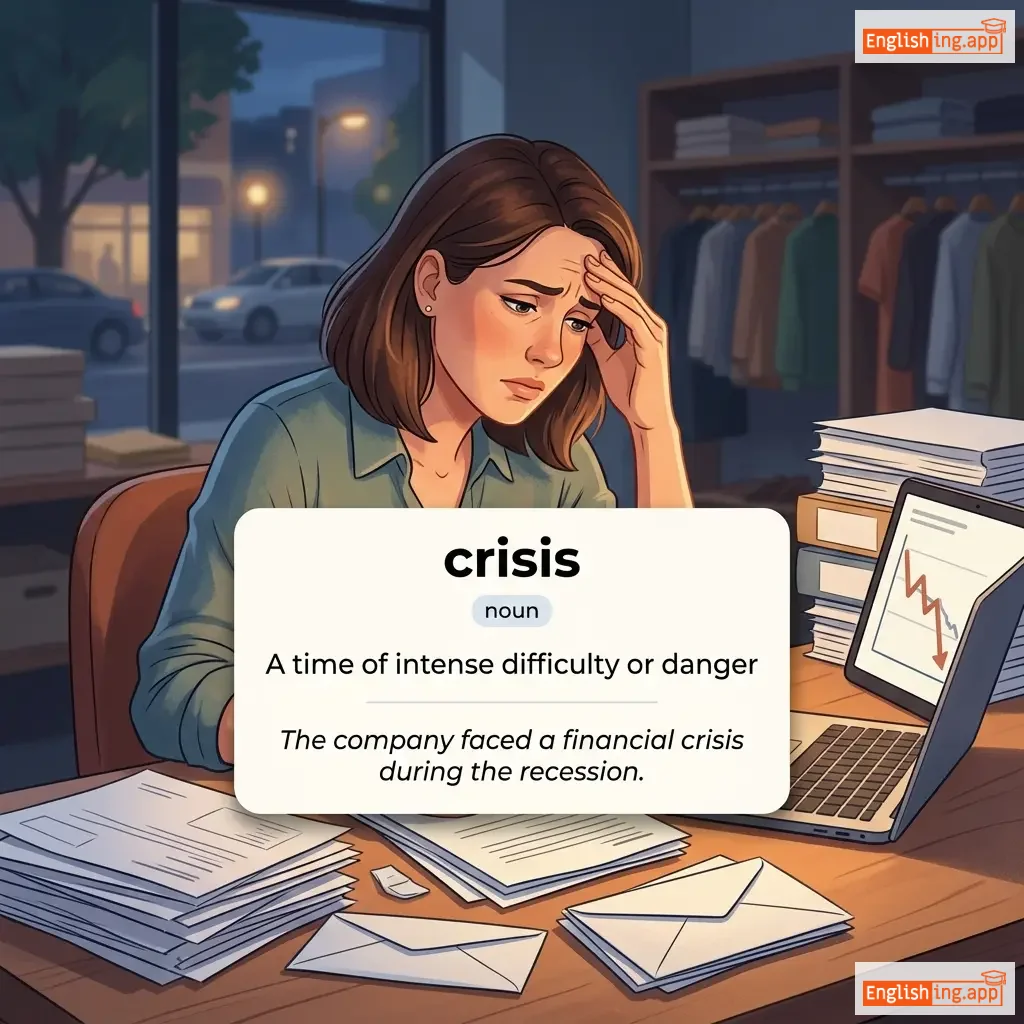
A time of intense difficulty or danger
••••••
|
The company faced a financial crisis during the recession. |
在经济衰退期间,公司面临着财政危机。
Zài jīngjì shuāituì qījiān, gōngsī miànlínzhe cáizhèng wēijī.
••••••
|
midlife crisis |
a period of doubt and anxiety in middle age about one's life
••••••
|
中年危机
zhōngnián wēijī
••••••
|
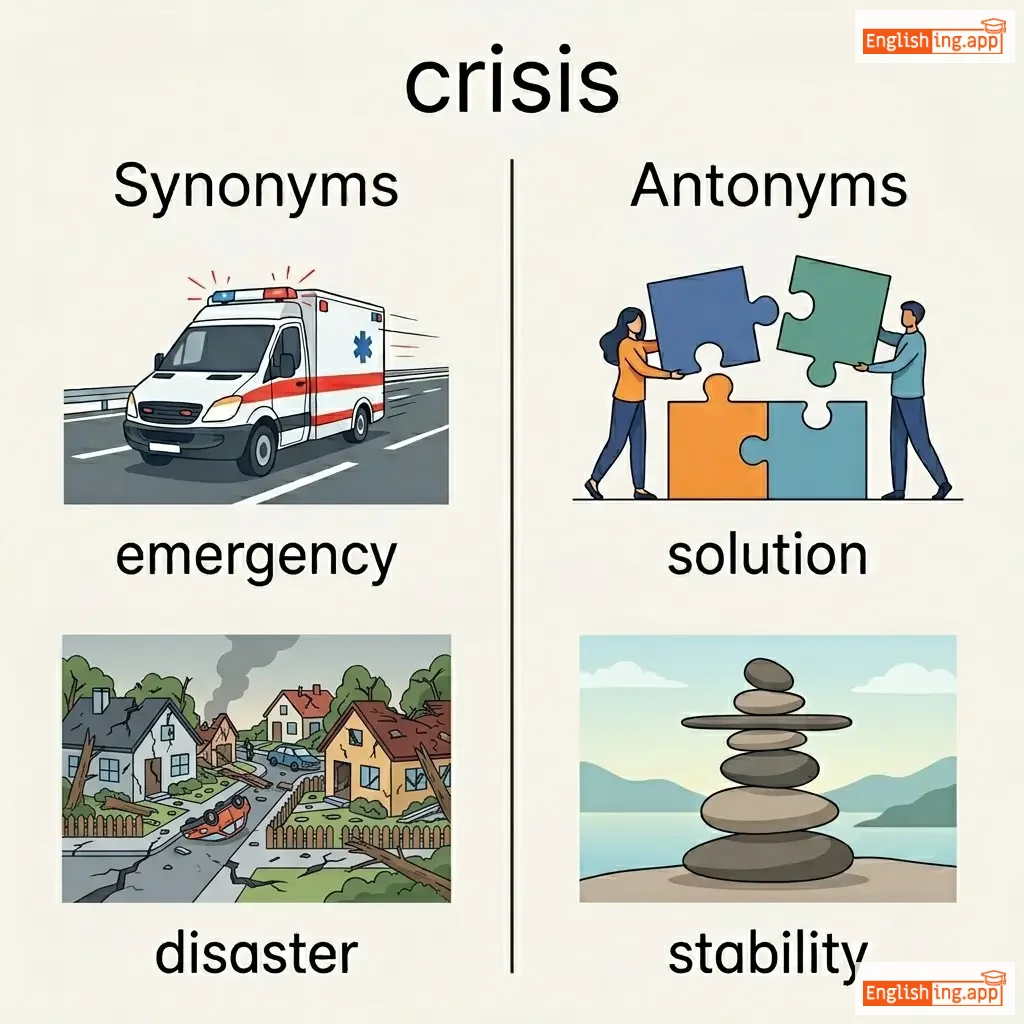
emergency, disaster, dilemma, catastrophe, trouble
••••••
|
solution, stability, peace
••••••
|
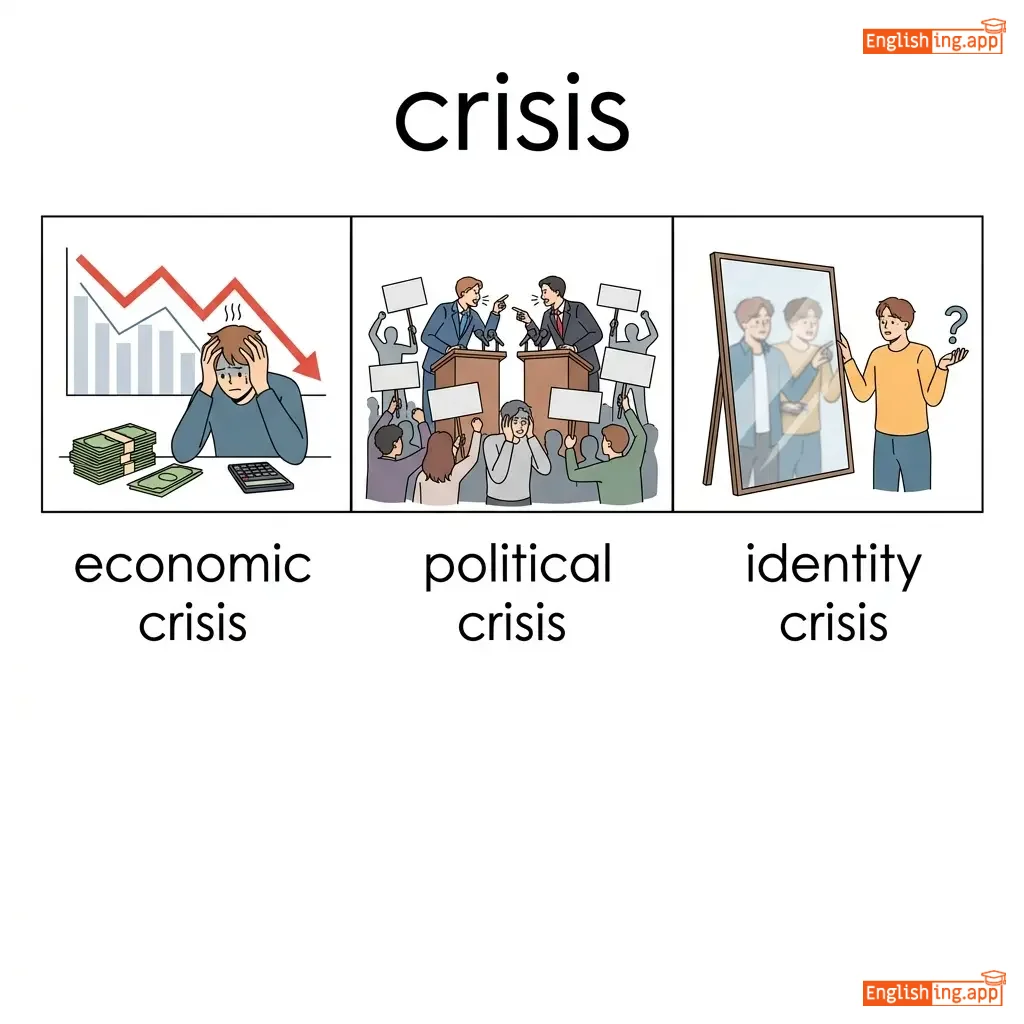
economic crisis, political crisis, identity crisis, health crisis
••••••
|
Crisis 就是危机的意思,大家都很困惑!
••••••
|
|
#10761
🚔
|
/ˈkrɪmɪnəl/
noun, adjective
(kriminal)
••••••
|
- •••••• |
罪犯
zuìfàn
••••••
|
- •••••• | - •••••• | - •••••• | - •••••• |
A person who has committed a crime; relating to crime
••••••
|
The police arrested a dangerous criminal last night. |
警方昨晚逮捕了一个危险的罪犯。
Jǐngfāng zuó wǎn dàibǔle yīgè wēixiǎn de zuìfàn.
••••••
|
criminal record |
an official history of crimes committed by a person
••••••
|
犯罪记录
fànzuì jìlù
••••••
|
offender, lawbreaker, felon, culprit, wrongdoer
••••••
|
innocent, lawful, honest
••••••
|
criminal law, criminal record, criminal activity, criminal justice, criminal behavior
••••••
|
罪犯 = 做坏事的人
••••••
|
|
#10762
🚔
|
/kraɪm/
noun
(克莱姆)
••••••
|
- •••••• |
犯罪
fànzuì
••••••
|
- •••••• | - •••••• | - •••••• | - •••••• |
An illegal act punishable by law.
••••••
|
The police are investigating the crime.
警方正在调查犯罪。
••••••
|
警方正在调查犯罪。
jǐngfāng zhèngzài diàochá fànzuì.
••••••
|
crime does not pay
犯罪没有好处。
••••••
|
crime ultimately brings punishment, not profit
••••••
|
犯罪没有好处。
fànzuì méiyǒu hǎochù.
••••••
|
offense, felony, wrongdoing, violation
••••••
|
lawfulness, obedience
••••••
|
commit a crime, crime rate, crime scene, organized crime
••••••
|
犯罪有后果,做错了就付出代价。
••••••
|
|
#10763
🐾
|
/ˈkriːtʃər/
noun
(kree-uh-tur)
••••••
|
- •••••• |
生物
shengwu
••••••
|
- •••••• | - •••••• | - •••••• | - •••••• |
A living being, especially an animal.
••••••
|
The forest is full of strange creatures. |
森林里充满了奇怪的生物。
Sēnlín lǐ chōngmǎnle qíguài de shēngwù.
••••••
|
creature comforts |
basic material comforts that make life pleasant
••••••
|
生活的基本舒适
shēnghuó de jīběn shūshì
••••••
|
being, animal, organism, entity
••••••
|
object, inanimate
••••••
|
sea creature, mythical creature, living creature, wild creature
••••••
|
Creature意味着生物—森林里有很多生物在打板球。
••••••
|
|
#10764
💡
|
/kriˈeɪtɪv/
adjective
(kreativ)
••••••
|
- •••••• |
富有创意的
fù yǒu chuàng yì de
••••••
|
- •••••• | - •••••• | - •••••• | - •••••• |
Having the ability to produce new and original ideas or things.
••••••
|
She is very creative in her writing. |
她在写作中非常富有创意。
Tā zài xiě zuò zhōng fēi cháng fù yǒu chuàng yì de.
••••••
|
- •••••• | - •••••• | - •••••• |
imaginative, inventive, innovative, artistic
••••••
|
unimaginative, dull, conventional
••••••
|
creative thinking, creative writing, creative design, creative process
••••••
|
Creative就是通过创造力产生新的创意。
••••••
|
Vocabulary Quiz
Test your vocabulary by matching words with their translations or meanings.
Login to take the quiz
Comments (0)
Share your thoughts and join the discussion.
Join the discussion by logging in
Login to CommentNo comments yet
Be the first to share your thoughts!